The Gospel According to Martin Luther

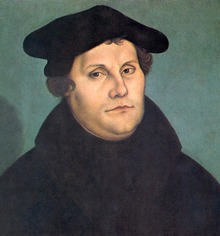
Martin LutherThe following are extracts from The Smalcald Articles, contained in the Lutheran Book of Concord. All of this was written by Martin Luther in 1537. Read it; and preach the Gospel to every creature! (Mark 16:15).


Of Sin. – Part III, Article I.

1] Here we must confess, as Paul says in Rom. 5:12, that sin originated [and entered the world] from one man Adam, by whose disobedience all men were made sinners, [and] subject to death and the devil. This is called original or capital sin.

2] The fruits of this sin are afterwards the evil deeds which are forbidden in THE TEN COMMANDMENTS, such as [distrust] unbelief, false faith, idolatry, to be without the fear of God, presumption [recklessness], despair, blindness [or complete loss of sight], and, in short not to know or regard God; furthermore to lie, to swear by [to abuse] God’s name [to swear falsely], not to pray, not to call upon God, not to regard [to despise or neglect] God’s Word, to be disobedient to parents, to murder, to be unchaste, to steal, to deceive, etc.

3] This hereditary sin is so deep [and horrible] a CORRUPTION OF NATURE that no reason can understand it, but it must be [learned and] believed from the revelation of Scriptures, Ps. 51:5; Rom. 6:12ff ; Ex. 33:3; Gen. 3:7ff…

Of the Law. – Part III, Article II.

1] Here we hold that the Law was given by God, first, to restrain sin by threats and THE DREAD OF PUNISHMENT [HELL], and by the promise and offer of grace and benefit. But all this miscarried on account of the wickedness which sin has wrought in man. 2] For thereby a part [some] were rendered worse, those, namely, who are hostile to [hate] the Law, because it forbids what they like to do, and enjoins what they do not like to do. Therefore, wherever they can escape [if they were not restrained by] punishment, they [would] do more against the Law than before. These, then, are the rude and wicked [unbridled and secure] men, who do evil wherever they [notice that they] have the opportunity.

3] The rest become blind and arrogant [are smitten with arrogance and blindness], and [insolently] conceive the opinion that they observe and can observe the Law by their own powers, as has been said above concerning the scholastic theologians; thence come the hypocrites and [self-righteous or] false saints.

4] But the chief office or force of the Law is that it reveal original sin with all its fruits, and show man how very low his nature has fallen, and has become [fundamentally and] utterly corrupted; as the Law must tell man that he has no God nor regards [cares for] God, and worships other gods, a matter which before and without the Law he would not have believed. In this way he becomes terrified, is humbled, desponds, despairs, and anxiously desires aid, but sees no escape; he begins to be an enemy of [enraged at] God, and to murmur, etc. 5] This is what Paul says, Rom. 4:15: The Law worketh wrath. And Rom. 5:20: Sin is increased by the Law. [The Law entered that the offense might abound.]

Of Repentance. – Part III, Article III.

1] This office [of the Law] the New Testament retains and urges, as St. Paul, Rom. 1:18 does, saying: The wrath of God is revealed from Heaven against all ungodliness and unrighteousness of men. Again, Rom 3:19: All the world is guilty before God. No man is righteous before Him. And Christ says, John 16:8: The Holy Ghost will reprove the world of sin.

2] This, then, is the thunderbolt of God by which He strikes in a heap [hurls to the ground] both manifest sinners and false saints [hypocrites], and suffers no one to be in the right [declares no one righteous], but drives them all together to terror and despair. This is the hammer, as Jeremiah 23:29 says: Is not My Word like a hammer that breaketh the rock in pieces? This is not activa contritio or manufactured repentance, but passiva contritio [torture of CONSCIENCE], true sorrow of heart, suffering and sensation of death.

3] This, then, is what it means to begin true repentance; and here man must hear such a sentence as this: You are all of no account, whether you be manifest sinners or saints [in your own opinion]; you all must become different and do otherwise than you now are and are doing [no matter what sort of people you are], whether you are as great, wise, powerful, and holy as you may. Here no one is [righteous, holy], godly, etc.

4] But to this office the New Testament immediately adds the consolatory promise of grace through the Gospel, which must be believed, as Christ declares, Mark 1:15: Repent and believe the Gospel, i.e., BECOME DIFFERENT and do otherwise, and BELIEVE My promise. And John, preceding Him, is called a preacher of repentance, however, for the remission of sins, i.e., John was to accuse all, and convict them of being sinners, that they might know what they were before God, and might acknowledge that they were lost men, and might thus be prepared for the Lord, to receive grace, and to expect and accept from Him the remission of sins. Thus also Christ Himself says, Luke 24:47: 6] REPENTANCE and [FORGIVENESS] OF SINS must be preached in My name among all nations.

7] But whenever the Law alone, without the Gospel being added exercises this its office there is [nothing else than] death and Hell, and man must despair, like Saul and Judas; as St. Paul, Rom. 7:10, says: Through sin the Law killeth. 8] On the other hand, the Gospel brings consolation and remission not only in one way, but through the Word and Sacraments, and the like, as we shall hear afterward in order that [thus] there is with the Lord plenteous redemption, as Ps. 130:7 says against the dreadful captivity of sin…

Of the Gospel. – Part III, Article IV.

We will now return to the Gospel, which not merely in one way gives us counsel and aid against sin; for God is superabundantly rich [and liberal] in His grace [and goodness]. First, through the spoken Word by which THE FORGIVENESS OF SINS is preached [He commands to be preached] in the whole world; which is the peculiar office of the Gospel. Secondly, through Baptism. Thirdly, through the holy Sacrament of the Altar. Fourthly, through the power of the keys, and also through the mutual conversation and consolation of brethren, Matt. 18:20: Where two or three are gathered together, etc.

How One is Justified before God, and of Good Works. – Part III, Article XIII.

1] What I have hitherto and constantly taught concerning this I know not how to change in the least, namely, that BY FAITH, as St. Peter says, we acquire A NEW AND CLEAN HEART, and God will and does account us entirely righteous and holy for the sake of Christ, our Mediator. And although sin in the flesh has not yet been altogether removed or become dead, yet He will not punish or remember it.

2] And such faith, renewal, and forgiveness of sins is followed by GOOD WORKS. And what there is still sinful or imperfect also in them shall not be accounted as sin or defect, even [and that, too] for Christ’s sake; but the entire man, both as to his person and his works, is to be called and to be righteous and holy from pure grace and mercy, shed upon us [unfolded] and spread over us in Christ. 3] Therefore we cannot boast of many merits and works, if they are viewed apart from grace and mercy, but as it is written, 1 Cor. 1:31: He that glorieth, let him glory in the Lord, namely, that he has a gracious God. For thus all is well. 4] We say, besides, that if good works do not follow, faith is false and not true.

Posted in Uncategorized | Leave a comment

A Response to Non-Judgmentalism

Antinomianism – The word antinomianism comes from two Greek words, anti, meaning “against”; and nomos, meaning “law.” Antinomianism means “against the law.” Theologically, antinomianism is the belief that there are no moral laws God expects Christians to obey. Antinomianism takes a Biblical teaching to an un-Biblical conclusion. The Biblical teaching is that Christians are not required to observe the Old Testament law as a means of salvation. When Jesus Christ died on the cross, He fulfilled the Old Testament law (Romans 10:4; Galatians 3:23-25; Ephesians 2:15). The un-Biblical conclusion is that there is no moral law God expects Christians to obey. [Originally from here.]

—–

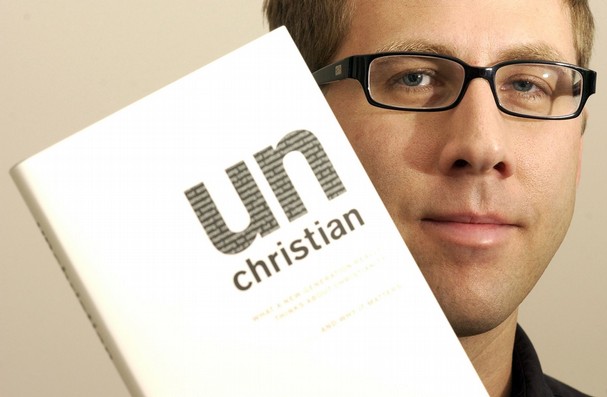
I Love JudgmentalUnchristianI just read one of the most horrific antinomian chapters of heresy in my whole life! David Kinnaman’s Unchristian (2007), chapter 8: “Judgmental” makes the case that pastors, youth pastors, and all Christians should be completely non-judgmental towards sin and morals; and only be tolerant of sin and loving of sinners in their sins. It is Seeker-Sensitive theology for Generation Y, my generation. Some heresies are die hard; this antinomian non-judgmental stuff is very old; but it was (sort of) refreshing to see the heresy articulated again in its most up-to-date form, at least so I can try to rebuke it utterly with all of my heart. On page 255, note 2 for chapter 8, Kinnaman provides a list of Scriptures that he believes teach non-judgmentalism (the idea that Christians should not tell other people what they’re doing is wrong). I felt sick as I read him taking these Scriptures out of their context and reinterpreting them in a liberal, antinomian, morally lax, carnal manner. So, to make up for this, I consulted Matthew Henry, Adam Clarke, and the NIV Study Bible to compile a traditional orthodox interpretation of these Biblical passages; and respond to Kinnaman’s gross misinterpretation and immoral misapplication of the inspired Word of God. David Kinnaman and his crowd seem to fit well into these Scriptures: “Evil men and impostors will go from bad to worse, deceiving and being deceived…For the time will come when men will not put up with sound doctrine. Instead, to suit their own desires, they will gather around them a great number of teachers to say what their itching ears want to hear” (2 Timothy 3:13; 4:3-4).

1. Matthew 7:1-2. This only forbids hypocrites from judging others (v. 5). Particularly, rash and unfriendly judging based on the personal like or dislike of a person.

2. Luke 6:37. Again, this only forbids hypocrites from judging others; and it does not forbid genuine spiritual discernment (vv. 43-45). This forbids harsh, demeaning, and unmerciful condemning of others.

3. Luke 7:36-47. Jesus does not rebuke the Pharisee for judging at all–He is not going to the extent of teaching non-judgmentalism. Instead, He teaches the Pharisee how to make a righteous judgment of a person who has repented and been forgiven by God (vv. 40-43). The Pharisee was being hypocritical and lukewarm in his judgment of the woman; because, although she had been a prostitute and pagan, her great weeping and visible worship of Jesus, shows that her repentance from sin and love for God were now very deep. Unlike the Pharisee, who doubted that Jesus should even be called a prophet (v. 39). Henry concludes, “The reason why some people blame the pains and expense of zealous Christians, in religion, is because they are not willing themselves to come up to it, but resolve to rest in a cheap and easy religion.”

I Love Being Judgmental4. Romans 2:1-4. Paul teaches, just like Jesus (Matthew 7:1-2; Luke 6:37), that it is wrong for hypocrites to judge others. He is not teaching non-judgmentalism, but was rebuking some unrepentant carnal Christians in Rome who were criticizing others (v. 5). This means, that in this Scripture, Paul was judging someone!

5. Romans 14:4, 10-13. Paul is not teaching a full scale non-judgmentalism in these verses! If you read the whole chapter in its proper context, it becomes clear that the subjects he was addressing were “disputable matters” of the conscience (v. 1), such as keeping a Sabbath day (v. 5), or being a vegetarian (v. 2). Paul makes himself clear that all foods are clean (v. 20), but he directs Christians who already know this, to not be judgmental toward those Christians who aren’t so sure (v. 15). Vegetarian Christians don’t yet realize that God has cleansed all foods (Acts 10):–but they are still saved if they maintain a clear conscience toward God. God will judge their lives as well as ours (v. 12):–”therefore let us stop passing judgment on one another” (v. 13) about such petty issues. Paul teaches flexibility and tolerance about such issues of the ceremonial law; but he does not teach an antinomian, full blown non-judgmentalism about all morality and sins (the moral law). Paul was teaching non-judgmentalism to be directed at those Christians who were not mature enough in their faith to completely abandon the ceremonial law; again, he was not teaching non-judgmentalism about the moral law. David Kinnaman, however, teaches non-judgmentalism about major issues of sexuality and morality such as abortion, homosexuality, divorce, prostitution, and adultery (pp. 182, 184, 196, 201). Neither Jesus nor Paul taught Christians to be non-judgmental about the moral law; especially sexual sins.

6. 1 Corinthians 4:5. This verse was directed to a particular group of people in the church of Corinth who were unjustly and arrogantly judging Paul as a false prophet and false apostle (v. 3, 18-20). Henry and the Puritans called it “censoriousness” (nitpicking; faultfinding; being severely critical). They didn’t really know him or his heart, but were passing judgment on his motives anyway (v. 5); and saying that he was evil. He reminds them that he will have to face God on the Day of Judgment for everything he is doing and every motive in his heart (vv. 4-5). God, who is all-knowing, and judges perfectly, righteously, and without favoritism. Paul is telling a particular group of people at Corinth who were calling him a false apostle:–”Wait until Judgment Day, then we’ll all see what God says about me and my motives.” This verse does NOT teach non-judgmentalism. What a total removal of the verse from its original context! Kinnaman would have us believe that all Christians at all times should suspend their judgment toward the gross and obvious immorality in other people’s lives (and implicitly, not warn them that they are in danger of Hell), because God will all judge us Himself on the Day of Judgment. Recently I saw a thug wearing a shirt that said, “Only God can judge me” (probably from the cuss-filled 2Pac rap song). That’s not true! Men are created in the image of God, and have the capacity to think critically; and discern right from wrong; and warn against all wrongdoing; and teach all righteousness! What Paul is saying is, “You people don’t really know me; also, you are arrogant and are saying things that are not accurate at all…but God, who knows all things, will judge me one day.” Paul is not telling all Christians to be non-judgmental to all sin in the world! He is NOT teaching “Only God can judge me; don’t judge me; you don’t know me!”:–as if this applied to all moral issues; and all relationships. He was applying a principle of righteous judgment, which was also the teaching of Jesus, to be modeled in the church of Corinth. In other words, if you’re going to judge someone, make sure you have sufficient evidence, and are trying to make an accurate, honest evaluation of the facts; and are being humble about the matter, making a judgment that is based on clear indisputable reasons and evidences. Otherwise, you are arrogant, illogical, and would serve as a poor judge in any court of law (unless it was a kangaroo court that totally perverted justice).

7. 1 Corinthians 5:12. God judges non-Christians who don’t go to church and are not part of the church community. But Christians within the church community are to judge each other. “The time has come for judgment to begin at the house of God” (1 Peter 4:17). As a friend of the world is an enemy of God (James 4:4), so it is not possible for Christians to accurately judge the personal lives of non-Christians since they don’t (or shouldn’t) know them that intimately. What a rebuke to friendship evangelism! Kinnaman assumes that Christians should be friends with non-Christians and in a non-judgmental manner about their sin throughout his whole chapter! Clarke rightly said, “Christians who wish to retain the spirituality of their religion should be very careful how they mingle with the world. He who is pleased with the company of ungodly men, no matter howsoever witty or learned, is either himself one with them, or is drinking into their spirit. It is impossible to associate with such by choice without receiving a portion of their contagion. A man may be amused or delighted with such people, but he will return even from the festival of wit with a lean soul.” Paul says, “Do not be misled: ‘Bad company corrupts good morals’” (1 Corinthians 15:33). However, Christians should obviously preach against the sins of the world when they practice evangelism in public, whether by means of open air preaching, one-to-one witnessing, etc. Without the preaching of God’s law there can be no preaching of God’s grace (the Gospel).

Posted in Uncategorized | Leave a comment

The National Covenant (1638) – The Covenanters

The following was a covenant that Scottish political and religious leaders signed, called the Covenanters, which in my opinion, was the first legitimate Protestant Charismatic group to arise out of the Reformation. It is very anti-Catholic, because it was intended to usurp the state power that the Roman Catholic Church had in Scotland.

SAMSUNG DIGITAL CAMERA

—–

Originally from here.

Note: the word “kirk” = church

23. The Scottish National Covenant.

[February 37, 1638. Rushworth, ii. 734. See Hist. of Engl viii. 329.]

The confession of faith of the Kirk of Scotland, subscribed at first by the King’s Majesty and his household in the year of God 1580; thereafter by persons of all ranks in the year 1581, by ordinance of the lords of the secret council, and acts of the general assembly; subscribed again by all sorts of persons in the year 1590, by a new ordinance of council, at the desire of the general assembly; with a general band for the maintenance of the true religion, and the King’s person, and now subscribed in the year 1638, by us noblemen, barons, gentlemen, burgesses, ministers, and commons under subscribing; together with our resolution and promises for the causes after specified, to maintain the said true religion, and the King’s Majesty, according to the confession aforesaid, and Acts of Parliament; the tenure whereof here followeth. We all, and every one of us underwritten, do protest, that after long and due examination of our own consciences in matters of true and false religion, we are now thoroughly resolved of the truth, by the Word and Spirit of God; and therefore we believe with our hearts, confess with our mouths, subscribe with our hands, and constantly affirm before God and the whole world, that this only is the true Christian faith and religion, pleasing God, and bringing salvation to man, which now is by the mercy of God revealed to the world by the preaching of the blessed evangel [Gospel], and received, believed, and defended by many and sundry notable kirks and realms, but chiefly by the Kirk of Scotland, the King’s Majesty, and three estates of this realm, as God’s eternal truth and only ground of our salvation; as more particularly is expressed in the confession of our faith [The Scottish Confession], established and publicly confirmed by sundry Acts of Parliament; and now of a long time hath been openly professed by the King’s Majesty, and whole body of this realm, both in burgh and land. To the which confession and form of religion we willingly agree in our consciences in all points, as unto God’s undoubted truth and verity, grounded only upon His written Word; and therefore we abhor and detest all contrary religion and doctrine, but chiefly all kind of papistry [Catholicism] in general and particular heads, even as they are now damned and confuted by the Word of God and Kirk of Scotland. But in special we detest and refuse the usurped authority of that Roman Antichrist [the Pope] upon the Scriptures of God, upon the Kirk, the civil magistrate, and consciences of men; all his tyrannous laws made upon indifferent things against our Christian liberty; his erroneous doctrine against the sufficiency of the written Word, the perfection of the law, the office of Christ and His blessed evangel; his corrupted doctrine concerning original sin, our natural inability and rebellion to God’s law, our justification by faith only, our imperfect sanctification and obedience to the law, the nature, number, and use of the holy sacraments; his five bastard sacraments, with all his rites, ceremonies, and false doctrine, added to the ministration of the true sacraments, without the Word of God; his cruel judgments against infants departing without the sacrament; his absolute necessity of baptism; his blasphemous opinion of transubstantiation or real presence of Christ’s body in the elements, and receiving of the same by the wicked, or bodies of men; his dispensations, with solemn oaths, perjuries, and degrees of marriage, forbidden in the Word; his cruelty against the innocent divorced [here the Covenanters seemingly approved of a godly spouse who had been divorced by an ungodly spouse, to remarry only in the Lord, whereas Rome had forbidden it]; his devilish mass; his blasphemous priesthood; his profane sacrifice for the sins of the dead and the quick; his canonization of men, calling upon angels or saints departed, worshipping of imagery, relics, and crosses; dedicating of kirks, altars, days, vows to creatures; his purgatory, prayers for the dead, praying or speaking in a strange language [Latin…perhaps a reason why speaking in tongues in church became frowned upon by the Reformed]; with his processions and blasphemous litany, and multitude of advocates or mediators; his manifold orders, auricular confession; his desperate and uncertain repentance; his general and doubtsome faith; his satisfactions of men for their sins; his justification by works, opus operatum, works of supererogation, merits, pardons, peregrinations and stations; his holy water, baptizing of bells, conjuring of spirits, crossing, saning, anointing, conjuring, hallowing of God’s good creatures, with the superstitious opinion joined therewith; his worldly monarchy and wicked hierarchy; his three solemn vows, with all his shavelings of sundry sorts; his erroneous and bloody decrees made at Trent [the Council of Trent], with all the subscribers and approvers of that cruel and bloody band conjured against the Kirk of God. And finally, we detest all his vain allegories, rites, signs, and traditions, brought in the Kirk without or against the Word of God, and doctrine of this true reformed Kirk. To which we join ourselves willingly, in doctrine, religion, faith, discipline, and life of the holy sacraments, as lively members of the same, in Christ our head, promising and swearing, by the great name of the Lord our God, that we shall continue in the obedience of the doctrine and discipline of this Kirk, and shall defend the same according to our vocation and power all the days of our lives, under the pains contained in the law, and danger both of body and soul in the day of God’s fearful judgment. And seeing that many are stirred up by Satan and that Roman Antichrist, to promise, swear, subscribe, and for a time use the holy sacraments in the Kirk, deceitfully against their own consciences, minding thereby, first under the external cloak of religion, to corrupt and subvert secretly God’s true religion within the Kirk; and afterwards, when time may serve, to become open enemies and persecutors of the same, under vain hope of the Pope’s dispensation, devised against the Word of God, to his great confusion, and their double condemnation in the day of the Lord Jesus.

We therefore, willing to take away all suspicion of hypocrisy, and of such double dealing with God and His Kirk, protest and call the Searcher of all hearts for witness, that our minds and hearts do fully agree with this our confession, promise, oath, and subscription: so that we are not moved for any worldly respect, but are persuaded only in our consciences, through the knowledge and love of God’s true religion printed in our hearts by the Holy Spirit, as we shall answer to Him in the day when the secrets of all hearts shall be disclosed. And because we perceive that the quietness and stability of our religion and Kirk doth depend upon the safety and good behaviour of the King’s Majesty, as upon a comfortable instrument of God’s mercy granted to this country for the maintenance of His Kirk, and ministration of justice among us, we protest and promise with our hearts under the same oath, hand-writ, and pains, that we shall defend his person and authority with our goods, bodies, and lives, in the defence of Christ His evangel, liberties of our country, ministration of justice, and punishment of iniquity, against all enemies within this realm or without, as we desire our God to be a strong and merciful defender to us in the day of our death, and coming of our Lord Jesus Christ; to Whom, with the Father and the Holy Spirit, be all honour and glory eternally.

Like as many Acts of Parliament not only in general do abrogate, annul, and rescind all laws, statutes, acts, constitutions, canons civil or municipal, with all other ordinances and practick penalties whatsoever, made in prejudice of the true religion, and professors thereof, or of the true Kirk discipline, jurisdiction, and freedom thereof; or in favours of idolatry and superstition; or of the papistical kirk (as Act 3. Act 31. Parl. I. Act 23. Parl. 11. Act 114. Parl. 12, of K. James VI), that papistry and superstition may be utterly suppressed, according to the intention of the Acts of Parliament reported in Act 5. Parl. 20. K. James VI. And to that end they ordained all papists and priests to be punished by manifold civil and ecclesiastical pains, as adversaries to God’s true religion preached, and by law established within this realm (Act. 24. Parl. 11. K. James VI) as common enemies to all Christian government (Act 18. Parl. 16. K. James VI), as rebellers and gainstanders of our Sovereign Lord’s authority (Act 47. Parl. 3. K. James VI), and as idolaters (Act 104. Parl. 7. K. James VI), but also in particular (by and attour the confession of faith) do abolish and condemn the Pope’s authority and jurisdiction out of this land, and ordains the maintainers thereof to be punished (Act 2. Parl. 1. Act. 51. Parl. 3. Act 106. Parl. 7. Act 114. Parl. 12. of K. James VI); do condemn the Pope’s erroneous doctrine, or any other erroneous doctrine repugnant to any of the Articles of the true and Christian religion publicly preached, and by law established in this realm; and ordains the spreaders or makers of books or libels, or letters or writs of that nature, to be punished (Act 46. Parl. 3. Act 106. Parl. 7. Act 24. Parl. 11. K.James VI); do condemn all baptism conform to the Pope’s kirk, and the idolatry of the Mass; and ordains all sayers, wilful hearers, and concealers of the Mass, the maintainers and resetters of the Priests, Jesuits, trafficking Papists, to be punished without exception or restriction (Act 5. Parl. I. Act 120. Parl. 12. Act 164. Parl. 13. Act 193. Parl. 14. Act. I. Parl. 19. Act 5. Parl. 20 K. James VI); do condemn all erroneous books and writs containing erroneous doctrine against the religion presently professed, or containing superstitious rights and ceremonies papistical, whereby the people are greatly abused; and ordains the home-bringers of them to be punished (Act 25. Parl. 11. K. James VI); do condemn the monuments and dregs of bygone idolatry, as going to crosses, observing the festival days of saints, and such other superstitious and papistical rites, to the dishonour of God, contempt of true religion, and fostering of great errors among the people, and ordains the users of them to be punished for the second fault as idolaters (Act 104. Parl. 7. K. James VI).

Like as many Acts of Parliament are conceived for maintenance of God’s true and Christian religion, and the purity thereof in doctrine and sacraments of the true Church of God, the liberty and freedom thereof in her national synodal assemblies, presbyteries, sessions, policy, discipline, and jurisdiction thereof, as that purity of religion and liberty of the Church was used, professed, exercised, preached, and confessed according to the reformation of religion in this realm. (As for instance: Act 99. Parl. 7. Act 23. Parl 11. Act 114. Parl. 12. Act 160. Parl. 13. K. James VI, ratified by Act 4. K. Charles.) So that Act 6. Parl. I. and Act 68. Parl. 6. of K. James VI, in the year of God 1579, declares the ministers of the blessed evangel [Gospel], whom God of His mercy had raised up or hereafter should raise, agreeing with them that then lived in doctrine and administration of the sacraments, and the people that professed Christ as He was then offered in the evangel, and doth communicate with the holy sacraments (as in the reformed Kirks of this realm they were presently administered) according to the confession of faith to be the true and holy Kirk of Christ Jesus within this realm, and discerns and declares all and sundry, who either gainsays the word of the evangel, received and approved as the heads of the confession of faith, professed in Parliament in the year of God 1560 [The Scottish Confession of 1560]–[THE COVENANTERS’ CONFESSION, including Alexander Peden, and various other Protestant seers, visionaries, and prophets later called the Scots Worthies], specified also in the first Parliament of K. James VI, and ratified in this present Parliament, more particularly do specify; or that refuses the administration of the holy sacraments as they were then ministrated, to be no members of the said Kirk within this realm and true religion presently professed, so long as they keep themselves so divided from the society of Christ’s body. And the subsequent Act 69. Parl. 6. K. James VI, declares that there is no other face of Kirk, nor other face of religion than was presently at that time by the favour of God established within this realm, which therefore is ever styled God’s true religion, Christ’s true religion, the true and Christian religion, and a perfect religion, which by manifold Acts of Parliament all within this realm are bound to profess to subscribe the Articles thereof, the confession of faith, to recant all doctrine and errors repugnant to any of the said Articles (Act 4 and 9. Parl. 1. Act 45. 46. 47. Parl. 3. Act 71. Parl. 6. Act 106. Parl. 7. Act 24. Parl. 11. Act 123. Parl. 12. Act 194 and 197. Parl. 14 of K. James VI). And all magistrates, sheriffs, &c., on the one part, are ordained to search, apprehend, and punish all contraveners (for instance, Act 5. Parl. I. Act 104. Parl. 7. Act 2 5. Parl. 11. K. James VI). And that, notwithstanding of the King’s Majesty’s licences on the contrary, which are discharged and declared to be of no force, in so far as they tend in any ways to the prejudice and hindrance of the execution of the Acts of Parliament against Papists and adversaries of the true religion (Act 106. Parl. 7. K. James VI). On the other part, in Act 47. Parl. 3. K. James VI, it is declared and ordained, seeing the cause of God’s true religion and His Highness’s authority are so joined as the hurt of the one is common to both; and that none shall be reputed as loyal and faithful subjects to our Sovereign Lord or his authority, but be punishable as rebellers and gainstanders of the same, who shall not give their confession and make profession of the said true religion; and that they, who after defection shall give the confession of their faith of new, they shall promise to continue therein in time coming, to maintain our Sovereign Lord’s authority, and at the uttermost of their power to fortify, assist, and maintain the true preachers and professors of Christ’s religion, against whatsoever enemies and gainstanders of the same; and namely, against all such of whatsoever nation, estate, or degree they be of, that have joined or bound themselves, or have assisted or assists to set forward and execute the cruel decrees of Trent, contrary to the preachers and true professors of the Word of God, which is repeated word by word in the Articles of Pacification at Perth, the 23rd of Feb., 1572, approved by Parliament the last of April 1573, ratified in Parliament 1578, and related Act 123. Parl. 12. of K. James VI, with this addition, that they are bound to resist all treasonable uproars and hostilities raised against the true religion, the King’s Majesty and the true professors.

Like as all lieges are bound to maintain the King’s Majesty’s royal person and authority, the authority of Parliaments, without which neither any laws or lawful judicatories can be established (Act 130. Act 131. Parl. 8. K. James VI), and the subjects’ liberties, who ought only to live and be governed by the King’s laws, the common laws of this realm allanerly (Act 48. Parl. 3. K. James I, Act 79. Parl. 6. K. James VI, repeated in Act 131. Parl. 8. K. James VI), which if they be innovated or prejudged the commission anent the union of the two kingdoms of Scotland and England, which is the sole Act of 17 Parl. James VI, declares such confusion would ensue as this realm could be no more a free monarchy; because by the fundamental laws, ancient privileges, offices, and liberties of this kingdom, not only the princely authority of His Majesty’s royal descent hath been these many ages maintained, also the people’s security of their lands, livings, rights, offices, liberties and dignities preserved. And therefore for the preservation of the said true religion, laws and liberties of this kingdom, it is statute by Act 8. Parl. 1. repeated in Act 99. Parl. 7. ratified in Act 23. Parl, 11 and 14. Act of K. James VI and 4 Act of K. Charles, that all Kings and Princes at their coronation and reception of their princely authority, shall make their faithful promise by their solemn oath in the presence of the Eternal God, that during the whole time of their lives they shall serve the same Eternal God to the utmost of their power, according as He hath required in His most Holy Word, contained in the Old and New Testaments, and according to the same Word shall maintain the true religion of Christ Jesus, the preaching of His Holy Word, the due and right ministration of the sacraments now received and preached within this realm (according to the confession of faith immediately preceding); and shall abolish and gainstand all false religion contrary to the same; and shall rule the people committed to their charge ACCORDING TO THE WILL AND COMMANDMENT OF GOD revealed in His foresaid Word, and according to the lowable laws and constitutions received in this realm, no ways repugnant to the said will of the Eternal God; and shall procure to the utmost of their power, to the Kirk of God, and whole Christian people, true and perfect peace in all time coining; and that they shall be careful to root out of their Empire all heretics and enemies to the true worship of God, who shall be convicted by the true Kirk of God of the aforesaid crimes. Which was also observed by His Majesty at his Coronation in Edinburgh, 1633, as may be seen in the Order of the Coronation. In OBEDIENCE TO THE COMMANDS OF GOD, conform to the practice of the godly in former times, and according to the laudable example of our worthy and religious progenitors, and of many yet living amongst us, which was warranted also by act of council, commanding a general band to be made and subscribed by His Majesty’s subjects of all ranks for two causes: one was, for defending the true religion, as it was then reformed, and is expressed in the confession of faith above written, and a former large confession established by sundry acts of lawful general assemblies and of Parliament, unto which it hath relation, set down in public catechisms, and which had been for many years with a blessing from Heaven preached and professed in this Kirk and kingdom, as God’s undoubted truth grounded only upon His written Word. The other cause was for maintaining the King’s Majesty, his person and estate; the true worship of God and the King’s authority being so straitly joined, as that they had the same friends and common enemies, and did stand and fall together. And finally, being convinced in our minds, and confessing with our mouths, that the present and succeeding generations in this land are bound to keep the aforesaid national oath and subscription inviolable:—

We noblemen, barons, gentlemen, burgesses, ministers, and commons under subscribing, considering divers times before, and especially at this time, the danger of the true reformed religion, of the King’s honour, and of the public peace of the kingdom, by the manifold innovations and evils generally contained and particularly mentioned in our late supplications, complaints, and protestations, do hereby profess, and before God, His angels and the world, solemnly declare, that with our whole hearts we agree and resolve all the days of our life constantly to adhere unto and to defend the aforesaid true religion, and forbearing the practice of all innovations already introduced in the matters of the worship of God, or approbation of the corruptions of the public government of the Kirk, or civil places and power of kirkmen [churchmen], till they be tried and allowed in free assemblies and in Parliaments, to labour by all means lawful to recover the purity and liberty of the Gospel as it was established and professed before the aforesaid novations; and because, after due examination, we plainly perceive and undoubtedly believe that the innovations and evils contained in our supplications, complaints, and protestations have no warrant of the Word of God, are contrary to the articles of the aforesaid confessions, to the intention and meaning of the blessed reformers of religion in this land [John Knox, George Wishart, etc], to the above-written Acts of Parliament, and do sensibly tend to the re-establishing of the popish religion and tyranny, and to the subversion and ruin of the true reformed religion, and of our liberties, laws and estates; we also declare that the aforesaid confessions are to be interpreted, and ought to be understood of the aforesaid innovations and evils, no less than if every one of them had been expressed in the aforesaid confessions; and that we are obliged to detest and abhor them, amongst other particular heads of papistry [Catholicism] abjured therein; and therefore from the knowledge and conscience of our duty to God, to our King and country, without any worldly respect or inducement so far as human infirmity will suffer, wishing a further measure of the grace of God for this effect, we promise and swear by the great name of the Lord our God, to continue in the profession and obedience of the aforesaid religion; that we shall defend the same, and resist all these contrary errors and corruptions according to our vocation, and to the utmost of that power that God hath put into our hands, all the days of our life. And in like manner, with the same heart we declare before God and men, that we have no intention or desire to attempt anything that may turn to the dishonour of God or the diminution of the King’s greatness and authority; but on the contrary we promise and swear that we shall to the utmost of our power, with our means and lives, stand to the defence of our dread Sovereign the King’s Majesty, his person and authority, in the defence and preservation of the aforesaid true religion, liberties and laws of the kingdom; as also to the mutual defence and assistance every one of us of another, in the same cause of maintaining the true religion and His Majesty’s authority, with our best counsels, our bodies, means and whole power, against all sorts of persons whatsoever; go that whatsoever shall be done to the least of us for that cause shall be taken as done to us all in general, and to every one of us in particular; and that we shall neither directly or indirectly suffer ourselves to be divided or withdrawn by whatsoever suggestion, combination, allurement or terror from this blessed and loyal conjunction; nor shall cast in any let or impediment that may stay or hinder any such resolution as by common consent shall be found to conduce for so good ends; but on the contrary shall by all lawful means labour to further and promote the same; and if any such dangerous and divisive motion be made to us by word or writ, we and every one of us shall either suppress it or (if need be) shall incontinently make the same known, that it may be timously obviated. Neither do we fear the foul aspersions of rebellion, combination or what else our adversaries from their craft and malice would put upon us, seeing what we do is so well warranted, and ariseth from an unfeigned desire to maintain the true worship of God, the majesty of our King, and the peace of the kingdom, for the common happiness of ourselves and posterity. And because we cannot look for a blessing from God upon our proceedings, except with our profession and subscription, we join such a life and conversation as beseemeth Christians who have renewed their covenant with God; we therefore faithfully promise, for ourselves, our followers, and all other under us, both in public, in our particular families and personal carriage, to endeavour to keep ourselves within the bounds of Christian liberty, and to be good examples to others of all godliness, soberness and righteousness, and of every duty we owe to God and man; and that this our union and conjunction may be observed without violation we call the living God, the searcher of our hearts to witness, who knoweth this to be our sincere desire and unfeigned resolution, as we shall answer to Jesus Christ in the great day, and under the pain of God’s everlasting wrath, and of infamy, and of loss of all honour and respect in this world; most humbly beseeching the Lord to strengthen us by His Holy Spirit for this end, and to bless our desires and proceedings with a happy success, THAT RELIGION AND RIGHTEOUSNESS MAY FLOURISH IN THE LAND, to the glory of God, the honour of our King, and peace and comfort of us all.

In witness whereof we have subscribed with our hands all the premises, &c.

Posted in Uncategorized | Leave a comment

And Can It Be That I Should Gain? – Charles Wesley

I agree with one commentator, that I want this entire hymn to be sung at my funeral.

—–

And can it be that I should gain
An interest in the Savior’s blood?
Died He for me, who caused His pain—
For me, who Him to death pursued?
Amazing love! How can it be,
That Thou, my God, shouldst die for me?
Amazing love! How can it be,
That Thou, my God, shouldst die for me?

He left His Father’s throne above
So free, so infinite His grace—
Emptied Himself of all but love,
And bled for Adam’s helpless race:
’Tis mercy all, immense and free,
For O my God, it found out me!
’Tis mercy all, immense and free,
For O my God, it found out me!

Long my imprisoned spirit lay,
Fast bound in sin and nature’s night;
Thine eye diffused a quickening ray—
I woke, the dungeon flamed with light;
My chains fell off, my heart was free,
I rose, went forth, and followed Thee.
My chains fell off, my heart was free,
I rose, went forth, and followed Thee.

No condemnation now I dread;
Jesus, and all in Him, is mine;
Alive in Him, my living Head,
And clothed in righteousness divine,
Bold I approach the eternal throne,
And claim the crown, through Christ my own.
Bold I approach the eternal throne,
And claim the crown, through Christ my own.

—–

STANZAS NOT IN VIDEO–Wonder Why?

Angels, Voice of God, Wrath of God, Feeling the Presence of Jesus—
Why Ignore Such Vital Themes? C’mon United Methodist Church!

’Tis mystery all: the Immortal dies:
Who can explore His strange design?
In vain the firstborn seraph tries
To sound the depths of love divine.
’Tis mercy all! Let earth adore,
Let angel minds inquire no more.
’Tis mercy all! Let earth adore;
Let angel minds inquire no more.

Still the small inward voice I hear,
That whispers all my sins forgiven;
Still the atoning blood is near,
That quenched the wrath of hostile Heaven.
I feel the life His wounds impart;
I feel the Savior in my heart.
I feel the life His wounds impart;
I feel the Savior in my heart.

Posted in Uncategorized | Leave a comment

Revival Worship Collection 2

See also: REVIVAL WORSHIP COLLECTION 1

1. Studio Musicians – Seek Ye First (8/10)
2. Keith Green – O God Our Lord (10/10)
3. Spirit of the Living God
4. John Michael Talbot (The Ultimate Collection) – One Faith (9/10)
5. John Michael Talbot – Glory To Thee (8/10)
6. Michael Card – God’s Own Fool (9/10)
7. Michael Card – Crown Him (10/10)
8. Michael Card – Come To The Table (9/10)
9. Petra – Road To Zion (8/10)
10. Westminster Abbey Choir – Psalm 130: ‘Out of the Deep’ (10/10)

11. Rich Mullins – The Color Green (10/10)
12. Sovereign Grace Music – We Will Glorify (Live) (8/10)
13. Maranatha! Music – Father, I Adore You (8/10)
14. Bill & Gloria Gaither – We Have Come Into This House (8/10)
15. Maranatha! Music – You Are My Hiding Place (8/10)
16. Hezekiah Walker – Lift Him Up (Radio Edit) (9/10)
17. Byron Cage – The Presence of the Lord Is Here (8/10)
18. Hillsong – The Potter’s Hand (Live) (9/10)
19. Bill & Gloria Gaither – At Calvary (9/10)
20. Sovereign Grace Music – And Can It Be? (8/10)
21. Robin Mark – Take Us To The River (9/10)
22. Rev. Milton Brunson – The Holy Ghost Is Here Right Now (9/10)
23. Chicago Mass Choir – Holy Ghost Power (10/10)
24. Mississippi Mass Choir – Near the Cross (8/10)
25. Mississippi Mass Choir – Hold On Old Soldier (8/10)
26. Mississippi Mass Choir – When I Rose This Morning (10/10)
27. Mississippi Mass Choir – Jesus Paid It All (9/10)
28. Hezekiah Walker – Faithful Is Our God (9/10)
29. Hymn Factory – I To The Hills Will Lift Mine Eyes (10/10)
30. Sheffield Cathedral Choir – O God, Our Help In Ages Past (10/10)

Posted in Uncategorized | Leave a comment

O God Our Lord – Keith Green

I saw the dead, great and small, standing before the throne, and books were opened. Another book was opened, which is the Book of Life. The dead were judged according to what they had done as recorded in the books. The sea gave up the dead that were in it, and death and Hell gave up the dead that were in them, and each person was judged according to what they had done. Then death and Hell were thrown into the Lake of Fire. The Lake of Fire is the second death. Anyone whose name was not found written in the Book of Life was thrown into the Lake of Fire. –Revelation 20:12-15

—–

Who You gonna throw in the Lake of Fire
O God, our Lord?
Who You gonna throw when the flames get higher
O God, our Lord?

The devil and the man with the dark desire
O God, our Lord
The devil and the man with the dark desire
O God, our Lord

O God, our Lord, O God, our Lord
Who You gonna throw in the Lake of Fire
O God, our Lord, O God, our Lord

Will my name be there when the books are opened
O God, our Lord?
Will my name be found when the books are opened
O God, our Lord?

You better know now, don’t just be hoping
O God, our Lord
You better know now, don’t just be hoping
O God, our Lord

O God, our Lord, O God, our Lord
Will my name be there when the books are opened
O God, our Lord, O God, our Lord

Who’s outside of the Holy City
O God, our Lord
Tell me, who’s left out of the Holy City
O God, our Lord

The liar and the thief and the ones half ready
O God, our Lord
The liar and the thief and the ones half ready
O God, our Lord

O God, our Lord, O God, our Lord
Tell me who’s outside of the Holy City
O God, our Lord, O God, our Lord

My, my, my Lord
I’m crying out to You Master, oh Lord
Don’t You know I need You, oh Lord?
Have mercy on a poor sinner like me, oh Jesus
Don’t You know I need You, oh Lord?

Posted in Uncategorized | Leave a comment

Salvation from Hell by Faith in Jesus’ Blood – Paul Washer

Posted in Uncategorized | Leave a comment

The Moral Laws of Leviticus 18-19

Moses on Mt Sinai - Jean-Leon GeromeSee also: The Commandments of Christ (Part 2)

The NIV Study Bible says of Leviticus chapters 18:1-20:27: “Here God’s people are given instructions concerning interpersonal relations and a morality reflecting God’s holiness. Israel was thereby prepared for a life different from the Canaanites, whose lifestyle was deplorably immoral. Ch. 18 marks the boundaries for marriage and sexual relations (but see also v. 21 and note), ch. 19 provides specific moral guidance on a variety of matters, many of which are implicitly covered by the Ten Commandments, and ch. 20 specifies the penalties for violating God’s standard of morality.”

“These laws were given, at least for the most part, during the year that Israel camped at Mount Sinai, when God directed Moses…” (p. 146).

John Wesley on the Third Use of the Law

There is “no such sin as legality (legalism) in the Bible: the very use of the term speaks an antinomian” (John Telford, ed. Letters, 5:211-12).

1 John 5:3: “This is the love of God, that we keep His commandments: and His commandments are not grievous.” … “The plain indisputable meaning of that text is: ‘this is the’ sign or proof of the ‘love of God’, of our keeping the first and great commandment–to KEEP THE REST OF HIS COMMANDMENTS. For true love, if it be once shed abroad in our heart, will constrain us so to do; since whosoever loves God with all his heart cannot but serve Him with all his strength” (“The Marks of the New Birth,” 3.4).

“The third use of the Law is to keep us alive. It is the grand means whereby the blessed Spirit prepares the believer for larger communications of the life of God” (“The Original, Nature, Property, and Use of the Law,” 4.3).

J. I. Packer on the Third Use of the Law

“Its third function is to guide the regenerate into the good works that God has planned for them (Eph. 2:10). The Law tells God’s children what will please their heavenly Father. It could be called their family code. Christ was speaking of this third use of the Law when He said that those who become His disciples must be taught to keep the Law and to do all that He had commanded (Matt. 5:18-20; 28:20), and that it is obedience to His commands that will prove the reality of one’s love for Him (John 14:15). The Christian is free from the Law as a supposed system of salvation (Rom. 6:14; 7:4, 6; 1 Cor. 9:20; Gal. 2:15-19; 3:25) but is “under Christ’s law” as a rule of life (1 Cor. 9:21; Gal. 6:2)” (Concise Theology, p. 95)

The 39 Articles

“Although the Law given from God by Moses, as touching Ceremonies and Rites, do not bind Christian men, nor the Civil precepts thereof ought of necessity to be received in any commonwealth; yet notwithstanding, NO CHRISTIAN MAN WHATSOEVER IS FREE FROM THE OBEDIENCE OF THE COMMANDMENTS WHICH ARE CALLED MORAL” (VII, “Of the Old Testament”).

—–

LEVITICUS 18:6-23

6 “NO INCEST. ‘No one is to approach any close relative to have sexual relations. I am the Lord.

7 “ NO SEX WITH MOTHER. ‘Do not dishonor your father by having sexual relations with your mother. She is your mother; do not have relations with her.

8 “ NO SEX WITH STEPMOTHER. ‘Do not have sexual relations with your father’s wife; that would dishonor your father.

9 “ NO SEX WITH SISTER OR HALF-SISTER. ‘Do not have sexual relations with your sister, either your father’s daughter or your mother’s daughter, whether she was born in the same home or elsewhere.

10 “NO SEX WITH GRANDDAUGHTER. ‘Do not have sexual relations with your son’s daughter or your daughter’s daughter; that would dishonor you.

11 “NO SEX WITH SISTER. ‘Do not have sexual relations with the daughter of your father’s wife, born to your father; she is your sister.

12 “NO SEX WITH AUNT, FATHER’S SIDE. ‘Do not have sexual relations with your father’s sister; she is your father’s close relative.

13 “NO SEX WITH AUNT, MOTHER’S SIDE. ‘Do not have sexual relations with your mother’s sister, because she is your mother’s close relative.

14 “NO SEX WITH AUNT, FATHER’S SIDE, UNCLE’S WIFE. ‘Do not dishonor your father’s brother by approaching his wife to have sexual relations; she is your aunt.

15 “NO SEX WITH DAUGHTER-IN-LAW. ‘Do not have sexual relations with your daughter-in-law. She is your son’s wife; do not have relations with her.

16 “NO SEX WITH SISTER-IN-LAW. ‘Do not have sexual relations with your brother’s wife; that would dishonor your brother.

17 “NO SEX WITH A WOMAN AND HER DAUGHTER AND HER GRANDDAUGHTER. ‘Do not have sexual relations with both a woman and her daughter. Do not have sexual relations with either her son’s daughter or her daughter’s daughter; they are her close relatives. That is wickedness.

18 “NO SEX OR BIGAMY WITH A SISTER-IN-LAW. ‘Do not take your wife’s sister as a rival wife and have sexual relations with her while your wife is living.

19 “NO SEX WITH WIFE DURING HER PERIOD. ‘Do not approach a woman to have sexual relations during the uncleanness of her monthly period.

20 “NO SEX WITH NEIGHBOR’S WIFE. ‘Do not have sexual relations with your neighbor’s wife and defile yourself with her.

21 “DON’T SACRIFICE YOUR CHILDREN TO MOLECH. ‘Do not give any of your children to be sacrificed to Molech, for you must not profane the name of your God. I am the Lord. [Wesley’s Notes: “Pass through fire – This was done, either by burning them in the fire, or by making them pass between two great fires, which was a kind of consecration of them to that god. Moloch – Called also Milcom, was an idol chiefly of the Ammonites. He seems to be the Saturn of the heathens, to whom especially children and men were sacrificed. This is mentioned, because the neighbours of Israel were most infected with this idolatry, and therefore they are particularly cautioned against it, though under this one instance all other idols and acts, or kinds of idolatry, are manifestly comprehended and forbidden.”]

22 “NO HOMOSEXUAL SEX. ‘Do not have sexual relations with a man as one does with a woman; that is detestable.

23 “NO SEX WITH AN ANIMAL (BEASTIALITY). ‘Do not have sexual relations with an animal and defile yourself with it. A woman must not present herself to an animal to have sexual relations with it; that is a perversion.

LEVITICUS 19:3-35

Ceremonial Laws Are Grayed Out, Because They Are Not Binding Today

3 “RESPECT YOUR PARENTS AND OBSERVE THE SABBATHS. ‘Each of you must respect your mother and father, and you must observe my Sabbaths. I am the Lord your God.

4 “DON’T WORSHIP IDOLS. ‘Do not turn to idols or make metal gods for yourselves. I am the Lord your God.

5 “ONLY EAT FELLOWSHIP OFFERINGS ON THE FIRST OR SECOND DAY. ‘When you sacrifice a fellowship offering to the Lord, sacrifice it in such a way that it will be accepted on your behalf. 6 It shall be eaten on the day you sacrifice it or on the next day; anything left over until the third day must be burned up. 7 If any of it is eaten on the third day, it is impure and will not be accepted. 8 Whoever eats it will be held responsible because they have desecrated what is holy to the Lord; they must be cut off from their people.

9 “FARMERS MUST LEAVE GLEANINGS FOR THE POOR AND FOREIGNER. ‘When you reap the harvest of your land, do not reap to the very edges of your field or gather the gleanings of your harvest. 10 Do not go over your vineyard a second time or pick up the grapes that have fallen. Leave them for the poor and the foreigner. I am the Lord your God.

11 “‘DO NOT STEAL.

“‘DO NOT LIE.

“‘DO NOT DECEIVE ONE ANOTHER.

12 “DO NOT BLASPHEME THE LORD’S NAME BY SWEARING FALSELY BY IT. ‘Do not swear falsely by My Name and so profane the Name of your God. I am the Lord.

13 “DON’T SWINDLE OR ROB FROM YOUR NEIGHBOR. ‘Do not defraud or rob your neighbor.

“EMPLOYERS MUST PAY THEIR EMPLOYEES DAILY; AND NOT WAIT TO PAY THEM TOMORROW. ‘Do not hold back the wages of a hired worker overnight.

14 “DON’T CUSS AT THE DEAF OR TRIP THE BLIND. ‘Do not curse the deaf or put a stumbling block in front of the blind, but fear your God. I am the Lord.

15 “JUDGES SHOULD NOT SHOW ANYONE FAVORITISM. ‘Do not pervert justice; do not show partiality to the poor or favoritism to the great, but judge your neighbor fairly.

16 “DON’T TELL LIES ABOUT SOMEONE TO RUIN THEIR REPUTATION. ‘Do not go about spreading slander among your people.

“DON’T PUT YOUR NEIGHBOR IN A LIFE-THREATENING SITUATION. ‘Do not do anything that endangers your neighbor’s life. I am the Lord.

17 “DO NOT HATE PEOPLE; AND REBUKE THOSE WHO DO WRONG. ‘Do not hate a fellow Israelite in your heart. Rebuke your neighbor frankly so you will not share in their guilt.

18 “DON’T SEEK REVENGE; DON’T HOLD THINGS AGAINST PEOPLE; LOVE YOUR NEIGHBOR AS YOU LOVE YOURSELF. ‘Do not seek revenge or bear a grudge against anyone among your people, but love your neighbor as yourself. I am the Lord.

19 “‘Keep my decrees.

“DON’T INTERBREED DIFFERENT KINDS OF ANIMALS (FOR EXAMPLE, A HORSE AND A DOG). ‘Do not mate different kinds of animals.

“DON’T PLANT YOUR FIELD WITH TWO KINDS OF SEED. ‘Do not plant your field with two kinds of seed.

“DON’T WEAR CLOTHES WITH TWO FABRICS. ‘Do not wear clothing woven of two kinds of material.

20 “NO SEX WITH FEMALE SLAVES. ‘If a man sleeps with a female slave who is promised to another man but who has not been ransomed or given her freedom, there must be due punishment. Yet they are not to be put to death, because she had not been freed. 21 The man, however, must bring a ram to the entrance to the tent of meeting for a guilt offering to the Lord. 22 With the ram of the guilt offering the priest is to make atonement for him before the Lord for the sin he has committed, and his sin will be forgiven.

23 “YOU MAY ONLY EAT FROM A FRUIT TREE BEGINNING IN THE FIFTH YEAR OF ITS LIFE. ‘When you enter the land and plant any kind of fruit tree, regard its fruit as forbidden. For three years you are to consider it forbidden; it must not be eaten. 24 In the fourth year all its fruit will be holy, an offering of praise to the Lord. 25 But in the fifth year you may eat its fruit. In this way your harvest will be increased. I am the Lord your God.

26 “‘DO NOT EAT ANY MEAT WITH THE BLOOD STILL IN IT.

“NO OCCULT PRACTICES. ‘Do not practice divination or seek omens.

27 “DON’T CUT THE HAIR ON YOUR TEMPLES OR YOUR BEARD. ‘Do not cut the hair at the sides of your head or clip off the edges of your beard.

28 “NO TATTOOS, ESPECIALLY FOR DEAD LOVED ONES. ‘Do not cut your bodies for the dead or put tattoo marks on yourselves. I am the Lord.

29 “DON’T MAKE YOUR DAUGHTER A PROSTITUTE. ‘Do not degrade your daughter by making her a prostitute, or the land will turn to prostitution and be filled with wickedness.

30 “OBSERVE THE SABBATHS; AND BE REVERENT IN CHURCH SERVICES. ‘Observe my Sabbaths and have reverence for my sanctuary. I am the Lord.

31 “DON’T CONSULT PSYCHIC FORTUNE TELLERS. ‘Do not turn to mediums or seek out spiritists, for you will be defiled by them. I am the Lord your God.

32 “STAND UP IN THE PRESENCE OF THE ELDERLY; RESPECT THE ELDERLY; REVERE GOD. ‘Stand up in the presence of the aged, show respect for the elderly and revere your God. I am the Lord.

33 “DON’T MISTREAT FOREIGNERS; TREAT THEM AS NATIVES; LOVE FOREIGNERS AS YOURSELF. ‘When a foreigner resides among you in your land, do not mistreat them. 34 The foreigner residing among you must be treated as your native-born. Love them as yourself, for you were foreigners in Egypt. I am the Lord your God.

35 “MARKETPLACE MANAGERS MUST CHARGE AN HONEST AMOUNT FOR THEIR ITEMS, ESPECIALLY ITEMS IN THE DELI, WHICH HAVE TO BE WEIGHED ON A SCALE. ‘Do not use dishonest standards when measuring length, weight or quantity. 36 Use honest scales and honest weights, an honest ephah and an honest hin. I am the Lord your God, who brought you out of Egypt.”

Posted in Uncategorized | Leave a comment

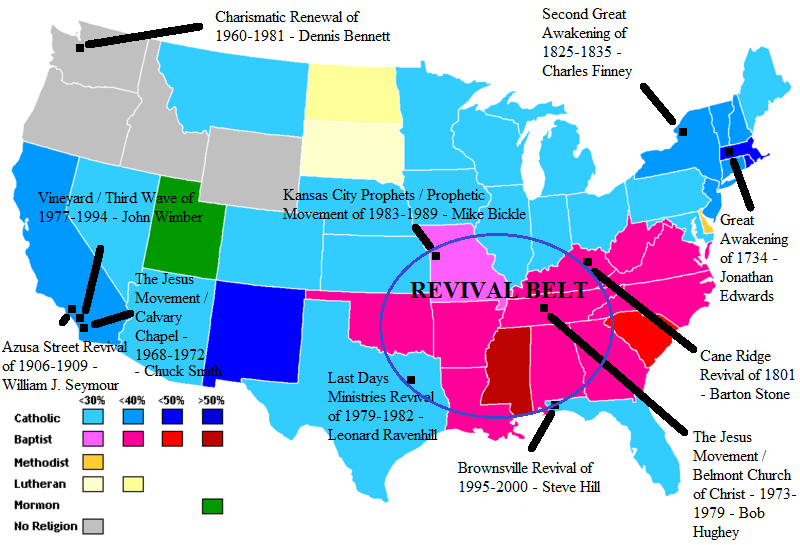
Revival Map of the United States

A revival map of Evangelical and Charismatic revivals (except for the 50s Healing Revival, which I consider false):–complete with the current population of dominant religions in each state. (Click to Enlarge).

Religions in USA

Posted in Uncategorized | Leave a comment

Problems of Seeker-Sensitive Worship – John Armstrong

Originally from here.

ketchup gospelOver the past decade an entirely new approach to public worship has arisen in a growing number of American churches, both evangelical and otherwise. This new approach commendably takes evangelism, conceived of as reaching those who would not otherwise attend church, very seriously. It believes the church must seek more directly to find those who are increasingly disinterested in her message and invite them to a place where they will clearly hear the Gospel in a culturally relevant manner. This approach treats popular culture as essentially neutral, using scores of modern ideas commonly associated with market strategies and the tastes of those outside the fold of the church.

It is imperative that pastors and other leaders of the church understand this movement and its distinctive claims and philosophies. Because large numbers of churches have adopted it, is not sufficient reason to adopt it without raising some significant questions.

Contemporary style or modern musical lyrics is not the issue. It is not musical instrumentation, or modern language translations of the text of Scripture or liturgy. The issue for most of our churches today is the growth of an entirely new approach to the Lord’s Day worship celebration of the body of Christ. It is an approach which deliberately aims at “marketing” the message of Christ to a selected and defined target audience–often one made up of educated, white, younger “baby-boomers.” The stated intention of this gathering is to use both culture–almost always considered neutral–and personal relationships, to build a non-threatening environment where the unchurched “seeker” (Romans 3:10 says, “There is no one who understands, no one who seeks for God”) can hear and see the message of the Gospel in a manner that will not offend or unduly trouble.

The goal is to preach–preferably short messages that are highly topical and anecdotal with much humor–and to provide a service in which man, the so-called “seeker,” leaves feeling good and wants very much to try it again and again until, finally, he understands the Gospel and desires to trust Christ and become a part of the church.

This pattern has grown up in the last twenty years through the influence of the “Church Growth Movement” in North America. C. Peter Wagner, its best known advocate, admits that the stress is placed on what is, not on what ought to be. We are urged to study what people do, what they want, what their interests are, etc. Then we are to build a ministry around this, not what ought to be, based upon a carefully developed theology of God, man, and sin.

Such advocates do not openly disavow simple doctrinal concerns which surround the need to see men and women redeemed. Indeed, they affirm that their goal is to seek the lost through the use of modern marketing principles that will allow an even greater number to be saved because of the sensitivity.

Time, Newsweek, the Wall Street Journal, and major daily papers have chronicled the rise and development of this approach. Almost every major denomination–including the Church of the Brethren–and fast growing churches in America have adopted this approach as the mission strategy of choice in our generation.

What do we say to this?

POSITIVES OF “SEEKER-SENSITIVE” MINISTRY

We can affirm several positives. The “seeker-sensitive” movement has forced us, in various ways, to think more seriously about outreach designed to find those who do not attend church at all. It has led many to think more clearly about good communication skills and how we are being heard by the unbeliever in our age.

It has also fostered the strategy of planting new churches. This, though, is a mixed blessing because most of these churches will no longer exist in a decade or so. (One of our leading denominations planted ten churches–based on this marketing approach–in a major metropolitan region in 1986. Only two of these churches exist today, with one of the two thriving, which is the church that adopted a solid theological basis and was forced out of the very conservative denomination.).

SOME NEGATIVES OF “SEEKER-SENSITIVE” MINISTRY

The negatives of this approach far outweigh the positives. First, a major capitulation to consumerism has occurred. George Barna, a Christian pollster, uses the data he collects to suggest how we should minister as ministers of the Gospel, and even what we should give to the audience at certain points.

This consumerism creates several serious problems:

(1) casual shoppers with a narrow perception of church and sacrifice;

(2) a minimizing emphasis on truth, especially truth which offends modern consumers;

(3) services and church programs built around “meeting people’s felt needs” as an end in itself.

Os Guinness, a Christian social critic, has written, “Meeting needs does not always satisfy needs; it often stokes further ones and raises the pressure of eventual disillusionment.” Such “needs” have no natural limits, and now we even manufacture them and distribute them widely through various kinds of counsel and family-oriented religion. What people are looking for, when they “shop for a church,” is a full-service mall that will provide for every member of their family. Guinness notes, “Need is subject to consumer fashion and becomes shallow, plastic, and manipulative.”

The “felt needs” of multitudes of such church attendees mask their real need–reconciliation with a God whose wrath is heavily upon their self-centered lives at this very moment.

Second, the “seeker-sensitive” movement has an uncompromising bent toward THEOLOGICAL COMPROMISE. At the end of the 1800s, liberalism told us that we needed to make the Gospel message more attractive to its “cultured despisers.” This new approach is telling evangelicals, who would have resisted liberalism and its charms, that there is a better way to get unbelievers to respond to the Gospel.

For example, note these quotations taken directly from the literature of this movement:

“The Bible does not warn against the evils of marketing.”

“So it behooves us not to spend time bickering about techniques and process.”

“Think of your church not as a religious meeting place, but as a service agency–an entity that exists to satisfy people’s needs.”

“The marketing plan is the ‘Bible’ of the marketing game; everything happens in the life of the product because the plan wills it.”

“The audience, not the message, is sovereign.”

Even the New Yorker Magazine, a secular opinion publication, chides such thinking when it writes, “The preacher, instead of looking out upon the world, looks out upon public opinion, trying to find out what the public would like to hear…He tries his best to duplicate that. He turns to our culture to find out about the world…The unexamined world, meanwhile, drifts into the future.”

Amazing, isn’t it? The children of darkness really are wiser than some of the professed children of the light. In this approach, further, METHODS TAKE PRECEDENCE OVER THEOLOGY in building church gatherings, especially the Lord’s Day services of worship. These services are deliberately defended as not being worship services by many in this movement.

Sermons preached often have titles like: “How can I have a happier marriage?” “How can I handle finances better?” “How can I find a job I really like?” “How do I get more time for myself?”

One prominent spokesman writes, “Limit your preaching to roughly 20 minutes, because boomers don’t have much time to spare. And don’t forget to keep your messages light and informal, liberally sprinkling them with humor and personal anecdotes.”[1]

A famous American preacher of some years ago wrote, long before “seeker-sensitivity” arose, “Let your whole sermon be organized around their constructive endeavor to meet those needs. All this is good sense and good psychology…Everybody else is using it from first-class teachers to first-class advertisers. Why should so many preachers continue in such belated fashion to neglect it?” Do you know who said that? Not a modern “seeker-sensitive” proponent, but rather the leading liberal preacher of the 1920s, Harry Emerson Fosdick, an opponent of the Gospel of free grace.

Finally, this new approach destroys true worship in our churches. How can it do otherwise, since worship is preoccupation with God, not ourselves? …

While multitudes line up to follow this approach, true worship suffers even further decline in our churches. The crisis in worship, written of so powerfully fifty years ago by A. W. Tozer, has only gotten deeper and deeper since his death in 1963. It really is “The Missing Jewel of the Evangelical Church.” We don’t worship, precisely because we don’t know the God of the Bible.

Until THEOLOGY is restored to its proper place through reformation, this tendency will never change. Theology must be restored to a central place precisely because theology is careful, reflective thought about God. This very thought creates the soil for a growing worship experience that brings delight to God and joy for the true worshiper.

We need to ask: “What does God require of us, where does true worship begin, and what has Scripture ordained for us to do when we worship?” Most assume anything we offer to God, as long as it is sincere, is just fine. Not so, and the first three commandments are being seriously violated by much of our modern worship efforts. As in the Protestant Reformation, we need a major recovery in the whole area of public worship. Our idolatries are just as serious, and the consequences are the continuing judgment of God upon our churches.

Brian Edwards has written, “The church was conceived in a prayer meeting and came to birth in a sermon.” Drama, mime, festive dance, and other novelties have never preceded great awakenings, or any true reformations based solidly on Scripture. A simple consideration of church history reveals something quite different. What we need, wrote an old Methodist, is less organizing and more agonizing.

John Calvin wrote an important tract titled, “The Necessity of Reforming the Church.” In it he argued that the principal place in the Christian religion lies in our worship. The beginning place, he reasoned, was not the source of our salvation but rather “the mode in which God is duly worshiped.” Why is worship of first importance in the Christian religion? Because human beings so quickly turn to their own wisdom, not God’s revelation.

If worship is left “open” to our best intentions, we will always manufacture golden calves and Asherah poles of our sincere, well-intentioned, design! God abominates our best efforts. He wants only what He has ordained, what is according to His revelation and His character. Until the modern church rediscovers this kind of Biblical theology, any pretended awakening is both shallow and ultimately harmful.

 —–

[1] Doug Murren, The Baby Boomerang (Ventura, CA: Regal, 1990), pp. 102-103 as quoted in John MacArthur, Ashamed of the Gospel. 3rd Ed. (Wheaton, IL: Crossway Books), p. 132.

Posted in Uncategorized | Leave a comment