Soteriological Influences on Jonathan Edwards

UPDATE: 11/2/12: SEE…

John Gerstner’s Steps to Salvation: A Study in the Evangelistic Message of Jonathan Edwards (1960)

_____________________________________________________

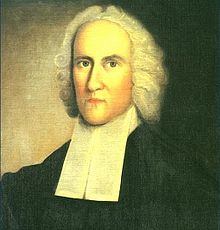
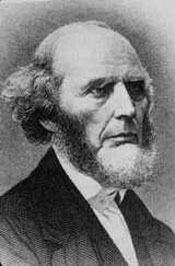
After an examination of the evidence I have found, which is not that much, there are soteriological works that were DEFINITELY heavy influences on Jonathan Edwards’ worldview. His favorite theological works were: Peter van Mastricht’s Theoretico-Practica Theologica (1687) and Francis Turretin’s Institutes of Elenctic Theology (1685). We know for sure that these books not only heavily influenced Edwards’ theology, but that he loved them above all theological works, because he says so in a letter to a friend named Joseph Bellamy (see John Smith’s A Jonathan Edwards Reader, pp. 304-305). By studying Mastricht and Turretin, we can trace who their influences were, and really get into Edwards’ views of the Gospel, and how they were so powerful in bringing about the Great Awakening of 1735 and on.

There is also evidence of other possible soteriological influences on Edwards; however, the evidence is not as clear as in the letter to Joseph Bellamy. By relying on scholarly secondary sources about Jonathan Edwards, and Puritan and Pietist theology, I have been able to recover evidence that is convincingly strong enough, to make the probable inference that Edwards read these books as well, and that they affected his soteriology. I will rank them by their probable importance to Edwards:

  1. Westminster Confession of Faith
  2. William Ames’ The Marrow of Theology
  3. Richard Baxter’s Practical Works
  4. Johann Wolleb’s Compendium of Christian Theology
  5. John Calvin’s Institutes of the Christian Religion
  6. August Francke’s Nicodemus
  7. Johann Arndt’s True Christianity
  8. William Perkins’ The Art of Prophesying
  9. John Milton’s Paradise Lost
  10. John Bunyan’s Pilgrim’s Progress

I am very convinced, that any Gospel preacher who feeds his mind, with works such as these, is on his way to starting a Great Awakening wherever he is!
_____________________

UPDATE: Influences on Edwards’ theology of Hell (5/26/13).

1. Solomon Stoddard’s The Fear of Hell Restrains Men from Sin.
2. Westminster Confession of Faith, chs. 32-33.

Posted in Uncategorized | Leave a comment

Quietism: A Dangerous Heresy

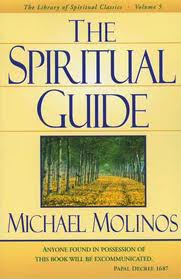
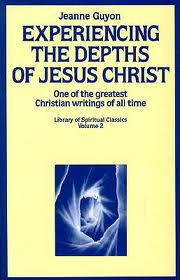
I have to repent for something. In my studies of the prophetic and Christian mysticism, I have made references to the Quietists Madame Guyon, Francois Fenelon, and Miguel de Molinos as if they were spiritual. But they are not. I have a friend who has fallen into their Quietist teachings, and am beginning to understand now how bad this teaching is. I am going to systematically start to extract any favorable references to these mystics out of my writings.

—


—

—

—

My two main problems with Quietist theology are:

1. Hyper-Prophetism – That’s my own word to describe this phenomenon with some Charismatics that think they have to hear a word from God for literally everything they do (like turn a doorknob). There are various mystical sects that were heretics that held to this in church history (Alumbrados, Quietists, Jansenists), and I am growing more and more hateful of it, because a loved one’s mental illness has been worsened by it at times. I seriously do not think that Madame Guyon interpreted Christian spirituality correctly. Teresa of Avila would be a better person to look to for spiritual guidance. Quietism is really unhealthy for the brain. You don’t need to hear a rhema word for every little thing you do! The Bible says, “In his heart a man plans his course, but the Lord determines his steps” (Proverbs 16:9).

2. Anti-Pleasure – Quietism has this asceticism stuff too. I fell into this for a while in college, but eventually came out of it. I pray that Jesus will show all Quietists that it is not spiritual. Here is the best advice I ever received on this subject: “Since you died with Christ to the basic principles of this world, why, as though you still belonged to it, do you submit to its rules: ‘Do not handle! Do not taste! Do not touch!’? These are all destined to perish with use, because they are based on human commands and teachings. Such regulations indeed have an appearance of wisdom, with their self-imposed worship, their false humility and their harsh treatment of the body, but they lack any value in restraining sensual indulgence” (Colossians 2:20-23).

Augustin Poulain is my probably my favorite Catholic mystical theologian. In The Graces of Interior Prayer, he heavily critiques Quietism. There is a link here, “On Quietism,” and I would ask that you please read it. I agree with Poulain 100% – starting at page 487: click link.

Posted in Uncategorized | Leave a comment

Bad Evangelism: The #1 Reason Why There is No Revival!

Posted in Uncategorized | Leave a comment

Dream: Josh McDowell’s “Evidence That Demands a Verdict” – Necessary for Revival in America and Europe

I realize now that the main reason why atheism is dominant in this country and in Europe is because of the “Quest for the Historical Jesus” movement among scholars. This actually predated Charles Darwin in the person of deist Hermann Reimarus, who published Wolfenbütteler Fragmente (1774–1778), which caused people to “mythologize” Jesus and doubt the historicity of the Bible. In my examination of Christian-Atheist debates, it seems that 38/42 common atheist objections are based on Higher Biblical Criticism—and 4/42 atheist objections are based on so-called evidence for Atheistic Evolution, which began with Charles Darwin’s On the Origin of Species (1859).
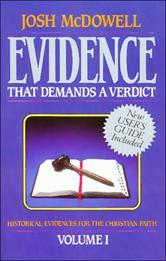
   Now, it seems to me that if I were to focus all of my studies upon refuting evolution, in order to convert atheists—I would be “barking up the wrong tree.” The foundation for all of this kind of thinking is Higher Biblical Criticism. If you attack the foundation of an atheist’s belief system, then his evolutionary justifications will seem useless. However, it might become necessary to debunk atheistic evolution as well. But it seems, that out of the 38/42 atheist objections to Christianity—is coming a general illiteracy of the Bible, a lack of knowledge of Christian theology, and a need for solid Biblical answers to atheist objections. If atheists really believed and knew the Bible, then they would not have so many objections to Christianity. This is why, if I am going to have any success at preaching the Gospel (which is a Biblical revelation), at college campuses, then I first have to undermine the “demythological” reasonings of Higher Biblical Criticism—and this will be easy to do if I memorize Josh McDowell’s Evidence That Demands a Verdict.

Posted in Uncategorized | Leave a comment

The Architects of Faith

From the foundations of the world
The Author and Perfecter of our faith
Uttered mysteries with His voice
And conquered kingdoms by dreams

In droves, the wise men came and went
And few understood their ways
Because the Lord reveals His secrets
To His servants the prophets

They surprised the knowledge of fools
And moved in great power
But only in silence did they
Renew their strength and soar as eagles

Posted in Uncategorized | Leave a comment

Charismatic Books on Spiritual Gifts

The following is a short catalog of books on spiritual gifts from the Charismatic Movement, from Walter Elwell’s Baker’s Evangelical Dictionary of Theology, “Charismatic Movement”. They are ranked by popularity…

1971 – Dennis and Rita Bennett, The Holy Spirit and You. Gainesville, FL: Bridge-Logos. #1 in Popularity.

1968 – Larry Christensen, Answering Your Questions About Speaking in Tongues. Bloomington, MN: Bethany House. #2 in Popularity.

1964 – Michael Harper, Power for the Body of Christ. London: Fountain Trust. #3 in Popularity.

1975 – Kilian McDonnell, ed., The Holy Spirit and Power: The Catholic Charismatic Renewal. Garden City, NY: Doubleday. #4 in Popularity.

1980 – J. Rodman Williams, The Gift of the Holy Spirit Today. Plainfield, NJ: Logos International. #5 in Popularity.

1970 – Steve Clark, Baptized in the Spirit and Spiritual Gifts: A Basic Explanation of the Key Concepts and Experiences of the Charismatic Renewal. Dove Publications. #6 in Popularity.

1975 – Cardinal Suenens, A New Pentecost? New York: The Seabury Press. #7 in Popularity.

1987 – Howard Ervin, Spirit Baptism. Peabody, MA: Hendrickson.

1972 – J. Rodman Williams, The Pentecostal Reality. Plainfield, NJ: Logos International.

1976 – Russell Spittler, ed., Perspectives on the New Pentecostalism. Grand Rapids, MI: Baker.

1990 – John Rea, The Holy Spirit in the Bible. Lake Mary, FL: Creation House.

1993 – Gary Greig and Kevin Springer, eds., The Kingdom and the Power. Ventura, CA: Regal Books. Very powerful collection of chapters and articles by Charismatic and Third Wave theologians. Good bibliography–contains some good Charismatic books.

1996 – J. Rodman Williams, Renewal Theology: Systematic Theology from a Charismatic Perspective. Grand Rapids, MI: Zondervan.

1999 – L. Thomas Holdcroft, The Holy Spirit: A Pentecostal Interpretation. Abbotsford, BC: CeeTeC Publishing. Contains a very thorough bibliography of Pentecostal and Charismatic books on the Holy Spirit and spiritual gifts.

Posted in Uncategorized | Leave a comment

Against New Atheism, the New Age, Abortion, and Homosexuality

According to recent statistics, about 50% of the Millennial Generation (born around the 1980s) are atheists or agnostics. The other 50% is primarily New Age (pluralistic, believing in all religions). Evangelical, Charismatic, and Bible-believing Christians in this generation must be conscious of these issues, and be intellectually ready to combat these philosophies and religions with books, videos, conversations, and preaching. What’s more, the national ethical dilemma of abortion and homosexuality being supported by such organizations as Planned Parenthood. What should Christians do? Read, study, pray, and PREACH AGAINST THESE SINS. The following are Christian books to help you convert these people groups to Biblical Christianity.

Books Against New Atheism

Flew, Antony. There is a God: How the World’s Most Notorious Atheist Changed His Mind. New York: HarperOne, 2008.

Marshall, David. The Truth Behind the New Atheism. Eugene, OR: Harvest House, 2007.

McGrath, Alister and Joanna. The Dawkins Delusion? Downers Grove, IL: InterVarsity Press, 2007.

Zacharias, Ravi. The End of Reason: A Response to the New Atheists. Grand Rapids, MI: Zondervan, 2008.

Books Against the New Age

These are Evangelical books against the occult and New Age forms of spirituality. However, sometimes they even condemn Pentecostal/Charismatic Christianity as occultic! So, I would suggest to “eat the meat and spit out the bones.”

Groothuis, Douglas. Unmasking the New Age. Downers Grove, IL: InterVarsity Press, 1986.

———-. Confronting the New Age. Downers Grove, IL: InterVarsity Press, 1988.

Hunt, Dave, and T. A. McMahon. The Seduction of Christianity. Eugene, OR: Harvest House, 1985.

Koch, Kurt. Occult ABC: Exposing Occult Practices and Ideologies. Grand Rapids, MI: Kregel Publications, 1986. This book is thoroughly anti-occultic, but unfortunately also anti-Charismatic.

North, Gary. Unholy Spirits: Occultism and New Age Humanism. Tyler, TX: Institute for Christian Economics, 1988. 432 pages.

Wilson, Clifford, and John Weldon. Occult Shock and Psychic Forces: A Biblical View. San Diego, CA: Master Books, 1980. 482 pages.

Books Against Abortion

Alcorn, Randy. ProLife Answers to ProChoice Arguments. Sisters, OR: Multnomah Publishers, 2000. 455 pages.

Johnson, Abby. Unplanned: The Dramatic True Story of a Former Planned Parenthood Leader’s Journey Across the Life Line. Carol Stream, IL: Tyndale House, 2010.

Nathanson, Bernard. The Hand of God: A Journey from Death to Life by the Abortion Doctor Who Changed His Mind. Washington, DC: Regnery, 1996.

Books Against Homosexuality

Dallas, Joe. A Strong Delusion: Confronting the “Gay Christian” Movement. Eugene, OR: Harvest House, 1996.

Haley, Mike. 101 Frequently Asked Questions About Homosexuality. Eugene, OR: Harvest House, 2004.

Nicolosi, Joseph and Linda. A Parent’s Guide to Preventing Homosexuality. Downers Grove, IL: InterVarsity Press, 2002.

Schmidt, Thomas. Straight & Narrow?: Compassion and Clarity in the Homosexuality Debate. Downers Grove, IL: InterVarsity Press, 1995.

Posted in Uncategorized | Leave a comment

Thanks Be to God

Thanks be to God
That He speaks
And confirms His Word
By signs and many ways

Thanks be to God
That He shows Himself
And in dreams
Reveals holy mysteries

Thanks be to God
That He gave us the Bible
And by its laws
Brings us the discernment of morals

Thanks be to God
That we can feel His presence in worship
And be comforted by His peace
Which surpasses understanding

Posted in Uncategorized | Leave a comment

Gospel Notes

The following is influenced by Jonathan Edwards’ “The Manner in Which the Salvation of the Soul is to Be Sought” (1743), John Wesley’s “Justification by Faith” (1746), John Gill’s “On Justification” (1767), and Baker’s Dictionary on “Justification” (1996).

  1. The Flood of Noah: A Sign of Coming Judgment – 2,400 B.C. (or 4,411 years ago)
    1. Universal Judgment of God.
    2. Noah worked for 120 years building the ark.
    3. Noah warned his neighbors, but they thought he was crazy (Heb. 11:7).
    4. The Flood of Noah = The Lake of Fire.
    5. Noah = Gospel Evangelists.
    6. Heed the Warnings of the Gospel = Repent, Believe, and Obey God’s Law (10, 050 NT).
    7. “Work out your salvation with fear and trembling” (Php. 2:12).
  2. From Depravity to Faith for Acquittal
    1. Adam Fell From Grace – 4,000 B.C. (or 6,000 years ago).
    2. All Men Have Adam’s Nature, and So Are Guilty of Breaking God’s Law.
    3. Man’s Guilt Deserves the Just Condemnation of Eternal Hell Fire.
    4. Jesus—the Divine-Human Representative of Man, Atoned for Our Sins on the Cross.
    5. Gospel—Faith in Atonement = Legal Pardon and Acquittal from All Sins.
    6. Perseverance—Maintaining Strong Faith in the Atonement = No Apostasy.
  3. False Doctrines About Justification
    1. Justification ≠ Sanctification.
    2. Justification Doesn’t Deliver Us From Accusations of Satan, the Law, or Conscience.
    3. Justification Doesn’t Mean God “Lies” to Himself or Overlooks Our Sins.
    4. Good Works Performed By Non-Christians Don’t Legally Justify Them.
    5. False Gospel Doctrines Come From Not Understanding Its Legal Nature.
  4. Gospel Essentials
    1. Justification = Acquittal / Legally Declared Righteous.
    2. God as Judge (Gen. 18:25).
    3. Christ’s Imputation (Rom. 5:19).
    4. Legalism Denied (Gal. 2:16).
    5. Holy Living = Evidence of Faith in the Atonement (Jas. 2:18, 24).
    6. Synergism = The Holy Spirit’s Help for Weak Faith.
    7. Jesus’ Atoning Death (Rom. 4:25; 5:9).
    8. Romans 3-8; Galatians 2-4; James 2.
  5. Legal Terms Related to the Gospel
    1. Gospel – The Good News of Justification by Faith in the Atonement.
    2. Sin – A Crime for Breaking One of God’s Laws.
    3. Original Sin – Adam’s Sinful Nature; Criminal Nature.
    4. Hell – The Penalty of All Sinners; The Prison of Condemned Spirits.
    5. Justification – God’s Forgiveness of Sins (Acquittal) and Imputation of Christ’s Sinlessness.
    6. Atonement – Christ’s Sinless Life and Substitutionary Death (pays the debt for my sins).
    7. Justification by Faith – Revelation that one needs justification.
    8. Weak Faith – Still justifies, but is dangerous territory (possibility of apostasy).
    9. Imputation – Christ’s Sinlessness is Legally Transferred to Our Account in the Book of Life.
    10. Faith, Repentance, and Obedience – God’s Gifts, Imperfectly Used by Man.

Further Reading on Justification by Faith. John Calvin, Institutes of the Christian Religion 3.11-18 (1559); John Owen, The Doctrine of Justification by Faith (1677); James Buchanan, The Doctrine of Justification (1867); G. C. Berkouwer, Faith and Justification (1954); Mark Seifrid, Christ, Our Righteousness (2000); Alister McGrath, Iustitia Dei: A History of the Doctrine of Justification, 3rd Edition (2005).

Posted in Uncategorized | Leave a comment

How to See God: According to Bonaventure

Posted in Uncategorized | Leave a comment