Against New Atheism, the New Age, Abortion, and Homosexuality

According to recent statistics, about 50% of the Millennial Generation (born around the 1980s) are atheists or agnostics. The other 50% is primarily New Age (pluralistic, believing in all religions). Evangelical, Charismatic, and Bible-believing Christians in this generation must be conscious of these issues, and be intellectually ready to combat these philosophies and religions with books, videos, conversations, and preaching. What’s more, the national ethical dilemma of abortion and homosexuality being supported by such organizations as Planned Parenthood. What should Christians do? Read, study, pray, and PREACH AGAINST THESE SINS. The following are Christian books to help you convert these people groups to Biblical Christianity.

Books Against New Atheism

Flew, Antony. There is a God: How the World’s Most Notorious Atheist Changed His Mind. New York: HarperOne, 2008.

Marshall, David. The Truth Behind the New Atheism. Eugene, OR: Harvest House, 2007.

McGrath, Alister and Joanna. The Dawkins Delusion? Downers Grove, IL: InterVarsity Press, 2007.

Zacharias, Ravi. The End of Reason: A Response to the New Atheists. Grand Rapids, MI: Zondervan, 2008.

Books Against the New Age

These are Evangelical books against the occult and New Age forms of spirituality. However, sometimes they even condemn Pentecostal/Charismatic Christianity as occultic! So, I would suggest to “eat the meat and spit out the bones.”

Groothuis, Douglas. Unmasking the New Age. Downers Grove, IL: InterVarsity Press, 1986.

———-. Confronting the New Age. Downers Grove, IL: InterVarsity Press, 1988.

Hunt, Dave, and T. A. McMahon. The Seduction of Christianity. Eugene, OR: Harvest House, 1985.

Koch, Kurt. Occult ABC: Exposing Occult Practices and Ideologies. Grand Rapids, MI: Kregel Publications, 1986. This book is thoroughly anti-occultic, but unfortunately also anti-Charismatic.

North, Gary. Unholy Spirits: Occultism and New Age Humanism. Tyler, TX: Institute for Christian Economics, 1988. 432 pages.

Wilson, Clifford, and John Weldon. Occult Shock and Psychic Forces: A Biblical View. San Diego, CA: Master Books, 1980. 482 pages.

Books Against Abortion

Alcorn, Randy. ProLife Answers to ProChoice Arguments. Sisters, OR: Multnomah Publishers, 2000. 455 pages.

Johnson, Abby. Unplanned: The Dramatic True Story of a Former Planned Parenthood Leader’s Journey Across the Life Line. Carol Stream, IL: Tyndale House, 2010.

Nathanson, Bernard. The Hand of God: A Journey from Death to Life by the Abortion Doctor Who Changed His Mind. Washington, DC: Regnery, 1996.

Books Against Homosexuality

Dallas, Joe. A Strong Delusion: Confronting the “Gay Christian” Movement. Eugene, OR: Harvest House, 1996.

Haley, Mike. 101 Frequently Asked Questions About Homosexuality. Eugene, OR: Harvest House, 2004.

Nicolosi, Joseph and Linda. A Parent’s Guide to Preventing Homosexuality. Downers Grove, IL: InterVarsity Press, 2002.

Schmidt, Thomas. Straight & Narrow?: Compassion and Clarity in the Homosexuality Debate. Downers Grove, IL: InterVarsity Press, 1995.

Posted in Uncategorized | Leave a comment

Thanks Be to God

Thanks be to God
That He speaks
And confirms His Word
By signs and many ways

Thanks be to God
That He shows Himself
And in dreams
Reveals holy mysteries

Thanks be to God
That He gave us the Bible
And by its laws
Brings us the discernment of morals

Thanks be to God
That we can feel His presence in worship
And be comforted by His peace
Which surpasses understanding

Posted in Uncategorized | Leave a comment

Gospel Notes

The following is influenced by Jonathan Edwards’ “The Manner in Which the Salvation of the Soul is to Be Sought” (1743), John Wesley’s “Justification by Faith” (1746), John Gill’s “On Justification” (1767), and Baker’s Dictionary on “Justification” (1996).

  1. The Flood of Noah: A Sign of Coming Judgment – 2,400 B.C. (or 4,411 years ago)
    1. Universal Judgment of God.
    2. Noah worked for 120 years building the ark.
    3. Noah warned his neighbors, but they thought he was crazy (Heb. 11:7).
    4. The Flood of Noah = The Lake of Fire.
    5. Noah = Gospel Evangelists.
    6. Heed the Warnings of the Gospel = Repent, Believe, and Obey God’s Law (10, 050 NT).
    7. “Work out your salvation with fear and trembling” (Php. 2:12).
  2. From Depravity to Faith for Acquittal
    1. Adam Fell From Grace – 4,000 B.C. (or 6,000 years ago).
    2. All Men Have Adam’s Nature, and So Are Guilty of Breaking God’s Law.
    3. Man’s Guilt Deserves the Just Condemnation of Eternal Hell Fire.
    4. Jesus—the Divine-Human Representative of Man, Atoned for Our Sins on the Cross.
    5. Gospel—Faith in Atonement = Legal Pardon and Acquittal from All Sins.
    6. Perseverance—Maintaining Strong Faith in the Atonement = No Apostasy.
  3. False Doctrines About Justification
    1. Justification ≠ Sanctification.
    2. Justification Doesn’t Deliver Us From Accusations of Satan, the Law, or Conscience.
    3. Justification Doesn’t Mean God “Lies” to Himself or Overlooks Our Sins.
    4. Good Works Performed By Non-Christians Don’t Legally Justify Them.
    5. False Gospel Doctrines Come From Not Understanding Its Legal Nature.
  4. Gospel Essentials
    1. Justification = Acquittal / Legally Declared Righteous.
    2. God as Judge (Gen. 18:25).
    3. Christ’s Imputation (Rom. 5:19).
    4. Legalism Denied (Gal. 2:16).
    5. Holy Living = Evidence of Faith in the Atonement (Jas. 2:18, 24).
    6. Synergism = The Holy Spirit’s Help for Weak Faith.
    7. Jesus’ Atoning Death (Rom. 4:25; 5:9).
    8. Romans 3-8; Galatians 2-4; James 2.
  5. Legal Terms Related to the Gospel
    1. Gospel – The Good News of Justification by Faith in the Atonement.
    2. Sin – A Crime for Breaking One of God’s Laws.
    3. Original Sin – Adam’s Sinful Nature; Criminal Nature.
    4. Hell – The Penalty of All Sinners; The Prison of Condemned Spirits.
    5. Justification – God’s Forgiveness of Sins (Acquittal) and Imputation of Christ’s Sinlessness.
    6. Atonement – Christ’s Sinless Life and Substitutionary Death (pays the debt for my sins).
    7. Justification by Faith – Revelation that one needs justification.
    8. Weak Faith – Still justifies, but is dangerous territory (possibility of apostasy).
    9. Imputation – Christ’s Sinlessness is Legally Transferred to Our Account in the Book of Life.
    10. Faith, Repentance, and Obedience – God’s Gifts, Imperfectly Used by Man.

Further Reading on Justification by Faith. John Calvin, Institutes of the Christian Religion 3.11-18 (1559); John Owen, The Doctrine of Justification by Faith (1677); James Buchanan, The Doctrine of Justification (1867); G. C. Berkouwer, Faith and Justification (1954); Mark Seifrid, Christ, Our Righteousness (2000); Alister McGrath, Iustitia Dei: A History of the Doctrine of Justification, 3rd Edition (2005).

Posted in Uncategorized | Leave a comment

How to See God: According to Bonaventure

Posted in Uncategorized | Leave a comment

Jonathan Edwards’ Rules for Spiritual Discernment

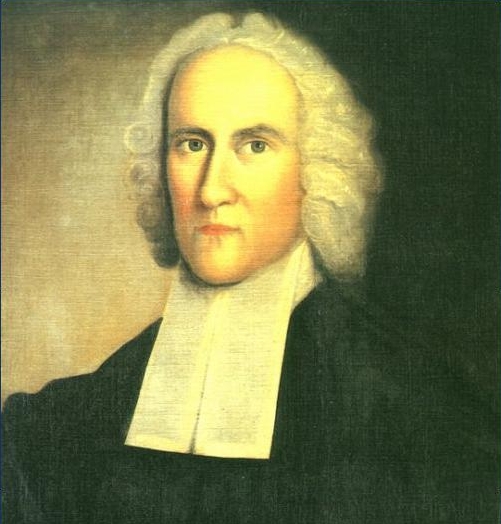
Like the Catholic mystical theologians that preceded him–Jean Gerson, Ignatius of Loyola, etc.–Jonathan Edwards wrote a small book on “rules for the discernment of spirits.” The name of this book was The Distinguishing Marks of a Work of the Spirit of God (1741). It was written during the Great Awakening, or the outpouring of the Holy Spirit in his church at Northampton, Massachusetts, and other places in the New England colonies. It is similar to Guy Chevreau’s Catch the Fire (1995), which provided not only guidelines, but an apologetical defense of the Toronto Blessing revival. Most of the book reads like a work of mystical theology–with references to prophetic ecstasies and even meditation and contemplation. There were many young people in the revival who were experiencing prophetic revelations through visions, voices, and impressions. Much of Edwards’ defense revolves around physical manifestations of the Holy Spirit (like the Toronto Blessing)–tears, trembling, shaking, groans, loud outcries (Ps. 32:3-4), strong emotions, agonies in the body, falling down (Acts 16:29), and the failing of bodily strength (slain in the Spirit, ecstasy, trance). He argues, as does Chevreau, that those clergymen of the religious church Establishment who are offended at these physical manifestations, and are quick to write them off as demonic manifestations–would do well to know that (1) The Bible is completely silent about discerning the works of the Holy Spirit by physical manifestations. (2) Jesus’ rule for spiritual discernment was that “by their fruit you will recognize them” (Matt. 7:20). Nowhere does the Bible say, “By their physical manifestations you will recognize them”–but rather, it says, “by their fruit.” If you read the context of Matthew 7:20, it becomes clear that what Jesus meant by His usage of the symbol of “fruit” was the behavior and general ethical conduct of people. Jesus’ idea of “good fruit” in the given passage, was along the lines of moral virtues, such as doing God’s will (v. 21), which means living according to God’s law (v. 23, NASB).

Dear friends, do not believe every spirit, but test the spirits to see whether they are from God, because many false prophets have gone out into the world.  — 1 John 4:1

The standard that Edwards held to, in order to discern the works of the Holy Spirit from the works of the devil, were THE RULES AND COMMANDMENTS OF THE BIBLE. But particularly, he felt that 1 John 4–the entire chapter, was written by the apostle John (who was that great seer of the Book of Revelation)–in order to guide the early Charismatic Christians, from counterfeit spirits, who were roaming around and luring Christians into Gnosticism. Edwards looked at this chapter as the major place in Scripture where the issue of the discernment of spirits was handled the most clearly: “Those marks,” he wrote, “which are given us by the apostle in the chapter wherein is my text, where this matter is particularly handled, and more plainly and fully than anywhere else in the Bible” (Section II). So, what were these rules for discernment? Edwards takes the approach of a Bible expositor on 1 John 4, and creates his rules based on his interpretations of that chapter. In a condensed form, these rules are the following: The Holy Spirit can most certainly be discerned by the following experiences and thoughts of inspiration:

1. Revelations That Confirm Evangelical Christology – If someone receives a dream, vision, voice, or impression that confirms the orthodox Evangelical doctrines about Jesus Christ–then that spirit is certainly from God, whether it be the Holy Spirit, an angel, a saint, Jesus Himself, or God the Father. Although Edwards was only thinking of the Holy Spirit, I have no problem including the works of these other heavenly spirits. The Evangelical doctrines of Christ that Edwards particularly had in mind were: His virgin birth, His crucifixion, death, burial, and resurrection, His Deity as the Son of God, His being the Lord and Savior of men; and that He is fully man and fully God in human form.

2. Experiences of Spiritual Warfare and Deliverance from Sin – Any spiritual experience that leads a person to resist the devil, and sinful desires, is most certainly from the Holy Spirit. Particularly against those sinful desires which encourage men to engage in ungodly pleasures, the greedy pursuit of wealth, and the pride of being honored by other people. Instead, the Holy Spirit inspires men to be concerned about their lives in the future, in Heaven, and drives them to seek first the kingdom of God and His righteousness (Matt. 6:33). It also creates a fear of the Lord, and of Hell fire, the guiltiness of their sins, and inspires men to repent and get right with God. The devil might condemn men, and make them feel like they are terrible rotten sinners (which is true!), but he will never go further, and show them the Gospel light of Jesus, and the ways of repentance and God’s forgiveness of sins. It is impossible for satan to convict of sin, and show men the way to be forgiven of sin through the Gospel of Jesus Christ, because that goes directly against the devil’s purpose–which is to lure men deeper into sin and temptation: “If satan drives out satan, he is divided against himself” (Matt. 12:26).

3. Reverence, Honor, Respect, and High Regard for the Bible -Inspired by God, the Holy Scriptures are the foundation for Christian faith and practice, and were written by the prophets and apostles of Bible times (Eph. 2:20). There is no way that the devil would ever lead people to love or revere the Bible; rather, he inspires a hatred of it, because its words all throughout the ages have thwarted his plans and exposed his deceits. Edwards quotes that passage, which along with 1 John 4:1, is found in many Christian books on spiritual discernment: “When men tell you to consult mediums and spiritists, who whisper and mutter, should not a people inquire of their God? Why consult the dead on behalf of the living? To the Law and to the Testimony! If they do not speak according to this Word, they have no light of dawn” (Isa. 8:19-20).

4. Revelations That Confirm Evangelical Soteriology and Theology – Soteriology is that branch of Christian theology which deals with the subjects of salvation and sanctification. Edwards believed that if someone has a spiritual experience, which seems to confirm the Evangelical doctrines of soteriology, then it is from the Holy Spirit: mainly the doctrines that there is a God who hates sin, and “that life is short, and very uncertain; and that there is another world; that they have immortal souls, and must give account of themselves to God, that they are exceeding sinful by nature and practice; that they are helpless in themselves; and confirms them in other things that are agreeable to some sound doctrine.” Surely the Spirit that reveals these things is the Spirit of God.

5. Experiencing the Feeling of God’s Love -That mysterious, yet very real sense of the Holy Spirit, indwelling the heart of the Christian, which incites him to tenderly and affectionately love God with all of his heart, soul, mind, and strength, and to love his neighbor as himself (Matt. 22:37-40). It is a supernatural love–yea, it is God Himself, the Holy Spirit Himself, for “God is love” (1 John 4:8); and is mentioned without chance as the first fruit of the Spirit (Gal. 5:22). It is a humble love–not giving way to arrogant notions of being the most loving person in the world, but still retaining a strong sense of one’s own sinfulness and depravity. It is a holy love, in keeping with the moral rules of Scripture, and energizes the heart to the holy obedience of every commandment in the New Testament. It is love that is from the Holy Spirit, and operates like this: it inspires a certain kind of vision into the mind and will, which sees all of God’s creatures as their Creator sees them, with His holy and condescending Creator’s love. Also, a vision is implanted into the spirit of the great and high glories of the Lord Jesus Christ, the eternal majesty of God, and of His wonderful love, so inexpressible, yet completely understandable in the spirit. These strong motions of spiritual love, swoon and sway over the heart of the Christian, at times creating an ecstasy beside oneself, yet generally incites him to be peaceful and good-intentioned, wanting to be nice and kind to everyone; also, there is a strong desire to see souls saved from the eternal punishment of Hell fire; and a strong affection between those who are walking in the kingdom of God.

Jonathan Edwards’ Limitations on the Prophetic

You would think that up until this point, Edwards was a Charismatic Christian. Partly he was, but mainly he was not. He was what I would call a limited Charismatic. Although I have a high regard for Jonathan Edwards, and count him among the great saints of Heaven, I definitely disagree with him when he wrote: “I do not expect a restoration of these miraculous gifts in the approaching glorious times of the church, nor do I desire it.” WHAT!? He not only said that he didn’t expect spiritual gifts, but that he didn’t desire spiritual gifts! This goes directly against Scripture: “Eagerly desire spiritual gifts, especially the gift of prophecy” (1 Cor. 14:1). Why did Edwards say such a thing? How could he give such great rules on how to discern spirits, and yet completely reject the prophetic? I think it was because he was sort of uncertain about it. He was certainly confronted with the prophetic for years during the Great Awakening. In this way, he reminds me of John Wimber, who involved himself in the prophetic with the Kansas City prophets, and then pulled away from it all. There were many people during the Great Awakening who fell into trances, saw dreams and visions, heard the voice of God, received revelations, and words of knowledge, etc.

Edwards had a Cessationist upbringing which taught him that according to 1 Corinthians 13, faith, hope, and love, have CANCELED OUT the church’s need for the miraculous gifts. Although he remained much more open-minded than most clergymen during the Awakening, by his experience with those who claimed revelations of the future or the secrets of men’s hearts–he couldn’t see enough evidence that these were anything more than the delusions of satan, or the illusions of men’s imaginations, or of a sickened brain brought about by too much meditation. This is not to say that Edwards was against all revelations and visions; if that were the case, then all of his rules for the discernment of spirits were pointless for the writing. But he only approved of visions that were of Heaven, Hell, Christ, salvation, victory over satan, and that which glorified the Bible. (Because these truths are already in the Bible–and any visions of them serve to CONFIRM it.) But he rejected any vision that claimed to predict the future, as well as any revelation that claimed to read the secrets of men’s hearts. There were simply no ACCURATE PROPHETS, that he had any EXPERIENCE with, who successfully CONVINCED him that these gifts too had been restored. So, in the end, Edwards–although I respect him as a saint of God–apparently turned out to take a sort of pick-and-choose approach to spiritual gifts. Healing and casting out demons are made as passing references, and he hardly touches on that point at all, not even mentioning any such occurrence in this particular book.

Posted in Uncategorized | Leave a comment

The Spirit of the World: Secular Humanism

“We have not received the spirit of the world, but the Spirit who is from God.”
— 1 Corinthians 2:12

It is either a devil, or the disposition of the soul when it is lost, and without any sense of the Holy Spirit–this is what I will call “the spirit of the world.” I remember my experience of this spirit from about the ages of seven to fourteen before I was saved and regenerated, and gave my heart to Jesus. The spirit of the world is only really experienced in the age of accountability. Little children can’t come under its influence, as far as I can see.

What are its characteristics? I will name a few, based on my own experience of it in childhood, and my current observation of it in non-Christians today.

1. As a general rule, there is no thought of God, the Bible, or how to live as a Christian in either the mind or the interests of the heart.

2. Greed, money, and pleasure-seeking take priority over the thoughts and feelings. TV for the eyes; music for the ears; fornication for the hands and heart; entertainment for the mind and will; treats and fine foods for the tongue and stomach; and friends to share these pleasures with–this increases happiness in the feelings, particularly in the area of telling jokes (which is again, a form of entertainment). Not that good entertainment is bad for a Christian–but when under the spirit of the world, it is a dominant force.

3. Idols, or interests that consume the places in the mind and heart, where only God’s Spirit should take occupation–is basically the essence of this spirit. Worldly philosophies of happiness, political interests (economy, business, education, energy, foreign policy, government, taxation, health care), scientific inventions, toys (houses, cars, boats, TVs, stereos, vacations, etc), and the like. For this reason, you might also call it a spirit of idolatry or perhaps a spirit of pleasure-seeking.

4. Consciousness of all things worldly, hence the phrase “spirit of the world”–an all-consuming obsession with THINGS which are particular to the individual person–but most definitely not a consciousness of God or the things of sanctification, or of any angel, saint, Heaven, Hell, the spirit world, or the Christian life. And whenever a person with this spirit is presented with these thoughts, he feels a kind of resistance within himself to them–and perhaps a desire to even mock them as “religious”.

UPDATE: 9/13/12 – I didn’t know it at the time I wrote the above article; but that spirit which I was trying to describe was PRACTICAL ATHEISM–that is, living your life as if there is no God. This may very well be found with people who “go to church” on Sunday morning because of tradition. But in real life, they live as atheists: “without God in the world” (Eph. 2:12). The Latin word for “world” is saeculum, from where we get the modern word “secular”. So, in essence, atheism with all of its variants, such as skepticism, rationalism, scientism, naturalism, Darwinism, “deism” (weak faith in God’s existence), materialism, physicalism, agnosticism, etc.–is WORLDLY, of this world, of secular interest. Not spiritual, unspiritual, natural. This all eventually becomes encapsulated in SECULAR HUMANISM–which is “life, liberty, and the pursuit of happiness” without God, without the Bible’s ethics ruling your life, and instead, creating your own system of ethics. This is the “spirit of the world” (1 Cor. 2:12).

Posted in Uncategorized | Leave a comment

Feminism and the Jezebel Spirit

[Note: this was written by the wife–not by the husband!] –J. B.

Today I want to talk about a major reoccurring problem in the churches of America and Christianity in general. This is the problem of feminism and the Jezebel spirit. Have you ever wondered how church boards make the decisions they do and why many men have seemingly lost their voice in the church as opposed to women? These days if you have a patriarchal family configuration in your home – you must certainly be in the minority. This is what I wish to discuss. In approaching this issue, I feel that very strongly God wants his people to reveal the abomination of bad feminism in the church and in the American household.

First off I feel as though I need to define feminism and then focus on the Jezebel spirit. Feminism is basically (according to Wikipedia) a collection of movements aimed at defining, establishing, and defending equal political, economic, and social rights and equal opportunities for women. Now I don’t want to give off the idea that I think all femininity is bad, but only to disclose why the feministic spirit that is rampant in the church today is emasculating pastors. Also, “bad feminism” is a direct contradiction of several Scriptures including Ephesians 5:22 and 24. Primarily, let’s talk about Ephesians 5:22: “Wives, submit to your husbands as to the Lord.” Here Paul is instructing wives to submit or serve their husbands in everything they do. This is a major commandment that demands our attention. So many women today subvert their husband’s authority, and instead of doing as their husband dictates on a matter, they will argue and fuss until their husbands give in, just so the husband won’t have to hear any more nagging. I have seen this time and time again just as the saying goes, “If Momma ain’t happy – ain’t nobody happy.” Unfortunately, that saying paints the correct picture. The Bible even speaks about being a nagging or ill-tempered wife. Proverbs 21:9 to be exact. Now, you may be thinking, What does this have to do with feminism? Well, I’m glad you asked, because frankly when you see the trend of this kind of situation, you see the woman “wearing the pants in the family.”  It’s remarkable how dull the American church is to this occurrence. (I know of many a pastor and leader in the church being de-maned – or shanked of his authority and rule! Some have been fired or kicked out of church because they didn’t meet expectations. But wait, I’ve jumped ahead a bit.) Let’s look back at Ephesians 5:24: “Now as the church submits to Christ, so also wives should submit to their husbands in everything.”

Interestingly enough, Paul remarks about first off how the church is to submit to Christ. Let’s talk about the Jezebel spirit. Jezebel was a queen who subverted the authority of her husband and ultimately was the power behind his throne. Her husband Ahab was stripped of his power over his own household and his kingdom. Sacrifices and offerings were made to the god Baal and this displeased the Lord terribly (1 Kings 16:31). Not unlike the women in today’s churches, who totally neglect what Peter says to the church, how women are supposed to be known for their “gentle and quiet spirit, which is of great worth in God’s sight” (1 Pet. 3:4). This verse just seems to be disregarded with many of today’s women in the church. Think of some of the names you hear: Joyce Meyer, Paula White, Juanita Bynum, etc. When you see these women what is the first thing that comes to your mind? Do you see them submitting to their husbands or being covered with a gentle and quiet spirit? Do you see them dressed in inexpensive clothes and loving their husbands? OR do you imagine Abraham’s wife wearing earrings and make up and selling books on buying shoes, or making a pretty penny off of selling Christian literature?! NO!!!!!!!!!! You don’t see any of that! Now, I don’t wish to totally undermine these ladies’ ministries – but just to have readers honestly evaluate what a born-again woman is supposed to look like in her household and in the church.

In the New Testament, Paul introduces or writes about a problem occurring, where women were in a church meeting and were obviously disrupting the meeting in a way that was improper. Paul remarks, “I do not permit a woman to teach or to have authority over a man; she must be silent” (1 Tim. 2:12).

How many women in the church today are “being silent”? I say very few – VERY FEW!!! I don’t know who to blame first: the women who disregard their husbands’ advice and rarely keep their mouth shut till they get home from a church meeting; or the weak-spined husbands who let their wives walk all over their church services.

Don’t get me wrong, I believe that women can preach and prophesy, but that men are supposed to be the ones that lead the church. What would happen, ladies and gentlemen, if all of a sudden women were to start submitting to their husbands, and stopped usurping the authority of the pastor? I TELL YOU WHAT WOULD HAPPEN – REVIVAL!!!! But again, I want to talk about what the “Jezebel” spirit is like. Well, let’s look at the woman “Jezebel.” She tried to kill the prophets, sacrifice to false gods, and take total control away from God. Be careful because this kind of spirit loves to seize all power over a situation with their words, fits of rage, false emotions or emotional tirades, accusatory statements, demeaning facial expressions and tones of voice, smooth sounding words and speech, overall manipulative behavior, etc. The list is endless, friends. Unless someone confronts these women with the truth and stands firm in Christ’s patience, these women will run all over you and make sure that “their will be done” instead of God’s will be done. They pray prayers of their own selfish will and these one-sided prayers carry demonic power. Also, these controlling Jezebel women will talk in circles, almost non-stop about anything and everything. Have you ever been in a conversation with these type of women? Undoubtedly, you’ll have to have wondered whether or not they tire of talking or run out of things to talk about. Silence makes them very uncomfortable and they feel they must control the conversation. The overall Jezebel spirit promotes mainly the spirit of rebellion. The Bible makes it clear that “rebellion is as the sin of witchcraft” (1 Sam. 15:23). The woman in this Hell-bound position will even get words of knowledge or revelations from familiar spirits. It goes without saying, this is an UGLY spirit that will talk sweetly to you one minute, and stab you in the back the next. Unfortunately, women (and sometimes rarely men) subject to this spirit, really believe – through demonic deception – that they are doing the will of God. Additionally, it may seem almost funny at times to watch these people turn on the waterworks – cry and cry tears until they get their way. Self-pity plays a big role here. She will try to draw sympathy from you for her cause…always. Watch out for these witches in disguise.

So after saying all this, what can one do to be protected from Jezebel spirits and spirits of bad feminism? First off, PRAY. Whenever you find yourself having to confront a Jezebel spirit, make sure you’re prayed up and on your guard against being easily manipulated. If you find yourself being prayed for by her (especially aloud), ask the Lord to rebuke her self-willed prayers. Secondly, don’t fall prey to her roller coaster emotions and comments where she’s trying to draw sympathy for herself. Thirdly, don’t let her use guilt to prod you into some action that she desires. Fourthly, always speak the truth and be bold against lies. These women will go to great lengths to control you and eventually kill your spirit.

—–

For those who want to dig deeper, see this article here. We are “complementarians.”

Posted in Uncategorized | Leave a comment

Heresy and Orthodoxy

There are as many definitions of the word “heretic” as there are sects, cults, and denominations. Every Christian group eventually ends up believing that their religion is the only true form of Christianity, and every other denomination is false (or heretical). Myself, for example, would be considered a heretic by every denomination, because I don’t believe in denominationalism. But I still believe that my faith is “orthodox.” I believe in a general orthodoxy–in the essential beliefs of Evangelicalism, Pentecostalism, and Charismatic Christianity. Personally, I would consider any beliefs outside of this mold to be “straying from the path” or to a certain extent heretical. See our “We Believe” section where our statement of faith is located.

To be specific, we would say that anyone who does not believe in Evangelical theology is definitely a heretic. This most likely includes:

1. Marian Catholics (but not all individuals)
2. Marian Orthodox (but not all individuals)
3. Mainline Protestants (but not all individuals) – American Baptists, Christian Church (Disciples of Christ), United Church of Christ, Episcopal Church, Evangelical Lutheran Church in America (ELCA), United Methodists, Presbyterian Church (U.S.A.)
4. Independent Churches with Liberal Theology (but not all individuals) – Unitarian Universalists, Metropolitan Community Church, etc.
5. Cultists and Occultists – Hare Krishna, Scientology, Unification Church, Jehovah’s Witnesses, Mormons, Transcendental Meditation, Swedenborgianism, Seventh-Day Adventists, Worldwide Church of God, Theosophy, The Way International, Christian Science, Unity, Edgar Cayce (A.R.E.), Rosicrucians, Freemasons, Psychics (Spiritism), New Age, Kabbalah, Eastern Mysticism, Eastern Religions, Horoscopes, UFOs, Satanism, Witchcraft, Wicca, Native American Religions, Tribal Religions (shamanism)
6. Secular Philosophies – Agnostics, Atheists, Skeptics, Rationalists, Existentialists, Secular Humanists
7. World Religions – Hinduism, Jainism, Buddhism, Confucianism, Taoism, Shintoism, Zoroastrianism, Judaism, Islam, Sikhism, Bahai

What is “General Orthodoxy”?

I’ll let Jesus, the apostles, and the first century Christians, define what a “heretic” is. It was anyone who either broke away from the early church and formed a new religion (such as the Gnostics)–or it was anyone who resisted the Evangelical/Pentecostal/Charismatic theology of the apostles (such as the Jews, the Greek religions, Stoics, Epicureans, etc). I can’t say that non-Charismatic Evangelicals are heretics (Presbyterians [PCA], Southern Baptists), but they are in the same danger of the scribes and Pharisees of always resisting the Holy Spirit (Acts 7:51). If I were to point at the theology of what I consider to be the most orthodox denominations, I would choose Assemblies of God and the Vineyard. But still, they are denominations (and I don’t believe in denominations). At the very heart, all true Evangelicals are orthodox–and all non-Evangelicals are heretics. Evangelicalism = Orthodoxy. But I do believe there are “Evangelicals” in the Catholic Church, etc.–that may not really believe in the Catechism of the Catholic Church fully. They just “go-to-church” at Catholic churches. If you are a Christian, no matter where you “go-to-church,” I say you are not a heretic if you believe in these fundamental truths, as outlined by the National Association of Evangelicals:

  • We believe the Bible to be the inspired, the only infallible, authoritative Word of God.
  • We believe that there is one God, eternally existent in three persons: Father, Son and Holy Spirit.
  • We believe in the Deity of our Lord Jesus Christ, in His virgin birth, in His sinless life, in His miracles, in His vicarious and atoning death through His shed blood, in His bodily resurrection, in His ascension to the right hand of the Father, and in His personal return in power and glory.
  • We believe that for the salvation of lost and sinful people, regeneration by the Holy Spirit is absolutely essential.
  • We believe in the present ministry of the Holy Spirit by whose indwelling the Christian is enabled to live a godly life.
  • We believe in the resurrection of both the saved and the lost; they that are saved unto the resurrection of life and they that are lost unto the resurrection of damnation.
  • We believe in the spiritual unity of believers in our Lord Jesus Christ.

Generally Orthodox Denominations

And, although we don’t believe in the ecclesiology or way of “doing church” of these denominational organizations–I would consider these denominational members of the National Association of Evangelicals to have generally orthodox belief systems: Advent Christian General Conference, Anglican Mission in America, Assemblies of God, Brethren in Christ Church, Christian Reformed Church in North America, Christian Union, Church of God (Cleveland, Tenn.), Church of the Nazarene, Conservative Congregational Christian Conference, Converge Worldwide, Elim Fellowship, Evangelical Assembly of Presbyterian Churches, Evangelical Congregational Church, Evangelical Free Church of America, Evangelical Friends Church International, Evangelical Presbyterian Church, Every Nation Churches, Fellowship of Evangelical Churches, Free Methodist Church of North America, General Association of General Baptist, Grace Communion International, Great Commission Churches, International Church of the Foursquare Gospel, International Pentecostal Church of Christ, International Pentecostal Holiness Church, Missionary Church, Inc., North American Baptist Conference, Open Bible Churches, Presbyterian Church in America, Primitive Methodist Church USA, The Brethren Church, The Christian & Missionary Alliance, The Evangelical Church, The Salvation Army, The Vineyard, USA, The Wesleyan Church Corporation, Transformation Ministries, United Brethren in Christ, US Conference of the Mennonite Brethren Churches

Posted in Uncategorized | Leave a comment

Beware of Greed!

I just woke up from a terrifying dream about greed and materialism. It was really a word of warning for me. Nevertheless, I think the basic advice of Jesus can be helpful for anyone on this matter (especially in times of job seeking):


Matt. 10:39: “Whoever finds his life will lose it, and whoever loses his life for My sake will find it.”

Luke 8:14: “The seed that fell among thorns stands for those who hear, but as they go on their way they are choked by life’s worries, riches and pleasures, and they do not mature.”

Luke 12:15: “Watch out! Be on your guard against all kinds of greed; a man’s life does not consist in the abundance of his possessions.”

Matt. 19:21: “If you want to be perfect, go, sell your possessions and give to the poor, and you will have treasure in Heaven. Then come, follow Me.”

Luke 6:20: “Looking at His disciples, He said: ‘Blessed are you who are poor, for yours is the Kingdom of God.'”

Matt. 6:24: “No one can serve two masters. Either he will hate the one and love the other, or he will be devoted to the one and despise the other. You cannot serve both God and Money.”

Posted in Uncategorized | Leave a comment

Why God Allows Suffering

Q: If the Lord is such a God of love, then why does He allow pain and suffering to exist?

A: God is a loving Father; but He allows pain and suffering to exist for two reasons: (1) Man has a fallen and sinful nature (Rom. 7); and God uses trials and tribulations to come into people’s lives in order to discipline, purge, and purify their hearts from pride, impatience, apathy, and other natural vices (Heb. 12:4-11; Rom. 5:3-4). (2) Free will, the decision-making faculty that Adam and Eve used to bring about the fall of mankind. Free will (in its current and corrupt state) is to blame for all crimes, social ills, and evil (Gen. 3:6-7).

Posted in Uncategorized | Leave a comment