Prophetic History: A Brief Sketch

Shortly after the Fall of Adam, there were a few prophets such as Enoch or Noah, who had such close walks with God, that they were either taken up into Heaven (Gen. 5:24), or spared from the destruction of the world (Gen. 7:23):–on account of God’s revealing “secrets to His servants the prophets” (Amos 3:7).

Noah, a prophet, who was told 120 years beforehand that God would flood the world in judgment, was also commanded to build a large ark to house his family, and animals of all species, by which the world would be repopulated from the mountains of Ararat (Gen. 6-8). Noah was called “a preacher of righteousness” (2 Pet. 2:5).

Abraham, a prophet, was called out of Ur of the Chaldees, a town in Babylonia. From a totally pagan background, he was called to serve the Lord, and would become the “father of many nations” (Gen. 17:5). He “believed God, and it was credited to him as righteousness” (Gen. 15:6). There are interesting stories of dreams and visions from God that Abraham had in the Book of Genesis.

Jacob, the son of Isaac, experienced the well-known dream of “Jacob’s Ladder” where it is believed he saw into a heavenly portal, with angels and ascending and descending, with God at the top of the staircase! (Gen. 28:10-19). He prophesied several things to his twelve sons, of the twelve tribes of Israel (Gen. 49).

Joseph, the son of Jacob, was a dreamer and dream interpreter; for this, and for being godly, and held in favor by his father, he was persecuted by his brothers, sold into slavery, but being humbled “was exalted” to the vice regent of Egypt (Gen. 37-41).

Moses, the son of Amram, of whom Josephus says, had a dream that his son would deliver the Israelites from their 400 years of slavery in Egypt, for constructing the pyramids and other things, in totally miserable conditions (Antiquities Book 2, Chapter 9). Moses is clearly the greatest prophet in the history of the world, other than the Son of God, the Lord Jesus. God revealed Himself to Moses in such a great degree that he even “saw the form of the Lord” (Num. 12:8), and not only mysterious dreams and visions, as normal prophets have. By the revelation and power of God, Moses worked the most astounding nature miracles ever recorded. The ten plagues of Egypt, the parting of the Red Sea, the striking of the rock at Marah, etc. However, Moses had a self-centered anger problem, and for this, the Lord did not allow him to enter the Promised Land, after wandering in the desert for 40 years (Num. 20:12).

It would be amiss for me to exclude Joshua from the prophetic hall of fame. He walked in levels of revelation as well, being the right hand man of Moses; during a battle, by faith God empowered him to command the sun to stand still, and it did so for one day! (Josh. 10:13).

In the period of the Judges, there were several political-prophet leaders over Israel, of which one was Deborah, a female prophetess (Judges 4).

Samson, far from being a model prophet, was yet a man who experienced miraculous strength, and was sort of an Israelite “Hercules” figure. With the jawbone of a donkey, it is said, God empowered him in wartime, to slaughter thousands of the enemies of Israel (Judges 15:15). His weak point was Delilah, a pagan woman, who eventually betrayed him, by getting him to reveal the secret of his strength: his long hair of the Nazirite vow, which he had kept from his birth, by the command of an angel to his parents (Judges 16:19).

Samuel, who is considered the last of the judges, is the first we know to start a prophetic order in Israel, called “the Sons of the Prophets” (1 Sam. 10:5). Although very little is written of Samuel and his prophets, the rest of Scripture looks back to him as one of the shining prophetic figures in the history of Israel, along with Moses, Elijah, Elisha, etc. A. B. Davidson’s Old Testament Prophecy says that his prophets were “cenobites” or groups of monks who lived together, perhaps in something like dormitories, or monasteries. There were no solitary hermits among them that we know of. It is said that this provides a basis for the practice of monks and monasteries in the Catholic and Eastern Orthodox churches. Samuel probably trained and disciplined his prophets to be strict followers of the Law of Moses, scribes of the Scriptures, preachers of righteousness, “revivalists” in Israel, examples of godliness, and holiness. But on the mystical side, no doubt, he taught them to value dreams, visions, and listening to the voice of the Lord in meditation, contemplation, and prayer. It is probable they regularly prayed for healing, and perhaps cast out demons. They knew of the power and presence of the Holy Spirit, through ecstatic praise and worship, similar to that of Pentecostals and Charismatics. Samuel’s prophets, and not Samuel only, but others of his community (for example: Gad the seer, and Nathan the prophet), also served as spiritual advisors to the royal court. Gad was even called “David’s seer” (1 Chron. 21:9); and we know that Samuel anointed both King Saul and King David as the divinely appointed rulers over Israel.

Elijah, in the prophetic hall of fame, came to be regarded as second in rank to Moses, because of the level of righteousness and miraculous power he attained in his life. This is evident in the transfiguration of Christ, when Moses and Elijah appeared to Him on the mount, typifying the Law and the Prophets, putting their stamp of approval on Christ. Elijah had either taken charge of “the Sons of the Prophets” group that Samuel had started hundreds of years earlier, or had started a new group by that same name. But here we see the same monk-like cenobite principle. Before Elijah is taken up into Heaven at the end of his life by a chariot of fire, he goes on a circuit, with Elisha his right hand man, and visits all of the prophetic communities scattered throughout the land of Israel. Elijah’s greatest claim to fame is in 1 Kings 18, when he confronted the prophets of Baal on Mount Carmel, and in a great act of faith and obedience to God, prays that God would send down fire from Heaven to burn up his sacrifice in front of all the pagan Israelites, that they would be converted. After the people convert, a three year drought was quenched by the intercession of Elijah, which, three years earlier, he had been told by God to warn King Ahab that his paganism was cursing the country, and only at the word of Elijah would the drought be stopped.

Elisha, the prophet who was second in succession to Elijah, became the leader of “the Sons of the Prophets” after the departure of his mentor. Before Elijah was taken in up the whirlwind and fiery chariot—truly an astounding sight—his spiritual son asked him if he could be imparted a “double portion of his spirit” (2 Kings 2:9). Elijah told him, “If you see me taken up, then will have what you ask.” He saw it happen; and after this, he took Elijah’s mantle, which might have been a prayer shawl, and whipped it on the river, which then split in half (like the Red Sea did with Moses), and this miracle being witnessed by a group of prophets, said, “The spirit of Elijah is upon Elisha!” Elisha performed many miracles, which are recorded in the Bible. He rose the dead, healed a man with leprosy, multiplied food, made an axe head float in water, cursed a gang in the name of Lord which made two bears instantly come out of the woods to attack them, saw an army of angels, gave words of knowledge to the captain of Israel, and many other supernatural exploits. It’s clear that many of the miracles performed by Jesus, were foreshadowed by Elisha; the greatest of which, is the power of resurrection.

In the eighth century B.C., there were many writing prophets who either directly wrote down their dreams and visions, or interpreted and put them to poetry, perhaps a “dream poem” style. Much of this content had to do with how Israel was being unfaithful to the Lord’s covenant that Moses had made with them, and that God was calling them to repentance, and He would threaten various judgments upon the people if they remained unrepentant. A judgment that would often be mentioned would be the rise of the Assyrians or Babylonians to come and raid them, or destroy them, and carry them away to slavery in a faraway land. There would also be prophecies and “judgment poems” against the other pagan nations of the near East, for all of their sins. To this category of prophets would be the “major prophets”: Isaiah, Jeremiah (of whom we have the most biographical information among the prophets), Ezekiel, and Daniel; and the “minor prophets”: Amos, Micah, Habakkuk, Zechariah, Zephaniah, Hezekiah, Malachi, etc. In later Christian revelation and theology, the prophecy of Isaiah 53 would play a major role in understanding the cross of Christ as penal substitutionary atonement, Jeremiah 31:33 would be looked on as a prophecy of the New Testament that Christ established, and Daniel’s prophetic dream of the “Son of Man” was a figure that Jesus Himself frequently identified with (Dan. 7:13-14).

John the Baptist, a prophet who preached by the Jordan River, it is said after 400 years without prophetic light, appeared with a “baptism of repentance for the forgiveness of sins” (Luke 3:3). It is debatable about there being no prophets in Israel for 400 years. Actually, that was known as the Intertestamental Period, in which many apocryphal and pseudepigraphical books were written, which included visionary books. (1 Enoch is one of these books that even the apostles Peter and Jude quoted in their letters; and which the church father Tertullian held to be Scripture.) But with regard to what can regarded as the “canon of Scripture,” John the Baptist appears as the first prophet in the New Testament, and a bridge between the Old and the New, the “forerunner” of Christ. Malachi prophesied that “Elijah would come before the great terrible day of the Lord” (4:5). Christ said that John was this Elijah (Matt. 11:14); the angel that appeared to his father Zechariah, said that John would have “the spirit and power of Elijah” (Luke 1:17):–that is, his ministry would be similar, although “John did no miracle” (John 10:41); he preached repentance to the apostate leaders of Israel (as Elijah did), he led a prophetic movement (as Elijah did), he wore a camel hair shirt to mortify his flesh (as Elijah did), etc. Jesus said, “Of all men born of women, there is none greater than John the Baptist” (Matt. 11:11).

Jesus Christ, the Son of God, came to launch His ministry under the endorsement of John the Baptist. One day, while John was baptizing people, Jesus came to be baptized too. When John was reluctant to do this, Christ said, “It must be done to fulfill all righteousness” (Matt. 3:15). That is, far be it from Christ to need repentance from sin, He came to be publicly baptized by John to receive his anointing, his approval, his imprimatur, and for John to point his people to Christ. So, John said, “He must increase; I must decrease” (John 3:30). The Gospel message that God was revealing in those days would find its completion in Christ. John preached water baptism, repentance, and forgiveness of sins; Jesus would make the soteriology of the Gospel complete after His death and resurrection were complete: turning away from sin (repentance), faith in the cross (penal substitutionary atonement), forgiveness of sins (justification), being born again to a new Christian life of righteousness (regeneration), and continuing to grow in faith and loving obedience to God’s commandments (sanctification). John could point to Christ as “the Lamb of God who takes away the sins of the world” (John 1:29), but only after His death on the cross was accomplished, could Christ say, “It is finished” (John 19:30):–that is, the atonement for the sins of all mankind. It is hard for Christians to think of Jesus as a prophet, because we worship Him as God, the Second Person of the Trinity:–but it is also true that in His very humanity, He was “the Prophet” spoken of by Moses centuries before (Deut. 18:18). This means Jesus “saw the form of the Lord” like Moses did, because Moses said “the Prophet” would be like him; but also, we may assume our Lord had many divine dreams and visions and voices from the Holy Spirit and angels, during His lifetime. He said once, “I only do what I see My Father doing” (John 5:19):–some understand this to mean, what Christ saw His Father doing in visions. Many of the parables of Jesus, which many did not understand, because they were spiritual lessons, could have come from symbolic dreams and their interpretation.

The apostles of Christ could be put into the category of “prophets,” although such language is sparse in the New Testament. However, Christ said to the Pharisees, “I am sending you prophets and teachers, many of whom you will reject and kill” (Matt. 23:34). By this He meant the apostles and disciples. Peter, James, and John saw the transfiguration of Christ, perhaps one of the most profound prophetic revelations in the history of the world, since Moses! They saw Moses and Elijah; they heard the audible voice of God; the glory of the Lord surrounded them; they fell into trances of the Spirit! (Matt. 17:1-9). Their religion was not made up, it was the result of their spiritual experiences and encounters with God:–prophetic encounters. Peter, in Acts 2:17 quotes the prophecy of Joel which attributes visions, dreams, and prophecy to the outpouring of the Holy Spirit on the church at Pentecost; in Acts 10, after a time of fasting and prayer, he “fell into a trance” and saw a vision that led him to preach the Gospel to Gentiles. Paul was slain in the Spirit, knocked off his high horse supernaturally by the risen Christ, and appointed “the apostle to the Gentiles” (Rom. 11:13). In 2 Corinthians 12:1-4, Paul indicates he was taken up to Heaven in an out-of-body experience; he was so experienced with the gift of prophecy, that he was able to give directives to the church of Corinth, “concerning spiritual gifts” in 1 Corinthians 12-14. John was “in the Spirit on the Lord’s Day” (Rev. 1:10), and saw a vision of the glorified Christ, while he was in prayer. All the visions of the Book of Revelation were given to him; and he gave directives for spiritual discernment in 1 John 4. Philip the Evangelist was a prophet who also had four daughters who were prophetesses (Acts 21:9); he moved in power evangelism with healings, slayings in the Spirit, signs, and wonders; and was even transported by the Spirit from one town to another! (Acts 8).

The apostolic fathers, in the 2nd century A.D., were the next generation of church leaders after the apostles. Many Christians in these times were martyred for their faith; they were very hard times. But the persecutions enabled stronger faith to develop, and countless are the stories of miracles, healings, and references to visions during these times.

St. Antony of Egypt, in the third to fourth centuries, led a community of ascetics and mystics in the northern deserts of Egypt, called the Desert Fathers. Although for much of his life he was a hermit, a solitary saint, who meditated and prayed and encountered demons and gained victory over them. Many flocked to Antony over the years seeking spiritual guidance or healing. There was a short period of time in his older years where he went into Alexandria, Egypt and did some open air preaching, working miracles, and debated with philosophers and Neoplatonists. Athanasius’ The Life of Antony is a veritable manual on supernatural spiritual warfare with demons.

St. Patrick of Ireland, in the 5th century, was the first of a series of Celtic or Scotch-Irish saints who were on the same spiritual par with the Desert Fathers. They looked to the stories of St. Antony and his cohorts for spiritual guidance. The Celtic saints saw themselves as missionaries sent by God to bring the Gospel to the pagans of Ireland and Scotland. The religion of those times was that of the Druids, and they had wizard priests and witch priestesses, demonized with occult power, leading their religion for centuries. St. Patrick came in, as a Moses of Ireland, confronting the wizardry with the power of God, much like Moses did when he confronted Pharaoh’s magicians. On one occasion, Patrick successfully prayed for particularly hostile wizard to be flung up into the air, and for his head to be dashed on a large rock!

St. Benedict of Nursia, who lived at the same time as St. Patrick, was over in Italy forming the Benedictine Order. If you read Gregory the Great’s Life of St. Benedict, it becomes obvious that his life paralleled that of Elisha’s very closely. For centuries throughout the Dark Ages, the Benedictines came to define monasticism, Catholic mysticism, and sainthood.

St. Francis of Assisi, an Italian saint of the twelfth century, formed the Franciscan Order. They embraced “evangelical poverty,” practiced open air preaching, contemplative prayer, and other spiritual practices. St. Francis, it may be argued, was the mightiest of all the Catholic saints; it is generally thought that he is the model saint, the one who imitated Christ the most. Bonaventure’s Life of St. Francis is filled with visions, dreams, out-of-body experiences, and other prophetic experiences. His climactic experience happened near the end of his life, while he was in prayer on a mountain; during this retreat it is said he received the “stigmata”:–the supernaturally inflicted wounds of Christ in his body by a seraph angel! By this, he was made as completely Christlike as a man could be made in this life.

Hildegard of Bingen, a 13th century German leader of a Benedictine nunnery, was a profound visionary, healer, and exorcist. But because of this, she understood the continual sickness she had to be the devil’s attack, and God’s “thorn in the flesh” to check her pride, on account of all the revelations she had, and eventually recorded in her book of visions called Scivias. Gottfried and Theoderic’s The Life of the Holy Hildegard is definitely exciting and insightful spiritual reading!

St. Vincent Ferrer was a 15th century Dominican power evangelist in Spain.

St. Ignatius of Loyola, during 16th century Spain, founded the Society of Jesus (the Jesuits), who started off as a mystical group who followed The Spiritual Exercises, and sought to encounter Christ through meditation. Later on, the order would be known for its mystical theologians (G. B. Scaramelli, Augustin Poulain, Albert Farges, etc), and its loyalty the pope.

St. Teresa of Avila, during 16th century Spain, along with St. John of the Cross, revived strict mystical piety through a monastic movement of Discalced Carmelites. She not only practiced contemplative prayer, saw visions, fell into trances, heard voices, and the like:–but wrote very much about her experiences, and guided her nuns to experience the same things. St. Teresa’s Interior Castle and St. John’s The Ascent of Mount Carmel are priceless books, on the prophetic experiences available to all Christians, yearning for a life of prayer and spiritual gifts! These and other of their works, would have a heavy impact on later Catholic mystical theology; and in a sense, would become the standard by which all Catholic theologians would judge spiritual experiences found among the saints.

Martin Luther, during 16th century Germany, received the revelation of justification by faith alone in Christ alone, as he was reading the Book of Romans. This caused him to break with the Catholic Church, start the Protestant Reformation, and found the Lutheran Church. Not much is known about the role of the supernatural in Luther’s life. For this interesting information, see Thomas Boys’ The Suppressed Evidence; and for other valuable evidence of the supernatural among Protestant reformers, see Jeff Doles’ Miracles and Manifestations.

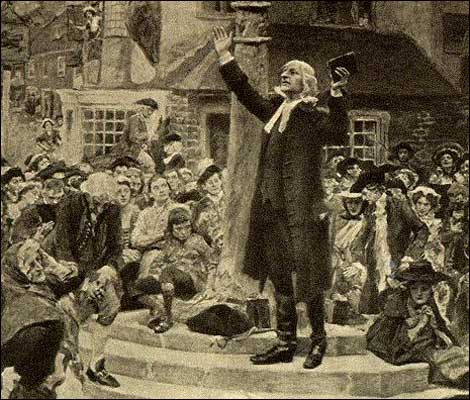
John Wesley, the 18th century evangelist, open air street preacher, Arminian theologian, revivalist, and founder of the Methodist Episcopal Church (the Methodists)—is arguably the most prophetically accurate reformer to appear since Luther. (I understand this is a personal bias, because his theology and experience generally lines up with how my personal Christian life has been lived out.) Nevertheless, it is a historical fact, that his theology had a great influence on: (1) the Great Awakening through George Whitefield, (2) the Second Great Awakening through Charles Finney, (3) the Holiness Movement through Phoebe Palmer, and (4) the Pentecostal Movement through William J. Seymour. Wesley was preoccupied with itinerant evangelism and soteriology, so he was very intellectual and theological. But he was also an experiential Christian, and held some level of respect for “Enthusiasm”: or direct inspiration from God through visions, dreams, miracles, etc:–all of which he experienced, and are documented carefully in Daniel Jennings’ The Supernatural Occurrences of John Wesley. But Wesley was critical of the 1700s Quakers, in his day. He believed they had strayed from Anglican and Puritan orthodoxy, and exalted personal spiritual experiences over the authority of the Bible, rather than allowing it to be the standard by which spiritual experiences should be tested. Wesley’s soteriology is very sophisticated; over the course of his lifetime he developed an “order of salvation” for preaching the Gospel:–repentance, faith, justification, and regeneration (see Kenneth J. Collins’ Wesley on Salvation). In rare cases, he even believed that very mature Christians could experience “entire sanctification” or “Christian perfection,” in which the Holy Spirit is supposed to extinguish all inbred or original sin in the Christian. (I however, side with Luther, the Puritans, and Reformed theologians in that sanctification is only a growing process of love and righteousness, a continual fight with temptations, and that there is no perfection of holiness in this life; on just about every other soteriology issue, though, I agree with Wesley: of which another distinctive was, and which he agreed with Luther on, was that it is possible for a truly saved Christian to lose his salvation (apostasy): if he chooses to give into temptation, and live his life in persistent unbelief and rebellion, against the moral law and the Gospel. In this way, my view of salvation is similar, or even identical, to Assemblies of God, the Free Will Baptist Church, and the Lutheran Church-Missouri Synod.) To me, it is clear that Wesley and his circuit rider Methodist evangelists, had done a lot to restore apostolic 1st century evangelism: to “go into all the world and preach the Gospel” and “with signs following”! (Mark 16:15, 20).

Charles Finney, the 19th century upstate New York evangelist and revivalist, and leading preacher in the Second Great Awakening, proposed innovations or “New Measures” necessary for promoting revival meetings in the churches. After years of experience doing this, preaching the Gospel, with signs, and outpourings of Holy Spirit conviction following, he wrote down his ideas in Lectures on Revivals of Religion, which, when paired with Wesley’s Sermons on Several Occasions, became the theological and practical foundation of “modern revivalism”: 19th and 20th century revivalism ideas for revival meetings, street meetings, camp meetings, and evangelistic meetings which were practiced by holiness, Pentecostal, and fundamentalist churches. One of the distinguishing teachings of Finney was that of the “protracted meetings” concept. He taught, that if pastors wanted their congregations to experience true conversion and revival, then they would have to organize a series of revival meetings, lasting anywhere between one to two weeks or more (depending on the effectiveness of the sermons of the revivalist or evangelist). He also solidified the concept of a “revivalist”:–who, in his gift and calling, is technically an itinerant evangelist, but as a revivalist, his focus is on the conversion of hypocrites or false converts in the churches (not lost people in the world, as in the open air setting). He is to preach the moral law thoroughly (especially on those sins where the unsaved church members are most likely entrenched in), Heaven and Hell, repentance from sin, faith in the cross, justification (forgiveness of sins), and holy living (obedience to the moral law of God in Scripture and conscience). Finney was open to the supernatural, and Daniel Jennings’ The Supernatural Occurrences of Charles G. Finney catalog his spiritual experiences, and demonstrate that he was prophetic, and like Wesley, a forerunner to William J. Seymour and the Azusa Street Revival (Pentecostalism). However, BE WARNED that Finney accepted Wesley’s “Christian perfection” idea; and even rejected original sin (which makes him a Pelagian with regard to human nature). However, Finney can be tricky about grace and free will; sometimes he definitely makes appeals to the “influence of the Holy Spirit” in man’s salvation and sanctification, which is basically a Wesleyan synergism doctrine.

Faith Cure or the Divine Healing Movement, also in the 19th century, was an interdenominational Charismatic movement that was shared between holiness Methodists, Baptists, and Reformed alike. A. J. Gordon, the Baptist minister, published The Ministry of Healing, in which he argued from Scripture, reason, church history (Waldensians, Quakers, Methodists, Baptists, Irvingites, etc), and experience, that prayers of faith for the sick through the laying on of hands, according to James 5:14-15, can expected to have miraculous answers from God:–IN MODERN TIMES! It was the first serious attack on Cessationist theology from an Evangelical viewpoint. There had been other “Charismatic books” published prior to it, but this one gained such notoriety in the Evangelical community, that Cessationist B. B. Warfield felt it necessary attack in his Counterfeit Miracles. Others predated Gordon or ran alongside him in the teaching on divine healing, such as Carrie Judd Montgomery, Dr. Charles Cullis, Dorothea Trudel (who is considered the founder of the movement), Maria Woodworth-Etter, A. B. Simpson (author of The Gospel of Healing and founder of the Christian and Missionary Alliance), and Andrew Murray (Divine Healing, etc). Pentecostals, and especially John G. Lake (see Roberts Liardon’s collection of his works), would advance the doctrine and practice of divine healing into the 20th century.

Evan Roberts, the young revivalist of the Welsh Revival (1904), was a Calvinistic Methodist who while at college, became obsessed with praying to be filled with the Spirit. Throughout the 1800s, there had been much talk about “the baptism in the Holy Spirit” as a second work of grace for entire sanctification, and spiritual power. After a few years of persistently praying for the baptism in the Holy Spirit (as a baptism of holiness—not as speaking in tongues), he received the answer to his prayers. For a series of nights, while he was sleeping in bed, he would suddenly be awakened in the middle of the night:–and the Lord Jesus would be standing at the foot of his bed! And the Holy Spirit would be hovering over him in waves; and many times, these waves of the Spirit were so overwhelming, that Roberts prayed for God to stop giving him so much of the Spirit, for fear he would die. The time came when he started to receive visions that directed him to churches for preaching. And eventually at one church in particular which became the center of a revival in Wales, called the Welsh Revival. The meetings at this church were prayer meetings, with times of singing, and preaching. Roberts, however, would be so filled with the Spirit, that there were many times, he would get into the pulpit and not preach at all. All he would do is pray or say a few words, and weeping and praying and confession of sins would sweep over the entire congregation for hours! There were also times when Roberts read hearts by receiving words of knowledge; the press writing of him as a “mind-reader.” These meetings that Roberts held in that church were so populated and frequent that the entire county of Wales was morally transformed; one significant sign was that bars closed down, and that donkeys didn’t understand their masters because they didn’t cuss anymore. The Welsh revival was one of prayer, the presence of God, holiness, and prophetic revelations.

William J. Seymour, pastor of the Apostolic Faith Gospel Mission in Los Angeles, CA, which housed the Azusa Street Revival (1906-1909), and founder of true Pentecostalism; he was the son of slaves in Louisiana, but after the “Emancipation Proclamation,” he moved to Indianapolis, IN to find work as a waiter in some posh hotels. During this time he attended an A.M.E. Church and a Church of God (Anderson, IN), then called the “Evening Light Saints”:–where he was exposed to holiness preaching and learned Wesleyan theology. Shortly after that, he attended “God’s Bible School” in Cincinnati, Ohio, and sat at the feet of holiness preacher Martin Wells Knapp, who wrote several books Seymour was probably exposed to, one of which was called Impressions, and dealt with spiritual discernment, and direct revelations through visions and dreams and voices and signs. After spending a short time there, he accepted preaching opportunities in various black holiness churches. Eventually, he became an assistant pastor to the elder Mrs. Lucy Farrow in Texas. While living there, Seymour had learned of a new Bible teacher traveling around the county, giving temporary Bible schools on “the baptism in the Holy Spirit” and “speaking in tongues”—the man was Charles Parham. The godliness of Parham was questionable in several areas, but the idea of tongues that Parham was pursuing interested Seymour and Farrow. Seymour learned from Parham’s “Apostolic Faith Movement” that Acts 2:4 and many other places in the book of Acts, show that speaking in tongues is the Biblical evidence, or sign, of being baptized in the Holy Spirit. Seymour accepted Parham’s teaching that there are three works of the Holy Spirit: (1) Regeneration/Salvation, (2) Sanctification/Christian Perfection, and (3) The Baptism in the Holy Spirit/Speaking in Tongues. To accept such a teaching was to break with the Wesleyan theological tradition, and the Holiness Movement, to which Seymour and Farrow were accustomed. But both of them pressed through in prayer, for the baptism in the Holy Spirit, and eventually received it, with the Bible evidence of speaking in tongues. Eventually, Seymour would be called out to pastor a black holiness mission in Los Angeles, but when he taught from Acts 2:4, he was kicked out of the mission. However, some of the people from that mission came with him to form a new Pentecostal mission: the Apostolic Faith Gospel Mission on Azusa Street, which would be the center of the international Pentecostal Movement from 1906-1909. Tongues were so strange, as were the physical manifestations of rolling, jumping, shouting, flailing, and dancing of the Pentecostal worshipers:–that these received most attention from The Los Angeles Daily Times, and were mocked in the most obscene and blasphemous ways: “Weird Babel of Tongues” was the first article they ran on the Azusa Street Revival. But tongues and physical manifestations were not all that could been seen at Azusa. There were dreams, visions, the voice of God, angels, demons cast out of Spiritualists, prayer for divine healing, miracles, street meetings, open air preaching on the street corners and at the railway stations. Frank Bartleman’s Azusa Street is the classic text on the revival, written by a firsthand participant, preacher, and observer.

Smith Wigglesworth, a Pentecostal evangelist from England who is a legend even to this day. He is most known for being a healer, even raising people from the dead, and having mastered the experience of spiritual gifts mentioned in 1 Corinthians 12:8-10. He is usually looked at as the model Pentecostal: what is possible for a Christian when he experiences the spiritual gifts. Stanley Frodsham’s Ever Increasing Faith is the classic collection of Wigglesworth’s teachings on various subjects ranging from righteousness, words of knowledge, words of wisdom, discerning of spirits, gifts of healings, tongues, interpretation of tongues, etc. If there could be anything, however, that Wigglesworth was not a good example in:–it was that he was sometimes rough with the laying on of hands, and would thrust his hand at people, and even “punch” the devil out of them when praying for their deliverance! Truly, that should not be imitated. “The weapons of our warfare are not carnal” (2 Cor. 10:4). However, much can be learned by reading his biography: Jack Hywel-Davies’ The Life of Smith Wigglesworth.

The Healing Revival (late 1940s-early 1950s), was a post-World War II movement of Pentecostal tent evangelists, traveling around America, praying for the sick, casting out demons, and giving words of knowledge. It was televised—obviously for its entertainment value. William Branham, Oral Roberts, Jack Coe, and A. A. Allen were the most popular among them, but there were many other “healing evangelists” whose “healing crusades” were carefully organized, and followed by Gordon Lindsay’s Voice of Healing magazine, and his Christ for the Nations ministry. The influence of John G. Lake and Smith Wigglesworth on this revival are worthy of note. But, the MORALITY of these men, such as Coe, Allen, and Roberts proved to be rather poor. Branham, on the other hand, seemed to have more integrity than the rest, but towards the end of his life, “went off the deep end” and claimed to be the prophet Elijah! Assemblies of God and Church of God (Cleveland, TN), once ardent supporters of the revival, eventually withdrew their support, and spoke against it, because of the emergence of “positive confession” and “prosperity gospel” teachings. Such teachings began to appear with Roberts and Demos Shakarian’s Full Gospel Business Man’s Fellowship International (FGBMFI) in 1951. These teachings were seen as not only heretical, but Roberts’ “seed-faith” teaching was seen as a ploy to rob congregations of their money, as “wolves in sheep’s clothing” are prone to do (Matt. 7:15). In the 1980s, Kenneth Hagin, who played a small part in the revival, would popularize the Word of Faith/Prosperity Gospel/Positive Confession teaching throughout Pentecostalism even more so. To me:–that makes these men FALSE PROPHETS! Although one must wonder about Branham, who had such a ministry in words of knowledge (and seems to not have jumped on the “prosperity” bandwagon):–could he just have been misunderstood? Could it have been that he claimed the “spirit and power of Elijah” had come upon him in the same manner as it did upon Elisha or John the Baptist? If that is the way we can understand Branham’s “Elijah” statements, as hyperboles, then it would seem to vindicate his ministry.

Dennis Bennett, the Episcopal priest, who in 1960, began the Charismatic Movement in Van Nuys, CA. At nine in the morning in his study room, Bennett was suddenly baptized in the Holy Spirit and spoke in tongues! As far as I know, he had no connection to Pentecostals! What was alternately called the “Charismatic Renewal,” was a movement of the baptism in the Holy Spirit, speaking in tongues, and the spiritual gifts in 1 Corinthians 12:8-10:–only this time it was in the mainline liberal churches (e.g., Episcopal, United Methodist, ELCA, etc) as well as conservative Evangelical churches (e.g., Southern Baptist, Church of Christ, Church of the Nazarene, etc):–and even spilled into the Catholic Church! Books that were popular during the Charismatic Movement usually encouraged people to pray for the baptism in the Holy Spirit, to speak in tongues, or to use the spiritual gifts properly:–Dennis Bennett’s The Holy Spirit and You, John and Elizabeth Sherrill’s They Speak with Other Tongues, Larry Christensen’s Answering Your Questions about Speaking in Tongues, Don Basham’s A Handbook on Holy Spirit Baptism, etc. See the bibliography in the back of Robert Culpepper’s Evaluating the Charismatic Movement.

There was some difference of opinion over the meaning of the phrase “baptism in the Holy Spirit”—as there always has been, since the phrase started to reappear in the 1800s, during the Holiness Movement. Less people in the Charismatic Movement were willing to accept Seymour’s “three works of grace” teaching from Acts 2:4. Many did not see why it was necessary to believe speaking in tongues is the only necessary evidence of the baptism in the Holy Spirit. They reasoned, “Why can’t the fruit of the Spirit, or godliness, or love, or humility, be enough evidence of the baptism?” “Why can’t words of knowledge or healing be evidence—after all, the Bible asks, ‘Do all speak in tongues?’” “Didn’t we receive the Holy Spirit when we first got saved? Why then would we need the Holy Spirit a second time?” “And why would speaking in tongues have to be proof of the Holy Spirit’s presence in my life?” Others thought that speaking in tongues was just “too weird” for them, but they were open to feeling God’s presence in worship, or experiencing the spiritual gifts, like words of knowledge or healing. (Personally, I side with Seymour’s “three works” teaching on Acts 2:4, because I see regeneration as the indwelling of the Spirit in salvation, but the baptism in the Holy Spirit as an external experience of being “clothed with power from on high.” But those who disagree with Seymour’s view see the phrases “regeneration” and “the baptism in the Holy Spirit” as meaning the same thing in the Bible.)

Pros and Cons of the Charismatic Movement

THE PROS: (1) It exposed Christians to supernatural experiences of the Holy Spirit, who otherwise may never had the opportunity, due to their church’s traditions and doctrines. (2) It created a lot of literature on spiritual gifts, which now provide us with a very solid basis for Pentecostal/Charismatic theology; this was because many of the church leaders in the Charismatic Movement were highly educated seminary graduates, unlike those involved in the first Pentecostal Movement. (3) Because the outpouring of the Spirit was upon much of the sophisticated church crowd, they were more willing to be reserved, and follow Paul’s directives for “decency and order” in 1 Corinthians 14:40.

THE CONS: (1-2) The outpouring of the Spirit upon liberal Christian universalists, and on carnal church goers:–created the problem of a Gnostic New Age “Charismatic” Christianity on the one hand, and carnal Charismatics on the other, so that the Corinthian problem was renewed.

John Wimber, a musician formerly from the band called The Righteous Brothers, was converted to the faith in the 70s, and rose to a position of leadership in an Evangelical Friends church (Quaker); and then eventually in the Vineyard Movement, which was started by Kenn Gulliksen, in various home-based Bible study groups. Wimber had some connection with Calvary Chapel as well, but shortly crossed over to the Vineyard, because they were more open to the experiential aspects of Charismatic Christianity, and he had developed a strong interest in the spiritual gifts of 1 Corinthians 12:8-10, desiring to see them appear in his congregation. In the 80s, he had the opportunity to teach an unusual class at Fuller Theological Seminary called “Signs, Wonders, and Church Growth”:–which caused a big stir, a Charismatic revival if you will, in both the Evangelical and Charismatic communities. This became Wimber’s launch into the spotlight of leadership in the Vineyard, which became the Association of Vineyard Churches, and the primary vehicle of the Third Wave Movement or the “Signs and Wonders” Movement. C. Peter Wagner, a professor at Fuller, maintained that the Pentecostal Movement, the Charismatic Movement, and the Third Wave Movement were “three waves” of the Holy Spirit’s work in the 20th century, and are all part of the same ongoing work. Theological aspects of the Vineyard, and of other independent Charismatic churches, that were influenced by Wimber are: (1) Evangelical/Charismatic Theology; unlike in the Charismatic Movement, which spread to all denominations, even liberals. The Third Wave was Biblically grounded, Evangelically minded, but Charismatically driven. In my opinion, this provided a healthy basis for a balanced approach to Charismatic Christian living, based on the Bible and experience of the Holy Spirit, so Biblical spiritual discernment can test and judge spiritual experiences. In this way, it was like Azusa Street Pentecostalism, grounded in Scripture. However, the difference between them, is that Azusa Street was more Wesleyan-Arminian, and the Third Wave is more Reformed-Calvinistic (as can be seen in Wayne Grudem’s Systematic Theology). Also, the Third Wave doesn’t insist on Seymour’s “three works” teaching on Acts 2:4, either. (2) Charismatic worship: raising hands, closing eyes, concentration on Christ, feeling God’s presence, speaking in tongues, dancing, shouting, and singing contemporary worship music, usually to a guitar and a “rock band” worship team. (3) Divine healing: although Wimber was aware of the various traditions of Christian healing, from Faith Cure/Divine Healing (1800s), the Healing Revival (1950s), Catholic Charismatic healing (1970s), etc. He synthesized and experimented with praying for the sick by the laying on of hands, and came up with the phrase Power Healing, which he believed was necessary for Power Evangelism, or preaching the Word “with signs following”:–these were the titles of Wimber’s two most popular books. (4) Words of knowledge through God’s voice and mental images (visions). Wimber did not go too far in this direction, however; his forte was in divine healing. The issue of prophecies and revelations would be passed on to Mike Bickle.

Mike Bickle, now the pastor of the International House of Prayer-Kansas City (IHOP-KC), around 1983, was visited by a man named Bob Jones. Jones was an unusual character, difficult to understand at times, because of his often mysterious and symbolic expressions. Eventually he told Bickle, “Before the first rain of Spring, you will acknowledge that I am a prophet.” This was the beginning of the Prophetic Movement, which would eventually spread into the Vineyard churches, and come under John Wimber’s oversight. The primary characteristic of the prophetic movement were words of knowledge demonstrated as a supernatural reality to Bickle, who had come from a Cessationist Presbyterian church background. Bob Jones and another man–a former healing evangelist named Paul Cain–from the Healing Revival, were the two most popularized and gifted in the words of knowledge during the 80s. Both Jones and Cain had been influenced at one point in their lives by the word of knowledge gifting operating in William Branham, during the Healing Revival; in a way, and even to this day, some in the Prophetic Movement see themselves as carrying on Branham’s prophetic anointing to the next generation. The reality came home clearly to Bickle and others in his connection that words of knowledge are frequently received by means of visions (open or closed eyes), dreams, and internal voices. Very rarely is there an audible voice of God or a trance. And seldom can intuitive “impressions” be trusted. There are such things as “signs” that confirm by a meaningful coincidence, or even a series of such events, that firmly establish a spiritual experience like a prophetic dream, to in fact be a divine revelation received and believed and obeyed in faith, provided it lines up with Scripture; for extra careful Biblical exegesis on prophecy and personal application, Wayne Grudem’s The Gift of Prophecy in the New Testament and Today was used often by Vineyard pastors. Eventually Jones and Cain fell into sexual sin, and were disciplined, by Wimber and Bickle; Cain, however, had a hard time accepting the discipline, because he claimed the accusations were totally wrong, and that he was not gay, just celibate (homosexuality was the sin he was disciplined for). Cain left the church and rarely showed his face again. Wimber, in order not to bring shame on the Vineyard, decided to disband Bickle’s church, and stop involving himself in the Prophetic Movement. Instead, Wimber returned to his original emphasis of divine healing. On the other hand, Mike Bickle’s Growing in the Prophetic (1996) was written to help seers, prophets, dreamers, and visionaries in the Charismatic churches to hone in on their gift, or to pray for the gift, or have sharper spiritual discernment, avoid pitfalls, and misinterpretations of revelations, and how to implement words of knowledge into a church service, all the while maintaining “decency and order.” It wasn’t the first book of its kind, but was certainly at the top of the list in priority, because Bickle himself wrote it, based on his personal experiences of pastoring and prophetic ministry.

John Arnott, pastor of Toronto Airport Vineyard Church, in 1994, invited minister Randy Clark to speak, who had attended a revival meeting by Rodney Howard-Browne. Clark, after speaking, prayed for the people to be filled with the Spirit, and many were slain in the Spirit at the same time! This came to be called the “Toronto Blessing,” and like the Azusa Street Revival, it had people traveling from all over the world to experience the power of God. There were physical manifestations of the Holy Spirit’s presence like shaking, shouting, rolling, quaking, “drunkenness,” crying, and yes—hysterical “holy laughter.” All these things were justified by Dr. Guy Chevreau’s Catch the Fire, which makes the case that these manifestations appeared under the ministries of Jonathan Edwards, John Wesley, and George Whitefield, during the Great Awakening, and Methodist Revival in the 18th century. There were also strange ecstatic “animal sounds” which caused much controversy, and stirred suspicion that the revival was demonic; such animal sounds were imitated by Spiritualists who had tried to cause trouble at Azusa Street. Arnott, however, interpreted them in his church, as prophetic and symbolic—from the Holy Spirit. (Personally, I think ecstatic animal sounds have more of an occult root than anything else: in my assessment, instead of being called the “Toronto Blessing,” it should have been called the “Mixed Blessing”; but John Arnott’s The Father’s Blessing defends all of the revival’s experiences.)

Kris Vallotton, in the early 2000s, was appointed to be the director of the “School of Supernatural Ministry” at Bethel Church in Redding, CA. This church was founded by Pastor Bill Johnson, and was originally an Assemblies of God church. In 1995, Johnson had attended the Toronto Blessing revival meetings, in search for the experience of God’s power. Johnson experienced nothing during the meetings, but he was impressed enough by what he saw to devote the rest of his life to cultivating the supernatural in the church and the body of Christ at large. Bethel Church started off with a strong emphasis on divine healing after Johnson’s new vision for supernatural ministry; and then, eventually words of knowledge and prophetic ministry, became a focus. This is when Johnson brought Kris Vallotton, who wrote Basic Training for the Prophetic Ministry, to Bethel’s Bible school of “Supernatural Ministry” to train and equip ministers to receive words of knowledge and prophesy them to people on the streets for witnessing, or in church services for divine healing purposes!

Pros and Cons of the “Signs and Wonders” Movement

In my view, there are plusses and minuses, positives and negatives, pros and cons of the present-day “Signs and Wonders” Movement (aka. Third Wave/Neocharismatic), which began in the 80s, through John Wimber and the Vineyard churches.

THE PROS: (1) Books on prophecy have been produced by Biblical exegetes to show Christians just exactly, and specifically how the Holy Spirit directly speaks to man: by visions, dreams, and the still small voice, and this is developed through various forms of prayer and contemplation. (2) Books on healing have been produced for our generation which point us to sound, practical, useable principles, that can be implemented to pray for the sick by laying on of hands, and expect miracles, and increase our faith in the God of the All-Possible. (3) The reality of God, angels, and demons are things that cannot be replaced by book learning and sermons. They have to be EXPERIENCED; and because the faith of the people in this movement is so high in the supernatural, their spiritual experiences and prophetic revelations are abundant; and this is something like the Book of Acts, which is wonderful. We need all the Charismatic experiences, spiritual gifts, and miracles we can get in this atheistic and secular age, that tends to think of everything in the world by means of a “natural” scientific explanation (naturalism). To experience God and the spirit world, as this movement allows, is to truly open the way up to genuine, authentic, EXPERIENTIAL FAITH in the truth of Scripture!

THE CONS: (1) Carnality, or moral laxity, has been present since the Charismatic Movement began in 1960. “Charismatics” have been known for their loose morals, compared to the “legalistic” Wesleyan Pentecostal “holy rollers” at Azusa Street. This “carnal Charismatic” mentality passed over into the Vineyard, the Third Wave, and the “Signs and Wonders” Movement as well. Examples of Carnality among Charismatics: Having Bible studies in a pub, pints of beer at Vineyard church leaders meetings, speaking in tongues in church, smoking in the church parking lot, women dressing “sexy” at church and elsewhere, or going public swimming, and wearing bikinis, showing off skin, or wearing tight clothing during church services; cussing is something I once witnessed a Charismatic youth pastor, not only do, but philosophically defend; watching ungodly movies, TV shows, and listening to music with ungodly lyrics, fornication, adultery, and homosexuality among church leaders, covetousness based on the Prosperity Gospel, stealing from church treasuries among high-level church leaders, false prophecy, false healings, false slain in the Spirit (courtesy falls), etc. There’s less of a willingness to practice self-denial, or have a prayer life and fast; and almost a self-gratifying, selfish, entertainment-worshiping Americanism that hasn’t been shaken off; and a lot of this, I think is due to “cheap grace” theology—dead faith without works. And it just so happens these carnal Christians, which according to strict soteriology, means they’re not in the way of salvation, still yet received the baptism in the Holy Spirit, and so, they fall prey to speaking in tongues with pride, and making others feel inferior they too don’t speak in tongues or experience visions and dreams and miracles, rather than encouraging them to pray for them. “Lord, Lord, did we not prophesy in Your Name, and work miracles?…and He will say, ‘Depart from Me you who practice lawlessness, I never knew you!” (Matt. 7:22-23). (2) Selling Charismatic books and tapes for high prices seems to have been going on since the first “Charismatic conferences” in the 60s. It is a Charismatic spin-off of the New Age seminar format; sometimes these conferences, even today, can cost hundreds of dollars to attend for a two-day weekend retreat; and that’s not including the hundreds of dollars of books and tapes that might be purchased. This is the sin of SIMONY, trying to buy the power of the Holy Spirit for a price like Simon the Sorcerer did; pagan, pagan, pagan! New Age seminar influence. (3) New Age theology influence (sometimes) is a problem with some Charismatic or modern “Signs and Wonders” teachers. Some of this is an accident, because some of these teachers who receive these gifts of the Spirit, like Patricia King, were formerly practicing psychics in the New Age Movement. After they came to Jesus, and repented of their witchcraft, they were left open to the gifts of the Spirit. They began to receive words of knowledge and easily move in faith for healing and miracles, only in the name of Jesus, and the power of the Holy Spirit. But even after all this, there is sometimes a residue of New Age doctrines that remain with Charismatics, and you need to be careful about this. Read Clifford Wilson and John Weldon’s Occult Shock and Psychic Forces, Douglas Groothuis’ Unmasking the New Age and Confronting the New Age, Dave Hunt and T. A. McMahon’s The Seduction of Christianity, and Josh McDowell’s Handbook of Today’s Religions, Part 2: “Understanding the Occult”—these five books should provide you with plenty of spiritual discernment about New Age doctrines, that still might be floating around teachers in the Charismatic Movement, the “Signs and Wonders” Movement, the Prophetic Movement, the Third Wave, and the Vineyard churches. I say, this is usually an accidental thing, because most New Age thought is based in Hinduism; and no serious Charismatic Christian would knowingly accept a Hindu belief. But the New Age Movement is very popular, and very subtle, and a lot of its ideas creep in without notice sometimes. But then there are intentionally universalist, pluralistic New Age “Charismatics” like Morton Kelsey (supports yoga meditation for Christians), or various authors published by Paulist Press—the Catholic Charismatic publisher, who knowingly allow a melding between Buddhist meditation, Hindu spirituality, and Charismatic Christianity—these people usually follow the lead of Thomas Merton and the “Centering Prayer” Movement in the Catholic Church, which Pope Benedict XVI called heretical.

30 Books to Glean from Charismatic Church History

  1. Athanasius’ The Life of Antony
  2. Gregory the Great’s Life of St. Benedict
  3. Bonaventure’s Life of St. Francis
  4. Gottfried and Theoderic’s The Life of the Holy Hildegard
  5. Hildegard of Bingen’s Scivias
  6. The Spiritual Exercises of St. Ignatius
  7. Teresa of Avila’s The Interior Castle
  8. John of the Cross’ The Ascent of Mount Carmel
  9. The Suppressed Evidence
  10. The Scots Worthies
  11. G. B. Scaramelli’s A Handbook of Mystical Theology
  12. Daniel Jennings’ The Supernatural Occurrences of John Wesley
  13. Daniel Jennings’ The Supernatural Occurrences of Charles G. Finney
  14. A. J. Gordon’s The Ministry of Healing
  15. Augustin Poulain’s The Graces of Interior Prayer
  16. Albert Farges’ Mystical Phenomena
  17. Frank Bartleman’s Azusa Street
  18. Stanley Frodsham’s Ever Increasing Faith
  19. Dennis Bennett’s The Holy Spirit and You
  20. John and Elizabeth Sherrill’s They Speak with Other Tongues
  21. Larry Christensen’s Answering Your Questions about Speaking in Tongues
  22. Don Basham’s A Handbook on Holy Spirit Baptism
  23. John Wimber’s Power Evangelism
  24. John Wimber’s Power Healing
  25. Wayne Grudem’s The Gift of Prophecy in the New Testament and Today
  26. Wayne Grudem’s Systematic Theology
  27. Mike Bickle’s Growing in the Prophetic
  28. Guy Chevreau’s Catch the Fire
  29. Kris Vallotton’s Basic Training for the Prophetic Ministry

Bibliography for This Article

Aumann, Jordan. Christian Spirituality in the Catholic Tradition.
Davidson, A. B. Old Testament Prophecy.
De Voragine, Jacobus. The Golden Legend.
Doles, Jeff. Miracles and Manifestations.
Farges, Albert. Mystical Phenomena.

Holt, Bradley. Thirsty for God: A Brief History of Christian Spirituality.
Hyatt, Eddie. 2000 Years of Charismatic Christianity.
Jackson, Bill. The Quest for the Radical Middle: A History of the Vineyard.
Loren, Julia. Shifting Shadows of Supernatural Power.
Robeck, Cecil. The Azusa Street Mission and Revival.
Synan, Vinson. In the Latter Days.

——–. The Holiness-Pentecostal Tradition.
——–. Century of the Holy Spirit.
Wikipedia.com. “Apostolic-Prophetic Movement.”

Posted in Uncategorized | Leave a comment

Rules for a Godly Ministry

The following are my most developed thoughts on the ministry that I can come up with at the present. But I want to emphasize “at the present,” because I still have much to learn by way of books and experience. However, I would maintain, that if the following rules are kept closely, and prayerfully, and conscientiously, then they may result in a godly and fruitful ministry.

  1. A Godly Pastor: Serious, Puritanical Preacher. Most of what we call “ministry” in a church on Sunday morning, has to do with the subjects that the pastor chooses to preach about in his sermon. Ever since the days of the Protestant Reformation, the church has always been understood as a “preaching house” and in some cases a “Gospel hall.” There can be no godly sermons, and no godly preaching, without a godly pastor. He must definitely be a true Christian, a sin-hating, temptation-resisting, devil-conquering, flesh-denying, world-opposing, Christian soldier. When it comes to sin, death, Hell, and judgment:–he’s serious. When it comes to preaching holiness and righteousness, and living godly lives:–he’s utterly serious. He is evangelistic; he’s a missionary and an evangelist at heart. His love for the lost and perishing constrains him to preach the Gospel and testify of God’s saving grace. He’s not a false gospeller or a cheap gracer; he stands in the Puritan tradition of preaching on the holy things of God. His heroes are holy and godly men from the past.

  2. Independent; Non-Denominational: “Free Pulpit”. Since the times of the Reformers and Puritans, to be a “Nonconformist” has proven to be the usual ministry setting in which true men of God arrive at (Matthew Henry, John Bunyan, Richard Baxter, Jonathan Edwards, etc). That is, being independent from the carnal church establishment which has currently hijacked the ministry world. So it was with the Church of England establishment in the times of the Puritans and Methodists; and I say, so it shall be with us today, with most of the denominations which are caught up in the Seeker-Sensitive establishment (Willow Creek Association). Ever since this carnal “ministry manifestation” has occurred, with its business management marketing approach to the ministry, and its countless church entertainments, God has still left us a remnant of Elijahs and Elishas to lead the godly into what true ministry looks like (Leonard Ravenhill, David Wilkerson, Paul Washer, etc). However, I’ll admit that A. W. Tozer is an exception to this, as he was a pastor in the Christian and Missionary Alliance. Other than that, it seems that fiery and godly preaching of the moral Law and the statutes of God and the “showing to Israel their transgressions” (Isa. 58:1; godly Puritanical preaching) is mostly going to thrive in an independent church environment. I think it was Finney who said that a “free pulpit” is more helpful in the promotion of revivals than a controlled one:–that is, a pulpit in which there are no strings attached; no carnal church board controlling the pastor’s preaching by playing with his salary or his job security; but no, in a pastor-run “free pulpit” he is free indeed to PREACH REPENTANCE and MIRACULOUS GIFTS as the Spirit gives him utterance! A free pulpit is a prophet’s pulpit; a pulpit where words of knowledge can manifest without scandal.

  3. Repentance Focused. A godly ministry is always focused on repentance. You might as well call it “Repent and Believe Ministries.” But really: what I mean is that the pastor and the laity are living out the Christian life. They are steered away from easy believism on a regular basis, and are frequently exhorted to “examine themselves to see whether they are in the faith” (2 Cor. 13:5) and to “work out their salvation with fear and trembling” before God (Php. 2:12). This pastor and this church do not play around with sin, even the smallest kinds. They are a very conscientious people; they want to be good, godly, holy, and righteous people, who “shine as lights in the world” (Php. 2:15). They are of the understanding that God demands obedience to His Word and expects His people to be saints who are growing in that obedience from an attitude of fear, to that of reverence, to that of pure love for God and man. The church is not a “lovey-dovey, squishy, mushy” congregation; and neither is the pastor namby-pamby, full of jokes (not to say that all joking is bad; just to say that the general demeanor is serious and reverent in ministry activities). There is a “church militant” kind of an air about it; sort of like the Salvation Army was in the late 1800s. The ministry’s focus is to secure men’s salvation by repentance from sin and faith in the Savior; which is the only sure evidence of justification from sin, Hell, and eternal damnation.

  4. Evangelistic and Charismatic Ministry among the Laity. In order for the Holy Spirit to gain full control over the congregation, it is important that the people in the church, after experiencing the born again experience, and after demonstrating that they are truly living out the basic principles of the Christian life:–that they be trained and equipped to do evangelistic street preaching and witnessing. Traditionally, “street meetings” in urban centers are the place for this. What’s more, is if the pastor is charismatically gifted, and knowledgeable of such matters, he should pray for and teach his evangelistic church members how to receive and give words of knowledge, and how to pray for the sick by the prayer of faith till results are achieved, for the glory of Christ and the Gospel. That the Gospel may be preached with the “accompanying signs” (Mark 16:20). On street meetings and evangelistic outreach, I encourage reading about the lives of William Booth and John Wesley. For insight into words of knowledge and divine healing, read all of John Wimber’s books: Power Evangelism, Power Healing, Power Points, and Power Encounters. [Bibliography on Street Meetings:–Londa Duncan’s Touching Lives, ch. 3: “Street Meetings and Building Congregations”; Cecil Robeck’s The Azusa Street Mission and Revival, p. 109; W. C. Dunlap’s Life of S. Miller Willis, “The Holiness Meetings and the Street Meetings”, p. 91; Beth Scgweiger’s Religion in the American South, p. 228; “The street meetings are attended by crowds. Last Sunday night, many had to be turned away. Bro. McCauley has charge of the work. He says, ‘The Lord has wonderfully planted the seed of salvation in Long Beach in street meetings every Sunday afternoon. O how I praise Him for the outpouring of His Spirit. A baby that had been sick all its life was wonderfully healed in answer to prayer'” (Roberts Liardon’s The Azusa Street Revival, p. 139); Mother Beulah Turner-Brown’s From Rags to Riches, p. 6; “Elder Benjamin gave leadership to the church’s evangelistic ministry by conducting street meetings and tent meetings throughout the city, sometimes featuring guest evangelists” (Cheryl Sanders’ Saints in Exile, p. 37); James R. Goff’s Portraits of a Generation, p. 131–on William Durham; “My mother was born in Falcon, North Carolina on February 7, 1914…she and her sisters also held ‘Street Meetings’ on Saturdays in North Carolina towns like Dunn and Fayetteville” (Jeraldine T. Posey’s Let My Handmaid Speak, p. 159); Good example of how weekly street meetings can lead to the formation of a church:–“In 1885 five holiness workers in Philadelphia, who for three years had been holding street meetings, rented a hall and organized the Heavenly Recruit Association of Philadelphia. Spreading to other Pennsylvania towns and eventually to Indiana and Illinois, the Heavenly Recruits re-organized in 1894 as the Holiness Christian Association; three years later, as the Holiness Christian Church” (Charles Edwin Jones’ Perfectionist Persuasion: The Holiness Movement and American Methodism, 1867-1936, p. 91); Shows that the Salvation Army gave up on street meetings around the year 1900:–Lillian Taiz’s Hallelujah Lads & Lasses: Remaking the Salvation Army in America, 1880-1930, p. 142)…probably because William Booth died in 1912: James Goll’s Compassion, p. 59)]

  5. Prayer Meetings. Every Wednesday, there should be a prayer meeting where repentance-focused intercession and evangelistically-focused prayers are offered up to God by the congregation in concerted prayer. Prayers for missionaries, evangelists, and lost loved ones should be offered; also, personal confessions and repentances, if so led: “Confess your sins to one another and pray for one another that ye may be healed” (Jas. 5:16). These meetings should last one hour at least; and 4 hours at most.

Posted in Uncategorized | Leave a comment

Sermons for Spiritual Development

The following is a list of sermon subject titles that could be used in a series of preaching topical sermons. The objective would be to preach the basics first, and then over successive Sunday sermons, bring the congregation up into “the measure of the full stature of Christ” (Eph. 4:13; including myself). In essence, there would be three stages: (1) Salvation, (2) Sanctification, and (3) Charismatic Growth, in keeping with the old-time Pentecostal dictum: “Saved, Sanctified, and filled with the Holy Ghost.”

Sermons on Salvation

  1. Repent, and Believe in the Gospel! (Mark 1:15)
  2. The Doctrine of Repentance
  3. Justification by Faith Alone
  4. The Experience of Regeneration
  5. The Order of Salvation

Sermons on Sanctification

  1. Love the Lord with All Your Heart
  2. Love Your Neighbor as Yourself
  3. The Ten Commandments (Part 1)
  4. The Ten Commandments (Part 2)
  5. The Sermon on the Mount (Part 1)
  6. The Sermon on the Mount (Part 2)
  7. The Sermon on the Mount (Part 3)
  8. The Sermon on the Mount (Part 4)
  9. The Sermon on the Mount (Part 5)
  10. The Fruit of the Spirit (Gal. 5:22-23)
  11. Oh, How I Love Your Law!
  12. Rules for Godly Living (Col. 3)
  13. The Moral Law of God
  14. God’s Law Written On the Heart
  15. A Clear Conscience Before God
  16. Growing in Obedience to God
  17. Continual Repentance
  18. Submit to God and Resist the Devil
  19. Methods of Resisting Temptation
  20. The Real Christian Life
  21. The Love of God and its Counterfeit
  22. Righteousness All the Days of Our Lives
  23. Righteousness, Joy, and Peace
  24. Going On to Perfection

    Sermons on Charismatic Growth 
  1. A History of the Prophetic (Part 1)
  2. A History of the Prophetic (Part 2)
  3. A History of the Prophetic (Part 3)
  4. A History of the Prophetic (Part 4)
  5. The Baptism in the Holy Spirit (Acts 2:4)
  6. Speaking in Tongues (Part 1)
  7. Speaking in Tongues (Part 2)
  8. Feeling the Manifest Presence of God
  9. Pentecostal Worship in the Spirit
  10. Meditation, Contemplation, and Revelation
  11. Spiritual Discernment by Law and Gospel
  12. The Value of Prophetic Journaling
  13. The Nine Gifts of the Spirit (Part 1) (1 Cor. 12:8-10)
  14. The Nine Gifts of the Spirit (Part 2) (1 Cor. 12:8-10)
  15. The Nine Gifts of the Spirit (Part 3) (1 Cor. 12:8-10)
  16. The Nine Gifts of the Spirit (Part 4) (1 Cor. 12:8-10)
  17. Mystical Phenomena and Their Counterfeits
  18. Prophetic Visions and Dreams (Acts 2:17)
  19. The Voice of God
  20. Impressions and Signs
  21. Ecstasies, Trances, and Raptures
  22. Ecstatic Prophecy
  23. The Fire of Divine Love
  24. Praying for Divine Healing (Jas. 5:14-15)
  25. Casting Out Demons
  26. Nature Miracles
  27. The Case Against Cessationism
Posted in Uncategorized | Leave a comment

The Prosperity Gospel Is Evil!

The love of money is a root of all kinds of evil, for which some have strayed from the faith in their greediness, and pierced themselves through with many sorrows. –1 Timothy 6:10

It is important to note from the beginning, that the text does NOT say “money is the root of all evil”, but rather it says “THE LOVE of money” is evil. And it’s good that it says this, rather than the other. If money itself were an evil thing for Christians to use, then they would all be homeless beggars, who would not even be allowed to beg for money, but only for food and clothing. But even then there would be an ethical dilemma in that situation, because the generous giver in that case, would have to use his money in order to purchase some food and clothing for the Christian beggar. However, it is not the case that Scripture condemns money as an object, nor the Biblically and morally regulated use of money. Good thing too, because life in this world, which is empowered by the use of money—buying and selling—would be completely impractical and undoable. The best thing a money-avoider could do is pray for God to sustain him in the forest, naked and alone as a hermit.

Jesus angry at money changersThe only thing Scripture allows us to do is HATE MONEY; or to be a money-hater. The text says, “The love of money is a root of all kinds of evil,” which implies that all kinds of evil will come into your life, if you allow yourself to love money. The Bible criticizes those who opposed Jesus as “the Pharisees, who were lovers of money” (Luke 16:14); and if the enemies of God are put into such a category, then the followers of Christ should not be as they are; but rather, should be understood as “the Christians, who are haters of money.” But to hate money is not to avoid it completely; it is a necessary evil, and this appears to be the implicit meaning of the text. For if Christians are to apply the reverse implication of this text to their lives, then they have to conclude with Christ, that “No one can serve two masters. Either you will HATE the one and LOVE the other, or you will be devoted to the one and despise the other. You cannot serve both GOD and MONEY” (Luke 16:13, NIV). Jesus pits God and Money against one another, as if they are two opposite forces competing not only for the attention of mankind, but for their devotion. Not only are greedy money-lovers DISTRACTED from God, but if He is ever brought up in preaching or conversation or writing, something within them feels HATRED for this God of holiness, and a tendency in them to CHANGE THE SUBJECT of discussion away from the God they hate. The reverse is true for the godly; because the godly have come to “love the Lord their God with all their heart” (Luke 10:27); they have shunned the love of money, and all that money can buy; and have developed a godly hatred for money. But while recognizing that there is a such a thing as ill-gotten gain in this world, the Christian seeks to make honest money, through hard work, and conscientious employment, working as unto Christ (Col. 3:23), to provide for his needs, or his family. And in this he sees the blessing of God, and gives Him thanks and praise for his financial provisions. Yet, when it comes to the money itself, he does not allow it to distract him from devotion to God; he largely forgets about it, uses it, and hates the thought of ever becoming attached to it. As the Word says, “You shall not make unto thee a graven image to bow down to it” (Exod. 20:4); and also, “you shall not covet” (Exod. 20:17). Always for him it is “In God We Trust” and not “In Greed We Trust.”

Reverend IkeThe Prosperity Gospel, or as it is also called “the Health and Wealth” Gospel, the “Word of Faith,” “the Faith message,” “Positive Confession,” or the “Name-It-Claim-It” doctrine: is a false teaching that emerged out of Pentecostalism around 1951 through men like Oral Roberts, Demos Shakarian, and Full Gospel Business Men’s Fellowship International (FGBMFI).[1] Many, if not most Pentecostal and Charismatic pastors believe and teach this doctrine today. Although the Assemblies of God has an official “Position Paper” against it, that has hardly helped to curb the heresy from spreading. The teaching of the Prosperity Doctrine, while falsely misquoting and misapplying Scriptures, is really based in New Thought or New Age thought:–specifically the sort of thinking taught by Christian Science, Unity, “positive thinking,” “mind over matter,” and other metaphysical cults (see D. R. McConnell’s A Different Gospel). The Prosperity teaching, usually also comes as a “package deal” with its false doctrine on healing as well. The teaching goes like this:–If you are poor and sick, there is hope for you to become rich and healthy. Hope in Christ. You can “do all things through Christ who strengthens you” (Php. 4:13); it is He who “gives you power to get wealth” (Deut. 8:18), etc. Speak to your condition with faith; rearrange your circumstances; you have the power of God within you, so just say, “God has given me power to get wealth, therefore I am wealthy.” Good. Are you sick? The answer is you’re not really sick! “By His stripes we were healed” (1 Pet. 2:24). You see its already been done. He already died for your healing. You just need to realize it by faith. Just say, “By His stripes, I’m already healed!” Now just wait for the money and the health to miraculously appear in your life. In Jesus’ Name, amen.

There are several things wrong with this teaching.

Firstly, it encourages the love of money (greed, covetousness, breaking the tenth commandment: “you shall not covet”–Exod. 20:17). Rather than appealing merely to the financial needs of the godly, it goes further than that, and assumes that godly Christians are supposed to yearn to get rich. The Bible says, “Those who desire to be rich fall into temptation and a snare, and into many foolish and harmful lusts which drown men in destruction and perdition” (1 Tim. 6:9).

Secondly, its lying to yourself (“you shall not bear false testimony”–Exod. 20:16; denial of reality). While there is nothing wrong with authoritative prayer (or words of command, especially in healing, or praying for miracles):–it’s definitely wrong to use commands in such a way, as to ASSUME that God has automatically answered all prayers for finances and healing, simply because there are some Scriptures that speak to these subjects. No Christian should say “I am wealthy” when he is still physically poor. That is a lie:–no matter what kind of metaphysical mumbo jumbo is loaded in the words. It’s still a lie! If you are rich, then it’s because you physically have lots of money in your bank account; if you’re poor, it’s because you have little. But if you believe in the Prosperity Gospel, then what’s in your bank account doesn’t matter—REALITY doesn’t matter, just keep saying “I am wealthy,” and maybe tomorrow you will be! So, in essence the teaching is a metaphysical DENIAL OF REALITY, a philosophical escapism that probably hinders people, from actually getting some real work done, to benefit themselves financially. This is similar to Christian Science, and may come from the Hindu teaching of maya, or illusion.

Thirdly, it deters men from patiently waiting for answers to prayer. The Word of God teaches: “This is the confidence that we have in Him, that if we ask anything according to His will, He hears us. And if we know that He hears us, whatever we ask, we know that we have the petitions that we have asked of Him” (1 John 5:14-15). If a Christian needs a better job, a higher wage, more money, etc. The Biblical teaching is to pray to God for revelation and blessings to come his way; and then to wait patiently for God to answer the prayer for financial provision. The Prosperity Gospel says, “Just say, ‘I am wealthy!’” The Bible teaches: (1) Pray for God to financially provide for you. (2) Wait patiently for the provision to come. (3) When the provision comes, give God thanks and praise. The same applies to divine healing (Jas. 5:14-15). Also, “the effectual fervent prayer of a righteous man availeth much” (Jas. 5:16). The Prosperity Gospel has no place for being a righteous man as a requirement for the miracle to come. It’s just a name it-claim it message that can “work” for anyone who has enough so-called “faith” to maintain a “positive mental attitude and confession.” The Bible teaches obedience to the Word of God, in the daily life of the godly, as a foremost requirement for answers to prayer.

Biblical miracle working comes by waiting for God’s answer to the fervent prayer of faith made by a righteous man (petition or intercession); it does NOT come by any Joe Schmo just maintaining a “positive mentality” (for example: “I am rich”; “I am healthy”):–even in the face of total poverty, lack, and sickness. I refer you to the prophet Elijah and the apostle Paul as Biblical examples; and for historical examples: John G. Lake, Smith Wigglesworth, St. Benedict of Nursia, John Wesley, Hildegard of Bingen, Martin Luther, Carrie Judd Montgomery, Dorothea Trudel, Andrew Murray, Hudson Taylor, A. J. Gordon, A. B. Simpson, John Wimber, and countless other church leaders. This name-it-claim-it teaching on “faith healing” is FALSE! It is not the prayer of faith in James 5:14-15, nor was it ever practiced by church leaders in past history (either distant or recent). The whole idea that you can just trick your mind into “believing that ye receive” (Mark 11:24) your healing—is totally foreign to Scripture and church history! It’s a novelty, a new doctrine, a powerless, SUPERSTITIOUS HERESY established since 1951. It’s “a different gospel” than the one you formerly believed (2 Cor. 11:4). If you want real guidance on divine healing, then read John G. Lake on Healing, Andrew Murray’s Divine Healing, or John Wimber’s Power Healing.


[1] Vinson Synan, In the Latter Days (Fairfax, VA: Xulon Press, 2001), pp. 85-86.

Posted in Uncategorized | Leave a comment

Sins Forgiven in Order to Become Godly

“The grace of God that brings salvation has appeared to all men, teaching us that, denying ungodliness and worldly lusts, we should live soberly, righteously, and godly in the present age.” –Titus 2:11-12

I have met many so-called Christians who say they believe in God’s “amazing grace.” But their view of grace is totally out of sync with the text above just quoted. Scriptural, Biblical grace immediately carries with it the understanding and the impression, that God requires obedience to His moral law:–even more strictly than before the grace was given (see Exod. 20; Matt. 5-7). With grace comes an understanding of sin, and with an understanding of sin—forgiveness, and with forgiveness, RESPONSIBILITY TO OBEY THE LAW FOR ALL PRESENT AND FUTURE CONDUCT. That is, pursuing a righteous and godly life in Christ Jesus:–also called holiness.

The false doctrine of “cheap grace” as Dietrich Bonhoeffer called it, teaches us NOT to “deny ungodly lusts,” NOR to “live soberly, righteously, and godly in the present age.” Cheap grace, on the other hand, is the idea (and the false interpretation of Scripture) that when God forgives your sins upon your faith in the cross, that not only all of your past sins are forgiven, as Scripture says (Rom. 3:25), but also that your present sins (that you are currently committing against the will of God on purpose in a rebellious and ungodly manner), and future sins (that you either plan on committing in the future, or will carelessly allow to happen because you are a carnal and wicked hypocrite) WILL ALL BE FORGIVEN?! Not only does Scripture never teach that the cross provides automatic forgiveness for present and future sins:–reason alone is enough to show that any good and conscientious judge, would never let a convicted thief off the hook without paying the penalty, nor would he forget any notion of parole, or need to REFORM THE CRIMINAL to ensure his future conduct will be good. God is no different than a good and responsible judge; in fact, God is more strict, because He is more knowledgeable of our sins, and infinitely more exacting with regard to “the law of righteousness” (Rom. 9:31). “Whom the Lord loves He chastens, and scourges every son whom He receives” (Heb. 12:6).

There is no such thing as the “automatic forgiveness of sins” past, present, and future! Sins are only forgiven, when after one is freshly committed, there is a fresh repentance (turning away from that sin), fresh confession (sorrowful prayer of admittance of the sin to God), and asking of fresh forgiveness by faith in the “blood of His cross” (Col. 1:20) (fresh atonement, or application of the blood of Christ to the freshly committed sin). The Bible teaches us that “if we confess our sins, He is faithful and just to forgive us our sins and to cleanse us from all unrighteousness” (1 John 1:9) and that “if anyone sins, we have an Advocate with the Father, Jesus Christ the Righteous” (1 John 2:1). Sinning is natural; it’s likely going to happen; but it’s the exception to the rule in the Christian life! The rule of the normal Christian life is to “live soberly, righteously, and godly in the present age” (Titus 2:12). That’s true Christianity. The exception to that is giving into temptation sometimes, sinning, and hopefully quickly repenting and by faith applying the blood of Christ to the new sin, obtaining a fresh forgiveness by faith alone (FRESH JUSTIFICATION). But only when you seek a fresh atonement for a fresh sin can there be a fresh forgiveness of that sin. Otherwise, “the wrath of God abides” on you! (John 3:36). And that’s not good. God is much more concerned with the NOW, with your PRESENT STATE before Him; there is no “easy out” with God. He does not treat your sins according to “past, present, and future” things, as if they were somehow disconnected from who you are, or what you are doing with your life. No, God wants to be intricately involved in every single detail of YOUR CURRENT AFFAIRS RIGHT NOW! So, involve Him in them by ongoing faith, godly thoughtfulness, and heartfelt prayer! “Be sober, be vigilant; because your adversary the devil walks about like a roaring lion, seeking whom he may devour” (1 Pet. 5:8). The devil is always trying to seduce your thought life into some temptation; usually something sexually immoral, or idolatrous, or materialistic, or money-loving.

There is not any kind of “automatic forgiveness of all sins” in the Christian life; you either continue to deal harshly with ALL SIN or you don’t even HAVE a relationship with God! To have a good relationship with a holy God, you have to have a really BAD RELATIONSHIP WITH SIN—you have to absolutely be at war with sin, hate it, see it as the harbinger of death, the flames of Hell, and eternal damnation. Idolatry, Blasphemy, Murder, Stealing, Adultery, Fornication, Love of Money, Dishonor of Parents, etc. These sins are the names of your mortal enemies…even if they are in your thoughts or heart. Jesus said, “Unless you repent you will all likewise perish!” (Luke 13:3). In street lingo, that means: “REPENT OR PERISH!” “TURN OR BURN!” “HOLINESS OR HELL!” “If the righteous one is scarcely saved, where will the ungodly and the sinner appear?” (1 Pet. 4:18). “God is angry with the wicked every day!” (Ps. 7:11). There is no hope for an unrepentant sinner. The only thing he can hope for is to be “thrown” into the “fire of Hell” with “the devil and his angels!” (Luke 12:5; Matt. 25:41). It doesn’t matter if he goes to a Nazarene church, a holiness church, a Pentecostal church, or a Baptist church. Jesus said, “If you die in your sins”:—it’s DOOM ETERNAL! Sin, sin, “sin…righteousness, and JUDGMENT” is the eternal issue with God! (John 16:8). “Seek mercy while it may be found” (Isa. 55:6); and then after that, “pursue holiness, without which no one will see the Lord” (Heb. 12:14). Don’t take salvation for granted! Life is not over till it’s over! Death and the afterlife will be the determining factor in whether or not you are truly converted, saved, and in right standing with God. I urge you all to “enter in the straight gate” of righteousness (Matt. 7:13):–it alone is “the path of immortality” (Prov. 12:28). That path is paved by the blood of Jesus Christ. WALK ON IT! AND DO NOT STRAY!

Posted in Uncategorized | Leave a comment

A History of Street Preaching – PreachTruth.org

Originally from here.

In our previous lesson we traced street preaching through the Old and New Testaments. There are those who say that preaching in the streets was good for Biblical times, but not for today. In this chapter we will do a historical study of open air preaching and its effectiveness throughout Church history, from the time of the apostles to the present. STREET PREACHING has brought about some of the greatest REVIVALS in Church history, and STREET PREACHING WIII BE FOUND TO BE THE BEST WAY TO GET THE GOSPEL TO THE MOST PEOPLE IN THE LEAST TIME AT THE LEAST EXPENSE. As we detailed in our “Doctrine of street preaching lesson,” the subject of preaching is to be differentiated from that of “witnessing.” The preaching spoken of throughout this history is best defined by Christ himself in Matthew 10:27: things heard and proclaimed from the housetops.

Charles Haddon Spurgeon: “It would be very easy to prove that revivals of religion have usually been accompanied, if not caused, by a considerable amount of preaching out of doors, or in unusual places.”

STREET PREACHING has spawned major movements and Protestant denominations in the last 2000 years. Time and space will not permit us to give more than a few highlights in this format, but hopefully this information will enlighten those with eyes to see, the power and effectiveness of this bold Biblical, and “consistent with the message” approach (Romans 1:16; 1 Corinthians 1:18).

The Apostles spread Christianity throughout the Roman Empire through street preaching, but soon the early church began to see persecution by the Roman Empire. Since public expression of faith in Jesus resulted in death, the Church went underground. When Constantine became emperor Christianity became the official state religion, and there was a decrease in zeal to spread the faith. Then the absolute power that corrupts absolutely corrupted the Church, and it became more of a political organization, losing sight of the self-sacrificing discipleship of the New Testament.

Some attempted to stay on the pure path and questioned the new directions of the “Church,” challenging papal authority, infant baptism, and other unbiblical doctrines. These groups however were suppressed by those in authority, and were persecuted by the Bishop of Rome and his followers through the centuries. This faithful line, known by various names (Paulicans, Bogomiles, Cathari, Montanists, Donatists and Albigenses. See “Trail of Blood” by J. M. Carroll.) is traced back to Apostolic times, and are no doubt responsible for a continuation of the narrow path.

Because of intense persecution, public proclamation of the Word of God was virtually non-existent, but as time went on some became very vocal about their displeasure with the papacy. This came from groups within the Catholic Church upset at its growing worldliness, which became “heretics” whose exhortations got them excommunicated.

Here are just a few of the history-changing STREET PREACHERS of the last 20 centuries:

PRE-CURSORS TO THE PROTESTANTS

CATHOLIC ORDERS: FRANCISCANS, DOMINICANS

Though we as Protestants now carry the truest form of Biblical faith and understanding concerning GOD and His kingdom, it is noteworthy to see that even within the Catholic church public proclamation of faith took place and is remembered.

The Franciscan Order in the Catholic Church was founded by Francis of Assisi (1182-1226). Francis was son of a wealthy cloth merchant, and spent his youth in pleasure and frolicking until an illness while he was a prisoner of war caused him to reflect on eternity. He later took seriously the commands of Christ to His disciples to sell all and give to the poor, which Francis and his followers did, and received permission from the Pope for their order and “to preach repentance everywhere.” According to the Catholic Encyclopedia (1909) Francis “usually preached out of doors, in the market-places, from church steps, from the walls of castle courtyards.”  FRANCIS OF ASSISI WAS A STREET PREACHER!

Many of the early Franciscan preachers were so popular that the churches were not big enough to hold the throngs that came to hear them, so they were forced to preach outside the church in the open air to accommodate the crowds. Some of such popular preachers were Berthold of Regensberg (1220-1272), Anthony of Padua (1195-1231), and Bernardino of Siena (1380-1444). The fearlessness of these Franciscan friars can be seen in this account of some early Franciscan missionaries to Spain:

“Six brothers were sent to Arab Spain. At first they were politely received, but in Seville they entered a mosque and preached against the Koran…. They were hauled out, beaten, and dragged before the emir. They defied him and reviled Mohammed, that wicked slave of the devil. They were then taken to the top of a tower, whence they shouted down that Mohammed was an imposter. Jailed, they tried to convert the jailer and the other prisoners. Since the authorities could do nothing with them, the missioners were sent to Morocco, where, being still defiant, they were tortured and beheaded….”

Another shining light from the followers of Francis was Raymund Lully (or Ramon Lull, or Raymundus Lullus, 1232-1315). He had a burden to preach to Muslims on their own turf: he wanted to travel to North Africa and evangelize in the streets of a Mohammedan town. His dream came true when he was in his sixties, when he travelled to Bugia in North Africa and “found his way to a public place, stood up boldly, and proclaimed in the Arabic language that Christianity was the only true faith.” He was promptly arrested and deported. He returned, however, when he was in his eighties, and “came forth into the open market and presented himself to the people as the same man whom they had once expelled from their town. … Lull stood before them and threatened them with divine wrath if they still persisted in their errors.” This time Raymund Lully was stoned to death by the mob. He died a martyr, preaching in the streets of a Muslim town, in 1315.

The Dominicans were founded by Dominic (1170-1221), who travelled with Diego and journeyed from town to town conducting open air debates. Some Dominican preachers were again so popular that they had to preach outside the church to accommodate the crowds that came to hear them. Such a Dominican preacher was Vincent Ferrer (1350-1419).

Before Luther and the Protestant Reformation came along, the groundwork for their success was laid by several groups that rose within the Catholic Church and questioned papal authority to the point of getting excommunicated. Three such groups arose in France in the 12th century, all started by STREET PREACHERS.

HENRICIANS AND PETROBRUSIANS

The Henricians were started by Henry of Lausanne (died 1148), the Petrobrussians by Peter de Bruys (died 1126). They worked together denouncing romanist doctrines like infant baptism and transubstantiation (both were eventually condemned as heretics and martyred.). They also rejected Church buildings, and “preached on the streets and in the open places.” THE HENRICIANS AND PETROBRUSIANS WERE STREET PREACHERS!

WALDENSES

The Waldenses were started by Peter Waldo, a wealthy merchant in Lyons, France in the 12th century. One day he asked a theologian what he should do to gain eternal life. He was answered with the words of Jesus to the rich young ruler, to sell his possessions, give the money to the poor, and follow Christ. Waldo took this literally, selling his business, giving away his wealth. Together with his followers, they travelled by twos, preaching in the streets, reading passages of Scripture which they translated themselves into the common language. According to Foxe’s Book of Martyrs the Inquisition was originally launched against the Waldenses. THE WALDENSES WERE STREET PREACHERS!

The LOLLARDS

Now we come to John Wycliffe (1330-1384), “the Morningstar of the Reformation” .Wycliffe was the first to translate the Bible into the English language (from the Vulgate), and the Wycliffe Bible Translators take their name from him. His followers were called Lollards, and traveled throughout England preaching in the streets and marketplaces against the errors of Popery. THE LOLLARDS WERE STREET PREACHERS!

THE PROTESTANT REFORMERS

The early Protestant reformers necessarily had to be outdoor preachers, since, as Spurgeon points out, the churches were in the hands of the papacy. William Farel (1489-1565), who paved the way for John Calvin to come to Switzerland, and has been called “the pioneer of Protestantism in Western Switzerland,” was a STREET PREACHER. “He turned every stump and stone into a pulpit, every house, every street, and market-place into a church.”

The Presbyterian Church was founded in Scotland by John Knox (1513-1572), who started out as a bodyguard for a STREET PREACHER named George Wishart. After Wishart was martyred in 1546, Knox took over as leader of the reformation. Wishart was not allowed to preach in the churches and so preached in the market-places and fields. John Knox   accompanied him on his preaching tours, sword in hand, to protect him from violence.” THE PRESBYTERIAN CHURCH WAS STARTED BY STREET PREACHERS!

Later, when the Church of England was established in Scotland, Protestant preachers were banned from their pulpits and became field preachers, proclaiming their message in the open air. Some of these Scottish Presbyterian field preachers included Richard Cameron (1648-1680) and Donald Cargill (1619-1681).

POST-REFORMATION PREACHERS

After the Reformation other great movements were started by STREET PREACHERS.   The Methodist Church, co-founded by George Whitefield (1714-1770) and John Wesley (1703-1791) is an example of this period. These two were Anglicans, but being banned from speaking in churches since they were not “licensed,” they took to FIELD PREACHING, boldly proclaiming GOD’S WORD to large crowds in streets and markets. Whitefield spoke to estimated crowds of up to 20,000 people in the open air. They traveled throughout England and the American colonies, and were instrumental in the GREAT AWAKENING, a mighty revival that swept the colonies in the eighteenth century.  THE METHODIST CHURCH WAS STARTED BY STREET PREACHERS!

George Whitefield stated:   “I believe I never was more acceptable to my Master than when I was standing to teach those hearers in the open fields.” … “I now preach to ten times more people than I should, if had been confined to the Churches.”

Also from John Wesley: “I am well assured that I did far more good to my Lincolnshire parishioners by preaching three days on my father’s tomb than I did by preaching three years in his pulpit.” … “To this day field preaching is a cross to me, but I know my commission and see no other way of  preaching the gospel to every creature”.

A friend of Whitefield and Wesley’s started a great revival in Wales called the Welsh Revival. His name was Howell Harris, and is another example of a man known to be a FIELD PREACHER.

Another great Methodist outdoor preacher at this time was Gideon Ouseley (1762-1839). He traveled on horseback and preached several times a day, without dismounting, in streets, fairs and markets throughout Ireland. Methodists were also instrumental in America’s second Great Awakening, typified by outdoor Camp Meetings, started in 1800 by James McCready, and also featuring the preaching of Peter Cartwright (1785-1872) and Lorenzo Dow (1777-1834).

A great Baptist revival in Scotland was the result of the FIELD PREACHING of Robert (1764-1842) and James (1768-1851) Haldane and Rowland Hill (one of the founders of the Religious Tract Society, and an early advocate of vaccination). They were Anglicans, but converted to Baptists when the established Church forbade their field preaching. Robert and James left their business and sold their estate to devote their time to preaching the Gospel.

MODERN MISSIONS MOVEMENT

The first modern Protestant missionary society was started by William Carey (1761-1834), the first missionary to India. Carey had little education, but taught himself science and languages. He translated the Bible into 11 languages. He went to India and started by preaching to large crowds that gathered in the streets of the brothel district. One of his converts was a young British sailor named Robert Flockhart (1778-1857), who went back to the British Isles and preached in the streets of Edinburgh for 43 years until his death. One of Carey’s associates, Mr. Chamberlain would go to the Ganges river where Hindus gathered, and start an argument with one of the Brahmins. When the argument drew a crowd, he would preach to the assembled Hindus. THE MODERN MISSIONS MOVEMENT WAS STARTED BY STREET PREACHERS!

Other famous preachers started their ministries by preaching in the streets, such as C. H. Spurgeon, D.L. Moody, and Billy Graham. Spurgeon began preaching in the streets of London at the age of 16, which he continued until he became pastor of the Metropolitan Tabernacle at 19.

Dwight L. Moody (1837-1899) was a well-known preacher in the Chicago area. The Moody Bible Institute bears his name. “One of his regular practices in the late sixties was to exhort the passersby in the evenings from the steps of the court house. Often these impromptu gathering drew as many hecklers as supporters.”  MOODY WAS A STREET PREACHER!

It is well known that The Salvation Army started out doing a lot of street preaching.

Coming to Modern Times there is a remnant today of those who still carry on the mission of STREET PREACHING. A particular aspect of open air preaching is utilization of the Free Speech Platforms on College and University Campuses. Cal State Berkeley was ablaze with Bible preaching in the 1960s by Hubert Lindsey (also known as “Holy Hubert” to those turbulent times). Today others follow in his footsteps, such as Jed Smock, preaching as much as 5 hours a day 5 days a week since 1975 on campuses all over the U.S. Jed has inspired others to do the same, such as his wife Cindy, as well as Paul Stamm and Tom Carlisle. Others in Jed’s circle are Max Lynch and Sister Pat and Jim Gillis.

Christian Brothers Church held forth His Word through the 60’s, 70’s and 80’s. Today we continue as Cornerstone Ministries to proclaim His Word in Southern California and even across the country as needs become apparent. We are often found working together with other west coast ministries, such as Ruben Israel’s Bible Believers, like-minded Brothers in the San Francisco area, and Jim Webber’s fellowship in Oregon. We also are very active in “event” PREACHING, targeting things like the annual Academy Awards, EMMY Awards, sporting events, cult and occult gatherings, and other misc. opportunities for outreach and influence.

A few Bible Colleges train STREET PREACHERS, such as Peter Ruckman’s Pensacola Bible Institute in Florida, and Jim Vineyard’s Oklahoma Baptist College in Oklahoma City. Bob Gray, pastor of Temple Baptist Church in Jacksonville, Florida also promotes public preaching.

In addition to those we have mentioned, we are sure GOD’s judgment will reveal many untold stories of men who have been faithful to this most obvious work. Though little recognition and support has been historically given to such men, the Father will accord them their true glory and reward.

Within this paper we have only scratched the surface concerning the impact that STREET PREACHERS have had on the world. This information is often neglected in today’s churches, Christian bookstores, seminars, etc. It is our hope that by remembering and publicizing this history   hearts and minds will be inspired to see the timelessness and power of this simple approach. STREET PREACHING has been the most powerful tool for reaching the world, not only throughout Biblical times, but also in every age of history. We believe that in today’s critical times the Church of Jesus Christ needs now more than ever to revive the proven ministry of STREET PREACHING.

As we have outlined in our doctrinal treatment of this subject, STREET PREACHING is the most obvious approach in consideration of the subject matter (heaven, hell, etc.), the exhortation and command of Christ. Examples of this approach are found from Genesis to Revelation, and the reality of its practice is clearly seen throughout history. The large, expensive and bureaucratic methods of today, targeting only those who will come to hear, are un-Biblical, ineffective, and ill-informed. If half the time, money, and energy were devoted to the promotion of preaching as exampled through this history and the Word of our Father GOD, the realities of the Bible would not only reach more ears, but would have untold impact on even society itself.

As Charles Spurgeon testified: “No sort of defense is needed for preaching out of doors, but it would need very potent arguments to prove that a man had done his duty who has never preached beyond the walls of his meeting-house. A defense is required for services within buildings than for worship outside of them.”

Bibliography: New Catholic Encyclopedia; Poinsenet, Saint Dominic; Brady, Saint Dominic; The Catholic Encyclopedia; Butler’s Lives of the Saints; The New Schaff-Herzog Religious Encyclopedia; Huber, St. Anthony of Padua; Bishop, St. Francis of Assisi; Zwemer, Raymund Lull; Peers, Ramon Lull; Howell, S. Bernardino of Siena; Eerdman’s Handbook to the History of Christianity; Schaff, History of the Christian Church; Collier’s Encyclopedia; Farnum, St. Anthony of Padua; Allies, Three Catholic Reformers of the Fifteenth Century; Latourette, A History of the Expansion of Christianity; McClintock & Strong, Cyclopedia of Biblical, Theological, and Ecclesiastical Literature; The Encyclopedia of World Methodism; New Columbia Encyclopedia; The Westminster Dictionary of Church History; Christian, A History of The Baptists of The United States; Torbet, A History of The Baptists; Moyer, Who Was Who In Church History; The Encyclopedia of The Lutheran Church; Findlay, Dwight L. Moody; The Journal of John Wesley; The Journals of George Whitefield; Miller, William Carey; Spurgeon, Lectures To My Students; The Autobiography of Robert Flockhart; Harrison, Giants of The Missionary Trail; Newman, A Manual of Church History. (Emphasis has been added to quotations).

Posted in Uncategorized | Leave a comment

Great Street Preacher Biographies

Street Preacher Arranged by Date of Death

1572 – John Knox (John Murray’s John Knox)

John Bunyan Open-Air Preaching1688 – John Bunyan (Sam Wellman’s John Bunyan)
George Whitefield Open Air Preaching

1770 – George Whitefield (Arnold Dallimore’s George Whitefield)
John Wesley Open Air Preaching

1791 – John Wesley (Basil Miller’s John Wesley)
1816 – Francis Asbury (David Salter’s America’s Bishop)
1892 – Charles Spurgeon (Kathy Tiggs’ Charles Spurgeon)
1899 – D. L. Moody (James Findlay’s Dwight L. Moody)
1912 – William Booth (David Bennett’s William Booth ; Harold Begbie’s The Life of William Booth – recommended by Ravenhill: In Light of Eternity, p. 263)
1913 – E. M. Bounds (Darrel King’s E. M. Bounds)
1928 – R. A. Torrey (Roger Martin’s R. A. Torrey)
Leonard Ravenhill (d. 1994)1994 – Leonard Ravenhill (Mack Tomlinson’s In Light of Eternity)

References
Charles Spurgeon, “Open-Air Preaching”
http://www.streetpreaching.com/preach2.htm

_________________

Helpful links on classic street preaching advice, inspirational stories, and methods…

Charles Finney’s “How to Preach the Gospel” in Lectures
John Gillies’ Memoirs of the Life of George Whitefield, chs. 4-6

John Telford’s The Life of John Wesley, Ch. 14: “Wesley’s Preachers”
Edwin Byington’s Open-Air Preaching, pp. 27-60, 85
Charles Spurgeon’s “Open-Air Preaching”
R. A. Torrey’s “Open-Air Meetings”
Gerald Sutek’s Street Preachers’ Manual

__________

Posted in Uncategorized | Leave a comment

Hell: Eternal Punishment for the Wicked

The Lake of FireThe Wicked Will Be Thrown Into Hell!

The thought of Hell, of people burning in fire forever in the center of the Earth, is for most men of a compassionate disposition, the most intolerable and repulsive thought on this side of eternity. But it is also true that “the heart is deceitful above all things, and desperately wicked” (Jer. 17:9). On the one hand, the hearts of men are deceitful; not only deceptive, and dishonest in some things; but above all things in God’s fallen creation: “the heart is deceitful”. The hearts of men are deceitful; they are also “desperately wicked”; not only are they Hell-bent on breaking the commandments of their Maker, they are desperate to do so, and then to excuse their wickedness, by civility and good manners. But for God this will not satisfy men’s unconfessed and unrepented insults against His glory.

   From His viewpoint, men have a tendency to “suppress the truth in unrighteousness” so they can go on sinning their sins; but sooner or later, “the wrath of God is revealed from Heaven against all ungodliness and unrighteousness of men” (Rom. 1:18). God’s wrath is under control for now, His patience is as long as a lifetime, but after the pale-faced rider of Death comes for a soul, Hell follows closely by (Rev. 6:8), and “the wicked shall be turned into Hell, and all the nations that forget God!” (Ps. 9:17). The Hebrew word for “turned” suggests that God will have the wicked be “thrown into Hell,” because it is where they belong: and the means by which this will happen: God will send angels to throw the wicked into Hell (Matt. 5:29; 13:41-42); such is the beginning of their eternal misery, to be hurled “into the bottomless pit of Hell-fire”[1] by the power of God Almighty. “The wicked WILL BE HURLED into Hell, and all the nations that forget God!”

The Wicked Store Up God’s Wrath for Themselves

   In a day and age when “the wicked” and “the righteous” are long forgotten categories of people, in a day when postmodern moral relativity governs people’s thoughts and life choices, to speak of “the wicked” and much less of “Hell” are such foreign ideas that they don’t really make sense. But I hope to change that by a few thoughts. The God of the Bible has certain attributes that modern man has lost awareness of. While many will own that “God is love” (1 John 4:8); they often forget that Scripture also shows God is good (Rom. 11:22), holy (Rev. 4:8), righteous (Rom. 1:17), perfect (Matt. 5:48), jealous for worship (Exod. 20:5-6), all powerful (Rev. 19:6), all knowing (Ps. 147:5), and the only sovereign King of kings and Lord of lords (1 Tim. 6:15), whom has wrath for His enemies who hate Him and rebel against His law (Ps. 69:24).

   Woe to those men who are “storing up for themselves wrath” for Judgment Day!:–they do this by keeping their hearts hard and unrepentant before God (Rom. 2:5); they may hear a street preacher shout: “REPENT OR PERISH!” “TURN OR BURN!” (Luke 13:3); but they will not turn away from their sins, they will not flee the wrath to come, they will not hear God’s passionate warnings, they tell themselves there is no God, there is no Judgment Day, there is no Hell, there is no wrath to come. Until, like the evil rich man in Luke chapter 16, who after experiencing his first few moments of torment in Hell, he becomes conscious of where he is, lifts up his eyes, and begins to cry in pain.

God’s Revenge Against His Enemies

   “Beloved, do not avenge yourselves, but rather give place to wrath; for it is written, ‘Vengeance is Mine, I will repay,’ says the Lord” (Rom. 12:19). “Vengeance” is a word most people don’t hear anymore; it is another word for revenge, but in the Greek it carries more of a meaning like judicial revenge. The revenge of men is always carnal and done in a wrong spirit; but the revenge of God is that of a holy and righteous Judge, who sees perfectly into the secrets of men’s hearts and lives, who sees clearly all of the insults that the wicked have hurled against God and His people, all the persecutions and mockeries they breathed against the saints, all the blasphemies and adulteries and perversions of their hearts, all the detestable, murderous lies they have schemed. The Lord said, “My Spirit shall not strive with man forever” (Gen. 6:3). God has set the time limits for each man’s life upon the Earth; there has been allotted to each of them just enough time to repent from sin and put their faith in the cross of Christ.

   Their stubborn hearts have to strive with Spirit of God, working by the conscience, until it comes to a head, and they have to make a choice to serve the Lord or go their own way (Josh. 24:15). But, God said, “My Spirit shall not strive with man forever”: “it is appointed for men to die once, but after this the judgment” (Heb. 9:27). It is then that God will no longer be patient. Then will His strivings with evil men cease, and they will be “thrown into Hell” (Matt. 5:29). God said, “I have no pleasure in the death of the wicked, but that the wicked turn from his way and live. TURN, TURN FROM YOUR EVIL WAYS!” (Ezek. 33:11). God is “longsuffering toward us,” and “not willing that any should perish but that all should come to repentance” (2 Pet. 3:9). But sadly, most men die in an unrepentant state: “broad is the way that leads to destruction, and there are many who go in by it” (Matt. 7:13). For this reason, “Hell has enlarged herself, and opened her mouth without measure” (Isa. 5:14, KJV).

Hell Fire! and Flesh Eating Worms!

Dr. Shedd said, “Jesus Christ is the Person who is responsible for the doctrine of Eternal Perdition. He is the Being with whom all opponents of this theological tenet are in conflict. Neither the Christian church, nor the Christian ministry are the authors of it. The Christian ministry never would have invented the dogma; neither would they have preached it in all the Christian centuries, like Jeremiah, with shrinking and in tears, except at the command of that same Lord God who said to the weeping prophet, ‘Whatsoever I command thee, thou shalt speak’ (Jer. 1:7).”[2]

It makes sense that the Son of God, who went through all the trouble of dying for the sins of the world to save men from Hell’s torments, should also be the One who would introduce the revelation of Hell through His teachings, with the most striking clarity…

Christ said:

“If your hand causes you to sin, cut it off. It is better for you to enter into life maimed, rather than having two hands, to go to Hell, into the fire that shall never be quenched–where

‘Their worm does not die,
And the fire is not quenched.’[3]

And if your foot causes you to sin, cut it off. It is better for you to enter life lame, rather than having two feet, to be cast into Hell, into the fire that shall never be quenched–where

‘Their worm does not die,
And the fire is not quenched.’

And if your eye causes you to sin, pluck it out. It is better for you to enter the kingdom of God with one eye, rather than having two eyes, to be cast into Hell fire–where

‘Their worm does not die,
And the fire is not quenched’” (Mark 9:43-48).

Christ said:

“As the tares are gathered and burned in the fire, so it will be at the end of this age. The Son of Man will send out His angels, and they will gather out of His kingdom all things that offend, and those who practice lawlessness, and will cast them into the furnace of fire. There will be wailing and gnashing of teeth” (Matt. 13:40-42).

Mental and Emotional Anguish

   Not only will the torments of Hell be physical, they will also be mental and emotional. “There will be wailing and gnashing of teeth” (Matt. 13:42), not only for the physical pain caused by burning in flames, or from the maggots writhing and eating away at the living Hell-corpses of the damned; but, also there will be wailing and crying because of total depression, sorrow, misery, and hopelessness. All is lost! Too late to repent and believe the Gospel! TOO LATE!! “Hell has no exits!”[4] The damned have no hope of future salvation from this miserable place; they know that; it makes them nauseous to think it, as they all too well remember they must look at hideous demons, disfigured faces, caverns, sores, and smell the stench of burning flesh and rotten egg-smelling brimstone smoke (sulfurous gases):–FOR EVER AND EVER! It’s worse than any prison or dungeon or mental institution on Earth. It is HELL!

   The only respite they will have, is when they stand before the throne of God at the Last Judgment, and are then afterward thrown in the lake of fire (Rev. 20:11-15). “The souls of the wicked are cast into Hell, where they remain in torments and utter darkness, reserved to the judgment of the Great Day” (see Luke 16:23-24; Acts 1:25; Jude 6-7; 1 Pet. 3:19).[5] One other mental torment the damned experience is the ability to see in a vision far off, into Heaven, all the godly saints they persecuted in their lifetime: “Being in torments in Hell, he lifted up his eyes and saw Abraham afar off, and Lazarus in his bosom. Then he cried and said, ‘Father Abraham, have mercy on me, and send Lazarus that he may dip the tip of his finger in water and cool my tongue; for I AM TORMENTED IN THIS FLAME!’ But Abraham said, ‘Son, remember that in your lifetime you received your good things, and likewise Lazarus evil things; but now he is comforted and you are tormented” (Luke 16:23-25).

Fire! Fire!
Everlasting fire!
Can you see the funeral pyre?
Millions of corpses burning in fire!
Contemplate a scene so dire!

Worms! Worms!
Flesh-eating worms!
Can you see them in their arms?
Millions, billions of maggot worms!
Nauseous, putrid, revolting germs!

Sadness and sorrow!
Eternal sorrow!
Suffering in fire:–there’s no tomorrow!
Only burning, and worms, and sorrow!
Turn to Christ or burn with sorrow!

Those Who Practice Lawlessness

   Jesus said “those who practice lawlessness” will be cast “into the furnace of fire.” What does this mean? Since “repenting, and believing in the Gospel” (Mark 1:15) are the necessary requirements for salvation from Hell, it follows that continual impenitence and unbelief are the means by which men become damned to Hell. The apostle Paul said of the wicked: “In accordance with your hardness and your impenitent heart you are treasuring up for yourself wrath in the day of wrath and revelation of the righteous judgment of God” and also, that the “Lord Jesus” will be “revealed from Heaven with His mighty angels, in flaming fire taking vengeance on those who do not know God, and on those who do not obey the Gospel of our Lord Jesus Christ. These shall be punished with everlasting destruction from the presence of the Lord and from the glory of His power” (Rom. 2:5; 2 Thess. 1:7-9).

   “Those who practice lawlessness” (Matt. 13:41) are people who stubbornly live their lives in rebellion to the Ten Commandments and every other good law that God gave mankind. They are those who “do not obey the Gospel” or the teachings of Christ, namely, 1. Turning away from sinful thoughts, words, and deeds, and 2. Placing one’s faith in the atoning sacrifice of the cross of Christ, for the satisfaction of the wrath of God, and the forgiveness of their sins. “Those who practice lawlessness” refuse to repent from their sins and place their faith in the cross; and so, they are anti-Christian, evil-minded, enemies of God. “The wicked who know not God, and obey not the Gospel of Jesus Christ, shall be cast into eternal torments, and be punished with everlasting destruction from the presence of the Lord, and from the glory of His power” (see Matt. 25:41-46; Rom. 2:5; 2 Thess. 1:7-9).[6]

The apostle Paul said:

“The works of the flesh are evident, which are: adultery, fornication, uncleanness, lewdness, idolatry, sorcery, hatred, contentions, jealousies, outbursts of wrath, selfish ambitions, dissensions, heresies, envy, murders, drunkenness, revelries, and the like; of which I tell you beforehand, just as I also told you in time past, that those who practice such things will not inherit the kingdom of God” (Gal. 5:19-51).

and…

“Do you not know that the unrighteous will not inherit the kingdom of God? Do not be deceived. Neither fornicators, nor idolaters, nor adulterers, nor homosexuals, nor sodomites, nor thieves, nor covetous, nor drunkards, nor revilers, nor extortioners will inherit the kingdom of God” (1 Cor. 6:9-10).

The apostle John said:

“The cowardly, unbelieving, abominable, murderers, sexually immoral, sorcerers, idolaters, and all liars shall have their part in the lake which burns with fire and brimstone, which is the second death” (Rev. 21:8).

   Universalists are people who are skeptical of what Christ meant when He said, “These will go away into everlasting punishment, but the righteous into eternal life” (Matt. 25:46). They ask, “Did Jesus really mean that sinners will be in Hell for eternity: in everlasting, or eternal punishment?” I reply, “With such great sins as these weighing down on them, in the universe of an eternally holy and righteous God, HOW COULD THEY NOT BE PUT AWAY INTO ETERNAL PUNISHMENT?” The punishment fits the abomination. Perhaps eternal punishment is not long enough. Perhaps the sins are so enormously awful and repulsive, that they really deserve ETERNAL, EVERLASTING PUNISHMENT, FOR EVER AND EVER. But God, in His mercy, saw fit to only give them eternal punishment. Perhaps one eternity in the torments of Hell is enough. After that eternity there is always more eternity, however. There is no end to it! When you slight God with abominable practices such as these, against “the High and Lofty One Who inhabits eternity, whose name is Holy” (Isa. 57:15), and you die without repenting, don’t try to tell me the punishment doesn’t fit the crime! When you stand before God’s throne in judgment over your life, “O man, who are you to reply against God?” (Rom. 9:20). “It is a fearful thing to fall into the hands of the living God!” (Heb. 10:31).

Ungodly Heretics Who Reject the Doctrine of Hell

   There is an imagined belief in universal salvation, that all those in Hell, will eventually be purified from their sins, as in a kind of Purgatory, and then by God’s enduring love and mercy, will be eventually allowed into Heaven. This is not taught by Scripture. In 553 A.D., the Fifth Ecumenical Council issued forth its 15 Anathemas Against Origen, a heretic of the early church, who taught the universalist doctrine. Sometimes universalists try to make Scripture say what it does not, and they bring out the most obscure meanings from texts which are speaking about some completely different subject. I agree with George Whitefield, who said in a critique of universalists and annihilationists: “If the positive threats of God concerning the eternity of Hell-torments, are already found insufficient to deter men from sin, what a higher pitch of wickedness may we imagine they will quickly arrive at, when they are taught to entertain any hopes of a future recovery out of them; or, what is still worse, that their souls are hereafter to be annihilated, and become like the beasts that perish? But woe unto such blind leaders of the blind. No wonder if they both fall into that ditch.”[7]

   Probably the strongest Biblical evidence against the universalist doctrine would come from these Scriptures:

Matthew 25:41, 46: “Then He will also say to those on the left hand, ‘Depart from Me, you cursed, into the everlasting fire prepared for the devil and his angels…these will go away into everlasting punishment, but the righteous into eternal life.” Notice that this incredibly strong statement about the eternal torments of Hell was uttered by JESUS! Whatever other unbalanced and sentimental views you may have about “God’s love” and “Gentle Jesus, meek and mild,” need to be side aside at this moment. There is a time when Jesus will manifest His other attributes of holiness, justice, and power, in the “day on which He will judge the world in righteousness” (Acts 17:31).

   Another thought is that the wicked, who have come under the everlasting curse of rejecting the Gospel and living unrighteous lives, and who have no more time allowed to repent of sin (Luke 16:24-25), are cast into “the everlasting fire” which originally was “prepared for the devil and his angels.” Because these men joined in that same rebellion against God and His Word that the demons did, then these too, along with the devil and his angels “will go away into everlasting punishment”:–not temporary punishment, not Purgatory, but EVERLASTING PUNISHMENT IN HELL FIRE. Out of a sentimental attachment to non-Christian family and friends, universalists try to reason that if these loved ones are cast into Hell, then it will only be for a time, and that God must somehow be “too loving” to let them burn in fire for ever and ever. But no! On the contrary, the Lord Jesus said they will go to “everlasting punishment”:– to the exact same place the “devil and his angels” are put: THE ETERNAL HELL. To un-Biblically imagine that men will be saved after suffering in Hell for a time period, but not to imagine that demons will also be saved out of Hell–is not logically consistent. And no honest universalist really believes that demons will be saved after suffering in Hell!

Revelation 20:10: “The devil, who deceived them, was cast into the lake of fire and brimstone where the beast and the false prophet are. And they will be tormented day and night forever and ever.” Note: the beast and the false prophet are ungodly men. And after death, they are put into the lake of fire–the same place as the devil. Are these men spoken of as suffering there only for a time period, and then by “God’s love and mercy” allowed to go to Heaven? FORGET IT! The Word says, “They will be tormented day and night forever and ever.” Further down in the text, it says the same of all the ungodly: “and anyone not found written in the Book of Life was cast into the lake of fire” (Rev. 20:15).

   Easy-believists,[8] are false Christians who think that somehow “God’s grace” is so great that impenitence and carnality and ungodliness have no eternal consequences, and that simply “believing in Jesus” at one time will save them from God’s wrath and judgment to come. A lot of these people like the “Romans Road to Salvation” message (based on Romans 3:10-12, 23; 6:23; 5:8; 10:9-10, 13; 5:1; 8:1, 38-39), an incredibly easy “belief”-based gospel that requires no repentance from sin or holy living. I believe the “Romans Road” is a FALSE GOSPEL. Take a look at it closely sometime. It’s a shame there are so many Gospel tracts based on this. It’s all about “God’s love” and “believe in your heart”: no repenting from sinful ways or any exhortation to “holiness, without which no one will see the Lord” (Heb. 12:14).

   I would put “the Four Spiritual Laws” in almost the same category, but the “Romans Road” is worse, in my opinion. In our former thought, we took a look at how the devil and his angels are thrown into the lake of fire, and that the ungodly go to the same place, and all of them together will burn day and night forever and ever (Matt. 25:41, 46; Rev. 20:10, 15). James takes the easy-believists of our day, and puts them into the same category as demons: “What does it profit, my brethren, if someone says he has faith but does not have works? Can faith save him? If a brother or sister is naked and destitute of daily food, and one of you says to them, ‘Depart in peace, be warmed and filled,’ but you do not give them the things which are needed for the body, what does it profit? Thus also faith by itself, if it does not have works, is dead. But someone will say, ‘You have faith, and I have works.’ Show me your faith without your works, and I will show you my faith by my works. You believe that there is one God. You do well. Even the demons believe–and tremble! But do you want to know, O foolish man, that faith without works is dead?” (James 2:14-20).

What You Must Do to Be Saved!

   “Repent, and believe in the Gospel!” (Mark 1:15).
(1) Turn away from all sin in your life, stop sinning, turn your life over to God, resolve within yourself that you are going to live for God, obey the Ten Commandments, and all other righteous laws in the Bible, resist temptations, and make Jesus the absolute Lord and Master over your life: “without holiness no one will see the Lord” (Heb. 12:14). (2) Believe that Jesus is the Son of God and the Son of Man; that He is the “one Mediator between God and men, the Man Christ Jesus” (1 Tim. 2:5); that “the Lord has laid on Him the iniquity of us all” (Isa. 53:6); that God chose “Him to reconcile all things to Himself, by Him, whether things on Earth or things in Heaven, having made peace through the blood of His cross” (Col. 1:20); that God “wiped out the handwriting of requirements that was against us, which was contrary to us. And He has taken it out of the way, having nailed it to the cross” (Col. 2:14).

   That “in Him we have redemption through His blood, the forgiveness of sins, according to the riches of His grace” (Eph. 1:7); realizing “the blood of Jesus Christ His Son cleanses us from all sin” (1 John 1:7); “the blood of Christ, who through the eternal Spirit offered Himself without spot to God, cleanses your conscience from dead works to SERVE THE LIVING GOD” (Heb. 9:14); “For Christ also suffered once for sins, the Just for the unjust, that He might bring us to God, being put to death in the flesh but made alive by the Spirit” (1 Pet. 3:18); “Therefore we were buried with Him through baptism into death, that just as Christ was raised from the dead by the glory of the Father, even so WE ALSO SHOULD WALK IN NEWNESS OF LIFE!” (Rom. 6:4).


[1] “The Second Sermon of the Passion” in Sermons, or Homilies, Appointed to Be Read in Churches in the Time of Queen Elizabeth.

[2] William G. T. Shedd, Dogmatic Theology (New York: Charles Scribner’s Sons, 1891), volume 2, p. 680.

[3] Isaiah 66:24: “They shall go forth and look upon the corpses of the men who have transgressed against Me. For their worm does not die, and their fire is not quenched. They shall be an abhorrence to all flesh.” This verse was quoted by Jesus as a description of Hell.

[4] Leonard Ravenhill, “Hell Has No Exits.” November 15, 1985.

[5] Westminster Confession of Faith, Chapter 32.1.

[6] Westminster Confession of Faith, Chapter 33.2.

[7] George Whitefield, “The Eternity of Hell-Torments.” 1738.

[8] John Wesley said: “Beware of Solifidianism; crying nothing but, ‘Believe, Believe!’ and condemning those as ignorant or legal who speak in a more Scriptural way” (A Plain Account of Christian Perfection, Chapter 25, Question 34)—other names for easy-believists are solifidians, non-lordship salvation, free grace theology, cheap grace, libertines, antinomians (anti-law), and carnal Christians.

Posted in Uncategorized | Leave a comment

What Is Street Preaching? – Tony Miano

“Street preaching” (also known as “open-air preaching” and “open-airing”) is the public proclamation of a religious message. It is often accomplished with a voice louder than that used in conversation. For the purposes of this article/section, “street preaching” refers to the public proclamation of the law of God and/or the Gospel of Jesus Christ, as well as the public reading of God’s Word. Other religions, such as Islam, employ “street preaching” as a method for sharing their religious message.

Christian street preachers find support for their craft in the Word of God where there are numerous examples of street preaching in both the Old and New Testament (this will be addressed in a later article). Additionally, Christian street preachers also draw biblical support for their craft in the definition of the New Testament Greek word translated “to preach.” The Greek word is kerusso. The word, which appears 60 times in the New Testament, is defined as follows:

“To be a herald, to officiate as a herald, to proclaim after the manner of a herald, always with the suggestion of formality, gravity and an authority which must be listened to and obeyed; to publish, proclaim openly: something which has been done; used of the public proclamation of the gospel and matters pertaining to it, made by John the Baptist, by Jesus, by the apostles and other Christian teachers.”

Street preaching has a rich, post-apostolic age history. It has always been a part of Christianity, including the early church fathers, the pre-Reformation teachers of the Middle Ages, the Reformers, the Puritans, the pastors and circuit preachers of the Great Awakening, the revivalists of the early 20th century, and the heralds on the streets around the world today.

Posted in Uncategorized | Leave a comment

Questions and Answers on Hell – John Brown

Taken from pages 86-87 out of John Brown’s An Essay Towards an Easy, Plain, Practical, and Extensive Explication of the Assembly’s Shorter Catechism (1846)

Q. How is Hell called in Scripture?
A. Tophet, a prison, a lake of fire and brimstone, a bottomless pit, utter darkness, etc. (Isa. 30:33; Rev. 20:3, 10)

Q. For whom was Hell originally prepared?
A. For the devil and his angels (Matt. 25:41).

Q. Why then are men cast into it?
A. They joined with the devil and his angels in rebellion against God.

Q. How may the pains or punishments of Hell be distinguished?
A. Into the punishment of loss and of sense.

Q. What do those in Hell lose?
A. The enjoyment of God and Christ, the fellowship of holy angels and saints, the happiness of their soul, and every good thing.

Q. How are the damned affected with this loss?
A. They are filled with anguish and grief (Matt. 13:42).

Q. What is the punishment of sense in Hell?
A. The most terrible torments in soul and body.

Q. Who torments the damned in Hell?
A. God, the devil, and their own conscience.

Q. How does God torment them?
A. By making all the arrows of His wrath stick fast in them (2 Thess. 1:9).

Q. How does satan torment them?
A. His presence is a burden, and he insults them in their misery, etc.

Q. How does the gnawing worm of conscience torment them?
A. It presents the eternity and justice of their misery, lashes them for their former sins, and especially Gospel hearers, for refusing Christ (Mark 9:43-49).

Q. What are the properties of Hell torments?
A. They are inconceivably severe, constant, and eternal.

Q. How do you prove that they are eternal?
A. The Scripture calls them “everlasting punishment” and “destruction” (Matt. 25:46; 2 Thess. 1:9).

Q. Why must the punishments of the wicked be eternal?
A. Because their sin is infinitely evil (Hab. 1:13).

Q. Why might not God lay all the infinite wrath which their sins deserve upon them at once?
A. It is impossible for creatures to bear it, and therefore it must be continued upon sinners through all eternity (Ps. 90:11).

Q. What attributes of God are chiefly glorified in Hell torments?
A. His holiness, justice, and power.

Q. How is God’s holiness glorified in Hell torments?
A. In casting the wicked out of His gracious presence.

Q. How is God’s justice glorified in Hell torments?
A. In rendering to sinners according to their crimes.

Q. How is God’s power glorified in Hell torments?
A. It upholds the damned in being with one hand, and lashes them with the other (2 Thess. 1:8-9).

Posted in Uncategorized | Leave a comment