Is Contemplative Prayer Okay?

Someone just asked me, who will remain anonymous, the following:

QUESTION: What are your thoughts on centering prayer? It seems The Cloud of Unknowing refers to it.

ANSWER: Thomas Merton, Thomas Keating, M. Basil Pennington, and William Meninger are not good teachers of Christian contemplation. They dabble with New Age ideas and incorporate Buddhist meditation techniques with Catholic meditation. Definitely you should avoid that.

I would point you to Thomas Dubay’s Fire Within for a contemporary teaching on contemplation, other than my own e-book, How to Experience God.

You can’t go wrong with anything based on St. Teresa of Avila’s teaching.

Also, Augustin Poulain’s The Graces of Interior Prayer has great teaching on contemplation.

Centering prayer, as I have argued in my e-book, in fact I spend a whole chapter on it (ch. 9, esp. part 2), is a New Age distortion of the contemplative prayer taught by the Catholic saints.

QUESTION: Have you ever come across Dave Cloud? Attached is a sample of his writing.  I’ve come across several ‘Evangelical’ assessments warning against contemplative prayer.  I struggle back and forth with whether to pursue it or not.

I’ve attached Cloud’s e-book (Evangelicals and Contemplative Mysticism) for your consideration. Some of the arguments ‘against’ contemplative prayer seem rather reasonable and not hyped up.

ANSWER: Contemplative prayer is basically what you make of it. It has an “opening” ability to the spirit world; it increases capacity for openness to spirits, whether demonic or divine. The best way to avoid demonic oppression is to contemplate Jesus Christ; and reject New Age theology. (Read Clifford Wilson and John Weldon’s Occult Shock and Psychic Forces; Douglas Groothuis’ Unmasking the New Age; Confronting the New Age; or cautiously and Charismatically approach Dave Hunt and T. A. McMahon’s The Seduction of Christianity).

If you practice contemplative prayer with New Age views, the likelihood of you experiencing a New Age vision or dream or voice or sign is very high. However, if you maintain Evangelical views of theology and the world (Puritan, Methodist, or Pentecostal), then the likelihood of you having an Evangelical vision or dream or voice or sign is very high–if you practice Christ-centered contemplation.

Contemplative prayer will open you up to the invisible spirits that are operating behind your theology.

Contemplative prayer is what you make of it.

Hebrews 12:2: “Looking unto Jesus, the author and finisher of our faith.”

See also the Puritan mystic Isaac Ambrose’s Looking Unto Jesus or Tom Schwanda’s Soul Recreation: The Contemplative-Mystical Piety of Puritanism.

I briefly skimmed Cloud’s e-book. I would put it in the same category as the other books which oppose contemplation. They are really preaching against Centering Prayer (with all its New Age theology through Merton and Keating). As I have argued before in my e-book, centering prayer is a modern New Age distortion of traditional Catholic contemplative prayer.

Posted in Uncategorized | Leave a comment

Pastors and Porn – Bobby Scott

This article by Bobby Scott is originally titled: “Does Struggling with Pornography Disqualify a Pastor from Ministry?”

I have bold-texted in red the parts I strongly agree with…
——-

It seemed like just another picture perfect fall day. My grandfather called my teenage cousin and me to go with him for a ride. We loved to spend time with him—especially on road trips. As it turned out, this would be a very different kind of trip. Coughing all along the way, he drove straight to the hospital. While my cousin and I waited for hours, my grandfather was admitted. That was our final road trip. My grandfather died after a brief stay in the hospital.

I loved my grandfather. It ached my heart to think: what if he had gone in sooner? Would his doctors have discovered the cancer in time? But men don’t like to go the doctor, do they? We don’t like to admit that we have problems, and we certainly hate confessing that we need help. But acquiescing to the fear of vulnerability and to our culture’s false standard of masculinity (i.e., “I’m a man, I can handle it”) often makes for tragic endings. There’s a lesson in this for all pastors. Living by the motto, “I don’t need help, and I can’t expose my vulnerabilities,” can lead to ministerial death, even when Christ offers abundantly abounding grace to rescue us.

In his classic essay on the dangers of ministry, “The Almost Inevitable Ruin of Every Minister,” Donald Whitney writes that:

Almost everyone knows someone who used to be in the ministry. Almost everyone knows someone who shouldn’t be in the ministry. And every minister knows another minister—if not several—he does not want to be like….So I think it’s important to address the subject of the almost inevitable ruin of every minister…and how to avoid it. Once when a Southern Baptist denominational executive was on the Midwestern Seminary campus in the late 1990s, he asserted that statistics show that for every twenty men who enter the ministry, by the time those men reach age sixty-five, only one will still be in the ministry.

Doesn’t your experience confirm Whitney’s warning—too many pastors don’t make it to the finish line (1 Corinthians 9:27)? With the pastoral canvas already strewn with landmines, another lethal one has appeared. Porn, to a staggering degree, is infesting the lives of pastors. Churches and denominations are being forced to implement policies to handle this growing problem. The determinative factor regarding how to respond to pastors who struggle with porn must be found in the Word of God.

It is, therefore, my aim in this chapter to provide an exegetical/theological study of critical passages in order to answer the question—“Does struggling with pornography disqualify a pastor from ministry?”

Can a Genuinely Godly Pastor Struggle with Porn?

The Word of God has much to say to pastors who struggle with porn as well as to their churches. In the highly disputed verses of Romans 7:14-25, the apostle Paul speaks of a person—“I”—who can readily identify with any pastor in a battle against a besetting sin. The fact that this “I” loved the law and hated sin, strongly suggests that “I” is a believer; and because Paul wrote Romans, the “I” most likely is no one less than the apostle himself.

In his brilliant Th.M. thesis, Steve Black persuasively argues that the use of “I” in Romans 7:7–25 is simply too definite, too sustained, and too passionate and personal to allow anything other than the autobiographical sense.1 Perhaps more stunning is the observation that Paul is writing about his present condition as the author of the book of Romans and as evangelizer of all of ancient Europe.2 If these conclusions are true, then the Word of God in Romans 7:14-25 offers a candid look into the ongoing war against sin fought by one of the greatest leaders God has ever given to the church. Therefore, there is much to be learned about a leader’s battle against sin from this passage.

Openly confessing his lapses in his war against the flesh, Paul provides an illustrative example of the principle that until our “corruptible will have put on the incorruptible” all Christians, godly leaders included, will lose periodic struggles against sin. According to Paul, the moment any believer fails to yield to the Spirit, in some way he yields to the flesh, allowing himself for that duration to be a slave of sin (Romans 6:12; 7:14, 23b).

While this is the painful experience of every believer, including every pastor, “doing things that we hate and failing to do things that we want to do,” this must not be the normative pattern for any Christian’s life (Romans 8:13). Christ’s gift of the Spirit enables believers to deny the flesh and to resist the temptation of sin (Romans 8:14; Galatians 5:16). So although Christians will experience episodic defeats, victorious living by the Spirit, as described in Romans 8, must become the pattern of their lives. This is true because of the reality of the believer’s death to sin and resurrection with Christ, described in chapter 6.

Pastors then, like all believers, rest in the hope-giving promise of the gospel to forgive all of their sins. They must also exemplify the powerful transforming work of the gospel, which instructs believers to deny and to not indulge in sin (Romans 6:1, 15; Titus 2:11-12). Thus the difference between pastors and other Christians isn’t the complete absence of sin in pastors’ lives but the consistent pattern of living by the power of the Spirit.

So yes, sadly, at times pastors, like all believers, will be defeated by sin and cry out, “Wretched man that I am! Who will set me free from the body of this death?” (Romans 7:24). Like all true believers, by faith they must allow God’s grace to fill their hearts with the exclamation, “Thanks be to God through Jesus Christ our Lord!” (Romans 7:25), rejoicing that one day they will be completely liberated from the presence of sin (Jude 24).

However, since that day has not arrived yet, and since some pastors will struggle with lust, the question that remains is, “Does the lustful sin of viewing pornography rise to a level of disqualifying him from the ministry?” In order to answer that question, we must determine at what level, and under what circumstances, such a sin could render a pastor reproachable.

Can a Pastor Struggle with Porn and be “Blameless”?

According to the Word of God in 1 Timothy 3:1-7 and Titus 1:5-9, pastors must live by the highest moral standards. Written with the force of the moral imperative “must be” these passages delineate, without exception, the moral qualifications which God requires of every man whom He deems fit for the office of pastor/elder/bishop. A classic example in Scripture of a man who lived a blameless life is Daniel. When his opponents sought to discredit him by finding something in his life that they could use to scandalize his name, they found nothing (Daniel 6:4). Likewise, in the New Testament the standard “above reproach” is an honor conferred upon a man because he lives by God’s standards in his public and private life. So if or when a pastor’s life is fully exposed, it must be scandal-free.

The conclusions drawn from Romans 7 add another clue to understanding the meaning of “above reproach.” No pastor will perfectly keep all of these moral demands all of the time. Luther was correct when he coined the Latin phrase simul justus et peccator—the Christian is “simultaneously righteous and sinner.” Being above reproach therefore demands that all pastors consistently exemplify mature lives but not perfection.

This also means that there is something inherently relative about the moral standards in Titus 1 and 1 Timothy 3. For instance, a congregation’s overall maturity level can affect what it means to be an exemplary model of maturity for others. A man considered to be mature in a newly planted church in a mission field deprived of biblical resources may be noticeably different from a man in a church in which even the children’s pastor has a Master’s of Divinity degree.

In the greatly debated phrase “husband of one wife” there is another clue that can help answer the question, “Is a pastor who struggles with lust not above approach?” If the phrase is interpreted as a moral quality, and it seems that it should be because it is placed in a list of moral qualifications, the phrase means a pastor must be a faithful “one woman kind of man.” For single and married pastors alike, this qualification requires that pastors cannot be womanizers and must be the kind of men who are and who will be loyal to one woman in every sense—body, heart, mind, and eyes.

By way of application, this means that since pornography is a sin where the viewer is intimately engaging women with whom he is not married (Matthew 5:27-31) then succumbing to the sin of pornography can plummet a pastor below the point of being an above reproach, faithful, one woman kind of man. And since being blameless is an honor that a church/denomination confers upon a man based upon what they see, that title is illegitimate when a pastor involved in porn maintains that reputation by wearing a façade of being a “one woman kind of man.”

Obviously, using tech-savvy skills to clear a computer’s history and cookies in order to give the impression of being “blameless” does not qualify a man as being above reproach. Conversely, the affirmation that comes from transparent accountability with other leaders of one’s church/denomination confirms before God and his congregation that a leader, although not sinless, is living above reproach and is worthy of the honored title “Pastor” (1 Timothy 5:17, 22).

Should a Pastor’s Response to His Sin Influence a Church’s Decision to Counsel or Disqualify Him?

A little over a year ago, I was a guest on a radio show of a very prominent Christian host to discuss what I thought would be a dialogue regarding what Christian men can do to resist sexual temptation. On live air, he asked me if I thought genuine Christians could struggle with pornography. Having no idea where he was going with that question, I simply answered “yes.” He emphatically replied, “no,” citing 1 John 3:8-9 as his proof text. At first, I gently tried to correct his misunderstanding of these verses. I explained that without exception, the apostle John identifies unsaved professing Christians as those who indulge in lifestyles of unbroken sin.3 However, he does acknowledge that genuine Christians do sin. In distinction from the professing unsaved though, John describes Christians’ sins as acts and not indulging unrepentant patterns (1 John 1:9; 2:1-3).4

His position was that real Christian men live sinlessly in the area of lust. I argued that the statements in 1 John 1:8-105 could be understood to be exposing the real spiritual state of those who did and those who did not have genuine fellowship with God (cp., 1 John 5:13). According to 1 John 1:7 and 1:9, the hallmark of godly Christians is not sinlessness but a habitual pattern of obedience accompanied with a continuous habit of confession of sins.

Here’s my application to pastors. Pastors will sin, therefore, a pastor’s sin that has the potential of affecting his blameless status must be confessed to God and to those who are responsible for affirming that he is maintaining an above reproach reputation. Otherwise, how can a congregation be assured that they are being led by men who are blamelessly following Christ (1 Timothy 5:17; Acts 20:28)?

When men refuse to allow the true fruit of their lives to be inspected, they prove that they are not qualified to lead God’s church (Matthew 7:16, 20). Such men, who are dangers to the church, indulge in sin, and contrary to living in the light of a thrice holy God, they deny the guilt of their sin and the acts of sin that they commit (1:8, 10, respectively). Whereas God’s posture towards the habitual confessor6 is forgiveness, which John attests God faithfully does (1 John 1:9; 2:1), John gives no such good news to professing Christians who do not consistently and humbly confess their sins (1 John 1:8, 10).

These truths have a profound impact on understanding how pastors need to respond to their battle with sin and how churches and denominations can respond to their pastors who are struggling with lust. Pastors are privileged to preach the wonders of God’s forgiving grace, and therefore carry a greater responsibility of modeling God’s holy hatred of sin by confessing it (James 5:16). Pastors, who preach to others to refresh their souls from the sweet fountain of God’s grace, must themselves drink from that same fountain of forgiveness (Hebrews 4:16).

If you are a pastor struggling with pornography, after reading this you will respond in only one of two ways. One, you will trust God and confess your sin by bringing it out into the light of God’s grace, or two, you will try to hide your sin from God who is omniscient. If you confess your sin, then God will forgive you. That is a wonderful thing! Depending upon the depth of your involvement, our loving God, who grants grace upon grace, will measure your discipline. The means by which He applies discipline for pastors is through the leaders charged with oversight of the congregation (Acts 20:28-31). Church/denomination leadership must not be a good ol’ boys club who cover up each others’ sins. They are responsible before God to help each other live blamelessly (Titus 1:5-6). Therefore, whatever discipline they prescribe—a warning, assigned counseling, increased accountability, or time off—a pastor must accept by faith.

God is holy, and through discipline He enables us to share in His holiness, for without holiness no one—including preachers—will see God (Matthew 5:29; Hebrews 12:14b). This is how He grants all of His children His full aid to live a life of repentance. However, you can choose to not confess your sin (Psalm 32:1-4). If you do, know that your non-confession actually is a confession that you do not believe Psalm 130:4, “there is forgiveness with [God].” To hide our sin is to add sin upon our sin, and is to proclaim that “God cannot see and He does not require anything” (Psalm 10:11, 13). I plead with you not to respond this way. It will only grease your slide further into the abyss of sin. This is what the wicked do (Psalm 10:4). These two radically different options will lead to two radically different outcomes. For every pastor who refuses to confess his sin, who will not repent, and who plumbs the depths of the darkest recesses of porn, remember 1 Timothy 5:20, “Those who continue in sin, rebuke in the presence of all, so that the rest also will be fearful of sinning.” Such a life is not the way of an above reproach faithful “one woman kind of man,” and therefore does not qualify that man for pastoral ministry.

How Should Churches and Denominations Respond to Pastors Who Confess Struggles with Pornography and Pastors Who Won’t Confess?

Developing policies to help pastors struggling with lust is not an easy task. Many pastors are guilty on some level of violating Jesus’ admonish of not looking lustfully (Matt 5:27-28). However, the Word of God gives ample truth to guide us. Here are some general principles based on these biblical conclusions that can be used to develop specific guidelines for your church/denomination:

Before you discipline, teach. Approach writing your policies with the same intent that Paul gave to Titus. He left Titus in Crete to raise men up to the moral standards he outlined, and not just to discard everyone who fell short.

Make it your aim to help your pastors. Apply the words of our Lord, “A battered reed He will not break off, and a smoldering wick He will not put out” (Matthew 12:20, NASB).

Strive to always restore whenever possible. Remember how Christ mended the sin-inflicted wounds of a broken shepherd called Peter and how He restored him to feed His sheep (John 21:15-17). And don’t forget the story of John Mark. After Paul rejected him, Barnabas worked with him and brought about spiritual growth. In the end, he became useful to Paul.

Clearly identify the problem. What are the triggers, the patterns, the lies being believed, the status of his marriage, the dangers of his work environment, his level of spiritual maturity and health, etc.?

Get to the root of the problem. In other words, dig as deep as the problem goes. How does he respond to accountability? Is he transparent? Did he ignore previous warnings? How often does he engage in pornography? Is he looking at soft or hardcore porn? Does he masturbate? Does he involve live persons? To what extent does he go to hide it? Does his behavior become reckless and endanger others? Does his sin include illegal behavior, etc.?

Make a clear distinction between the pastors who humbly confess their struggle and submit to help versus pastors who persist in denying their sin, hiding it, and rejecting accountability. God often exposes sins to uncover wolves among His flock.

Measure your discipline to the degree of the sin. God always disciplines his children in love and with the most gracious means that will bring about repentance. Is a warning and the taking of further preventive steps, e.g., Covenant Eyes accountability software, enough? How about counseling and accountability only? Is an administrative leave necessary? Is permanent disqualification or a criminal investigation required?

Take a clear stance that pornography is a serious breach for any man, especially a pastor. In other words, make sure your policy is specific. For example, if a pastor intentionally looks at soft porn then your policy might prescribe automatic accountability. Try to make sure your policy aims to put out a fire before it turns into a blaze. Or in the case where a pastor initially looks at what you define as unquestionably pornographic, then your policy might prescribe mandatory counseling, and if repeated (once, twice, three times), a mandatory suspension. My point is not to write your policy, but to encourage you to make it specific enough that the pastor’s conscience can be strengthened to draw clear lines that he can not cross without incurring disciplinary consequences (Hebrews 12:6).

Do not be a respecter of persons! Remember God’s warning to Aaron, “By those who come near Me I will be treated as holy, And before all the people I will be honored” (Leviticus 10:3 NASB). If a pastor must be removed, then the church must remove him. We must be jealous for the name of Jesus and be convinced that we do great harm to the church and even to the leaders themselves when we leave men in ministries when God has made it obvious that He wants them removed.

Pray! Consistently make it a point to pray for the purity of your pastors and for the Lord to lead them not into temptation but to deliver them from evil. As you pray, remember Jesus is a High Priest who can empathize with all of our weakness. He Himself prayed for Peter knowing that he would fall. “Simon, Simon, behold, Satan has demanded permission to sift you like wheat, but I have prayed for you that your faith may not fail; and you, when once you have turned again, strengthen your brothers” (Luke 22:31-32 NASB).

In closing, let me offer two final words of advice.

First, intervention is a process that will vary from situation to situation. Therefore, leave room in your policy for case by case discretion. Be wise.

Second, removing a pastor for disciplinary reasons is always hard. So after intense prayer and a careful application of Scripture, if your situation requires dismissal of a pastor because of egregious or unrepentant porn use, then fearing God, do it with great courage and resolve.

May God help our pastors to be and remain blameless, “one woman kind of men” and grant His church the discernment to guard against those who refuse to be.

____________
1For a full and excellent exegetical treatment of the interpretive challenges in Romans 7 cf. “The Spiritual Condition of ΕΓΩ and His Relationship to the Law in Romans 7:14-25” (Th.M. thesis, The Master’s Seminary, 2005).

2The exclusive use of present tense verbs in vv. 14-25 (in contrast to the aorist in vv. 7-13) leads to this conclusion.

3Without exception, John uses the continuous present tense throughout 1 John to mark out the apostatized unsaved professing believer (1 John 2:18-19). This conclusion as well as the ones reached in notes 8 and 9 are based on the contextual uses of the present and aorist tenses throughout 1 John as well as the aspectual senses of these tenses.

4Again, without exception, John distinguishes the sins of genuine believers in 1 John by denoting their sin with the ingressive aorist tense.

5John uses these if then conditional statements to assert that when the if part of the conditional statement is true, what is discovered about that person’s profession of faith is revealed in the then part of the statement.

6This is a syntactically significant use of the present continuous tense describing the one confessing as one who does this habitually.

Posted in Uncategorized | Leave a comment

The Gospel of the 2nd Helvetic Confession (Extracts) – Heinrich Bullinger

CHAPTER XIV
Of Repentance and the Conversion of Man

The doctrine of repentance is joined with the Gospel. For so has the Lord said in the Gospel: “Repentance and forgiveness of sins should be preached in My name to all nations” (Luke 24:47).

WHAT IS REPENTANCE? By repentance we understand (1) the recovery of a right mind in sinful man awakened by the Word of the Gospel and the Holy Spirit, and received by true faith, by which the sinner immediately acknowledges his innate corruption and all his sins accused by the Word of God; and (2) grieves for them from his heart, and not only bewails and frankly confesses them before God with a feeling of shame, but also (3) with indignation abominates them; and (4) now zealously considers the amendment of his ways and constantly strives for innocence and virtue in which conscientiously to exercise himself all the rest of his life.

TRUE REPENTANCE IS CONVERSION TO GOD. And this is true repentance, namely, a sincere turning to God and all good, and earnest turning away from the devil and all evil.

1. REPENTANCE IS A GIFT OF GOD. Now we expressly say that this repentance is a sheer gift of God and not a work of our strength. For the apostle commands a faithful minister diligently to instruct those who oppose the truth, if “God may perhaps grant that they will repent and come to know the truth”  (2 Tim. 2:25).

2. LAMENTS SINS COMMITTED. Now that sinful woman who washed the feet of the Lord with her tears, and Peter who wept bitterly and bewailed his denial of the Lord (Luke 7:38; 22:62) show clearly how the mind of a penitent man ought to be seriously lamenting the sins he has committed.

3. CONFESSES SINS TO GOD. Moreover, the prodigal son and the publican in the Gospel, when compared with the Pharisee, present us with the most suitable pattern of how our sins are to be confessed to God. The former said: “Father, I have sinned against Heaven and before You; I am no longer worthy to be called your son; treat me as one of your hired servants” (Luke 15:8ff). And the latter, not daring to raise his eyes to Heaven, beat his breast, saying, “God be merciful to me a sinner” (Luke 18:13). And we do not doubt that they were accepted by God into grace. For the apostle John says: “If we confess our sins, He is faithful and just, and will forgive our sins and cleanse us from all unrighteousness. If we say we have not sinned, we make Him a liar, and His Word is not in us” (1 John 1:9ff).

…

CHAPTER XV
Of the True Justification of the Faithful

WHAT IS JUSTIFICATION? According to the apostle in his treatment of justification, to justify means to remit sins, to absolve from guilt and punishment, to receive into favor, and to pronounce a man just. For in his epistle to the Romans the apostle says: “It is God who justifies; who is to condemn?” (Rom. 8:33). To justify and to condemn are opposed. And in the Acts of the Apostles the apostle states: “Through Christ forgiveness of sins is proclaimed to you, and by Him everyone that believes is freed from everything from which you could not be freed by the law of Moses” (Acts 13:38).  For in the Law and also in the Prophets we read: “If there is a dispute between men, and they come into court…the judges decide between them, acquitting the innocent and condemning the guilty” (Deut. 25:1). And in Isaiah chapter 5: “Woe to those…who acquit the guilty for a bribe.”

WE ARE JUSTIFIED ON ACCOUNT OF CHRIST. Now it is most certain that all of us are by nature sinners and godless, and before God’s judgment seat are convicted of godlessness and are guilty of death, but that, solely by the grace of Christ and not from any merit of ours or consideration for us, we are justified, that is, absolved from sin and death by God the Judge. For what is clearer than what Paul said: “Since all have sinned and fall short of the glory of God, they are justified by His grace as a gift, through the redemption which is in Christ Jesus” (Rom. 3:23).

IMPUTED RIGHTEOUSNESS. For Christ took upon Himself and bore the sins of the world, and satisfied divine justice. Therefore, solely on account of Christ’s sufferings and resurrection God is propitious with respect to our sins and does not impute them to us, but imputes Christ’s righteousness to us as our own (2 Cor. 5:19; Rom. 4:25), so that now we are not only cleansed and purged from sins or are holy, but also, granted the righteousness of Christ, and so absolved from sin, death and condemnation, are at last righteous and heirs of eternal life. Properly speaking, therefore, God alone justifies us, and justifies only on account of Christ, not imputing sins to us but imputing His righteousness to us.

WE ARE JUSFIFIED BY FAITH ALONE. But because we receive this justification, not through any works, but through faith in the mercy of God and in Christ, we therefore teach and believe with the apostle that sinful man is justified by faith alone in Christ, not by the law or any works. For the apostle says: “We hold that a man  is justified by faith apart from works of law” (Rom. 3:28). Also: “If Abraham was justified by works, he has something to boast about, but not before God. For what does the Scripture say? Abraham believed God, and it was reckoned to him as righteousness….And to one who does not work but believes in Him who justifies the ungodly, His faith is reckoned as righteousness” (Rom. 4:2; Gen. 15:6). And again: “By grace you have been saved through faith; and this is not your own doing, it is the gift of God–not because of works, lest any man should boast,” etc. (Eph. 2:8).  Therefore, because faith receives Christ our righteousness and attributes everything to the grace of God in Christ, on that account justification is attributed to faith, chiefly because of Christ and not therefore because it is our work. For it is the gift of God.

WE RECEIVE CHRIST BY FAITH. Moreover, the Lord abundantly shows that we receive Christ by faith, in John chapter 6, where he puts eating for believing, and believing for eating. For as we receive food by eating, so we participate in Christ by believing.

JUSTIFICATION IS NOT ATTRIBUTED PARTLY TO CHRIST OR TO FAITH, PARTLY TO US. Therefore, we do not share in the benefit of justification partly because of the grace of God or Christ, and partly because of ourselves, our love, works or merit, but we attribute it wholly to the grace of God in Christ through  faith. For our love and our works could not please God in Christ through  faith. For our love and our works could not please God if performed by unrighteous men. Therefore, it is necessary for us to be righteous before we may love and do good works. We are made truly righteous, as we have said, by faith in Christ purely by the grace of God, who does not impute to us our sins, but the righteousness of Christ, or rather, he imputes faith in Christ to us for righteousness. Moreover, the apostle very clearly derives love from faith when he says: “The aim of our command is love that issues from a pure heart, a good conscience, and a sincere faith” (1 Tim. 1:5).

JAMES COMPARED WITH PAUL. Wherefore, in this matter we are not speaking of a fictitious, empty, lazy and dead faith, but of a living, quickening faith. It is and is called a living faith because it apprehends Christ who is life and makes alive, and shows that it is alive by living works. And so James does not contradict anything in this doctrine of ours. For he speaks of an empty, dead faith of which some boasted but who did not have Christ living in them by faith (James 2:14). James said that works justify, yet without contradicting the apostle (otherwise he would have to be rejected) but showing that Abraham proved his living and justifying faith by works. This all the pious do, but they trust in Christ alone and not in their own works. For again the apostle said: “It is no longer I who live, but Christ who lives in me; and the life I now live in the flesh I live by faith in the Son of God, [The Latin reads: “by the faith of the Son of God.”] who loved me and gave Himself for me. I do not reject the grace of God; for if justification were through the law, then Christ died to no purpose,” etc. (Gal. 2:20).

…

CHAPTER XVI
Of Faith and Good Works, and of Their Reward, and of Man’s Merit

…

FAITH EFFICACIOUS AND ACTIVE. The same apostle calls faith efficacious and active through love (Gal. 5:6). It also quiets the conscience and opens a free access to God, so that we may draw near to Him with confidence and may obtain from Him what is useful and necessary. The same faith keeps us in the service we owe to God and our neighbor, strengthens our patience in adversity, fashions and makes a true confession, and in a word brings forth good fruit of all kinds, and good works.

CONCERNING GOOD WORKS. For we teach that truly good works grow out of a living faith by the Holy Spirit and are done by the faithful according to the will or rule of God’s Word. Now the apostle Peter says: “Make every effort to supplement your faith with virtue, and virtue with knowledge, and knowledge with self-control,” etc. (2 Peter 1:5). But we have said above that the law of God, which is His will, prescribes for us the pattern of good works. And the apostle says: “This is the will of God, your sanctification, that you abstain form immorality…that no man transgress, and wrong his brother in business” (1 Thess. 4:3).

…

WE TEACH TRUE, NOT FALSE AND PHILOSOPHICAL VIRTUES. And so we diligently teach true, not false and philosophical virtues, truly good works, and the genuine service of a Christian. And as much as we can we diligently and zealously press them upon all men, while censuring the sloth and hypocrisy of all those who praise and profess the Gospel with their lips and dishonor it by their disgraceful lives. In this matter we place before them God’s terrible threats and then His rich promises and generous rewards:—exhorting, consoling and rebuking.

GOD GIVES A REWARD FOR GOOD WORKS. For we teach that God gives a rich reward to those who do good works, according to that saying of the prophet: “keep your voice from weeping…for your work shall be rewarded” (Jer. 31:16; Isa. 4). The Lord also said in the Gospel: “Rejoice and be glad, for your reward is great in Heaven” (Matt. 5:12), and, “Whoever gives to one of these my little ones a cup of cold water, truly, I say to you, he shall not lose his reward” (Matt. 10:42). However, we do not ascribe this reward, which the Lord gives, to the merit of the man who receives it, but to the goodness, generosity and truthfulness of God who promises and gives it, and who, although He owes nothing to anyone, nevertheless promises that He will give a reward to His faithful worshippers; meanwhile He also gives them that they may honor Him. Moreover, in the works even of the saints there is much that is unworthy of God and very much that is imperfect. But because God receives into favor and embraces those who do works for Christ’s sake, He grants to them the promised reward. For in other respects our righteousnesses are compared to a filthy rag (Isa. 64:6). And the Lord says in the Gospel: “When you have done all that is commanded you, say, ‘We are unworthy servants; we have only done what was our duty’ (Luke 17:10).

Posted in Uncategorized | Leave a comment

Catholics and Arminians Are More Charismatic Than Puritans

I just read the following in what is an otherwise excellent sermon on Hell, Jonathan Edwards’ “Natural Men in a Dreadful Condition”–where he makes one of the clearest anti-prophetic, anti-visionary, anti-Charismatic statements I have ever read in Edwards:

Jonathan Edwards (d. 1758) - Calvinist Puritan“Take heed that you do not entertain a wrong notion of what it is spiritually to see Christ. If you do, you may seek that which God never bestows. Do not think that spiritually to see Christ is to have a vision of Him as the prophets had, to see Him in some bodily shape, to see the features of His countenance. Do not pray or seek for any such thing as this” (The Wrath of Almighty God, p. 60).

By this statement, Edwards is basically saying that praying or receiving a dream or, in this case, an open vision of Jesus is completely impossible nowadays. The only kind of “vision” allowable for Edwards, the Puritans, and Reformed, Presbyterian, and Baptists who follow his tradition, are to be the sort of inner vision of the heart in the mind. Nothing too supernatural or visionary: to speak like that is too Catholic saint like. Are you a Charismatic? a Pentecostal? Are you in any way influenced by the Prophetic Movement and the Kansas City Prophets? Then do not allow the Reformed tradition, the Puritan tradition that Edwards is from, to guide you in any sort of Charismatic or prophetic sense. Instead, look to Catholic saints (St. Patrick, St. Benedict, Hildegard of Bingen, St. Teresa of Avila), Catholic mystical theology, The Scots Worthies, John Wesley (early Methodists, Wesleyan Arminian), Charles G. Finney and William J. Seymour and Smith Wigglesworth (early Methodists, holiness, early Pentecostals), etc.

However, in the non-Charismatic sense, the Puritan-Reformed tradition needs to be upheld for its theology on Hell, salvation, holiness, and soteriology. (But I disagree with them about “once saved, always saved” and their usual rejection of miracles, or cessationism.)

If I were to chart a “history of the prophetic” (of visions, dreams, God’s voice, miracles, and prophets), then at this point, it would look like this:–traveling the course of church history from various Catholic saints, and then into the Arminian saints within the Protestant churches, and avoiding the Reformed and Puritan saints (not because they were not saints), but because they were not “prophets” in the visions and dreams sense, as Scripture says: “If there is a prophet among you, I, the Lord, make Myself known to him in a vision; I speak to him in a dream” (Numbers 12:6). With the exception of John Bunyan (Visions of Heaven and Hell), I can’t think of any Puritan who ever made claims to prophetic visions, and accepted them as coming from God. Martin Luther was a reformer who prophesied the future, and prayed for healing, and exorcism. George Wishart and John Knox were also prophesiers of future events [see Thomas Boys’ The Suppressed Evidence.] Catholic and Arminian saints, however, have usually really no problem with such supernatural experiences, but pray for and usually accept them, according to 1 Corinthians 14.

My current Bible, Catholic, and Arminian saint-prophet listing:

Noah

Abraham

Jacob

Joseph

Moses

Samuel

Elijah

Elisha

Isaiah

Jeremiah

Daniel

John the Baptist

The Lord Jesus Christ

The Twelve Apostles

The Apostolic Fathers

St. Antony of Egypt

St. PatrickSt. Patrick of Ireland (The Confession)

St. Benedict of Nursia (The Rule)

St. Francis of Assisi

Hildegard of Bingen (Scivias)

St. Ignatius of Loyola (Spiritual Exercises)

St. Teresa of Avila (Interior Castle, etc.)

St. John of the Cross (The Ascent of Mount Carmel)

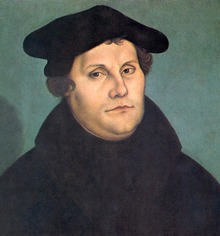
Martin LutherMartin Luther (a reformer, but not a Puritan)

George Wishart

John Knox

John Bunyan (Visions of Heaven and Hell)

The Scots Worthies

John Wesley (d. 1791)John Wesley

Charles Finney

William J. Seymour

Smith Wigglesworth

David Wilkerson (The Vision)

John Wimber (Power Evangelism, etc.)

Mike Bickle (Growing in the Prophetic)

Posted in Uncategorized | Leave a comment

Gays Must Repent or Go to Hell!

Sodom and Gomorrah, and the cities around them in a similar manner to these, having given themselves over to sexual immorality and gone after strange flesh, are set forth as an example, suffering the vengeance of eternal fire.   –Jude 1:7

On the day that Lot went out of Sodom it rained fire and brimstone from Heaven and destroyed them all.    –Luke 17:29

In this text we see three elements referred to:

1. Going after “strange flesh”:–a reference to homosexual practice, which is strange, and is not a natural sexual practice.

2. These were the people of Sodom and Gomorrah, referred to in Genesis 18 and 19.

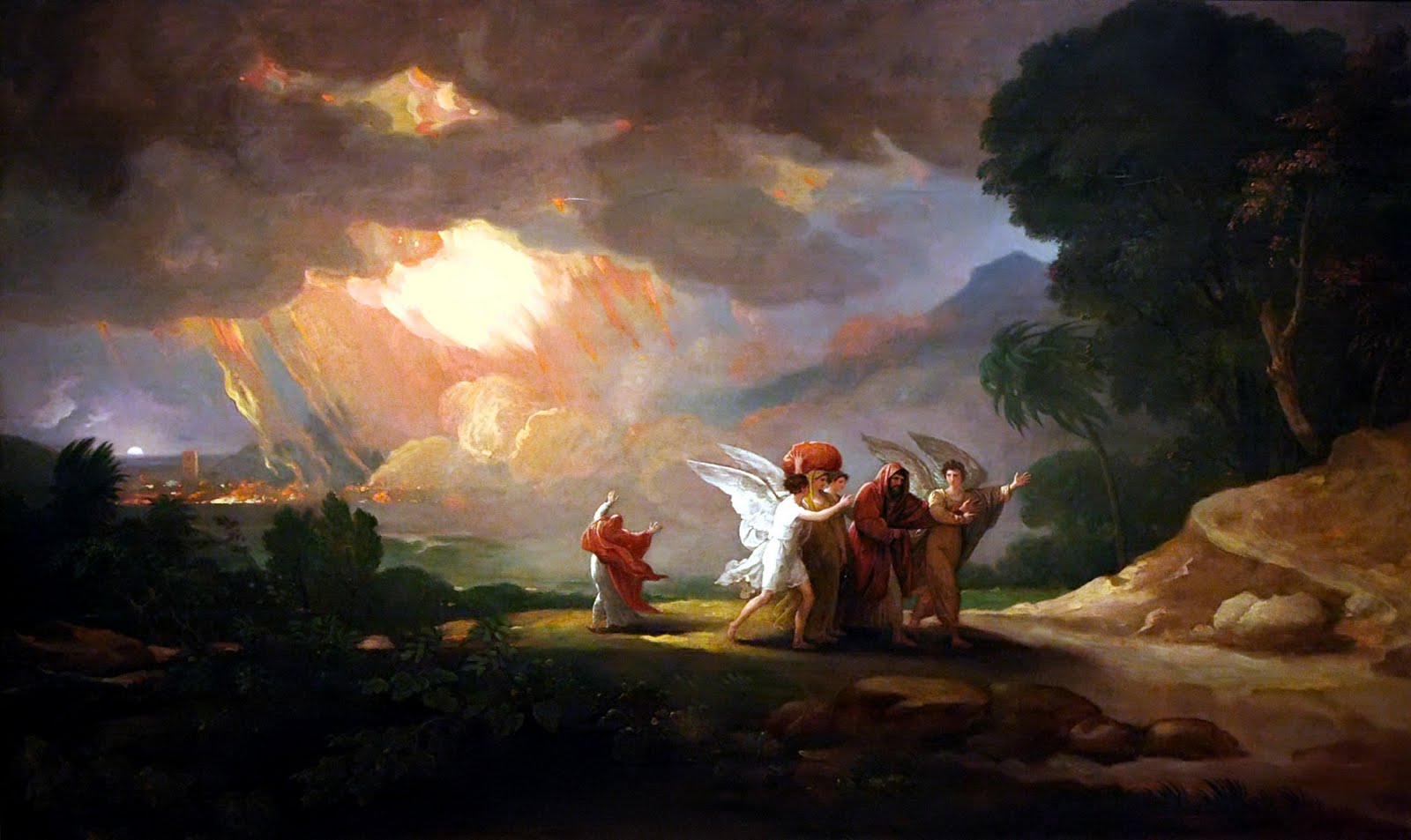
3. God’s response to the homosexual movement in those cities, was to cause “fire and brimstone” to rain down from Heaven, and destroy all who lived there.

Lot Fleeing Sodom
Homosexuality, in thought, word, and action is referred to in the law of God as an “abomination” to Him. That it is a hated, despised thing, so repulsive to a holy God, that the only thing He can think to do, after grace has been all used up, is to KILL the homosexuals by natural disasters, or other means. Under the Old Covenant, Moses was commanded by God to have homosexuals executed for their crime, for their abomination (Lev. 20:13). Under the Christian dispensation, the New Testament era—God does not sanction the killing of homosexuals by other men, but instead “commands all men everywhere to repent” (Acts 17:30). The church of Corinth had been established by Paul’s preaching of the Gospel, and some of his converts were ex-gays (1 Cor. 6:11). “Such some of you were,” he says, making reference to their past gay lifestyles, but now “you are washed, you are clean.” The Gospel of Jesus Christ is anything but “hate speech”; if anything it is “holy speech” and is “love speech.” “God is not willing that any should perish” (2 Pet. 3:9), in the flames of Hell forever, “but that all should” come to repent and have eternal life. God did not send His Son into the world to condemn the world, but that the world through Him might be saved” (John 3:17).

But gays are “condemned already” if they do not believe in “God’s one and only Son,” Jesus Christ (John 3:18). And this is the case with every single gay person. There are many among them who claim to believe in Jesus, and even claim to be Christians. But they are very deceived; they have believed in “another gospel” and “another Jesus” (2 Cor. 11:4). The Apostle Paul warns: “Do not be deceived…homosexuals”, among others who persist in particular sins, “will not inherit the kingdom of God”, or be able to go to Heaven after they die (1 Cor. 6:9-10); but if they persist in their sin, they will “die in their sins” (John 8:24), receive the judgment of God, and be “thrown into Hell” according to the law of God (Rev. 20:14). Again, Paul said, “Do not be deceived…homosexuals…will not inherit the kingdom of God” (1 Cor. 6:9-10). “Repent, and believe in the Gospel!” (Mark 1:15). In the everlasting and unquenchable flames of Hell, the impenitent gays who died, and who now dwell with the ancient Sodomites, will experience FOREVER what the Sodomites only experienced for a bit when “fire and brimstone fell from Heaven” upon them (Luke 17:29). Because they have been thrown into “the lake of fire and brimstone” (Rev. 21:8), and “the smoke of their torment will ascend forever and ever,” and “they will have NO REST day or night” from their torments (Rev. 14:11). The wrath of God abides on them forever, because their unrepentant hearts remain. As their homosexual lust burns within them, so also will the wrath of God in those holy flames of revenge. It is in Hell that God will take REVENGE on His enemies, including His gay enemies, who scoffed at the holy Gospel, which was designed by Him to save their souls by the “foolishness of preaching” (1 Cor. 1:21). Stark memories will haunt them in Hell of the times they heard street preachers at gay pride parades, or at the gay nightclubs, or a preacher on TV, or read some Christian literature critiquing homosexuality:–they will remember this and more, for they are the reasons why they are in Hell. The evangelists, missionaries, and Christians who tried as hard as they could to get these people to repent from homosexuality, and all the times they refuted and heckled back at them, pleading that they were “born that way” and that “God made me gay”—all those times will be remembered in Hell, and the just condemnation of their sin will lay over their heads for all ETERNITY!

“Sin is the transgression of the law” (1 John 3:4). The law of God plainly condemns homosexuality in no uncertain terms: “You shall not lay with a man as with a woman; it is an abomination” (Lev. 18:22). Those who do such things bring the wrath of God upon themselves. It is sexual perversion, for sure; but how is it condemned? In the Ten Commandments, from which virtually all other laws in Scripture can be related, it says, “You shall not commit adultery” (Exod. 20:14). It commands against illicit, illegal, unlawful sexual relations that people commit as adults with their adult bodies. With their “adult books”, “adult movies”, and “adult toys”, and “adult porn stores” they prove themselves to be ADULTERERS! They commit ADULTERY! It is not simply having an affair with someone not your spouse. ADULTERY is any unlawful sex. Period. Any sexual thought, feeling, look, or sexual action outside of the marriage bed of HOLY MATRIMONY. For this cause a “MAN shall leave his father and mother and cleave to his WIFE; and the TWO shall become ONE FLESH” (Gen. 2:24). But it is “STRANGE FLESH” to think of sex in any other way (Jude 1:7). It is strange flesh for a man to have sex with a man, or a woman with a woman. That is STRANGE SEX! And it goes against the invention of God. The male sexual organs are created by God to be used with the female sexual organs, for reproduction and pleasure, within HOLY MATRIMONY, initiated by a holy wedding ceremony, conducted by a godly minister. “Gay marriage” is a complete distortion, an oxymoron, a contradiction of terms, and a wicked, unclean mockery of godly, holy marriage, between two committed Christian heterosexuals: a man and woman, just as Adam and Eve were, and just as God intended mankind to appear on the Earth. But homosexuality is the devil’s work; a spirit of perverted sexual immorality; it totally confounds the image of God in mankind. It confuses the genders; and creates all manner of confused thinking, and behaviors:–so a man doesn’t know if he is a woman or a man; and a woman doesn’t know if she is a man or a woman. This may be one of homosexuality’s greatest abominations: that IT COMPLETELY CONFUSES AND DISTORTS GOD’S CREATION OF MAN, and makes a total MOCKERY OF WHAT IS MALE AND FEMALE, and REBELS AGAINST THE GENDER DISTINCTIONS GOD LAID DOWN IN CREATION. It is a SHAME! A degradation of the dignity of humanity. A beastlike, fallen, deterioration of the mind of man, into that of a depraved “reprobate mind” (Rom. 1:28), which is bent on satisfying its perverse sexual lusts, and rebelling against the law of God, the Bible.

“Do not be deceived” (1 Cor. 6:9) into thinking that God rained “fire and brimstone from Heaven” (Luke 17:29) on Sodom and Gomorrah for any other reason than that of massive amounts of unrepentant homosexuality. This is the reason why Scripture generally assigns condemnation to those cities. Even to this day, because of the Bible references, “sodomites” and “sodomy” refer to gays and homosexual practices. Those gays who try to compromise their sinful, anti-Scriptural, selfish, strange sexual lust with the Christian faith do several things to butcher the Scriptures:

(1) They ignore all Old Testament condemnations of homosexuality, by declaring that the Old Testament law is obsolete. That goes against The Thirty-Nine Articles of Religion, which is an impeccably orthodox statement of Christian faith. It says of the Old Testament, “No Christian man whatsoever is free from the obedience of the Commandments which are called Moral.” And when this is pressed on a “gay Christian”, he replies, then “The commandments against homosexuality are not moral commandments, but ceremonial ones.” That is totally absurd! Romans 1 and 1 Corinthians 6:9-10, clearly condemn homosexuality as well, and are therefore evidence that the Apostle Paul and the early church leaders saw this as a moral law that continued to bind New Testament Christians. No early church leader was more emphatic than Paul about keeping Christians away from the Jewish ceremonial law, as is evident in the circumcision controversy, mentioned in Galatians and Acts 15. Yet Paul urges the moral law on all Christians who claim to be “justified by faith” (Rom. 5:1; 6:1-2); he says this is so that “the righteous requirement of the law might be fully met in us, who do not live according to the FLESH but according to the SPIRIT” (Rom. 8:4). To walk after the same sex, after a homosexual, is strange flesh; it is to walk after the flesh, and not after the Spirit of God.

(2) They dismiss any New Testament translations of “homosexual” or “homosexuality” as a translation error; and try to maintain that Romans 1 and 1 Corinthians 6:9-10 are not condemning homosexuality, but something else; and that it is the bias of the Bible translators, not the original Biblical Greek. That might be easier to argue for 1 Corinthians 6:9-10, because some say a “catamite” was a male prostitute, not a homosexual. Well enough. But the narrative in Romans 1 simply cannot be excused, no matter what Bible translation you are reading. It is a narrative that undeniably condemns homosexual behavior. And the “strange flesh” reference to Sodom and Gomorrah in Jude 1:7 is obviously a hint at the homosexuals in Genesis 19.

(3) So-called “gay Christians” claim that God’s judgment on Sodom and Gomorrah, was not on their homosexuality, but instead because they were a rough, uncivilized, and inhospitable people. They quote Ezekiel 16:49: “Now this was the sin of your sister Sodom: She and her daughters were arrogant, overfed and unconcerned; they did not help the poor and needy.” True, the homosexual abusers of the two angels added insult to injury, but before they ever showed inhospitality to them, they were considered “sinners before the Lord exceedingly” (Gen. 13:13). This was because of their homosexuality, as Jude 1:7 testifies in my opening text: THEIR “GOING AFTER STRANGE FLESH” was the reason why God’s judgment of “FIRE AND BRIMSTONE FROM HEAVEN” came upon them so severely (Luke 17:29). Jude, in fact, makes no reference to the inhospitality of the Sodomites, though that was another sin they were certainly guilty of…and to the very angels that God sent to destroy the two cities…angels of great power. When Abraham and his people rescued Lot and the Sodomites during battle, and the king of Sodom wanted to give a token of money to him, God told him to say, “I will accept nothing belonging to you, not even a thread or the strap of a sandal, so that you will never be able to say, ‘I made Abram rich’” (Gen. 14:23). No strings attached to the homosexual king of that homosexual city. No strings attached to a people who so resist the power of the Holy Spirit, the moral law, and the angels of God.

(4) “God made me gay” is a common objection of so-called “gay Christians.” They listen to the voice of secular, agnostic psychologists, who do not view Scripture as their authority; and then, through the un-Biblical lens of liberal Christian theology, try to reinterpret the faith in terms of sentimental “love”. But the Biblical love of God is holy, righteous, keeps the commandments, and “does not rejoice in evil, but rejoices in good” (1 Cor. 13:6). The Bible declares, God declares, that HOMOSEXUALITY IS EVIL; therefore, it is not the love of God to embrace it. God’s love is pure and holy; homosexuality is impure, unclean, and a perverted form of fornication. Romans 1 declares the divine revelation on the cause of homosexual lust. It is NOT caused by God’s creation. It is caused by man’s choice. Especially, by man’s choice to embrace atheism, worship of creation, plants, animals, created things, and the human body especially. This obsession with the material world, and with the human body, leads to inordinate sexual passions, even of the same sex. Homosexuality is a man-made sin caused by IGNORING GOD and FOCUSING ON THE HUMAN BODY, particularly other person’s bodies of the SAME SEX. Anyone, therefore, has the potential to make themselves feel “gay” lusts, if they dwell upon the nakedness of another person of the same sex. It is an inordinate sexual lust created by lusting on purpose, a person of the wrong gender. God does not “make” people gay. People make themselves gay—it says so in Romans 1. Gay pornography is probably largely to blame for this. When men begin to contemplate naked male bodies, they will begin to feel homosexual lust; the same with lesbians. It is the fall and perversion of human nature. But the choice to sin is what God finds inexcusable and worthy of judgment. This is why God is so angry at homosexuality, because He sees gays as fully responsible for their denial of His existence (the real Biblical God), His authority, and the gender He created them to be. Homosexuality is spiritual and sexual rebellion against God the Creator. Homosexuals or “gays” are NOT a special breed or race of people, determined by their genes to commit these acts. God does NOT create gay people. Straight people create gay people when they start contemplating the nakedness of people of the same sex. That’s what Scripture says; believe it!

AIDS is the “fire and brimstone” for today’s Sodom and Gomorrahs, San Franciscos, gay clubs, etc: Scripture says, “They receive in their bodies the due penalty for their perversion” (Rom. 1:27). But there is also a “fire that burns to the lowest Hell” (Deut. 32:22). God hates the sin of homosexuality so much, that He expresses a temporary punishment on it with AIDS, and an eternal punishment on it with “fire and brimstone” in Hell (Rev. 14:10), which is, as Jude says, foreshadowed to us by the first appearance of “fire and brimstone from Heaven”, that fell on Sodom and Gomorrah long ago.

Gays Must Repent or Go to Hell: It’s Their Choice

“The wages of sin is death” (Rom. 6:23). The sins of mankind, if they could be compared to work, will receive their proper wages: DEATH. For the work of homosexuality in Sodom and Gomorrah, a “work of the flesh” (Gal. 5:19), “strange flesh” (Jude 1:7), the wages God paid them with was “fire and brimstone from Heaven” which destroyed them all (Luke 17:29). For this reason, God has “appointed unto man once to die, and after this, the JUDGMENT” (Heb. 9:27). There is an immediate judgment of men’s lives and a final judgment of all men at the end of the world. The immediate judgment of God on men’s lives occurs directly after death: when the souls of men are translated to Heaven or Hell. So the wicked gays of Sodom and Gomorrah, after seeing the meteorites fall from the sky upon them, and being hit in the heads by brimstones from Heaven, and being burnt and killed, came out of their bodies, and were “thrown into Hell” where there is “unquenchable fire” (Luke 3:17; 12:5). The wages of homosexuality is Hellfire. But this is the love of God: “in that, while gays are yet sinners, Christ died for them” (Rom. 5:8) in a spirit of preaching repentance: “go, and think straightly, and commit homosexual acts no more” (John 8:11). If a gay man repents of his sinful lifestyle, he may become a straight-laced Christian man, and gain Heaven! Due to the grace of God in the cross of Christ, and the blood He shed for them.

Posted in Uncategorized | Leave a comment

Salvation from Hell by Repentant Faith

The doctrine of Hell is perhaps the most important of all theological subjects to study. I used to think that “soteriology” was the most important; and, in a way, it is, because it is through that study that we get a handle on what the Gospel is. But the doctrine of Hell, which most theologians would put in the “eschatology” category:–I say is the most important of all theological subjects. If studied carefully from a Reformed or Puritan view, it will become clear that the doctrine of Hell should really be treated as a section of soteriology. When we understand the Biblical doctrine, or revelation of eternal punishment in Hell, only then do we see the great need for repentance from sin and faith in the bloodshed of Christ. Our view of Hell should guide our view of salvation. If the Gospel we preach does not “save from wrath” (Rom. 5:9), then we are preaching “another gospel” (Gal. 1:8). The deep spiritual concern of all mankind is the fear that you may end up in Hell after you die. If this concern is not sufficiently addressed by evangelists, then I say all their preaching is useless. Leonard Ravenhill said: “WE NEED SOME HELL-FIRE PREACHING ON REPENTANCE!” That is, preaching sermons on the subjects of Hell and Repentance; or, man’s deepest problem and solution. When you study books on the Puritan view of Hell, you see it in Bunyan, in Baxter, in Edwards, in Whitefield, in Wesley, in Spurgeon:–that the grand reason why Scripture condemns the great majority of mankind to the “lake of fire and brimstone” (Rev. 21:8)…is impenitence—not just a lack of repentance, having not thought of it.

But impenitence—or having an unrepentant heart towards known sin. Impenitence, or an unrepentant heart, is when someone is repeatedly confronted by Scripture about their sins, but they refuse to change their hearts, refuse to resist the sin, refuse to give it up. They don’t want to change their evil ways. They want to “enjoy the pleasures of sin for a season” (Heb. 11:25); and ignore the reality that they’re on their way to “eternal fire” in Hell (Matt. 25:41). There is only one true Gospel:–that salvation from the eternal wrath of God in Hell is available only through REPENTANCE (actively striving to turn away from sin, and obeying God’s moral commandments) and FAITH (in the bloodshed of Christ on the cross, as a sin offering to the Father, a substitute for our eternal damnation). Without repentance and faith there is no salvation, no Gospel. So, it makes sense that when we examine the whole New Testament doctrine of Hell (for that is where most of it comes from), we see the two great causes of damnation to Hell are impenitence and unbelief; and the two great causes of salvation to Heaven are repentance and faith.

Heaven-and-Hell

This is why John the Baptist erupts on the scene with a message of “REPENT! For the kingdom of Heaven has come near…His winnowing fork is in His hand, and He will clear His threshing floor, gathering His wheat into the barn and burning up the chaff with UNQUENCHABLE FIRE!” (Matt. 3:2, 12). Thus, the first sermon ever preached in the New Testament is a message of “Hell-fire preaching on repentance.” This repentance-or-Hell connection is immediately asserted:–TURN OR BURN! John the Baptist, of whom Christ said, “Among them that are born of women there is none greater” (Luke 7:28), clearly saw the reason why God has wicked men “thrown into Hell” (Luke 12:5):–it is because they refuse to repent from their sins, change their ways, amend their doings, etc. Thus the role of the evangelist, the missionary, the pastor, the street preacher is to urgently, and passionately, point men to REPENTANCE as the greatest EMERGENCY RESPONSE possible…it is the first and most immediate route away from Hell…it is “fleeing from the wrath to come” (Luke 3:7). But that’s not all, after repenting, after running away from sin and wrath and Hell, you must CLING TO THE CROSS FOR DEAR LIFE, or else you will die the “second death” (Rev. 21:8). HANGING ON TO THE CROSS, is living by faith in the blood of Christ, as the only means of turning away the anger of God for your sins. If you only have repentance, then you will become religiously prideful, and consider yourself better than others, because of your good works. You need the atonement of Christ, so the anger of God is satisfied (Isa. 53), and your pride extinguished at the thought: that your sins are so bad, that the only means God could employ to allow you into Heaven, was to give His Holy One over to the torments of Pontius Pilate! That thought should humble you!

This sprouts the question: “If my sins are so bad, then why isn’t faith in the cross enough? Why is repentance from sin necessary for salvation from Hell?” Because the cross is “for the forgiveness of sins that are past” (Rom. 3:25). Scripture never says Jesus died for your “past, present, and future sins.” The Christian must maintain his state of forgiveness before God, by “serving Him without fear, in holiness and righteousness all the days of his life” (Luke 1:75). After forgiving sinners, Christ says, “Go, and sin no more” (John 8:11). He offers God’s grace to sinners, but after that, He lays moral responsibility on them as well. Temptations will come, and the Christian will have to fight and resist temptations to commit sin, most of which will occur in his thought life; he will be expected to “fight the good fight of faith” (1 Tim. 6:12). So, “faith without works is dead” (Jas. 2:17); faith without repentance is not Biblical faith. The ONLY ANSWER TO HELL is FAITH-REPENTANCE or REPENTANCE-FAITH. It is a compound word for a compound concept and a compound spiritual experience. The man who tries to separate repentance from faith, and seeks to be saved from Hell by faith alone, without repentance, is truly deceived, and on his way to Hell! The only kind of faith that saves men from Hell is REPENTANT FAITH or PENITENT FAITH in the cross of Jesus. James said, “By works a man is justified and not by faith alone!” (Jas. 2:24) And John: “And each was judged according to his works, as recorded in the books” (Rev. 20:13).

But does this contradict the Protestant doctrine of “justification by faith alone”? No. I’m not really speaking about justification (the first time an ungodly sinner experiences God’s forgiveness, Romans 4:5). I’m referring to a man’s final and absolute salvation from Hell, which occurs at the end of his life (Luke 16:22). It’s important that we don’t confuse the concepts. Justification is not the same thing as salvation from Hell. (I used to think it was.) Justification by faith is an experience of God’s forgiveness that leads up to final salvation, continues throughout the Christian life, and finds its finalization, and culmination at death, when a godly man finally experiences salvation from Hell, and is perfected in holiness after entrance into Heaven. This is called “final justification” or “final salvation.” It is the “for sure”, irreversible, salvation from Hell after death, without the possibility of losing that conditional salvation the Christian has been living with all his life. The possibility of losing repentance, faith, and the grace of God lingered as a haunting reality all the Christian’s life:–but after the death of the saint, there is an “eternal life” bestowed by Christ that no man can take away! (John 3:16; 10:29). I think there are many evangelical Christians who are confused about this whole subject. And it is a tragic thing that so many take their salvation for granted, as if Heaven were already theirs, because they were one-time-forgiven, and that God does not expect them to “be holy, as He is holy” (1 Pet. 1:16). These Christians are not indwelt by the Holy Spirit; nor are they on their way to Heaven. A true experience of God’s forgiveness will lead men by the Spirit to “pursue peace with all men, and HOLINESS, WITHOUT WHICH NO ONE WILL SEE THE LORD!” (Heb. 12:14).

Its not about what’s “judgmental” and “non-judgmental” that matters; it’s about the Scripture way of salvation from eternal Hell-fire! REPENTANCE AND FAITH:–or, PENITENT FAITH. And this is the judgment: They are “condemned already” who do “not believe” in Christ. Why? “Because they have not believed in the name of God’s one and only Son” (John 3:18). It’s not just that those doomed to Hell haven’t believed in Jesus that’s the issue; what the real problem is, is that in not believing in Him, they die without Christ’s atonement for the sins of their lives, which is something that only “God’s one and only Son” could accomplish. If you “die in your sins” (John 8:24), then “the wrath of God abides on you” forever in Hell (John 3:36). Thus, repentance from sin is a necessary prerequisite for faith in the cross; and it is faith in the cross that secures atonement for sin, forgiveness of sin, and ultimately, salvation from Hell (if persisted in until death): “He that shall endure unto the end, the same shall be saved” (Matt. 24:13, HCSB).

But if Christ did not command Christians to “go, and sin no more” (John 8:11) after they receive their cross-based atonement, it would be ludicrous for Christ to have died on the cross at all! It would be just as ludicrous as a stranger bailing out a thief in court, and knowing he had an orientation for compulsive stealing (kleptomania), telling him that it would be okay if he stole again, as many times as he liked, and he could trust him to post bail every time he got caught! But Scripture calls Jesus the “Holy One” (Acts 2:27); and it is against His nature to be some “enabler” for wicked hypocrites, who are not committed to repentance. On the contrary, on Judgment Day, Jesus will tell the hypocrites, “I never knew you; depart from Me, you who practice lawlessness!” (Matt. 7:23, NKJV). So, you can see that in the end, repentance and faith must go together, or you go to Hell. If there is no faith, there is no Heaven—true. But the nature of that faith brings forth repentance and “fruits worthy of repentance” (Matt. 3:8) (good works). I don’t mean a real Christian will never slip and fall and sometimes give into temptation and commit a sin. I just mean, the general orientation of a repentant Christian’s life is one of “going,” and of “sinning no more” (John 8:11). That’s the orientation of a saved Christian. There is a definite moral changing process going on, and less sinning (this is called regeneration and sanctification). That’s what repentance is. It’s not the total stopping of sin; its turning away from sin. In the Greek and Hebrew, the word “repent” means to turn away from or to put behind you. Repentance is not a “Stop” Sign, it’s a “U-Turn” Sign. Those who see repentance as the stopping of sin are perfectionists, and are deceived. Scripture says, “If we claim to be without sin, we deceive ourselves and the truth is not in us” (1 John 1:8). And “all liars…shall be cast into the lake of fire” (Rev. 21:8).

So, TURN away from sin, and turn to Christ! Receive God’s forgiveness, and spiritual peace, and joy! But don’t have unrealistic notions about the nature of that turning. The turning is imperfect. You will still experience some amount sin, no matter how hard you turn from it. But what matters to God, is that you make a strong effort to turn, that you do “REPENT, for the kingdom of God is near” (Matt. 3:2). And mark my words, if you don’t turn at all, then “you are condemned already!” (John 3:18).

Posted in Uncategorized | Tagged , , , , , , , | Leave a comment

Biblical Creationism Bibliography

God's CreationIf I were to write a book on Biblical creationism, as means by which to refute Darwinism while doing open air evangelistic outreach, then I would use the following books as the basis for that bibliography:

Discovery Institute Recommends:
Intelligent Design Movement

Phillip Johnson’s Darwin on Trial
Jonathan Wells’ Icons of Evolution
Michael Denton’s Evolution: A Theory in Crisis

Young Earth Creationists:
Creation Science; Institute for Creation Research; Answers in Genesis

Henry Morris and John Whitcomb’s The Genesis Flood
Henry Morris’ Scientific Creationism
Jonathan Sarfati’s Refuting Evolution
Duane Gish’s Evolution: The Fossils Say No!
Ken Ham’s The Lie: Evolution

Posted in Uncategorized | Leave a comment

Prophetic History, Part 2: The Testing and Humbling of Prophets

Noah—God told him the world would flood in 120 years (Gen. 6:3); he preached repentance and righteousness (2 Pet. 2:5), but nobody believed him except his family.

Abraham—God told him in a vision, a son would be miraculously born to his old wife Sarah; they failed the test with Ishmael (Gen. 16:1-6), but eventually the promised son, Isaac came (Gen. 21:1-7). God then told him to sacrifice Isaac on an altar, but then intervened to prevent the killing (Gen. 22:1-19).

Jacob—for 14 years he had to slave and work for his beloved wife Rachel (Gen. 29:30); and their son, Joseph, a spiritually gifted young man, was sold into slavery by his brothers (Gen. 37:28).

Joseph—God told him in a dream that he would rule over his brothers (Gen. 37:5-8). This was followed by a long period of hardship and slavery in Egypt; and finally a position of rule in Egypt (Gen. 45:1-15).

Moses—after discovering he was a Hebrew, God sent him into the Arabian desert for a period of 40 years, tending sheep…and this after living like a prince in Egypt! Then God gave him marvelous visions, the burning bush (Acts 7:30), nature miracles, etc…many of which both the Egyptians and the Hebrews had a hard time believing were from God (Exod. 14:11)!

Samuel—after leading Israel as the political-prophetic judge, the people cried out for a king, like the pagan nations around them. God said, “It is not you they have rejected, but Me” (1 Sam. 8:7). From there on out, Samuel and the “Sons of the Prophets” were basically considered to be a group of madmen and religious fanatics by the general population (2 Kings 9:1, 11).

Elijah—this powerful prophetic leader of the “Sons of the Prophets,” was also considered an insane religious fanatic by popular opinion, and a “troublemaker” by Israel’s political leaders (1 Kings 18:17). During his time, the Israelite government was controlled by Queen Jezebel, a Phoenician princess, and pagan priestess of Baalism. She had 400 state employed fortune-tellers to give “spiritual guidance” to Israel’s leaders (1 Kings 18:19). Elijah and his prophets were probably even more disrespected and persecuted than in the time of Samuel. They had to hide out in caves and basically survive in “underground” or “invisible” house church environments. After confronting the prophets of Baal, with an incredible nature miracle of fire from Heaven, and the coming of rain from a drought of three years, and after having the people moved to kill the prophets of Baal according to the law of Moses (1 Kings 18)—Elijah ran for his life, because Jezebel threatened to have him killed. Elijah had come to believe that he was the only true prophet left in Israel, even though there were many others in hiding. God rebuked him with a still small voice: “I have 7,000 others in Israel who have not bowed the knee to Baal” (1 Kings 19:18).

Elisha—the powerful successor of Elijah was mocked by a gang of young men as “bald head”, yet when he called down the curse of the Lord upon them, two bears came out of the woods and mauled them (2 Kings 2:23-24). Gehazi was Elisha’s disciple, but he was corrupted by the love of money, and came under the curse of leprosy (2 Kings 5:27). An army pursued Elisha once to have him killed, but by the power of God, he diverted them to another town (2 Kings 6:8-23).

Isaiah—this 8th century B.C. prophet, who is most known for Isaiah chapter 53, the famed prophecy of penal substitutionary atonement that Christ accomplished for us on the cross, is also known for his majestic vision of God on the throne in Isaiah chapter 6, and for his many prophecies against the nation of Israel for their rebellion against God, and how imminent judgment is near. Isaiah was sawn in half by the word of King Manasseh, because he dared to say he saw a vision of God (The Babylonian Talmud, Yebamoth 49b; Sanhedrin 10).

Jeremiah—this 8th century B.C. prophet, who is known for continually prophesying to the nation of Israel, the coming of the Babylonian army, to destroy and conquer Israel, and take away the Jews to Babylon. For this reason, he was called the “weeping prophet.” The king had Jeremiah put into a poopy well, into stocks, into prison, etc (Jer. 38:6). And very few of the people believed any of his prophecies. They called him a false prophet, because he did not speak favorably of “God’s chosen nation” (Jer. 37:12-13). But he was faithful to preach against the apostasy and hypocrisy of the paganized Judaism he saw around him. After he was done prophesying, and suffering, the Babylonians came and destroyed Jerusalem, conquered the Jews, and led most of them away to Babylon. Only a few loyal subjects were allowed to remain in their homeland, including Jeremiah, albeit, in a ravaged, ruined homeland (Jer. 39-40).

Daniel—this exiled Jewish prophet, in Babylon, was exalted as a court employee for the king (Dan. 1:3-7). Because an edict went forth under the influence of the king’s advisors, who were jealous of Daniel, he was snatched away for praying to God in his house near his window. Then he was thrown into a lion’s den as punishment, where it was expected he would be eaten alive. However, God intervened by sending angels to tame the lions, and Daniel came out alive, and God was glorified throughout the whole Babylonian empire (Dan. 6).

John the Baptist—of whom Christ said, “There is no one born of women greater than John the Baptist” (Matt. 11:11), he was the forerunning prophet to Christ’s ministry among the Jews. The common people believed that John was a prophet (Mark 11:32), but the religious leaders believed he was a false prophet, because he preached God’s forgiveness of sins was available by repentance from sin and water baptism—a total departure from the normal method of Old Testament animal sacrifice at the temple. To have the disapproval of the religious leaders, Biblical scholars, rabbis, and priests would have been a great hardship, since his father Zechariah was a priest (Luke 1:5, 13)…this may account for why John lived as a solitary hermit in the desert (Matt. 3:1-5). John also preached against King Herod’s adultery, which earned him a prison sentence, and the loss of his head (Matt. 14:1-10).

The Lord Jesus Christ—truly man and truly God, the Son of God, was also “the Prophet” predicted to come by Moses (John 6:14). While little is known of His boyhood, we know that His family was not wealthy, that Herod tried to have him killed when he was a baby (Matt. 2:16), but angelic intervention helped His parents know where to go to avoid detection (Matt. 2:13). Throughout His three year itinerant ministry, like John the Baptist, most of the religious leaders rejected Him as a demonized false prophet (Matt. 9:34). At one point, even His “mother and brothers said He was mentally ill” (Mark 3:21, 31-35). He was betrayed by Judas, abandoned by the twelve apostles (Matt. 26:56), and had to endure the mockery, torment, and death on the cross…but three days later He rose from the dead, and then ascended into Heaven!

The Twelve Apostles—Judas betrayed Christ to the Pharisees, and after becoming so guilt-ridden, killed himself (Matt. 27:1-10). The other eleven apostles returned back to their Christian faith, having witnessed the resurrection. All of them went into various countries preaching the Gospel, and were eventually martyred for their faith, except for the apostle John, who died of old age—but for many years had to live in a prison cell on the Isle of Patmos (see John Foxe’s The New Foxe’s Book of Martyrs, pp. 4-10).

The Apostolic Fathers had prophets among their ranks; and many were persecuted by the Roman emperor and martyred for their faith (see John Foxe’s The New Foxe’s Book of Martyrs, pp. 11-21).

St. Antony of Egypt, the leader of the Desert Fathers, lived in the desert. Need I say more? The desert is hardship. It is not a pleasant place to live. It is hot. It is dry. It has serpents, scorpions, etc. There are no stores and no entertainments. It is lonely. Antony and the Desert Fathers, sought solitary lives of prayer and contemplation, during the last century of systematic persecution of Christians by the Roman emperors. In this way, they lived similar lives to Elijah and the “Sons of the Prophets” in hiding during the time of apostasy in Israel. Also, St. Antony experienced endless spiritual attacks, and suffered warfare with demons during prayer, as told in Athanasius’ The Life of Antony.

St. Patrick of Ireland and his missionary monks endured hardship and persecution from the Druids. See “The Life of Patrick by Muirchu” in Celtic Spirituality..

St. Benedict of Nursia endured the hardship of solitude and asceticism. See Gregory the Great’s Life and Miracles of St. Benedict.

St. Francis of Assisi endured a materialistic father, who verbally and physically abused him, after he was born of the Spirit to a new life in Christ. St. Francis and his friars were also persecuted for leading of life of strict “evangelical poverty.” See Bonaventure’s The Life of St. Francis.

Hildegard of Bingen, the German visionary, was almost continually sick, bedridden, and attacked by demons. She always viewed her sickness as a “thorn in the flesh to keep her from getting puffed up on account of her great revelations.” She also viewed the sickness as a punishment, or discipline from God, for not following His call to the ministry more precisely. See Gottfried and Theoderic’s The Life of the Holy Hildegard.

St. Ignatius of Loyola was humbled by a cannon blast to the leg during battle. While receiving treatment for this in a hospital, he read Jacobus de Voragine’s The Golden Legend, and became determined to imitate the saints, even to outdo them. See his Autobiography.

St. Teresa of Avila, the great Catholic mystical theologian and saint, author of The Interior Castle, The Way of Perfection, and her Autobiography, had many experiences of spiritual warfare and attacks upon her. She also came under the watchful eye of the Spanish Inquisition for teaching Christian mysticism, which was unusual in the 16th century, except among a widespread heretical group called Alumbrados. She was also given a hard time by various Catholic priests, who said she was merely oppressed of the devil, and her visions were demonic. She fought for a strict reform in the Carmelite Order, which many of the leaders did not like.

St. John of the Cross, friend of St. Teresa, and fellow Catholic reformer, was put into prison for a long time by an ungodly Carmelite leader, in order to wear down his will, and make him recant his rigid asceticism and mysticism. St. John eventually levitated while in a state of prayer and contemplation (as did St. Teresa), and he wrote a powerful prophetic book on prayer and spiritual gifts called The Ascent of Mount Carmel.

Martin Luther, founder of the Lutheran Church, igniter of the Protestant Reformation, had a very hard life. For the rest of his life, after his posted the “95 Theses”, he was under the condemnation of the pope as a heretic, and was sought out to be burned at the stake. However, nobody caught him. See Roland Bainton’s Here I Stand: A Life of Martin Luther.

John Wesley, the 18th century evangelist, and founder of the Methodist Episcopal Church, was persecuted his whole life in England by all sorts of people (including the Anglican priests), as were his Methodist preachers. They were not allowed to preach sermons in Anglican churches, because they were considered too “enthusiastic” or “experiential.” So, the Methodists resorted to street preaching, field preaching, and other open air preaching locations. See Thomas Jackson’s The Life of the Rev. John Wesley.

Charles Finney, the leading evangelist of the 19th century Second Great Awakening, was called a “heretic” by the Presbyterian clergy in his day. Mainly on account of his “New Measures” that he introduced in his revival meetings, but also (and understandably so), because he rejected certain articles in the Westminster Confession of Faith, one of which was the doctrine of original sin. Finney also saw three wives die before he married his fourth. See A. M. Hills’ The Life of Charles G. Finney.

William J. Seymour, founder of the Apostolic Faith Gospel Mission, the “Azusa Street Revival,” and the Pentecostal Movement:–was raised as a son of slaves in Louisiana; and after his parents were freed, lived in extreme poverty. He worked as a waiter in various hotel restaurants; and eventually became a holiness preacher with Church of God (Anderson, IN). He learned the doctrine of speaking in tongues (Acts 2:4) from Charles Parham’s temporary “Apostolic Faith Movement” Bible school, in which, because he was African-American, had to sit outside the classroom, away from the whites. During the “Azusa Street Revival” Seymour was often mocked by the press because he was black, and because the Pentecostals spoke in tongues (it sounded funny), and often did not speak with proper grammar due to lack of education; they shook, and danced, and rolled all over the floor in a crazy, undignified manner, and for this, more than anything else, they were mocked. See Larry Martin’s The Life and Ministry of William J. Seymour.

John G. Lake, the missionary, Pentecostal preacher, and divine healer and founder of the “Healing Rooms” in Spokane, Washington, experienced the loss of several family members in his younger years due to much sickness. His wife was also deathly ill, and cured by prayer for healing, at a John Alexander Dowie meeting. See Wilford Reidt’s John G. Lake: A Man Without Compromise.

John Wimber, founder of the Vineyard churches, finished his last days with a bout of cancer, and unfortunately did not live a very long life. He had given his life to restoring the ministry of divine healing, by teaching “Signs and Wonders” conferences, and publishing books like Power Evangelism and Power Healing. He was certainly mocked and ridiculed by non-Charismatic theologians, even labeled a New Ager. See Carol Wimber’s John Wimber: The Way it Was.

Dr. Jack Deere.

Posted in Uncategorized | Leave a comment

A Word to the Nightlifers

“Let us behave decently, as in the daytime, not in carousing and drunkenness, not in sexual immorality.”—Romans 13:13, NASB

Carousing is that sin which many of you are committing right now:–roaming around the night with friends from bar to bar, seeking a one night stand, seeking an immediate sexual fix, that you may gratify your intense hormonal impulses. I know it’s tough, but I urge you not to commit fornication (if you’re not married, don’t have sex), because it goes directly against the commandment of God: “You shall not commit adultery” (Exod. 20:4). Which means, not only sex with someone else’s spouse, but sex with anyone unmarried: adultery is unlawful, unholy sex—sex outside of marriage, sex outside of holy matrimony. When God says, “You shall not commit adultery,” He commands it for your good, to keep you clean, and undefiled, to keep you safe and protected from sexually transmitted diseases (or STDs):–for no condom will give you 100% protection from the ravages of an insidious STD. And once the STD has conceived, it gives birth to death, destruction, herpes, rashes, sores, bumps, discharges, bleeding, syphilis, gonorrhea, chlamydia, HIV, AIDS, and all manner of defilement, for which there is often no cure! Scripture says, “There shall be no whore of the daughters of Israel, nor a sodomite of the sons of Israel” (Deut. 23:17). So, “save yourselves from this crooked and perverted generation!” (Acts 2:40). Do not commit adultery! Christ said, “You have heard that it was said to those of old, ‘You shall not commit adultery.’But I say to you that whoever looks at a woman to [feel sexual] lust for her has already committed adultery with her in his heart” (Matt. 5:27-28)…“Out of the heart proceed evil thoughts…adulteries, fornications…blasphemies…these are the things which defile a man” (Matt. 15:19-20). The consequences are far too severe to enjoy the pleasures of that sin for a short while (Heb. 11:25). God created sex so people can make babies! God created sex so married couples can be closer! (Gen. 1:28; Prov. 5:19). Are you planning on making babies!? Are you sex lovers planning on becoming mommies and daddies!? Think of your responsibility! Think of what will happen if your condom leaks tonight! And your lover becomes pregnant! You men:–are you ready to be faithful husbands, and fathers, and providers? And you women:–are you ready to be wives and mothers? Are you ready to cook, and clean house, and take care of the kids!? (1 Tim. 5:8; Titus 2:4-5).

If you have sex tonight, consider the cost! No act of sex is without consequences. Suppose you have sex tonight. Suppose your condom works; and you get by Scot-free without getting pregnant. Do you consider that a success? That’s a pretty messy, spotty form of success. But that is not success. You will permanently feel attached to the person you have sex with. Do you really love that person? Or do you just feel sexual urges? Where will those urges go when you’re all spent? Will you lie down in bed; and feel no real love for the person you had sex with? You enjoyed your orgasm; but do you two have nothing in common!? If you’re honest, I doubt most of you would dare to marry each other! WHY WASTE YOUR SEMEN, YOUR ORGASM, ON A STRANGER YOU WON’T MARRY!? YOUR BODY IS SUPPOSED TO BE A TEMPLE OF THE HOLY SPIRIT! ARE YOU GOING TO MAKE IT A FILTHY PILE OF POOP? A DUNGEON OF UNCLEAN SPIRITS? A DWELLING PLACE FOR SATAN?[1] NO! “GLORIFY GOD IN YOUR BODY!” (1 Cor. 6:20). “If we are temples of the Holy Spirit, then how wrong it is to drive the Holy Spirit away from us through fornication, prostitution, and in His place allow wicked spirits of uncleanness and fornication to come in!”[2] “You shall not commit adultery” is a good commandment (Exod. 20:4), and God means it for your own good; it is meant to prevent babies from being aborted, to prevent men from becoming negligent fathers, to prevent young women from getting hurt, from feeling like they’ve been taken advantage of, or being date raped. Beware of date rape drugs! Watch out for your drinks! Ladies–don’t let any man put “Spanish flies” in your drinks! Watch out for yourselves! Beware of STDs! They can ruin your life! Ask Jesus to protect you from prowling, sex-hungry wolves! Seeking to gratify themselves for a moment, and then leave you all alone. Leave this place! Leave these bars right now! These are evil places! Go forth and “serve God without fear, in holiness and righteousness before Him all the days of your life!” (Luke 1:74-75).

Drunkenness is that sin which, is not the forbidding of all alcohol, but of all “strong drinks” (Prov. 20:1)—those drinks which, upon gulping down their bitter and burning drafts, make you soon mentally hazy, sleepy, and out of touch with your surroundings. It is an alcohol-induced state of an impaired mind. It will last for one, two, three hours; and in the morning, you will have a hangover—a queasy, ungodly headache, that will not let up. Will you go to work with that hangover? Or to church? No! You will sleep in. You will sleep in with your so-called “lover,” guilty of your sins, asking yourself, “What have I done? I don’t even love this person!” Such is the result of impaired judgment, an impaired mind, a drunken mind. Then there’s drinking and driving. With all the talk of “designated drivers” these days, it almost sounds like there are some responsible nightlifers out here. But it’s all a sham. The beer companies just say that, to evade their responsibilities, from those who will get into car crashes, or kill people in hit-and-runs, caused by drunk drivers. Everyone wants to have their so-called “fun,” especially when they’re not making decisions based on the Bible, which says, “Let us behave decently, as in the daytime” (Rom. 13:13). If you killed someone by drunk driving…you will wake up from your drunk state, and realize that you’re standing before a judge in court, on trial, looking at several years in prison, or even the death penalty. And if soon executed for your crime, you will stand before God, the Judge of Heaven, and be cast into Hell: “Do not be deceived,” Scripture says, “the unrighteous will not inherit the kingdom of God…FORNICATORS, homosexuals, DRUNKARDS…will not inherit the kingdom of God!” (1 Cor. 6:9-10). “In the days of Noah they were eating and drinking…then the flood came and destroyed them all”…so it was with the days of Lot in Sodom and Gomorrah, until “it rained fire and brimstone from Heaven and destroyed them all!” (Luke 17:26-29). “The cowardly, unbelieving, abominable, murderers, SEXUALLY IMMORAL, sorcerers, idolaters, and all liars shall have their part in THE LAKE WHICH BURNS WITH FIRE AND BRIMSTONE, which is the second death” (Rev. 21:8). Wesley preached, long ago:

Do you drink for the sake of company? Do you do it to make your friends happy? “For company” you say? Why is this!? Will you take a dose of rat poison for your friends’ company? If twenty men were to do that in front of you, wouldn’t you say, “Excuse me” and leave? How much more would you want to leave their company if they were all going to Hell!? You say, “To make my friends happy:” What kind of friends are these who are happy to see you destroying yourself?:–who entice you to do so? THESE ARE YOUR WORST ENEMIES, NOT YOUR FRIENDS! These are the kind of friends, who may smile in your face, and just as well stab you in the heart![3]

A Final Call to Fornicators and Drunkards

“Hell has enlarged herself, and opened her mouth without measure” (Isa. 5:14). God will say to His angels, “Cut him in two and appoint him his portion with the hypocrites. There shall be weeping and gnashing of teeth” (Matt. 24:51). Jesus warned, “Fear Him who, after your body has been killed, has authority to throw you into Hell. Yes, I tell you, fear Him!” (Luke 12:5). FEAR GOD, AND HIS HOLY JUDGMENTS! Change your lives! God loves you! Jesus wants to save you from Hell! But “God is angry with the wicked every day” (Ps. 7:11). He considers this wicked–drunkenness, fornication, sex outside of a godly Christian marriage–it’s all wicked in His sight. It rouses Him to fierce anger; and every moment His wrath increases. Like a boiling hot cauldron, God’s anger is about to tip over, and pour on top of you, except you repent (Jer. 1:13), make a u-turn to Jesus, and abandon your sinful practices, and seek God’s forgiveness for these evil things, while there is still time. Soon you will die, and it will be too late to repent! Time is running out! “If we confess our sins,” God “is faithful and just to forgive us our sins and cleanse us from all unrighteousness” (1 John 1:9). Come before Him in faith and acknowledge your sins, pray, and confess your sins to Him; and hear His voice say, “Go, and sin no more” (John 8:11). Abandon this! Run away from this! Live for God! Live for Christ! This way of life is not for you! You are meant to be a Christian! You are meant to glorify God with your life! Let us “keep our hearts pure and clean from all evil thoughts and carnal lusts.”[4] “Whether you eat or drink, or whatever you do, do all to the glory of God” (1 Cor. 10:31). This bar does not bring any glory to God; it is shameful and degrading, putrid, and nauseating! You are trillions of times more valuable than this! You are of great worth in the sight of God, a precious pearl to your Creator, a piece of fine gold, a brilliant red ruby that no one can price. So, turn away from this sinful, ungodly place! “Because of sexual immorality, let each man have his own wife, and let each woman have her own husband” (1 Cor. 7:2). Wesley said:

Oh repent! See and feel what a wretch you are! Pray to God, to convince you of it within your soul. How often you have crucified the Son of God all over again, and put Him to an open shame! Pray that you may see yourself, inwardly and outwardly, all sin, all guilt, all helpless. Cry out: “Son of David, have mercy on me!” Lamb of God, take away my sins! Give me Your peace. “Justify the ungodly.” Sprinkle me with Your blood, that I may “go, and sin no more,” that “I may love much, having had so much forgiven!”[5]

Repent from this cesspool! “Repent” means change your heart; change your mind; change your life; turn your life around for good; give your life to God; turn away from your drunken sex-outside-of-marriage ways, and turn to righteousness by faith in Christ; forsake evil and be holy! God will forgive your sins if you put your faith in Jesus. RUN AWAY FROM EVIL, and TURN TO RIGHTEOUSNESS; enter into the “new life” in Christ you’ve heard about (Rom. 6:4). When it comes, the Holy Spirit will enter your heart, and will “make all things new” (Rev. 21:5). “The old things will pass away” (2 Cor. 5:17). You can be made a “new creature in Christ Jesus.” So, go home and repent from your sin. Read your Bible. Repent. Go to a good church. Repent. Become a Christian. Repent! Live your life in loving, humble obedience to God. Obey the words of Jesus, because it is He who will judge the world. “The law of the Lord is perfect, converting the soul; the testimony of the Lord is sure, making wise the simple” (Ps. 19:7). “I meditate on Your law day and night” (Ps. 1:2).

You say, “You can’t judge me; only God can judge me.” Do you realize what you’re saying? If “only God can judge you,” which is true (Rom. 14:10), then you should be all the more serious to obey His commandments; because it will be by that law, that Jesus will “judge the world in righteousness” (Acts 17:31); that law which requires love for God and man, repentance from all sin, and faith in the cross of Christ as the only sacrifice for sin before an angry God, that you may have FORGIVENESS FOR YOUR SINS (Eph. 1:7). “All who do not know God and obey the Gospel of our Lord Jesus Christ” (2 Thess. 1:8) will be cast into the “lake of fire and brimstone” (Rev. 20:10); on the “day of His wrath” (Rev. 6:17). So, turn to Christ before it’s too late! TIME IS RUNNING OUT!

Some say, “God is love, not judgment.” But that’s only half true. While God is love, God is also holy, perfect, just, and righteous, and He will judge the whole world through Jesus Christ, and execute His justice and power, against all His enemies with flaming fire, on the day He avenges the saints. So, the question is: Whose side are you on? The devil’s side or God’s side? The side of good or evil? Are you God’s friend or God’s enemy? “Choose this day whom you will serve!” (Josh. 24:15).


[1] Thomas Cranmer, Certain Sermons or Homilies, XI: “Against Whoredom and Adultery,” Part 1, paraphrased.

[2] Ibid., Part 2, paraphrased.

[3] John Wesley, “A Word to a Drunkard” 1.7, paraphrased.

[4] Thomas Cranmer, Certain Sermons or Homilies, XI: “Against Whoredom and Adultery,” Part 3, paraphrased.

[5] John Wesley, “A Word to a Drunkard” 1.11, paraphrased.

Posted in Uncategorized | Leave a comment

Spiritual Ministry in the Organized Church

“On arriving there, they went to the Jewish synagogue. Now the Bereans were of more noble character than the Thessalonians.”—Acts 17:10-11

In the fourth century A.D., the Roman emperor Constantine, who was of a questionable religious persuasion, decided to not only grant a law of toleration for Christians in the Roman Empire, but to make Christianity the official state religion. When this happened, the state persecution of Christians stopped; no longer were they hunted down by the authorities, and dragged to the Roman coliseum to be eaten by lions for the entertainment of spectators; no longer would they be tormented in prisons, and pressured to reject Christ and declare Caesar as god; no longer would they be burned, and mocked, and insulted by those in places of authority. Sure, not all persecutions, stopped:–on a social level, it was still hard to be a Christian in the empire: “everyone who wants to live a godly life in Christ Jesus will be persecuted” (2 Tim. 3:12). But the key thing to remember is: by the fourth century Christianity became the official Roman religion (Roman Catholic), and Christians were granted diplomatic immunity from the government. Rather than it being legal to persecute Christians:–it became illegal to persecute Christians…and Christianity became the state religion. Let’s pray that happens in China!

This made Christians rejoice! But there would be positives and negatives of this. The positives were: (1) No more fear of being killed for your faith in Christ. You could live your life, and enjoy the life God gave you, with peace of mind that you are not going to be arrested, thrown in prison, or torn apart by bears and lions. (2) The rise of Christian theology was much easier, because more Greek and Roman philosophy graduates from the academies, upon conversion to the faith, could enjoy careers as priests, theologians, or even monks; they could also be “apologists” and defend the faith philosophically against the arguments of non-Christians. (3) It enabled the Christian faith to spread more effectively; not being staunched and hindered by the government; and even making way for Biblical law to influence Roman civil law. (4) It enabled the public to see where church buildings are physically located. Before Constantine granted clemency to Christians, they had to meet in house churches (secretly), out of sight from the general public; these early house churches operated on an “honor system”; if a new convert was trusted, then he was allowed into the community. Otherwise, the general public had great difficulty knowing where it was that Christians physically worshipped at. There were no church buildings before Constantine; no church signs, no advertising at all; it was completely based on “word of mouth.” This means that early churches were very small in number, and could not spread the Gospel to very many people, because they had this “invisible” status for their church meetings. Constantine radically changed that—and I think, for the better—many large and quite visible buildings throughout the empire would be converted into Christian churches. Constantine enabled the Christians to “come out of hiding,” and wear their faith on their sleeve, and even let their church buildings be highly visible in cities. This helped with the evangelistic mission of the Great Commission, to “Go into all the world and preach the Gospel to all creation” (Mark 16:15).

However, there were negatives that would also come from Constantine’s institutionalization of the Christian Church: (1) Lukewarmness, or the decline of Christian spirituality was something that eventually took hold of many church members. Since they were no longer being persecuted for their faith, a kind of complacency came over many Christians. No longer were they driven to their knees in prayer during hard times. No longer were they crying out to God for visions, and wisdom, and direction for their lives. Many of them sat back in ease, got a stable job, and began to “eat, drink and be merry” (Luke 12:19). However, if one wanted to live spiritually, he would just about have to abandon the normal “dry” church setting, and become a monk or a nun (monasteries were starting to develop in those days because of the Desert Fathers in Egypt). (2) The confinement of spiritual gifts and miracles to monasteries. The everyday organized church leaders did not like the idea of people prophesying, words of knowledge, sharing visions during church services, praying for healing and seeing no instant results, or worse yet, an indecent display of demon exorcism during sophisticated church services. Those who yearned for such things, who “eagerly desired gifts of the Spirit” (1 Cor. 14:1), who wanted to live in a more prophetic and apostolic manner, would have to become celibate monks and nuns, and live in a monastery for the rest if their lives. And miracles only appeared among some monks and nuns, in some monasteries, and in some Catholic orders (not all of them). And even when visions and miracles happened in monasteries, they were often kept a secret, to protect monasteries from the “pride” of miracles; or from the “ridicule” that could come from making such claims. (3) The Great Commission often confused with the political interests of government officials who go to church. Constantine mixed church and state; he made the church and the government the same body of people; and so, when worldly or unspiritual, ambitious men in the government, desired certain office jobs in the government, or desired to expand the territory of the empire, they would often resort to “spreading the Christian religion” into the heathen lands:–this mentality eventually crystallized into what was called “the Holy Roman Empire” and would be the carnal justification for the Crusades. Although St. Paul said, “The weapons of our warfare are not carnal” (2 Cor. 10:4, NKJV). All that changed with the Crusades. And to this day, one does not have to look very hard to see ungodly church leaders who seem to be more concerned about politics, and socio-economic status, than Christian spirituality.

With these negatives so forcefully stated, let me also say, that there have been exceptions to this rule throughout church history. In every century of the church, there has been at least one movement or spiritual revival, which has sought to remain within the confines of the organized church, and yet still retain apostolic spirituality and power. We may see this as the work of the Holy Spirit throughout the history of the Christian Church, as a mark of God’s faithfulness to His people, no matter how many may stray from the original Biblical pattern.

Until the 16th century, the monasteries retained the apostolic vision of a prophet. A true Christian who pursues holiness and righteousness, and seeks the face of God in contemplative prayer, so it just may be that God would grant him a vision, or a voice from the Spirit, or a prophetic dream, or His manifested presence, or a message from an angel, or faith to heal the sick by prayer and the laying on of hands. Various Catholic orders would produce some of the most prophetic monks ever recorded, and miracles on par with the prophets in the Bible:  

  1. The Order of St. Benedict
  2. The Celtic Saints (St. Patrick, St. Columba of Iona)
  3. The Franciscan Order
  4. The Dominican Order
  5. The Society of Jesus (Jesuits)
  6. The Discalced Carmelites 

Healings, miracles, visions, and other “mystical phenomena” of the Holy Spirit are abundantly recorded in the annals of the Catholic saints through the ages. Whatever anti-Catholic notions we may hold as Protestants, we need to give credit where credit is due, and admit that the Holy Spirit manifested the power of Christ, and the Gospel, through hundreds, if not thousands of times, by the Catholic saints in the Middle Ages. Not to mention the incredibly high standards of holiness and righteousness they strived for. Yet none of these Catholic orders or monasteries ever separated from the authority or supervision of the Catholic Church:–they were structured, organized, and disciplined. It was a required policy that each monastic order drew up for itself a “rule” by which it would live (for example: The Rule of St. Benedict, The Rule for Monks by Columbanus, The Rule of St. Francis, etc); a collection of spiritual disciplines and policies for the government, organization, and boundary lines of the order. They remained within the organized church, while at the same time, cultivating revival and Christian spirituality in their own ways.

In the 16th century, Spain saw the last burst of Catholic spirituality through the “Counter-Reformers” known as the Jesuits and Discalced Carmelites (St. Ignatius of Loyola, St. Teresa of Avila, and St. John of the Cross). They were monks and nuns who sought to revive the spiritual experiences of the Desert Fathers through disciplined prayer and contemplation. Germany and England went through the Protestant Reformation, ushered in through Martin Luther’s confrontation of various abuses by the Catholic clergy at the time. He truly “took a stand against the system”; but it wasn’t so much a stance against “the organized church” (in matters of organizational setup)—it was a stance against ungodliness, greed, carnality, and the “Prosperity Gospel” of the Middle Ages, known as the selling of “Indulgences.” These things Luther stood against in his “95 Theses”; but more important than all that, was his revelation of justification by faith alone, in Christ alone, by grace alone:–something that dawned on him as he read the Book of Romans. Luther’s revelation of the Gospel of Jesus Christ was the centerpiece of the Reformation; and was at the heart of the early Lutheran Church. It is important to note that Luther did not want to start the Lutheran Church, but wanted to remain a Catholic priest, and reform Catholic morals and theology. But since the Catholic Church leaders wanted to kill him, he buckled and started the Lutheran Church. It would be a grand understatement to say that Luther’s church was in a state of revival so long as he lived and retained influence in it:–but note: it was an organized church. Although it was independent from the Roman Catholic Church, the Lutheran Church still had an organizational structure to it, and it housed the Holy Spirit and revival for a time. The exact same thing can be said of Thomas Cranmer and the early Church of England, at least for the Anglican reformers, who were spiritual.

In the 1600s, however, the spiritual vitality of the Church of England waned, and the Puritans sprouted up under the inspiration of the Spirit, to reform the theology along more Calvinistic lines, and more soteriological, sanctification, evangelistic, Gospel-centered lines. The Puritans were often conflicted with the question: Should we try to reform the Church of England, by remaining within its organizational boundaries; or should we start our own independent Puritan “Nonconformist” churches? Many of the Puritans started their own churches, because they felt there was more freedom to preach out against certain sins in the pulpit. But still:–keep this in mind—whether a Puritan pastor decided to remain within the Church of England, or start his own independent church, both church models were organized churches. Sure, the independent model is less complicated and developed organizationally. But even the smallest Puritan church always had some level of organizing about it (examples: pastor, times of church services, hymns, sermons, cell group meetings—called “conferences”, church buildings, pulpits, pews, etc). The Pietists were not their own denomination, but were a group of spiritual Lutherans, that sought to revive piety and holiness in the Lutheran Church (they were like “Lutheran Puritans”). Over time, the Lutheran Church had become lukewarm and antinomian (that is, relying on “cheap grace” license-to-sin concepts). The Pietists preached against that; they also had cell groups.

The Methodists of the 18th century were incredibly spiritual, as they were blessed with a leader like John Wesley. Evangelists and open air preachers were sent all over England and America preaching the Gospel message of repentance, faith, justification, and regeneration—that “Scriptural holiness may be spread throughout the land.” For almost 53 years, most of Wesley’s adult life, the Methodists were a group of spiritual Anglicans, which sought to revive piety and holiness in the Church of England, and bring evangelists into the public spotlight. Although the Methodists were Anglicans, it cannot be denied that there was a lasting tension between them and the Anglican priests. The Methodists managed to cultivate a sense of community by “class meetings” and home-based cell groups. Only near the end of his life, did Wesley see the need, as if forced by circumstances, to form the Methodist Episcopal Church, to keep the group from dying off. Wesley was known as a skilled organizer; and any study of their movement or the structure of the early Methodist Church shows how “institutional” and “pro-organized church” Wesley was. Yet, it was said by Henry Moore, he was the “chief instrument” of the Great Awakening in England and America.

The Great Awakenings of the 1700s and 1800s in America were totally spiritual movements of evangelists, revivalists, and salvations that swept through all sorts of Baptist, Presbyterian, Methodist, Reformed, and other evangelical churches. All of which could be called “organized churches.”

The Early Pentecostals, from 1906-1956, were moving in holiness and revival power—much unlike things are today. The hotbed of the Pentecostal Movement was William J. Seymour’s church called the Apostolic Faith Gospel Mission, the location of the “Azusa Street Revival”, which is said to have run continuously for 3 years straight! (1906-1910). It was an independent church, but was also an “organized church” and was organizationally setup like an urban “holiness mission.” Many of the holiness and Pentecostal “missions” of the early 1900s were started by street corner “street meetings” held every Saturday or Sunday—street preaching and street worship services, that brought an evangelistic outreach to the local towns and cities. Pentecostal pastors would rent out storefront rental spaces or “halls” as their church plants.

The Brownsville Revival, from 1995-2000, in Brownsville Assembly of God, was probably the greatest Pentecostal revival since Azusa Street. It carried on for 5 years in an organized church.

Independent Charismatic churches such as Mike Bickle’s International House of Prayer-Kansas City, I believe, are being used of God today—so long as the pastor and his staff are godly, and the sermons are focused on holiness. Spiritual gifts, prophetic words, and healings are welcomed and encouraged in such “Third Wave” Charismatic churches. Yet even these are “organized” churches! David Wilkerson’s Times Square Church, and for a time, Keith Green’s Last Days Ministries were or are still well known holiness preaching independent ministries or churches—and they are “organized” ministries.

Let us not forget the endless list of saints who have been saved and blessed through independent missions sending agencies like Youth With A Mission (YWAM), Operation Mobilization, Bethany Fellowship, etc.

Spiritual vitality and revival can occur in the organized church! In a day and time when “organized religion” is coming under attack not only by atheists, but also “emergent” church Christians—one must wonder if these critics are at all aware of the good things that have occurred in the organized church in the past. I think being well versed in “church history”, as well as “revival history”, is necessary for the spiritual well-being of individual Christian living; but also for the spiritual survival of the church at large. And revival history, is something that I for one, want to learn more of, because I don’t want to be doomed—but blessed to repeat it! Bereans In my opening text I quoted: “On arriving there, they went to the Jewish synagogue. Now the Bereans were of more noble character than the Thessalonians” (Acts 17:10-11). This is the basic reality of revival. The Bereans had revival, but not so much the Thessalonians. The Bereans were all about the Scriptures and the Gospel and they had faith. They were “more noble” than the Thessalonians. Jesus said there would always be “wheat and tares” in His church; and that we would have to wait till the Day of Judgment for the tares to be thrown into the fire (Matt. 13:24-30). So, as we wait for that blessed day of God’s vengeance on all the hypocrites, let us work for revival in the church. Let us love the church as Christ loves it. Let us “seek and save the lost” IN THE CHURCHES (Luke 19:10). Let us not run away like Jonah, and avoid preaching sermons on repentance (Jonah 1:1-3). Let us do the work of the Lord! And not grow weary! If you have to move from the church of Thessalonica to the church of Berea…then SO BE IT! Go where revival is welcome; become a revivalist; live in revival; be of “more noble character” than the Thessalonians! I don’t believe the answer is in “leaving the institutional church” model altogether, or “coming out from among the system” to be separate from harmless religious forms; the answer is in “holiness, without which no one will see the Lord” (Heb. 12:14):–and to “spread Scriptural holiness through the land.” Unless God directly speaks to you about leaving a specific church, then don’t leave it, simply because of its “organized ways”:–however, remember the value of meeting together with Christian friends, cultivate koinonia wherever you are, and in cell groups, strive for the open sharing depicted in 1 Corinthians 14:26: “What then shall we say, brothers and sisters? When you come together, each of you has a hymn, or a word of instruction, a revelation, a tongue or an interpretation. Everything must be done so that the church may be built up.” While we should maintain the value of a traditional godly church service, with godly Puritanical sermon preaching, reverent worship music, and organized evangelistic outreach in the community, let us never forget that Christianity is not just about preaching sermons and singing songs. There is a shared life of Christian friendships that can be experienced in small home-based groups that cannot be experienced anywhere else!

Posted in Uncategorized | Leave a comment