Guidelines to Open Air Preaching – Kevin Williams

The Gospel of Jesus Christ was never meant to be hid behind the walls of church buildings, and open air preaching is a wonderful way to take the good news “into the highways” (Matt. 22:9).

For myself, preaching the Gospel in the open air has been a wonderful privilege, seeing God move in both mighty and mysterious ways, and giving me glimpses of what it must have been like for Jesus preaching in the temple in John 7 (and other places), with questions and objections coming from all directions and different types of people in a rowdy crowd, and what it was like for Paul preaching in the market places.

In this article I want to share with you some helpful experiences that I have learned to be useful in open air preaching. I have not put these topics in any particular order, as one thing you will soon find in the open air is that things can be unpredictable. So may God use this article to help you step out in faith and through it draw closer to Him.

Beginners Be Prepared

These days when I open air preach, I never have a pre-written message prepared. However, I did when I first began, and I would highly recommend that those who are new to open air preaching take the time to think about and mull over what you are going to say. Getting up for the first time to preach in the open air is, for most people, a nerve-racking experience, and the thought of getting “stuck” in mid-message is the fear of many. On top of that, opposition with people shouting things at you, and trying to put you off will normally come, and so being prepared is certainly helpful.

Be Realistic About The Length Of Your Message

What I mean by this, is I’ve often observed people preaching 20 or 30 minute sermons in the open air like they would in a church building. Yet most of their audience is hearing between 30 seconds and two minutes, and so getting very little, or nothing at all, out of their message. In the days of George Whitefield and John Wesley, people would crowd around to hear a 30 minute to one hour sermon, like they would for a major sports event, but this is not normally the case in our day. If most of your listeners are only there for two or three minutes, then I suggest repeating the Gospel every two or three minutes and keep circulating your message.

Learn To Be Flexible

Following on from my last point, a good practice is to think over how to share the Gospel in various lengths of time: one minute, three minutes, five minutes, and ten minutes. This will enable you to be prepared to adjust your preaching to each situation.

A group of us used to preach opposite a tram stop in the streets of Manchester City Centre where we had a ready-made crowd of 30-50 people for between three and seven minutes. The tram times were unpredictable and once we saw the tram coming around the corner, no matter what point we were up to in our message, it meant we had about 30 seconds to go to and explain the cross, and let them know of the offer of eternal life.

Also, learn to be flexible towards the different types of audiences you are preaching to. For instance if a Jewish person suddenly joins the crowd or passes by, I may quickly bring up a Messianic prophecy like Zechariah 12:10.

Don’t Compete With Noisy Machinery

Like in the instance above, when the tram finally got too close and was blowing its horn, there was no point in straining my voice in trying to compete with it. In that instance, once it got too loud, I would pause until the tram stopped, and then when it quieted down to a reasonable level, I would get another 30 seconds or so, whilst the passengers were boarding the tram.

Every now and then when I preach in the town centres, a noisy street cleaning vehicle will pass by, and so rather than strain my voice I will simply pause my message for the 30 seconds or so until it passes. This may mean you will have to repeat some things you have already said to reiterate as new people may in that time join the crowd.

Also when picking your initial spot to preach from, make sure it is a place where people can hear you and you are not drowned out by competing noise.

Picking Your Spot

When choosing where to preach, there is no point competing with traffic noise, or a street musician, or a shop with a loud PA System. Nor is there any point in preaching where people are not. If there are only a few people passing by then it is much better to approach them and just talk with them one-on-one, or one-to-a-group. For open air preaching you need to find a busy place where people are regularly passing by.

Observe the wind direction, and preach with the wind behind you. If the wind speed is only slight then this may not matter, but preaching with a strong wind behind you (especially if you are elevated) will make your voice carry a much longer distance.

Over time you will learn to project your voice so it ‘bounces’ off stone buildings and other objects, to help you be heard louder and further away.

Lift Up Your Voice Like A Trumpet

Just like the rest of your body gets fitter with exercise, your vocals should get louder and stronger the more you preach. With regular practice you will be able to preach louder and for longer. One word of caution: Don’t preach from the throat because if you do then not only are you likely to sound like a raging mad man, but you also won’t last longer than 10 or so minutes. Make sure your voice comes from the stomach.

When you first start preaching your “big voice” may seem like it is all on one level with no variation of tone, making you sound harsh. But do not worry; over a short time as you get louder and with prayer God will help you develop a voice of compassion.

Preach With Elevation. Get A Soap Box. Preferably A Step Ladder

Elevation makes a huge difference. This is underestimated by so many, so let me repeat this principle again, because it is so important:

Elevation makes a huge difference! Because:

No.1. It means your voice will travel further. Loudspeakers in buildings are placed at a height for a reason. When you are elevated your voice will travel further, and also your voice will pick up more of the wind from a higher point.

No.2. You are more visible and prominent. If you are shouting whilst standing on the ground in a high street, then to passers-by, you look like a mad man. However, when you are on a soap box or a step ladder, then people will give you more respect and stop by to listen, because it gives people the impression that you have something to say.

No.3. For your own protection. When you are preaching, people will sometimes come right up to you and if you are on the same level ground as them, then this can be very intimidating when people come right in your face. Nor can you continue shouting when someone’s face is only inches away from yours. However if you are on a step ladder, then when people come close up, they may still be aggressive, but it’s not natural for even the most hardened men to pick a fight with someone who looks eight or nine feet tall. Think of an animal that makes its hair stand on end when threatened. The extra height gives the same psychological effect.

Also, it is much better to take your own ladder or soapbox to stand on, rather than stand on a public bench or steps.

Firstly, because then you can find the best place to open air, and set up your ladder and preach from there, rather than being restricted to preaching from places that are often substandard.

Secondly, if you are on public property, like standing on a bench then there is nothing to stop an aggressive heckler getting up alongside you.

This is not to be legalistic though, for instance, you may one day be out shopping, when a great opportunity to open air preach arises. In which case you should preach as God presents the opportunity, ladder or no ladder.

Engage The Heckler

Some of the worst open air preaching advice I have encountered is when I hear people say, “When I get a heckler, I completely ignore him, and just keep focused on my message and so he soon goes away.”

Listen! A good heckler is an open air preacher’s best friend. Banter between the preacher and the heckler can turn a crowd from just a few people to sometimes even a hundred in a matter of minutes. Who wouldn’t stop to watch a lively debate in the street, especially on a subject in which most people have their own strong opinions?

Make it a priority to pray for God to send a good heckler.

Leave Answering The Heckler To The Preacher

When there is a group of you, and the one who is preaching gets a heckler, don’t make the mistake of trying to help the preacher by answering the heckler. This will just draw the crowd away from the preaching. If the person preaching is inexperienced and feels it is getting too much for him, he could simply say “My friend here is now going to step up and answer your objections.”

Don’t Use Man-Centered Apologetics

There seems to be an increasing number of people today who spend so much time using apologetics to answer objections – and going into such depth with their answers – that the Gospel (which is “the power of God unto salvation” (Rom. 1:16) is not preached. I’ve seen open air preachers with good crowds spend 30 minutes answering objections before moving on to the Gospel, but in that time many people have come and gone; people who listened to an objection or two being answered but never heard how they may be saved.

There was a time when I myself used apologetics to draw a crowd. However, I have since changed my view, since much of what is called apologetics today is man-centered and unbiblical. If a man on trial in a human court said “I don’t believe in judges and law,” the judge would not say, “Hold the proceedings! We must first spend whatever time necessary to convince this man that judges and law exist before we can go on with the trial.” Or if a policeman was pointing his gun at a criminal and telling him to raise his hands, and the criminal replied, “I don’t believe in guns,” the policeman would not respond by putting his gun away! Yet this is exactly what many Christians do today. The Word of God is the sword of the Spirit (Eph 6:17), and yet when an unbeliever says to a Christian, “I don’t believe the Bible,” the Christian will often put his sword back into its sheath and stop using it, resorting instead to man’s reasoning.

You cannot intellectually argue someone into the Kingdom of God. Paul tells us in 1 Corinthians 1:17 that if we attempt to preach the Gospel with cleverness of speech, we empty the cross of its power. In contrast to that, a good description of Biblical apologetics is found in Acts 18:28, which tells how Apollos “powerfully refuted the Jews in public, demonstrating by the Scriptures that Jesus was the Christ.” Biblical apologetics is not about cleverness of speech, but the simple proclamation of what the Scriptures say about Jesus! Again, when Jesus Himself was preaching and teaching, He answered objections by saying, “Have you not read?” always directing people to what the Word of God said. If you attempt to use human reasoning to persuade people, then their argument is against you. However, if you simply declare to them what God says in His Word, then their argument is with God, and God never has any problem defending Himself. As Charles Spurgeon once said, “Scripture is like a lion. Who ever heard of defending a lion? Just turn it loose; it will defend itself.”

For a long time I used apologetics to gain a crowd, and though I often preached to large numbers of people in that time, I never saw anyone converted. However, from the first day that I switched to answering objections the more Biblical way – by simply declaring what the Scriptures say – I started to see people converted and joining our church. And even though I no longer use apologetics to gain a hearing as I once did, the crowds that gather to listen in the open air are just as large as before.

My point here is not to draw attention to results, because no matter how evangelism is done it is God who must cause the growth (1 Cor. 3:6). But on the other hand, we need to realize that it is when we do God’s work God’s way that we can expect to see God’s blessing. There is a growing number of Christians today who don’t seem to expect God to do much of anything when His Word goes forth, and their lack of faith in God has a damaging effect on their evangelism. We should expect to see God convert people when His Word is faithfully proclaimed, and we should never come to the point where we’re surprised when He does.

Keep In Control

What I mean by this is often whilst you are answering one persons objection, someone else may shout another objection, demanding you answer them on the spot. What they are doing here is just trying to prevent you from answering. When this happens simply tell them that this person was before them and that you will answer their question in turn. When you do this, they will feel rude, and their butting in then becomes an attack on the other listeners rather than the preacher.

Finish Your Answers

Often, in the middle of answering an objection, the person who asked the question will try to interrupt by shouting out another objection. And he or she may keep on doing this every time you answer the next objection. When that happens don’t make the mistake of cutting short your answers and moving on to the next objection without properly answering the first. Obviously in this case the heckler is not really interested in your answers. But remember, other people are listening in. Don’t make the mistake of half answering many questions, whilst fully answering none.

Avoid Highly Complex Objections

Occasionally you may get an objection (and it may or may not be genuine) which would not only take a long time to answer (even five minutes can be a long time in the open air), but it is highly likely that apart from the person you are speaking to, no one else in the crowd will have a clue what you are talking about. In which case don’t lose half of your audience in trying to answer one persons “technical trivia” question. In this situation I would normally just say, “It would take too long to answer here, and go over the heads of most of the other people listening, but send me an email or speak to one of the others who have come out with me”, and then carry on preaching.

Be Clear In Your Answers

In my experience most people objecting do not properly understand their own objections. Many have simply read or heard something by a skeptic which they are happy to believe, no questions asked. But at the same time, they do not understand what the skeptic actually said. So make sure you explain things clearly, and remember more people are listening than the person who asked the question.

Don’t Preach In ‘Christianese’

Christians have a lot of words and phrases that the average person does not understand, or they mean different things to different people, like “repent”, “walk”, “born again”, “justified” etc. Now I am not saying do not use these words, in fact some are essential. But we must clearly explain what we mean. Explain the way of salvation in simple terms.

Keep Your Voice Lifted Up Like A Trumpet

One of the first times I preached in the open air, I recorded myself. And I didn’t notice until later when I listened to the recording, that when a group of girls came by who I had an interaction with, that I had made the mistake of considerably lowering the level of my voice, as if I was just speaking to these few people close by rather than the whole square. Always keep your voice lifted high. Remember when you open air preach you want to be heard by everyone in range.

You’re Trying To Win People, Not Offend Them

Some time ago a street preacher was arrested for preaching against Father Christmas, after complaints of children crying. The Bible does not say ‘Go ye into all the world and preach against Father Christmas’. The Gospel of Jesus Christ is offensive enough without causing offence where it is not needed. Nor are we there to preach about politics. Don’t cause unnecessary offense.

Show Love and Compassion

If you preach without love then you will sound like a gong or a clanging cymbal. This is something you must constantly pray for. If you regularly preach in the open air and lift the Name of Jesus high then you will be met by a lot of hatred, and so if you don’t guard against it then it is very easy to become cold hearted.

Pray, Pray, Pray and Pray

One of the saddest things regarding many groups that open air preach is neglect of prayer. On more than a few occasions I’ve seen groups of Christians get together for evangelism, and do nothing more than a quick 5 or 10 minutes of prayer. Sometimes people will have a great time of fellowship beforehand, and maybe even fit in a devotional Bible Study and words of encouragement, but then they reduce prayer to an ‘added extra’. Don’t expect the Spirit of God to move if you’re not going to spend quality time waiting upon God in prayer.

I suggest at least one hour of prayer (and enjoying God) before you go out to evangelize, and include singing a few hymns praising God in that. This may mean one hour less on the streets, but it will be worth it.

Check Your Motive: Is It To Know And Enjoy God In A Greater Way?

“But seek ye first the kingdom of God, and his righteousness;

and all these things shall be added unto you. ” Matt 6:33

Evangelism should be driven by love of God and love of fellow man. You must constantly keep check of this, and be careful to make sure that evangelism does not become a ritual or an idol.

Driving home one evening after an amazing day of open air preaching in which I had seen God move in a mighty way, with crowds of hundreds hearing the Gospel, I was jumping for joy, singing at the top of my voice along to Matt Redman on the car stereo ‘Lord Let Your Glory Fall’, and praising God. Then I felt God say, “Why didn’t you praise Me like this last week, when you had just a few people stop to listen?” Ouch!

It is wonderful when God draws big crowds. I pray for that, and I am confident in God who is faithful to answer prayer and do great things, but we should never forget what a great privilege it is to go out as ambassadors for Jesus Christ and proclaim how great God is and His glorious salvation when just a few or even no one seems to be listening. Your desire should be to draw closer to Jesus and come to know Him in a greater way in all that you do. If you make this your priority then I assure you that God will never let you down. Glorify God and enjoy Him!

Load Your Preaching With Scripture. Memorize

“Where the word of a king is, there is power” (Ecc 8:4). As I learned from Charles Spurgeon, it is God’s words that convert people, not our own explanations. So fill your preaching with Scripture and in order to quote Scripture in the open air, you must memorize Scripture.

Fill Your Preaching With Christ. Who He Is And How Great He Is

The Apostle Paul said “we preach Christ crucified” (1 Cor 1:23), yet in much evangelism today, Jesus Christ is reduced to a footnote. If you want to win people to Christ then you must preach Him.

Make Disciples

The great commission in Matthew 28:19-20 is to make disciples and teach them in all things, and so where possible evangelism should be done in the context of the local church. Make sure your church fellowship details are on your tracts. Tell them about it, how to get there and offer transport help.

Witness and Tracting Whilst The Preacher Is Preaching

Most open air preachers I know do not like the others with them to tract the crowd whilst they are preaching. Their thinking behind it is that people will go from listening to the preacher to reading a tract. I differ on this, and believe it is best to tract everyone in the crowd, otherwise many will leave without a tract. In fact I normally preach with a pile of tracts in my hand and encourage people to take one.

I also encourage the people with me to discreetly witness to people listening. When I say discreetly, what I mean is, don’t go into the middle of the crowd and witness to people listening to the preacher, and don’t be loud, or you will just break up the crowd as attention will turn to you, but maybe start up a witnessing conversation with someone you see watching at a distance. Ask them what they think of what is being said and take it from there. If people listening see you with tracts, Bible and t-shirt, so they know you are obviously with the preacher, then many times people will approach you.

Wear Gospel Clothing

Granted I cannot find a Scripture verse to support this, but Wesley and Whitefield wore their preacher’s robes in the open air for a reason. Wearing our matching t-shirts, with the cross and Scripture verses on them, has led to countless conversations. Sometimes people listening to the preacher will look for others wearing our matching evangelism t-shirts.

Keep It Legal

Get to know the law of the land regarding where you can and cannot preach. There are enough good legal places to preach without unnecessarily offending by preaching on private property without permission.

Be Careful Who Gets Up To Preach

When we first started open air preaching, we would leave the step ladder or soapbox set up in between people speaking. However we have learned to guard the soap box and take up the ladder, as we have had Muslims try to get up and preach, and also on one instance a guy who I did not know suddenly got up on my ladder without asking and started preaching. At first he seemed to be Christian, but it turned out he was a Seventh Day Adventist, and when a heckler gave him some abuse, he suddenly chased him across the street and pinned him against the wall. As you can imagine this did not do our witness a whole lot of good.

How Will You React To Hostility?

Whilst open air preaching I have been kicked, punched, had bottles and cans thrown at me, knocked off my ladder and also had an awful lot of hate-filled speech hurled at me. Much of this is done with the intent of trying to get you to react in an unloving way. All of these are perfect chances to show the love of Christ, by turning the other cheek and going the extra mile, and using them as an illustration for the Gospel.

Posted in Uncategorized | Leave a comment

Anger: According to the Bible

Elymas Struck Blind by Paul

Elymas the magician (for so his name is translated) was opposing them, seeking to turn the proconsul away from the faith. But Saul, who was also known as Paul, filled with the Holy Spirit, fixed his gaze on him, and said, “You who are full of all deceit and fraud, you son of the devil, you enemy of all righteousness! Will you not cease to make crooked the straight ways of the Lord? Now, behold, the hand of the Lord is upon you, and you will be blind and not see the sun for a time.” And immediately a mist and a darkness fell upon him, and he went about seeking those who would lead him by the hand. Then the proconsul believed when he saw what had happened, being amazed at the teaching of the Lord (Acts 13:8-12, NASB).

I have examined three articles on “Anger” from various Bible dictionaries: Easton’s Bible Dictionary, Baker’s Evangelical Dictionary of Biblical Theology, and the International Standard Bible Encyclopedia (1915 edition). The reason why I have done this is because sometimes I express what I believe to be righteous anger against sin, and am misunderstood as sinning in this. There are some Christian teachers out there who teach, by quoting various Bible verses, that all forms of anger are a sin, or that only God is allowed to express anger, because only He is without sin. Philo (d. 50 A.D.) seems to have been the first to blend Old Testament teaching on anger with Greek Stoicism, maintaining that a perfect being cannot express any anger. Without quoting a profuse amount of Bible verses to you, I refer you to click on the Bible dictionaries for references. But below, I will summarize the teaching of the Bible on anger, as clearly as I can…

(1) God’s Anger is always righteous–and is a patient, but fierce response to sin.

(2) Man’s Anger comes in two categories–unrighteous anger and righteous anger.

(a) Unrighteous Anger is without reason, excessive, or drawn out; it is the usual way that humans express anger; it is thoughtless, impatient, and unrestrained; it causes conflicts, gets people into trouble, and should be avoided. Jesus warns that hateful expressions of anger, through insults, put men in danger of God’s judgment (Matthew 5:22); it is a selfish, vindictive, self-justifying anger, driven by personal revenge. John Wesley said, “Whether this be a natural disease or not, it is certain, anger is. The ancient philosopher defines it, ‘a sense of injury received, with a desire of revenge.’ Now, was there ever any one born of a woman, who did not labor under this? Indeed, like other diseases of the mind, it is far more violent in some than in others. But it is furor brevis, as the poet speaks: it is a real, though short madness, wherever it is” (“On the Education of Children,” 1.9).

(b) Righteous Anger is rare, and often misunderstood, because it is only experienced by godly Christians…it is an emotion of displeasure on account of something evil that presents itself to our view…it is not sinful. So long as it is couched in careful thought, patience, and restraint–and is only directed at sin–it may be called righteous. It becomes necessary when speaking out truthfully against sin, but the anger should be quickly expressed, quickly ended, and short-lived. Godly people may react to expressions of sin in the same way that God does–in a desire to see repentance–but not a desire of personal vengeance, revenge, or a childish “getting back” at someone. Jesus gives us the best example of how to express righteous anger (Matthew 23:1-36; Mark 3:5; 11:15-17; John 2:13-17). Wesley again, “What you feel is certainly a degree of anger, but not of sinful anger: there ought to be in us (as there was in our Lord) not barely a perception in the understanding that this or that is evil; but also an emotion of mind, a sensation or passion suitable thereto. This anger at sin, accompanied with love and compassion to the sinner, is so far from being itself a sin, that it is rather a duty” (“Letters to a Member of the Society,” CCXLII).

7/29/19 – UPDATE

Anger and yelling are not always a sin. Search the Bible. You will find no prohibition against either of these, provided, 1. They are not from a murderous intent or put downs: this is called “emotional abuse,” and such are in danger of Hell (Matt. 5:22). 2. They are not coming from revenge (Rom. 12:19-21). 3. They are coming because of someone disobeying God’s will (Exod. 11:8; Mark 3:5; cp. Matt. 23). This is righteous indignation; and can be expressed by Christians. Ephesians 4:26: “Be angry, and do not sin.” Anyone who believes Christians are never allowed to get angry–that is, yell–are not being Biblical or realistic. They are into a kind of Stoicism; and are not being true to themselves; and not being honest about their thoughts and feelings. I believe problem solving can be resolved without anger and yelling, but sometimes I think its necessary to corner an issue when a problem is stubbornly being held in place by someone. This mainly applies to leaders. But this should not be seen as an excuse from a general attitude of self-control (Gal. 5:22-23). There is no license for Christians to be angry and yell about EVERYTHING. But anyone who says that Christians are not allowed to be angry and yell about ANYTHING is just not being honest or realistic.

Further Reading

Baxter, Richard. Anger Management. 58 pgs.

Wesley, John. The Works of John Wesley.

—. “On the Education of Children,” 1.9.

—. “Sermon on the Mount,” Discourse II, 1.5-12.

—. “The Wilderness State,” 2.7.

—. “On Zeal,” 3.3

—. “Letters to a Member of the Society,” CCXLII, May 31, 1771.

Posted in Uncategorized | Leave a comment

Puritan Prophetic Ministry Books?

Mike Bickle - Growing in the PropheticBickle, Mike. Growing in the Prophetic. Lake Mary, FL: Charisma House, 2008. By the pastor of the Kansas City Prophets. Uses the word “Puritan.” Bickle was influenced by Leonard Ravenhill. Preaches against antinomianism in sermon: “The Gospel of Grace: An Overview” (2012)–toward the end of the sermon he says Romans 3-8 is “the most complete presentation of the Gospel of Grace”.

Grudem, Wayne. The Gift of Prophecy in the New Testament and Today. Wheaton, IL: Crossway Books, 2000. A strong academic and Reformed Charismatic view of prophetic ministry. Uses the word “Puritan.” Quotes a Puritan text on page 351 that speaks against the Antinomian sect led by Anne Hutchinson.

———————

Books with the phrases “prophetic ministry” and “Banner of Truth Trust”:

1. Ernest Gentile’s Your Sons and Daughters Shall Prophesy

_______________

For a solid theology of the miraculous gifts…

1. Wayne Grudem’s The Gift of Prophecy in the New Testament and Today
2. Jack Deere’s Surprised by the Voice of God
3. Sam Storms’ The Beginner’s Guide to Spiritual Gifts
4. Mike Bickle’s Growing in the Prophetic
5. John and Paula Sandford’s The Elijah Task

Posted in Uncategorized | Leave a comment

Hell: The Reasons for Its Torments

The Torments of Hell (Physical)

1. Being Thrown Into Hell by God (Mark 9:45; Matthew 5:29).
2. Eternal Suffering in a Furnace of Fire and Flesh Eating Worms (Mark 9:43, 48; Isaiah 66:24; Matthew 3:11-12; 13:40, 42; 18:8; 25:41, 46; John 15:6-7; Revelation 14:9-11; 20:10-15; 21:8; 22:15; Jude 7, 15, 23; Hebrews 10:27).
3. Being Cut Into Pieces (Matthew 24:51).
4. Dungeon for Demons and the Wicked, in Chains, Awaiting Final Judgment (2 Peter 2:4, 9; Jude 6).
5. Everlasting Destruction of the Body and Soul (or continually being destroyed) (Matthew 7:13; 10:28; Romans 9:22; 2 Thessalonians 1:9; 2 Peter 2; Jude; James 1:11; 4:12).
6. Eternal Death (or continually dying, dying, dying–without conclusion) (Luke 13:1-5; Romans 6:16-23; James 1:15; John 3:16; Revelation 21:8).
7. Darkness (Matthew 8:12; 25:30; 2 Peter 2:17; Jude 13).

The Torments of Hell (Mental)

1. Fear, Dread, and Horror (Hebrews 10:27, 31).
2. Misery, Sorrow, and Excruciating Pain: Causing Weeping and Gnashing of Teeth (Matthew 8:12; 13:42; 24:51; 25:30; James 5:20).
3. Hopelessness, Jealousy, Shame, and Regret: Caused by Exclusion from Heaven (Matthew 13:40-41; 23:33; 25:10-12; Luke 16:25-26; John 15:1; Romans 9:3; 2 Thessalonians 1:9; Revelation 22:15).

The Reasons for Hell’s Torments: Impenitence and Unbelief

“Repent, and believe in the Gospel” (Mark 1:15, NASB).

“This will happen when the Lord Jesus is revealed from Heaven in blazing fire with His powerful angels. He will punish those who do not know God and do not obey the Gospel of our Lord Jesus” (2 Thessalonians 1:7-8).

“Unless you repent, you too will all perish” (Luke 13:3).

Jesus said: “Whoever does not believe stands condemned already because he has not believed in the name of God’s one and only Son. This is the verdict: Light has come into the world, but men loved darkness instead of light because their deeds were evil…Whoever believes in the Son has eternal life, but whoever rejects the Son will not see life, for God’s wrath remains on him…If anyone does not remain in Me, he is like a branch that is thrown away and withers; such branches are picked up, thrown into the fire and burned” (John 3:18-19, 36; 15:6).

1. God’s Righteous Punishment for Sin (or Disobedience to God’s Commandments) (Matthew 24:45-25:46; Luke 16:19-31; Romans 6:23; Hebrews 10:27-30; James 5:1-5).
2. Wickedness, Ungodliness, and Carnality (Matthew 3:10; 5:20; 7:19; Romans 2:1-12; 3:7-8).
3. Hypocrisy (so-called “Christians” who live ungodly lives) (Matthew 7:21-23; 24:51).
4. IMPENITENCE (irrepentance; or hardness of heart, not feeling regret for one’s sins, nor trying to change and live a holy life; resistance to godly living) (Mark 9; Matthew 3:7; 5:22; 7:24-27; Luke 13:1-5).
5. UNBELIEF in the Cross of Christ (that is, actively resisting faith in the cross; not by accident, but on purpose; willingly making it a point to reject Jesus and His sacrifice) (Matthew 8:10-12; Romans 5:9-21; John 3:16-36; 5:24-29; 15:1-8).
6. Jesus is Judge, King, and Lawgiver; and He Unleashes the Wrath of God Against All His Enemies, to Pay Them Back with Justice for Their Impenitence and Unbelief–That is, For Rejecting the Gospel (Matthew 3:7; 7:23; John 14:10; Romans 1:18-32; 2:5-8; 2 Thessalonians 1:8; Hebrews 6:2; 10:27-30; James 4:12; 2 Peter 2:13).
7. Prepared for the Devil, Demons, and All the Wicked (Matthew 25:41).
8. Because God Shows No Favoritism to the Wicked, On Account of Their Stubborn Rebellion and Unbelief in the Gospel–He Blots Their Names Out of the Book of Life (Romans 2:8-11; Revelation 20:15).

Posted in Uncategorized | Leave a comment

Two Cheers for the Resurgence of Calvinism in Evangelicalism: A Wesleyan-Arminian Perspective – Dr. Thomas McCall

Posted in Uncategorized | Leave a comment

A Scriptural Rebuke to “The Celestine Prophecy”

James Redfield's "The Celestine Prophecy" (1993)The following is a summary of the occult revelations given to New Age guru James Redfield, and transmitted into his popular book The Celestine Prophecy (1993). The summary bullet points below are from a New Age blog. I recently saw someone with this book, and I was alarmed in my spirit; on Amazon.com, the book has over 1,000 reviews; I believe this is a popular book that promotes modern-day witchcraft and needs to be severely rebuked from an Evangelical Christian viewpoint. I wish I could read the whole book and carefully refute more claims as I go; but I will have to be content with refuting the “Ten Insights” for now.

In this book, Redfield tells the story of a man named John who has a psychic awakening to occult and New Age spiritual experiences. He experiences demonic coincidences (omens, auguries, synchronicity), and other counterfeit demonic revelations. As a Pentecostal/Charismatic Christian, it is important that I state clearly how I support Christians experiencing dreams, visions, voices, impressions, and coincidences (signs from God). But in order to be interpreted or spiritually discerned as divine, the experiences must have a holy character and line up with the law of God and the Gospel of Jesus Christ (Isaiah 8:19-20; 1 John 4). If the experiences teach other things, such as New Age/occult doctrines–then they are demonic–specifically from a spirit of divination (Acts 16:16, NASB). Redfield writes the book as a “fictional” story, but he does not really consider it to be fiction. He sees it as a way of conveying real-life psychic experiences in the form of a story. In the story, John has psychic experiences that lead him down to Peru; New Age Psychicwhen he goes there he reads an ancient occultic writing with “Ten Insights” written on them (note: just like the devil to counterfeit the Ten Commandments!–a liar from the beginning, the devil is the father of all lies–John 8:44, NIV). The Catholic Church and the Peruvian government understand that these are demonic, evil revelations and need to be guarded against. However, in the book Redfield makes church and state the enemy, and pluralistic occultism the truth! 

Oh no!:–that is an antichrist spirit!: “Who is the liar? It is the man who denies that Jesus is the Christ. Such a man is the antichrist – he denies the Father and the Son” (1 John 2:22); “Every spirit that does not acknowledge Jesus is not from God. This is the spirit of the antichrist, which you have heard is coming and even now is already in the world” (1 John 4:3); “Many deceivers, who do not acknowledge Jesus Christ as coming in the flesh, have gone out into the world. Any such person is the deceiver and the antichrist” (2 John 1:7). So, from the very beginning, with a clear conscience before God, let me state that Redfield is an “antichrist”–not THE ANTICHRIST of Revelation 13, but “an antichrist”: because he rejects the Gospel: that salvation is by Christ alone through repentance from sin and faith in the cross for the forgiveness of sins; Redfield rejects the Christian faith, and instead preaches a psychic spirituality rooted in religious pluralism.

This is a very deceptive book; it leads men away from Scripture (the Holy Bible)–with its moral law and salvation by faith in the Gospel (the Book of Romans, chapters 3-8); and brings them into a deceiving, demonic spirit world of occultism, witchcraft, psychicism, and visions which point to anti-Scriptural concepts (the Ten Insights). I truly believe this book is demonically inspired. It gets men to trust in “the supernatural” without allowing them to define good and evil; to abandon the moral absolutes of the law of God, and bring them into a “religious tolerance” and relativism; and worse still, it gets them to reject the core tenet of the Gospel, that salvation from sin, death, and Hell is only available by faith in Jesus Christ, who said, “I am the Way and the Truth and the Life. No one comes to the Father except through Me” (John 14:6). To reject Jesus’ words is to become an unbeliever, an apostate, and open yourself up to the gate of Hell! This book is demonic and deceptive and ungodly, because it turns men away from the Gospel and towards demonic psychic experiences, which eventually means breaking the law of God, not living a righteous and holy life, and breaking the Ten Commandments, which are the TRUE TEN INSIGHTS given to Moses by God on Mount Sinai. The first of which is: “YOU SHALL HAVE NO OTHER GODS BEFORE ME!” (Exod. 20:3). To break this commandment is unbelief and rebellion against the Lord God Almighty; it will issue forth in wrath and judgment on an individual. But what is Redfield? He is an anti-Christian, false prophet, antichrist, rebellious, psychic, modern-day teacher of pluralistic witchcraft. “When men tell you to consult mediums and spiritists, who whisper and mutter, should not a people inquire of their God?” (Isaiah 8:19). May God save him through the Gospel of Jesus! “REBELLION is as THE SIN OF WITCHCRAFT, and stubbornness is as iniquity and idolatry. Because you have rejected the word of the Lord, He also has rejected you” (1 Samuel 15:23).

Now to summarize the demonic revelations of this ungodly psychic book of anti-Christian rebellion, which may very well be a “statement of faith” for the psychics of the New Age Movement. I will list the “Ten Insights”, so-called, and then refute them from an Evangelical and Charismatic viewpoint, using the Bible, which is THE WORD OF GOD…

The Ten Insights 

1. We are discovering again that we live in a deeply mysterious world, full of sudden coincidences and synchronistic encounters that seemed destined.

I REPLY: So we have started out with a half-truth; a statement that is partially true and partially false. It is true that the world has an element of mystery to it; that God has hidden a great many things from mankind to discover later in the future. But to God nothing is a mystery: “The king asked Daniel (also called Belteshazzar), ‘Are you able to tell me what I saw in my dream and interpret it?’ Daniel replied, ‘No wise man, enchanter, magician or diviner can explain to the king the mystery he has asked about, but there is a God in Heaven who reveals mysteries” (Daniel 2:26-28). That our world is “full of sudden coincidences” is also true, as can be proved by personal experiences of meeting people from far away places, who you know through someone else (“It’s a small world”). But in the Bible, Genesis 24, for example, these are called “signs from God” when they are seen as messages from the Lord, the God of Scripture, the God of the Ten Commandments, the Father of the Holy Trinity, the God of the Gospel. But the tricky thing about coincidences, is that they can sometimes be demonic–and so the New Agers and anti-Christian Gospel rejecting psychics also experience “magical” coincidences (omens and auguries) which point to transcendental realities, yet ultimately reveal anti-Biblical revelations and spiritual teachings from demons. The “doctrines of demons” (1 Timothy 4:1). In order not to be deceived by the “doctrines of demons,” it is necessary to study the Bible, and get a sense of what “sound doctrine” is; or, the “doctrine according to godliness” (1 Timothy 1:10; 6:3). Let me give you a nudge in the right direction: any spiritual experience that contradicts Reformed theology, Puritan theology, Wesleyan Arminian theology, or just orthodox Christian theology (Evangelical)–especially in matters of justification and sanctification–is a “doctrine of demons.” Avoid the word “synchronistic” (that comes from Carl Jung, an occultic psychologist.) On the subject of “seem destined”–the Reformed/Puritans would be more open to a “fate” viewpoint of coincidences (if they are open to experience of the supernatural); the Wesleyan Arminians (that’s me) would oppose any destiny concepts, or notions of fate, believing that freedom of choice is always possible to a certain degree. So far, there is nothing basically wrong with the concept of experiencing coincidences; but you simply cannot be theologically neutral about such an experience, because it is rooted in the supernatural (God, angels, and demons). Biblical, Christian, Christ-centered, Gospel-based spiritual discernment is absolutely necessary when experiencing and responding to a coincidence.

May the Forest Be with You2. As more of us awaken to this mystery, we will create a completely new worldview–redefining the universe as energetic and sacred.

I REPLY: Now we’ve come to an actual “doctrine of demons” (1 Timothy 4:1). Scripture does not allow Christians to believe that “the universe is energetic and sacred”–this is a demonic teaching. This belief is called Monism, which comes out of Hinduism mainly, and is the teaching that the world is not God’s creation, but that it simply has always existed. Moreover, it declares that the Earth, the stars, and the universe are to be worshiped! Mother Earth worship, astrology (star worship, horoscopes), etc. Nature worship, pantheism, monism–the demonic doctrine that the world is divine–it is “god”. In a very subtle way, the concept of “the Force” in the Star Wars movies pushes this teaching. THE EARTH IS NOT SACRED! It is defiled by sin, corruption, and wickedness of all sorts; it is plagued by sickness, killers, and haunted by demons; all the fallen angels live here and within it in Hell. We need government and police just to keep some level of order on Earth. Only GOD IS SACRED and HEAVEN IS SACRED; only certain places on Earth, where godly people live and worship may be called sacred. Everything else is defiled by sin (Romans 8:19). Particularly, the Earth is under the curse of God, because of the sin of Adam and Eve: “Cursed is the ground because of you…it will produce thorns and thistles for you” (Genesis 3:17-18).

3. We will discover that everything around us, all matter, consists of and stems from divine energy that we are beginning to see and understand.

I REPLY: The is the New Age version of “the Holy Spirit”–they call it the “divine energy of the universe.” Anyone who has experienced the REAL Holy Spirit knows that His power may be “electric,” even “energetic” (when “the power of our Lord Jesus is present”–1 Corinthians 5:4). But the REAL Holy Spirit points us to JESUS and the TRINITY–the three-in-one God. Jesus said, “When He, the Spirit of Truth, comes, He will guide you into all truth. He will not speak on His own; He will speak only what He hears, and He will tell you what is yet to come. He will bring glory to Me by taking from what is Mine and making it known to you. All that belongs to the Father is Mine. That is why I said the Spirit will take from what is Mine and make it known to you” (John 16:13-15). God’s Spirit glorifies Jesus as one with the Father; it does not point people to idolize the world in which they live.

4. From this perspective, we can see that humans have always felt insecure and disconnected from this sacred source, and have tried to take energy by dominating each other. This struggle is responsible for all human conflict.

I REPLY: This is silly. Arguments, fights, and human conflict are not caused by people out of touch with “Mother Nature.” That has literally nothing to do with anything; nor is it a subject even related to how humans interact between one another. If I am a treehugger, great. I like trees. But that subject has nothing to do with how I relate to other humans or how other humans relate to me. “Dominating each other” is the essence of fighting; trying to win an argument, trying to win a war, a fight. Fighting takes “energy” for sure; you cannot do it without it. But the cause of war is not because everyone is not an environmentalist treehugger. Scripture says, “What causes fights and quarrels among you? Don’t they come from your desires that battle within you? You want something but don’t get it. You kill and covet, but you cannot have what you want. You quarrel and fight. You do not have, because you do not ask God. When you ask, you do not receive, because you ask with wrong motives, that you may spend what you get on your pleasures” (James 4:1-3). This has nothing to do with how I feel about trees or the ocean. Fighting is caused by covetousness or greed–breaking the tenth commandment: “You shall not covet your neighbor’s house. You shall not covet your neighbor’s wife, or his manservant or maidservant, his ox or donkey, or anything that belongs to your neighbor” (Exodus 20:17).

5. The only solution is to cultivate a personal reconnection with the divine, a mystical transformation that fills us with unlimited energy and love, extends our perception of beauty, and lifts us into Higher Self Awareness.

I REPLY: Jesus came that we might have a “personal reconnection with the divine.” He said, “This is eternal life: that they may know You, the only true God, and Jesus Christ, whom You have sent” (John 17:3). But this is a personal reconnection that comes only by faith in Jesus Christ, and a relationship with both the Father and the Holy Spirit. After we repent or turn away from our sins, and believe in Jesus’ sacrifice on the cross for our sins, then we regenerate by the power of the Spirit, in that we experience a “mystical transformation that fills us with” the “unlimited energy and love” of God (Romans 5:5). However, this is totally different from what Redfield is talking about. He is not talking about the Trinity or the God of the Bible when he refers to “the divine”–he is referring to the World Soul–the “Force” of Star Wars–the universe; the Earth goddess that he worships. And, this is blasphemy and idolatry. “Our perception of beauty” being “extended”: what he means here is a spiritual-psychological-demonic ecstasy in the worship of the natural world. Earth worship. Environmentalism ecstasy. Green peace. Save the whales. Worship the whales? Ehh. “Higher Self Awareness”, to Redfield, is an awareness that one is all and all is one; and that everything is connected to everything. My soul is the earth; and the universe is me; and I’m the same as this person and that person. Totally insane! Jesus came that we might have a higher awareness of His Father by the Holy Spirit–I like that option much better. John the Baptist said, “He must increase, but I must decrease” (John 3:30). Christians should have a Higher Jesus Awareness, and a lower self awareness!

6. In this awareness, we can release our own pattern of controlling, and discover a specific truth, a mission, we are here to share that helps evolve humanity toward this new level of reality.

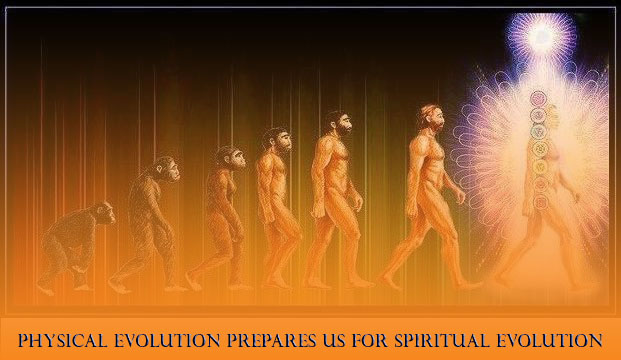
I REPLY: Being aware of a demon spirit that pretends to be the World Soul isn’t going to do you any good. It will open you up to demonic attack and mental illness. Whether the devil, for a time, gives a psychic their “own pattern of controlling” is no sign that this is of God. The essence of witchcraft is self-will, manipulation, and control over persons, places, and things. To “discover a specific truth, a mission” for the devil!–is not for me! SPIRITUAL EVOLUTION is yet another “doctrine of demons” (1 Timothy 4:1). It originates in Hinduism, and was transmitted to modern society by the first big New Age psychic, Helena Blavatsky (d. 1891). Firstly, it usually assumes that Darwinian evolution is true: that we all came from monkeys millions of years ago; that the world is billions of years old; and that everything is evolving, or radically changing its nature, over time, chance, and process. The only difference between this form of evolution preached by atheistic naturalistic scientists–and the evolution of the New Ager–is that the New Ager rejects atheism–and believes in gods, goddesses, spirits, or “the Force” and the nameless, faceless Intelligent Designer behind the process of evolution. What’s more, is that the New Ager believes that not only is the natural, physical world evolving–but the spirit world is evolving too–or, at least the human soul is. Once we had ameoba souls, then fish souls, then monkey souls,

What a satanic teaching!

What a satanic teaching!

now man souls, and eventually…yes you guessed it…ALIEN SOULS! Its only a matter of time, they say. Only a matter of time, and we’ll all be aliens flying in outer space in saucers! What ridiculous nonsense, from a Biblical viewpoint! The Bible says clearly: “God said, ‘Let us make man in our image, in our likeness, and let them rule over the fish of the sea and the birds of the air, over the livestock, over all the earth, and over all the creatures that move along the ground.’ So God created man in His own image, in the image of God He created him; male and female He created them” (Genesis 1:26-27). It says plainly that God created man to “rule over the fish of the sea and the birds of the air, over the livestock…over all the creatures that move along the ground.” This would include monkeys as well. This totally contradicts evolution which says that man CAME FROM monkeys. No we did not! That is silly! Man come from God! We were created directly by God on the sixth day of creation: “God saw all that He had made, and it was very good. And there was evening, and there was morning–the sixth day” (Genesis 1:31). Monkeys are not our distant relatives, our ancestors from millions of years ago; they are “creatures that move along the ground” that God has given man the responsibility of ruling over. This has always been the case from the time of Adam and Eve in the Garden of Eden: “The Lord God had formed out of the ground all the beasts of the field (including monkeys) and all the birds of the air. He brought them to the man to see what he would name them (including monkeys); and whatever the man called each living creature, that was its name (including the name “monkey”). So the man gave names to all the livestock, the birds of the air and all the beasts of the field” (Genesis 2:19-20). Mankind is not evolving; we are definitely growing in knowledge and the ability to create more complex machines, like computers, and robots, and various advanced medicines–but we ourselves are NOT evolving into different kinds of creatures like aliens from Mars. We can spiritually grow through prayer, contemplation of Christ, Bible study, obedience to the Word of God, and prophetic revelation from the Holy Spirit by faith in Christ–but our souls will NEVER evolve into anything else than human souls.

7. In pursuit of this mission, we can discover an inner intuition that shows us where to go and what to do, and if we make only positive interpretations, brings a flow of coincidences that opens the doors for our mission to unfold.

I REPLY: I agree every man has an “inner intuition that shows us where to go and what to do”–its called our spirit (1 Thessalonians 5:23). But for a form of guidance outside of ourselves, we need the help of the Holy Spirit to guide us by faith in Christ. The New Ager, however, who accepts Redfield’s Hinduistic philosophy of Monism, will be guided more likely by a spirit of divination–a demon–and not the Holy Spirit (Acts 16:16). The Christian, however, has the guidance of the Holy Spirit: “As for you, the anointing you received from Him remains in you, and you do not need anyone to teach you. But as His anointing teaches you about all things and as that anointing is real, not counterfeit – just as it has taught you, remain in Him” (1 John 2:27). What he means by making “only positive interpretations” is anyone’s guess, since he has not provided an absolute unchanging law or standard by which to test a positive from a negative interpretation. But the issue in life is not about positive versus negative–its about good versus evil–Jesus versus the devil. We must choose Jesus and His ways above all other interpretations of reality: “Anyone who runs ahead and does not continue in the teaching of Christ does not have God; whoever continues in the teaching has both the Father and the Son” (2 John 1:9). If we follow Jesus, and are open to experiences of the Holy Spirit, or divine revelations, we too will have a “flow of coincidences that opens the doors for our mission to unfold” for the Gospel of Jesus Christ! They are called signs from God. The question is, which coincidences are you following–those from Jesus or those from the devil?

8. When enough of us enter this evolutionary flow, always giving energy to the higher-self of everyone we meet, we will build a new culture where our bodies evolve to ever higher levels of energy and perception.

I REPLY: My response to this would be the same as my response to the “Sixth Insight.” Only this one adds a twist: the false counterfeit doctrine of New Age love, tolerance, random acts of kindness, and humanistic pluralistic coexistence between all religions. But its not based on truth! It rejects the Gospel! It is a lie! The Word of God says: “This is the love of God, that we keep His commandments. And His commandments are not burdensome” (1 John 5:3, NKJV). God’s love is holy and righteous and obeys the holy commandments of Scripture.

9. In this way, we participate in the long journey of evolution from the Big Bang to life’s ultimate goal: to energize our bodies, generation by generation, until we walk into a heaven we can finally see.

I REPLY: My response to this would be the same as my response to the “Sixth Insight.” Only here we have a mention of a “heaven”–but there is no way this is the Heaven of Scripture; nor is this the Heaven of the Gospel of Jesus Christ. This is a pagan heaven that does not exist; and is the devil’s carrot for the New Age psychic that he is holding out for them, so they go through their lives rejecting the Gospel, disobeying God’s law, and go to Hell in the end. “There is a way that seems right to a man, but in the end it leads to death” (Proverbs 14:12).

Coexist sticker10. The Tenth Insight (this is from another book from Redfield by the same title) is the realization that throughout history human beings have been unconsciously struggling to implement this lived spirituality on Earth. Each of us comes here on assignment, and as we pull this understanding into consciousness, we can remember a fuller birth vision of what we wanted to accomplish with our lives. Further we can remember a common world vision of how we will all work together to create a new spiritual culture. We know that our challenge is to hold this vision with intention and prayer everyday.

I REPLY: This is an appeal to religious pluralism, universalism, and syncretism. It is the idea that because Monism is true (everything is connected to the same divine substance)–that there is no Creator and no creatures; but that “I am god, you are god, the trees are god, the stars are god, the earth is god, the ocean is god, etc, etc.”–that all religions are just imperfect human articulations of the same thing. But this is totally against the Gospel of Jesus Christ. “Repent, and believe in the Gospel!” (Mark 1:15, NASB). Turn away from your sin of idolatry and pagan religion! God says, “You shall have no other gods before Me. You shall not make for yourself an idol in the form of anything in heaven above or on the earth beneath or in the waters below. You shall not bow down to them or worship them; for I, the Lord your God, am a jealous God, punishing the children for the sin of the fathers to the third and fourth generation of those who hate Me, but showing love to a thousand generations of those who love Me and keep My commandments” (Exodus 20:3-6). Jehovah, the God of the Bible, the one true God–the God I love and who’s commandments I try to keep in my life–He is VERY INTOLERANT of pagan religions. And so am I! Away with them all! However, this does not mean God is unloving. No, not at all. God loves everyone: “God so loved the world that He gave His one and only Son, that whoever believes in Him shall not perish but have eternal life. For God did not send His Son into the world to condemn the world, but to save the world through Him. Whoever believes in Him is not condemned, but whoever does not believe stands condemned already because he has not believed in the name of God’s one and only Son” (John 3:16-18). “God is love” (1 John 4:8). However is God is holy, and he demands that we express our love to Him by keeping His commandments (Exodus 20:6). Redfield, on the other hand, would have you to break God’s commandments by leading you into idolatry and false religion. Further, Redfield would have you to hate the true God–Jehovah of the Holy Bible. Put your faith in Jesus and keep His Word, and He will take you home to the REAL Heaven!

Posted in Uncategorized | Leave a comment

An Arminian Response to Charles Spurgeon’s “A Defense of Calvinism”

Charles Spurgeon (d. 1892)

Error #1: Equating the Word “Arminian” with the Doctrine of Pelagianism. Spurgeon said: “Well can I remember the manner in which I learned the doctrines of grace in a single instant. Born, as all of us are by nature, an Arminian, I still believed the old things I had heard continually from the pulpit, and did not see the grace of God. When I was coming to Christ, I thought I was doing it all myself, and though I sought the Lord earnestly, I had no idea the Lord was seeking me.”

To this day, as can be demonstrated repetitively in the documentary Amazing Grace: The History and Theology of Calvinism (2004), this seems to be the main problem in the Calvinist-Arminian debate. I’m not saying Arminians don’t have wrong views of Calvinism sometimes, because we all have a sinful nature (Rom. 7:14-25). But as a Wesleyan Arminian, and as a Christian who hungers for the truth of Scripture, I truly believe that Spurgeon has unfairly tagged the word “Arminian” with the heretical concept of Pelagianism. In this above quote, he is loosely dealing with the concept of saving grace. In this area of soteriology, there are three views of what Scripture teaches on the subject:

Monergism – The Calvinist view that man is so completely, totally depraved and corrupted with a sinful nature, that the grace of God (the saving power of the Holy Spirit) must come upon certain individuals chosen for salvation (the elect). When these elected, chosen men are pressed by the Holy Spirit to repent and believe in the Gospel, it is all God’s work. Not even their “repenting” nor their “believing” can be credited to these men; nor can it partially be credited to them as if God was helping them half-way, and they did the rest. God does it all; He possesses these corrupted men by His Spirit, and makes them saints, to persevere in faith and righteousness for the rest of their lives.

Synergism – The Arminian view that all mankind is totally depraved and corrupted with a sinful nature, but all mankind has the influence of the Holy Spirit upon them, and all mankind is being drawn to the Gospel by the Holy Spirit through the conscience (prevenient grace). It admits that there are only a small group of people that receive salvation by faith (the elect), but this people of God enters into their salvation on the condition that they choose to repent and believe in the Gospel. Not so with the consistent Calvinist, who denies this experience of choice in his conversion to Christ. But I would cite Joshua’s challenge: “Choose for yourselves this day whom you will serve” (Josh. 24:15); and Elijah: “How long will you waver between two opinions? If the Lord is God, follow Him; but if Baal is god, follow him” (1 Kings 18:21); and Peter: “Repent and be baptized, every one of you, in the Name of Jesus Christ for the forgiveness of your sins. And you will receive the gift of the Holy Spirit” (Acts 2:38). To “repent” means to turn away from your sins—it is the same thing as choosing to resist evil, believe in the Gospel, and live a holy life. The Calvinist would reply that this produces vanity in the Arminian; that any Christian who believes he played a role in his salvation must eventually be puffed up with pride and self-exaltation; that only a monergist-Calvinist can rightly give all glory to God (soli Deo gloria), because as a man, he did no repenting nor believing. To this notion, as a synergist-Arminian, I reply: but such a view ignores the Arminian view of prevenient grace—the Holy Spirit’s presence is very real and present: it is “a very present help” in time of need (Ps. 46:1). So, the Arminian has no problem giving all the glory to God for His help, His salvation, His rescue; while at the same time, he acknowledges that in Heaven, the righteous will receive the rewards of their faith, holiness, and good works—according to God’s will; as Paul said in the last days of his life: “Now there is in store for me the crown of righteousness, which the Lord, the righteous Judge, will award to me on that day—and not only to me, but also to all who have longed for His appearing” (2 Tim. 4:8). The Arminian has no problem singing: “Amazing grace! How sweet the sound that saved a wretch like me!” But he also understands that Jesus will give rewards to the saints after death.


Pelagianism – The Concise Encyclopedia defines it this way: a “Christian heresy of the 5th century that emphasized free will and the goodness of human nature. Pelagius (d. 418), a British monk who settled in Africa in 410, was eager to raise moral standards among Christians. Rejecting the arguments of those who attributed their sins to human weakness, he argued that God made humans free to choose between good and evil and that sin is an entirely voluntary act. His disciple Celestius denied the church’s doctrine of original sin and the necessity of infant baptism. Pelagius and Celestius were excommunicated in 418, but their views continued to find defenders until the Council of Ephesus condemned Pelagianism in 431.” Basically, Pelagianism is the rejection of any need for the Holy Spirit’s help, divine assistance, or saving graces; it affirms that all mankind has it well within his own natural ability to obey God’s commandments and live a holy life pleasing to God; and further, it rejects the doctrine of original sin, that man is naturally sinful, and that even Christians saved by the Spirit, still have a sinful nature in their flesh. Pelagianism denies the sinful nature of man completely. Charles Finney, the great revivalist, unfortunately fell into the error of rejecting original sin; but it would be wrong to call him a “Pelagian” properly speaking; in the actual working out of the Christian life, he affirmed the need for the influence of the Holy Spirit. Pelagianism, on the other hand, is a form of humanism—the idea that man is naturally good.


As a Wesleyan Arminian, who holds to the Synergist view of God’s grace, to me it is completely wrong that Spurgeon would use the word “Arminian” under the notion of Pelagianism. Spurgeon said, “Born, as all of us are by nature, an Arminian, I still believed the old things I had heard continually from the pulpit, and did not see the grace of God. When I was coming to Christ, I thought I was doing it all myself, and though I sought the Lord earnestly, I had no idea the Lord was seeking me.” Here he equates the word “Arminian” with the notion of a Pelagian conversion experience. “When I was coming to Christ, I thought I was doing it all myself”—Spurgeon said. True, many new Christians have this notion when they choose to live for God; I know I did. But I also experienced the Holy Spirit a lot in Charismatic worship, and could feel the presence of God very strongly after I just got saved. I didn’t know any theology or doctrine, but I was definitely experiencing the Holy Spirit working in my heart. But the flitting thought or idea that my act of turning away from sin and living for God, was my action alone, and that God was not helping me do it—is a mistake, an accidental Pelagian thought—but is in no sense, Pelagianism in the doctrinal sense. Further, John Wesley’s The Doctrine of Original Sin (1756) is more than enough evidence, to prove that this champion of Arminian theology, certainly upheld the Scriptural revelation on the sinful nature of mankind. And, although there may be anonymous Pelagians in any denomination, it would be very wrong to call Methodists, Wesleyans, Nazarenes, Holiness, and any other Christians faithful to the Wesleyan theological tradition—it would be an error to call them “Pelagians.” No, actually, they are Synergists.


Error #2: Works of Supererogation Attributed to Arminianism.
Spurgeon said: “What is the heresy of Rome, but the addition of something to the perfect merits of Jesus Christ—the bringing in of the works of the flesh, to assist in our justification? And what is the heresy of Arminianism but the addition of something to the work of the Redeemer? Every heresy, if brought to the touchstone, will discover itself here. I have my own private opinion that there is no such thing as preaching Christ and Him crucified, unless we preach what nowadays is called Calvinism. It is a nickname to call it Calvinism; Calvinism is the gospel, and nothing else.”

The Thirty-Nine Articles of Religion of the Church of England say: “Voluntary Works besides, over and above, God’s Commandments, which they call Works of Supererogation, cannot be taught without arrogancy and impiety: for by them men do declare, that they do not only render unto God as much as they are bound to do, but that they do more for His sake, than of bounden duty is required: whereas Christ saith plainly When ye have done all that are commanded to you, say, We are unprofitable servants” (XIV, “Of Works of Supererogation”). All his life, Wesley considered himself and his Methodist preachers to be Anglicans, as far as their denominational affiliation was concerned; their theology was an Arminian-Anglican theology—the via media between Catholic salvation and Reformed salvation. In this light, it is very similar to Martin Luther’s views of salvation, but less so John Calvin’s. Yet, on the subject of justification by faith, Wesley said, “I think on justification just as I have done any time these seven and twenty years—and just as Mr. Calvin does. In this respect I do not differ from him a hair’s breadth” (“Letter to John Newton,” May 14, 1765). Wesley, and all other Arminians (myself included), would heartily agree with the Church of England on this point: “We are accounted righteous before God, only for the merit of our Lord and Saviour Jesus Christ by Faith, and not for our own works or deservings. Wherefore, that we are justified by Faith only, is a most wholesome Doctrine, and very full of comfort” (XI, “Of the Justification of Man”). But the question of justification is one thing, and the order of salvation quite another—what happens to a Christian after he initially experiences justification by faith alone? Well, he has THE CHRISTIAN LIFE to live! So, after he is turned from darkness to Light (Acts 26:18), he is required by God to live his life in holiness and righteousness (Luke 1:75), to “walk in the light, as He is in the light” (1 John 1:7). I agree that preaching Christ and Him crucified (1 Cor. 1:23) is necessary for initial conversion from evil to good, from paganism to Christian faith, from satan to God. But after this beginner’s faith has been experienced, we Christians are “created in Christ Jesus to do good works, which God prepared in advance for us to do!” (Eph. 2:10). As long as these good works are rooted in God’s commandments, then they are not works of the flesh. What reasonable Christian would call preaching the Gospel, healing the sick, or giving to the poor in Christ’s Name—works of the flesh? No one, I hope.

Error #3: Those Who Believe in Conditional Security Preach a False Gospel. Spurgeon said: “Nor can I comprehend a gospel which lets saints fall away after they are called, and suffers the children of God to be burned in the fires of damnation after having once believed in Jesus. Such a gospel I abhor.”

Thomas Aquinas, Martin Luther, John Bunyan, John Wesley, and all preachers who stand in the historic Lutheran and Methodist traditions have all believed in the conditional security of the believer. To abhor this doctrine, is to abhor something which these reformers and revivalists clearly affirmed. However, I would say, that the word “gospel” does not need to be used so extensively as to include the doctrine of conditional security. Why can’t the word “Gospel” be used to only include the doctrines of repentance, faith, justification, and regeneration? Must it necessarily cause a division between Calvinists and Arminians? Must Christians necessarily use the word “gospel” in application to other soteriological fine points like monergism-synergism or perseverance-apostasy? I don’t think this is necessary. However, if you are curious about what Scripture says, then you should look no further than the warnings against apostasy in Hebrews 6:4-6, 10:26-29, and 1 Timothy 1:18-19. [John Jefferson Davis, “The Perseverance of the Saints: A History of the Doctrine,” Journal of the Evangelical Theological Society 34:2 (June 1991), 213-228.]

Error #4: Rejection of Unlimited Atonement. Spurgeon said: “To think that my Saviour died for men who were or are in Hell, seems a supposition too horrible for me to entertain. To imagine for a moment that He was the Substitute for all the sons of men, and that God, having first punished the Substitute, afterwards punished the sinners themselves, seems to conflict with all my ideas of Divine justice.”

However, as an Arminian, it does not conflict with my ideas of Divine justice. Paul says plainly of Christ, that “He died for all, that those who live should no longer live for themselves but for Him who died for them and was raised again” (2 Cor. 5:15). He does not put a qualifier on it: “He died for all the elect,” or “He died for all the chosen ones,” but simply, “He died for all.” In the plain sense it is written, must be the plain sense it is meant: Christ died for all men: Jews and Gentiles, Christians and pagans, saved and unsaved. My ideas of Divine justice are more compatible with this Bible verse than the Calvinistic view. Why? Because of Hell. In Hell is inflicted all the wrath of God against His enemies. While it is true that God so loved the world that He gave His only Son (John 3:16), He only loves everyone in sense of His Creator-creature relationship. God as Creator looks down upon His creation and loves what He has made; He loves man who was made in His own image; but on the other hand, they have fallen, they have sinned, and they continue sinning: “The Lord was grieved that He had made man on the earth, and His heart was filled with pain” (Gen. 6:6); so God has a Gospel plan to save as many of the men on the face of the Earth as He can. This plan is repentance and faith in the Gospel of Jesus Christ. Christ died for all men (2 Cor. 5:15), but unless men choose to repent and turn from their sinful ways, and respond positively to the message of justification by faith alone in the cross of Christ, then they shall “all likewise perish” (Luke 13:3) as those did in the flood of Noah, and God was only able to save or spare Noah and his small family from His wrath. The next flood is an everlasting flood of Hell fire, and an everlasting perishing for those who rebel against the Law of God—dying, dying, dying, but never completely dead. God will exact revenge on them as enemies: all who reject the Gospel of Jesus; all who reject God’s love—will receive in turn the fierce anger of God Almighty.

The damned in Hell are to blame themselves for their own damnation, for not repenting, for not continuing to believe the Gospel, or living in “holiness, without which no man shall see the Lord” (Heb. 12:14). Jesus “is the atoning sacrifice for our sins, and not only for ours but also for the sins of the whole world” (1 John 2:2). Unlimited atonement is a very scary doctrine, while at the same time a very hopeful one. Jesus put it this way: “Whoever believes in Him is not condemned, but whoever does not believe stands condemned already because he has not believed in the name of God’s one and only Son. This is the verdict: Light has come into the world, but men loved darkness instead of light because their deeds were evil” (John 3:18-19). Jesus died for all men, as Scripture makes clear, but that is not the issue when comes to understanding the mystery of Hell—the real issue is this: “Light has come into the world, but men loved darkness instead of light because their deeds were evil.” The blood of Jesus is available to all, and remains available to all—to believers, unbelievers, to backsliders, and apostates—ALL means ALL! But unless they stop loving darkness, unless they stop their evil deeds, they are rejecting the light of the cross; and they will be punished everlastingly in Hell for such a rejection of the cross. Scripture declares that justification has been by faith alone, is by faith alone, and always will be by faith alone—unlike Spurgeon, who on this point, it seems, would have us to believe that God’s love has more to do with the salvation of the elect (divine favoritism)—than the repentance and faith of those who would hope for Heaven (justification by faith).

Posted in Uncategorized | Leave a comment

Laughing Their Way to Hell

Can you see the people in the churches?
All across the world?
Laughing, and joking, and smiling
Ignoring God’s Holy Word.

They like their careers and their money
Their houses, their cars, and vacations
All the while Jesus is calling:
“Send for the harvest reapers!”
But they simply will not repent.

Laughing their way to Hell, they are;
Laughing their way to Hell.

Posted in Uncategorized | Leave a comment

The Cheap Grace Song

God’s love, God’s love, God’s love
Don’t talk about sin, or repentance, or faith
God’s love, God’s love, God’s love

God’s grace, God’s grace, God’s grace
Don’t say death, Hell, or Judgment Day
God’s grace, God’s grace, God’s grace

Daddy God, Daddy God, Daddy God
Daddy God, Teddy Bear, Daddy God
He’s not a King, or a Judge, or a Priest
Daddy God, Daddy God, Daddy God
Daddy God, Teddy Bear, Daddy God

Posted in Uncategorized | Leave a comment

No Denominations in Heaven: John Wesley’s Dream – The British Friend

The British Friend: A monthly Journal, CHIEFLY DEVOTED TO THE INTERESTS OF THE SOCIETY OF FRIENDS.

No. I. Glasgow, 1st Month, 1st, 1863. Vol. XXI.

Page 3:

THE TWELVE GATES OF HEAVEN.

John Wesley’s Dream.

“The city had twelve gates, on the east, three gates; on the north, three gates; on the south, three gates; and on the west, three gates; . . . and in the midst of the street, and on either side of the river of life, was there the tree of life, which bare twelve manner of fruits, and yielded her fruit every month: and the leaves of the tree were for the healing of the nations” (Rev. xxi. 12, 13; xxii. 2).

These words are figures, but they are figures of a great truth. They represent to us the variety, the diversity of heaven. They express in an outward picture what our Saviour said, also under a figure, though more simply, “In my Father’s house are many mansions.” We do not know whether “those that shall be saved will be few or many.” It may be that those who are able to struggle through the strait gate will be very few. It may be that the good, and the true, and the just will be in a minority in the next life, as they usually are in this life. But whether few or many, the Bible reveals to us most clearly the truth which our carnal, narrow hearts are very unwilling to receive — namely, that amongst the good, whom we hope to meet in heaven, there will be every variety of character, taste, and disposition. There is not one “mansion” there, but “many”. There is not one “gate” to heaven, but many; there are not gates only on the north, but “on the east three gates, and on the west three gates, and on the south three gates.” From opposite quarters of the theological compass, from opposite quarters of the religious world, from opposite quarters of human life and character; through di£ferent expressions of their common faith and hope, through different modes of conversion, through, different kinds of instruction and teaching, through different portions of the Holy Scriptures — will the weary travelers enter the Heavenly City, and meet each other — not without surprise — on the shores of the same river of life. And on those shores they will find a tree bearing, not the same kind of fruit always and at all times, but “twelve manner of fruits,” for every different turn of mind — for the patient sufferer, for the active servant, for the holy aud humble philosopher, for the spirits of just men now at last made perfect; and “the leaves of the tree shall be for the healing,” not of one single church or people only, not for the Scotsman or the Englishman only, but for “the healing of the nations” — the Frenchman, the German, the Italian, the Russian — for all those from where, it may be, in this world its fruits have been farthest removed, but who, nevertheless, have “hungered and thirsted after righteousness,” and who, therefore, shall be filled.”

And here, again, let me tell a third tale of the dark night, which shows how the light of the other world, in this its most evangelical aspect, dawned upon the soul of a great teacher amongst ourselves. It is said that John Wesley once, in the visions of the night found himself, as he thought, at the gates of hell. He knocked, and asked who were within. “Are there any Roman Catholics here?” he asked. “Yes,” was the answer, “a great many.” “Any Church of England men?” “Yes, a great many.” “Any Presbyterians?” “Yes, a great many.” “Any Wesleyans?” “Yes, a great many.” Disappointed and dismayed, especially at the last reply, he turned his steps upwards, and found himself at the gates of Paradise, and here he repeated the same questions. “Any Wesleyans here?” “No.” “Any Presbyterians?” “No.” “Any Church of England men?” “No” “Any Roman Catholics?” “No” “Whom have you, then, here?” he asked in astonishment. “We know nothing here,” was the reply, “of any of those names that you have mentioned. The only name of which we know anything here is ‘Christian’; we are all Christians here, and of these we have a great multitude which no man can number, of all nations, and kindreds, and peoples, and tongues.”

Yes, we shall be obliged in heaven to meet with Christians, with good men, of very different opinions. Had we not better prepare for that meeting by consenting to meet with them on earth? We shall be obliged there to make little of our differences, to put up with diversity of opinions, and ranks, and pursuits. Had we not better moderate our differences here, and bear and forbear with these diversities in this world? Is it not a waste of time to try to force all our fellowtravellers through our own gate now, when we shall be obliged hereafter to welcome those who enter from the western gate, though we have entered from the eastern, and those who have entered from the southern gate, though we have entered from the northern?

How wide the gates of heaven stand open — how many different characters will be found amongst the elect, will best appear if we read these passages: —

Ps. lxxvii. 3-7; cxix. 96; Isa. lx. 11; Luke xiii. 28, 30; xiv. 22, 23; xv. 7; xxiii. 42, 43; John x. 16; xiv. 1, 2; Rom. ii. 14-16; xiv. 1-8; 1 Cor. xii. 14-21; Rev. vii. 9; Xii. 24, 25. — Good Words.

Posted in Uncategorized | 1 Comment