Protestant Charismatic Theology: A New Historical Bibliography

At this point in my relationship with God, my favorite charismatic theologians are Drs. Wayne Grudem and Sam Storms; its possible Max Turner and Doug Banister will be included soon. My reasons: (1) Reformed theology. (2) Charismatic gifts. (3) Biblical, historical, and experiential. (4) Ethical.

There are two reasons why I think I’ve been bit with a “charismatic theology” bug lately. (1) The recent publication of John MacArthur’s Strange Fire book (2013); and the conference, where he makes the sweeping accusation that all charismatics are not members of the body of Christ: “I believe that we are not dividing the body of Christ in this conference. We are trying to identify the body of Christ and show that these people [in the video] aren’t part of it” (0:34:33). (2) Personal experiences I’m having with people resistant to charismatic gifts.

PENTECOSTAL
1924 – Smith Wigglesworth’s Ever Increasing Faith
1928 – Donald Gee’s Concerning Spiritual Gifts
1968 – Howard Carter’s Spiritual Gifts and Their Operation

CHARISMATIC RENEWAL
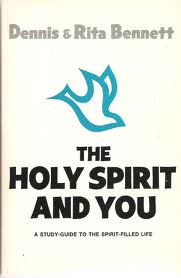
1971 – Dennis and Rita Bennett’s The Holy Spirit and You
1971 – Don Basham’s A Handbook on Tongues, Interpretation, and Prophecy
1971 – J. Rodman Williams’ The Era of the Spirit
1972 – J. Rodman Williams’ The Pentecostal Reality –
renewaltheology.net
1978 – Herman Riffel’s Voice of God

1984 – J. I. Packer’s Keep in Step with the Spirit
1984 – Ronald Kydd’s Charismatic Gifts in the Early Church – recommended to me by Sam Storms
1986 – Herman Riffel’s Learning to Hear God’s Voice

VINEYARD / THIRD WAVE
1985 – David Pytches’ Spiritual Gifts in the Local Church – recommended to me by the Dean of Alliance Theological Seminary, Ron Walborn
1986 – John Wimber’s Power Evangelism

1987 – John Wimber’s Power Healing
1988 – John Wimber’s Power Encounters
1988 – Wayne Grudem’s The Gift of Prophecy in the New Testament and Today
– Sam Storms says: “The best and most scholarly treatment of the prophetic gift I’ve read.”
1991 – John Wimber’s Power Points
1992 – Jack Hayford, John Wimber, Reinhard Bonnke’s The Gifts of the Spirit
1993 – Herman Riffel’s Dream Interpretation

1993 – Ira Milligan’s Understanding the Dreams You Dream
1995 – James Ryle’s A Dream Come True
1995 – Benny Thomas’ Exploring the World of Dreams
1996 – Mike Bickle’s Growing in the Prophetic

1996 – Max Turner’s The Holy Spirit and Spiritual Gifts
–
Sam Storms says: “This is the most scholarly and detailed analysis of the Holy Spirit and the charismata that I’ve read. His treatment of prophecy, tongues, and healing is especially good. Highly recommended!”
1999 – Doug Banister’s The Word and Power Church – recommended to me by the Dean of Alliance Theological Seminary, Ron Walborn
2002 – Sam Storms’ The Beginner’s Guide to Spiritual Gifts
2005 – Daniel Jennings’ The Supernatural Occurrences of John Wesley
2007 – Steve Thompson’s You May All Prophesy

– He was the primary prophetic teacher at MorningStar Ministries, but he left because he disagreed with Rick Joyner’s attempt to “restore” Todd Bentley to ministry in 2008.
2009 – Daniel Jennings’ The Supernatural Occurrences of Charles G. Finney

Charismatic Theologians I Reject or Would Extremely Caution About

d. 1935 – John G. Lake (Pentecostal pluralist; “little gods” belief)
d. 1973 – Gordon Lindsay (Lake disciple; “little gods” belief)
d. 2003 – Kenneth Hagin (started the Word of Faith Movement around 1985 with the success of Rhema Bible Training College)
b. 1942 – Richard J. Foster (Celebration of Discipline, Prayer, etc)–although the content of these books is orthodox, and at times, profoundly prophetic, mystical, and powerful–Foster quotes from tons of Christian universalists! (Probably because the Quakers have a universalist stream that he inherited, either knowingly or unknowingly.)
b. 1940s? – Mark Virkler (Communion with God, etc) – Deep, prophetic material at times; has discernment about the New Age Movement, which is good; but accepts a level of positive confession views, and what is the worst, in my personal opinion–he does not believe in theology or in judging prophetic words, but believes that 99% of dreams come from God. He also seems to teach automatic writing, which is definitely not an orthodox prophetic revelatory practice, either Biblically or historically.
b. 1970s? – John Crowder (Miracle Workers, Reformers, and the New Mystics; The Ecstasy of Loving God) – trinitarian universalist; he can also be very rude and impolite.

Posted in Uncategorized | Leave a comment

An Updated Sketch of Prophetic History

The following is a list of bona fide Christian prophets, and groups associated with them, who embraced charismatic gifts down through the history of the church.

d. 356 – St. Antony / The Desert Fathers
d. 460 – St. Patrick / The Celtic Saints
d. 543 – St. Benedict / The Order of Saint Benedict
500s – 1100s – The Order of Saint Benedict (O.S.B.)
d. 1179 – St. Hildegard of Bingen (O.S.B.)
d. 1226 – St. Francis / The Order of Friars Minor (O.F.M.)
d. 1419 – St. Vincent Ferrer / The Order of Preachers (O.P.)
d. 1582 – St. Teresa of Avila / Discalced Carmelites (O.C.D.)
1500s – 1600s – John Howie’s The Scots Worthies / The Covenanters
d. 1791 – John Wesley (The Methodist Episcopal Church)
d. 1875 – Charles Finney (The Second Great Awakening / Revivalism)
d. 1919 – A. B. Simpson (The Christian & Missionary Alliance / C&MA)
d. 1947 – Smith Wigglesworth (friends with, but never joined Assemblies of God)

  • The Essential Smith Wigglesworth edited by Wayne E. Warner (405 pgs)

d. 1991 – Dennis Bennett (the Charismatic Renewal; evangelical Episcopalian /Anglican)
d. 1997 – John Wimber (the Association of Vineyard Churches / Third Wave)

This is the only available video on Smith Wigglesworth that I know about. Nevermind the fact that the narrator Roberts Liardon fell into a gay scandal back in 2001. See also here. It’s still a good video on Wigglesworth. Nevertheless, if Liardon has not truly repented, then as the Good Book says: “Nor homosexuals, nor sodomites, nor thieves, nor covetous, nor drunkards, nor revilers, nor extortioners will inherit the kingdom of God” (1 Corinthians 6:9-10, NKJV). Lester Sumrall (d. 1996) received a spiritual blessing from Wigglesworth; and has published many books on the Holy Spirit and spiritual gifts:–unfortunately, he got into the Word of Faith movement.

Publishers of Orthodox Charismatic/Prophetic Groups

1. Liturgical Press – The Order of Saint Benedict
2. Franciscan Institute Publications – The Order of Friars Minor
3.
ICS Publications – The Discalced Carmelites
4.
TAN Books – Catholic Charismatic
5. Christian Alliance Publishing / Christian Publications – The C&MA
6
. Gospel Publishing House – Assemblies of God
7
. Vineyard International Publishing – The Vineyard

Prophets and Groups I Reject As Heretical and Not Worthy of Imitation

1. The Centering Prayer Movement – Thomas Merton, Thomas Keating, M. Basil Pennington, William Meninger.
2. The United Methodist Church – universalism; “gay Christian” movement.
3. The Word of Faith Movement – E. W. Kenyon, Kenneth Hagin, Kenneth Copeland, Creflo Dollar, Charles Capps, Frederick K. C. Price, and tons of TBN preachers – has sadly infected Assemblies of God, Church of God (Cleveland, TN), the Pentecostal Holiness Church, and just about every Pentecostal denomination.
4. MorningStar Ministries – Rick Joyner, Todd Bentley, etc.
5. John G. Lake, Gordon Lindsay (Christ For The Nations), the 1950s Healing Revival, and the Healing Rooms – Lake believed Mohammed was a prophet of God (John G. Lake: The Complete Collection, pp. 911-912), that “God intends us to be gods” (as quoted in Dave Hunt and T. A. McMahon’s The Seduction of Christianity, p. 219), he condemned Assemblies of God, William J. Seymour, and associated with E. W. Kenyon (John G. Lake, pp. 474-479), he endorsed George Fox and Sadhu Sundar Singh–both universalists (pp., 365, 693), he repeatedly condemned all use of doctors and medicine in favor for the prayer of faith only.
6. Quakers – George Fox, The Religious Society of Friends, Evangelical Friends Church International, etc – UNIVERSALIST CHRISTIAN MYSTICS (even the early Quakers were!)
7. John Crowder – thenewmystics.com – trinitarian (universalist)

Posted in Uncategorized | Leave a comment

The Gift of Prophecy

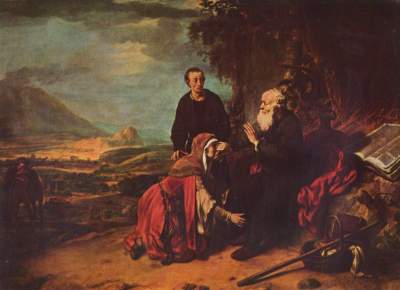
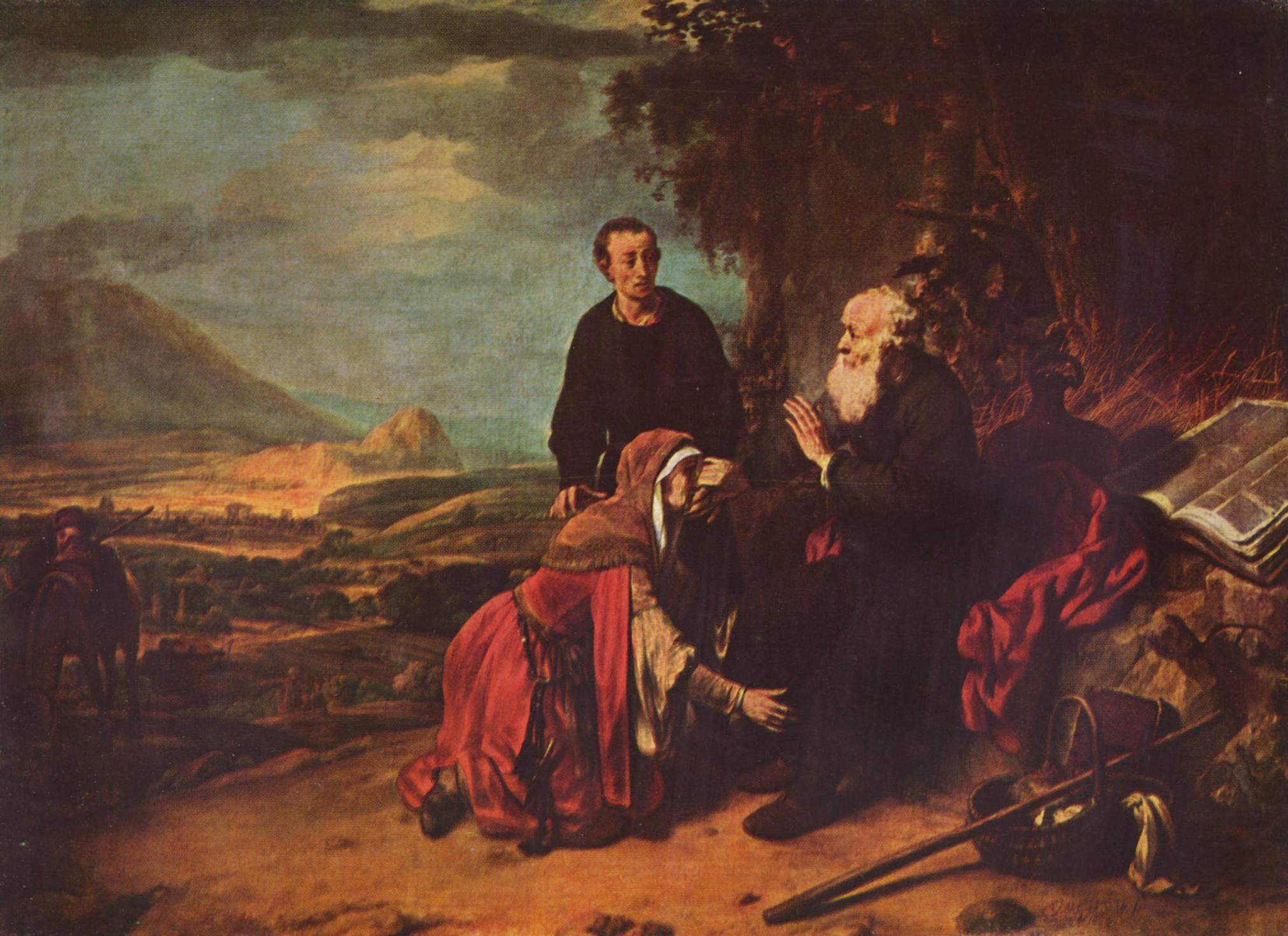
The Prophet ElishaThe following is a summary of chapter 8 from Dennis and Rita Bennett’s The Holy Spirit and You (1971), entitled: “The Gift of Prophecy,” referring to the gift mentioned in 1 Corinthians 12:10. This may very well be the first occurrence of an “official” teaching on the prophetic, the gift of prophecy, or prophetic ministry from the Charismatic Renewal viewpoint (let me note that I think it’s evident he borrowed a little from Smith Wigglesworth’s Ever Increasing Faith, 1924). As Charismatic experience and teaching developed over the years, more literature on this subject would come out: Don Basham’s A Handbook on Tongues, Interpretation, and Prophecy (1971), Bruce Yocum’s Prophecy (1976), John and Paula Sandford’s The Elijah Task (1977), Herman Riffel’s Voice of God (1978), Learning to Hear God’s Voice (1986), Wayne Grudem’s The Gift of Prophecy in the New Testament and Today (1988), Clifford Hill’s Prophecy: Past and Present (1989), Herman Riffel’s Dream Interpretation (1993), Mike Bickle’s Growing in the Prophetic (1996), Steve Thompson’s You May All Prophesy (2007), etc. All of these experiential writers on prophecy were in some way involved or impacted by the Charismatic Renewal started by Bennett, and have personally witnessed the gift of prophecy develop in Charismatic churches over the decades since 1971; especially with John Wimber, Mike Bickle, and the Vineyard churches leading the way, since 1989. Paul Cain, a false prophet—not so much on account of his theology, but because of his poor character, was the “guinea pig” of this budding prophetic movement experiment in the Vineyard, drawing from a “word of knowledge” theology carried over from the days of the 1950s Healing Revival with William Branham (another man who went off the deep end later in his ministry):–what good could be salvaged out of a theology of prophecy, in that movement, has been compiled in Gordon Lindsay’s Commissioned with Power. Before we get started with my summary of Bennett’s teaching, let’s note that it’s easy to despise prophesyings, for reasons of caution (1 Thess. 5:20); it seems to be the “safe” thing to do. But we should also bear in mind that it’s never safe to disregard that counsel of Scripture: “Eagerly desire spiritual gifts, especially the gift of prophecy” (1 Cor. 14:1). Let’s proceed with Bennett’s teaching on the gift of prophecy, from a Charismatic viewpoint:

  • Prophecy Comes from Supernatural Thoughts (Revelations) Planted in the Human Mind. “The gift of prophecy is manifested when believers speak the mind of God, by the inspiration of the Holy Spirit, and not from their own thoughts. It is supernatural speech in a known language” (p. 99).
  • The purpose of prophecy is to build up the faith of believers; however, it can also serve an evangelistic function. “Tongues, then, are a sign, not for believers but for unbelievers; prophecy, however, is for believers, not for unbelievers…But if an unbeliever or someone who does not understand comes in while everybody is prophesying, he will be convinced by all that he is a sinner and will be judged by all, and the secrets of his heart will be laid bare. So he will fall down and worship God, exclaiming, ‘God is really among you!’” (1 Cor. 14:22, 24-25; p. 99).
  • Prophetic Revelations Build Up, Urge On, and Comfort. “There are three ways, the Scripture tells us, in which prophecy ministers to believers: edification, exhortation, and comfort; or building up, urging on, and consoling” (1 Cor. 14:3; p. 99). “Most prophecy to the Church is of an encouraging nature, but not all. If an earthly father never corrected his children, it would be harmful and unloving. They wouldn’t grow up and mature normally. On the other hand, if the father were always telling them they were wrong, and never told them that he loved and appreciated them, love wouldn’t grow between the parent and the children. We may say that there is a healthy ratio here: one-third exhortation and two-thirds comfort! Thus in a meeting you may expect to hear many prophecies that are frankly the Father comforting, and fewer that are of the ‘get with it’ variety! Valid prophecy will not be harshly condemnatory of believers, but it may strongly counsel them” (p. 100).
  • Conditional Prophecies of the Future (Repentance-Oriented). As with the Old Testament prophets, like Jonah and his prophecy to Nineveh (Jonah 3:4), or Jeremiah and his prophecy to the king and priests:–modern-day prophets operate in the gift of prophecy combined with the gift of the word of knowledge; and these direct, personal prophecies to other people may have a repentance message, with conditional futuristic outcomes, depending on either their repentance or impenitence (p. 101). Repentance-oriented prophecy is always dangerous and risky, because it may result in persecution or martyrdom: “O Jerusalem, Jerusalem, you who kill the prophets!” (Matt. 23: 37):—see also Stephen before the Sanhedrin (Acts 7:52).
  • Unconditional Prophecies of the Future (Faith-Builders). There are also unconditional prophecies, which will happen in the future no matter what. For examples of this in Scripture, see Isaiah 53, Deuteronomy 18:15, Matthew 24, and John 16:1-4. These are given to strengthen people’s faith during circumstances in the future. Jesus said, “I have told you now before it happens, so that when it does happen you will believe” (John 14:29) (pp. 101-102).
  • Sometimes Church Leaders Become Envious of Prophets; and for this Reason, Christians Trying to Be Used in the Gift of Prophecy Should Humbly Submit their Revelations to the Judgment of Godly, Trusted Church Leaders. Such was the case when the Lord put the gift of prophecy in Eldad and Medad, and some of the elders, in an authoritarian manner tried to make them stop prophesying. Moses responded to these elders, “Are you envious for my sake? would God that all the Lord’s people were prophets, and that the Lord would put His Spirit upon them!” (Numbers 11:29; p. 103).
  • It is God’s Will for All Christians to Be Used in the Gift of Prophecy. “This is what was spoken by the prophet Joel: ‘In the last days, God says, I will pour out My Spirit on all people. Your sons and daughters will prophesy, your young men will see visions, your old men will dream dreams. Even on My servants, both men and women, I will pour out My Spirit in those days, and they will prophesy” (Acts 2:16-18; p. 103). Seeing visions and dreaming dreams were understood by Bennett as Biblical means of revelation (supernatural thoughts) for operating in the gift of prophecy today, for more see page 110; they are seen as available to all people in the church (not just an elite group of prophets), by faith in the Gospel, and receiving the baptism in the Holy Spirit. I would like to add here, personally, that I believe Christians who do not experience prophetic dreams regularly, can at any time, choose to start receiving them by faith, if they will only open their minds to this way of divine communication, and pray for God to speak to them in this manner. I would like to bear in mind, that although Scripture is “a more sure Word of Prophecy” (2 Peter 1:19), it is not in God’s design for New Testament Christians to make Scripture into their only Word of Prophecy. I realize this flies in the face of most Reformed theology, whose rally cry is “sola Scriptura!” (only Scripture!), but that is not in God’s design for the church. (Let me note here also that the Covenanters, the founders of the Church of Scotland, are recorded in John Howie’s The Scots Worthies as having many such visions and dreams! And they were totally Reformed! This provides a historical precedent for Charismatic Christians today. See also Daniel Jennings’ The Supernatural Occurrences of John Wesley—for the Methodist precedent.)

     Acts 2:16-18 makes it clear that visions and dreams are to supplement the Scriptures in the believer’s life for the purpose of specific guidance through edification, exhortation, and comfort (1 Cor. 14:3). Sure, the Bible is “sufficient for salvation”—all that Christians need for “life and godliness,” “for training in righteousness,” and knowledge of the Gospel is contained in the Bible. But when it comes to the more specific and personal circumstances in our lives, and especially during trials and tribulations which test our faith, it is then that the gift of prophecy through visions and dreams—if passing the test of Biblical theology (Isaiah 8:20; 1 Corinthians 14:29; 1 Thessalonians 5:20-21; 1 John 4:1)—can serve to supplement the believer’s use of the Bible for the purpose of edification, exhortation, and comfort. It reminds us in those dark nights of the soul that God is really among us (1 Cor. 14:25). I also bear in mind that it was considered a judgment of God in Bible times, if you did not receive divine dreams! Scripture says of Saul, when he was rebelling against the Lord, but still wanted military advice from Him, “He inquired of the Lord, but the Lord did not answer him by dreams or Urim or prophets” (1 Samuel 28:6)—note dreams were mentioned first; and in the middle of a pagan séance, the troubled Saul speaks to a familiar spirit under the guise of Samuel, and he complains that God “no longer answers me, either by prophets or by dreams” (1 Sam. 28:15). In Bible times, as illustrated by Saul’s case, it was considered a judgment of God for rebellion and unbelief, to be unable to receive specific prophetic words from God through dreams and prophets! All the more reason, then, why New Testament Christians, who according to Acts 2:16-18, all of whom have the ability to prophesy by visions and dreams—should seek and inquire of the Lord for such revelations in their lives, and the lives of others in the church, for the purpose of edification, exhortation, and comfort! (1 Corinthians 14:3). “Two or three prophets should speak, and the others should weigh carefully what is said. And if a revelation comes to someone who is sitting down, the first speaker should stop. For you can all prophesy in turn so that everyone may be instructed and encouraged. The spirits of prophets are subject to the control of prophets. For God is not a God of disorder but of peace” (1 Corinthians 14:29-33). Commenting on 1 Corinthians 14:30, The NIV Study Bible says, “Prophecies referred to in chs. 12-14 could come through any member of the church (vv. 26, 29-31) and were intended for particular persons in particular circumstances; the ‘revelation’ they contained could be a prediction (Agabus, Acts 11:28; 21:10-11), a divine directive (Acts 13:1-2) or a message designed to strengthen, encourage or comfort (v. 3).”

  • True prophets are submitted to godly male leadership in the church (p. 104).
  • True prophets are meek and humble; knowing they have power, but not flaunting it: “Moses was very meek, above all the men which were upon the face of the earth” (Num. 12:3; p. 105).
  • True prophets have words of knowledge (pp. 105-106).
  • True prophets are not perfect, but are going on to perfection. “A true prophet of God will be a mature Christian, as his ministry is listed as one of the offices to be used to bring the Church to maturity (Eph. 4:8, 11-16). No person should be allowed to minister as an established prophet in the Church unless he is thoroughly known by the brethren as to his doctrine and his manner of life. A true prophet will speak out against things that are wrong, whether it makes him unpopular or not. He will draw people to God and not to himself. The ministry of the prophet must be even more carefully judged than that of the brethren in general who prophesy in the meeting. A man may be strongly used in the prophetic office, and yet may be completely wrong from time to time. His words must never be accepted because of his ministry, but tested by the Word and the Spirit; this does not mean at all that he is a false prophet, but that he is still not perfected and therefore liable to error. ‘We prophesy in part’ (1 Cor. 13:9)” (p. 106).
  • False prophets can be cult leaders (p. 106). Examples: Joseph Smith, David Berg, and Jim Jones.
  • False prophets prophesy their own imagined visualizations; and not visions received from God. “Hearken not unto the words of the prophets that prophesy unto you: they make you vain: they speak a vision of their own heart, and not out of the mouth of the Lord” (Jer. 23:16; p. 107).
  • False prophets do not preach against sin or on repentance (Jer. 23:17-22; p. 107).
  • False prophets give in to sexual immorality, fornication, or adultery (p. 107). Examples: David Berg, Paul Cain, Bob Jones (not Jim), and Todd Bentley.
  • True prophetic revelations are confirmed by signs (divine coincidences). “Note the caution of the prophet Jeremiah. He was told by the Lord to buy a piece of property from his cousin Hanameel. He took no action, however, until his cousin came and offered to sell him the property, having no idea what the Lord had already said to Jeremiah. ‘Then,’ said Jeremiah, ‘I knew it was the word of the Lord.’ If the prophet Jeremiah, that great man of God, was so cautious, not even believing his own prophecy until it was confirmed, we should be all the more (Jer. 32:6-9)” (p. 108).
  • True prophecy is not fortune-telling. I strongly agree with Bennett in his statement that the gift of prophecy is not fortune-telling. Prophecy is not a destiny-utterance, it is not a psychic, New Age, pagan prediction of the future, with a twist of fate, mixed with superstition, magic, and bad omens. The gift of prophecy is none of those things—and it requires no devices of divination such as looking into a crystal ball or reading Tarot cards (p. 108); further, Bennett says, that in the Bible, the true prophet “was having fellowship with the Lord, when God chose to share the knowledge” of the future (p. 108). But then, Bennett says something I disagree with; he seems to overreact to the fortune-telling mentality, and says, “God strictly forbids any attempt to pry into the future—He has always forbidden it. If men attempt to do this, they will be fed information from the enemy for his own purposes, and if they persist, it will be to their destruction…The true prophet was not trying to get information about the present or the future…True prophecy is forthtelling not foretelling” (p. 108). I disagree with this idea. Firstly, because Bennett provides no Biblical basis for it. Secondly, because seeking information about the future through occult means is the only thing forbidden in the Bible (Deuteronomy 18:9-12), and not because the people are seeking information about the future—but because they are doing so through occultic, pagan means, such as crystal balls, Tarot cards, palm reading, etc. Thirdly, because in Scripture, there are examples of kings “inquiring” of God’s prophets about the future (especially regarding whether it was God’s will for them to fight in certain wars, and whether God said they would win in the future); and all this without occult means, but through the only means available: visions, dreams, and the voice of the Lord (Num. 12:6).
         However, it wasn’t only kings who inquired of the Lord through prophets, the common people did too: “Formerly in Israel, if a man went to inquire of God, he would say, ‘Come, let us go to the seer,’ because the prophet of today used to be called a seer” (1 Samuel 9:9). Prophets were called “seers” because when they were inquired of by the people concerning words of knowledge, or God’s guidance for the future, the prophet would pray to God (Jer. 37:3), and see a vision in his mind’s eye, or perhaps an open vision, and the prophet would immediately convey the prophecy to the inquirer. (On the surface, this is very similar to people today who go to a psychic, or a palm reader, and get their fortune told to them; but notice, there is no pagan philosophy being taught by God’s prophets; these are prophets of the Lord, not New Age psychics with a Spiritualist or Hindu worldview.) In Bible times, it was a judgment of God for the prophet to have no vision: “Calamity upon calamity will come, and rumor upon rumor. They will try to get a vision from the prophet; the teaching of the law by the priest will be lost, as will the counsel of the elders” (Ezekiel 7:26). Deplorable state! “Where there is no vision, the people perish” (Proverbs 29:18).

     An epic story about the practice of inquiring of the Lord through a prophet, concerning the future, involves the death of King Ahab. That king was wicked, and had allowed his witch-wife to fully paganize the Jewish people. God’s true prophets had to live in hiding, in prophetic communes, led by the prophet Elijah. God brought three years of famine on Israel because of the wickedness of this king. Now Ahab was in a rough spot; Syria and Israel were about to go to war. And King Ahab, although he was ungodly, still thought it “necessary” or should we say “customary” to seek a prophet for guidance concerning the war. Ahab only let the false prophets of Baal prophesy to him at first, all of which said, “Go to battle, and the Lord will make you win.” Then Jehoshaphat, a devout Jew and allied king of Judah, challenged Ahab, saying, “Is there not a prophet of the Lord here whom we can inquire of?” (1 Kings 22:7). Ahab knew of one such prophet, by the name of Micaiah, but he didn’t like him, because “he never prophesies anything good about me” (22:8)! After Micaiah was pressed, he shares his vision of the Lord, about how lying spirits were sent into the mouths of all the false prophets, to tempt Ahab to attack Syria, and “go to his death there” (22:20). Micaiah was put in prison for his prophecy (22:27). Yet, during the battle, “Someone drew his bow at random and hit the king of Israel between the sections of his armor…The blood from his wound ran onto the floor of the chariot, and that evening he died” (22:34, 35). Jehoshaphat inquired of the Lord concerning the future of Ahab, Micaiah prophesied death for Ahab, and death for Ahab is what happened.

     Is that fortune-telling? No. It’s prophesying: what today in Charismatic circles is called “personal prophecy.” You see, what matters here is the theology of the prophet. In this case, the prophet had a Biblical worldview; and the judgment was on the pagan—the reverse is the case for people today who seek to know their “fate” through Madame Moon fortune-teller lady. What matters is the spiritual source, not whether it’s right or wrong to seek God through a prophet concerning the future. It is not wrong to seek God for revelation concerning the future, but what is wrong, is to be a pagan, or go to a pagan prophet; that is definitely wrong. For other Biblical instances of people inquiring of the Lord concerning the future through God’s prophets, see 1 Samuel 9 (Saul’s servant inquires of the prophet Samuel), 1 Samuel 23:1-12 (David inquires of the Lord directly through listening prayer three times concerning his immediate future—and each occasion saves his life), 2 Kings 3:11-27 (Jehoshaphat inquires of the prophet Elisha), 2 Kings 22:11-20 (Josiah sends men to inquire of the prophetess Huldah), and Jeremiah 21:1-7; 37:6-8 (Zedekiah sends men to inquire of the prophet Jeremiah).

  • Prophecy is not “inspired preaching” (p. 108). I’ve heard the word “prophecy” used in this way before, almost as a literary device for a revival sermon, or an evangelistic sermon on holiness and Hell. But Biblically speaking that is not prophesying. That is preaching. The whole idea of using the word “prophecy” in connection with preaching, and under the notion of preaching a Biblical sermon, goes back at least to a Puritan work: William Perkins’ The Art of Prophesying (1606). I bought this book once; it’s not about visions, dreams, and giving prophetic words. It’s about how to construct a Puritan and Reformed three-point sermon, with conviction, and feeling. So, in the Reformed community, since they usually reject the “prophetical gifts,” they have come to use the word “prophecy” under the notion of Bible teaching or Biblical preaching (expository sermons or evangelistic sermons). Many conservative Evangelicals use the word “prophetic” in connection with a sermon on holiness, or the like. I’m inclined to think that even A. W. Tozer and Leonard Ravenhill, the great men of God that they were, have earned the titles of “prophet” by several church leaders, because of the holiness they emphasized in their sermons, and how often, like the Biblical prophets, they morally challenged the church, and preached against sin. But all this is a misuse of the Biblical word “prophet”; the word “prophet,” “prophecy,” and “prophetic,” I would agree with Bennett needs to only be used in connection with the manifestation of “the gifts of wisdom and knowledge”; and not “from the inspired intellect” which is prepared ahead of time, in an “inspired sermon,” through prayer and theological study (pp. 108-109).

     I believe to water-down the word “prophecy” into something Fundamentalist, Evangelical, or Reformed; into something that is only an inspired Biblical sermon; something that does not at all have a vision, dream, voice, or word of knowledge tucked into it—is to de-supernaturalize our understanding of the gift of prophecy, and perhaps, might be a kind of deistic Sadducee mentality, regarding “neither angel, nor spirit,” or anything supernatural (Acts 23:8)—but understanding everything only in terms of morals and ethics. Personally, I believe David Wilkerson’s The Vision (1974) would rightly put him in the “prophet” category:–in the Biblical and Charismatic sense of the word; but I would not say that any of Wilkerson’s sermons were a “prophecy” unless they contained visionary content or something of a direct supernatural experience in them. Otherwise, a sermon is just a sermon: an inspired, godly exhortation to live a holy life:–but it’s not a supernatural prophetic word. Sure, the Holy Spirit can move through sermons mightily (and supernaturally through regenerating and sanctifying grace), as in the revivals of Jonathan Edwards, John Wesley, George Whitefield, and Charles Finney—but we should distinguish this from the kind of prophesying that Samuel, Elijah, Elisha, Jeremiah, Daniel, etc took part in, or else we do both ourselves, and the body of Christ a disservice, by replacing the charismatic gift of prophecy with theological and intellectual preaching. Agabus, the New Testament Christian prophet (Acts 11:28; 21:10), would be shaking his head to hear Christians today using “prophecy” merely under the notion of preaching a good, godly sermon based on a few Biblical texts. So would all the other Christian prophets down through the ages: the Desert Fathers, St. Patrick, St. Benedict, Hildegard of Bingen, St. Francis of Assisi, The Scots Worthies, the Camisards (the French Prophets), various Methodists, the Irvingites, Smith Wigglesworth, Pentecostals, Charismatics, etc. “We have different gifts, according to the grace given us. If a man’s gift is prophesying, let him use it in proportion to his faith. If it is serving, let him serve; if it is teaching, let him teach” (Romans 12:6-7). This makes it clear that prophesying and Bible teaching (often called preaching) are two completely different spiritual gifts. Prophecy “is from the spirit, not the intellect” (p. 109).

  • Prophecy is not “witnessing” or evangelistic preaching (p. 109). I agree with Bennett on this statement. A distinction is made in Scripture between the prophet and the evangelist (Eph. 4:11), because prophesying and evangelizing are two completely different gifts and tasks. Although it is possible to mix the two gifts into a combined, Book of Acts-style ministry, few have been able to accomplish this after the first century, other than maybe St. Patrick, St. Francis of Assisi, The Scots Worthies, and a few Methodists and early Pentecostals. Today, there are Charismatics who attempt to use the spiritual gifts in evangelism through a method called “treasure hunts,” but although words of knowledge are used and people get healed, the Gospel of Jesus Christ is barely ever preached soundly and theologically. (See Kevin Dedmon’s The Ultimate Treasure Hunt and Sean Smith’s Prophetic Evangelism.) Prophecy is not evangelism and evangelism is not prophecy. Prophecy is receiving words of knowledge, words of wisdom, visions, and dreams, and then speaking them forth into people’s lives, and especially other Christians’ lives, for their edification, exhortation, and comfort (1 Corinthians 14:3). Evangelism is preaching the Gospel of Jesus Christ to the lost (the message of repentance from sin, faith in the cross for penal substitutionary atonement, justification for the forgiveness of sins, regeneration of the human spirit by the Holy Spirit to bring about faith and righteousness from the heart, sanctification, salvation from eternal punishment in Hell, etc). Bennett says, “Prophecy is not witnessing. Some, trying to justify the lack of prophecy in the Church today, say that it is. They quote the Scripture: ‘The testimony of Jesus is the spirit of prophecy’ (Rev. 19:10). Although it is true that the Holy Spirit wants us to witness to unbelievers and has given us the power to do so, yet how could this be ‘prophecy,’ when prophecy is the greatest gift to edify the Church?” (p. 109).
  • Ways That God Speaks Directly through the Gift of Prophecy. Bennett says, “Expect to prophesy. Ask Jesus to edify His Body on earth through you. As you have fellowship with the Lord and with your brothers and sisters in the Lord, you may find thoughts and words of inspiration coming into your mind that you have not heard, and did not compose. If they are according to Scripture, then share them with the Church. As with interpretation, you may just receive a few words, and as you start to speak, more may come. You may see a picture in your ‘mind’s eye,’ and as you start to talk about that picture, the words will come. As with tongues and interpretation, the Spirit may bring you the words in a variety of ways. Some also have seen the words as if written down, and just read them verbatim” (p. 110). From this paragraph by Bennett, I would like to delineate four categories of prophetic revelation:

1. Mental Voices; or Spontaneous, Random Thoughts. “You may find thoughts and words of inspiration coming into your mind that you have not heard, and did not compose.” Catholic mystical theology term: “intellectual and imaginary locutions.”

2. Inspiration; or Ecstatic Prophecy. “As with interpretation, you may just receive a few words, and as you start to speak, more may come.” Catholic mystical theology term: [none, but probably related to intellectual and imaginary locutions (random thoughts and voices)].

3. Closed Visions; or Spontaneous, Random Mental Images. “You may see a picture in your ‘mind’s eye,’ and as you start to talk about that picture, the words will come.” Catholic mystical theology term: “intellectual and imaginary visions.”

4. Open Visions; or Apparitions Seen with the Eyes Open. “Some also have seen the words as if written down, and just read them verbatim.” Catholic mystical theology term: “corporeal visions.”

Posted in Uncategorized | Leave a comment

Aspects of Divine Healing

What is the scriptural basis for the position that physical healing is provided in the redemptive work of Christ?

Matthew 8:16-17: “When evening came, many who were demon-possessed were brought to Him, and He drove out the spirits with a word and healed all the sick. This was to fulfill what was spoken through the prophet Isaiah: ‘He took up our infirmities and bore our diseases’ (Isaiah 53:4).” Some theologians would have us believe that Isaiah 53:4 is only about Jesus bleeding for our spiritual healing, by bearing our “infirmities” or sinful “weaknesses” and shortcomings. But it is clear here, that in Matthew’s theology, the text was also understood to mean that Jesus’ crucifixion also bore our diseases, or sicknesses, including the sickness of mental illness and demon-possession, as illustrated in this text.

Do you believe divine healing is the privilege of the believer today?

Yes! There is nowhere in the New Testament that says divine healing was a transitional gift, only to bear testimony to the Gospel or the authority of the apostles in the first century. Healing is a gift from the Holy Spirit to the body of Christ (1 Cor. 12:9); and not only a sign that proves the divine origin of the Gospel message (Mark 16:17-18). To view healing as a gift is to understand its recuperative usage, its “medical” qualities, and the love and power of Jesus being manifested to help the suffering. Healings are given to show how much God loves and cares for people: “When Jesus landed and saw a large crowd, He had compassion on them and healed their sick” (Matthew 14:14). The Bible says of God: “His compassions never fail” (Lam. 3:22); and if divine compassion is the reason for divine healing, then divine healings will never cease, because God’s compassions never fail. In addition to Scripture, there is plenty of evidence in church history of divine healing, in the lives and biographies of saints such as: St. Antony (d. 356), St. Patrick (d. 460), St. Benedict (d. 543), Hildegard of Bingen (d. 1179), St. Francis of Assisi (d. 1226), Martin Luther (d. 1546), John Wesley (d. 1791), Charles Finney (d. 1875), William J. Seymour (d. 1922), John G. Lake (d. 1935), Smith Wigglesworth (d. 1947), and John Wimber (d. 1997). For more evidence of this, see Thomas Boys’ The Suppressed Evidence and Jeff Doles’ Miracles and Manifestations of the Holy Spirit in the History of the Church.

Have you known anyone who has been miraculously healed?

My personal experience with divine healing is very limited. When I was a camp counselor in 2005, one of my kids was hurting from a bee sting or some kind of sore on his ankle; I laid hands on it, told it to “heal!” and for the pain to leave in Jesus’ Name, and after about 15 seconds of waiting, I asked him if it still hurt, and he told me the pain was gone. And so we thanked the Lord. Since then, I have had many mild-level “pain relief” healing prayers answered. In 2006, I was not able to medically verify it, and had to take it mainly on faith, but I went to a healing service at King’s Park International Church in Durham, NC, where Joan Fitzgerald, a woman claiming a healing ministry, was visiting with Charismatic Renewal statesman Harald Bredesen, just one month before he died. I saw a woman get up out of her wheelchair and walk, as Ms. Fitzgerald held her hands and prayed for her healing! (It was like a Kathryn Kuhlman healing crusade in a very small way.) Ms. Fitzgerald said she was praying earlier that day, and resting before the healing service, and dreamed that a woman in a wheelchair would be healed. I went up and spoke with the healed woman afterwards, who seemed to be sincerely touched by God, and honest about the whole thing; and seeing that she was a church member, and not a fellow-traveler with Ms. Fitzgerald, I saw her for many Sundays after Ms. Fitzgerald had left; and although the woman had a limp, and did not walk perfectly by any means, she never came to church with her wheelchair again. I have to take it on faith that she was not practicing “mind-over-matter,” but that she did in fact feel herself to be in some way strengthened or healed in her legs in a way that she had not before.

In your opinion, how does divine healing fit into the modern scene of medical science?

I have read a substantial amount of the writings of John G. Lake (d. 1935). The healing testimonies are astounding and beyond numbering. But one thing that Lake believed, which he adopted from his mentor John Alexander Dowie (d. 1907), and which view was popular in the early days of the Divine Healing Movement or Faith Cure of the 1800s, and which carried over into the early Pentecostal Movement:–was the idea that going to the doctor or using medicine was a sin. This extreme view was taken to be a transgression against James 5:14-15: “Is anyone among you sick? Let them call the elders of the church to pray over them and anoint them with oil in the name of the Lord. And the prayer offered in faith will make the sick person well.” The prayer of faith is the Biblical way to approach divine healing; and usually with the laying on of hands (Mark 16:18); and application of olive oil as a sign of the Holy Spirit. This was taken to mean by Lake and old divine healing advocates, that the prayer of faith, if a miracle is to be expected, needs to be used only when doctors and medicine are done away with. Then, and only then, can Jesus be trusted as “the Great Physician.” But I say, even though Jesus is the Great Physician, in a parable of His saving ministry, He spoke favorably of doctors: “Those who are well have no need of a physician, but those who are sick” (Mark 2:17, NKJV). We must also bear in mind that “Luke, the Beloved Physician” (Colossians 4:14) wrote the Gospel of Luke and the Book of Acts, which are full of stories of healing miracles; but are in no way understood as nullifications of Luke’s career as a physician! The Bible in no way pits divine healing against the medical profession; it’s a both-and, not an either-or! However, if I am sick, I try to get into the practice of praying for healing, and waiting for results, before I resort to using an over-the-counter medicine, or before going to the doctor’s office. I think an approach like that is much more faithful to James 5:14-15. And then there are those “incurable diseases” like cancer, which doctors are often at a loss to conquer:–and prayer for divine healing is the only way to respond.

Posted in Uncategorized | Leave a comment

Sanctification Is Progressive and Gradual

How may sanctification be designated progressive?

The 1689 London Baptist Confession, chapter 13 says: “By God’s Word and Spirit dwelling in Christians; the dominion of the whole body of sin is destroyed, and the several  lusts of it are more and more weakened and mortified.” This mortification, or killing of personal sin, is a progressive, gradual process that takes a lifetime of self-denial and pursuit of holiness. Romans 6:6: “Our old self was crucified with Christ, in order that our body of sin might be done away with, so that we would no longer be slaves to sin.” This is accomplished by faith in God’s Word, being not only hearers of it, but practicing it, and doing it as well (Jas. 1:22); as Jesus prayed, “Sanctify them in the truth; Your Word is truth” (John 17:17); Christians have to “examine everything carefully; hold fast to that which is good; and abstain from every form of evil” (1 Thess. 5:21). Paul exhorts us Christians to “cleanse ourselves from all defilement of flesh and spirit, perfecting holiness in the fear of God” (2 Cor. 7:1). If we don’t, we cannot reasonably hope to enter Heaven: “Pursue peace with all men, and the sanctification without which no one will see the Lord” (Hebrews 12:14, NASB). But before this holiness or sanctification begins to be thought of erroneously in perfectionistic terms, or as a kind of angelic sinlessness, the Baptist Confession continues: “This sanctification is throughout the whole man, yet imperfect  in this life; there abideth still some remnants of corruption in every  part, whence ariseth a continual and irreconcilable war; the flesh  lusting against the Spirit, and the Spirit against the flesh.” Romans 7:22-23: “I joyfully concur with the law of God in the inner man, but I see a different law in the members of my body, waging war against the law of my mind and making me a prisoner of the law of sin which is in my members.” Galatians 5:17: “The flesh sets its desire against the Spirit, and the Spirit against the flesh; for these are in opposition to one another, so that you may not do the things that you please.” Therefore, believers are called to a lifelong “Christian warfare” with the world, the flesh, and the devil, as is so eloquently illustrated in John Bunyan’s Pilgrim’s Progress. 1 Peter 2:11: “Beloved, I urge you as aliens and strangers to abstain from fleshly lusts which wage war against the soul.” But the Holy Spirit of Christ living in the Christian does not leave us helpless in our war against sin. He that claims to be without sin is a liar and the truth is not in him (1 John 1:8). But there is still a level of victory over sin, that through the moral power of the Holy Spirit (regeneration)–can be experienced in this life. The Baptist Confession concludes: “In which war, although the remaining corruption for a time  may much prevail, yet through the continual supply of strength from  the sanctifying Spirit of Christ, the regenerate part overcomes;  and so the saints grow in grace, perfecting holiness in the fear of  God, pressing after a heavenly life, in evangelical obedience to  all the commands which Christ as Head and King, in His Word has  prescribed for them.” It is through lifelong growth in obedience to the commandments of Jesus, laid down in Matthew, Mark, Luke, and John, and expounded on in the apostolic New Testament letters, that the saints learn how to perfect their holiness by living in the fear of the Lord and the judgment to come.

What are the evidences of a sanctified life?

The evidences of a sanctified Christian life, or a holy life, are not necessarily the perfect execution, but a sincere and heartfelt intention of living according to the moral commands of Jesus and the apostles in the New Testament. Especially Matthew 5-7 being lived out or seriously being attempted, to grow in, and practice conscientiously. If this is happening then truly the Holy Spirit will be bearing the fruit or evidences of the Spirit in his life: “love, joy, peace, forbearance, kindness, goodness, faithfulness, gentleness and self-control” (Galatians 5:22-23). And Jesus said it was by this fruit that you can know a true prophet; or conversely a false prophet, if the fruit or evidence to this list is opposite: “by their fruit you will recognize them” (Matthew 7:20). If all Christians have the Holy Spirit residing in them, and are in a sense “prophets,” then it is by their fruit that we will recognize true Christians, and the evidences of a sanctified life.

Posted in Uncategorized | Leave a comment

The Gifts of Tongues and Interpretation

The following is a summary outline of chapter 7 from Dennis and Rita Bennett’s The Holy Spirit and You (1971):

  • Speaking in Tongues Privately. Private tongues do not need interpretation, because their purpose is speaking to God, and communion with the Spirit, “uttering mysteries in the Spirit” (1 Cor. 14:2); for the “one who speaks in a tongue edifies himself” (1 Cor. 14:4, NASB):–this is using tongues as a spiritual, mystical prayer in God’s presence, a private prayer language:–I want to add here, that in Augustin Poulain’s first part of The Graces of Interior Prayer, where he discusses contemplation, the first phenomenon associated with contemplation is “God’s Presence Felt.” Speaking in tongues is a contemplative prayer experience, with full concentration of the mind on God, and all distractions put out of the mind (of course, intense concentration on God doesn’t have to be there in order to speak in tongues, but it needs to accompany it, if “praying in the Spirit” is going to yield the full benefits of feeling God’s presence, and being absorbed in the “Cloud of Unknowing”, so that there may be “joy unspeakable and full of glory”—1 Peter 1:8).
  • Speaking in Tongues Publicly. Public tongues need interpretation; this is what Bennett calls “the gift of tongues,” because it is not only a blessing to the personal Charismatic Christian, but as a prophetic utterance, becomes a gift to the whole church congregation. 1 Corinthians 14:27-28: “If anyone speaks in a tongue, two—or at the most three—should speak, one at a time, and someone must interpret. If there is no interpreter, the speaker should keep quiet in the church and speak to himself and to God.” Verse 28 indicates, however, that in Charismatic worship, a Spirit-filled believer is at full Biblical liberty to praise and worship God through tongues, as the overflow of the Holy Spirit pours out of him or descends on him, provided that his tongues are controlled enough to be considered “keeping quiet in the church” and “speaking to himself and to God.” This is often how I worship during Sunday church services: “declaring the wonders of God” in an unknown tongue (Acts 2:11). Bennett says, “It is preferable that tongues and interpretation should not be used in groups of unbelievers or even uninstructed believers, without an explanation of what they are—either before or after the manifestations” (p. 85)—that is, no loud, outspoken tongues during a Sunday church service?; he shows a preference for exercising spiritual gifts during charismatic prayer meetings in small groups or at church (on Wednesday or Thursday nights?) (p. 88).
  • Interpretations of Tongues Can Convert Unbelievers. Sometimes a tongue and interpretation can have a mind-reading revelation that causes an unbeliever to realize that God is real, and often leads to their conversion. Isaiah 28:11: “With stammering lips and another tongue will He speak to this people”; 1 Corinthians 14:21: “It is written, ‘With men of other tongues and other lips will I speak unto this people’”; 1 Corinthians 14:22: “Tongues are for a sign, not to them that believe, but to them that believe not” (Bennett sees this last verse in reference to using the interpretation of tongues in a public church service where unbelievers are present—yet he generally recommends against it, maybe because most Charismatics have not learned the knack of interpreting tongues). If God enables a Charismatic to miraculously speak in a foreign language (happening as a matter of course, just as they are normally praying in tongues), and an unbeliever nearby hears and understands what is being said, it can take on the nature of a first-person prophecy from God to the individual, or may contain specific revelation about details in that person’s life that humbles him, and convinces him “that God is real, alive, and concerned about him” (p. 86). During a Pentecostal prayer meeting, a Buddhist woman from Japan overheard a woman praying in tongues, and it turned into Japanese, saying, “You have tried Buddha, and he does you no good; why don’t you try Jesus Christ?” The woman was amazed and converted that moment! (p. 86). 1 Corinthians 14:25: “As the secrets of their hearts are laid bare…they will fall down and worship God, exclaiming, ‘God is really among you!’” Acts 2:7-11: “Utterly amazed, they asked: ‘Aren’t all these who are speaking Galileans? Then how is it that each of us hears them in our native language? Parthians, Medes and Elamites; residents of Mesopotamia, Judea and Cappadocia, Pontus and Asia, Phrygia and Pamphylia, Egypt and the parts of Libya near Cyrene; visitors from Rome (both Jews and converts to Judaism); Cretans and Arabs—we hear them declaring the wonders of God in our own tongues!””
  • Tongues and Interpretation of Tongues Usually Happen in a Charismatic Prayer Meeting, with: (1) Praying for Someone, (2) Praying in Tongues, (3) Followed by an Impression, Inspiration, or Sense of Interpretation of What the Spirit is Saying to the Person You’re Praying for In Tongues (p. 88).
  • Singing in the Spirit. “The one who speaks in a tongue should pray that they may interpret what they say. For if I pray in a tongue, my spirit prays, but my mind is unfruitful. So what shall I do? I will pray with my spirit, but I will also pray with my understanding; I will sing with my spirit, but I will also sing with my understanding. Otherwise when you are praising God in the Spirit, how can someone else, who is now put in the position of an inquirer, say ‘Amen’ to your thanksgiving, since they do not know what you are saying?” (1 Corinthians 14:13-16). This passage teaches that tongues can be used to sing praise and thanks to God in worship, as is commonly done by Pentecostals and Charismatics (like myself); but it also says, if that’s all you’re doing, it won’t be beneficial to someone you’re standing beside in church service; so, do it in English too! “At times when an entire group joins in ‘singing in the Spirit,’ allowing the Holy Spirit not only to guide individual voices, but to blend them together, such harmony is produced that it sometimes sounds like the angelic choir itself!” (p. 89).
  • Interpretation of Tongues Defined. It is “bringing the meaning of what has been said through the gift of tongues at a public meeting. A person feels moved to speak or sing in tongues, and either he or another is given by the Holy Spirit the meaning of what has been said. He or she cannot understand the tongue. It is not a translation but an interpretation, giving the general meaning of what was said. The gift of interpretation may come directly into the person’s mind, in toto, or just a few beginning words may be given, and as the interpreter trusts the Lord and begins to speak, the rest of the message comes. In this way it resembles speaking in tongues—‘You speak, the Lord gives the words.’ Interpretation may also come in pictures or symbols, or by an inspired thought, or the interpreter may hear the speaking in tongues, or part of it, as though the person were speaking directly in English. Interpretation will have the same result as a prophetic utterance, that of: ‘edification, exhortation, or comfort’ (1 Cor. 14:3-5).” (p. 90). So, to break down Bennett’s view of the gift of the interpretation of tongues: (1) It happens at a public church service, usually. (2) Someone speaks in tongues. (3) Either that same tongues-speaker or someone else “interprets” the general meaning of what was said in the tongue; this is basically the exact same thing as inspirational, or even ecstatic prophecy. Although the tongues are not understood on a rational level, the Holy Spirit gives the message or the revelation of what was uttered in the tongue. This works in various ways psychologically through the person interpreting the tongue: (4) The entire interpretation, whether a phrase or sentence, immediately pops into the person’s mind, and he just speaks it out in the hearing of the church. (5) Or, in a more ecstatic fashion: “a few beginning words may be given, and as the interpreter trusts the Lord and begins to speak, the rest of the message comes. In this way it resembles speaking in tongues—‘You speak, the Lord gives the words.’” This may be more ecstatic, involving intense concentration and avoiding distractions, with the eyes closed:–the interpreter hears a couple words or two in his mind, speaks them out, then hears more words in his mind, and speaks them out, and hears more words in his mind, and speaks them out! This kind of interpretation is the traditional Pentecostal style of interpretation of tongues. I saw this once at a rural Church of God (Cleveland, TN) camp meeting in 2007; I know this is how the interpretation was given, because I went up and spoke with the tongue interpreter after the service, and asked her what it was like. This kind of interpretation was even recorded by the stenographers of early Pentecostal preachers Smith Wigglesworth and John G. Lake, and the interpretations would sometimes be up to 2 or 3 paragraphs long! (6) Interpretation may also come through closed visions, pictures, or random mental images that pop in the mind, mixed with a feeling of what the prophetic symbolism of the mental picture means. (7) A random inspired thought. (8) A miracle of hearing may occur like in Acts 2, where you hear the tongues speaker speaking in English! (This would only apply to people like missionaries hearing people who don’t speak in English normally). Two classic books which illustrate experiences of this are Stanley Frodsham’s With Signs Following and John Sherrill’s They Speak with Other Tongues. (p. 94)–I want to add here that Stanley Frodsham wrote other books on early Pentecostal spirituality, and could be counted one of the original “mystical theologians” of early Pentecostalism.
  • Decency and Order. “Let all things be done decently and in order” (1 Corinthians 14:40). If the apostle Paul were speaking to modern-day Charismatics, he would say: “My dear brethren, I am so delighted to hear and see the wonderful gifts of the Spirit manifested among you. I couldn’t understand where they had gone when I was with those other churches—but please! Did that brother have to shout quite so loudly? I saw someone walk out of the meeting when he did! You had a public meeting and invited unbelievers, and then all of you spoke in tongues at the same time with no explanation! Did that show love and concern for your visitors? I am sure some of the people you were trying to reach thought you were crazy! Remember that the ‘spirit of the prophet is subject to the prophet’ (1 Cor. 14:32), won’t you?” (p. 96).
Posted in Uncategorized | Leave a comment

Introduction to the Gifts of the Holy Spirit

bennettThe following is my own outline of chapter 6 from Dennis and Rita Bennett’s The Holy Spirit and You (1971). This book is probably the most authoritative work on spiritual gifts to come out since that year; it was written mostly by Dennis Bennett, the main leader and fire starter of the Charismatic Renewal in the 60s and 70s. Most of these outlines come directly out of the chapter, but I have my own personal elaborations thrown in there, such as notes on how it might relate to certain aspects of Catholic mystical theology, or when I put something in brackets, or if I string all the Biblical references in logical sequence—however, most of the Biblical references are coming out of the chapter as well.

  • Spiritual Gifts Are Occasional Experiences Given from the Holy Spirit. After you become baptized in the Holy Spirit, you will become more aware of spiritual gifts operating in your life (1 Cor. 12:8-10). At this point, you realize that they are given to you occasionally from the Holy Spirit—but that they do not permanently function in you. (Spiritual gifts are not “psychic powers” of your own mind):–you understand that they are gifts, little “presents” from the Holy Spirit, and experienced only occasionally (p. 78).
  • Nobody Has a Permanent Spiritual Gift. No one Christian has one permanent gift (such as prophecy, healing, etc):–that idea leads to spiritual pride.
  • Any Christian Can Experience Spiritual Gifts for and in the Context of a Church Community. Charismatic gifts are not supposed to be experienced in isolation, but rather in connection with a church community (1 Cor. 12:8)—as the Spirit sovereignly wills to dispense them (1 Cor. 12:11), to any Christian.
  • Serious Heresies Are Not to Be Tolerated for Those Operating in Spiritual Gifts. [The Thirty-Nine Articles of Religion should guide our exercise of spiritual gifts:–I include this here, because Bennett was an Anglican priest, and in his view of spiritual discernment, we should not “condone what others are doing when they are openly proclaiming false doctrine (Eph. 5:11)” (p. 79); this statement should be understood as a “false prophets” test for testing apparently gifted people in a church setting, who may be also preaching false cultic New Age doctrines, as he warns against in chapter 4, doctrines such as universalism, positive confession (“sickness is a lie”; “sickness is not real”—basically a Christian Science or “mind-over-matter” concept), reincarnation (Heb. 9:27), karma, religious pluralism (all religions are one), Hinduism, Buddhism, pantheism (the world is god), stoicism (loss of human personality in the name of “self-denial”), psychic ideas like telepathy or ESP, horoscopes, drug use, hypnotism, transcendental meditation, yoga, occultism (witchcraft, magic), spiritism (communicating with “ghosts”), mediumship (fortune telling), parapsychology, etc.]
  • Certain Spiritual Gifts, Over Time, Can Be Expressed More Frequently and Effectively Than Other Gifts, Depending On How Much Attention Is Given to Them for Their Cultivation. All nine gifts can operate through a Christian, but “as Christians mature, certain gifts may be expressed more frequently and effectively through them” (p. 80).
  • It is An Anti-Charismatic “Cop Out,” to Exalt the Moral Fruit of the Spirit to Such an Extent, That They Are Interpreted Theologically to Extinguish any Need for Spiritual Gifts. There is no good reason to pit the fruit of the Spirit (Galatians 5:22-23) against the spiritual gifts (1 Corinthians 12:8-10):–“Jesus didn’t only say to the sick who came to Him: ‘I love you,’ but He said, ‘Be healed!’” (p. 80).
  • The More You Pray in Tongues:–The More Visions, Dreams, Words from God, and Healings You Will Experience! 7 gifts of the Spirit were experienced by godly men and women before Pentecost (Acts 2):–these gifts were:
         1. The Word of Wisdom.
         2. The Word of Knowledge.
         3. The Gift of Faith.
         4. The Gifts of Healings.
         5. The Working of Miracles.
         6. The Gift of Prophecy.
         7. The Discerning of Spirits.
    Once a Christian is baptized in the Holy Spirit and subsequently speaks in tongues, then he can experience two other gifts:
         8. The Gift of Tongues.
         9. The Interpretation of Tongues.
  • The more often a Christian “prays in the Spirit” (prays in tongues) (1 Cor. 14:4, 14; Jude 20), and is filled with the Holy Spirit—the more frequently all nine of the spiritual gifts will be experienced! (p. 81) That is, the more you pray in tongues, and are filled with the Spirit (Eph. 5:18)—then the more you will hear God’s voice, have dreams from God, see visions, and receive “Yes” answers to prayer for healing!
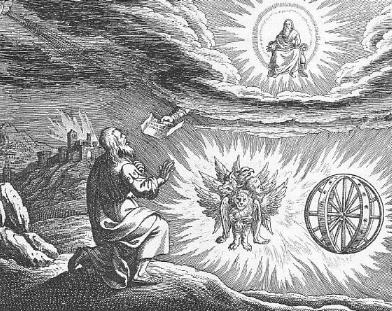
  • Ezekiel's Chariot VisionThe More You Practice Listening Prayer:–The More Visions, Dreams, Words from God, and Healings You Will Experience! “Those who are willing to be used in the gifts of the Holy Spirit must learn to listen to God” (p. 82)—here I want to personally add: in keeping with Catholic mystical theology, and the thesis of Augustin Poulain’s The Graces of Interior Prayer (1910)—the more you practice contemplation (or contemplative prayer), then the more visions and voices from God you will experience! Leanne Payne called it Listening Prayer (1994); and believed keeping a prophetic prayer journal was helpful for cultivating such experiences (and I can personally attest that in my own life: it works)!
  • Only Holy Prophets Are Worth Imitating. Holy, godly prophets are the only kind of Charismatics to imitate: “Don’t follow a person just because he has a ‘gift ministry.’ Instead look for the fruit in his life, for honesty and purity brought about by the Spirit of Truth—the Holy Spirit—and a hunger for and appreciation of God’s Word” (p. 82). [Personally, I would add here some examples of holy prophets: St. Antony (d. 356), St. Patrick (d. 460), St. Benedict (d. 543), Hildegard of Bingen (d. 1179), St. Francis of Assisi (d. 1226), St. Ignatius of Loyola (d. 1556), St. Teresa of Avila (d. 1582), St. John of the Cross (d. 1591), The Scots Worthies (1500s-1600s), John Wesley (d. 1791), Charles Finney (d. 1875), William J. Seymour (d. 1922), Smith Wigglesworth (d. 1947), Dennis Bennett (d. 1991), and David Wilkerson (d. 2011).]
  • Eagerly Desire Spiritual Gifts, But Express Them in a Decently and Orderly Way, in the Church (1 Corinthians 14). Spiritual gifts “are not merely to be tolerated, but are greatly to be desired” (p. 82):–“eagerly desire spiritual gifts” (1 Corinthians 14:1); however, “we should be forewarned against two mistakes frequently made in the past: misuse of the gifts by a lack of Scriptural order [1 Corinthians 14], and rejecting or quenching the gifts of the Spirit [1 Thessalonians 5:19]. The second mistake is often a reaction against the first one” (p. 83).
  • You Can Experience Any Spiritual Gift You Have Faith For! “In Christ you have been given all good things freely (Rom. 8:32); however, the promises of God must be appropriated by faith. The gifts will be manifested according to your faith: ‘According to your faith be it unto you’ (Matt. 9:29; Rom. 12:6). Let us manifest His gifts in faith, love, and obedience, that God’s people may be strengthened and prepared for their difficult but glorious tasks ahead” (p. 83).
Posted in Uncategorized | Leave a comment

Separation From Sin

Do not offer any part of yourself to sin as an instrument of wickedness. –Romans 6:13

Separation from sin is the practical side of holiness; if holiness can be defined as the Holy Spirit taking up residence in the Christian’s heart, regenerating him to a new life of righteousness (Romans 6:4), by faith in the atoning work of Christ on the cross:–then separation from sin is the practical outworking, both inwardly and outwardly, of that moral drive which saving faith put in the heart, “according to His power that is at work within us” (Ephesians 3:20). “Sin is the transgression of the law” of God’s Word, the Bible (1 John 3:4, KJV); therefore, to live a life that is separated from sin, is to push towards an ever more perfect obedience to God’s Word. That the Ten Commandments, the Beatitudes, the Sermon on the Mount, and all the moral commandments of Scripture, may be more conformably the rule of the Christian’s life, under the grace of the cross. “Not that I have already obtained all this, or have already arrived at my goal, but I press on to take hold of that for which Christ Jesus took hold of me” (Philippians 3:12). The Word says to all who are genuinely saved by faith in the forgiveness of sins by the cross: “Sin shall no longer be your master, because you are not under the law, but under grace” (Romans 6:14). So, the responsibility of the Christian to obey God’s law is greater, because of the grace extended to him in the cross, and of the immediacy of his conscience being cleansed by faith: “How much more, then, will the blood of Christ, who through the eternal Spirit offered Himself unblemished to God, cleanse our consciences from acts that lead to death, so that we may serve the living God!” (Hebrews 9:14). However, “how much more severely do you think someone deserves to be punished who has trampled the Son of God underfoot, who has treated as an unholy thing the blood of the covenant that sanctified them, and who has insulted the Spirit of grace?” (Hebrews 10:29). The grace of God is a responsible grace, there is personal responsibility that comes with it; it is freely given by God to man through the cross, on the condition of repentant faith (Mark 1:15). Yet this grace is not cheap, but costly—it will cost you all of your precious, lovely sins; it is not carnal Christianity, or easy-believism, whittled down to an A-B-Cs gospel tract, but demands full repentance of the life from all known sin, and a missionary zeal to “preach the Gospel to every creature!” (Mark 16:15). “The grace of God has appeared that offers salvation to all people. It teaches us to say ‘No’ to ungodliness and worldly passions, and to live self-controlled, upright and godly lives in this present age” (Titus 2:11-12). Separation from sin says, “I will set nothing wicked before my eyes” (Psalm 101:3); so whether it is a movie, or porn, or a magazine, or a book, or a music album, or any other form of recreation or evil entertainment—I trust the Holy Spirit can give a Christian the power to set nothing that is wicked in front of his eyes! In Jesus’ Name! Amen! Separation from sin takes Paul’s direction seriously: “Do not offer any part of yourself to sin as an instrument of wickedness” (Romans 6:13).

Posted in Uncategorized | Leave a comment

Contemplative Prayer Bibliography

“Mystical gold” right here! However, even the most golden works of contemplative prayer are bound to have their dross. Expect some “mystical dross” of Catholic Marianism, but probably no more than that. You will not find any Thomas Merton or Thomas Keating referred to favorably here, except perhaps in Dubay:–but even Dubay has criticized Merton for his pluralism. Thomas DubayNo centering prayer, no New Age ideas–although Aumann uses terminology like “a truly Christian gnosis” (he is not advocating Gnosticism, but using the Greek word for revelation knowledge in application to charismatic or prophetic subjects); sometimes Aumann and Dubay use the word “psychic” freely, but again, they are not using it in a New Age or spiritualist understanding. Dubay uses the phrase “centering prayer,” but uses it in application to the traditional Teresian teaching on contemplation; no New Age or pluralist Mertonism going on. Benedict GroeschelBenedict Groeschel criticizes Merton; I like Groeschel as a modern mystical theologian; he might be my favorite, because he seems to be more of a traditional Catholic.

Aumann, Jordan. Spiritual Theology. London: Continuum, 2006. Chapter 12.

Baker, Augustine. Holy Wisdom: or, Directions for the Prayer of Contemplation. Oxford: Benediction Classics, 2007. The Third Treatise, Fourth Section.

Devine, Arthur. A Manual of Mystical Theology. London: R. & T. Washbourne, 1903. Parts 1 and 3.

Dubay, Thomas. Fire Within. San Francisco, CA: Ignatius Press, 1989. Chapter 5.

—–. Prayer Primer. San Francisco, CA: Ignatius Press, 2002. Chapter 9.

—–. Contemplation: Union with God. Ignatius Press, 2006. DVD. – See Video. This video is actually more solid than Groeschel’s video.

Farges, Albert. Mystical Phenomena Compared with Their Human and Diabolical Counterfeits. Whitefish, MT: Kessinger Publishing, 2003. Part 1, Chapters 1-4.

Garrigou-Lagrange, Reginald. The Three Ages of the Interior Life. Rockford, IL: TAN Books, 1999. Part 3, Chapters 28-31.

Groeschel, Benedict. Listening at Prayer. Mahwah, NJ: Paulist Press, 1984. Chapter 6.

—–. Prayer: A Way of Life. 1991. Video, Part 1: “Listening to God.” – See Online Video 1 and Video 2

—–. A Still, Small Voice: A Practical Guide on Reported Revelations. San Francisco, CA: Ignatius Press, 1993.

—–. Religious Experience. 2003. Video on visions, God’s presence, and spiritual discernment of demonic and New Age phenomena. – See Video – Has some “mystical dross”; no sign of universalism, but from an academic or objective viewpoint, examines the “religious experiences” of both Christians and non-Christians. There are Marian visions mentioned; but also passing references to New Age figures like Evelyn Underhill or Mahatma Ghandi, or Confucius. Still a very interesting study; and the fact that its in video format is great; but I would not recommend anyone who struggles with universalism to watch the video.

Poulain, Augustin. The Graces of Interior Prayer. Whitefish, MT: Kessinger Publishing, 1996. Part 2, Chapter 4.

Tanquerey, Adolphe. The Spiritual Life. Rockford, IL: TAN Books, 2000. Book 3.

Posted in Uncategorized | Leave a comment

Top Five Books of Prophetic Gold

I’m almost finished with Robert Tuttle’s Mysticism in the Wesleyan Tradition (1989); and I believe it has really helped me to sift through the mystical garbage that pollutes a lot of charismatic books. A while back God’s voice told me to “shake the dust off my feet” with regard to an enormous catalog of prophetic ministry books that I had gathered in my study of How to Experience God (which I admit now, probably has some mystical “dross” that needs purifying). Tuttle makes the clear case that John Wesley, the founder of the Methodist Church, was not really a mystical theologian, but an ascetic Protestant, who drew his inspiration from Catholic devotional books like Thomas à Kempis’ The Imitation of Christ, Francis de Sales’ Introduction to the Devout Life, Brother Lawrence’s The Practice of the Presence of God, and The Life of Monsieur de Renty. Wesley’s interests were not very charismatic, so Tuttle argues (although he did have charismatic experiences, see Daniel Jennings’ The Supernatural Occurrences of John Wesley); Wesley’s focus was on salvation and holy living. Tuttle puts a nail in Wesley’s mystical coffin when he reveals that Wesley rejected “the mystical means of solitude, darkness, and contemplation” (p. 151). That is, Wesley rejected contemplative prayer–something that Wesley and I will have to strongly part ways on. But this man whom I have never met, and whose theology I so enjoy, has incredibly improved my sense of discernment of mystical subjects. Tuttle advances the case that Wesley went through “sifting” phases with mystical books just like myself (especially in the 1760s and 70s during his friendship with John Fletcher–pp. 138-139)! Something God led me into by experience years ago! Only now I’m finding Wesley went through the same experience; which lasted years. With his and my own combined experience, there’s been a lot of progress in sifting out the “mystical dross” (bad teaching) and preserving the “mystical gold” (good teaching) in a variety of Christian mystics, Catholic mystics, saints, and mystical theologians, and modern Pentecostal and Charismatic writers, for that matter.

At this point in my walk with Jesus, THE TOP FIVE BOOKS OF PROPHETIC GOLD, in my opinion:–that is books on charismatic gifts, prophetic ministry, and hearing the voice of God, visions, and dreams:–which have the least “mystical dross” and the most purified, refined charismatic theology available, with high ethical and Biblical standards, and high experiential and prophetic potential…

1. J. I. Packer’s Keep in Step with the Spirit (1984)
2. Wayne Grudem’s The Gift of Prophecy (1988)
3. Sam Storms’ The Beginner’s Guide to Spiritual Gifts (2002)
4. Henry and Richard Blackaby’s Hearing God’s Voice (2002)

Mystical “Dross” Which I Flatly Reject As Spiritually Harmful.
I Shake the Dust Off My Feet, In JESUS Name,
Against All Which is Ungodly In the…

Heresies Which Appear in These Mystics: Stoicism, Universalism (trinitarian also), Pantheism, Gnosticism, Marianism, Homosexuality (Henri Nouwen), Feminism, Agnosticism (William James), Materialism and Positive Confession (Word of Faith Pentecostals), Deism (Dostoyevsky), New Age ideas, and Psychic ideas.

1. Wesley’s endorsement (although reluctantly critical) of the Quietists (Madame Guyon, Michael Molinos, and François Fénelon); especially their teaching on self-annihilation and self-emptiness (which in my opinion is too similar to stoicism or Buddhist no-self, with the loss of human personality). Although, I admit some of Fénelon’s Letters have holy counsels in them. Thomas Upham in the 1800s holiness movement would amplify this Wesleyan Quietism. STOICISM–my main objection to Guyon, Molinos, Fenelon, and Upham.

2. With Wesley, I choose to reject all the Christian mystics he rejected himself (William Law (UNIVERSALISM), Theologia Germanica (PANTHEISM?), John Tauler (universalist?), Jacob Boehme (GNOSTICISM?), Meister Eckhart (pantheism?), Henry Suso (pantheism?), Jan van Ruysbroeck (pantheist and universalist?), Nicolas Malebranche (?) (Tuttle, pp. 115, 117, 77, 78, 128).

3. The dross I reject in Richard J. Foster is very much. Foster’s teachings are filled with mystical and charismatic gold; but many of the writers he quotes and recommends are mystically impure and drosslike, with New Age influences, universalist influences, or Catholic marianism influences. These dross-like “dusty” mystic authors in his otherwise golden books Celebration of Discipline (1978), Prayer (1992), Streams of Living Water (1998), and Renovaré study guide Connecting with God (2006) by Lynda Graybeal and Julia Roller:–all favorably quote the following mystical teachers I flatly reject as dirty or impure mysticism…
-Thomas Merton (UNIVERSALISM; pluralist)
-Evelyn Underhill (UNIVERSALISM; pluralist)
-Morton Kelsey (UNIVERSALISM; pluralist)
-Madame Guyon (STOICISM)
-Meister Eckhart (PANTHEISM?)
-Bernard of Clairvaux (MARIANISM)
-Agnes Sanford (UNIVERSALISM; pluralist)
-François Fénelon (STOICISM)
-M. Basil Pennington (UNIVERSALISM; centering prayer; pluralist)
-Henri Nouwen (HOMOSEXUALITY)
-C. S. Lewis (TRINITARIAN UNIVERSALISM)
-Gregory of Nyssa (UNIVERSALISM)
–Thérèse of Lisieux (MARIANISM)
-Sue Monk Kidd (FEMINISM; PANTHEISM)
-Glenn Clark (UNIVERSALISM; pluralist; Camps Farthest Out)
-Julian of Norwich (UNIVERSALISM; FEMINISM; “CHRIST AS MOTHER”–GODDESS WORSHIP)
-William James (AGNOSTICISM)
-Paul Yonggi Cho (MATERIALISM; POSITIVE CONFESSION)
-Fyodor Dostoyevsky (DEISM)

4. The dross I reject in Dallas Willard‘s Hearing God (1984) is not nearly as bad as in Foster. (And its to Willard’s credit that he never refers to Thomas Merton.)
-William Law (UNIVERSALISM)
-Michael Talbot (NEW AGE; PSYCHICISM)
-Henri Nouwen (HOMOSEXUALITY)
-Evelyn Underhill (UNIVERSALISM; pluralist)
-Madame Guyon (STOICISM)
-Meister Eckhart (PANTHEISM)
-Agnes Sanford (UNIVERSALISM)

Posted in Uncategorized | Leave a comment