The British Friend: A monthly Journal, CHIEFLY DEVOTED TO THE INTERESTS OF THE SOCIETY OF FRIENDS.
No. I. Glasgow, 1st Month, 1st, 1863. Vol. XXI.
Page 3:
THE TWELVE GATES OF HEAVEN.
John Wesley’s Dream.
“The city had twelve gates, on the east, three gates; on the north, three gates; on the south, three gates; and on the west, three gates; . . . and in the midst of the street, and on either side of the river of life, was there the tree of life, which bare twelve manner of fruits, and yielded her fruit every month: and the leaves of the tree were for the healing of the nations” (Rev. xxi. 12, 13; xxii. 2).
These words are figures, but they are figures of a great truth. They represent to us the variety, the diversity of heaven. They express in an outward picture what our Saviour said, also under a figure, though more simply, “In my Father’s house are many mansions.” We do not know whether “those that shall be saved will be few or many.” It may be that those who are able to struggle through the strait gate will be very few. It may be that the good, and the true, and the just will be in a minority in the next life, as they usually are in this life. But whether few or many, the Bible reveals to us most clearly the truth which our carnal, narrow hearts are very unwilling to receive — namely, that amongst the good, whom we hope to meet in heaven, there will be every variety of character, taste, and disposition. There is not one “mansion” there, but “many”. There is not one “gate” to heaven, but many; there are not gates only on the north, but “on the east three gates, and on the west three gates, and on the south three gates.” From opposite quarters of the theological compass, from opposite quarters of the religious world, from opposite quarters of human life and character; through di£ferent expressions of their common faith and hope, through different modes of conversion, through, different kinds of instruction and teaching, through different portions of the Holy Scriptures — will the weary travelers enter the Heavenly City, and meet each other — not without surprise — on the shores of the same river of life. And on those shores they will find a tree bearing, not the same kind of fruit always and at all times, but “twelve manner of fruits,” for every different turn of mind — for the patient sufferer, for the active servant, for the holy aud humble philosopher, for the spirits of just men now at last made perfect; and “the leaves of the tree shall be for the healing,” not of one single church or people only, not for the Scotsman or the Englishman only, but for “the healing of the nations” — the Frenchman, the German, the Italian, the Russian — for all those from where, it may be, in this world its fruits have been farthest removed, but who, nevertheless, have “hungered and thirsted after righteousness,” and who, therefore, shall be filled.”
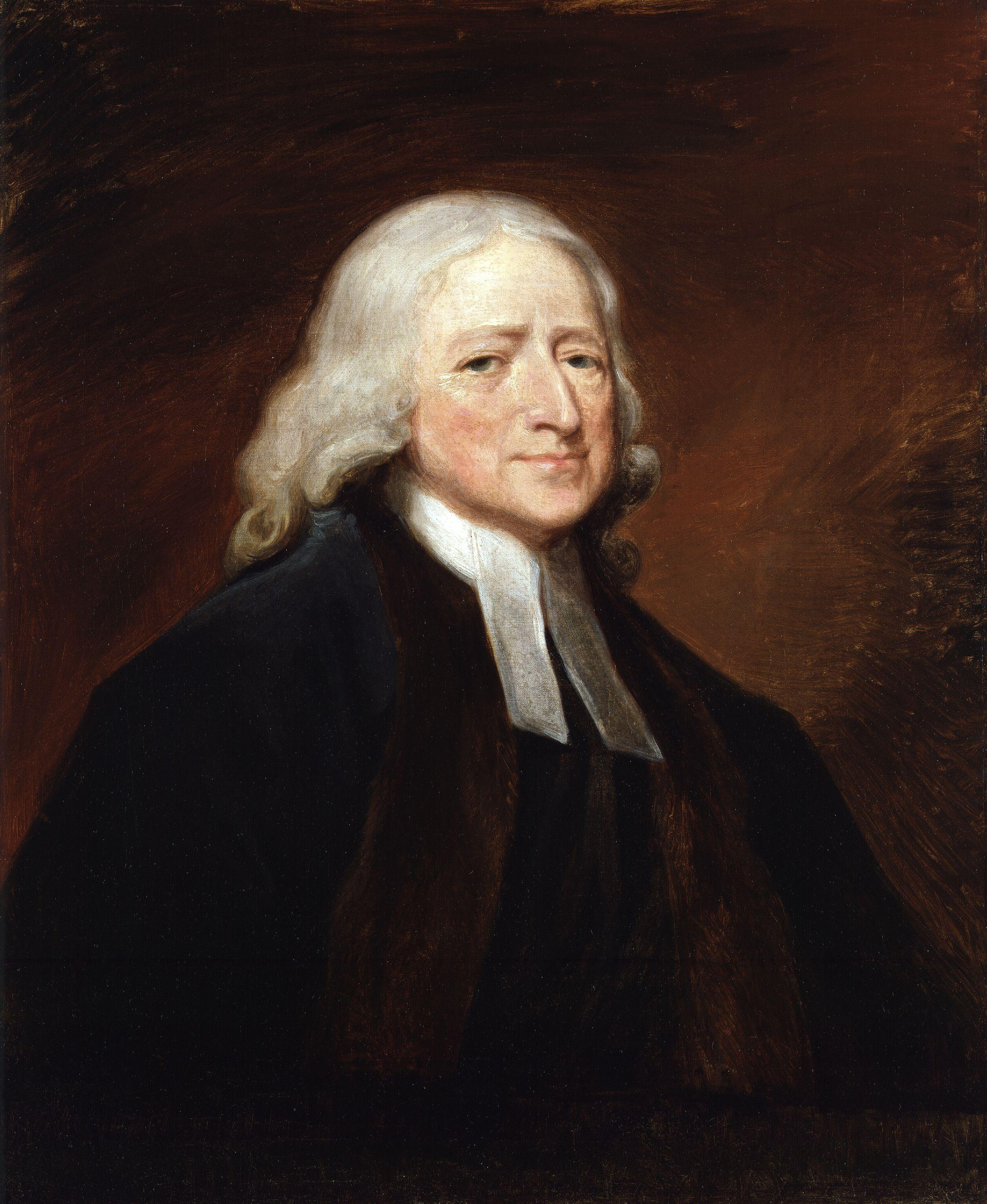
And here, again, let me tell a third tale of the dark night, which shows how the light of the other world, in this its most evangelical aspect, dawned upon the soul of a great teacher amongst ourselves. It is said that John Wesley once, in the visions of the night found himself, as he thought, at the gates of hell. He knocked, and asked who were within. “Are there any Roman Catholics here?” he asked. “Yes,” was the answer, “a great many.” “Any Church of England men?” “Yes, a great many.” “Any Presbyterians?” “Yes, a great many.” “Any Wesleyans?” “Yes, a great many.” Disappointed and dismayed, especially at the last reply, he turned his steps upwards, and found himself at the gates of Paradise, and here he repeated the same questions. “Any Wesleyans here?” “No.” “Any Presbyterians?” “No.” “Any Church of England men?” “No” “Any Roman Catholics?” “No” “Whom have you, then, here?” he asked in astonishment. “We know nothing here,” was the reply, “of any of those names that you have mentioned. The only name of which we know anything here is ‘Christian’; we are all Christians here, and of these we have a great multitude which no man can number, of all nations, and kindreds, and peoples, and tongues.”
Yes, we shall be obliged in heaven to meet with Christians, with good men, of very different opinions. Had we not better prepare for that meeting by consenting to meet with them on earth? We shall be obliged there to make little of our differences, to put up with diversity of opinions, and ranks, and pursuits. Had we not better moderate our differences here, and bear and forbear with these diversities in this world? Is it not a waste of time to try to force all our fellowtravellers through our own gate now, when we shall be obliged hereafter to welcome those who enter from the western gate, though we have entered from the eastern, and those who have entered from the southern gate, though we have entered from the northern?
How wide the gates of heaven stand open — how many different characters will be found amongst the elect, will best appear if we read these passages: —
Ps. lxxvii. 3-7; cxix. 96; Isa. lx. 11; Luke xiii. 28, 30; xiv. 22, 23; xv. 7; xxiii. 42, 43; John x. 16; xiv. 1, 2; Rom. ii. 14-16; xiv. 1-8; 1 Cor. xii. 14-21; Rev. vii. 9; Xii. 24, 25. — Good Words.
I’ve been reading a great work of Reformed scholarship lately, entitled Hell Under Fire edited by Christopher Morgan and Robert Peterson. Chapter 2 by Daniel Block is titled “The Old Testament on Hell.” He opens his chapter with, “What does the Old Testament teach about Hell? The simple answer to this question is, “Very little.” He is right; but in another sense, he provides more than enough pointers to Scriptures that, if you pursue them in deeper study, you can pretty much get a clear vision of how the Old Testament prophets and Jews viewed Hell, or the underworld. It may come as a surprise to many Christians, that there are very little references to the fire of Hell in the Old Testament. In total, there are probably no more than 7 verses that envision Hell fire, and these are included in prophetic poems–so you really have to search for them, and interpret them that way (see Deut. 32:22; Job 18:15; 31:12; Ps. 11:6; 37:20; 140:10; Isa. 66:24). Its not really until you get to the New Testament that visions of Hell fire start to appear with striking imagery and literal clearness, without much need for interpretation (see Matt. 5:22; 18:8-9; 25:41; Mark 9:43-48; Luke 3:9, 17; Jas. 3:6; Rev. 9:2; 14:10-11; 20:10).
Over the course of world history, God chose the Jews to be His covenant-keeping people; and also the people from which He would choose prophets or visionaries who would convey divine revelations to the people. These prophets would often write their visions down on scrolls in the form of poems; rather than simply journal out the dream or vision experience–they interpreted their mystical symbolism, and put their prophecies and revelations into lyrical form, whether by poetry or song. The Book of Psalms has examples of songs with visionary or prophetic dream content in them, for example Psalm 22, which envisions Jesus on the cross.
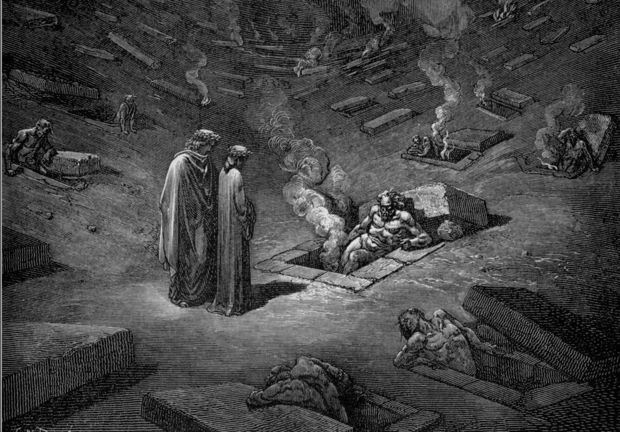
In Dante’s Inferno X, the part on the Sixth Circle of Hell (Heresy), Farinata degli Uberti is depicted in a grave pit. Gustave Dore’s woodcut pictures of this scene are probably the closest artistic rendition of the Old Testament vision of the Grave.
1520 B.C. – Job’s Vision of the Grave (Job 10:19-22). The Grave is a deep land of shadows and darkness. It is the Valley of the Shadow of Death. It is a depressing place of no return; and a place of disorder.
985 B.C. – David’s Vision of the Grave (Psalm 88:3-7). Those who go down to the Pit have no strength; and they lie in their graves in beds. They are forgotten by God; only His wrath abides on them. It is a dark place.
701 B.C. – Isaiah’s 1st Vision of the Grave (Isaiah 14:9-20). The kings of pagan empires come to greet the arrival of the king of Babylon upon his death and entrance into the Grave. In this vision, they are seen rising from their “thrones” in the Grave. They disgrace him by reminding him of everything he has lost, how weak he now is, and that he won’t even get to lie down on his own bed, like the other pagan kings in the Grave can. Instead, he will go to the lowest pit: as a rotting corpse, lying on stones, and eaten by maggots forever.
680 B.C. – Isaiah’s 2nd Vision of the Grave (Isaiah 66:24). There are corpses of men who rebelled against the law of God. For ever and ever they are eaten by worms and burned alive in fire!
580 B.C. – Ezekiel’s Vision of the Grave (Ezekiel 32:17-32). Deep down below the Earth, there are massive cemeteries for the kings and armies of pagan empires; they are there not only because they were pagans, but because they ruled by terror: Assyria, Elam, Meshech and Tubal, Edom, Sidon, and Egypt. Each of their kings’ graves are in the center of their armies’ graves. They lie on coffin-like beds, but remain as souls fully conscious and living. They lie in grave pits, but are not buried by soil. The reason: “The punishment for their sins rested on their bones” (32:27).
530 B.C. – Daniel’s Vision of the Grave (Daniel 12:2). The wicked, whose names are not found written in the Book of Life, will after dying, awake to shame and everlasting contempt.
_____________
The Biblical, Literal, Historical, Traditional View
Buis, Harry. The Doctrine of Eternal Punishment. Grand Rapids, MI: Baker, 1957.
Bunyan, John. Sighs from Hell. Edited by Dr. Don Kistler. Orlando, FL: The Northampton Press, 2011.
Edwards, Jonathan. The Wrath of Almighty God: Jonathan Edwards on God’s Judgment Against Sinners. Edited by Dr. Don Kistler. Morgan, PA: Soli Deo Gloria Publications, 1996.
—. Wrath Against the Day of Wrath. Edited by Dr. Don Kistler. Orlando, FL: The Northampton Press, 2016.
—. The Torments of Hell: Jonathan Edwards on Eternal Damnation. Edited by William Nichols. Ames, IA: International Outreach, 2006.
Gerstner, John. Jonathan Edwards on Heaven and Hell. Grand Rapids, MI: Baker, 1980.
Morgan, Christopher. Jonathan Edwards and Hell. Geanies House, UK: Christian Focus, 2004.
Morgan, Christopher, and Robert Peterson, eds. Hell Under Fire. Grand Rapids, MI: Zondervan, 2004.
—, eds. Is Hell for Real or Does Everyone Go to Heaven? Grand Rapids, MI: Zondervan, 2011.
Peterson, Robert. Hell on Trial: The Case for Eternal Punishment. Phillipsburg, NJ: P&R Publishing, 1995.
Shedd, W. G. T. The Doctrine of Endless Punishment. Edinburgh: The Banner of Truth Trust, 1986.
Strachan, Owen, and Doug Sweeney. Jonathan Edwards on Heaven and Hell. Chicago: Moody Press, 2010.
Vincent, Thomas. Fire and Brimstone. Morgan, PA: Soli Deo Gloria Publications, 1999.
Walvoord, John. Four Views on Hell. “The Literal View.” Edited by William Crockett. Grand Rapids, MI: Zondervan, 1992.
Personal Visions of the Literal Hell
Baxter, Mary K. A Divine Revelation of Hell. New Kensington, PA: Whitaker House, 1993.
Bunyan, John. Visions of Heaven and Hell. New Kensington, PA: Whitaker House, 1998.
Charles, R. H., trans. The Book of Enoch. Mineola, NY: Dover Publications, 2007. Also known as 1 Enoch, there is probably no other book in ancient Jewish literature that had such a profound visionary influence on Jesus and the apostles’ views of Hell. Although this book is not considered inspired Scripture, to some Christian groups it has been considered Scripture. It is even quoted in the New Testament (Jude 1:14-15=1 Enoch 1:9 | 1 Peter 3:19-20=1 Enoch 21:6 | 2 Peter 2:4-5=1 Enoch 10:15-16 | Revelation 20:12=1 Enoch 108:3 | Luke 6:24-26=1 Enoch 94:6-8); and I think, at least, some of its visions should be taken seriously. If nothing else but as an inspirational book, like Bill Wiese’s 23 Minutes in Hell.
Gardiner, Elizabeth, ed. Visions of Heaven and Hell Before Dante. New York: Italica Press, 1989.
Lord, Bob and Penny. Visions of Heaven, Hell, and Purgatory. Journeys of Faith, 1996. Read with caution against Catholic dogmas of Mary, prayer to saints, or Purgatory–all doctrines which I reject on a Biblical and theological basis as an Evangelical. However, some of the saints’ visions of Heaven and Hell could be real.
Wiese, Bill. 23 Minutes in Hell. Lake Mary, FL: Charisma House, 2006.
Gasping for breath, sulfuric gases, thick smoke, its hard to breathe. Millions screaming, millions burning, demons in power–tormenting others. You want die, but you cannot, and know that it will be forever. It goes on, because in life you rebelled against the Law and Gospel.
This is reality now for millions in Hell. They are under the eternal wrath of God; it is their portion to suffer forever in conscious torment. Punishment for their sins, and according to the measure they sinned. Essentially it boils down to this: in this life, up here on the Earth where they once lived–God gave them freedom to choose between good and evil. His Spirit was ever present in times of need, to give them grace and perseverance, to follow the straight and narrow way that leads to life by Jesus. But these damned, wretched, doomed, children of the devil were sentenced to Hell after they met the Judge of all the Earth (Hebrews 9:27). He rendered His judgment according to what was right and good, according to His all-knowing and all-righteous judgment: His name is Jesus Christ, the Son of God (Romans 2:16).
These doomed people have several things in common.
Firstly, God calls them “the wicked.” This is because they are entirely evil in every sense. As those who practice Wicca, which is the origin of the word wicked, they are in total rebellion against God, as witchcraft certainly is a rebellious sin. “Rebellion is as the sin of witchcraft” (1 Samuel 15:23). So the wicked, or Wiccans, for we may lump them all together, whether they practiced the sin of witchcraft in the blatant sense of the occult, or not–are all the same thrown into the Hell fire: because of REBELLION. “The cowardly, unbelieving, abominable, murderers, sexually immoral, sorcerers, idolaters, and all liars shall have their part in the lake which burns with fire and brimstone” (Revelation 21:8). Hence, all who are wicked are guilty of witchcraft in one way or another; or in the general sense, rebellion against the law of God; which is SELF-WILL. They are lawless, law-hating people, who continually opposed the notion of obedience to the holy commandments of God. With or without religion, they always managed to reason themselves out of living a devout and holy life.
Secondly, they rejected the Gospel of Jesus Christ. Whether totally or in part, they reasoned themselves out of a full acceptance of the message of salvation as it is in Christ. The Apostle Paul said that this fiery punishment will be rendered to all who “do not know God, and on those who do not obey the Gospel of our Lord Jesus Christ” (2 Thessalonians 1:8). For this reason they are not only wicked in the sense of rebellion, but they are considered “unbelievers,” because they are NOT WILLING TO BELIEVE. Even if they are presented with ever so many convincing arguments in favor of accepting the Gospel of Christ; even if they have no questions or doubts or excuses whatsoever; even if the hard doctrines of evil, pain and suffering, and Hell are completely understandable to them; even if Darwinism seems absurd and creation reasonable; even if the Bible seems to them completely able to stand up to the scrutiny and criticism of skeptics–even if they have no reason whatsoever to be non-Christians: they have this one thing left:–THEY DON’T WANT TO BELIEVE IN JESUS, because if they did, then they would have to live by faith in Him, and that would require repentance, which means giving up their past sins, and resisting temptations for their rest of their lives. But they love their sins, so they instead choose against believing in Christ (hence they are termed “un-believers” not doubters), and sink back into the darkness, and listen to the arguments of anti-Christian skeptics, and comfort themselves with their rebellious anti-Christian rhetoric, enjoying their sinful pleasures all the way to Hell. And if they do not take the route of secular or agnostic unbelief; then they will practice their unbelief under the guise of religious formality: “having a form of godliness but denying its power” (2 Timothy 3:5). They will talk of the love and grace and forgiveness of God, but not live righteously; they will go to church, and do various outward religious actions, but they do not live in a continual state of righteousness in their hearts before God by faith; what really matters to them is their pet sins, whether it be of money, power, sex, drunkenness, etc. However, “he who does not believe the Son shall not see life, but the wrath of God abides on him” (John 3:36). Hell is the place where the wrath of God abides on them forever; and where all His power is exerted against His enemies with fierce revenge. “Beloved, do not avenge yourselves, but rather give place to wrath; for it is written, ‘Vengeance is Mine, I will repay,’ says the Lord” (Romans 12:19). It is also the place where God remembers all the persecutions of godly Christian saints on the Earth, and how harshly the wicked treated them for their faith in Christ. In Hell, the mighty hand of God pulverizes the wicked over and over in fire, forever and ever. He remembers all the times they persecuted true Christians, His dear children; and now, God persecutes the wicked without mercy. The time for mercy has passed for them. In Hell, God gets payback at those who rejected His law, rejected what His Son did on the cross, at those who blasphemed His Word, and those who persecuted the saints of God. Over and over He extended His mercy and Gospel graces to them over the course of their lives; and over and over they rejected Christ–but in Hell, Christ has rejected them; and that is, forever. “The smoke of their torment ascends forever and ever; and they have no rest day or night” (Revelation 14:11). There is no more hope for the damned in Hell.
Thirdly, the wicked are eternally punished with immense torture from the hand of God. There is no question that devils torment the wicked in Hell: “His master was angry, and delivered him to the torturers until he should pay all that was due to Him” (Matthew 18:34). A lifetime of sin and rebellion and unbelief merits an eternity of torment; because the righteous shall live by faith, but not the wicked (Romans 1:17). The wicked do not live by faith, do not trust God, and do not obey the Gospel. So, in Hell they arepulverized by the angry hand of God forever, and rightly so. He gave them their chances to repent and believe over and over and over and over and over; but His “Spirit shall not strive with man forever” (Genesis 6:3); there comes a time when their time runs out: the moment of death; it is then that enough is enough; they meet their God for a brief moment in judgment, and then: “The wicked shall be turned into Hell, and all the nations that forget God” (Psalm 9:17). God has them thrown into Hell (Matthew 18:8-9); and after this happens, they enter that dark land with its glowing fire pits, and are thrown repeatedly into them by devils, except for brief intermissions to be cut into pieces, regenerated, and thrown back in the fire, only to weep and grind their teeth without end (Matthew 24:51); there is no rest from the torments, and it is impossible for them to fall asleep even though all their strength is gone (Revelation 14:11). Not only are they tormented by every device of the devil, and they burn in the fire; but coals of burning sulfur, or brimstone, rain down on their heads, just like it did with the people of Sodom and Gomorrah (Psalm 11:6). Jesus said, “These will go away into everlasting punishment” (Matthew 25:46). Amen and amen.
In the excellent booklet Is Hell for Real or Does Everyone Go to Heaven? (2011), editors Christopher Morgan and Robert Peterson provide the most easily accessible introduction to the Biblical revelation of Hell. Chapters 2 and 3 especially provide every significant Biblical passage on Hell. It may be surprising to find at first, that Jesus Christ is the primary source for our visions of Hell: such as fire, worms, destruction of the soul and body, and eternal punishment. If anyone believed in a real Hell, it was Jesus. What I intend to accomplish in this article, is to list all of the most significant Biblical passages on Hell presented in these chapters. Seeing that this book is a condensed version of Hell Under Fire (2004), it seems that the verses they have reiterated for this booklet must be seen as essential, otherwise they would have left them out. However, if you want to go more in-depth in searching the Scriptures for passages on Hell, then see the “Scripture Index” on page 245 in Hell Under Fire and also the “Appendix A: Scripture Index” on page 137 in Bill Wiese’s 23 Minutes in Hell (2006). I will mainly use the NKJV: OLD TESTAMENT PASSAGES
Deuteronomy 32:35-36: “‘Vengeance is Mine, and recompense; their foot shall slip in due time; for the day of their calamity is at hand, and the things to come hasten upon them.’ For the Lord will judge His people and have compassion on His servants, when He sees that their power is gone, and there is no one remaining, bond or free.” [Note: this was the opening text of Jonathan Edwards’ famous sermon: “Sinners in the Hands of an Angry God”, 1741].
Isaiah 66:24: “They shall go forth and look upon the corpses of the men who have transgressed against Me. For their worm does not die, and their fire is not quenched. They shall be an abhorrence to all flesh.”
Daniel 12:2: “Many of those who sleep in the dust of the Earth shall awake, some to everlasting life, some to shame and everlasting contempt.”
THE WORDS OF CHRIST
Matthew 5:22: “Whoever says, ‘You fool!’ shall be in danger of Hell fire.”
Matthew 5:28-30: “Whoever looks at a woman to lust for her has already committed adultery with her in his heart. If your right eye causes you to sin, pluck it out and cast it from you; for it is more profitable for you that one of your members perish, than for your whole body to be cast into Hell. And if your right hand causes you to sin, cut it off and cast it from you; for it is more profitable for you that one of your members perish, than for your whole body to be cast into Hell.”
Matthew 7:13-14: “Enter by the narrow gate; for wide is the gate and broad is the way that leads to destruction, and there are many who go in by it. Because narrow is the gate and difficult is the way which leads to life, and there are few who find it.”
Matthew 10:28: “Do not fear those who kill the body but cannot kill the soul. But rather fear Him who is able to destroy both soul and body in Hell.”
Matthew 18:8-9: “If your hand or foot causes you to sin, cut it off and cast it from you. It is better for you to enter into life lame or maimed, rather than having two hands or two feet, to be cast into the everlasting fire. And if your eye causes you to sin, pluck it out and cast it from you. It is better for you to enter into life with one eye, rather than having two eyes, to be cast into Hell fire.”
Matthew 23:15: “Woe to you, scribes and Pharisees, hypocrites! For you travel land and sea to win one proselyte, and when he is won, you make him twice as much a son of Hell as yourselves!”
Matthew 25:46: “These will go away into everlasting punishment, but the righteous into eternal life.” [The NIV says “eternal punishment”].
Mark 9:42-50:
Whoever causes one of these little ones who believe in Me to stumble, it would be better for him if a millstone were hung around his neck, and he were thrown into the sea. If your hand causes you to sin, cut it off. It is better for you to enter into life maimed, rather than having two hands, to go to Hell, into the fire that shall never be quenched–where
“Their worm does not die And the fire is not quenched.”
And if your foot causes you to sin, cut it off. It is better for you to enter life lame, rather than having two feet, to be cast into Hell, into the fire that shall never be quenched–where
“Their worm does not die And the fire is not quenched.”
And if your eye causes you to sin, pluck it out. It is better for you to enter the kingdom of God with one eye, rather than having two eyes, to be cast into Hell fire–where
“Their worm does not die And the fire is not quenched.”
For everyone will be seasoned with fire, and every sacrifice will be seasoned with salt. Salt is good, but if the salt loses its flavor, how will you season it? Have salt in yourselves, and have peace with one another.
Luke 16:19-31, NIV:
The Rich Man and Lazarus
There was a rich man who was dressed in purple and fine linen and lived in luxury every day. At his gate was laid a beggar named Lazarus, covered with sores and longing to eat what fell from the rich man’s table. Even the dogs came and licked his sores. The time came when the beggar died and the angels carried him to Abraham’s side. The rich man also died and was buried. In Hell, where he was in torment, he looked up and saw Abraham far away, with Lazarus by his side. So he called to him, “Father Abraham, have pity on me and send Lazarus to dip the tip of his finger in water and cool my tongue, because I am in agony in this fire.” But Abraham replied, “Son, remember that in your lifetime you received your good things, while Lazarus received bad things, but now he is comforted here and you are in agony. And besides all this, between us and you a great chasm has been fixed, so that those who want to go from here to you cannot, nor can anyone cross over from there to us.” He answered, “Then I beg you, father, send Lazarus to my father’s house, for I have five brothers. Let him warn them, so that they will not also come to this place of torment.” Abraham replied, “They have Moses and the prophets; let them listen to them.” “No, father Abraham,” he said, “but if someone from the dead goes to them, they will repent.” He said to him, “If they do not listen to Moses and the prophets, they will not be convinced even if someone rises from the dead.” [Note: this passage of Scripture is so important to the traditional vision of Hell that John Bunyan’s Sighs from Hell is based on it; see also Dr. Don Kistler’s sermon: “The Torments of the Damned in Hell” – July 25, 2010].
John 3:36: “He who believes in the Son has everlasting life; and he who does not believe the Son shall not see life, but the wrath of God abides on him.”
John 5:28-29: “The hour is coming in which all who are in the graves will hear His voice and come forth–those who have done good, to the resurrection of life, and those who have done evil, to the resurrection of condemnation.”
THE WORDS OF THE APOSTLES
Paul
2 Thessalonians 1:6-9: “It is a righteous thing with God to repay with tribulation those who trouble you, and to give you who are troubled rest with us when the Lord Jesus is revealed from Heaven with His mighty angels, in flaming fire taking vengeance on those who do not know God, and on those who do not obey the Gospel of our Lord Jesus Christ. These shall be punished with everlasting destruction from the presence of the Lord and from the glory of His power.”
Hebrews 6:1-3: “Leaving the discussion of the elementary principles of Christ, let us go on to perfection, not laying again the foundation of repentance from dead works and of faith toward God, the doctrine of baptisms, of laying on of hands, of resurrection of the dead, and of eternal judgment. And this we will do if God permits.”
Hebrews 10:26-31: “If we sin willfully after we have received the knowledge of the truth, there no longer remains a sacrifice for sins, but a certain fearful expectation of judgment, and fiery indignation which will devour the adversaries. Anyone who has rejected Moses’ law dies without mercy on the testimony of two or three witnesses. Of how much worse punishment, do you suppose, will he be thought worthy who has trampled the Son of God underfoot, counted the blood of the covenant by which he was sanctified a common thing, and insulted the Spirit of grace? For we know Him who said, ‘Vengeance is Mine, I will repay,’ says the Lord. And again, ‘The Lord will judge His people.’ It is a fearful thing to fall into the hands of the living God.”
James
James 4:12: “There is one Lawgiver, who is able to save and to destroy.”
James 5:1-5: “Come now, you rich, weep and howl for your miseries that are coming upon you! Your riches are corrupted, and your garments are moth-eaten. Your gold and silver are corroded, and their corrosion will be a witness against you and will eat your flesh like fire. You have heaped up treasure in the last days. Indeed the wages of the laborers who mowed your fields, which you kept back by fraud, cry out; and the cries of the reapers have reached the ears of the Lord of Sabaoth. You have lived on the Earth in pleasure and luxury; you have fattened your hearts as in a day of slaughter.”
Peter
2 Peter 2:1-17:
False Teaching and False Teachers
1But there were also false prophets among the people, even as there will be false teachers among you, who will secretly bring in destructive heresies, even denying the Lord who bought them, and bring on themselves swift destruction. 2And many will follow their destructive ways, because of whom the way of truth will be blasphemed. 3By covetousness they will exploit you with deceptive words; for a long time their judgment has not been idle, and their destruction does not slumber.
Doom of False Teachers
4 For if God did not spare the angels who sinned, but cast them down to Hell and delivered them into chains of darkness, to be reserved for judgment; 5and did not spare the ancient world, but saved Noah, one of eight people, a preacher of righteousness, bringing in the flood on the world of the ungodly; 6and turning the cities of Sodom and Gomorrah into ashes, condemned them to destruction, making them an example to those who afterward would live ungodly; 7and delivered righteous Lot, who was oppressed by the filthy conduct of the wicked 8(for that righteous man, dwelling among them, tormented his righteous soul from day to day by seeing and hearing their lawless deeds)–9then the Lord knows how to deliver the godly out of temptations and to reserve the unjust under punishment for the Day of Judgment, 10and especially those who walk according to the flesh in the lust of uncleanness and despise authority. They are presumptuous, self-willed. They are not afraid to speak evil of dignitaries, 11whereas angels, who are greater in power and might, do not bring a reviling accusation against them before the Lord.
Depravity of False Teachers
12But these, like natural brute beasts made to be caught and destroyed, speak evil of the things they do not understand, and will utterly perish in their own corruption, 13and will receive the wages of unrighteousness, as those who count it pleasure to carouse in the daytime. They are spots and blemishes, carousing in their own deceptions while they feast with you, 14having eyes full of adultery and that cannot cease from sin, enticing unstable souls. They have a heart trained in covetous practices, and are accursed children. 15They have forsaken the right way and gone astray, following the way of Balaam the son of Beor, who loved the wages of unrighteousness; 16but he was rebuked for his iniquity: a dumb donkey speaking with a man’s voice restrained the madness of the prophet. 17These are wells without water, clouds carried by a tempest, for whom is reserved the blackness of darkness forever.
Jude
Maintain Your Life with God
1 Jude, a bondservant of Jesus Christ, and brother of James,
To those who are called, sanctified by God the Father, and preserved in Jesus Christ:
2Mercy, peace, and love be multiplied to you.
Contend for the Faith
3 Beloved, while I was very diligent to write to you concerning our common salvation, I found it necessary to write to you exhorting you to contend earnestly for the faith which was once for all delivered to the saints. 4For certain men have crept in unnoticed, who long ago were marked out for this condemnation, ungodly men, who turn the grace of our God into lewdness and deny the only Lord God and our Lord Jesus Christ.
Old and New Apostates
5 But I want to remind you, though you once knew this, that the Lord, having saved the people out of the land of Egypt, afterward destroyed those who did not believe. 6And the angels who did not keep their proper domain, but left their own abode, He has reserved in everlasting chains under darkness for the judgment of the great day; 7as Sodom and Gomorrah, and the cities around them in a similar manner to these, having given themselves over to sexual immorality and gone after strange flesh, are set forth as an example, suffering the vengeance of eternal fire. 8Likewise also these dreamers defile the flesh, reject authority, and speak evil of dignitaries. 9Yet Michael the archangel, in contending with the devil, when he disputed about the body of Moses, dared not bring against him a reviling accusation, but said, “The Lord rebuke you!” 10But these speak evil of whatever they do not know; and whatever they know naturally, like brute beasts, in these things they corrupt themselves. 11Woe to them! For they have gone in the way of Cain, have run greedily in the error of Balaam for profit, and perished in the rebellion of Korah.
Apostates Depraved and Doomed
12 These are spots in your love feasts, while they feast with you without fear, serving only themselves. They are clouds without water, carried about by the winds; late autumn trees without fruit, twice dead, pulled up by the roots; 13raging waves of the sea, foaming up their own shame; wandering stars for whom is reserved the blackness of darkness forever. 14Now Enoch, the seventh from Adam, prophesied about these men also, saying, “Behold, the Lord comes with ten thousands of His saints, 15to execute judgment on all, to convict all who are ungodly among them of all their ungodly deeds which they have committed in an ungodly way, and of all the harsh things which ungodly sinners have spoken against Him.”
Apostates Predicted
16 These are grumblers, complainers, walking according to their own lusts; and they mouth great swelling words, flattering people to gain advantage. 17But you, beloved, remember the words which were spoken before by the apostles of our Lord Jesus Christ: 18how they told you that there would be mockers in the last time who would walk according to their own ungodly lusts. 19These are sensual persons, who cause divisions, not having the Spirit.
Maintain Your Life with God
20 But you, beloved, building yourselves up on your most holy faith, praying in the Holy Spirit, 21keep yourselves in the love of God, looking for the mercy of our Lord Jesus Christ unto eternal life. 22And on some have compassion, making a distinction; 23but others save with fear, pulling them out of the fire, hating even the garment defiled by the flesh.
Glory to God
24 Now to Him who is able to keep you from stumbling, And to present you faultless Before the presence of His glory with exceeding joy, 25To God our Savior, Who alone is wise, Be glory and majesty, Dominion and power, Both now and forever. Amen.
John
Revelation 14:9-11: “If anyone worships the beast and his image, and receives his mark on his forehead or on his hand, he himself shall also drink of the wine of the wrath of God, which is poured out full strength into the cup of His indignation. He shall be tormented with fire and brimstone in the presence of the holy angels and in the presence of the Lamb. And the smoke of their torment ascends forever and ever; and they have no rest day or night, who worship the beast and his image, and whoever receives the mark of his name.”
Revelation 20:10-15: “The devil, who deceived them, was cast into the lake of fire and brimstone where the beast and the false prophet are. And they will be tormented day and night forever and ever. Then I saw a great white throne and Him who sat on it, from whose face the Earth and the heaven fled away. And there was found no place for them. And I saw the dead, small and great, standing before God, and books were opened. And another book was opened, which is the Book of Life. And the dead were judged according to their works, by the things which were written in the books. The sea gave up the dead who were in it, and Death and [Hell] delivered up the dead who were in them. And they were judged, each one according to his works. Then Death and [Hell] were cast into the lake of fire. This is the second death. And anyone not found written in the Book of Life was cast into the lake of fire.” _______________
HELL BIBLIOGRAPHY
Baxter, Mary K. A Divine Revelation of Hell. New Kensington, PA: Whitaker House, 1993.
Bunyan, John. Sighs from Hell. Edited by Don Kistler. Orlando, FL: The Northampton Press, 2011.
Edwards, Jonathan. The Wrath of Almighty God: Jonathan Edwards on God’s Judgment Against Sinners. Edited by Don Kistler. Morgan, PA: Soli Deo Gloria Publications, 1996. Sermons on Hell.
——–. The Torments of Hell: Jonathan Edwards on Eternal Damnation. Edited by William Nichols. Ames, IA: International Outreach, 2006. Sermons on Hell.
Gerstner, John. Jonathan Edwards on Heaven and Hell. Grand Rapids, MI: Baker, 1980.
Morgan, Christopher W., and Robert A. Peterson, eds. Hell Under Fire. Grand Rapids, MI: Zondervan, 2004.
——–. Is Hell for Real or Does Everyone Go to Heaven? Grand Rapids, MI: Zondervan, 2011.
Shedd, W. G. T. The Doctrine of Endless Punishment. Carlisle, PA: The Banner of Truth Trust, 1990.
Stoddard, Solomon. The Fear of Hell Restrains Men From Sin. Morgan, PA: Soli Deo Gloria Publications, 2003.
Strachan, Owen, and Doug Sweeney. Jonathan Edwards on Heaven and Hell. Chicago: Moody Press, 2010.
Vincent, Thomas. Fire and Brimstone. Morgan, PA: Soli Deo Gloria Publications, 1999.
Wiese, Bill. 23 Minutes in Hell. Lake Mary, FL: Charisma House, 2006.
Jeff Doles’ Miracles and Manifestations (1550-2001)
Eddie Hyatt’s 2000 Years of Charismatic Christianity (1550-2001)
Yves Congar’s I Believe in the Holy Spirit (1550-2001)
Heribert Mühlen’s A Charismatic Theology (along with Congar, considered 2nd greatest pneumatology)
Stanley Burgess’ The Holy Spirit: Medieval Roman Catholic and Reformation Traditions, vol. 3 (1550-2001)
Alasdair Heron’s The Holy Spirit (A Brief 2000 Year Survey of Pneumatology)
Kilian McDonnell and George Montague’s Christian Initiation and Baptism in the Holy Spirit (1st-8th centuries; “charisms” or miraculous gifts; Catholic Charismatic)
James Arraj’s From St. John of the Cross to Us (1591-2001)—Catholic mystical theology
Vinson Synan’s The Holiness-Pentecostal Tradition (1867-2001)
—Holiness, Pentecostals, Charismatics, Third Wave
Bill Jackson’s The Quest for the Radical Middle—Vineyard, IHOP, Toronto Airport
Julia Loren’s Shifting Shadows of Supernatural Power—Prophetic Movement
Based on Robert Culpepper’s Evaluating the Charismatic Movement, Chapter 2: “Historical Background”:
3. John Wesley (d. 1791; Methodist founder)—The Supernatural Occurrences
4. Charles Finney (d. 1875; evangelist, revivalist)—The Supernatural Occurrences
5. William J. Seymour (d. 1922; Pentecostal founder)—Vinson Synan’s William J. Seymour
6. John Wimber (d. 1997; Vineyard founder)—Carol Wimber’s The Way It Was
1. Apostle Peter (d. 67) – Only the foundation of his house is shown. Archaeologists calculate that his total house size was a whopping 27 square feet! In modern RE/MAX real estate, a house of that size might cost about $26,000: the value of a small vacant lot.
2. Martin Luther (d. 1546) – This is his “death house” which he died in; this would have been the house he would have lived in with a clear conscience toward God. Looks about 2,000 square feet.
3. John Bunyan (d. 1688) – Wrote Pilgrim’s Progress and many Puritan books; he lived in a 2 bedroom house; which, if judging by the picture, looks no larger than 1,400 square feet?
4. Richard Baxter (d. 1691) – Wrote A Call to the Unconverted; The Reformed Pastor, etc…I don’t know, looks like a 1,000 square foot house?
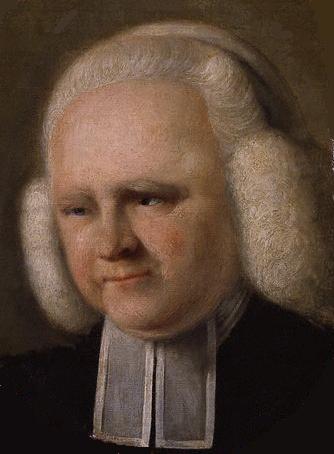
5. George Whitefield (d. 1770) – Caused the Great Awakening in America; street preacher. Only the Old Bell Inn, his birthplace, is shown. 1,500 square feet?
6. John Wesley (d. 1791) – Founder of the Methodist Episcopal Church; street preacher. 2,200 square feet?
7. Charles Finney (d. 1875) – Leader of the Second Great Awakening; his house used to be on the location of Finney Memorial Chapel. If we were to assume his house was the same width as the chapel (165 feet); and if it were the average height of most one-story houses (20 feet or so); then Finney’s house might have been around 3,300 square feet or less. However, it is possible his house was more around the 2,000s square feet, because most houses are not 165 feet wide.
8. Leonard Ravenhill (d. 1994) – Holiness evangelist and revivalist; in Mack Tomlinson’s In Light of Eternity: The Life of Leonard Ravenhill, there are some pictures of Ravenhill at his house in Lindale, Texas. The clearest shot is from page 459: it was a 2 bedroom ranch, with a small satellite dish on the top, a wooden fence, a small backyard, a woodshed, and a carport; he also had the garage converted into a study room. No more than 2,000 square feet or so. There was also a normally sized backyard; and a Cadillac car.
At this time, I am not able to post the picture from the book, but the type of house similar to the one found here:
—–
UPDATE: 11/30/14
I have reviewed the property size and relative value in American dollars of various saints: the Apostle Peter, Martin Luther, John Bunyan, Richard Baxter, George Whitefield, and John Wesley. Surely these men made it to Heaven! And surely these preachers of righteousness did not consider themselves to be ostentatious, greedy, lovers of money, or opulent, luxury-loving house-worshiping American dream home idolators. They saw themselves as living in modest houses that met their practical living needs. Luther and Bunyan we know were family men, had wives and children; and lived in 2-3 bedroom houses, ranging from about 1,500-2,000 square feet. Follow their examples; imitate them as they imitate Christ! (1 Corinthians 11:1); and you will think about managing your personal finances in a more Biblical and godly manner. In a day and time when churchgoing Christians in middle class America have an almost insatiable thirst for $500,000 – $1 million LAVISH, ELABORATE, EXTRAVAGANT, COSTLY, POSH, OPULENT, LUXURY HOMES, acquired by 25-year mortgages:–it may be encouraging for the faithful pilgrim to know what his economic limitations and financial goals ought to be. It should not be a house and car only; college, insurance, and retirement planning. There is also a very strong need for EVANGELISM and CHARITY to the poor; both of which require lots of money…which could be used, if you opt out of the upper middle class lifestyle of living in a mansion. In real estate, houses cost different based on the quality of the house. If you wanted a quality Luther or Bunyan-sized house, a reasonable cost would be around $100,000 or possibly less.
Benne, Robert, and Philip Hefner. Defining America: A Christian Critique of the American Dream. Minneapolis, MN: Fortress Press, 1974.
Clouse, Robert. Wealth and Poverty: Four Christian Views of Economics. Downers Grove, IL: InterVarsity Press, 1984. William E. Diehl (Evangelical Lutheran Church in America–liberal), Arthur Gish (Church of the Brethren), John Gladwin (Anglican, Church of England), and Gary North (PresbyterianChurch in America).
De Graaf, John, David Wann, and Thomas Naylor. Affluenza: The All-Consuming Epidemic. San Francisco, CA: Berrett-Koehler Publishers, 2001. Based on a secular PBS documentary, but has some Biblical references.
Hatmaker, Jen. Interrupted: An Adventure in Relearning the Essentials of Faith. Colorado Springs, CO: NavPress, 2009.
Platt, David. Radical: Taking Back Your Faith from the American Dream. Colorado Springs, CO: Multnomah Books, 2010.
The Simple Life (Avoid Materialism, Be Generous) – Mennonite Church USA
Blomberg, Craig. Neither Poverty nor Riches: A Biblical Theology of Possessions. Downers Grove, IL: InterVarsity Press, 1999.
Eller, Vernard. The Simple Life: The Christian Stance Toward Possessions. Grand Rapids, MI: Eerdmans, 1973. Church of the Brethren/Anabaptist roots; like Mennonite Church USA.
Foster, Richard. Freedom of Simplicity. New York: HarperCollins, 1981. Quaker, like Mennonite Church USA.
________. Celebration of Discipline. 3rd ed. New York: HarperCollins, 1998. Chapter 6: “Simplicity.” Quaker, like Mennonite Church USA.
Gish, Arthur. Beyond the Rat Race. New Canaan, CT: Keats, 1973. Church of the Brethren, Anabaptist roots; just like Vernard Eller.
Sider, Ronald. Rich Christians in an Age of Hunger. Downers Grove, IL: InterVarsity Press, 1977. Mennonite Church USA, Anabaptist roots.
Wesley, John. “The Use of Money” and “The Danger of Riches.”
Baker’s Evangelical Dictionary of Biblical Theology. “Wealth.” See: Bibliography. J. Ellul, Money and Power; G. A. Getz, A Biblical Theology of Material Possessions; N. K. Gottwald, The Tribes of Yahweh; G. Gutierrez, A Theology of Liberation; T. D. Hanks, God So Loved the Third World; M. Hengel, Property and Riches in the Early Church; R. M. Kidd, Wealth and Beneficence in the Pastoral Epistles; P. U. Maynard-Reid, Poverty and Wealth in James; R. H. Nash, Poverty and Wealth; D. E. Oakman, Jesus and the Economic Questions of His Day; R. J. Sider, Rich Christians in an Age of Hunger; T. E. Schmidt, Hostility to Wealth in the Synoptic Gospels; D. P. Seccombe, Possessions and the Poor in Luke-Acts; C. J. Vos, ISBE, 4:185-90; R. N. Whybray, Wealth and Poverty in the Book of Proverbs; H. G. M. Williamson, EQ 57 (1985): 5-22.
He did not spare the ancient world when He brought the flood on its ungodly people, but protected Noah, a preacher of righteousness, and seven others. -2 Peter 2:5-
Where are the Noahs today!? The preachers of righteousness! Ones that are currently alive, and that I know about, would be Paul Washer, Ray Comfort, Andrew Strom, and a few others. C’mon! We need more! WHERE ARE YOU PREACHERS OF RIGHTEOUSNESS!? WHERE! There are too many man-pleasers, too many carnal pastors, too many not willing to PREACH AGAINST SIN! Where are the holy men of God? Where are the godly pastors who will preach holiness from their pulpits, and will not fear the sinful deacons in their churches? Where is the self-denial? The risk-taking? The taking up of one’s cross? Why are so many pastors giving into the temptations presented to them by their church boards not to preach against sin?
Why this COUNTERFEIT “LOVE” doctrine? This “non-judgmental” twisting of the Scriptures to their own destruction? Why this “love” approach to preaching–all grace, all love, all mercy, all EMOTION! But no MEAT! No ETHICS! No MORALS! No RIGHTEOUSNESS! No HOLINESS! Its all unbalanced, carnal, morally lax, and dare I say CRIMINAL! All they care about is church growth, to fill the pews, to encourage giving, because they want more CHURCH MONEY for their buildings!
WHEN WILL THE PASTORS BECOME PROPHETSIN THEIR PULPITS!? WHEN WILL WE SEE THE PURITANS AND METHODISTS AGAIN?! The HELL FIRE and BRIMSTONE PREACHERS WHO WARN THE LOST and the lukewarm dead deacons in their churches! When will this REAL LOVE of God manifest in their life and ministry? When will they stop watching carnal, sinful movies, and then quote them in their SERMONS as illustrations!? Probably when FIERCE PERSECUTION TESTS their form of godliness, and they will be forced to not deny the power thereof any longer.
I am at a loss for where to turn. I cannot find any godly pastors who will take up the simple task of living by faith and preaching against sin. WHERE ARE YOU! I gave up my life of sin…and turned to Christ…FOR THIS??!?!?! C’mon! Carnal pastors are the plague of the body of Christ, and of the world. The best I can do, is point you to great preachers of righteousness from the past, and hope that their writings will inspire you to preach the Gospel, and holy living…
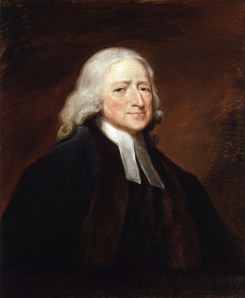
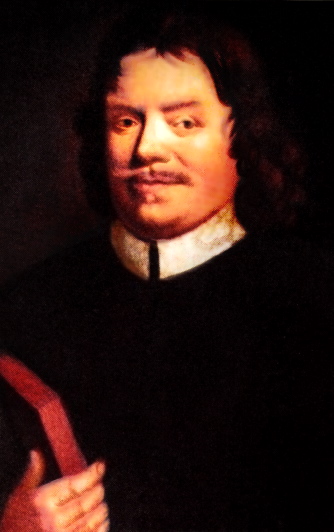
John Bunyan (d. 1688). One of the most famous of the Puritan preachers and writers. He is most known for his allegorical style of writing, especially in his story about the Christian life, as a journey to Heaven, called The Pilgrim’s Progress (1684). He was definitely a Hell-fire preacher as demonstrated by his sermons on Luke 16 in Sighs From Hell (1658). Although he was a Calvinist, he was thoroughly Puritan, and wrote prolifically about the role of good works and righteousness in the Christian life.
Richard Baxter (d. 1691). A Puritan giant! Prolific writer, and preacher of righteousness. He was “Calminian” sort of like George Whitefield, but he preached a free will message, and the necessity of holiness in the Christian life. It was under Baxter that we see the first well-known appearance of Puritan revival: at his church in Kidderminster, England. The titles of some of his books are self-explanatory: as some of the best material in evangelistic literature; perfect reading for evangelists, revivalists, and open air Gospel preachers: A Call to the Unconverted, A Treatise of Conversion, Directions and Persuasions to a Sound Conversion, What We Must Do to Be Saved, etc.
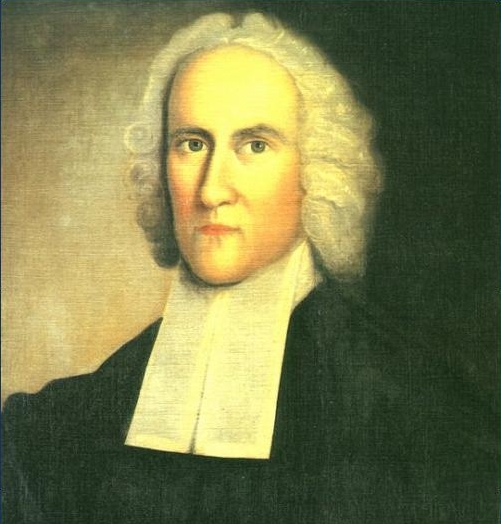
Jonathan Edwards (d. 1758). Born the exact same year as John Wesley, in 1703. Only Wesley the Arminian-Anglican (Methodist) preached in England; and Edwards the Calvinist-Puritan preached in colonial America. Together with George Whitefield, these three men: Edwards, Wesley, and Whitefield were responsible for the Great Awakening; and were mightily used by God as prophets of the Gospel. During the 18th century, Arminianism was gaining popularity, but Edwards maintained his Reformed convictions, and spoke against it as a damnable heresy of Hell, that leads to rationalism and even atheism! Nevertheless, Edwards as well as Wesley preached their own views of justification and sanctification, and revival manifestations occurred in both of their crowds. The sermons of Jonathan Edwards are very fearful and grave, and encourage righteousness in the Christian life. Among all things soteriological, however, Edwards is perhaps the greatest Hell fire and brimstone preacher to ever rise in the history of Protestantism. The titles of some of his sermons are self-explanatory: “Sinners in the Hands of an Angry God,” “The Wicked Hereafter Will Be Cast Into a Furnace of Fire,” “That the Bodies of Wicked Men as Well as Their Souls Will Be Punished Forever in Hell,” “In Hell Is Inflicted the Fierceness of the Wrath of a Being That Is Almighty,” etc. Eighteen of Edwards’ Hell-fire sermons are available in The Torments of Hell: Jonathan Edwards on Eternal Damnation edited by William Nichols. Also, for an introduction to the soteriology of Edwards, see John Gerstner’s Jonathan Edwards: A Mini-Theology (1987), which deals with his views on sin, the atonement, regeneration, justification, sanctification, Hell, and Heaven.
George Whitefield (d. 1770). He was a “Calminian” open air preacher, even called a Calvinistic Methodist. At first, he got saved under the influence of John Wesley, and they began open air preaching in England. But when Wesley started to solidify his Arminian views, and came to reject the Calvinistic-Puritan view of predestination, Whitefield decided to break fellowship with Wesley, and attach himself to Jonathan Edwards over in colonial America. After he moved over there, Whitefield became the “torch” of the Great Awakening in America, as he revived Calvinistic-Puritanism wherever he preached. He too was a Hell-fire preacher, as one of his sermons was entitled “The Eternity of Hell-Torments.” He has many other sermons on salvation and holy living. A good introduction is The Banner of Truth Trust’s Select Sermons of George Whitefield (1958).
John Wesley (d. 1791). This founder of the Methodist Church was a revivalist, evangelist, and open air Gospel preacher his whole life. He and other Methodist preachers with missionary zeal, rode as “circuit riders” all across England and colonial America preaching the Gospel of Jesus Christ, Arminian style, to “spread Scriptural holiness throughout the land.” The Works of John Wesley have been savored by holiness preachers and revivalists ever since: especially his Standard Sermons. Let it not be forgotten that it was also through Wesley and the Methodists that the miraculous gifts of the Holy Spirit were revived among Protestants! An excellent introduction to Wesley’s soteriology is Kenneth Collins’ The Scripture Way of Salvation: The Heart of John Wesley’s Theology (1997).
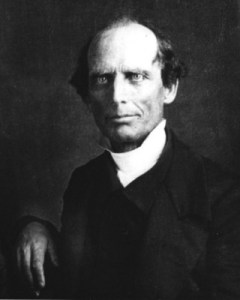
Charles Finney (d. 1875). The torch of the Second Great Awakening, the firebrand of the Burned-Over District in upstate New York. He wrote prolifically on salvation and holiness in the Christian life, and is most well known for his Lectures on Revivals of Religion (1835), an Arminian manual on revivalism. Although it would be right to classify Finney as an Arminian, at times he leaned to Calminian views, and at others: even Pelagianism, in his assertion of the natural ability of man to obey God’s law. Although some of his views on theology were a little off base, nobody can deny the good fruit that resulted from his preaching and writing ministries. Miracles attended his revival meetings too! He, in addition to Wesley, is counted a forerunner to the Azusa Street Revival and Holiness-Pentecostalism.
Leonard Ravenhill (d. 1994).Raised in a radical Methodist-holiness church in Leeds, England, he turned out to be one of the last great revivalists in recent history. He was Wesleyan to the core, a street preacher, and an intercessor (he drew great inspiration from The Life and Diary of David Brainerd by Jonathan Edwards). He was an avid reader of Puritans, Methodists, and revival literature, and preached against sin with great fervor. He is most well-known for his book Why Revival Tarries (1959), which emphasizes obedience to God in the Christian life. He had a strong influence on A. W. Tozer, David Wilkerson, Steve Hill, and Paul Washer. Between 1978-1982 (4 years), Ravenhill led a revival school at the Last Days Ministries ranch in Garden Valley, Texas, owned by Christian musician Keith Green. People traveled hundreds of miles, from all over the United States, to come and learn revival principles from Ravenhill, as he transmitted the “old-time holiness” ways (the old paths) to hungry revivalists impacted by the Jesus movement. Many of Ravenhill’s sermons are available on video and mp3 for free download on sermonindex.net.
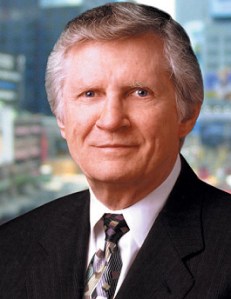
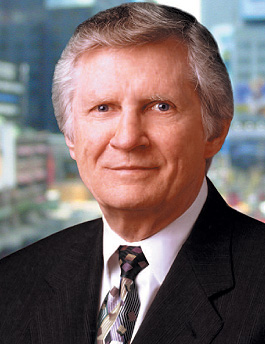
David Wilkerson (d. 2011). Most known for his book The Cross and the Switchblade (1962), which describes God’s call on his life to New York City to preach the Gospel to the gangs. The dramatic conversion of gang leader Nicky Cruz led to the conversions of many gang members. The book was later dramatized into a movie. Wilkerson’s ministry among the gangs led to a faith-based drug rehab organization called Teen Challenge. Today there are many centers all over America. For this work among the drug-addicted youth, Wilkerson attained much recognition by the body of Christ as a man of God, especially among Pentecostals. His book even led to the Catholic Charismatic Renewal: a tongues speaking movement in the Catholic Church! Wilkerson is also known for his book The Vision (1973), which describes his interpretations of visions of calamities that he saw concerning the near future: worldwide recession, strange natural disasters, filth in America, rebellion in families, and a persecution of true Christians. Along with Ravenhill, the sermons of Wilkerson are free for download on the internet, and have served to be a personal inspiration to me.
Paul Washer (age 51). Founder of HeartCry Missionary Society, which has a strong base in Peru. During the Last Days Ministries revival with Leonard Ravenhill, Washer was attending a Southern Baptist seminary about 2 hours away. Evidently, there were many times that he heard Ravenhill preach, as his life was lastingly stamped by his influence. To this day, Washer seems to outshine all other contemporary preachers of righteousness, not only in his eloquence, but in his unction to preach against sin. It is no far cry to say that he carries Ravenhill’s anointing or mantle, so to speak. Washer is a Reformed Calvinistic neo-Puritan (Southern Baptist), and is influenced by the writings of Thomas Watson, John Flavel, Jonathan Edwards, George Whitefield, John Wesley, A. W. Tozer, and other similar writers. His main drive in preaching is to restore the Gospel of Jesus Christ as it was preached by the reformers and revivalists of the past, as he believes modern conservative Evangelical churches have forgotten many of the basic doctrines of salvation. Recently, Washer just released a book on salvation called The Gospel’s Power and Message, with endorsements from Ray Comfort and John MacArthur.
An Afterthought: Preach 100% Law and 100% Grace
It is tempting to become prideful, puffed up, condescending towards others, and sound like a know-it-all when preaching on righteousness. We must be on guard against this; and remember that Jesus said “all the Law and the prophets” hang on the two commandments to love God and love man (Matt. 22:37-40). But this doesn’t mean to water things down like so many pastors today choose to. This doesn’t mean preach only love, and no commandments, no law, and no prophets: on the contrary, we are charged to PREACH ALL OF IT! We are to TELL IT LIKE IT IS! We are to PREACH IT, brother! PREACH IT! It is said that Wesley preached “90% law and 10% grace”; but Wesleyan scholar Dr. Kenneth Collins corrected me on this. He said Wesley preached 100% LAW AND 100% GRACE. He left nothing out; and neither should we, if we are to be faithful to “declare unto them all the counsel of God” (Acts 20:27). We must wield the Scriptures like a sword, and rifle, to attack and maim the devil, and resist temptations: which are the immortal enemies of our souls. It is high time that pastors stop being so namby-pamby, and soft, and afraid of their church members: “PREACH THE WORD; be instant in season, out of season; REPROVE, REBUKE, exhort with all longsuffering and doctrine,” for “ALL SCRIPTURE is God-breathed and is useful for teaching, REBUKING, CORRECTING and training in RIGHTEOUSNESS” (2 Tim. 4:2, KJV; 2 Tim. 3:16).
But don’t be mean-spirited and arrogant when preaching against sin; angry yes, but not hateful or mean: “Be angry, and do not sin” (Ps. 4:4, NKJV). Many have forgotten the law of God, not only rebelled against it (Hosea 4:6). Be FAIR, EVEN-HANDED, and HONEST. Don’t be too heavy-handed in your preaching. Many of those who go to church don’t even know the Bible anymore, let alone the Ten Commandments. Be careful, gracious, and loving; try to be understanding. Many of them are totally Biblically ignorant, without the revelation of God’s Word. Many of them have been raised in secular families or nominal Christian families, where the parents did not teach the Bible to their children. Be careful, to preach both law and Gospel, judgment and reconciliation, mercy and righteousness–be balanced: speak the Truth in Love (Eph. 4:15). And then you will experience this: “Mercy and truth have met together; righteousness and peace have kissed” (Ps. 85:10, NKJV).
—. The Beginner’s Guide to the Gift of Prophecy (Regal, 2001).
Augustin Poulain, The Graces of Interior Prayer (Kegan Paul, 1921). Avoid the Catholic errors of Purgatory, earning salvation by good works, and praying to saints.