
-
-

-
LATEST POSTS
- The Believer’s Heaven (1977) – Estus Pirkle Evangelistic Association
- Dads Are Supposed to Teach the Bible to Their Kids – Paul Washer
- How Charismatics Are Welcoming the New Age – Minor Prophets
- The Perseverance Debate: Eternal Security vs Conditional Security – Joe Schimmel and Chris Date
- Discipleship, Baptism, and Divine Healing: The Churches Have Lost Them! – Andrew Strom
RECENT VIEWS
- Wesleyans and Calvinists: The Two Main Doctrinal Differences
- The Moral Law In the New Testament
- Old Testament Visions of Hell
- Hosanna! Music: The Revival Worship Label
- His Voice Was Not Heard in the Streets?
- Review of Adam Clarke’s “Christian Theology”
- Directions Against Fornication and All Uncleanness - Richard Baxter
- Ethnic Judaism’s Routine vs Gentile Christianity’s Faith (Romans 10)
- Great Street Preacher Biographies
- How Charismatics Are Welcoming the New Age - Minor Prophets
MONTHLY ARCHIVES
- September 2026 (60)
- August 2026 (90)
- July 2026 (101)
- June 2026 (89)
- May 2026 (94)
- April 2026 (100)
- March 2026 (114)
- February 2026 (104)
- January 2026 (177)
- December 2025 (208)
- November 2025 (231)
- October 2025 (148)
- September 2025 (113)
- August 2025 (95)
- July 2025 (89)
- June 2025 (69)
- May 2025 (82)
- April 2025 (136)
- March 2025 (139)
- February 2025 (116)
- January 2025 (130)
- December 2024 (87)
- November 2024 (129)
- October 2024 (125)
- September 2024 (76)
- August 2024 (79)
- July 2024 (101)
- June 2024 (92)
- May 2024 (58)
- April 2024 (54)
- March 2024 (34)
- February 2024 (95)
- January 2024 (61)
- December 2023 (6)
- November 2023 (34)
- October 2023 (22)
- September 2023 (7)
- August 2023 (1)
- July 2023 (2)
- June 2023 (3)
- May 2023 (2)
- April 2023 (7)
- March 2023 (2)
- January 2023 (2)
- December 2022 (1)
- October 2022 (4)
- September 2022 (1)
- August 2022 (3)
- July 2022 (2)
- June 2022 (1)
- May 2022 (2)
- April 2022 (6)
- March 2022 (4)
- February 2022 (2)
- January 2022 (4)
- December 2021 (6)
- November 2021 (5)
- September 2021 (1)
- August 2021 (1)
- July 2021 (2)
- June 2021 (1)
- May 2021 (2)
- March 2021 (3)
- February 2021 (2)
- December 2020 (1)
- October 2020 (1)
- November 2019 (1)
- October 2019 (2)
- September 2019 (1)
- August 2019 (1)
- July 2019 (7)
- June 2019 (4)
- May 2019 (4)
- April 2019 (18)
- March 2019 (7)
- February 2019 (4)
- January 2019 (6)
- December 2018 (3)
- November 2018 (2)
- October 2018 (4)
- September 2018 (5)
- August 2018 (3)
- July 2018 (2)
- June 2018 (1)
- May 2018 (3)
- April 2018 (8)
- January 2018 (1)
- December 2017 (5)
- November 2017 (1)
- October 2017 (8)
- September 2017 (4)
- August 2017 (6)
- July 2017 (6)
- June 2017 (6)
- May 2017 (10)
- April 2017 (20)
- March 2017 (15)
- February 2017 (10)
- January 2017 (10)
- December 2016 (8)
- November 2016 (10)
- October 2016 (19)
- September 2016 (15)
- August 2016 (4)
- July 2016 (8)
- June 2016 (3)
- May 2016 (7)
- April 2016 (3)
- March 2016 (9)
- February 2016 (3)
- January 2016 (9)
- December 2015 (7)
- November 2015 (9)
- October 2015 (7)
- September 2015 (4)
- August 2015 (13)
- July 2015 (9)
- June 2015 (2)
- May 2015 (6)
- April 2015 (38)
- March 2015 (26)
- February 2015 (28)
- January 2015 (28)
- December 2014 (19)
- November 2014 (12)
- October 2014 (5)
- September 2014 (9)
- August 2014 (16)
- July 2014 (30)
- June 2014 (16)
- May 2014 (17)
- April 2014 (16)
- March 2014 (6)
- February 2014 (8)
- January 2014 (8)
- December 2013 (2)
- November 2013 (2)
- October 2013 (3)
- September 2013 (2)
- August 2013 (2)
- June 2013 (2)
- May 2013 (7)
- April 2013 (7)
- March 2013 (5)
- February 2013 (3)
- January 2013 (5)
- December 2012 (2)
- November 2012 (2)
- October 2012 (4)
- September 2012 (6)
- August 2012 (3)
- July 2012 (7)
- June 2012 (1)
- May 2012 (3)
- April 2012 (5)
- March 2012 (2)
- February 2012 (3)
- January 2012 (1)
- December 2011 (5)
- November 2011 (4)
- October 2011 (9)
- September 2011 (2)
- August 2011 (3)
- July 2011 (2)
- June 2011 (4)
- May 2011 (4)
- April 2011 (4)
- March 2011 (6)
- February 2011 (4)
- January 2011 (1)
- December 2010 (5)
- November 2010 (5)
- October 2010 (9)
- September 2010 (3)
-
The Care of Souls
Too many pastors, it seems, are not big enough on pastoral visitation or counseling their church members and newcomers. Cold, ignoring, apathetic – it doesn’t cut it.
Recommended book: Thomas Oden’s Pastoral Theology
Posted in Uncategorized
Leave a comment
Protestant Prophets
My current canon…
1. The Covenanters – Wishart, Knox, Welch, Semple, Peden, etc in Scots Worthies
2. John Wesley in Supernatural Occurrences
3. William J. Seymour in Azusa Street
4. Smith Wigglesworth in Apostle of Faith
5. John Paul Jackson
Posted in Uncategorized
Leave a comment
Donald Gee’s “Concerning Spiritual Gifts” – ch. 3 – The Purpose of Spiritual Gifts
Posted in Uncategorized
Leave a comment
Review of Percy Parker’s Abridged Version of “The Journal of John Wesley”
I just finished listening to an audio version of Percy Livingstone Parker’s abridged version of The Journal of John Wesley. It was better than nothing: good for a general overview of Wesley’s life. But I was disappointed in many areas; it appears that this version was originally produced in 1902 and then it was reproduced by Moody Press in 1951. So it was very “mainstream” evangelical. Very watered-down and stripped of most of its Arminian and charismatic elements. In fact, 60% of it is simply Wesley’s natural observations about things during his travels throughout the United Kingdom.
I was surprised and disappointed at how de-supernaturalized this version was. In Jack Deere’s Surprised by the Voice of God, he explains that John Howie’s The Scots Worthies received similar treatment throughout its various editions. I think that the original Journal of John Wesley was something like 8 volumes long, but this was condensed into a little over 500 pages. There was almost no theology in this abridgement, other than some of the sermon topics that he preached on, which briefly come through as Scripture verses on the judgment of God or salvation.
I’m happy that I have a copy of Daniel Jennings’ The Supernatural Occurrences of John Wesley, because it offers a good counterbalance to the very non-Pentecostal nature of this version. With that being said, there are still some supernatural mentions in this version: trances that people had of Heaven and Hell; a story of a man being followed by the devil and then converting afterwards; and people falling down under the power of God during Wesley’s preaching. Sometimes dreams and visions are mentioned. Once there’s a story where Wesley is administering the Lord’s Supper and an angelic harp was heard for about 5 minutes and people were crying.
I’m sure there were other supernatural references, but they’re nothing that really stand out in my mind at this point. The majority of this version is very naturalized; it is a very watered-down version made to appeal to a large audience and was made by Moody Press, which is a Baptist book publisher. Christian perfection is never explained, the fact that Wesley had a rocky marriage never came through, a lot of important controversies were left out, the witness of the Spirit barely mentioned, etc. At least it had the “heart strangely warmed” Aldersgate experience. I recommend getting the complete and unabridged version called The Works of John Wesley by Baker Books, 1996, 3rd ed.
Posted in Uncategorized
Leave a comment
Review of Bill Jackson’s “The Quest for the Radical Middle: A History of the Vineyard”
Cussing In the Vineyard Church?
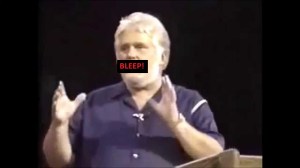
On pages 47 and 70, we see the h-word and the d-word used in a rather nonchalant, cavalier style, when referring to different testimonies by John Wimber (after giving his life to Christ). Then the b-word on page 92. It was almost enough for me to put the book down and ignore all Vineyard churches going forward. It didn’t help that just a week or two previously, I had my family leave the Vineyard church we had been attending for almost a year after the associate pastor decided to use the d-word two times during his sermon, and everyone laughed about it. What’s going on!? I don’t have a problem with a pastor rarely and accidentally cussing in his personal life if something very difficult just happened to him–pastors are frail men too. But when someone is at ease, and in the pulpit, entrusted with preaching the holy Word of God, there has got to be some level of moral decency (especially when kids are present in the church service). I suppose the author felt it was good to show that Wimber was not some perfectly holy Catholic saint and that he was open about his frailties, pleading for the grace of God. On the other hand, I can’t see why this wouldn’t embolden his followers in moral laxity. Why couldn’t he have suggested it in a roundabout way, rather than printing the actual profanities? Colossians 3:8: “Now you yourselves are to put off all these: anger, wrath, malice, blasphemy, filthy language out of your mouth.” But I kept on reading. Seeing that there were over 400 pages in this Vineyard church’s history, I found that there were no more cuss words in it, praise the Lord. Just a lot of storytelling about the growth of John Wimber’s evangelical charismatic church called the Vineyard.
Vineyard Distinctives
Theologically, the Vineyard differs from the Assemblies of God in three ways: 1. They believe that the baptism in the Holy Spirit occurs at salvation (or that regeneration and Spirit baptism are the same thing). Further, they believe that speaking in tongues can be one of the evidences of this Spirit baptism, but that it is not necessarily the initial physical evidence proposed by the Assemblies of God. 2. They are generally more open to a post-tribulation rapture view of the end times, whereas the Assemblies of God and Calvary Chapel (from where they sprung) have always been pre-tribulation in their view. 3. They are generally Calvinistic or Reformed in their view of God’s grace, leaning away from any “legalistic” Wesleyan Arminian holiness practices. In this way, they also differ from the Assemblies of God and from IHOP led by Mike Bickle. In Wayne Grudem’s Systematic Theology, a charismatic theologian, and one-time Vineyard apologist, he defends the belief of “once saved, always saved,” held so dear by Baptists and Presbyterians. This is in contrast, to say, the AG’s counterpart: Stanley Horton’s Systematic Theology.
Theological Influences On the Vineyard
I have long believed that in the areas of mysticism, that people will “experience whatever spirits are operating behind their theology.” This sentence has become a bit of a reliable one-liner for me in the area of spiritual discernment. In the New Age movement, psychics value the religions of Hinduism and Buddhism: so it is to be expected that their dreams, visions, voices, signs, and miracles will be about these religions and will seek to confirm or corroborate them. The spirits, in this case, spirits of Hinduism and Buddhism–from a Biblical point of view–evil spirits–are the sources of mystical experiences to these religious practitioners. The same goes for Muslims when they dream about Mohammad, Mormons when they dream of Joseph Smith, and Christians when they dream about Jesus. But then there are the different kinds of charismatic Christians over the ages. In the case of the Assemblies of God, we have Smith Wigglesworth as a patron saint–to represent the work of the Holy Spirit to these classic Pentecostals. But with the Vineyard, its a bit more broad than that. On page 15, we can see not only the influence of Wigglesworth, but also Catholic mystics (or Catholic saints), GEORGE FOX, Jonathan Edwards, William J. Seymour, Maria Woodworth-Etter, John G. Lake, and William Branham. To take it further, a number of other major influences are mentioned throughout the book: John Wesley, Leonard Ravenhill, Donald Gee, Francis MacNutt, and Dennis Bennett (pp. 54, 56, 69, 211, 382-384). Then you had the more contemporary spiritual influences, closer to John Wimber’s age: Mike Bickle, James Goll, Larry Randolph, and John Paul Jackson (all of whom were labeled as Kansas City prophets), Jack Deere, and lastly Randy Clark (pp. 211, 334). GEORGE FOX comes out two or three times as an influence (see p. 25). It is even believed that Wimber carried the “anointing of George Fox” into the Vineyard because of his time in the Yorba Linda Friends Church (p. 63).
Evangelicals, Pentecostals, and the Radical Middle
With all of these influences mentioned in a theological sense–the ultimate influences on the Vineyard are the Bible and the presence of God (through worship). And, as Jackson titled his book, the Vineyard has always been on a quest to find the “radical middle” between a Bible-centered evangelicalism that overemphasizes doctrine and downplays spiritual experience–and between a fanatical, cult-like Pentecostalism that overemphasizes spiritual experiences and downplays the Bible and theology. The Vineyard wants to have the best of both worlds: of Biblical religion and mystical Pentecostalism, of the Word and the Spirit, of the Bible and miraculous gifts, of the Gospel and miracles, of evangelicalism and Pentecostalism. The Vineyard wants to place itself right in the middle between these two extreme emphases and find a spiritual balance.
The Rock Generations
It seems that people from the Jesus Movement were the most willing to contribute to this new movement: rock ‘n’ roll hippies who had been turned on to Jesus in the 1970s–and who now, are mentoring GenXers and Millennials (or the Kurt Cobain, 90’s rock crowd, and the new rock, heavy metal, and EDM crowds). This might have something to do with any laxity about cussing. This doesn’t mean there are not different musical tastes in the Vineyard: while most would probably be fans of Christian music, Jesus Culture, Bethel, and IHOP Forerunner worship music, on a popular level, the Vineyard has always seen itself as a “Rock Generation” church in its approach to influencing culture (a “seeker sensitive” trait they borrowed from church growth ideas). They are definitely a church that supports Christian rock. The Vineyard has a bunch of CDs they have made in the acoustic rock style for worship, which was nurtured into being by John Wimber, who had been at one time the band manager for the Righteous Brothers.
John Wimber and His Developing Pentecostalism
He was a “fourth generation pagan”–a non-Christian, as well as his dad, grandpa, and great-grandpa. He had no awareness of God or the Bible. There was one brief moment when his grandfather had an experience of Jesus on his deathbed and converted then, but it had no impact on John’s life. But when his marriage started to fall apart, he took a friend’s advice to go into the desert and watch a sunrise. When he did this, he was grieved and crying, and he felt the supernatural presence of God, but wasn’t able to identify it. When he got home, he spoke to his wife about it, when her Catholic upbringing surfaced and she suggested they buy a Bible. John got a King James Version (KJV) and started going through a Catholic catechism class, but he felt unimpressed by the priest’s answers to his questions, so he dropped out. They started going to a home group Bible study and got closer to God from it. It was apparently a Jesus Movement group; and during this time, John was praying outside once, and started speaking in tongues. But since they were not in a Pentecostal church, Carol reacted negatively and thought that was demonic, so John stopped doing it.
They joined Yorba Linda Friends Church (evangelical Quakers) and John became a leader from 1964 to 1970. They were cessationist in practice, but when he was out doing one-on-one street evangelism, he found himself getting words of knowledge about secrets in people’s lives that would, after he shared them, cause people to admit God is real and give their lives to Jesus (1 Cor. 14:24-25). Kathryn Kuhlman was on TV during this time period and the Wimbers had seen her, but they didn’t like her flamboyant and dramatic style. There was something that seemed fake about her. But it seems that by their watching her, the program at least got John to thinking about the possibility of words of knowledge and prayer for healing. But his involvement as a leader in a cessationist church was a deterrent to any Pentecostal experiments. As a side note, I think its odd that a Quaker church could ever be cessationist. The Journal of George Fox, shows that the founder of Quakerism, was every bit as charismatic as Smith Wigglesworth. Even more so in George Fox’s Book of Miracles. Wimber gradually came to see this discrepancy over time. The same could be said of John Wesley (charismatic) and the majority of Wesleyan and Methodist churches, which are now practically cessationist.
The Wimbers’ Charismatic Group, Calvary Chapel, Etc.
After 10 years in the Quaker church, God spoke to John in 1974 and he was led to teach some courses at Fuller Theological Seminary. He had experienced a level of church growth where he had come from and originally started off as a church growth expert. But while at Fuller, through conversations with others, he became free to explore more ideas about Pentecostal spirituality. Two books that impacted him during this time were Donald Gee’s Concerning Spiritual Gifts (a classic AG book) and Morton Kelsey’s Healing and Christianity (a Jungian psychologist involved in the charismatic movement, who later on turned New Age, unknown to Wimber). With John out of leadership at the Quaker church, a lot of the pressure was off of him. A small group formed from that church, with his wife Carol now charismatic: people were starting to do charismatic worship with Calvary Chapel songs, feel God’s presence, and pray for healing. The group lasted until 1977 when the Quaker leaders asked them to leave because of their new charismatic emphasis.
The group stayed together but became affiliated with Calvary Chapel until 1982 (5 years), and was again ousted by the leaders because Wimber’s emphasis was overtly more charismatic than theirs was (note: this is very similar to the early conflict over tongues that happened between the Christian and Missionary Alliance and the early Assemblies of God). Chuck Smith, the leader of Calvary Chapel, wrote in Charisma vs. Charismania, that he rejected the group’s shaking and falling in the Spirit, and their casting out of demons believed to exist in some professing Christians. He rejected the view that a Christian could be indwelt by a demon, on any level (a stance that he shared with the AG). But with Chuck’s blessing, Wimber’s group was recommended to join the Vineyard church, which was a small charismatic group started by Kenn Gulliksen. Chuck maintained a theoretical, watered down view of miraculous gifts, but did not overtly promote their use. (As a side note, I would like to add that a friend of mine who had done about 10 years of youth ministry in Calvary Chapel told me around 2015 that this denomination “believes” in spiritual gifts, but does not operate in them.)
The Wimbers’ Church Becomes a Vineyard
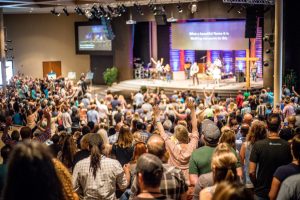
From the very beginning as a Vineyard, John’s main emphasis was on teaching about HEALING and praying for healing. His primary sourcebook was Francis MacNutt’s Healing. This book, and a couple of others, mixed with his own experiences in praying for the sick, are what influenced his book Power Healing (1987). In this context, one day John saw a vision of little lights appearing all over the USA. He knew that these were meant to be Vineyard churches that he would send out as church planting endeavors. In the vision, he knew that the Vineyard was being commissioned by God to plant 10,000 churches. As their “genetic code” got established, they began to crystallize their priorities as a church: charismatic worship intended to feel God’s presence through contemporary rock music, practical theology (or teaching the Bible with a lived-out discipleship emphasis), friendships grounded in love and guarded by healthy attitudes towards conflict resolution, evangelism, healing, ministry to the poor, training, charismatic renewal, church planting, casual dress, non-hyped atmosphere, no religious stiffness, welcoming miraculous gifts in church and street ministry, and presbyterian polity (an elder board supervises the pastor).
MC 510/511: Signs, Wonders, and Church Growth I-II
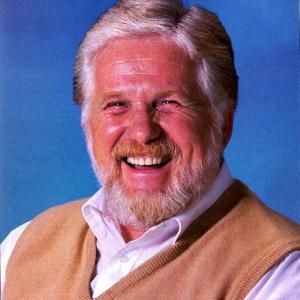
On the side, John was still teaching at Fuller and he shifted gears in 1982, when his Vineyard started. While at Fuller, he was allowed to teach a seminary class for the missions department called “MC 510: Signs, Wonders, and Church Growth.” (He was allowed to do this until 1985 when the anti-charismatic people on the board shut the class down.) But in this seminary class, he taught about healing, cited examples of it in the Third World, and taught about how the Western world’s scientific rationalism and unbelief is the main cause for the lack of miracles in its countries. He also had “clinics” or times at the end of the class when he prayed for healing, and used words of knowledge; and when miracles happened, he simply explained to his observers what was happening in a cool, calm, and professorial manner. The course’s content was eventually distilled and put into his book Power Evangelism (1986). Christian Life Magazine (now Charisma) dedicated their entire October 1982 issue to Wimber’s MC 510 course and this brought international publicity to the Vineyard. “MC 511: Signs, Wonders, and Church Growth II” was a companion course that went more into the specifics of healing, psychological and supernatural phenomena related with it, etc. This material was put into Power Healing (1987).
The ’80s: Videos On Healing, Spiritual Gifts, Territorial Spirits, Etc.
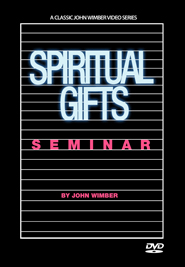
Throughout the ’80s, the Vineyard was solidifying itself and putting out a lot of charismatic video teachings and worship albums. Among the teachings were Wimber’s Healing Seminar I, which was taught so many times by Ken Blue that he tweaked it and published the material as Authority to Heal (1988). Wimber’s videos on Spiritual Gifts and Spiritual Warfare were also popular. As this supernatural church began to grow, so also did Satan’s attacks: John had heart problems and was constantly afraid that he could die at any moment; and some people brought in a teaching from South America called “strategic level spiritual warfare,” which was the belief that it is okay for intercessors to band together and invite demonic principalities and powers to show themselves and then duke it out with them in prayer in Jesus’ name, until the principality is defeated and cast out of the region. These were also called territorial spirits. Wimber emphatically rejected this practice, but Peter Wagner, his friend from Fuller, totally embraced and taught it, which caused a rift in their friendship.
Personally, I side with Wimber and John Paul Jackson’s thesis in his Needless Casualties of War, that it is spiritually illegal and inappropriate to try to cast out demonic principalities, as well as presumptuous, dangerous, and foolish. There are testimonies of groups of Christians dying of mysterious causes when they agree to do things like this. Wimber contended that Jesus has given Christians authority over little demons, but not enormous principalities. But there is that one nagging Scripture, “We wrestle not against flesh and blood, but against principalities, against powers, against the rulers of the darkness of this world, against spiritual wickedness in high places” (Eph. 6:12). This seems to be some justification for the practice, but I’d say that its still a long shot. Especially since there is no example of someone doing this kind of prayer in the Bible, other than maybe Jesus and Satan in the desert (Matt. 4). Paul seems to mention in passing, that in general, Christians are not at war with evil men, but with the evil forces of powerful demons at work in the world. Its clear that Paul is not referring to holding some kind of Pentecostal demon séance and inviting a principality to physically appear and be fought against in prayer for hours. This is the Bible we’re talking about, not a Freddy Krueger movie!
There is one occasion in the life of St. Francis that comes to mind. The exorcism of the demons at a town called Arezzo, depicted in a painting by Giotto. Apparently there was rioting and fighting going on in the city and St. Francis saw some demons flying over the city and stirring up the mob. He sent his monks down to the location to cast out the demons and they left. But were they principalities or lesser demons? No such distinction was made, so no argument can be made for it in this case either. I don’t think the practice of inviting powerful territorial demons to appear is safe, sane, or Biblical (its probably influenced by the occult); it sounds more like testing the Lord; and John Paul Jackson warns that it can be fatal for anyone involved. I would strongly urge against any and all such “strategic level spiritual warfare,” and just try to focus on normal healing and deliverance.
The last ’80s hit to the Vineyard and all Pentecostals came in 1987 when televangelists Jim Bakker and Jimmy Swaggart were exposed for adultery; and so also were two of Wimber’s ministry associates; and it came to his attention that a large percentage of pastors were addicted to pornography.
Defending Wimber Against Theological Attacks
Because Wimber was gaining notoriety about his signs and wonders classes at Fuller, and his Vineyard conferences, the jealousy, fear, and anger of non-charismatic evangelical leaders was stirred up against him. Dave Hunt and T. A. McMahon’s The Seduction of Christianity (1985) claimed that Wimber’s views about praying for inner healing were influenced by the New Age movement and not the Bible. The popular evangelical magazine, Christianity Today, published a very skeptical and critical article in 1986 called “Testing the Wine from John Wimber’s Vineyard.” The front cover had a weird caricature of him on it. Paul Hiebert’s Wonders and the Word (1989) was a collection of articles written by theologians against the Vineyard. After all of this, Wimber clung to his Quaker conviction of non-resistance and chose to turn the other cheek (Matt. 5:39). He felt the best thing to do would be to not reply to these accusations at all. The attacks continued, however, and started to cause some real confusion in the Vineyard. In 1990, an Anglican church in Sydney, Australia published an anti-Wimber article in their journal The Briefing. It accused him of rejecting the sufficiency of Scripture because he believes in words of knowledge, denied his claim to have miraculous gifts, suggested that all Vineyard healings are fake, and rejected the teaching that Christians could have demons that need to be cast out (as did Calvary Chapel and the AG). JACK DEERE (Surprised by the Power of the Spirit, Surprised by the Voice of God, The Beginner’s Guide to the Gift of Prophecy) was finally allowed to defend the Vineyard and reply with an apologetic article.
Up until 1991, John Armstrong from the Baptist General Conference, wrote ten articles criticizing Wimber in their journal The Standard. He claimed that Wimber did not preach the Biblical Gospel, he exalts spiritual experiences over Scripture, he teaches heresies, he encourages a strange emotional type of experience in worship, he supports modern day prophecy which leads people away from the Bible, he overemphasizes demonic encounters, and his healings are weak, non-existent, and ineffective. This same theologian later joined with D.A. Carson and James Montgomery Boice and published a section in Power Religion (Moody Press, 1992) which was a popular academic attack on Wimber and the Vineyard, more so than the first academic attack, Wonders and the Word. That, along with the older criticism from Christianity Today (1986), solidified more of a popular opinion against the Vineyard from conservative evangelicals like Baptists. WAYNE GRUDEM (The Gift of Prophecy, Systematic Theology), rose to the task of writing up defenses in response to John Armstrong’s articles and those in Power Religion.
1992 must’ve been a bad year for Wimber emotionally, because he also came under severe attack that year from another well respected evangelical leader in John MacArthur’s Charismatic Chaos. MacArthur is the leading cessationist teacher and he took great pains to undermine Wimber’s ministry in this book. Rich Nathan’s “A Response to Charismatic Chaos” was the Vineyard’s well thought out reply.
Finally, one of Wimber’s greatest critics was Hank Hanegraaff, “The Bible Answer Man,” who was a member of Chuck Smith’s Calvary Chapel congregation. He often spoke against Wimber on his radio program, with an insensitive tone, even while Wimber was suffering from many illnesses, and would have preferred to have been contacted personally. When the Toronto Blessing hit in 1994 and people started making animal noises, Hanegraaff took up his pen and eventually published Counterfeit Revival (Word, 1997), which spilled plenty of ink shooting down Wimber (even though Wimber fervently opposed animal noises and excommunicated the Toronto church from the Vineyard over it). 1997 was also the year that Wimber died of cancer: he was attacked without mercy till his dying day. James Beverley responded with his self-published Revival Wars: A Critique of Counterfeit Revival.
The Kansas City Prophets
In 1987, the year that Wimber published Power Healing, it looks like God was leading him and the Vineyard into a new phase of the Spirit. Right after this powerful book on healing and deliverance came out, it also came to his attention that porn, carnality, and pride were becoming real problems with pastors in the Vineyard and in the 1988 pastor’s conference, John came down very strong against these issues.
Enter the “Kansas City prophets.” At this point, this label consisted of Mike Bickle, Bob Jones, Jack Deere, and especially Paul Cain (whom, in his younger years, was mentored by William Branham). Later on, it would also include James Goll, Larry Randolph, and John Paul Jackson: and even Leonard Ravenhill, even though he was not that much of a charismatic. Ravenhill was seen as a revival statesmen from the holiness tradition that brought a much needed ethical balance into the Vineyard. Wimber had connected with him apparently through Bickle; and had read his book Why Revival Tarries. In 1990, Ravenhill was even invited to preach at a large conference called “Holiness”. But as John was going through how to discipline the rebellious Vineyard pastors in 1988, he got a call from Jack Deere who told him that Paul Cain PROPHESIED there would be an EARTHQUAKE on the day that Wimber scheduled an appointment to meet with him. And sure enough, there was a local earthquake in Pasadena on that day, not far from Wimber’s church in Anaheim. Much like the San Francisco earthquake of 1906, which was viewed as a sign that God was bringing an earth-shaking revival to the West Coast through the Azusa Street Revival–so also God was going to shake the Vineyard churches through Paul Cain and the prophets associated with Mike Bickle. Cain then encouraged Wimber to discipline his pastors and not go easy on them with “unsanctified mercy.” (Something I wish Rick Joyner would have taken to heart in the Todd Bentley case.) In this same year, 1988, Wayne Grudem published his first edition of The Gift of Prophecy in the New Testament and Today which became “one of the guiding lights” for Vineyard pastors and laity (p. 212).
There were, however, some questionable things about Paul Cain and those who followed his lead. 1. He still carried with him some ideas from the Latter Rain Revival that he had been a part of: those ideas included pure things like fasting and prayer, praising God to invite His presence, impartation of Spirit baptism and miraculous gifts through the laying on of hands, renewing the ministries of apostles and prophets, and foreign missions. 2. But the Latter Rain also carried with it some bad ideas: that those involved in the prophetic ministry are part of a special group called the “manifest sons of God,” the “overcomers,” the “manchild,” “Joel’s Army,” and various other strange phrases. It was a prideful spiritual elitist concept that carried with it the idea that some super-apostles and super-prophets would appear in charismatic churches and do miracles greater than the twelve apostles in the Bible, and that these super-charismatic saints would usher in an end-time revival and the second coming of Christ. Some even believed it was possible to become immortal in this life! Other bad Latter Rain ideas included relying on an allegorical interpretation of Scripture and arriving at strange views of the Bible; and extreme authoritarianism and submission (which probably filtered into the shepherding movement later on with its covering theology through Ern Baxter). 3. Paul Cain later confessed to homosexuality and alcoholism, and refused to cooperate with Jack Deere, Mike Bickle, and Rick Joyner in a disciplinary process–maybe because he felt he had failed them and that he was the elder and should be leading them, not vice versa. Eventually, Cain left the Vineyard movement, and was apparently restored through another charismatic pastor. These scandals might have only occurred after Wimber’s death in 1997, unless he had kept them a secret like Lonnie Frisbee had. Cain and Frisbee had very similar gifts and struggles; and both had A SPIRIT OF SAMSON: so also did a prophet named Bob Jones.
Chapter 11 is an extra special chapter in my opinion, because it summarizes the beginning of Mike Bickle’s ministry in 1982, when he was first introduced to prophetic ministry through Augustine Alcala and Bob Jones. It takes its story mainly from David Pytches’ Some Said It Thundered. It corroborates the audio testimony by Mike Bickle that I have listened to several times on CD from 2002, which is called Encountering Jesus. In 2009 it was updated on mikebickle.org. What started here eventually spread into the Vineyard for two years or so and then branched out into many non-denominational charismatic churches, such as MorningStar Ministries, Bethel Church, Catch The Fire, and many, many others who took prophetic ministry seriously, identified themselves as churches aligned with “the prophetic movement,” and having people in them that they recognized as apostles and prophets. Bickle’s church, which changed its name several times, was birthed in specific words of knowledge from different prophets (especially Bob Jones), supernatural dreams and visions that confirmed information and secrets in people’s hearts, and provided supernatural direction. It started off as Kansas City Fellowship, then it changed its name to Metro Vineyard Christian Fellowship (from 1990 to 1996), then when it left the Vineyard it eventually changed its name to the International House of Prayer in 1999 (and cleverly used this to communicate the four themes that were originally revealed to Mike by the Holy Spirit–IHOP):
I – Intercession
H – Holiness
O – Offerings (giving to the poor)
P – Prophetic
While it doesn’t say it in the book, I know that Bob Jones had some Latter Rain influences, because he was of one spirit with Paul Cain and Mike Bickle’s ministry, and also he has referred favorably to William Branham before. The fact that he came from a rural Arkansas background also lends credence to the idea that he would’ve had an affinity to Branham’s ministry style. Before Bob moved in the prophetic direction, however, he was an unsaved Marine who served in the Korean War. He was a drinker and boxer and had dreams of starting his own bar. When he was 39, he checked himself into a mental hospital because he thought he was losing his mind. The doctors couldn’t find anything wrong with him, so he got hooked on the painkillers they prescribed. He went to another hospital and the doctor told him to sweep floors as therapy and it seemed to help him get better. One night during this time, a demon visibly appeared to him, and told him to take revenge on all those who hurt him. But he quoted the Psalms that his friend had been reading him; and he cried out to Jesus. His doctor then invited him to a church where he was saved, baptized in the Holy Spirit, spoke in tongues, had dreams and visions, heard the voice of God, and got knowledge about secrets in people’s lives. He was offered chances to speak in church, but when he started to PREACH AGAINST HOMOSEXUALITY, people rejected him many times. The devil eventually took his life because of this, and Bob had a near death experience in Heaven, but was sent back to wait for the new generation of pastors who would follow Mike Bickle and be committed to the Bible and holiness.
I truly believe that Bob Jones had prophetic gifts, like Paul Cain, but Jones too fell into an episode of sexual sin. In 1990, Ernie Gruen’s Documentation of the Aberrant Practices and Teachings of Kansas City Fellowship made some true statements, some false statements, and some exaggerations, but one of the true things that came out later in 1991 was that Bob Jones had been counseling two women in a room, and was using prophetic ministry and words of knowledge on them. He then lied at one point and manipulated them, saying, “The Lord wants you to stand naked before him,” at which point they obeyed the word, and took all of their clothes off in front of Bob, and he fondled them. Word got out about this and Wimber saw to it that Bickle disciplined Bob for this outrageous behavior. Bob was removed from all preaching ministry in the Vineyard. Like Paul Cain, Bob also left the Vineyard movement, and was restored under the care of another charismatic pastor.
This kind of prophetic and sexual abuse, wrong date-setting prophecies, wrong stock market predictions, and misinterpretations of visions, eventually led 75% of the Vineyard pastors to reject the idea of prophetic ministry for the most part, and just go back to their original focus on worship, healing prayer, and charity ministries. George Mallone, who had written Those Controversial Gifts (1983), was a Vineyard pastor in Texas, a friend of Jack Deere, and was one of the people who wished the Vineyard had kept a prophetic ministry emphasis, and he proposed ways in which safeguards could be built so that it would continue (pp. 220-223). By 1995, Wimber apologized at a Vineyard conference for allowing Paul Cain and the Kansas City prophets to have a platform at their conferences (p. 234). He did, however, continue to believe that prophetic ministry is valid (p. 248). Sadly, this reflects some attitudes towards miraculous gifts in the Vineyard churches today, as of the year 2018. We’re starting to see a trend, even in the Vineyard, of a move away from using miraculous gifts in church, away from prophecy, healing, deliverance, tongues, etc. Much like the Assemblies of God, the Christian and Missionary Alliance, and Calvary Chapel moved away from the gifts. Now, it seems that most activity regarding miraculous gifts seems to revolve around non-denominational charismatic churches like IHOP-KC and MorningStar Ministries: or what some have called New Apostolic Reformation (NAR) churches.
After the dust settled in 1996, I’d say that the purest proponents of prophetic ministry then and now, would be Mike Bickle (Growing in the Prophetic), John Paul Jackson (The Biblical Model of Dream Interpretation), and Larry Randolph (Spirit Talk). Although Paul Cain and Bob Jones had a gift for detailed prophetic utterances and received the Vineyard spotlight–in the end, they had a Samson spirit like Lonnie Frisbee and would not be worthy of imitation, in my book. I have fallen many times myself, but I would personally want to look at examples of men whom I see as more spiritual than myself, so that I can grow and become more like Jesus. Whenever extreme sexual sin is involved in the life of a spiritual person, it generally removes their status as a saint that’s worthy of imitation. This is not to say that saints can’t fall and become saints again. Its just an imitation preference I have. Who would you rather look up to? A prophet who fell into sexual sin and was restored? (Samson and David). Or a prophet who never fell into sexual sin? (Elijah and Elisha). I would probably only want to choose the latter.
The Toronto Blessing: A Fresh Outpouring of the Holy Spirit
In 1994, the foreseen Pentecost that came to be called the “Toronto Blessing” erupted in Toronto Airport Vineyard. A special speaker named Randy Clark, a small Vineyard pastor who had been freshly Spirit baptized at a Rodney Howard-Browne revival, had come and shared his testimony. Hundreds of people were then slain in the Spirit, shaking, and laughing as the Holy Spirit touched them. Visions, dreams, and the voice of God were also happening. Broken marriages were mended as spouses felt God’s love welling up inside of them. Conversions to Jesus came as people were convicted of sin. The presence of God was strongly felt during worship. It was a genuine outpouring of the Holy Spirit comparable to the Azusa Street Revival led by William J. Seymour and the Great Awakening under Jonathan Edwards. This is thoroughly argued, I believe convincingly, in Guy Chevreau’s Catch the Fire. The revival attracted many within the Vineyard to visit, as well as many more outside of the Vineyard from all kinds of denominations: Baptists, Presbyterians, Nazarenes, Pentecostals, etc. It also received national attention from the press, as did the Brownsville Revival (1995-2000), which was a byproduct of the Toronto Blessing, but was more conservative, having been led by Steve Hill, a fiery Assemblies of God evangelist mentored by Leonard Ravenhill and David Wilkerson.
The “Animal Noises” Controversy; Bickle Leaves; Wimber Dies
After about a year, though, people started making animal noises and behaviors in response to “the spirit” they felt in the Toronto church. Wimber and the Vineyard board spoke against this behavior and asked for John Arnott, the pastor of the church, to cooperate and put it to a stop. Instead, Arnott published a defense of the animal behavior in his book The Father’s Blessing (1995), ch. 11: “The Prophetic: Animal Sounds and Insights,” saying that they were forms of prophecy that made use of Biblical symbols. The same thing happened at the Azusa Street Revival, mind you, but Seymour identified it as something that spiritualists did when they attended. Seymour asked them to leave the services when they did that (see Cecil Robeck’s The Azusa Street Mission and Revival, p. 168). But Arnott did the opposite. Wimber kicked the Toronto church out of the Vineyard at that point. (And as the Toronto revival died off, the Brownsville Revival picked up speed, having no animal noises, being strongly evangelistic.) Once Wimber took his stand to excommunicate John Arnott and the Toronto church, however, he made a few enemies. He lost 40 out of his 700 churches from that decision (p. 331), including Mike Bickle’s Metro Vineyard, who left in 1996 for the following reasons that he believed came from prophetic revelations: 1. Wimber was impatient and judged the Toronto church too hastily, not leaving any room for dialogue. 2. The Vineyard now had spirits of slumber, fear of man, and jealousy. 3. They rejected the four themes of IHOP (intercession, holiness, offerings, and the prophetic). 4. They had a control spirit. Wimber did not receive these words as being from the Lord, so Bickle left the Vineyard, and IHOP was reborn after being in the Vineyard for 6 years. This is not to say that Bickle agreed with the animal noises; only that he felt like Wimber’s disciplinary approach to John Arnott was handled wrong. Was it? Wimber died the next year. Could it have been God’s judgment? Even if it was, no true Pentecostal could deny that he was mightily used of God to breathe a fresh wind of supernatural ministry into the church; and for that I am very grateful.
What Else Can Be Done? IHOP As a Ministry Model? Maybe Not…
[UPDATE – 1/9/24: I would retract what I’ve said below about Mike Bickle as a pastor to imitate. It recently came out that right about the time IHOP was founded in 1999, that Bickle was involved in some type of sexual misconduct. Christianity Today: “Mike Bickle Confesses to Past ‘Moral Failures’ But Not Sexual Abuse,” although its hard to determine exactly what he was doing.] Todd Hunter led the Vineyard for a while after Wimber died in 1997. After consulting with many church leaders and scholars, he came to the conclusion that the Vineyard needed a stronger moral foundation and a stronger soteriology by which to convert people in their churches. Their seeker-sensitive model was a bit too soft. I can’t blame him for joining the Anglican Church in North America (ACNA) at the invitation of Puritan scholar J. I. Packer. He tells his story in The Accidental Anglican (2010). With more of an emphasis on English spirituality and Puritanism, Banner of Truth books, and classical Puritan books, Todd left the Vineyard apparently to find a more godly and righteous emphasis. He started to look to figures like John Wesley as models to follow; and why shouldn’t we do the same? Todd was with Wimber from the beginning. He experienced all of the Vineyard phases; and still he left the Vineyard after Wimber was gone, because, I suppose it was because, he was hungering and thirsting after righteousness. While I could never join the ACNA because I reject infant baptism, I have to admit they seem to have something pure going on there, since I have attended a few of their services.
But I tend to lean in favor of Mike Bickle’s ministry model at the International House of Prayer (IHOP). I don’t necessarily see the need for 24/7 prayer, end time revival themes, or the use of phrases like “dread champions.” I’m also not a fan of Misty Edwards’ “romantic” worship style: an all-too-common occurrence on Christian radio these days. But Mike Bickle has weathered the storms of birthing prophetic ministry into the church and he looks like he knows what he’s talking about in Growing in the Prophetic (1996). He’s also put out plenty of other books and sermons of a deeply spiritual nature that do not have to do with prophecy. He preaches Bible based sermons; and values spiritual books and saints from the past as guiding lights, including Wesley and the Puritans.
Being that IHOP is non-denominational, he has more liberty to preach on the themes that matter to him the most. He has the freedom for people to experiment with Pentecostal experiences. Like Wesley, he has a “Catholic spirit” towards members of other charismatic churches, but he has kept his distance from the likes of Todd Bentley, New Age themes at Bethel Church, animal noises from Catch The Fire, and antinomianism from MorningStar and John Crowder. It seems that Leonard Ravenhill’s ethical influence still lives on in Bickle’s life and ministry (see Mack Tomlinson’s In Light of Eternity, pp. 215-216); and I think that’s just the way a Pentecostal church should be run: non-denominational, ethical, Biblical, prophetic ministry, healing prayer, spiritual worship, charity ministries, small groups, etc. One thing remains though: and that is accountability. I don’t know what Bickle’s accountability structure looks like, but I believe every pastor needs two or three people to hold him accountable (presbyterian polity): to guard the pastor from porn (Covenant Eyes), embezzlement (EFCA), inappropriate interactions with members of the opposite sex, authoritarian behavior, hasty decisions about revivals, depression and lukewarmness, cussing, heresy, anti-charismatic attitudes, etc. I believe that if pastors appoint spiritual men onto a church board; and that their primary focus is SPIRITUALITY and accountability for that purpose, and they are not just administrative clerks who are bent on planning programs, events, and spending church money, then I think you have an almost fool-proof system for ministry.
—
A complete understanding of Pentecostal and charismatic history, might be helpful for understanding why denominational and non-denominational forms of Pentecostalism have always been in tension, and have usually been sandwiched by revivals…
– Vinson Synan’s The Holiness-Pentecostal Tradition (AG, etc)
– Frank Bartleman’s HOW PENTECOST CAME TO LOS ANGELES (Azusa)
– Stanley Frodsham’s WITH SIGNS FOLLOWING (AG)
– Edith Blumhofer’s The Assemblies of God: A Popular History (AG)
– Bill Jackson’s The Quest for the Radical Middle (Vineyard)
– David Pytches’ SOME SAID IT THUNDERED (IHOP)
– Rick Joyner’s A PROPHETIC HISTORY (MorningStar)
– Julia Loren’s Shifting Shadows of Supernatural Power
– C. Peter Wagner’s THE NEW APOSTOLIC CHURCHES (1998)–esp.
—
—Further Reading: Especially on Miraculous Gifts—
Bennett, Dennis. The Holy Spirit and You.
Bonaventure. The Life of St. Francis.
Deere, Jack. Surprised by the Power of the Spirit.
—. Surprised by the Voice of God.
—. The Beginner’s Guide to the Gift of Prophecy.
Fox, George. The Book of Miracles.
Frodsham, Stanley. Smith Wigglesworth: Apostle of Faith.
Gee, Donald. Concerning Spiritual Gifts.
Goll, Jim. The Seer.
—. The Beginner’s Guide to Hearing God.
Grudem, Wayne. Systematic Theology.
—. The Gift of Prophecy in the New Testament and Today.
Horton, Harold. The Gifts of the Spirit.
Horton, Stanley. Systematic Theology.
Howie, John. The Scots Worthies.
Jackson, John Paul. The Biblical Model of Dream Interpretation.
—. Needless Casualties of War.
—. Naturally Supernatural.
Lewis, David C. Healing: Fiction, Fantasy, or Fact?
Lindsay, Gordon. Commissioned with Power.
—. William Branham: A Man Sent From God.
MacNutt, Francis. Healing.
Mallone, George. Those Controversial Gifts.
Milligan, Ira. Understanding the Dreams You Dream.
Pytches, David. Spiritual Gifts in the Local Church.
—, ed. John Wimber.
—. Some Said It Thundered.
Randolph, Larry. Spirit Talk.
Ryle, James. A Dream Come True.
Wesley, John. The Supernatural Occurrences of John Wesley.
White, John. When the Spirit Comes with Power.
Wigglesworth, Smith. Ever Increasing Faith.
Wimber, John. Power Evangelism.
—. Power Healing.
—. Power Encounters.
—. Power Points.
—. Healing Seminar.
—. Spiritual Gifts.
—. Spiritual Warfare.
—. Worship.
Woodworth-Etter, Maria. A Diary of Signs and Wonders. Harrison House, 1980.
Posted in Uncategorized
Leave a comment
Catechism on Donald Gee’s “Concerning Spiritual Gifts” – ch. 1 – Spiritual Gifts
Posted in Uncategorized
Leave a comment
Books on Miraculous Gifts of Historical Significance for Pentecostals and Charismatics
These books are ESSENTIAL for laying a Biblical and historical groundwork for any charismatic theology about miraculous gifts. It spans the early Quakers, the early Methodists, the early Assemblies of God, and the early Vineyard (up until 1996).
1. John Howie’s The Scots Worthies
2. George Fox’s Book of Miracles
3. John Wesley’s Journals – (see Supernatural Occurrences)
4. Stanley Frodsham’s Smith Wigglesworth: Apostle of Faith
5. Smith Wigglesworth’s Ever Increasing Faith
6. Donald Gee’s Concerning Spiritual Gifts
7. John Wimber’s Power Healing
8. Mike Bickle’s Growing in the Prophetic
9. Jack Deere’s Surprised by the Power of the Spirit
10. Jack Deere’s Surprised by the Voice of God
Posted in Uncategorized
Leave a comment

