My Journey into Evangelical Mysticism

I was born, christened, and baptized as an infant in the Roman Catholic Church. Until I was nine my family and I attended Catholic church services. I remember watching the priests carry the golden Holy Bible in a procession every Sunday service, waving smoking censers of incense. I remember watching the altar boys light the candles, and the deacons serve communion to the church members. I remember sometimes seeing brother monks in their brown habits and rope belts–and I had the impression that they were very holy. I also remember the holy water at the door and the Stations of the Cross hanging on the walls. Finally, I remember going through my classes on Catholic communion at the age of nine.

Shortly after I took the Eucharist in the Catholic church, my parents had an argument over the worship of Mary, works righteousness, and other un-Biblical beliefs in Roman Catholicism. This was because of the influence that by dad’s brother had on him. Both my dad and his brother were raised in a liberal mainline denomination called the Presbyterian Church (USA). My dad didn’t take Christianity very seriously, until his brother talked to him about faith in Christ, about the time my parents had this debate in 1994. This was when I was nine years old. By this time, my dad’s brother had joined a conservative Evangelical denomination called the Presbyterian Church in America (PCA). Once my dad got in touch with his rekindled Protestant faith, our family underwent our own little “Protestant Reformation.”

My mom was raised Catholic, so my parents eventually agreed to join the United Methodist Church, because their church services were similar to those of the Catholic church. I attended United Methodist services with my family from the time I was nine until I had a conversion experience when I was fourteen. Up until I was fourteen, the Roman Catholic and United Methodist church services did not have a profound impact on my spiritual life. I don’t recall ever once hearing the Gospel message of salvation in all those years we attended those churches. At one point when I was eight, sitting in a Catholic service, I thought to myself, “When I grow up, I am never going to church!” This was because it was all meaningless to me, and thus boring. All our family did to express our faith was go to church services, pray a little during dinner time, and pray “Now I Lay Me Down to Sleep” at bed time. We never read the Bible; and we didn’t know anything about spiritual experiences or modern day miracles. When I was thirteen I was confirmed in the United Methodist Church. Just like when I was taking Eucharist in the Catholic church at age nine–both of these rituals were meaningless, religious, and because my parents expected them of me. However, I did believe in the Christian idea of God ever since childhood: the Father, Son (Jesus), and Holy Spirit. I also had somewhat of an understanding of good and evil, but my spirit was not trained in Biblical ethics–because I had never read Scripture.

When I was fourteen, I became friends with a troublemaker, and one night we broke into our middle school for fun. The police caught us, and that was the end of that. I was greatly humiliated and broken by this experience, and was given 24 hours of community service. Shortly after this, another friend of mine invited me to come to Hellfighter Youth Church. It was a youth ministry of an independent Charismatic church. At that youth service, I heard the Gospel for the first time in my life. It was short and to the point: “Everybody is a sinner and deserves to go to Hell when they die, but Jesus died on the cross for your sins. If you will change your ways, and ask for God’s forgiveness of your sins in Jesus’ Name, and make Him the Lord of your life–that means He’s the Boss–you will be saved and go to Heaven. Don’t leave here tonight without Jesus. He could come back tonight. You could die on the way home in a car wreck or die unexpectedly at some other time. Don’t put it off; make Jesus the Lord of your life right now.” At the preacher’s request several of us young people raised our heads up to him in a silent confession of repentance and faith. I had become a born again Christian; and made the decision to live for God the rest of my life. This was my “conversion experience.”

For the next four years, until I turned 18 in 2003, I attended Hellfighter services on Saturday nights and my other friends’ Charismatic church on Sunday mornings. His dad was the pastor. I had two Charismatic friends that went to both of these services with me and helped me to grow in the Lord. Eventually we stopped attending the Hellfighter services, because of some drastic changes in the services, and the way they were approaching youth ministry–it had lost a lot of its grit and cutting edge. During these four years at this new Charismatic church, I learned to worship God in the Spirit (with concentration and spontaneous tongues), feeling God’s presence, and hearing sermons on the mark of the beast and the end times. However, I never got to know anybody in that church except for my two friends. And some of the church members were carnally minded. Nevertheless, now that I had resolved to live for God, I was genuinely interested in what the preacher had to say in his sermons. And when my new found zeal for Christ was noticed by my dad, he suggested that I read the Bible. So I read the NIV Bible from Genesis to Revelation.

As I read the Bible, and all of its moral commandments, I tried to live by the Bible–which resulted in legalism and judgmentalism. I judged my family all the time, telling them to live by the Bible–for they were churchgoers. And because so few people I knew were living by the Bible, people couldn’t persuade me to show grace to others and “judge not lest I be judged.” The way I saw it–if you go to church, then you need to live by the Bible. I didn’t want my family to go to Hell. I lost friends because of this too. It was very hard for me to show grace to churchgoers who were knowingly not living by the Bible, and actually got angry when I said they were not behaving or believing in a certain Biblical way–though I was always sure to tell them what to do. But this still made them angry–even though they were faithful churchgoers. Ironically, it was at this time that people starting telling me that I’m being called to “the ministry.” And I began to believe them. The reason why I liked to talk about the Bible all the time, they said, is because God is calling me to be a preacher. For 2 years I carried this same spirit of judgmentalism into college. Occasionally when I visited home, I attended my friends’ Charismatic church.

Although I was judgmental, I had also undergone a great reformation in my personal morals and ethical behavior by the year 2005. It was during the summer of 2005, that a friend at a Christian summer camp introduced me to the idea of prophetic visions. He also let me read from his new copy of Kris Vallotton’s Basic Training for the Prophetic Ministry. So it was these two books: the Bible and Vallotton’s book that shaped me in the direction of Evangelical mysticism that I follow today. But there were still more developments to come. After summer was over, I went to college and began to research about visions on Google, Wikipedia, the online Catholic Encyclopedia, and other Internet sites. When I began to do this in late 2005, it opened up the world of Christian mysticism to me. A whole new world. In 2006, I had an “open Heaven”–or a season of prophetic experiences. Dreams, visions, voices, and coincidences were abounding (thanks be to God). I had meticulously recorded them in a journal called Supernatural Experiences. I did this to increase my faith. Whenever I would have doubt, I would look back in my prophetic journal, and my faith would increase. Both divine and demonic experiences were recorded. I began to practice contemplation in order hear God’s still small voice and to see visions in my imagination with my eyes closed. I would concentrate on Jesus or God for 30 minutes or more in quiet stillness, and wait for a voice or vision from God.

In about a year or two later, I became more and more aware of Bible-believing Evangelicals criticizing me of “New Age” practices and beliefs. What were they even talking about? They kept on using phrases like “Eastern meditation” when they spoke against this new practice of contemplative prayer that I had discovered. I didn’t know where they were coming from. All I knew is that I was seeking God’s face and I wanted Him to speak to me. In early 2009, I read Jim Goll’s Wasted on Jesus which discusses contemplation, but only says that contemplative prayer is not “New Age.” “What is this ‘New Age’ phrase that keeps popping up?” I thought. Eventually, in late 2009 I met with two Evangelical books about this “New Age” topic. Dave Hunt and T. A. McMahon’s The Seduction of Christianity and Douglas Groothuis’ Confronting the New Age. Through these books, I received the revelation that there is an occultic movement called the New Age movement. It mixes all faiths and religions together, and is essentially Hindu, and promotes reincarnation. The New Age gospel is one of Transcendental Meditation, Yoga, and Zen–in other words “Eastern meditation.” This is how one attains “nirvana” or pagan ecstasy, and is assured of breaking the cycle of reincarnation. Now I knew for sure that what I was practicing was NOT NEW AGE! New Agers contemplate a completely different god and have a different belief system. I also became extremely sensitive to New Age Christianity as expressed in liberal Christian mystic writers like Morton Kelsey, Agnes Sanford, Thomas Merton, William James, and Evelyn Underhill. These are New Age Christian mystics, but I didn’t fall into their category. I believed in Evangelical Christianity, and that Jesus is the only Way, Truth, and Life (John 14:6). I didn’t agree with these New Age Christians speaking about borrowing meditation techniques from Hindu gurus and Buddhist monks.

So I began to refine an understanding of my version of Christian spirituality. It was Evangelical, Charismatic, AND Contemplative (mystical). Richard Foster’s Streams of Living Water explains these three Christian traditions very well. I made my own simple statement of faith, looking first to the statement of the National Association of Evangelicals. And then incorporating the practice of contemplation, and the experiences of dreams, visions, voices, impressions, and divine coincidences into my new experiential theology. In 2010, I compiled what I have learned thus far in my book called How to Experience God. It deals with contemplation, spiritual experiences, spiritual discernment, rejection of New Age spirituality, and material on defending contemplative prayer against those who accuse it as a New Age meditation technique. Now I can positively identify myself as an “Evangelical mystic”–and find that I belong to a historical stream of others who have been called by this name. The Quakers, the Methodists, the Christian & Missionary Alliance, Pentecostals, Charismatics, and others.
Posted in Uncategorized | Leave a comment

Against Prophetic Perfectionism

You may say to yourselves, “How can we know when a message has not been spoken by the Lord?” If what a prophet proclaims in the Name of the Lord does not take place or come true, that is a message the Lord has not spoken. That prophet has spoken presumptuously. Do not be afraid of him. (Deut. 18:21-22).

Cessationists and non-Charismatic Evangelicals use this passage of the Bible all the time to shoot down any attempt at modern day prophecy. Because they are committed to a philosophy called sola Scriptura, or “Bible-only” kind of thinking–they also believe that the Bible is inerrant–morally, theologically, grammatically, geographically, literarily, scientifically, etc. But because they are the spiritual children of the rationalist Enlightenment church, they don’t really know what it means to experience God outside of reading the Bible. They don’t know about experiencing dreams, visions, voices, impressions, signs, coincidences, healings, and miracles. All they know is the Bible; and that makes sense to their minds.
     They see these mystical experiences as strange, esoteric, and occultic. They push them away even though they are gifts of the Holy Spirit. These sorts of Evangelicals have no way of knowing how to discern authentic spiritual experiences from occultic and human counterfeits. So they just lump them all together and brand them as occultic. That way they can continue with a clean conscience in knowing that the Bible Gospel will lead them home to Heaven. They know that they can trust the Bible to be the surefire Word of God. Jesus encountered people like this in His day that didn’t believe in Him. He said, “You search and investigate and pore over the Scriptures diligently, because you suppose and trust that you have eternal life through them. And these very Scriptures testify about Me!” (John 5:39, AMP). Men like this have more faith in the Scriptures than they do in the Holy Spirit. And it is through the Holy Spirit that we encounter Jesus directly through spiritual experiences (John 15:26). We are called by God to have a relationship with Him in Spirit and in Truth (John 4:23). Evangelicals have the truth part down (Bible theology), but they don’t know about the Spirit part; and it is the Spirit that gives life, not the letter (2 Cor. 3:6).
     Because Bible-only Evangelicals have this concept of the Word of God as perfect, it immediately affects the way they see the modern day claims of prophecy in the Charismatic movement. They believe that the above passage in Deuteronomy 18:21-22 means that if a man has a spiritual experience of any kind, then he better prophesy 100% perfectly. For if he doesn’t, then he should never be allowed to prophesy in church ever again for the rest of his life–and what’s more, he should be labeled a false prophet. Of course, this unattainably high level of accuracy barely ever happens, for prophetic accuracy is very low these days. Prophecy is relatively new to the Evangelical church–only about 20 years.
     Anyone who has studied Charismatic prophecy books, or has known any Charismatic prophets, or has had prophetic experiences–knows that there are levels in the prophetic. There are obscure visions and clear visions, quiet voices and loud audible voices, sparkling lights and visitations from Jesus, spiritual impressions and the interpretation of coincidences. Some revelatory experiences are mysterious and symbolic and need to be interpreted after patiently waiting, praying, and meditating about them–sometimes after months and years.
     We should bear in mind that the context of the Deuteronomy 18 passage is warning about false prophets of the occult. It’s not referring to men of God that misinterpret a mysterious dream or vision. The prophets of the Bible were highly developed in their understanding of dreams, visions, and spiritual experiences. Daniel is said to have been a man that could “understand visions and dreams of all kinds” (Dan. 1:17). Although there were times when Daniel or John didn’t understand their dreams and visions, they always had an interpreting angel in the visionary experience to help them understand the meaning.
     But a lot of the times, things aren’t so clear and developed and understandable. In reference to dreams and visions, Paul said, “Now we see but a poor reflection as in a mirror” (1 Cor. 13:12). The spiritual gifts are just not as clear cut and reasonable for Evangelicals that lean away from the gift of prophecy. If you are a highly developed prophet or seer, then yes, you may attain a great level of prophetic accuracy in your old age. But until then, if you have an experience you’re unsure of, be sure not to be presumptuous about it, and just share your experience (and your doubts) and you can’t go wrong–for most people. And avoid using the phrase, “Thus saith the Lord” unless you’ve had a visitation from Jesus or some very clear revelatory experience.

Posted in Uncategorized | Leave a comment

Evangelical Mystics In Church History

[edited on 3/28/14]

See also: What is Evangelical Mysticism?

Evangelicalism began in the 18th century revival movements called the Great Awakenings. Jonathan Edwards, John Wesley, and George Whitefield were among the first Evangelicals. They were called Evangelicals, because they focused on the evangelion or the Gospel message. But some of them also had mystical tendencies, or an openness to spiritual experiences, and this allowed revival phenomena to continue in their churches and meetings. I am going to chart some of the prominent figures that come to my mind.

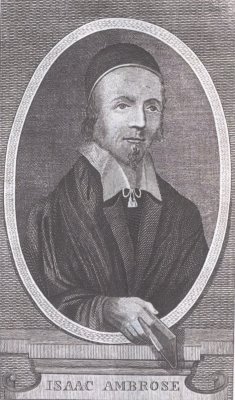
Isaac Ambrosed. 1664 – Isaac Ambrose. I don’t know much about this man. I do know that he was a Puritan, but not the typical rationalistic kind. His book Looking Unto Jesus dealt with the salvation we have in Christ, and practical instructions on meditation and contemplation. The book was highly valued by John Wesley, Leonard Ravenhill, and other great preachers. See Tom Schwanda’s Soul Recreation: The Contemplative-Mystical Piety of Puritanism (2012).

George Fox (d. 1691)d. 1691 – George Fox. The founder of the Quakers might very well be the first evangelical mystic in the sense that he was a founder of a Protestant denomination which held onto Puritan ethics, developed an Arminian view of grace, and openness to the experiences of the Holy Spirit through mystical silence. See The Journal of George Fox.

d. 1791 – John Wesley. The founder of the Methodist movement during the times of the Great Awakenings, John Wesley was raised in the Church of England (Anglican). As far as I know, he was the first Evangelical mystic (properly so-called). His background prepared him for it. The Church of England is sort of a cross-breed between the Roman Catholic Church and a Protestant church. Among the Catholic influences, the Anglicans have always had a respect for the Catholic saints, and more of an openness to the Catholic mystical tradition. Because Wesley was raised to appreciate the Catholic mystics, in one dimension or another, when he became a Methodist leader, he naturally imparted whatever level of mysticism he had to the early Methodists. Honestly, I don’t know just how mystical Wesley really was or how much he practiced contemplation. But what I do know is that he was an avid reader. And he was a big fan of Thomas a Kempis’ The Imitation of Christ and Michael Molinos’ The Spiritual Guide (on contemplative prayer). His life was filled with spiritual experiences: see Daniel Jennings’ The Supernatural Occurrences of John Wesley. For more on this subject, see Robert Tuttle’s Mysticism in the Wesleyan Tradition (1989).

d. 1919 – A. B. Simpson. Founder of the Christian & Missionary Alliance. As a part of the Faith Cure movement, he was an advocate of healing prayer like Gordon and Murray, and wrote The Gospel of Healing (1885). He was aware of the history of Christian mysticism, but didn’t seem to be a big fan of the mystics–as he was very conscientious not to fall into their errors. But he was influenced by their concepts of the “mysteries” of God, and thus read the New Testament through such a perspective. He was very Bible-oriented and Evangelical, but still had a slight leaning towards the mystical. It appears at one point in his life when he had a psychotic episode, he saw an angelic star appear in front of his face. See also Paul L. King’s Genuine Gold: The Cautiously Charismatic Story of the Early Christian and Missionary Alliance (2006). [see also Clyde McLean Glass’ “Mysticism and Contemplation in the Life and Teaching of Albert Benjamin Simpson”]

d. 1922 – William J. Seymour. A primary founder of Pentecostalism. Seymour was influenced by Charles Parham, who had a Quaker wife. But it was Seymour that God used to bring the Azusa Street revival of 1906; and hence spread the Pentecostal movement all over the world. Seymour was a Holiness preacher and was impressed by Parham’s teaching and experience of tongues. It was the spreading of this gift of tongues, the presence of God, ecstasy, physical manifestations of the Holy Spirit, healings, prophecies, and miracles that characterized the Pentecostal movement. But because of the novelty of tongues, most people focused on it. Nevertheless, Seymour and the early Azusa Street people practiced contemplation, but they called it “tarrying” for power from on high, like in Acts 2. Before giving a sermon, Seymour would put his head in a box and contemplate God until he heard a word from Him. The outpouring of God’s power and miracles were so amazing that black people, white people, and non-Christians were attracted to the meetings. But among the Christians at Azusa Street, it is said that “the color lines were washed away in the blood.”

d. 1947 – Smith Wigglesworth.

d. 1963 – A. W. Tozer. An influential preacher in the Christian & Missionary Alliance. He is “the grandfather of Evangelical mysticism” in the modern sense. He wrote The Pursuit of God (1948), which influenced Richard Foster and many other people in the Charismatic movement of the 1970s and on. Although Tozer’s classic book is sort of hard to understand because of his extremely educated selection of vocabulary words, in it you can see a man that had a high regard for the Catholic mystics, holiness, humility, detachment from possessions,  contemplation, and hearing God’s voice. See E. Lynn Harris’ The Mystic Spirituality of A. W. Tozer (1992)–might be hard to find at an affordable price, though.

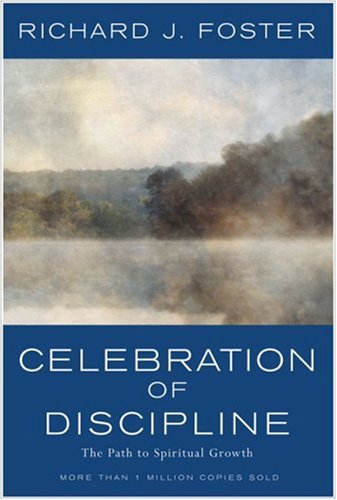
d. 1997 – John Wimber. The founder of the Vineyard churches. In the late 1970s, Wimber had Bible study groups at one point in a Quaker church, and at another point with a Calvary Chapel church. But because he moved in the direction of miraculous gifts in his church meetings (1 Cor. 12:8-10), he was excluded from both of these groups. He went on to join the then forming Vineyard church in a home. Eventually, Wimber rose to be a prominent Vineyard leader. And when Richard Foster’s Celebration of Discipline (1978) came out, he ate that book up! Contemplation and spiritual experiences were important to Wimber, but especially divine healing. He wrote two books on healing: Power Evangelism (1986) and Power Healing (1987).

——-

UPDATE: 5/5/23 – I am not as theologically concerned about Crowder as I used to be. I’ve seen him retract his “grace movement” beliefs on the Jesus Trip called “Do We Ditch the Old Testament?” But I think he still might be a universalist due to the influence of C. Baxter Kruger. Although their “trinitarianism,” as they call it, is not properly universalist per se; it still seems to leave people in a confused state of uncertainty about the doctrine of eternal punishment (Hell).

12/28/13

John Crowder’s “Possible” Universalism:
A Liberal Christian Mystic, But Not an Evangelical One

John CrowderAuthor of Miracle Workers, Reformers, and the New Mystics (2006) and The Ecstasy of Loving God (2008)–for a while I put him in the Evangelical mystic category. But later I progressively became aware of some universalist tendencies in his thought; then I became alarmed; and I fought within myself over this. Now I am sure Crowder should repent from his “trinitarian universalism,” if that’s what you want to call it. The best representation of his views on this subject are in the YouTube video: “Hell Revisited – The Jesus Trip.” (August 16, 2012). The following are chronological notes on this video, and you can see how towards the middle of the video, he becomes more explicitly universalist, but is always trying to avoid a dogmatic Universalist label. He doesn’t like labels. But I do, so long as you explain the meaning; there is truth in that. If I were to label him, he is an “almost Christian universalist” or perhaps a “wannabe Christian universalist,” but he just lacks full certainty about it at this point in his life. Wikipedia summarizes concisely Crowder’s stance with Barth: “While Thomas Talbott, “Gregory MacDonald” (the penname for Robin Parry) and Eric Reitan regard everlasting punishment as impossible,[11][13][33] Reformed, neo-orthodox theologian Karl Barth and Catholic theologian Hans Urs von Balthasar believed that the eventual salvation of all was merely a possibility.”[34]

Crowder claims not be a universalist.

Crowder merely claims to believe in unlimited atonement or “universal atonement” (Arminian view). I agree with unlimited atonement.

Crowder called double predestination and limited atonement a demonic idea, which Wesley and myself agree with Crowder on. If its not demonic, then its at least a very bad interpretation of Scripture. I reject double predestination and limited atonement.

Crowder says Jonathan Edwards’ “Sinners in the Hands of an Angry God”—that the title of the sermon makes you want to vomit. (I am a Jonathan Edwards fan for several reasons, not the least of which was his elaborate theology of Hell.)

Crowder denies that God hates the wicked, because “God is love.”

Favorably quotes Karl Barth. (heretic; ungodly)

25:00-26:00 goes in the universalism direction. He extends universal atonement to mean that every man has been atoned for automatically (whether or not individuals come to personal repentance and faith in the cross).

31:00ff – Crowder believes its possible people in Hell “under the earth” will all truly worship Jesus and be saved (universalism).

31:55ff – Crowder quickly retracts by saying, “I am not a universalist…but I do have hope.” But terminology will not save him from the universalistic interpretations of Scripture to which he obviously holds (or leans toward). To believe anyone is saved from Hell, after already having been condemned there, is not the Arminian view of unlimited atonement; it is Christian Universalism.

34:00ff – Crowder says the reason why he is not a “Universalist” is because he’s not dogmatic about it. He claims a certain level of agnosticism or uncertainty about the universalist revelation. He’s a “hopeful universalist,” but not a dogmatically, absolutely sure, card-carrying Universalist with a capital “U”.

38:00 – “I am not saying that all roads lead to Rome” (that is, he’s against religious pluralism, or the John Hick view).

39:00 – “I actually do not vilify Christian Universalists as ultimate heretics.” That is, people like Rob Bell (Love Wins).

40:00ff – Crowder says Christian Universalists “are our brothers.” (!)

42:00 – Crowder says his “trinitarian” (trinitarian universalism) influences in this view are C. S. Lewis, Robert Farrar Capon (especially), C. Baxter Kruger, Steve McVey, Francois du Toit, Karl Barth, and T. F. Torrance.

It is clear that John Crowder rejects the absolute certainty of the Reformed doctrine of Hell as an eternal conscious punishment in fire. By saying this and many other things in this video, Crowder obviously would reject Westminster Confession, ch. 33: “Of the Last Judgment”:

The end of God’s appointing this day is for the manifestation of the glory of His mercy, in the eternal salvation of the elect; and of His justice, in the damnation of the reprobate, who are wicked and disobedient. For then shall the righteous go into everlasting life, and receive that fulness of joy and refreshing, which shall come from the presence of the Lord; but the wicked who know not God, and obey not the Gospel of Jesus Christ, shall be cast into eternal torments, and be punished with everlasting destruction from the presence of the Lord, and from the glory of His power.

The Biblical references used in support of this are the following (that is, these references come from the Westminster Confession itself):

MAT 25:31 When the Son of man shall come in his glory, and all the holy angels with him, then shall he sit upon the throne of his glory: 32 And before him shall be gathered all nations: and he shall separate them one from another, as a shepherd divideth his sheep from the goats: 33 And he shall set the sheep on his right hand, but the goats on the left. 34 Then shall the King say unto them on his right hand, Come, ye blessed of my Father, inherit the kingdom prepared for you from the foundation of the world: 35 For I was an hungred, and ye gave me meat: I was thirsty, and ye gave me drink: I was a stranger, and ye took me in: 36 Naked, and ye clothed me: I was sick, and ye visited me: I was in prison, and ye came unto me. 37 Then shall the righteous answer him, saying, Lord, when saw we thee an hungred, and fed thee? or thirsty, and gave thee drink? 38 When saw we thee a stranger, and took thee in? or naked, and clothed thee? 39 Or when saw we thee sick, or in prison, and came unto thee? 40 And the King shall answer and say unto them, Verily I say unto you, Inasmuch as ye have done it unto one of the least of these my brethren, ye have done it unto me. 41 Then shall he say also unto them on the left hand, Depart from me, ye cursed, into everlasting fire, prepared for the devil and his angels: 42 For I was an hungred, and ye gave me no meat: I was thirsty, and ye gave me no drink: 43 I was a stranger, and ye took me not in: naked, and ye clothed me not: sick, and in prison, and ye visited me not. 44 Then shall they also answer him, saying, Lord, when saw we thee an hungred, or athirst, or a stranger, or naked, or sick, or in prison, and did not minister unto thee? 45 Then shall he answer them, saying, Verily I say unto you, Inasmuch as ye did it not to one of the least of these, ye did it not to me. 46 And these shall go away into everlasting punishment: but the righteous into life eternal. ROM 2:5 But after thy hardness and impenitent heart treasurest up unto thyself wrath against the day of wrath and revelation of the righteous judgment of God; 6 Who will render to every man according to his deeds: ROM 9:22 What if God, willing to shew his wrath, and to make his power known, endured with much longsuffering the vessels of wrath fitted to destruction: 23 And that he might make known the riches of his glory on the vessels of mercy, which he had afore prepared unto glory. MAT 5:21 His lord said unto him, Well done, thou good and faithful servant: thou hast been faithful over a few things, I will make thee ruler over many things: enter thou into the joy of thy lord. ACT 3:19 Repent ye therefore, and be converted, that your sins may be blotted out, when the times of refreshing shall come from the presence of the Lord; 2TH 1:7 And to you who are troubled rest with us, when the Lord Jesus shall be revealed from heaven with his mighty angels, 8 In flaming fire taking vengeance on them that know not God, and that obey not the gospel of our Lord Jesus Christ: 9 Who shall be punished with everlasting destruction from the presence of the Lord, and from the glory of his power; 10 When he shall come to be glorified in his saints, and to be admired in all them that believe (because our testimony among you was believed) in that day.

Crowder does not reject Hell-fire torments, but he does reject the “eternity” of Hell-fire torments. “I don’t know” seems to be his bottom line. But note the everlasting fire, everlasting punishment, and everlasting destruction spoken of in Matthew 25:41, 46; and 2 Thessalonians 1:9. He would do well to appropriate the truths of Robert Tuttle’s Mysticism in the Wesleyan Tradition and Christopher Morgan’s Hell Under Fire.

59:00 – To the issue of “What of those who have not heard the Gospel?” He again says, “I don’t know.” And he cannot say such people are automatically going to Hell when they die.

1:07:00 – “Everybody is included in the finished work of the cross. Even unbelievers are included in a hidden way.”

1:08:00 – Expresses an “everyone is an anonymous Christian” view (cp. Karl Rahner).

Three Mystical Heresies in the Evangelical and Charismatic Churches

Three issues are burning today for Evangelical mystics. Quietism, New Age occultism, and Universalism. We need to be on guard against the errors of Madame Guyon and Michael Molinos. Augustin Poulain dealt with this in his chapter “On Quietism” in The Graces of Interior Prayer. We also need to guard ourselves against New Age occultism. There are many good Evangelical books about this. The best I know of is Clifford Wilson and John Weldon’s Occult Shock and Psychic Forces. And finally, we need to know for sure, that all Universalism is heresy (George Fox, Quakers, etc); and only an explicit faith in the revealed Gospel of Jesus Christ, will effect salvation by faith. A good explanation of this can be found in R. Douglas Geivett and W. Gary Phillips’ “A Particularist View: An Evidentialist Approach” in Four Views on Salvation in a Pluralistic World.

Posted in Uncategorized | Leave a comment

A Response to T. A. McMahon’s Article: “Evangelical Mysticism?”

Dave Hunt and T. A. McMahon are modern-day examples of the Ulrich Zwingli mentality. Anti-mystical Evangelicalism. Why? Bible. Bible. Bible. Pure and simple. Sola Scriptura. “Come now, and let us reason together, saith the Lord” (Isaiah 1:18) is their rally cry. They want Christianity to be “Biblical” and not mystical at all. They view their theology as “solid” and not “tossed about by every wind of doctrine” (Ephesians 4:14). But there is a problem with that kind of religion. You can’t very well have a direct encounter with Jesus Christ can you? You’ll have to wait until Heaven for that. To Hunt and McMahon, Christian faith is essentially about Bible study, praying for needs, and going to church to hear more Bible teaching. It is very intellectual, rational, and philosophical. Spiritual gifts and experiences are shunned to the utmost extreme. Although I disagree with Hunt and McMahon’s perspective of Charismatic and mystical Christianity, I still think they are members of the Body of Christ by faith, and I think they wrote a great book called The Seduction of Christianity (1985). This book documents very clearly how New Age influences have crept into the church through prominent Charismatic teachers such as Morton Kelsey, Agnes Sanford, and others. Now they have a ministry site called http://www.thebereancall.org.

In 2008, McMahon posted an article on their website called “Evangelical Mysticism?”–where he attempted to attack Evangelical mysticism by showing how wrong the Roman Catholic Church is about spiritual practices. By doing this, he implied that Evangelicals would be wise not to borrow spiritual practices from the Catholics. I am going to respond to some of McMahon’s main ideas and statements that he has made in this article.

Firstly, he defines an Evangelical as someone who accepts “the Bible alone as their authority” (sola Scriptura). It looks like to me that McMahon only believes that Cessationist Reformed Protestants, such as conservative Presbyterians and Baptists, are truly “Evangelicals.” Makes sense. Dave Hunt is Plymouth Brethren–and I know they are not Charismatic. If you’re Pentecostal or Charismatic, then that apparently disqualifies you as an Evangelical in his mind. Of course, this contradicts what the National Association of Evangelicals thinks, which includes Assemblies of God, the Vineyard, and other Spirit-filled denominations. Evangelical Charismatics believe that both the Bible and the Holy Spirit/angels can speak to men, but that the Bible is the final authority on spiritual discernment.

Secondly, he attacks all Roman Catholic liturgies and sacraments as demonic superstitions and spiritual bondages. He is an ex-Catholic, as I myself am also. However, he is ex-Catholic more so by choice. My parents chose for me when I was nine, but I eventually came to see in the end that Roman Catholicism leads to Mary worship. So I too am also ex-Catholic by choice. But I think it is a bit overboard for him to demonize all of their liturgies. I think it is well within the realm of reason to say God’s Spirit can speak through liturgical music, and especially during the Scripture readings, and the sermons of the priests.

Thirdly, he attacks the “Gospel of Rome” as he calls it, which is performing Catholic devotions in order to earn one’s entrance into Heaven. By this he means praying to Mary and the saints, trusting in baptism, rosaries, Lent, the Eucharist, confession to a priest, etc. As an Evangelical I agree with McMahon that this is no Gospel at all, and completely contradicts the New Testament message of salvation by faith in Jesus’ substitutionary death on the cross for the sins of mankind; and of the Holy Spirit’s role in producing good ethical behavior in the life of a Christian. However, what McMahon is doing at this point in his article is trying to build up the reader’s resistance to any and everything that comes out of the Roman Catholic Church. And what it will eventually lead to is condemning contemplative prayer, which has been the intellectual property of Catholic monks for centuries. I cannot and will not agree with McMahon when he starts condemning contemplation on Jesus Christ just because “Catholics did it.”

Fourthly, he attacks Vatican II’s ecumenical program to reach out to liberal Protestants and conservative Evangelicals. He lists many Evangelical leaders, including Billy Graham, as being deceived by the Catholic Church’s ecumenism. McMahon believes it is part of a conspiracy to draw the Protestants back to the Catholic fold and under the authority of the pope. He’s probably right about the conspiracy thing, because all denominational ministers essentially want others to come to “their” church. But I do believe that there are Catholics that are members of the Body of Christ just as much as there are Evangelicals that are part of the Body of Christ. I have met some Catholics that don’t worship Mary and believe the Gospel just like Evangelicals do! Still, McMahon has not gained any ground against Evangelical mysticism yet. All he has done so far is attempted to discredit the Roman Catholic Church as an evil institution. Contemplation, which is the essence of mysticism, has nothing to do with any of this.

Fifthly, he attacks the influence of Mel Gibson’s The Passion of the Christ on the Evangelical church. Apparently, to McMahon this movie was so “obviously Catholic” to many Evangelical youth, that they were suddenly inspired to engage in Catholic liturgies and practices. When I first saw this movie, I was not under the impression that it was obviously a Catholic interpretation. I read and heard some things later that pointed out certain subtleties in the movie, such as Mary’s occasional role, but that was it. McMahon is right when he said that Gibson’s movie was based off of the visions of a certain Catholic mystic in the 18th century. That was Anne Catherine Emmerich; and the title of her revelations was called The Dolorous Passion of Our Lord Jesus Christ. McMahon condemns all of this as depicting “(1) numerous scenes based upon the imagination of an 18th-century Catholic mystic, (2) the portrayal of Mary as co-redemptrix in the salvation of mankind, and (3) a very Catholic gospel that has Christ atoning for sin by suffering the unrelenting physical tortures of the Roman soldiers.” (1) Based upon her imagination? I think that’s a pretty rash conclusion; more like received into her imagination. Ms. Emmerich was a visionary, and claimed that her visions were revelations from the Lord. Whether or not one believes her visions were divine in origin, one must admit that she claimed they were visions–not merely visualizations coming out of her imagination. (2) The portrayal of Mary as co-redemptrix? There are times in Gibson’s movie when Mary is portrayed as suffering from sorrow as her Son is tormented. And yes, I will admit, this does play into the Catholic gospel–and is not Biblical. (3) A very Catholic gospel of Christ’s whippings from the soldiers? What’s so “Catholic” about that? If it is Catholic, it’s not un-Biblical. Jesus didn’t only atone for our sins on the cross. He also atoned for them as He was whipped by the soldiers. “By His scourging we are healed” (Isaiah 53:5, NASB). Jesus was not scourged on the cross; He was scourged by the soldiers as Ms. Emmerich and Mel Gibson so unreservedly portray. There is nothing so “Catholic” about this that Evangelicals should be forbidden from meditating on it.

Sixthly, he criticizes the emerging church movement for accepting Catholic contemplative practices, and calls them “occult techniques.” I have several responses to this statement. (1) While it is true that the emerging church has adopted Evangelical mysticism, I want to say right now that I am not a part of the emerging church movement. It is a heretical, liberal, postmodern, relativistic house church movement. I believe in house churches, but not the emergent type. (2) After all that McMahon has said of the Catholic Church so far–condemning their doctrines of salvation and so forth–he has not yet provided one proof that the Catholics’ practice of contemplation is wrong. But it is here that he simply assumes that it is wrong. Why? Because it comes from the evil Roman Catholic Church. Here I see a bias against contemplation without any evidence. (3) Occult techniques? Like the kind associated with spiritism in Deuteronomy 18:9-14? That’s pretty far fetched. What he’s really saying is that contemplation is the exclusive property of the occult. It is off limits for all Christians. That contradicts Hebrews 12:2 and Psalm 46:10a which command Christians to contemplate Jesus.

Seventh, he states that Catholic mysticism’s parent is Eastern mysticism (New Age/Hindu). This is an assumption completely without foundation. It is true that New Agers and Hindus practice their own versions of contemplation–called Transcendental Meditation, Yoga, Zen, and other things. It is also assumed by liberal theologians that Catholic saints borrowed the practice of contemplation from the Neoplatonists. This is also without any historical merit whatsoever. Especially since Origen, who was a Neoplatonic church father, was officially condemned as a heretic by the Catholic Church for these very beliefs. And because the Desert Fathers, the first visible contemplative Christians, were anti-Neoplatonist and opposed their doctrine of reincarnation. The true origin of Catholic mysticism goes like this: contemplation originated with Old Testament prophets, the Essenes, John the Baptist, Jesus, the apostles, the disciples, the apostolic fathers, early church prophets, the Desert Fathers, and Catholic monasticism from there on out. Eastern mysticism is not the parent of Catholic mysticism. Eastern mysticism is from the Far East in India. Catholic mysticism is from the other side of the Mediterranean Sea–in the West.

Eighth, he says that Catholic mysticism “claims that God can neither be known nor understood through human reason but only experienced subjectively through various techniques.” Actually, McMahon is distorting the apophatic tradition of Eastern Orthodox mysticism. The only Catholics to really catch onto this idea of contemplation are the author of The Cloud of Unknowing and St. John of the Cross. And actually, what they really say is that God cannot be understood through reason in the ecstatic state of contemplation. But when one is not in a state of contemplation, but in a rational state of mind, it is perfectly okay to delineate the attributes of God, and understand His personality traits by employing one’s reason (which McMahon likes to emphasize). But when one is rapt up in ecstatic contemplation of God, the mystic is only conscious of the pure presence of God, and nothing else. In such a condition of mind, he is unable to employ deductive reasoning, discursive logic, and methods of intellectual understanding. He just sits in awe of the holy presence of God and tries to take it all in.

Ninth, he says “the goal of mysticism is union with God, i.e., the merging of one’s soul into God. This is an impossibility that reveals mysticism’s pantheistic and panentheistic roots, that God is everything and is in everything. No. God is infinite and transcendent, absolutely separate from His finite creation.” McMahon is right when he says that goal of mysticism is the merging of one’s soul with God. In ecstatic contemplation, the human soul actually immerses its conscious mind into the presence of God and gets sort of absorbed into it–this is perfect peace. But in Evangelical mysticism, the creature remains distinct from the Creator. It’s just that both spirits are touching one another very delicately in pure peace, joy, and love. I feel sorry for McMahon that he believes this is impossible; boy is he missing out! He also confuses pantheism with panentheism. Pantheism is the New Age/Hindu teaching that God is the universe and the universe is God. Panentheism is the Biblical teaching of the omnipresence of God couched in new terminology–that God is in the universe and that the universe is in God (but they are still separate and distinct, yet closely touching one another). Deism is the teaching that God is so transcendent and separate from His creation that He is only to be thought of as far away, a billion million miles away in Heaven. McMahon seems to be an Evangelical deist that doesn’t believe in the omnipresence of the Holy Spirit.

Tenth, he condemns centering prayer. With McMahon, I too condemn centering prayer, but not because it’s a contemplative practice. I condemn it because it is taught from the perspective of Thomas Keating and M. Basil Pennington that it’s okay for Christian contemplatives to borrow contemplative practices from the Far East. There is nothing inherently Far Eastern about centering prayer itself. In fact, it’s just simply contemplation on a holy word like “God.” But it is taught from a New Age Christian perspective–and that is detestable (Deut. 18:9-14). It is contemplating on the wrong god.

Eleventh, he condemns the Jesus Prayer as a vain repetition and act of nonsense. In Matthew 6:7-8, Jesus said that Christians are not to use vain or meaningless repetitions when they pray to God, because God already knows what you need. However, Jesus was referring to petitionary prayer, not meditative prayer. The Jesus Prayer is a meditative prayer of the heart. “Lord Jesus, have mercy on me” (Luke 18:13) is to be mentally or verbally repeated thousands of times a day. It is a repetition, but a meaningful repetition, not a vain or nonsensical act. The purpose of this practice is to fulfill Paul’s command to “pray without ceasing” (1 Thess. 5:17); and through this unceasing prayer, to train the spirit and mind to concentrate on Jesus, and thus prepare the will for a prolonged and quiet contemplation of God.

Twelfth, he condemns Lectio Divina, but doesn’t say why. Lectio Divina is the practice of slowly reading the Bible in a meditative mindset so as to allow God to speak private revelation to you through the text and reveal deep and mystic revelations from the Scriptures. McMahon implies that this is bad simply because it’s not “normal Bible study.” Then he jumps to say, “It’s clear from God’s Word that the spirit with which [the Catholic saints] had a “mystical union” in their contemplative altered state of consciousness was not Jesus.” Huh? This has no bearing upon whether or not Lectio Divina is good or bad, but he seemed to think it did. He provides no proof texts to demonstrate how “clear from God’s Word” this really is to him. Also, note how he uses the phrase “altered state of consciousness.” This is a standard New Age phrase for ecstasy or trance. McMahon must be unaware of Acts 10:10 and other Biblical instances of the word “trance.” He probably thinks, like most Evangelicals do, that all trance experiences are demonic–hence the pejorative use of the phrase “altered state of consciousness.”

Thirteenth, he condemns the Ignatian Examen as an occult visualization. St. Ignatius’ The Spiritual Exercises is one of the classic handbooks on Christian spirituality. It teaches one to close the eyes, and visualize oneself with Christ in various scenes from His life in the Gospels. This opens up one’s spirit to the Spirit of Jesus and a contemplative state to receive revelation from God. McMahon believes that this sort of visualization is adding to the Scripture, and consequently sinful (in keeping with sola Scriptura). Even though Ignatius’ visualizations don’t add to the Gospels, but rather focus on images found in them, this still sounds too occultic to McMahon. And while I will admit that New Agers practice visualization in order to contact their spirit guides, there is nothing sinful or un-Biblical about visualizing Jesus. Rather the opposite is true: “I have set the Lord always before me” (Ps. 16:8). David visualized the Lord in front of him.

Fourteenth, he condemns prayer labyrinths, simply because the Catholics used them to “get out of Purgatory.” A prayer labyrinth is a sort of maze that you walk and meditate on as you imagine yourself on the Via Dolorosa, suffering with Jesus in His passion. Why McMahon finds fault with this I don’t know. His only reason seems to be that Catholics at one point used it as a legalistic work to get out of Purgatory. I say…so what? In itself, there is nothing wrong with walking and meditating on sharing in the sufferings of Christ. Philippians 3:10 says, “I want to know Christ and the power of His resurrection and the fellowship of sharing in His sufferings, becoming like Him in His death.”

Fifteenth, he concludes with saying that Evangelical mysticism is all a bunch of New Age occultism. Of course he does! If McMahon is willing to believe sola Scriptura and that St. Ignatius’ The Spiritual Exercises is a handbook of Catholic occultism, then he’s going to believe EVERYTHING ASSOCIATED is occultic and New Age. I’m sorry, but I don’t think McMahon sees what I see. It’s not about embracing Catholic dogmas or any New Age gods or practices. Evangelical mysticism is Evangelical Christianity melded to the practice of contemplation on Jesus. It might be open to Ignatian visualization or the Jesus Prayer–but it all comes back to “fixing our eyes on Jesus” (Hebrews 12:2).

Posted in Uncategorized | Leave a comment

What Is Evangelical Mysticism?

See also: Evangelical Mystics In Church History

In order to answer this question adequately, I will define the word “Evangelical” and “mysticism,” and then merge the two to give a composite definition. My definition of the word Evangelical is in reference to the modern Protestant tradition. Evangelicalism began with the 17th and 18th century movements of Puritanism, Pietism, Methodism, and the Great Awakenings. Its historical luminaries have been John Wesley (the founder of Methodism), Jonathan Edwards (Puritan), George Whitefield, Charles Finney, Charles Spurgeon, and D. L. Moody. In the early 1900s, Pentecostalism introduced a stronger emphasis on miraculous gifts, such as tongues, into the Evangelical tradition. Early Pentecostalism was basically an outgrowth of Methodism; and was led by a black minister named William Seymour.

As liberal theology had begun to overtake many of the Methodist churches in the mid-1800s, there was a conservative reaction against this called the Holiness movement. This was primarily led by a woman named Phoebe Palmer. Holiness churches grew out of this movement; and William Seymour was a Holiness preacher. It was in this context that the Pentecostal movement developed in 1906. Soon enough, Pentecostal denominations organized such as the Pentecostal Holiness Church and the Assemblies of God. Holy living, Charismatic worship, and tongues were their emphases. Meanwhile, the Fundamentalist movement was taking shape, and in 1910, conservative theologians came to agree on what the Bible taught with regards to fundamental Christian truths that liberal Christianity was trying to undermine. Among these truths were the divine inspiration of the Bible, the virgin birth of Christ, His atoning death on the cross, His bodily resurrection, and His miracles. In 1909, R. A. Torrey edited the four volume work called The Fundamentals, which was a comprehensive conservative theological response to the liberal high criticism of the Bible, “Christian Darwinism,” and many other heresies.

Originally, the Fundamentalists not only rallied together around theologically conservative beliefs, but also practiced a kind of separatist anti-social holiness. They were very separatist and legalistic in the way they approached life; and there were no gray areas or freedom for the conscience in ethical matters. No going to the movies…ever. No drinking alcohol. No coffee. Dress up for church. No long hair on men. All liberals are evil no matter what. And many other such condescending attitudes. While we have much to be thankful to the Fundamentalists for formulating orthodox Christian theology in an age of heresy, we would also do well to receive with moderation their suggestions on what they felt it meant to live a holy life. This is where Neo-Evangelicalism came in. This phrase was originally used by the theologian Harold Ockenga in 1947. Other theologians such as Carl F. H. Henry and evangelist Billy Graham joined the new Evangelical movement. The book that really seemed to start it all was Henry’s The Uneasy Conscience of Modern Fundamentalism (1947). Eventually they just came to be called Evangelicals. After being Fundamentalists for a number of years, many of these new Evangelical ministers expressed that they did not want to isolate themselves from the world or the culture around them. They wanted to be relevant in their Christian witness and engage the culture. This led to the founding of the National Association of Evangelicals, a network of denominations that affiliated themselves with the shared beliefs of the Evangelical cause.

Today, most conservative Protestants are called conservative Evangelicals—as “Fundamentalist” has turned into a pejorative term. Liberals are called “mainline” or simply liberal; Evangelical is a term that is still synonymous with conservative Christian beliefs and opposes false doctrines, heresies, and cults. For example, Walter Martin’s The Kingdom of the Cults (1965) is now considered a classic Evangelical work against the cults and heresies of our times. However, Martin was also a Charismatic.

In the 1960s and 70s, the Charismatic movement brought the miraculous gifts of the Spirit to both liberal and Evangelical churches. As the liberal churches didn’t have the discernment or the theology to handle such an outpouring of spiritual experiences, they eventually turned into “New Age” Christians, and adopted Yoga, Zen, and Transcendental Meditation practices from the Far East. This happened especially in the Roman Catholic Church, the Episcopal Church, the United Methodist Church, the Religious Society of Friends, and other mainline liberal denominations. The Catholic monks Thomas Merton and Thomas Keating popularized “centering prayer” as they incorporated Zen and Yoga into Christian meditation. However the Evangelical churches, although bitterly split over the issue of tongues, had more of a theological foundation to discern against being deceived by New Age influences.

Eventually in the late 1970s during the Charismatic movement, an Evangelical Charismatic denomination emerged called the Vineyard, which also had roots in the Jesus movement. The Vineyard was unique as a religious organization, because unlike the Assemblies of God and other Pentecostal denominations before them, the Vineyard’s emphasis was on restoring the ministry of healing to the church. By the late 1980s, the Kansas City prophets emerged out of a Vineyard church, restoring the modern experience of dreams and visions to the Evangelical world. Slowly but surely, the Vineyard leaders Mike Bickle and John Wimber caught on to contemplative prayer or soaking, as did John Arnott of the Toronto Blessing. And as the Vineyard developed, they looked kindly on Richard Foster’s Celebration of Discipline (1978), which was written by an Evangelical Quaker, and had a helpful chapter on contemplative prayer.

In my opinion, this is historically where modern Evangelical mysticism had its beginning. Anywhere between 1975 and 1978 during the Charismatic movement. But it really began with Richard Foster’s influence on the Vineyard and other Evangelical churches. While it is true that A. W. Tozer’s The Pursuit of God (1948) was an Evangelical work on contemplative prayer, it was a book written largely before its time when it first came out. It was pre-Charismatic movement, but soon enough Charismatics began to latch on to Tozer’s words as well.

In my definition, mysticism is a form of spirituality that uses the practice of contemplation in order to experience the presence and revelations of one’s god. Evangelical mysticism is believing like an Evangelical, but behaving like a mystic. Evangelicals believe, among other things, that Jesus is the Way, the Truth, and the Life; and that there is salvation in no other Name but His (John 14:6; Acts 4:12). Evangelicals believe in the one true God of the Bible and they will have no other gods before Him (Exod. 20:3). Therefore, they oppose the New Age movement and its practices of Yoga, Transcendental Meditation, and Zen that have crept into the mainline liberal churches. Nevertheless, unlike classic Evangelicals who believe in sola Scriptura or “Bible only” kind of thinking, Evangelical mystics not only believe that God’s voice can be heard today through experience, but that it can be actively pursued through the practice of contemplative prayer.

In short, Evangelical mysticism is a form of Christian spirituality that adheres to all of the classical conservative beliefs of Evangelicals except for sola Scriptura, and is fervently pursuant of God Himself through the practice of contemplation—as the Holy Spirit inspires. That is Evangelical mysticism; it is Evangelical Christianity with a prophetic fire burning in the quiet of divine contemplation. It has had its predecessors such as Isaac Ambrose, Andrew Murray, F. B. Meyer, William Seymour, John G. Lake, and A. W. Tozer. But it wasn’t until the late 1970s and early 80s, that the Evangelical mysticism I speak of really started to take shape theologically. This was through the writings of Richard Foster, and the practice of contemplative prayer in the Vineyard, and other Evangelical Charismatic churches.

Posted in Uncategorized | Leave a comment