
“Without holiness no one will see the Lord.” –Hebrews 12:14, NIV
Two mockers: “Give that man an Oscar!” and “Follow the Yellow Brick Road!” Sheesh. And evangelism to a pot smoker.
“Without holiness no one will see the Lord.” –Hebrews 12:14, NIV
Two mockers: “Give that man an Oscar!” and “Follow the Yellow Brick Road!” Sheesh. And evangelism to a pot smoker.
Hell is underneath us in the spirit world. This has always been the classic view of Hell from the Old Testament times, to the early church, up through the Middle Ages. Modern man with his scientific skepticism and rationalism thinks that he knows better, and says there is no Hell. They say this for the same reason they claim there is no God: neither of them are physical, able to be seen with the naked eye; nor are they testable in the scientific sense. And so, because skeptics cannot scientifically test the existence of Hell, they assume they know that no Hell exists; or, they take a comfortable “I don’t know” viewpoint. But this is a bad idea. For several reasons: (1) The Bible never claims that Hell can be scientifically proven by experiments. (2) The Bible shows that Hell is as much a place as Heaven is; just as much as demons and angels are persons. (3) The Bible shows that Hell was created by God at first, for the purpose of putting the devil and his angels into a sort of spirit prison (Matthew 25:41). (4) The Bible shows that the only way that men have ever come to receive information about Hell has come directly from God through what are called prophetic dreams, visions, and revelations; in modern times, people would also use the phrase “out-of-body experiences.” (5) The Bible shows that God requires men on Earth to have FAITH in the divine revelations He has given; including the revelations pertaining to that dreadful place called Hell.
Hell is seen in Biblical visions as located downward, under the Earth: “Let death seize them; let them go down alive into Hell, for wickedness is in their dwellings and among them” (Psalm 55:15). How can it be that someone remains alive after they die? The soul is immortal, that’s why; your soul will live forever–there is no getting around it. This is why the psalmist prayed that if God would just let the wicked die, and let them “go down alive into Hell”–for that is naturally where they are headed. But what is more, they will be “thrown into Hell” as Jesus said (Matthew 5:29, NIV). Either God, an angel, or a demon by the permission of God must do this. While present torments of Hell must be widely varied, according to the severity of sins committed in this life (Luke 12:47-48); in the very end after the Day of Judgment, the final, future torment of Hell’s inhabitants will consist of “being tormented with fire and brimstone (that is, burning hot fireballs of stinking sulfur, raining down upon their heads) in the presence of the holy angels and in the presence of the Lamb (that is, the Lord Jesus Christ). And the smoke of their torment will ascend forever and ever; and they will have no rest day or night” (Revelation 14:10-11). The reason for this is simple: to them, the wicked ones of humanity, it has been given to “drink of the wine of the wrath of God, which is mixed in full strength in the cup of His anger” (Revelation 14:10, NASB).
And why them? Why not all men, since all men have fallen short of the glory of God? Because these men rejected the Gospel of Jesus Christ, ignored the Holy Spirit and their consciences, and lived their lives according to what they wanted to do, and not what God commanded. The Bible says that God will “in flaming fire take vengeance (or revenge) on those who do not know God, and on those who do not obey the Gospel of our Lord Jesus Christ” (2 Thessalonians 1:8). This is why the apostle Paul said, “Beloved, do not avenge yourselves, but rather give place to wrath; for it is written, ‘Vengeance is Mine, I will repay,’ says the Lord” (Romans 12:19). HELL is what is referred to here; HELL is the place where God gets His payback upon the wicked; it is the place where He is at full license to punish the wicked with His fierce and holy anger, and to allow them to prosper no more; it is the place where they get what they deserve; it is the proper place for those non-Christians who continuously resisted the Holy Spirit, and the call of the Gospel on their lives. If you were to look into Hell right now, you would see: “the lawless and insubordinate, the ungodly and sinners, the unholy and profane, murderers of fathers and murderers of mothers, manslayers, fornicators, sodomites, kidnappers, liars, perjurers…adulterers, homosexuals, thieves, the greedy and covetous, drunkards, revilers (or people who make fun of others in a hateful and demeaning way), extortioners (people who intimidate others to give them money)…the cowardly, unbelieving (that is, atheists and skeptics on purpose), abominable, murderers, sexually immoral, sorcerers, idolaters, and all liars”–it is these that “shall have their part in the lake which burns with fire and brimstone” (1 Timothy 1:10; 1 Corinthians 6:9-10; Revelation 21:8).
And there is no escape for these people, because they had their chance! When they were alive on Earth, God tried to get through to them time and time again, but they wouldn’t listen. They loved their sins too much to listen to God’s voice. They lived their lives as “lovers of pleasure rather than lovers of God” (2 Timothy 3:4, NIV). Hell is God’s just and righteous penalty for their lives of sin. Hell is what they deserve for treating Christ’s death on the cross as nothing. They trampled upon the blood of Jesus with their feet all of their lives (Hebrews 10:29), and did not honor God; nor did they love or obey God’s commandments, nor did they do any good works to prove any faith in Christ. They loved themselves, and served themselves; and pushed God away. There will be no second chance for them. They had their chance on Earth to repent and believe in Jesus, but now they will live in Hell forever, regretting for eternity the decisions they made while they were up on the Earth–priding themselves in their education, financial responsibility, their business savvy, their success in the American Dream, and their sinful pleasure seeking. They lived as selfish, prideful, wicked men, “without God in the world” (Ephesians 2:12). Far be it from them that they should study the Bible and conform their lives to its ethics, morals, and laws! They wanted to watch their sin-filled movies, listen to their sin-filled songs, and read their sin-filled books; they wanted to fornicate with others in their hearts, and justify it by saying “everyone else does it; c’mon, we’ve experienced the Sexual Revolution…we know better than our forefathers.” But that “wisdom did not descend from above, but was earthly, sensual, demonic” (James 3:15)–and crowded up their hearts, minds, and lives with many perversions; only to drag their souls down to “everlasting punishment” in Hell, as Jesus said (Matthew 25:46). They should have listened to Jesus, but they did not; and so, the damned–those shut up in Hell–will remain there forever and ever, into all eternity, regretting that they did not repent and believe in the Gospel, and live their lives as Christians, real Christians.
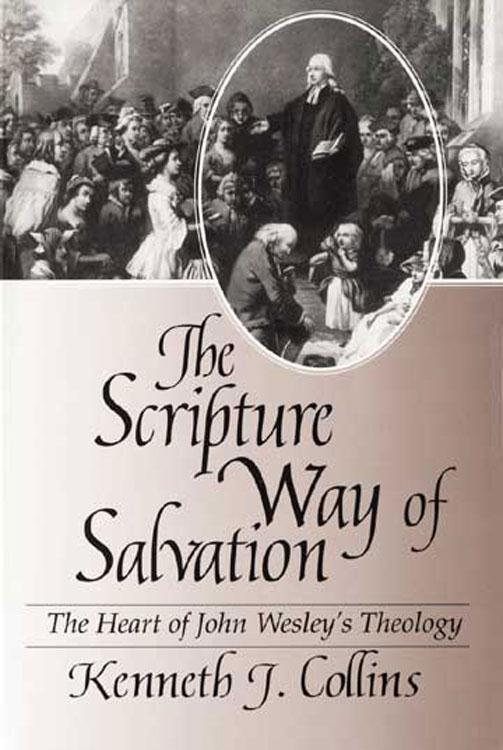 Unlike Collins’ Wesley on Salvation, which was only based on Wesley’s Standard Sermons; this book is based on all the works of John Wesley! This is the “order of salvation”–the Gospel of Jesus Christ, explained in a brief theological manner.
IN CHAPTER 1, Wesley says original sin is a reality that simply cannot be denied by any real Christian. Original sin is the problem, but the Gospel is the solution to it. They are complementary realities. We must not be as the Deists, who deny the existence of original sin, who preach a humanistic view of nature; and deny the supernatural. Original sin is an inherited, corrupt nature passed down from Adam and Eve (Gen. 3:1; 6:5; Ps. 51:5; Rom. 5:12-21). The fruits of original sin are practical atheism, idolatry, pride, self-will, etc: pride of education and of physical beauty, materialism, and man-pleasing.
At the same time: all men have original sin–all men have prevenient grace (that is, the conscience of the Holy Spirit): “the true Light that gives light to every man who comes into the world” (John 1:9). By preaching on creation and the moral law, the conscience can awaken the lost to their need for salvation by faith in the cross of Jesus (Romans 1; p. 41). In the prick of conscience, all men have an irresistible grace (and this is the only gift from God which is irresistible): and it will either condemn or reward them at death. But in the revelation of the Gospel (justification and sanctification), all men have a resistible grace–which again, leads to Heaven or Hell. They must freely CHOOSE the Gospel (not because they haven’t heard, but because they have a conscience from the Holy Spirit, which if they follow it, will eventually lead them to hearing and believing the Gospel).
IN CHAPTER 2, Wesley says when people just begin to spiritually awaken, it comes through preaching the moral law, death, Hell, Judgment Day, and Heaven. An emphasis should be laid on the Ten Commandments (Exodus 20:1-17) and the Sermon on the Mount (Matthew 5-7). Only a little emphasis on the cross. [In a recent e-mail, Collins said Wesley preached 100% Law followed by 100% Grace (the Gospel); this is in contrast to the notion that Wesley preached “90% law and 10% grace”–and I have yet to find this quote in Wesley’s works. Perhaps Collins is right.] However, only misery will result if only the moral law is preached…immediately the people must be exhorted to live the Christian life (faith in the cross followed by a progress in righteousness). The initial repentance (firm resolve to live your whole life for Jesus)–is followed by an entire life of obedience to God’s commandments, and continuing to repent from sin. And false notions of salvation are done away with–such as: “If you just go to church, say your prayers, and be a nice person–then you’ll go to Heaven.”
IN CHAPTER 3, which is entitled, “Justification by Grace Through Faith,” Wesley says there are three stages that a Christian goes through on a psychological level:
(1) Ignorance of God (pre-conversion/practical atheism).
(2) Fear of God (sincere obedience out of fear of Hell).
(3) Love of God (childlike love of your Father God).
Romans 7 and the struggle with the flesh is the fear of God; but Romans 8 is the love of God.
Romans 8:1-17 (the love of God)–is the saved state–it is living in the state of justification. It is a faith that Jesus not only died for the sins of the world in general, but that He specifically died for your past sins (Rom. 3:25). It’s a faith that God has forgiven your sins through the judicial punishment of His Son; and that you surely trust Jesus to save you from going to Hell.
This faith can be received in an instant–as a divine revelation in the heart, not just as a doctrine in the mind; it is a faith in “penal substitution”; and it is supernaturally implanted in the heart by the Holy Spirit, received freely by your choice to yield to its saving influence. This remains as a deep impression and inner vision: “Christ loved me and gave Himself for me.” O! How I love Him too! I believe Christ gave Himself for me! And, on the cross, of all things! That is, I now have a personal faith in the doctrine of penal substitution (the atonement); and God is no longer angry at me for my sins! Hallelujah!
IN CHAPTER 4, Wesley says within the few moments we are forgiven of our sins, being justified by faith in the cross (penal substitution)–the Holy Spirit takes up residence in our hearts. This is regeneration; or being “born again.” What happens as a result of this:–is an inward, moral change–a desire to live a righteous life for Christ. Faith, hope, and love begin to be lived out in accordance with the moral law:–and from the heart (Heb. 8:10; Rom. 5:5; 1 John 5:3). Water baptism is a prophetic symbol of the inward cleansing of regeneration.
IN CHAPTER 5, Wesley says assurance of salvation, or the substance of saving faith, is a prophetic impression left on the heart that your sins are forgiven (justification); and you have experienced an inward transformation to grow in righteousness during your life (regeneration). There are rational evidences of this:–that is, ways you can know if you’re probably saved (based purely on reason): (1) Faith, hope, and love are in your life. (2) Obedience to God’s commandments. (3) Inwardly feeling the fruit of the Spirit (Gal. 5:22-23). (4) Having a clean conscience before God. (5) Using the Bible as the moral guidebook of your life.
But reasoning these things out is not good enough to know if you’re really saved. They are only marks, signs, probabilities, or inferences that you’re saved. The strongest evidence of salvation is the direct witness of the Holy Spirit in the Christian’s heart. This is a prophetic impression in the heart that carries with it several revelations: (1) I am God’s child. (2) Jesus loves me. (3) Jesus died for my sins. (4) My sins are forgiven. (5) I am reconciled with God; or I have peace with God. [(6) My (John) personal addition–a healthy fear of going to Hell for backsliders or apostates.] This is what Wesley called “the proper Christian faith”–it is what saving faith is: assurance of salvation. While the rational evidences have a reassuring element–there is no greater assurance than the witness of the Spirit by the experience of direct revelation. Only this mystical, spiritual experience will give Christians the perseverance they need to stand for Christ during trials and tribulations. A Christian’s mind may get cloudy at times, when tested–but the Holy Spirit bypasses intellectual confusion, and reassures: “You are My child now, because I love you, and My only Son died for you; and so, we are now in a clean relationship because you are putting your faith in Him.”
But carnal Pentecostal/Charismatics beware! Don’t only rest in so-called “rhema” words and spiritual experiences. If your subjective experiences say, “You are God’s child,” but you live your life as if the devil is your father–then THINK AGAIN–and turn to the rational evidences to see whether you have strayed from the true Christian faith, and if you need to repent, and return to the Captain of your salvation (Heb. 2:10).
And rationalist Christians (Fundamentalists and Evangelicals) beware! It’s not good enough to rely merely on the rational evidences to prove to yourself that you’re saved. In a way, they serve as a “checklist” to test the state of your soul: for you to see whether or not your present life lines up with them. But on the other hand, they are not a “checklist” in the sense that they are a “to do list” for earning God’s favor or forgiveness. You simply cannot earn your salvation by trying to conform your life to the rational evidences (that would be legalism, or works-justification). The only definite, sure way to know if you’re living in the state of salvation is: (1) The Holy Spirit directly speaks to your heart that, “You’re sins are forgiven you, through Christ alone; and you are now God’s child.” (2) It “just so happens” that the general tenor of your Christian life reflects the rational evidences. You are a foolish rationalist if you reject the direct witness of the Holy Spirit–and are probably not saved.
Faith (or the direct witness of the Holy Spirit) is experienced in various degrees, at different times in the Christian life. At times, it may be mixed with doubts and fears; at others, strong assurance and confidence. But generally speaking (except for times of sickness, trial, and Biblical ignorance)–the fear of the Lord is not enough to save a Christian. The fear of the Lord is the beginning of wisdom, and only the beginning (Ps. 111:10). If a man has been genuinely saved by the Holy Spirit, through faith in penal substitution, then his faith will grow into a childlike love of God, where “there is no fear in love” (1 John 4:18). He no longer experiences a life of drudgery and servitude under God, but now has a Father-son relationship based on love (see Romans 7-8).
As a general rule, saving faith is a clear sense of sins forgiven, of being God’s adopted child, and is driven by a desire for living a righteous life.
But there are exceptions to this rule. In times of trial, sickness, or ignorance of the Bible–a weak sense of faith is present (Rom. 14). There is much vacillation between flesh and Spirit. In such a circumstance, the Christian is saved, but just barely hanging on to God.
But, in the end–Wesley concludes a “real Christian” is the one with strong faith; who sees himself as God’s child, and not merely as God’s servant. This gives him the mind of Christ; and so, he is not afraid to die.
IN CHAPTER 6, entitled “Sanctification by Grace Through Faith,” Wesley says regeneration, or the new birth, occurred only at the beginning of the Christian life. A power from the Holy Spirit was put into the heart: a desire for righteousness by faith. But now that this power has been received, it is the Christian’s personal responsibility to “work out his salvation with fear and trembling” (Php. 2:12). As the Christian presses on toward perfection, growing in the moral commandments of God, such as the Ten Commandments (Exod. 20:1-17) and the Sermon on the Mount (Matt. 5-7)–he will meet many obstacles along the way; many trials, tribulations, and temptations from the world, the flesh, and the devil.
Knowing all too well that “without holiness no one will see the Lord” (Heb. 12:14), the Christian’s life from now on is characterized by resisting sin from inside himself, and sin from outside himself. He goes “onward, as a Christian soldier, marching as to war.” He will not let men, himself, or the devil drag him down to Hell. But in the fear of the Lord, he is intent on obeying whatever moral commandments of God there are in the Bible; and he yields to the influence of his conscience, when convicted by the Holy Spirit throughout his life. With his feet, he is now walking on the old paths of Biblical wisdom (Jer. 6:16). And, as he runs away from Hell, “fleeing from the wrath to come” (Matt. 3:7)–he takes care to remember that though he stands by God’s grace for the moment, it still remains possible for him to fall into sin, temptation, and HELL (1 Cor. 10:12)–but God helping him, God has “with the temptation also made a way of escape, that he may be able to bear it” (1 Cor. 10:13). The Christian does not have to give in–sin is always avoidable with the Holy Spirit’s help!
As the Christian continues his life in the pursuit of God, and His righteousness, he finds that within himself there is something wrong. He says to himself, so many times: “I have the desire to do what is good, but I cannot carry it out” (Rom. 7:18). Why is this? Because, at this point in his Christian walk, his will power and the Holy Spirit in him have not united strongly enough. This will take time to strengthen. Like Paul, he can relate: “In my inner being I delight in God’s law; but I see another law at work in the members of my body, waging war against the law of my mind and making me a prisoner of the law of sin at work within my members” (Rom. 7:22-23). The hymn “Come, Thou Fount of Every Blessing” makes perfect sense:
Prone to wander, Lord, I feel it,
Prone to leave the God I love;
Here’s my heart, O take and seal it,
Seal it for Thy courts above.
It is likely the Christian will outwardly sin by accident, as we all do; but it is definitely guaranteed that the Christian will inwardly sin very often–especially in the beginning of his Christian life. This is because the flesh–that is, the human body–actually has a sinful nature. And were it not for faith in penal substitution, the inward sin nature (original sin) would be more than enough reason for us to be damned forever in Hell. Yet, at least according to Wesley, Christians may hope that one day the Holy Spirit will give them a “second blessing” of righteousness, of a completely higher level than the blessing of regeneration. And controversial though it is, Wesley maintains, it can eradicate all original sin from within the Christian–and he can, to a certain extent, experience a state of sinlessness (both inwardly and outwardly)!
But most, if not all, of the Christian life consists of a war against sin. And there are no “lone rangers,” no solo warriors. If the Christian is to be a soldier of righteousness, then it stands to reason he must join the army of other like-minded soldiers. He must take heed to Hebrews 10:25: Christians are not to “forsake the assembling of ourselves together, as the manner of some is.” There are to be no desert hermits without Christian friends. [It is here that Wesley introduces a “new measure” of his own: class meetings (cell groups for new Christians), band meetings (cell groups for Christians trying to grow in righteousness, openly confessing sins), and select societies (cell groups for Christians seeking the “second blessing” of entire sanctification).]
“Faith without works is dead” (Jas. 2:17). And since salvation is based on faith (Eph. 2:8), that means the faith we initially received without works at our conversion–is not the same faith we continue with throughout our Christian life. The essence of this faith is: “Jesus died on the cross for my sins.” But it doesn’t stop there. I’m not on my deathbed; and I’m not the thief on the cross who was only justified by faith alone (Luke 23:41-43). I’ve got the rest of my life to live; and God will hold me accountable for everything I think, feel, say, and do! On the Day of Judgment, God will judge me according to my works–what I do (Rev. 20:12). There will be much time, and many opportunities, for me as a Christian, not only to heed Christ’s commandment to “go, and sin no more” (John 8:11)–but also to fill up my life with many positive things, and good works pleasing to God, and helpful to mankind. (Not because I am a great man: “There, but for the grace of God, go I!”–where would I be if it weren’t for God? HELL!) All good works glorify God, because although they are not perfect works, they are inspired by the Holy Spirit: “I can do all things through Christ who strengthens me” (Php. 4:13). If it were not for His grace and regeneration–then “all our righteous acts are like filthy rags” (Isa. 64:6).
But to speak as one who has received the gift of regeneration–Christians should do all the good works they can before they die. “Good works” may be divided into two categories: works of piety and works of mercy. The works of piety deal with the Christian’s personal relationship with God: public prayer, family prayer, private prayer, the Lord’s Supper, Bible Study, and fasting. The works of mercy are for the Christian’s relationship to mankind: feeding the hungry, clothing the naked, entertaining strangers, visiting prisoners, visiting the sick, and preaching the Gospel.
This is how to open yourself up to greater anointings from the Holy Spirit [and to wait for entire sanctification]. By this we fulfill the two great commandments to love God and love man (Matt. 22:37-39)–which fulfills all the moral law. Whatever other good works there are than these can be found in a “vigorous, universal obedience, in a zealous keeping of all of the commandments, in watchfulness and painfulness, in denying ourselves, and taking up our cross daily” (p. 161).
Christian Perfection: According to John Wesley
In some Christians, very godly and righteous ones, who conscientiously obey the moral law, and keep works of piety and mercy alive–the year before they die, they can experience a state of almost sinlessness! This is very rare; Wesley called this state “Christian perfection” or “entire sanctification.” The love of God is shed abroad in the heart (Rom. 5:5), to such a degree, as to be called “perfect love” (1 John 4:18)–and the fear of God is no more; only the love of God. The entire Christian life up until this point has been one long transition from “the fear of the Lord” to “the love of God.” By “Christian perfection” is not meant perfect knowledge, freedom from mistakes, freedom from weakness, or from handicaps; it does not mean to be without temptation; nor does it mean (strangely enough) there is no room for spiritual growth.
Christian perfection is a state where one is no longer a “baby Christian,” but is instead an “adult Christian.” It consists of: (1) Freedom from evil thoughts such as ill will, lust, envy, practical atheism, etc. (2) Freedom from evil feelings like pride, self-will, and love of the world. But unlike the Puritans, Wesley maintains that those Christians who reach this state are completely cleansed from inbred, original sin! They are almost as holy as Adam was before the Fall–at least inwardly. Wesley insisted this state could be experienced in this life–that is, before death! No more original sin?! Yes, that’s what Wesley preached as possible. And before death! However, this can only be experienced in very rare situations, with very righteous men and women of God; and at least–according to Wesley’s experience with some of the most devout Methodists–this state only lasts as a continuous state of perfectly righteous love for about one year–and usually the year before death (or it occurs on the deathbed). At least, that’s what Wesley preached.
IN CHAPTER 7, Wesley reminds: you are going to die! Its just a matter of fact–and the Bible shows us that after we die, we enter into eternity. [The wicked will be cast into Hell; but the righteous into Abraham’s Bosom (even now–Wesley believed Luke 16 applies to today, not just Old Testament times, nor just before the resurrection of Christ).] The dead remain there till Judgment Day, when they will be “judged according to what they had done as recorded in the books” (Rev. 20:12, NIV). [Only after Judgment Day do the saints enter into Heaven.]
Get ready you guys, because I have some serious things I want to share with you. So I hope you’re ready. I want to talk to you about what a real “Christian” is. A lot of the time you hear people say, “Hey, I’m a Christian. I believe in Jesus. I go to church.” And things like that. But have you read in the Bible what a Christian is? There have been times when I’ve read what the Bible says a “Christian” is, and I look around me, at the people in this world who call themselves “Christians”–and they don’t look the same. It just doesn’t look the same; at least most of the time. I’m not saying that everyone who calls themselves “Christians” in this world don’t line up with what the Bible says a “Christian” looks like. I just think most of the real Christians are hard to find. I dare say, 10% of the people who call themselves “Christians” are probably even saved! Which brings me to the first thing I want to say.
1. The Bible says a Christian is saved. What does “saved” mean? The best place I know to look is in the Book of Romans. Its the one book in all the Bible that deals with how to get “saved”; what being “saved” means; and what a “saved” person looks like. Romans 5:9 says that Christians are “saved from wrath” through their faith in Jesus. But what does this mean?–saved from wrath? It means that Christians are people who are saved from the wrath of God. The Bible says, “God is a just Judge; and God is angry with the wicked every day” (Ps. 7:11). In the future, there will be a day when God judges all the people in the world, based on whether they lived right, and put their faith in the Son of God, Jesus Christ. But there’s something else: its not just that God wants us to believe that Jesus is real, or that He exists. Romans 5:9 says there’s something very specific, something special that we need to believe about Jesus: “Having now been justified by His blood, we shall be saved from wrath through Him.” What this means is, we are made right with God by believing Jesus died on the cross, and shed all His blood, for the purpose of bringing us peace with God–so that the righteous anger of God at our sins could be softened and done away with. This is some serious stuff–right? Yes, it is very serious. The Bible says, there is “a time to weep, and a time to laugh” (Eccl. 3:4). How unpopular! These days people only want to laugh! Only want to be happy, be positive, and have fun, and ignore all the serious things in this life. But the Bible doesn’t say that! It says there is a “time to weep, and a time to laugh!” (Eccl. 3:4). What a time to weep when we look at Jesus on the cross dying for your sins! What a time not to joke around! Completely out of place! But would you believe that Jesus’ enemies, the ones who put Him on the cross–GOD’S SON ON THE CROSS–actually made fun of Jesus, and laughed at Jesus when He was suffering on the cross: “the chief priests also, mocking among themselves with the scribes, said, ‘He saved others; Himself He cannot save. Let the Christ, the King of Israel, descend now from the cross, that we may see and believe!'” (Mark 15:31-32). Can you believe the nerve of those guys! I’d hate to be them right now! You know they’re in Hell: in “everlasting fire” with “the devil and his angels” (Matt. 25:41).
2. The Bible says a Christian has peace with God. Romans 5:1 says, “Having been justified by faith, we have peace with God through our Lord Jesus Christ.” Have you ever heard someone use the word “justified”? You might have heard someone say, “I know she was going through some hard times, but it doesn’t justify what she did.” You hear some terrible things on the news sometimes, if you watch the news. Stories like: “Depressed Mother on Drugs Drowns Her Five Children in a Bathtub”–all kinds of horrible evil, wicked things. I tell you what folks: if you haven’t learned it yet, you will eventually: PEOPLE DO SOME EVIL, EVIL THINGS IN THIS WORLD. Certainly the mother who did this horrible act–and I am referring to a real, true story–the story of Andrea Yates; something that really did happen. Certainly this mother who drowned her children must have been messed up in the head, very sad, depressed, or angry; but that doesn’t justify what she did. She was totally wrong, and totally wicked to do such a thing. She deserves the full penalty of the law: the death penalty. The Bible says, “Whoever kills any man shall surely be put to death” (Lev. 24:17); and it says that the man who works for the government is from God, to punish those who do wrong: “He is God’s servant to do you good. But if you do wrong, be afraid, for he does not bear the sword for nothing. He is God’s servant, an agent of wrath to bring punishment on the wrongdoer” (Rom. 13:4). If you don’t want to think about Andrea Yates and her horrible sin, then don’t. Think about your own sins. Andrea Yates broke the sixth commandment: “you shall not murder” (Exod. 20:13). I doubt any of you have broken that commandment. But more and more kids these days are joining gangs, and listening to gangsta rap, and taking drugs–and killing people for drug money. What a time to weep! (Eccl. 3:4).
Before I got saved–I did something stupid. Let me confess my sin. When I was 14, me and a friend broke into our middle school at nighttime when nobody was there. We thought it would be a rush. It was; oh, it was so fun. We ran all around the halls in the night with our socks only; sliding around down the halls–WEEEEEEEEEEEEE! My friend said, “‘Hey, John. Tee. Hee. Let’s take this book from the Health room downstairs and put it in the Social Studies room upstairs! No one will know but us!” And so we did. SO DUMB! MAN, WE WERE DUMB. SIN IS DUMB, ISN’T IT? Man it was fun though; but sin, although it is pleasurable, only lasts for a season (Heb. 11:25), then its all over. It was all so fun till we saw the cops running after us in the night! Shouting at us to stop. We got caught. The cops arrested us–and I got put into the back of a police car…ME! After that, they punished me to teach me a lesson…I had to do 24 hours of community service. I had to clean up all the junk at the Lake Lynn Community Center in my hometown, Raleigh. I also got detention for a week. Shortly after that, I heard a Hell-fire preacher; he preached the Gospel to me and I got saved. I knew I wasn’t living right. I knew I was on my way to Hell the way I was living–because I was stealing cigars and smoking them, and cussing, and looking at porn. I was a really bad kid! But after I heard the preacher, from that moment on I said in my heart, “I’m going to live for God the rest of my life.” You guys, we simply cannot turn a blind eye to the evil and sins of this world, if we are to understand what the Bible means when it says a “Christian” is someone who has “peace with God” (Rom. 5:1).
Perhaps you are guilty of breaking one of the Ten Commandments: “You shall not misuse the name of the Lord” (Exod. 20:7); “Honor your father and your mother” (Exod. 20:12); “You shall not steal” (Exod. 20:15); “You must not tell lies about your neighbor” (Exod. 20:16, NCV); “You shall not commit adultery” (Exod. 20:14).
I’ve really been laying down the law, haven’t I? All of these commandments were given to Moses directly by God on Mount Sinai. Who can stand before such a holy and righteous God? But I thought “God is love!” (1 John 4:8). He is love; that’s what the Bible says. But we often forget: God is also light. The Bible says, “God is light and in Him is no darkness at all” (1 John 1:5). In the Bible, “darkness” is a word that means evil or wickedness, and “light” is a word that means purity and righteousness. So many people these days have such a wrong view of God. They think of God as a lovey-dovey, sappy, sentimental guy that just loves and accepts everybody, no matter what. Really? That’s not what my Bible says. It shows me that He is the righteous Judge of Heaven and Earth (Isa. 6:1-5), and that He created Hell for those who are wicked; and Heaven for those who are righteous. But who is righteous? Who? Those who have “believed in the name of the only begotten Son of God,” Jesus (John 3:18).
And what does it mean to “believe”? It is to believe that Jesus died on the cross for your sins, in your place, because you are too wicked to pay back to God all that you have done wrong. Only the perfectly holy and righteous Son of God can come in your place, and be punished by His own Father for your sake. Only Him. The Bible says: “He was wounded for the wrong we did; He was crushed for the evil we did. The punishment, which made us well, was given to Him, and we are healed because of His wounds” (Isa. 53:5, NCV). That’s what Jesus did on the cross for you and me. God, who is His Father, is so righteous and holy, that it angers Him so much–this much–when we sin–that the only thing that can ever make Him not angry at us–is for Him to have Jesus brutally tortured and killed, and punished for the sins that we committed! Instead of us being punished! And the first thing God requires of us, is that we would only believe this, and live by faith in this. And that, by this only, we have “the forgiveness of sins” (Matt. 26:28, NIV) and “peace with God through our Lord Jesus Christ” (Rom. 5:1, NIV). Only in this way, and under these circumstances–by our faith that we are forgiven of our sins, because Jesus died on the cross for our sins–only in this way, does God stop being angry at us for our sins, and we can have peace with God. As the angels said so long ago: “Glory to God in the highest, and on Earth peace to men on whom His favor rests” (Luke 2:14, NIV). Praise God!
3. The Bible says a Christian lives a holy life. After we come to believe by faith that Jesus died on the cross for our sins, and that God has forgiven our sins because of that–God commands us now that we are forgiven: “go and sin no more” (John 8:11). You see, if we don’t try to live right, after we’ve received God’s forgiveness, that means we don’t really love God. The Bible says, “Loving God means obeying His commands. And God’s commands are not too hard for us” (1 John 5:3, NCV). If you don’t even try to do what God says in the Bible–then what would you be saying to Jesus hanging on the cross? I think some so-called “Christians” today, would say to Him, “Hey, thanks buddy for dying for me. It feels great to be forgiven. Thanks a lot! But I’ve got my whole life to live, and I’m gonna be happy, and have lots of fun now. I sure am glad you died for me Jesus. I know that I don’t have to worry about any of the sins I do, because when I die I’ll go to Heaven.” You guys, there is no way someone like that is a real Christian. A true Christian loves God and keeps His commandments from the heart, because he doesn’t want to go to Hell, and he loves God sincerely from the heart, because God has forgiven his sins. The real Christian thinks to himself, “THE LEAST I CAN DO IS TRY TO OBEY GOD’S COMMANDMENTS!–and do what God says! After all He did for me on the cross, dying for my past sins (Rom. 3:25), what more do I have but to live the rest of my life pursuing righteousness, holiness, purity, and godliness?”
And, this is exactly what God wants; and He will put the Holy Spirit in your heart to help you live right: “that the righteous requirement of the Law might be fulfilled in us who do not walk according to the flesh but according to the Spirit” (Rom. 8:4). How is this? If you become a real Christian, then “the love of God” will be “poured out in your heart by the Holy Spirit” (Rom. 5:5). You will bear good fruit in your life: just as an orchard has good orange trees; as a vineyard has juicy grapes; as a strawberry patch has bright plump strawberries; as a blackberry bush has big juicy blackberries. The fruit of the Holy Spirit will come out of your life: “the fruit of the Spirit is love, joy, peace, longsuffering [patience], kindness, goodness, faithfulness, gentleness, self-control. Against such there is no law” (Gal. 5:22-23). The Holy Spirit in you will drive you to do all sorts of good things: going to prayer meetings, praying by yourself in your room, taking the Lord’s Supper, studying the Bible for yourself, fasting, feeding the hungry, clothing the naked, showing hospitality to strangers, visiting those in prison, visiting the sick, and preaching the Gospel to all people. And if you sin by accident, God is always there, in His great love to forgive you of your sins. Just look to the cross of Jesus. To the real Christian, God is his Father; and he can’t wait to see Jesus when he dies and gets to Heaven! (Php. 1:23).
From the evidence found below, we can see from the speeches, sermons, and testimonies of Paul in the Book of Acts, that the “Gospel of Jesus Christ” according to Paul probably followed an order of salvation (ordo salutis) like this:
1. Creation of the World and Man (Teleological Argument)
2. Repentance (Conscience; The Moral Law; Judgment Day)
3. Faith (Penal Substitution and Resurrection)
4. Justification (The Forgiveness of Sins)
5. Regeneration (The Kingdom of God)
6. Sanctification (Good Works)
Notice: there are NO LENGTHY DISCOURSES, OR EVEN BRIEF REFERENCES TO GRACE, PREDESTINATION, AND FREE WILL! That suggests to me it barely fit into his order of salvation, if at all, or was just a set of concepts in the background of his mind. The whole monergism/synergism thing is completely periphery.
13:16-41: Sermon at a Synagogue Pisidian Antioch
17:22-31: Sermon at the Areopagus in Athens
22:1-21: Sermon to the Crowd in Jerusalem
23:1-6: Speech Before the Sanhedrin
24:10-21: Speech Before Governor Felix
25:8, 10-11: Speech Before Governor Festus
26:2-23: Speech Before King Agrippa
28:17-28: Sermon to Jews in Rome with Security Guards
or, Salvation from Sin and Hell;
Based on Scripture, Tradition, Reason, and Experience
(7/5/12)
Hell: The Place of Everlasting Punishment
I hold to the Puritan view of Hell as a literal, everlasting punishment (Matthew 25:46). I reject modern concepts like Universalism and Annihilationism; and believe that the Gospel of Jesus Christ is essentially a revelation from God to save humanity from being doomed to that dreadful place. The classic, Biblical vision of Hell, which was so eloquently articulated by preachers like Jonathan Edwards, makes people cry out for mercy from Jesus, who died on the cross for their sins.
Donnelly, Edward. Biblical Teaching on the Doctrines of Heaven and Hell. Edinburgh, UK: The Banner of Truth Trust, 2001. 144 pages.
Edwards, Jonathan. The Torments of Hell: Jonathan Edwards on Eternal Damnation. Edited by William Nichols. Ames, IA: International Outreach, 2006. 18 fire and brimstone sermons by Jonathan Edwards. 334 pages.
Morgan, Chris. Jonathan Edwards and Hell. Fearn, Scotland: Mentor, 2004. 176 pages.
Peterson, Robert. Hell on Trial: The Case for Eternal Punishment. Phillipsburg, NJ: P&R Publishing, 1995. Evidence of eternal punishment in the Bible and church history; arguments against Universalism and Annihilationism. 264 pages.
Shedd, William G. T. The Doctrine of Endless Punishment. Solid Ground Christian Books, 2008. 220 pages.
Whitefield, George. The Eternity of Hell Torments. Gale ECCO, 2010. This is not to be confused with Jonathan Edwards’ sermon by the same title; they are two completely different sermons on the same subject. 36 pages.
Salvation: Justification and the Christian Life
Alleine, Joseph. An Alarm to the Unconverted. Sovereign Grace Publishers, 2002.
Arndt, Johann. True Christianity. Translated by Peter Erb. Mahwah, NJ: Paulist Press, 1979.
Baxter, Richard. An Extract of Richard Baxter’s Aphorisms of Justification. Edited by John Wesley. Whitefish, MY: Kessinger Publishing, 2010. 40 pages.
Church of England. Certain Sermons or Homilies Appointed to Be Read in Churches in the Time of Queen Elizabeth. Ann Arbor, MI: University of Michigan Library, 2005. Strong Gospel influence on John Wesley.
Collins, Kenneth. The Scripture Way of Salvation: The Heart of John Wesley’s Theology. Nashville, TN: Abingdon Press, 1997.
_________. Wesley on Salvation: A Study in the Standard Sermons. Grand Rapids, MI: Zondervan/Francis Asbury Press, 1989.
Goodwin, John. A Treatise on Justification. Gale ECCO, 2010. Edited by John Wesley; had a strong Gospel influence on him. Goodwin was an Arminian Puritan preacher; and died in 1665. Also includes Wesley’s refutation of the antinomian James Hervey. 270 pages.
Lloyd-Jones, D. Martyn. Studies in the Sermon on the Mount. 2 vols. in one. Grand Rapids, MI: Eerdmans, 1984. A modern Evangelical preacher, who was strongly influenced by Puritan theology, expounds on what Wesley taught to be the very expression of the moral law of God, the essence of practical divinity, the means of conviction, and growth in righteousness. 585 pages.
Lindstrom, Harald. Wesley and Sanctification: A Study in the Doctrine of Salvation. Grand Rapids, MI: Zondervan/Francis Asbury Press, 1980. Reprint of 1946 edition; strong influence on Kenneth Collins.
Merrill, S. M. Doctrinal Aspects of Christian Experience. Cincinnati, OH: Curts & Jennings, 1882. An old-school presentation of the Wesleyan “ordo salutis” (order of salvation) comparable to Kenneth Collins’ Wesley on Salvation.
Owen, John. Overcoming Sin and Temptation. Edited by Kelly Kapic and Justin Taylor. Wheaton, IL: Crossway Books, 2006. A classic Puritan view of progressive sanctification by one of Puritanism’s foremost 17th century theologians. 464 pages.
Ryle, J. C. Holiness. Welwyn, England: Evangelical Press, 1979. The traditional Anglican Puritan view of sanctification (progressive only). 352 pages.
Wesley, John. The Works of John Wesley. 7 vols. Edited by Thomas Jackson. 3rd ed. Grand Rapids, MI: Baker Books, 1996.
—–
UPDATE–2/8/15
R. Michael Allen’s Reformed Theology (2010)
Steven Paulson’s Lutheran Theology (2011)
Kenneth Wilson’s Methodist Theology (2011)
Stephen Holmes’ Baptist Theology (2012)
Mark Chapman’s Anglican Theology (2012)
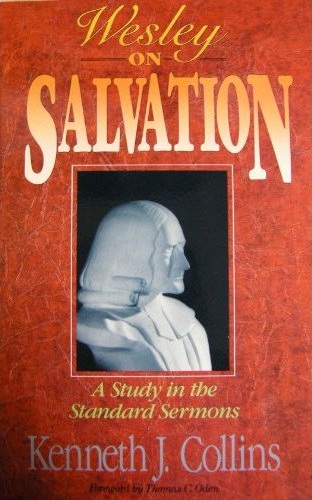 See also my reviews of Kenneth Collins’ The Scripture Way of Salvation; and Harald Lindström’s Wesley and Sanctification.
This book is the clearest, and most honest, presentation of salvation I have ever read! Its a bit theological, and intellectual, and might be more appealing to theology graduates and students than the common Christian reader. But nevertheless, there is no Christian on Earth that should not try to read and understand this book! If you don’t want to go to Hell, if you don’t want others to go to Hell, and you want to preach the Gospel, then read this. PLEASE! Make it your first order of business!
Dr. Kenneth Collins is probably, in my opinion, the greatest Wesleyan soteriologist alive today. This is not to say I think he knows more about Wesley than others: just to say, I think he understands, and articulates Wesley’s views of the Gospel with more clarity, and HONESTY than any other scholar. Collins leaves no stones unturned. He is critical of all Wesleyan scholars: he only cares about the truth, not nonsensical speculations:–WHAT DID WESLEY BELIEVE!? That’s all Collins cares about. WHAT DID WESLEY PREACH!? Again, that’s all Collins seems to mind. Never mind what Albert Outler said, or what Colin Williams, William Cannon, or Randy Maddox argue and maintain. If what these Methodist scholars say doesn’t line up with WESLEY:–then he THROWS IT OUT! Will the real John Wesley please stand up? Dr. Collins honestly tries to reveal this Rev. John Wesley, the fire-brand evangelist that set the world on fire for God. Collins tactfully opposes Outler’s disrespect for the Aldersgate Experience, Williams’ rejection of the moral law, Cannon’s distortion of synergism, and in a recent e-mail, confirmed to me with utmost clarity, that he is against the highly speculative and utterly non-evangelistic nature, of Randy Maddox’s Christian universalism expressed in chapter 1 of Responsible Grace:
Hi Dr. Collins,
I’m really struggling with Randy Maddox’s Responsible Grace. In chapter 1, he has an “Excursus: The Possibility of Extra-Christian Salvation.” And for a couple of pages, it appears he is trying to make the argument that John Wesley believed in “anonymous Christian” universal salvation (good heathens who have never heard the Gospel)–because Wesley deleted an Anglican article of religion for the American Methodists (Article XVIII), entitled: “Of Obtaining Eternal Salvation Only by the Name of Christ”).
When I read this, I was disturbed in my heart about Maddox ever since.
If you have the time, could you read this section, and help me understand your view of this subject? I know you wouldn’t buy it. It would totally contradict the Aldersgate Experience where Wesley felt “Christ alone” forgave his sins.
John
_______________
Hi John!
I am very familiar with this issue and I once again differ from Maddox.
A few observations are in order:
1) Many scholars on this topic are confusing prevenient grace (which is a measure of grace to be sure) with saving grace properly speaking (justifying and regenerating grace). Simply put, prevenient grace is not saving grace.
2) There are not two paths to salvation but only one: faith in Jesus Christ. Simply put, all sinners need a Mediator; none can go directly to the Father given the alienation of sin. How then can one be united to Christ and not know Him? How can one be united to the Church, as the body of Christ, and not know it? Is there such a thing as an individual, isolated, Christian? Wesley stated that Christianity is a social religion and to turn it into a solitary one is to destroy it.
3) This is a very speculative issue but how many people in the world today (given the information revolution, the Internet, etc.) have not been exposed to the claims of the Gospel? And if they haven’t heard, then we need to send the missionaries and not construct theologies that comfort us in doing next to nothing in this regard.
Again if someone has not heard the Gospel then we should rightly ask: Is that person a recipient of justifying and regenerating graces, are they free from the guilt and power of sin? Are they holy? Not likely, though I suppose some will argue that the Holy Spirit can directly offer Christ to the heart and that heart can then embrace the offer. Clearly, this is a highly speculative issue and therefore not a good basis upon which to construct a well grounded theology. Again, it is far better to send the missionary.
Beyond this, such a view as what Maddox and others are arguing cannot take account of Romans 10:14-15. It’s an embarrassment to their theological constructs:
14 How then will they call on Him in whom they have not believed? How will they believe in Him whom they have not heard? And how will they hear without a preacher? 15 How will they preach unless they are sent? Just as it is written, “How beautiful are the feet of those who bring good news of good things” (Romans 10:14-15, NASB).
Blessings!
Grace and peace,
Ken Collins
_______________
A SUMMARY OF KENNETH COLLINS’ WESLEY ON SALVATION
Now to Collins’ book itself: Wesley on Salvation: A Study in the Standard Sermons (1989). I know I’m not perfect, but I will try as perfectly as I can, to summarize the chapters in this book; and hopefully provide a well-rounded yet brief introduction to the soteriology of John Wesley; or the doctrinal convictions that he and the early Methodist preachers held to, during the Wesleyan revival, and the Great Awakening of the 1700s. In other words, the “order of salvation”: THE GOSPEL OF JESUS CHRIST–as Wesley saw it…
IN CHAPTER 1, Wesley shows Genesis 6:5 reveals clearly, that the natural condition of mankind is great wickedness; and is plagued by only evil thoughts and feelings continually. This is called “original sin,” and all people have inherited this corrupt nature from Adam and Eve. But there is good news. The Holy Spirit is everywhere; and influences all people concerning right and wrong. This is called either the “conscience” or “prevenient grace.” This is a vague, but general, universal ethical awareness. Even non-Christians have it, but this does not mean all men have “saving grace” or saving faith. All they have is a conscience. Eventually, the Holy Spirit will draw all men to the Gospel through the conscience: and then, and only then, is it possible for men to choose to respond, to the revelations that Jesus died for their sins, and that they need to go and sin no more. This is a free will choice, but with the help of the Holy Spirit giving a conscience to the sinner. The circumstances in people’s lives may vary, as to when they are fully challenged by a Gospel preacher; and if they should decide to become real Christians and “get saved.” But if it were not for the help of the Holy Spirit, of God’s grace leading and guiding from the very beginnings of people’s lives:–no man would ever have the conscience, nor the free will, to choose to repent and believe in the Gospel of Jesus Christ. But, as Dr. Collins points out: the doctrine of original sin, and the reality that man is naturally corrupt, is “an ingredient in any full-orbed systematic theology, but it plays little role in a practical theology, for no human being is so marred and fallen” because “there are no people without divine prevenient grace” (p. 25). The subject may be necessary to refer to when refuting Pelagianism or perfectionism, but it is certainly not the essence of the Gospel of Jesus Christ: it is a side issue. What really matters is preaching on JUSTIFICATION and SANCTIFICATION. As Wesley said: salvation “consists of two general parts, justification and sanctification” (The Scripture Way of Salvation 1.3).
IN CHAPTER 2, Wesley says the wicked are convicted of sin by preaching the moral law. The Holy Spirit uses this. Only in this way, can dead, lukewarm, sleepy, cultural churchgoers ever experience conviction of sin. The preacher is called by God to “preach 90% law and 10% grace (Gospel).” This will spark sin-guilt and the fear of the Lord; and drive sinners to Jesus for salvation, forgiveness, and mercy. A faith that Jesus died for my sins is the only way to be saved from guilt, in the now, and from Hell fire forever. And if a person feels convicted of sin, but is struggling to believe in the atonement, then he should use the means of grace until saving faith dawns on him (e.g., prayer, Bible Study, the Lord’s Supper, fasting, and Christian conversations).
IN CHAPTER 3, entitled: “Justification by Faith,” Wesley says the forgiveness of sins cannot be earned by trying to obey God’s law perfectly, nor by doing all the good works in the Bible. (That is impossible.) The only way for God to forgive sins, is for a sinner to look at Jesus’ perfectly righteous life, His death on the cross for his sins, and the resurrection. True faith in this will motivate righteous living; and is something known in the head and felt in the heart. The famed Aldersgate Experience mirrors Luke 24:32, when the disciples on the road to Emmaus felt a burning sensation in their hearts, and an impression of a deep revelation: that in the crucifixion, Jesus died for the sins of the world, according to prophecies in the Old Testament. In the same way, and of the same revelation, Wesley wrote of his experience on May 24th, 1738: “In the evening I went very unwillingly to a society in the Aldersgate Street, where one was reading Luther’s preface to the Epistle to the Romans. About a quarter before nine, while he was describing the change which God works in the heart through faith in Christ, I felt my heart strangely warmed. I felt I did trust in Christ, Christ alone for salvation; and an assurance was given me that He had taken away my sins, even mine, and saved me from the law of sin and death.”
The moral law convicts of sin, motivates faith in the cross for the sake of seeking forgiveness of sins, and yet continues to be useful for growing in righteousness during the Christian life (but is never to be used with the idea that one can ever earn God’s forgiveness by keeping God’s commandments perfectly). “We know that the law is good if one uses it properly” (1 Timothy 1:8). Guidelines for growing in Biblical ethics; nothing more.
And also, anyone who thinks that “the righteousness of Christ,” being legally imputed to the Christian, somehow blinds God from the sins of carnal Christians who willingly continue to live a wicked life:–these people are deceived antinomians who hold to a false interpretation of the doctrine of imputation; sadly, this is the case with many Calvinists. But the truth is, through a saving faith that Jesus died for your sins, responding with godly fear and love, and trying to “go and sin no more” (John 8:11), it is in this way that the truly saved Christian fulfills the law from the heart.
IN CHAPTER 4, Wesley says at the same moment Christians receive God’s forgiveness by faith (justification)–the Holy Spirit awakens us to the spirit world (regeneration). This spiritual awakening is likened to being “born again”; not to the physical world, but to the spirit world. The first and foremost revelation that is revealed to the heart–is that “truly Jesus Christ died for my sins, and because of this, my sins are forgiven.” This is an inward conviction in the heart that is so strong, that no amount of anti-Christian skeptical arguments can shake it:–it is a strong faith supernaturally imparted by a strong experience in the intuition from the Holy Spirit. You simply “know that you know” it is true. In fact, one could be martyred for this kind of faith, without denying Christ, so strong it is. The indwelling presence of the Holy Spirit in the heart supplies a supernatural desire to grow in righteousness during the Christian life. Not only through a fear of backsliding and possibly going to Hell, but also through a love of God and His commandments, and the pursuit of Heaven with all the saints. The evidences of this supernatural regeneration working in the heart are: faith (a sense of sins forgiven), hope, God’s love for all creatures (Romans 5:5), obedience to God’s moral law (although not perfectly–yet always growing stronger), a good conscience before God, and the fruit of the Spirit: “love, joy, peace, longsuffering, kindness, goodness, faithfulness, gentleness, self-control”: of which “there is no law” against these things (Galatians 5:22-23, NKJV).
IN CHAPTER 5, Wesley says good works, and especially keeping the moral law, are supposed to mark a Christian’s life all throughout. This is proof that the supernatural grace of the Holy Spirit is “working through faith and love” (Galatians 5:6b) in the heart (Romans 5:5). The more righteous effort a Christian strives for, the more grace (Holy Spirit power) will be supplied for him. The Holy Spirit, however, will depart if the Christian simply does nothing in the area of reforming his ethics (Revelation 3:16). Unlike modern antinomians, who downplay keeping God’s commandments, and instead accept a false gospel of “cheap grace,” to use Dietrich Bonhoeffer’s phrase,[1] a simple “faith alone,” and standing alone:–the true Christian knows better: “without holiness no one will see the Lord” (Hebrews 12:14). (Not a flawless, sinless, holiness; just an imperfect holiness that strives against sin, and grows in righteousness.) Christians must obey God’s moral law, and this is difficult, but “with God all things are possible” (Matthew 19:26). And what’s more, is that in good time, for the really saved Christian: “His commandments are not grievous” (1 John 5:3). A mixed life of contemplation, life in society, and good works, pretty much sums up the Christian life. All growth in righteousness must be free from bigotry: and this is to be avoided by a common love for all people, sticking to one’s ethical convictions firmly, yet remaining friendly and tolerant of people’s differences.
IN CHAPTER 6, Wesley says temptations, trials, tribulations, pain, and suffering are all intended to either “make or break” a Christian. If the Christian strives through it in the fear of the Lord, then his faith, hope, and love will come out stronger (1 Peter 1:6-7). No Christian is destined according to “fate” that they must fall into a certain temptation during their life: there is “always a way of escape” (1 Corinthians 10:13). But if one falls into temptation, and sins–even to the point of losing his faith–it is then possible to lose his salvation (since salvation is based on faith, Ephesians 2:8). Christian life is a nonstop spiritual battle, as well as a mental, emotional, and social one; it is a constant war between good and evil (Galatians 5:17); a continual repentance from sin, emboldened by a firm faith that God’s forgiveness of your sins, is graciously available to us immediately through the cross. No Christian alive on Earth is so “saved” that he can’t fall into Hell; he must continually examine himself to see whether he is remaining in the faith, and thus work out his salvation with fear and trembling (that is, try to live an upright and righteous life) (Philippians 2:12). On the other hand, if a Christian loses his faith, it is usually possible to get it back, and get saved again (Revelation 2:4-5)–but not always (Hebrews 6:4-6).
Wesley preached that if a Christian persevered throughout his life in faith and good works, in some rare cases, growing in righteousness can reach perfection.
[1] Dietrich Bonhoeffer, The Cost of Discipleship (New York: Touchstone, 1959), Part 1, Chapter 1: “Costly Grace.”
1740 – John Wesley’s The Principles of a Methodist. 24 pages.
1835 – Adam Clarke’s Christian Theology, Chs. 7-13
1840 – John Wesley (and William Carpenter’s) Wesleyana
1847 – Thomas Ralston’s Elements of Divinity
1882 – S. M. Merrill’s Doctrinal Aspects of Christian Experience
1903 – Wilbur Tillett’s Personal Salvation
1935 – G. C. Cell’s The Rediscovery of John Wesley
1946 – Harald Lindström’s Wesley and Sanctification
1960 – John Deschner’s Wesley’s Christology
1989 – Kenneth Collins’ Wesley on Salvation
1994 – Thomas Oden’s John Wesley’s Scriptural Christianity, Chs. 6-11
1997 – Kenneth Collins’ The Scripture Way of Salvation
2003 – Steve Harper’s The Way to Heaven, Chs. 4-5
2012 – Thomas Oden’s John Wesley’s Teachings, Vol. 2: Christ and Salvation
I warn against the following Wesleyan books that have misrepresented John Wesley’s soteriology in some crucial areas: (1) Randy Maddox’s Responsible Grace, Ch. 1, argues that Wesley believed in universal salvation; but NO!–that totally contradicts his 1756 letter to William Law. (2) Albert Outler’s John Wesley seems to downplay the importance of the Aldersgate Experience on May 24th, 1738, when Wesley’s heart burned with the Holy Spirit, and he received revelation that “Christ alone” had forgiven his sins. (3) Colin Williams’ John Wesley’s Theology Today completely ignores Wesley’s emphasis on the moral law for salvation. (4) William Cannon’s The Theology of John Wesley distorts the important doctrine of synergism.
When a man is unsaved (without faith in the cross)–he hates God’s law, and only loves the pleasures of the flesh.
When a man is saved (with faith in the cross)–he sees clearly that he is wicked, and deserving of Hell. Formerly, he hated righteousness, but now understands that “without holiness no one will see the Lord” (Hebrews 12:14). So, although he understands he cannot live perfectly righteous, he still tries to keep God’s commandments out of a fear of Hell, and of the fierce wrath of God on Judgment Day. As he tries to live a righteous Christian life, he experiences an evil resistance coming from within himself (Romans 7:14-25). And the voice of God may whisper to him, “That’s why I died on the cross.” And he sees that, although God delights in the Christian’s desire to keep His commandments from the heart: still, “all our righteous acts are like filthy rags” (Isaiah 64:6), in the sight of a perfectly righteous God. So, the Christian, while trying to live righteously throughout his life–resisting temptations of all kinds–acknowledges that without the ability to look to Jesus dying on the cross for his sins, and the practice of regularly repenting, and keeping a clean conscience with God, by accepting His forgiveness of sins–that (somewhat) righteous Christian would still burn in Hell forever! He knows that without the help of Jesus, he would be a goner!
See also: In Pursuit of Holy Prophets, Prophetic Ministry Books Conscious of John Wesley, Etc., Prophetic Ministry Books Ranking
This is a really good statement of faith and practice on modern-day prophetic ministry, just released through James Goll’s mailing list. But I have some small bones to pick (and by that, I don’t believe it to be petty or nitpicky).
1. “I commit to help Christian leaders and trainers discern between the operation of God-given spiritual gifts and human psychic abilities (Daniel 2:27-28; 4:8-9)” (1.H.iii.). Although the desire is well-meaning to discern between spiritual gifts and so-called psychic abilities, I have already debated R. Loren Sandford on this point, too much. He insisted I should apologize for badly judging him for teaching the existence of psychic abilities (even though he condemns them). I say, true accuracy in teaching would maintain that no natural psychic abilities exist. That is an occult doctrine. Rather, what they should be saying, is what the Catholic mystical theologians taught for centuries: visions and revelations come from either God or the devil. Flat. That’s it. No psychic, natural human abilities at all.
2. “Salvation-centric – Declare, teach and demonstrate the gospel of the Kingdom of God with signs and wonders following (Mark 16:20)” (3.2). I would have liked to see more about the Gospel of Jesus Christ in this statement (the doctrines of justification and sanctification–complete with Arminian and Calvinistic soteriological nuances), because I believe that is key to spiritual discernment in the prophetic ministry of dreams, visions, and the voice of God. It is only this message of soteriology that we can really trust to have signs and wonders following from the God of the Gospel. And the Christian prophet (Christianesque, churchly, believes or practices some vague Biblical things)–that is not also a Gospel prophet (evangelistic/prophetic ministry) cannot rightly be said to have miracles confirming the Gospel. THE GOSPEL! ROMANS! JAMES! GALATIANS! “I want you to know, brothers, that the Gospel I preached is not something that man made up. I did not receive it from any man, nor was I taught it; rather, I received it by revelation from Jesus Christ” (Galatians 1:11-12).
3. This brings me to another point: too much softy lovey dovey hippie Jesus movement stuff in this statement. There needs to be more stuff that is hard on repentance and conviction of sin (WITHOUT APOLOGY)–regardless of how embarrassing it may be to someone’s ministry! John Wesley, Charles Finney, Leonard Ravenhill, David Wilkerson, Keith Green, and Andrew Strom have led in this area of prophetic ministry. And I want to follow in their footsteps (with no more righteousness, nor grace, than Jesus had in His days).
Other than these three things, this is a good straight statement on discernment and prophetic ministry. I give it 6 stars out of 10.
__________
Originally compiled by John Paul Jackson and Marc Dupont
Editing team: John Paul Jackson, Marc Dupont, Loren Sandford,
John Sandford, James W. Goll and Bobby Connor
The Preamble
Within the contemporary church the term, “prophetic ministry,” can mean a great many things. Therefore we have attempted to outline a brief description of biblically based values and practices for New Testament prophetic ministers and prophets. The following are intended primarily for those called to trans-local ministries to the church at large. However, we also acknowledge many of these principles can be applied to individuals whose prophetic work does not extend beyond their local church.
Some persons labeled as “prophets” may be more accurately categorized as “prophetic ministries.” While they may minister to the church at large, they primarily operate within the occasional “charisma” gift of prophecy. Others are called to bear the ministry of a prophet consistently as a primary calling.
An established prophet will not only operate in the gift of prophecy, but will carry seasonal prophetic burdens and messages from God the Father to the wider church, and sometimes even to nations. His or her emphasis may be much more “the word of the Lord,” as opposed to “words from the Lord.” They may, at times, even give a prophetic rebuke or warning to the church, which should always be a message of grace, postured within the Father heart of God.
Our heart in preparing and submitting these values is neither to police, nor to correct any known individuals or situations. Rather, we are simply endeavoring to articulate biblical standards that can help ensure long-term fruitfulness both for prophetic ministries and the recipients of those ministries.
Revelation 19:10 states: “The testimony of Jesus is the spirit of prophecy.” Therefore, we wholeheartedly believe that the overriding theme, goal and vision of any biblically based New Testament prophetic ministry should be to make known the Person and ways of Christ Jesus. And while a prophetic ministry may often be accompanied by revelatory words, signs and wonders, healings and miracles, a true prophet will always seek to champion the Person of Christ, the gift-giver, more than the gifts. Because God’s will is for each disciple of Christ to be conformed to the image of Christ, we believe, as well, that God calls those who represent His will, voice, and ways to be living testimonies of Christ-like integrity, lived out within the context of healthy relationships that provide accountability.
The goal of our presentation is Christ-like love and service from a pure heart. We do not present these principles and protocols from an assumed posture of authority or elitism. The spirit in which we present them is two-fold; Firstly, we desire to offer this as an appeal for Christ-centered unity of purpose among current prophetic ministries. Secondly, we wholeheartedly desire to see our colaborers bear witness to who Jesus is in every facet of ministry as they seek to prophetically serve the Body of Christ.
Biblical Principles Concerning Ethics and Protocols
Relating to New Testament Prophetic Ministry


