Gifts of Healing

The following is a summary of Chapter 9: “Gifts of Healing,” in Dennis and Rita Bennett’s The Holy Spirit and You. I also put my own personal thoughts and notes in here too.

  • Healing is the Most Popular of the Spiritual Gifts. Bennett says, “Most everyone is interested in the gifts of healing since the need is so widespread. This is one of the most obviously beneficial gifts to man in this life. It is the most widely accepted of the nine gifts of the Holy Spirit in Christendom today” (p. 111).
  • Healing of the Physical Body Comes by Praying with Reliance on the Spiritual Gifts (p. 112).
  • Before Praying for the Sick, It Helps to First (1) Tell the Sick Person About How Jesus Heals Today, and Then (2) Pray for Healing, Relying on the Holy Spirit in You. The disciples “went forth, and preached everywhere, the Lord working with them, and confirming the Word with signs following” (Mark 16:20; p. 112).
  • Faith Alone is Needed When Praying for the Sick. “These signs shall follow them that believe…they shall lay hands on the sick, and they shall recover” (Mark 16:17-18; p. 112).
  • The Baptism in the Holy Spirit Increases Faith for Healing. “Any believer can pray for the sick and see them healed by the power of Jesus. Generally speaking, however, it is after the baptism in the Holy Spirit that increased faith for healing comes, and the Christian begins to minister to the sick. Like the other gifts, healing seems to be released with a far greater intensity and reality after the receiving of the Holy Spirit” (p. 112). I want to add here that speaking in tongues, whether in private or public “edifies” the Spirit-baptized believer’s faith, and may also contribute to increasing faith for healing (1 Corinthians 14:4).
  • The Laying on of Hands, Etc. Bennett said, “The ‘laying on of hands’ usually means touching the sick person’s head with one or both hands as you pray. Laying on of hands is not magic, but it is scriptural. It provides a ‘point of contact’ for the sick person to ‘release his faith’ as Oral Roberts puts it. It also can be a channel for real Spiritual power. The Bible says that we may lay hands on the sick, and so we do. However, notice also the great variety of ways in which the Lord Jesus prayed for the sick. Sometimes He laid hands on them, at times on their eyes or ears; sometimes He made no outward gesture, but just spoke the word and they were healed. Often He commanded them to do something as an act of faith. Once He put mud on a blind man’s eyes, and told him to go wash it off! Another time He simply said to some lepers” ‘Go and show yourselves to the priests’ (the health department), and as they turned to go they were healed!” (p. 113)
  • Encouraging the Use of Medication for Life-Threatening Illnesses; and Not Discontinuing Its Use Until a Doctor Says. Bennett says we should take note of “those who are suffering from diseases that need to be controlled with medication. We do not encourage people to discontinue such medication (for epilepsy, diabetes, heart trouble, etc., for example) until they have ‘gone and showed themselves to the priests’ (Luke 17:14)—the doctors—and their cure has been verified. The same would apply to a person suffering from tuberculosis, or other communicable diseases, who is healed by Jesus through the gift of healing” (p. 113).
  • Anointing with Olive Oil. Bennett says, “In the Epistle of James we read of healing in conjunction with ‘anointing with oil’ (Jas. 5:14-15) in answer to believing prayer. The elders, the leaders of the congregation, are to anoint with oil as they pray for the sick of that particular congregation. The disciples anointed with oil as they prayed for the sick (Mark 6:13). Oil is one of the symbols of the Holy Spirit in the Bible. ‘Anointing’ meant to pour oil (usually olive oil) on the sick person as prayer was said. Today the usual custom is to touch the forehead of the sick person with the oil. The Epistle of James goes on to say: ‘The prayer of faith shall save (heal) the sick, and the Lord shall raise him up…’ (Jas. 5:15, KJV). Note the unconditional nature of the promise!” (pp. 113-114).
  • It is Always God’s Will to Pray for Healing. Bennett says, “We have no scriptural warrant to end a healing prayer with the faith-destroying phrase, ‘If it be Thy will’! God has made it perfectly clear in His Word that it is His will to heal the sick—period! Jesus never prayed for the sick in a conditional manner. He tells us that we must believe that we have received the answer to our prayer even before we pray! (Mark 11:24)” (p. 114).

I want to add, that in light of Mark 11:24, a key verse for the practice of positive confession in the Word of Faith Movement:–I don’t believe Christ was talking about positive thinking, mind-over-matter, or thinking the “right thoughts”; nor do I believe Jesus meant us to say, “These are lying symptoms,” “this sickness is not real,” or “in God’s sight this sickness is healed already,” or even the more pious version, “Lord, we thank You in advance that You have already healed this.” All of that is simply self-will; and mind-over-matter metaphysical philosophy. Jesus was talking about receiving a spiritual gift of revelation, such as the gift of faith, or a word of knowledge. Jesus said in Mark 11:22-24, NKJV:

Jesus answered and said to them, “Have faith in God. For assuredly, I say to you, whoever says to this mountain, ‘Be removed and be cast into the sea,’ and does not doubt in his heart, but believes that those things he says will be done, he will have whatever he says. Therefore I say to you, whatever things you ask when you pray, believe that you receive them, and you will have them.”

Roy Edmund Hayden, commenting on this passage in the Spirit Filled Life Bible, says the following, by comparing Jesus’ verbal expression of a faith-revelation:–to the imaginary counterfeits of Word of Faith, positive confession, and mind-over-matter cults:

From Jesus’ own lips we receive the most direct and practical instruction concerning our exercise of faith. Consider three points: 1) It is to be “in God.” Faith that speaks is first faith that seeks. The Almighty One is the Source and Grounds of our faith and being. Faith only flows to Him because of the faithfulness that flows from Him. 2) Faith is not a trick performed with our lips, but a spoken expression that springs from the conviction of our hearts. The idea that faith’s confession is a “formula” for getting things from God is unbiblical. But the fact that the faith in our hearts is to be spoken, and thereby becomes active and effective toward specific results, is taught here by the Lord Jesus. 3) Jesus’ words “whatever things” apply this principle to every aspect of our lives. The only restrictions are (a) that our faith be “in God” our living Father and in alignment with His will and Word; and (b) that we “believe”—not doubting in our hearts. Thus, “speaking to the mountain” is not a vain or superstitious exercise or indulgence in humanistic mind-science, but instead becomes an applied release of God’s creative word of promise (see Matt. 15:7-9; Acts 3:6).

Praying with a Gift of Faith. At this point I want to ask my readers: How in the world are you going to get the kind of faith that believes and “does not doubt” in the heart, such a faith and confidence that can tell a physical mountain to “Be removed and be cast into the sea”? Or, in Jesus’ actual case, when He cursed the fig tree and it withered (Mark 11:12-14, 20-21)? Jesus is teaching His disciples how to work miracles! [There is a tradition which has been passed down in the Eastern Orthodox Church, about one of the Desert Fathers by the name of Mark of Trache, also Mark the Anchorite, also Mark the Athenian (d. 400). He lived in total isolation for 95 years in a cave on Mount Trache in Ethiopia, in communion with God, relying on angels for his food! When Abba Serapion visited him, and they were talking about the subject of faith, Mark quoted the passage where Jesus speaks of a mustard seed of faith and commanding a mountain to move (Matthew 17:20). When he had quoted this, a mountain out in the desert lifted up, and moving like a wave, traveled in the air for about 1½ miles, and dropped into the sea nearby!!:–see St. Nikolai Velimirovic’s The Prologue of Ohrid, vol. 1, “April 5” (Los Angeles, CA: Sebastian Press), 2008. If we are to accept this story as historically factual, it is possible that Mount Trache is located in northern Ethiopia, near Eritrea or Aksum, where the first Christian bishop was appointed: Frumentius (d. 383). This may explain how Abba Serapion heard by word of mouth about Mark of Trache.] Jesus is saying the key is in believing this is possible, to such an extent as to “not doubt” in the heart. My only conclusion is that Christ was talking about the miraculous gift of faith, which sometimes drops into a Christian’s heart, through the prophetic power of the Holy Spirit (1 Corinthians 12:9). All the great teachers on spiritual gifts say this gift is a divine revelation (a prophetic experience) that comes by either a dream, or a vision, an inner voice, or a “knowing” (intuition or impression). To pray for miraculous healing with a self-imposed “confidence”; or to speak a miracle into existence without a miraculous faith, or without experiencing manifestations of the Holy Spirit, is human presumption, and not faith. See Smith Wigglesworth’s Ever Increasing Faith, Chapter 14: “The Word of Knowledge, and Faith” (Pentecostal, 1924); Dennis and Rita Bennett’s The Holy Spirit and You, Chapter 11: “The Gift of Faith” (Charismatic Renewal, 1971); and Sam Storms’ The Beginner’s Guide to Spiritual Gifts, Chapter 4: “Faith and Healing” (Third Wave, 2002). To end the note on a confident prayer of faith for the healing of the sick (Jas. 5:14-15), Bennett says, “If we can’t pray with assurance and faith for the sick, we should wait until we can, or pray that God will send someone else who can…We do not need to make long prayers for the sick. When we have the faith to say it, a word of command can be effective: ‘Be healed, in Jesus’ Name!’” (p. 115).

Even in the Old Testament, God Was Known as a Healer (p. 114).

Exodus 15:26: “If you listen carefully to the voice of the Lord your God and do what is right in His eyes, if you pay attention to His commands and keep all His decrees, I will not bring on you any of the diseases I brought on the Egyptians, for I AM THE LORD, WHO HEALS YOU.” (Literal Hebrew: Jehovah rapha). The Self-Existent One Who Heals; I Am the One Who Cures; I Am the One Who Heals; Jehovah the Healer. God has always been a God of Healing! But note the two conditions of divine healing here: (1) man must “listen carefully to the voice of the Lord” (LISTENING PRAYER; CONTEMPLATIVE PRAYER; CONTEMPLATION); and (2) man must “do what is right in His eyes” which means to “pay attention to His commands and keep all His decrees” (COMMANDMENT-KEEPING). Keeping the moral law of God sets the conscience at ease; the Holy Spirit within the Christian’s body is pleased (it keeps the Spirit from becoming grieved); and it brings supernatural health to the spirit, soul, and body. Is it any wonder, then, that cessationists are usually at the same time antinomians, who construct theological arguments for why Christians are not bound to use the moral law of God as a guide to Christian conduct? It is no coincidence that these men are very sick in their spirits, souls, and bodies, and without faith for healing and miracles, and without trust in the Lord God who heals, because they don’t pay attention to God’s voice or God’s commandments, but instead excuse themselves from these blessings in the name of a “dispensation of grace.” To me that sounds like no gospel at all. (However, I want to put a qualifier: all commandment-keeping in a Christian’s life is imperfect and gradual; and needs to be empowered from time to time by fresh baptisms in the Holy Spirit; and is certainly no means for a non-Christian to become a Christian—as if commandment-keeping could replace justification by faith alone as a means of conversion…it cannot, and never will; no amount of commandment-keeping standing alone can “endure the severity of God’s judgment;” but commandment-keeping springs “out necessarily of a true and lively faith.”—The Thirty-Nine Articles, Article XII: “Of Good Works.”)

After spending nearly his whole book on the subject of contemplative prayer, and holy living, Arthur Devine concludes A Manual of Mystical Theology (1903) with a chapter “On the Gift of Miracles,” as if contemplative prayer and godly living are the means to a miraculous end. The same can be said of Benedict XIV’s Heroic Virtue (1852), which for two volumes, thoroughly explains the quality of holiness required in the lives of Catholic saints, and makes frequent references to the contemplation of Christ; in the third volume, he explains in-depth about the miraculous gifts of the Spirit, and in Chapter 5: “Of the Graces Gratis Datae of Faith, of Healing, and Miracles.” Both of these mystical theologians partially rely on Thomas Aquinas (d. 1274) for their doctrine of miracles (see Thomas Aquinas’ The Power of God, Question 6: “Miracles” translated by Richard Regan, 2012; see also Summa Theologica, 2.2, q. 178: “The Grace of Miracles”; and Summa Contra Gentiles, Chapters XCVIII-CIII). For the Desert Fathers’ view of miracles and spiritual gifts, see John Cassian’s The Conferences (429), XV: “The Second Conference of Abbot Nesteros; on Divine Gifts.”

Psalm 103:1-5: “Praise the Lord, O my soul; all my inmost being, praise His holy name. Praise the Lord, O my soul, and forget not all His benefits—Who forgives all your sins and heals all your diseases, Who redeems your life from the Pit and crowns you with love and compassion, Who satisfies your desires with good things so that your youth is renewed like the eagle’s.” Note that verse 3, as in James 5:15-16, the experiences of confession, repentance, the forgiveness of sins, and the physical healing of diseases—are all linked together.

Exodus 23:24-26: “Do not bow down before their gods or worship them or follow their practices. You must demolish them and break their sacred stones to pieces. Worship the Lord your God, and His blessing will be on your food and water. I will take away sickness from among you, and none will miscarry or be barren in your land. I will give you a full life span.” Here sickness, food poisoning, water poisoning, and a barren womb are linked in a cause-and-effect manner to idol worship. To reject idolatry and to worship the Biblical God alone, the Holy Trinity, puts man in such a position that God “will take away sickness from among” him. (This does not mean that sickness, food poisoning, water poisoning, and a barren womb are always directly caused by idol worship; but rather that impenitent idol worship can open people up to divine punishments such as sickness, food poisoning, water poisoning, and a barren womb.) How much more reason to have a Reformed[1] doctrine of God! Let Martin Luther, the Puritans, Jonathan Edwards, and John Wesley teach us the Doctrine of God (theology proper), that we may truly worship the God of the Bible! And not fall into the countless idolatries of the cults, the occult, Virgin Mary worship, saint worship, or the false Jesus of the “health-and-wealth” gospel.

  • Specific Gifts of Healing for Specific Diseases. Bennett says, “In 1 Corinthians 12:9 Paul speaks of ‘gifts’ of healing, not just ‘the gift’ of healing…The words are actually translated ‘gifts of cures’…Since there are many diseases, many gifts of healing are needed…Some Christians are given a ministry of healing—being used often in this way. It is not unusual for this ministry to be stronger in praying successfully for one type of ailment than another. For example, one friend of ours has a strong ministry to arthritics, another for dental problems, etc. Perhaps this is what Paul means by ‘gifts of healing’” (pp. 115-116). Personally, I am inclined to believe that anyone can become a healing minister by giving themselves “continually to prayer, and to the ministry of the Word” for the healing of the sick (Acts 6:4). If this is practiced continually, as in the case of Smith Wigglesworth, a ministry of healing can come about—that is, praying often and successfully for the healing of sicknesses. For this reason, I have provided an extensive bibliography on divine healing at the end of this article; and some of those books, especially the ones by Heather Curtis and Nancy Hardesty, make mention of other old-time books on divine healing worthy of study. Oh! That I would give MYSELF “continually to prayer, and to the ministry of the Word” for the healing of the sick! (Acts 6:4).
  • Singular Faith and Combined Faith. Bennett says, “A person can be healed through another’s faith when he is too ill and weak to exercise his own faith (Mark 2:3-5), though he may be unconscious or in a coma. Healing can come through the faith (in Jesus) of the sick person alone (Matt. 9:22, 29), or with the combined faith of the sick person and the one ministering (Mark 5:25-34). The last of course is the most desirable situation” (p. 116). This shoots down any condemning rhetoric that people sometimes say, “You’re not healed because you don’t have enough faith.” Look back at yourself! If you’re the one praying for healing, the burden of faith rests on you! Don’t blame someone else’s unbelief! “The prayer of faith shall heal the sick!” (James 5:15). If you are praying for healing, then it’s your responsibility to have the faith for healing:–but if the person isn’t healed, don’t jump to the conclusion that it’s because his faith is too weak! It’s probably your faith that is too weak. “The apostles said to the Lord, ‘Increase our faith!’” (Luke 17:5).
  • How to Increase People’s Faith for Healing: Smith Wigglesworth’s Theology, etc. Bennett says, “It is important to take time to build the faith of the sick person, when at all possible, before laying on hands for healing. This may be done by sharing with him or her the Scripture about healing, and by sharing personal testimonies. As the Apostle Paul tells the Romans, ‘Faith comes by hearing, and hearing by the Word of God’ (Rom. 10:17). Impress the fact that we need not even depend on the faith of others, but stand squarely on God’s Word” (pp. 116-117). Reading, talking, studying, sharing, thinking, and acting on a Biblical and experiential theology of healing—is what we need to increase our faith for healing. After you feel a high level of faith for healing, then it’s time to offer prayer for healing. “Smith Wigglesworth said that he never felt God’s power more strongly than when he was praying for the sick. He often had a vision of Jesus in the course of an earnest healing prayer” (p. 117). I think I hear a voice say, “Pay attention” to Jesus when you pray for the sick (CONTEMPLATION). “We recommend strongly that you read the life of Smith Wigglesworth in the books Ever Increasing Faith, and Smith Wigglesworth: Apostle of Faith. They are good faith-builders for healing. There are many others” (p. 118). The only thing I would caution about Wigglesworth, is that although he was an example worthy of imitation in many ways, he was also pretty rude and wild sometimes when he prayed for healing; which is something that is not very Christlike. While Jesus once put mud on a man’s eyes to pray for his healing (John 9:6), Wigglesworth was known to slap and punch people as he was “led by the Spirit!” Later on in his life, he found this rough behavior was not necessary, in order to be responsive to the Holy Spirit’s promptings.
  • Words of Knowledge for Healing. Bennett says, “The one who feels led to pray for the sick should take time to ask God how He would have Him proceed. Other gifts of the Spirit such as the word of knowledge and the word of wisdom should be expected to be manifested in conjunction with the gifts of healing. There may be something in the sick person’s life that is stopping the healing, and that could be revealed by the word of knowledge. The gift of the word of knowledge can be a great faith-builder. At times the Lord will show to one Christian that another has a certain physical need. As this is shared, it will give the sick person tremendous assurance and faith to reach out and receive his healing” (p. 118). For an entire 51-page booklet on this subject, see Randy Clark’s Words of Knowledge—which is basically from a Vineyard viewpoint. How to prophesy and perform miracles!
  • An Impression of Faith for Healing. Bennett says, “Faith is of course the most important of the gifts for the healing ministry. There are times when the gift of faith will be so strong that you will know, before you pray, that the person is to be healed” (p. 118).
  • Praying in Tongues for Healing. Bennett says, “Praying in the language the Holy Spirit gives (speaking in tongues) can also bring healing, as the Spirit guides us to pray for our infirmities and ailments, or for the needs of others (Rom. 8:26)” (p. 120).
  • Confessing and Repenting of Sin. Bennett says, “In praying for the sick we must be aware that unrepented sin, a deep-held resentment, or a seriously wrong attitude, can prevent healing” (p. 120).
  • What to Expect of Physical Healing! Bennett says, “Blind eyes are opened; cataracts dissolved (yes, and even empty eye sockets filled!); deaf ears are made to hear; tumors disappear; broken bones are instantly mended; damaged hearts restored; multiple sclerosis, tuberculosis, cancer, paralysis, arthritis, and all the ills the flesh is heir to can be and are being healed by the touch of the Master’s Hand. Some of these healings have been instantaneous, some progressive, some partial” (p. 122).
  • Holy Spirit Manifestations in Healing Prayer! Bennett says, “The best way to learn about healing is to begin to pray for the sick. Ask God to use you in this way, then step out in faith. Some know when they are to pray for the sick by an inner witness; others may feel a warmth in their hands; still others may have an overwhelming compassion. We should not depend only on these outward signs, however, but if they confirm that inner knowing in your spirit, you have double witness to claim God’s healing, especially if circumstances make it possible for you to pray for the needy one. When healing takes place, be sure to give God the glory, and lead the healed one to Jesus if he or she hasn’t already met Him. As you continue to look to our Lord Jesus and stay in loving fellowship with Him, the signs will follow” (p. 123).

—–

An Updated Bibliography on Divine Healing
(Pentecostal and Charismatic)

With all the garbage theology and confusing ideas out there about healing, to increase our faith for divine healing, it becomes necessary to tap into a theologically accurate power source. I truly believe here you have the finest of the wheat. A. J. Gordon, A. B. Simpson, and Andrew Murray best represent the Divine Healing Movement (1879-1900), which is still partially alive today through the Christian & Missionary Alliance; Smith Wigglesworth best represents the early Pentecostal revival (1906-1947); Dennis Bennett and Francis MacNutt represent the Charismatic Renewal (1960-1977); and John Wimber represents Vineyard or Third Wave theology (1980s-Present).

For a more thorough study on divine healing, examine the prayer lives of various saints used in healing: St. Benedict of Nursia (d. 547), St. Columba of Iona (d. 597), St. Hildegard of Bingen (d. 1179), and to the surprise of some, Martin Luther (d. 1546) and various Protestant reformers, chronicled by Thomas Boys; add to this, the healing experiences of John Wesley (d. 1791), A. B. Simpson (d. 1919), and Smith Wigglesworth (d. 1947).

Adomnán of Iona. Life of St. Columba. Trans. Richard Sharpe. London: Penguin Books, 1995. Book Two.

Bennett, Dennis and Rita. The Holy Spirit and You. Plainfield, NJ: Logos International, 1971. Chapter 9. By an evangelical Anglican Charismatic priest.

Boys, Thomas. The Suppressed Evidence: or, Proofs of the Miraculous Faith and Experience of the Church of Christ in All Ages, From Authentic Records of the Fathers, Waldenses, Hussites, Reformers, United Brethren, &c. London: Hamilton, Adams, and Co., 1832. For Martin Luther’s personal involvement with divine healing, see pp. 195-204.

Curtis, Heather. Faith in the Great Physician: Suffering and Divine Healing in American Culture, 1860-1900. Baltimore, MD: The Johns Hopkins University Press, 2007.

Deere, Jack. Surprised by the Power of the Spirit. Grand Rapids, MI: Zondervan, 1993. Not only the best arguments against cessationism, but also a good introduction to a truly solid view of the charismatic gifts, especially as they relate to healing. Based on the author’s experience as a Dallas Theological Seminary professor and several years of healing ministry in the Vineyard churches.

Frodsham, Stanley. Smith Wigglesworth: Apostle of Faith. Springfield, MO: Gospel Publishing House, 1973. The standard biography on Smith Wigglesworth (d. 1947):–the model Pentecostal healer, saint, and prophet who came from a Salvation Army background.

Greig, Gary, and Kevin Springer, eds. The Kingdom and the Power: Are Healing and the Spiritual Gifts Used by Jesus and the Early Church Meant for the Church Today? Ventura, CA: Regal Books, 1993. This is a Third Wave manifesto with Biblical and experiential insights into spiritual gifts by scholars such as J. I. Packer, Wayne Grudem, Stanley Burgess, and others. 463 pages!

Gottfried and Theoderic. The Life of the Holy Hildegard. Trans. James McGrath. Collegeville, MN: The Liturgical Press, 1995. Third Book.

Graf, Jonathan, ed. Healing: The Three Great Classics. Camp Hill, PA: Christian Publications, 1992. Contains A. J. Gordon’s The Ministry of Healing (1882), A. B. Simpson’s The Gospel of Healing (1885), and Andrew Murray’s Divine Healing (1900).

Gregory the Great, St. Life and Miracles of St. Benedict. Trans. Odo Zimmermann and Benedict Avery. Collegeville, MN: The Liturgical Press, n.d.

Hardesty, Nancy. Faith Cure: Divine Healing in the Holiness and Pentecostal Movements. Peabody, MA: Hendrickson Publishers, 2003.

Jennings, Daniel. The Supernatural Occurrences of John Wesley. Sean Multimedia, 2005. Chapter 3.

King, Paul. Genuine Gold: The Cautiously Charismatic Story of the Early Christian and Missionary Alliance. Tulsa, OK: Word & Spirit Press, 2006. Goes in-depth into the healing experiences of A. B. Simpson and other related Christian healers from his era.

MacNutt, Francis. Healing. Notre Dame, IN: Ave Maria Press, 1974. The standard book on healing put out by the Charismatic Renewal. Ecumenical in outlook; by a Catholic Charismatic.

—–. The Power to Heal. Notre Dame, IN: Ave Maria Press, 1977.

—–. The Prayer That Heals. Notre Dame, IN: Ave Maria Press, 1981.

Simpson, A. B. The Fourfold Gospel. Camp Hill, PA: Christian Publications, 1984. Chapter 3.

Tozer, A. W. Wingspread: A. B. Simpson: A Study in Spiritual Altitude. Camp Hill, PA: Christian Publications, 1943.

Wigglesworth, Smith. Ever Increasing Faith. Springfield, MO: Gospel Publishing House, 1924. Wigglesworth’s classic sermons on spiritual gifts; influenced Dennis Bennett.

Wimber, John, and Kevin Springer. Power Healing. San Francisco: Harper & Row, 1987.

Against “Mind-Over-Matter” Healing
(Occultic and Metaphysical)

Ranging from the holistic health and psychic healing of Spiritualism and Christian Science, to other metaphysical cults from the New Age Movement, to the subtle infiltration of mind-over-matter ideas into Pentecostalism, through the doctrine of positive confession in the Word of Faith Movement:–these three books should provide a clear picture of what NOT to base a theology of healing on.

Groothuis, Douglas. Unmasking the New Age. Downers Grove, IL: InterVarsity Press, 1986. Chapter 3.

McConnell, D. R. A Different Gospel. Peabody, MA: Hendrickson Publishers, 1988. Chapters 9 and 11.

Weldon, John, and Zola Levitt. Psychic Healing. Chicago, IL: Moody Press, 1982.

—–

[1] I use the term “Reformed” loosely in connection with the Calvinist and Arminian theologies of the Protestant Reformation; although most understand the word “Reformed” as synonymous with Calvinism (represented by John Calvin, William Perkins, William Ames, Francis Turretin, Jonathan Edwards, Charles Hodge, William G. T. Shedd, etc); I also consider some forms of Arminian theology to have a Reformed or Reformational character (such as James Arminius and John Wesley; and Wesleyan Methodist theologians like Adam Clarke, Richard Watson, William Burt Pope, Thomas O. Summers, John Miley, etc). Personally, I consider myself a “Reformed Arminian,” or a “conservative evangelical Arminian,” because I hold to the Five Articles of Remonstrance and a Wesleyan view of the Thirty-Nine Articles.

Posted in Uncategorized | Leave a comment

Why I Don’t Want to Be a Denominational Pastor

Sermon on Tithing1. Censorship. I don’t want a carnal church board telling me what I can and cannot preach. Isaiah 30:10, NLT: “They tell the seers, ‘Stop seeing visions!’ They tell the prophets, ‘Don’t tell us what is right. Tell us nice things. Tell us lies.'”

2. Job Insecurity. I don’t want to give a carnal church board the power to fire me; and leave my family exposed to financial instability. 1 Corinthians 9:18: “When I preach the Gospel, I may present the Gospel of Christ  without charge, that I may not abuse my authority in the Gospel.”

3. Burnout. I don’t want to leave myself exposed to “burning out,” by putting myself in a position, where a carnal church board expects me to do tons of church events and administrative activities, not sanctioned by Scripture:–and where I am spending an inappropriate amount of time away from my wife and kids. 1 Timothy 3:5: “If a man does not know how to rule his own house, how will he take care of the church of God?”

Further Reading

London, H. B., and Neil Wiseman. Pastors at Greater Risk: Real Help for Pastors from Pastors Who’ve Been There. Ventura, CA: Regal Books, 2003. Unlike Newbold and Viola, this seeks a redemptive view of pastoral ministry. I however, would add that non-denominational pastoral ministry is the safest and most Biblical route to take:–and was basically the position that “non-conformist” Puritan pastors had to take after the Great Ejection (1662). The “cream of the crop” among these Puritan preachers, who laid the foundations for the Great Awakening and subsequent evangelical revivals, were Richard Baxter (The Reformed Pastor), John Flavel, Thomas Brooks (Precious Remedies Against Satan’s Devices), Thomas Manton, Thomas Doolittle (Rebukes for Sin by the Flames of Hell), and Thomas Watson (The Godly Man’s Picture; The Doctrine of Repentance; The Ten Commandments; A Body of Divinity). Most of these preachers were held in high regard by Leonard Ravenhill:–my number one preaching hero; and by Paul Washer (my number two preaching hero, who is alive today).

Newbold, Charles. The Harlot Church System. Knoxville, TN: Ingathering Press, 1999. Chapter 8: “THE Ministry”; Chapter 10: “The Marks of the Pharisees”; Chapter 14: “Witchcraft in the Church”; Chapter 16: “The Demons of Witchcraft.” I don’t agree with all of Newbold’s views, which basically result in a ‘house church only’ viewpoint:–but many of his critiques of pastoral ministry in a denominational setting are on target, in my opinion.

Tripp, Paul. Dangerous Calling: Confronting the Unique Challenges of Pastoral Ministry. Wheaton, IL: Crossway, 2012.

Viola, Frank, and George Barna. Pagan Christianity?: Exploring the Roots of Our Church Practices. Carol Stream, IL: Tyndale House Publishers, 2008. “How the Pastor Damages Himself”: pp. 137-140. While I disagree with Viola’s overall thesis, which like Newbold, leads to a ‘house church only’ viewpoint; and argues against any single-pastor leadership (in which I find Viola’s view to contradict 1 Timothy, 2 Timothy, and Titus):–nevertheless, in this section (pages 137-140), Viola provides a helpful, and annotated critique of pastoral ministry in denominations. Something that non-denominational pastors can fix simply by free choice, provided they do not have a church board over them.

Posted in Uncategorized | Leave a comment

Guard the Pulpit – Family Room Media

I have been in Tim’s position more than once! This is reality! STOP THE CENSORSHIP!

Acts 4:13: “When they saw the boldness of Peter and John, and perceived that they were uneducated and untrained men, they marveled. And they realized that they had been with Jesus.“

Posted in Uncategorized | Leave a comment

What is Street Preaching? – Tony Miano

Originally from here.

“Street preaching” (also known as “open-air preaching” and “open-airing”) is the public proclamation of a religious message. It is often accomplished with a voice louder than that used in conversation. For the purposes of this article/section, “street preaching” refers to the public proclamation of the law of God and/or the gospel of Jesus Christ, as well as the public reading of God’s Word. Other religions, such as Islam, employ “street preaching” as a method for sharing their religious message.

Christian street preachers find support for their craft in the Word of God where there are numerous examples of street preaching in both the Old and New Testament (this will be addressed in a later article). Additionally, Christian street preachers also draw biblical support for their craft in the definition of the New Testament Greek word translated “to preach.” The Greek word is kerusso. The word, which appears 60 times in the New Testament, is defined as follows:

“To be a herald, to officiate as a herald, to proclaim after the manner of a herald, always with the suggestion of formality, gravity and an authority which must be listened to and obeyed; to publish, proclaim openly: something which has been done; used of the public proclamation of the gospel and matters pertaining to it, made by John the Baptist, by Jesus, by the apostles and other Christian teachers.1”

Street preaching has a rich, post-apostolic age history. It has always been a part of Christianity, including the early church fathers, the pre-reformation teachers of the Middle Ages, the reformers, the Puritans, the pastors and circuit preachers of the Great Awakening, the revivalists of the early 20th century, and the heralds on the streets around the world today.

Posted in Uncategorized | Leave a comment

Rules for Discerning Dreams

My whole view of dreams is this: (1) They are not Sigmund Freud psychological subconsciously derived images conjured up by myself. (2) Dreams come from the Holy Spirit (Acts 2:17). (3) Dreams come from the devil (Jude 1:8). In Bible times, nobody viewed dreams as self-derived; they come from either God or the devil–that’s what I believe.

Dreams never stand or fall as divine in their origin by themselves. The same passage that speaks about Holy Spirit-inspired dreams (Acts 2:17), also speaks of signs and wonders for confirmation’s sake (Acts 2:19). You have to have these as well:–if you would be convinced a dream could be from God. No way should anyone just gullibly trust a dream, because its a dream. That would be no spiritual discernment. Plus, you also have to judge people by their fruit (Matt. 7:20; 1 John 4:1; Isa. 8:20). All of these things have to factor together in order to make a reasonable conclusion about the divine or demonic origin of a dream.

Dream Bibliography

Cutten, George. The Psychological Phenomena of Christianity. New York: Charles Scribner’s Sons, 1908. Chapter VII: “Dreams.”

Jackson, John Paul. The Biblical Model of Dream Interpretation: Avoiding the Pitfalls of Soulish Methodology. 3 CD Set. Flower Mound, TX: Streams Ministries International, 2006.

Milligan, Ira. Understanding the Dreams You Dream. Revised and Expanded. Shippensburg, PA: Destiny Image, 2010.

Riffel, Herman. Dream Interpretation: A Biblical Understanding. Shippensburg, PA: Destiny Image, 1993.

Thomas, Benny. Exploring the World of Dreams. New Kensington, PA: Whitaker House, 1990.

Posted in Uncategorized | Leave a comment

The Father’s Love

Love that creates; and
Love that brings blessing.
Love that shines light; and
Saves men from Hell.

Love that is righteous; and
Comes down from Heaven.
A fatherly discipline
I want to have.

Love based on faith; and
Based on the Gospel.
Love based on hope; and
Freedom from sin.

Love that repents; and
Love that believes–
Love that breathes holiness—
Precious to share.

Posted in Uncategorized | Leave a comment

Rescue The Perishing!

Down in the spirit of my heart; down deep where the Holy Spirit dwells, behind all knowledge, behind all thoughts, behind all passing feelings, and passing moments, behind all economic concerns, and petty struggles of life:–the ground of all that I do, is based on a simple urgent conviction: I WANT TO RESCUE THE PERISHING!

Rescue the perishing, care for the dying,
Snatch them in pity from sin and the grave;
Weep o’er the erring one, lift up the fallen,
Tell them of Jesus, the mighty to save.
…
Rescue the perishing, duty demands it;
Strength for thy labor the Lord will provide;
Back to the narrow way patiently win them;
Tell the poor wand’rer a Savior has died.[1]

And although “duty demands it,” in my heart I feel it. Do you feel it too? The Holy Spirit put it in me the day I first felt I was saved from the wrath of God and Hell (Romans 5:9). From the moment I first repented from all sin and believed Jesus took the punishment for my sins. I have been given a spiritual sight to see the flames of Hell; not a physical sight, I don’t physically see Hell-fire. But the Holy Spirit put the sight in my soul from the moment I was first saved; and He gave me a security in the Cross that by my repentance and faith in Jesus, my sins ARE forgiven:–and a strong faith-based (or revelation-based) desire to preach the Gospel to all of mankind (Mark 16:15), as much as possible, before I die:–if I might just gain the ear of a few perishing souls, drowning in the sea of sin. Maybe it’s because I have police officers in my line that I have these feelings, I don’t know; a heroic, loving, urgent desire to save dying people in grave danger. It orients everything I see. At times I wonder why so many pastors seemingly don’t see this. It seems they don’t have faith in Hell; they don’t believe in Hell; and because of that, they don’t believe in salvation from it, and conclusively, don’t believe in the Gospel. Jesus told Nicodemus, “Very truly I tell you, no one can see the kingdom of God unless they are born again” (John 3:3). The Gospel of Jesus Christ is the good news that Jesus came to save sinners from the eternal wrath of God in the flames of Hell; and He has provided a narrow way out:–the CROSS of JESUS. “Enter through the narrow gate. For wide is the gate and broad is the road that leads to destruction, and many enter through it” (Matthew 7:13). All who repent from sin and believe that Jesus bore the anger of God at our sins on the cross, will receive forgiveness of sins, and eternal life, provided they continue in repentance and faith (Romans 11:22). “‘He himself bore our sins’ in His body on the cross, so that we might die to sins and live for righteousness; ‘by His wounds you have been healed’” (1 Peter 2:24).

The “Love” Gospel vs. The Gospel of Jesus Christ

True Christian love seeks and saves the lost! (Luke 19:10). It doesn't settle for natural friendships and relationships; nor does it boast in one's social skills. Love simply seeks to point men away from Hell and towards Jesus.

True Christian love seeks and saves the lost! (Luke 19:10). It doesn’t settle for natural friendships and relationships; nor does it boast in one’s social skills. Love simply seeks to point men away from Hell and towards Jesus.

A different message is being preached in pulpits today. It’s a message of how much God loves everyone—it’s a trend, it’s a fad, and will peter out in time, as do all sweet-sounding heresies; it’s a syrupy hermeneutic influenced by psychology: unconditional, continual love: “God is love” (1 John 4:8), a cupidic, sentimental love, that does not speak out against sin, that accepts the sinner “just as I am,” without demanding, or providing, the necessary means for moral transformation by repentance and faith in the blood of Jesus. This is not the love of God spoken of in the Bible! God’s love is universal, but so are His holiness and justice. And unless pastors and elders and Christians in churches get a hold of this, they will never realize that they are worshiping a love idol. A love-god of their own imagination. The real God is “angry with the wicked every day” (Psalm 7:11). But this new love-god being spoken of in this nation’s churches has no Ten Commandments, no Day of Judgment, and virtually no Hell: maybe “eternal separation from God” and His love, but never the eternal Hell-fire that Jesus spoke of in Matthew, Mark, and Luke. This is a different god than the one Jesus taught about; a god with no Hell is not the God of Jesus:–and woe to the man who follows any crafty idol, a “loving” one or otherwise, other than the God that is revealed through Jesus Christ in the Synoptic Gospels. I trust Jesus; and I will choose to take Him at His Word; why should I mince the words of Jesus, when He went through all the trouble of suffering and dying on the cross for me and the whole world? “‘Can you drink the cup I am going to drink?’ ‘We can,’ they answered” (Matthew 20:22). JESUS SAID:

Matthew 5:22: “I say to you that whoever is angry with his brother without a cause shall be in danger of the judgment. And whoever says to his brother, ‘Raca!’ shall be in danger of the council. But whoever says, ‘You fool!’ shall be IN DANGER OF HELL FIRE.”

Matthew 5:28-29: “I say to you that whoever looks at a woman to lust for her has already committed adultery with her in his heart. If your right eye causes you to sin, pluck it out and cast it from you; for it is more profitable for you that one of your members perish, than for YOUR WHOLE BODY TO BE CAST INTO HELL.”

Matthew 10:28: “Do not be afraid of those who kill the body but cannot kill the soul. Rather, BE AFRAID OF THE ONE WHO CAN DESTROY BOTH SOUL AND BODY IN HELL.”

Matthew 18:8: “It is better for you to enter life maimed or crippled than to have two hands or two feet and be THROWN INTO ETERNAL FIRE.”

Mark 9:42-28: “But whoever causes one of these little ones who believe in Me to stumble, it would be better for him if a millstone were hung around his neck, and he were thrown into the sea. If your hand causes you to sin, cut it off. It is better for you to enter into life maimed, rather than having two hands, TO GO TO HELL, INTO THE FIRE THAT SHALL NEVER BE QUENCHED—where

‘THEIR WORM DOES NOT DIE,
And the fire is not quenched.’

And if your foot causes you to sin, cut it off. It is better for you to enter life lame, rather than having two feet, to be CAST INTO HELL, into the fire that shall never be quenched—where

‘Their worm does not die,
And the fire is not quenched.’

And if your eye causes you to sin, pluck it out. It is better for you to enter the kingdom of God with one eye, rather than having two eyes, to be CAST INTO HELL FIRE—where

‘Their worm does not die,
And the fire is not quenched.’

All of these warnings come from the Captain of Our Salvation, Jesus Christ! (Hebrews 2:10). He is the One in charge of the armies of Heaven (Revelation 19:14). He is the One who will judge the living and the dead (2 Timothy 4:1). JESUS is the One in charge of sending men to and saving men from Hell. So, better to be saved at the Mercy Seat of the Cross in this life, than condemned at the Judgment Seat of Christ in the next (Romans 3:25; 2 Corinthians 5:10). Hear me! I am trying to RESCUE your perishing souls in DANGER! Do you believe you have a soul? Jesus did.

Do you see, do you see–all the people sinking down?
Don’t you care, don’t you care–are you gonna let them drown?[2]

George wandering like a lost soul among the tombstones, Clarence trotting at his heels. Again George stops to stare with frightened eyes at a tombstone. Upon it is engraved a name, Harry Bailey. Feverishly George scrapes away the snow covering the rest of the inscription, and we read: IN MEMORY OF OUR BELOVED SON –– HARRY BAILEY –– 1911-1919. “Your brother, Harry Bailey, broke through the ice and was drowned at the age of nine.” George jumps up. “That’s a lie! Harry Bailey went to war! He got the Congressional Medal of Honor! He saved the lives of every man on that”–“Every man on that transport died. Harry wasn’t there to save them because you weren’t there to save Harry. You see, George, you really had a wonderful life. Don’t you see what a mistake it would be to throw it away?”[3]

Jude 1:23: “OTHERS SAVE WITH FEAR, PULLING THEM OUT OF THE FIRE.”

There’s only one way to do this. Hell is not a flood of water, but of fire. The right way to save others is not by non-judgmental, sentimental friendships and relationships; not by anything passive or worldly-minded. People who would take such an apathetic approach must not see either the kingdom of God, or the kingdom of the devil. There’s only one way; and the matter is URGENT…

Mark 16:15: “PREACH THE GOSPEL TO EVERY CREATURE!“

—–

[1] Fanny Crosby, “Rescue the Perishing,” 1869.

[2] Keith Green, “Asleep in the Light,” 1978.

[3] It’s a Wonderful Life (1946).

Posted in Uncategorized | Leave a comment

It’s (Past) Time for a Charismatic Reformation – J. Lee Grady

Originally from here.

In honor of Reformation Day, here are some complaints I’m nailing on the Wittenberg door.

Long before there was an Occupy Wall Street, Martin Luther staged the most important protest in history. He was upset because Roman Catholic officials were promising people forgiveness or early escape from purgatory in exchange for money. So on October 31, 1517, Luther nailed a long list of complaints on the door of a church in Wittenberg, Germany.

Luther’s famous 95 theses were translated from Latin into German and spread abroad. Like a medieval Jeremiah, Luther dared to ask questions that had never been asked, and he challenged a pope who was supposedly infallible. Through this brave monk, the Holy Spirit sparked the Protestant Reformation and restored the doctrine of grace to a church that had become corrupt, religious, dysfunctional, political and spiritually dead.

I am no Luther, but I’ve grown increasingly aware that the so-called “Spirit-filled” church of today struggles with many of the same things the Catholic church faced in the 1500s. We don’t have “indulgences”—we have telethons. We don’t have popes—we have super-apostles. We don’t support an untouchable priesthood—we throw our money at celebrity evangelists who own fleets of private jets.

In honor of Reformation Day, I’m offering my own list of needed reforms in our movement. And since I can’t hammer these on the Wittenberg door, I’ll post them online. Feel free to nail them everywhere.

1. Let’s reform our theology. The Holy Spirit is the third person of the Trinity. He is God and He is holy. He is not an “it.” He is not a blob, a force, or an innate power. We must stop manipulating Him, commanding Him and throwing Him around.

2. Let’s return to the Bible. The Word of God is the foundation for the Christian experience. Any dramatic experience, no matter how spiritual it seems, must be tested by the Word and the Holy Spirit’s discernment. Visions, dreams, prophecies and encounters with angels must be in line with Scripture. If we don’t test them we could end up spreading deception.

3. It’s time for personal responsibility. We charismatics must stop blaming everything on demons. People are usually the problem.

4. Stop playing games. Spiritual warfare is a reality, but we are not going to win the world to Jesus just by shouting at demonic principalities. We must pray, preach and persevere to see ultimate victory.

5. Stop the foolishness. People who hit, slap or push others during prayer should be asked to sit down until they learn gentleness is a fruit of the Holy Spirit.

6. End all spiritual extortion now. Christian television ministries must cease and desist from all manipulative fundraising tactics. We must stop giving platforms to ministers who make outlandish claims of supernatural financial returns, especially when Scripture is twisted, deadlines are imposed and the poor are exploited.

7. No more Lone Rangers. Those who claim to be ministers of God—whether they are traveling evangelists, local pastors or heads of ministries—must be accountable to other leaders. Any who refuse to submit their lives to godly discipline should be corrected.

8. Expose the creeps. Churches should start doing background checks on traveling ministers. Preachers who have been hiding criminal records, lying about their past marriages, preying on women or refusing to pay child support should be exposed as charlatans and shunned if they do not repent.

9.  Stop faking the anointing. God is God, and He does not need our “help” to manifest Himself. That means we don’t sprinkle glitter on ourselves to suggest God’s glory is with us, hide fake jewels on the floor to prove we are anointed or pull chicken feathers out of our sleeves to pretend angels are in the room. This is lying to the Holy Spirit.

10. Let’s return to purity. We’ve had enough scandals. The charismatic church must develop a system for the restoration of fallen ministers. Those who fall morally can be restored, but they must be willing to submit to a process of healing rather than rushing immediately back into the pulpit.

11. We need humility. Ministers who demand celebrity treatment, require lavish salaries, insist on titles or exhibit aloofness from others are guilty of spiritual pride.

12.  No more big shots. Apostles are the bondslaves of Christ, and should be the most impeccable models of humility. True apostles do not wield top-down, hierarchical authority over the church. They serve the church from the bottom up as true servants.

13. Never promote gifts at the expense of character. Those who operate in prophecy, healing and miracles must also exhibit the fruit of the Spirit. And while we continue to encourage the gift of tongues, let’s make sure we don’t treat it like some kind of badge of superiority. The world needs to see our love, not our glossolalia.

14.  Hold the prophets accountable. Those who refuse to take responsibility for inaccurate statements should not be given platforms. And “prophets” who live immoral lives don’t deserve a public voice.

15. Let’s make the main thing the main thing. The purpose of the Holy Spirit’s anointing is to empower us to reach others. We are at a crossroads today: Either we continue off-course, entertained by our charismatic sideshows, or we throw ourselves into evangelism, church planting, missions, discipleship, and compassionate ministry that helps the poor and fights injustice. Churches that embrace this New Reformation will focus on God’s priorities.

Posted in Uncategorized | Leave a comment

Ronald Reagan on Economic Growth

Ronald Reagan

Ronald Reagan (U. S. President, 1981-1989)

See also: Rules for Economic Growth

Ronald Reagan is known as the poster child for conservative Republican views of capitalist economics. So, what are some rules for economic growth that we may take from him? Firstly, we have to operate under the assumption that his free market capitalism is only Biblical when regulated by the Biblical laws of faith in God (Deut. 8) and generosity to the poor (Luke 16). Otherwise, all economic growth is vanity, self-centered greed, and deceit. Secondly, although Reagan had a degree in economics, his forte was acting; and so, most of his economic ideas came from his economist advisors Alan Greenspan, Milton Friedman, and others.

To extract some helpful rules for economic growth from Chapters 4-5 in Leonard Silk’s Reagan the Man, the President (1980):–

1. Work for a company–totally unrelated to the government (free trade).
2. Aim for better living standards (better house, etc).
3. Be productive–at work, create more products, sell more products.
4. Work, Save, Invest, and Produce.
5. Avoid government aid programs (welfare, Medicaid, food stamps, etc)
6. Avoid minimum wage jobs.
7. Avoid government jobs.
8. Working/Earning –> Saving –> Investing
9. “Investment…growth of productivity”
10. Productivity + Investment –> Real Economic Growth (p. 63)
11. Friedman: investments are essential to economic growth (p. 66)
12. Working or Investing in Car Companies, Oil Companies, and Gold. (pp. 76-79)–gold is a more stable currency than the inflationary American dollar; however, investing in stocks appears to be the most reasonable form of investment, having the most potential for economic growth, when compared to bonds, or gold – http://en.wikipedia.org/wiki/Gold_as_an_investment#Investment_vehicles
13. Japanese and German people invested 25-35% of their yearly income and they had tremendous economic growth–we should do the same: “whoever sows bountifully will also reap bountifully” (2 Corinthians 9:6). (p. 75)

See Matt Schoenfeld’s Learning to Invest – ch. 2 – on investing in stocks and bonds – Christian book

Posted in Uncategorized | Leave a comment

Friendship Evangelism Is Neither Friendship Nor Evangelism – Tony Miano

Originally from here.

Friendship Evangelism

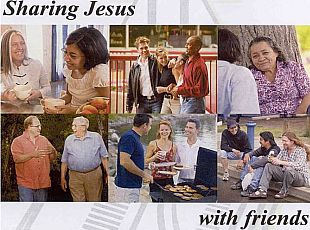
“Sharing Jesus with friends” is not “going into all the world and preaching the Gospel” (Mark 16:15). NEVER will you see a “friendship evangelism” guy preaching repentance from sinful ways, faith in the cross of Jesus for forgiveness, and salvation from eternal damnation in the flames of Hell!

I received the following message from a friend on Facebook. While it is a topic I’ve tackled many times in the past, I thought the way my friend honestly asked her questions accurately expressed how many Christians feel about sharing the gospel with their friends. Her words also helped to reaffirm what I have believed for a very long time. “Friendship Evangelism,” as it is most commonly taught and practiced by Christians, is neither friendship nor evangelism.

With my friend’s permission, I would like to share her note with you; and then I will answer her questions.

I have made a lifetime of friends, and up until about 6 years ago, I was a partier and not walking with the Lord. Since become a Christian, I have made myself known to all, but not gone out of my way to share the gospel. I know my friends “think” they know what the Bible says and I also know that they don’t want me to preach or share. I have hoped that Facebook would encourage them to ask me, but they don’t.

I watch like a voyeur, their lives on Facebook and I hate it. I see them post pictures of nights on the town, glazed eyes, draped over a different guy in each shot. Today I read as they talked about spending money frivolously and obnoxiously. I see so much “selfism” and today it really started to hurt.

I keep thinking that, by example, they might want to know more or ask…instead I see them avoid my page and my comments. They never address anything I say regarding our Savior, God, or the written word, and only comment on the “regular” things I post.

Most of my “friends” from the past, I still DO care about their salvation. I’m certain that my approach will mean the end of life-long friendships. Should I just keep exposing the Lord to them? Our Christmas cards and small other things are about all the contact we really have. Should I just go for broke and risk turning them off completely? I know it would mean the end of friendships in most cases.

Part of me knows that losing these friendships shouldn’t matter. I’m more concerned that is I can keep the door open, they might …might…someday come to repentance. I want the door to remain open.

I need some advice. I’m pretty sure your going to tell me to go for it…but I thought you might have a perspective or a way that I should use as an approach . . .

[P.S.] I’m thinking of how to approach evangelizing them. I know the approach that Ray [Comfort] uses, letting them convict themselves through the 10 Commandments (which really works) and you too have mastered it. I have also been told to have them read the word themselves because the word has power. As a chicken, I was hoping to be “non-confrontational” and send it in a letter. A letter of love, and a pouring out of my heart for them. But that leaves them with the ability to not answer, or reply. I know that God would use me MUCH better if I had the nerve to deliver my (HIS) message in person. I want to engage their minds. I’ve never been a “chicken.” I don’t want to fail God. I want my (HIS) words to pierce. So…praying and waiting for His inspiration and His way to lead me, and maybe your words will help push me into the world. I’m NOT ashamed of Him, I’m afraid of them, so to speak. I know if He is with me, who can be against me? Why…do I struggle? Oh, the flesh.

Before I answer my friend’s questions, it is important that I preface my commentary with a few clarifying remarks. First, my commentary is not a critique of my friend–neither of her love for Christ nor of her love for people. I do not question her salvation or the genuineness of her desire for her friends to be saved. My commentary will be, however, a pointed critique of what I believe is a profoundly effective tool of Satan (1 Peter 5:8) — “Friendship” or “Relationship” evangelism.

What Is Friendship Evangelism? 

I believe many Christians practice “Friendship Evangelism” with sincerity. But sadly, it is a sincerity most often born out of ignorance (1 Peter 1:13-16), an ignorance of the Word of God in general and biblical evangelism in particular. At the same time, I feel no such obligation to extend charity toward authors, pastors, teachers, speakers, and movement leaders who propagate this spiritual fraud upon followers of Christ — both true and false converts. Theirs will be a stricter judgment (James 3:1).

Now, let me take a moment to answer a couple of baseless objections to what I will put forth as my position, before I even articulate my position. I do this in advance of making my case because I know for some Christians “Friendship Evangelism” is treated as if it is sacrosanct — an essential evangelism tradition. I use the word “tradition” since there is no biblical support for this methodology and/or philosophy for ministry. It is traditions like this one, “friendship evangelism,” that are evidence of the sad reality that modern-day evangelicalism, especially the American variety, has yet to completely break free of Rome. For Rome also holds traditions with more reverence and gives tradition more authority than Scripture (Matthew 15:1-6).

Let make it very clear that Christians are called by the Word of God to be both friendly and relational. “If I give away all I have, and if I deliver up my body to be burned, but have not love, I gain nothing” (1 Corinthians 13:3). To be opposed to “Friendship Evangelism” as it is most commonly practiced is not to be opposed to friendship or relationships. But a godly and biblical Christian will put God and friends before and above friendships (Luke 14:25-27).

Second, a common objection to any argument against “Friendship Evangelism” is, “There are many ways to share the gospel and friendship evangelism is one of them.” Not so. There is only one way to communicate the gospel, which can take different forms — the Bible’s way. Any methodology that is extra-biblical (meaning the Bible neither commands nor condemns the activity) should be approached and applied with extra care and caution. The immeasurable harm done by “Friendship Evangelism” is evidence that the American Church has thrown caution to the wind and has operated carelessly when applying this extra-biblical, faux-evangelistic methodology.

Does Friendship Evangelism Cause Harm? 

How do I know “Friendship Evangelism” has done great harm? I meet false converts who are byproducts of this unbiblical form of evangelism almost daily on the streets. They have been welcomed into the Christian community. They have been converted to the creature comforts of the church, but they have never been converted by and to the Lord Jesus Christ.

I once attended a baptism where several people were baptized. One teenage girl stood in the pool to share her “testimony” before being baptized by the pastor. Her testimony, albeit paraphrased, went something like this: I grew up Roman Catholic. I started to attend this church. I’m more comfortable with Christianity, so I want to be baptized.” And the pastor baptized her as a follower of Jesus Christ.

With the above in mind, I will now address my friend’s questions and concerns.

Friendship Evangelism Doesn’t Preach Christ

My friend wrote:

“I have made myself known to all, but not gone out of my way to share the gospel.”

In a sentence my friend summed up one of the great deficiencies of “Friendship Evangelism.” With the shockingly low number of professing Christians sharing the gospel with a single person in a year’s time (or in a lifetime), it’s obvious most Christians practicing “Friendship Evangelism” are part of that indefensible number. Why? By engaging in the practice of “Friendship Evangelism,” the Christian spends far more time making themselves known to their friends than making Christ known (1 Corinthians 2:2) to their friends.

Many Christians who practice “Friendship Evangelism” have been led to believe that it is evangelistic to live a perceptible Christian life in front of unbelievers, or to openly admit to unbelievers that they are Christians. There is nothing remarkable about such an admission, especially in America. The majority of the American population will indicate on surveys and censuses that they are Christians. Many Christians will answer the “What religion are you” question with “I’m a Christian” for no other reason than they are not Jewish, Muslim, or Atheist. To check the Christian box is the default position of most Americans. But many are no more Christian than the Jew, Muslim, or Atheist.

Part of the evidence that “Friendship Evangelism” is not evangelistic is that the practice makes the Christian known but it all-too-often fails to make Christ known.

My Friends Don’t Want to me Preach Christ to Them

My friend wrote:

“They [her friends] don’t want me to preach or share.”

Modern evangelicalism has wrongly placed an unregenerate sinner’s felt needs over their very real need of salvation. This is not to say that we shouldn’t address a person’s felt needs. In doing so, one can often discover that the root of a particular felt need is sin; which then presents the opportunity to share the law of God and the gospel with that person. However, where evangelicalism has woefully dropped the ball is in the practice of trying to meet felt needs and stopping there, as if to address felt needs is the same as evangelism.

Dear reader: if you feed, clothe, and house people for the glory of God (Matthew 5:16), but you do not share the gospel with them, all you have ultimately accomplished is making those same needy people warmed and filled on their way to Hell. You have merely made their bodies more comfortable. You’ve done nothing for their souls.

More to the point regarding my friend’s assertion: of course the unregenerate person doesn’t want their Christian friends to proclaim the gospel to them. Why? They hate Jesus (John 15:18). They love their sin (Job 15:16) and they hate God (Romans 1:30). Cockroaches don’t run to the center of the floor and square dance when you turn on the kitchen light. They flee to the dark regions underneath the cabinets and appliances. They hate the light, and so does the unregenerate sinner (John 3:20). Their love for the darkness of their sin is so great that any holy light brought to bear in their lives is not only uncomfortable and unpleasant, it is detestable.

Sadly, modern evangelicalism has responded to this reality by doing everything it can to engage lost sinners in their culture, and according to their felt needs, without ever bothering to flip on the light switch of the gospel. Modern evangelicalism has allowed how lost people feel about “the light” to determine whether or not it shines the light. Many Christians have become man-pleasers to the point of hiding the gospel from people (Matthew 5:15). In doing so, they cease to live as servants of God (Galatians 1:10). Frankly, it doesn’t matter what lost people want. What matters is what they need, and what they need is salvation by the grace of God alone (Ephesians 2:8-9), through faith alone (Romans 1:17), in Jesus Christ alone (Acts 4:12). What they need, whether they feel it or not, is to repent and believe the gospel (Mark 1:15; Luke 13: 1-5; Acts 17:29-31).

Here is a funny video that parodies the totally ridiculous nature of friendship evangelism.

Friendship Evangelism is not Evangelistic

My friend wrote:

“I keep thinking that, by example, they might want to know more or ask…instead I see them avoid my page and my comments.”

Part of the evidence that “Friendship Evangelism” is not evangelistic is the practice of “Assisi-ism.”

Francis of Assisi is far-too-often quoted as saying, “Preach the Gospel at all times and when necessary use words.” There are two problems with this quote: 1) it is unbiblical; and 2) Assisi never said it. Catholic scholars have methodically and exhaustively searched the extant writings of Assisi and cannot attribute the quote to him. These days, this is common knowledge. Yet Christians continue to refer to the mythical quote, and worse they errantly apply it in their lives. The quote also has a modern-day translation. It goes something like this. “Live your life in such a way that people ask you why.”

While it is true that our good works, when performed for the glory of God alone, can cause lost people to glorify God (Matthew 5:16), it is not to say by living a Christian life in front of lost people that they are going to see Jesus in you. Why? The reason is simple enough. Unregenerate sinners are spiritually blind.

“The natural person does not accept the things of the Spirit of God, for they are folly to him, and he is not able to understand them because they are spiritually discerned” (I Corinthians 2:14).

It is also important to note what Matthew 5:16 doesn’t say. The verse says nothing about people coming to genuine repentance and faith in the Lord Jesus Christ. Nothing.

Not only are unbelievers spiritually blind, they are also dead in their sins. Not asleep. Not sick. Not in need of a little help. They are dead.

“And you were dead in the trespasses and sins in which you once walked, following the course of this world, following the prince of the power of the air, the spirit that is now at work in the sons of disobedience— among whom we all once lived in the passions of our flesh, carrying out the desires of the body and the mind, and were by nature children of wrath, like the rest of mankind” (Ephesians 2:1-3).

The Gospel is a Spoken Message

The gospel is a spoken message–meaning it is communicated in verbal and/or written formats. The gospel is not communicated through interpretive dance, random acts of kindness, or mimes.

“How then will they call on him of whom they have not believed? And how are they to believe in him of whom they have never heard? And how are they to hear without someone preaching? And how are they to preach unless they are sent? As it is written, ‘How beautiful are the feet of those who preach the good news!’ But they have not all obeyed the gospel. For Isaiah says, ‘Lord, who has believed what he has heard from us?’ So faith comes from hearing, and hearing through the word of Christ” (Romans 10:14-17).

With 160,000 people dying every day, and the vast majority of them facing God’s judgment (Matthew 7:13-14), it amounts to depraved indifference to wait for the lost people around us to see something special in us and ask what’s different about us. We are commanded by God’s Word to go (Matthew 28:18-20) and preach (Mark 16:15) the gospel to as many people as we can, whenever we can, as often as we can (Acts 1:8). Time is far too short to wait for what will never happen — spiritually dead and blind people seeing Jesus in Christians, believers who are still clothed in sinful human flesh.

It is also rather arrogant, self-righteous, and self-absorbed for the Christian to think he or she regularly looks like Jesus. Jesus was and is God (John 8:58; John 10:30; Philippians 2:6-11; Hebrews 2:5-18). The Christian is not. Jesus was and is without sin (2 Corinthians 5:21). The Christian is not. Jesus was and is perfect (Hebrews 1:3). The Christian never will be perfect this side of Heaven. And since an unbelieving world hates Jesus, the spiritually dead and blind are going to see in you what is most appealing to them (Romans 1:28-32; 2 Timothy 3:1-5) — your sin. People are also going to look for you to sin in a failed attempt to justify their own unbelief (Luke 10:29; Luke 16:15).

Friendship Evangelism makes Friendship More Important than Evangelism

My friend wrote:

“I’m certain that my approach will mean the end of life-long friendships.”

The tragic result of “Friendship Evangelism,” as Christians most often practice it, is that friendships often become more important than the souls of friends. Christians have been wrongly convinced that they must take time (often lots of time) to cultivate relationships with people so that, someday, they may gain the lost person’s permission — to “earn the right” — to share the gospel with them. So the Christian invests time, energy, and resources sincerely trying to establish loving and caring relationships with people. Is it wrong to do that? No. But the all-too-often tragic result of the practice is that if the Christian ever feels the desire to share the gospel with his lost friend, he won’t. Why? The Christian doesn’t want to do anything to jeopardize the relationship he has worked so hard to build. So, again, the friendship becomes more important than the soul of the friend.

Upon closer inspection, this is really selfish behavior. Does the Christian believe that he is so valuable that his lost friend can’t live without him? Or is it that the Christian derives so much pleasure out of the relationship, from what his lost friend does for him, that he doesn’t want to ruin a “good thing”?

Jesus said, “Greater love has no one than this, that someone lay down his life for his friends” (John 15:13). If Christians truly love their lost friends they will give up everything, even their very lives and certainly their relationships, so that those same lost friends might have eternal life. Or do Christians really want their friends to be with them in this life more than they want them to be with Jesus having received eternal life?

No One Goes to Hell Because You Weren’t Their Friend

My friend wrote:

“Part of me knows that losing these friendships shouldn’t matter. I’m more concerned that is I can keep the door open, they might …might…someday come to repentance. I want the door to remain open.”

No Christian can close a door that God wants open. No Christian can open a door that God wants shut (Revelation 3:8). God is sovereign (Acts 4:24), and He doesn’t need our help. God needs nothing from people (Psalm 50:7-15). The gospel alone is the power of God for salvation (Romans 1:16). God, by His grace, chooses to use His children to communicate the life-saving gospel to a lost and dying world. No one goes to Heaven because we’ve made friends with them, and no one goes to Hell because we’ve failed to establish relationships with them.

Conclusion

In closing, let me reiterate that Christians should be loving (1 Peter 4:8), merciful (Zechariah 7:9), gentle (Galatians 5:23), and kind (Proverbs 21:21) to people. We should speak the truth in love (Ephesians 4:15). Evangelism is not a game. It is not a sport. It is what God has commanded every follower of Christ to do. Evangelism is a lifestyle — not that the way we live our life is evangelism, but rather our verbal proclamation of the gospel should permeate every aspect of our life and impact every relationship we have.

My friend understands all of this. She knows what she must do. She acknowledged as much toward the end of her note. I hope I’ve answered her questions, and maybe some of yours too.

Posted in Uncategorized | Leave a comment