Revival Worship Collection 1

As it is in the MP3 music search on amazon.com, the following is my first “Revival Worship Collection 1.” Songs are ranked for their musical and lyrical quality on a scale from 1-10. Reverence, majesty, quality, holiness, and lordship salvation. Glory to Jesus!

For my views of Pentecostal praise and worship, see chapter 1 of my e-book How to Experience God.

1. Robin Mark – I Am Persuaded (10/10)
2. Robin Mark – Jesus, All For Jesus (8/10)
3. Robin Mark – Lord Have Mercy (Live) (8/10)
4. Robin Mark – There Is No Other Name (9/10)
5. Robin Mark – When It’s All Been Said And Done (9/10)
6. Robin Mark – Be Unto Your Name (8/10)
7. Keith Green – How Majestic Is Thy Name (8/10)
8. Keith Green – Glory Lord Jesus (8/10)
9. Keith Green – Until That Final Day (8/10) – saw white angel sparkle while listening!
10. Keith Green – Jesus Is Lord of All (9/10)
11. Michael Card – Be Thou My Vision (9/10)
12. Amy Grant – Thy Word (8/10)
13. Don Moen – Ah, Lord God (8/10)
14. Don Moen – I Just Want to Be Where You Are (8/10)
15. Vineyard Music – Glorify (8/10)
16. Vineyard Music – You Are Mighty (8/10)
17. Vineyard Music – I See The Lord (8/10)
18. Matt Redman – Lord, Let Your Glory Fall (9/10)
19. Graham Kendrick – Knowing You (10/10)
20. Travis Cottrell – Holy Holy Holy (Hosanna) (10/10)
21. Charlie Leblanc – To Him Who Sits On the Throne (10/10)
22. Betty Johnson – Rock of Ages, Cleft For Me (9/10)
23. Virgil Meares – There Is a Fountain Filled With Blood (9/10)
24. University of Texas – A Mighty Fortress Is Our God (10/10)
25. Harvard University Choir – Come, Thou Fount of Every Blessing (10/10)
26. London Philharmonic Choir – Praise to the Lord the Almighty (10/10)
27. Choir of Paisley Abbey – Be Still My Soul (10/10)
28. Harding University Concert Choir – As The Deer (9/10)
29. West Coast Baptist College – Before the Throne of God Above (10/10)
30. Morgan State University Choir – The Solid Rock (10/10)

—–

Steve Camp

—–

UPDATE: 12/2/14 – Revival Worship Albums

1. The Best of Rev. Milton Brunson
2. Robin Mark – Revival in Belfast I and II
3. The Essential John P. Kee
4. Hillsong – Shout To The Lord (2 discs; special gold edition)
5. Mississippi Mass Choir – The First Twenty Years
6. Keith Green – The Ministry Years I and II
7. Rich Mullins – Liturgy and Songs
8. Michael Card – The Ultimate Collection

Posted in Uncategorized | Leave a comment

Surprise! Preachers Don’t Need a Covering!

I can’t think of anywhere in the Bible, especially in the New Testament, where a denominational headquarters is commanded and sanctioned by God. Sure, the rabbis in Jerusalem at the temple must have had some kind of a denominational headquarters in which they organized a system of synagogues throughout the Roman Empire. But how this man-made setup came into being is anyone’s guess. One thing is for sure: God never commanded it; at least to where you can see it plainly in Scripture.

Moses had no covering; no accountability other than God. The same thing with Samuel, Elijah, Elisha, John the Baptist, Jesus, and the Apostle Paul. Some have argued that Acts 13 and 15 support the idea that Paul and Barnabas had a covering: the church at Jerusalem. But it would be a real stretch of the imagination to see the basis for organizing a denominational headquarters out of such scanty evidence as this. All you have in those passages are some Christian leaders praying and worshiping God in Spirit and truth, and confirming to Paul and Barnabas that the Holy Spirit is calling them to preach the Gospel. If this event had not happened, then Paul probably would have gone preaching anyway, out of obedience to the vision of Jesus. In Acts 15, the so-called “Jerusalem Council” occurred, where they debated whether the ceremonial laws needed to be kept by Christians to secure their salvation:–for example, whether it was necessary to be circumcised in order to be saved. I don’t see Paul going to James and Peter at Jerusalem like going to a pope or bishop. I see Paul and other Christian leaders just meeting together and discussing theology. And I also see Paul, in another place, rebuking Peter for being a hypocrite, and coming under the influence of the Judaizer cult (Gal. 2:11). If Paul looked on Peter or James or the church in Jerusalem as his “covering” or his “accountability,” then why would he rebuke the infallible pope Peter? How could he have confidence before God to dare to correct his General Overseer? Easy. Paul’s General Overseer and Pope was none other than Jesus Christ who sits on the throne. 1 Peter 2:25: “For ‘you were like sheep going astray,’ but now you have returned to the Shepherd and Overseer of your souls.”

Paul’s covering was nothing but the atoning blood of Jesus; some pastors seem to think they need a denominational headquarters, or at least a local elder to SUPERVISE THEIR PREACHING activities–because if they don’t, then the devil is gonna get ’em, because they are stepping outside of Biblical teaching. But where is this Biblical teaching? Show me one Bible verse; or one passage at length that deals with the concept. Even in 1 Timothy, 2 Timothy, and Titus, and the Book of Acts–and I will listen to you. I can find no evidence in these Biblical books that Christian pastors need other pastors/elders to supervise what they are preaching or doing. I have respect for organizations like the Evangelical Council for Financial Accountability (ECFA):–which keep a church’s financial records above reproach before the IRS and the public; to secure pastors from embezzlement scandals, and the like. But this is much different than saying, “Pastors can’t preach the Gospel unless they have a church board supervising them.” Where is this idea clearly taught in the Bible? It’s not! It seems the practice just arose out of necessity over time; men trying to control pastors; and administrate large church organizations. Yeah–it’s not in the Bible. Luke 22:24-26: “A dispute also arose among them as to which of them was considered to be greatest. Jesus said to them, ‘The kings of the Gentiles lord it over them; and those who exercise authority over them call themselves Benefactors. But you are not to be like that. Instead, the greatest among you should be like the youngest, and the one who rules like the one who serves.” This does not mean “servant leadership,” where the whole “supervisor” structure remains; and the guys at top just pretend to be “servants,” but still control, intimidate, and politically correctly threaten other pastors who are stepping out of line! (Side note: every denomination has one guy at the top, right? The Catholic Church has the Pope. The Southern Baptist Convention has its President. Assemblies of God has its General Superintendent. Who are the coverings of these three men? Who are they accountable to? God alone. Exactly my point. Then I see no reason why the same cannot be allowed for a non-denominational pastor, such as Jesus.)

Jesus AuthorityThe Pharisees once challenged Jesus about who was His covering and accountability board: “Jesus entered the temple courts, and, while He was teaching, the chief priests and the elders of the people came to Him. ‘By what authority are you doing these things?’ they asked. ‘And who gave you this authority?’ (that is, who is your covering? who are you accountable to? who ordained you?) Jesus replied, ‘I will also ask you one question. If you answer me, I will tell you by what authority I am doing these things. John’s baptism—where did it come from? Was it from Heaven, or of human origin?’ They discussed it among themselves and said, ‘If we say, ‘From Heaven,’ he will ask, ‘Then why didn’t you believe him?’ But if we say, ‘Of human origin’—we are afraid of the people, for they all hold that John was a prophet.’ So they answered Jesus, ‘We don’t know.’ Then He said, ‘Neither will I tell you by what authority I am doing these things'” (Matthew 21:23-27). Jesus was BAPTIZED by John the Baptist. He saw His own baptism as fulfilling all righteousness; and it was in His baptism that Jesus claimed prophetic confirmation of His calling to PREACH (Matt. 3:15). John the Baptist didn’t “ordain” Jesus; he was only a prophet who confirmed that God had anointed Jesus. And any man that feels himself called to be a pastor should have run-ins with prophets like this from time to time; I know I have.

Noah was a “preacher of righteousness” (2 Peter 2:5):–but there is no evidence he ever had a church board supervising his sermons every Sunday; and censoring him from preaching about Hell, repentance, and holy living!

Martin Luther–when he broke away from the Catholic Church…nobody was his covering or accountability except for God. Same thing with…

Richard Baxter and the Non-conformist Puritan pastors; they had no “coverings.”

John Wesley, when he decided to break from the Church of England.

William J. Seymour–his Apostolic Faith Gospel Mission was totally independent from a supervisory board; Seymour was the pastor and accountable to nobody but God. About 280 million Pentecostals speak in tongues today because of this one man.

Do you feel called to preach? Then what are you waiting for!? Obey the words of Jesus: “Go into all the world and preach the Gospel to every creature!” (Mark 16:15).

You don’t need a preaching license; or any man’s permission (1 John 2:27): Jesus HAS ALREADY given you permission to preach…no, He has given you a command in Scripture: “Go into all the world and preach the Gospel to every creature!” (Mark 16:15).

Wikipedia’s article on the “Pastor” says:

Observers, such as clergy counselor Rowland Croucher, suggest that the numbers of “ex-pastors” roughly equals that of serving clergy throughout the Western world.[3] This would mean people who have left the ministry number in the six-figures. More pastors and priests may be leaving parish ministry than are lost to most other professions.[4] Until the early 1990s, there were few cross-denominational ministries serving this group. Croucher collected data-based questionnaires of ministers of Protestant denominations.[5][6][7]

The first writers to explore this research area used questionnaire surveys to look at factors such as age, education and family relationships as contributing factors to decisions to leave the ministry.[8] Other writers have explored ex-pastors within particular denominations[9][10][11] and/or focused on particular related issues such as burnout,[12][13] stress,[14][15] marital stress,[16] sexual abuse,[17] celibacy,[18] loneliness,[19] organisational factors,[20][21] and conflict.[22] One common cause of conflict occurs when differing approaches to ministry compete in the minds of clergy, congregation and community, as Norman Blaikie found in Australian clergy from six Protestant denominations.[23]

Leonard Ravenhill - Last Days MinistriesI’d Much Rather Be
a Non-Denominational Revivalist-Type Pastor

Doesn’t look so good to do denominational ministry to me; personally, I’d rather not do pastoral ministry in a denomination or anywhere with a church board. Biblically, the pastor is responsible for developing the spirituality of his church (Hebrews 13:17). The only way for this to happen, is if the church follows the pastor’s directions–not the other way around. THE PASTOR IS NOT SUPPOSED TO FOLLOW THE (CARNAL) DIRECTIONS OF ELDERS OR A CHURCH BOARD–that is nowhere in the Bible! So long as church leaders are in rebellion to the principles of righteousness–its a counterfeit church they’re running.

Is It Spiritual Pride to Say That
Independent Revival Ministry Is God’s Will?

Some may think that I’m just deceived by spiritual pride; you may think that I just need to humble myself, stop rebelling, and submit myself to the powers that be in these denominations. Not going to happen! Pride is an insidious sinful attribute of all men by nature; and I do not claim to be exempt from it. But as it regards this subject, I don’t feel the accusation of pride really fits the picture. What fits the picture in my perspective is CONSCIENCE and BRAVERY:–two concepts you don’t hear very much about in the Christian ministry these days. I don’t want to go to Hell; “So I strive always to keep my conscience clear before God and man” (Acts 24:16):–even if it means being anti-denominational with regard to pastoral ministry. I just simply don’t have the conscience to do it; I think it is sinful; the Seeker-Sensitive Movement is simply too widespread for me to waste my time. Experience teaches me, that it is more in keeping with the spirit of humility, to stand for Biblical righteousness even when it requires sacrificing the limelight of a denominational pulpit. On the contrary, pride or vanity, is intentionally seeking the limelight of a denominational pulpit at all costs:–even your integrity, your theology, your morals, and your conscience. Of such men, the Bible says, “Speaking lies in hypocrisy; having their conscience seared with a hot iron” (1 Timothy 4:2). Satan wanted to ascend the throne of God; he wanted to receive praise and worship (Isaiah 14). May I NEVER come close to that spirit! And neither may you be a vain, limelight-seeking preacher who just tells people what they want to hear (God’s love, etc)! May we with the old saint say, “I will maintain my innocence and never let go of it; my conscience will not reproach me as long as I live!” (Job 27:6).

[UPDATE–7/21/14: I refuse to submit, or “be teachable,” under an ungodly church system that muzzles preachers of righteousness, waters-down the doctrine of Hell, or erases it completely, and refuses to even mention the word “sin”; a system that controls and manipulates pastors to be feminine, not evangelistic; program-driven, not prophetically-led; and formalistic, not revivalistic (2 Timothy 3:5). Such a religion is CURSED!]

[UPDATE–7/31/14: Some may accuse me of pride, because I maintain a stance against the majority of evangelical pastors:–that they are in the wrong for compromising the Gospel for the convenience and expedience of seeker-sensitive ministry opportunities. To this accusation, I reply:

I am automatically prideful in my sinful nature (Romans 7:23):–the “pride of life” (1 John 2:16), in that sense, is virtually inescapable. If you know how to be free from it completely, then tell me, and I will take it under consideration. But to say it is “pride” for me to be an independent, non-denominational pastor committed to revivalistic standards; or, to speak strongly against the Seeker-Sensitive Movement:–I admit, it is pride, but godly pride! I’M PROUD OF CHRIST AND HIS GOSPEL OF LORDSHIP SALVATION; and very, very proud that He bled under the wrath of God for my salvation from Hell; and proud that all He requires of me is repentance, faith in the cross, and imperfect obedience to His commands.]

—–

Further Reading on Pastoral Independence from Church Boards

Broadbent, E. H. The Pilgrim Church. London: Pickering & Inglis, 1931. Chapters 8-13, from Luther, to the Puritans, to Wesley and the Methodists:–traces the history of reformation and revival in the church; Chapter 11: “English Nonconformists” has a section on independent Puritan churches.

Kennedy, John W. The Torch of the Testimony. Gospel Literature Service, 1965. Chapter 14: “From the Midst of Tragedy,” has a section on the Independents in the time of Queen Elizabeth and the Puritans that followed.

Newbold, Charles. The Harlot Church System. Knoxville, TN: Ingathering Press, 1999. Chapter 14: “Witchcraft in the Church” and Chapter 16: “The Demons of Witchcraft”; in no uncertain terms, flatly exposes the sins of manipulation frequently committed by church boards.

Viola, Frank. Reimagining Church. Colorado Springs, CO: David C. Cook, 2008. Chapter 11: “Reimagining Spiritual Covering” and Chapter 13: “Reimagining Denominational Covering.”

Books on Biblical Pastoral Ministry

Baxter, Richard. The Reformed Pastor. Carlisle, PA: The Banner of Truth Trust, 1974.

Chu, Brian. Ministry and Money: How to Start Your Own Ministry, Church, or Non-Profit Organization. Miramar Beach, FL: New Hope, 2012.

MacArthur, John. Pastoral Ministry: How to Shepherd Biblically. Nashville, TN: Thomas Nelson, 2005.

Oden, Thomas. Pastoral Theology: Essentials of Ministry. New York: HarperCollins Publishers, 1983.

Other

Enroth, Ronald. Churches That Abuse.

—–. Recovering From Churches That Abuse.

Posted in Uncategorized | Leave a comment

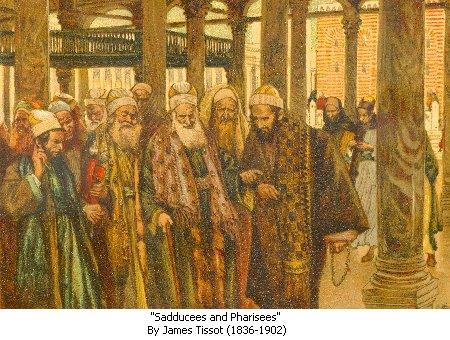
The Teachings of the Pharisees and Sadducees

saduccees“Be careful,” Jesus said to them. “Be on your guard against the yeast of the Pharisees and Sadducees.” –Matthew 16:6

The following teachings of the Pharisees and Sadducees are extracted from Adam Clarke’s Commentary on the Bible, on Matthew 16:1, 6:

“As Lightfoot observes, the term leaven (yeast) was very rarely used among the Jews to signify doctrine, and therefore the disciples did not immediately apprehend his meaning (v. 7)…What the leaven of Pharisees and Sadducees was has been already explained, see Matthew 16:1. Bad doctrines act in the soul as leaven does in meal (v. 6).”

Matthew 16:12: “Then they understood that He was not telling them to guard against the yeast used in bread, but against the teaching of the Pharisees and Sadducees.”

TEACHINGS OF BOTH PHARISEES AND SADDUCEES (v. 6)

1. Assimulation:–to feign, to counterfeit (like a fake $100 bill), to simulate (to be very similar to), to resemble.

2. Beliefs that permit ungodly tempers and behavior.

3. Pride.

4. Hypocrisy (pretending to be holy); not genuine. Luke 12:1: “Be on your guard against the yeast of the Pharisees, which is hypocrisy.”

5. Worldly-mindedness; not holiness, not Christian mysticism or spirituality.

TEACHINGS OF THE PHARISEES (v. 1)

(See Humphrey Prideaux’s The Old and New Testament Connected.)

For more insight, go to studylight.org, and search the phrase “Pharisees”

6. External cleanliness (clothing styles):–not inward holiness (obedience to God). Matthew 23:26: “You blind Pharisee, first clean the inside of the cup and of the dish, so that the outside of it may become clean also.”

6b. Arrogant and Graceless Towards Repentant Sinners. Luke 7:39: “Now when the Pharisee who had invited Him saw this, he said to himself, ‘If this man were a prophet He would know who and what sort of person this woman is who is touching Him, that she is a sinner.'” | Luke 18:11: “The Pharisee stood and was praying this to himself: ‘God, I thank You that I am not like other people: swindlers, unjust, adulterers, or even like this tax collector.”

6c. Preoccupation with the Ceremonial Law. Luke 11:38: “When the Pharisee saw it, he was surprised that He had not first ceremonially washed before the meal.”

7. Reincarnation! (metempsychosis):–except for the very wicked. (cp. liberal Christianity; New Age Movement in the Church)

8. Fate/Moderate Predestination. (cp. Calvinism)

pastors compromiseTEACHINGS OF THE SADDUCEES (v. 1)

9. No Judgment, Hell, or Heaven After Death. (cp. higher Biblical criticism)

10. Live Life Out of Love for God Only (no rewards for good works).

11. Relate to God as a Father Only, but Not as a Judge. (cp. liberal Christianity)

12. No Resurrection of the Dead.

13. No Angels or Demons. (cp. higher Biblical criticism; liberal Christians)

14. Divine Rewards and Punishments Are Only in This Life.

15. Deism:–“belief in a God who created the world but has since remained indifferent to it…rejection of supernatural revelation.” (cp. liberals; Cessationists; Dispensationalists).

—–

SAINTS WHO GUARDED AGAINST PHARISEE AND SADDUCEE TEACHINGS

While Luther and Baxter barely manifested the miraculous gifts, all these other saints did; and all of them taught and walked in inward holiness.

d. 493 – St. Patrick
d. 1226 – St. Francis of Assisi
d. 1582 – St. Teresa of Avila
d. 1546 – Martin Luther
The Scots Worthies
d. 1691 – Richard Baxter
d. 1791 – John Wesley
d. 1875 – Charles Finney
d. 1922 – William J. Seymour
d. 1947 – Smith Wigglesworth
d. 1991 – Dennis Bennett

Posted in Uncategorized | Leave a comment

A Challenging Sermon by a Homeless Street Preacher – Eric Sheptock

When the Son of Man comes in His glory, and all the holy angels with Him, then He will sit on the throne of His glory. All the nations will be gathered before Him, and He will separate them one from another, as a shepherd divides his sheep from the goats. And He will set the sheep on His right hand, but the goats on the left. Then the King will say to those on His right hand, “Come, you blessed of My Father, inherit the kingdom prepared for you from the foundation of the world: for I was hungry and you gave Me food; I was thirsty and you gave Me drink; I was a stranger and you took Me in; I was naked and you clothed Me; I was sick and you visited Me; I was in prison and you came to Me.” Then the righteous will answer Him, saying, “Lord, when did we see You hungry and feed You, or thirsty and give You drink? When did we see You a stranger and take You in, or naked and clothe You? Or when did we see You sick, or in prison, and come to You?” And the King will answer and say to them, “Assuredly, I say to you, inasmuch as you did it to one of the least of these My brethren, you did it to Me.” –Matthew 25:31-40

Posted in Uncategorized | Leave a comment

Where Did All These Pentecostals and Charismatics Come From? – Mark Devine

Originally from here.

Where in the world did all these Pentecostals and charismatics come from? In the explosive growth and geographical extension of Pentecostal and charismatic groups, we are witnessing one of the most if not the most stunning episodes of Christian expansion ever. In the not-too-distant future Pentecostals will likely make up the majority of Christians worldwide.

Yet Pentecostals and charismatics remain mysterious even to other Protestants, despite the fact that the origins of the contemporary Pentecostal movement are well known. A cluster of events around the turn of the 20th century shaped Pentecostalism’s distinctive character and launched it as one juggernaut of a Christian movement.

The Start: Topeka

In October 1900, 29-year-old Agnes Ozman matriculated at the freshly founded Bethel Bible College in Topeka, Kansas. Former Methodist, now Holiness pastor Charles Fox Parham directed students to read the book of Acts with heightened alertness to every mention of the Spirit. Consensus emerged on two points: (1) outward manifestations always accompany the Spirit’s activity, and (2) speaking in tongues is the outward sign, the proof of baptism in the Holy Spirit.

A watch night service was announced for New Year’s Eve. Sometime in the wee hours of January 1, 1901, Parham placed his hands on Miss Ozman at her request, praying that she would receive baptism by the Holy Spirit. Witnesses report that Miss Ozman, for the next three days, spoke and wrote only in Chinese. Parallel with the event reported in Acts 2 at the feast of Pentecost, the miraculous “tongue” reportedly spoken at Topeka was a known, extant human language foreign to the speaker. Only rarely amid the subsequent spread of the movement did reports of such technically “Pentecostal” tongues arise. Famously, in the summer of 1960, Rabbi Jacob Rabinowitz discovered Irishman John Gruver speaking (unbeknownst to Gruver) Hebrew during an Assemblies of God worship service in Pasadena. But the vast bulk of Pentecostal tongues have been, ironically, not Pentecostal, but Corinthian—unknown tongues, heavenly languages.

Theologically, the events at Topeka retain the strongest claim as the scene of the birth of Pentecostalism. The consensus regarding the tongues and the Spirit resulting from the Parham-prompted Bible study combined with the watch night prayers, and Ozman’s tongues epitomizes early Pentecostal identity. Interpretation of these events gave birth to new doctrine that turned Holiness believers into the first self-consciously Pentecostal followers of Jesus Christ. Here’s what they believe: speaking in tongues is the normative external sign of the baptism with the Holy Spirit that is the spiritual birthright of every Christian.

Holiness Cradle

Such a reading and application of the book of Acts was long in the making. A century and half earlier, John Wesley had taught that a second work of grace post-conversion was possible, desirable, and pursuable by converts to Jesus Christ. The Methodist movement Wesley inspired gave birth to the Keswick Convention and conferences and the Wesleyan-Holiness and Higher Life movements out of which Pentecostalism sprang.

These Holiness churches emphasized the importance of Holy Spirit-produced second and even third works of grace. One group, for example, identified regeneration, sanctification, and baptism in the Spirit as three constituent outpourings of the Spirit proper to the normal Christian life. Holiness Christians wrangled among themselves about the number, nature, significance, and proper sequencing of such experiences.

A distinctive and quite technical language developed among these Holiness Christians. Terms such as “second blessing,” “entire sanctification,” “being filled with the Holy Spirit,” “baptism of the Holy Spirit,” or “baptism by the Holy Spirit” became identity markers amid a proliferating movement giving birth to countless independent churches as well as full-blown denominations like the Pilgrim Holiness Church and the Church of the Nazarene.

All these Holiness groups insisted that the miraculous gifts reported in the New Testament continue beyond the apostolic age into the present-day church. Though some Holiness believers chafe at this reality, early Pentecostals were essentially Holiness Christians with one additional feature—the insistence that speaking in tongues is the normative outward sign of the normative baptism by and in the Holy Spirit.

Azusa Street

The second pivotal event occurred when African American Holiness-turned-Pentecostal pastor William J. Seymour made his way to Azusa Street in Los Angeles to preach. Seymour, a former student of Parham and son of a slave, witnessed the outbreak of a revival that would not abate for three years. This multi-racial, multi-class eruption of miraculous gifts (charismata) pumped out Pentecostal evangelists, missionaries, and ministers.

The spiritual lineage of almost all early leaders among Pentecostals who soon dispersed throughout North America and beyond trace back to this extraordinary time in greater Los Angeles. The defining theological distinctive of Pentecostalism was distilled at Topeka. The launching pad of what would become global Pentecostal advance was situated on Azusa Street.

Organizing and Theologizing

Now we consider a third decisive development. From the beginning many Pentecostal churches began as independent entities and chose to remain so. But hundreds of Pentecostal denominations arose as well, including this one: “The founding fathers and mothers of the Assemblies of God met in Hot Springs, Arkansas, on April 2-12, 1914, to promote unity and doctrinal stability, establish legal standing, coordinate the mission enterprise, and establish a ministerial training school.” It would be difficult to exaggerate the significance of this event. Of the some 280 million Pentecostals worldwide, more than 67 million belong to the Assemblies of God.

Two words capture the heart of theological conviction underlying both Pentecostalism and the Holiness movement from which it sprang—continuity and restoration. Against “cessationists” who insist that the miraculous gifts reported in the New Testament (tongues, healings, prophecies) ceased with the close of the apostolic age, Pentecostals contend for their continuance. The relationship between then and now is one not of disjunction but continuity. Thus, where the miraculous gifts are absent, Christians should seek to restore them.

But do Pentecostals care about anything else? Yes, and like so many other Protestants, they’re willing to fight with and separate from one another over all sorts of things. This 1947 observation by Canadian Pentecostal pastor H. H. Barber provides a helpful window into the theological and ecclesiological diversity of Pentecostalism:

In the city of Winnipeg are people who claim to be Pentecostal who are hyper-Calvinist [i.e., they hold to a strict doctrine of predestination], some who are strong Arminians [i.e., they hold that man has free will]; some who look upon the doctrine of the Trinity as a pagan superstition [the so-called “Jesus Only” groups], others who are staunchly Trinitarian; some who believe in baptismal regeneration, others who deny any regenerative virtue of baptism. Some cherish a rabid type of independence; others are loyal to the requirement of ordered denominational affiliation.

When push came to shove, some Pentecostal churches and denominations have proved themselves protective of orthodox and evangelical Christianity. The emergence of “Jesus Only” deniers of the Trinity within the Assemblies of God precipitated a schism and resulted in The Statement of Fundamental Truths (1916), one-third of which was dedicated to affirming the most ancient and fundamental confession of Christian believers. Today the official website of the Assemblies of God (USA) gratefully identifies itself with Martin Luther, John Wesley, and the First Great Awakening. Not just tongues, not even just the Trinity, but insistence upon the inerrancy and authority of the Bible and justification by grace alone through faith alone typically belongs to the irreducible minimum Pentecostal confession.

Such continuities between Pentecostals with older streams within the Christian tradition should not surprise us. Early Pentecostal believers did not materialize out of thin air but came forth from Holiness churches who themselves emerged from Anglican, evangelical, and fundamentalist communities of faith. We do well to recall that Pentecostalism arose from a Wesleyan-style watch night service during which the particular petition raised to God followed two months of meticulous individual and communal Bible study. These facts speak to the diverse, deep, and complex Christian rootedness of Pentecostal origins.

Pentecostals and Prosperity

The roots of the so-called prosperity gospel and health-and-wealth gospel that grew up out of Pentecostal soil trace back to the Great Depression of the 1930s. Early Pentecostal encouragement to look for material gain from the hand of God issued forth not from McMansion dwellers and Mercedes drivers but from impoverished preachers who knew what it was to go to bed hungry. The bearers of real material poverty seldom glamorize its sufferings and often bring alertness to certain Biblical teachings. Does not God place his children in a garden paradise and take them to a promised land where he makes their crops, livestock, and jewelry heap up and overflow? Does he not promise ultimately to set his adopted children down at a messianic feast in a New Jerusalem traversed along streets of gold? Was not Jesus the Great Physician? Does not God Himself make us expect and yearn for the end of crying and pain and death?

By the 1980s the conviction that God wills the physical health and the material wealth of every follower of Jesus Christ essentially supplanted preaching about much of anything else within many Pentecostal churches. The means for accessing such benefits was also identified—”name it and claim it.” From the ecclesial soil of Pentecostalism grew first the prosperity gospel and then the Word of Faith movement. Many academic Pentecostals decried such displacement of the heart of the Gospel, and older, more confessionally rooted Pentecostals often avoided the worst excesses of these sub-movements. But the majority of the Pentecostal world flourishes in essentially independent communities of faith, allowing the prosperity gospel and its Word of Faith counterpart to spread with little real resistance. Can orthodox and evangelical Christianity survive where a robust prosperity gospel takes hold? On this point Pentecostals disagree among themselves. But even as Bible-believing Christians rightly criticize this development within Pentecostalism, they would do well to give serious attention to the impressive array of passages in both testaments to which these communities point.

Charismatics of a Different Sort

So what about the charismatics? Aren’t they the same? Yes and no. Pentecostals are charismatics in that they pursue and report experience of the charismatic gifts. But the modern global charismatic movement exploded in the 1970s among Roman Catholics and within Protestant denominations as “the gifts” prized by Pentecostals appeared among them. The Vineyard Church is widely viewed as the first charismatic denomination. The charismatic movement emerged apart from Pentecostalism, but these communities cross-pollinated with their gift-practicing siblings in significant ways. Some charismatics adopted the prosperity gospel, Oral Roberts being the most spectacular example of such merging of and bridging between Pentecostalism and charismatic renewal.

The modern charismatic movement provided an unexpected and fairly astonishing validation of Pentecostal theology as practice of the gifts spread within the established, non-restorationist Christian world. But these new charismatics also posed a challenge to Pentecostals, who seemed to have something of a corner on both teaching and experience where the gifts were concerned. Significantly, the new charismatics rarely treated tongues or any other outward manifestation as the necessary sign of Spirit baptism, making them immediately more compatible with others inside and outside their denominations who did not manifest the gifts.

Options for Orthodox Onlookers

What should those of us who do not speak in tongues and do not witness regular healing miracles make of these growing movements? Where “Jesus Only” denial of the Trinity or the quest for health and wealth supplants the Gospel itself, our duty seems clear. We must declare, “That is not Christian.” Like Paul, love sometimes demands divisive dogmatism: “If we or an angel from Heaven should preach to you a Gospel other than what we have preached to you, a curse be on him” (Galatians 1:8).

But what about Pentecostals and charismatics who confess the doctrines of the Trinity and the person of Jesus Christ in ancient, classic, orthodox fashion? What of those who cherish the Reformation solas, heartily affirming justification by grace alone through faith alone in Jesus Christ alone? Surely a kind of theological and relational Golden Rule is in order: do unto them what you would have them to do unto you. We can love them without affirming convictions and practices with which we disagree. In the same way divergence over baptism and church governance results in a real separation between, for example, Southern Baptists and Presbyterians, without either community suspecting that the other languishes outside the body of Christ.

Ought not orthodox and evangelical confession achieve a core level of recognition and trust between diverse Protestant communions? Ought not such confession elicit and nurture considered patience towards one another? Again, like Paul, love sometimes demands from us dogmatic patience and refusal to separate: “Who are you to pass judgment on the servant of another? It is before his own master that he stands or falls. And he will be upheld, for the Lord is able to make him stand” (Romans 14:4). Discernment is the great burden of the church, but we must shoulder this responsibility with the seriousness demanded by the unity of the church and the purity of the Gospel.

Mark DeVine is associate professor of history and doctrine at Beeson Divinity School in Birmingham, Alabama. He is the author of Bonhoeffer Speaks Today: Following Jesus at All Costs.

Posted in Uncategorized | Leave a comment

Quality Worship Music

Speaking to one another in psalms and hymns and spiritual songs, singing and making melody in your heart to the Lord. –Ephesians 5:19

—–

Contemporary Christian Music / Praise and Worship

1. Keith Green – The Ministry Years: 1977-1979 and The Ministry Years: 1980-1982
2. Robin Mark – especially Revival in Belfast and Revival in Belfast II
3. Rich Mullins – Songs, etc
4. Michael Card
5. Wow Worship albums (some)
6. iWorship (some)
7. Don Moen (some)
8. Wow Gold
9. Vineyard Music
10. Travis Cottrell – Alive Forever
11. The Brooklyn Tabernacle Choir (Pentecostal, but reverent)

Black Gospel Music

10. Georgia Mass Choir
11. Mississippi Mass Choir (my FAVORITE)
12. Wow Gospel albums (some)
13. Hezekiah Walker

30 Psalms, Hymns, and Spiritual Songs

1. Be Thou My Vision – Dal­lan For­gaill, Mary Byrne, and Eleanor Hull
2. Rock of Ages Cleft for Me – Augustus Toplady and Thomas Hastings
3. Holy, Holy, Holy – Reginald Heber and John B. Dykes
4. There Is a Fountain Filled with Blood – William Cowper
5. A Mighty Fortress Is Our God – Martin Luther and Frederic Hedge
6. To Him Who Sits on the Throne – Debbye Graafsma
7
. Come, Thou Fount of Every Blessing – Robert Robinson and John Wyeth

8. Knowing You, Jesus – Graham Kendrick
9. Road to Zion – Petra, Greg Volz
10. Praise to the Lord, the Almighty – Joachim Neander and William Bennett
11. Be Still, My Soul – Katharina von Schlegel, Jane Borthwick, and Jean Si­bel­i­us
12. In Christ Alone – Keith Getty and Stuart Townend
13. Holy, Holy, Holy (Hosanna) – Travis Cottrell
14. Before the Throne of God Above – Jeff Berry Band
15. This Is My Father’s World – Maltbie Babcock and Franklin Sheppard
16. Blessed Be Your Name – Tree63
17. O Holy Lord – Michael J. Pritzl (Hear Our Cry album)
18. 10,000 Reasons (Radio Version) – Matt Redman
19. How Deep the Father’s Love for Us
20. The Solid Rock
21. In Christ Alone
22. Revelation Song – Phillips, Craig, & Dean
23. Until That Final Day – Keith Green
24. Thy Word – Amy Grant
25. I Will Rise – Chris Tomlin (actually not so bad)
26. Jesus, All For Jesus – Robin Mark
27. In the Light – DC Talk
28. The Coloring Song – Petra
29. Come Let Us Worship – Fernando Ortega
30. For the Beauty of the Earth (hymn)

Posted in Uncategorized | Leave a comment

The Working of Miracles

Moses Dividing the Red Sea by the Power of GodThe following are notes from chapter 10: “The Working of Miracles” in The Holy Spirit and You (1971) by Dennis and Rita Bennett.

  • There are no “laws of nature,” only probabilities of nature; and are sometimes contradicted by miracles. Gravity, the speed of light, etc. Normally these things follow a natural, usual, probable course. But in miracles, these probable courses, or what scientists call “laws of nature,” are completely contradicted:–to demonstrate that God is in control of the elements (p. 124).
  • Events “come under the heading of miracles,” which are supernaturally caused by God, and are not healings:–these are also called “nature miracles” or “miracles of nature.” 1. Dividing the Red Sea (Exod. 14:21-31). 2. The Sun Standing Still (Josh. 10:12-14). 3. The Cruse of Oil Not Running Out (1 Kings 17:8-16). 4. Fire from the Sky to Consume Elijah’s Altar (1 Kings 18:17-39). 5. The Sun’s Shadow Reversing Ten Degrees on Hezekiah’s Sundial (2 Kings 10:8-11). 6. The Ten Plagues (Exod. 7-12). 7. Poisonous Soup Made Harmless (2 Kings 4:38-41). (p. 125).
  • The Five Greatest Miracle-Workers in the Bible: Moses, Elijah, Elisha, Jesus, and Paul (pp. 125-126, 131).
  • Reasons for Miracles to Be Performed: 1. Compassion to Meet Human Needs. 2. Practical Purposes. 3. Comforting the Disciples of Jesus. 4. Feeding the Hungry. 5. Encourage Believers or Those Who Want To Believe. (p. 126).
  • Modern Miracles Need to Follow the Biblical Pattern. Those “weird events” that happen among New Agers, occultists, and psychics are demonic counterfiets of true miracles. True miracles of God are always occurring in a context where the Gospel of Jesus Christ is preached or taught; or at least where Jesus is being glorified. St. Patrick mirrored Moses; St. Columba of Iona mirrored Moses, Elijah, Elisha, and Jesus; St. Benedict of Nursia mirrored Elisha; St. Francis of Assisi mirrored Jesus; Hildegard of Bingen mirrored Paul in healings; and John Wesley mirrored Paul in healings and open air evangelism (p. 127). Modern examples that Bennett regards are Smith Wigglesworth, David duPlessis, and Mel Tari (Like a Mighty Wind). (pp. 117, 128).
  • The Reason For the Miracle Revival in Indonesia: The people “have never been told that certain parts of the Bible are ‘not for today’; therefore they are putting it into practice in simple faith! It works! God is alive!” (p. 129). This is why, as a “reformer,” I’m more comfortable confessing the 39 Articles (1563), as did Wesley and Wigglesworth and Bennett, than the Westminster Confession (1646) or the 1689 Baptist Confession of Faith, both of which say in the first article, “It pleased the Lord, at sundry times, and in divers manners, to reveal Himself, and to declare that His will unto His Church; and afterwards for the better preserving and propagating of the truth, and for the more sure establishment and comfort of the Church against the corruption of the flesh, and the malice of Satan and of the world, to commit the same wholly unto writing; which makes the Holy Scripture to be most necessary; those former ways of God’s revealing His will unto His people being now ceased.” Thus cessationism has its origin in the Puritan confessions:–sadly, because I respect them in so many other areas of their theology.
  • Study miracles and think miraculously. Bennett said, “Right after the baptism with the Holy Spirit, people experience a greater release of the miraculous in their lives. Then often comes a slackening of these experiences, because the old ways of thinking and living creep back in, and God has to enroll us in the school of the Holy Spirit” (p. 130). Good reason to study Catholic mystical theology (Augustin Poulain’s The Graces of Interior Prayer, etc), Joan Carroll Cruz’s Mysteries Marvels Miracles: In the Lives of the Saints, the lives or biographies of Sts. Patrick, Columba, Benedict, Francis, Hildegard, John Wesley, Smith Wigglesworth, David duPlessis, and Mel Tari. Chapters on the “Working of Miracles” in Pentecostal/Charismatic books on spiritual gifts: Smith Wigglesworth’s Ever Increasing Faith, ch. 15; Donald Gee’s Concerning Spiritual Gifts, ch. 6; Gordon Lindsay’s Commissioned with Power, ch. 25; Dennis and Rita Bennett’s The Holy Spirit and You, ch. 10; Sam Storms’ The Beginner’s Guide to Spiritual Gifts, ch. 5.
Posted in Uncategorized | Leave a comment

Developing the Prophetic Gifts (Book Outline)

Introduction: How to Develop Spiritual Sensitivity to the Prophetic Gifts of Visions, Dreams, Voices, Impressions, Voices, Angels, and the Manifestations of the Spirit (1 Cor. 12:8-10).

1. The Varieties of Direct Prophetic Revelations
2. Roman Catholic Teaching on Contemplation
3. Eastern Orthodox Teaching on Contemplation (Hesychasm)
4. Isaac Ambrose on Contemplation
5. Tozer, Foster, and Goll on Contemplation
6. The Word of Knowledge
7. The Gift of Faith
8. The Working of Miracles
9. Discerning of Spirits
10. To the Law and Testimony!

Posted in Uncategorized | Leave a comment

Augustine on Dreams

Augustine (d. 430), perhaps the most far-reaching and influential of the church fathers, into both Catholic and Reformed theology, has left us two letters that address the subject of dreams:

LETTER 9 (A. D. 389)

To Nebridius Augustine Sends Greeting.

1. Although you know my mind well, you are perhaps not aware how much I long to enjoy your society. This great blessing, however, God will some day bestow on me. I have read your letter, so genuine in its utterances, in which you complain of your being in solitude, and, as it were, forsaken by your friends, in whose society you found the sweetest charm of life. But what else can I suggest to you than that which I am persuaded is already your exercise? Commune with your own soul, and raise it up, as far as you are able, unto God. For in Him you hold us also by a firmer bond, not by means of bodily images, which we must meanwhile be content to use in remembering each other, but by means of that faculty of thought through which we realize the fact of our separation from each other.

2. In considering your letters, in answering all of which I have certainly had to answer questions of no small difficulty and importance, I was not a little stunned by the one in which you ask me by what means certain thoughts and dreams are put into our minds by higher powers or by superhuman agents. The question is a great one, and, as your own prudence must convince you, would require, in order to its being satisfactorily answered, not a mere letter, but a full oral discussion or a whole treatise. I shall try, however, knowing as I do your talents, to throw out a few germs of thought which may shed light on this question, in order that you may either complete the exhaustive treatment of the subject by your own efforts, or at least not despair of the possibility of this important matter being investigated with satisfactory results.

3. It is my opinion that every movement of the mind affects in some degree the body. We know that this is patent even to our senses, dull and sluggish though they are, when the movements of the mind are somewhat vehement, as when we are angry, or sad, or joyful. Whence we may conjecture that, in like manner, when thought is busy, although no bodily effect of the mental act is discernible by us, there may be some such effect discernible by beings of aërial or etherial essence whose perceptive faculty is in the highest degree acute—so much so, that, in comparison with it, our faculties are scarcely worthy to be called perceptive. Therefore these footprints of its motion, so to speak, which the mind impresses on the body, may perchance not only remain, but remain as it were with the force of a habit; and it may be that, when these are secretly stirred and played upon, they bear thoughts and dreams into our minds, according to the pleasure of the person moving or touching them: and this is done with marvellous facility. For if, as is manifest, the attainments of our earth-born and sluggish bodies in the department of exercise, e.g. in the playing of musical instruments, dancing on the tight-rope, etc., are almost incredible, it is by no means unreasonable to suppose that beings which act with the powers of an aërial or etherial body upon our bodies, and are by the constitution of their natures able to pass unhindered through these bodies, should be capable of much greater quickness in moving whatever they wish, while we, though not perceiving what they do, are nevertheless affected by the results of their activity. We have a somewhat parallel instance in the fact that we do not perceive how it is that superfluity of bile impels us to more frequent outbursts of passionate feeling; and yet it does produce this effect, while this superfluity of bile is itself an effect of our yielding to such passionate feelings.

4. If, however, you hesitate to accept this example as a parallel one, when it is thus cursorily stated by me, turn it over in your thoughts as fully as you can. The mind, if it be continually obstructed by some difficulty in the way of doing and accomplishing what it desires, is thereby made continually angry. For anger, so far as I can judge of its nature, seems to me to be a tumultuous eagerness to take out of the way those things which restrict our freedom of action. Hence it is that usually we vent our anger not only on men, but on such a thing, for example, as the pen with which we write, bruising or breaking it in our passion; and so does the gambler with his dice, the artist with his pencil, and every man with the instrument which he may be using, if he thinks that he is in some way thwarted by it. Now medical men themselves tell us that by these frequent fits of anger bile is increased. But, on the other hand, when the bile is increased, we are easily, and almost without any provocation whatever, made angry. Thus the effect which the mind has by its movement produced upon the body, is capable in its turn of moving the mind again.

5. These things might be treated at very great length, and our knowledge of the subject might be brought to greater certainty and fullness by a large induction from relevant facts. But take along with this letter the one which I sent you lately concerning images and memory, and study it somewhat more carefully; for it was manifest to me, from your reply, that it had not been fully understood. When, to the statements now before you, you add the portion of that letter in which I spoke of a certain natural faculty whereby the mind does in thought add to or take from any object as it pleases, you will see that it is possible for us both in dreams and in waking thoughts to conceive the images of bodily forms which we have never seen.

LETTER 159 (A. D. 415)

To Evodius, My Lord Most Blessed, My Venerable and Beloved Brother and Partner in the Priestly Office, and to the Brethren Who are with Him, Augustine and the Brethren Who are with Him Send Greeting in the Lord.

1. Our brother Barbarus, the bearer of this letter, is a servant of God, who has now for a long time been settled at Hippo, and has been an eager and diligent hearer of the Word of God. He requested from us this letter to your Holiness, whereby we commend him to you in the Lord, and convey to you through him the salutations which it is our duty to offer. To reply to those letters of your Holiness, in which you have interwoven questions of great difficulty, would be a most laborious task, even for men who are at leisure, and who are endowed with much greater ability in discussing and acuteness in apprehending any subject than we possess. One, indeed, of the two letters in which you ask many great questions has gone amissing, I know not how, and though long sought for cannot be found; the other, which has been found, contains a very pleasing account of a servant of God, a good and chaste young man, stating how he departed from this life, and by what testimonies, communicated through visions of the brethren, his merits were, as you state, made known to you. Taking occasion from this young man’s case, you propose and discuss an extremely obscure question concerning the soul—whether it is associated when it goes forth from this body with some other kind of body, by means of which it can be carried to or confined in places having material boundaries? The investigation of this question, if indeed it admits of satisfactory investigation by beings such as we are, demands the most diligent care and labour, and therefore a mind absolutely at leisure from such occupations as engross my time. My opinion, however, if you are willing to hear it, summed up in a sentence, is, that I by no means believe that the soul in departing from the body is accompanied by another body of any kind.

2. As to the question how these visions and predictions of future events are produced, let him attempt to explain them who understands by what power we are to account for the great wonders which are wrought in the mind of every man when his thoughts are busy. For we see, and we plainly perceive, that within the mind innumerable images of many objects discernible by the eye or by our other senses are produced—whether they are produced in regular order or in confusion matters not to us at present: all that we say is, that since such images are beyond all dispute produced, the man who is found able to state by what power and in what way these phenomena of daily and perpetual experience are to be accounted for is the only man who may warrantably venture to conjecture or propound any explanation of these visions, which are of exceedingly rare occurrence. [Here Augustine infers that Christian dream interpretation is most accurately accomplished by the dreamer himself.–edit] For my part, as I discover more plainly my inability to account for the ordinary facts of our experience, when awake or asleep, throughout the whole course of our lives, the more do I shrink from venturing to explain what is extraordinary. For while I have been dictating this epistle to you, I have been contemplating your person in my mind—you being, of course, absent all the while, and knowing nothing of my thoughts,— and I have been imagining from my knowledge of what is in you how you will be affected by my words; and I have been unable to apprehend, either by observation or by inquiry, how this process was accomplished in my mind. Of one thing, however, I am certain, that although the mental image was very like something material, it was not produced either by masses of matter or by qualities of matter. Accept this in the meantime from one writing under pressure of other duties, and in haste. In the twelfth of the books which I have written on Genesis this question is discussed with great care, and that dissertation is enriched with a forest of examples from actual experience or from trustworthy report. How far I have been competent to handle the question, and what I have accomplished in it, you will judge when you have read that work; if indeed the Lord shall be pleased in His kindness to permit me now to publish those books systematically corrected to the best of my ability, and thus to meet the expectation of many brethren, instead of deferring their hope by continuing further the discussion of a subject which has already engaged me for a long time.

3. I will narrate briefly, however, one fact which I commend to your meditation. You know our brother Gennadius, a physician, known to almost every one, and very dear to us, who now lives at Carthage, and was in other years eminent as a medical practitioner at Rome. You know him as a man of religious character and of very great benevolence, actively compassionate and promptly liberal in his care of the poor. Nevertheless, even he, when still a young man, and most zealous in these charitable acts, had sometimes, as he himself told me, doubts as to whether there was any life after death. Forasmuch, therefore, as God would in no wise forsake a man so merciful in his disposition and conduct, there appeared to him in sleep a youth of remarkable appearance and commanding presence, who said to him: Follow me. Following him, he came to a city where he began to hear on the right hand sounds of a melody so exquisitely sweet as to surpass anything he had ever heard. When he inquired what it was, his guide said: It is the hymn of the blessed and the holy. What he reported himself to have seen on the left hand escapes my remembrance. He awoke; the dream vanished, and he thought of it as only a dream.

4. On a second night, however, the same youth appeared to Gennadius, and asked whether he recognised him, to which he replied that he knew him well, without the slightest uncertainty. Thereupon he asked Gennadius where he had become acquainted with him. There also his memory failed him not as to the proper reply: he narrated the whole vision, and the hymns of the saints which, under his guidance, he had been taken to hear, with all the readiness natural to recollection of some very recent experience. On this the youth inquired whether it was in sleep or when awake that he had seen what he had just narrated. Gennadius answered: In sleep. The youth then said: You remember it well; it is true that you saw these things in sleep, but I would have you know that even now you are seeing in sleep. Hearing this, Gennadius was persuaded of its truth, and in his reply declared that he believed it. Then his teacher went on to say: Where is your body now? He answered: In my bed. Do you know, said the youth, that the eyes in this body of yours are now bound and closed, and at rest, and that with these eyes you are seeing nothing? He answered: I know it. What, then, said the youth, are the eyes with which you see me? He, unable to discover what to answer to this, was silent. While he hesitated, the youth unfolded to him what he was endeavoring to teach him by these questions, and immediately said: As while you are asleep and lying on your bed these eyes of your body are now unemployed and doing nothing, and yet you have eyes with which you behold me, and enjoy this vision, so, after your death, while your bodily eyes shall be wholly inactive, there shall be in you a life by which you shall still live, and a faculty of perception by which you shall still perceive. Beware, therefore, after this of harbouring doubts as to whether the life of man shall continue after death. This believer says that by this means all doubts as to this matter were removed from him. By whom was he taught this but by the merciful, providential care of God?

5. Some one may say that by this narrative I have not solved but complicated the question. Nevertheless, while it is free to every one to believe or disbelieve these statements, every man has his own consciousness at hand as a teacher by whose help he may apply himself to this most profound question. Every day man wakes, and sleeps, and thinks; let any man, therefore, answer whence proceed these things which, while not material bodies, do nevertheless resemble the forms, properties, and motions of material bodies: let him, I say, answer this if he can. But if he cannot do this, why is he in such haste to pronounce a definite opinion on things which occur very rarely, or are beyond the range of his experience, when he is unable to explain matters of daily and perpetual observation? For my part, although I am wholly unable to explain in words how those semblances of material bodies, without any real body, are produced, I may say that I wish that, with the same certainty with which I know that these things are not produced by the body, I could know by what means those things are perceived which are occasionally seen by the spirit, and are supposed to be seen by the bodily senses; or by what distinctive marks we may know the visions of men who have been misguided by delusion, or, most commonly, by impiety, since the examples of such visions closely resembling the visions of pious and holy men are so numerous, that if I wished to quote them, time, rather than abundance of examples, would fail me.

May you, through the mercy of the Lord grow in grace, most blessed lord and venerable and beloved brother!

Posted in Uncategorized | Leave a comment

Tertullian on Dreams

497px-TertullianTertullian (d. 225) was a Spirit-filled charismatic church father. Below is an extract from his A Treatise on the Soul, chs. 44-49, which deals with the important spiritual subject of dreams:

Chapter 44. The Story of Hermotimus, and the Sleeplessness of the Emperor Nero. No Separation of the Soul from the Body Until Death.

With regard to the case of Hermotimus, they say that he used to be deprived of his soul in his sleep, as if it wandered away from his body like a person on a holiday trip. His wife betrayed the strange peculiarity. His enemies, finding him asleep, burnt his body, as if it were a corpse: when his soul returned too late, it appropriated (I suppose) to itself the guilt of the murder. However the good citizens of Clazomenæ; consoled poor Hermotimus with a temple, into which no woman ever enters, because of the infamy of this wife. Now why this story? In order that, since the vulgar belief so readily holds sleep to be the separation of the soul from the body, credulity should not be encouraged by this case of Hermotimus. It must certainly have been a much heavier sort of slumber: one would presume it was the nightmare, or perhaps that diseased languor which Soranus suggests in opposition to the nightmare, or else some such malady as that which the fable has fastened upon Epimenides, who slept on some fifty years or so. Suetonius, however, informs us that NERO NEVER DREAMT (not receiving dreams from God is a judgment upon this pagan unbeliever, 1 Sam. 28:15–edit), and Theopompus says the same thing about Thrasymedes; but Nero at the close of his life did with some difficulty dream after some excessive alarm. What indeed would be said, if the case of Hermotimus were believed to be such that the repose of his soul was a state of actual idleness during sleep, and a positive separation from his body? You may conjecture it to be anything but such a licence of the soul as admits of flights away from the body without death, and that by continual recurrence, as if habitual to its state and constitution. If indeed such a thing were told me to have happened at any time to the soul—resembling a total eclipse of the sun or the moon—I should verily suppose that the occurrence had been caused by God’s own interposition, for it would not be unreasonable for a man to RECEIVE ADMONITION FROM THE DIVINE BEING either in the way of WARNING or of ALARM, as by a flash of lightning, or by a sudden stroke of death; only it would be much the more natural conclusion to believe that THIS PROCESS SHOULD BE BY A DREAM (this agrees with Job 33:14-18: “For God may speak in one way, or in another, yet man does not perceive it.  In a dream, in a vision of the night, when deep sleep falls upon men, while slumbering on their beds,then He opens the ears of men, and seals their instruction.In order to turn man from his deed, and conceal pride from man,He keeps back his soul from the Pit, and his life from perishing by the sword”–edit), because if it must be supposed to be, (as the hypothesis we are resisting assumes it to be,) not a dream, the occurrence ought rather to happen to a man while he is wide awake.

Chapter 45. Dreams, an Incidental Effect of the Soul’s Activity. Ecstasy.

We are bound to expound at this point what is THE OPINION OF CHRISTIANS RESPECTING DREAMS, as incidents of sleep, and as no slight or trifling excitements of the soul, which we have declared to be always occupied and active owing to its perpetual movement, which again is a proof and evidence of its divine quality and immortality. When, therefore, rest accrues to human bodies, it being their own special comfort, THE SOUL, disdaining a repose which is not natural to it, never rests (that is, the soul is awake, active, and participating in the spirit world through dreams–edit); and since it receives no help from the limbs of the body, it uses its own. Imagine a gladiator without his instruments or arms, and a charioteer without his team, but still gesticulating the entire course and exertion of their respective employments: there is the fight, there is the struggle; but the effort is a vain one. Nevertheless the whole procedure seems to be gone through, although it evidently has not been really effected. There is the act, but not the effect. This power we call ECSTASY, in which the sensuous soul stands out of itself, in a way which even resembles madness. Thus in the very beginning sleep was inaugurated by ecstasy: And God sent an ecstasy upon Adam, and he slept (Genesis 2:21). The sleep came on his body to cause it to rest, but the ecstasy fell on his soul to remove rest: from that very circumstance it still happens ordinarily (and from the order results the nature of the case) that sleep is combined with ECSTASY. In fact, with what REAL FEELING, and anxiety, and suffering do we experience joy, and sorrow, and alarm in our DREAMS! (Tertullian’s point is that the reality of DREAMS, and the five senses being experienced in them, is because in dreams, it is really with our SOULS that we are experiencing things!–edit.) Whereas we should not be moved by any such emotions, by what would be the merest fantasies of course, if when we dream we were masters of ourselves, (unaffected by ecstasy.) In these dreams, indeed, good actions are useless, and crimes harmless; for we shall no more be condemned for visionary acts of sin, than we shall be crowned for imaginary martyrdom. (I personally disagree with Tertullian here; sin is in the heart [Matt. 15:19]; and needs to be repented of, especially if committed in a dream–because it is sin in the core of the soul…St. Teresa of Avila would disagree also, because she believed saints could experience spiritual martyrdom in the heart, without actually being physically martyred.–edit.) But how, you will ask, CAN THE SOUL REMEMBER ITS DREAMS, when it is said to be without any mastery over its own operations? THIS MEMORY MUST BE A SPECIAL GIFT OF THE ECSTATIC CONDITION of which we are treating, since it arises not from any failure of healthy action, but entirely from natural process; nor does it expel mental function—it withdraws it for a time. It is one thing to shake, it is another thing to move; one thing to destroy, another thing to agitate. That, therefore, which memory supplies betokens soundness of mind; and that which a sound mind ecstatically experiences while the memory remains unchecked, is a kind of madness. We are accordingly not said to be mad, but to DREAM, in that state; to be in the full possession also of our mental faculties, if we are at any time. For although the power to exercise these faculties may be dimmed in us, it is still not extinguished; except that it may seem to be itself absent at the very time that the ECSTASY is energizing in us in its special manner, in such wise as to bring before us IMAGES of a sound mind and of wisdom, even as it does those of aberration.

Chapter 46. Diversity of Dreams and Visions. Epicurus Thought Lightly of Them, Though Generally Most Highly Valued. Instances of Dreams.

We now find ourselves constrained to express an opinion about the character of the dreams by which the soul is excited. And when shall we arrive at the subject of death? And on such a question I would say, When God shall permit: that admits of no long delay which must needs happen at all events. EPICURUS has given it as his opinion that dreams are altogether vain things; (but he says this) when liberating the Deity from all sort of care, and dissolving the entire order of the world, and giving to all things the aspect of merest chance, casual in their issues, fortuitous in their nature. Well, now, if such be the nature of things, there must be some chance even for truth, because it is impossible for it to be the only thing to be exempted from the fortune which is due to all things. HOMER has assigned two gates to dreams — the horny one of truth, the ivory one of error and delusion. For, they say, it is possible to see through horn, whereas ivory is not transparent. ARISTOTLE, while expressing his opinion that dreams are in most cases untrue, yet acknowledges that there is some truth in them. The people of Telmessus will not admit that dreams are in any case unmeaning, but they blame their own weakness when unable to conjecture their signification. Now, who is such a stranger to human experience as not sometimes to have perceived some truth in dreams? I shall force a blush from Epicurus, if I only glance at some few of the more remarkable instances. HERODOTUS relates how that Astyages, king of the Medes, saw in a dream issuing from the womb of his virgin daughter a flood which inundated Asia; and again, in the year which followed her marriage, he saw a vine growing out from the same part of her person, which overspread the whole of Asia. The same story is told prior to Herodotus by Charon of Lampsacus. Now they who interpreted these visions did not deceive the mother when they destined her son for so great an enterprise, for Cyrus both inundated and overspread Asia. Philip of Macedon, before he became a father, had seen imprinted on the pudenda of his consort Olympias the form of a small ring, with a lion as a seal. He had concluded that an offspring from her was out of the question (I suppose because the lion only becomes once a father), when Aristodemus or Aristophon happened to conjecture that nothing of an unmeaning or empty import lay under that seal, but that a son of very illustrious character was portended. They who know anything of Alexander recognise in him the lion of that small ring. Ephorus writes to this effect. Again, Heraclides has told us, that a certain woman of Himera beheld in a dream Dionysius’ tyranny over Sicily. Euphorion has publicly recorded as a fact, that, previous to giving birth to Seleucus, his mother Laodice foresaw that he was destined for the empire of Asia. I find again from STRABO, that it was owing to a dream that even Mithridates took possession of Pontus; and I further learn from Callisthenes that it was from the indication of a dream that Baraliris the Illyrian stretched his dominion from the Molossi to the frontiers of Macedon. The Romans, too, were acquainted with dreams of this kind. From a dream Marcus Tullius (CICERO) had learned how that one, who was yet only a little boy, and in a private station, who was also plain Julius Octavius, and personally unknown to (Cicero) himself, was the destined Augustus, and the suppressor and destroyer of (Rome’s) civil discords. This is recorded in the Commentaries of Vitellius. But visions of this prophetic kind were not confined to predictions of supreme power; for they indicated perils also, and catastrophes: as, for instance, when Caesar was absent from the battle of Philippi through illness, and thereby escaped the sword of Brutus and Cassius, and then although he expected to encounter greater danger still from the enemy in the field, he quitted his tent for it, in obedience to a vision of Artorius, and so escaped (the capture by the enemy, who shortly after took possession of the tent); as, again, when the daughter of Polycrates of Samos foresaw the crucifixion which awaited him from the anointing of the sun and the bath of Jupiter. So likewise in sleep revelations are made of high honours and eminent talents; remedies are also discovered, thefts brought to light, and treasures indicated. Thus Cicero’s eminence, while he was still a little boy, was foreseen by his nurse. The swan from the breast of Socrates soothing men, is his disciple Plato. The boxer Leonymus is cured by Achilles in his dreams. SOPHOCLES the tragic poet discovers, as he was dreaming, the golden crown, which had been lost from the citadel of Athens. Neoptolemus the tragic actor, through intimations in his sleep from Ajax himself, saves from destruction the hero’s tomb on the Rhoetean shore before Troy; and as he removes the decayed stones, he returns enriched with gold. How many commentators and chroniclers vouch for this phenomenon? There are Artemon, Antiphon, Strato, Philochorus, Epicharmus, Serapion, Cratippus, and Dionysius of Rhodes, and Hermippus — the entire literature of the age. I shall only laugh at all, if indeed I ought to laugh at the man who fancied that he was going to persuade us that Saturn dreamt before anybody else; which we can only believe if Aristotle, (who would fain help us to such an opinion,) lived prior to any other person. Pray forgive me for laughing. Epicharmus, indeed, as well as Philochorus the Athenian, assigned the very highest place among divinations to dreams. The whole world is full of oracles of this description: there are the oracles of Amphiaraus at Oropus, of Amphilochus at Mallus, of Sarpedon in the Troad, of Trophonius in Bœotia, of Mopsus in Cilicia, of Hermione in Macedon, of Pasiphäe in Laconia. Then, again, there are others, which with their original foundations, rites, and historians, together with the entire literature of dreams, Hermippus of Berytus in five portly volumes will give you all the account of, even to satiety. But the STOICS are very fond of saying that God, in His most watchful providence over every institution, gave us dreams among other preservatives of the arts and sciences of divination, as the special support of the natural oracle. So much for the dreams to which credit has to be ascribed even by ourselves, although we must interpret them in another sense. As for all other oracles, at which no one ever dreams, what else must we declare concerning them, than that they are the diabolical contrivance of those spirits who even at that time dwelt in the eminent persons themselves, or aimed at reviving the memory of them as the mere stage of their evil purposes, going so far as to counterfeit a divine power under their shape and form, and, with equal persistence in evil, deceiving men by their very boons of remedies, warnings, and forecasts—the only effect of which was to injure their victims the more they helped them; while the means whereby they rendered the help withdrew them from all search after the true God, by insinuating into their minds ideas of the false one? And of course so pernicious an influence as this is not shut up nor limited within the boundaries of shrines and temples: it roams abroad, it flies through the air, and all the while is free and unchecked. So that nobody can doubt that our very homes lie open to these diabolical spirits, who beset their human prey with their fantasies not only in their chapels but also in their chambers. [Tertullian says that demons are the source of all evil dreams and pagan dreams which inspire worship of Greek gods and goddesses; these demons are not confined to pagan temples, but fly around in the air, and can enter into our bedrooms…all the more reason for us to pray in Jesus’ Name before we sleep!–edit.]

Chapter 47. Dreams Variously Classified. Some are God-Sent, as the Dreams of Nebuchadnezzar; Others Simply Products of Nature.

We declare, then, that DREAMS ARE INFLICTED ON US MAINLY BY DEMONS, although they sometimes turn out true and favourable to us. When, however, with the deliberate aim after evil, of which we have just spoken, they assume a flattering and captivating style, they show themselves proportionately vain, and deceitful, and obscure, and wanton, and impure. And no wonder that the images partake of the character of the realities. But from God — who has promised, indeed, to pour out the grace of the Holy Spirit upon all flesh, and has ordained that His servants and His handmaids should see visions as well as utter prophecies (Joel 3:1) — must all those visions be regarded as emanating, which may be compared to the actual grace of God, as being honest, holy, prophetic, inspired, instructive, inviting to virtue, the bountiful nature of which causes them to overflow even to the profane, since God, with grand impartiality, sends His showers and sunshine on the just and on the unjust (Matthew 5:45). It was, indeed by an inspiration from God that Nebuchadnezzar dreamt his dreams; and almost the greater part of mankind get their knowledge of God from dreams. Thus it is that, as the mercy of God super-abounds to the heathen, so the temptation of the evil one encounters the saints, from whom he never withdraws his malignant efforts to steal over them as best he may in their very sleep, if unable to assault them when they are awake. The third class of dreams will consist of those which THE SOUL itself apparently creates for itself from an intense application to special circumstances. Now, inasmuch as THE SOUL CANNOT DREAM OF ITS OWN ACCORD (for even Epicharmus is of this opinion), how can it become to itself the cause of any vision? Then must this class of dreams be abandoned to the action of nature, reserving for the soul, even when in the ecstatic condition, the power of enduring whatever incidents befall it? Those, moreover, which evidently proceed neither from God, nor from diabolical inspiration, nor from the soul, being beyond the reach as well of ordinary expectation, usual interpretation, or the possibility of being intelligibly related, will have to be ascribed in a separate category to what is purely and simply the ecstatic state and its peculiar conditions.

Chapter 48. Causes and Circumstances of Dreams. What Best Contributes to Efficient Dreaming.

They say that dreams are more sure and clear when they happen towards the end of the night, because then the vigour of the soul emerges, and heavy sleep departs. As to the seasons of the year, dreams are calmer in spring, since summer relaxes, and winter somehow hardens, the soul; while autumn, which in other respects is trying to health, is apt to enervate the soul by the lusciousness of its fruits. Then, again, as regards the position of one’s body during sleep, one ought not to lie on his back, nor on his right side, nor so as to wrench his intestines, as if their cavity were reversely stretched: a palpitation of the heart would ensue, or else a pressure on the liver would produce a painful disturbance of the mind. But however this be, I take it that it all amounts to ingenious conjecture rather than certain proof (although the author of the conjecture be no less a man than Plato); and possibly all may be no other than the result of chance. But, generally speaking, dreams will be under control of a man’s will, if they be capable of direction at all; for we must not examine what opinion on the one hand, and superstition on the other, have to prescribe for the treatment of dreams, in the matter of distinguishing and modifying different sorts of food. As for the superstition, we have an instance when FASTING is prescribed for such persons as mean to submit to the SLEEP which is necessary for RECEIVING THE ORACLE, in order that such abstinence may produce the required purity [Superstition of pagans this may be, it makes good sense to me; and reveals something of a mystery to why fasting and prayer are practiced by Jesus and the prophets for the increase of faith, or prophetic revelation. While the body is weakened through its lack of nourishment, while sleeping, the soul is more “detached” from the flesh, and awakened to the realities of the spirit world. When mixed with prayer in Jesus’ Name, we may assume the Holy Spirit manifests, and welcomes prophetic DREAMING all the more!–edit]; while we find an instance of the opinion when the disciples of Pythagoras, in order to attain the same end, reject the bean as an aliment which would load the stomach, and produce indigestion. But the three brethren, who were the companions of DANIEL, being content with pulse alone [vegetables: Daniel 1:12, 17], to escape the contamination of the royal dishes, received from God, besides other wisdom, the gift especially of penetrating and explaining the sense of dreams. For my own part, I hardly know whether FASTING would not simply make me dream so profoundly, that I should not be aware whether I had in fact dreamt at all. Well, then, you ask, has not sobriety something to do in this matter? Certainly it is as much concerned in this as it is in the entire subject: if it contributes some good service to SUPERSTITION, much more does it to RELIGION. For even DEMONS require such discipline from their DREAMERS as a gratification to their divinity [see Deuteronomy 13:1-3], because they know that it is acceptable to God, since Daniel (to quote him again) ate no pleasant bread for the space of three weeks (Daniel 10:2). This abstinence, however, he used in order to please God by humiliation, and not for the purpose of producing a sensibility [sensitivity] and wisdom for his soul previous to receiving communication by dreams and visions, as if it were not rather to effect such action in an ecstatic state. This sobriety, then, (in which our question arises,) will have nothing to do with exciting ecstasy, but will rather serve to recommend its being wrought by God. [I personally disagree. I think that FASTING and PRAYER does excite ECSTASY; and makes the soul more sensitive to receive dreams and visions from the Holy Spirit and angels! If the dream-seeker is living a holy life…walking in HEARTFELT RIGHTEOUSNESS and obedience to the moral law of God. If this were not so, then what are we to think of the praying fasts of Moses and Jesus?–edit.]

Chapter 49. No Soul Naturally Exempt from Dreams.

As for those persons who suppose that infants do not dream, on the ground that all the functions of the soul throughout life are accomplished according to the capacity of age, they ought to observe attentively their tremors, and nods, and bright smiles as they sleep, and from such facts understand that they are the emotions of their soul as it dreams, which so readily escape to the surface through the delicate tenderness of their infantile body. The fact, however, that the African nation of the Atlantes are said to pass through the night in a deep lethargic sleep, brings down on them the censure that something is wrong in the constitution of their soul. Now either report, which is occasionally calumnious against barbarians, deceived Herodotus, or else a large force of demons of this sort domineers in those barbarous regions. Since, indeed, Aristotle remarks of a certain hero of Sardinia that he used to withhold the power of visions and dreams from such as resorted to his shrine for inspiration, it must lie at the will and caprice of the DEMONS to take away as well as to confer the faculty of DREAMS; and from this circumstance may have arisen the remarkable fact (which we have mentioned ) of Nero and Thrasymedes only dreaming so late in life. WE, HOWEVER, DERIVE DREAMS FROM GOD. Why, then, did not the Atlantes receive the dreaming faculty from God, because there is really no nation which is now a stranger to God, since THE GOSPEL flashes its glorious light through the world to the ends of the earth? Could it then be that rumour deceived Aristotle, or is this caprice still the way of demons? (Let us take any view of the case), only do not let it be imagined that any soul is by its natural constitution exempt from dreams.

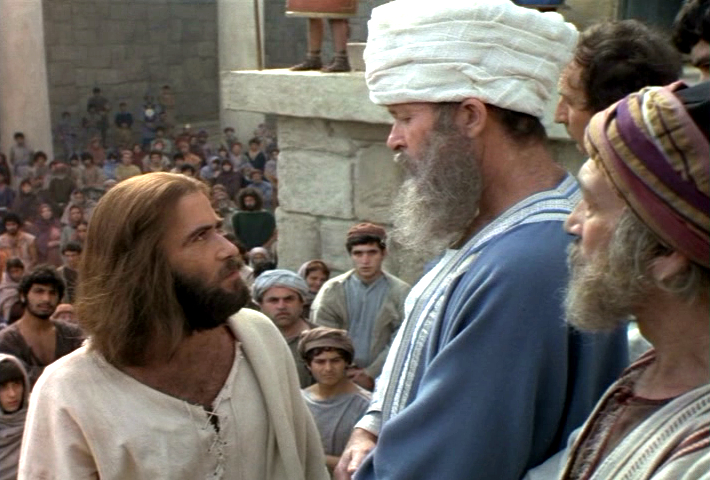
Posted in Uncategorized | Leave a comment