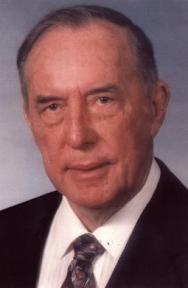
Review of Jack Deere’s “Surprised by the Voice of God”

Surprised by the Voice of God

Jack Deere’s Surprised by the Voice of God (1996) is the best book on dreams, visions, the voice of God, and the gift of prophecy that I have found to date. It is more lively and experiential than Wayne Grudem’s The Gift of Prophecy (1988), but just as academically satisfying. Truly it is the best book on spiritual gifts that I could recommend to anyone at this point in my life. This book is a gift to the body of Christ. I don’t agree with everything he says though, and I will express my friendly but critical thoughts as I summarize what I learned from him…

CHAPTER 1 shows that Deere’s introduction to the gift of prophecy started when a seminary student came into his office one day and he went into a trance and saw a vision of the word “PORNOGRAPHY” as the student was talking. When he mentioned it to him, the young man admitted that he had become addicted to porn. He repented and was prayed for, and was freed from that addiction. On another occasion, he was praying for a troubled woman and the name “Don” kept popping into his mind. It turned out that man had done some very abusive and occultic things to her; and she was set free from demonic power by Deere’s praying.

CHAPTER 2 shows that Deere soon became friends with John Wimber, the founder of the Vineyard churches, and an amazing charismatic theologian in his own right (Power Evangelism, Power Healing, Power Encounters, Power Points, etc). Later on in the book, Deere says he joined Wimber’s pastoral staff for a few years in the 1980s at the Anaheim Vineyard Christian Fellowship. (He doesn’t mention him by name, but I believe John Paul Jackson was on the staff as well for a while, because he was so gifted with visions.) So, its clear from the beginning of the book, that Deere’s views on miraculous gifts come from a Vineyard, or Wimber perspective.

CHAPTER 3 shows that Deere believes as do I, that Jesus had to receive revelation just like all other humans have to (dreams, visions, the voice of God, impressions, etc). But he does not teach any kenosis doctrine of Jesus starting off as a human and becoming God later on. He just believes that God made Jesus to experience life as a human prophet who had to receive revelation just like every other prophet that had existed in the world. The only difference was that Jesus had the “Spirit without measure” (John 3:34). Even Elisha didn’t have it that good.

CHAPTER 4 shows a survey of supernatural experiences in the book of Acts. It starts with Peter’s proclamation of the prophecy of Joel 2:28-32 being fulfilled on the day of Pentecost through the baptism in the Holy Spirit, speaking in tongues, dreams and visions, signs and miracles, the last days, and evangelistic outreach (Acts 2:17-21). Spirit-filled dreams and visions are clearly seen as the source of the prophecies that come from God. After the ascension, the apostles cast lots to discover Matthias (1:26); during a prayer meeting, a violent wind blew through the room and visionary lights of fire shaped like tongues came and hovered over 120 disciples (probably signifying the Holy Spirit’s role in tongues and prophecy) (2:2-4); there is the healing of a paralytic (3:13); Peter got revelation on the death of Ananias and Sapphira and was later delivered from jail by an angel (5:3, 19-20); Stephen saw an open vision of Jesus standing on the right hand of God and declared it to the Pharisees (7:55); Philip was directed by an angel and the Holy Spirit, performed miracles as he preached the Gospel, and was teleported by God (8:26, 29, 39); Paul saw an open vision of Jesus on the road to Damascus and Ananias (not the man in ch. 5) heard God’s voice (9:3-6, 10-16); Cornelius saw an open vision of an angel while praying; Peter fell into a trance while he was hungry and saw an open vision of animals and then the Holy Spirit told Peter to go to Cornelius, and when he did he preached the Gospel and the Holy Spirit was poured out on his household and everyone spoke in tongues (10:4-6, 10-16, 19, 46); Agabus accurately prophesied a famine (11:28); Peter was again freed from jail by an angel (12:7-11); during worship and fasting, God’s voice spoke to an elder that Paul and Barnabas should be sent out as missionaries (13:2); Paul “saw” that a paralyzed man had faith to be healed (14:9-10); the Holy Spirit impressed the Jerusalem elders to not bind the ceremonial law on the Gentiles (15:28); Paul was given a vision of a man in Macedonia beckoning him to come and preach the Gospel (16:9-10); Jesus appeared to Paul in a vision at night and assured him that he would not be harmed in Corinth (18:9-11); Paul laid his hands on twelve people and they spoke in tongues and prophesied (19:6); the Holy Spirit warned Paul that suffering waited for him in Jerusalem (20:23); Agabus prophesied that Paul would be arrested in Jerusalem (21:10-11); Jesus appeared to Paul in his prison cell in an open vision and told him that he must testify of his conversion in both Jerusalem and Rome (23:11); while on a ship, an angel appeared to Paul in an open vision and let him know that they would be shipwrecked but everyone would live (27:10, 21-26); the faith of the people on Malta was heightened once they saw Paul’s hand bitten by a deadly viper and he was unharmed; then he prayed for the sick and people were healed (28:3-9).

Revelations are divinely implanted thoughts in the mind: they come either through dreams, visions, voices, and accompanying impressions from the Holy Spirit. They are thoughts that surprise, inform, enlighten, guide, and instruct. This is because, as God once said, “As the heavens are higher than the earth, so are My ways higher than your ways and My thoughts than your thoughts” (Isaiah 55:9). They are not the sorts of things that you would think up on your own. They come from God, hence they are thoughts that come from a higher source than your own mind. The prophet who would receive such thoughts from God must have a teachable spirit, willing to align himself with what is revealed to him by God.

CHAPTER 5 shows that evangelical charismatics are nothing new. While Catholic saints had no problem with charismatic experiences–Protestants have been a lot drier in this area. However, the gift of prophecy did seem to leap out of the Catholic Church during the Protestant Reformation and transfer to some of the reformers. This was especially the case with the Covenanters in Scotland, documented in John Howie’s The Scots Worthies. Deere highlights the following as having outstanding miraculous gifts in the prophetic: George Wishart (d. 1546), John Knox (d. 1572), John Welsh (d. 1622), Robert Bruce (d. 1631), and Alexander Peden (d. 1686). These men who loved the Bible so much–also had no problem with God speaking to them in visions and dreams. I would add to this list a charismatic continuation with George Fox (d. 1691), John Wesley (d. 1791), Smith Wigglesworth (d. 1947), John Wimber (d. 1997), and David Wilkerson (d. 2011). Basically the traditions of evangelical Quakerism, Methodism, holiness, Assemblies of God, and the Vineyard (Wimber era). Today it seems, and I say this with great reservation, that the Holy Spirit is most active in non-denominational charismatic churches that enthusiastically practice prophetic ministry. In the wake of Todd Bentley’s “Lakeland Revival” scandal in 2008, I would hope that some prophetic ministries have tried to purify their standards, and lean more towards Biblical holiness preaching, or a more evangelical direction. I think John Paul Jackson might be an example of that: he passed away on February 18, 2015.

CHAPTER 6 shows that Reformed cessationist scholars began to edit out any supernatural experiences or views in John Howie’s Scots Worthies; and in the 19th century during this rationalistic period, this explaining away of the supernatural in Christianity became more prominent. But in the 1600s, there were still some evangelical charismatics around. Samuel Rutherford (d. 1661), for example, was a prominent Puritan theologian who was part of the assembly that compiled the Westminster Confession. He was actually a charismatic! In his book, A Survey of the Spiritual Antichrist, he goes to great lengths explaining the difference between true charismatic prophets and false charismatics. He believed that John Wycliffe (d. 1384), John Hus (d. 1415), Martin Luther (d. Feb. 1546), George Wishart (d. March 1546), John Knox (d. 1572), and John Davidson of Prestonpans (d. 1604) were all true prophets who accurately predicted the future (p. 42). Davidson was also a Covenanter. Rutherford also believed that there were rules for spiritual discernment that could be used to judge whether a revelation was true (p. 43):

1. The prophecies do not contradict the Bible.

2. The prophecies come from godly people.

3. The prophets deny that their prophecies have the same authority as the Bible.

4. The prophets don’t require anyone to obey their prophecies.

Deere also makes some remarks about the character of these men and the circumstances in their lives that make prophecy possible. 1. They have the fear of God (Ps. 25:14). 2. They have prayer lives, which means they spend hours in prayer every day, especially like Welsh. 3. They stand for the truth of the Gospel even though it costs them respectability; and they are persecuted as common criminals. 4. They are often poor and needy; and prophecy was just part of God’s providence for them. Deere remarks, “Throughout the history of the church, there were amazing reports of the supernatural when extraordinarily godly Christians were persecuted. According to the contemporary historians, godliness, persecution, and need accounted for the supernatural outpouring of the Holy Spirit during this period. The same is true today” (p. 86). He points to the underground church in China, Corrie ten Boom, and Charles Spurgeon as more recent examples.

CHAPTERS 7-10 is my favorite part of the book: “The Language of the Holy Spirit.” In many ways it is the heart of the book and is the most practical.

In chapter 7, it shows that there is such a phenomenon, which the Catholics used to call sortes Biblicae (lots by the Bible). In this experience, the Holy Spirit directs the Christian to open up the Bible “at random” but ends up guiding the person to open up to a specific passage and speak something directly relevant to his situation. This happened to St. Augustine when he heard a voice say, “Take it and read, take it and read,” and when he opened up to Romans 13:13-14, it spoke directly to his situation, and he gave his life to Christ.

In chapter 8, it shows that God speaks to us through common events, circumstances, and coincidences that happen in our lives (signs from God). I have found that if you are willing to pay attention, even the most prayerless and unvisionary Christian can perceive these things happening around him. When a certain event happens in our lives, we should ask God, “What are You trying to say to me through this?” Sometimes certain events can be much more coincidental and unusually frequent in their thematic material, that you can do nothing else but conclude that the God who orchestrates all things is trying to communicate something to you.

In chapter 9, it shows that there are two kinds of voices that God speaks to people in, and that prophets would experience these more often, and with greater variety. Firstly, there is the audible voice. This happened to Francis Schaeffer, when he was alone praying in his room, he heard a voice–not in his mind–but come out of the air and say, “Uncle Harrison’s house.” In the midst of financial distress, he contacted his uncle, who rented out the house to him for free. Deere says that the audible voice is rare and usually happens to Christians in prominent places of leadership (Exod. 19:9), but the normal ways that God speaks to prophets are through visions and dreams (Num. 12:6-8). Deere connects the audible voice with prayer (Luke 3:21; 9:28-29; Acts 10:9-16; 22:17-21). The other kind of voice is what Deere calls an “internal audible voice,” and he points to Ezekiel 14:2 with the common Old Testament phrase “the word of the Lord came to me,” while Ezekiel was sitting with elders. The elders didn’t hear the voice, but he did. This is an example of the Holy Spirit speaking into the mind of the prophet, internally. I prefer to call this “the mental voice,” because it is a voice that is inside the head, the mind, the thoughts; it is also clearly distinguishable from your own thoughts, because it takes on the character of a voice, not just a thought (although God can implant thoughts in the mind too, which are called impressions); when Elijah heard the “still, small voice” of God–it was possibly a mental voice (1 Kings 19:12), or at least many people interpret it that way. Although I could see why someone might think that was a quiet audible voice too.

In chapter 10, it shows that dreams and visions are the most normal way that we are to expect God to speak to us in the direct sense (especially dreams). In the Bible, “the absence of dreams and visions was usually a sign of God’s judgment during a time of apostasy (Lam. 2:7; Mic. 3:6-7; 1 Sam. 3:1)” (p. 145). It is the normal experience of the New Testament church (Acts 2:17-18). Deere goes onto quote an example of a ballerina dream that brought healing to a woman. Although that grated against my masculinity, I can see why God could use something like that for a woman. I would’ve rather favored a citation of one of the dreams of John Fletcher, the Methodist leader: it was a dream of the day of judgment that led to his conversion. This is quoted in Archibald Alexander’s Thoughts on Religious Experience, ch. VII (7). One of the things I felt could have strengthened this part of the book would have been at least a 3-5 page section on dream interpretation (see John Paul Jackson’s The Biblical Model of Dream Interpretation). Since dreams are the most common way that the Holy Spirit speaks directly, it would become necessary to skilfully interpret dreams, and understand them, in order to be guided by them more accurately. Deere also shows that the Holy Spirit uses impressions to bring revelation, and often in the ministry of healing. An impression is a feeling, an intuition (a “know that you know”), a thought, that just dawns upon you: he refers to Mark 2:8: “Immediately Jesus knew in His spirit that this was what they were thinking in their hearts.” (As an aside, Deere says he was friends with Peter Lord, author or Hearing God (1988). That book is okay in some ways, but I dislike his citation of Morton Kelsey’s The Other Side of Silence (1976), which speaks favorably of yoga and Zen. Lord’s citation is fine. But many other parts of Kelsey’s book speak favorably of yoga and Zen, and that is totally heretical. I personally advise a ban on all of Morton Kelsey’s books, because for some reason his books have filtered their way into the charismatic movement, and I think that is harmful. The same goes for Herman Riffel–pronounced Riff-ull–who was influenced by Kelsey, and had some universalist views of dreams).

CHAPTER 11 shows that there are superficial reasons why people go to church (both pastors and church members). Pastors often go to church, because they want to teach the Bible and nothing more. Often they don’t care about evangelism, divine healing, marriages, the poor, or foreign missionaries. Church members often go to church, because they think its their duty, its a family tradition, its a good place to do business, it helps improve their image in the community, the happy feeling they get from seeing the stained glass windows, to see their friends, to be entertained and laugh, to be enlightened, to hear a great preacher, to learn the Bible, to please their mate, to find a mate, to get away from a mate, etc. In Biblical times, however, the reasons why people went to church were: 1. To hear Jesus and get healed (Luke 5:15; 6:18). 2. To worship God together (Ps. 100:1-5). 3. To be trained for ministry (Eph. 4:11-13). 4. To have their faith in Christ strengthened through prophetic ministry, sharing songs, and sharing teachings (1 Cor. 14:26). On this last point, Deere recommends Quakerish listening prayer (contemplation) in a group setting (large or small), the receiving of revelations like closed visions, and sharing them with each other: “What then shall we say, brothers and sisters? When you come together, each of you has a hymn, or a word of instruction, a revelation, a tongue or an interpretation. Everything must be done so that the church may be built up” (1 Cor. 14:26). This must be a Vineyard influence, because I attended a Vineyard church where a group of people prayed for me by laying their hands on my shoulders and just being quiet and listening to the Holy Spirit say something. In the “Signs and Wonders” videos by John Wimber, I saw him do the same thing. It might mean a long, awkward silence, but that might be what it takes to get a specific word from God for someone!

CHAPTER 12 shows that Deere believes in some type of covering theology for those involved in prophetic ministry, which I would differ with him about (p. 183). Coming from a Presbyterian background, he still has a high view of church polity. While I will admit that some itinerant prophets are really “out there,” I will also say that you can’t always fit God and His prophets into a convenient church box. This is rarely the case. Prophets walk with God and are attracted to revivals. You could hardly build the case that Paul was under anyone’s covering in all the things he did in the book of Acts. Sure, he was connected with Peter and James in Jerusalem, but that was hardly the case. In fact, of the few times that he came in contact with them, he rebuked them about the Judaistic tendencies they held on to. I believe that presbyterian church polity is the ideal administrative situation for any revived church, but I would qualify that the church in question has to be a revived one (under the influence of revival and a revivalist leader). The Vineyard in Wimber’s day was one such church, but I would be hard pressed to say that the Vineyard today is in the same condition, especially with its new LGBT inclusion policy. When I say “revival” I am referring to the evangelical revivalist tradition handed down by John Wesley, George Whitefield, Jonathan Edwards, Charles Finney, Smith Wigglesworth, etc. These names have to fit somewhere in the mix of the teaching, if not prominently and directly, then at least somewhere in the background. There also needs to be outpourings of the presence of God in meetings during worship, and strong soteriology with Puritan-like Gospel preaching with a sanctification emphasis, for the environment to be considered a “revival.” If this spirit of revival is not present in the pastor’s preaching and ministry perspectives, then any church polity used to administrate prophets in his church, will only prove to quench the Spirit, and make people despise prophecies (1 Thess. 5:19-20).

Deere also says something I’m strongly disturbed about, seeing that he’s a seminary professor: he believed that Christians who fall and commit suicide can go to Heaven (pp. 176-177). This shows that the “Dallas Doctrine” still remains with him in some form: its also called the no-lordship view of salvation. All you have to do is believe that Jesus is your Savior and your spiritual status will always be “once saved, always saved” from Hell. No continual repentance and faith are needed to maintain a salvific relationship with God. I utterly protest against any such notions. Its totally un-Biblical. Saul and Judas committed suicide; and they went to Hell. Suicide is self-murder: Augustine, the church fathers, and the pre-Vatican II Catholic Church were right to call suicide what it was: MURDER, and hence it was labeled a mortal sin. Be that as it may, Deere still has plenty of content in the rest of this book that pertains to sanctification. I will forgive him for this terrible blind spot, especially since it was something I think the devil took advantage of in his life, due to him having to cope with two of his own family members who committed suicide. Chapter 12 is my least favorite chapter, but he still has some good advice in it for pastors of charismatic churches.

CHAPTER 13 shows some pointers on how to handle prophetic words in a church setting.

1. Get permission from God to share a revelation. Many times God will give a vision, dream, or voice just for your personal information: these are revelations to be journaled and remembered, but not shared with others (see Dan. 8:26; 12:4; 2 Cor. 12:4; Amos 3:7; Jer. 33:3). But if you must prophesy or share a revelation with someone, then keep in mind that “a word aptly spoken is like apples of gold in settings of silver” (Prov. 25:11).

2. Get the right interpretation of a revelation before you share it. Some dreams, visions, and voices may very well be revelations. But revelations are not good enough all by themselves, because they may not be clear. Evangelical interpretation, as well as real life facts, and situational contexts about people and places surrounding the vision, all have to be taken into account, in order to be a good visionary hermeneut. Feelings felt in dreams (impressions) should also be taken into account. Its like the way that evangelicals interpret the Bible: in its proper context and distinguishing the literal from the symbolic. Approach dreams, visions, and voices the same way, especially if you think a vision is pointing out sin in a person’s life. It is better to share such a vision with a person privately (Matt. 18:15-17).

3. Be humble about sharing revelations. Try to avoid being overly confident and saying things like, “Thus saith the Lord.” You are not speaking with the authority of an infallible Old Testament prophet. You are not Samuel nor the prophet Isaiah. It is safer and humbler to say something like, “I think I could have a word from God for you. I’ll share it with you and let you test it…” Then share the dream, vision, or voice with the person; and then tell them what you think it could mean.

4. Leave the results up to God. If you felt like the Holy Spirit laid it on your heart to share a revelation with someone, then you have done your duty. Do not try to manipulate the person with any reminders or suggestions or pressuring behavior. Leave it to God.

5. Prophetic intercession. Pray for those that you have revelations about. It will be mixed with faith and will be more effective than the prayers of those without this insight.

6. Share negative revelations with tact and gentleness. Proverbs 15:1: “A gentle answer turns away wrath.”

CHAPTER 14 warns against several “Prophetic Pitfalls” to avoid, such as:

1. Hate. Prophesying in hate, as when Saul was jealous of David and had a murderous spirit (1 Sam. 18:10-11).

2. Self-Pity. Getting into self-pity over people rejecting you because you are a prophet or have prophesied God’s words and they have rejected you on account of it: this happened to Elijah (1 Kings 19:9-10)–on the contrary, Jesus said to rejoice if we are persecuted for being prophets (Matthew 5:11-12).

3. Flattery. Taking on a man-pleasing spirit of flattery in which you craft favorable but false visualizations, call them visions, and cut yourself off from the supernatural and lead yourself and others into deception–such deception that tolerates sin and provides false promises of comfort, and can even lead to a demonic lying spirit providing supernatural visions and dreams along these lines (Ezek. 12:24; 13:2, 15-16; 1 Kings 22:6-28).

4. Pride. Prophetic pride is another pitfall to avoid: the desire to glorify yourself as a “mighty prophet of God,” goes against John the Baptist’s dictum (the greatest prophet): Jesus must increase, I must decrease (John 3:30): a side-effect of such prophetic pride is rationalizing mistakes in prophecy or prediction in an attempt to save their credibility as a prophet. A godly prophet would apologize and admit his failure if he did fail; this would show humility, repentance, and his ability to distinguish what is truly supernatural and from God from what is a natural human error.

5. Greed. Like Gehazi and Balaam, and the false prophets in the Bible, these people will saying anything to make people happy so they will give them money (Micah 3:5-7). This can also lead to these prophets getting into making predictions about the stock market, which can pervert people’s understanding about the purpose of prophetic ministry that we see in 1 Corinthians 14:3: to edify, encourage, and comfort the church. Pentecostal and charismatic prophecy is not fortune telling. Its not about fortunes. Its about souls and faith and sanctification.

6. Gossip. Sometimes true prophets will receive visions and dreams that reveal embarrassing sins. Unless this person has specific permission from God, he should be polite about it and keep it a secret and only share it with the person about whom the sin was revealed (Matt. 18:15-17). Otherwise, it can take the nature of public embarrassment and shame. If the person is unrepentant, then tell it to the pastors and the church.

CHAPTER 15 on “Dreams and Visions” delves a little bit deeper into this important subject that he first touched on in chapter 10; and is my second favorite part of the book. He shows that people in the Bible took dreams seriously as potential revelations from God; and when confronted by God in a dream, instant obedience followed (Gen. 20:3; Matt. 1:21-22; 2:13): but, he says, “well-known preachers mock dreams and visions, warning their followers to have nothing to do with them” (p. 217). He is undoubtedly referring to cessationists like John MacArthur, who in his Charismatic Chaos (1993, p. 85ff), had recently attacked John Wimber, Mike Bickle, Jack Deere, James Ryle, and the Vineyard before the publication of this book in 1996. Perhaps my favorite quote in this book is a paragraph that says dreams and visions are the normal, regular way that God communicates with prophets:

According to the Bible, dreams and visions are the normal language of the Holy Spirit when God speaks to His prophets. Numbers 12:6 says, “When a prophet of the Lord is among you, I reveal Myself to him in visions, I speak to him in dreams.” Joel promised that one day dreams and visions would be common among the people of God, saying, “And afterward, I will pour out My Spirit on all people. Your sons and daughters will prophesy, your old men will dream dreams, your young men will see visions. Even on My servants, both men and women, I will pour out My Spirit in those days” (Joel 2:28-29). The apostle Peter claimed that the coming of the Spirit on Pentecost began the fulfillment of Joel’s prophecy (Acts 2:16ff) (p. 219).

Clearly prophecy emanates from experiences of dreams and visions, not by walking around and hearing voices, as is often assumed. For years, before I understood anything about the gift of prophecy, I assumed that the Old Testament prophets heard God speak to them in an audible voice in paragraphs. Now I tend to believe most of the content in the book of Isaiah or Ezekiel is either the result of dream interpretations turned into poetry and/or God “speaking” to them in dreams (Num. 12:6). Deere quotes another crucial Biblical text on the subject of prophetic dreams:

God does speak–now one way, now another–though man may not perceive it. In a dream, in a vision of the night, when deep sleep falls on men as they slumber in their beds, he may speak in their ears and terrify them with warnings, to turn man from wrongdoing and keep him from pride, to preserve his soul from the pit, his life from perishing by the sword (Job 33:14-18).

Some very important themes come out of this text which shows us the sorts of dreams that can be expected to come from the Holy Spirit:

1. God “speaks” in dreams: that is, His voice can literally be heard in them.

2. Dreams are also called “visions of the night” in the book of Job; and since this is thought to be the oldest book in the Bible–even older than Genesis–then prophetic dreams should be what is meant by this phrase.

3. It may be as men are in and out of a dream, in between waking and dreaming, that they perceive God’s audible voice coming into their physical ears.

4. Dreams from God are expected to terrify the dreamer with warnings against sin and pride: so the soul can be saved from the pit of Hell.

5. Dreams from God can also warn against natural dangers in this life.

I wish that more Pentecostals and charismatics saw dreams and visions this way! Mary Baxter’s A Divine Revelation of Hell, Bill Wiese’s 23 Minutes in Hell, and David Wilkerson’s The Vision are the closest things I know of to this. Of the few that do understand dreams and visions as a means of divine communication, the majority of this few seem to only accept messages of encouragement, prosperity, and positive attitudes. Warnings against sin and Hell through dreams are usually rejected as not part of prophetic ministry. Bill Johnson, the famous charismatic pastor, went so far to say this in 2006: “Prophetic ministry is not to be focused on the sins of the world” (Dreaming with God, p. 89). I think Job, the Old Testament prophets, Jesus, the apostle John, and the Colossian and Ephesian churches would beg to differ on that point. Sin separates us from God. By focusing on the problem of sin, and on the solution of repentance and faith in the cross, people are brought nearer to God! By definition, an exhortation is a summons to draw near (paraklesis); and that’s exactly one of the purposes of prophecy mentioned by Paul in 1 Corinthians 14:3, KJV. False prophets will never give prophecies of exhortation, because they often include calls to repentance and deeper holiness. There is nothing flattering about being exhorted by an exhorter, but that’s exactly the kind of men the prophets and apostles were (see Dan. 4:16, 27).

Dreams can provide encouragement and geographical guidance for missionaries (Acts 18:9-10; 16:9); they can impart wisdom and allow us to have close fellowship with God (1 Kings 3:5-15); they can reveal information about the future (Gen. 37); they can include direct commands from God (Gen. 31:13); they can call unbelievers to faith in God (Gen. 20:3-7; 41:1-7; Dan. 2:1; 4:9). Basically, anything that God wants you to know, can come to you through a dream. But because dreams are easily forgotten (Job 20:8), we would do well to imitate Daniel and “write down the substance of our dreams” (Dan. 7:1), especially if we feel we have received a dream from God that relates to our lives with Christ. Its good to keep a dream and/or spiritual journal in composition notebooks going on throughout the years of our lives, in the traditions of George Fox and John Wesley. Understanding Biblical symbols and the images that appear in dreams can help us to decipher the meanings of these cryptic messages. I recommend that Ira Milligan’s Understanding the Dreams You Dream remain a mainstay in the personal library of every Pentecostal and charismatic Christian. God has spoken to me through this book in miraculous ways, on many occasions. It is a charismatic dictionary of dream symbols with Biblical references. Taking into account the natural circumstances of the dreamer’s life in real daily life, can also help to shine light on the interpretations of dreams.

CHAPTERS 16-19, which are labeled under the section “Why Doesn’t God Speak to Me Like That?,” are helpful in that they might help to remove obstacles for the “open but cautious people” or the theoretical charismatics out there. I tend to think of people who are in the Christian & Missionary Alliance, the Southern Baptist Church, or the Assemblies of God. They are theoretically open to the miraculous gifts of prophecy, dreams, visions, etc–but they often don’t experience these things. They want to, but they still don’t receive it. What is wrong? Deere goes into great length why this is. Through years of experience as a pastor and charismatic conference speaker, I think he speaks with authority on the subject of why certain Christians do not hear the voice of God, or have dreams and visions.

1. Unbelief. Deere says that cessationists don’t hear the voice of God because of their unbelief. Jesus says many times in the Gospels that faith is essential to God giving His blessings. But if certain Christians have more faith in the Bible than they do in the idea that God can speak in dreams, visions, and voices…well, then God won’t speak in those ways. Why should He waste His time sending visions to people who will just find ways to explain them away? When the Son of Man returns, will He find faith on the earth? Let’s hope so. If you really want God to speak to you apart from the Bible yet not in contradiction to it, then you are going to have to pray and accept the idea that God does speak apart from the Bible. And dwell in faith and in trust that God will send you messages this way.

2. Pride. Deere maintains that it is because God opposes the proud, that God does not speak to them (1 Peter 5:5). I find that inconsistent with Job 33:14-18 mentioned above. God gives prophetic dreams to keep men from pride and Hell. However, if some men receive such warnings and still go on in their lives with a spirit of pride, without repentance, then yes, I would think the warnings would eventually cease; and the voice of God would stop speaking to that person. A person with a superior attitude is just like Satan (Isaiah 14:12-14); people who are always seeking management positions, exalting themselves over and above others, promoting themselves for vain purposes, looking down their noses at others, wanting to control others, exerting their authority and letting them “know who’s boss,” authoritarian, rivalrous, and competitive:–such people are children of the devil. God does not have a friendship with them; and God does not speak to them, no matter if they do go to church on Sunday. You may ask, “What about being a confident employee? A hard working, competitive employee?” Be careful. The trap that pride may lay for you might just be under the name of “confidence”. When you go to work, it should be about honoring God, pleasing your manager, and providing financial security for your family. It should not be about your “aggressive” work ethic that is out to prove that you are a harder worker than everyone on your team. Remember that pride goes before a fall (Prov. 16:18). Looking down on others economically, socially, morally, theologically, and religiously: is not okay (Luke 18:9-14). God has high moral standards and pride is not one of them. Proverbs 6:16-19:There are six things the Lord hates, seven that are detestable to him: haughty eyes, a lying tongue, hands that shed innocent blood, a heart that devises wicked schemes, feet that are quick to rush into evil, a false witness who pours out lies and a person who stirs up conflict in the community.” What we call “looking down on others” is pride or “haughty eyes,” which God hates and detests. Pride of Bible knowledge is included (rationalism). Pride in the Westminster Confession tradition is included, such as its statement on Scripture in chapter 1, which speaks against continuing revelations (cessationism). Consider beggars as better than yourselves. Approach them, give to them, and pray with them, if you want to please God. Psalm 138:6: “Though the Lord is on high, He looks upon the lowly, but the proud He knows from afar.” Beware of the influence of the Pharisees and Sadducees who would cut you off from the gift of prophecy so they can control you with their Bible knowledge which they acquired at seminary (Matt. 16:5-12). Such men diligently study the Bible, but they have never heard God’s voice nor seen a vision of Him (John 5:37-40); and they will judge everyone by their lack of experience.

Deere makes an interesting point about the authority of Scripture, dreams, and visions:

Any time we say, “The Bible says…,” we run the risk of usurping God’s authority if our interpretation or application of the Bible is wrong. Instead of the authority being located in something as subjective as a dream or a vision, we have simply transferred that authority to our own interpretation, which may be every bit as subjective as anyone else’s dream or vision (pp. 267-268).

This is a valid point. Not that we should allow anything else to be considered a higher authority than the Bible. But, if we want to be more accurate in our interpretation and application of the Bible, I prefer to follow Wesley’s hermeneutical method delineated by Albert Outler, known as the “Wesleyan Quadrilateral”: Scripture, tradition, reason, and experience. All four sources of knowledge feed a full-orbed epistemology (or philosophy of knowledge). In the “tradition” category, the best I can say would be any books by or about John Knox, George Fox, John Wesley, Charles Finney, William Booth, William J. Seymour, Smith Wigglesworth, Donald Gee, David Wilkerson, Dennis Bennett, Kathryn Kuhlman, John Wimber, and Jack Deere. These are the best names I can list for any solid type of “evangelical charismatic” tradition: these names span from the Protestant Reformation to today. When people turn to the more “Reformed” theologians, you find that the theology becomes less spiritual, and more about the mind; theology becomes displaced by a dry Bible knowledge and everything is about the head: and such “knowledge puffs up” (1 Cor. 8:1). But if theology is done in and around “Wesleyan” theologians, it is likely the spiritual condition of the hermeneut will be more on target with the heart of God.

CHAPTER 20 shows the need to use words of knowledge as much as possible when evangelizing the lost. Deere does, however, adopt a very weak view of apologetics in evangelism. Something I think Jesus and the apostles would disagree with. Its not an either/or with power evangelism or apologetic evangelism. The Bible supports both. But one thing Ray Comfort’s Hell’s Best Kept Secret shows is that arguments based on the Ten Commandments center on the conscience; and are more effective than abstract philosophical ones. Deere thinks that too much argumentation just feeds into pride, haughty eyes, and an “I’m right, you’re wrong” way of thinking. Gentleness and respect, however, are the guiding rules for argument, says the apostle (1 Peter 3:15). Deere says that availability, willingness to obey the Holy Spirit, and humility (or dependence on God, Num. 12:3; Matt. 11:29) are essential Christian attitudes to bear in mind when listening for the voice of God (p. 309). “God speaks to those who are willing to do whatever He says to them” (p. 314).

CHAPTER 21 is entitled “Recognizing the Voice,” and offers a little list of rules for the discernment of spirits (to use an Ignatian phrase). Here are some rules for charismatics to follow:

1. God’s Voice Always Agrees with the Scriptures.

2. God’s Voice May Contradict Friends’ Opinions.

3. God’s Voice Has a Consistent Character (sounds like Jesus does in the Gospels).

4. God’s Voice Bears Good Fruit.

5. God’s Voice Is Different from Our Voice.

6. God’s Voice Is Easy to Reject.

After laying down these prophetic rules, Deere says that God wants a friendship with us; and that we should be like Mary the contemplative and not like Martha the works-driven chore doer (Luke 10:42). He gets a little “romantic” when talking about a “relationship” with God, like “intimacy” between “lovers,” and I don’t care for that. Mike Bickle gets into that “bridal mysticism” stuff too, as did many of the Catholic saints. I don’t care for that. But I do believe God wants us to be His friends, like Abraham (James 2:23).

CHAPTER 22 is about Jean Raborg, a woman who had developed schizophrenia, and was healed by Paul Cain in 1965. People had been praying for her healing for some time and eventually mentioned it to Paul; he had an open vision of her one night in which he saw her healed. He acted on the vision and she was healed. Since the publication of this book, Deere and Rick Joyner have distanced themselves from Cain, because he apostatized into homosexuality and alcoholism; and he distanced himself from them. But I believe that this healing really happened and that visions of healing, prayer for healing, and the power of God for healing (resulting in heat in the body), are all related to one another; and that when it comes to miraculous gifts, we need to put our faith in Jesus, and not in any fallible healing evangelist or prophet.


UPDATE – 10/13/19

A comprehensive study on dreams, visions, the voice of God, impressions, and signs from God in the lives of charismatic Christians; and the kind of holiness that needs to be in their lives.

Only one drawback: Paul Cain (later to be shown a rogue, gay, alcoholic prophetic minister,) had at this point convinced Deere that if a Christian commits suicide, then they can still be saved and go to Heaven—probably the result of a demonic revelation. This false belief may have influenced Deere’s son, who ended up committing suicide in 2001, just like his grandfather (pp. 176-177). Suicide is a mortal sin, and is against the command to not murder (Exod. 20:13)—because it is self-murder. Saul did it, after the Spirit of the Lord departed from him and he went to see a witch (1 Sam. 31:4). Judas Iscariot did it, even though he regretted betraying Jesus; and yet, Jesus still said he would go to Hell (Matt. 27:3-5; John 17:12). Having a demon is a cause for suicide (1 Sam. 16:14; John 6:70-71).

Page 177 is a horrible blot on this book, but it goes to show that even godly, educated, and experienced theologians like Deere are not perfect. There is a lot of good material in this book, but I would not recommend it to young people, laymen, or the mentally ill for this reason. An unstable or depressed person could be too easily swayed in the wrong direction.Save

Save

Save

Posted in Uncategorized | Leave a comment

Review of Herman Riffel’s “Dream Interpretation”

riffelIn his book Dream Language, James Goll said that Herman Riffel (pronounced Riff-ull) is “one of the ‘patriarchs’ of modern-day visionary revelation” (p. 170). He started writing books on the voice of God, dreams, and visions before the prophetic movement started in Kansas City with Mike Bickle. Riffel’s bibliography: Voice of God: The Significance of Dreams, Visions, Revelations (1978); Your Dreams: God’s Neglected Gift (1981); Learning to Hear God’s Voice (1986); Dreams: Wisdom Within (1990); Dream Interpretation: A Biblical Understanding (1993); Dreams: Giants and Geniuses in the Making (1996); and also a 22 1/2 hour video series called Christian Dream Interpretation. He had a strong influence on how Mark Virkler (How to Hear God’s Voice), Jim Goll (The Seer), and Ira Milligan (Understanding the Dreams You Dream) understood dream interpretation. He also introduced the idea of dream journaling into the charismatic movement. But before you jump at the opportunity to dive into his teachings, and accept them all wholeheartedly at face value, you might want to read the rest of this article.

In his book Dream Interpretation: A Biblical Understanding, Riffel does a great job at surveying Biblical dreams and bringing them out in the open for study and examination. He does this especially in the first five chapters of the book (see Acts 16:9; Num. 12:6-8; Gen. 31:24; Judges 7:13-15; Dan. 2-4; Joel 2:28 & Acts 2:17; Zech. 10:2; Jer. 23:25, 26, 32; Jer. 14:14; Deut. 13:1-3; Gen. 40:9-17; Job 33:13-22; Dan. 7:1; Gen. 28:13-15). However, the meat of the book is spent on modern dreams that people have shared with him; and with him offering his dream interpretations. I think this is where he gets into theological trouble the most. In chs. 19 on “Visions” and 20 on “Lessons from Dreams of National Importance” he examines a few other dream and vision Scriptures (see Dan. 7-8; 2 Kings 6:15-17; Gen. 15:12-14; 41:17-24; Dan. 10). After reading through Riffel, seeing this book as a representative sample of his theology of dreams, I came to the conclusion, that Ira Milligan (Understanding the Dreams You Dream, vols. 1 and 2) and John Paul Jackson (The Biblical Model of Dream Interpretation) are likely safer, more reliable guides, because they are more committed to evangelicalism than Riffel was.

I found it interesting that Riffel mentioned that secular leaders and scientists have at times received ideas for inventions through dreams (Einstein’s theory of relativity). He also brought to my notice that some church fathers had written about dreams, such as Irenaeus and Tertullian (p. 7). Let me also add Aquinas, The Golden Legend, The Confession of St. Patrick, and The Supernatural Occurrences of John Wesley. But Riffel was a Morton Kelsey fan: he shares his information about the church fathers from Kelsey’s God, Dreams, and Revelation, which is all well and good: until you find out that Kelsey was a universalist. In Kelsey’s The Other Side of Silence, he supports the idea of mixing yoga and Zen with Christian meditation! Riffel is confusing; he has enough Biblical discernment to judge a Buddhist dream that speaks against missionaries (p. 10), but then later on will say something like this: “When Saddam Hussein dreamed that Mohammed told him that his guns were pointing the wrong way, we needed not be alarmed. God knew that at that time Saddam would listen to Mohammed rather than Jesus, so He framed the message accordingly” (p. 165). So its clear that Riffel is a type of Christian universalist: he’s likely the type of person that believes Jesus is the only way to Heaven, but that Jesus may also appear in other forms, such as Mohammed or Buddha. And that any dream from the pagan world is okay, so long as it doesn’t speak against Jesus; but if a dream incorporates Jesus in a pluralistic or universalist way, then its from God. (Of course, such a way of interpreting dreams is totally liberal, New Agey, and heretical, and I would reject that as totally outside of evangelical dream interpretation. But it seems Riffel is a mainline liberal dream interpreter rather than an evangelical one.)

Another disturbing aspect of Riffel’s way of interpretation: he borrows from psychology a lot. He’s very EGO-centric or self-centered in the way he understands dreams, much like Sigmund Freud or Carl Jung (p. 90). He explains his acceptance of secular psychology ideas in terms of accepting a good Samaritan (p. 106). 95% of all dreams are about yourself, according to him; even when you dream about other people. These people, or animals, etc are all just different shades of your personality trying to find expression in your life. He offers no Scripture to support this idea, but its a very major way that he interprets dreams. Rather than seeing sexual dreams as attacks from demons, like the incubus and succubus, as was traditionally understood, he just sees these as aspects of yourself, and not necessarily as sinful, demonic forces (pp. 124-125).

He also has a feminist theology influence. He feminizes God (p. 119). He also speaks of men getting in touch with their “feminine” side and vice versa for women (p. 132). Such ideas are LGBT friendly and would create gender identity confusion.

He basically has no place for demons or evil spirits invading our dreams: almost everything in dreams is from yourself and about yourself; and as far as words of knowledge about other people, or discerning spirits or revelations about things in their hearts…forget it. A dream of a leprechaun is not interpreted as a demon of greed, but as a masculine aspect of the female dreamer! (pp. 62-63). When you dream about other people, its just about you again. He thinks that to dream about secrets in other people’s hearts, like in 1 Cor. 14, is to go against “judge not, lest ye be judged” (Matt. 7:1). The psychology idea of “projection” is what he believes happens when people dream of others and think God is revealing secrets. So, dreams are all about SELF-revelation: you can’t even get revelation about demons or other human beings around you through dreams, according to Riffel’s psychologized view of dreams. I am looking forward to John Paul Jackson’s The Biblical Model of Dream Interpretation: Avoiding the Pitfalls of Soulish Methodology–this subtitle seems to strike right at the core of Riffel’s ego-methodology.

Posted in Uncategorized | Leave a comment

Dream of Wesley Casting Fairies Out of the Church!

John Wesley (d. 1791)I dreamed that John Wesley was in a small church leading a children’s choir practice. It was interrupted by “fairy bells” in the back of the church, and everyone could hear it. It was assumed that the fairies were demons, but they went on referring to them as fairies. Wesley had long black hair and was dressed in a large black scholar’s gown from the medieval times. He stepped down from the choir, and walked around the church saying, “Devil, I cast you out of this church in Jesus’ name!” He eventually made his way to the back of the church, where the fairy bells were coming from; and when he did, a very black shadow appeared out of the corner and two or three small demons made of shadow appeared, and they had glowing yellow eyes. Wesley commanded them to leave in Jesus’ name and so they did.

Interpretation

To me this dream simply means that fairies are real and that they are demons. Also, it means that demons can be cast out in Jesus’ name. It shows that the discerning of spirits involved hearing or seeing demons (identifying them), and then casting them out (exorcism). The fairy bells are something that makes the devil look harmless and fun:

Under the light of the silver moon
     Hear those fairy bells,
Merrily tinkling a tiny tune
     Hear the fairy bells;
Fairies come on swiftest wing,
Join the chorus, gaily sing,
When you hear the merry ring
     Of the fairy bells.
          “Folly in Fairyland,” p. 148

I also felt that this dream was a rebuke to people who put up with Harry Potter movies in the church or in the Christian home. Something about the way Wesley was dressed made me think about Severus Snape from these movies. (By the way, I had to look him up, due to my not watching these movies, but just seeing ads.) I also felt the dream was set in England. The church was also very old fashioned and medieval looking. May God drive the witches out of England and send Holy Ghost revival! This seems to be the gist of the dream.

Posted in Uncategorized | Leave a comment

Threshold – Stavesacre

Go ahead raise your fist
Revel in your mire and filth
Like a fat little
Pink gets ugly quick
Parading your waste
Oblivious and insolent

Why don’t I
Just put you out of your misery
Out of sympathy
I can only stand it so long

Go ahead flash your smile
A season of fattening
Prime of the canine
And swine-bred children of guile
Carry on, carry on
I know who I am
Wretched worm
My self deserving of hell
I fell onto mercy you despised
And denied

Watching you torture yourself
And whoever else you can bring down
With you

A song took from our souls
A home that is our own
We’re all born remembering
But few of us will know”

The tip of your tongue
A memory in mind
Just outside of you…
Will you wake to find
The rest you so clearly seek
Or painfully realize that it’s lost
Forever?
Suffer.

Posted in Uncategorized | Leave a comment

Christian Marriage

See also Bob and Peggy Hughey’s Relationship Videos

Posted in Uncategorized | Leave a comment

Beware! There Will Be Scoffers! – Allen Nell

Originally from here.

The Apostle Peter, under the inspiration of the Holy Spirit, knew that people in the last days would use the seeming delay of our Lord’’s return as a means by which they might scoff at the Biblical teaching of coming judgment. And thus, in the third chapter of his second epistle, Peter felt the necessity of writing to warn Christians not to be deceived by scoffers.

In 2 Peter 3:3, we read that, ““There shall come in the last days scoffers, walking after their own lusts.”” A scoffer is someone who treats lightly that which ought to be taken seriously.

The people in Noah’’s day scoffed at the idea of a flood, and the citizens of Sodom scoffed at the possibility of fire and brimstone destroying their sinful city. In this verse, the scoffers referred to by Peter are those people who refuse to take the Bible seriously, when it speaks about Christ’’s return and the certainty of judgment.

It is apparent that there are many scoffers in the world today—: not only those who openly deny end-time events, but also those who by their ungodly lifestyles imply that the Biblical teaching concerning our Lord’’s return, and coming judgment, should not be taken seriously.

The reason why there is scoffing today is given by the Apostle Peter in verse 3: they are “walking after their own lusts.” Because people want to continue living in their sins, they scoff at the idea of judgment. Verse 5 goes on to describe them as “willingly ignorant

In other words, they don’’t want to believe what is revealed by the prophets and the apostles concerning coming judgment, because they want to continue in sin without the threat of judgment hanging over them. And so they dismiss it from their minds (“willingly ignorant”), and in addition, come up with their own arguments to console themselves, essentially saying that judgment is not coming.

Their arguments are contained in verse 4. Their first argument has to do with the delay in Christ’’s coming. “Where is the promise of His coming?” They don’’t want Christ to come because it will mean judgment for them, and thus they argue that because the promise of Christ’’s coming has not been fulfilled, there is little reason to believe that it will ever take place.

Their second argument has to do with the stability of the laws of nature and the uniformity of the processes of nature. “For since the fathers fell asleep, all things continue as they were from the beginning of the creation.” They maintain that nothing catastrophic has happened in the past, so there is no reason to believe it will happen in the future. They argue that the laws of nature are fixed and settled. The sun rises and sets, the tides ebb and flow, and the seasons follow each other in their usual order. Thus it is impossible for an upheaval (such as the prophesied fiery judgment) to take place in a universe with such highly fixed laws…

Beware!

Peter tells us, “”Beloved…beware lest ye also, being led away with the error of the wicked, fall from your own steadfastness. But grow in grace, and in the knowledge of our Lord and Saviour Jesus Christ. To Him be glory both now and for ever. Amen”” (2 Peter 3:17-18).

Scoffing and Porn

I would also like to make a connection between scoffers and pornography, because it seems that people who get caught up in this tend to scoff at God and religion. 1. Scoffers follow their own lusts, that is, pornography and casual sex (2 Peter 3:3, KJV). 2. They are willingly ignorant of the consequences of fornication and adultery (v. 5), both before God and society: they rationalize it, push it out of their minds, trying to console themselves.

Sexual immorality is like a drug. It makes you high and releases happy-pleasure chemicals in your brain like serotonin. It can become a sexual addiction, like a drug addiction. Not only that, it is a shameful, degrading thing. It demoralizes all that is wholesome and pure. Porn addicts end up that way because life gets tough; and they are seeking comfort and happiness: which they ought to find in God’s presence in a Pentecostal or charismatic church. In their opinion, immorality is the best way to feel good and be happy. They turn to their flesh to comfort their woes rather than the Holy Spirit. But it is not consistent. With churches on every corner, God’s presence in and with society, and the continuing idea of the sinfulness of adultery and fornication, the destruction such things cause to families and children, resulting in abortions, to promote divorce and prostitution, to destroy reputations, to destroy bank accounts, it is hard for the porn addict to shut these things totally out of the way. So, their happiness eludes them; God sees to it. After the orgasm, they realize its wrong. After the orgasm, they wish they could stop. After the orgasm, they would like to pray. After the orgasm, they worry about Hell. Because it is not sex within holy matrimony. It is prostitution and abomination to God! All porn lovers are probably scoffers of Christianity, in one way or another. They have to be.

My suggestion to those who struggle with outrageous sexual lusts is the same as the apostle Paul: get married (1 Cor. 7). If getting married is not enough, then keep the lines of sexual communication open with your spouse, and try to do whatever you can for each other to enhance each other’s sex lives, and improve on each other’s physical attraction (Prov. 5:19; Song of Solomon). Paul says that the wife’s body belongs to the husband and vice versa. Prostitutes, porn stars, and supermodels should not be allowed to compete for your attraction to your spouse.

Posted in Uncategorized | Leave a comment

Porn Has Massive Impact on Brain – The Comfort Zone

Featured Resources.

CovenantEyes

everAccountable

Posted in Uncategorized | Leave a comment

The Temptations of St. Hilarion – St. Jerome

Originally from here.

5. Satan therefore tickled his senses and, as is his wont, lighted in his maturing body the fires of lust. This mere beginner in Christ’s school was forced to think of what he knew not, and to revolve whole trains of thought concerning that of which he had no experience. Angry with himself and beating his bosom (as if with the blow of his hand he could shut out his thoughts) Ass! he exclaimed, I’ll stop your kicking, I will not feed you with barley, but with chaff. I will weaken you with hunger and thirst, I will lade you with heavy burdens, I will drive you through heat and cold, that you may think more of food than wantonness. So for three or four days afterwards he sustained his sinking spirit with the juice of herbs and a few dried figs, praying frequently and singing, and hoeing the ground that the suffering of fasting might be doubled by the pain of toil. At the same time he wove baskets of rushes and emulated the discipline of the Egyptian monks, and put into practice the Apostle’s precept, 2 Thessalonians 3:10 If any will not work, neither let him eat. By these practices he became so enfeebled and his frame so wasted, that his bones scarcely held together.

6. One night he began to hear the wailing of infants, the bleating of flocks, the lowing of oxen, the lament of what seemed to be women, the roaring of lions, the noise of an army, and moreover various portentous cries which made him in alarm shrink from the sound ere he had the sight. He understood that the demons were disporting themselves, and falling on his knees he made the sign of the cross on his forehead. Thus armed as he lay he fought the more bravely, half longing to see those whom he shuddered to hear, and anxiously looking in every direction. Meanwhile all at once in the bright moonlight he saw a chariot with dashing steeds rushing upon him. He called upon Jesus, and suddenly before his eyes, the earth was opened and the whole array was swallowed up. Then he said, Exodus 15:1 The horse and his rider has He thrown into the sea. And, Some trust in chariots, and some in horses; but we will triumph in the name of the Lord our God.

7. So many were his temptations and so various the snares of demons night and day, that if I wished to relate them, a volume would not suffice. How often when he lay down did naked women appear to him, how often sumptuous feasts when he was hungry! Sometimes as he prayed a howling wolf sprang past or a snarling fox, and when he sang a gladiatorial show was before him, and a man newly slain would seem to fall at his feet and ask him for burial.

8. Once upon a time he was praying with his head upon the ground. As is the way with men, his attention was withdrawn from his devotions, and he was thinking of something else, when a tormentor sprang upon his back and driving his heels into his sides and beating him across the neck with a horse-whip cried out Come! Why are you asleep? Then with a loud laugh asked if he was tired and would like to have some barley.


The moral of the story is that pornography is demonic. Christian men would do well to bear this in mind. If you struggle with addiction to porn, sign up for Covenant Eyes, do whatever you can: diet, fast, read the Bible, do whatever you can to free yourself from the devil’s clutch. So many great Christian men are destroyed by this evil. Fight! Fight! Fight!

Posted in Uncategorized | Leave a comment

Systematic Theology: An Overview of Biblical Doctrine (Outline)

1. Scripture

2. God – Attributes, Providence, Trinity

3. Creation – ch 1: Nelson’s “Young Earth Creationism” in Three Views on Creation

4. Salvation

Original Sin, Repentance, Faith, Justification, Regeneration, Witness of the Spirit (Adoption), Sanctification, Apostasy, Death, Glorification, Judgment, Hell, Heaven, Baptism, the Lord’s Supper

5. Worship: ch. 4: Williams’ “Charismatic Worship” in Exploring the Worship Spectrum

6. Prayer and Contemplation

7. Baptism in the Holy Spirit

8. Miraculous Gifts

9. Saints, Angels, and Demons

10. Church

11. Family

12. Work

13. Government

14. Poverty

15. The Last Days

Bibliography.

I will likely use Adam Clarke and P. C. Nelson as my starting points for this project. I may occasionally reach to the other books listed here. I essentially see myself as a Wesleyan Pentecostal, but not as a “holiness” Pentecostal per se, because I don’t accept the doctrine of entire sanctification. I side with Nelson and the Reformed Calvinists on progressive sanctification. I am a young earth creationist as all of the men here were. My order of salvation is mostly Wesleyan, but I would emphasize a progressive sanctification that culminates in glorification rather than Clarke’s insistence on the possibility of sinlessness before death. I agree with the Vineyard’s view of charismatic worship. I believe emotional prayer is important (Clarke), but I think contemplation is the most important, because that’s how we can listen to God’s voice (Devine). I lean towards Assemblies of God’s view of the baptism in the Holy Spirit (Nelson), but I think prophecy is more important than tongues (1 Cor. 14). My view of miraculous gifts is probably going to turn out to be a combination of the Assemblies of God view (Donald Gee’s Concerning Spiritual Gifts) and the Vineyard view (John Wimber’s Power Healing). I believe, as did Wesley, that departed Christian saints can visit Christians in dreams and visions, like Elijah and Moses appeared on the Mount of Transfiguration (see Daniel Jennings’ The Supernatural Occurrences of John Wesley). When it comes to the church and the ministry, I believe presbyterian polity is the ideal to aim at (the Covenanters); but that in the beginning stages of a revivalist church, a charismatic episcopal polity might have to be in play just to start the church (one-pastor rule), so that he can pray and appoint a body of elders to supervise and assist him (Times Square Church). Pastors can only be men. Older women can only teach younger women and children. When it comes to work, it must be understood in light of Providence, or it tends to pride; work should glorify God with kindness, productivity, and patience; the Christian’s attitude towards work should be to provide financial security for the family, money for the church, and money for the poor. Romans 13 says that law and order are the main functions of government; and Christians are to respect and pray for their rulers, and pay their taxes. Poverty keeps men humble and in need of dependence on God rather than worldly goods; it places them in a position to trust God and His providence, and to produce strong faith. When it comes to the last days, I am a post-tribulationist (see Robert Gundry’s The Church and the Tribulation); and a premillennialist. I believe the arrival of the Antichrist is the next major event that will happen before the rapture and the Second Coming (2 Thess. 2:1-4).

Turretin, Francis. Institutes of Elenctic Theology. (Reformed) – 1685 – “Turretin’s Institutes come very highly recommended. It served for many years in the theological training of Princeton Seminary graduates under Charles Hodge. Turretin was a favorite of Jonathan Edwards, especially on points of Calvinism and polemical theology. Paul Ramsay argues that Edwards was “demonstrably dependent upon the writings of…Turretin” (Works of Jonathan Edwards, Yale 8:742).

Watson, Thomas. A Body of Divinity. (WCF; Puritan; Calvinist) – 1692

Clarke, Adam. Christian Theology. (Early MEC) – 1700s – 1800s

Devine, Arthur. A Manual of Mystical Theology. (Catholic) – 1903

Nelson, P. C. Bible Doctrines. (Early AG) – 1934

Grudem, Wayne. Systematic Theology. (Vineyard; Third Wave) – 1994

Posted in Uncategorized | Leave a comment

The Tenth Commandment: Thou Shalt Not Covet – Thomas Watson

Originally from here.

‘Thou shalt not covet thy neighbour’s house, thou shalt not covet thy neighbour’s wife, nor his man-servant, nor his maid-servant, nor his ox, nor his ass, nor any thing that is thy neighbour’s.’ Exod 20: 17.

    This commandment forbids covetousness in general, ‘Thou shalt not covet;’ and in particular, ‘Thy neighbour’s house, thy neighbour’s wife, &c.

I. It forbids covetousness in general.

    ‘Thou shalt not covet.’ It is lawful to use the world, yea, and to desire so much of it as may keep us from the temptation of poverty: ‘Give me not poverty, lest I steal, and take the name of my God in vain’ (Prov 30: 8, 9); and as may enable us to honour God with works of mercy. ‘Honour the Lord with thy substance.’ Prov 3: 9. But all the danger is, when the world gets into the heart. Water is useful for the sailing of the ship: all the danger is when the water gets into the ship; so the fear is, when the world gets into the heart. ‘Thou shalt not covet.’

What is it to covet?

    There are two words in the Greek which set forth the nature of covetousness. Pleonexia, which signifies an ‘insatiable desire of getting the world.’ Covetousness is a dry dropsy. Augustine defines covetousness Plus velle quam sat est; ‘to desire more than enough;’ to aim at a great estate; to be like the daughter of the horse-leech, crying, ‘Give, give.’ Prov 30: 15. Or like behemoth, ‘He trusteth that he can draw up Jordan into his mouth.’ Job 40: 23. The other word is Philarguria, which signifies an ‘inordinate love of the world.’ The world is the idol: it is so loved, that a man will not part with it for any good use. He may be said to be covetous not only who gets the world unrighteously, but who loves it inordinately.

    [1] For a more full answer to the question, ‘What is it to covet?’ I shall show in six particulars, when a man may be said to be given to covetousness: –

    (1) When his thoughts are wholly taken up with the world. A good man’s thoughts are in heaven; he is thinking of Christ’s love and eternal recompense. ‘When I awake I am still with thee,’ that is, in divine contemplation. Psa 139: 18. A covetous man’s thoughts are in the world; his mind is wholly taken up with it; he can think of nothing but his shop or farm. The fancy is a mint-house, and most of the thoughts in a covetous man’s mint are worldly. He is always plotting and projecting about the things of this life; like a virgin whose thoughts all centre upon her suitor.

    (2) A man may be said to be given to covetousness, when he takes more pains for getting earth than for getting heaven. He will turn every stone, break his sleep, take many a weary step for the world; but will take no pains for Christ or heaven. After the Gauls, who were an ancient people of France, had tasted the sweet wine of the Italian grape, they inquired after the country, and never rested till they had arrived at it; so a covetous man, having had a relish of the world, pursues after it, and never ceases till he has got it; but he neglects the things of eternity. He would be content if salvation were to drop into his mouth, as a ripe fig into the mouth of the eater (Nahum 3: 12); but he is loath to put himself to too much sweat or trouble to obtain Christ or salvation. He hunts for the world, he wishes only for heaven.

    (3) A man may be said to be given to covetousness, when all his discourse is about the world. ‘He that is of the earth, speaketh of the earth.’ John 3: 31. It is a sign of godliness to be speaking of heaven, to have the tongue turned to the language of Canaan. ‘The words of a wise man’s mouth are gracious;’ he speaks as if he had been already in heaven. Eccl. 10: 12. So it is a sign of a man given to covetousness to speak always of secular things, of his wares and drugs. A covetous man’s breath, like a dying man’s, smells strong of the earth. As it was said to Peter, ‘Thy speech bewrayeth thee;’ so a covetous man’s speech betrayeth him. Matt 26: 73. He is like the fish in the gospel, which had a piece of money in its mouth. Matt 17: 27. Verba sunt speculum mentis. Bernard. ‘The words are the looking-glass of the heart,’ they show what is within. Ex abundantia cordis [From the abundance of the heart].

    (4) A man is given to covetousness when he so sets his heart upon worldly things, that for the love of them, he will part with heavenly; for the ‘wedge of gold,’ he will part with the ‘pearl of price.’ When Christ said to the young man in the gospel, ‘Sell all, and come and follow me;’ abiit tristis, ‘he went away sorrowful.’ Matt 19: 22. He would rather part with Christ than with all his earthly possessions. Cardinal Bourbon said, he would forego his part in paradise, if he might keep his cardinalship in Paris. When it comes to the critical point that men must either relinquish their estate or Christ, and they will rather part with Christ and a good conscience than with their estate, it is a clear case that they are possessed with the demon of covetousness.

    (5) A man is given to covetousness when he overloads himself with worldly business. He has many irons in the fire; he is in this sense a pluralist; he takes so much business upon him, that he cannot find time to serve God; he has scarce time to eat his meat, but no time to pray. When a man overcharges himself with the world, and as Martha, cumbers himself about many things, that he cannot have time for his soul, he is under the power of covetousness.

    (6) He is given to covetousness whose heart is so set upon the world, that, to get it, he cares not what unlawful means he uses. He will have the world per fas et nefas [by fair means or foul]; he will wrong and defraud, and raise his estate upon the ruins of another. ‘The balances of deceit are in his hand, he loveth to oppress…. Ephraim said, ‘Yet I am become rich.’ Hos 12: 7, 8. Pope Sylvester II sold his soul to the devil for a popedom.

    Use. ‘Take heed and beware of covetousness.’ Luke 12: 15. It is a direct breach of the tenth commandment. It is a moral vice, it infects and pollutes the whole soul.

    (1) It is a subtle sin, a sin that many cannot so well discern in themselves; as some have the scurvy, but do not know it. This sin can dress itself in the attire of virtue. It is called the ‘cloak of covetousness.’ Thess 2: 5. It is a sin that wears a cloak, it cloaks itself under the name of frugality and good husbandry. It has many pleas and excuses for itself; more than any other sin: as providing for one’s family. The more subtle the sin is, the less discernible it is.

    (2) Covetousness is a dangerous sin, as it checks all that is good. It is an enemy to grace; it damps good affections, as the earth puts out the fire. The hedgehog, in the fable, came to the cony-burrows, in stormy weather, and desired harbour; but when once he had got entertainment, he set up his prickles, and never ceased till he had thrust the poor conies out of their burrows; so covetousness, by fair pretences, winds itself into the heart; but as soon as you have let it in, it will never leave till it has choked all good beginnings, and thrust all religion out of your hearts. ‘Covetousness hinders the efficacy of the word preached.’ In the parable, the thorns, which Christ expounded to be the care of this life, choked the good seed. Matt 13: 22. Many sermons lie dead and buried in earthly hearts. We preach to men to get their hearts in heaven; but where covetousness is predominant, it chains them to earth, and makes them like the woman which Satan had bowed together, that she could not lift up herself. Luke 13: 11. You may as well bid an elephant fly in the air, as a covetous man live by faith. We preach to men to give freely to Christ’s poor; but covetousness makes them like the man in the gospel, who had ‘a withered hand.’ Mark 3: 1. They have a withered hand, and cannot stretch it out to the poor. It is impossible to be earthly-minded and charitably-minded. Covetousness obstructs the efficacy of the word, and makes it prove abortive. They whose hearts are rooted in the earth, will be so far from profiting by the word, that they will be ready rather to deride it. The Pharisees, who were covetous, ‘derided him.’ Luke 16: 14.

    (3) Covetousness is a mother sin, a radical vice. ‘The love of money is the root of all evil.’ I Tim 6: 10. Quid non mortalia pectora cogis, auri sacra fames! [O accursed lust for gold! what crimes do you not urge upon the human heart!] Virgil. He who has an earthly itch, a greedy desire of getting the world, has in him the root of all sin. Covetousness is a mother sin. I shall make it appear that covetousness is a breach of all the ten commandments. It breaks the first commandment; ‘Thou shalt have no other gods but one.’ The covetous man has more gods than one; Mammon is his god. He has a god of gold, therefore he is called an idolater. Col 3: 5. Covetousness breaks the second commandment: ‘Thou shalt not make any graven image, thou shalt not bow thyself to them.’ A covetous man bows down, though not to the graven image in the church, yet to the graven image in his coin. Covetousness is a breach of the third commandment; ‘Thou shalt not take the name of the Lord thy God in vain.’ Absalom’s design was to get his father’s crown, which was covetousness; but he talked of paying his ‘vow to God,’ which was to take God’s name in vain. Covetousness is a breach of the fourth commandment; ‘Remember the Sabbath-day to keep it holy.’ A covetous man does not keep the Sabbath holy; he will ride to fairs on a Sabbath; instead of reading in the Bible, he will cast up his accounts. Covetousness is a breach of the fifth commandment; ‘Honour thy father and thy mother.’ A covetous person does not honour his father, if he does not feed him with money. Nay; he will get his father to make over his estate to him in his lifetime, so that the father may be at his son’s command. Covetousness is a breach of the sixth commandment; ‘Thou shalt not kill.’ Covetous Ahab killed Naboth to get his vineyard. I Kings 21: 13. How many have swum to the crown in blood? Covetousness is a breach of the seventh commandment, ‘Thou shalt not commit adultery.’ It causes uncleanness; you read of the ‘hire of a whore.’ Deut 23: 18. An adulteress for money sets both conscience and chastity to sale. Covetousness is a breach of the eighth commandment ‘Thou shalt not steal.’ It is the root of theft: covetous Achan stole the wedge of gold. Thieves and covetous are put together. I Cor 6: 10. Covetousness is a breach of the ninth commandment; ‘Thou shalt not bear false witness.’ What makes the perjurer take a false oath but covetousness? He hopes for a reward. It is plainly a breach of the last commandment; ‘Thou shalt not covet.’ The mammonist covets his neighbour’s house and goods, and endeavours to get them into his own hands. Thus you see how vile a sin covetousness is; it is a mother sin; it is a plain breach of every one of the ten commandments.

    (4) Covetousness is a sin dishonourable to religion. For men to say their hopes are above, while their hearts are below; to profess to be above the stars, while they ‘lick the dust’ of the serpent; to be born of God, while they are buried in the earth; how dishonourable is this to religion! The lapwing, which wears a little coronet on its head, and yet feeds on dung, is an emblem of such as profess to be crowned kings and priests unto God, and yet feed immoderately on terrene dunghill comforts. ‘And seekest thou great things for thyself? seek them not.’ Jer 45: 5. What, thou Baruch, who art ennobled by the new birth, and art illustrious by thy office, a Levite, dost thou seek earthly things, and seek them now? When the ship is sinking, art thou trimming thy cabin? O do not so degrade thyself, nor blot thy escutcheon! Seekest thou great things? seek them not. The higher grace is, the less earthly should Christians be; as the higher the sun is, the shorter is the shadow.

    (5) Covetousness exposes us to God’s abhorrence, ‘The covetous, whom the Lord abhorreth.’ Psa 10: 3. A king abhors to see his statue abused, so God abhors to see man, made in his image, having the heart of a beast. Who would live in such a sin as makes him abhorred of God? Whom God abhors he curses, and his curse blasts wherever it comes.

    (6) Covetousness precipitates men to ruin, and shuts them out of heaven. ‘This ye know, that no covetous man, who is an idolater, has any inheritance in the kingdom of Christ and of God.’ Eph 5: 5. What could a covetous man do in heaven? God can no more converse with him than a king can converse with a swine. ‘They that will be rich fall into a snare, and many hurtful lusts, which drown men in perdition.’ I Tim 6: 9. A covetous man is like a bee that gets into a barrel of honey, and there drowns itself. As a ferry man takes in so many passengers to increase his fare, that he sinks his boat; so a covetous man takes in so much gold to increase his estate, that he drowns himself in perdition. I have read of some inhabitants near Athens, who, living in a very dry and barren island, took much pains to draw a river to the island to water it and make it fruitful; but when they had opened the passages, and brought the river to it, the water broke in with such force, that it drowned the land, and all the people in it. This is an emblem of a covetous man, who labours to draw riches to him, and at last they come in such abundance, that they drown him in perdition. How many, to build up an estate, pull down their souls! Oh, then, flee from covetousness! I shall next prescribe some remedies against covetousness.

    [2] 1 AM, in the next place, to solve the question, What is the cure for this covetousness?’

    (1) Faith. ‘This is the victory that overcometh the world, even our faith.’ I John 5: 4. The root of covetousness is distrust of God’s providence. Faith believes that God will provide; that he who feeds the birds will feed his children; that he who clothes the lilies will clothe his lambs; and thus faith overcomes the world. Faith is the cure of care. It not only purifies the heart, but satisfies it; it makes God our portion, and in him we have enough. ‘The lord is the portion of mine inheritance, the lines are fallen unto me in pleasant places; yea, I have a goodly heritage.’ Psa 16: 5, 6. Faith, by a divine chemistry, extracts comfort out of God. A little with God is sweet. Thus faith is a remedy against covetousness; it overcomes, not only the fear of the world, but the love of the world.

    (2) The second remedy is, judicious considerations. As what poor things these things below are that we should covet them! They are far below the worth of the soul, which carries in it an idea and resemblance of God. The world is but the workmanship of God, the soul is his image. We covet that which will not satisfy us. ‘He that loveth silver, shall not be satisfied with silver.’ Eccl 5: 10. Solomon had put all the creatures in a retort, and distilled out their essence, and behold, ‘All was vanity.’ Eccl 2: 11. Covetousness is a dry dropsy – the more a man has the more he thirsts. Quo plus sunt potae, plus sitiuntur aquae [The more water is drunk, the more is craved]. Ovid. Worldly things cannot remove trouble of mind. When King Saul was perplexed in conscience, his crown jewels could not comfort him. I Sam 28: 15. The things of the world can no more ease a troubled spirit than a gold cap can cure the headache. The things of the world cannot continue with you. The creature has a little honey in its mouth, but it has wings to fly away. These things either go from us, or we from them. What poor things are they to covet!

    The second consideration is the frame and texture of the body. God has made the face look upward towards heaven. Os homini sublime dedit, coelumque tueri jussit [He gave man an uplifted face, with the order to gaze up to Heaven]. Ovid. Anatomists observe, that whereas other creatures have but four muscles to their eyes, man has a fifth muscle, by which he is able to look up to heaven; and as for the heart, it is made narrow and contracted downwards, but wide and broad upwards. As the frame and texture of the body teaches us to look to things above, so especially the soul is planted in the body, as a divine spark, to ascend upwards. Can it be imagined that God gave us intellectual and immortal souls to covet earthly things only? What wise man would fish for gudgeons with golden hooks? Did God give us glorious souls only to fish for the world? Sure our souls are made for a higher end; to aspire after the enjoyment of God in glory.

    The third consideration is the examples of those who have been condemners and despisers of the world. The primitive Christians, as Clemens Alexandrinus observes, were sequestered from the world, and were wholly taken up in converse with God; they lived in the world above the world; like the birds of paradise, who soar above in the air, and seldom or never touch the earth with their feet. Luther says that he was never tempted to the sin of covetousness. Though the saints of old lived in the world they traded in heaven. ‘Our conversation is in heaven.’ Phil 3: 20. The Greek word signifies our commerce, or traffic, or citizenship, is in heaven. ‘Enoch walked with God.’ Gen 5: 24. His affections were sublimated, and took a turn in heaven every day. The righteous are compared to a palm-tree. Psa 92: 12. Philo observes, that whereas all other trees have their sap in their root, the sap of the palm-tree is towards the top; and thus is an emblem of saints, whose hearts are in heaven, where their treasure is.

    (3) The third remedy for covetousness is to covet spiritual things more. Covet grace, for it is the best blessing, it is the seed of God. I John 3: 9. Covet heaven, which is the region of happiness – the most pleasant clime. If we covet heaven more, we shall covet earth less. To those who stand on the top of the Alps, the great cities of Campania seem but as small villages; so if our hearts were more fixed upon the Jerusalem above, all worldly things would disappear, would diminish, and be as nothing in our eyes. We read of an angel coming down from heaven, and setting his right foot on the sea, and his left foot on the earth. Rev 10: 2. Had we been in heaven, and viewed its superlative glory, how should we, with holy scorn, trample with one foot upon the earth and with the other foot upon the sea! O covet after heavenly things! There is the tree of life, the mountains of spices, the rivers of pleasure, the honeycomb of God’s love dropping, the delights of angels, and the flower of joyfully ripe and blown. There is the pure air to breathe in; no fogs or vapours of sin arise to infect that air, but the Sun of Righteousness enlightens the whole horizon continually with his glorious beams. O let your thoughts and delights be always taken up with the city of pearls, the paradise of God! It is reported of Lazarus that, after he was raised from the grave, he was never seen to smile or take delight in the world. Were our hearts raised by the power of the Holy Ghost up to heaven we should not be much taken with earthly things.

    (4) The fourth remedy is to pray for a heavenly mind. Lord, let the loadstone of thy Spirit draw my heart upward. Lord, dig the earth out of my heart; teach me how to possess the world, and not love it; how to hold it in my hand, and not let it get into my heart.

II. Having spoken of the command in general,
I proceed to speak of it more particularly.

    ‘Thou shalt not covet thy neighbour’s house, thou shalt not covet thy neighbour’s wife,’ &c. Observe the holiness and perfection of the law that forbids the motus primo primi, the first motions and risings of sin in the heart. ‘Thou shalt not covet.’ The laws of men take hold of actions, but the law of God goes further, it forbids not only actions, but desires. ‘Thou shalt not covet thy neighbour’s house.’ It is not said, ‘Thou shalt not take away his house;’ but ‘Thou shalt not covet it.’ These lusts and desires after the forbidden fruit are sinful. The law has said, ‘Thou shalt not covet.’ Rom 7: 7. Though the tree bears no bad fruit, it may be faulty at the root; so though a man does not commit any gross sin, he cannot say his heart is pure. There may be faultiness at the root: there may be sinful covetings and lustings in the soul.

    Use. Let us be humbled for the sin of our nature, the risings of evil thoughts coveting that which we ought not. Our nature is a seed-plot of iniquity; like charcoal that is ever sparkling, the sparks of pride, envy, covetousness, arise in the mind. How should this humble us! If there be not sinful acting, there are sinful covetings. Let us pray for mortifying grace, which like the water of jealousy, may make the thigh of sin to rot.

    Why is the house here put before the wife? In Deuteronomy the wife is put first. ‘Neither shalt thou desire thy neighbour’s wife, neither shalt thou covet thy neighbour’s house.’ Deut 5: 21.

    In Deuteronomy the wife is set down first, in respect of her value. She (if a good wife) is of far greater value and estimate than the house. ‘Her price is far above rubies.’ Prov 31: 10. She is the furniture of the house and this furniture is more worth than the house. When Alexander had overcome King Darius in battle, Darius seemed not to be much dismayed, but when he heard his wife was taken prisoner, his eyes, like spouts gushed forth water, for he valued his wife more than his life. But in Exodus the house is put before the wife, because the house is first in order, the house is erected before the wife can live in it; the nest is built before the bird is in it; the wife is first esteemed, but the house must be first provided.

    [1] Then, ‘Thou shalt not covet thy neighbour’s house.’ How depraved is man since the fall! He knows not how to keep within bounds, but covets more than his own. Ahab, one would think, had enough: he was a king; and we should suppose his crown-revenues would have contented him; but he was coveting more. Naboth’s vineyard was in his eye, and stood near the smoke of his chimney, and he could not be quiet till he had it in possession. Were there not so much coveting, there would not be so much bribing. One man takes away another’s house from him. It is only the prisoner who lives in such a tenement that he may be sure none will seek to take it from him.

    [2] ‘Thou shalt not covet thy neighbour’s wife.’ This is a bridle to check the inordinate and brutish lusts. It was the devil that sowed another man’s ground. Matt 13: 25. But how is the hedge of this commandment trodden down in our times! There are many who do more than covet their neighbours’ wives! they take them. ‘Cursed be he that lieth with his father’s wife; and all the people shall say, Amen.’ Deut 27: 20. If it were to be proclaimed, ‘Cursed be he that lieth with his neighbour’s wife,’ and all that were guilty should say, ‘Amen,’ how many would curse themselves!

    [3] ‘Thou shalt not covet thy neighbour’s man-servant, nor his maidservant.’ Servants, when faithful, are a treasure. What a true and trusty servant had Abraham! He was his right hand. How prudent and faithful he was in the matter entrusted with him, of getting a wife for his master’s son! Gen 24: 9. It would surely have grieved Abraham if any one had enticed away his servant from him. But this sin of coveting servants is common. If one has a good servant, others will be laying snares for him, and endeavour to draw him away from his master. This is a sin against the tenth commandment. To steal away another’s servant by enticement, is no better than direct thieving.

    [4] ‘Nor his ox, nor his ass, nor any thing that is thy neighbour’s.’ Were there no coveting ox and ass, there would not be so much stealing. First men break the tenth commandment by coveting, and then the eighth commandment by stealing. It was an excellent appeal that Samuel made to the people when he said, ‘Witness against me before the Lord, whose ox have I taken, or whose ass, or whom have I defrauded?’ I Sam 12: 3. It was a brave speech of Paul, when he said, ‘I have coveted no man’s silver, or gold, or apparel.’ Acts 20: 33.

    What means should we use to keep us from coveting that which is our neighbour’s?

    The best remedy is contentment. If we are content with our own, we shall not covet that which is another’s. Paul could say, ‘I have coveted no man’s gold or silver.’ Whence was this? It was from contentment. ‘I have learned, in whatsoever state I am, therewith to be content.’ Phil 4: 11. Content says, as Jacob did, ‘I have enough. ‘Gen 33: 11. I have a promise of heaven, and have sufficient to bear my charges thither; I have enough. He who has enough, will not covet that which is another’s. Be content: and the best way to be contented, is, (1) Believe that condition to be best which God by his providence carves out to you. If he had seen fit for us to have more, we should have had it. Perhaps we could not manage a great estate; it is hard to carry a full cup without spilling, and a full estate without sinning. Great estates may be snares. A boat may be overturned by having too much sail. The believing that estate to be best which God appoints us, makes us content; and being contented, we shall not covet that which is another’s. (2) The way to be content with such things as we have, and not to covet another’s, is to consider the less we have, the less account we shall have to give at the last day. Every person is a steward, and must be accountable to God. They who have great estates have the greater reckoning. God will say, What good have you done with your estates? Have you honoured me with your substance? Where are the poor you have fed and clothed? If you cannot give a good account, it will be sad. It should make us contented with a less portion, to consider, the less riches, the less reckoning. This is the way to have contentment. There is no better antidote against coveting that which is another’s than being content with that which is our own.

Posted in Uncategorized | Leave a comment