The Top Six Reasons Why Church Planters Fail

Based on about 4 or 5 articles written by church planters who failed, and who took the time to share the reasons why they believe they failed; I have listed below the common denominators between them.

1. The pastor is not prophetically guided; he is just a copycat.

2. The pastor lacks financial independence; and so, he compromises with Jezebel spirits/big givers.

3. The pastor didn’t form the church into a theologically united community that loves each other.

4. The pastor, if at one time prophetically guided, comes to compromise the original vision of the church.

5. The pastor was arrogant and unteachable.

6. The pastor was a quitter.

Posted in Uncategorized | Leave a comment

That Old-Time Religion – Charles Dew

Originally from here.

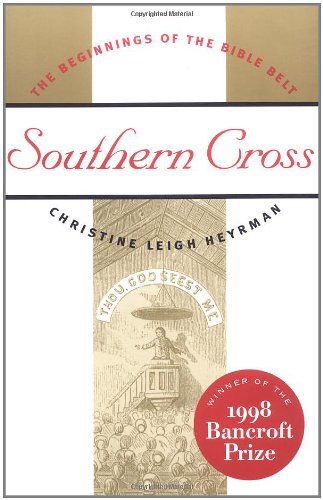
Southern CrossA history of evangelical faith in the South.

The religious history of the American South is fascinating scholarly terrain. Anyone who doubts this should read Christine Leigh Heyrman’s Southern Cross, an extraordinarily rich exploration of the first hundred years of evangelical faith in the South. Her book transports us back to what the author accurately describes as ”a world marooned from living memory” — the decades from the 1740s to the 1830s when the Baptist and Methodist churches were taking shape in the region. As we enter this world of mud-splattered itinerant preachers on their scrawny horses moving across the Southern landscape, we are in for more then a few surprises.

”There was…nothing inevitable about the triumph of evangelicalism in the South,” Ms. Heyrman observes. Young Baptist and Methodist preachers seeking to win Southern converts in the 18th century faced a formidable phalanx of opposition, and for good reason. Their fiery message of salvation initially carried with it a radical challenge to both white supremacy and male dominance in the region, Ms. Heyrman, who teaches history at the University of Delaware, points out. Not until the evangelicals learned to soften their tone and modify their theology — a process that began in earnest in the first decades of the 19th century — did their ”language of Canaan” sweep across Dixie.

In their quest for ”the rebirth of the fallen soul” and ”the regeneration of the corrupt heart,” the early Baptist and Methodist ministers took aim at a wide variety of sins and sinners. ”Worldlings” who sought happiness in hedonistic pleasures like dancing, drinking and gambling were one target. So too were the humanists (like Thomas Jefferson — a ”demon” in evangelical eyes) who extolled the rational virtues of the Enlightenment. And slaveholders were targets as well. Blacks were God’s children too, the insurgent churches believed, with souls worth saving. Methodist and many Baptist clergy opposed human bondage and at first called on believers to manumit (release) their slaves.

The evangelicals also honored women in ways that white Southern men found disturbing. The early preachers gave consistent credit to ”the spiritual capacities of white women” and affirmed the right of women, both black and white, to bear witness to their faith in public. ”Before the appearance of evangelicals in the South,” Ms. Heyrman notes, ”there had been no tradition of according women any kind of spiritual authority,” with the lone exception of ”the increasingly despised and dwindling Quakers.” As a consequence, Baptist and Methodist churches became ”the only settings in the South in which white men were required to compete for standing not only with white women but also with African-Americans.”

Not surprisingly, adult white male converts were relatively few and far between in the 18th-century South, a situation evangelical leaders found increasingly disturbing as the turn of the century approached. In Ms. Heyrman’s words, the church fathers came to believe that they ”could not rest content with a religion that was the faith of women, children and slaves.”

So the leadership began to trim. First, they muted their opposition to slavery and slaveholding. No more ”ringing denunciations of slavery . . . issued from the mouths of…Baptist and Methodist preachers,” as had been the case in the early days. By 1784, Methodists had formally abandoned their efforts to restrict slaveholders from membership, and Baptists increasingly saw nothing incompatible in being a Christian and being a slaveowner. Worship services became racially segregated affairs, and the ministries of black preachers were largely restricted to slave communities across the South.

Women were eventually put in their place as well. Evangelical clergymen — usually young, frequently itinerant and often unmarried in the 18th century — became older, more settled and more married in the 19th. And this emerging church leadership began to preach a different gospel regarding women. They drew an ”identity between female piety and domesticity” and insisted ”that a woman’s way to eternal bliss lay in devotion to her family.” Patriarchal control of the household was affirmed, and ”preachers now took pains to assure both themselves and the readers of their memoirs that they brooked no nonsense” from women, Ms. Heyrman writes.

At the same time, a muscular Christianity took hold in Southern evangelical churches in the first half of the 19th century. The language of warfare and martial imagery became commonplace in religious settings. The ”model man of God,” Ms. Heyrman writes, was transformed from the earlier image of the ”willing martyr” (who might, in fact, even be drawn from the ranks of ”puny, sickly, bookish sissies” in the 18th-century South) into something quite different — the man of God as ”a formidable fighter.” A new class of ”warrior preachers” came to dominate the Southern evangelical scene, with profound implications for a section increasingly given to calculating the value of the Union as the 19th century wore on.

Piecing this fascinating tale together was not an easy task. To recover her story, Ms. Heyrman plowed through sources that would deter all but the most intrepid of historians: the manuscript diaries and journals kept by Baptist and Methodist clergy as they went about their daily tasks in the 18th- and 19th-century South. ”What they record is utterly mundane and completely absorbing,” she writes. ”The voices of people silenced by obscurity in a world that has slipped far away from the present echo in every entry.”

Ms. Heyrman has given us a great deal to think about in this wonderfully told and beautifully written story. In the end, we are left to ponder what the South, and indeed the United States, might look like today if those 18th-century evangelical firebrands with their message of freedom for slaves and recognition for women had managed to carry the day.

Posted in Uncategorized | Leave a comment

Reality Check for ‘Gay Christians’ – cdwitmer

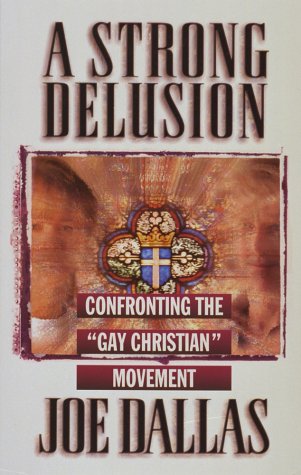
Strong DelusionOriginally from here.

As a sibling of a homosexual who claims to be a Christian, I know first-hand how the issue of the legitimacy of homosexuality for Christians divides families, friends and churches. I have purchased and read nearly 100 books on all sides of the issue and I am also a diligent student of the Bible itself, so I feel competent to state my opinion of this book and its message. First, I am glad Dallas wrote this book, which needed to be written. At one point I wanted to write a book on this very topic, but Dallas is probably the best person for this job.

Dallas rightly points to the correspondence between denigration of the authority of the Bible and the rise of “gay Christianity”; however, it needs to be stressed that the former is the primary cause of the latter. If 19th and 20th century Bible-believing Christians had not largely retreated into a cultural ghetto, essentially abandoning the public square to Bible-denying Liberal “Christianity,” “gay Christianity” and its other allies in the assault on orthodoxy would never have gotten off the ground. The roots of the problem are inextricably intertwined with hermeneutics, and Higher Criticism’s assault on Biblical authority goes back to the 19th century. Higher Criticism and Liberalism have long been absolutely refuted, but that doesn’t stop men from clinging to those false beliefs. The same can be said for so-called “gay Christianity”; the writings of Dallas, Bahnsen, Wold, Satinover, Saia, Bergner, Davies and many others – and of course both the Hebrew and Greek Scriptures – make it abundandly clear that the issue is completely settled: “gay Christian” is an oxymoron. That won’t keep some people from clinging to their delusions in any case.

One of the ironies of homosexual theology is that they can’t make up their mind about whether the Bible approves or disapproves of homosexuality. On the one hand, we have people like Daniel A. Helmeniak and John J. McNeill, who assert the church has traditionally misread the Bible and that it’s really all right after all (the legerdemain and contortions needed to reach that conclusion deserve to be on stage at Las Vegas). On the other hand, we have people like Gary David Comstock (“Unrepentant, Self-Affirming, Practicing: Lesbian/Bisexual/Gay People Within Organized Religion” and “Gay Theology without Apology”), who openly admit that the Bible does indeed condemn homosexuality in no uncertain terms, and therefore the Bible needs to be jettisoned completely. At least Comstock has a shred of integrity in recognizing the undeniable.

Over and against both “gay Christian” camps, Dallas presents a surprisingly mature dose of Biblical reality. I say “surprisingly,” because I wasn’t expecting much from anyone connected with the Metropolitan Community Church (MCC), but obviously Dallas’ own struggles have sent him back to the Bible and given him true wisdom. He rightly goes to the root of this issue: the authority of the Bible over the life of the believer. The only way a homosexual can profess to be a Christian while also embracing his or her homosexuality is to deny the authority of Biblical revelation, and to make primary the so-called “revelation” in their own minds and hearts. Whose word is authoritative, God’s, or man’s? That is what it comes down to.

Are we to accept as valid a person’s subjective definition of “love” as some warm and fuzzy feeling in our breast (or a swelling in the pants), or do we believe Jesus when He says, “If you love Me, keep My commandments . . . He who has My commandments and keeps them, it is he who loves Me. And he who loves Me will be loved by My Father, and I will love him and manifest Myself to him” (John 14:15, 21). Jesus said, “If anyone comes to Me and does not hate his father and mother, wife and children, brothers and sisters, yes, and his own life also, he cannot be My disciple . . . If anyone desires to come after Me, let him deny himself, and take up his cross, and follow Me” (Luke 14:26-27). If a homosexual wishes to follow Christ, he or she must be so committed to Christ that they are willing to make that self-denial. Anyone who cannot or will not do that is not a Christian, but merely self-deceived.

Dallas has done a good service through this book. So-called “gay Christians” may protest about it being “poison” animated by “theology of fear” and “careless of human experience in the realms of sociology, anthropology or psychology,” or they may make bizarre, baseless assertions that the Bible approves of polygamy, child marriage, or other aberrations, or they may insist there is no link between homosexuality and pedophilia. (In truth the most basic underlying cause is the same: hostility to God). However, everything the so-called “gay Christians” say is smoke and mirrors. They are without a leg to stand on. This book points to the only solution: self-denial in embracing Jesus Christ. This is true for all people, regardless of their sexual orientation. Homosexuals are no exception.

—–

Scriptures That Obviously Forbid Homosexuality

Leviticus 18:22

You shall not lie with a male as with a woman; it is an abomination.

1 Corinthians 6:9-11

Do you not know that the unrighteous will not inherit the kingdom of God? Do not be deceived: neither the sexually immoral, nor idolaters, nor adulterers, nor men who practice homosexuality, nor thieves, nor the greedy, nor drunkards, nor revilers, nor swindlers will inherit the kingdom of God. And such were some of you. But you were washed, you were sanctified, you were justified in the name of the Lord Jesus Christ and by the Spirit of our God.

For this reason God gave them up to dishonorable passions. For their women exchanged natural relations for those that are contrary to nature; and the men likewise gave up natural relations with women and were consumed with passion for one another, men committing shameless acts with men and receiving in themselves the due penalty for their error. And since they did not see fit to acknowledge God, God gave them up to a debased mind to do what ought not to be done.

The sexually immoral, men who practice homosexuality, enslavers, liars, perjurers, and whatever else is contrary to sound doctrine,

Jude 1:7

Just as Sodom and Gomorrah and the surrounding cities, which likewise indulged in sexual immorality and pursued unnatural desire, serve as an example by undergoing a punishment of eternal fire.

Genesis 19:1-38

The two angels came to Sodom in the evening, and Lot was sitting in the gate of Sodom. When Lot saw them, he rose to meet them and bowed himself with his face to the earth and said, “My lords, please turn aside to your servant’s house and spend the night and wash your feet. Then you may rise up early and go on your way.” They said, “No; we will spend the night in the town square.” But he pressed them strongly; so they turned aside to him and entered his house. And he made them a feast and baked unleavened bread, and they ate. But before they lay down, the men of the city, the men of Sodom, both young and old, all the people to the last man, surrounded the house. And they called to Lot, “Where are the men who came to you tonight? Bring them out to us, that we may know them.”

Luke 17:29 // Jesus Refers to Genesis 19:24

On the day that Lot went out from Sodom it rained fire and brimstone from heaven and destroyed them all.

Posted in Uncategorized | Leave a comment

Homosexuality Comes From Not Having Straight Role Models – Jesus Reigns

Originally from here.

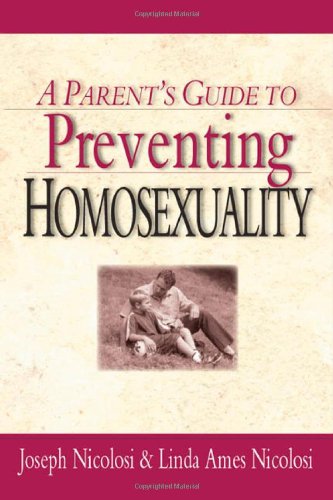
Preventing HomosexualityDr. Nicolosi began his career doing mental health counseling focused on homosexual men. Over the years he noticed one recurring theme amongst his patients; in every case there was a ‘disconnect’ between the homosexual man and his father. Fascinated, Dr. Nicolosi began working with Gender Identity Disorder (GID) boys. He gives a really excellent description of how GID might be present in a little boy. It’s NOT the boy who puts on his mom’s shoes and clomps around the house. Rather, it’s the boy who’s obsessed with things ‘feminine.’ These boys also hang back from playing with other boys their age because they feel ‘other than.’ These boys have been described as ‘kitchen window boys’ because they will watch their peers play and long to join in, but can’t relate to the boys as one of them.

As Dr. Nicolosi counseled these GID boys he noticed a common theme; a father who was ‘absent’ in his son’s life. Absent doesn’t necessarily mean not in the home. It could be that the father disapproved of his son, was disappointed in him because the boy didn’t fit the father’s ideal of what a son should be, therefore the father in essence ‘rejects’ his son. Perhaps the father wants an athletic son and the boy is artistic. The father of the GID boy couldn’t reconcile with how his son was wired, and the child got the message that something was deficient in him. In other cases the father was physically absent, thereby ‘rejecting’ his son by not being in his life.

Interestingly, Dr. Nicolosi says that if he can get through to the father and work with him in accepting his son and his interests, the vast majority of GID boys lose their propensity to act out in a feminine way. The majority of GID boys Dr. Nicolosi works with grow up to be heterosexual men. Dr. Nicolosi’s work is backed up with the correct, controlled research that is required to statistically analyze and report findings. It’s not considered ‘politically correct,’ therefore Dr. Nicolosi has come under fire for writing this book. Yet the research speaks for itself, and I found it fascinating.

Dr. Nicolosi has a word of warning to mothers; relinquish your boy children to their father between 18-24 mos. of age so the boy can begin to identify with his father as a male. The mother must not over-protect or keep the boy from positive male influence.

Dr. Nicolosi has found that homosexuality isn’t about sex; it’s about wanting to identify with other males because the homosexual man feels deficient in that area.

I would HIGHLY recommend this book to parents of boys. It is well written, and although Dr. Nicolosi is a scholar, it’s written in such a way that the layman can understand it. Dr. Nicolosi is simply disseminating information he’s gleaned from YEARS of practical, hands-on research. The book is not based upon theory but upon fact.

Posted in Uncategorized | Leave a comment

The Prosperity Gospel: A Historical Overview – Wikipedia

Originally from here.

—–

I do hereby confess and positively declare that while God does increase power to get wealth among hard-working and productive, godly Christians–the New Thought teachings and the love of money pushed by the Prosperity Gospel and the Word of Faith Movement, are heretical, and nothing more than shameful expressions of a greedy heresy. But that you may know the history of this heresy, I have published this article. 2 Corinthians 2:11, NLT: “So that Satan will not outsmart us. For we are familiar with his evil schemes.” For a Biblical view of economic growth, click this.–edit

—–

Postwar Healing Revivals

Main article: Healing Revival

Leaders of the Pentecostal Movement in the early 20th century did not embrace prosperity theology.[22] A recognizable form of the doctrine began to take shape within the movement during the 1940s and 1950s, through the teachings of Pentecostal deliverance and healing evangelists. Combining prosperity teaching with revivalism and faith healing, these evangelists taught “the laws of faith (‘ask and ye shall receive’) and the laws of divine reciprocity (‘give and it will be given back unto you’)”.[23]

One prominent early figure in prosperity theology was E. W. Kenyon, educated in the 1890s at Emerson College of Oratory, where he was exposed to the New Thought Movement. Kenyon later became connected with well-known Pentecostal leaders and wrote about supernatural revelation and positive declarations. His writing influenced leaders of the nascent prosperity movement during the post-war American healing revival. Kenyon and later leaders in the prosperity movement have denied that he was influenced by the New Thought Movement. Anthropologist Simon Coleman argues that there are “obvious parallels” between Kenyon’s teachings and the New Thought Movement.[24]

Oral Roberts began teaching prosperity theology in 1947.[12] He explained the laws of faith as a “blessing pact” in which God would return donations “seven fold,”[25] promising that donors would receive back from unexpected sources the money they donated to him. Roberts offered to return any donation that did not lead to an equivalent unexpected payment.[12] In the 1970s, Roberts characterized his blessing pact teaching as the “seed faith” doctrine: donations were a form of “seed” which would grow in value and be returned to the donor.[25][26] Roberts began recruiting “partners,” wealthy donors who received exclusive conference invitations and ministry access in exchange for support.[27]

In 1953, faith healer A. A. Allen published The Secret to Scriptural Financial Success and promoted merchandise such as “miracle tent shavings” and prayer cloths anointed with “miracle oil.”[28] In the late 1950s, Allen increasingly focused on prosperity. He taught that faith could miraculously solve financial problems and claimed to have had a miraculous experience in which God supernaturally changed one-dollar bills into twenty-dollar bills to allow him to pay his debts.[29] Allen taught the “word of faith” or the power to speak something into being.[28]

In the 1960s, prosperity became a primary focus in healing revivals.[30] T. L. Osborn began emphasizing prosperity in the 1960s and became known for his often ostentatious displays of personal wealth.[31] During that decade, Roberts and William Branham criticized other prosperity ministries, arguing that their fund-raising tactics unfairly pressured attendees. These tactics were prompted in part by the expense of developing nationwide radio networks and campaign schedules.[30] At the same time, leaders of the Pentecostal Assemblies of God organization often criticized the focus on prosperity taken by independent healing evangelists.[32]

Televangelism

TBN World Headquarters in Costa Mesa, California

During the 1960s, prosperity gospel teachers embraced televangelism and came to dominate religious programming in the United States. Oral Roberts led the way, developing a syndicated weekly program that became the most watched religious show in the United States. By 1968, television had supplanted the tent meeting in his ministry.[33]

Reverend Ike, a pastor from New York City, began preaching about prosperity in the late 1960s. He soon had widely aired radio and television programs and became distinguished for his flashy style. His openness about love for material possessions and teachings about the “Science of the Mind” led many evangelists to distance themselves from him.[34]

In the 1980s, public attention in the United States was drawn to prosperity theology through the influence of prominent televangelists such as Jim Bakker. Bakker’s influence waned, however, after he was implicated in a high-profile scandal.[6][C] In the aftermath, Trinity Broadcasting Network (TBN) emerged as the dominant force in prosperity televangelism, having brought Robert Tilton and Benny Hinn to prominence.[35]

Word of Faith

Main article: Word of Faith

Although nearly all of the healing evangelists of the 1940s and ’50s taught that faith could bring financial rewards, a new prosperity-oriented teaching developed in the 1970s that differed from the one taught by Pentecostal evangelists of the 1950s. This “Positive Confession” or “Word of Faith” movement taught that a Christian with faith can speak into existence anything consistent with the will of God.[36]

Kenneth Hagin was credited with a key role in the expansion of prosperity theology. He founded the RHEMA Bible Training Center in 1974, and over the next 20 years, the school trained more than 10,000 students in his theology.[8][37] As is true of other prosperity movements, there is no theological governing body for the Word of Faith movement, and well-known ministries differ on some theological issues.[38] The teachings of Kenneth Hagin have been described by Candy Gunther Brown of Indiana University as the most “orthodox” form of Word of Faith prosperity teaching.[5]

Recent U.S. History

The Neo-Pentecostal Movement has been characterized in part by an emphasis on prosperity theology,[39] which gained greater acceptance within charismatic Christianity during the late 1990s.[13] By 2006, three of the four largest congregations in the United States were teaching prosperity theology, and Joel Osteen has been credited with spreading it outside of the Pentecostal and Charismatic Movement through his books, which have sold over 4 million copies.[6][D] Bruce Wilkinson‘s The Prayer of Jabez also sold millions of copies and invited readers to seek prosperity.[4]

By the 2000s, adherents of prosperity theology in the United States were most common in the Sun Belt.[11] In the late 2000s, proponents claimed that tens of millions of Christians had accepted prosperity theology.[11] A 2006 poll by Time reported that 17 percent of Christians in America said they identified with the movement.[6] There is no official governing body for the movement, though many ministries are unofficially linked.[8]

In 2007, U.S. Senator Chuck Grassley opened a probe into the finances of six televangelism ministries that promoted prosperity theology: Kenneth Copeland Ministries, Creflo Dollar Ministries, Benny Hinn Ministries, Bishop Eddie Long Ministries, Joyce Meyer Ministries, and Paula White Ministries. In January 2011, Grassley concluded his investigation stating that he believed self-regulation by religious organizations was preferable to government action.[40][E] Only the ministries led by Meyer and Hinn cooperated fully with Grassley’s investigation.[40]

International Growth

In the 2000s, churches teaching prosperity theology saw significant growth in the Third World.[41] According to Philip Jenkins of Pennsylvania State University, poor citizens of impoverished countries often find the doctrine appealing because of their economic powerlessness and the doctrine’s emphasis on miracles.[42] One region seeing explosive growth is Western Africa, particularly Nigeria.[41] In the Philippines, the El Shaddai Movement, part of the Catholic Charismatic Renewal, has spread prosperity theology outside Protestant Christianity.[43] One South Korean prosperity church, Yoido Full Gospel Church, gained attention in the 1990s by claiming to be the world’s largest congregation.[4]

Posted in Uncategorized | Leave a comment

God Is Mad With Man – Rev. T. E. Weems

This is found on volume 6 of the 6-CD set of Goodbye, Babylon old-time gospel collection. The years 1925-1955 are covered. All are traditional African-American gospel songs or sermonettes.

Posted in Uncategorized | Leave a comment

Debate with an Atheist About Hell

Originally from here.

JB

1:10:55 – “In that low place you’re going, you’ll never be cool again.” Like a kid song. So funny.

Toasty McGrath

A rather cavalier attitude toward torture.

JB

A rather cavalier comment.

TM

How so? I was merely rebuking this preacher for praising a god torturing people for eternity. Indeed, it speaks volumes about how ethically bankrupt his religion is.

JB

Maybe you can show him how to REALLY do evangelism. I’d love to see your example.

Oh so your one of those arrogant smart guy atheists who thinks he’s more righteous than God and more wise than Scripture. You just lost my respect then. Jesse Morrell lacks many qualities of perfection, but that is no indictment against his decade of evangelistic experience. No wonder why you would senselessly attack “his religion.” I thought you were a Christian evangelist for a moment. But God says you’re just a fool, because you are denying the obvious evidence of the natural world that God put everything here by divine design (Romans 1–its a chapter in the Bible).

ROMANS 1:18-21:
18 The wrath of God is being revealed from Heaven against all the godlessness (ATHEISM) and wickedness of people, who suppress the truth by their wickedness, 19 since what may be known about God is plain to them, because God has made it plain to them. 20 For since the creation of the world God’s invisible qualities—His eternal power and divine nature—have been clearly seen, being understood from what has been made, so that people are without excuse. 21 For although they knew God, they neither glorified Him as God nor gave thanks to Him, but their thinking became futile and their foolish hearts were darkened.

TM

No, I’m just your average Joe citizen who recognizes that EVERYBODY is more righteous than the Biblical god. No person who has ever existed could be less moral than the god of Abraham. It’s not arrogant, it’s humble.

JB

Argue until you’re blue in the face. You’re still obviously wrong. Trees didn’t make themselves. God did. He made you too. Stop denying the obvious; also, stop denying the justice of God; and don’t read the Bible with a rebellious self-willed heart, but with one that fears and trembles at the thought of Judgment Day. If you have intellectual hang-ups about the Bible, then try reading Norman Geisler’s When Critics Ask. Its a good book.

TM

We know where trees come from. No magic is necessary.

And eternal torture is not justice. Thankfully, there is no reason to believe that this Hell place even exists.

JB

Notice you brush away the thoughts of God and Hell with the stroke of a pen. If I were a lawyer, I would hate for you to be working in the same law office as me.

I can give you hundreds of reasons. Read Hell Under Fire edited by Christopher Morgan. Maybe then you wouldn’t flick Hell away so easily.

TM

Okay, give me your best reason.

JB

The eternal wrath of the all-righteous God must be eternally expressed (most perfectly by fire)–at the eternally offensive thing called sin.

TM

That’s not justice then, it’s just malice and cruelty.

I mean, the fact that you’re defending torture proves my point about this religion of yours being morally bankrupt. It’s completely poisoned your thinking.

JB

Sin, therefore, is not poisonous in your thinking.

Hell is God’s eternal punishment for sin for all those who will not by faith turn from sin and accept the punishment of Christ’s cross as a satisfaction for the wrath of God.

You call it “malice and cruelty” for God to respond to sin by means of Hell.

Sin, therefore, is not poisonous in your thinking, but Hell (which is the most perfect expression of punishment for sin) is–sounds like you are not only a sinner, but are trying your utmost to logically defend all sinful behavior.

TM

“Sin” is a fairy tale concept as far as I am convinced. But even if it was not, it would still not excuse the crime of eternal torture.

So why do you choose to worship a god of eternal torture?

JB

Very clever sounding. Just make a postulation that sin is a fairy tale. However, very illogical.

Because I know Him by the reality of His Spirit; and also, that He is infinitely more Moral than all your petty arguments. I am not persuaded by your line of reasoning either.

TM

So he is infinitely moral, yet commits a heinously immoral act.

JB

Toasty, I have already toasted your logic by showing that sin is never excusable, especially in eternity. I believe I have reduced you to repeating yourself; because you have lost the argument. Sin never wins! Therefore, turn away from sin and put your faith in Jesus’ sacrifice on the cross! Then God will forgive your sins! This is good news, my friend. I, for one, know that there is a Hell by faith and the witness of the Holy Spirit; and I don’t want you to go there.

TM

Okay, so it’s inexcusable. So the best solution your god could come up with was torture?

JB

Hell is not only the best solution for punishing stubborn, impenitent sinners in the realm of eternity–it is the perfect solution.

TM

Torture is the best solution, in your opinion?

Thank you for proving my point.

JB

You are welcome.

—–

Toasty McGrath

So why do you choose to worship a god who tortures people for eternity?

OpenAirOutreach (Jesse Morrell)

I worship God for both His justice and His mercy. If you do not understand that you deserve eternal Hell for your sins, you do not yet understand just how bad your sins really are. And it is in light of how much we deserve eternal Hell that we see just how gracious and merciful God is by sending His Son to die for us for the forgiveness of sins.

It is not about a bad god who sends good men to Hell, but a good God who sends bad men to Hell. The only people God sends to Hell are those who deserve it. And God, in His love, is trying to save as many people from Hell as He wisely can.

TM

But you don’t think it’s immoral to torture people? I mean, I’m not sure you understand how bad THAT crime really is.

JB

I’m not sure you understand how bad your SIN really is in the sight of an all-powerful, all-righteous, and all-wise God. In fact, its really very stupid. You should be more careful!

TM

So is it a sin to torture?

JB

Of course its a sin to torture people! I sure hope you’re not thinking of torturing me or Jesse for preaching the Gospel! We Christians suffer enough persecution already. I thought burning saints at the stake was a thing of the past!

Now, to shift back to the thought of God torturing people. No, it is not a sin for God to torture people, because God is totally righteous; and the only people He tortures are those whom He is overwhelmingly, incredibly, unthinkably, immeasurably, inconceivably angry at.

People such as unrepentant fornicators, idolators, adulterers, homosexuals, rapists, thieves, the greedy, drunks, mean-spirited people, extortioners, people ashamed of Christ, atheists (like yourself), haters, murderers, witches, liars, all kinds of the sexually immoral (non-marital), the jealous, bad-tempered people, selfish and ambitious people, divisive people, cult leaders, frat partiers, etc (Galatians 5:19-21; 1 Corinthians 6:9-10; Revelation 21:8).

TM

“It’s not evil when my god does it.”

The very definition of tyranny.

So if you agree that torture is immoral, but you worship a god who tortures people, that makes you a hypocrite, no?

JB

Perhaps by your standards. What are your standards?

TM

Well, one of them is the United States Constitution. The Eighth Amendment outlaws torture, for example.

JB

Indeed! Cruel and unusual punishment, such as burning saints at the stake, is always wrongly expressed while performed by the hands of men. But not God. I assume you are unaware that the framers of the Constitution abstracted their ideas about law and morals from the Church of England and the New England Puritans. I.e., the Bible.

TM

“It’s not evil when my god does it.”

The very definition of tyranny.

Posted in Uncategorized | Leave a comment

Feminize the Clergy – Jack Van Deventer

Originally from here.

My Dear Woodworm,[1]

As your most affectionate uncle and Senior Commander in Satan’s Army, I hereby write you to maintain your ongoing efforts to destroy the Enemy’s Church. You are but a Junior Tempter now, but with continued success you will surely rise through the ranks. Your orders are to attack and weaken the clergy, the leaders of the Opposition.

Your attack on the clergy should occur on three fronts. First, while allowing the preacher to pound the pulpit with regard to the truth of the Scriptures, have them deny their applicability. Tell them that the Old Testament is for ancient Israel, not for us. Teach them to hate God’s Law as being irrelevant, outdated, and harsh.

Second, convince the Opposition that Christ was defeated at the cross. After all, He died, didn’t He? Make the clergy believe that Christ now sits cowering and helpless in a corner of heaven, while Our Supreme Commander launches a blitzkrieg to decimate the ranks of the impotent Church.

Third, neutralize the Opposition by using His own weapons against Him. In the past, the preaching of the Gospel has decimated our ranks, so you must render their weapon ineffective by perverting and distorting the Gospel. Convince the fools that the Enemy is powerless to save them apart from their choosing Him as Savior. Let them believe they are determiners of their own fate.

Fill the pulpits with cowards and wimps. Let them regard their feelings as more important than objective truth. We must portray the Grand Enemy as impotent by making the Enemy’s representatives in the pulpit appear weak and feminine. In certain communions, we have been most successful in placing women in the pulpit. Such easy victories are a pleasant surprise to our Father Below. For those who know the Enemy’s Word too well, our next best strategy is to place men who act like women in the pulpits. They should be characterized by weakness. If the preaching is weak, the Enemy’s servants will be readily defeated.

Woodworm, listen closely. Let the women dominate the pastoral search committee. The main criteria for a pastor should be that he’s tall and huggable. He must be filled with compassion, but be a doctrinal imbecile. He should crave counseling, the warm, fuzzy kind, and should refer to the Enemy’s Book only to establish a false legitimacy. Let him look rugged to give the illusion that he has backbone, but realize that we want the pulpits filled with invertebrates.

In neutering the clergy, cause them to disdain books. You must transform Christian bookstores into gift centers. Indulge them with religious music, knickknacks, bracelets, stationery, book covers, but nothing substantive. Displace the Bible commentaries with Precious Moments figurines. These fools will sacrifice their souls for trinkets.

What books they do read should be filled with doom and gloom. The destruction of hope in the Church is key to our success, so keep the masses frothing at the mouth with “end times” hysteria.

Keep dashing their hopes with that captivating “any moment rapture” doctrine. The incessant gullibility of these religious simpletons makes them easy targets for prophetic deception. We now control most of the “Christian” publishers anyway because they are so easily swayed by their pagan owners. As revenues increase, doctrinal integrity will continue to be a diminishing concern.

But, you fool! You bungled our best battle plan for feminizing the Enemy’s camp. The uproar over gender-neutral Bibles will soon blow over. Let the controversy settle down and soon gender-neutrality will be a non-issue. The key to feminizing the pulpit lies in feminizing the Church’s view of God. Alter the Enemy’s Scriptures accordingly. Don’t blunder it next time.

As the clergy lose confidence in the Enemy, cause their fear to turn to panic in their anticipation of the Beast, Y2K, Armageddon, or whatever. It doesn’t matter what you cause them to fear, only that their hope is destroyed by turning them from the Enemy and His Book. Create an atmosphere of “end times” paranoia in the church that spills over into the public at large. Make this thinking ubiquitous. Start with TV evangelists and radio preachers. Then let the pagan news media fan the flames of doomsday scenarios. Cause the movie industry to create Satanic horror films, earthquake disasters, volcanic disasters, nuclear disasters, war disasters, global warming, acid rain, aliens, asteroids, and Armageddon. Let the music industry incessantly pound away the theme that Satan rules the universe. Let their destination be Hotel California.

Lastly, here is the list of 10 mantras I told you about. Pound these into the brains of the clergy until they are rendered ineffective. All their Scriptural interpretations should be filtered through these:

1. Satan is alive and well on planet Earth.
2. Christ was defeated at the cross.
3. The Church is predestined for failure.
4. God is judging the earth, there is no hope of revival.
5. Satan is the Prince of this World.
6. The world is getting worse and worse (the newspapers tell me so).
7. The church should not be involved in social issues.
8. We’re the “terminal generation.”
9. Our only hope is the rapture.
10. Gospel success is futile.

As the Opposition adopts these lies, we will be just as successful destroying the Enemy’s camp as we were with the Heaven’s Gate cult. Alas, so many fools, so few comets.

Your affectionate Uncle,
Tapescrew

—–

[1] The idea of a demonic dialog came from C. S. Lewis’ classic work, The Screwtape Letters.

Posted in Uncategorized | Leave a comment

Romans 7: The Struggle Between Flesh and Spirit

Romans 7 is about the original sin (or sinful nature) of the flesh (the human body) and the challenge this poses to regenerated Christians, trying to live a holy life, with the Holy Spirit inside them. At 18:41 I pray for believers to receive the baptism in the Holy Spirit with evidence of speaking in tongues.

Posted in Uncategorized | Leave a comment

Dream of the Ka’aba Coming on the Clouds of Heaven (2001)

I dreamed that I was on what was then an incomplete highway—currently under construction in the area that I grew up. Road signs would say, “Future I-540.” In the dream, I was in a crowd of about thirty young men my age (16-18 years old) and we were having an open air meeting on the incomplete highway. A bully from my high school who also attended a United Methodist church I used to go to—he was preaching to us, but he was definitely saved. Behind him lay a paved dirt road, waiting for its blacktop to be laid down for highway usage. Trees were on the sides of this road, as is the case of most roads in this area. The sky was blue and had great puffy cumulus clouds.

Ka'abaAs the boy was preaching, the sky behind him displayed a terrifying sight: a great and powerful cumulus cloud with the Ka’aba[1] on it, and next to it was a gateway hundreds of feet tall—shaped like a vertical trapezoid, which had the United Nations emblem over the archway. Many flags of nations were on either side of this U. N. gateway. This gateway was giant, because broad is the way that leads to destruction (Matt. 7:13). This bizarre vision of the hundred foot tall Ka’aba, and the U. N. gateway with international flags, was positioned on top of a great and thunderous cumulus cloud. It all came towards us down from the sky as if it were descending to the Earth. It was so large and thunderous that I felt it was going to crush us all. I was paralyzed with fear—and my body was stiff and weak, unable to move because the hand of the Lord was upon me (the fear of the Lord, the presence of God), and I was temporarily experiencing sleep paralysis.

Interpretation

Awhile after I had this dream, I met a young black Pentecostal seer, and he told me that he had a gift of dream interpretation, and would interpret this dream for me. As he gave the interpretation, I agreed with him 100%. He said the incomplete road symbolizes the future, the young men symbolize men who God is preparing for future ministry, the Ka’aba symbolizes Islam and the spirit of the Antichrist, and the United Nations gateway symbolizes the one world government—or the New World Order of the Antichrist. The Antichrist and Islam are of the same spirit. I add to this that the New Age Movement has influence over the United Nations, and it intends to unite all world religions and all world governments. I interpret that this Antichrist spirit is a mocker of Christ—this was symbolized by the Ka’aba mockery of the Second Coming in the clouds of Heaven (Dan. 7:13; Matt. 24:30; Rev. 1:7). Furthermore, it appears that the cube shaped Ka’aba is a mockery of the cube shaped New Jerusalem coming down from Heaven (Rev. 21).

—–

[1] The Ka’aba is the “holiest” site in Islam (like the heart of Islam); it is a gigantic black cube in the city of Mecca. Every so often, Muslims all around the world make a pilgrimage to the Ka’aba as part of their religious devotion.

Posted in Uncategorized | Leave a comment