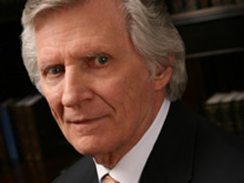
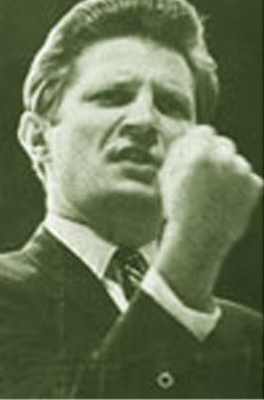
Worst Thing to Happen to a Preacher – Paul Washer and Leonard Ravenhill

4:13 in 2nd video – probably referring to Rachel Erlanger’s The Unarmed Prophet: Savonarola in Florence (1988) and Pasquale Villari’s Life and Times of Girolamo Savonarola (1909); see also Leonard Ravenhill’s Sodom Had No Bible, ch on Savonarola; James Gilchrist Lawson’s Deeper Experiences of Famous Christians, ch 2.

Posted in Uncategorized | Leave a comment

Is the Great Commission a Hot Potato?

Go into all the world and preach the Gospel to every creature.
                                                                                        –Mark 16:15

Great CommissionIt seems that when evangelicals study their Bibles, they approach it with a “life application” orientation. Revelation, interpretation, and personal application is the general way that Bible-believers study the Bible. They have no problem with this. There is even a very popular study Bible called the Life Application Study Bible, so popular is this method of studying the Bible. But if we’re honest, many Christians are SELECTIVE with what they apply to themselves from Scripture. “That’s for me, but not that part” they say. Picking-and-choosing what applies to them. Nothing could be more opposite to sanctification. That’s not a very obedient attitude to have towards God. Suppose God gave us 20 commandments on Mt. Sinai. What, would you say, “Sorry God, I’m only going to obey 7 of them.” In reality though, God gave us 10 commandments on Mt. Sinai, and He expects us to try to obey ALL 10 of them; and also hundreds of other moral laws all throughout the New Testament. 

One of those commands is: “Go into all the world and preach the Gospel to every creature” (Mark 16:15). That is a direct, imperative command from Jesus. But when Christians read this, they seem to either ignore it or explain it away, and say, “That was only for the apostles.” Why was that only for the apostles? Why are Christians willing to live out and apply the Sermon on the Mount (Matthew 5-7) to themselves, but are not willing to apply the Great Commission (Mark 16:15)? I have no idea why. Or, actually I do.

Hot PotatoMaybe Christians see the Great Commission as a hot potato; it’s something to be passed along to someone else in the church—perhaps the pastor or an evangelist or a missionary, but not them. It doesn’t apply to them. I submit to you that this is hypocrisy, lawlessness, and disobedience to God; to try to live by the Sermon on the Mount, but totally ignore the Great Commission. Billions of souls are on their way to Hell right now! Broad is the way to destruction! (Matthew 7:13). And are you Christians going to say, “Preaching the Gospel is just not for me?” What are you doing! That’s totally unloving and careless! Where’s your concern for the lost on their way to Hell? 

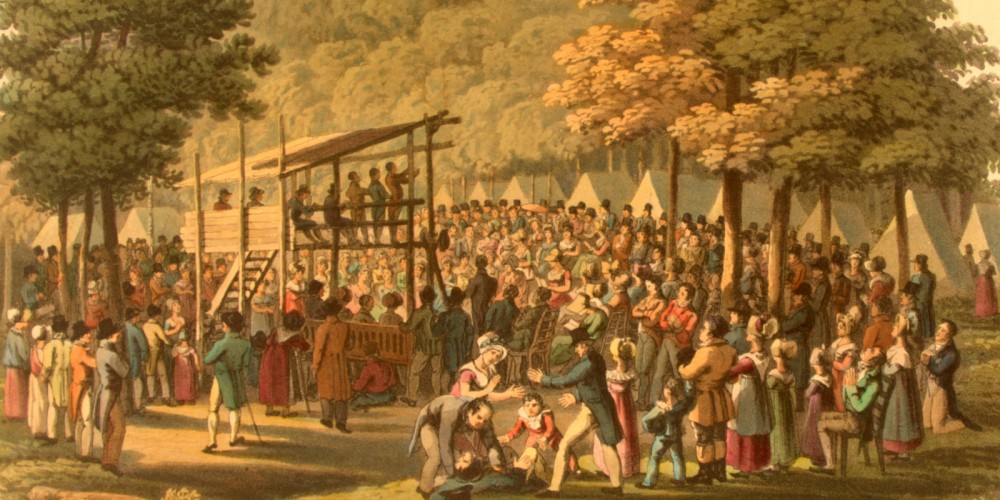
Methodist Camp Meeting 1819I got news for you: most pastors don’t really preach the Gospel that saves lost sinners from an eternity in Hell. And if you find one who does, email me, because I would like to go to his church. Pastors, by and large, are simply not inclined to preach “repent and believe in the Gospel” (Mark 1:15) in their pulpits on Sunday mornings. You know why? It’s the evangelist’s job they say. Pass the hot potato. I got news for you: most churches don’t make use of evangelists either. That’s a thing of the past now. Some country churches might, like Church of God. But the majority doesn’t use evangelists. A superintendent of Assemblies of God once told me, “It’s the pastor’s job to get people saved; but the evangelist’s job to get them speaking in tongues.” What!

The documentary Go Stand Speak offers us a glimmer of hope. There is an emerging group of Generation Y street preachers (evangelists) who are actually taking the Great Commission seriously. I hope to contribute. Will you? That’s not for you? What about the shame of the cross? (Hebrews 12:2). What about HELL?

Churches are not supposed to be clubhouses Lions Club Dinnerfor little old ladies, or country clubs where you pay your membership fees and dues, for family-friendly events and activities for all ages. Churches are supposed to be centers of missionary activity in the community. Sorry ladies—in the Bible, the church is not about YOU; it’s about the LOST.

Posted in Uncategorized | Leave a comment

If You Are Living in Sin You Cannot Go To Heaven – Chuck Smith

Posted in Uncategorized | Leave a comment

Of the Providence of God – Thomas Boston

Originally from here.

Are not two sparrows sold for a farthing? And one of them shall not fall on the ground without your Father.                                                                                                — Matt. 10:29

Our Lord is here encouraging His disciples against all the troubles and distresses they might meet with in their way, and particularly against the fear of men, by the consideration of the providence of God, which reaches unto the meanest of things, sparrows and the hairs of our head. Sparrows are of a mean price and small value; and yet, for as mean as they are, God preserves them, guides and disposes of all things concerning them, so that one of them cannot fall to the ground by shot or any other way, without His sovereign ordering and disposal.

The instruction deducible from the text is,

There is a providence that extends itself to the least of things.

In discoursing from this doctrine, I shall,

1. Show that there is a providence.
2. Consider its object.
3. Explain the acts thereof.
4. Consider its properties.
5. Lastly, make improvement.

I. I am to show that there is a providence. This appears,

1. From plain Scripture-testimonies; as Psalm 103:19. “His kingdom ruleth over all.” Acts 17:28. “In Him we live, and move, and have our being,” Eph. 1:11.–“Who worketh all things after the counsel of His own will.” Providence is also held forth by a threefold Scripture-emblem. Chiefly, (1.) Mount Moriah, which upon occasion of the miraculous preservation of Isaac, and a ram to be put in his room in order to be sacrificed, was called JEHOVAH JIREH, i.e. The Lord will provide, Gen. 22:14. (2.) Jacob’s ladder, on which God appears managing all things, Gen. 28. (3.) Ezekiel’s wheels, where there was a wheel in the middle of a wheel, denoting the agency of the first cause, and the superintending and directing providence of God, Ezek. 1.

2. From the nature of God, who being independent, and the first cause of all things, the creatures must depend on Him in their being and working. He is the end of all things, wise, knowing how to manage all for the best; powerful to effectuate whatever He has purposed; and faithful to accomplish all He has decreed, promised, or threatened.

3. From the harmony and order of the most confused things in the world. Every thing appears to a discerning eye to be wisely ordered, notwithstanding the confusions that seem to take place. What would become of the world, if there were not a providence [i.e., divine order and management of the world; the foreseeing care and guidance of God over the creatures of the earth; omnisciently directing the universe and the affairs of humankind with wise benevolence] seeing men that despise all order, and would fain give loose reins to their lusts and unbridled inclinations, are always the greatest party, and would overpower and destroy the smaller and most virtuous party? Herein the truth of providence clearly appears. The extraordinary judgments that have pursued and been inflicted upon wicked men, and the remarkable deliverances that have been granted to the church and people of God in all ages, do loudly proclaim a providence.

4. From the fulfillment of prophecies, which could not possibly be without a providence to bring them to pass.

II. Let us, in the next place, consider the object of providence, or that which it reacheth and extendeth to. And this is all the creatures, and all their actions, Heb. 1:3. –“Upholding all things by the word of His power,” Psalm 103:19. “His kingdom ruleth over all.” The angels are subject to this providence, Neh. 9:6. “Thou, even thou art Lord alone, thou hast made heaven, the heaven of heavens, with all their host, the earth and all things that are therein, the seas and all that is therein, and thou preservest them all, and the host of heaven worshippeth thee.” So are also the devils, these infernal spirits, Matt. 8:31, “If thou cast us out (said they to Jesus), suffer us to go away unto the herd of swine.” It reacheth natural things, as clouds, snow, winds, &c. as appears from Psalm 104, 147. and from daily observation. Casual things are ordered by providence, as lots, Prov. 16:33. “The lot is cast into the lap: but the whole disposing thereof is of the Lord.” So in the case of accidental manslaughter, Exod. 21:13. “If a man lie not in wait, and God deliver him into his hand.” There is nothing so mean but providence extends to it, such as the falling of a sparrow, and the numbering of the hairs of our head. It is God that feeds the fowls and the young ravens that cry. He clothes the lilies and grass of the field, that have no hand of man about them. He made lice, frogs, &c. a plague to scourge Pharaoh and his people, worms to eat up Herod, &c. In a special manner providence is conversant about man, forming him in the womb, “Hast thou not poured me out as milk (says Job), and curdled me like cheese? Thou hast clothed me with flesh and hast fenced me with bones and sinews,” Job 10:10, 11. –bringing him forth out of his mother’s bowels, and holding him up thereafter, Psalm 71:6. His heart is in the Lord’s hand, and all his thoughts and inclinations are under his control, Prov. 21:1. He directs and orders all his steps. The most free acts of the creature’s will are governed by superintending providence. All their good actions, John 15:5. “Without Me ye can do nothing.” So also their evil actions, Acts 4: 27, 28. “For of a truth against thy holy child Jesus, whom thou hast anointed, both Herod and Pontius Pilate, with the Gentiles, and the people of Israel, were gathered together, for to do whatsoever thy hand and thy counsel determined before to be done,” Gen. 45:7. “God sent me before you,” says Joseph to his brethren, though they had wickedly sold him into Egypt. [Edit.–And yet, God was not the author or creator of the sins of Herod, Pilate, or Joseph’s brothers (the error of supralapsarianism). God merely arranged the situations to fit for men who freely chose to be evil; and gave occasion for them to play certain roles in the situations God had put them.]

III. I proceed to consider the acts of providence. They are two, preserving and governing the creatures and their actions.

1. God by His providence preserves all the creatures. This preservation of the creatures is an act of providence, whereby they are preserved in their being and power of acting, Heb. 1:3. “Upholding all things by the word of His power.” In this God sometimes makes use of means, and sometimes acts without means. We have both described, Hos. 2:21, 22. “I will hear saith the Lord, I will hear the heavens, and they shall hear the earth, and the earth shall hear the corn, and the wine, and the oil, and they shall hear Jezreel.” He preserves the heavens immediately, the earth, the corn, the wine, and the oil, &c. mediately. And thus by this providence he provides all things necessary for the preservation of all things; Psalm. 145: 15, 16. “The eyes of all wait upon thee, and thou givest them their meat in due season. Thou openest thine hand, and satisfiest the desire of every living thing.” This act of providence is so necessary, that nothing could subsist one moment without it. For there is no necessary connection between the being of the creatures this moment and their being the next; and as they could not give themselves a being, so they cannot continue it, but must be upheld by God as a ball in the air, Heb. 1:3. There is a continual flowing out of providence necessary for preserving and upholding the creatures in their being, otherwise they would be independent, and could preserve themselves, which is grossly absurd.

1. God does not only preserve the creatures, but governs and manages them, which is the second act of providence; whereby He disposes of all things, persons, and actions, according to His will, Prov. 21:1. “The King’s heart is in the hand of the Lord, as the rivers of water: he turneth it whithersoever he will, Prov. 26:33. “The lot is cast into the lap: but the whole disposing thereof is of the Lord.” Prov. 16:9. “A man’s heart deviseth his way; but the Lord directeth his steps.” And this act of providence is also necessary: for as the creature cannot be or exist without God, so neither can it act without him, Acts 17:21. “For in him we live, and move, and have our being.” God does not make man as the carpenter doth the ship, which afterwards sails without him; but he rules and guides him, sitting at the helm, to direct and order all his motions: so that whatever men do, they do nothing without him: not only in their good actions, where He gives grace, and excites it, working in them both to will and to do of his good pleasure: but also in their evil actions, wherein they are under the hand of Providence, but in a very different manner.

For understanding this point, how the providence of God reacheth to and is concerned in sinful actions, we are to consider, that God neither puts evil into the hearts of men, nor stirs them up to it (so supralapsarianism is wrong): for, says the apostle, Jam. 1:13. “God cannot be tempted with evil; neither tempteth he any man.” And therefore He is not the author of sin. But,

A. God permits sin, when He does not hinder it, which He is not obliged to do. Not that it falls out so as He cannot hinder it, for He is omnipotent, and can do all things; nor yet as if He cared not what fell out in the world; but He does wisely, for His holy ends, efficaciously will not to hinder it: Hence we read, Acts 14:16. that “God in times past suffered all nations to walk in their own ways.” He does not permit sin, in that He will not violate or force the creature’s free will; for God’s providence offers no violence to the will of the creature; and if so, He should never hinder sin at all, for the same reason. But certainly He has holy ends in the permission of sin: for thereby His justice, mercy, wisdom, and love, in sending His Son to save sinners, do conspicuously appear, which otherwise would have been under an eternal cloud, hid from the view of men and angels.

B. For the further illustration of this doctrine relating to the concern of providence in sinful actions, we are to consider them in a twofold respect, as simple actions, or natural actions of the creature, abstract from any obliquity or deformity cleaving to them; and as actions having irregularity and depravity in them. Considered as natural actions of the creature, they are all effected by the providence of God, which co-operates with, and enables the creature to produce them, in such a manner that without the flowing out of providence the creature could not move a hand or foot, or perform any action whatever; “for in Him we move:” and no action of the creature simply considered, or as a natural action, can be sinful, but has a goodness of being in it, and is effected by the influence of providence. As to the depravity or sin that is in actions, as God decreed the future existence of sin, or permitted it to take place, and did not hinder it; so all the sin or defectiveness that is in actions proceeds entirely from the creature, and the evil lusts and passions that are in his heart. Thus a man’s taking up a stone, and throwing it, is a natural action, which the providence of God enables him to perform; but his throwing it at another man with an intention to kill him, is permitted by God, otherwise it could not take place; for if a hair cannot fall from our head without the providence of God, much less can a man be murdered without it: and the killing of the man by the throwing of the stone, proceeds entirely from the malice and wickedness that was in the heart of the murderer, the operation of which God did not hinder, which He is nowise obliged to do.

1. God leaves the sinner so far as He sees fit to the swing of his own lusts, and denies him restraining grace. Thus it is said of Hezekiah, a godly king, that, “in the business of the ambassadors of the princes of Babylon, who sent unto him to inquire of the wonder that was done in the land, God left him, to try him, that he might know all that was in his heart,” 2 Chron. 32:31. And when the restraint is taken off the sinner, he runs furiously, to evil.

2. God bounds sin, and restrains men in their sins, as he does the raging sea, allowing it to go so far, but no further. He has such a power and command over wicked men, that they are not masters of their own affections and dispositions, but many times act quite contrary to what they had firmly resolved and proposed: as in the case of Laban. He pursued Jacob, when he left Padan-aram, in order to return into his own country, with a wicked intention to do him hurt, by robbing him of his wives, children, and cattle; but the Lord restrained him, and influenced him to enter into a covenant of friendship with the good patriarch, Gen. 32. Thus Esau had resolved on Jacob’s death, and went out to meet him with a purpose to destroy him; but when providence brought them together, it is said,”Esau embraced Jacob, and fell on his neck, and kissed him.” Thus Balaam came with an express intention to curse Israel, and yet he fell a blessing them. Thus he bent the hearts of the Egyptians to favor the Israelites, so that they sent them away with great riches, by lending them jewels of silver and jewels of gold, and costly garments. Thus, by a secret instinct, he turned Jehoshaphat’s enemies away from him, when they came with a purpose to destroy him, 2 Chron. 18:31; and at another time he turned his enemies against themselves, so that they sheathed their swords in one another’s bowels, 2 Chron. 20. Thus also he restrained the soldiers that broke the legs of the two thieves that were crucified with Christ, from touching his, in order to accomplish His Word, that a bone of the paschal lamb, which was a type of Christ, the Lamb of God, should not be broken. So true is that saying of the Psalmist, Psal. 76:10. “Surely the wrath of man shall praise thee: the remainder of wrath shalt thou restrain.” God has a bridle in the mouths of wicked men, when they are under the most impetuous fury of their lusts, to turn them as He will, restraining and curbing in respect of some, and giving swing to others.

3. Lastly, God over-rules all to a good end. God has one end in wicked actions, and the sinner another. The sinner minds and intends evil, but God means and designs good by them all. So Joseph’s brethren, in their cruelly selling him for a slave, meant evil to the poor youth; but God, in that dispensation meant it for good, and brought much good out of it to Joseph, and his father and brethren. Thus the Jews crucified Christ out of malice against him; but God by that crucifixion intended satisfaction to His justice for the sins of men, and the redemption and salvation of an elect world. Thus God brings good, the greatest good out of the worst of evils. What greater evil or more atrocious wickedness can be imagined, than the violent death of the innocent Son of God, who went about doing good, and was holy, harmless, undefiled, separate from sinners? and yet what a rich and astonishing good resulted therefrom, even glory to God, and peace and good-will towards men!

IV. Our next business is to consider the properties of divine providence.

1. God’s providence is most holy, Psalm 145:17. “The Lord is righteous in all His ways, and holy in all His works.” Even though providence reach to and be conversant in sinful actions, yet it is pure; as the sun contracts no defilement, though it shine on a dunghill. For God is neither the physical nor moral cause of the evil of any action, more than he who rides on a lame horse is the cause of his halting. All the evil that is in sinful actions proceeds and flows from the wicked agent, as the stench of the dunghill does not proceed from the heat of the sun, but from the corrupt matter contained in the dunghill.

2. It is most wise, Isa. 28:29. “This cometh forth from the Lord of hosts, who is wonderful in counsel, and excellent in working.” Infinite wisdom always proposes the most excellent ends in all its operations, and uses the best methods for accomplishing its ends. However perplexed, confused, and void of wisdom providential administrations may appear to us poor mortals of narrow, shallow capacities, yet they are the result of the highest wisdom and the deepest counsel, as proceeding from and directed by Him whose name is the only wise God, and cannot but manage all things with the greatest understanding. And the day will at last come when it shall be said by the united voice of the whole assembly and church of the first-born, that God hath done all things well: and then the plan of providence will appear in every respect to have been most wise, harmonious and consistent.

3. Providence is most powerful. Hence the Lord says to Sennacherib, the king of Assyria, “I will put My hook in thy nose, and My bridle in thy lips, and I will turn thee back by the way by which thou camest,” II Kings 19:28. “The king’s heart is in the hand of the Lord, as the rivers of water: He turneth it whithersoever He will.” Who can resist His will which is almighty? He can never fail of His end, but all things fall out according to His decree, which is efficacious and irresistible.

I shall conclude with an exhortation.

1. Beware of drawing an excuse for your sin from the providence of God; for it is most holy, and has not the least efficiency in any sin you commit. Every sin is an act of rebellion against God; a breach of His holy law, and deserves His wrath and curse; and therefore cannot be authorized by an infinitely holy God, who is of such pure eyes that He cannot look at iniquity without detestation and abhorrence. Though He has by a permissive decree allowed moral evil to be in the world, yet that has no influence on the sinner to commit it. For it is not the fulfilling of God’s decree, which is an absolute secret to every mortal, but the gratification of their own lusts and perverse inclinations, that men intend and mind in the commission of sin.

2. Beware of murmuring and fretting under any dispensations of providence that ye meet with; remembering that nothing falls out without a wise and holy providence, which knows best what is fit and proper for you. And in all cases, even amidst the most afflicting incidents that befall you, learn submission to the will of God; as Job did, when he said, in consequence of a train of the heaviest calamities that happened to him, “The Lord gave, and the Lord hath taken away, blessed be the name of the Lord,” Job 1:21. In the most distressing case say with the disciples, “The will of the Lord be done,” Acts 21:14.

3. Beware of anxious cares and insecurity about your load-bearing in the world. This our Lord has cautioned his followers against, Matt. 6:31. “Take no thought (that is, anxious and perplexing thought), saying, What shall we eat? or, What shall we drink? or, Wherewithal shall we be clothed?” Never let the fear of man stop you from duty, Matt. 10:28, 29.; but let your souls learn to trust in God, who guides and superintends all the events and administrations of providence, by whatever hands they are performed.

4. Do not slight means, seeing God worketh by them; and he that hath appointed the end orders the means necessary for gaining the end. Do not rely upon means, for they can do nothing without God, Matt. 4:4. Do not despond if there be no means, for God can work without them, as well as with them; Hos. 1:7. “I will save them by the Lord their God, and will not save them by bow, nor by sword, nor by battle, by horses, nor by horsemen.” If the means be unlikely, he can work above them, Rom. 4:19. “He considered not his own body now dead, neither yet the deadness of Sarah’s womb.” If the means be contrary, he can work by contrary means, as he saved Jonah by the whale that devoured him. That fish swallowed up the prophet, but by the direction of providence, it vomited him out upon dry land.

5. Lastly, Happy is the people whose God the Lord is: for all things shall work together for their good. They may sit secure in exercising faith upon God, come what will. They have ground for prayer; for God is a prayer-hearing God, and will be inquired of by His people as to all their concerns in the world. And they have ground for the greatest encouragement and comfort amidst all the events of providence, seeing they are managed by their covenant God and gracious Friend, who will never neglect or overlook His dear people, and whatever concerns them. For He hath said, “I will never leave thee, nor forsake thee,” Heb. 13:5.

Posted in Uncategorized | Leave a comment

Lord, In The Morning – Isaac Watts

Em                                   Am               Em
Lord, in the morning Thou shalt hear
D                  B

My voice ascending high;
       B                     Em          Am
To Thee will I direct my prayer,

      Am           G          Em
To Thee lift up my eye.

Up to the hills, where Christ is gone
To plead for all His saints,
Presenting at His Father’s throne,
Our songs and our complaints.

Thou art a God before Whose sight
The wicked shall not stand;
Sinners shall ne’er be Thy delight,
Nor dwell at Thy right hand.

But to Thy house will I resort,
To taste Thy mercies there;
I will frequent Thine holy court,
And worship in Thy fear.

O may Thy Spirit guide my feet
In ways of righteousness!
Make every path of duty straight
And plain before my face.

The men who love and fear Thy Name
Shall see their hopes fulfilled;
The mighty God will compass them
With favor as a shield.

Posted in Uncategorized | Leave a comment

The Pharisee and the Publican – John Bunyan

Originally from here.Pharisee and Publican“Two men went up into the temple to pray; the one a Pharisee, the other a Publican. The Pharisee stood and prayed thus with himself, God, I thank thee, that I am not as other men are, extortioners, unjust, adulterers, or even as this Publican. I fast twice in the week, I give tithes of all that I possess. And the Publican standing afar off would not lift up so much as his eyes unto heaven, but smote upon his breast, saying, God be merciful to me a sinner.”                                                                                                                    –Luke 18:10-13

From these words I gather these several conclusions, with these inferences.

1. It doth not always follow, that they that pray do know God, or love Him, or trust in Him. This conclusion is evident by the Pharisee in the text; he prayed, but he knew not God, he loved not God, he trusted not in God; that is, he knew him not in His Son, nor loved, nor trusted in Him. He was, though a praying man, far off from this.

Whence it may be inferred, that those that pray not at all cannot be good, cannot know, love, or trust in God. For if the star, though it shine, is not the sun, then surely a clod of dirt cannot be the sun. Why, a praying man doth as far outstrip a non-praying man as a star outstrips a clod of earth. A non-praying man lives like a beast. “The ox knows his owner, and the ass his master’s crib; but this man doth not know, but this man doth not consider;” Isa. i. 3. The prayerless man is therefore of no religion, except he be an Atheist, or an Epicurean. Therefore the non-praying man is numbered among the heathens, and among those that know not God, and is appointed and designed by the sentence of the Word to the fearful wrath of God; Psal. lxxix. 6; Jer. x. 25.

2. A second conclusion is, That the man that prays, if in his prayer he pleads for acceptance, either in whole or in part, for his own good deeds, is in a miserable state. This also is gathered from the Pharisee here; he prayed, but in this prayer he pleaded his own good deeds for acceptance, that is, of his person, and therefore went down to his house unjustified. And he is in this condition that doth thus. The conclusion is true, forasmuch as the Pharisee mentioned in the parable is not so spoken of for the sake of that sect of men, but to caution, forewarn, and bid all men take heed, that they by doing as he, procure not their rejection of God, and be sent away from His presence unjustified. I do therefore infer from hence, that if he that pleadeth his own good doing for personal acceptance with God be thus miserable, then he that teacheth men so to do is much more miserable.

We always conclude, that a ring-leader in an evil way is more blameworthy than those that are led of him. This falls hard upon the leading Socinians and others, who teach that men’s works make their persons accepted of God.

True, they say, through Christ; but that is brought in merely to delude the simple with, and is an horrible lie; for we read not in all the Word of God as to personal justification in the sight of God from the curse (and that is the question under consideration), that it must be by man’s righteousness as made prevalent by Christ’s, but contrariwise, by His and His only, without the deeds, works, or righteousness of the law, which is our righteousness. Wherefore, I say, the teachers and leaders of this doctrine have the greater sin.

3. A third conclusion is, They that use high and flaunting language in prayer, their simplicity and godly sincerity is to be questioned as to the doing of that duty sincerely. This still flows from our text; the Pharisee greatly used this: for higher and more flaunting language can hardly be found than in the Pharisee’s mouth; nor will ascribing to God by the same mouth laud and praise help the business at all: for to be sure, where the effect is base and rotten, the cause cannot be good.

The Pharisee would hold himself that he was not as other men, and then gives thanks to God for this: but the conclusion was most vilely false, and therefore the praise for it could not but be foolish, vain, and frivolous. Whence I infer, that if to use such language in prayer is dangerous, then to affect the use thereof is yet more dangerous. Prayer must be made with humble hearts and sensible words, and of that we have treated before; wherefore high, flaunting, swelling words of vanity, become not a sinner’s mouth; no, not at any time; much less when he comes to, and presents himself before God in that solemn duty of prayer. But, I say, there are some that so affect the Pharisee‘s mode, that they cannot be well if in some sort or other they be not in the practice of it, not knowing what they say, nor whereof they affirm; but these are greatly addicted to hypocrisy and desire of vain-glory, especially if the sound of their words be within the reach of other men’s ears.

4. A fourth conclusion is, That reformation and amendment, though good, and before men, are nothing as to justification with God. This is manifest by the condition of our Pharisee: he was a reformed man, a man beyond others for personal righteousness, yet he went out of the temple from God unjustified; his works came to nothing with God. Hence I infer, that the man that hath nothing to commend him to God of his own, yet stands as fair before God for justification, and so acceptance, as any other man in the world.

5. A fifth conclusion is, It is the sensible sinner, the self-bemoaning sinner, the self-judging sinner, the self-abhorring sinner, and the self-condemning sinner, whose prayers prevail with God for mercy. Hence I infer, that one reason why men make so many prayers, and prevail no more with God is, because their prayers are rather the floatings of Pharisaical fancies than the fruits of sound sense of sin, and sincere desires of enjoying God in mercy, and in the fruits of the Holy Ghost.

—–

Thoughts On the Preceding

Since the time of the Reformation, Luther and Calvin criticizing the Anabaptists, and others criticizing the Puritans, Methodists, and other revivalists, have come to use the parable of the Pharisee and the publican in their polemic against the “self-righteousness” and “legalism” of Protestants who lay an emphasis on personal righteousness [see Leonard Verduin’s The Reformers and Their Stepchildren, pp. 114-115]. As you can see though, Bunyan, who has long been trusted as rightly dividing the Word in the Reformed tradition, treats the parable differently.

First, Bunyan concludes at the end of his whole book The Pharisee and the Publican (1685), that the parable is NOT instructing people against striving for personal righteousness.

Second, the parable IS instructing people on how to pray correctly. Bunyan maintains that, because the Pharisee just kept on saying “I thank God” and listed the attributes of his personal righteousness in comparison to another man, he received nothing from God, because he asked for nothing in petition. The Pharisee was only doing a prayer of thanksgiving, as is often the case with proponents of the prosperity gospel today, who, as close as they come to it, say, “God, I thank you in advance for blessing me (because I deserve it).” Instead, Jesus is teaching people to pray like the publican, with a spirit that is sin-sensitive, self-judging, self-bemoaning, self-hating, and self-condemning. If we pray to God like that, with a sense of the enormity of our guilt and failings at keeping God’s law, then God will show us mercy and bless us.

Third, Jesus is not downplaying the important of obedience to God’s law, as antinomians are apt to imply. They say, “The Pharisee represents someone who emphasizes obedience to God’s law, whereas the publican is a filthy, rotten sinner–so we should sin, so that grace may increase. We should imitate the sinful lifestyle of the publican, so that, when its time to pray, we may be able to imitate him, and say, ‘God be merciful to me a sinner.'” This is not at all what Jesus is meaning. This parable is an object lesson in prayer and prayer only. It does not touch lifestyle so much as in how we approach God in prayer.

Fourth, Christ would have both the Pharisee and the publican to repent and believe in the cross, living their lives in holiness, the fear of God, and obedience to God’s moral law. However, Christ would have us, by living holy lives, to be realistic in the evaluation of ourselves, as Paul was in Romans 7:23-25: “I see another law at work in the members of my body, waging war against the law of my mind and making me a prisoner of the law of sin at work within my members. What a wretched man I am! Who will rescue me from this body of death? Thanks be to God – through Jesus Christ our Lord!” In so doing, Jesus is rebuking Pelagianism.

Fifth, this parable is not a non-judgmental parable, as modern antinomians make it out to be. They say, “Because the Pharisee was judging the publican for his sins, God was displeased; and so, this is an object lesson against judging people.” No. The sin of the Pharisee was that he did not acknowledge his own faults and shortcomings. He was a perfectionist. He thought he was perfect. That was the sin of the Pharisee; not that he was trying to judge right from wrong. If that were the case, then God would be against people thinking about morals! Bunyan even rebukes the Socinian heretics in the above article, who like the Pharisee, believed that they could earn God’s favor by doing good works. (So, Bunyan even uses apologetics in the above, to criticize and judge a cult.) Their attitude towards good works should have been more Christian: “When you have done all those things which you are commanded, say, ‘We are unprofitable servants. We have done what was our duty to do’” (Luke 17:10).

In conclusion, the parable of the Pharisee and the publican is in no way supposed to discourage Christians from striving after “holiness and righteousness all the days of our lives” (Luke 1:75). Those who try to imply that godly, world-renouncing people are just like the Pharisee in this parable are confusing the whole matter addressed here. It is a teaching on prayer. It is saying that although holiness is required of all men, including the publican–that when we pray, like the publican, we should not be overly sensible of what appear to be our accomplishments or good works, that we have done in obedience to God’s Word. But on the contrary, we should be mindful of our failings, sins, and shortcomings, and will be justified before God after our prayers are over.

Posted in Uncategorized | Leave a comment

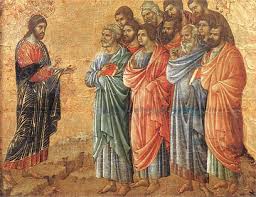
I Will Give You Rest! God’s Cure for Condemnation, Guilt and Fear – David Wilkerson

Originally from here.

David WilkersonGod has promised His people a glorious, incomprehensible rest, which includes peace and security for the soul. The Lord offered this wonderful rest to the children of Israel. It meant a life full of joy and victory – a life without fear, guilt or condemnation. But up to the time of Christ, no generation of believers ever walked fully in this blessed promise. As the Bible makes very clear, they never obtained it because of their unbelief!

“…they could not enter in because of unbelief” (Hebrews 3:19).

Because of their unbelief, God’s people went through life full of misery, doubt, fear, restlessness. They missed the promised rest during the period of the kings and prophets. God also offered it to David’s generation, but they didn’t enter into it, either. In every generation it was refused – never appropriated, never understood.

That is why, when we read Hebrews 4, we find this glorious life of faith still unclaimed:

“There remaineth therefore a rest to the people of God” (4:9).

Yet this passage also adds: “…some must enter therein…” (verse 6).

My Prayer Is That Today You Will Enter
Into the Rest God Has for You!

The Bible admonishes present-day believers with a warning:

“Let us therefore fear, lest, a promise being left us of entering into his rest, any of you should seem to come short of it” (4:1).

Few believers have entered into this promised rest. On the contrary, many are tossed about by winds and waves of doctrines. Thousands upon thousands claim to be filled with the Spirit of God – yet many are restless, guilt-laden, with no security in Christ.

As long as these Christians are surrounded by their believing friends and everything is going fine, they can talk confidently about walking in victory. But when the enemy blows his ferocious winds of adversity upon them, they are pushed and pulled, cast down, with no strength to resist. Many are overwhelmed by temptation. They end up falling – and afterward they are crushed by guilt and shame, wondering if they’re even saved. They completely fall apart – wiped out by adversity!

In some churches, victory is measured by manifestations of the flesh. A couple left our church a few years ago because, as they put it, “You people don’t know how to ‘shout.'” They said that in their previous church, the congregation “shouted” during services, often for three or four hours. The people would dance around and scream at the top of their lungs.

The problem was, this couple was hooked on pornography. Often after a Sunday morning service, they spent the afternoon in a cheap porno theater. Then they came back for the evening service to try to “shout out” their guilt and quiet their conscience. Their standing in Christ was based completely on their emotions and on a bizarre notion of works.

The fact remains that very few believers have any concept of what it means to rest in their salvation. They don’t possess the rock-solid peace and security that all Christians have available to them in Jesus Christ, which can carry them through any storm. Instead, they are crippled with agonizing fear and condemnation, and they go from one extreme to another. One minute they’re overflowing with joy, sure of heaven, witnessing boldly. The next, they’re downcast – discouraged by even the smallest failure.

Such Christians live according to feel-good emotions. They judge their security in Christ by how “good” they can be – how faithful they are to obey God’s Word, or how much victory they can achieve in putting off some besetting sin.

This is partly why so many Christians end up backsliding. Their faith is rooted and grounded in feelings, rather than on the eternal Word of God. They have no solid foundation of truth to undergird their faith. They’ve never taken the time to comprehend the meaning of the Cross of Jesus Christ and its victory!

I ask you: Have you ever backslidden? Have you ever grown cold toward the Lord, quit going to church, wanted your own way? Let me tell you why it happened: You backslid because you didn’t fully understand how to bring your soul into rest! You never understood what it means to be accepted in Jesus Christ – to rely on His righteousness and not your own.

Jesus said, “Come unto me, all ye that labour and are heavy laden, and I will give you rest. Take my yoke upon you, and learn of me; for I am meek and lowly in heart: and ye shall find rest unto your souls. For my yoke is easy, and my burden is light” (Matthew 11:28-30).

Christ is telling us very plainly: “Don’t attempt to take on a walk with Me until you are at rest in your soul!”

If you do not have this rest – this wonderful confidence in what the Word of God says Jesus did for you – His yoke won’t be easy or light. On the contrary, you will spend your time striving in the flesh to please God. You will go from hot to cold – living with unnecessary guilt and shame!

I Believe the Key Lies in These Words: “Learn of Me!”

Jesus is speaking here of the discipline of learning who He is and what He accomplished on the Cross. He is saying, “You have to have a knowledge of what I’ve done for you. Then, once your soul is at rest, you can take on My yoke. So, learn of Me!”

Yet we don’t want this kind of discipline. We want the easy way! We’re like schoolchildren who want to stay on the playground rather than go back into the classroom. We’ll spend years disciplining ourselves in learning to become a doctor, a nurse, a minister, a teacher. We know that any career or calling takes great study and effort. But when it comes to actually serving Jesus, we choose to be airheads! We follow Him as spiritual simpletons.

Perhaps today you testify, “I’m reading my Bible now and praying a little each day. I’m doing battle in my life and at home. I’m trying hard to do better!”

Dear saint, let me tell you straight: That is not enough! None of these things will keep you through the coming storm. It’s not enough to try hard, to make promises to God, to strive and struggle to be better. It’s not enough to say, “I’m more diligent than before.” No – it’s all about going after a revelation of what Jesus did for you at the Cross!

Something should cry out in all of us: “Oh Jesus, Your Word says I can live in total rest, peace and security. I don’t have to strive in my flesh or live in an up-and-down state, tossed about by guilt or fear. You have set before me the promise of a life at rest.

“But I don’t have that rest! My life is just the opposite – in constant turmoil, with no steady peace, always unsure. Oh, Lord, I want Your rest! I desire to have it with everything that’s in me. Teach me by Your Spirit how to enter Your rest!”

I know of only one way to enter into this rest. There is a truth that – if understood and appropriated – will usher you into the most glorious peace and security possible on this side of heaven. It is the foundational truth upon which all others are built.

That truth is the doctrine of justification by faith! It is the truth that ends all attacks of insecurity. And it is the one doctrine you must understand if you hope to enter into the rest Jesus offers. We have to know what it means to be justified by faith in Jesus’ work!

I can only touch on the highlights of this wonderful, magnificent doctrine. Yet I believe God desires to lead His church further into this divine truth – to give us a foundational strength that will hold us up in the days to come.

Sadly, however, when you mention the subject of “doctrine” to many Christians, they turn up their noses. They say, “I don’t want to hear all that deep, heavy stuff. Just give me Jesus!” Yet what they really mean is, “I don’t want to spend the time or discipline to learn what Jesus did at the Cross.”

Too many Christians become only emotionally involved with the Cross and never truly study it. I’ve heard many preachers deliver emotional appeals about Jesus on the Cross – about His beatings, the crown of thorns on His head, the spikes driven into His hands. But I believe the preaching of the Cross is about much more than that: It’s about the victory of the Cross! It’s about what Jesus did there for all of humankind.

For those who desire to “learn of Him” -who want to understand Jesus’ wonderful work at Calvary – let me try to explain as simply as possible this concept of justification by faith:

What Does It Mean to Be Justified Before God?

Two things are involved in our justification by the Cross of Jesus Christ:

  • First, we have pardon for all our sins. When Jesus went to the Cross, His blood pardoned us from all guilt and iniquity.
  • Second, we are accepted by God as righteous in Christ, through faith. This means God accepts us not because of our works or any good deeds, but on the merits of what Jesus alone did on the Cross.

“Who shall lay any thing to the charge of God’s elect? It is God that justifieth” (Romans 8:33).

Yet, when we sin, we are accused by two powerful forces. The first is Satan, whom the Bible calls the accuser: “…(who) accuseth (us) before our God day and night” (Revelation 12:10).

Right now, as you read this message, the devil stands before the heavenly Father, accusing you of every fresh failure, every renewed sin. He brings out a list of all your shortcomings, whether in word or deed, and demands of God: “If You are holy, then You’ll do something about this. If there is any justice in You, You’ll judge this person for his sin. You’ve got to condemn him to the same hell You’ve damned me to for my pride!”

Most of the time the devil has a good argument. He’s got a right to accuse you because you are guilty – you did sin, you were disobedient. And that leads to the second powerful force that accuses you: your own conscience.

“…their conscience also bearing witness, and their thoughts the mean while accusing or else excusing one another” (Romans 2:15).

You stand before God with your head hanging low, because you know you’ve been caught red-handed. Your conscience lets you know, “I am guilty before God.”

And God does not deny our guilt, because He cannot lie. He never sees us as innocent – because we are plainly guilty before Him, caught in the web of sin. Indeed, our justification has nothing to do with our being innocent. When God pardons us because of the Cross, it is as guilty lawbreakers. He never vindicates us; rather, He forgives us – pardoning our sins by His grace and mercy alone.

  • “I, even I, am he that blotteth out thy transgressions for mine own sake, and will not remember thy sins” (Isaiah 43:25).
  • “…thou hast cast all my sins behind thy back” (38:17).
  • “…thou wilt cast all their sins into the depths of the sea” (Micah 7:19).

God pardons us because of the blood of Jesus Christ. And this pardon is totally undeserved. We deserve hell, judgment, damnation – but Jesus took all our sins on Himself at the Cross and pardoned us completely.

Picture yourself before God’s throne right now. There you stand with no excuse, no alibi. Satan is present as your legal adversary, reading off the list of charges – with times, places, events, every shameful detail. He makes accusations of pride, prayerlessness, covetousness, unfaithfulness. And your heart smites you – because you have to admit, “Yes, that’s me. I did it all!”

It looks hopeless for you. You know God’s eyes are too holy to look upon sin, and His justice demands that you pay for your crimes against His holiness. You are helpless.

But suddenly, here comes your Lawyer, your Advocate. He stretches forth His nail-scarred hands to you – and you know something is about to happen! He smiles and whispers, “Don’t be afraid – none of these charges will stand. You’re going to walk out of this courtroom free and fully pardoned. When I’m finished, your accuser won’t have one charge left against you!”

Best of all, your Lawyer tells you He has adopted you! He is pleading your case as your Brother. Then He tells you He is the Son of the Judge – so that now you belong to the Judge’s family as well!

But there is still the matter of justice. What about the charges against you? You listen in absolute wonder as your Advocate pleads your case:

“Judge, You know that I fulfilled the law, living a sinless life. And then I took this person’s place, taking on all the punishment for his crimes. Through these nail-scarred hands and My pierced side, blood came forth to blot out all of his transgressions. All these accusations and charges You’ve heard were put on My back. And I paid the penalty for every one of them.

“Satan, you have no grounds to accuse My child. Each of his sins was placed on Me, and I have fully pardoned them all. He is not guilty – because his faith in the victory of My sacrifice gives him full, complete pardon. You have no case!”

As the devil slinks out of God’s court, you can hear the blessed Lord cry out:

“Who shall lay any thing to the charge of God’s elect? It is God that justifieth” (Romans 8:33).

The First Part of Justification Is the Pardon Of Our Sins by Grace –
And the Second Part Is Our Acceptance Into God’s Beloved!

Paul gives us a list of those unrighteous who will not inherit the kingdom of God:

“…neither fornicators, nor idolaters, not adulterers, nor effeminate, nor abusers of themselves with mankind, nor thieves, nor covetous, nor drunkards, nor revilers, nor extortioners, shall inherit the kingdom of God” (1 Corinthians 6:9-10).

But then the apostle adds:

“And such were some of you: but ye are washed, but ye are sanctified, but ye are justified in the name of the Lord Jesus, and by the Spirit of our God” (verse 11).

How did these people, saved out of such horrible sin, become righteous before God? What happened to them, that they were no longer evil but, rather, accepted by God?

First of all, God is no respecter of persons – not of a king, a queen, a president or a prime minister. He is not at all impressed by man’s honor.

And second, God is not charmed by any goodness in us. Long prayers, fasting, tithing, Bible study, benevolent acts – none of these makes us righteous or acceptable to God. Even our “good” flesh – good character, speech, thoughts and deeds – are a stench in His nostrils if used as a plea for our own righteousness.

Yet few of us seem to believe this. For example: When we first came to trust in Christ, we trusted our sins were forgiven. We believed we were accepted, that we could lay down all guilt and fear. We could say, “I am saved by faith alone in what Jesus did for me at the Cross!”

But then, as we proceeded in our walk with Jesus, fresh acts of disobedience befell us. We were crushed by our sins, and we quickly lost our vision of the Cross. We tried to work out our righteousness -to win back God’s favor – by trying harder the next time. But our life then became a nightmarish merry-go-round of sin and confess, sin and confess…

Even today we have the idea that whenever we sin or fail God, we need to appease Him. We cry a river of tears and promise, “I won’t do it again, Lord.” And we sing that old gospel song I so despise: “Forgive me, Lord, and try me one more time…”

We act as if trying harder in our flesh can save us! We think if we could just reform this flesh of ours, God would be pleased. So we’re constantly working on our old man, to shape him up for a victorious Christian walk. But it will never happen!

You see, when Jesus went to the Cross, He crucified our “old man.” And that old man of the flesh has been wiped away in God’s eyes. Instead, there is only one Man left – only One whom God will deal with – and that is His Son. When Jesus finished His work on earth and was set down at the right hand of the Father, God said, “From now on I recognize only one Man, only one righteousness. And anyone who comes to Me must come through Him – My Son. All who would be righteous must accept His righteousness, and no other!”

We are accepted in God’s eyes only by faith in Christ and His work:

“…he hath made us accepted in the beloved” (Ephesians 1:6).

Do you see how important it is to abide in Jesus – to come to Him quickly whenever you fail? You must learn to run to Him, crying, “Jesus, I’ve failed You! I can’t work this out. No matter what I do, I can never be recognized before the Father – except as I come to Him in You. My only plea is the blood!”

Some Christians may answer, “But I paid a high price for the victory I’ve achieved. I went through a lot of pain and suffering. I fasted, prayed, bit the bullet. And I’ve put to death my besetting sin. I’ve successfully put down all my lusts and sinful desires.

“But now you’re asking me to cast off all this and declare it to be dung? Is my struggle to obey worth nothing to God? Does He consider all my righteousness, all my hard work, as filthy rags?”

Yes! It is all stinking flesh – and none of it will stand before Him. It doesn’t matter what you’ve conquered. Your righteousness will never work as a means of acceptance. There is only one righteousness – and that is the righteousness of Jesus Christ! The righteousness and victory achieved by human struggle alone is only temporary. Failure soon follows.

“For they being ignorant of God’s righteousness, and going about to establish their own righteousness, have not submitted themselves unto the righteousness of God” (Romans 10:3).

Paul is saying, “These people have not given up their own works. They are still striving in the flesh to please God!”

The only way to get into God’s good grace is to admit the truth: “There is no good thing in my flesh, nothing in my good works to merit my salvation. I can’t become righteous through anything I do in my own strength. My righteousness is in Christ alone!” Paul says of the gift of righteousness:

  • “…they which receive abundance of grace and of the gift of righteousness shall reign in life by one, Jesus Christ…” (Romans 5:17).
  • “For he hath made him to be sin for us, who knew no sin; that we might be made the righteousness of God in him” (2 Corinthians 5:21).
  • “But of him are ye in Christ Jesus, who of God is made unto us wisdom, and righteousness, and sanctification, and redemption: that, according as it is written, He that glorieth, let him glory in the Lord” (1 Corinthians 1:30-31). The only thing we have to boast in is Jesus – and His great work for us!

Jeremiah foresaw the victory of the Cross of Christ. He proclaimed:

“In those days Judah shall be saved, and Jerusalem shall dwell safely: and this is the name wherewith she shall be called, The Lord our righteousness” (Jeremiah 33:16).

The prophet was looking forward to our day – to a body of believers who would live in great security of faith. He was saying, “God’s Branch will soon come forth. And through His sacrifice a people will rise up who live in security and peace, because they are able to say, ‘The Lord is my righteousness.'”

Beloved, justification by faith is the most humbling thing in the world. It is hard to see that God doesn’t accept our flesh – that we must set aside our constant strivings and rest in Jesus’ obedience. Indeed, we must learn to depend wholly on Christ for all power to obey.

When Paul first revealed this truth, it shook the church. It was incredible news at that time. In fact, some theologians responded, “If I’m pardoned – if God is so merciful to forgive me freely by faith alone – then let me sin even more, so God can enjoy giving me more grace!”

But Paul asked, “…Shall we continue in sin, that grace may abound?” (Romans 6:1). His answer: “God forbid…” Those men didn’t understand the gospel. Because of the Cross, God considered everything about our old flesh-man done away with!

I believe Paul was saying, “Why would any Christian, having been set free from such a dead man, go back and resurrect the corpse? Why go back to a life of sin when God wants to give you security and peace – to take away all guilt and condemnation? Now, because of the Cross, you can serve the Lord in joy and gladness. And you can obey Him in a new obligation called love.”

“So,” you ask, “are we simply to take by faith the righteousness of Jesus?” Yes, absolutely! That’s what the Christian walk is all about. It’s about resting by faith in what Jesus accomplished!

Our old man is dead, and the new Man is Jesus. And when we put our faith in Him, God fully accepts us. He considers us righteous, hidden in the bosom of His dear Son. So, whenever you sin or fail, run quickly to your Lawyer, your Advocate. Confess your failures to Him, and rest in His righteousness.

You may ask, “But, don’t good works have any place in this doctrine?” Of course they do – but on this condition: Good works cannot save you, justify you or make you righteous or acceptable to God. The only thing that saves you is your faith in what Jesus did!

And what did He do? He saved you, pardoned you and accepted you in the beloved – warts, sins, failures and all. God sees you now only in Jesus Christ – and that’s why we must come to our Savior every time we fall. The blood that forgave and cleansed us the first time we came to Jesus is the same blood that will continue to keep us until He returns.

Yet, along with this security comes a higher obligation. And that is, we must do all our works not in our own strength or power, but in His:

“…if ye through the Spirit do mortify the deeds of the body, ye shall live” (Romans 8:13).

The only way to do battle with the flesh is through the Holy Ghost! He alone has the power to deliver:

“…God is faithful, who will not suffer you to be tempted above that ye are able; but will with the temptation also make a way of escape…” (1 Corinthians 10:13).

If you yield to the Spirit, He will walk you through every battle. He will equip you with all power, wisdom and authority – everything you need to fight sin!

And once you realize what Jesus has accomplished on the Cross, you will hate sin more than ever. You will begin to obey Him, pray to Him, yearn for Him joyfully – because He has secured you on the Rock of His grace. Then you can say, “Who can accuse me now? Christ has justified me! I rest in Him as my righteousness.”

Dear saint, pray that God will make this precious doctrine real in your spirit: “Holy Spirit, come and open my mind and heart. I want to understand this foundational truth, and not to panic every time the enemy brings something against my soul. Help me not to be tossed about by fear, guilt or condemnation. Rather, help me to stand firm under the Cross of my Savior – who provides me with all rest!”

“…if any man sin, we have an advocate with the Father, Jesus Christ the righteous” (1 John 2:1).

You’ve got a Lawyer – so run to Him. Let Him plead your case. And enter into His rest by faith in His wonderful work on your behalf. Amen!

Posted in Uncategorized | Leave a comment

Preaching Against Sin Is Desperately Needed Every Sunday!

The world cannot hate you, but it hates Me because I testify of it that its works are evil.                                                                                                             –Jesus in John 7:7

David Wilkerson Prophesying His 1974 VisionEven in conservative evangelical circles, the old practice of pastors PREACHING AGAINST SIN AND EVIL has been discarded; and even “disproven” by the new clever ideas of grace, non-judgmentalism, and love.

This idea is not new though. Its old. It’s called antinomianism—or anti-law-ism. And in undermining the authority of God’s law, it always tries to hide under a cover-up theme: grace, love, Holy Spirit, imputed righteousness of Christ, and other themes. I believe the devil works his hardest on the minds of pastors in this area of lawlessness (Matthew 7:23; 23:28): he knows that without holiness no one will see the Lord (Hebrews 12:14). So, if he could just get pastors to forget God’s law or see it as unimportant for Christians, then he knows the pastors won’t preach it, and the church will continue to wallow in complacency and carnality (Matthew 24:12).

PREACHING AGAINST SIN AND EVIL comes from Puritan and classic Methodist type preachers. Those were men who held a deep fear of Hell and high reverence of God’s law.

Not so with today’s pastors. “Her priests have violated My law and profaned My holy things; they have not distinguished between the holy and unholy” (Ezekiel 22:26). Beware of lawless pastors and their popularity! Their sermons and churches are “wood, hay, and stubble” (1 Corinthians 3:12-13). All their works are filthy rags and will not pass the test on Judgment Day (Isaiah 64:6), because they know the right way to steer their churches–THEY KNOW BETTER, but consistently choose not to…so they could be self-promoting, name-promoting, vain, useless preachers of nothingness. Not preaching repentance or faith in the cross–and why? Because they’re “pastors” they say. Preaching repentance is not “their ministry.”

It’s just the truth; and I love you enough to say it (Ephesians 4:15).

—–

Further Reading on Antinomianism

Baxter, Richard. The Scripture Gospel Defended.

Fletcher, John. Checks to Antinomianism.

Gunter, W. Stephen. The Limits of Love Divine.

Jones, Mark. Antinomianism: Reformed Theology’s Unwelcome Guest?

Packer, J. I. Concise Theology, p. 176: “Antinomianism.”

Rutherford, Samuel. A Survey of the Spiritual Antichrist.

Wesley, John. “A Dialogue Between an Antinomian and His Friend.”

Posted in Uncategorized | Leave a comment

The Ethics of Christian Book Publishing

Unlike so many, we do not peddle the Word of God for profit. On the contrary, in Christ we speak before God with sincerity, as those sent from God.             –2 Corinthians 2:17

Money for the Ministry:
Frank Viola vs. Francis Turretin

I have heard people in the house church movement argue that it is immoral, sinful, and unethical to publish and advertise Christian books. To a small degree, I can see where they are coming from, but to a large degree I don’t understand this nitpicky opinion of theirs. So, I will set forth my case in defense of Christian book publishing. Frank Viola’s Pagan Christianity has turned out to be a real popular book with house church people (which had to be published and advertised with money). In that book, Chapter 8: “Tithing and Clergy Salaries” uses 2 Corinthians 2:17 as proof that pastors should not receive tithes and offerings. However, I side more with Francis Turretin’s view in “The Salaries of Ministers.” Whereas, Viola takes the view of the Anabaptists and Quakers–Turretin takes the view of Reformed and Puritan Christians, and I side with Turretin on the issue.

The REAL Issue:
Hirelings vs. True Prophets

The gist of Viola’s argument is that pastors should not receive money, because that automatically corrupts their motives: namely, that it transforms godly ministry into a career or profession–it makes pastors into seeker-sensitive hirelings, or man-pleasers (John 10:12). The gist of Turretin’s view (which I agree with) is that PASTORS SHOULD RECEIVE TITHES AND OFFERINGS–IF IT IS FOR ALL THE RIGHT REASONS. Turretin assumes that pastors should be holy, godly, and Puritanical (1 Timothy 3). And that monetary donations received for the ministry are for the support of the preacher of righteousness, so that the Gospel can advance further than it already has. It is seen from a Great Commission viewpoint, to reach out into the world, and convert the masses. Viola assumes most pastors are corrupt–so they should not receive tithes. Turretin assumes that a Biblical pastor is automatically supposed to be godly, so its a no-brainer to support his ministry with money if you believe in what he is preaching. If you don’t believe in what he is preaching; if you think his sermons, his church, his books, etc are all WORTHLESS–then go on your way and DON’T support the preacher of righteousness with your money. Go to Starbucks! Go to the mall and spend it on YOURSELF. However, if you do want to advance Gospel-holiness, then give as much as you want to that preacher and pray for him.

Christian Book Publishing and Pastoral Tithes

When books are published, money is involved. The publisher has to be paid for costs of editing, formatting, graphic design, and printing. This is just part of the art of making books. Books are made of paper and ink; and that means they cost money to make them. Sometimes when Christian books become very popular–bestsellers–they earn what are called royalties for the author. These royalties come to the author as a check. If a preacher writes a book on salvation and holiness and spirituality (as I have done), then it is very similar to when a pastor receives a monetary donation for preaching a sermon. Personally, I believe (at this point) that if I ever made a royalty from a Christian book I published, the money should only go to ministry purposes–and not for personal purposes–like a car or something. However, there is that one verse that the house church, Anabaptist, anti-pastor, anti-tithing people hate: “The Lord has commanded that those who preach the Gospel should receive their living from the Gospel” (1 Corinthians 9:14). The Bible does not contradict itself. 1 Corinthians 9:14 and 2 Corinthians 2:17 are equally inspired by the Holy Spirit and they do not contradict. It simply means that SINCERITY is the issue. Those who are rebuked for “peddling the Word of God” were insincere, and vain, and preached worthless, meaningless things in the name of Christ. And I say, such men should not receive a penny from us.

THE PRINTING PRESS:
AN INSTRUMENT OF RIGHTEOUSNESS…AT TIMES

Ask yourself: IS THE BIBLE WORTH IT? IS THE GOSPEL WORTH IT? IS DEEPER LIFE WITH CHRIST WORTH IT?

Bibles are books, you know. They cost money to print and you have to buy them in order to read them–unless you have the internet. But then you have to buy a computer to use the internet.

GutenbergThe printing press was invented originally in China in the medieval times. It appeared in Europe in the mid-1500s during the Protestant Reformation. ALL of the Protestant Reformers wrote, printed, paid for, and sold books–this is how the Reformation spread! Martin Luther, John Calvin, you name it: ALL of the Puritans of the 1500s and 1600s–most notably John Bunyan’s bestseller The Pilgrim’s Progress, prophet that he was. John Wesley, George Whitefield, Jonathan Edwards, Charles Finney–all the GREAT REVIVALISTS and saints of the past ALL used the printing press. This is nothing new. David Wilkerson’s income came almost 100% from Christian book publishing (Gary Wilkerson’s David Wilkerson, p. 153). The royalties that Leonard Ravenhill made from Why Revival Tarries, and all his other books, he chose to give to missions.

The questions you must ask yourself are:

IS THIS MESSAGE WORTH MY MONEY?

DO I REALLY BELIEVE IN THIS ENOUGH TO SUPPORT IT FINANCIALLY?

OR IS IT FAKE?

Posted in Uncategorized | Leave a comment

Thunderclap for Paris Reidhead’s “Ten Shekels and a Shirt” – SermonIndex

Support SermonIndex through Thunderclap.

Do you like Paris Reidhead’s sermon “Ten Shekels and a Shirt”? If you support this below, it will instantly send the sermon out through Facebook, Twitter, and Tumblr.

CLICK HERE!

Posted in Uncategorized | Leave a comment