Spiritual Gifts in the Christian Life

Concerning spiritual gifts, brethren, I would not have you ignorant. –1 Cor. 12:1, KJV

1 Corinthians 14 has been called by Don Basham, and others, as the “manual” for Charismatics. I agree, because it explains what speaking in tongues is, the exercise of the gifts of prophecy and interpretation of tongues in the church, etc. However, it’s not the end all; it makes no mention of the presence of God, healing, deliverance, or nature miracles–which are only briefly mentioned in 1 Corinthians 12:8-10.

Many books on spiritual gifts only consist of definitions of words, terminology: word of knowledge, word of wisdom, prophecy, faith, healings, discerning of spirits, etc are defined and explained as words and phrases, terms, and the explanation usually stops there. What makes things worse than this minute, simplistic approach to the subject, is that many of the spiritual gifts books contradict one another. Very little practical advice is given on how to acquire or grow in the experience and practical use of such gifts.

Based on my personal subjective experiences, readings of Scripture, and the lives of various saints–I hope to shine some light on spiritual gifts here for a moment. This is not only experiential but hopefully practical:

1. Praise and Worship, Feeling God’s Presence, and Speaking in Tongues. This “feeling” of God’s presence is what we call “the baptism in the Holy Spirit” in Pentecostal and Charismatic churches. When the baptism comes, it surrounds you with the Holy Spirit, and you feel the presence of God all around you. It is comforting, peaceful, and reverent; it is the Spirit of the Fear of the Lord (Isaiah 11:2) as much as it is peace of God, which surpasses all understanding (Philippians 4:7). Sometimes this feeling of God’s presence results in speaking in tongues, or praising God with your spirit, as Paul said (1 Cor. 14:15). See John Sherrill’s They Speak with Other Tongues.

2. Bible Study and Private Prayer. Two experienced, older prophets (one influenced by Derek Prince; the other by James Goll and Kris Vallotton) have told me that the more you study the Bible in faith, the stronger and more detailed your words of knowledge will be. I can also confirm this; as I have gone through spiritual dry spells, where I had no desire to study the Word, and in those times, I received very few dreams or signs from God. But once I picked up on Bible study again, the spirit of revelation kicked in. Private prayer, and I would agree with Augustin Poulain (The Graces of Interior Prayer) in saying that contemplation (quietly staring at Jesus in your mind’s eye, with your eyes closed, Heb 12:2), or listening prayer, also plays a role in activating the gift of prophecy in your life. The more you study the Bible, pray, and listen in quiet times for the voice of God–even if nothing happens instantly–you will find eventually dreams and visions will come in the span of about 8-12 hours; and if those don’t come, then signs and strange confirmations and coincidences will come in the day time. God will draw near to you if you draw near to Him; you have His Word (James 4:8).

3. Spiritual Journals. When you start having dreams and visions; hearing voices; and seeing strange coincidences or signs from God happening all around you–it is helpful to go buy a composition notebook and journal these experiences; because amazing as they are, you will probably forget a lot of them, because they will happen so often. Habakkuk 2:2: “Write the vision; make it plain on tablets.” Also, this will help you to discern the spirit behind each experience; we need to test the spirits to see whether they are from God (1 John 4:1); to see if the experiences speak according to God’s Word (Isaiah 8:20). As much as it requires faith to pray for dreams and believe God could be at work in them; it also requires faith to evaluate, discern, and judge them to see whether they are from God or the devil (Heb. 5:14). Even saints can have demons speak to them, masquerading as angels of light (2 Cor. 11:14); and we should be especially on our guard against such delusions from Satan; and even more on guard about sharing these experiences openly with Christians who have no experience with the interpretation of dream symbols. See Ira Milligan’s Understanding the Dreams You Dream.

4. Prophetic Ministry. This is something I have little to almost no experience in; but I have had my random and unofficial moments, in a house church, during street preaching, and very recently at a prophetic conference. This is when you are praying for someone; usually the person facing you or standing in front of you; and you are closing your eyes, and you see a picture flash in your mind; and because it comes as you are thinking and praying for this person in particular, you inwardly know that the Holy Spirit gave this picture, or interior vision for this person. Just as with dream symbols, a knowledge of the meaning of Biblical symbols is essential; you should be able to get the gist of the meaning of the vision-symbol right away–and then share the vision with the person and explain what you feel the meaning of it is (this is called prophesying, or sharing a word of knowledge). See Kris Vallotton’s Basic Training for the Prophetic Ministry.

5. Healing Ministry. This is often based on prophetic ministry; because it requires miraculous faith to be able to pray for physical healing and actually expect a result (miracle). Prophecy serves the function of edifying (or building up your faith); so it follows that healing should flow out from the headwaters of prophecy; and you will find that church history’s greatest healers were also prophets (Hildegard of Bingen, George Fox, John Wesley, Smith Wigglesworth, Kathryn Kuhlman, John Wimber, etc). This involves laying on of hands and saying, “Be healed! In Jesus Name!” or other such direct authoritative commands; it can also take the form of other faith-filled prayers for healing. See John Wimber’s Power Healing.

6. Deliverance Ministry. Also called exorcism in the Catholic and Lutheran churches, this is based on prophecy as well, and feeds off the miraculous faith imparted by direct words of knowledge in the form of revelation about evil spirits, called the discerning of spirits. Some kinds of demons, Jesus said, cannot come out except the exorcist prepares by prayer and fasting (Matthew 17:21); so these ordinances are definitely means of increasing miraculous faith. Once the revelation of the demonic presence is received, the prophet then has the faith to cast it out in prayer: “Devil come out! In Jesus’ Name!” or sometimes, “Spirit of _____, come out!” (based on the discerning of spirits vision or impression received); and this may result in either the demon coming out quietly, leaving the person relaxed with a sigh of relief; or the demon will come out violently or dramatically, and either shake the person or cause the person to scream out or shriek in a high-pitched shrill! See Norvel Hayes’ How to Cast Out Demons.

7. Nature Miracles. Charismatic Christians may have occasions, when like the prophet Elijah, they will pray for the rain to stop, because it is being a present inconvenience in some way. Jesus also apparently did this on the boat when the waves were swamping the boat (Mark 4:35-41). Raise your hand to the sky and speak to the rain: “In Jesus’ Name I pray and tell this rain to stop for the next 3 hours, in JESUS’ NAME!” I have practiced this many, many times; and God has often answered the prayer; and if not totally, then 80-90% so that it was good enough. See Joan Caroll Cruz’s Mysteries Marvels Miracles: In the Lives of the Saints.

There are many other things about spiritual gifts that I do not know; and I hope to experience them, as I grow in prayer and obedience to the Bible; because these things are necessary for the spreading of the Gospel, that the Gentiles may believe in the Son of God.

Posted in Uncategorized | Tagged , , , , , | Leave a comment

The Secrets of the Prophets

“The Lord God does nothing unless He reveals His secret counsel to His servants the prophets.”                                                                                                                         –Amos 3:7

Dreams and visions are the primary way that God speaks to prophets (Numbers 12:6). Scripture, the lives of the saints, and personal experience will confirm this. These means of supernatural revelation are highly symbolic and have to be interpreted in the language of Biblical symbols (see Ira Milligan’s Understanding the Dreams You Dream). There are three stages in the reception of revelations:

1. Revelation (the dream or vision experience).

2. Interpretation (the process of translating the symbols of the dream into something concrete and plain to understand).

3. Application (what the prophet does with the revelation he has received, such as prophesy it, share it with his pastor or church, act it out, or just pray about it as an intercessor, like Moses or Daniel).

Mike Bickle follows this “revelation, interpretation, and application” process in his Growing in the Prophetic, just as any conservative evangelical would approach Bible study. But instead of the Bible being the revelation, and instead of Bible commentaries being involved in the interpretation, and instead of practical obedience to Scripture being the application–dreams and visions are interpreted by inner feelings and symbols from the Bible (as mentioned before, I prefer Ira Milligan’s dream symbol dictionary as a starting place, as does James Goll in Dream Language).

The subjectivity of dream-and-vision prophecy makes it challenging to integrate this spiritual gift into the church context. I find this is especially the case when dreams involve sin, Hell, the devil and other negative or frightening supernatural realities. Much caution should be used by prophets in the sharing of such revelations. Most of the prophetic movement today, at least from what I can tell, consists of simple “encouragement” prophecy: words of knowledge that have the same effect as a motivational speech. Sometimes such words can sound rather flattering. 1 Corinthians 14:3, KJV says prophecy is for encouragement/comfort–that is very true; it is also for building up other people’s faith/edifying; but it is also supposed to be used for EXHORTING (Gk. paraklesis/admonition/warning)–and this part of the prophetic is generally the most controversial, because this where the Holy Spirit speaks on “sin, righteousness, and judgment” (John 16:8); and challenges church people on a moral level.

“Accuser of the brethren!” “False prophet!” And other such phrases are likely going to be imputed to the prophet who shares such revelations. This happened to David Wilkerson when he prophesied The Vision in 1973, simply because it was so focused on sin, righteousness, and judgment (Gary Wilkerson’s David Wilkerson, p. 174).

We must keep in mind that, if we plan on walking in step with the Holy Spirit (Galatians 5:25), He is not going to change what He wants to speak to His servants the prophets, whether to man, woman, or child. Even if charismatic churches can’t see why God would expose sin in others’ lives to deliver them from it (1 Corinthians 14:24-25); we still must pray that such sins cease in our midst.

Because misunderstanding about the nature of grace and holiness abounds in our churches, it follows that when the Holy Spirit reveals sin in others’ hearts by a dream, that the prophet should lean more towards private prayer (intercession) and less towards sharing it (prophecy):–if he does, it may cause great harm, because church leaders may react in a negative manner. Naming names–at the very least–is the most harmful in a church context. Share the dream with your pastor, if you know he is a prophet who gets words of knowledge, but be hesitant about naming names. It may be that the Lord had it in mind to just “reveal His secret to His servant,” a prophet (Amos 3:7).

Further Reading

Goll, James. The Prophetic Intercessor. Grand Rapids, MI: Chosen Books, 2007.

Sandford, John and Paula. The Elijah Task: A Call to Today’s Prophets and Intercessors. Lake Mary, FL: Charisma House, 2006.

Posted in Uncategorized | Tagged , , , | Leave a comment

Casting Out Demons in a Mass Deliverance – Derek Prince

Posted in Uncategorized | Leave a comment

Examples of Healing from Wesley’s Life

James 5:14-16: Is any sick among you? let him call for the elders of the church; and let them pray over him, anointing him with oil in the name of the Lord: And the prayer of faith shall save the sick, and the Lord shall raise him up; and if he have committed sins, they shall be forgiven him. Confess your faults one to another, and pray one for another, that ye may be healed. The effectual fervent prayer of a righteous man availeth much.

The following is taken from Daniel Jennings’ The Supernatural Occurrences of John Wesley, ch 3: “John Wesley’s Experience with Miraculous Healing.” I’m going to summarize everything in this chapter, mostly taken from Wesley’s Journal, which I think would serve as examples of instruction to imitate as Christians who believe in praying for healing:

1. Praying for the Mentally Ill. November 28, 1739 – Wesley acted on Matthew 21:22: “Whatsoever ye ask, believing, ye shall receive,” prayed for a woman who was so mentally distracted by demonic oppression, that she could barely pray for herself. She asked if Wesley could thank God for something He did for her. He did as she asked; and she was instantly relieved of mental torments. 2 days ago she was so mentally oppressed by the devil that she had to be tied to a bed; over the course of a few days of prayer, she was gradually delivered from the insanity (pp. 50-51).

2. Hearing God’s Voice Before Visiting the Sick. November 16, 1740 – Wesley preached at a large church called St. James. Afterwards he made house visitations to the sick. He heard God’s voice quote Job 38:11: “Hitherto thou shalt come.” And it gave him faith for healing. Many had been struck with the fatal disease called the spotted fever. All of them were healed when Wesley and his friends prayed for their healing (p. 53). This is similar to what today we might call a word of knowledge for healing; or a prophetic healing.

3. Praying for Pain Relief in His Own Body. March 21, 1741 – Wesley was preaching on Ezekiel 33:11, when suddenly he was struck with such a pain in his side, that he could not speak. He immediately kneeled down and prayed for healing; and instantly the pain left. He got back up and resumed preaching boldly (p. 54).

4. Prayer Team Heals a Bedridden Woman. March 31, 1742 – Ann Calcut had a fever so bad that she was rendered speechless for some time. As soon as Wesley and his friends began to pray for her healing, God restored her speech; within that hour, her fever left; after a few days, she got up from her bed, praising God (p. 52).

5. Prayer Team Heals a Deathly Ill, Bedridden Man. December 15, 1742 – Wesley spent the day open air preaching with his friend Mr. Meyrick. They walked home in the cold weather; and both of them caught a cold. Wesley’s wore off, but Meyrick’s got so bad that he was bedridden, and the doctor thought he would die. Wesley and a small group of people prayed for Meyrick at his bedside; and his strength quickly returned, and the doctor was amazed. Wesley chose to attribute the recovery to the power of God, despite the fact that he admitted others might say the recovery was of natural causes (pp. 49-50).

6. Word of Knowledge Healing of Headache and Horse’s Fatigue. March 17, 1746 – Wesley and his horse became very tired and exhausted while riding; he had an awful headache and his horse wouldn’t move. When suddenly the thought popped into his head, “Cannot God heal either man or beast, by any means, or without any?” Instantly Wesley became alert and strong; and his headache left. His horse also got a second wind and started galloping again–nor did it get tired for the next few days (p. 54). I would call this a word of knowledge for healing.

7. Toothache Leaves, After Hearing Healing Testimony; and Then Praying. November 12, 1746 – Wesley had a horrible toothache; and during this Mr. Spear told of a time that he was instantly and perfectly cured of a rupture, even though several excellent doctors said it was incurable. Wesley received such a faith for healing from hearing this, that he prayed for his toothache to leave, and the pain left him, and did not come back (p. 55).

8. Man Sees Wesley and Instantly Healed of Deadly Fever. April 8, 1750 – After preaching to a Methodist class in the morning, afternoon, and evening–Wesley found Mr. Lunell had a life-threatening fever. But the moment he saw Wesley, he was healed: he broke into a sweat, deeply breathing, and the fever left. No prayer at all (p. 52; cp. Acts 5:15).

9. Man Healed by Receiving Lord’s Supper; Relapsed from Backsliding. October 12, 1754 – A man was instantly healed of a horrible fever and cough (and “incurable” distemper) when he received the Lord’s Supper from Wesley. 3 years later he backslid; and the incurable disease came back worse than before (pp. 51-52).

10. Breast Cancer Healed Through Multiple Prayers. December 26, 1761 – Mary Special had a horrible case of breast cancer. The pain was horrible and her tumors were hard and leaking. She went to a meeting where Mr. Bell prayed for her; he asked, “Have you faith to be healed?” “Yes,” she said; and when they prayed, the pain left. The next day a little pain came back. She laid her hands on her breasts, and cried out, “Lord, if thou wilt, thou canst make me whole” (Matthew 8:2). She was instantly healed of pain; within the hour, the soreness, swelling, and lumps were all gone–and no recurrent breast cancer four years later (pp. 56-57).

11. Prayer Team Heals Bedridden Woman. October 16, 1778 – A godly, but bedridden woman wanted Wesley and his friends to pray for her healing. She instantly had enough strength to get up from her bed, get dressed, and join them for fellowship in the living room (p. 50).

12. Praying for Horse to Regather His Strength. September 2, 1781 – Wesley open air preached at Gwennap to the largest crowd he had seen in his life, about 23,000. Riding home later on, his horse got so weak it could not move. He prayed for the horse to get better; and it did instantly, and went on galloping (p. 57).

13. Praying for Horse to Heal from Horseshoe Wound. May 23, 1781 – A blacksmith put a horseshoe on Wesley’s horse and hurt the horse so bad, that many said the horse would not be able to travel again. Wesley prayed for the horse to get better; and instead of getting worse, the horse got better and better, and gallopped strongly (p. 58).

14. Laying on of Hands Heals a Migraine Headache. May 31, 1785 – After open air preaching to a large crowd in the rain, a professional woman approached him and said, that a while ago she had a horrible headache for four weeks. She had faith that if he laid his hand on her cheek, she would be well. And she said, she was instantly healed. Wesley did not personally remember the incident, but he thought it could have happened, as he was always among the crowds (p. 51; cp. Matthew 9:20-22).

—–

15. Crippled Man Instantly Healed While Listening to Sermon on Mark 16:17. Wesley’s Notes: Mark 16:17: “And these signs shall follow them that believe…” At Leonburg, a dean was preaching on this text, when suddenly a man on crutches was instantly healed.

16. Crippled Man Healed by Obeying a Dream from God. Wesley’s An Extraordinary Cure: John Trebble, in St. Madern’s in Cornwall, was handicapped for 16 years so badly that he had to crawl on his hands. But God spoke to him in a dream; and told him to wash in a certain well. In obedience to the dream, his legs were suddenly healed; and Bishop Hall saw him gather his strength, and gradually walk normal again. Hundreds of neighbors also witnessed this miracle.

—–

Observations from R. Jeffrey Hiatt’s “John Wesley & Healing: Developing a Wesleyan Missiology,” which is influenced by John Wimber’s Power Healing and Wesley studies.

Hiatt, R. Jeffery (2004) “John Wesley & Healing: Developing a Wesleyan Missiology,” The Asbury Theological Journal: Vol. 59: No. 1, p. 89-109.

See also Hiatt’s doctoral dissertation: Salvation as Healing: John Wesley’s Missional Theology (2008).

1. Wesley’s view of praying for healing was adopted from The Book of Common Prayer: “Ministration to the Sick,” published in 1549 by Thomas Cranmer; in which the Anglican priests were expected to offer prayers for the sick in their churches; he grew up as the son of an Anglican priest; and his mother Susanna prayed for healing often, not only from the book, but spontaneously (p. 96).

2. Although it is clear that Wesley prayed for healing and often saw miraculous results, he also knew the limits of faith, and the great need for immediate healing among the poor, who could not afford to pay for expensive medicines or see a doctor. Out of Christian love and compassion to help alleviate the sufferings of humanity, Wesley also resorted to folk remedies and generic medicines in his visitations to the sick and poor. He wrote a cheap book that contained no less than 829 home remedies: Primitive Physic (1747), which passed through 26 editions (pp. 97-100); in this sense, Wesley may have been one of the first “medical missionaries” in the spirit of Luke the physician. Hildegard of Bingen, as you may know, worked many phenomenal healings and exorcisms through prayer (The Life of the Holy Hildegard); but she also produced writings on folk remedies, as Wesley did (see Priscilla Throop’s Hildegard von Bingen’s Physica). “However, medicine did not, and does not work by itself apart from the grace of God”: that is, Wesley prayed for healing in Jesus’ name, as he administered folk remedies or medicines: truly he saw himself as a “cure of souls,” in the classic holistic view of pastoral ministry. Wesley said, “Healing could be natural or supernatural, and it could occur through both medication and prayer (p. 99). Galatians 5:6: “Faith working through love.”

3. A. B. Simpson, Charles Cullis, and the holiness movement followed in Wesley’s footsteps in the practice of divine healing (p. 105): see Healing edited by Jonathan Graf. See also Nancy Hardesty’s Faith Cure: Divine Healing in the Holiness and Pentecostal Movements (Baker Academic, 2003).

Posted in Uncategorized | Leave a comment

How to Pray for Healing (Book Outline)

Power HealingMost of the thesis of this book’s view of divine healing will be based on John Wimber’s Power Healing and other Vineyard books. I will, however, produce examples of healings from past saints, such as Hildegard of Bingen, Francis of Assisi, Martin Luther, George Fox’s Book of Miracles, The Supernatural Occurrences of John Wesley, The Supernatural Occurrences of Charles G. Finney: “Insanity Healed”; Stanley Frodsham’s Smith Wigglesworth; Jamie Buckingham’s Daughter of Destiny (Kathryn Kuhlman); Carol Wimber’s The Way It Was (John Wimber’s bio); and Nancy Hardesty’s Faith Cure: Divine Healing in the Holiness and Pentecostal Movements.

Other books for the thesis:

Rich Nathan and Ken Wilson’s Empowered Evangelicals, ch 3 and Appendix: The Healing Prayer Model (Wimber’s)

John Wimber’s videos on spiritual gifts and healing.

Richard J. Foster’s Prayer: “Healing Prayer”

Also based on the arguments in Empowered Evangelicals, ch 3, I plan to provide a kind but reasonable critique of erroneous views about praying for healing in both Pentecostal and conservative evangelical churches.

Posted in Uncategorized | Tagged , , , , | Leave a comment

Updated List of Protestant Seers

Five Protestant saints who operated in the miraculous gift of prophecy (1 Corinthians 14):

Arranged by Year of Death

1546 – George Wishart – Covenanter
1791 – John Wesley – Methodist
1947 – Smith Wigglesworth – Pentecostal
2011 – David Wilkerson – Pentecostal

—–

Further Reading

John Howie’s The Scots Worthies
Daniel Jennings’ The Supernatural Occurrences of John Wesley
Stanley Frodsham’s Smith Wigglesworth
Gary Wilkerson’s David Wilkerson
David Wilkerson’s The Vision
John and Paula Sandford’s The Elijah Task
Donald Gee’s Concerning Spiritual Gifts

Posted in Uncategorized | Leave a comment

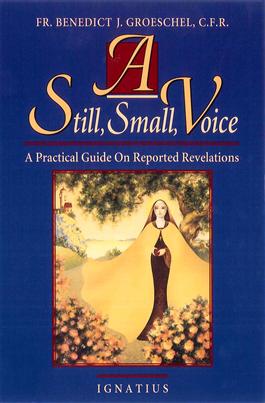
Review of Benedict Groeschel’s “A Still, Small Voice”

A-Still-Small-VoiceAnd after the fire there was a still, small voice.–1 Kings 19:12

Benedict Groeschel’s A Still, Small Voice is probably the best Catholic book on spiritual gifts recently published (Ignatius Press, 1993). It follows in the tradition of what you may call Catholic “mystical theology,” although I was surprised not to find that phrase used; also, I was surprised to find the word “contemplation” used only once, and only in passing. No chapter was dedicated to the subject, but I suppose that is covered at length in his other book Listening at Prayer (taking the more popular phrase “listening prayer” for what used to simply be called contemplation or contemplative prayer; but “contemplation” occurs 9 times in that book). Groeschel admits to heavy reliance on Augustin Poulain’s The Graces of Interior Prayer and Thomas Dubay’s Fire Within, which is a systematic mystical theology based exclusively on the works of Saints Teresa of Avila and John of the Cross: the two most authoritative teachers on spiritual gifts in the Catholic Church.

I am a Pentecostal and not a Catholic, so I definitely see some things wrong with Groeschel’s views, such as Marianism, open-but-cautious and almost practical cessationism (John of the Cross’ influence), belief in Purgatory, and too much unwavering trust in church authorities over the private spiritual lives of seers. Also, the book could have had about 80% more Scriptural content; there was so little of it. Most of the book was based on Poulain and Dubay and Groeschel’s personal experiences as spiritual directors, which is fine, and great, and still very insightful. But very little came directly from the Bible, which was a turn off. Also he made a non-judgmental comment once (directed at hellfire visionaries), based on the popular skewing of Matthew 7:1, which doesn’t really fit the theme of his book, which is the judging of revelations. And on page 127 he makes a quasi-universalist remark about people in Hinduism or in pagan religions trying to seek God with the light they have, outside of the gospel. I had a real problem with that. He doesn’t say that people outside of Christianity can be saved from Hell, though. He merely sees some as misguided and searching for God.

CHAPTERS 1-2 left me with the impression that holy living is more important and more valuable than seeking for visions, dreams, and supernatural experiences from God. I agree. But unlike Groeschel, who takes his counsel as a Catholic from John of the Cross, he ends up with a bit of practical or experiential cessationism, and concludes that if you hear spiritual voices, then you should “pay no heed to them” (p. 121)—which in my view would basically result in DISOBEYING GOD’S VOICE and undermining the entire reason why God wants to impart spiritual gifts to the church (1 Corinthians 14)! To his credit though, he still allows for visions in the Christian life, but believes it is the Catholic clergy’s job to approve the visions. As a non-denominational Pentecostal, I’m personally more comfortable with allowing the Bible, creeds like the Thirty-Nine Articles and the 1689 Baptist Confession, and the Gospel of Jesus Christ to be the authoritative objective standards of judgment for visions in my personal spiritual life. And of course, if I find myself in a season of life where God has placed reliable, godly, spiritual, prophecy-experienced pastors over me—then they too would be channels for checking my subjective spiritual experiences to be in line with the will of God. The weakness I find with Groeschel’s view is that he would have all Christians to disbelieve their visions unless a Catholic clergyman approved; he makes no mention about the moral lives of the said clergy, he just says that its good enough that they are clergy. But I say, if you appeal to clergy only because they are church authorities, and you don’t also appeal to them on moral and mystical grounds as saints, or men of God experienced with the Holy Spirit, then you would not be appealing to the appropriate authority, if you were to ask them to help you judge and evaluate your spiritual experiences. What use is it for an eagle to ask a pig to evaluate his vision? And what good is it for a saint to ask a Pharisee if he would like to judge his revelations? But seek out Elijah and the sons of the prophets; and there you will find stability.

I think John Wesley’s theology of the Christian life and his use of John Lacy’s The General Delusion of Christians in his understanding of spiritual gifts, is much safer and more Biblical, and more in keeping with the Spirit of Pentecostalism, than the views I see in Groeschel’s book. Wesley was not perfect; but at least in his views we see a Biblical Christian who avoids the errors of Calvinism, antinomianism, cessationism, and universalism on the Protestant side; and on the Catholic side, avoids the errors of Marianism and the like, which unfortunately plays a very prominent role in this book. Rather than visions of Jesus taking priority, in this book visions of the “Virgin Mary” at Lourdes are mentioned way more. Something I think is mostly demonic—except in the case of St. Catherine of Siena, who said she once had a vision of Mary; and when visited by her, told Catherine that she was not sinless as the Catholic Church teaches (pp. 59, 67-68).

CHAPTERS 3-4 underscore a message that he repeats many times again: true revelations from God can be misinterpreted and misapplied by godly seers. And this in turn can make it look like to others that they are false prophets or have prophesied a falsehood; when in reality, they might have just misunderstood some mysterious aspect of a vision, which is usually symbolic, and veiled to some degree. “We know in part, and we prophesy in part” (1 Cor. 13:9). Setting dates of future events is admittedly a common error that spiritually gifted Christians fall into. Take note that even when Jesus foretold the future, I don’t think He ever set any specific dates about when things would happen. He didn’t even know the day or hour of His return; how much more fallible men such as us. I’d say it’s safe to say that while the Bible, the perfect law of the Lord (Ps. 19:7), can be totally trusted in faith—visions and dreams can only be partially trusted in faith. And that is because “we prophesy in part” or we partially have assurance of what God is speaking by the Holy Spirit. We need to test the spirits and judge our revelations with Scripture (1 John 4:1; Isa. 8:20), creeds, humility, patience, common sense; and understanding that prophets are men of like passions (James 5:17), and are subject to making mistakes at understanding their own visions, no differently than any of us might sometimes misplace our keys, or accidentally run a red light. (Observe how much misunderstanding Christians have with the book of Revelation.) Taking action on private revelations needs to be taken slowly and carefully. It’s not unbelief to delay taking personal action on a vision; its patient caution seeking assurance and true faith for an issue the Holy Spirit might be bringing to your attention. You want to make double-sure it’s really God, before you start to step out in faith, and take action on an experience you think is a revelation from God. And even if you arrive at a persuasion that you have received a private revelation from Jesus, the Holy Spirit, a saint, or an angel, with Poulain I have to agree that you can only arrive at a level of probability with personal visions or voices—never with absolute certainty like you can with the Bible. At best you can say, “I’m 90% sure; or this revelation is probably from God—and I am willing enough to take a leap of faith to see if God is leading me in this direction.” Why just probability? Why not total certainty? Because we “know in part, and we prophesy in part” (1 Cor. 13:9). Not even prophets have perfect knowledge and perfect faith—their revelations consist of partial, limited insights; and even when they do have an experience they think is a revelation, it will soon fade away (1 Cor. 13:8). But the word of the Lord endures forever (the Bible) (1 Peter 1:25). Some people reject revelations, because the revelations are holy, and the people are carnal, and don’t want to change their ways; others reject revelations because of their heretical content or because they were received during a period of schizophrenia; but hesitation to accept a revelation from God is not the same thing as rejection—it’s just being patient and cautious about discerning the will of the Holy Spirit.

CHAPTERS 5-6 elaborate the view put forth in the prior chapters: that prophets are fallible and can misinterpret their dreams and visions; even the apostle Peter misinterpreted the meaning of the visions of Moses and Elijah and the Transfiguration: “As He was praying, the appearance of His face changed, and His clothes became as bright as a flash of lightning. Two men, Moses and Elijah, appeared in glorious splendor, talking with Jesus. They spoke about His departure, which He was about to bring to fulfillment at Jerusalem. Peter and his companions were very sleepy, but when they became fully awake, they saw His glory and the two men standing with Him. As the men were leaving Jesus, Peter said to Him, “Master, it is good for us to be here. Let us put up three shelters–one for you, one for Moses and one for Elijah.” (He did not know what he was saying.)” (Luke 9:29-33). Often visions have Biblical symbolism in them; and it would do good to get an understanding of this sort of language of the Spirit; see Ira Milligan’s Understanding the Dreams You Dream. Because of the element of human error in misunderstanding the visions you can experience, the Catholic Church has different categories in which to place spiritual experiences: 1. Authentic revelations are those that the clergy approve of. 2. Questionable revelations are those that the clergy are uncertain about. 3. False revelations are those that come from schizophrenia or “false mystics” such as the Quietists (however, as a Wesleyan, I find myself becoming gradually more accepting of Madame Guyon, Francois Fenelon, and Michael Molinos–because all were highly esteemed by Wesley. Molinos even wrote a book called The Spiritual Guide: Which Disentangles the Soul, and by the Inward Way, Leads it to the Fruition of Perfect Contemplation, and of the Rich Treasure of Internal Peace). Note: perfect contemplation is something Wesley took seriously; and yet, I respectfully would like to disagree with Robert Tuttle, who in Mysticism in the Wesleyan Tradition, asserts that Wesley “was unimpressed by Molinos’ emphasis on the highest form of contemplation or mystical silence” (p. 137)–but where is the evidence of his being unimpressed? And why would Wesley put the whole book, without reservation, in his Christian Library for Methodists to read? I think it is unlikely that Wesley disapproved of contemplative prayer; he also includes Isaac Ambrose’s Looking Unto Jesus in his favored collection; again a contemplative book. What the Catholic Church considers “false revelation” might actually be true revelation in the evangelical sense; so watch out for such opinions. 4. Fake revelations are those that arise from the occult, demons, or flat out charlatans trying to deceive gullible people.

CHAPTERS 7-9 continue with the theme that prophets can misinterpret their visions; and because of this, charismatic Christians should walk a fine line of faith between healthy skepticism on the one side and reckless gullibility on the other. True seers are highlighted as worthy of attention who have founded “religions”; and as a Pentecostal, I’m inclined to point to John Wesley (Methodism), William J. Seymour (Pentecostalism), and John Wimber (the Vineyard churches). Personal revelations should be judged by the Bible of course, but because it is subject to such a wide variety of interpretations, even heretical ones, I would add that the theologies widely accepted in the Protestant Reformation are an objective standard to help guide Protestant seers. And this not a thing of theory; John Fletcher, known as “the Methodist mystic,” was once “prostrate in prayer” when “he received a vision of Christ bleeding on the cross” (Mysticism in the Wesleyan Tradition, p. 138). Groeschel has trouble accepting the visions of Hell that seers report; and also visions of apostasy in the church; he sees this as subversive to church authority. I say, if God gives you a vision that carnal men are going to reject, then keep it to yourself (Acts 3:7); and only say it to people if commanded; in doing so, you may save yourself a lot of trouble. In this vein, I feel a kindred spirit with David Wilkerson‘s The Vision (1973) and his inclusion as a prophet in the charismatic Protestant book on spiritual gifts: John and Paula Sandford’s The Elijah Task (1977). In chapter 8 Groeschel offers several cautions: because prophets can be attacked or tempted by demons, it follows that they should be on guard against pride from having received revelations (2 Cor. 12:7); prophetic merchandising or “the doctrine of Balaam” (Revelation 2:14; cp. 2 Peter 2:14; Jude 11); be wary of hateful Pharisees (corrupt church leaders) who reject all revelations immediately without serious investigation; and be careful to walk in love and avoid getting into a rude attitude, while your heart is agitated at the sight of so much sin in the world and the church (1 Cor. 13).

CHAPTERS 10-11 have additional cautions (some of which go too far): he says with John of the Cross that you should “pay no heed” to spiritual voices (p. 121)! Absurd! As mentioned in the beginning of this article, a view such this would definitely contradict the practice of prophecy in the church mentioned in 1 Corinthians 14. A sort of dry, practical cessationism is settled on; and sadly, this is the approach I see in the Christian & Missionary Alliance. They have a view of spiritual gifts “in theory,” but not in practice or experience: a view of “expectation without agenda,” as they call it; a similar stance is taken by Calvary Chapel; an “open-but-cautious” view of spiritual gifts, so-called, that ends up with so much skepticism that practical cessationism results, except, in the case of Groeschel that seeking to feel God’s presence is acceptable (ch 11): a thing hardly threatening to church authorities, because it rarely conveys a message other than that God loves them and is comforting them. Spiritual gifts are in their church doctrine. Regarding the Alliance on the gifts, it is rather tragic, because when A. B. Simpson was alive, it was much more spiritually gifted (see Paul King’s Genuine Gold). Personally my favorite Pentecostal/Charismatic denominations are the Assemblies of God and Vineyard churches; but I prefer Wilkersonian, non-denominational Pentecostalism above all. But to get back to my point: Groeschel, with the Catholic Church, takes about the same view of spiritual gifts as the Alliance does; its acceptable in doctrine, but when it comes to experience, it is considered wiser to “pay no heed” to spiritual experiences! I couldn’t disagree more! Wesley rightly said concerning spiritual gifts: “The danger was to regard extraordinary circumstances too much,–such as outcries, convulsions, visions, trances, as if these were essential to the inward work, so that it could not go on without them. Perhaps the danger is, to regard them too little; to condemn them altogether; to imagine they had nothing of God in them, and were a hindrance to His work” (Robert Southey’s The Life of Wesley, p. 242). Praise God for Methodism and Pentecostalism! Groeschel rightly cautions against antinomian Pentecostalism which points to visions, voices, and miracles—but ignores holy living (Matthew 7). I say keep Wesleyan theology in the scope; and this won’t be a problem, but remove Wesley and his friends from the picture, and its likely you will be led down such a road of Pentecostal subjectivity, that you can get pulled into the prosperity movement, or some of these ministries racked with televangelism scandals.

A Glossary of Terms at the end of the book is very interesting, which says inner voices are the most popular; audible voices are rare; impressions or directly received thoughts from the Holy Spirit are unreliable and most common; open visions are rare and transparent and ghostly; inner visions, with the eyes closed, are popular; and such phenomena in the life of prayer as feeling the presence of the Holy Spirit, angels, and demons are common.

Books on Spiritual Gifts Stirred Up From This Study

Red – Catholic
Blue – Wesleyan
Green – Vineyard
Orange – Charismatic/Other

1. Benedict Groeschel’s A Still, Small Voice
2. —–. Listening at Prayer
3. Augustin Poulain’s The Graces of Interior Prayer (Routledge and Kegan Paul, 1950)
4. Thomas Dubay’s Fire Within
5. John Lacy’s The General Delusion of Christians (The Spirit of Prophecy Defended)*
6. Michael Molinos’ The Spiritual Guide
7. Robert Tuttle’s Mysticism in the Wesleyan Tradition
8. Tom Schwanda’s Soul Recreation (on Isaac Ambrose)
9. Daniel Jennings’
The Supernatural Occurrences of John Wesley
10. Wayne Grudem’s The Gift of Prophecy
11. John Wimber’s Power Evangelism
12. —–. Power Healing
13. Ira Milligan’s Understanding the Dreams You Dream
14. John and Paula Sandford’s The Elijah Task
15. Paul King’s
Genuine Gold

—–

* Some important reservations to be had about John Lacy’s The General Delusion:

Taken from M. AIKIN’s MEMOIRS OF RELIGIOUS IMPOSTORS

  1. Revelations of “the universal destination of heaven” (9)—universalism?
  2. Samuel Keimer’s A Brand Snatched from the Burning—ex-French Prophet turned Quaker:
  3. “that diabolical spirit which operated upon them” (18)
  4. “pernicious delusion of Satan” (19)
  5. John Lacy, John Cavalier, John Potter—prophets (20, 35)
  6. Physical manifestations—scandalous as usual (c. August 1707) / The Toronto Blessing
  7. Flattering prophecies? (22)
  8. Repentance prophecies (23)
  9. Drinking wine (26)
  10. A young girl falsely prophesies that she will die (26)—misinterpreted revelation?
  11. Lacy falsely prophesied a resurrection (27)—again, misinterpretation of rev? | a long possibly theatrical display [“much like players upon a stage,” 39] of God chastising the prophets for their lack of faith and weakness in prayer, followed with a prophecy that the day shall come when they will raise Dr. Emes from the dead, even though he was buried in the ground
  12. “Be still, and know that I am God.” (31)
  13. Ecstatic prophecy (31ff)
  14. Tongues and interpretation (34)
  15. Holy kiss mandatory? (36)
  16. “fully given up to Satan, to believe lies” (38)
  17. “soothed up in my sins, by the flattering voice of the Devil” (38)—antinomianism? / cheap grace?
  18. Eating rotten apples (40)
  19. Men commanded to leave their jobs: the “doctrine of levelling” that rich men must abandon all wealth and become poor in order to be saved from Hell—but JOHN LACY was opposed to it (41, 50)
  20. Prepper/survivalist storage (41)
  21. Love-feasts – house churches (43)
  22. “love-meetings commanded by the spirit, which were abominable” (43)
  23. John Potter was very manipulative; and was like a brainwashing cult leader (45)
  24. They prophesied Queen Anne Stuart (low-cut shirts, d. 1714) would join the French Prophets (45)
  25. Prophets placing young women on their knees (45)
  26. Potter falsely prophesied fire and brimstone from Heaven would fall on the city of London (45)
  27. Potter falsely prophesied a judge would explode with blood (46)
  28. Lacy: “much like a clown on the stage” (47)
  29. Pretend healing of a blind man (47)
  30. DUETERONOMY 18:22: Presumptuous prophecies of the future, not from the Spirit.
  31. Vision of a man with his head split in half—this man, his name was Whitrow [CHARLATAN], he beat his wife with a horsewhip for committing adultery—he was a dissenter from the French Prophets (50)
  32. JOHN LACY had “done an extraordinary miracle,” even his critic admits (51)—it seems that although many of the others were questionable or delusional (especially John Potter)—Lacy, far from perfect, appears to have been more reasonable and guided by the Spirit; wheras the others were immature, or demonic, or vain. This is very similar to the KANSAS CITY PROPHETS—which was again a conglomerate of the good, the bad, and the ugly.
  33. “MANY FAILURES OF PREDICTIONS” (55)
  34. “I WILL ESTABLISH THEE IN MY HOUSE TO BE A PROPHET UNTO MY PEOPLE; I WILL GIVE THEE A GREAT AND GLORIOUS MINISTRY” (57)—DELUSION OF GRANDEUR; FLATTERY, NOT A CALL OF GOD….HOW MANY TIMES HAS THIS HAPPENED TO ME? FLATTERING PROMISES.
  35. JOHN POTTER—DEFINITELY A FALSE PROPHET—FALLSELY AND HARSHLY PROPHSIESD A MAN WOULD BE HEALED, AND ORDERED A WOMAN TO PRAY…THE MAN DIED THOUGH (58)
  36. One prophet grabbed a woman’s hair; and dragged her around (60)
  37. Men and women acting in a skit; and then wallowing on the ground together (61)
  38. The spirit inspired the prophet to tumble down the stairs, almost killing himself (61)
  39. Lunatic behavior; intimidation (61-2)
  40. Prophets stomping on top of each other as signs (62)
  41. Beating and punching a woman violently in the spirit (cp. Bentley, [Wigglesworth?]) (62)
  42. THE PRETENDER—A CULT LEADER/DISSENTER WHO ATTACKED KING GEORGE (65)
  43. John Lacy supposedly commanded by God to desert his wife, marry Elizabeth Gray, and start a family (66)—prophesied they would have a miracle-working son; but they actually had a daughter…just like Todd Bentley; other prophets followed Lacy’s example (68)
  44. “True-saying faith consisted in an implicit belief in, and strict obedience to, whatsoever that spirit commanded, without consulting our reason, or having regard to the commands of God as revealed in Scripture. The inference I draw in my mind from this doctrine was, that sin was no other than a breach of the commands of God, the great Law-giver, and therefore all acts ceased to be sins, though contrary to former revelation, and become duties whenever God commanded them” (67-68)—SIN NOT DEFINED AS “TRANSGRESSION OF THE LAW”—RATHER, DEFINED BY THE VOICE OF “THE SPIRIT”
  45. “The French had love-meetings commanded, where they would meet, kiss, and tickle one another, chucking one another under the chin, laughing and crying out, ‘He, he, he, he, he, he!’ and using many postures, which I shall not here mention” (69)
  46. “John Potter would sometimes (though but seldom) have warnings at private houses for our encouragement, still soothing us up with smooth things” (74)—c. 1713
  47. John Lacy’s The General Delusion (1713, published by Samuel Keimer, the author of this article!)
  48. It is possible Wesley did not know The General Delusion was written by a French Prophet, since they are never mentioned by name in that book; and because he preached against that group (The Spirit of Prophecy Defended, p. xviii, note 6).
Posted in Uncategorized | Tagged , , , , , | Leave a comment

A Craving for the Presence – David Wilkerson

Posted in Uncategorized | Leave a comment

The Antinomian View of God’s Love: A Bibliography for a Biblical Response

I have found that in many churches, that when the subject of love, God’s love, the love of God, God is Love, or the Christian’s love for his neighbor–are addressed–there is sometimes, but not always, an ANTINOMIAN VIEW mixed in. In this view, God’s love surpasses the need for obeying God’s laws, commands, and rules; God’s love removes the need for holiness and righteousness in the Christian’s life; and also, God’s love removes any need to avoid friendship with the wicked, which is often warned against in Proverbs and Psalms. The antinomian view of love is old; it is an old demonic spirit, at least 500 years old, dating back at least to the time of Luther; but evidently, it existed in the time of James as well. Its tragic that satan would try to pervert or demoralize this most precious of God’s attributes. This immoral, perverted teaching on the love of God, has passed down through the ages through various heretical Christian books. Because a proper Biblical response to this antinomian love teaching may be exhaustive; a thorough approach to Biblical hermeneutics and historical theology would be in order to uncover not only the psychological effects, but the moral deterioration in Christian’s lives, that can obviously result when this teaching is allowed to spread into a church. Various reputable Christian authors have discerned this spirit at times; and have spilled ink in trying to expose it and resist it…

Gunter, W. Stephen. The Limits of Love Divine.

Jones, Mark. Antinomianism, ch. 6: “Amor, Amor.”

Packer, J. I. Concise Theology, p. 176: “Antinomianism.”

Tozer, A. W. The Knowledge of the Holy, ch. 20: “The Love of God.”

Posted in Uncategorized | Leave a comment

Don’t Bite and Devour One Another!

You are always biting and devouring one another, watch out! Beware of destroying one another.                                                                                                                    –Galatians 5:15

When we become members of a church, we will soon begin to see sin in other Christians’ lives. This will especially be the case if we are committed to living a holy life and applying the moral law of God to our personal lives.

I am not a “non-judgmentalist”; see the Appendix in my book The Gospel of Jesus Christ. I take a view of the Scriptures on “judging” much more moderately than a lot of evangelicals, more in keeping with Matthew Henry, Adam Clarke, and the Puritans. But at the opposite end of the judging issue, I don’t want to support a view of judging that basically turns me into a “judgmental” or condemning, mean-spirited person. If I am in a church, I want people to view me as an example of holiness, but just as much an example of love, care, compassion, sincere patience, and appreciation of others. I am against sin in all forms, but I am also against hate.

If am in a church, and I see the pastor and his staff are good, and they preach holiness and love, and the presence of God and spiritual gifts are in operation, I want to take judging at a much slower rate, than I would in other churches.

1 Corinthians 14 is still in effect; we need to judge and evaluate the prophets. But I also need to judge myself for my own immoralities of the heart (Galatians 6:4). I am not perfect; and I look at this and that person, and I see immoralities abounding in the church. I still want and definitely need to preach BOLDLY against sin. But then the issue of human psychology comes into play. I do not want to SHATTER PEOPLE’S PSYCHES; abuse their minds, make things harder on them than they already are. “Restoring such a one in a spirit of gentleness” (Galatians 6:1). God help me!!

Sin is so great in the personal lives of church people. But this does not mean I should bite, devour, or tear others down just because I can see their sins. Even unbelievers can see some sins in others. To be different, I need to approach this issue with holy love. Maximum holiness and maximum love, which plays itself out in mercy and grace, private intercession and patience. Our prayers in private should be specific, first for our own sins, and then for the sins of others:

Lord God, in Jesus’ Name I pray
That You would transform the heart of _____
To not be _____ and to not do _____.
By Your Holy Spirit show them this is wrong
May Christ be formed in _____
Just as I pray Christ be formed in me. Amen.

Posted in Uncategorized | Leave a comment