The Repentance of Believers – John Wesley

Originally from here.

LONDONDERRY, April 24, 1767

John Wesley OldRepent ye, and believe the gospel. –Mark 1:15

1. It is generally supposed, that repentance and faith are only the gate of religion; that they are necessary only at the beginning of our Christian course, when we are setting out in the way to the kingdom. And this may seem to be confirmed by the great Apostle, where, exhorting the Hebrew Christians to “go on to perfection,” he teaches them to leave these first “principles of the doctrine of Christ;” “not laying again the foundation of repentance from dead works, and of faith towards God;” which must at least mean, that they should comparatively leave these, that at first took up all their thoughts, in order to “press forward toward the prize of the high calling of God in Christ Jesus.”

2. And this is undoubtedly true, that there is a repentance and a faith, which are, more especially, necessary at the beginning: a repentance, which is a conviction of our utter sinfulness, and guiltiness, and helplessness; and which precedes our receiving that kingdom of God, which, our Lord observes, is “within us;” and a faith, whereby we receive that kingdom, even “righteousness, and peace, and joy in the Holy Ghost.”

3. But, notwithstanding this, there is also a repentance and a faith (taking the words in another sense, a sense not quite the same, nor yet entirely different) which are requisite after we have “believed the gospel;” yea, and in every subsequent stage of our Christian course, or we cannot “run the race which is set before us.” And this repentance and faith are full as necessary, in order to our continuance and growth in grace, as the former faith and repentance were, in order to our entering into the kingdom of God.

But in what sense are we to repent and believe, after we are justified? This is an important question, and worthy of being considered with the utmost attention.

I. And, First, in what sense are we to repent.

1. Repentance frequently means an inward change, a change of mind from sin to holiness. But we now speak of it in a quite different sense, as it is one kind of self-knowledge, the knowing ourselves sinners, yea, guilty, helpless sinners, even though we know we are children of God.

2. Indeed when we first know this; when we first find the redemption in the blood of Jesus; when the love of God is first shed abroad in our hearts, and his kingdom set up therein; it is natural to suppose that we are no longer sinners, that all our sins are not only covered but destroyed. As we do not then feel any evil in our hearts, we readily imagine none is there. Nay, some well-meaning men have imagined this not only at that time, but ever after; having persuaded themselves, that when they were justified, they were entirely sanctified [Note:–Wesley would then be opposed to the deluded assumption in the holiness movement that holiness people are automatically sanctified 100% as much as possible, the moment they become Christians]: yea, they have laid it down as a general rule, in spite of Scripture, reason, and experience. These sincerely believe, and earnestly maintain, that all sin is destroyed when we are justified; and that there is no sin in the heart of a believer; but that it is altogether clean from that moment [edit:–John Crowder and his so-called “happy gospel” he now preaches]. But though we readily acknowledge, “he that believeth is born of God,” and “he that is born of God doth not commit sin;” yet we cannot allow that he does not feel it from within: it does not reign, but it does remain. And a conviction of the sin which remains in our heart, is one great branch of the repentance we are now speaking of.

3. For it is seldom long before he who imagined all sin was gone, feels there is still pride in his heart. He is convinced both that in many respects he has thought of himself more highly than he ought to think, and that he has taken to himself the praise of something he had received, and gloried in it as though he had not received it; and yet he knows he is in the favour of God. He cannot, and ought not to, “cast away his confidence.” “The Spirit” still “witnesses with” his “spirit, that he is a child of God.”

4. Nor is it long before he feels self-will in his heart; even a will contrary to the will of God. A will every man must inevitably have, as long as he has an understanding. This is an essential part of human nature, indeed of the nature of every intelligent being. Our blessed Lord himself had a will as a man; otherwise he had not been a man. But his human will was invariably subject to the will of his Father. At all times, and on all occasions, even in the deepest affliction, he could say, “Not as I will, but as thou wilt.” But this is not the case at all times, even with a true believer in Christ. He frequently finds his will more or less exalting itself against the will of God. He wills something, because it is pleasing to nature, which is not pleasing to God; and he nills (is averse from) something, because it is painful to nature, which is the will of God concerning him. Indeed, suppose he continues in the faith, he fights against it with all his might: but this very thing implies that it really exists, and that he is conscious of it.

5. Now self-will, as well as pride, is a species of idolatry and both are directly contrary to the love of God. The same observation may be made concerning the love of the world. But this likewise even true believers are liable to feel in themselves; and every one of them does feel it, more or less, sooner or later, in one branch or another. It is true, when he first “passes from death unto life,” he desires nothing more but God. He can truly say, “All my desire is unto Thee, and unto the remembrance of Thy name:” “Whom have I in heaven but Thee and there is none upon earth that I desire beside Thee.” But it is not so always. In process of time he will feel again, though perhaps only for a few moments, either “the desire of the flesh,” or “the desire of the eye,” or “the pride of life.” Nay, if he does not continually watch and pray, he may find lust reviving; yea, and thrusting sore at him that he may fall, till he has scarce any strength left in him. He may feel the assaults of inordinate affection; yea, a strong propensity to “love the creature more than the Creator;” whether it be a child, a parent, a husband, or wife, or “the friend that is as his own soul.” He may feel, in a thousand various ways, a desire of earthly things or pleasures. In the same proportion he will forget God, not seeking his happiness in him, and consequently being a “lover of pleasure more than a lover of God.”

6. If he does not keep himself every moment, he will again feel the desire of the eye; the desire of gratifying his imagination with something great, or beautiful, or uncommon. In how many ways does this desire assault the soul. Perhaps with regard to the poorest trifles, such as dress, or furniture; things never designed to satisfy the appetite of an immortal spirit. Yet, how natural is it for us, even after we have “tasted of the powers of the world to come,” to sink again into these foolish, low desires of things that perish in the using! How hard is it, even for those who know in whom they have believed, to conquer but one branch of the desire of the eye, curiosity; constantly to trample it under their feet; to desire nothing merely because it is new!

7. And how hard is it even for the children of God wholly to conquer the pride of life! St. John seems to mean by this nearly the same with what the world terms “the sense of honour.” This is no other than a desire of, and delight in, “the honour that cometh of men;” a desire and love of praise; and, which is always joined with it, a proportionable fear of dispraise. Nearly allied to this is evil shame; the being ashamed of that wherein we ought to glory. And this is seldom divided from the fear of man, which brings a thousand snares upon the soul. Now where is he, even among those that seem strong in the faith, who does not find in himself a degree of all these evil tempers? So that even these are but in part “crucified to the world;” for the evil root still remains in their heart.

8. And do we not feel other tempers, which are as contrary to the love of our neighbour as these are to the love of God? The love of our neighbour “thinketh no evil.” Do not we find anything of the kind? Do we never find any jealousies, any evil surmisings, any groundless or unreasonable suspicions? He that is clear in these respects, let him cast the first stone at his neighbour. Who does not sometimes feel other tempers or inward motions, which he knows are contrary to brotherly love? If nothing of malice, hatred, or bitterness, is there no touch of envy; particularly toward those who enjoy some real or supposed good, which we desire, but cannot attain? Do we never find any degree of resentment, when we are injured or affronted; especially by those whom we peculiarly loved, and whom we had most laboured to help or oblige? Does injustice or ingratitude never excite in us any desire of revenge; any desire of returning evil for evil, instead of “overcoming evil with good”? This also shows, how much is still in our heart, which is contrary to the love of our neighbour.

9. Covetousness, in every kind and degree, is certainly as contrary to this as to the love of God; whether, philargyri, the love of money, which is too frequently “the root of all evil;” or pleonexia, literally, a desire of having more, or increasing in substance. And how few, even of the real children of God, are entirely free from both! Indeed one great man, Martin Luther, used to say, he “never had any covetousness in him” (not only in his converted state, but) “ever since he was born.” But, if so, I would not scruple to say, he was the only man born of a woman (except him that was God as well as man,) who had not, who was born without it. Nay, I believe, never was any one born of God, that lived any considerable time after, who did not feel more or less of it many times, especially in the latter sense. We may therefore set it down as an undoubted truth, that covetousness, together with pride, and self-will, and anger, remain in the hearts even of them that are justified.

10. It is their experiencing this, which has inclined so many serious persons to understand the latter part of the seventh chapter to the Romans, not of them that are “under the law,” that are convinced of sin, which is undoubtedly the meaning of the Apostle, but of them that are “under grace;” that are “justified freely through the redemption that is in Christ.” And it is most certain, they are thus far right, — there does still remain, even in them that are justified, a mind which is in some measure carnal (so the Apostle tells even the believers at Corinth, “Ye are carnal;”) an heart bent to backsliding, still ever ready to “depart from the living God;” a propensity to pride, self-will, anger, revenge, love of the world, yea, and all evil: a root of bitterness, which, if the restraint were taken off for a moment, would instantly spring up; yea, such a depth of corruption, as, without clear light from God, we cannot possibly conceive. And a conviction of all this sin remaining in their hearts is the repentance which belongs to them that are justified.

11. But we should likewise be convinced, that as sin remains in our hearts, so it cleaves to all our words and actions. Indeed it is to be feared, that many of our words are more than mixed with sin; that they are sinful altogether; for such undoubtedly is all uncharitable conversation; all which does not spring from brotherly love; all which does not agree with that golden rule, “What ye would that others should do to you, even so do unto them.” Of this kind is all backbiting, all tale-bearing, all whispering, all evil-speaking, that is, repeating the faults of absent persons; for none would have others repeat his faults when he is absent. Now how few are there, even among believers, who are in no degree guilty of this; who steadily observe the good old rule, “Of the dead and the absent, nothing but good!” And suppose they do, do they likewise abstain from unprofitable conversation? Yet all this is unquestionably sinful, and “grieves the Holy Spirit of God:” Yea, and “for every idle word that men shall speak, they shall give an account in the day of judgement.”

12. But let it be supposed, that they continually “watch and pray,” and so do “not enter into” this “temptation;” that they constantly set a watch before their mouth, and keep the door of their lips; suppose they exercise themselves herein, that all their “conversation may be in grace, seasoned with salt, and meet to minister grace to the hearers:” yet do they not daily slide into useless discourse, notwithstanding all their caution? And even when they endeavour to speak for God, are their words pure, free from unholy mixtures? Do they find nothing wrong in their very intention? Do they speak merely to please God, and not partly to please themselves? Is it wholly to do the will of God, and not their own will also? Or, if they begin with a single eye, do they go on “looking unto Jesus,” and talking with him all the time they are talking with their neighbour? When they are reproving sin, do they feel no anger or unkind temper to the sinner? When they are instructing the ignorant, do they not find any pride, any self-preference? When they are comforting the afflicted, or provoking one another to love and to good works, do they never perceive any inward self-commendation: “Now you have spoken well”? Or any vanity — a desire that others should think so, and esteem them on the account? In some or all of these respects, how much sin cleaves to the best conversation even of believers! The conviction of which is another branch of the repentance which belongs to them that are justified.

13. And how much sin, if their conscience is thoroughly awake, may they find cleaving to their actions also! Nay, are there not many of these, which, though they are such as the world would not condemn, yet cannot be commended, no, nor excused, if we judge by the Word of God? Are there not many of their actions which, they themselves know, are not to the glory of God many, wherein they did not even aim at this; which were not undertaken with an eye to God? And of those that were, are there not many, wherein their eye is not singly fixed on God — wherein they are doing their own will, at least as much as his; and seeking to please themselves as much, if not more, than to please God — And while they are endeavouring to do good to their neighbour, do they not feel wrong tempers of various kinds? Hence their good actions, so called, are far from being strictly such; being polluted with such a mixture of evil: such are their works of mercy. And is there not the same mixture in their works of piety? While they are hearing the Word which is able to save their souls, do they not frequently find such thoughts as make them afraid lest it should turn to their condemnation, rather than their salvation? [edit:–SEEKER-SENSITIVE / DON’T PREACH ON SIN, RIGHTEOUSNESS, AND JUDGMENT! OH NO!] Is it not often the same case, while they are endeavoring to offer up their prayers to God, whether in public or private? Nay, while they are engaged in the most solemn service, even while they are at the table of the Lord, what manner of thoughts arise in them! Are not their hearts sometimes wandering to the ends of the earth; sometimes filled with such imaginations, as make them fear lest all their sacrifice should be an abomination to the Lord? So that they are now more ashamed of their best duties, than they were once of their worst sins.

14. Again: How many sins of omission are they chargeable with! We know the words of the Apostle: “To him that knoweth to do good, and doeth it not, to him it is sin.” But do they not know a thousand instances, wherein they might have done good, to enemies, to strangers, to their brethren, either with regard to their bodies or their souls, and they did it not? How many omissions have they been guilty of, in their duty toward God! How many opportunities of communicating, of hearing his Word, of public or private prayer, have they neglected! So great reason had even that holy man, Archbishop [James] Usher, after all his labours for God, to cry out, almost with his dying breath, “Lord, forgive me my sins of omission!”

15. But besides these outward omissions, may they not find in themselves inward defects without number defects of every kind: they have not the love, the fear, the confidence they ought to have, toward God. They have not the love which is due to their neighbour, to every child of man; no, nor even that which is due to their brethren, to every child of God, whether those that are at a distance from them, or those with whom they are immediately connected. They have no holy temper in the degree they ought; they are defective in everything, — in a deep consciousness of which they are ready to cry out, with M. De Renty, “I am a ground all overrun with thorns;” or, with Job, “I am vile: I abhor myself, and repent as in dust and ashes.” [Job 42:6]

16. A conviction of their guiltiness is another branch of that repentance which belongs to the children of God. But this is cautiously to be understood, and in a peculiar sense. For it is certain, “there is no condemnation to them that are in Christ Jesus,” that believe in him, and, in the power of that faith, “walk not after the flesh, but after the Spirit.” Yet can they no more bear the strict justice of God now, than before they believed. This pronounces them to be still worthy of death, on all the preceding accounts. And it would absolutely condemn them thereto, were it not for the atoning blood. Therefore they are thoroughly convinced, that they still deserve punishment, although it is hereby turned aside from them. But here there are extremes on one hand and on the other, and few steer clear of them. Most men strike on one or the other, either thinking themselves condemned when they are not, or thinking they deserve to be acquitted. Nay, the truth lies between: they still deserve, strictly speaking only the damnation of Hell. But what they deserve does not come upon them, because they “have an Advocate with the Father.” His life, and death, and intercession still interpose between them and condemnation.

17. A conviction of their utter helplessness is yet another branch of this repentance. I mean hereby two things: first, that they are no more able now of themselves to think one good thought, to form one good desire, to speak one good word, or do one good work, than before they were justified; that they have still no kind or degree of strength of their own; no power either to do good, or resist evil; no ability to conquer or even withstand the world, the devil, or their own evil nature. They can, it is certain, do all these things; but it is not by their own strength. They have power to overcome all these enemies; for “sin hath no more dominion over them;” but it is not from nature, either in whole or in part; it is the mere gift of God: nor is it given all at once, as if they had a stock laid up for many years; but from moment to moment.

18. By this helplessness I mean, Secondly, an absolute inability to deliver ourselves from that guiltiness or desert of punishment whereof we are still conscious; yea, and an inability to remove, by all the grace we have (to say nothing of our natural powers,) either the pride, self-will, love of the world, anger, and general proneness to depart from God, which we experimentally know to remain in the heart, even of them that are regenerate; or the evil which, in spite of all our endeavours, cleaves to all our words and actions. Add to this, an utter inability wholly to avoid uncharitable, and, much more, unprofitable, conversation: and an inability to avoid sins of omission, or to supply the numberless defects we are convinced of; especially the want of love, and other right tempers both to God and man.

19. If any man is not satisfied of this, if any believes that whoever is justified is able to remove these sins out of his heart and life, let him make the experiment. Let him try whether, by the grace he has already received, he can expel pride, self-will, or inbred sin in general. Let him try whether he can cleanse his words and actions from all mixture of evil; whether he can avoid all uncharitable and unprofitable conversation, with all sins of omission; and, lastly, whether he can supply the numberless defects which he still finds in himself. Let him not be discouraged by one or two experiments, but repeat the trial again and again; and the longer he tries, the more deeply will he be convinced of his utter helplessness in all these respects. [Note:–Sure sounds like Wesley didn’t believe in a sinless, “entire sanctification,” as is often supposed among holiness churches.]

20. Indeed this is so evident a truth, that well nigh all the children of God, scattered abroad, however they differ in other points, yet generally agree in this; — that although we may “by the Spirit, mortify the deeds of the body,” resist and conquer both outward and inward sin: although we may weaken our enemies day by day; — yet we cannot drive them out. By all the grace which is given at justification we cannot extirpate them. Though we watch and pray ever so much, we cannot wholly cleanse either our hearts or hands. Most sure we cannot, till it shall please our Lord to speak to our hearts again, to speak the second time, “Be clean:” and then only the leprosy is cleansed. Then only, the evil root, the carnal mind, is destroyed; and inbred sin subsists no more. But if there be no such second change, if there be no instantaneous deliverance after justification, if there be none but a gradual work of God (that there is a gradual work none denies,) then we must be content, as well as we can, to remain full of sin till death; and, if so, we must remain guilty till death, continually deserving punishment. For it is impossible the guilt, or desert of punishment, should be removed from us, as long as all this sin remains in our heart, and cleaves to our words and actions. Nay, in rigorous justice, all we think, and speak, and act, continually increases it. [Note:–Okay, its here that Wesley claims that sanctifying grace can cast out these evil spirits; and leaves you with an impression of total deliverance or even sinlessness; surely there is a Romans 8 experience, but I would maintain it has to be re-appropriated not just a second time, but hundreds of times by prayer prior to death.]

II. 1. In this sense we are to repent, after we are justified. And till we do so, we can go no farther. For, till we are sensible of our disease, it admits of no cure. But, supposing we do thus repent, then are we called to “believe the gospel.”

2. And this also is to be understood in a peculiar sense, different from that wherein we believed in order to justification. Believe the glad tidings of great salvation, which God hath prepared for all people. Believe that he who is “the brightness of his Father’s glory, the express image of his person,” is “able to save unto the uttermost all that come unto God through him.” He is able to save you from all the sin that still remains in your heart. He is able to save you from all the sin that cleaves to all your words and actions. He is able to save you from sins of omission, and to supply whatever is wanting in you. It is true, this is impossible with man; but with the God-Man all things are possible. For what can be too hard for him who hath “all power in heaven and in earth”? Indeed, his bare power to do this is not a sufficient foundation for our faith that he will do it, that he will thus exert his power, unless he hath promised it. But this he has done: he has promised it over and over, in the strongest terms. He has given us these “exceeding great and precious promises,” both in the Old and the New Testament. So we read in the law, in the most ancient part of the oracles of God, “The Lord thy God will circumcise thy heart, and the heart of thy seed, to love the Lord thy God with all thy heart, and with all thy soul.” (Deut. 30:6.) So in the Psalms, “He shall redeem Israel,” the Israel of God, “from all his sins.” So in the Prophet, “Then will I sprinkle clean water upon you, and ye shall be clean: from all your filthiness, and from all your idols, will I cleanse you. And I will put My Spirit within you, and ye shall keep My judgements, and do them. I will also save you from all your uncleannesses” (Ezek. 36:25, &c.) So likewise in the New Testament, “Blessed be the Lord God of Israel; for he hath visited and redeemed his people, and hath raised up an horn of salvation for us, — to perform the oath which he sware to our father Abraham, that he would grant unto us, that we being delivered out of the hands of our enemies should serve him without fear, in holiness and righteousness before Him, all the days of our life” (Luke 1:68, &c.)

3. You have therefore good reason to believe, he is not only able, but willing to do this; to cleanse you from all your filthiness of flesh and spirit; to “save you from all your uncleannesses.” This is the thing which you now long for; this is the faith which you now particularly need, namely, that the Great Physician, the Lover of my soul, is willing to make me clean. But is he willing to do this tomorrow, or today? Let him answer for himself: “Today, if ye will hear” My “voice, harden not your hearts.” If you put it off till tomorrow, you harden your hearts; you refuse to hear his voice. Believe, therefore, that he is willing to save you today. He is willing to save you now. “Behold, now is the accepted time.” He now saith, “Be thou clean!” Only believe, and you also will immediately find, “all things are possible to him that believeth.”

4. Continue to believe in him that loved thee, and gave himself for thee; that bore all thy sins in his own body on the tree; and he saveth thee from all condemnation, by his blood continually applied. Thus it is that we continue in a justified state. And when we go “from faith to faith, when we have faith to be cleansed from indwelling sin, to be saved from all our uncleannesses, we are likewise saved from all that guilt, that desert of punishment, which we felt before. So that then we may say, not only,

Every moment, Lord, I want
The merit of thy death;
but, likewise, in the full assurance of faith,
Every moment, Lord, I have
The merit of thy death!

For, by that faith in his life, death, and intercession for us, renewed from moment to moment, we are every whit clean, and there is not only now no condemnation for us, but no such desert of punishment as was before, the Lord cleansing both our hearts and lives.

5. By the same faith we feel the power of Christ every moment resting upon us, whereby alone we are what we are; whereby we are enabled to continue in spiritual life, and without which, notwithstanding all our present holiness, we should be devils the next moment. But as long as we retain our faith in him, we “draw water out of the wells of salvation.” Leaning on our Beloved, even Christ in us the hope of glory, who dwelleth in our hearts by faith, who likewise is ever interceding for us at the right hand of God, we receive help from him, to think, and speak, and act, what is acceptable in his sight. Thus does he “prevent” them that believe in all their “doings, and further them with his continual help;” so that all their designs, conversations, and actions are “begun, continued, and ended in him.” Thus doth he “cleanse the thoughts of their hearts, by the inspiration of his Holy Spirit, that they may perfectly love him, and worthily magnify his holy name.” [“The Order for the Administration of the Lord’s Supper or Holy Communion” in The Book of Common Prayer]

6. Thus it is, that in the children of God, repentance and faith exactly answer each other. By repentance we feel the sin remaining in our hearts, and cleaving to our words and actions: by faith, we receive the power of God in Christ, purifying our hearts, and cleansing our hands. By repentance, we are still sensible that we deserve punishment for all our tempers, and words, and actions: by faith, we are conscious that our Advocate with the Father is continually pleading for us, and thereby continually turning aside all condemnation and punishment from us. By repentance we have an abiding conviction that there is no help in us: by faith we receive not only mercy, “but grace to help in” every “time of need.” Repentance disclaims the very possibility of any other help; faith accepts all the help we stand in need of, from him that hath all power in heaven and earth. Repentance says, “Without him I can do nothing:” Faith says, “I can do all things through Christ strengthening me.” Through him I can not only overcome, but expel, all the enemies of my soul. [Edit:–Although Wesley appears to be referring to the Spirit’s power over the flesh, as in Romans 8 and Galatians 5; I could also see a basis for this in Christians being delivered from the power of various kinds of devils, of spiritual warfare, and deliverance from demons oppressing their minds with besetting sins.] Through him I can “love the Lord my God with all my heart, mind, soul, and strength;” yea, and “walk in holiness and righteousness before him all the days of my life.”

III. 1. From what has been said we may easily learn the mischievousness of that opinion, — that we are wholly sanctified when we are justified; that our hearts are then cleansed from all sin. It is true, we are then delivered, as was observed before, from the dominion of outward sin; and, at the same time, the power of inward sin is so broken, that we need no longer follow, or be led by it: but it is by no means true, that inward sin is then totally destroyed; that the root of pride, self-will, anger, love of the world, is then taken out of the heart; or that the carnal mind, and the heart bent to backsliding, are entirely extirpated. And to suppose the contrary is not, as some may think, an innocent harmless mistake. No: it does immense harm: it entirely blocks up the way to any farther change; for it is manifest, “they that are whole not need a physician, but they that are sick.” If, therefore, we think we are quite made whole already, there is no room to seek any further healing. On this supposition it is absurd to expect a farther deliverance from sin, whether gradual or instantaneous.

2. On the contrary, a deep conviction that we are not yet whole; that our hearts are not fully purified; that there is yet in us a “carnal mind,” which is still in its nature “enmity against God;” that a whole body of sin remains in our heart, weakened indeed, but not destroyed; shows, beyond all possibility of doubt, the absolute necessity of a farther change. We allow, that at the very moment of justification, we are born again: In that instant we experience that inward change from “darkness into marvellous light;” from the image of the brute and the devil, into the image of God; from the earthly, sensual, devilish mind, to the mind which was in Christ Jesus. But are we then entirely changed? Are we wholly transformed into the image of him that created us? Far from it: we still retain a depth of sin; and it is the consciousness of this which constrains us to groan, for a full deliverance, to him that is mighty to save. Hence it is, that those believers who are not convinced of the deep corruption of their hearts, or but slightly, and, as it were, notionally convinced, have little concern about entire sanctification. They may possibly hold the opinion, that such a thing is to be, either at death, or some time they know not when, before it. But they have no great uneasiness for the want of it, and no great hunger or thirst after it. They cannot, until they know themselves better, until they repent in the sense above described, until God unveils the inbred monster’s face, and shows them the real state of their souls. Then only, when they feel the burden, will they groan for deliverance from it. Then, and not till then, will they cry out, in the agony of their soul,

Break off the yoke of inbred sin,
And fully set my spirit free!
I cannot rest till pure within,
Till I am wholly lost in Thee.

3. We may learn from hence, secondly, that a deep conviction of our demerit, after we are accepted (which in one sense may be termed guilt,) is absolutely necessary, in order to our seeing the true value of the atoning blood; in order to our feeling that we need this as much, after we are justified as ever we did before. Without this conviction, we cannot but account the blood of the covenant as a common thing, something of which we have not now any great need, seeing all our past sins are blotted out. Yea, but if both our hearts and lives are thus unclean, there is a kind of guilt which we are contracting every moment, and which, of consequence, would every moment expose us to fresh condemnation, but that

He ever lives above
For us to intercede
His all-atoning love
His precious blood, to plead.

It is this repentance, and the faith intimately connected with it, which are expressed in those strong lines, —

I sin in every breath I draw,
Nor do Thy will, nor keep Thy law
On earth, as angels do above:
But still the fountain open stands,
Washes my feet, my heart, my hands,
Till I am perfected in love.

[Charles Wesley’s “A Thanksgiving” in Hymns and Sacred Poems]

4. We may observe, Thirdly, a deep conviction of our utter helplessness, of our total inability to retain anything we have received, much more to deliver ourselves from the world of iniquity remaining both in our hearts and lives, teaches us truly to live upon Christ by faith, not only as our Priest, but as our King. Hereby we are brought to “magnify him,” indeed; to “give Him all the glory of his grace;” to “make him a whole Christ, an entire Savior; and truly to set the crown upon his head.” These excellent words, as they have frequently been used, have little or no meaning; but they are fulfilled in a strong and deep sense, when we thus, as it were, go out of ourselves, in order to be swallowed up in him; when we sink into nothing, that he may be all in all. Then, his almighty grace having abolished “every high thing which exalted itself against him,” every temper, and thought, and word, and work “is brought to the obedience of Christ.”
Posted in Uncategorized | Leave a comment

A Repentant and Obedient Attitude Toward the Scriptures

Ever learning, and never able to come to the knowledge of the truth. –2 Timothy 3:7

It amazes me how so many people can attend Bible preaching churches, read or even study the Bible, and still not get it. Mark 4:12: “They may be ever seeing but never perceiving, and ever hearing but never understanding; otherwise they might turn and be forgiven!” Jesus’ use of the word “turn” means REPENT: it simply means to turn away from sin ALL THE TIME. Maintaining a clear conscience ALL THE  TIME; and not compromising for selfish reasons. Applying the blood of Christ by faith when necessary, to “be forgiven,” but preceded by TURNING away from all that offends God; sin is transgression of God’s laws. Turning away from transgressing attitudes is what God requires; otherwise, they may read and study and hear preaching of the Bible, but nevertheless be “ever hearing but never understanding” the Gospel or the Word of God, and they are cut off from the kingdom of God. The Pharisees were like this. They were Bible scholars, but because they had an unrepentant and disobedient attitude toward the commands of the Bible, and covered up their impenitence with false traditions which make no personal demands on moral improvement.

Such Bible students will go to the lowest Hell.

Let’s not be like those people; let’s have a repentant and obedient attitude toward the Scriptures.

Posted in Uncategorized | Leave a comment

Sourcebooks for Spiritual Warfare and Deliverance

In descending order, I will put what I think are the best:

Richard Ing’s Spiritual Warfare.

—–. Waging Spiritual Warfare.

Francis Frangipane’s The Three Battlegrounds.

Ken Olson’s Exorcism: Fact or Fiction?

Derek Prince’s They Shall Expel Demons.

Rebecca Brown’s He Came to Set the Captives Free.

—–. Prepare for War.

Frank and Ida Mae Hammond’s Pigs in the Parlor.

Howard Pittman’s Demons: An Eyewitness Account.

—–. Placebo.

Win Worley’s Eradicating the Hosts of Hell.

John Warwick Montgomery’s Demon Possession.

Dennis and Matthew Linn’s Deliverance Prayer.

Francis MacNutt’s Deliverance from Evil Spirits.

Posted in Uncategorized | Leave a comment

Antinomianism: A Historical Sketch – Daniel Steele

Originally from here.
Purchase here: Daniel Steele’s A Substitute for Holiness: Antinomianism Revived.

THEOLOGICAL errors move in cycles, some times of very long periods. They resemble those comets of unknown orbits which occasionally dash into our solar system; but they are not as harmless. Often they leave moral ruin in their track. Since all Christian truth is practical, and aims at the moral transformation of men, all negations of that truth are deleterious; they not only obscure the truth and obstruct its purifying effect, but they positively corrupt and destroy souls. This is specially true of errors which release men from obligation to the law of God. After St. Paul had demonstrated the impossibility of justification by works compensative for sin, and had established the doctrine of justification through faith in Christ which works by love and purifies the heart, there started up a class of teachers who drew from Paul’s teachings the fallacious inference that the law of God is abolished in the case of the believer, who is henceforth delivered from its authority as the rule of life. Hence they became, what Luther first styled, Antinomians (Greek anti, against, and nomos, law). We infer from Romans 3:8, 31; 6:1; Ephesians 5:6; 2 Peter 2:18-19, and James 2:17-26, in which warnings are given against perversion of the truth as an excuse for licentiousness, that Antinomianism, in its grosser form, found place in the primitive church. All along the history of the Church, a revival of the cardinal doctrine of justification, by faith only, has been followed by a resurrection of Antinomianism, which Wesley defines as “the doctrine which makes void the law through faith.” Those who aver that ultra-Calvinism is the invariable antecedent of Antinomianism, would be unwilling to accept the necessary inference that the apostle to the Gentiles was an ultra-Calvinist; yet it is true that the doctrines of Calvinism can be logically pushed to that conclusion. It is also true that other forms of doctrine which emphasize faith in Jesus Christ, as the sole ground of acceptance with God, are more or less liable to have the tares of Antinomianism spring up in their field.

The root of this error lies in a false view of the mediatorial work of Christ, that He performs for men the obedience which they ought to perform, and that God can justly demand nothing further from the delinquents. It is claimed that Christ’s perfect virtues are reckoned to the believer in such a way as to excuse him for their absence; His chastity compensating for the absence of that moral quality in the believer. Hence, adultery and murder in King David, being compensated by the purity and benevolence of Jesus imputed to him in the mind of God, did not mar David’s standing as righteous before God.

Theologians who state the doctrine of the atonement with proper safeguards, are careful to limit its vicarious efficacy to the passive obedience of the Son of God, His sufferings and death [see The Gospel of Jesus Christ]. His active obedience constitutes no part of His substitutional work. The germ of Antinomianism is found in the inclusion of the latter in the atonement. It is true that the God-man was actively obedient to the Father’s will, but this obedience was personal, and not mediatorial. Hence, every one justified through faith in the shed blood of Christ, is under obligation to render personal obedience to God’s law. In this respect Jesus cannot be his proxy or representative.

Says Bishop [Ezekiel] Hopkins’ Practical Christianity: “Though Christ’s bearing the punishment of the law by death does exempt us from suffering, yet His obeying of the law does not excuse obedience to the law. He obeyed the law as a covenant of works –we only as a rule of righteousness.”

It should be said that the Gnostic sects were Antinomian on other grounds. They held that their spiritual natures could not contract moral pollution, whatever their moral conduct might be, sin [existing] only in matter. As a piece of gold retains its purity while encompassed by the filth of the pig sty, so the soul keeps pure amid the grossest sins. This species of Antinomianism was not limited to those who professed faith in Christ. It was adopted by all who held that all evil [exists] in uncreated matter.

Modern Universalism is only another form of Antinomianism. It is the expectation of salvation through Christ, without obedience to either the law or the Gospel.

Christianity was very early disfigured by antinomianism, a doctrinal and practical error which opposes itself to God’s law even in the evangelical form in which it was defined by His adorable Son, “Thou shalt love God with all thy heart, and thy neighbor as thyself” (Mark 12:30-31). This had been the burden of Christ’s preaching, with the hint that His own life was to be given, as a ransom for many, and to secure grace to enable them to fulfil God’s law. The apostles, by precept and example, powerfully enforced their Lord’s doctrine and practice. Their lives are true copies of their exhortations. It is hard to say which excite men most to believe and obey, their seraphic sermons or their saintly lives. Success crowned their labors. Both Judaism and paganism heard the thunder of their words of faith and fell prostrate beneath the lightning of their works of love. But before all is lost, Satan hastens to “transform himself into an angel of light” (2 Cor. 10:14). In this disguise he instills speculative faith, instead of a saving faith which works by love, purifies the heart, and overcomes the world; he pleads for loose living, puts the badge of contempt upon the daily cross, and gets multitudes of Laodiceans and Gnostics into his snare. Sad and sure is the result. Genuine works of faith are neglected; idle works of men’s invention are substituted for those of God’s commandments; and fallen churches, gliding downward through the smooth way of antinomianism, return to the covert way of Phariseeism, or to the broad way of infidelity.

Such was the distressing outlook upon the church when Luther arose. True faith was dethroned by superstitious fancy, and works were will nigh choked by the thorns of this baneful error. Luther swung the sharp scythe of reform over northern Europe, and he might have mowed a broad swath through Italy and Rome itself, if he had not at the same time scattered the dragon’s teeth of antinomianism, which sprang up around his German home an army of armed men. The balance of evangelical precepts had not been preserved in preaching the forgiveness of sins by faith only, without adding that this faith is genuine only when it buds, blossoms, and bears the fruitage of holy character.

Our Lord’s sermon upon the Mount, was explained away, and St. James’ Epistle was wished out of the Bible as an “epistle of straw,” and not of the precious stones of Gospel truth. The practicable law of Christ, styled the law of liberty, because of the ease with which it could kept by a regenerate soul entirely sanctified through the indwelling of the Holy Spirit, was perpetually confounded with that impracticable Christless law of Edenic innocence; and the avoidable penalties of the former were injudiciously represented as one with the dreadful curse of the latter, or with the abrogated ceremonies of Mosaism. Then the law of Christ demanding purity and love was publicly wedded to the devil, and poor bewildered Protestants were taught to defy and scoff at both. From such a seed-sowing the dreadful harvest waved over Germany. Lawless believers, under the name of Ana-Baptists, arose fancying themselves the dear elect people of God, reasoning thus: “First, the earth belongs to the saints, and, secondly, we are the saints.” All things were theirs. They were complete in Christ, and absolutely sure of salvation by reason of their standing in Him. They went about in religious mobs to deliver people from legal bondage, and bring them into Gospel liberty, — a liberty to despise all laws, Divine and human, and to do every one what was right in his own eyes. Luther was alarmed and shocked. He hastened from his concealment in the castle of the Wartburg, to check a movement which was disgracing the Reformation. But the mischief was done: the thistle-seed had been broadcast over Germany. The only proper remedy he did not perseveringly apply: salvation, not by the merit of works, but by the works of faith, as a condition, and as a proof of its genuineness in the great day. Men are now justified from the guilt of sin by a work-producing faith. They will be justified in the day of judgment only on the testimony of faith-produced works.

Nevertheless, Luther learned wisdom enough to abandon the root of the mischief when he drew up, or, rather, endorsed, the Augsburg Confession, in which are these remarkable words: “We teach touching repentance, that those who have sinned after baptism may obtain the forgiveness of sins as often as they are converted,” etc. Again: “We condemn the Anabaptists, who say that those who have been once justified can no more lose the Holy Spirit.”

This antidote of Gospel truth, clearly and frequently enforced, might have stopped the spread of Antinomianism.

But Luther did not insist upon it, vacillated, and sometimes seemed even to contradict it. When Calvin arose, though he seldom went the length of some of his followers in the next century (some 1600s Puritans) in speculative Antinomianism, yet he laid excellent foundations for it in his un-Scriptural and unguarded doctrine of absolute decrees, and of the necessary, final perseverance of backsliding believers (once saved, always saved).

We have hinted that Antinomianism has had its cycles in the history of the Church. Its full development, since the Reformation, is due to John Agricola (1492-1566), one of the early coadjutors of Luther, some of whose expressions, as to justification and the law, in the heat of his great controversy with Rome, were hasty, extravagant, and quite Antinomian. These utterances Agricola developed into a system so extreme, and so subversive of Christian morals, that he published in 1537 these words: “Art thou steeped in sin–an adulterer or a thief? If thou believest, thou art in salvation. All who follow Moses must go to the devil; to the gallows with Moses.” This was the kind of tares sown in Luther’s field by a professed friend. Luther attacked him violently, calling him a fanatic, and other hard names (see Against the Antinomians). After Agricola’s death, Amsdorf and Otto advocated his doctrines, and maintained that good works are an obstacle to salvation. Similar sentiments were preached in England in the days of Oliver Cromwell. But it remained for Dr. [Tobias] Crisp, (1600-1642), a rector of the Church of England, to give this error its full development in Anglican theology, from the seed-corn of high Calvinism. The following sentiments abound in his sermons: “The law is cruel and tyrannical, requiring what is naturally impossible.” “The sins of the elect were so imputed to Christ, as that, though He did not commit them, yet they became actually His transgressions, and ceased to be theirs. The feelings of conscience which tell them that sin is theirs, arise from a want of knowing the truth. It is but the voice of a lying spirit in the hearts of believers that saith they have yet in wasting their conscience, and lying as a burden too heavy for them to bear. Christ’s righteousness is so imputed to the elect, that they, ceasing to be sinners, are as righteous as He was, and all that He was. An elect person is not in a condemned state while an unbeliever; and should he happen to die before God calls him to believe, he would not be lost. Repentance and confession of sin are not necessary to forgiveness. A believer may certainly conclude before confession, yea, as soon as he hath committed sin, the interest he hath in Christ, and the love of Christ embracing him.”

This doctrine completely destroys the distinction between right and wrong, and removes all motives to abstain from sin. It boasts in the perseverance of the saints, while it believes in no saint but one, that is, Jesus, and neglects to persevere. Several vigorous theologians opposed this baneful doctrine, the chief of whom were [Richard] Baxter [Aphorismes of Justification and The Scripture Gospel Defended] and [?] Williams, who, after heroic efforts and no small suffering, finally triumphed.

The next revival of Antinomianism in the Church of England and among the dissenters, was in the eighteenth century and was met most courageously by John Wesley, the apostle of experimental godliness and of Christian perfection (see “Letter to James Hervey” and “A Dialogue Between an Antinomian and His Friend“), and by the seraphic John Fletcher, whose writings, says Dr. Dollinger, “are the most important theological productions which issued from Protestanism in the latter part of the eighteenth century.” His reasoning is cogent, his imagination vivid, his style clear and incisive, and the momentum of his arguments is so irresistible that he swept the field, driving Antinomianism out of England during, at least, two generations. His [Checks to Antinomianism] stand to-day unanswered and unanswerable. No man can read them with candor and continue to deny the obligation of believers to strict obedience to the law of God; that inwrought holiness is the requirement of the Gospel, and that there is no sharp contrast between it and the law.

A thorough study of these Checks, by the ministry in our times, would wonderfully stimulate their spiritual life, tone up their theology, and furnish them with the weapons for the conflict with the cycle of Antinomian error which is now upon the Church.

The agency through which this heresy, entombed by Fletcher, has had its resurrection, is the so-called Plymouth Brethren

Posted in Uncategorized | Leave a comment

The Apostle Paul’s Call to Preach the Gospel (Acts 9) and Martin Luther’s View of Ordination

Saul spent several days with the disciples in Damascus. At once he began to preach in the synagogues that Jesus is the Son of God.                                                     –Acts 9:19-20

Take a look at Acts 9: its here that Saul (or Paul) gets converted to Christianity by an open vision of Jesus (v. 3). After that a disciple named Ananias (v. 10) gets a divine dream to find Paul and lay his hands on him; and commission him to preach the Gospel to the Gentiles. While he could have been pastor of the house church in Antioch, Adam Clarke says church tradition is he was one of the seventy-two disciples commissioned by Christ in Luke 10:1-23. After this, Paul “at once” (not after being a “faithful church member” for 10 years) begins to preach in all the synagogues, arousing the Jews against him (Acts 9:19-20, 22-23). By the time you get to Acts 9:25, Paul has a following. He leaves Damascus after a week and then travels to Jerusalem (v. 26).

Barnabas noticed that the disciples in the church at Jerusalem doubted Paul was a real Christian (vv. 26-27), so he told the apostles about Paul’s testimony, about how he went around preaching fearlessly for Jesus. The apostles accepted his testimony. That is, they did not rebuke him for preaching without their ordination. Paul did street preaching in Jerusalem but the Jews tried to kill him, so the apostles sent Paul to Tarsus, his hometown (vv. 28-30).

Acts 10 shows us that Peter, who later wavered regarding the ceremonial law and was subsequently rebuked by Paul (Gal. 2), was shown a vision and manifestations of the Spirit that the ceremonial laws of Judaism are done away in the Gospel for the sake of reaching the Gentiles. This would be Holy Spirit confirmation of what Paul would receive by revelation in Galatians 1 and Romans 3-14.

Acts 11 shows that Barnabas was sent by the apostles to Antioch to preach the abolition of the ceremonial law, the introduction of the Gospel, and Spirit-baptism poured out on the Gentiles (vv. 22-24). While he was there; he traveled to Tarsus to find Paul (v. 25); and he brought him back to Antioch and they preached to the house church there, the one in which Ananias apparently lived, for a whole year; and it was here that followers of Christ were first called “Christians” (v. 26).

Acts 13:1-3: “In the church at Antioch there were prophets and teachers: Barnabas, Simeon called Niger, Lucius of Cyrene, Manaen (who had been brought up with Herod the tetrarch) and Saul. While they were worshiping the Lord and fasting, the Holy Spirit said, ‘Set apart for me Barnabas and Saul for the work to which I have called them.’ So after they had fasted and prayed, they placed their hands on them and sent them off.” Acts 13:2-3 is usually seen as the “ordination” proof text. But all it means is that while these two preachers Barnabas and Paul were in the house church in Antioch, that three prophets: Niger, Lucius, and Manaen (the first two were probably Africans)–got a word from the Holy Spirit that Paul and Barnabas should travel around preaching. So off they went, sent off by the prophets as missionary evangelists.

I would submit to you that the 10-years-faithful-church-member teaching is not Biblical; this is the idea that Christians shouldn’t preach unless they have gone to a church, participated in all of the un-Biblical church events, shared some of the pastor’s burnout, faithfully tithed and offered, that maybe the pastor would allow you to preach and teach the Bible and the Gospel. But if we examine how God called Paul, especially in Acts 9 and 13, we should conclude that the 10-years-probation concept is not God’s way of calling preachers. God Himself directly calls men to preach by dreams, visions, and the Holy Spirit. He will send prophets and other Spirit-led Christians to confirm this from time to time; but there is no top-down hierarchy in ordaining Paul to preach, or get a preacher’s license, unless you want to say Ananias’ laying on of hands was Paul’s ordination to the Gospel-ministry (Acts 9:17). Perhaps, but he wasn’t one of the twelve apostles; in my book, Ananias was just a local Christian leader led by a dream from God; he prayed for Paul’s conversion; and shared with him a revelation of his call to preach:–and in a matter of days–not years–Paul is allowed to preach for Jesus (Acts 9:19-20). His preaching was totally Spirit-led; and even the apostles in Jerusalem accepted the testimony about Paul’s independent preachings in Acts 9 before they even met him personally. Why? Because Barnabas, whom they happened to know, said he heard Paul preach. That’s not ordination from the apostles; that’s an endorsement from the apostles, and after the fact that Paul took it upon himself to preach for Jesus. An important keynote in how the Holy Spirit calls men to preach; and definitely in contrast to the way evangelical church leaders think preachers need to be commissioned…by waiting for decades and being evaluated by non-Biblical church event and administrative ideas, like picking up trash, being an usher, etc., etc., etc.

—–

UPDATE – 8/12/15

Spirit-led ordination with prophecy, laying on of hands (impartation), and a group of elders all seem to be involved in Paul’s life and ministry and Timothy’s (Acts 9:10-20; 13:1-3; 1 Timothy 4:12-14).

—–

Originally from here.

Question: “What does the Bible say about ordination?”

Answer: The modern definition of ordination is “the investiture of clergy” or “the act of granting pastoral authority or sacerdotal power.” Usually, we think of an ordination service as a ceremony in which someone is commissioned or appointed to a position within the church. Often, the ceremony involves the laying on of hands.

However, the biblical definition is a little different. The word ordain in the Bible refers to a setting in place or designation; for example, Joseph was “ordained” as a ruler in Egypt (Acts 7:10); the steward in Jesus’ parable was “ordained” to oversee a household (Matthew 24:45); deacons were “ordained” to serve the Jerusalem church (Acts 6:1-6); and pastors were “ordained” in each city in Crete (Titus 1:5). In none of these cases is the mode of ordination specified, nor is any ceremony detailed; the “ordinations” are simply appointments. The word can even be used negatively, as an appointment to punishment (Luke 12:46).

Acts 13 includes a good example of a ministerial appointment: “While they were worshiping the Lord and fasting, the Holy Spirit said, ‘Set apart for me Barnabas and Saul for the work to which I have called them.’ So after they had fasted and prayed, they placed their hands on them and sent them off. The two of them, sent on their way by the Holy Spirit, went down to Seleucia” (vv. 2-4). In this passage, we note some key facts: 1) It is God Himself who calls the men to the ministry and qualifies them with gifts (Acts 20:28; Ephesians 4:11). 2) The members of the church recognize God’s clear leading and embrace it. 3) With prayer and fasting, the church lays hands on Paul and Barnabas to demonstrate their commissioning (cf. Acts 6:6; 1 Timothy 5:22). 4) God works through the church, as both the church and the Spirit are said to “send” the missionaries.

Paul regularly ordained pastors for the churches he planted. He and Barnabas directed the appointment or ordination of elders “in each church” in Galatia (Acts 14:23). He instructed Titus to “appoint elders in every town” on Crete (Titus 1:5). Titus himself had been ordained earlier, when “he was chosen by the churches” (2 Corinthians 8:19). In the above passages, the ordination of elders involves the whole congregation, not just the apostles. The Greek word used in 2 Corinthians 8:19 for Titus’s appointment and in Acts 14:23 for the choosing of the Galatian elders literally means “to stretch forth the hands.” It was a word normally used for the act of voting in the Athenian legislature. Thus, the ordination of church leaders involved a general consensus in the church, if not an official vote. The apostles and the congregations knew whom the Spirit had chosen, and they responded by placing those men in leadership. [Note:–I would add that prophecy was involved, and so was Paul. So, I don’t believe these passages justify modern-day congregationalism, where divine revelation and prophets are removed from the equation; and simple voting according to the natural mind becomes the mode of operation. I still believe Spirit-led episcopal and apostolic succession is the most Biblical view.]

When God calls and qualifies a man for the ministry, it will be apparent both to that man and to the rest of the church. The would-be minister will meet the qualifications set forth in 1 Timothy 3:1-16 and Titus 1:5-9, and he will possess a consuming desire to preach (1 Corinthians 9:16). It is the duty of the church elders, together with the congregation, to recognize and accept the calling. After that, a formal commissioning ceremony—an ordination service—is appropriate, though by no means mandatory. The ordination ceremony itself does not confer any special power; it simply gives public recognition to God’s choice of leadership.

—–

UPDATE – 8/13/15

Ordination begs the question of continuationism and apostolic succession. I think that a Reformed cessationist mentality, like we often see in the Southern Baptist churches, never asks the question of whether the ordination being sought is coming from a holy prophet. In the Bible, there is no question: John the Baptist, Jesus, the 72 disciples, and the 12 apostles, Ananias, Paul, Timothy, and Titus were all holy prophets. This was ordination God’s way, in the Bible.

But now we’re in modern times; and I’m inclined to think that the same strict parameters, not only of 1 Timothy 3, but also of Spirit-filled and Spirit-led men of God would still be necessary in this matter of ordination. And herein is the difficulty. So, you feel called to preach? THEN PREACH! You feel called to the ministry? Then plant a church and be its pastor! But the formality of an ordination ceremony in an official church is spiritually dangerous, unreliable, and probably un-Biblical in most cases. More power to you, if you think you can have all the Biblically ideal requirements to have a Book of Acts ordination experience like Paul. But merely to imitate it in a human way, without the power of God involved, is just a ritual without divine intervention.

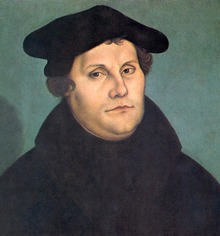
Martin LutherMartin Luther was asked the ordination question, as he broke with the Catholic Church; seen as the new pope of Protestantism, Luther was often challenged with “Who is your covering?” His response was to appeal to the priesthood of the believer (1 Peter 2:5). And that GODLY ORDINATION IS IDEAL, BUT NOT ALWAYS POSSIBLE, ESPECIALLY IN TIMES OF APOSTASY, like Luther was in. In Concerning the Ministry, Luther said:

We are interested in the pure and true course, prescribed in holy Scripture, and are little concerned about usage or what the fathers have said or done in this matter. We have already sufficiently made clear that herein we neither ought, should, nor would be bound by human traditions, however sacred and highly regarded, but clearly exercise our reason and Christian liberty…the Roman bishops laid on you the hard and dire necessity of sending your clerics annually to Italy to purchase papal ordination. For your neighboring bishops would not at all condescend to ordain them, since they considered you obstinate heretics. And what inconvenience and danger this need has caused you!…so that not a single one of you can ever rejoice in good conscience that you have entered the sheep-fold by the door [John 10:1]…Surely if in this way two, three, or ten homes, or a whole city, or several cities agreed thus among themselves to live in faith and love by the use of the gospel in the home, and even if no ordained man, shorn or anointed, ever came to them or in any other way was placed over them as minister to administer the Eucharist and other sacraments, Christ without a doubt would be in their midst and would own them as his church…For if he lives in the Word and has the Word, he is able to forego all else in order to avoid the teachings and ministries of impious men…In this regard we follow the custom and law of the Jewish captives who were not able to be in Jerusalem or to make offering there. Upheld in their faith alone by the Word of God they passed their lives among enemies while yearning for Jerusalem…But now, thanks be to God, this condition is grievous and inevitable only in the ease of the weak and over-scrupulous. The others who have faith and know the truth, possess full freedom and means to drive away unworthy ministers and to call and appoint only such worthy and devout men as they choose.

This is only a sampling; read the rest and look at his powerful Scriptural reasonings. There are basically two conclusions to come to:

1. In times of reformation and revival, it is ideal to have a man of God commission and ordain ministers, with the laying on of hands, as we see in the Gospels and the Book of Acts. We see this in the case of John Wesley ordaining preachers during his revivals; and no doubt, with the non-conformist Puritans like Richard Baxter; many of the early Pentecostal missions probably operated in similar fashion. William J. Seymour himself was disowned by the Apostolic Faith Movement, as Charles Parham, who ordained him, tried to take over the mission and stop the Azusa Street Revival in November 1906 [see Cecil Robeck’s The Azusa Street Mission and Revival, p. 127].

2. In times of apostasy, it is only necessary to rely on faith alone in the Gospel, which automatically ordains you in the priesthood of all believers (1 Peter 2:5). In today’s times, with the Seeker-Sensitive Movement, I would conclude that apostasy is the norm; and revival is not normal in most ministries. Those who feel called to preach and called by God to the ministry, would do well to acknowledge that they are already ordained to the ministry and commissioned by Christ by their faith in Him. They have no need to compromise the gospel, nor defile their consciences, by seeking ordination from an ungodly minister or church.

This is the difference between having faith in a church organization versus having faith in God alone who calls men to do what He wants.

Posted in Uncategorized | Leave a comment

The John Wimber Collection – Regent University Library

Taken from here. This is just a sample. Click the link and use the index on the left.

—–

RECORDS OF JOHN WIMBER COLLECTION  
     
  CONTAINER LIST                      
           
  Container Contents                    
                         
  Box 1: [conference binder] HOLINESS unto the Lord  
          Ottawa, Canada; Sept. 30 – Oct. 3, 1991  
          Sydney, Australia; Oct 22 – 25, 1991  
          Wellington, New Zealand; Oct. 29 – Nov. 1, 1991  
       
    [binder] Victorious Church / Facing the ’90s at Wales & Edinburgh  
             
    [binder] REVIVAL MISC. and HOLINESS MISC.  
       
    [folder] Articles about John Wimber, International (About JRW) 2 of 2  
          “John Wimber and the Vineyard Ministries” by F.V. Scott.  [n.d.]  
          “Pentecostalism goes middle class” The Times Monday 15, 1985  
          “Who is John Wimber?” by Dot Mitchell  
          “Of Wimber & Wonders” Grant Wacker The Reformed Journal  
      Volume 37, Issue 4  April 1987  
          “Signs and Wonders in New Orleans.”  by Julia Duin. Christianity  
      Today.  Nov. 21, 1986.  
          “Revival – Why It Really Tarries” Chris Brain and Robert Warren  
      Renewal March 1991 (UK)  
          “Hodder Fodder” [book review] Christian Herald Nov. 1988  
          “Wimber Defends Revival Prophecy”  
          “John Wimber When Cancer Strikes the Healer” Christianity  
      Nov. 1996  
          “Signs and Wonders” The Covenant Companion.  Paul E. Larsen  
      Oct. 1987.  
          “An Evangelical Pastor Discovers the Healing Ministry: An Interview  
      with John Wimber” [p. 97, 108-110] and “Signs, Wonders, and Wimber.” [98, 110]  From the Editor.  Pastoral Renewal.  Feb. 1985, Vol. 9, No. 7  
          “John Wimber Founder of the Vineyard Movement Dies” Kairos  
      Vol. 1, No. 28, Nov. 1997.  
          “‘Wimber on Healing’ by Henry Dixon.”  Paper by Peter Davids  
      [review of a review] [4 pages]  
          “Let God Be God” John Wimber Conference ’88 Equipping the  
      Saints  
          “Ian, here is a sample of some of the comments that have come in –  
      these 3 issues particularly came up a lot.  
      Lynette, I have replied to each of these people.”  [4 letters]  
          “A Report on John Wimber’s Power Healing Conference in  
      Melbourne From Geoff Holland, Editor of the Victorian Baptist Witness Newspaper.”    Geoff Holland.  [n.d.] [8 pages]  
       
          [correspondence] John Lindell & Associates Northwood  
      Distributing  to John Wimber.  [n.d.]  
          “Praise Without Reservation” Renewal.  Jan. 1993  
          “Tasting the Vineyard’s New Wine: A Tough, But Gentle Assessment  
      of ‘Signs and Wonders.'”  Dr. Philip Collins.  April 1987.  
             
    [binder]  What the Holy Spirit is Saying to the Church (at Perth, 1990)  
           – And — TBN God’s Call for the ’90s.  
             
    “Healing: Models and Methodology” Vol. 4.  Pastor John Wimber,  
          Vineyard Christian Fellowship, Seminar Series.  Vineyard Christian Fellowship.  
             
    [binder]  Church Growth w/: – Victorious Church, – Facing the ’90s w/  
          overheads (in color).  
       
    [binder]  What the Holy Spirit is Saying…/ Facing the ’90s / Church in the ‘  
          90s Syllabus  
       
    [folder]  Contracts, various Wimber books.  
       
    Signs and Wonders and Church Growth.”  John Wimber.  Vineyard  
          Ministries International  Placentia, CA U.S.A.  1984.  
             
    Equipping the Saints  
      Volume  1, Number 2, March/April 1987 [2 copies]  
      Volume  1, Number 3, May/June 1987 [2 copies]  
      Volume  1, Number 4, July/August 1987 [2 copies]  
      Volume  1, Number 5, September/October 1987 [2 copies]  
      Volume  2, Number 1, Winter 1988 [2 copies]  
      Volume  2, Number 3, Summer 1988 [2 copies]  
      Volume  2, Number 4, Fall 1988 [1 copy]  
      Volume  3, Number 1, Winter 1989 [1 copy]  
Volume  3, Number 4, Fall 1989 [1 copy]
Volume  4, Number 3, Summer 1990 [2 copies]
Volume  4, Number 4, Fall 1990 [1 copy]
Volume  5, Number 1, Winter 1991 [2 copies]
Volume  5, Number 2, Spring 1991 [3 copies]
      Volume  5, Number 3, Summer 1991 [2 copies]  
Volume  6, Number 1, Winter 1992 [3 copies]
Volume  6, Number 2, Spring 1992 [1 copy]
Volume  6, Number 3, Summer 1992 [1 copy]
Volume  6, Number 4, Fall 1992 [1 copy]
Volume  7, Number 2, Spring 1993 [1 copy]
      Volume  7, Number 3, Summer 1993 [1 copy]  
Volume  7, Number 4, Fall 1993 [2 copies]
First Quarter 1994 [2 copies]
Second Quarter 1994 [1 copy]
Fall 1994 [1 copy]
Volume  8, Number 1, Winter 1994 [2 copies]
      Fourth Quarter 1994 [1 copy]  
First Quarter 1995 [1 copy]
Second Quarter 1995 [1 copy]
Third Quarter 1995[1 copy]
Second Quarter 1996 [1 copy]
Third Quarter 1996 [1 copy]
       
    Equipping the Saints  “Kinships” by John Wimber and Sam Thompson  
         
    nfimagazine / The New Frontiers International Magazine  
      Issue No. 1, Winter 1998  
       
    Renewing Australia June 1987, Number 6 “John Wimber Edition”  
       
    Frontline International March/April 1993  
       
    On Being February 1988  
       
    On Being February 1989  
       
    First Fruits Vineyard Ministries International  Sept.-Dec. 1986  
         
                         
  Box 2: [box of cereal, joke]  Kellogg’s Vineyard Grapenuts.  
       
    New Vision for Today’s Christian Vol. XII, No. 5, John Wimber  
      “Discovering New Power for Evangelism” p. 3-6.  
       
    SA Vernuwing SA Renewal Vol. 9, No. 1, John Wimber  
      “Jesus and the Kingdom of God” p. 10-14.  
       
    SA Vernuwing SA Renewal Vol. 9, No. 6, Nov./Dec. 1986, John  
      Wimber.  “Push Forward the Kingdom” p. 8-9  
       
    SA Renewal SA Vernuwing Vol. 10, No. 1, Jan./Feb. 1987, John  
      Wimber.  “Faith and Deeds: A Match Made in Heaven” p. 6-8.  
       
    SA Renewal, Nov./Dec. 1986, stapled to First Fruits, July 1985 “Push  
      Forward the Kingdom”  
       
    Hechos Volumen 11, Numero 6, Septembre/Octobre 1987, “Despegue  
      Hasta Los Tres Mil En Cinco Anos” por John Wimber, p. 2-5; 18-23.  
       
    Hechos Volumen 11, Numero 7, Noviembre/Diciembre 1987, “El  
      Siguiente Paso” p. 18-21.  
       
    Equipped/eQ. Volume 1, Issue 1  
       
    Equipped/eQ. Volume 1, Issue 2.  October 1998.  
       
    VOV / Voice of the Vineyard.  Winter 1998.  
       
    “Reflections on the Ministry of John Wimber and His Team in New  
      Zealand August 1986; a discussion paper.”  Humphrey Babbage, General Secretary.  
       
    Eternity.  July/August 1987, Vol. 38, No. 7/8.  “Powerfully Misleading,”  
      commentary by Walt Chanty  
       
    “Let the River Flow.”  [conference] Syllabus and General Information.  
      1996.  Vineyard Ministries International.  
       
    The Reformed Journal.  Vol. 37, No. 6,  June 1987.  “Rallying Around  
      Wimber” on cover, “Wimber and Wacker” inside.  
       
    Reaching a New Generation; Strategies for Tomorrow’s Church.  Alan  
      J. Roxburgh.  InterVarsity Press, “The Vineyard Movement,” p. 117-121.  
       
    Aufatmen. Nr. 1/97.  “Zeichen, Wunder & Krebs.”  Von John Wimber,  
      p. 50-52.  
       
    Gemeinde-Wachstum.  Heft 3/1987, p. 20.  
       
    C-Magazin.  No. 1, 30 September 1987.  John Wimber.   
      “Beeindruckende Ehrlichkeit.” p. 36.  
       
    Worship Together.  Issue 10, 4th Quarter, 1994.  “The Musician in  
      Revival” [interview with John Wimber by Stuart Townsend]  
       
    Health & Healing.  Easter May 6, 1987.  No. 15.  “Healing is  
      Wholeness; Impact of John Wimber.”
Posted in Uncategorized | Leave a comment

Quiet Time

Into the foggy mist of life
Finding comfort in the Spirit
Escaping malice and strife
Lifting my soul in quiet prayer

Pushing outward cares away
Staring at the face of Jesus
Representations from the Spirit
Appearing to my mind in prayer

“I love you,” a caring voice
Just a reminder from my Maker
And punishments for my sins
But they’re from my Father

The mist of the Holy Spirit
Surrounding, comfort
Upon me now, a blanket of peace
Awareness of God in silent prayer

Devils interfering
Crazy voices; fearful monsters
Spirits of whoredoms
A neverending fight against me

In prayer, the cross
And the Name of Jesus
Is power enough
To shoo all of these flies away

All I need to say is “Jesus”
His Spirit comes near
By degrees I feel Him
It’s up to me how long I’ll stay

A quarter hour
Is all I need
To break on through
To the other side

And when I get there
I’ll find Him waiting
Speaking words of wisdom
And comfort and care

If I press in for a total hour
I’ll fight with all my enemies
But it’s good to know that Jesus
Will cast them out with all their lies

Lifting up a song of worship
Praising God in Spirit and truth
I’m locked all alone inside my room
Seeing God and receiving His Spirit

Posted in Uncategorized | Leave a comment

The Excitement of Renewing Your Pentecostal Prayer Life

When you pray, go into your room, close the door and pray to your Father, who is unseen. Then your Father, who sees what is done in secret, will reward you.      –Mt. 6:6

If you have ever gone through months or even years of not having a disciplined Bible study and prayer life–then let me tell you: it can be exciting if you find yourself renewing it. I am going through such a season; and an “open heaven” of sorts is occurring; I’m getting a lot more presence, and dreams, and visions, and voices from God. And I’d like to share about how this has happened. But first I will share how a spirit of prayerlessness got a hold of me, so you can ward it off in Jesus’ Name.

1. Prayerlessness enters through spiritual confusion and discouragement. It does not enter through unbelief, as may be suspected. Unbelief is too serious, and results in backsliding and apostasy and loss of salvation (Heb. 3:12). Prayerlessness, however, can influence the believer, who is still persevering in sainthood, practical obedience to the moral law, etc. In other words, it is totally possible for prayerlessness to enter into a Christian’s life who is otherwise preoccupied with his work ethic and a generally ethical relationship with God. Prayerlessness does not mean backsliding or loss of salvation, but it does mean losing a lot of the charismatic aspects of Christian life: a great decrease of feeling God’s presence, dreams, visions, and the voice of God. It is not a state of apostasy, but is definitely a degree of spiritual depression. I’ll tell you how it entered my life; and I hope to never give it leeway again! In 2009 I finished my first manuscript on charismatic prayer life, called How to Experience God; it almost reached a total of 400 pages! If I plan on getting it published, I think I’m going to have to downsize it to 200 pages or something; but all I’m saying is, that all of that came out of a disciplined prayer life I developed in college. Then something happened. What was it? 1. Confusion About Ministry. When I got married, I was spiritually confused about what church and ministry were. A lot of my prayer life in college came from a pressure to be holy and becoming a minister; it also came from a hunger to receive divine revelation from the Holy Spirit so I could share it with others. In other words, a lot of it was ministry-driven. But we were wed by a minister with a Church of Christ background who was a “house church only” guy; and he urged us to avoid any type of ministry that was not an independent, non-denominational house church. Frank Viola’s Pagan Christianity, he argued, sufficiently proved that preaching sermons as a pastor is not Biblical! Because of this, I figured, “Well there’s no reason to have a disciplined prayer life anymore; I’m not called to be a prophet between God and man, or an intercessor, so there is no point. I’ll just focus on my work ethic and an evangelical relationship with God.” 2. Discouragement About Preaching. But I still had a strong desire to preach; I was like Jeremiah, who had given up on preaching, “But His Word was in my heart like a burning fire shut up in my bones; I was weary of holding it back, and I could not” (20:9). Eventually we geographically distanced ourselves from the “house church only” minister, although we still have some level of respect for him. I took to more regular open air preaching in 2010; and when I could, I kept preaching. I had a dream of Steve Harper’s The Way to Heaven; and after that, I started studying Wesleyan soteriology; and I sharpened my Gospel presentation every time I went out street preaching; resulting in a gospel of “repentance, faith in the cross for substitutionary punishment and moral influence, justification for the forgiveness of sins, and regeneration as the desire for holiness”; this gospel saves men from eternal punishment in Hell; and results in a life of Biblical good works. Romans 3-8 is now always my core text when street preaching.

2. Returning faith in true Pentecostal church ministry. Up until the end of 2014, I remained confused and discouraged about involvement with pulpits, pastors, and denominations. But I was starting to warm up to the idea again. I thought, “What if there are exceptions to the seeker-sensitive apostasy in the churches?” And this thought kept me wondering. You see, a lot of the house church movement seems to be an overreaction to the spiritually immature ministry approach of the seeker-sensitive movement in traditional churches. But independent house churches are also a very invisible and not so much an evangelistic movement; they are not so great on theological depth either. Watchman Nee is about as deep as they get, which is pretty deep; but that’s about it. After looking for ministry opportunities with a Christian & Missionary Alliance church, and asking the pastor a lot of annoying questions–I found he was a bit more devout than other ministers I’d seen, but he was ultimately seeker-sensitive, and he rejected my views of salvation; seeing them as too offensive to talk about. He only wanted to talk about “the love of God” and how it doesn’t matter what ungodly movies you watch and what carnality is in your life, because we’re all sinners. God loves you; nothing can separate you from God’s love, etc, etc. It was cheap love and cheap grace for sure; and he rejected my view that God’s love starts at the cross (Rom. 5:8)–that we love Him because He first loved us and died on the cross for us while we were yet sinners: see my article “The Christian’s Love for His Neighbor.” But because this view was too “controversial” he rejected my view–and fell back into his simple view of “God loves you” regardless, and refused to keep sin, righteousness, and judgment in his ministry scope (John 16:8). After this emotionally painful ordeal, I drew the conclusion that most churches are seeker-sensitive, but especially denominations. It is usually in their best financial interests to take such a stance. Being in that church did nothing good for my spiritual health; in fact, it made me even more spiritually discouraged, depressed, and disappointed with pastors. But I had a dream that I was involved with a small black Pentecostal church; and that I would be one of the “church’s street preachers!” From that point on, I sought out small black storefront Pentecostal churches. I found a good one in Fayetteville, NC across from Methodist University; and the pastor was a prophet, who read my mail and strongly encouraged my faith. But we could only stay there for a short time because a new job opportunity opened up from me in another town.

3. The return to a disciplined Pentecostal prayer life. In the past 3 months or so, I found a great storefront Pentecostal church. I believe the storefronts are usually closer to Holy Spirit revival than a lot of other places; it seems to keep the pastors humble and more focused on the spiritual life; and also, seems to have more of a hole-in-the-wall Azusa Street feel. Blacks, whites, and Hispanics are all present. The pastors are prophets; have read my mail; and they preach sin, righteousness, and judgment; as well as love, grace, and the presence of God. I haven’t experienced such a revival in church in years. The pastor encouraged me to renew a disciplined prayer life; he said this is the only way to start feeling the presence of God again during the praise and worship service. Now I am practicing contemplative prayer every evening for 15 minutes to an hour. I’m also studying the Bible more, because a prophet said the more you study, the more accurate your words of knowledge will be (a view that incidentally agrees with Benedict XIV in Heroic Virtue, vol 3). My spiritual journal composition notebook is starting to have more divine dreams, voices, etc in them. Because I am choosing to draw near to God–He, in turn, is drawing near to me–in his presence, dreams, visions, voice, and signs in the day (James 4:8).

Conclusions.

Church – Keep it storefront, make sure black people are there, keep it Pentecostal/charismatic, make sure the pastor is a prophet (gets words of knowledge), preaches on sin, righteousness, and judgment, Hell, etc. Doesn’t just encourage but also urges and warns (exhorts) (1 Cor. 14:3, KJV); and casts out demons. If you haven’t found a church like this, then keep looking until you do. You will die if you look anywhere else.

Prayer Life – Set your alarm in the morning or evening for a prayer time to remind you. Sit or lay prostrate for at least 15 minutes to listen to the Holy Spirit; look unto Jesus (Heb. 12:2); look for inner visions; write the visions and make them plain on tablets, in your journal (Habukkuk 2:2); and don’t ever, ever stop doing this.

Further Reading on the Pentecostal/Charismatic Prayer Life

How to Experience God. (charismatic)

Bounds, E. M. The Complete Works of E. M. Bounds on Prayer. (holiness/Methodist)

Brandt, R. L. The Spirit Helps Us Pray (GPH/Assemblies of God)

Foster, Richard. Prayer. (charismatic)

—–. Celebration of Discipline. (charismatic)

Goll, James. Wasted on Jesus. (charismatic)

—–. The Prophetic Intercessor. (charismatic)

Murray, Andrew. Andrew Murray on Prayer. (holiness)

Prince, Derek. The Secrets of a Prayer Warrior. (charismatic)

Warner, Wayne, ed. The Essential Smith Wigglesworth. (Pentecostal)

Wilkerson, David. Hungry for More of Jesus. (Pentecostal)

Wimber, John. Power Points. (charismatic)

Posted in Uncategorized | Leave a comment

Tips to Plan for a Revival Event

1. Cooperative Revival Event Among Pastors and the Evangelist. John R. Rice said in We Can Have Revival Now! (1950), “I feel a cooperative or union campaign, when churches and pastors officially set out to work together in soul-winning efforts, is much, much better than an independent revival campaign where an evangelist comes in and makes independent plans and preaches the gospel. Better independent campaigns than none at all, of course, and better a few saved than none. But the greatest revival results have always depended somewhat on how many people of God, the born-again, Bible believers, one could enlist in the same prayer and effort.”

2. Schedule the Revival Event on a Public Calendar. All churches involved should let their congregations know the date, time, and place of the event. The evangelist should have a calendar or itinerary of revival events on his website as well.

3. All Pastors Contribute a Little Money to the Revival Event.

4. Evangelist Contributes Money to the Revival Event.

5. Organize Prayer Teams for the Revival Event.

6. Organize Greeters, Ushers, Parking Lot Attendants, Nursery Workers, and Prayer Ministers/Altar Workers for Altar Calls.

7. Organize a Praise and Worship Team for 15-30 Minutes of Worship (Evangelist Should Specify Songs–Hillsong, Robin Mark, Isaac Watts, hymns, etc).

8. Ask Attendees to Bring a Friend to the Revival Event.

9. Pass Out Contact Information Cards for Attendees to Fill Out–Leave a Check Box if They Would Like Follow-Up on the Evangelist’s Mailing List.

10. Evangelist should remind attendees that they can choose to attend any of the fine churches who were involved in promoting this revival.

11. Use Free Advertising: Radio stations, cable channels, newspapers, local advertising papers, etc.

12. Use Paid Ads.

13. Advertise the Revival Event In At Least 6 Ways: TV, Radio, Newspaper, Flyers, Newsletters, Bulletins, Announcements, Pastors Announce the Event.

14. The Leading Pastors Introduce the Evangelist; and at the End of the Event, the Evangelist Redirects the People Back to the Pastors.

15. The Evangelist Should Act on Mark 16:15-20:

(1) Preach the Gospel and Baptize Converts (there should be clothing set aside for this).
(2) Lay Hands on People* for Spirit-Baptism and Speaking in Tongues.
(3) Lay Hands on People (hands or shoulder) and Share Inner Visions or Words.
(4) Lay Hands on the Sick and Pray for Their Healing.
(5) Lay Hands on the Demonized and Pray for Their Deliverance.

*The evangelist’s wife should pray for the women and girls.

—–

Most of this article is based on Marvin R. Dennis, Appalachian District Superintendent of the Assemblies of God, “Preparing for Revival.”

Posted in Uncategorized | Leave a comment

6 Common Sins in Churches

From my observation, the following are 6 common sins I see in churches, both among conservative evangelical and Pentecostal/Charismatics:

1. Immodesty. With the divorce rate climbing past 50% it is no wonder that sexual immodesty would find its way into our church services, which is not only inviting men to look at a woman with lust (Matt. 5:28), and commit visual adultery in the heart, but is a great distraction from praise, worship, or prayer, to those in the pew and pulpit alike. It should go without saying that women should not dress seductively when they go to church. It’s a church folks, not a bar.

2. Movies. I am surprised how casual pastors and their elders are about movies. They are supposed to set a holy example, but to refer to movies without any qualifications or conditions, or sense of censorship, is basically like giving an endorsement to ALL movies, to those who might not watch every single movie they watch. Hollywood pollutes the thought lives of millions, and apparently church leaders are going right along with them, rather than crying out against the vile sexuality, obscene language, and over-the-top violence that fills the thoughts of their church members every week (Col. 3:8). Then its time to dress up in your fancy-go-meeting clothes; and go to church. I don’t see how 90% of the movies produced every month can be anything but contrary to a holy life. “Whatsoever things are pure, think on these things” (Php. 4:8).

3. Beach, Pool, etc. Again on the sexual immodesty bandwagon here. If you are serious about covering your body; and not watching sexual images every week in movies, the logical conclusion is, that like Joseph, you will run away from Potiphar’s wife (Gen. 39:12). The beach, the pool, and water parks, and other similar venues are filled with half-naked women; nobody will debate that. So again, I am unable to reconcile these “fun” activities with remaining “pure in heart” so you can see God (Matt. 5:8), and not boobs and woman flesh everywhere. Is it legalism to think this way? No, it’s just applying the Bible to your life.

4. Flattery. I find that some pastors say flattering things to church attendees, so they will want to come back, feel loved, feel they have a place (utility)–which usually means cleaning up trash–or being an usher–or something that does not involve preaching unless you are a “faithful” church member for 10 years. Proverbs 29:5: “A man who flatters his neighbor spreads a net for his feet.” Sometimes all people need is a flattering word or two to keep ’em coming (in a charismatic church, this may take the form of an “encouraging” prophetic word); that way the census of David which Satan roused him up to, can continue with the head-counting of the pastor (1 Chron. 21:1).

5. Not Preaching Against Sin. It’s what we call “seeker-sensitive” or not wanting to offend the church members; being “non-judgmental” is seen as walking in God’s grace, rather than preaching to deny ungodly lusts, or to walk soberly and righteously (Titus 2:12). Matthew 7:1: “Judge not or you too will be judged” is never taken in its cautious and sin-exacting context to verse 5 of that chapter. Anyone who does speak against sin is labeled a judgmental legalist (an un-Biblical term). So any “sensitive” grace and love is only surface deep; it never results in any meaningful, holy conversations (1 Peter 1:15). Demons, Hell, repentance, the blood of Jesus, the cross, sanctification, and holiness are all OFF LIMITS. Anything but that! And they will find something to preach about, so long as it’s not about such things.

6. No Street Preaching. A “seeker-sensitive” view of ministry also means there will be no street preaching on the Gospel. It will be one-on-one “relationships” and telling others that God loves them, but the Gospel will not really be preached. It will involve talking, and praying, and just inviting people to your church. The Book of Acts is sufficient to testify against this.

Posted in Uncategorized | Leave a comment