They whom God hath accepted in his Beloved, effectually called, and sanctified by his Spirit, can neither totally nor finally fall away from the state of grace, but shall certainly persevere therein to the end, and be eternally saved. This perseverance of the saints depends not upon their own free will, but upon the immutability of the decree of election, flowing from the free and unchangeable love of God the Father, upon the efficacy of the merit and intercession of Jesus Christ, the abiding of the Spirit and of the seed of God within them, and the nature of the covenant of grace; from all which ariseth, also, the certainty and infallibility thereof.
Nevertheless, they may, through the temptation of Satan and the world, the prevalency of corruption remaining in them, and the neglect of the means of their preservation, fall into grievous sins, and for a time continue therein; whereby they incur God’s displeasure, and grieve his Holy Spirit, and come to be deprived of some measure of their graces and comforts, have their hearts hardened, and their consciences wounded, hurt and scandalize others, and bring temporal judgments upon themselves. (Westminster Confession, ch. 17)
The perseverance of the saints is one of the articles by which the creed of the followers of Calvin is distinguished from that of the followers of Arminius. The latter hold, that true believers may fall into sins inconsistent with a state of grace, and may continue in apostasy to the end of life; and consequently, may finally fall into perdition. In opposition to this tenet, our Confession affirms, that true believers can neither totally nor finally fall away from a state of grace, but shall certainly persevere therein to the end, and be eternally saved. We affirm, that the total apostasy of believers is impossible, not in the nature of things, but by the divine constitution; and, consequently that no man, who has been once received into the divine favor, can be ultimately deprived of salvation. (Robert Shaw’s An Exposition of the Westminster Confession of Faith).
As the grace of God, which is conceived to derive its efficacy from his power of fulfilling his purpose in those for whom it is destined overcomes all the opposition with which it is at first received, so it continues to be exerted amidst all the frailty and corruption which adhere to human nature in a present state. It is not exerted to such a degree as to preserve any man from every kind of sin; for God is pleased to teach Christians humility, by keeping up the remembrance of that state out of which they were delivered, and to quicken their aspirations after higher degrees of goodness, by leaving them to struggle with temptation, and to feel manifold infirmities. But, although no man is enabled, in this life, to attain to perfection, the grace of God preserves those to whom it is given from drawing back to perdition. The doctrine of the perseverance of the saints flows necessarily from that decree by which they were, from eternity, chosen to salvation, and from the manner in which, according to the Calvinistic system, the decree was executed; and all the principles of the system must be renounced, before we can believe that any of those for whom Christ died, and who, consequently, became partakers of his grace, can fall from that grace, either finally–by which is meant, they shall not, in the end, be saved–or totally–by which is meant, that they shall, at any period of their lives commit sins so heinous and presumptuous, and persist in them so obstinately, as, at that period, to forfeit entirely the divine favor. (George Hill’s Lectures in Divinity, pages 215-216).
Upon this subject professed Christians are divided in sentiment, as, indeed, they are upon every article of faith. The doctrine of our Church, in which I believe all the reformed Churches concurred, is expressed in the following words: “They whom God hath accepted in the Beloved, effectually called, and sanctified by his Spirit, can neither totally nor finally fall away from the state of grace, but shall certainly persevere therein to the end, and be eternally saved. (John Dick’s Lectures on Theology, vol 2, p. 283).
We assert, then, that true believers cannot fall totally or finally; but they are intended to oppose the doctrines of Arminians, who affirm, that although a saint may fall totally from grace, he may be restored by repentance: but, since this is uncertain, and not always take place, he may, also, fall finally, and die in his sins. Now we affirm, that the total apostasy of believers is impossible, not in the nature of things, but by the divine constitution: and, consequently. that no man, who has been received into the divine favor, can be ultimately deprived of salvation. God doth continue to forgive the sins of those who are justified; and, although they can never fall from the state of justification, yet they may, by their sins, fall under God’s fatherly displeasure, and not have the light of his countenance restored unto them until they humble themselves, confess their sins, beg pardon, and renew their faith and repentance. (John Dick’s Lectures on Theology, vol 2, p. 284).
As justification is an act completed at once, so those who are justified cannot come into condemnation. The sins which they afterward commit, cannot revoke the pardon which God has graciously given them; but they may subject them to his fatherly displeasure and temporary chastisement. Here we must revert to the well-known distinction between judicial and fatherly forgiveness. Though God, in the capacity of a judge, pardons all the sins of believers in the most free and unconditional manner, in the day of their justification, yet that forgiveness, which, as a father, he bestows upon his justified and adopted children, is not in general vouchsafed, without suitable preparation on their part for receiving and improving the privilege. (Robert Shaw’s Exposition).
May not true believers, by reason of their imperfections, and the many temptations and sins they are overtaken with, fall away from the state of grace? (Westminster Larger Catechism, Question 79).
True believers, by reason of the unchangeable love of God, and his decree and covenant to give them perseverance, their inseparable union with Christ, his continual intercession for them, and the Spirit and seed of God abiding in them, can neither totally nor finally fall away from the state of grace, but are kept by the power of God through faith unto salvation.
For thus saith the Lord: “When the righteous turneth away from his righteousness and committeth iniquity, in his trespass that he hath trespassed, and in his sin that he hath sinned, in them shall he die.” (Ezekiel 18:24) That this is to be understood of eternal death appears from the twenty- sixth verse: “When a righteous man turneth away from his righteousness and committeth iniquity, and dieth in them [here is temporal death], for his iniquity that he hath done he shall die [here is death eternal].”
It appears, farther, from the whole scope of the chapter, which is to prove, “the soul that sinneth, it shall die.” (verse 4)
If you say, “The soul here means the body,” I answer, “That will die whether you sin or no.”
Again, thus saith the Lord: “When I shall say to the righteous that he shall surely live, if he trust to his own righteousness [yea, or to that promise as absolute and unconditional] and commit iniquity, all his righteousness shall not be remembered; but for the iniquity that he hath committed shall he die.” (33:13)
Again: “When the righteous turneth from his righteousness, and committeth iniquity, he shall even die thereby.” (verse 18)
Therefore, one who is holy and righteous in the judgment of God himself may yet fall as to perish everlastingly.
But how is this consistent with what God declared elsewhere? “If his children forsake my law, and walk not in my judgments, I will visit their offenses with the rod and their sin with scourges. Nevertheless, my loving kindness will I not utterly take from him, nor suffer my truth to fail. My covenant will I not break, nor alter the thing that is gone out of my lips. I have sworn once by my holiness, that I will not fail David.” (Psalm 89:30-35)
I answer, “There is no manner of inconsistency between one declaration and the other.” The prophet declares the just judgment of God against every righteous man who falls from his righteousness. The Psalmist declares the old loving kindnesses which God sware unto David in his truth. “I have found,” saith he, “David, my servant; with my holy oil have I anointed him. My hand shall hold him fast, and my arm shall strengthen him. His seed, also, will I make to endure forever, and his throne as the days of Heaven.” (verses 20, 21, 29.) It follows: “‘But if his children forsake my law, and walk not in my judgments, nevertheless, my loving kindness will I not utterly take from him, nor suffer my truth to fail. My covenant will I not break. I will not fail David. His seed shall endure forever, and his throne as the sun before me.” (verse 30, &c)
May not every man see, that the covenant here spoken of relates wholly to David and his seed or children? Where, then, is the inconsistency, between the most absolute promise made to a particular family, and that solemn account, which God has here given, of his way of dealing with all mankind.
Beside, the very covenant mentioned in these words is not absolute, but conditional. The condition of repentance, in case of forsaking God’s law, was implied, though not expressed; and so strongly implied, that, this condition failing–not being performed, God did also fail David. He did “alter the thing that had gone out of his lips,” and yet without any impeachment of his truth. He “abhorred and forsook his anointed,” (verse 38) the seed of David, whose throne, if they had repented, should have been “as the days of Heaven.” He did “break the covenant of his servant, and cast his crown to the ground.” (verse 39) So vainly are these words of the Psalmist brought to contradict the plain, full testimony of the prophet!
Nor is there any contradiction between this testimony of God by Ezekiel, and those words which he spake by Jeremiah: “I have loved thee with an everlasting love; therefore, with loving kindness have I drawn thee.” For do these words assert, that no righteous man ever turns from his righteousness? No such thing. They do not touch the question, but simply declare God’s love to the Jewish Church. To see this in the clearest light, you need only read over the whole sentence: “‘At the same time,’ saith the Lord, ‘I will be the God to all the families of Israel, and they shall be my people.’ Thus saith the Lord, ‘The people which were left of the sword found grace in the wilderness; even Israel, when I caused him to rest.'” “The Lord hath appeared of old unto me,” saith the prophet, speaking in the person of Israel, “saying, ‘I have loved thee with an everlasting love; therefore, with loving kindness have I drawn thee. Again I will build thee and thou shalt be built, O virgin of Israel.'” (31:1-4).
Suffer me here to observe, once for all, a fallacy which is constantly used by almost all writers on this point. They perpetually beg the question, by applying to particular persons assertions or prophecies which relate only to the Church in general, and some of them only to the Jewish Church and nation, as distinguished from all other people.
If you say, “But it was particularly revealed to me, that God had loved me with an everlasting love.” I answer, “Suppose it was–which might bear a dispute. It proves no more at the most than that you in particular shall persevere; but does not affect the general question, whether others shall or shall not.”
Secondly, one who is endued with the faith that purifies the heart–that produces a good conscience, may, nevertheless, so fall from God as to perish everlastingly.
For thus saith the inspired apostle: “War a good warfare; holding faith and a good conscience; which some having put away, concerning faith have made shipwreck.” (I Timothy 1:18, 19)
Observe first: these men [such as Hymenaeus and Alexander] had once the faith that purifies the heart–that produces a good conscience; which they once had, or they could not have “put it away.”
Observe second: they “made shipwreck” of the faith, which necessarily implies the total and final loss of it; for a vessel once wrecked can never be recovered; it is totally and finally lost.
And the Apostle himself in his second Epistle to Timothy mentions one of these two as irrecoverably lost. “Alexander,” says he, “did me much evil: the Lord shall reward him according to his works.” (II Timothy 4:14) Therefore, one who is endued with the faith that purifies the heart–that produces a good conscience, may, nevertheless, so fall from God as to perish everlastingly.
“But how can this be reconciled with the words of our Lord, “He that believeth shall be saved?”
Do you think these words mean, “He that believes” at this moment “shall” certainly and inevitably “be saved?”
If this interpretation be good, then by all the rules of speech, the other part of the sentence must mean, “He” that does “not believe” at this moment “shall” certainly and inevitably “be damned.”
Therefore, that interpretation cannot be good. The plain meaning, then, of the whole sentence is, “He that believeth,” if he continue in faith, “shall be saved; he that believeth not,” if he continue in unbelief, “shall be damned.”
“But does not Christ say elsewhere, “He that believeth hath everlasting life?” (John 3:36) and, “”He that believeth on Him that sent me hath everlasting life, and shall not come into condemnation; but is passed from death unto life?”‘ (John 5:24)
I answer, 1. The love of God is everlasting life. It is in substance the life of Heaven. Now, everyone that believes, loves God and, therefore, “hath everlasting life.”
2. Everyone that believes, “is,” therefore, “passed from death”–spiritual death–“unto life,” and
3. “Shall not come into condemnation,” if he endureth in the faith unto the end. According to our Lord’s own words, “He that endureth to the end shall be saved;” and, “Verily, I say unto you, If a man keep my saying, he shall never see death.” (John 8:51)
Thirdly, those who are grafted into the good olive tree, the spiritual, invisible Church, may, nevertheless, so fall from God as to perish everlastingly.
For thus saith the apostle: “Some of the branches are broken off, and thou art grafted in among them, and with them partakest of the root and fatness of the olive tree. Be not high-minded, but fear: if God spared not the natural branches, take heed lest he spare not thee. Behold the goodness and severity of God! On them which fell severity; but toward thee, goodness, if thou continue in his goodness; otherwise thou shalt be cut off.” (Romans 11:17, 20-22)
We may observe here, 1. The persons spoken to were actually grafted into the olive tree.
2. This olive tree is not barely the outward, visible Church, but the invisible, consisting of holy believers. So the text: “If the first fruit be holy, the lump is holy; and if the root be holy, so are the branches.” (verse 16) And, “Because of unbelief, they were broken off, and thou by faith.”
3. These holy believers were still liable to be cut off from the invisible Church, into which they were then grafted.
4. Here is not the least intimation of those who were so cut off being ever grafted in again.
Therefore, those who are grafted into the good olive tree, the spiritual, invisible Church, may, nevertheless, so fall from God as to perish everlastingly.
But how does this agree with the twenty-ninth verse, “The gifts and calling of God are without repentance?”
The preceding verse shows: “As touching the election [the unconditional election of the Jewish nation], they are beloved for the fathers’ sake:” for the sake of their forefathers. It follows [in proof of this, that “they are beloved for their fathers’ sake,” that God has still blessing in store for the Jewish nation]: “For the gifts and calling of God are without repentance;” for God doth not repent of any blessings he hath give them, or any privileges he hath called them to. The words here referred to were originally spoken with a peculiar regard to these national blessings. “God is not a man that he should lie; neither the son of man that he should repent.” (Numbers 23:19)
“But do you not hereby make God changeable.” Whereas, “with him is no variableness, neither shadow of turning.” (James 1:17) By no means. God is unchangeably holy; therefore, he always “loveth righteousness and hateth iniquity.” He is unchangeably good; therefore, he pardoneth all that “repent and believe the Gospel.” And he is unchangeably just; therefore, he “rewardeth every man according to his works.” But all this hinders not his resisting, when they are proud, those to whom he gave grace when they were humble. Nay, his unchangeableness itself requires, that, if they grow high-minded, God should cut them off that there should be a proportionable change in all the divine dispensations toward them.
“But how then is God faithful?” I answer, “In fulfilling every promise which he hath made, to all to whom it is made–all who fulfill the condition of that promise.” More particularly, 1. “God is faithful” in that “he will not suffer you to be tempted above that you are able to bear.” (I Corinthians 10:13) 2. “The Lord is faithful, to establish and keep you from evil”–if you put your trust in him–from all the evil which you might otherwise suffer, through “unreasonable and wicked men.” (II Thessalonians 3:2, 3) 3. “Quench not the Spirit; hold fast that which is good; abstain from all appearance of evil; and your whole spirit, soul, and body, shall be preserved blameless unto the coming of our Lord Jesus Christ. Faithful is he that calleth you, who also will do it.” (I Thessalonians 5:19, &c. ) 4. Be not disobedient unto the heavenly calling; and “God is faithful, by whom ye were called, to confirm you unto the end, that ye may be blameless in the day of our Lord Jesus Christ.” (I Corinthians 1:8, 9) Yet, notwithstanding all this, unless you fulfill the condition, you cannot attain the promise.
“Nay, but are not ‘all the promises, yea and amen?'” They are firm as the pillars of Heaven. Perform the condition, and the promise is sure. Believe, and thou shalt be saved.
“But many promises are absolute and unconditional.” In many, the condition is not expressed. But this does not prove there is none implied. No promises can be expressed in a more absolute form, than those above cited from the eighty-ninth Psalm. And yet we have seen a condition was implied even there, though none was expressed.
“‘But there is no condition, either expressed or implied, in those words of St. Paul: “I am persuaded that neither death, nor life, nor height, nor depth, nor any other creature, shall be able to separate us from the love of God, which is in Christ Jesus our Lord.”‘ (Romans 8:38, 39)
Suppose there is not–which will bear a dispute–yet what will this prove? Just thus must: that the apostle was, at that time, fully persuaded of his own perseverance. And I doubt not but many believers, at this day, have the very same persuasion, termed in Scripture, ‘the full assurance of hope.’ But this does not prove that every believer shalt persevere, any more than that every believer is thus fully persuaded of his own perseverance.
Those who are branches of the true vine, of whom Christ says, “I am the vine, ye are the branches,” may nevertheless, so fall from God as to perish everlastingly.
For thus saith our blessed Lord himself, “I am the true vine, and my Father is the husbandman. Every branch in me that beareth not fruit, he taketh it away. I am the vine; ye are the branches. If a man abide not in me, he is cast forth as a branch, and is withered; and men gather them, and cast them into the fire, and they are burned.” (John 15:1-6.)
Here we may observe, 1. The persons spoken of were, in Christ, branches of the true vine. 2. Some of these branches abide not in Christ, but the Father takes them away. 3. The branches which abide not are cast forth–cast out from Christ and his Church. 4. They are not only cast forth, but withered; consequently, never grafted in again. Nay, 5. They are not only cast forth and withered, but also cast into the fire. And, 6. They are burned. It is not possible for words more strongly to declare, that even those who are now branches in the true vine, may yet so fall as to perish everlastingly.
By this clear, indisputable declaration of our Lord, we may interpret those which might be otherwise liable to dispute; wherein it is certain, whatever he meant beside, he did not mean to contradict himself. For example: “This is the Father’s will, that of all which he hath given him,” or, as it is expressed in the next verse, “everyone which believeth on him,” namely, to the end, “he ‘will raise up at the last day,'” to reign with him forever.
Again: “My sheep hear my voice, and I know them, and they follow me. And I give unto them eternal life: and they shall never perish, neither shall any pluck them out of my hand.” (John 10:27, 28)
In the preceding text the condition is only implied; in this, it is plainly expressed. They are my sheep that HEAR MY VOICE, that FOLLOW ME in all holiness. And “if ye do those things, ye shall never fall.” None shall “pluck you out of my hands.”
Again: “Having loved his own which were in the world, he loved them unto the end.” (John 13:1) “Having loved his own,” namely, the apostles–as the very next words, “which were in the world,” evidently show–“he loved them unto the end” of his life, and manifested that love to the last.
Once more: “Holy Father, keep through thine own name those whom thou hast given me, that they may be one, as we are one.” (John 17:11)
Great stress has been laid upon this text, and it has been hence inferred, that all those whom the Father had given him–a phrase frequently occurring in this chapter–must infallibly persevere to the end.
And yet, in the very next verse, our Lord himself declares, that one of those whom the Father had given him, did not persevere unto the end, but perished everlastingly.
His own words are, “Those that thou gavest me I have kept, and none of them is lost, but the son of perdition.” (John 17:12) [Judas Iscariot]
So one even of these was finally lost!–a demonstration that the phrase, “those whom thou hast given me,” signifies here, if not in most other places, too, the twelve apostles, and them only.
On this occasion, I cannot but observe another common instance of begging the question–of taking for granted what ought to be proved. It is usually laid down as an indisputable truth, that whatever our Lord speaks to or of his apostles, is to be applied to all believers. But this cannot be allowed by any who impartially search the Scriptures. They cannot allow, without clear and particular proof, that any one of those texts which related primarily to the apostles, as all men grant, belong to any but them.
Those who so effectually know Christ, as by that knowledge to have escaped the pollutions of the world, may yet fall back into those pollutions and perish everlastingly.
For thus saith the apostle Peter, “If after they have escaped the pollutions of the world, through the knowledge of the Lord and Savior Jesus Christ, [the only possible way of escaping them,] they are again entangled therein and overcome, the latter end is worse with them than the beginning. For it had been better for them not to have known the way of righteousness than, after they have known it, to turn from the holy commandment delivered unto them.” (2 Peter 2:20, 21)
That the knowledge of the way of righteousness, which they had attained, was an inward, experimental knowledge, is evident from that other expression–they had “escaped the pollutions of the world;” an expression parallel to that in the preceding chapter, verse four, “Having escaped the corruption which is in the world.” And in both chapters, this effect is ascribed to the same cause; termed in the first, “the knowledge of Him who hath called us to glory and virtue;” in the second, more explicitly, “the knowledge of the Lord and Savior Jesus Christ.”
And yet they lost that experimental knowledge of Christ and the way of righteousness; they fell back into the same pollutions they had escaped, and were “again entangled therein and overcome.” They “turned from the holy commandment delivered to them,” so that their “latter end was worse than their beginning.”
Therefore, those who so effectually know Christ, as by that knowledge to have escaped the pollutions of the world, may yet fall back into those pollutions, and perish everlastingly.
And this is perfectly consistent with St. Peter’s words, in the first chapter of his former epistle: “Who are kept by the power of God through faith unto salvation.” Undoubtedly, so are all they who ever attain eternal salvation. It is the power of God only, and not our own, by which we are kept one day or one hour.
Those who see the light of the glory of God in the face of Jesus Christ, and who have been made partakers of the Holy Ghost, of the witness, and the fruits of the Spirit, may, nevertheless, so fall from God as to perish everlastingly.
For thus saith the inspired writer to the Hebrews: “It is impossible for those who were once enlightened, and have tasted of the heavenly gift, and were made partakers of the Holy Ghost, if they fall away, to renew them again to repentance; seeing they crucify to themselves the Son of God afresh, and put him to an open shame.” (Hebrews 6:4, 6)
Must not every unprejudiced person see, the expressions here used are so strong and clear, that they cannot, without gross and palpable wresting, be understood of any but true believers?
They “were once enlightened;” an expression familiar with the apostle, and never by him applied to any but believers. So: “The God of our Lord Jesus Christ give unto you the spirit of wisdom and revelation: the eyes of your understanding being enlightened, that ye may know what is the hope of his calling, and what is the exceeding greatness of his power, to us-ward that believe.” (Ephesians 1:17-19) So again: “God, who commanded the light to shine out of darkness, hath shined into our hearts, to give the light of the knowledge of the glory of God in the face of Jesus Christ.” (II Corinthians 4:6) This is the light which no unbelievers have. They are utter strangers to such enlightening. “The God of this world hath blinded the minds of them which believe not, lest the light of the glorious Gospel of Christ should shine unto them.” (verse 4)
“They had tasted of the heavenly gift, [emphatically so called,] and were made partakers of the Holy Ghost.” So St. Peter likewise couples them together: “Be baptized for the remission of sins, and ye shall receive the gift of the Holy Ghost,” (Acts 2:38) whereby the love of God was shed abroad in their hearts, with all the other fruits of the Spirit. Yea, it is remarkable that our Lord himself, in his grand commission to St. Paul, to which the apostle probably alludes in these words, comprises all these three particulars. “I send thee to open their eyes, and to turn them from darkness to light, and from the power of Satan unto God [here contracted into that one expression, ‘they were enlightened‘] that they may receive forgiveness of sins [‘the heavenly gift’] and an inheritance among them which are sanctified,” (Acts 26:18) which are made “partakers of the Holy Ghost,” of all the sanctifying influences of the Spirit.
The expression, “They tasted of the heavenly gift,” is taken from the Psalmist, “Taste and see that the Lord is good.” (Psalm 34:8) As if he had said, “Be ye as assured of his love, as of anything you see with your eyes. And let the assurance thereof be sweet to your soul, as honey is to your tongue.”
And yet those who had been thus “enlightened,” had “tasted” this “gift,” and been thus “partakers of the Holy Ghost,” so “fell away” that it was “impossible to renew them again to repentance.”
“But the apostle makes only a supposition: “If they should fall away.”
I answer, “The apostle makes no supposition at all.” There is no if in the original. The words are, in plain English, “It is impossible to renew again unto repentance those who were once enlightened and have fallen away.” Therefore, they must perish everlastingly.
“But if so, then farewell all my comfort.” Then your comfort depends on a poor foundation. My comfort stands not on any opinion, either that a believer can or cannot fall away;–not on the remembrance of anything wrought in me yesterday, but on what is to-day–on my present knowledge of God in Christ, reconciling me to himself–on my now beholding the light of the glory of God in the face of Jesus Christ, walking in the light as he is in the light, and having fellowship with the Father and with the Son. My comfort is, that through grace I now believe in the Lord Jesus Christ, and that his Spirit doth bear witness with my spirit that I am a child of God. I take comfort in this, and this only, that I see Jesus at the right hand of God–that I personally for myself, and not for another, have a hope full of immortality–that I feel the love of God shed abroad in my heart, being crucified to the world, and the world crucified to me. My rejoicing is this, the testimony of my conscience, that in simplicity and godly sincerity, not with fleshly wisdom, but by the grace of God I have my conversation in the world.
Go and find, if you can, a more solid joy, a more blissful comfort, on this side of Heaven. But this comfort is not shaken, be that opinion true or false, whether the saints in general can or cannot fall.
If you take up with any comfort short of this, you lean on the staff of a broken reed, which not only will not bear your weight, but will enter into your hand and pierce you.
Those who live by faith, may yet fall from God and perish everlastingly. For thus saith the same inspired writer, “The just shall live by faith; but if any man draw back, my soul shall have no pleasure in him.” (Hebrews 10:38) “The just [the justified person] shall live by faith:” even now shall he live the life which is hid with Christ in God; and if he endure unto the end, he shall live forever. “But if any man draw back,” saith the Lord, “my soul shall have no pleasure in him;” that is, I will utterly cast him off; and, accordingly, the drawing back here spoken of is termed, in the verse immediately following, “drawing back to perdition.”
“But the person supposed to draw back is not the same with him that is said to live by faith.”
I answer, “1. Who is it then? Can any man draw back from faith who never came to it?” But,
2. Had the text been fairly translated, there had been no pretense for this objection. For the original runs thus: “If the just man that lives by faith [so the expression necessarily implies, there being no other nominative of the verb] draws back, my soul shall have no pleasure in him.”
“But the apostle adds: ‘We are not of them who draw back unto perdition.'” And what will you infer from thence? This is so far from contradicting what has been observed before, that it manifestly confirms it. It is a farther proof that there are those ‘who draw back unto perdition’ although the apostle was not of that number. Therefore, those who live by faith, may yet fall from God and perish everlastingly.
“But does not God say to every one that lives by faith, ‘I will never leave thee nor forsake thee?'”
The whole sentence runs thus: “Let your conversation be without covetousness, and be content with such things as ye have; for He hath said, ‘I will never leave thee nor forsake thee.'” True, provided “your conversation be without covetousness.” and ye “be content with such things as ye have.” Then you may “boldly say, the Lord is my helper, and I will not fear what man shall do unto me.”
Do you not see, 1. That this promise, as here recited, relates wholly to temporal things? 2. That, even thus taken, it is not absolute, but conditional? And, 3. That the condition is expressly mentioned in the very same sentence?
Those who are sanctified by the blood of the covenant, may so fall from God as to perish everlastingly. For thus again saith the apostle: “If we sin willfully, after we have received the knowledge of the truth, there remaineth no more sacrifice for sin, but a certain fearful looking for of judgment and fiery indignation, which shall devour the adversaries. He that despised Moses’ law, died without mercy under two or three witnesses. Of how much sorer punishment shall he be thought worthy, who hath trodden under foot the Son of God, and hath counted the blood of the covenant, wherewith he was sanctified, an unholy thing!” (Hebrews 10:26-29)
It is undeniably plain, 1. That the person mentioned here, was once sanctified by the blood of the covenant. 2. That he afterward, by known, willful sin, trod under foot the Son of God. And, 3. That he hereby incurred a sorer punishment than death, namely, death everlasting.
Therefore, those who are sanctified by the blood of the covenant, may yet so fall as to perish everlastingly.
“What! Can the blood of Christ burn in Hell? Or can the purchase of the blood of Christ go thither?”
I answer, “1. The blood of Christ cannot burn in Hell, no more than it can be spilled on the earth. The Heavens must contain both his flesh and blood until the restitution of all things.” But,
2. If the oracles of God are true, one who was purchased by the blood of Christ, may go thither. For he that was sanctified by the blood of Christ, was purchased by the blood of Christ. But one who was sanctified by the blood of Christ, may, nevertheless, go to Hell; may fall under that fiery indignation which shall forever devour the adversaries.
“Can a child of God, then, go to Hell? Can a man be a child of God to day and a child of the devil tomorrow? If God is our Father once, is he not our Father always?: (“Once Saved, Always Saved”)
I answer, “1. A child of God, that is, a true believer–for he that believeth is born of God–while he continues a true believer, cannot go to Hell. But, 2. If a believer made shipwreck of the faith, he is no longer a child of God; and then he may go to Hell, yea, and certainly will, if he continues in unbelief.” 3. If a believer may make shipwreck of the faith, then a man that believes now, may be an unbeliever sometime hence; yea, very possibly, tomorrow; but, if so, he who is a child of God to-day, may be a child of the devil to-morrow. For, 4. God is the Father of them that believe, so long as they believe. But the devil is the father of them that believe not, whether they did once believe or no.
The sum of all this is: if the Scriptures are true, those who are holy or righteous in the judgment of God himself–those who are endued with the faith that purifies the heart, that produces a good conscience–those who are grafted into the good olive tree, the spiritual, invisible Church–those who are branches of the true vine, of whom Christ says, ‘I am the vine, ye are the branches’–those who so effectually know Christ, as by that knowledge to have escaped the pollutions of the world–those who see the light of the glory of God in the face of Jesus Christ, and who have been made partakers of the Holy Ghost, of the witness, and of the fruits of the Spirit–those who live by faith in the Son of God–those who are sanctified by the blood of the covenant, may, nevertheless, so fall from God as to perish everlastingly.
Therefore, let him that standeth take heed lest he fall. (1 Corinthians 10:12)

 With each demonic vision or voice, Jesus appealed to the authority of Scripture, saying, “It is written” (Matt. 4:4, 7, 10); and after the third time “the devil left Him, and angels came and attended Him” (4:11). The angels would have come to strengthen His faith. Even Jesus needed to live by faith, because He lived as a man. So, after proving His spiritual strength by conquering bodily cravings, by shunning the vanity of materialism and earthly authority, by placing His faith verbally in Scripture all by Himself in isolation from other people, by rejecting the Dark Side of the Force and Satan’s lure to become the next Darth Vader, and by overcoming the devil in the desert unlike Adam had in the Garden—Jesus proved to the spirit world that He had authority over all evil spirits: even over Satan himself. Before the desert, there is no mention of Jesus casting out demons. But afterwards, it happened almost constantly for three years until He was crucified.
 When you are involved in theology or philosophy, there is a path of reasoning that you can pursue in which you sort out wrong ideas and right ones. This is called a theological or philosophical “argument,” and if Christians are to be involved in this, which they are, they should do so in a way that is characterized by gentleness and respect (1 Pet. 3:15). What is often called “judging,” and is condemned under the censure of “judge not, lest ye be judged” (Matt. 7:1), is often just reasoning, and is not about put-downs, insults, and the nitpicky chewing out that I think Jesus is referring to when he speaks against judging. In Matthew 7:5, just four verses after saying, “Judge not, lest ye be judged,” he says, “You hypocrite! First take the plank out of your own eye, and then you will see clearly to remove the speck from your brother’s eye!” Jesus judges the man, calling him a hypocrite, a pretender, an actor. Accusing him of being a false Christian who is merely pretending to be good, but whom on the inside, is rotten and mean-spirited. The hypocrite had a plank in his eye. He had a felony on his record currently; a capital offense presently; a mortal sin. But he had the audacity to criticize this other person who had but a speck in his eye; a misdemeanor currently; an honest mistake that anyone could make, which was easy to do; a venial sin. Matthew Henry said:
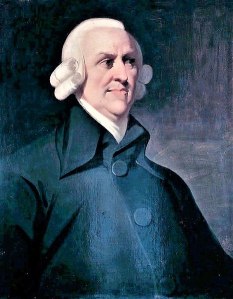 Adam Smith’s Wealth of Nations (1776) laid the philosophical foundations for what we today call capitalism. While there were truthful facts to be found in its pages, it was nothing really all that new, at least in the Puritan sense. About a century earlier, Richard Steele’s The Religious Tradesman (1684) taught Christian men to provide for their families through the virtues of diligence (hard working productivity), contentment (frugality, thrift), and retirement (which no doubt involved saving and investing). All of these things Smith continued to agree with as determinants of economic growth. But the ethical difference between Steele and Smith was very great. While Steele the Puritan taught people to temper their working lives with things such as prudence, justice, truth, and the Christian faith, Smith the agnostic and rationalistic economic philosopher, taught people to ignore Biblical ethics about money and instead be motivated completely by self-interest and competition.
 Take the Enron Corporation as recent example of unrestrained self-interest and internal competition among co-workers. This used to be a $100 billion natural gas company. It no longer exists. What happened? It went bankrupt through long, drawn out accounting fraud. Somebody in the accounting department got greedy and dishonest; somebody was motivated by self-interest; and somebody didn’t care a hill of beans about what happened to all of the families employed by Enron, because they were looking out for number one in the spirit of self-interest and competition with others. The house was divided, and as Jesus said, it did not stand. Oh, it stood for a while. It lasted from 1985 to 2007: a whopping 22 years. That company could have lasted for 100 years or more. But it collapsed because of self-interest, internal competition, greed, and dishonesty. That’s what happens when you don’t run a company by Biblical principles. It eventually implodes. The failure might not always be as dramatic in terms of numbers, which is why the Enron scandal attracted the attention of the media some years back, but I don’t think any business will last for very long if the Bible and Christian faith are not guiding principles among management.
 If we are followers of Jesus and Biblical principles, there must come a time when we judge Corporate America and reject its worldly ideas. Reject what your family has told you; and follow Biblical principles no matter if it costs you your job, your career, perhaps your marriage. Because even if your marriage ends for following the Bible, it is proof that it was based on money and not on Christ anyway. God calls us to Christian business activity, a Christian marriage, and a Christian family. He expects us to be different: not to compromise with the world system, but to reject self-interested and competitive business ideas, to embrace universal Christian love, giving to the poor, and above all to seek the glory of God rather than our own self-interest, and to cooperate and unify with people rather than compete with them as rivals. Acts 2:44: “All the believers were together and had everything in common.” The Amish and the Catholic monks are onto something here. When the Church becomes an economic refuge in times of crisis, there we have the opposite of Adam Smith’s views. When Christians seek to live in community, koinonia, and friendship, there we have the opposite of competition, self-interest, and rivalry. There we have the Holy Spirit, love, and joy. There is no “keeping up with the Joneses” when everyone is part of the Jones family! When all of the church “has everything in common.”
 In this chapter we shall treat of the perseverance of the saints–a subject of scarcely inferior importance to those already considered. It falls in at this point naturally, and forms an indispensable part of this most wonderful system; for, certainly, whatever else may be said of Calvinism, it must be admitted that it is a complete system. Starting out with the radical principle, that all events are fixed by eternal decree, it infers that those who will be finally saved must be so decreed to salvation–then the means must be fixed–then they must operate infallibly–then they must accomplish the end; the elect must be kept to the end.
 WesleyGospel Ministries