
-
-

-
LATEST POSTS
- Dads Are Supposed to Teach the Bible to Their Kids – Paul Washer
- How Charismatics Are Welcoming the New Age – Minor Prophets
- The Perseverance Debate: Eternal Security vs Conditional Security – Joe Schimmel and Chris Date
- Discipleship, Baptism, and Divine Healing: The Churches Have Lost Them! – Andrew Strom
- Ethnic Judaism’s Routine vs Gentile Christianity’s Faith (Romans 10)
RECENT VIEWS
- Wesleyans and Calvinists: The Two Main Doctrinal Differences
- The Moral Law In the New Testament
- Old Testament Visions of Hell
- His Voice Was Not Heard in the Streets?
- Review of Adam Clarke’s “Christian Theology”
- Hosanna! Music: The Revival Worship Label
- Directions Against Fornication and All Uncleanness - Richard Baxter
- Ethnic Judaism’s Routine vs Gentile Christianity’s Faith (Romans 10)
- How Charismatics Are Welcoming the New Age - Minor Prophets
- Dads Are Supposed to Teach the Bible to Their Kids - Paul Washer
MONTHLY ARCHIVES
- September 2026 (59)
- August 2026 (90)
- July 2026 (101)
- June 2026 (89)
- May 2026 (94)
- April 2026 (100)
- March 2026 (114)
- February 2026 (104)
- January 2026 (177)
- December 2025 (208)
- November 2025 (231)
- October 2025 (148)
- September 2025 (113)
- August 2025 (95)
- July 2025 (89)
- June 2025 (69)
- May 2025 (82)
- April 2025 (136)
- March 2025 (139)
- February 2025 (116)
- January 2025 (130)
- December 2024 (87)
- November 2024 (129)
- October 2024 (125)
- September 2024 (76)
- August 2024 (79)
- July 2024 (101)
- June 2024 (92)
- May 2024 (58)
- April 2024 (54)
- March 2024 (34)
- February 2024 (95)
- January 2024 (61)
- December 2023 (6)
- November 2023 (34)
- October 2023 (22)
- September 2023 (7)
- August 2023 (1)
- July 2023 (2)
- June 2023 (3)
- May 2023 (2)
- April 2023 (7)
- March 2023 (2)
- January 2023 (2)
- December 2022 (1)
- October 2022 (4)
- September 2022 (1)
- August 2022 (3)
- July 2022 (2)
- June 2022 (1)
- May 2022 (2)
- April 2022 (6)
- March 2022 (4)
- February 2022 (2)
- January 2022 (4)
- December 2021 (6)
- November 2021 (5)
- September 2021 (1)
- August 2021 (1)
- July 2021 (2)
- June 2021 (1)
- May 2021 (2)
- March 2021 (3)
- February 2021 (2)
- December 2020 (1)
- October 2020 (1)
- November 2019 (1)
- October 2019 (2)
- September 2019 (1)
- August 2019 (1)
- July 2019 (7)
- June 2019 (4)
- May 2019 (4)
- April 2019 (18)
- March 2019 (7)
- February 2019 (4)
- January 2019 (6)
- December 2018 (3)
- November 2018 (2)
- October 2018 (4)
- September 2018 (5)
- August 2018 (3)
- July 2018 (2)
- June 2018 (1)
- May 2018 (3)
- April 2018 (8)
- January 2018 (1)
- December 2017 (5)
- November 2017 (1)
- October 2017 (8)
- September 2017 (4)
- August 2017 (6)
- July 2017 (6)
- June 2017 (6)
- May 2017 (10)
- April 2017 (20)
- March 2017 (15)
- February 2017 (10)
- January 2017 (10)
- December 2016 (8)
- November 2016 (10)
- October 2016 (19)
- September 2016 (15)
- August 2016 (4)
- July 2016 (8)
- June 2016 (3)
- May 2016 (7)
- April 2016 (3)
- March 2016 (9)
- February 2016 (3)
- January 2016 (9)
- December 2015 (7)
- November 2015 (9)
- October 2015 (7)
- September 2015 (4)
- August 2015 (13)
- July 2015 (9)
- June 2015 (2)
- May 2015 (6)
- April 2015 (38)
- March 2015 (26)
- February 2015 (28)
- January 2015 (28)
- December 2014 (19)
- November 2014 (12)
- October 2014 (5)
- September 2014 (9)
- August 2014 (16)
- July 2014 (30)
- June 2014 (16)
- May 2014 (17)
- April 2014 (16)
- March 2014 (6)
- February 2014 (8)
- January 2014 (8)
- December 2013 (2)
- November 2013 (2)
- October 2013 (3)
- September 2013 (2)
- August 2013 (2)
- June 2013 (2)
- May 2013 (7)
- April 2013 (7)
- March 2013 (5)
- February 2013 (3)
- January 2013 (5)
- December 2012 (2)
- November 2012 (2)
- October 2012 (4)
- September 2012 (6)
- August 2012 (3)
- July 2012 (7)
- June 2012 (1)
- May 2012 (3)
- April 2012 (5)
- March 2012 (2)
- February 2012 (3)
- January 2012 (1)
- December 2011 (5)
- November 2011 (4)
- October 2011 (9)
- September 2011 (2)
- August 2011 (3)
- July 2011 (2)
- June 2011 (4)
- May 2011 (4)
- April 2011 (4)
- March 2011 (6)
- February 2011 (4)
- January 2011 (1)
- December 2010 (5)
- November 2010 (5)
- October 2010 (9)
- September 2010 (3)
-
Biblical Street Preaching vs Confrontational Evangelism
According to some scholars, I guess I would believe in what some people would call “proclamational evangelism,” and I would not believe in “confrontational evangelism” like Jed Smock and SOAPA preachers do.
Posted in Uncategorized
Leave a comment
Catholics, Protestants, and Salvation
See also:
– John Wesley’s “Letter to a Roman Catholic” (1749).
– Council of Trent: Sixth Session on Justification (1547). A Catholic Arminian statement on salvation.
– Mel Gibson’s Interview About The Passion of the Christ (2004) – https://www.youtube.com/watch?v=7Ecnfe530IE
Posted in Uncategorized
Leave a comment
A Debate with Christian Universalists
For the sake of brevity, I will refer to the two Christian universalists from this Facebook dialogue as CU 1 and CU 2. Based on my understanding, CU 1 is a Catholic and CU 2 is a Wesleyan of some type, maybe a United Methodist. CU 1 objects to my view of exclusivism by postulating that pagans in foreign lands, for example, the Native Americans, couldn’t all end up in Hell without hearing the Gospel. It would be unjust for God to eternally punish “good” pagans without giving them a chance to hear of Judeo-Christian salvation. I respond by saying that I believe in prevenient grace: that God has always been using the Holy Spirit to internationally draw pagans to the people of Israel so they could hear the Word of God, either by ship, person, miracle, dream, or vision. CU 2 proposes that I am so haughty, and incorrect to assert that Romans 2:12-16 does not allow for “good” pagans who have never heard the Gospel, to be saved from Hell. I respond by first acknowledging my imperfection, because his reply was only a knee-jerk ad hominem attack, revealing the insecurity he has about his universalist view. I reply that this passage is not referring to the Atonement and cannot be sufficient for salvation, because, without faith in the blood of Jesus, the conscience can’t be cleansed from guilt. That is the most essential part of the Gospel. Then I tell him, that in my view, Romans 3-8 is the substance of the Gospel message. Unless a person comes to faith in the Atonement; and is changed into a life of holy obedience to God’s commandments, then it doesn’t matter what country they are living in, or what time period they are living in. Without faith in the religion of Moses in Old Testament times; and without faith in Christ in New Testament times: there is no Atonement and no holiness and no salvation from Hell. CU 2 then asks where the Old Testament saints went who were not exposed to the New Testament Gospel message, and I reply that they were sent to the underworld paradise known as Abraham’s Bosom (Luke 16). CU 2 then jumps to the conclusion that “good” pagans must go to Abraham’s Bosom today then, but I reply that Abraham’s Bosom was emptied by the resurrection and ascension of Christ, because the Atonement of Christ now allows saints to live in Heaven with God in New Jerusalem.
—
CU 1: My question on salvation is this, taking accounts of the Native Americans prior to the introduction of Christianity: due to their isolation from the Christian world, and ignorance of Christ, did any native person before Christianity made it to Americas go to Heaven?
Wesley Gospel: No, I can’t say that they did. Anymore than the pagans in foreign countries during the Old Testament; or the pagans in the first century who were not able to hear the apostles. Hell is most likely where they went. Unless the Gospel was communicated to them by dreams and visions, which is unlikely, although not impossible. It is always possible that prevenient grace could have drawn some Native Americans to travel to Israel for whatever reasons, and be grafted into the faith that way. There were many pagans from all sorts of countries that migrated to Israel in the past 6,000 years.
CU 1: Would it be sound to say that those who, through no fault of their own, do not know the Gospel of Christ or his Church, but who nevertheless seek God with a sincere heart, and, moved by grace, try in their actions to do His will as they know it through the dictates of their conscience—MAY (possibility as opposed to permission) attain eternal salvation?
Wesley Gospel: No way. Galatians 1:11-12: “I certify you, brethren, that the Gospel which was preached of me is not after man. For I neither received it of man, neither was I taught it, but by the revelation of Jesus Christ.” Without the Gospel revelation, there’s no saving grace, no blood to assuage the wrath of God, no salvation by faith. Conscience is not saving grace, but I’d say it would be a “prevenient” grace that could lead up to “saving” grace through the revelation of the Gospel. Native Americans in Old Testament or New Testament times would either have to 1. Travel by boat to Israel and hear God’s saving revelations. 2. Have dreams and visions of God’s saving revelations in the Western hemisphere first; and then as a result of that, end up traveling to Israel to receive more complete theological teaching. 3. Be physically teleported to Israel like Philip was (Acts 8:39-40). 4. Travel from Alaska to Russia, and then down to Babylon or Persia, where they heard about Judaism or Christianity at the proper times.
CU 1: I think my question may have been misunderstood, because of the way it was worded, so let me try and restate it. Let’s say there’s a man named Gerald who is living in the pre-Christian America; and Gerald lives for 33 years, has never heard the stories of Abraham, Isaac, and Jacob, and has no idea who Jesus is, doesn’t even know that there is a Jewish race out there; and dies at 33 years old. If God were to look at Gerald and say, ‘Oh by the way I’m the God of the universe. The one who created you, and because you have not believed in my Son, who you did not have knowledge of; and because you did not follow my Son’s teachings, which you did not have knowledge of, you are now going to be punished for eternity in Hell.’” Would this be just of God to do?
Wesley Gospel: There is no Biblical warrant for salvation outside of the revelations given by God to the people of Israel. Gentiles were grafted into Judeo-Christian religion from the beginning of time, regardless of their geographical locations. I believe that the vast geographical distance from say, Mexico to Israel, is so large, that to your mind, you’re thinking it would be almost impossible for say, the Mesoamerican people like the Olmecs, to come into contact with the people of Israel. My only answer to Christian universalism or anonymous Christianity is this: “there are more things in heaven and earth, Horatio, than are dreamt of in your philosophy.” God is Almighty, all-powerful, and is more than capable of getting people in far and distant pagan lands to come into contact with either the message of Moses or Jesus, depending on the time period they were living in. And it would be unjust for God to eternally punish a person who was never given a chance of hearing about either Jewish salvation or Christian salvation. But I believe in prevenient grace: that the Spirit of God has always been working on people internationally, to come into contact with Judeo-Christian revelation. That’s why if the Olmecs or the Mesoamericans went to Hell, then it was no fault on God’s part, because he was likely trying to speak to them about Israel by dreams and visions. In fact, I’ve actually heard that some archaeologists suggest that during King Solomon’s reign, he might have dispatched ships to either North or South America on expeditions, and that items have been found to suggest such. Although I am no Biblical archaeologist, and my proof for such a suggestion is greatly lacking at this moment, it might be worth exploring. Solomon was the richest man in the world; and would have certainly had the resources to send ships to the Americas for any purpose: see this article. Though some people believe this could be a Mormon forgery: click here.
CU 2: So you think indigenous people go to Hell?
Wesley Gospel: Without the Gospel they do.
CU 2: So people who have never heard of Jesus Christ will be in Hell? You’re so incorrect.
Wesley Gospel: Show me in the Bible.
CU 2: Romans 2:12-16: to those who live righteousness.
Wesley Gospel: Nope, there’s no faith in the blood of Jesus there to cleanse the conscience from guilt. That doesn’t work.
CU 2: You are very haughty. And you argue against Scripture? So what do you say about the Old Testament follower of God? Who never knew who Christ was?
Wesley Gospel: Abraham’s Bosom (Luke 16). Sure I can be haughty: I’ll admit that definitely. Romans 3-8 is the Gospel as I see it. The Atonement is always necessary in my view of things.
CU 2: And Abraham’s Bosom is where people who have never heard of Jesus go. Just like the people in the Old Testament.
Wesley Gospel: Not according to evangelical Protestants. Abraham’s Bosom was emptied during the resurrection and ascension of Jesus (Eph. 4:8; Heb. 9:27). Abraham’s Bosom was the paradise of the righteous dead who lived by the faith of Moses. The only reason why Heaven became the paradise of the saints, is because the Atonement broke down the barrier between God and his people fully.
CU 2: Sir that’s why Jesus told the thief about paradise. It’s still in effect.
Wesley Gospel: There’s no support for universalism with the thief on the cross (Luke 23:39-43). Jesus said, “Today you will be with me in paradise,” but that doesn’t mean he meant, “A couple of months from now, you will be with me in Abraham’s Bosom,” because there’s reason to believe that the thief would have been transferred with all the other saints into New Jerusalem up in Heaven after the ascension of Jesus. The thief had a faith in the Atonement; he understood something of what was going on: the Innocent One suffering on behalf of the guilty.
Posted in Uncategorized
Leave a comment
A Debate with an Anti-Catholic
I would consider myself a fundamentalist in the sense that I believe in the fundamentals of Christianity. But I’ve found that a lot of Protestants in evangelical Christianity have a sense of anti-Catholicism; and as a result, have not really thought through the implications and the inconsistencies of their view. Namely, that Catholicism was pretty much the only form of Christianity that existed for most of church history. They seem to believe that everybody went to Hell until Luther and the Protestant Reformation came around! This is an example of ignorance and theological perfectionism, in my opinion.
—
Facebook Post: Catholicism is a false religion: like Hinduism, Buddhism, and Islam.
Wesley Gospel: Even though Martin Luther used to be Catholic, the church fathers were Catholic, and hundreds of Catholic saints cast out demons.
Anti-Catholic: I’m so grateful for the awesome work Martin Luther and John Calvin did and the changes they made…Yes, the Catholics thought they can keep on sinning and their secrets are hidden, everything they did in the dark came to light and the world see them for who they really are…Yes, sure! and so the Catholics keep on sinning and the demons return seven times.
Wesley Gospel: So I guess the church history timeline looks like this for you guys:
1 – 33 AD – Jesus and the 12 apostles.
34 AD – 350 AD – The devil takes control of the church through Catholicism entering in.
351 AD – 1530 AD – The devil controlled the entire body of Christ through the Roman Catholic Church and the Eastern Orthodox Church. There were no true Christians or real Christian preachers during this time period. Also, the Holy Spirit basically withdrew from the world and went up into Heaven.
1530 AD – Present – The Protestant Reformation started and brought the Bible back into the front and center of Christianity. The Holy Spirit came back and real Christians started showing up again. But before the Reformation, basically, every person was not saved for about 1500 years…mainly because they did not believe in the Five Solas of the Protestant Reformation.
Anti-Catholic: Huh? what can you explain to me why did the Holy Spirit of God disappeared for some time, what was the reason?
Wesley Gospel: Simple, I mean that is, according to my understanding. If I was to accept your view of Catholics, then the next step would be that no saved people existed in the world from about 34 AD to 1534 AD right. Since the Holy Spirit is needed for people to be saved, born again, regenerated, and saved by grace. But since all church members were basically Catholic during those times: in effect, there was no Holy Spirit saving activity going on at all in those times. Zero. Do I understand you correctly? Is that what you believe about church history, or…
Anti-Catholic: The Holy Spirit of God were never gone for certain periods, no the problem was with certain groups of people. And it is still happening today. People are spiritual blind and deaf, because of disobedience.
Wesley Gospel: Oh so people were being saved from Hell in the Middle Ages then?
Anti-Catholic: Hell is not on earth, people were not saved from any Hell. After Judgment Day people will go to Hell.
Wesley Gospel: Kinda skirting around my question there. Do you believe people were getting saved from the wrath and judgment of God in say the year 1435 AD? Any saved people before the Reformation?
Anti-Catholic: You are ignoring the point, you are supposed to explain to me were the Holy Spirit of God disappeared to? People came to salvation from the earliest times since the four gospels Matthew, Mark, Luke, and John start spreading the gospel of Jesus Christ. The Holy Spirit was present for that time until present.
Wesley Gospel: There was no disappearance of the Holy Spirit, ever. I was only testing the strength of your view of church history in light of Catholic church members existing in church history as the ONLY form of Christianity, for most of church history. 100% of Christians were virtually Catholic in medieval times. The Holy Spirit is omnipresent, everywhere, at all times (Psalm 139:7). I think then, what you would be implying then, by your view of Catholics is this: the Holy Spirit EXISTED from 34 AD – 1530 AD, but the Holy Spirit was never USED by people during those times. Because everyone was Catholic. So although the Holy Spirit existed back then…unfortunately, they all were damned to Hell when they died. Because their theology was messed up. They never got the privilege of reading the Bible or becoming Protestants. I guess it just stinks to be them. So sorry they had to live in those times and have zero chance of being saved from Hell, because the priests wouldn’t let them read their Bibles. Shucks. At least people started getting saved in the 1500s again, because they read Martin Luther’s books, John Calvin’s books, and the Bible. But before that, yeah, everyone just went to Hell. Shucks…
Anti-Catholic: “Hearts” my statement above: indicating that she completely affirms the view that everyone went to Hell before the Protestant Reformation started.
Wesley Gospel: Ok, yeah I don’t believe in that: and I think it’s insane that you would “heart” what I said! And that you would affirm such an ignorant view as that. My view is that many Catholics were saved before the Reformation, and there could be some still being saved today. You don’t need perfect Reformed or Baptist theology to be saved. All you need is faith in the atonement of Christ on the cross (1 Peter 2:24). And although many Catholics have strange and unbiblical beliefs: I think you will also find that many today still believe in the atonement, and repentance from sin, although not in exactly the same way that Protestants do.
Posted in Uncategorized
Leave a comment
The Sugar-Ice Duck – Arthur Eedle
Originally from here.
I received this through Andrew Strom’s Revival List.
(A vision received by Arthur on 5th Sept. 1974)
The Crown Agents in London had appointed me to teach in the King George V School, Kowloon, Hong Kong as from the beginning of the autumn term 1974. We flew out there and landed on September 3rd, and were given a suite of rooms on the 8th floor of the Hong Kong Hotel. It was a temporary arrangement until suitable accommodation could be found. Two nights later, after the children were asleep, and my wife had gone to bed, I sat looking at the magnificent view across the harbour. It was a fairyland of coloured lights. The colony is a cameo of all that relates to luxury. The love of money is the paramount factor that keeps everyone going. I was told there were more millionaires per square mile in Hong Kong than anywhere else in the world, and after being there for some time, I could well believe it. Nothing stops in Hong Kong, night or day, unless there is a typhoon. It is a hive of constant activity that can easily get into one’s soul. It is difficult to stand against it when living in such an atmosphere. Looking back I now believe that what happened next was related to the Hong Kong way of life, as it was going to influence the newly forming charismatic churches in the west. Except that the luxury relates mainly to the spiritual realm rather than the material realm.
As I sat looking at this amazing scene I began to see something else, and because of its strangeness my mind was alerted immediately to the fact that God was conveying truth in visionary form. I saw a duck, and I knew that it had been made of icing sugar because a hand was smoothing down the surface with a knife. When all was complete, the strange thing padded along on its webbed feet as though alive, and settled down on a flat surface somewhere. But if this was strange, the next part of the vision took me even more by surprise, because I saw dozens of people arriving at the duck, and it was only then that I realised how large it was. It must have been all of forty feet tall! The people were excited about the coming of the duck, and some of those who were braver than the rest even went up to it and touched it. One of them licked his fingers and the taste was sweet. Breaking a fragment from the surface he ate it, and jumped for joy. Others gained confidence and followed his example until they were all delirious with excitement. I saw them singing, dancing, throwing up their hands in the air, and embracing each other. The festive atmosphere was its own advertisement. People arrived in droves, pushing and shoving, and climbing over the duck with the aid of ladders in an effort to obtain a handful of icing sugar and join in the fun.
This continued for some time until one man gave a very loud shout, which brought everything to a halt. They saw him pointing to a hole that had appeared in the icing sugar. It was therefore not solid as they had originally thought. No one had imagined the sugar icing might give out sooner or later. After this, caution was exercised in the eating. Everyone agreed to ration what was left. But they found to their joy that even the smallest taste produced the same effects as a handful, and they wished they had learned this lesson earlier. In the process of time many more holes appeared. Some tried looking inside the duck, but all was pitch dark. Nothing could be seen. Gradually the duck became wafer thin. All of a sudden the crash came as the remainder of the duck disintegrated in a cloud of very fine dust. The crowd became silent, waiting and watching.
It took a while for the dust to settle, and then I had a shock. Inside the duck there was a terrible black beast about forty feet long, in shape like a scorpion with bulbous green eyes. It also had wings similar to those of a dragonfly. I fully expected the crowd to disperse at great speed, but instead they became delirious with excitement once again, and accepted the beast as their accredited leader. If anything, the excitement became greater than before. At this point the vision changed, and I saw the hand once again. It was outstretched with some white pills on the palm. A small number of people were arriving to receive one, which they ate. The result showed on their faces as an inner sense of peace and tranquillity. And then the two visions merged. Once again I saw people taking the icing sugar from the duck and jumping about in excitement. The group from the second vision were approaching, and mingling with the crowd, warning them, “Don’t eat it! It’s dangerous!” But there was very little response. Some shouted at them, “Go away, you prophets of doom! Don’t tell us that YOU have the Spirit of the Lord. Where is your joy?” Disheartened they eventually wandered away, feeling a dull ache in the pits of their stomachs.
Later on, when I had made a record of the vision, the Lord spoke to me, and I wrote down the message, as follows:-
The hand that formed the bitter pill fashioned also the duck. This is my work, and by it my name will be magnified. Twenty centuries of progress has not changed the nature of man, and neither has it changed mine, says the Lord. My Son is the Way, the Truth and the Life. All those who reject the bitter pill of the cross will find themselves prey to the lie. I will send them strong delusion, and they will believe it and rejoice in it because their hearts are not set upon the Way. They will accept falsehood in a season of careless security, indulging in spiritual flirtation with powers of darkness dressed up in acceptable guise. They longed for sweet things and I gave them sugar, but it was not in tune with my heart, says the Lord. And each bite of the duck they take, so grows the beast within. And each bite of the duck they take, so blind they become to the truth. And then, when antifaith has done its final work the beast is revealed to the world, enthroned within the temple of God, blasphemously parading divine nature. Mark well my words, says the Lord, there is but one great sign for this world, one marvel, one miracle of challenge that I will accept, and it is the sign of the prophet Jonah. And those who take the bitter pill shall find loneliness, derision and sorrow. And they shall walk the way of their Master, learning of His sorrows, sharing His suffering, conforming to His death. But I shall raise them to life, life on a higher plane, and they shall take my message to the nations. This is my sign, and this shall be their reward. All other ways, however right they may appear to man, shall be disallowed in my sight, says the Lord. And those who eat the duck shall refuse this glory when it is revealed for it shall be folly to them. Choose therefore whilst it is still possible, choose the salt and reject the sugar, says the Lord, for the time is now short.
Before making any comment about the application of this vision over the last 33 years, it will be best to explain what the symbols mean in practice. And before doing this, I should like to display a brief snatch from another vision, one which my wife received in June 1969. She saw a dam across a narrow ravine, and behind the dam there was initially just a small trickle of water, but over a lengthy period of time the water rose to produce a large lake, and eventually filled the ravine to the top of the dam. At this stage, the dam burst, and the waters flowed out, bright and iridescent, into the valley beyond. The Lord gave the interpretation. The water represented the faith of His people. And the effect of faith was twofold. Firstly, the faith had an effect in the believer’s life and his walk. But secondly, the faith had another effect, which was not appreciated by the believer at all. In heavenly places, each act of faith was like water building up behind the dam. God was preparing for a yet future day when, in His Kingdom, He could liberate the combined effect of all the faith of His elect, and it would flow out to a needy world. I believe the two visions are essentially the same in their interpretation. But the dam refers to God’s work, whereas the duck refers to the counterfeit work.
To understand the duck vision I will set down the various elements of it in sequence.
1. The duck. This is of course invisible to the people who approach it.
2. The sugar. The Lord said, “They longed for sweet things and I gave them sugar, but it was not in tune with my heart.”
3. The eating. What should they have been eating? The Lord said, “I am the bread of life.” He also said, “Man shall not live by bread alone, but by every word that proceeds out of the mouth of God.” Therefore they were eating the wrong stuff.
4. The meaning of eating the sugar. If the TRUE BREAD is the Lord, and what we eat is His living word, then the sugar represents something akin but not wholesome. It must also be a doctrine, an idea, a suggestion, which comes from an alien source. Hence, as Paul put it, it could be a “doctrine of demons.”
5. The first effect of eating. There was sweetness in the mouth, and by what followed, there was no “bitterness in the stomach” like John experienced when he ate the little scroll of words. In fact they began to experience a profusion of supernatural effects which gave them what might be called “a spiritual bean feast”, calculated to bring the crowds flocking in.
6. The second effect of eating. What they didn’t realise was the gradual blindness coming upon them, blindness to the truth of God’s word written clearly in the sermon on the mount. As time passed, so the new experience took precedence over a sober contemplation of what Jesus asks for in a believer’s life.
7. The third effect of eating. This was also beyond their knowledge, and may be compared with the water rising in the dam. There was a beast inside the duck, and the beast was powerless to act out his role at the start, and would have been rejected if it was seen. But the eating had the effect of giving power and strength to the beast, and causing it to grow.
8. The collapse. When Satan sees that (a) the blindness of those who have eaten is sufficient, and (b) the beast has grown to the required extent, he causes the duck to collapse. This represents a brief interlude between two phases or waves of activity. The people sense that their original hyper-activity is near its end, but have no knowledge of what lies ahead.
9. The beast appears. Their blindness is such that they now pronounce the beast to be their accredited leader. This beast is also invisible, but they recognise “something” that is more powerful and attractive than what had gone before. And they give themselves to it wholly. This is the true antichrist phase, much more powerful than the earlier phase.
10. The people who ate the pills. These have fed on the true word, and have seen the nature of the evil. They pray for the others, and whenever occasion arises, they approach them and warn them, but usually to no avail. Hence the sweetness in the mouth gave way to bitterness of soul at the outcome of their endeavours.
11. The Lord’s hand. Some might be upset when they realise the Lord was the One who designed the duck. But it must be remembered that in olden days, after King Saul’s disobedience, the Lord withdrew His Spirit from him, and gave him an evil spirit instead. In each of these cases, the Lord takes full responsibility for what happens, even though Satan was the donor of Saul’s evil spirit, as he is also the architect of the duck.
In 2 Thessalonians 2, Paul paints an identical picture, but because of the difficulty of some of the verses, coupled with an amazing variety of translations in the Versions, the force of what he said is often lost. He speaks of a “man of lawlessness” who is equivalent to the black beast of the duck vision, and of those who “love not the truth”, who are not outsiders, but those within the larger company of believers. Also he refers to a “restraining influence” which is explained clearly by the duck vision, in that the Devil cannot achieve his plan without the “antifaith” of those who reject the truth. Hence there has been a restraining influence on evil. But when “the great apostasy” has taken place, and crowds of people flock to the duck, eventually the “man of lawlessness” can be revealed, when “he comes out of the midst,” in other words when the black beast is finally seen. But Paul says that this “man of lawlessness” sits in the temple of God saying that he is God.
Which temple is Paul referring to? Many believers today have been tutored to believe that the antichrist will not arise on the world stage until the church is removed to be with the Lord. Hence this section of Paul’s writing doesn’t hold much urgency for them. Likewise they have been advised that the Jews will build a Temple in Jerusalem, and the antichrist will make his throne there. Hence there is a double pressure upon them to discount any present danger signal in this chapter of Thessalonians. But the temple Paul speaks of is the temple of God’s people, and the antichrist seats himself (invisibly) in the midst. The (prophetic) words he delivers are from himself, but presented as though they come from God. The words are believed because of the blindness. Hence the danger is critical to all God’s people.
As for the geographical interpretation, it takes only a moment’s thought to realise that if a man were to establish himself inside a newly built temple in Jerusalem, he would immediately be recognised. His cover would be blown by the world, let alone the church! The newspapers would quote 2 Thessalonians 2, and he would be the laughing stock of the world. Surely we cannot expect Satan to be quite so lacking in strategy! It is a very sobering thought to realise that the antichrist is AT THIS PRESENT TIME enthroned within the whole body of those who call themselves Christians on this earth. Whereas in the past the “mystery of lawlessness” has been at work throughout, in these last days a great change has occurred – the black beast has been revealed. So we are left to consider the “powers and signs and wonders of deceit.”What are they? They must be the supernatural effects that were produced by the eating of the duck in the first phase, and then multiplied to a much greater degree in the second phase when the beast is revealed. This second phase then must be a far greater force of evil and deception than the first. No wonder that John was told, as Daniel was before him, that the antichrist would have power over the saints of God to “make war on them and overcome them.” Words like that cannot possibly refer to a time AFTER the church has been taken up into glory.
But the force of the duck vision hasn’t yet been revealed to its full extent. We must now examine the difference between the “word of God” that believers are enjoined to eat, and the “sugar-icing” that is preferred by so many today. What is the crux of Jesus’ teaching? I have used a play on words. The Latin word CRUX means a “cross”. And the cross is the central hub of all that our Lord taught. Even as He gave Himself up to die on a cross, so also He expected all His followers to do likewise, not literally (even though some did) but in the more important sense of “overcoming” the “flesh”, the nature we have all inherited from Adam and Eve. Again and again in the Gospels, and particularly in the Sermon on the Mount our Lord taught the truth concerning this. “Except a man take up his cross he has no part of me.” “If any man will come after me, let him deny himself, and take up his cross daily, and follow me.” What does it mean to “deny ones self”? It means to realise the incipient evil of the human heart, and stamp on its desires, relying steadily more and more on the leading of the Lord in everyday situations of life. Oswald Chambers put it this way. “Our Lord’s illustration of a Christian is salt. Salt preserves wholesomeness and prevents decay. It is a disadvantage to be salt. Think of the action of salt on a wound, and you will realise this. If you get salt in a wound, it hurts, and when God’s children are amongst those who are ‘raw’ towards God, their presence hurts. The man who is wrong with God is like an open wound, and when ‘salt’ gets in it causes annoyance and distress and he is spiteful and bitter. The ‘salt’ causes excessive irritation which spells persecution for the saint.” This was seen clearly in the duck vision. Those who tried to warn the people of the dangers they were facing, only received reviling comments. “Where is your joy?” they asked. But how can you approach such people with a smile, when your task is to warn them of danger? They were drunk with the wine of intoxication, produced by the effects of eating the sugary sweet words of the false prophet, and enjoying the effects.
The Prophet Daniel spoke about the antichrist, calling him “the Little Horn”. And we are told that the Little Horn “takes away the daily sacrifice”. What does this mean? In the days when the Temple services were operating, God’s priests sacrificed a lamb each morning and evening. This was called the “daily sacrifice.” But this all came to an end after the resurrection of our Lord. What significance does it now hold? Some might say “none”, because the system to which it referred has passed away. But our Lord referred to “the abomination which makes desolate”, which Daniel said would take the place of the daily sacrifice. He said the principle still applied, and warned His readers to make sure they understood what He meant. Every believer should have a “daily sacrifice”, a spiritually understood sacrifice. When Jesus spoke about“taking up our cross DAILY” He was making reference to just that. Throughout our lives we should daily remember that we are but dust. Our thoughts and our desires are far removed from divine righteousness, and need constantly to be made new by the power of God’s Holy Spirit. Now we are approaching the absolute hub of understanding.
The Holy Spirit’s ministry to believers is essentially towards their re-creation in the Lord’s own image. But in these days, at the beginning of the 21st century, vast numbers of believers look to the Holy Spirit for power, signs and wonders, which instead of crucifying the flesh, tend to feed it. Oh how easy it is to be captivated by all the manifestations of supernatural power today. Many Christians go “conference hopping” in the hope of being present at yet another occasion of “blessing”, where they can witness all manner of effects, not just by the preacher and those called to the front, but throughout the auditorium. If believers persist in praying to the Holy Spirit for signs and manifestations, the Holy Spirit cannot answer. It is contrary to the purpose for which the Spirit has come. But there is always “another” who “comes in his own name”, and “him you will hear.” The crucial decision must be made. Is the flesh being fed, or crucified?
The Lord spoke to my wife some years ago saying, “In these days treat the miraculous very lightly.Look rather to the lives of those who profess to have spiritual powers.” We have found it a most valuable word. The Little Horn “casts truth to the ground and stamps on it.” What item of truth does he stamp upon? It is the daily sacrifice. And in its place he establishes “the abomination that makes desolate.” The word “Abomination” in the Bible is usually connected with idol worship. In this case the idol is “self”, and we can all set it up within the “temple of God”, almost without realising it. But when the “great apostasy” occurs (and it already has) then the idol abounds within God’s church, and the Lord speaks of it causing desolation.
Why does it “make desolate”? Because God cannot own it. Whereas once the Holy Spirit delighted to be present and gently guide flocks of believers, now the Spirit has departed, as the spirit left King Saul. Hence we are told that the Little Horn “scatters the power of God’s people”, (those who eat the duck), and“wears out the saints”, (those who gently warn the rest.) How does the Little Horn obtain such power?“He will flatter those who act lawlessly towards the covenant.” What is the covenant? It is now the New Covenant in Jesus’ blood. And this covenant is based upon the cross in His own life, and also in our lives. Our Lord said that “because of lawlessness the love of the many will grow cold.” It is amazing how hard one may become when striving constantly for “power”. But those who are striving for mastery (lawfully), “walk in the spirit and have no confidence in the flesh.” All such are progressively broken on the Rock which is Christ, and in brokenness they learn to be gentle, even when acting as salt.
Dear friends and brethren, over the last thirty years we have witnessed a tremendous growth in what is now called the Charismatic movement, and it has gone through a number of phases of development. And we remember being told of a “new wave of blessing” that was to sweep this land. One of our family has been present during a church service when this “new wave” was being enacted, and he witnessed people laughing, others crying, yet others jogging on the spot, whilst other were dancing, or raising their hands and speaking in tongues. To an outsider coming into such a gathering, he would wonder whether it was a mad-house. But we are being advised that this is the “new wave” of the outpouring of the Holy Spirit. Has the sugar-ice-duck collapsed? Has the beast started its awful work of power? All the signs lead us to believe it has, but we leave our readers to decide. Please act wisely and prayerfully. Above all the Lord is teaching us to look upon our brethren caught up in this “duck syndrome” with great compassion and love. It must be understood that at no time have we a mandate to think in terms of what Kipling called “We and They.” His poem is masterly, and shows how invidious the Pharisaic attitude can be.
Daniel was told that “some of the people will fall to try them and make them white.” God is in it all. Those who know and understand may “do exploits” and “save out of the fire” some of those who are ensnared in this latter-day evil, but we must realise that God is using Satan’s device to His own end. The Lord will have His sovereign way, and the Serpent will bite the dust. Two words of prophecy were sent to us, the first was received on July 13th 1994. The force of it is so exactly what is needed at this time, relative to the sugar-ice-duck that we reproduce it here in full, by permission. “Why are you so surprised at what is happening my children? Does it not say in my word that in the last days false prophets and falsechrists (anointed ones) will come in my name and deceive if possible even the elect? This work of deception will be in my hand as a refining fire to purify, cleanse, and refine my true church, separating those who love the truth from those who do not. There are three things that I require of you in this time of testing. First, be deeply rooted and grounded in my word. Soak yourselves in my word, memorise my word, meditate on my word, and confess my word. This is your greatest protection. Second, pray with great love and compassion for those who are being deceived. Pray that my purposes in their lives will be fulfilled and not hindered by this work of the enemy. Third and most difficult, warn those who are being deceived. Many will turn away from you but I will strengthen you and give you boldness and courage and put words in your mouth. My hand of blessing and favour will be upon you. Above all do not be discouraged but rejoice for my coming is very close.”
The other prophetic word, received in October 1993, contains the following words, “The lights are going out in many local churches where my name was at one time honoured. Many of these churches will be plunged into confusion and darkness, ready to embrace any revelation that comes from men known for their world-wide ministries. Many of them that come are not sent by me. They are false teachers and prophets ready to bring together many followers. For those who love and honour my name, the time is coming when I have to say with great sorrow and heartache, ‘come out from among them, even from those you deeply love, for they are desirous of heaping up their own teachers and they are not willing to embrace my true and unadulterated word.’ Many wish to prostitute themselves for something that appears good and real, but what they experience does not come from me, but from the evil one who is being allowed to send demonic gifts and ministries. It is because many look for signs and wonders as validation of a ministry, rather than to men who come with my pure unadulterated word. To those of you who are faithful: do not be afraid when I say to you, ‘Come out of where you are’, because I am preparing homes of refuge for you to be part of what is real. I will hide you in those places for a time to nurture and strengthen you. You will be part of my true witnessing church in these last days.”
The above message was written in 1994, when we sent it out as a Prophetic Telegraph. I have been through and changed a few dates, to bring it up to date, but otherwise it is unchanged. I believe this message is of the utmost importance, and comes as a clear message of interpretation of what Paul said to the Thessalonians, and which is so often misunderstood. But even if we have only understood a part of what he was saying two millennia ago, the truth concerning “the way of the cross” is timeless, and is the essence of all that the Lord was teaching His disciples during His earthly life.
Posted in Uncategorized
Leave a comment
Machiavel, the Tough Guy
You think you’re real smart
With your schemes and plans
With your twisted mind
And deceiving hands
You think you’re real tough
You’re a macho man
With a knockout punch
And your screaming fans
You think you’re real rich
With your bank accounts
And your stocks and bonds
And financial clout
But wisdom from above
Comes to judge the fool
And if it comes in love
It’ll overrule
All you really got
Is just a power trip
You’re a fool to God
And a little wimp
Dying every day
With your cars and homes
And withering away
As you pay your loans
Hit this guy!
Why? he’s called you out
You’re in the rat race
And now you’re full o’ doubt
So you got some might
And now you wanna use it?
But might don’t make right
If you misuse it
Posted in Uncategorized
Leave a comment
A Debate with a Wesleyan Perfectionist
In this Facebook dialogue, the Wesleyan perfectionist reveals not only that he is Marcionite in that he pits the words of Christ against Paul’s words in Romans 7:14-25, but also that he is a Pelagian like Charles Finney and A. B. Simpson, both of whom denied the doctrine of original sin. He rejects the Baptist view of progressive sanctification, because he thinks it’s just another example of antinomians making excuses for their sinful behavior. He puts all Baptists in the cult category along with the Mormons! He redefines sin by saying that sin is only sin if done by personal outward actions. To him, sinful thoughts are not really sins. By taking this view of sin, it becomes easier for him to hold to a perfectionist view of the Christian life. He rejects creeds, and theologians, and Puritans, and reformers, and sets himself up as the only reliable interpreter of Scripture. Even though in the beginning of the dialogue, I told him my view of sanctification entails Romans 8, he soon lost sight of that, and thought my view of original sin and sanctification were one and the same doctrine. He saw no light at the end of the tunnel in the Baptist view: just one heaping mass of sinfulness. I propose a fight against sin, with sin and holiness warring within the Christian, as the apostle Paul and the Puritans did. He proposes that there is little to no fight against sin required, because he denies that sinful thoughts really are sins in the proper sense. So he can get away with saying he does not sin–even if he thinks about sinful things–so long as he does not outwardly do anything sinful. Such was the doctrine of the Pharisees: who did only “clean the outside of the cup” (Matt. 23:25).
—
Perfectionist: “STOP SINNING! You can do it!”
Wesley Gospel: “I agree to a point: Romans 7 and 8.”
Perfectionist: “I simply agree with Jesus; and know He doesn’t command the impossible. Jesus said, “Go and sin no more.” The same as saying stop sinning. That settles it for me.”
Wesley Gospel: “True, but there’s a lot more thought that’s been communicated in the Scriptures than just that one sentence. The whole Word of God harmonizes. I hold to this view:
1. They who are united to Christ, effectually called, and regenerated, having a new heart and a new spirit created in them through the virtue of Christ’s death and resurrection, are also farther sanctified, really and personally, through the same virtue, by His Word and Spirit dwelling in them; the dominion of the whole body of sin is destroyed, and the several lusts thereof are more and more weakened and mortified, and they more and more quickened and strengthened in all saving graces, to the practice of all true holiness, without which no man shall see the Lord (Acts 20:32; Romans 6:5, 6; John 17:17; Ephesians 3:16-19; 1 Thessalonians 5:21-23; Romans 6:14; Galatians 5:24; Colossians 1:11; 2 Corinthians 7:1; Hebrews 12:14).
2. This sanctification is throughout the whole man, yet imperfect in this life; there abideth still some remnants of corruption in every part, whence ariseth a continual and irreconcilable war; the flesh lusting against the Spirit, and the Spirit against the flesh (1 Thessalonians 5:23; Romans 7:18, 23; Galatians 5:17; 1 Peter 2:11).
3. In which war, although the remaining corruption for a time may much prevail, yet through the continual supply of strength from the sanctifying Spirit of Christ, the regenerate part doth overcome; and so the saints grow in grace, perfecting holiness in the fear of God, pressing after an heavenly life, in evangelical obedience to all the commands which Christ as Head and King, in His Word hath prescribed them (Romans 7:23; Romans 6:14; Ephesians 4:15, 16; 2 Corinthians 3:18; 2 Corinthians 7:1).”
–The 1689 Baptist Confession, ch. 13: “Of Sanctification”
Perfectionist: “This is a mere teaching of a denomination my friend and isn’t sound. Many teachings of the reformers are full of error. Thus their doctrines follow such error. Luther did some good things but was still no more than a reformed Catholic still in much of his practices. The 1689 Baptist Confession is full of Calvinistic theology. It’s filled with John Calvin’s false gospel my friend. The 1689 Baptist Confession of Faith, also called the Second London Baptist Confession, was written by Particular Baptists, who held to a Calvinistic soteriology in England to give a formal expression of their Christian faith from a Baptist perspective. This is not a Biblical perspective but rather a biased one.
Aligning ourselves with man-made creeds is departing from our Biblical duty to follow Christ’s doctrines and the foundation in which He laid. So I cannot agree with the TULIP doctrine found in the 1689 Baptist Confession. From the false doctrine of the sinful nature to once saved always saved. Baptists are no different than Mormons, Catholics, etc…why? Because they follow tradition over the Scriptures.
The original post here is what Jesus said. And again it’s cut and clear. I believe any kind of reasoning away from the cut and clear words of Christ is departing from Biblical truth and just man’s attempt at explaining away conviction to hold to one’s sinfulness. As most Calvinists, Baptists, and reformers do.”
Wesley Gospel: “Partly I’d say, but we got to use our heads and common sense too, right. There are Bible verses in that statement, and those Bible verses are just as much the Word of God as “Go, and sin no more” (John 8:7). I’m sure you’d agree that all Scripture is inspired by God, and not just the words of Jesus (2 Tim. 3:16). Marcionism was the heresy that said only Jesus’ words are inspired. I believe that Romans 7 teaches that our bodies have a sinful nature (flesh, Gr. sarx)–and especially an inclination to sexual immorality and other carnal lusts. I believe that the Holy Spirit is needed along with free will to fight against sin and resist temptation, but I believe the Word of God consistently teaches that there are limits to holiness. Time will always tell the truth of this one by experience. Free will can only push you so far in the direction of righteousness, until you finally burn out and break down, and realize that you need the grace of God through the cross again. That is, unless you redefine sin. If you can redefine sin into something that does not affect the thoughts, or if sinful thoughts or sinful feelings are not properly “sins”–which would be totally unbiblical, because Jesus spoke of sins of the heart–then yes I guess you could get to the point of believing that sinless righteousness or entire sanctification is possible in this life, like the Methodists used to. I for one think it’s an extreme doctrine, usually based on passages from 1 John, and that it does not make any sense. Law and grace my friend. It’s not an either-or: it’s a both-and!”
Perfectionist: “Yes, I believe all Scripture is inspired by God. Which is Jesus! Amen! So I don’t agree with Marcionism. In Romans 7, Paul was speaking of an unconverted Paul. If what he was teaching there was the same as he was claiming in Romans 6 and 8, then he is contradicting himself. Which I do not believe that’s the case, so the problem must be with a person’s interpretation.
When you say law and grace. Let me say this as the Scriptures teach. I’m crucified with Christ. Dead to the law and under grace, because sin has no dominion over me. If it does then I’m under the law. The law of sin and death and in need of repentance. The law was only a schoolmaster to show my unconverted state before God. A ministry of death that cannot save.
So back to the original post. Does Jesus command the impossible? NO. I know He doesn’t and I know His grace given to the humble is power of God over sin. I’m dead to sin or dead in sin. Sin is always a choice we as free moral beings can make for ourselves. It’s not a sickness that we have no control over. There is just a curse on it. If we don’t walk in the light, sin will rule over us. That’s why we need to surrender to Jesus and repent. Then He gives us the Holy Spirit to overcome.
Greater is He that’s in me! Sin has no dominion over me because I’m under grace. If sin did, then I would need to repent. Can I still sin? I could. But don’t know why I would, knowing how God feels about it. Those who love the Lord now hate evil and sin. I want a blessing, not a curse. So I will never hold to a doctrine that teaches I can never have true victory. Especially knowing Jesus won and destroyed the works of the flesh: so I don’t have to walk in the flesh or be controlled by the flesh. Die daily and you too can walk in a worthy, perfect manner before the Lord. Especially because we are supposed to have His Spirit. So I don’t see any excuse for sin other than pride and choosing so.”
Wesley Gospel:
“In Romans 7, Paul was speaking of an unconverted Paul.”
“I disagree. I’ve heard J—- M—— and a number of holiness street preachers say this. If this were talking of Paul in his unconverted state, before he became a Christian, then apparently he hadn’t learned how to distinguish between past tense and present tense grammar. Because in the part on the sinful nature in Romans 7, Paul is using present tense language to describe the sinful nature that wars against his desire to be holy. It’s true that he refers to himself in the past tense in Romans 7:7-13, and this was clearly referring to him in his unconverted state, and he there says the Ten Commandments pointed him to God. But things change in Romans 7:14-25: he says all of this in the present tense (as he is writing): “I am unspiritual” (v. 14), “what I hate I do” (v. 15), “I agree that the law is good” (v. 16), “as it is, it is no longer I myself who do it, but it is sin living in me” (v. 17), “I know that good itself does not dwell in me, that is, in my sinful nature” and “I have the desire to do what is good, but I cannot carry it out” (v. 18), “I do not do the good I want to do, but the evil I do not want to do—this I keep on doing” (v. 19), “if I do what I do not want to do, it is no longer I who do it, but it is sin living in me that does it” (v. 20), “although I want to do good, evil is right there with me” (v. 21), “in my inner being I delight in God’s law; but I see another law at work in me, waging war against the law of my mind and making me a prisoner of the law of sin at work within me” (vv. 22-23), “what a wretched man I am!” (v. 25), “I myself in my mind am a slave to God’s law, but in my sinful nature a slave to the law of sin” (v. 26). All of this is in present tense language. If Romans 7:14-25 is not written in the present tense, then I do not know the meaning of words. It is because of this passage, and Paul’s present tense language of the sinful nature residing within him, alongside a desire to obey God’s law, is what makes me believe the Baptist view of sanctification is right, and the Wesleyan view–at least their sinlessness teaching–is wrong.”
Perfectionist: “Again my friend. Romans 6 and 8: there is a huge contrast to the letter that’s wrote. If you wanna believe you are like the Romans 7 Paul, that’s on you. I choose to agree with Jesus that it’s possible to go and sin no more. Especially having Christ’s Spirit within me. Baptists have many false doctrines that are not Biblical. And I’ve mentioned those above. The present tense sinfulness is all around us. Not in us! That’s false doctrine my friend, and a serious charge against God, making Him the author of our sin. Making Him unjust. Creating us in a way that we had no choice; and then punishing us for a nature we cannot control. You might wanna rethink your position.”
Wesley Gospel:
“In my inner being I delight in God’s law; but I see another law at work in me, waging war against the law of my mind and making me a prisoner of the law of sin at work within me” (Romans 7:22-23), “what a wretched man I am!” (v. 25).
“Present tense…in him…in us…J—-, if you’re honest with yourself and God, you have sinful thoughts every week! The frequency of them is known only to you. I don’t need to rethink my position. I think like the Word of God thinks. I think what it tells me to. I also observe my experience. I use my common sense. Paul is not talking in the past tense. Paul is not talking about sin being around him, but inside of him, along with the desire for holiness. This is reality for a Christian. And I think it is pretentious–that it’s pretending, making a mockery out of Christianity–to think any Christian can constantly live above the sinful nature like the holiness people say. Some of them say there is no sinful nature, like Charles Finney. I look at these people and I shake my head. What a mass of nonsense and playing with words and semantics! When they know in their hearts how unclean they truly are, even as they fight and fight against their sinful inclinations. What a mass of dishonesty Wesleyan perfectionism truly is; and also a breeding ground for authoritarianism, because it makes people hold others, namely children, to unreasonable expectations. Neither does the doctrine of original sin require Supralapsarianism, as you suggest. God is not to blame for my sinful nature, Adam and Eve are: it is genetically inherited through the fall from our fallen ancestors. God created them innocent and sinless, but they sowed sinfulness into the gene pool after they ate the fruit. That’s why God warned them against it, saying they would “surely die” if they ate the fruit (Gen. 2:17). God did not create my sinful nature or yours. That would be Adam and Eve’s fault. Just like heart disease runs in my family. I need to eat healthy; and I need to be on guard against high blood pressure, because two of my grandparents had it. I have acid reflux because my mom had it. If sickness can be transmitted by genes, then of course the inclination to sin can be as well.”
Perfectionist: “Look man. If you are in Christ you should be dead to the law of sin and death. Dead to the flesh. Sin is always around us yes, in the actions of the lost, and the world. A sinful society and satanic influences. Yes temptation can come, but we have ways to escape, and do not have to give in. Sin is a choice. If you wanna believe you’ll always have sin in your life reigning inside you, then that’s on you. That’s not my experience, nor what I see being taught by the Scriptures. I cannot help you. If you can’t read right after Romans 7:25, and into Romans 8, to see the error in your interpretation, then I cannot help you. The carnal mind is at enmity with God; and those who walk in the flesh cannot please God, nor understand what the Scriptures are saying. A bad thought alone isn’t a sin until conceived. It should be taken captive unto the obedience of Christ and cast out. Set your mind on things above, and fill it with God’s Word, and you’ll find you have no room for such thoughts with the armor of God on. A helmet of salvation in which the fiery darts of Satan cannot control your mind. Forget Paul for a moment. WHAT DID JESUS SAY! GO AND SIN NO MORE. There really is nothing more to say. You either believe Him or not. Because I assure you that Paul believes Him. (Shaking my head.) The Scriptures say death passed on unto all men, not sin. You are in error my friend. Think wrong, live wrong. Sinners live sinful lives; and excuse their sin by believing in a false doctrine of the sinful nature inherited from Adam. The Scriptures don’t teach that unless you are reading a false translation. Again death passed on from Adam, not sin. The consequences for sin have always been death. No one inherits the guilt of another. The Baptists’ teachings have deceived you my friend. Perhaps you sent the wrong guy a Friend Request and this ain’t gonna work.”
Wesley Gospel: “You err by pitting Christ against Paul, making the Bible contradict itself, showing your position to be a confused one. I do read Romans 8, as well as 6, 7, 12, 13, 14, 15, etc, which are all about using the Holy Spirit to fight against sin. You said, “A bad thought alone isn’t a sin.” Oh yes it is! There are many references to this in the Bible, the most notable being Jesus’ teaching about adultery (Matt. 5:28). As I said previously, I agree with the Baptist confession on sanctification. Never minding whatever other things they said. I believe they have a truly honest and balanced view of all the issues involved in Biblical sanctification. I make no excuses for sinful behavior other than admitting all people have an inbred sinful nature from Adam. To deny the doctrine of original sin is Pelagianism. That is a heresy. Not even John Wesley did that; and he was the theologian that developed the doctrine of entire sanctification that you hold to (see his sermon “Original Sin” where he spends most of his time proving the sinful nature of man inherited from Adam, but on 3.5 he begins to suggest that entire sanctification is possible in this life as a cure-all for original sin: so unlike a Pelagian, who denies the existence of original sin, Wesley implies that the original sin nature can actually be extinguished by entire sanctification through Bible study and Holy Spirit regeneration). The sinful nature is not inherited guilt, but it’s an inherited inclination to do evil. My hope for you, in me saying all these things, is that you would change your mind. Although I’m an Arminian, I don’t think that holiness people are right about everything. Although I agree with the Baptists and Presbyterians on sanctification, I don’t think Calvinists are right about everything either. But I do believe that the Bible is always right; and we need to use our common sense when we’re using it.”
—
CONCLUDING REMARKS.
After I published this debate on a Facebook group for street preachers, my debater made some concluding remarks.
1. He stated that Romans 7 is an exhortation to holy living–not a justification for being sinful. I completely agree with this. How he lost sight of that in our debate shows me how unreasonable holiness people can be with their perfectionist doctrine; and how tunnel vision can make them dismiss all of the relevant issues bearing on the complicated subject of sanctification.
2. “You cannot be led by the Spirit of God following doctrines of Calvinism.” He then quotes 2 Peter 3:16 as support for this: implying that all Calvinists are unlearned and unstable and they twist the Scriptures to their own destruction. Even though I am not a Calvinist, and he knows that, my acceptance of the Puritan doctrine of sanctification was enough for him to put me in the same damnation category. The Scots Worthies by John Howie might contest with my debater’s view: all the Scottish reformers were Calvinists and the paranormal evidence of the Holy Spirit permeates their life stories. The Great Awakening, the outpouring of the Holy Spirit there, all happened under the preaching of Jonathan Edwards, who happened to be a Calvinist preacher. I am not a Calvinist. I am a Wesleyan-Arminian, but that doesn’t mean that I need to accept Wesley’s erroneous teaching on entire sanctification. The same can be said of the Free Will Baptists and the Assemblies of God.
3. He pits Romans 7 and Romans 8 against one another. It does not make sense to him in any way that a Christian can have conflicted feelings about holiness. For him, it’s like a light switch: it’s either on or off. You’re either good or evil. Even though I quoted Romans 7:14-25 in its entirety to him, showing plainly that Paul is struggling in the present tense, as of writing, with a combination of unholy and holy feelings inside of himself…my debater cannot come to this point for himself. It’s just too confusing for him to accept such a complicated view of the human condition as a saved Christian man. It has to be a Bible translation problem or an interpretation problem. Why would God command holiness if people have original sin in their bodies? He also sees this as a slight against God’s character. He says, “It’s clear reading comprehension isn’t your thing. As you have twisted words I said, into your own understanding, out of context. Much like you do the Scriptures. Shame on you.” Manners sir, manners! But I forgive him though. Theological debates aren’t easy to do; and they will test the tempers of anyone. But seeing that this is coming from a man who is claiming sinless entire sanctification, I would think his remarks would have had more of the character of “the love of God” which is “shed abroad in our hearts by the Holy Ghost” (Rom. 5:5). Instead, I get a reaction of arrogant pride, obstinacy, lacking all grace, at the sight of exposure, being proven wrong, exposing circular reasoning tautologies and unreasonable thinking patterns. Debates can bring out the worst in all of us, which seem to prove the doctrine of original sin, as I have been asserting.
 4. He says I’m deceived and that I’m cherry picking with the denominational doctrine of Baptist sanctification. While I don’t think I’m deceived, he’s got a point by saying I’m cherry picking. When looking at different theological perspectives, we all have to pick the view that makes the most sense to us, don’t we? He has picked the Wesleyan view of sanctification, whether he’s aware of it or not. I have picked the Reformed view of sanctification, because it makes the most sense to me. There’s nothing wrong with that. For more about this, see Five Views on Sanctification edited by Stanley Gundry.
5. He resents the label of perfectionist and condemns me for saying so. I can understand that, for two reasons: 1. Nobody likes to be the recipient of name-calling, but in a theological debate, it is necessary to make distinctions for the sake of clarity. He says I am prideful for calling him this name; and that I am utterly a fool. 2. He says that I am bothered by his talk of holiness and obedience to Christ–that I hate holiness and obedience to God so much in fact, that now I have been moved to slander him, a fellow brother in Christ with the label of perfectionist. He then says that I am a sinner, unlike himself, and that by holding to the Reformed view of sanctification, and refuting his Wesleyan view, that I am only “seeking to justify myself.” He then says that he hopes that I repent from holding to the Baptist view of sanctification–clinging to their creed on sanctification–over and above the Word of God. What can I say to all of this? Only that I must have hurt his feelings with my perfectionist label, which I am partly sorry for, but not entirely: because as of the writing, that is exactly what he is: a perfectionist. He believes in sinless perfection. I am not bothered by talk of holiness, only by his perfectionist false doctrine of holiness. That I am bothered by. I am partially encouraged that he appears to be so zealous to obey the Word of God, but also disheartened that he has lowered the standard of righteousness by saying that sinful thoughts are not actually sins. In my view, the Baptists actually have a stricter view of holiness than this holiness preacher has, because they acknowledge the psychological conflict of sanctification. Whereas, this man makes it sound like its no problem. His arrogant boastfulness–of which I’ll admit I am guilty of ten thousand times more in matters of theology–is a sign to me that he has a sinful nature just like I do. The Holy Spirit has not eradicated or annihilated sin in his heart. He’s merely confused about the Bible teaching on holiness and how to understand his Christian life. I think his heart actually could be in the right place, and that he is probably saved–even though he doubts my salvation–but I see his main problem being an intellectual one. He is merely confused mentally about the nature of sanctification.
Posted in Uncategorized
Leave a comment
Increasing Income with Honest Hard Work

I will probably oppose Adam Smith’s “invisible hand” doctrine until my dying day: the idea that God’s providence sustains the business world through the vices of self-interest and competition. The notion that if there were no self-interested business owners competing against one another, then there would be no competitive prices for products nor competitive wages for employees. I don’t question the truthfulness of this observation with regard to price and wage controls. That’s the way things are currently; and any thinking person involved on a sales team can observe that. Although it seems to me, that Luther was right when he said that prices and wages should be fixed by the government if possible.[1] If this were the case in the United States, then self-interest and competition wouldn’t be necessary to curb extortion and keep prices and wages under control. This should be considered the last resort: base human nature operating as the default after all Christian principles have been removed from the business world. Unfortunately, most Americans accepted such a view, right at the beginning of the American Revolution.[2]
The Limitations of Adam Smith’s Views
Look at the healthcare industry: has American self-interest and competition done anything to keep medical bills from inflating to high levels of extortion? Absolutely not! Health insurance cards can barely help to control this problem. Medicaid, Medicare, and Obamacare have all tried to help. If someone in the United States needs a root canal on a molar, for example, the going rate is over $1,000. The same procedure can be done in Columbia for under $200. Of course, Columbia’s economy is much smaller at somewhere like $327 billion GDP, versus the United States which is around $20 trillion GDP, but that could be due to the geographical size difference, the population, and more businesses. The rental prices in their capital city of Bogota are about the same as they are in America, and still: the value of the root canal is such that a dentist can charge $800 less for it in Columbia and still make a profit! Things like that make me wonder about the fairness of medical prices in the United States. Then again, Colombia is a communist country; and their government does place price controls on goods and services. But if Luther’s suggestion were to be followed, then a free-market capitalist country like the United States could also use price controls within reason; and avoid the chaotic hang-ups that price controls have had in places like the Soviet Union: such as preventing certain devices from being manufactured, because a single part was considered too expensive. I don’t see any need for there to be price controls on any of our manufacturing processes, because they are the cause of national economic growth. For a Biblical precedent of a reasonable price control, Joseph probably sold Egyptian grain at a fixed government price during the famine (Gen. 41:57). My personal suggestion to any U.S. leader, if they ever were to support price controls, would be to focus on two industries: housing and healthcare. The housing market has directly caused economic depressions for centuries, in both England and America.[3] I think that fixing prices on rent and mortgages would be very beneficial for any economy. Secondly, I think it goes without saying that literally all medical and dental services should have price controls. Maybe the U.S. government could help its economy with a third measure in the finance sector, by outlawing the practice of buying stocks on margin.[4] But these are just my opinions, informed by economic history: the Word of God doesn’t command these things. Although it would seem to be in keeping with common sense and the Golden Rule.
I think Smith’s “invisible hand” observation only works in some areas of the economy, but not in other ones. Internal competition is an awful thing to consider: how many employees compete with one another to no end, due to the lack of Christian atmosphere in their companies? They’ve been brainwashed to think that the only way to make more money is to climb the corporate ladder into management positions. Woe to them! What a miserable and unstable plan for upward mobility and financial security! They will never feel any contentment if they follow this approach: there’s always going to be the fear that someone more perfect than them will replace them. Suppose some do succeed at this. At what cost? Their souls? How many people did they ruthlessly step on to get that coveted management position? How many people watched this happen? Their integrity will always be questioned, even if they are promoted to such positions, even if they are outwardly praised for their accomplishments. If they go around thinking, “It is better to be feared than loved,” as Machiavelli said, then they will get exactly what they wish for.[5] Once they attain the many years quest of the manager’s salary, they will find that barely anyone respects them, and that it’s lonely at the top. Office politics generate hostility and damage the reputations of these secular businesses, eating them away from within like termites. They are on the path of self-destruction.[6] This nastiness also spills over into family life, inspiring competition, friction, and dysfunction there as well. Dads raise their boys to be “strong” and “macho” in the competitive way of survival of the fittest. God’s not in that. What Bible verse is better for this than “a greedy man stirs up strife” (Prov. 28:25, ESV).
But in other areas, though, such as winning a customer’s business: who can avoid the concept of competition with this? The Golden Rule says, “Do to others as you would have them do to you” (Luke 6:31). If we follow this general rule, then we can go about all of our business activities in a godly way: everything from production, marketing, sales, and employment. We would try to keep ourselves from lying, cheating, stealing, or insulting anyone. If all of our business was guided by being nice and treating people with respect, then employees would love their managers and be more productive; managers would love their employees, raise their salaries and give them longevity; and customers would buy our products instead of the other business that doesn’t treat their customers with any respect.
If CEOs allowed the Word of God to guide their business ethics, then their business would become God’s business; and customers would come to them instead of another man’s business, which would really be the devil’s business because they follow worldly principles. It seems natural that if a business treats its prospective customers with respect, then it would be right for that business to be rewarded with the customers’ purchase. But what do the vices of self-interest and competition do? To put it as simply as possible: they make people disrespect and fight with each other. That contradicts the Golden Rule or the second greatest commandment, which is to “love your neighbor as yourself” (Matt. 22:39). This is where Adam Smith, Bernard Mandeville, and Machiavelli before them, had drifted away from the church’s teaching on economic ethics, which was always to encourage tradesmen to guide their business activity by the Golden Rule and the Ten Commandments.
Adam Smith on the Accumulation of Money
Once we have disposed of Smith’s “invisible hand” doctrine, then we are left with his still valuable teaching on accumulation to consider. His massive work The Wealth of Nations isn’t completely useless. Anyone who would suggest that probably isn’t aware of the observations he made about manufacturing. This lengthy treatment on the production of consumer goods led to the Industrial Revolution with its massive factories and assembly lines. As dehumanizing as some factory work can be, which Charlie Chaplin poked fun at in his film Modern Times (1936), it was the creation of factories that caused England and the United States to become the capitalist superpowers of the world. The same, however, can be said for Russia and China, who implemented Karl Marx’s take on Smith’s observations about productive labor, and created the communist superpowers.[7] But whether capitalist countries or communist countries are being considered, one thing’s for sure: all of them generated their wealth by producing consumer goods at an explosive rate in factories. This is because, as Smith observed, “A man grows rich by employing a multitude of manufacturers.”[8] So also does a country or a government.
But Smith lived before all these massive factories spread across our lands. His idea of manufacturing was rooted in the seventeenth and eighteenth century Puritan view: that of the small tradesman in London who was an artisan or craftsman, who produced often roughshod consumer goods, and yet increased his riches by them.[9] There’s a certain degree of job judgmentalism in his thoughts on this point: he separates jobs into two major categories: productive laborers and unproductive laborers. The former are tradesmen such as “masons, carpenters, upholsterers, and mechanics,”[10] who are creating consumer goods like brick buildings, furniture, and machines. These manufacturing tradesmen then sold these goods and increased their riches by them: the more goods they made, then the more goods they sold, and the more income they generated for themselves.[11] The other category of jobs were the unproductive laborers, such as servants, soldiers, actors, musicians, teachers, and clergy. Such men are a convenience to any economy, but their income is derived from the spillover that is ultimately generated by the sale of consumer goods made by productive laborers. To answer the original inquiry of the long title of Smith’s book: the “causes of the wealth of nations,” was identified by him to be productive labor combined with frugal saving, and re-investing once again into even more productive labor activity.[12]
Adam Smith observed that riches were increased by increasing the production of consumer goods, which after being bought and sold, and the money then pocketed: the process was then to be repeated on a higher level, which increased the riches even more. Increasing the production of goods leads to increased sales and customers, which finally increases the income of the CEO; and if he was frugal enough to save a portion of every payment into a business fund: he would then re-invest the money into more factories and machinery which would increase the output of his production, so then he could sell even more products, and make even more money. This is capitalism in a nutshell. This is how to increase riches, financially grow, and experience economic growth. Whether we’re looking at an individual business or the economy of an entire country: it all boils down to how many products are produced either by farmers, masons, carpenters, mechanics, blacksmiths, shoemakers, saddle-makers, soap makers, glove makers, etc. It’s the business owners who make things—products that can be bought and sold—they are the ones that grow rich if they are frugal and save their money carefully.[13] Diligence and Thrift (or Frugality) were the names of the money-making virtues that Richard Steele and other Puritans like him adhered to.[14] Adam Smith agreed: he just used different terms: he called them Industry and Parsimony.[15] Financial growth he called accumulation. Both Smith and the Puritans held the view that hard productive work—combined with saving money—are the two main causes of financial growth.[16] One aspect involves hard work at making products or consumer goods, while the other requires penny-pinching frugality, reluctance to spend money recklessly;[17] careful saving, and the re-investing of business funds in even more productive business activities, in such things in our times like high powered computers, software programs, job-related certifications, or other kinds of tools that could increase the financial productivity of your business activity.[18]
Increasing Income by Doubling Productive Labor
But what is productive labor really? Does it have to be confined to the manufacture of consumer goods, as Smith insisted? I don’t think it does. The salesman is not a manufacturer of any physical products, but he does sell the products to customers. The more sales he makes, the more money he makes, if he gets commissions. Telemarketers and other marketing specialists are not product making manufacturers either; but if they work hard, they produce what are called leads for their salespeople to hunt down and make sales. Accountants aren’t manufacturers, but the more they work, the more accurate and plentiful their reports become for their businesses, which allows the CEO to make financial decisions with greater clarity. The same could be said of a janitor. If a company employed a hard-working janitor, it would keep clean buildings; but a lazy janitor will leave behind a dirty building with disgusting bathrooms. Sales, leads, reports, and clean buildings are not products, but to be brought into existence, they require determined productive labor. In a word, the Puritans called this work ethic diligence, which was taken from the Bible: “lazy hands make for poverty, but diligent hands bring wealth” (Prov. 10:4).
If a salesman, telemarketer, accountant, or janitor ever wanted to increase his income, then he would need to increase his productive labor: that is, become an independent 1099 contractor, and try to have more than only one job. The Puritans usually recommended two jobs as a healthy maximum, because “too many irons in the fire at a time” can make you neglect one of your jobs and hurt your reputation.[19] Two jobs, however, can give you independence from office tyrants, double your income, provide security against job loss, and fill up your work schedule without it becoming overwhelming.[20] Remember that God’s command was originally for man to work six days a week, not five days (Exod. 20:9). That’s a maximum of 48 hours per week. I don’t mean that by having two jobs a man should be working over 80 hours a week! I mean that the 40 or 48 hours that the diligent man does work, should be filled up with the kind of productive working activities, or projects, that would enable him to double or even triple his income. As far as I can see: this is only possible as a sole proprietor or an independent 1099 contractor: an owner of a small family business (SMB). Ideally, the husband and wife are both working at home. The husband has two jobs, but the wife has only one job, so she is freer to move about the house and cook, clean, and supervise the children with homeschooling. Like the husband-wife team in Proverbs 31, there would be three jobs contributing to the family’s income (vv. 16, 23, 24).
Proverbs on Diligence and Sloth
Solomon could be credited with being the greatest economic thinker of the Bible. The books of Proverbs and Ecclesiastes have teachings in them about making money that have lasted for millennia among God-fearing businessmen: especially about working, saving, and investing: the core elements of financial growth that P. T. Bauer identifies over and over in Dissent on Development (1971). Out of all the people I’ve read on the Biblical doctrine of diligence, the ones that stand out to me as the most instructive, are Richard Steele and Daniel Defoe. They are glued together in their view, that Solomon’s teaching in the book of Proverbs, is the best place to go for wisdom about making money from a hard work ethic.[21] Defoe rightly said that
Solomon was certainly a friend to men of business, as it appears from his frequent good advice to them…to delight in business is making business pleasant and agreeable; and such a tradesman cannot but be diligent in it, which, according to Solomon, makes him certainly rich.[22]
Proverbs 10:4: “He becometh poor that dealeth with a slack hand: but the hand of the diligent maketh rich.” Matthew Henry, commenting on the Proverbs, rightly contrasted those businessmen who become poor by laziness and deceitfulness; and businessmen who become rich by honesty and hard productive labor. Tradesmen become poor when they are “careless and remiss in their business…nor ever set their hands vigorously to their work or stick to it” and they “think to enrich themselves by fraud and tricking,” but “will, in the end, impoverish themselves, not only by bringing the curse of God on what they have, but by forfeiting their reputation with men.” Also “the drunkard and the glutton shall come to poverty: and drowsiness shall clothe a man with rags” (Prov. 23:21). Alertness, being early to rise, drinking coffee, being energetic and ready to work hard, are all needed to be financially successful: not drunkenness, not gluttony, and not sleepiness.
Proverbs 20:23: “Love not sleep, lest thou come to poverty; open thine eyes, and thou shalt be satisfied with bread.” Alcoholics are not successful; sleepy persons are not successful; overeaters are not successful, or at least are not prone to be, because they avoid the self-denial necessary to plunge them deep into business activities. Gluttons waste too much money on expensive food costs: “he also that is slothful in his work is brother to him that is a great waster” (Prov. 18:9). Self-denial and the avoidance of pleasure are necessary for success: “he that loveth pleasure shall be a poor man: he that loveth wine and oil shall not be rich” (Prov. 21:17); “the sluggard will not plow by reason of the cold; therefore shall he beg in harvest, and have nothing” (Prov. 20:4). The tradesmen who become rich are those who “are diligent and honest, who are careful about their affairs, and, what their hands find to do, do it with all their might, in a fair and honourable way.”[23]
Proverbs 12:24: “The hand of the diligent shall bear rule: but the slothful shall be under tribute.” Again, the slothful poor man is compared with the hard-working rich man. Henry believed that promotion into management positions often comes after other business managers have observed the work ethic of the diligent man. This was the case when Solomon promoted Jeroboam (1 Kings 11:28). My response to that: maybe this could happen in a few companies that have strong business ethics; and leaders marked by diligence and honesty. But I’ve personally found myself railroaded by two or three competitive sales managers before, because I worked harder than them and didn’t cuss at work. These insecure managers would then target me, bully me, give me a hard time, stop giving me fresh prospects to hunt, and try to make me quit, lest I be promoted over them. Job sabotage and office politics. Maybe in seventeenth century Puritan business culture, promotions for honest hard work were frequent, but how are such people treated in today’s godless business culture! I say, if you find yourself not getting promoted for no other reason than you don’t cuss like other co-workers do, then it is the ungodly culture that is holding you back, and not your work ethic. At that point, the best thing you can do, is to become a sole proprietor, independent contractor, and work from home. Take the skills you have learned at work; and now use them for yourself. Self-promote! It may be that certain occupations could lead to promotion based on work ethic alone; but I can’t say so from personal experience as a salesperson, because sales culture isn’t like that at all.
Proverbs 12:27: “The slothful man roasteth not that which he took in hunting: but the substance of a diligent man is precious.” Henry says that the slothful man is also a deceitful one; and he uses his trickery to steal expensive meats like ribeye steak and lamb chops from those who work hard for it by hunting. The hunter is a good illustration of the diligent businessman, who through careful planning and strategy, seeks to hunt down the money he needs for his family’s meal. The diligent man is like the worker bee who provides honey for the beehive, but the slothful is like the drone bee who does no work outside of the hive, but only feeds off the labor of the worker bees. The money that is made by the diligent hard-working man is considered precious to him, because he had to work so hard for it, and had to hunt it down: he does not take his money for granted. Sometimes we call money “bread” in common speech, as in daily bread, as did Henry: “It is his own daily bread, not bread out of other people’s mouths, and therefore he sees God gives it to him in answer to his prayer.”[24]
Proverbs 22:29: “Seest thou a man diligent in his business? he shall stand before kings; he shall not stand before mean men.” Henry’s view was that it’s hard to find “a man diligent in his business,” as if to say, do you see any? Where are any hard-working men? If you do, then you have spotted something rare and precious, because many workers are marked by “dulness and slothfulness.” The diligent man is he “who loves business, is quick and active in it, and goes through it, not only with constancy and resolution, but with dexterity and expedition, a man of dispatch, who knows how to bring a deal of business into a little compass.”[25]
The words constancy, resolution, dexterity, expedition, and dispatch all speak to us of a man who is unchanging and unwavering in his purpose: determined to succeed against all odds; being resolved, having his mind made up to apply himself to business success; clever and skilled and talented at what he does; “expedition,” in the sense of doing something expeditiously or fast, quickly, productively and efficiently; and “dispatch,” in the sense of a man who is quick to send a message to someone for some business purpose: he is quick to the draw when it comes to business communications, and he is going to apply himself intensely to marketing activities, dispatching word about his business all around the town and country, so that everyone is stirred up about it, and customers will come to his door.[26] This last word, dispatch, speaks to me as a salesperson: telemarketing or cold calling, email marketing or “spam,” SEO and digital marketing, and other forms of advertisement are absolutely essential to what Henry says about the diligent man knowing “how to bring a deal of business into a little compass,” by using various methods to generate new leads from faraway places, and roping them into his little sphere of business. Such a man will rise from his low position, excel in virtue, and speak truth to power, maybe even to men of government.[27]
Steele and Defoe on Diligence
Richard Steele’s The Religious Tradesman is arguably the greatest Puritan book on business and economics ever written—the most Biblical book on financial matters from the seventeenth century. R. H. Tawney referred to it as a characteristic specimen of “the economic virtues.”[28] The first edition was published in 1684 as The Tradesman’s Calling, but it was subsequently republished many more times as The Religious Tradesman (1747), which was edited by Isaac Watts. In the Introduction, Watts compared the book to Daniel Defoe’s The Complete English Tradesman (1726), which might account for the similarity of the two books’ titles: the only difference being the word “religious.” If the two books are compared side by side, it becomes clear that Steele was far more “religious” than Defoe in the way he thought about business matters, the word back then meaning a devout Christian. It is completely true that Steele’s book far outshines Defoe’s book in the number of Biblical references on economic subjects like choosing a calling, prudence, diligence, justice, truth, contentment, religion, and retirement. While comparing the two books, Watts first referred to Defoe’s book by saying, “As it is chiefly employed in considerations of a prudential nature, it leaves room for an attempt of the present kind,” that is, a more plainly Christian book on business which guides businessmen who acknowledge that their “depraved nature” is subject to a “variety of trials and temptations from the world,” and that there is a great need for a book on business ethics which is “agreeable to the laws of God.”[29]
On the subject of diligence, which is the primary money-making virtue, Steele begins by defining the word “as it relates to trade,” as a
Habitual employment of our bodily and mental powers about our proper callings, in a just and happy medium between idleness, supineness, and trifling curiosity, on the one hand, and slavish drudging and immoderate care on the other…the good man considers himself, whatever may be his station in life, as the servant of divine providence, and makes the Word of God the rule, and the honour of God the end, of his common employments: he is diligent therein from a sense of duty, as well as from the prospect of gain.[30]
The Christian businessman has a work ethic that is driven by the fear of God as well as by a desire to make money to provide for his family. There is a sense of duty to God and a sense of needing to make money.
Steele refers to the work schedule with Psalm 104:23: “Man goeth forth unto his work and to his labour until the evening.” He is a first shift worker (9am to 5pm), not a second shift worker (3pm to 11pm), and not a third shift worker (11pm to 7am).[31] Police officers, security guards, firefighters, paramedics, air traffic controllers, hotel clerks, taxi drivers, emergency room staff, and warehouse workers might have to work the second and third shifts, but this is not the Biblical ideal, nor is it natural to do this for long stretches of time. David said he meditated on God “in the night watches” (Ps. 63:6). But a man is meant to sleep at night when it is dark, just as his eyes darken when he shuts his eyelids; and to rise for work “while it is day,” because “the night cometh, when no man can work” (John 9:4). These are the normal business hours. Not only does the Bible point us to the first shift (9am to 5pm) for our daily work schedule, but also to a six-day work week (Monday to Saturday): “six days you shall labor, but on the seventh day you shall rest” (Exod. 34:21).
Other than pointing to the first shift, six-day work week, Steele also advises tradesmen to lay “hold of opportunities,” that is new job opportunities or projects or clients, for “to every thing there is a season, and a time to every purpose under the heaven” (Eccl. 3:1);[32] and to pay “attention to little things” that may assist the pleasing of customers;[33] and to make sure that his desk, or “shop or warehouse should be the place of his delight,” and not “the tavern.”[34] Also, he advises against too much Bible study during work hours, as most of your time and attention should be given to your business. Although he says that this is much less of a temptation for tradesman, than for them to go to bars, and waste their time with ungodly activities.[35] Lastly, he tells you how to make money, and with the right kind of attitude:
Let the religious tradesman be excited to the practice of industry. It conduces much (under the favour of providence) to our temporal prosperity: the diligent are usually blessed with plenty; and no doubt affluence is a blessing, notwithstanding the frequent perversion of it, or else it had never been made the subject of so many divine promises; if riches and honour are good for you, this is the way to attain them; for, as there is no calling so great but sloth will impoverish, so there are few so mean but diligence will improve. But whatever our success is, I am sure it is most conducive to our comfort.[36]
In saying these things, Steele shows himself to be 100% pro-business. Although he issues an abundance of warnings against lying, cheating, stealing, unkind tempers, and greed, he is emphatically urging Christian men to be excited about their business activity, because hard-working businessmen “are usually blessed with plenty” and that “this is the way to attain” riches; and that there are few men who are so poor that, if they were to only change their attitude and become diligent in business—there are very few men that such a practice would not “improve” them financially; and would then have more money than they did before, which is definitely “conducive” to their comfort. Ecclesiastes 5:12: “the sleep of a labouring man is sweet.”
Steele finished his chapter on diligence by saying that “if earthly riches do not drop into the mouths of men while sleeping, nor are to be obtained without labour and care,” then we should think no differently about our salvation, which is the substance of “heavenly and true riches,”—we should not be antinomian or slothful with regard to our faith any more than we should not be slothful about our business.[37] If we are active and diligent in our business and finances, but inactive, lazy, and slothful with the Bible and faith—then we are backslidden materialists who have come to place more value on money than God. It should be the other way around: Bible first, business second.
Daniel Defoe’s chapter on “Diligence and Application in Business,” is focused mainly on warning tradesman against the neglect of their shops, against wandering off to malls, bars, theaters, casinos, clubs, and other places of diversion during business hours. Even going to church during business hours was a thing he had seen a couple of devout tradesmen lose their businesses over, because they had neglected their business for the sake of listening to sermons being preached during business hours. In this sense, he echoes Steele who had warned against doing devotions during business hours, lest the customers and business be neglected, and the business goes broke. But we should not neglect our Bibles any more than we should neglect our jobs. Defoe like Solomon, who was constantly comparing the slothful with the diligent, encourages the diligent tradesman to be characterized by a careful attendance and maintenance of his business, keeping his shop with a watchful eye, and serious about its upkeep. Not to do so is career suicide: it’s just asking to go broke. “Drive your trade,” he says, “that the world may not drive you out of trade, and ruin and undo you.”[38]
Obstacles to Financial Growth
Unlike Steele and Defoe who were of the Presbyterians, nonconformists, or dissenters, Richard Baxter and John Wesley tried as hard as they could to remain faithful ministers in good standing with the Church of England. In doing so, they were a different kind of Puritan. There were two kinds of Puritans in the seventeenth and eighteenth centuries: the Anglican ones and the Presbyterian ones. The Anglicans sought to purify the Church of England from within, while the Presbyterians were the more radical and no compromise preachers, and gave birth to the Westminster Confession as a more Biblical alternative to the Thirty-Nine Articles.
Baxter and Wesley were of the Anglican sort of Puritanism; and with that came a theological perspective which could be labeled “Anglo-Catholicism.” This term wasn’t coined until the 19th century, but it speaks volumes about the theological orientation of the Puritans of Anglican persuasion. It simply means that these Puritans were more willing to borrow quotations and arguments from Catholic theologians into their writings than the dissenting Puritans were. Wesley was even accused of being a Jesuit once, because he preached Arminianism, which was the view on grace and free will held by the Catholic Church. Although there were no hard lines drawn, the Anglican Puritans were usually more comfortable with Arminianism and the Presbyterian Puritans were usually committed Calvinists, even to the point of preaching double predestination.
My point in saying all these things, is to now point out that the Presbyterians have always been the leaders on Biblical economics. They’ve always been the ones most in touch with the Proverbs on diligence, and the role that honest hard work has in making money, under the eyes of providence. If we’re talking about the “Protestant work ethic,” then it’s really the Presbyterian work ethic we’re referring to. Steele’s The Religious Tradesman is the best the Church has produced, and it was by a Presbyterian; and Defoe’s The Complete English Tradesman most likely is second place, and it was also by a Presbyterian. If there was a third-place writing, then I’d have to say it was those writings which were collected into Richard Baxter’s Chapters from a Christian Directory. If there was a fourth ranking collection of writings, then I would say it would be Wesley’s five economic sermons, which I have recently published and reviewed in my anthology called John Wesley on Money.
Baxter and Wesley have some really great things to say about economic ethics: in fact, I’m a huge fan of them both in general. But when it comes to the subject of financial growth, at times they both have a sense of reluctance and even hostility about it; and I would essentially differ with them on some of those conclusions. Seeing that they shared the Anglo-Catholic view and were separated by a century from each another, my only conclusion is that their occasional anti-growth orientations most likely came from Catholic theology. The monks preached of the virtues of voluntary poverty and simple living as a way to deliver the soul from the vices and demons of materialism. St. Francis of Assisi is probably the most well-known advocate of this teaching. A. W. Tozer, Richard Foster, and Art Gish are more recent simple life teachers. Baxter and Wesley had a respect for that kind of thinking; and I think that it has a strength if resorted to occasionally or in moderation, and there’s signs of it in the lives of Jesus and the apostle Paul (see Matt. 8:20; 2 Cor. 8:9; 11:16-33; Luke 6:24-25; 16:13; 1 Tim. 6:10; Acts 18:3).
I personally held to simple life teaching for a number of years, before I started changing my mind about it nine years ago.[39] But now, I don’t think it makes much sense to adhere to voluntary poverty as an absolute rule for all Christian men. Especially for fathers who have been tasked by God to provide for their families, slice up financial pies, and invest for their futures (1 Tim. 5:8). Jesus and Paul didn’t have any kids; and neither did Baxter nor Wesley have any children. Steele and Defoe, on the other hand: both had many children to look after: as did Abraham, Jacob, and Job. Biblical financial growth, it seems, is all based around providing financial security for many children (Ps. 127:3-5). If this is the case, then how the mighty have fallen! How many fathers today view their financial growth as primarily for the benefit of their wife and kids? Other than purchasing bachelor’s degrees for their kids in a very detached manner, one can only wonder. Are they truly nurturing them for long-term financial success or are they only buying a diploma for them? I don’t think I would be too far from the mark, if I said that most fathers today, aren’t much more than food providers and diploma buyers. How is that training up a child in the way they should go, or nurturing them, or admonishing them in the Lord? (Prov. 22:6; Eph. 6:4). It’s not. It’s parental neglect.
John Wesley was totally against materialism, hedonism, and luxury loving. He had an extreme hostility for them; linked them with atheism; and issued many Hell-deserving warnings about them in his sermons. Note that he lived during the Enlightenment, the age of Adam Smith and Voltaire: a time of increasing prosperity in England alongside increasing godlessness. The American Revolution began during this time: a war that was almost completely motivated, by a desire for more economic prosperity, through freedom from British taxes. Much blood was spilt over those taxes! If this was a just war, then it’s hard for me to agree to that with certainty, because I wasn’t there. But if that’s all there was to it, then how superficial! Jesus said we need to “render to Caesar the things that are Caesar’s” (Mark 12:17). He meant that Christians should pay their taxes to the very Roman government that came to oppress them. How’s that any different than paying taxes to King George?
Today taxes are also generally useful for American society, because they fund Medicare, Medicaid, Social Security, and the military. A lot of our federal taxes have a philanthropic or beneficial purpose: to care for the health of the poor, and assist with the retirement of the aging poor, and to enforce law and order. If a person knowingly opposes taxation for such purposes, then I could easily make the case that they are heartless; and don’t really care about the security of the country against invaders or terrorists. Also, Jesus gives Christians no leeway on paying taxes. Even if we lived in a communist country, which would be a lot closer to the way things were in the Roman Empire, we would still be obligated to pay our taxes. This shows that Jesus was not only the Son of God, but also a man of common sense. The government needs our money: so, its wiser to pay them their due and not quarrel about it; because if you resist, then the IRS will eventually take the money by force.
Today many Republicans and libertarians, with young earth creationist K— H—- as a recent example, seem to think that tax evasion or searching for tax loopholes is a key to financial growth. They and their cronies often curse at the government, talk like anarchists, and say that it screws everything up. H—- even served a ten-year jail term for it; and he afterwards remained impenitent, maintaining his innocence while fully admitting to tax evasion; and speaking as if he were persecuted for righteousness. He should be completely ashamed about what he did. I wonder how many people began to question Biblical creationism as a result of his reckless behavior. If financial growth is possible through tax evasion, then it’s not a Biblically legitimate method of doing so. It sounds like some scheme that the Mafia would do. A responsible, God-fearing Christian should keep a good working relationship with the likes of H&R Block and the IRS, even if it means they take $6,000 away from your income over the course of the year.
John Wesley’s Views on Financial Growth
Wesley lived during times just like ours, with political enthusiasts opposing federal taxes, liberal Christians compromising on economic ethics, pirates plundering gold and silver from ships, and society supporting all kinds of unbiblical economic views, with an ever-increasing atheism and religious indifference in the workplace. In response to all of that, he wrote things that were so hardcore against materialism, like “The Danger of Riches,” that I haven’t found any theologian that comes close by comparison. But even with all of these anti-wealth sentiments, believe it or not, Wesley still retained some of the more Presbyterian views on Biblical financial growth.[40] But even though he mentioned the means by which people “grow rich”—through “diligence and frugality”—he immediately warns of the spiritual dangers that come alongside such financial growth, and says that you should “give all you can” in order to “escape the damnation of Hell.” Here is a sample from some of his concluding statements in the sermon “Causes of the Inefficacy of Christianity”:
Why is self-denial in general so little practised at present among the Methodists?… The Methodists grow more and more self-indulgent, because they grow rich…And it is an observation which admits of few exceptions, that nine in ten of these decreased in grace, in the same proportion as they increased in wealth. Indeed, according to the natural tendency of riches, we cannot expect it to be otherwise.
But how astonishing a thing is this! How can we understand it? Does it not seem (and yet this cannot be) that Christianity, true scriptural Christianity, has a tendency, in process of time, to undermine and destroy itself? For wherever true Christianity spreads, it must cause diligence and frugality, which, in the natural course of things, must beget riches. And riches naturally beget pride, love of the world, and every temper that is destructive of Christianity. Now, if there be no way to prevent this, Christianity is inconsistent with itself, and, of consequence, cannot stand, cannot continue long among any people; since, wherever it generally prevails, it saps its own foundation.
But is there no way to prevent this? To continue Christianity among a people? Allowing that diligence and frugality must produce riches, is there no means to hinder riches from destroying the religion of those that possess them? I can see only one possible way; find out another who can. Do you gain all you can, and save all you can? Then you must, in the nature of things, grow rich. Then if you have any desire to escape the damnation of hell, give all you can; otherwise I can have no more hope of your salvation, than of that of Judas Iscariot.[41]
So we can see clearly that Wesley had a very negative view about financial growth. What Adam Smith called accumulation, Wesley called “growing rich.” It reminds me of a book by Napoleon Hill called Think and Grow Rich, sort of a proto-prosperity gospel book on financial autosuggestion. It has a business-centered approach to instilling “bulldog determination” for financial success, which essentially goes back to the spirit of diligence.[42] Wesley said he had observed many Methodists “grow rich” over the course of his life; and that the richer they became, the more self-indulgent and resistant to self-denial they became. His observation was that 90% of these financially growing Methodists “decreased in grace, in the same proportion as they increased in wealth” (1.16). Whatever your personal beliefs are about eternal security and the perseverance of the saints, Wesley’s personal belief was one of conditional security: that a Spirit-indwelt Christian could lose the Spirit by gradually backsliding into persistent sin over time. He believed that growing rich was one of the primary causes of backsliding from God or decreasing in the grace and presence of the Holy Spirit.
In the above passage he refers to “diligence and frugality” or honest hard work combined with saving money in a frugal budget, as the two virtues which in “the natural course of things, must beget riches” (1.17). He says that it is natural for true Christians, or real Biblical Christians, to eventually be diligent workers and frugal savers, and over the course of several decades to “grow rich” over time—which will self-destructively undermine the very faith and holiness that they had in the beginning of their Christian walk. He says there is only one way to handle the problem of diligence and frugality leading to covetousness and damnation—only one solution: “give all you can” (1.18). This Wesleyan economic formula was repeated by him in his sermon “The Use of Money,” where he coined the Methodist expression, “Gain all you can, save all you can, give all you can.” Gaining and saving go back to the Puritan concepts of diligence and thrift. Giving to the poor, which was also taught by Steele,[43] was seen by Wesley as having the spiritual power to curb covetousness and financial pride; and the only way to preserve the grace of the Holy Spirit in an upwardly mobile Christian’s heart.
Wesley often distinguished a budget of necessaries, conveniences, superfluities, and overplus. Necessaries were things like food, clothing, and shelter; conveniences were things like horses or carriages for transportation, or fireplaces to keep things warmer; and superfluities were seen as luxury items like expensive food and designer clothing.[44] The richer the Methodists became, the more superfluities he saw them buying, and the more materialistic they became; and attached to the worldly possessions that they now owned; and the more they tended to practical atheism and came to forget about God’s involvement in their lives (as in Deut. 8:11-14). Overplus, or in modern banking terms, surplus, is that amount of profit a person has made over the course of a month or a year. If viewed in a bar graph, if the income column is higher for the month than the expenses column, then the surplus is the difference. For example, if I made $8,426.50 one month for income, and I spent $6,225.13 on expenses, then my surplus for the month was the difference: $2,201.37.
Worldly Goods and Philanthropy
Wesley was a radical philanthropist: he essentially believed that Christians should have no surplus at all, that they should always be breaking even, if it be within their power to do so. The surplus category, or the superfluities category, should be changed into the philanthropy category in the Christian’s financial pie chart.[45] They should afford themselves no pleasures. However, this extreme view would be contradicted by Ecclesiastes 5:19: “every man also to whom God hath given riches and wealth, and hath given him power to eat thereof, and to take his portion, and to rejoice in his labour; this is the gift of God.” John Calvin and other Puritans like him, viewed worldly goods gained from honest hard work, as gifts of God to be enjoyed. But only in moderation. Wesley sought to err on the side of caution, however; and told people to give all of their extra money away to the poor, so they wouldn’t be tempted to atheism by their worldly goods. On the other hand, Calvin said:
Why is a woe pronounced upon the rich who have received their consolation? (Luke 6:24), who are full, who laugh now, who “lie upon beds of ivory and stretch themselves upon their couches;” “join house to house,” and “lay field to field;” “and the harp and the viol, the tablet and pipe, and wine, are in their feasts,” (Amos 6:6; Isa. 5:8, 10). Certainly ivory and gold, and riches, are the good creatures of God, permitted, nay destined, by divine providence for the use of man; nor was it ever forbidden to laugh, or to be full, or to add new to old and hereditary possessions, or to be delighted with music, or to drink wine.
This is true, but when the means are supplied to roll and wallow in luxury, to intoxicate the mind and soul with present and be always hunting after new pleasures, is very far from a legitimate use of the gifts of God. Let them, therefore, suppress immoderate desire, immoderate profusion, vanity, and arrogance, that they may use the gifts of God purely with a pure conscience. When their mind is brought to this state of soberness, they will be able to regulate the legitimate use.[46]
Calvin refers to this section as “the nature and efficacy of Christian liberty, in opposition to the Epicureans.” Like Wesley, he saw the danger of Epicureanism or hedonism among rich Christians; but unlike Wesley, he showed much more tolerance for enjoying worldly goods as gifts of God. It was the immoderate misuse of God’s gifts, leading to luxury, self-indulgence, and drunkenness, which were condemned by him and viewed as woes upon the rich.
Avoiding the Errors of Prosperity Preachers
Anyone who has watched TBN, or religious television since the ‘80s, knows that most of the pastors on these shows are what you may call “prosperity preachers.” That is, they believe in something variously called Word of Faith, positive confession, and the prosperity gospel. TV has made these men so popular that all of Pentecostalism is often mixed in and confused with them. But to maintain a separate and distinct identity, the Assemblies of God issued a statement in 1980 called “The Believer and Positive Confession.” They rejected the doctrines of this movement, which has its origin in metaphysical cults like Christian Science,[47] as being extreme and taking the Word of God out of context. I agree with their statement in its entirety. What they bring out in that statement is to say that the prosperity preachers, teach people to deny the existence of negative realities in their lives like poverty and sickness. Denying that they exist either in thought, writing, or especially the spoken word.
They teach autosuggestion, or hypnotic self-talk, like saying, “I am rich. I am successful. I am healed.” Even though in reality, they are earning minimum wage, are deep in debt, and might have cancer. They think this will miraculously change their conditions. Some of them are so extreme that they refuse to accept medical treatment as that would be viewed as a lack of faith in their confession of positive and happy realities. But this metaphysical materialism is nothing but false testimony and lying. The ninth commandment tells us: “You shall not give false testimony against your neighbor” (Exod. 20:16). Usually this refers to not framing someone in a court of law for a crime, such as theft or murder. But false testimony is a false testimony, whatever it may be. If a person is only making $8 an hour, but he goes around confessing with his mouth that he makes $70 an hour—either to others or only to himself—then he is bearing false testimony and living a lie. Not only is he not facing the facts, but he is misplacing his faith, not using common sense, not applying himself to any known business strategy, or any kind of problem solving to really help lift him out of the poverty which he despises so much.
I agree with these people that poverty is a negative and destructive force; and that it should be alleviated as soon as possible. But I differ as to method. Whereas a positive confession advocate would probably go through a series of strange prayers and positive confessions declaring that he is rich, my approach would be to fight poverty through doubling productive labor—not only with a strong work ethic—but by working two projects at the same time as an independent contractor. Then I would save 20% from every paycheck I earned. Then I would re-invest some of my earnings in business expenses which would enable me to either sustain my current output of productivity or increase it. This was essentially the method of increasing income among the Puritans and people in the Bible.
Let’s not only be realistic about poverty, but also realistic about wealth. Setting financial goals is fine. The middle-class American Dream is fine within proper limits; financial optimism about upward mobility is fine; and even healthy. But the most successful of the prosperity preachers are just so, not because of their strange teachings on manipulating reality by words of faith. They are rich because of their advertising through television; and they have seared consciences with no financial scruples. Many, many people donate to these preachers; and what do they do with their money? They buy million-dollar homes, luxury cars, designer clothes, and private jets; and often become investigated by the IRS and news media for embezzlement. They are Epicurean and worldly-minded heretics. Really no different than the liberals and non-Christians in the business world. No different than Mandeville, or Gordon Gekko who said, “Greed, for lack of a better word, is good. Greed is right. Greed works. Greed clarifies, cuts through, and captures the essence of the evolutionary spirit.”[48] They are materialistic and preach that conspicuous consumption is a blessing from God instead of a curse that makes people forget about God. Exactly the type of preachers that the apostle Peter told us not to listen to (2 Peter 2). The Bible tells us to remain in the middle class and to never seek to be rich in the sense of these hedonistic millionaire televangelists:
Two things I ask of you, Lord; do not refuse me before I die: Keep falsehood and lies far from me; give me neither poverty nor riches, but give me only my daily bread. Otherwise, I may have too much and disown you and say, “Who is the Lord?” Or I may become poor and steal, and so dishonor the name of my God (Prov. 30:7-9).
Godliness with Contentment is Great Gain
Suppose we remain poor and never climb up into the middle class; and never experience this financial success. According to the U.S. government, the “federal poverty level” (FPL) is $21,960 a year for a family of three.[49] The middle class is generally defined as $91 to $95,000 a year for a family of three; or $1,750 to $1,826 a week.[50] While we should try our best to work hard to better ourselves, we may at times find this more challenging than our abilities can muster. At those times, we shouldn’t lose heart and give up, but be reminded that “godliness with contentment is great gain” (1 Tim. 6:6). There are too many people in the world, who will stop at nothing to gain riches, and especially stop at godliness. They’re like Scrooge or Mr. Potter from It’s a Wonderful Life. They will lie, cheat, and steal, intimidate, gossip, partake in office politics, sabotage other people’s jobs, and do whatever they can to get into the middle or upper classes: Machiavellians. At this point, a spiritual vacuum enters their lives: a black hole engulfs their hearts: and their minds become filled with vanities. Things become more important than people. Careers more important than families. Offices more important than family rooms. Bank accounts more important than Bible study. Job titles more important than respect. Restaurants more important than dinner tables. Vacations more important than evangelism. Homes, cars, and boats more important than friends. “The love of money is a root of all kinds of evil. Some people, eager for money, have wandered from the faith and pierced themselves with many griefs!” (1 Tim. 6:10). That is materialism: financial success and material possessions are definitely viewed as more important than Biblical values and Christian relationships.[51]
Although this is more of a danger for men in the upper class, let’s not be like those men, even by a degree. On the one hand, let’s try to make as much money as we can to take care of our families. On the other hand, let’s not lose sight of the end by getting focused on the means. It’s good to be a man of means, but if you lose your family over it, then you have failed your mission! Evil people and tyrants think that the end justifies the means, even if the means are evil.[52] There’s no justification for evil: and there are no necessary evils, not in God’s eyes! Are you, the man of the house, a provider and nothing more? Not a nurturer and lesson-teacher for your kids? Do you have no desire to help the poor, even though you were once among them? Have you accomplished everything by yourself? Hasn’t God assisted your skills and determination with open doors, opportunities, and favor at work? Hasn’t he made you a lucky fellow? (Gen. 39:2, TYN). There’s a time to relax your efforts and put your focus back on God again. Observe Martha tirelessly working to cook a meal for her Lord and urging Mary to help her, while she sits down quietly and listens to Jesus teach. It was Mary who was commended and Martha who was rebuked (Luke 10:38-42). So also, you would be utterly doomed and condemned by him, if because of your “love of money,” you forgot how to “love the Lord your God” and “love your neighbor as yourself” (Matt. 22:37-39).
—
[1] Martin Luther, “On Trade and Usury,” trans. by W. H. Carruth, in The Open Court, vol. 11, no. 488, January 1897, pp. 19-20. But he usually considered fair market value as the rule for fair prices, and he cited Genesis 23:16 for support: “Abraham agreed to Ephron’s terms and weighed out for him the price he had named in the hearing of the Hittites: four hundred shekels of silver, according to the weight current among the merchants.”
[2] While many evangelicals will acknowledge that greed is a sin, many will still just buy into the invisible hand doctrine, without offering a Biblical critique of it, or holding it up to the Golden Rule. Many conservative Christians automatically take Adam Smith’s Wealth of Nations as an economic gospel. He is never questioned about anything. If you ever criticize Smith, then you’re labeled a communist or a socialist. Most of this is influenced by a Republican or libertarian political ideology; and not by the Bible. Most people probably don’t realize that Smith was a deist, and a friend of David Hume and Voltaire, who were both atheistic philosophers (Robert Heilbroner, The Worldly Philosophers, pp. 48-49). In my view, Richard Steele’s The Religious Tradesman is a much better starting place for Biblical economics.
[3] Richard Baxter, “Motives and Directions Against Oppression,” in Chapters from a Christian Directory (1673; London, England: G. Bell & Sons, 1925), p. 139; John Wesley, “Thoughts on the Present Scarcity of Provisions” 1.7 (1773), in The Works of John Wesley, 3rd ed. 14 vols (1872; Grand Rapids, MI: Zondervan Publishing House, 1959), 11:57; R. H. Tawney, Religion and the Rise of Capitalism (New York, NY: Mentor Books, 1954), pp. 186, 196; James Ciment, ed., Booms and Busts: An Encyclopedia of Economic History from Tulipmania of the 1630s to the Global Financial Crisis of the 21st Century, vols. 1-3 (New York, NY: Routledge, 2015), p. 674.
[4] Steve Wiegand, Lessons from the Great Depression for Dummies (Hoboken, NJ: Wiley Publishing, 2009), p. 21. “When the overheated market dropped and margin calls were placed in droves, few people could repay what they had borrowed. ‘Buying on margin’ became a recipe for disaster.”
[5] Niccolò Machiavelli, The Prince, trans. Daniel Donno (New York, NY: Bantam Books, 2003), p. 66. “Anyone compelled to choose will find greater security in being feared than in being loved.” This and other like statements led the Catholic Church to put this on the List of Prohibited Books.
[6] Art Gish, “Decentralist Economics,” in Wealth and Poverty: Four Christian Views of Economics, ed. Robert Clouse (Downers Grove, IL: InterVarsity Press, 1984), p. 144. While I would consider myself a Biblical capitalist in the Puritan sense, I still feel that decentralists like Gish bring a Biblical balance to the issues of materialism, frugality, simplicity, and Christian community. Decentralists are basically “back to the land” people like the Amish, who believe in rural economic self-reliance, and total separation from the business world. This in contrast to big city office-reliance. Gish believed that competition is not only self-destructive for an individual business, but that it’s bad for the whole economy. He might have a point: take the Great Depression and the 2008 recession as examples. If it weren’t for self-interest, competition, and deception, then unreliable mortgages and buying stocks on margin would have never been made possible. But because those things were encouraged on a massive scale by bankers, an economic depression and a recession happened; and it will probably happen again and again, unless the financial sector is totally reformed. The two main decentralist economic books would be E. F. Schumacher’s Small Is Beautiful and Gish’s Beyond the Rat Race, which were both published in 1973.
[7] Karl Marx, “Labour, productivity of,” in Capital: A Critique of Political Economy, Volume III, trans. David Fernbach (London, England: Penguin Books, 1991), p. 1073.
[8] Adam Smith, The Wealth of Nations, Books I-III, ed. Andrew Skinner (London, England: Penguin Books, 1999), p. 430.
[9] Adam Smith, op. cit., p. 434. The Puritans’ “homely and coarse manufactures…must have yielded very large profits.” See Jost Amman’s The Book of Trades (1568) and These Tradesmen Are Preachers in the City of London (1647) on the front cover.
[10] Adam Smith, op. cit., p. 449.
[11] Adam Smith, op. cit., p. 439. “The real wealth and revenue” of a country is “the value of the annual produce of the land and labor…the sole use of money is to circulate consumable goods.” For Biblical examples, the increase of livestock was an indicator of the financial growth of Abraham, Isaac, and Job (Gen. 13:2; 30:43; Job 42:10-12).
[12] Adam Smith, op. cit., p. 442. Business expenses should primarily be used for “maintaining the productive labourers.” If not, then economic disaster follows; Sir Egerton Brydges, The Population and Riches of Nations (London, England: Rob. Triphook, 1819), p. 42. “It is admitted, that increase of riches arises from increase of quantity of production.”
[13] Samuel Fleischacker, On Adam Smith’s Wealth of Nations: A Philosophical Companion (Princeton, NJ: Princeton University Press, 2004), p. 138. “Smith seems to have in mind mostly small independent craftspeople and farmers, not factory workers, when he talks of ‘productive laborers.’” Doesn’t this align with a Biblical view of business activity? Jesus was a carpenter, Paul was a tentmaker, and several apostles were fishermen (Mark 1:16; 6:3; Acts 18:3): almost all of them were independent productive laborers, except for Matthew who was a tax collector (Luke 5:27).
[14] Richard Steele, The Religious Tradesman (Harrisonburg, VA: Sprinkle Publications, 1989), p. 79.
[15] Adam Smith, op. cit., p. 473. “Parsimony, and not industry, is the immediate cause of the increase of capital.” Saving money is an even more direct cause of increasing riches than the productive labor of consumer goods. Massive amounts of people in England were frugal and saved their money to “better their own condition,” and this was the main thing which “maintained the progress of England towards opulence and improvement” (p. 446). Lots of people saving money during seventeenth century Puritanism—and manufacturing consumer goods with diligence and thrift—is what caused England’s national economic growth during the Restoration period. If there was no saving, then all the income would’ve been wasted on unnecessary expenses.
[16] Robert Heilbroner, “The Wonderful World of Adam Smith,” in The Worldly Philosophers, 7th Edition (New York, NY: Touchstone, 1999), pp. 63-64, 196; Leland Ryken, “Money,” in Worldly Saints (Grand Rapids, MI: Zondervan, 1986), p. 56. The other thing Smith included as a third cause was high population: where there is a high number of people, there are more businesses, more jobs or “division of labor,” and more room for upward mobility (Heilbroner, op. cit., pp. 65-67). London and New York City, for example, are major business centers of the capitalistic West; David Chilton, Productive Christians in an Age of Guilt-Manipulators (Tyler, TX: Institute for Christian Economics, 1981), p. 228. “The only hope for the real elevation of the poor is capital accumulation and productivity.” In other words, financial growth is caused by saving money and doubling your efforts at jobs.
[17] Adam Smith, op. cit., p. 449. Smith agreed with the Puritans that the purchase of luxury items reveals “a base and selfish disposition.”
[18] P. T. Bauer, Dissent on Development. Revised Edition (Cambridge, MA: Harvard University Press, 1976), p. 142.
[19] Daniel Defoe, The Complete English Tradesman (Gloucester, England: Alan Sutton Publishing, 1987), p. 51.
[20] Richard Steele, op. cit., pp. 158-159. Monopoly was condemned but having two or three jobs was allowed: “When persons endeavour to grasp at all the business in their own callings, or to invade those of others, merely to increase their riches; it is too plain an indication of a covetous disposition. In some cases, indeed, it may be allowable for one person to engage in two or three callings; but then a just necessity”; see pgs. 19-20 and note 7 for Baxter and Perkins on having two jobs.
[21] Daniel Defoe, op. cit., pp. 37, 43: both men cite Proverbs 10:4, 12:24, 18:9, and 21:17 in their teaching on diligence. However, Steele was more Biblically grounded than Defoe, and also cites Genesis 47:6; 1 Kings 11:28; Proverbs 10:5; 12:11, 27; 20:4, 13; 22:29; 24:30, 34; and Eccl. 9:10.
[22] Daniel Defoe, op. cit., pp. 37, 44.
[23] Matthew Henry, Commentary on the Whole Bible, vol. 3 (Peabody, MA: Hendrickson Publishers, 1991), p. 690. Ecclesiastes 9:10: “Whatsoever thy hand findeth to do, do it with thy might; for there is no work, nor device, nor knowledge, nor wisdom, in the grave, whither thou goest.” Henry believed in honest hard work, or diligence and honesty: the early Methodists were the same way (Kathleen MacArthur, op. cit., p. 132).
[24] Matthew Henry, op. cit., p. 706. Proverbs 12:11: “He that tilleth his land shall be satisfied with bread.”
[25] Matthew Henry, op. cit., p. 758.
[26] Proverbs 21:5: “The thoughts of the diligent tend only to plenteousness; but of every one that is hasty only to want.” Henry says, “the way to be rich” requires that we do “not shrink from the toil and trouble” of business; and that we improve “all advantages and opportunities for it,” and “yet we must not be hasty in it, nor hurry ourselves,” but work at a thoughtful and steady pace, so there’s no oversights. Hasty men will rush their work or will be hasty by get-rich-quick schemes, or deceitful tricks “by which they hope to raise themselves,” but will only “ruin them” (Matthew Henry, op. cit., p. 748).
[27] Genesis 47:6: “The land of Egypt is before thee; in the best of the land make thy father and brethren to dwell; in the land of Goshen let them dwell: and if thou knowest any men of activity among them, then make them rulers over my cattle.”
[28] R. H. Tawney, op. cit., pp. 202-204.
[29] Richard Steele, op. cit., v-vi.
[30] Richard Steele, op. cit., pp. 72-73.
[31] Richard Steele, op. cit., p. 74.
[32] Richard Steele, op. cit., pp. 74-75.
[33] Richard Steele, op. cit., p. 75.
[34] Richard Steele, op. cit., pp. 76-77.
[35] Richard Steele, op. cit., p. 78.
[36] Richard Steele, op. cit., p. 79.
[37] Richard Steele, op. cit., pp. 80-81.
[38] Daniel Defoe, op. cit., p 43.
[39] P. T. Bauer, op. cit., pp. 78-79. After seeing Bauer’s list of anti-growth attitudes found in India and other third world countries, being quoted by both Gary North (Wealth and Poverty, p. 50) and David Chilton (Productive Christians, p. 219), I began to turn away from simple life thinking in 2014: the main ones being a lack of interest in financial growth, placing a high value on the contemplative life, separation from the world (I preferred working as a nighttime security guard so I didn’t have to deal with difficult people), performing duties without achieving economic results, a lack of interest in job change and upward mobility, a lack of shame in receiving charity from others, and opposition to my wife working a job. All of these attitudes were direct causes of my poverty. If you are poor, then just do the opposite of what I did, and you will be on the road to growth. Sometimes if men are really zealous for spiritual experiences from God, then it can financially harm their families. Christian men should be aware of that. That was me. Balance!
[40] Kathleen MacArthur, op. cit., pp. 96-102.
[41] John Wesley, “Causes of the Inefficacy of Christianity” 1.16-18.
[42] Napoleon Hill, Think and Grow Rich (New York, NY: Ballantine Books, 1983), p. 2. “Bulldog determination” is a worldly illustration of diligence and business perseverance. This is an allusion to bull-baiting, an old English blood sport, in which several bulldogs would try wrestle and immobilize a bull, usually one at a time. People would gamble on the outcome of the fight. At other times, dogs ganged up on the bull, while one of the bulldogs would chomp onto the bull’s nose ring. This bulldog was determined to bring the bull to the ground. Once he chomped onto the bull’s nose ring, he would not let go: no matter how many times the bull tried to fling him off. Sometimes he would be flung off, but he would go right back to it, determined with his other bulldogs, to bring the bull down. This savage analogy to animal cruelty is often used in the business world, to illustrate how sales teams need to gang up on big dollar customers; and close the sale to “take home the kill” for the pack. Sometimes the allusion is to pack hunting a large animal, as wolves and lions do; or to whalers taking down a whale as in Moby Dick. But in Hill’s book, it is used in a more general sense to pursuing business success, despite all the odds that are stacked against you.
[43] Richard Steele, op. cit., pp. 109-111, 164.
[44] John Wesley, “The Use of Money” 2.6; “The Danger of Riches” 1.1;
[45] John Wesley, “The Use of Money” 3.3; “The Danger of Riches” 2.8.
[46] John Calvin, op. cit., Book 3.19.9, p. 553.
[47] D. R. McConnell, A Different Gospel. Updated Edition (Peabody, MA: Hendrickson Publishers, 1995), xi.
[48] Wall Street, directed by Oliver Stone (20th Century Fox, 1987), 2:10:00. I wouldn’t recommend watching this without ClearPlay.
[49] The ASPE 2021 Poverty Guidelines.
[50] https://www.investopedia.com/financial-edge/0912/which-income-class-are-you.aspx & in2013dollars.com | These numbers will inflate over the next five to ten years and more, so be mindful to use an inflation calculator website.
[51] The Random House Unabridged Dictionary. New York, NY: Random House, 1993, s.v. “Materialism.” “Preoccupation with or emphasis on material objects, comforts, and considerations, with a disinterest in or rejection of spiritual, intellectual, or cultural values.”
[52] Sergey Nechayev (d. 1882) was an atheistic Russian terrorist who believed that acts of violence and murder were necessary means to achieve the end goal of revolution. His actions along with others led to the creation of the Soviet Union. He is credited with coining the expression: “the end justifies the means.” Many Christians have been tortured and martyred in Russia, because of his so-called means. Written partly in jest, but partly as business advice, another man once wrote a business management book under the pen name Stanley Bing called What Would Machiavelli Do? The Ends Justify the Meanness (2000). He shows all kinds of ways, that managers can advance themselves in the business world, by taking advantage of others.
Posted in Uncategorized
Leave a comment
Worldly-Minded Sins
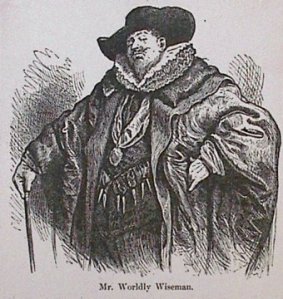
What’s the point of making bank if you’re gravely wrong in your attitude towards the Word of God? What if your attitude towards devout Christians in your family, or social network, is completely contrary because you just don’t understand the Bible and the whole thing is just too difficult for you? Yet you excel in business; and you make bank. But you would rather run away with your wife to South Florida than face your theological problems. You are running away from Scripture, from God, and from Bible-believing Christians to frame an agnostic lifestyle for yourself. What’s more, you have an abundance of people to help you do so. They don’t care about your soul: they don’t even know if souls exist. They will go on and on, in a spirit of religious tolerance, holiday observance, empty New Year’s Eve celebrations, not judging your unbelief, and remaining religiously indifferent, as you rot away on the inside, and as your soul craves nourishment from the Spirit of God. This is where your path has led you: you have a great relationship with your business and your bank, but your knowledge of the Bible, and your relationship with God is virtually non-existent. You bought into the devil’s lie that religious indifference is what “normal” people embrace to be financially successful.[1] You’re on his dope and have become part of the world system: you’ve become a worldly-minded man. Most of the empty and vain things mentioned in the book of Ecclesiastes: they describe your life.
The Broad-Minded World
When the Bible refers to the “world,” it is not referring to the globe, or when you look at a map by National Geographic and can see the oceans and continents. Maps of the world are always great educational resources, but the Bible means something else when it says the “world.” It means all the non-evangelical people, all the non-lordship salvation people, all the non-Biblical people that exist in the world. They are called the world because they are the majority party. Those who believe in the Bible, the true Biblical lordship salvation Gospel, who believe in obedience to it, and in spiritual submission to Jesus, they are “not of the world” (John 15:19). They are the minority party. Jesus said, “Enter through the narrow gate. For wide is the gate and broad is the road that leads to destruction, and many enter through it” (Matt. 7:13). The narrow gate and the narrow road are the lordship salvation Gospel and the life of commandment keeping holiness that it requires. Those who think broad-mindedly or religiously indifferent about such matters are on the broad road “that leads to destruction.” They should be ashamed of themselves, but their friends and colleagues keep them without shame towards these things; and they effectively live in the town of Carnal Policy envisioned by Bunyan and associate with Mr. Worldly Wiseman every week.[2]
Part of the deception involves the churches they attend, which are usually mainline liberal churches, which used to be called “broad” churches, and which deny the deity of Christ, the supernatural, and embrace scientism: the idea that science has an explanation for everything, and that the Bible should submit to the assumptions of naturalistic science. But most of their deception involves the choice they have made against conservative evangelicalism; and instead have embraced a lifestyle solely marked by the economic and the hedonistic, and emphatically not by the theological and the “religious,” a word they enjoy using, to pejoratively distance themselves from practical Christianity. But the evangelical Christian shouldn’t be discouraged when he sees such worldly people having financial success. The devil is allowing them to be successful to keep them asleep in the pillows of their sin:
As for me, my feet had almost slipped; I had nearly lost my foothold. For I envied the arrogant when I saw the prosperity of the wicked. They have no struggles; their bodies are healthy and strong. They are free from common human burdens; they are not plagued by human ills…They say, ‘How would God know? Does the Most High know anything?’ This is what the wicked are like—always free of care, they go on amassing wealth (Ps. 73:2-5, 11-12).
Materialism and the Hatred of Biblical Christianity
It is no secret that non-Christians in name and heart know how to make money. In fact, this is their primary temptation: it’s all they have to live for. It’s all that is real to them. They can’t see the spirit world, so they have no desire to become rich in God through theology and spirituality. They can see money; and that’s what they prioritize. They are naturalists who believe in what they can see, hear, touch, taste, and smell. They have no spiritual senses beyond these five natural senses. They are naturalistic materialists who reject the paranormal; and because of that, they are truly materialistic in every sense of the word. Being part of polite genteel society, most of these upper middle class and upper class people would never be so ill-mannered as to say, “I hate Jesus,” or “I hate Christianity,” like some scoundrel. But in their hearts, they really do. Jesus said that the world “hates me because I testify that its works are evil” (John 7:7).
He said things like, “What shall it profit a man, if he shall gain the whole world, and lose his own soul?” (Mark 8:36). The apostle Paul, addressing real Christians, said, “What we have received is not the spirit of the world, but the Spirit who is from God, so that we may understand what God has freely given us” (1 Cor. 2:12). He speaks of those who are lost as “having no hope, and without God in the world” (Eph. 2:12). He warns: “Beware lest any man spoil you through philosophy and vain deceit, after the tradition of men, after the rudiments of the world, and not after Christ” (Col. 2:8). I naturally think about secular capitalism, guided by the cruel philosophy of Machiavelli,[3] when I read this verse; or political enthusiasts, who make everything about politics, almost as a replacement system for the Gospel. The apostle John warns:
Do not love the world or anything in the world. If anyone loves the world, love for the Father is not in them. For everything in the world—the lust of the flesh, the lust of the eyes, and the pride of life—comes not from the Father but from the world. The world and its desires pass away, but whoever does the will of God lives forever (1 John 2:15-17).
“Do not be surprised, my brothers and sisters, if the world hates you” (1 John 3:13). “You, dear children, are from God and have overcome them, because the one who is in you is greater than the one who is in the world. They are from the world and therefore speak from the viewpoint of the world, and the world listens to them” (1 John 4:4-5). Their viewpoint is to look out for number one; lie, cheat, and steal; take advantage of customers; make as much money as quickly as they can; cuss like a sailor; fornicate like a fornicator; watch whatever they want on television; and without care, to be like Voltaire and live it up, because “you only live once.” Then there’s the more decent humanists who try to hide all these negative vices; and go to liberal churches and treat Christianity like some useful utility for the family unit. But they are all part of the same “rotten crowd,” as Nick said in The Great Gatsby:
They were careless people, Tom and Daisy–they smashed up things and creatures and then retreated back into their money or their vast carelessness, or whatever it was that kept them together, and let other people clean up the mess they had made…they’re a rotten crowd.[4]
Carelessness. Smashing up creatures. Requiring other people to clean up their mess. This is what worldly people are like. They are self-interested, hedonistic, God-haters: “conceited, lovers of pleasure rather than lovers of God” (2 Tim. 3:4). They have enough money to gratify their sensuality; and just enough Christianity to relieve their guilt. They don’t take responsibility for their actions; and their lives lack meaning: “Whoever loves money never has enough; whoever loves wealth is never satisfied with their income. This too is meaningless” (Eccl. 5:10).
Sins of the Worldly-Minded Rich
Let’s paint the picture a bit: there are vain show-offs of materialism, vain pursuits, empty plans, fake vulture friends at parties taking advantage of your hospitality, pretending everything is fine when it’s not, boring repetitive dances, boring music, boring conversations about social status, trips to the big city, owning pools without swimming, white supremacy, business talk, alma mater pride, mansions, prioritizing possessions, and the conquest of women as trophy wives. There is playing rich-only sports like polo and golf; owning luxury cars and sports cars; using condescending paternalistic tones of voice to others or talking down to them like they were a little child;[5] and a harsh, tyrannical, intimidating attitude.
There’s bragging about their luxury homes and new gadgets; a superiority complex, or being smugly obsessed with the thought that they’re better than others; gold digger women who only marry for money and social status instead of marrying for love; designer clothing; materialism: the idea that material possessions are more important than personal character or Christian virtues;[6] looking down on all classes of people who actually work for a living and praising the upper class who spend their days in idleness, pleasure-seeking, hedonism, and Epicureanism; partying and drinking to escape from their boring lifestyles; and the seven deadly sins always left unchecked: pride, greed, lust, envy, gluttony, wrath, and sloth.
I could only bear to read a few chapters from William Thackeray’s The Book of Snobs, because it struck me as very dull and boring. But after reading it, I was able to determine that it was the articles published in this book that popularized our current understanding of the word “snob” in the year 1845. In his view, the word applied to anyone who had a great respect for English royalty, gentility, gentlemen, nobility, lords, ladies, dukes, earls, and other like titles that exist in the British upper class. Even if a person was in the lower class: if they in any way groveled at the feet of such people, then they were considered snobs, because they accepted the snob system as it existed in England. The word “snob” might be a related word to “snub,” which means to ignore someone as unworthy of your attention, because you are “smug,” and think yourself so much better than they are; but that is only a speculation on my part. Thackeray, however, associated “snob” with the British gentility: and aimed it at anyone who had a high regard for the social structure that elevated rank and status; or anyone who imitated the behaviors of the nobility. Here were some of his concluding thoughts on the subject:
We can apply the Snob test to him, and try whether he is conceited and a quack, whether pompous and lacking humility—whether uncharitable and proud of his narrow soul?…I can bear it no longer—this diabolical invention of gentility which kills natural kindliness and honest friendship…The table of ranks and degrees is a lie, and should be flung into the fire…If this is not gospel-truth—if the world does not tend to this—if hereditary-great-man worship is not a humbug and an idolatry—let us have the Stuarts back again, and crop the Free Press’s ears in the pillory…You, who despise your neighbor, are a Snob; you, who forget your own friends, meanly to follow after those of a higher degree, are a Snob; you, who are ashamed of your poverty, and blush for your calling, are a Snob; as are you who boast of your pedigree, or are proud of your wealth.[7]
I’d say that the greatest worldly-minded sins, or those which are especially concentrated in the rich, are “greed, which is idolatry” and “the pride of life” (Col. 3:5; 1 John 2:16). Their unrestrained desire for wealth leads to its eventual accumulation; and then to a sense of pride in their accomplishments. While its completely understandable to be proud of things that you have accomplished in business through self-sacrifice, blood, sweat, and tears: on the other hand, there is another kind of pride, which is unacceptable in the eyes of God. This is called arrogance and snobbery or being haughty; and essentially manifests in classism and economic discrimination against people that have less money than you do. This kind of discrimination even exists between people within the upper class. There are those at the top with “old money,” where millions of dollars have been passed down through inheritance for generations. These people tend to judge the nouveau riche or “new money” people who recently came into millions in their lifetime, often because they lack the etiquette, and the so-called refined manners of the old money people who attend country clubs.
There’s also a “keeping up with the Joneses,” or materialistic competition going on with these people; and an inability to fast and pray; and an aversion to self-denial and patience. Their preoccupation with job security and material possessions leads to idolatry,[8] self-centeredness, and a conspicuous consumption of luxury items that dazzle the eyes and distract people from faith in God, trust in God, the Word of God, and theology. Materialism as a word, attitude, and philosophy has everything to do with the god of riches replacing God with a financially related atheism, agnosticism, or deism of sorts. Their love of money and their trust in riches, at the very least, will lead them to make prosperity primary and salvation secondary, but such a “hypocrite’s hope shall perish” (Job 8:13).[9] Richard Baxter said, “Take heed lest while you pretend to live for God, and to use all that you have as his stewards for his service, you should deceitfully put him off with the leavings of your lusts, and give him only so much as your flesh can spare.”[10]
This is what Jesus was referring to when he said, “No one can serve two masters. Either you will hate the one and love the other, or you will be devoted to the one and despise the other. You cannot serve both God and money” (Matt. 6:24). It’s all about your priorities. Is God going to be the main thing for you, and business be the footnote, or is it going to be the other way around? If you’d compartmentalize God: and make business and money the main thing in your life, it ain’t gonna fly you to Heaven so good! You’d probably not make it! The spider web of your faint religious belief would likely snap under the weight of your heavy soul! Biblical Christianity is all about love, humility, and godly fellowship; but materialism is all about making shallow worldly-minded acquaintances and being financially arrogant. Which one sounds better? Art Gish nailed it when he said:
Wealth encourages pride. It tends to make people haughty, snobbish, and arrogant. Hunger for food has never driven people to such depravity as pride has. All our vanity and pompousness is garbage. Pity the person who tries to be great and profound. That person is shallow. Simplicity is the opposite of pride. It is liberation from egoism.[11]
Biblical Faith and Obedience: The Main Solution
John Calvin’s solution to such worldly sins is Bible study and Bible obedience: studying theology, and especially committing our lives to keep God’s commandments, helps to empty “our minds of an excessive longing for wealth, or power, or human favor” and “eradicates all ambition and thirst for worldly glory…it leaves no place either, first, for pride, show, and ostentation; or, secondly, for avarice, lust, luxury, effeminacy, or other vices which are engendered by self-love.”[12] A true view of the Gospel—termed “lordship salvation” by theologians—goes like this: “the grace of God that bringeth salvation hath appeared to all men, teaching us that, denying ungodliness and worldly lusts, we should live soberly, righteously, and godly, in this present world” (Titus 2:11-12). The sight of the cross should humble us with such a sense of gratitude, at the thought that the Son of God would take such a punishment, instead of our eternal suffering in Hell. This then should propel us to live holy lives in obedience to the Bible. But those worldly-minded men who continue to dispute with the Word of God, relying on reason alone, and resisting all spiritual impulses for faith and righteousness, can only expect a deadening of their consciences, and a loss of any hope for salvation from Hell. So, let’s not be like them!
Telecommuting: A Way to Escape
If ever there was a man who preached righteousness about money, then it was John Wesley. Yet, Kathleen MacArthur, in her study of his economic philosophy, concluded that he didn’t really address the issue of private ethics versus public ethics; and how these two spheres can often conflict with each other. The reality of the situation is that the business world generally operates on the Machiavellian assumption that the public sphere is one of limited morality if not lawlessness; and it’s just up to individuals for how they want to behave.[13] In my view, this basically leaves the Biblical Christian with three choices: 1. Conform to the godless culture that surrounds you, in the companies you work for; and stop being a real Christian. 2. Try your best to be a real Christian, even though the company you are working for, has an ungodly culture.[14] 3. Work from home as a telecommuter: and remove yourself from the ungodly work environment.[15] To me, this third option is the most ideal. This way, your own personal ethics become the new normal; and you have little to no conflict of interest with following Jesus in your job. Either start your own work-at-home business; or seek remote employment on sites like flexjobs.com. According to a recent survey done by LinkedIn News, “Software and IT services lead the way, with 48% of respondents saying their employers will be offering a full-time remote option long-term.”[16] I personally have been able to find plenty of remote work with software companies; and the peace I’ve experienced from it has been amazing. Especially with being able to avoid frequent cussing and flirtatious monkey business at work.
—
[1] Religious indifference in the English business world was a rising trend in the seventeenth century, which is probably what spurred Baxter and Steele to write so much about Biblical economic ethics (see R. H. Tawney, Religion and the Rise of Capitalism, pp. 23-24, 159, 229).
[2] John Bunyan, The Pilgrim’s Progress (London, England: Hurst, Robinson, and Co, 1820), pp. 11-24.
[3] “A political theory advocating the principles of government analyzed in Machiavelli’s The Prince, in which political expediency is placed above morality, and craft and deceit are used to maintain the authority and carry out the policies of a ruler…behavior characterized by subtle or unscrupulous cunning, deception, expediency, or dishonesty” (The Random House Unabridged Dictionary. New York, NY: Random House, 1993, s.v. “Machiavellianism”).
[4] F. Scott Fitzgerald, The Great Gatsby. Edited by James L. W. West III (New York, NY: Scribner, 1925, 2018), pp. 109, 154.
[5] “The system, principle, or practice of managing or governing individuals, businesses, nations, etc., in an outwardly benevolent, but often condescending or controlling way” (The Random House Unabridged Dictionary. New York, NY: Random House, 1993, s.v. “Paternalism”).
[6] Reacting against this as a young Christian, I eventually stumbled on Brother Sun, Sister Moon (1972), which is apparently a historically accurate film about the life of St. Francis of Assisi. Minus a scene that shows his butt, I’d still say it’s a decent film. At one point he says, “There’s a lot one could say to an emperor…you could tell him to throw his scepter in the mud, or to fling his jewels into the river. Then he could see the glow of some new colors amongst the glistening pebbles. And you could say, ‘Otto of Brunswick, let the birds nest in your crown. Let the winds of heaven blow through your empty palaces. What good is your life to you, if your riches bring you no peace of mind and all your people starve?’” Francis’s message about materialistic dissatisfaction and charitable giving echo the book of Ecclesiastes and the four gospels. However, to have an exclusively Franciscan view of money isn’t good enough. After the birth of our second child, I started to realize that avoiding materialism was only part of the picture for Biblical economics. The other parts involve diligence, thrift, financial growth, and many financial necessities that family men are required to meet; and most of these work ethics are expressed in the book of Proverbs.
[7] William Thackeray, The Book of Snobs (London, England: Robin Clark, 1993), pp. 198-200.
[8] Arthur Gish, Beyond the Rat Race (Scottdale, PA: Herald Press, 1973), p. 93: “Many people dare not lose their jobs. To keep from losing them, they suppress their deepest feelings and do what they know is wrong. Many people are so tied to the consumer status system that they are bought off from expressing dissent, affirming and rejecting the dominant values.”
[9] “So are the paths of all that forget God; and the hypocrite’s hope shall perish: whose hope shall be cut off, and whose trust shall be a spider’s web. He shall lean upon his house, but it shall not stand: he shall hold it fast, but it shall not endure” (Job 8:13-15).
[10] Richard Baxter, Chapters from A Christian Directory (London, England: G. Bell & Sons, 1925), p. 53.
[11] Arthur Gish, op. cit., p. 102. “The rich boast of their riches” (Jer. 9:23); “because of your wealth your heart has grown proud” (Ezek. 28:5); “do not be proud, but be willing to associate with people of low position” (Rom. 12:16); “pride goes before destruction, a haughty spirit before a fall” (Prov. 16:18); “my brothers and sisters, believers in our glorious Lord Jesus Christ must not show favoritism. Suppose a man comes into your meeting wearing a gold ring and fine clothes, and a poor man in filthy old clothes also comes in. If you show special attention to the man wearing fine clothes and say, ‘Here’s a good seat for you,’ but say to the poor man, ‘You stand there’ or ‘Sit on the floor by my feet,’ have you not discriminated among yourselves and become judges with evil thoughts?” (James 2:1-4).
[12] John Calvin, Institutes of the Christian Religion. Translated by Henry Beveridge (Peabody, MA: Hendrickson Publishers, 2009), p. 450.
[13] Kathleen MacArthur, The Economic Ethics of John Wesley (New York, NY: The Abingdon Press, 1936), pp. 149-152.
[14] “My prayer is not that you take them out of the world but that you protect them from the evil one” (John 17:15). This is the fighting stance: in the world, not of it.
[15] “There hath no temptation taken you but such as is common to man: but God is faithful, who will not suffer you to be tempted above that ye are able; but will with the temptation also make a way to escape, that ye may be able to bear it” (1 Cor. 10:13). This is the flighting stance: separation from the world. Just be sure to set aside 20% of every paycheck into a bank account for tax money (Mark 12:17). You should also go to H&R Block four times a year for check ins on your self-employment tax status, your estimated tax payments to the IRS and the state, etc. This is because most of your work will probably come from 1099s instead of W-2s. You will have to manually pay your taxes, instead of having tax money automatically withheld from your paycheck, as with W-2 jobs. The Proverbs 31 woman in verses 18-19 is portrayed as working at home, at night, making cloth with her distaff and spindle, with the lamp on in her room. Matthew Henry: “her business lying within-doors.” Catholic monks and the Amish take an official stance of separation from the business world, to avoid its corrupting effects (the Amish rely on Romans 12:2 and 2 Corinthians 6:14 for this). It’s easy for me to understand their reasoning: up to a certain point. Most of the Puritan tradesmen, in effect, also did this as most were owners of small family businesses or were “small masters”: they were generally not working for large companies on corporate “football teams” filled with non-Christian men. The trades of Jesus, Peter, Paul, Luke, and the other apostles probably looked more like the Puritan small business model.
[16] https://www.linkedin.com/feed/update/urn:li:activity:681611586953 4494720/ – another great resource is Jason Fried and David Hansson’s Remote: Office Not Required (2013).
Posted in Uncategorized
Leave a comment
 WesleyGospel Ministries