
-
-

-
LATEST POSTS
- Charles Lawson: Gap Theory, Antinomianism, and Antisemitism
- The Hidden Dangers of Online New Age Spirituality – Bob Larson
- Drawing a Crowd with Hard Hellfire Preaching Against Sin–Instead of Using Magic Tricks and Trivia Questions – Jesse Morrell
- True and False Prophets: Yesterday and Today
- When Did Satan Fall? – Bill Wiese
RECENT VIEWS
- No Denominations in Heaven: John Wesley’s Dream - The British Friend
- A Response to T. A. McMahon’s Article: “Evangelical Mysticism?”
- Charismatic Response to John MacArthur’s “Strange Fire” - Dr. Craig Keener
- David Wilkerson: Pentecostal Evangelist and Pastor
- Old Testament Visions of Hell
- The Exchanged Life - Hudson Taylor
- Anita Bryant’s Anti-Homosexual Campaign in Miami (1977)
- Drawing a Crowd with Hard Hellfire Preaching Against Sin--Instead of Using Magic Tricks and Trivia Questions - Jesse Morrell
- Dr. Azzacov’s Screams of the Damned - Coast to Coast AM
- Hosanna! Music: The Revival Worship Label
MONTHLY ARCHIVES
- June 2026 (54)
- May 2026 (100)
- April 2026 (108)
- March 2026 (119)
- February 2026 (113)
- January 2026 (201)
- December 2025 (229)
- November 2025 (258)
- October 2025 (160)
- September 2025 (114)
- August 2025 (96)
- July 2025 (93)
- June 2025 (71)
- May 2025 (82)
- April 2025 (137)
- March 2025 (140)
- February 2025 (117)
- January 2025 (130)
- December 2024 (87)
- November 2024 (130)
- October 2024 (125)
- September 2024 (76)
- August 2024 (79)
- July 2024 (101)
- June 2024 (92)
- May 2024 (58)
- April 2024 (54)
- March 2024 (34)
- February 2024 (95)
- January 2024 (61)
- December 2023 (6)
- November 2023 (35)
- October 2023 (24)
- September 2023 (18)
- August 2023 (13)
- July 2023 (11)
- June 2023 (15)
- May 2023 (22)
- April 2023 (14)
- March 2023 (6)
- February 2023 (6)
- January 2023 (11)
- December 2022 (14)
- November 2022 (15)
- October 2022 (10)
- September 2022 (1)
- August 2022 (3)
- July 2022 (2)
- June 2022 (1)
- May 2022 (3)
- April 2022 (7)
- March 2022 (6)
- February 2022 (2)
- January 2022 (4)
- December 2021 (7)
- November 2021 (5)
- September 2021 (1)
- August 2021 (1)
- July 2021 (3)
- June 2021 (1)
- May 2021 (2)
- March 2021 (3)
- February 2021 (2)
- December 2020 (1)
- October 2020 (1)
- November 2019 (1)
- October 2019 (2)
- September 2019 (1)
- August 2019 (1)
- July 2019 (7)
- June 2019 (4)
- May 2019 (4)
- April 2019 (18)
- March 2019 (7)
- February 2019 (4)
- January 2019 (6)
- December 2018 (3)
- November 2018 (2)
- October 2018 (4)
- September 2018 (5)
- August 2018 (3)
- July 2018 (2)
- June 2018 (1)
- May 2018 (3)
- April 2018 (8)
- January 2018 (2)
- December 2017 (5)
- November 2017 (1)
- October 2017 (8)
- September 2017 (4)
- August 2017 (6)
- July 2017 (6)
- June 2017 (6)
- May 2017 (10)
- April 2017 (20)
- March 2017 (15)
- February 2017 (10)
- January 2017 (10)
- December 2016 (8)
- November 2016 (10)
- October 2016 (22)
- September 2016 (15)
- August 2016 (5)
- July 2016 (8)
- June 2016 (3)
- May 2016 (7)
- April 2016 (4)
- March 2016 (10)
- February 2016 (3)
- January 2016 (9)
- December 2015 (8)
- November 2015 (9)
- October 2015 (7)
- September 2015 (4)
- August 2015 (13)
- July 2015 (9)
- June 2015 (2)
- May 2015 (6)
- April 2015 (38)
- March 2015 (28)
- February 2015 (28)
- January 2015 (28)
- December 2014 (19)
- November 2014 (15)
- October 2014 (5)
- September 2014 (9)
- August 2014 (17)
- July 2014 (30)
- June 2014 (16)
- May 2014 (17)
- April 2014 (17)
- March 2014 (6)
- February 2014 (8)
- January 2014 (8)
- December 2013 (2)
- November 2013 (2)
- October 2013 (3)
- September 2013 (2)
- August 2013 (2)
- July 2013 (1)
- June 2013 (2)
- May 2013 (7)
- April 2013 (8)
- March 2013 (6)
- February 2013 (3)
- January 2013 (6)
- December 2012 (2)
- November 2012 (2)
- October 2012 (4)
- September 2012 (6)
- August 2012 (4)
- July 2012 (7)
- June 2012 (1)
- May 2012 (3)
- April 2012 (5)
- March 2012 (2)
- February 2012 (3)
- January 2012 (1)
- December 2011 (5)
- November 2011 (4)
- October 2011 (10)
- September 2011 (2)
- August 2011 (3)
- July 2011 (2)
- June 2011 (4)
- May 2011 (4)
- April 2011 (4)
- March 2011 (6)
- February 2011 (4)
- January 2011 (1)
- December 2010 (6)
- November 2010 (5)
- October 2010 (9)
- September 2010 (3)
-
Supernatural Theology 10: Why I Believe In the Supernatural 5: Temptations and Demons
Heaviness through manifold temptations. –1 Peter 1:6
The worries of this life and the deceitfulness of wealth choke the word. –Matthew 13:22
—
Daniel Jennings, The Supernatural Occurrences of John Wesley, ch. 2.
Paranormal Footage of “Shadow People”
Paranormal Footage of “Strange Lights in the Sky”
Derek Prince, They Shall Expel Demons (I disagree with his antediluvian spirit theory).
Gabriele Amorth, An Exorcist Tells His Story.
—. An Exorcist: More Stories.
Richard Ing, Spiritual Warfare.
Walter Martin, The Kingdom of the Occult, ch. 11: “Satanism.”
Francis MacNutt, Deliverance from Evil Spirits.
John Eckhardt, Prayers That Rout Demons.
Craig Keener, Miracles, vol. 1, Part 3: “Miracle Accounts Beyond Antiquity.” Highlights modern day miracles happening in Asia, Africa, Latin America, and among Pentecostal healing evangelists.
John Wesley, “Heaviness Through Manifold Temptations” (1755)
John Wimber, Power Healing, ch. 6: “Healing the Demonized.”
Win Worley, Eradicating the Hosts of Hell – notice the demon-faced bush illustration; the opposite of which would be: “an angel appeared to Moses in the flames of a burning bush” (Acts 7:30).

Posted in Uncategorized
Leave a comment
Supernatural Theology 9: Why I Believe In the Supernatural 4: Nature Miracles
Now Elijah the Tishbite, from Tishbe in Gilead, said to Ahab, “As the Lord, the God of Israel, lives, whom I serve, there will be neither dew nor rain in the next few years except at my word.” –1 Kings 17:1
In Elijah’s time, when the sky was shut for three and a half years and there was a severe famine throughout the land. –Luke 4:25
He got up, rebuked the wind and said to the waves, “Quiet! Be still!” Then the wind died down and it was completely calm. –Mark 4:39 (This was actually a wind-stopping prayer, not a rain-stopping one.)
Elijah was a human being, even as we are. He prayed earnestly that it would not rain, and it did not rain on the land for three and a half years. Again he prayed, and the heavens gave rain, and the earth produced its crops. –James 5:17-18
Walking and jumping, and praising God. –Acts 3:8
The seventy-two returned with joy and said, “Lord, even the demons submit to us in your name!” –Luke 10:17
—
Daniel Jennings, The Supernatural Occurrences of John Wesley, ch. 12.
John Wimber, Power Healing
Charles and Frances Hunter, How to Heal the Sick
Joan Carroll Cruz, Mysteries Marvels Miracles, ch. 29: “Rain, Snow, and Ice”
Faith Like Potatoes (2006) – a missionary movie: the reverse is done: Angus Buchan prays for rain to come and water down a farm fire. I didn’t see this movie until 2009 or so. I had prayed for rain-stopping miracles before I saw this. The movie just confirmed it…
Posted in Uncategorized
Leave a comment
Supernatural Theology 8: Why I Believe In the Supernatural 3: Angels and Visions
Looking unto Jesus the author and finisher of our faith. –Hebrews 12:2
They saw what seemed to be tongues of fire that separated and came to rest on each of them. –Acts 2:3
At Caesarea there was a man named Cornelius, a centurion in what was known as the Italian Regiment. He and all his family were devout and God-fearing; he gave generously to those in need and prayed to God regularly. One day at about three in the afternoon he had a vision. He distinctly saw an angel of God, who came to him and said, “Cornelius!” –Acts 10:1-3
“No one has ever seen God” (1 John 4:12). // “The hair on his head was white like wool, as white as snow, and his eyes were like blazing fire…When I saw him, I fell at his feet as dead. And he laid his right hand upon me, saying unto me, Fear not; I am the first and the last” (Rev. 1:14, 17). These seemingly contradictory statements were both written by the apostle John. Did he make an innocent mistake in 1 John 4:12? Who knows. It had already been written that Moses saw God’s face (Num. 12:7-8). Although one thing is true, the apostle John eventually did see the glorified Jesus in Revelation 1:14; and probably the Father in Revelation 4. Of course, Ezekiel 1 and Isaiah 6 also have visions of God on his throne. Abraham spoke with God in human form along with two other angels (Gen. 18). Jacob even wrestled with God (Gen. 32:22-32). With all of these Scriptures, how could John say, “No one has ever seen God?” (1 John 4:12). He must’ve meant that no one has ever seen God in his most pure and unveiled form.
—
“Angel Sparkles: Visions That Confirm Revelations”
Daniel Jennings, The Supernatural Occurrences of John Wesley, ch. 11.
Richard Foster, Prayer, ch. 14: “Contemplative Prayer.”
Augustin Poulain, The Graces of Interior Prayer
Steve Thompson, You May All Prophesy
Teresa of Avila, Interior Castle
SermonIndex Podcasts
—. David Wilkerson.
—. A. W. Tozer.
Posted in Uncategorized
Leave a comment
Salvation from Hell by Repentant Faith
“No, you won’t listen. So you are storing up terrible punishment for yourself because of your stubbornness in refusing to turn from your sin. For there is going to come a Day of Judgment when God, the just judge of all the world, will judge all people according to what they have done.”–Romans 2:5-6, NLT
“Repent, and believe in the Gospel.”–Mark 1:15
The doctrine of Hell is perhaps the most important of all theological subjects to study. I used to think that “soteriology” was the most important; and, in a way, it is, because it is through that study that we get a handle on what the Gospel is. But the doctrine of Hell, which most theologians would put in the “eschatology” category:–I say is the most important of all theological subjects. If studied carefully from a Reformed or Puritan view, it will become clear that the doctrine of Hell should really be treated as a section of soteriology. When we understand the Biblical doctrine, or revelation of eternal punishment in Hell, only then do we see the great need for repentance from sin and faith in the bloodshed of Christ. Our view of Hell should guide our view of salvation. If the Gospel we preach does not “save from wrath” (Rom. 5:9), then we are preaching “another gospel” (Gal. 1:8). The deep spiritual concern of all mankind is the fear that you may end up in Hell after you die. If this concern is not sufficiently addressed by evangelists, then I say all their preaching is useless. Leonard Ravenhill said: “WE NEED SOME HELL-FIRE PREACHING ON REPENTANCE!” That is, preaching sermons on the subjects of Hell and Repentance; or, man’s deepest problem and solution. When you study books on the Puritan view of Hell, you see it in Bunyan, in Baxter, in Edwards, in Whitefield, in Wesley, in Spurgeon:–that the grand reason why Scripture condemns the great majority of mankind to the “lake of fire and brimstone” (Rev. 21:8) … is impenitence—not just a lack of repentance, having not thought of it. But impenitence—or having an unrepentant heart towards known sin. Impenitence, or an unrepentant heart, is when someone is repeatedly confronted by Scripture about their sins, but they refuse to change their hearts, refuse to resist the sin, refuse to give it up. They don’t want to change their evil ways. They want to “enjoy the pleasures of sin for a season” (Heb. 11:25); and ignore the reality that they’re on their way to “eternal fire” in Hell (Matt. 25:41). There is only one true Gospel:–that salvation from the eternal wrath of God in Hell is available only through REPENTANCE (actively striving to turn away from sin, and obeying God’s moral commandments) and FAITH (in the bloodshed of Christ on the cross, as a sin offering to the Father, a substitute for our eternal damnation). Without repentance and faith there is no salvation, no Gospel. So, it makes sense that when we examine the whole New Testament doctrine of Hell (for that is where most of it comes from), we see the two great causes of damnation to Hell are impenitence and unbelief; and the two great causes of salvation to Heaven are repentance and faith.

This is why John the Baptist erupts on the scene with a message of “REPENT! For the kingdom of Heaven has come near…His winnowing fork is in His hand, and He will clear His threshing floor, gathering His wheat into the barn and burning up the chaff with UNQUENCHABLE FIRE!” (Matt. 3:2, 12). Thus, the first sermon ever preached in the New Testament is a message of “Hell-fire preaching on repentance.” This repentance-or-Hell connection is immediately asserted:–TURN OR BURN! John the Baptist, of whom Christ said, “Among them that are born of women there is none greater” (Luke 7:28), clearly saw the reason why God has wicked men “thrown into Hell” (Luke 12:5):–it is because they refuse to repent from their sins, change their ways, amend their doings, etc. Thus the role of the evangelist, the missionary, the pastor, the street preacher is to urgently, and passionately, point men to REPENTANCE as the greatest EMERGENCY RESPONSE possible…it is the first and most immediate route away from Hell…it is “fleeing from the wrath to come” (Luke 3:7). But that’s not all, after repenting, after running away from sin and wrath and Hell, you must CLING TO THE CROSS FOR DEAR LIFE, or else you will die the “second death” (Rev. 21:8). HANGING ON TO THE CROSS, is living by faith in the blood of Christ, as the only means of turning away the anger of God for your sins. If you only have repentance, then you will become religiously prideful, and consider yourself better than others, because of your good works. You need the atonement of Christ, so the anger of God is satisfied (Isa. 53), and your pride extinguished at the thought: that your sins are so bad, that the only means God could employ to allow you into Heaven, was to give His Holy One over to the torments of Pontius Pilate! That thought should humble you!
This sprouts the question: “If my sins are so bad, then why isn’t faith in the cross enough? Why is repentance from sin necessary for salvation from Hell?” Because the cross is “for the forgiveness of sins that are past” (Rom. 3:25). Scripture never says Jesus died for your “past, present, and future sins.” The Christian must maintain his state of forgiveness before God, by “serving Him without fear, in holiness and righteousness all the days of his life” (Luke 1:75). After forgiving sinners, Christ says, “Go, and sin no more” (John 8:11). He offers God’s grace to sinners, but after that, He lays moral responsibility on them as well. Temptations will come, and the Christian will have to fight and resist temptations to commit sin, most of which will occur in his thought life; he will be expected to “fight the good fight of faith” (1 Tim. 6:12). So, “faith without works is dead” (Jas. 2:17); faith without repentance is not Biblical faith. The ONLY ANSWER TO HELL is FAITH-REPENTANCE or REPENTANCE-FAITH. It is a compound word for a compound concept and a compound spiritual experience. The man who tries to separate repentance from faith, and seeks to be saved from Hell by faith alone, without repentance, is truly deceived, and on his way to Hell! The only kind of faith that saves men from Hell is REPENTANT FAITH or PENITENT FAITH in the cross of Jesus. James said, “By works a man is justified and not by faith alone!” (Jas. 2:24) And John: “And each was judged according to his works, as recorded in the books” (Rev. 20:13).
But does this contradict the Protestant doctrine of “justification by faith alone”? No. I’m not really speaking about justification(the first time an ungodly sinner experiences God’s forgiveness, Romans 4:5). I’m referring to a man’s final and absolute salvation from Hell, which occurs at the end of his life (Luke 16:22). It’s important that we don’t confuse the concepts. Justification is not the same thing as salvation from Hell. (I used to think it was.) Justification by faith is an experience of God’s forgiveness that leads up to final salvation, continues throughout the Christian life, and finds its finalization, and culmination at death, when a godly man finally experiences salvation from Hell, and is perfected in holiness after entrance into Heaven. This is called “final justification” or “final salvation.” It is the “for sure”, irreversible, salvation from Hell after death, without the possibility of losing that conditional salvation the Christian has been living with all his life. The possibility of losing repentance, faith, and the grace of God lingered as a haunting reality all the Christian’s life:–but after the death of the saint, there is an “eternal life” bestowed by Christ that no man can take away! (John 3:16; 10:29). I think there are many evangelical Christians who are confused about this whole subject. And it is a tragic thing that so many take their salvation for granted, as if Heaven were already theirs, because they were one-time-forgiven, and that God does not expect them to “be holy, as He is holy” (1 Pet. 1:16). These Christians are not indwelt by the Holy Spirit; nor are they on their way to Heaven. A true experience of God’s forgiveness will lead men by the Spirit to “pursue peace with all men, and HOLINESS, WITHOUT WHICH NO ONE WILL SEE THE LORD!” (Heb. 12:14).
It’s not about what’s “judgmental” and “non-judgmental” that matters; it’s about the Scripture way of salvation from eternal Hell-fire! REPENTANCE AND FAITH:–or, PENITENT FAITH. And this is the judgment: They are “condemned already” who do “not believe” in Christ. Why? “Because they have not believed in the name of God’s one and only Son” (John 3:18). It’s not just that those doomed to Hell haven’t believed in Jesus that’s the issue; what the real problem is, is that in not believing in Him, they die without Christ’s atonement for the sins of their lives, which is something that only “God’s one and only Son” could accomplish. If you “die in your sins” (John 8:24), then “the wrath of God abides on you” forever in Hell (John 3:36). Thus, repentance from sin is a necessary prerequisite for faith in the cross; and it is faith in the cross that secures atonement for sin, forgiveness of sin, and ultimately, salvation from Hell (if persisted in until death): “He that shall endure unto the end, the same shall be saved” (Matt. 24:13, HCSB).
But if Christ did not command Christians to “go, and sin no more” (John 8:11) after they receive their cross-based atonement, it would be ludicrous for Christ to have died on the cross at all! It would be just as ludicrous as a stranger bailing out a thief in court, and knowing he had an orientation for compulsive stealing (kleptomania), telling him that it would be okay if he stole again, as many times as he liked, and he could trust him to post bail every time he got caught! But Scripture calls Jesus the “Holy One” (Acts 2:27); and it is against His nature to be some “enabler” for wicked hypocrites, who are not committed to repentance. On the contrary, on Judgment Day, Jesus will tell the hypocrites, “I never knew you; depart from Me, you who practice lawlessness!” (Matt. 7:23, NKJV). So, you can see that in the end, repentance and faith must go together, or you go to Hell. If there is no faith, there is no Heaven—true. But the nature of that faith brings forth repentance and “fruits worthy of repentance” (Matt. 3:8) (good works). I don’t mean a real Christian will never slip and fall and sometimes give into temptation and commit a sin. I just mean, the general orientation of a repentant Christian’s life is one of “going,” and of “sinning no more” (John 8:11). That’s the orientation of a saved Christian. There is a definite moral changing process going on, and less sinning (this is called regeneration and sanctification). That’s what repentance is. It’s not the total stopping of sin; its turning away from sin. In the Greek and Hebrew, the word “repent” means to turn away from or to put behind you. Repentance is not a “Stop” Sign, it’s a “U-Turn” Sign. Those who see repentance as the stopping of sin are perfectionists, and are deceived. Scripture says, “If we claim to be without sin, we deceive ourselves and the truth is not in us” (1 John 1:8). And “all liars…shall be cast into the lake of fire” (Rev. 21:8).
So, TURN away from sin, and turn to Christ! Receive God’s forgiveness, and spiritual peace, and joy! But don’t have unrealistic notions about the nature of that turning. The turning is imperfect. You will still experience some amount sin, no matter how hard you turn from it. But what matters to God, is that you make a strong effort to turn, that you do “REPENT, for the kingdom of God is near” (Matt. 3:2). And mark my words, if you don’t turn at all, then “you are condemned already!” (John 3:18). I have warned you in love.
Posted in Uncategorized
Leave a comment
Supernatural Theology 58: Antinomianism In the Churches
If he that cometh preacheth another Jesus, whom we have not preached, or if ye receive another spirit, which ye have not received, or another gospel, which ye have not accepted, ye might well bear with him. –2 Corinthians 11:4 (KJV)
Five Views on Sanctification, Wesleyan, Reformed, and Pentecostal. (VS Keswick).
Christian Spirituality: Five Views of Sanctification, all could be good here.
Mark Jones, Antinomianism.
Martin Luther, “Against the Antinomians,” Luther’s Works, vol. 47, Fortress Press.
Posted in Uncategorized
Leave a comment
Review of Leonard Ravenhill’s “Tried and Transfigured”
Hardships and Temptations:
Jesus Had Them and So Will True Christians
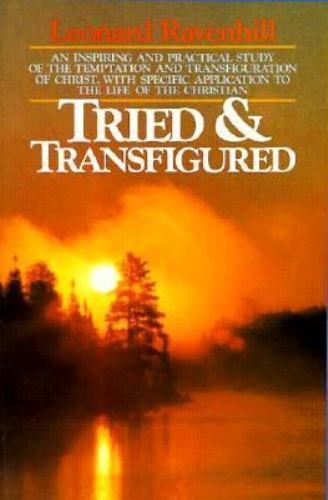
This book is broken up into two main parts. Part 1 is about the temptations of Jesus (hence the word Tried or trial in the title); and Part 2 is about the transfiguration of Jesus (hence the word Transfigured or sanctified with Spirit-baptism in the title). Most of the book is a Bible study about these experiences in Jesus’ life; and explaining what they mean. But occasionally the suggestion is drawn that Christians are to expect the same things in their own lives, in different ways. Ravenhill advances the thesis that true Christians, who are reflections of Jesus, will go through both trials (painful hardships) and temptations (pleasurable, sinful seductions) in order to prove the genuineness of their faith in God. 1 Peter 1:6-7: “In all this you greatly rejoice, though now for a little while you may have had to suffer grief in all kinds of trials. These have come so that THE PROVEN GENUINENESS OF YOUR FAITH—of greater worth than gold, which perishes even though refined by fire—may result in praise, glory and honor when Jesus Christ is revealed.” Ravenhill said, “Gold tried in a fire is of greater value than gold which still has a mixture of alloys. Gold that is shaped into an ornament has yet more value. Of still higher worth is gold purified, then shaped into a vessel, and finally beautifully engraved” (p. 64). I also think about Job 1:8-12, when Satan himself was allowed to test Job’s faith with hardships, in order to prove to the spirit world that Job feared God with no strings attached.
All kinds of trials. When thinking about Jesus, he refers to Jesus in the desert for 40 days, fasting, hungering, starving, getting challenged by the devil to make bread out of stones in order to prove to Himself that he was the Son of God (implied was a suggestion to Jesus that he was not the Son of God but illegitimate), to throw Himself down from the temple and see if the angels would come and levitate Him, and to seduce Him with worldwide religious and political authority if He would only bow down and worship the devil—perhaps an appeal to follow Roman religion and have influence in the Roman empire as a chief magician, like Jannes and Jambres were for Pharaoh (Exod. 7:22; 2 Tim. 3:8).
With each demonic vision or voice, Jesus appealed to the authority of Scripture, saying, “It is written” (Matt. 4:4, 7, 10); and after the third time “the devil left Him, and angels came and attended Him” (4:11). The angels would have come to strengthen His faith. Even Jesus needed to live by faith, because He lived as a man. So, after proving His spiritual strength by conquering bodily cravings, by shunning the vanity of materialism and earthly authority, by placing His faith verbally in Scripture all by Himself in isolation from other people, by rejecting the Dark Side of the Force and Satan’s lure to become the next Darth Vader, and by overcoming the devil in the desert unlike Adam had in the Garden—Jesus proved to the spirit world that He had authority over all evil spirits: even over Satan himself. Before the desert, there is no mention of Jesus casting out demons. But afterwards, it happened almost constantly for three years until He was crucified.
The Transfiguration:
Baptism in the Holy Spirit, Empowerment to Face Even Greater Trials
When we come to the transfiguration part of the book, which is longer, we see different themes touched on. In its Introduction, conditional security is mentioned: the possibility of backsliding after mountaintop experiences with the Lord. Peter denied Jesus three times after he saw the transfiguration of Jesus (his body shining with the bright white light of the Holy Spirit), and Moses, Elijah, the bright white cloud of God, the audible voice of God, falling into a trance, feeling the fear of God (Matt. 17:1-9). Even after all of that, Peter still weakened and buckled under pressure when his life was threatened. The moral of the story is that spiritual highs in the present are no guarantee against losing your faith in the future. Salvation is by faith (Eph. 2:8); so much for the doctrine of once saved, always saved! We must keep ourselves in check, God helping us. 1 Corinthians 10:12: “So, if you think you are standing firm, be careful that you don’t fall!” Biblical scholars generally date the transfiguration one year before the crucifixion. So, after this extremely supernatural experience of God, it took about one year for Peter to backslide to the point of denying Jesus three times, when threatened with martyrdom (Matt. 26:69-75).
I was pleasantly surprised to see Ravenhill favorably refer to Evelyn Underhill’s The Mystic Way on page 81, a 400 page book on Catholic mystical theology from an Anglican perspective. At first I was a little concerned, because in her book Mysticism, she takes a pluralistic approach, mixing the religions, but in the one quoted by Ravenhill, it looks like she had cleaned up her theology and only turned to sources like Catholic saints. It was about how contemplation can lead to transfiguration or even encounters with the shekinah glory (light of the Holy Spirit): St. Francis of Assisi and St. Catherine of Bologna are mentioned as examples. I recently wrote about this in my booklet on Supernatural Lights, drawing from Alexander Golitzin’s St. Symeon the New Theologian: On the Mystical Life, vol. 3, where he shares at length about the role of shekinah glory in the life of this Greek Orthodox saint. Foreign sounding to Baptist, Pentecostal, Lutheran, Presbyterian, and other Protestant ears, but it begs the question of whether they are missing out on something due to a theological blind spot.
When referring to these mountaintop or transfiguration-like experiences, he brings it down a notch for the rest of Christianity. Not everyone is like St. Francis of Assisi, not everyone is literally going to light up like Jesus or Moses did. (Why not!?) But seriously, though, there are lower level experiences from the Holy Spirit that can follow the same pattern, following periods of trial and temptation, only to be followed by worse ones later on. Ravenhill said:
Christ’s glory-baptism on the Mount must have been a special means of ministry for His soul’s fortification. This was the entrance to a future, gloomy tunnel of soul-strain that led to the waste places of the valley of humiliation. It was a special anointing for service…Christ had this glory-baptism, this unique anointing of majesty on the Mount of Transfiguration. It was a gateway through which He began to tread the Via Dolorosa (pp. 127-128).
In other words, His transfiguration was a supernatural empowerment of confidence and divine protection, to energize Him for the greater trials that lied ahead (Matt. 17): namely, negative repercussions from cleansing the temple, persecution from politically empowered Jewish leaders in Jerusalem, Gethsemane where He sweat blood, Judas Iscariot’s betrayal and suicide, kangaroo court proceedings, mockery from Roman soldiers, the crown of thorns, Peter’s denials, beatings, scourgings, His crucifixion (definitely that), and knowing that most of His disciples did not believe He would rise from the dead (Matt. 21-28). Ravenhill also saw the transfiguration as a kind of baptism in the Holy Spirit, without speaking in tongues: and no doubt, it was: the glory cloud of the Holy Spirit was permeating the atmosphere to where you could both feel it and see it! All of them were Spirit baptized in a sense, but especially Jesus, since He shone with light. It might have been the greatest Spirit baptism He ever experienced. But by the time He’s on the cross a year later, He couldn’t feel God’s presence, and He cried, “My God, my God, why have You forsaken Me!” (Matt. 27:46). No presence of God was felt on the cross. It seems that the transfiguration baptism had all dried up by then. By the time of Gethsemane, just before the crucifixion, He needed extra encouragement from an angel (Luke 22:43). But He got there. Jesus didn’t run away, even though God told Him through Moses and Elijah what He wanted to happen. Luke 9:30-31: “There talked with Him two men, which were Moses and Elijah: who appeared in glory, and spake of His decease which He should accomplish at Jerusalem.” Does it look like I’m presenting an all-too-human Jesus to you? How human can you get…dying on a cross. That is one of the most humiliating ways to die. Compare that with the way the Pharisees probably died: with honors and respect, as rabbi-saints, respected in the community, lying on their deathbeds, blessing and prophesying to a group of loving admirers. Not Jesus. He died with probably nothing more than a loin cloth on His body, with shredded skin and muscle tissue hanging out, with huge holes in His hands and feet, gasping for His final breaths while thugs laughed at him. Jesus was and is the Son of God, but He lived as a human being and was “tempted in every way, just as we are—yet He did not sin” (Heb. 4:15). He was the Son of God yes, but he was also the Son of Man (through the virgin Mary), and that is what qualifies Him to be a mediator, or middleman, between God and humankind. But this same Jesus definitely needed encouragement from the Holy Spirit, the voice of God, saints from Heaven, and from angels sometimes! And SO DO WE!
I disagree with Ravenhill’s doctrine of entire sanctification in ch. 16, which is what he thinks the transfiguration symbolizes for the life of the believer. On the contrary, I think it more so symbolizes what we have in Acts 2:4: “All of them were filled with the Holy Spirit and began to speak in other tongues as the Spirit enabled them.” The presence of God part, more so than the tongues part, but they aren’t mutually exclusive now that we live in the Pentecostal age. But along with Wesley and all the confused Methodists and holiness people who hold to entire sanctification, Ravenhill at least said that backsliding from perfection was possible, which to me, nullifies the entire claim of the doctrine: “I am not inferring that this endowment is a kind of perpetual nonforfeitable” thing (p. 143). Well, then brother Ravenhill, I would say then that although God is omnipotent, the flesh will always remain sinful (Rom. 7:23), and only physical death will eradicate bodily sin entirely (glorification). There is no entire sanctification before death. However, SPIRIT-BAPTISMS should be the focus, because it is SPIRIT-BAPTISMS, or FEELING GOD’S PRESENCE that strengthens our faith and resolve to fight sin, when things get dry. And how do we get them? They are “maintained only by prayer and close submission to the will of God” (p. 143). Pentecostal praise and worship is a form of prayer. Bible study and faith-based obedience to Scripture is the best form of submission to God that I know of. James 4:7: “Submit yourselves, then, to God. Resist the devil, and he will flee from you.”
Posted in Uncategorized
Leave a comment
 WesleyGospel Ministries