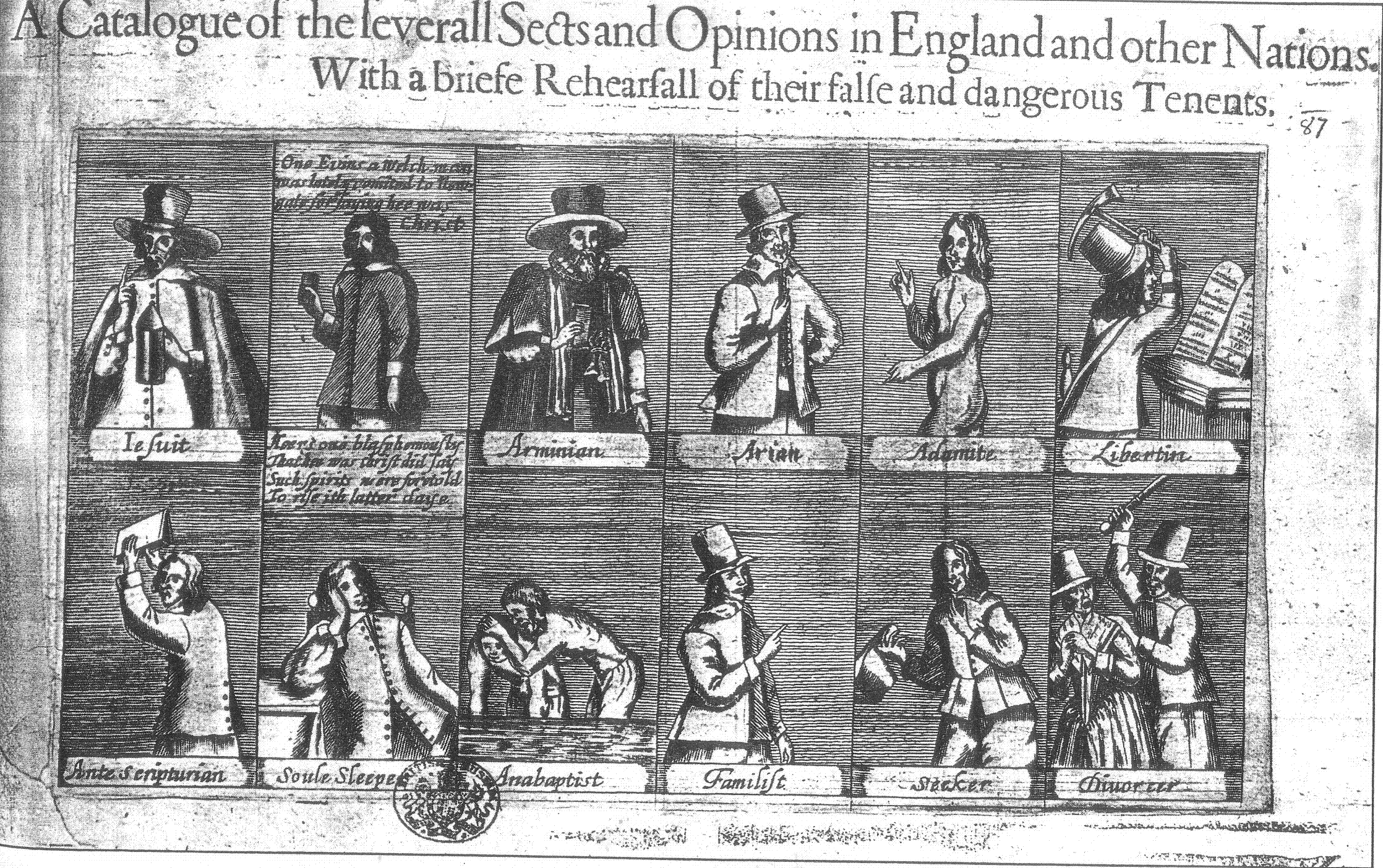
11 Be careful that you do not forget the Lord your God, failing to observe his commands, his laws and his decrees that I am giving you this day. 12 Otherwise, when you eat and are satisfied, when you build fine houses and settle down, 13 and when your herds and flocks grow large and your silver and gold increase and all you have is multiplied, 14 then your heart will become proud and you will forget the Lord your God, who brought you out of Egypt, out of the land of slavery. 15 He led you through the vast and dreadful wilderness, that thirsty and waterless land, with its venomous snakes and scorpions. He brought you water out of hard rock. 16 He gave you manna to eat in the wilderness, something your ancestors had never known, to humble and test you so that in the end it might go well with you. 17 You may say to yourself, “My power and the strength of my hands have produced this wealth for me.”18 But remember the Lord your God, for it is he who gives you the ability to produce wealth, and so confirms his covenant, which he swore to your ancestors, as it is today. 19 If you ever forget the Lord your God and follow other gods and worship and bow down to them, I testify against you today that you will surely be destroyed. 20 Like the nations the Lord destroyed before you, so you will be destroyed for not obeying the Lord your God. –Deuteronomy 8:11-20
Jesus began to speak to the crowd about John: “What did you go out into the wilderness to see? A reed swayed by the wind? 8 If not, what did you go out to see? A man dressed in fine clothes? No, those who wear fine clothes are in kings’ palaces. 9 Then what did you go out to see? A prophet? Yes, I tell you, and more than a prophet.” –Matthew 11:7-10
One person pretends to be rich, yet has nothing; another pretends to be poor, yet has great wealth. –Proverbs 13:7
Why is self-denial in general so little practised at present among the Methodists?…The Methodists grow more and more self-indulgent, because they grow rich…And it is an observation which admits of few exceptions, that nine in ten of these decreased in grace, in the same proportion as they increased in wealth. Indeed, according to the natural tendency of riches, we cannot expect it to be otherwise. But how astonishing a thing is this! How can we understand it? Does it not seem (and yet this cannot be) that Christianity, true scriptural Christianity, has a tendency, in process of time, to undermine and destroy itself? For wherever true Christianity spreads, it must cause diligence and frugality, which, in the natural course of things, must beget riches. And riches naturally beget pride, love of the world, and every temper that is destructive of Christianity. Now, if there be no way to prevent this, Christianity is inconsistent with itself, and, of consequence, cannot stand, cannot continue long among any people; since, wherever it generally prevails, it saps its own foundation. But is there no way to prevent this? To continue Christianity among a people? Allowing that diligence and frugality must produce riches, is there no means to hinder riches from destroying the religion of those that possess them? I can see only one possible way; find out another who can. Do you gain all you can, and save all you can? Then you must, in the nature of things, grow rich. Then if you have any desire to escape the damnation of hell, give all you can; otherwise I can have no more hope of your salvation, than of that of Judas Iscariot. –John Wesley, “Causes of the Inefficacy of Christianity” 1.16-18
There are strong grounds to hope that the truly regenerate will persevere unto the end, and be saved, through the power of divine grace which is pledged for their support; but their future obedience and final salvation are neither determined nor certain, since through infirmity and manifold temptations they are in danger of falling; and they ought, therefore, to watch and pray lest they make shipwreck of their faith and be lost.
–Treatise of the Faith and Practices of the Free Will Baptists, CHAPTER XIII, “Perseverance of the Saints”
FREE E-BOOK TO READ ALONG:
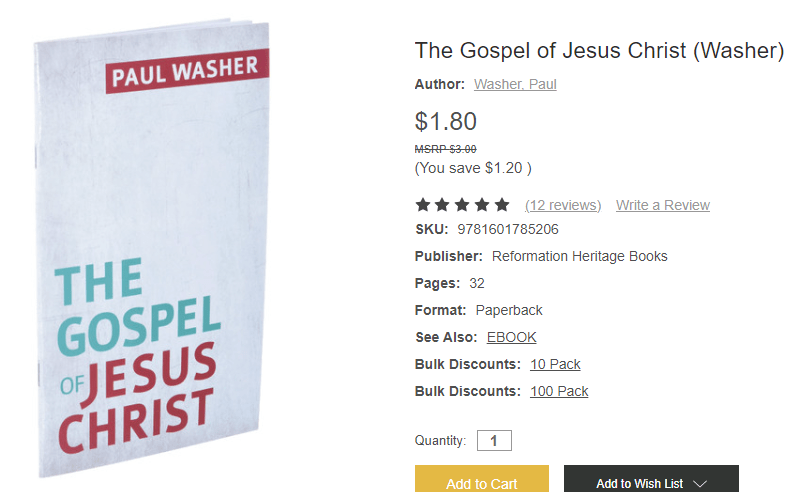
2015 – The Gospel of Jesus Christ – A Wesleyan approach to soteriology. Presents the order of salvation from Hell, repentance, faith, justification, regeneration, sanctification, conditional security, and Heaven. Also, a response to non-judgmentalism. Extensive bibliography. Intended as preparatory study for evangelistic preaching. 170 pages. Get the paperback here.





 WesleyGospel Ministries