Prophetic Reflections on Hurricane Helene
Thus saith the Lord; Behold, I will raise up against Babylon, and against them that dwell in the midst of them that rise up against me, a destroying wind. –Jeremiah 51:1 (KJV)
Posted in Uncategorized
Leave a comment
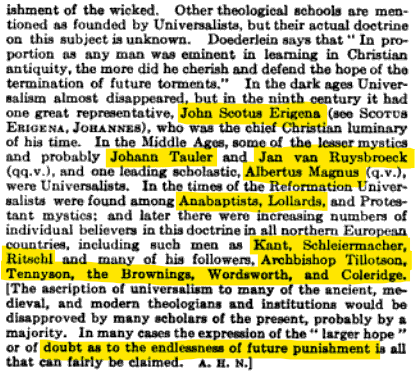
The Universalist’s Denial of Scriptures About Hell: A Wesleyan Response to John Crowder
In hell he lift up his eyes, being in torments, and seeth Abraham afar off, and Lazarus in his bosom. And he cried and said, Father Abraham, have mercy on me, and send Lazarus, that he may dip the tip of his finger in water, and cool my tongue; for I am tormented in this flame…he said unto him, If they hear not Moses and the prophets, neither will they be persuaded, though one rose from the dead. –Luke 16:23-24, 31 (KJV)
The angels which kept not their first estate, but left their own habitation, he hath reserved in everlasting chains under darkness unto the judgment of the great day. Even as Sodom and Gomorrha, and the cities about them in like manner, giving themselves over to fornication, and going after strange flesh, are set forth for an example, suffering the vengeance of eternal fire. –Jude 6-7 (KJV)
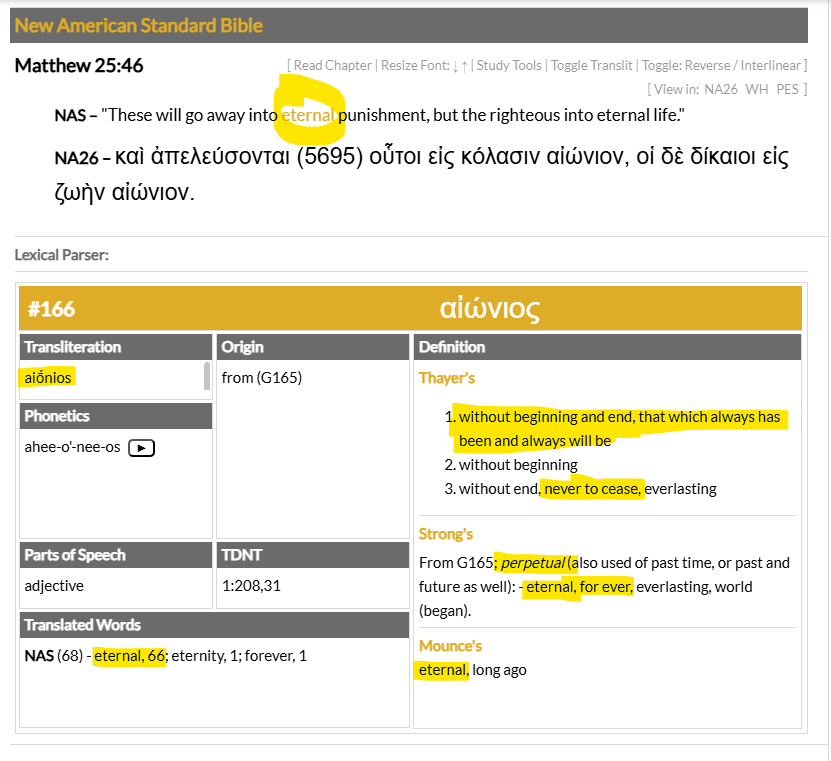
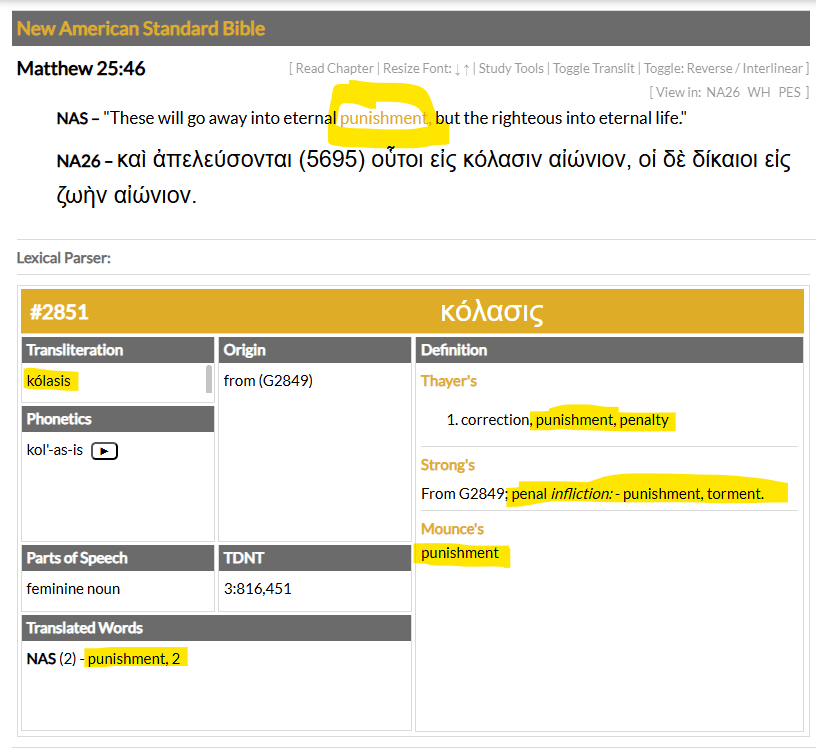
When the Son of man shall come in his glory, and all the holy angels with him, then shall he sit upon the throne of his glory: and before him shall be gathered all nations: and he shall separate them one from another, as a shepherd divideth his sheep from the goats: and he shall set the sheep on his right hand, but the goats on the left. Then shall the King say unto them on his right hand, Come, ye blessed of my Father, inherit the kingdom prepared for you from the foundation of the world: for I was an hungred, and ye gave me meat: I was thirsty, and ye gave me drink: I was a stranger, and ye took me in: naked, and ye clothed me: I was sick, and ye visited me: I was in prison, and ye came unto me…Then shall he say also unto them on the left hand, Depart from me, ye cursed, into everlasting fire, prepared for the devil and his angels: for I was an hungred, and ye gave me no meat: I was thirsty, and ye gave me no drink: I was a stranger, and ye took me not in: naked, and ye clothed me not: sick, and in prison, and ye visited me not…And these shall go away into everlasting punishment: but the righteous into life eternal. –Matthew 25:31-46 (KJV)
After thy hardness and impenitent heart treasurest up unto thyself wrath against the day of wrath and revelation of the righteous judgment of God; who will render to every man according to his deeds. –Romans 2:5-6 (KJV)
What if God, willing to shew his wrath, and to make his power known, endured with much longsuffering the vessels of wrath fitted to destruction. –Romans 9:22
The Lord Jesus shall be revealed from heaven with his mighty angels, in flaming fire taking vengeance on them that know not God, and that obey not the Gospel of our Lord Jesus Christ: who shall be punished with everlasting destruction from the presence of the Lord, and from the glory of his power; when he shall come to be glorified in his saints, and to be admired in all them that believe (because our testimony among you was believed) in that day. –2 Thessalonians 1:7-10 (KJV)
Where their worm dieth not, and the fire is not quenched. –Mark 9:48 (KJV)
Jesus saith unto him, I am the way, the truth, and the life: no man cometh unto the Father, but by me. –John 14:6 (KJV)
Surely he hath borne our griefs, and carried our sorrows: yet we did esteem him stricken, smitten of God, and afflicted. But he was wounded for our transgressions, he was bruised for our iniquities: the chastisement of our peace was upon him; and with his stripes we are healed. All we like sheep have gone astray; we have turned every one to his own way; and the Lord hath laid on him the iniquity of us all. –Isaiah 53:4-6 (KJV)
—
CHAPTER 32
Of the State of Men after Death, and of the Resurrection of the Dead
1. The bodies of men, after death, return to dust, and see corruption: but their souls, which neither die nor sleep, having an immortal subsistence, immediately return to God who gave them: the souls of the righteous, being then made perfect in holiness, are received into the highest heavens, where they behold the face of God, in light and glory, waiting for the full redemption of their bodies. And the souls of the wicked are cast into hell, where they remain in torments and utter darkness, reserved to the judgment of the great day. Besides these two places, for souls separated from their bodies, the Scripture acknowledgeth none.
2. At the last day, such as are found alive shall not die, but be changed: and all the dead shall be raised up, with the selfsame bodies, and none other (although with different qualities), which shall be united again to their souls forever.
3. The bodies of the unjust shall, by the power of Christ, be raised to dishonor: the bodies of the just, by his Spirit, unto honor; and be made conformable to his own glorious body.
CHAPTER 33
Of the Last Judgment
1. God hath appointed a day, wherein he will judge the world, in righteousness, by Jesus Christ, to whom all power and judgment is given of the Father. In which day, not only the apostate angels shall be judged, but likewise all persons that have lived upon earth shall appear before the tribunal of Christ, to give an account of their thoughts, words, and deeds; and to receive according to what they have done in the body, whether good or evil.
2. The end of God’s appointing this day is for the manifestation of the glory of his mercy, in the eternal salvation of the elect; and of his justice, in the damnation of the reprobate, who are wicked and disobedient. For then shall the righteous go into everlasting life, and receive that fullness of joy and refreshing, which shall come from the presence of the Lord; but the wicked who know not God, and obey not the gospel of Jesus Christ, shall be cast into eternal torments, and be punished with everlasting destruction from the presence of the Lord, and from the glory of his power.
3. As Christ would have us to be certainly persuaded that there shall be a day of judgment, both to deter all men from sin; and for the greater consolation of the godly in their adversity: so will he have that day unknown to men, that they may shake off all carnal security, and be always watchful, because they know not at what hour the Lord will come; and may be ever prepared to say, Come Lord Jesus, come quickly, Amen.
—

—
The Jesus Trip, “Hell & Apokatastasis.” It seems that Crowder mainly relies on David Bentley Hart’s That All Shall Be Saved: Heaven, Hell, and Universal Salvation (Yale, 2019).
WesleyGospel, “An Overview of Biblical Passages on Hell (Part 1).”
—. “An Overview of Biblical Passages on Hell (Part 2).”
Westminster Confession of Faith, chs. 32-33.
Dr. Robert Peterson, Hell on Trial (P&R, 1995), ch. 8.
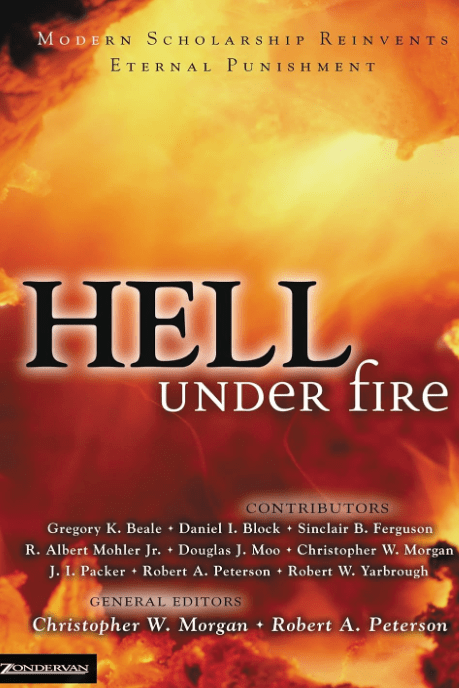
Dr. J. I. Packer in Hell Under Fire (Zondervan, 2004), ch. 8.
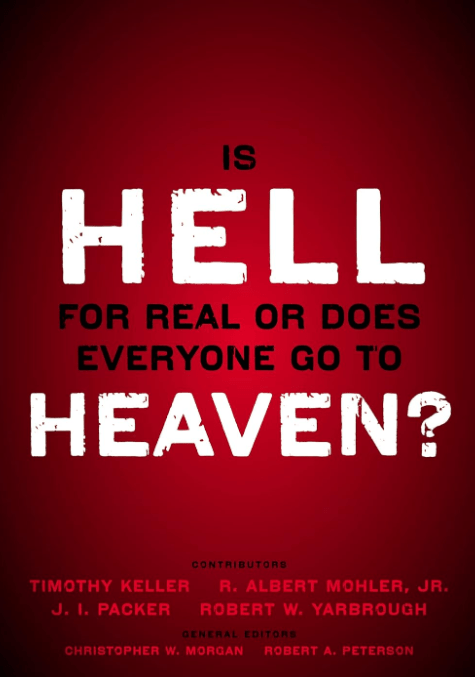
—. Is Hell for Real or Does Everyone Go to Heaven? (Zondervan, 2011), ch. 5.
John Blanchard, The Truth About Hell (Evangelical Press, 2017).
—. Whatever Happened to Hell? (Evangelical Press, 1993).
W.G.T. Shedd, The Doctrine of Endless Punishment (Banner of Truth, 1986).
John Gerstner, Repent or Perish: With a Special Reference to the Conservative Attack on Hell (Soli Deo Gloria, 1990).
Jonathan Edwards, The Wrath of Almighty God (Soli Deo Gloria, 1997).
Dr. John R. Rice, Hell! What the Bible Says About It (Sword of the Lord Publishers, 1942).
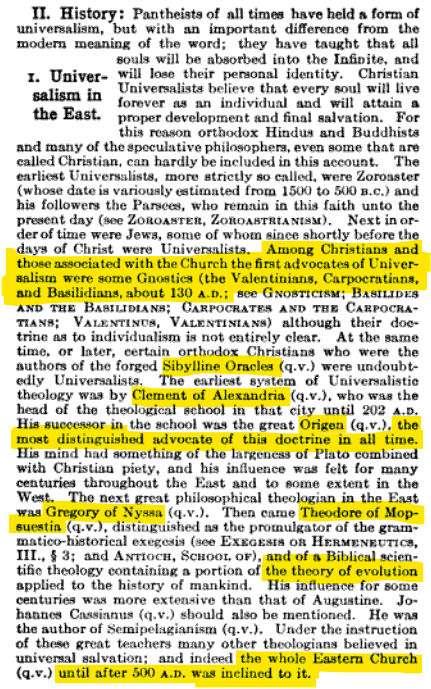
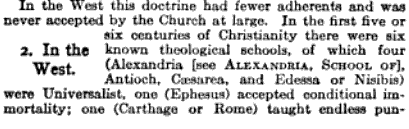
Andrew Itter, Esoteric Teaching in the Stromateis of Clement of Alexandria (Brill, 2009), p. 200. “Clement uses the term apokatastasis and its cognates generally to refer to the Gnostic elect rather than to an eschatological restoration of the universe, or to a restoration of the faithful as a whole. Where he does mention or imply a restoration of the whole it is through the medium of the restoration of the Gnostic…Hence, while some uses of apokatastasis appear to refer simply to the Gnostic elect, by extension, they have universal implications.”
Posted in Uncategorized
Leave a comment
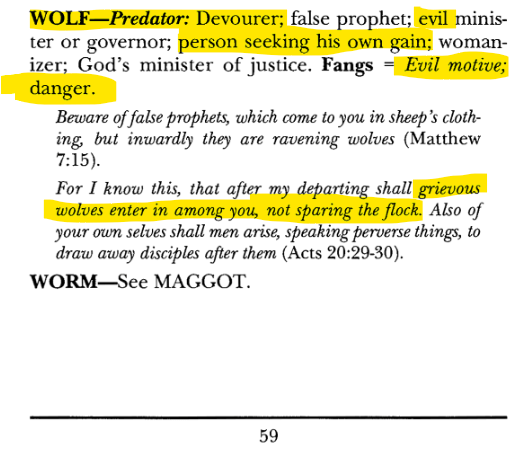
Prophetic Word? Were You Raised By Wolves?
36 Jacob was angry and took Laban to task. “What is my crime?” he asked Laban. “How have I wronged you that you hunt me down? 37 Now that you have searched through all my goods, what have you found that belongs to your household? Put it here in front of your relatives and mine, and let them judge between the two of us. 38 I have been with you for twenty years now. Your sheep and goats have not miscarried, nor have I eaten rams from your flocks. 39 I did not bring you animals torn by wild beasts; I bore the loss myself. And you demanded payment from me for whatever was stolen by day or night. 40 This was my situation: The heat consumed me in the daytime and the cold at night, and sleep fled from my eyes. 41 It was like this for the twenty years I was in your household. I worked for you fourteen years…and you changed my wages ten times. 42 If the God of my father, the God of Abraham and the Fear of Isaac, had not been with me, you would surely have sent me away empty-handed. But God has seen my hardship and the toil of my hands, and last night he rebuked you.” –Genesis 31:36-42
1 Blessed is the one
who does not walk in step with the wicked
or stand in the way that sinners take
or sit in the company of mockers,
2 but whose delight is in the law of the Lord,
and who meditates on his law day and night.
3 That person is like a tree planted by streams of water,
which yields its fruit in season
and whose leaf does not wither—
whatever they do prospers.
4 Not so the wicked!
They are like chaff
that the wind blows away.
5 Therefore the wicked will not stand in the judgment,
nor sinners in the assembly of the righteous.
–Psalm 1:1-5–
1. UNGODLY רשעים reshaim from רשע rasha, to be unjust; rendering to none his due; withholding from God, society, and himself, what belongs to each. Ungodly — he who has not God in him; who is without God in the world.
2. SINNERS, חטאים chattaim, from חטא chata, “to miss the mark,” “to pass over the prohibited limits,” “to transgress.” This man not only does no good, but he does evil. The former was without God, but not desperately wicked. The latter adds outward transgression to the sinfulness of his heart.
3. SCORNFUL, לצים letsim, from לצה latsah, “to mock, deride.” He who has no religion; lives in the open breach of God’s laws, and turns revelation, the immortality of the soul, and the existence of an invisible world, into ridicule. He is at least a deist, and endeavours to dissolve, as much as he can, the bonds of moral obligation in civil society. As the sinner exceeds the ungodly, so the scornful exceeds both.
1. The ungodly man — one uninfluenced by God.
2. The sinner — he who adds to ungodliness, transgression.
3. The scornful — the deist, atheist, etc., who make a mock of every thing sacred.
The scorner has brought, in reference to himself, all religion and moral feeling to an end. He has sat down–is utterly confirmed in impiety, and makes a mock at sin. His conscience is seared; and he is a believer in all unbelief. Now, blessed is the man who sits not down in his SEAT.
See the correspondent relations in this account.
1. He who walks according to the counsel of the ungodly will soon,
2. Stand to look on the way of sinners; and thus, being off his guard, he will soon be a partaker in their evil deeds.
3. He who has abandoned himself to transgression will, in all probability, soon become hardened by the deceitfulness of sin; and sit down with the scorner, and endeavour to turn religion into ridicule.
As the blessedness of the man is great who avoids the ways and the workers of iniquity, so his wretchedness is great who acts on the contrary: to him we must reverse the words of David: “Cursed is the man who walketh in the counsel of the ungodly; who standeth in the way of sinners; and who sitteth in the seat of the scornful.” —ADAM CLARKE’S COMMENTARY
Posted in Uncategorized
Leave a comment
On the Atonement – Charles Finney
I will greatly rejoice in the Lord, my soul shall be joyful in my God; for he hath clothed me with the garments of salvation, he hath covered me with the robe of righteousness. –Isaiah 61:10 (KJV)
Some make this the song of joy and praise to be sung by the prophet in the name of Jerusalem, congratulating her on the happy change of her circumstances in the accomplishment of the foregoing promises; others make it to be spoken by Christ in the name of the New Testament church triumphing in gospel grace. We may take in both, the former as a type of the latter. We are here taught to rejoice with holy joy, to God’s honour, 1. In the beginning of this good work, the clothing of the church with righteousness and salvation, Isaiah 61:10. Upon this account I will greatly rejoice in the Lord. Those that rejoice in God have cause to rejoice greatly, and we need not fear running into an extreme in the greatness of our joy when we make God the gladness of our joy. The first gospel song begins like this, My soul doth magnify the Lord, and my spirit hath rejoiced in God my Saviour, Luke 1:46-47. There is just matter for this joy, and all the reason in the world why it should terminate in God; for salvation and righteousness are wrought out and brought in, and the church is clothed with them. The salvation God wrought for the Jews, and that righteousness of his in which he appeared for them, and that reformation which appeared among them, made them look as glorious in the eyes of all wise men as if they had been clothed in robes of state or nuptial garments. Christ has clothed his church with an eternal salvation (and that is truly great) by CLOTHING IT WITH THE RIGHTEOUSNESS BOTH OF JUSTIFICATION AND SANCTIFICATION. The clean linen is the righteousness of saints, Revelation 19:8. Observe how these two are put together; those, and those only, shall be clothed with the garments of salvation hereafter that are covered with the robe of righteousness now: and those garments are rich and splendid clothing, like the priestly garments (for so the word signifies) with which the bridegroom decks himself. The brightness of the sun itself is compared to them. Psalms 19:5, He is as a bridegroom coming out of his chamber, completely dressed. Such is the beauty of God’s grace in those that are clothed with THE ROBE OF RIGHTEOUSNESS, that by the righteousness of Christ are recommended to GOD’S FAVOUR and by the SANCTIFICATION of the Spirit have God’s image renewed upon them; they are decked as a bride to be espoused to God, and taken into covenant with him; they are DECKED AS A PRIEST to be employed for God, and taken into communion with him. —MATTHEW HENRY’S COMMENTARY (1710)
The traditional Puritan view of the robe of righteousness worn by Christians, is not an antinomian, hyper-grace robe of Christ’s imputed righteousness in which you watch Pornhub and masturbate every other day, drink many shots of liquor and party like The Wolf of Wall Street, drop gratuitous f-bombs, smoke, play Grand Theft Auto with your buddies from the bar, and flirt with lap dancers and married office girls every day of the week, who will further provoke you by bending over for a really long time in one way or the other–all the while you’re shielded from God’s wrath in your pseudo-Calvinist, hypocritical robe of fantasy world Chronicles of Narnia theology, in which many mythological demons are made out to represent aspects of the Christian life, in which you view yourself as automatically forgiven by God, without self-examination, in your materialistic, entertainment-driven, drunken stupor of cussing, masturbating, counterfeit American churchified “righteousness.” BRAIN SICK HOGWASH. No way! “The hypocrite’s hope shall perish” (Job 8:13). The traditional view is that the “robe of righteousness” represents BOTH JUSTIFICATION BY FAITH ALONE AND BIBLICAL SANCTIFICATION. Both imputed and imparted righteousness (Romans 3:21-31; 8:1-17). Unfortunately, the so-called “robe of righteousness” concept is often perverted by cheap grace preachers to symbolize a cover-up ideology, in which they essentially remain in an unconverted state, unspiritual, and are proud to be carnal, not born again of the Spirit, but telling themselves all the time that God forgives their stubborn impenitence, and deceiving themselves that although they horrifically abuse the blood of Christ, and live like gangsters, they will make it into the same Heaven occupied by righteous men like St. Francis of Assisi, John Wesley, and Charles Finney. –J.B.
Posted in Uncategorized
Leave a comment
Pilgrim’s Progress (1979) – Ken Anderson Films
Long before Liam was Qui-Gon in Star Wars: Episode I: The Phantom Menace, he was a main character in this Christian movie.
Posted in Uncategorized
Leave a comment
My Hell Testimony: Two Horrible Visions I Experienced – Friend of Jesus
A Salvation Army preacher shares his visions of Hell. –J.B.
Posted in Uncategorized
Leave a comment