Once When I Heard God’s Audible Voice – Pastor Carter Conlon
Posted in Uncategorized
Leave a comment
Hell Shaking Prayer – David Wilkerson
Folks, I want you to know, that when hard times come, when people are in trouble, when they’re sick and afflicted, and they’re having family problems, and things go wrong–they’re not wanting empty, foolish, candy cotton preaching: they don’t want something that tells them they’re alright! THEY WANNA HEAR THE TRUTH! –27:18
Posted in Uncategorized
Leave a comment
A Word to Victims of Clergy Sexual Abuse (CSA)
If you do mistreat them, and they cry out to me, I will surely hear their cry.
–Exodus 22:23 (ESV)–

Posted in Uncategorized
Leave a comment
Charismatic Speakers Acting Like Little Boys
Come now, and LET US REASON TOGETHER, SAYS THE LORD.
–Isaiah 1:18–
Be watchful, stand firm in the faith, ACT LIKE MEN, BE STRONG.
–1 Corinthians 16:13 (ESV)–
Posted in Uncategorized
Leave a comment
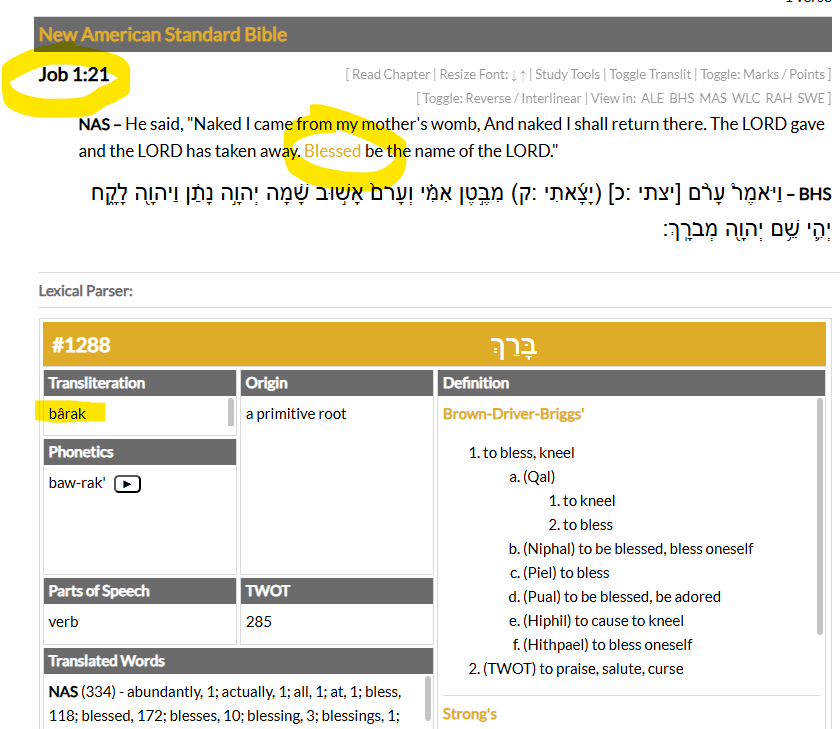
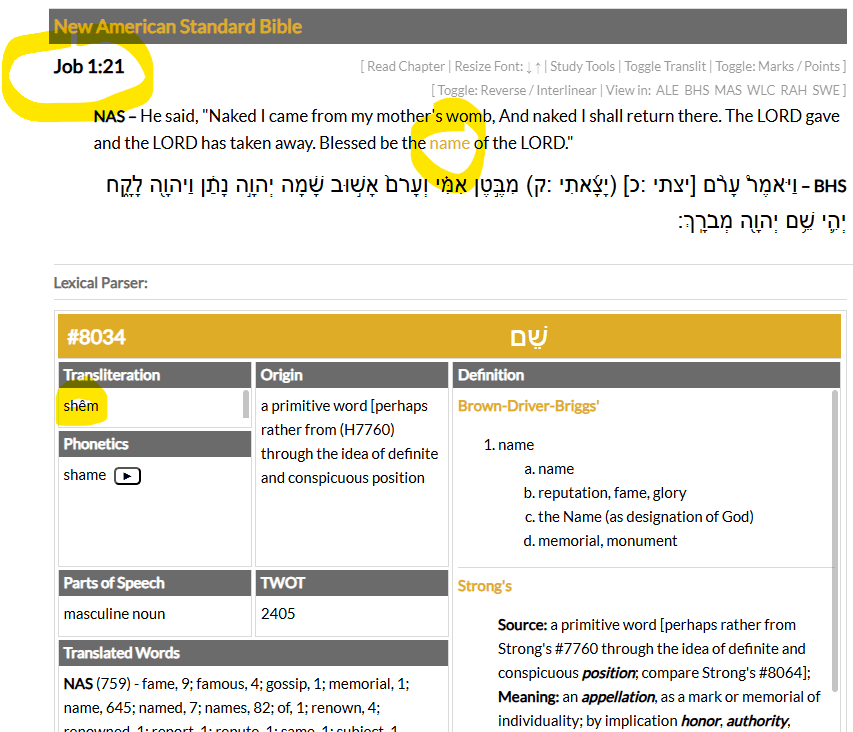
Review of Harald Lindström’s “Wesley and Sanctification”
I have plenty of reasons to believe that Lindstrom’s study is the authoritative book for the holiness preacher. I gathered this much when talking to Dr. Kenneth J. Collins on the phone in 2012 over what influenced him the most when he put together Wesley on Salvation (Zondervan, 1989); Lindstrom is referred to as early on as page 17 in Dr. Vinson Synan’s The Holiness-Pentecostal Tradition (Eerdmans, 1997); and a robust note on Lindstrom can be found on page 199 in Dr. Laurence W. Wood’s The Meaning of Pentecost in Early Methodism (Scarecrow Press, 2002). The connections are clear: Wesleyan-holiness theology since 1946, the conservative evangelical, or should I say, Wesleyan fundamentalist, Bible believing, revivalist, camp meeting holiness preacher type of salvation doctrine, at the Bible college level, was without a doubt led by Lindstrom’s book. It was apparently used in schools for the Church of the Nazarene, the Free Methodist Church, the Wesleyan Church, and the Pentecostal Holiness Church at different phases.
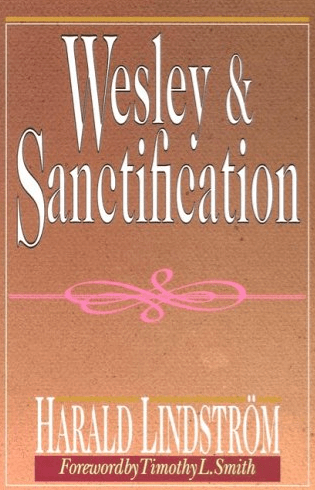
In CHAPTER 1, Wesley says that Adam was created as a perfectly righteous man, but after the Fall he became corrupt. This corruption is somehow transmitted through the desires of the body (or, the flesh). It causes us to have evil thoughts and feelings (inward sins). This is called original sin:–and it manifests in atheism, idolatry, pride, self-will, independence from God, and a love for the ways of the world.
Babies, although born with an original sin nature, can only be punished with physical death (Rom. 5:12). Hell, and its eternal punishment, is called “the second death”–and is only for wicked adults. This is because they committed actual sins by their free choice, and died without Christ in an unrepentant state (Rev. 21:8). [Babies are free from Hell’s penalty, because Jesus died on the cross for all original sin, in both adults and children;] but the cross also released prevenient grace into the world, thereby establishing man’s freedom to respond to the Gospel with the Holy Spirit’s assistance.
[My personal addition (John)–Babies don’t go to Hell. I agree with Wesley. However, it is not necessarily because the death of Christ atoned universally for original sin. It is more so because babies don’t understand the law of God. They do not have the rational ability to understand it, and so, are not accountable to its commandments and penalties (they have not reached an age of accountability, to understand God’s law, and respond to it). Instead, babies are legally pronounced “innocent” before the Judge of Heaven, because although “sin is the transgression of the law,” babies are not capable of transgressing it willfully, because they do not have the knowledge to understand the law (Matt. 19:14; 1 John 3:4).]
In CHAPTER 2, entitled, “Atonement, Justification, and Sanctification,” Wesley says that Satisfaction Theory (Anselm) and Penal Substitution (Calvin), when mixed together, provide an accurate Biblical view of the atonement. The death of Christ satisfied the justice and wrath of God for all who believe this Gospel.
The moral law is the will of God; it makes men conscious of sin; and is to be heartily obeyed by every real Christian–but it is not to be used, or seen as a means of works-justification, or for “earning God’s forgiveness.” The Holy Spirit, by means of regeneration, empowers saved Christians to obey the moral law.
Justification – The Forgiveness of Sins by Faith in the Atonement
Sanctification – Growing in Ethical Love (Matthew 5-7)
In CHAPTER 3, Wesley says the order of salvation goes like this:
1. Original Sin (Dead to God).
2. Consciousness of Sin by the Moral Law.
3. Revelation (Faith) that Jesus Died for Sin.
4. Past Sins Forgiven (Justification). Romans 3:25 (KJV): “the remission of sins that are past.”
5. Desire to Live Holy (Regeneration).
6. Struggling with Romans 7-8 (Sanctification).
7. Exalted Level of Holy Love (Entire Sanctification).
(a) Growth by Continual Repentance.
(b) Growth by Means of Grace and Good Works.
(c) Growth by Obedience to the Moral Law.
(d) Glorification After Death, If the Christian Perseveres in Faith.
In CHAPTER 4, entitled “Christian Perfection,” Wesley says perfection is an inherent ethical perfection in love and obedience to God, whereas the Reformers only saw perfection as a perfection in faith (p. 136). Wesley sought to “reform” the Reformed view of sanctification further than it had been taken, and so took liberty to borrow ideas from the following books: Jeremy Taylor’s Rules and Exercises of Holy Living and Holy Dying, Thomas à Kempis’ The Imitation of Christ, and William Law’s A Practical Treatise Upon Christian Perfection and A Serious Call to a Devout and Holy Life. [Note: Wesley parted ways with him in 1756, because Law fell into universalism.] All four of these books were influenced by the Catholic ascetical-mystical tradition of the “imitation of Christ,” and its concepts of self-denial. Much later in his life, Wesley even supported the Catholic book by Francis de Sales: An Introduction to the Devout Life. And Wesley was prone to quote from Catholic devotional writers at various times.
In a mixed life (balancing the contemplative life and the active life)–properly, all good works are performed with perfect love–but the performance of them is imperfect (hence the continued need for reliance upon Christ’s blood). Christian perfection is the perfect intent to love God and man; and this intent comes from an “anointing” of “perfect love” (Rom. 5:5; 1 John 4:18) that can be received after years of striving against the flesh, and mortifying sin in your members. Technically, it is not sinlessness, but it comes close.
In CHAPTER 5, Wesley says that Christians love Christ “because He first loved us” (1 John 4:19, KJV), especially through what He did for us on the cross, dying and atoning for the forgiveness of our sins. And now, we share God’s love for all men to receive this same forgiveness of sins, because “God has poured out His love into our hearts by the Holy Spirit, whom He has given us” (Rom. 5:5). But the love of God and the law of God are the will of God. And so, “in order that the righteous requirements of the law might be fully met in us” (Rom. 8:4), God has graciously given Christians an inward anointing for righteousness, or, He “put His laws in our minds and wrote them on our hearts” (Heb. 8:10). This RIGHTEOUS, ETHICAL LOVE seeks to obey God’s will, and God’s law. “For this is the love of God, that we keep His commandments: and His commandments are not grievous” (1 John 5:3, KJV). It seeks to love one’s neighbor as oneself (Matt. 22:39), especially to love one’s Christian brothers and sisters (who are really godly and live a holy life), and to pitiably and prayerfully and compassionately love one’s enemies (that they too might experience the forgiveness of sins and the freedom of living a holy life). For the Christian who loves God and man, by the energy of the Holy Spirit within him, the moral law of God is not a curse to him; it is LIFE to him; it is not so much a condemning force in his life (because of his faith in Christ’s blood); rather, the law is the directing force in his life, the words of wisdom from on high; to him: “Love does no harm to its neighbor. Therefore love is the fulfillment of the law” (Rom. 13:10).
In CHAPTER 6, Wesley says “without holiness no one will see the Lord” (Heb. 12:14), including so-called Christians. During the course of your Christian life, you will experience two main events: (1) The moment you “got saved” when you first repented from your wicked ways, and put your faith in the cross (present salvation, or justification by faith alone, consisting in the forgiveness of your sins). (2) The moment you felt a “second wind” to live a holy life (regeneration and sanctification).
Over the course of your Christian life, you look forward with godly fear toward the Day of Judgment (Rev. 20:11-15), but eventually developing so much love for God, that this fear disappears and turns into boldness (Php. 2:12; 1 John 4:17-18); also, a hope for entrance into Heaven by means of continuing in Christian faith and holiness all the days of your life: obeying the moral law of God, loving God and man, and making every effort to CONTINUE in faith in Jesus’ work on the cross, and a good conscience, so as not to lose your faith, or “make shipwreck” faith and conscience (1 Tim. 1:19), and hence fall headfirst into Hell for all eternity, being a castaway! (1 Cor. 9:27). Only after continued faith and holy living has passed the test on the Day of Judgment (Matt. 7:21-23), will final salvation and glorification begin.
Posted in Uncategorized
Leave a comment
Jonathan & Suzy Lamb Set the Record Straight (Podcast Pt. 1) – The Roys Report
Posted in Uncategorized
Leave a comment
Young Charismatic Preachers Bribed by TV Channels
Now I have written unto you not to keep company, if any man that is called a brother be a fornicator, or covetous, or an idolator, or a railer, or a drunkard, or an extortioner; with such an one no not to eat. –1 Corinthians 5:11 (KJV)
Have nothing to do with the fruitless deeds of darkness, but rather expose them. –Ephesians 5:11 (NIV)
Posted in Uncategorized
Leave a comment
The Essential Elements of Christian Experience – Charles Finney
17:30 – The Logical Fallacy of a False Dilemma is when a person presents only two options when there more options in existence. For example, only presenting the option of infant baptism to original sin instead of presenting the option of innocence of sin guilt based on the ignorance of children, and the option of unlimited atonement that clears the guilt of both the mentally handicapped and small children (Westminster Confession 10.3). But Finney ignores these other options it seems. And so, in a desire to possibly uphold infant baptism based on the learned behavior view, he downplays original sin to absolve the smallest infants, and to open the way for the repentance and faith of adults, leaving things in quite a vague state for all other children who don’t understand the nature of repentance and faith. It would be more Biblical and reasonable to assert:
1. Infants, children, teenagers, and adults are all born with an inbred sinful nature (Gen. 6:5; Ps. 51:5; Rom. 7:23).
2. Eternal damnation in the lake of fire is only revealed in Scripture as containing adults in the following categories: those too afraid to witness, unbelievers, mean people who always say mean things, pimps, fornicators, adulterers, homosexuals, thieves, extortioners, drunkards, sorcerers, idol worshipers (including the greedy), murderers, and liars (1 Cor. 6:9-10; Rev. 21:8; 22:15).
3. Infants, children, and the mentally handicapped are not going to be found in the list above. To be any of those things in that hell-deserving vice list, you would have to at least be a spiritually blind and heart-hardened teenage gang member.
4. Therefore, Wesley’s view on the subject is the most reasonable: the unlimited atonement of Jesus: his blood that was shed for the whole world (1 John 2:2; John 1:29; Isa. 53:6), must automatically apply to infants, children, and the mentally handicapped without the requirement of conscious repentance and faith. But every intelligible soul with a mind adult enough–the so-called age of accountability–every person adult enough to be included in the vice lists of 1 Corinthians 6:9-10, Revelation 21:8, and 22:15, is totally doomed if they do not make a conscious effort to avoid those vices, repent, and trust in the blood of Jesus Christ for forgiveness on a regular basis. “If we confess our sins, he is faithful and just to forgive us our sins, and to cleanse us from all unrighteousness” (1 John 1:9, KJV). Most infants I’ve known about could never perform such a prayer; and probably most children wouldn’t know what such a prayer would really mean. Those that are mentally handicapped are probably unable to pray at all in most cases. So we have to conclude that conscious moral responsibility, in the form of prayers of repentance, faith in the blood, and obedience to the Bible, has to only apply to that same class of adults that could just as easily drop into hell through the vice list above-mentioned. –J.B.
—
VII. OF ORIGINAL OR BIRTH SIN.
(Articles of Religion)
Original sin standeth not in the following of Adam (as the Pelagians do vainly talk), but it is the corruption of the nature of every man, that naturally is engendered of the offspring of Adam, whereby man is very far gone from original righteousness, and of his own nature inclined to evil, and that continually.
Posted in Uncategorized
Leave a comment