
-
-

-
LATEST POSTS
- Rep. Brandon Gill Sarcastically Ridicules the Cruel and Barbaric Methods of Abortion In the House of Representatives – The Charlie Kirk Show
- A Christian Responds to Jewish Views of Hell
- The Coming of the Spirit (Acts 2:1-13) – Philip Anthony Mitchell
- What Happens After You Die (Most People Aren’t Ready for This) – Philip Anthony Mitchell
- Michael Jackson Was a Homosexual Child Molester
RECENT VIEWS
- Biblical Arguments Against Eternal Security - John Wesley and Charles Finney
- Wesley Huff Says “Piece of Sh--” Four Times and Just Keeps On Talking?! - YoEz! and Michael Grant
- The Danger of an Unconverted Ministry - Gilbert Tennent
- John Crowder’s Universalism vs. Eternal Punishment
- C. S. Lewis: He Said the Bible’s Mythological and That Pedophiles Aren’t That Bad!
- Divorce Prone Pastors: Let’s Not Repeat Charles Stanley’s Marriage
- Hosanna! Music: The Revival Worship Label
- David Wilkerson: Pentecostal Evangelist and Pastor
- Prophetic Word? Burn My Belly! Burn Burn Burn Within!
- Understanding and Resisting the Occult (Part 2)
MONTHLY ARCHIVES
- May 2026 (16)
- April 2026 (139)
- March 2026 (142)
- February 2026 (150)
- January 2026 (242)
- December 2025 (259)
- November 2025 (286)
- October 2025 (188)
- September 2025 (145)
- August 2025 (122)
- July 2025 (118)
- June 2025 (88)
- May 2025 (122)
- April 2025 (182)
- March 2025 (185)
- February 2025 (132)
- January 2025 (159)
- December 2024 (103)
- November 2024 (139)
- October 2024 (135)
- September 2024 (79)
- August 2024 (81)
- July 2024 (105)
- June 2024 (95)
- May 2024 (58)
- April 2024 (55)
- March 2024 (34)
- February 2024 (97)
- January 2024 (61)
- December 2023 (6)
- November 2023 (36)
- October 2023 (24)
- September 2023 (18)
- August 2023 (13)
- July 2023 (11)
- June 2023 (16)
- May 2023 (22)
- April 2023 (14)
- March 2023 (6)
- February 2023 (6)
- January 2023 (11)
- December 2022 (14)
- November 2022 (15)
- October 2022 (10)
- September 2022 (1)
- August 2022 (3)
- July 2022 (2)
- June 2022 (1)
- May 2022 (3)
- April 2022 (7)
- March 2022 (6)
- February 2022 (2)
- January 2022 (4)
- December 2021 (7)
- November 2021 (5)
- September 2021 (1)
- August 2021 (1)
- July 2021 (3)
- June 2021 (1)
- May 2021 (2)
- March 2021 (3)
- February 2021 (2)
- January 2021 (1)
- December 2020 (1)
- October 2020 (1)
- November 2019 (1)
- October 2019 (2)
- September 2019 (1)
- August 2019 (1)
- July 2019 (7)
- June 2019 (4)
- May 2019 (4)
- April 2019 (18)
- March 2019 (7)
- February 2019 (4)
- January 2019 (6)
- December 2018 (3)
- November 2018 (2)
- October 2018 (4)
- September 2018 (5)
- August 2018 (3)
- July 2018 (2)
- June 2018 (1)
- May 2018 (3)
- April 2018 (8)
- January 2018 (2)
- December 2017 (5)
- November 2017 (1)
- October 2017 (8)
- September 2017 (4)
- August 2017 (6)
- July 2017 (6)
- June 2017 (6)
- May 2017 (10)
- April 2017 (20)
- March 2017 (15)
- February 2017 (10)
- January 2017 (10)
- December 2016 (8)
- November 2016 (10)
- October 2016 (23)
- September 2016 (15)
- August 2016 (5)
- July 2016 (9)
- June 2016 (3)
- May 2016 (7)
- April 2016 (4)
- March 2016 (11)
- February 2016 (3)
- January 2016 (10)
- December 2015 (8)
- November 2015 (9)
- October 2015 (10)
- September 2015 (5)
- August 2015 (15)
- July 2015 (9)
- June 2015 (2)
- May 2015 (6)
- April 2015 (38)
- March 2015 (28)
- February 2015 (28)
- January 2015 (28)
- December 2014 (19)
- November 2014 (15)
- October 2014 (5)
- September 2014 (9)
- August 2014 (17)
- July 2014 (30)
- June 2014 (16)
- May 2014 (17)
- April 2014 (18)
- March 2014 (6)
- February 2014 (8)
- January 2014 (8)
- December 2013 (2)
- November 2013 (2)
- October 2013 (3)
- September 2013 (2)
- August 2013 (2)
- July 2013 (1)
- June 2013 (2)
- May 2013 (7)
- April 2013 (9)
- March 2013 (6)
- February 2013 (3)
- January 2013 (6)
- December 2012 (2)
- November 2012 (2)
- October 2012 (4)
- September 2012 (6)
- August 2012 (4)
- July 2012 (7)
- June 2012 (1)
- May 2012 (3)
- April 2012 (5)
- March 2012 (2)
- February 2012 (3)
- January 2012 (1)
- December 2011 (5)
- November 2011 (4)
- October 2011 (11)
- September 2011 (2)
- August 2011 (3)
- July 2011 (2)
- June 2011 (4)
- May 2011 (4)
- April 2011 (4)
- March 2011 (6)
- February 2011 (4)
- January 2011 (1)
- December 2010 (7)
- November 2010 (5)
- October 2010 (9)
- September 2010 (3)
-
Shocking Devil Worship and Prostitution Among World Leaders – Good Fight Ministries
Posted in Uncategorized
Leave a comment
SONG: The Fool Who Said There’s No Hell
Jesus said to fear Him who
Can destroy both soul and body in Hell
John said the wicked will be tormented
Day and night forever and ever
And so my faith was grounded
On the reality of Hell
And the power of the Cross
For salvation and holiness
But then I met a man
He said God wants all men to be saved
He said Jesus died for the sins of the whole world
And so even if people die without Christ
They’ll go to Heaven
He also said there might not even be a Hell
And that Jesus was just kiddin’
That the hellfire in the Bible isn’t real
But that it’s just a word picture
He also said when we die
We might just not exist anymore
He said who knows
Maybe murderers are changed into men of God
He believed that way for twenty five years
He told me not to believe in Hell
But I saw him just the other day burnin’
As I looked down from glory
Posted in Uncategorized
Leave a comment
Examining the Deconstruction Movement – Living Waters

Posted in Uncategorized
Leave a comment
Nothing Shall Separate Us from the Love of God? A Wesleyan View of Romans 8:38-39 – Adam Clarke
I am persuaded, that neither death, nor life, nor angels, nor principalities, nor powers, nor things present, nor things to come, nor height, nor depth, nor any other creature, shall be able to separate us from the love of God, which is in Christ Jesus our Lord.
–Romans 8:38-39 (KJV)–
After the blessed experience we have had of support by the grace and Spirit of him that loved us, that neither fear of death, nor hope of life, nor evil angels, nor principalities, nor powers, persecuting us for Christ’s sake; nor the things we endure at present, nor the things to come, whatever tribulation we may be called to suffer in future;
Nor height – of honour, nor depth – of ignominy, nor any other creature, ουτε τις κτισις ετερα, (nor any other thing whatever,) shall be able to separate us, who love God, from the love of God, which he has vouchsafed to us in Christ Jesus. See Whitby. And for farther observations on the subject of the 29th and 30th verses, see at the end of the chapter.
1. THE confidence expressed by the apostle at the end of this chapter, is as rational as it is bold. On the premises laid down by him, in reference to which he has most logically conducted his whole argument, the conclusion to which he arrives is as natural and forcible as it is legitimate. The permanency of the Christian Church, in all the tribulations it has endured from pagans and papists, is a full proof of the correctness of the apostle’s reasoning. The true followers of Christ can never be forsaken by him. And his Church, which is founded on the rock, can never be shaken down by the tempests of persecution. And what God does for his Church in general, (the collective body of those who believe in the Lord Jesus, love, and obey him,) he does for every individual in that body: no man that trusts in him can be confounded. While the love of God is in his heart, and the work of God in his hand, he may be as fully persuaded as he is of his own being, that neither death, nor life, nor angels, nor principalities, nor powers, nor things present, nor things to come, nor height, nor depth, nor any other thing whatsoever, shall be able to separate him from the love of God which is in Christ Jesus. The reader who has any knowledge of what is great, commanding, and sublime in composition, will not hesitate to add here, with Dr. Taylor: “The conclusion of this chapter is the most elegant and sublime piece of writing I remember ever to have read. It is founded on the grand and solid principles of the Gospel; it breathes the true spirit of Christian magnanimity; raises our minds far above all things created; and shows, in a bright and heavenly view, the greatness of soul and the strong consolation which the Gospel inspires. God grant that it may stand clear before our understandings, and be transcribed into all our hearts! They who despise the Gospel despise all that is great, and happy, and glorious!”
2. The doctrine of the necessity of personal holiness, so clearly and strongly laid down in the former part of this chapter, should be deeply considered by every person professing godliness; and while from the seventh chapter they learn that they have an infected and morally diseased nature, they should learn from the eighth that to destroy the work of the devil was Jesus Christ manifested; and that no soul can be said to be saved by Jesus Christ who is not saved from its sins. What a full proof is it of the fallen state of man, that there should be found persons professing Christianity more fervent in their pleadings for the necessary continuance of indwelling sin, than they are for the mind that was in Christ. The seventh chapter, because there are some expressions which, being misunderstood, seem to favour this doctrine, is read and incessantly quoted: the eighth chapter, though given by the same inspiration, yet because it so strongly shows the necessity of being saved from all sin, is seldom read and scarcely ever quoted!
3. The restoration of the brute creation to a state of happiness has been thought by several to be the doctrine of Romans 8:19-25. In the notes on those verses I have given reasons against this opinion, and have proved that the Gentiles, and not the irrational part of the creation, are the persons of whom the apostle speaks; nor can any consistent interpretation be given of the place, if it be applied to the brute creation. But, although this doctrine is not contained in the above verses, it does not follow that the doctrine itself is not true. Indeed, there are several reasons which render the supposition very probable.
(1) The brute creation never sinned against God, nor are they capable of it, and consequently cannot be justly liable to punishment.
(2) But the whole brute creation is in a state of suffering, and partake of the common infirmities and privations of life, as well as mankind: they suffer, but who can say that they suffer justly?
(3) As they appear to be necessarily involved in the sufferings of sinful man, and yet neither through their fault nor their folly, it is natural to suppose that the Judge of all the earth, who ever does right, will find some means by which these innocent creatures shall be compensated for their sufferings.
(4) That they have no compensation here, their afflictions, labours, and death prove; and if they are to have any compensation, they must have it in another state.
(5) God, the fountain of all goodness, must have originally designed them for that measure of happiness which is suited to the powers with which he had endowed them; but, since the fall of man, they never had that happiness; and, in their present circumstances, never can.
(6) In reference to intelligent beings, God has formed his purposes in reference to their happiness on the ground of their rational natures. He has decreed that they shall be happy if they will, all the means of it being placed within their power; and, if they be ultimately miserable, it is the effect of their own unconstrained choice. Therefore his purpose is fulfilled, either in their happiness or misery; because he has purposed that they shall be happy if they please, and that misery shall be the result of their refusal.
(7) But it does not appear that the brute creation are capable of this choice; and it is evident that they are not placed in their present misery through either their choice or their sin; and if no purpose of God can be ultimately frustrated, these creatures must be restored to that state of happiness for which they have been made, and of which they have been deprived through the transgression of man.
(8) To say that the enjoyments which they have in this life are a sufficient compensation, is most evidently false; for, had not sin entered into the world, they would have had much greater enjoyments, without pain, excessive labour and toil, and without death, and all those sufferings which arise from its predisposing causes. Nor does it appear that they have much happiness from eating, drinking, and rest, as they have these only in the proportion in which they are necessary to their existence as the slaves of men. Therefore, allowing that they have even gratification and enjoyment in life, they have much less than they would have had had not sin entered into the world; and consequently they have been deprived of the greater portion of the happiness designed for them by their bountiful Creator.
(9) It is therefore obvious that the gracious purpose of God has not been fulfilled in them; and that, as they have not lost their happiness through their own fault, both the beneficence and justice of God are bound to make them a reparation.
(10) Hence it is reasonable to conclude that, as from the present constitution of things they cannot have the happiness designed for them in this state, they must have it in another.
4. On the subject of the foreknowledge of God, some observations have been made at the conclusion of the notes on the second chapter of Acts. On the subject of the prescience and predestination mentioned here, Romans 8:29; Romans 8:30, vast volumes have been written, and the Christian world greatly agitated and perplexed. These doctrines of men have very little place in the texts in question. After a long and serious investigation of this business, I am led to conclude that, whether the doctrine of the decrees be true or false, it does not exist in these verses.
No portion of the word of God has been more unhappily misunderstood than several parts of the Epistle to the Romans; because men have applied to individuals what belongs to nations; and referred to eternity transactions which have taken place in time.
We have already seen that one grand aim of the apostle in writing this epistle was:
(1) To prove, to both Jews and Gentiles, that they were all under sin, and that neither of them had any claim either on the justice or beneficence of God; yet he, of his own free mercy, had revealed himself to the Jews, and crowned them with innumerable privileges; and,
(2) That, as he was no respecter of persons, his mercy was as free to the Gentiles as to them, being equally their God as he was the God of the Jews, and therefore had, by the Gospel, called them to a state of salvation; and to this display of his mercy the two verses in question seem particularly to refer, and show us not what God will do for some selected individuals, but what he has already done for nations.
After having shown that the whole Gentile world was groaning and travailing in pain together, waiting for the manifestation of the sons of God, he shows that it was, according to the affectionate purpose, προθεσιν, of God, that the Gentiles should be also called into the glorious liberty of the sons of God – into equal privileges with the Jews. He therefore represents them as objects of God’s gracious foreknowledge. That the word προγινωσκω, which literally signifies to know, or discern beforehand, and to know so as to determine, signifies also to approve, or love before, to be well affected to, is not only evident from yada in Hebrew, but also from the simple verb γινωσκω, in Greek, by which it is translated, and to which the compound verb repeatedly answers, without any extension of meaning by means of the preposition, as its use among the best Greek writers proves: and it is evident that the apostle uses the word in the sense of loving, being graciously affected to, Romans 11:1; Romans 11:2. I say then, hath God cast away his people, which he FOREKNEW, ον προεγνω; to whom he has been so long graciously affected? By no means. As, therefore, he had been so long graciously affected towards the Jews, so has he towards the Gentiles. His call of Abraham, and the promises made to him, are the proof of it. The Jews, thus foreknown, were called into a glorious state of salvation, and endowed with privileges the most extraordinary ever bestowed on any people; as their whole history testifies. But is God the God of the Jews only? Is he not also the God of the Gentiles? Yes, of the Gentiles also, Romans 3:29; and to prove this is the main subject of the ninth chapter. Now, as he is the God of the Gentiles, he foreknew, had from the beginning a gracious purpose to them as well as to the Jews; and, being thus graciously disposed towards them, he determined προωρισε, from προ, before, and οριζω, to bound, define, c., he defined, circumscribed, and determined the boundaries of this important business from the beginning, that they also should be taken into his Church, and conformed to the image of his Son and, as Jesus Christ was to be their pattern, it must be by his Gospel that they should be brought into the Church; and consequently, that bringing in could not take place before the revelation of Christ. Having therefore thus foreknown and thus predestinated them ALSO, he called them ALSO by the Gospel; he justified them ALSO on their believing; and he glorified them ALSO, dignified them also with the same privileges, blessings, honours, and Divine gifts: so that they were now what the Jews had been before, the peculiar people of God. The apostle, therefore, speaks here not of what they should be, or of what they might be, but of what they then were – the called, the justified, the highly honoured of God. Romans 8:30.
It is strange that so obvious a meaning of the passage should not have been noticed; but the word δοξαζω, which we render to glorify, and by which we understand eternal beatification, which it is very seldom used to express, being taken in this sense in the passage in question, fixed the meaning of the preceding terms; and thus the whole passage was applied to things eternal, which had reference only to things in time. This seems to me to be the true key of the passage, and the whole scope of the epistle, and especially of the context, which shows that this is the sense in which it should be understood. The passages understood in this way illustrate the infinite mercy and wisdom of God; they show that whatever appearances his providential dealings may assume of partiality towards any particular people, yet he is equally the Father of the spirits of all flesh; hateth nothing that he hath made; is loving to all; that his tender mercies are over all his works; and that he is not willing that any should perish, but that all should come unto the knowledge of the truth and be saved. Hence, whatever he did for the Jews he purposed to do for the Gentiles: if he foreknew, predestinated, called, justified, and glorified the former; he ALSO foreknew, predestinated, called, justified, and glorified the latter; having brought them into the same state of salvation, with a vast extension of blessings and higher degrees of honour. As the Jews forfeited their privileges, and now, instead of being glorified, instead of being highly honoured, and rendered illustrious, they are degraded, brought down, and rendered contemptible; because they have not made a proper use of their election, they are now reprobated; so a similar reverse awaits the Gentiles if they sin after the similitude of their transgression; and it is against this that the apostle so solemnly warns them, Romans 11:20-22: Because of unbelief they (the Jews) were broken off – thou (the Gentiles) standest by faith. If God spared not the NATURAL BRANCHES, take heed lest he also spare not THEE. Behold the goodness and severity of God! on them which FELL severity; but toward THEE goodness, IF THOU CONTINUE in his goodness; otherwise THOU ALSO shalt be CUT OFF.
5. This is also a lesson of solemn instruction to Christians in general: God has called them into a glorious state of salvation, and has furnished them with every requisite help to enable them to work out that salvation with fear and trembling. As it is an awful thing to receive the grace of God in vain, (whether that grace imply the common benefits of the Gospel, or those especial blessings received by believing souls,) so every person professing godliness should be jealous over himself lest he should trifle with matters of eternal moment; for, should he even neglect so great a salvation, his escape would be impossible. Hebrews 2:3; and if so, to what severe punishment must they be exposed who despise and reject it?
—CLARKE’S COMMENTARY ON THE BIBLE—
Posted in Uncategorized
Leave a comment
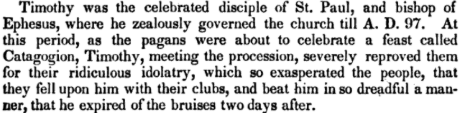
Why Are Hellfire Preachers Such Bullies?
When I say unto the wicked, O wicked man, thou shalt surely die; if thou dost not speak to warn the wicked from his way, that wicked man shall die in his iniquity; but his blood will I require at thine hand.
–Ezekiel 33:8 (KJV)–
Posted in Uncategorized
Leave a comment
The Book of Leviticus (KJV)
As an example of what the Holy Spirit can do for those who have faith in his present day activity, I just heard a mental voice say, “Leviticus.” I doubt that was my own mind, because I was definitely not thinking about the Bible, when I heard that voice come into my head. I doubt that it was the devil, because what evil spirit could possibly want me to read an entire book of the Bible, much less the book that first laid down the holiness code for the nation of Israel? As I went through it, the things that stood out to me were the blood atonement laws, confession of sin, and the appearance of the glory of the Lord in that context (Lev. 9:22-24). Nadab and Abihu’s self-initiated sacrifice, in which no explanation is given for why they wanted to do this:–while Matthew Henry says it was because they “were so proud of the honour they were newly advanced to, and so ambitious of doing the highest and most honourable part of their work immediately,” and while Adam Clarke says it was because they altered a “part of this representative system…and assumed a prerogative which belonged to God alone…and were certainly guilty of a very high offence against the wisdom, justice, and righteousness” of God: it seems to me, that they wanted to see the glory of the Lord manifest a second time because they were so fascinated by the first manifestation (Lev. 10:1-3). So because they presumptuously sacrificed, without God’s direction, the glory of the Lord did appear a second time, but it broke out in wrath to kill them! “Whoa, let’s see that again,” they must’ve said to themselves: and when God saw this, he turned them into a heap of bones and ashes. They seem to represent all of those charismatics who simply want to see signs and wonders, but only out of a trivial fascination with the supernatural, and without a desire to obey God’s laws.
Another thing that stands out to me is the code of sexual ethics in Leviticus 18. So much of this book’s holiness code does not speak to lifestyle. Most of it consists of priestly laws about how to make atonement by animal sacrifices, confession, and forgiveness of sins, which is based on a weekly religious event at the tent of meeting. There’s a chapter or two about skin diseases, menstruation, and keeping people quarantined for certain weeks, for healthcare reasons, as are there a few chapters on kosher foods. But Leviticus 18 has always stood out to me as a morally charged lifestyle chapter that clearly finds its echoes throughout the rest of the Bible, when it comes to the subject of sexual sin. The biggest focus is on avoiding the sin of “uncovering the nakedness” of your family members and relatives. This could be referring to actual incestuous copulation, but that’s not the language that is used most of the time. The language mainly implies immodesty. It makes me think of beaches, pools, waterparks, summer fun in the sun, boating, surfing, waterskiing, etc, which often involves, you guessed it, viewing your daughters, granddaughters, daughters-in-law, sisters-in-law, aunts, mothers, mothers-in-law, and sisters in bikinis and bathing suits: with nobody thinking twice about the ethics of it! As when Ham looked upon Noah. It seems to me, that just from a plain literal reading of Leviticus 18, that this uncovering activity provokes God to wrath. Actual copulation is later called “lying” down with someone, in contradistinction with the previous expression that implies clothing related modesty. God’s wrath is further provoked by actual incestuous copulation, sodomy, and bestiality. All of which abominations, it is said, caused the Canaanites to be “vomited out of the land.” Leviticus 19-21 are also lifestyle related laws. Whereas, ch. 18 seems to be an elaboration on seventh commandment against adultery, these other chapters seem to be elaborations on the other nine commandments. Devil worship of Moloch being the worst of all sins, because it is that sin which leads to all the others, and provokes God the most. –J.B.
Posted in Uncategorized
Leave a comment
The Holy Spirit Gives Real Life Experiences
Jesus Promises Another Helper
15 “If you love Me, keep My commandments. 16 And I will pray the Father, and He will give you another Helper, that He may abide with you forever— 17 the Spirit of truth, whom the world cannot receive, because it neither sees Him nor knows Him; but you know Him, for He dwells with you and will be in you. 18 I will not leave you orphans; I will come to you.
Indwelling of the Father and the Son
19 “A little while longer and the world will see Me no more, but you will see Me. Because I live, you will live also. 20 At that day you will know that I am in My Father, and you in Me, and I in you. 21 He who has My commandments and keeps them, it is he who loves Me. And he who loves Me will be loved by My Father, and I will love him and manifest Myself to him.” 22 Judas (not Iscariot) said to Him, “Lord, how is it that You will manifest Yourself to us, and not to the world?” 23 Jesus answered and said to him, “If anyone loves Me, he will keep My word; and My Father will love him, and We will come to him and make Our home with him. 24 He who does not love Me does not keep My words; and the word which you hear is not Mine but the Father’s who sent Me.
The Gift of His Peace
25 “These things I have spoken to you while being present with you. 26 But the Helper, the Holy Spirit, whom the Father will send in My name, He will teach you all things, and bring to your remembrance all things that I said to you. 27 Peace I leave with you, My peace I give to you; not as the world gives do I give to you. Let not your heart be troubled, neither let it be afraid.
–John 14:15-27 (NKJV)–
1 Then he brought me back to the door of the temple; and there was water, flowing from under the threshold of the temple toward the east, for the front of the temple faced east; the water was flowing from under the right side of the temple, south of the altar. 2 He brought me out by way of the north gate, and led me around on the outside to the outer gateway that faces east; and there was water, running out on the right side. 3 And when the man went out to the east with the line in his hand, he measured one thousand cubits, and he brought me through the waters; the water came up to my ankles. 4 Again he measured one thousand and brought me through the waters; the water came up to my knees. Again he measured one thousand and brought me through; the water came up to my waist. 5 Again he measured one thousand, and it was a river that I could not cross; for the water was too deep, water in which one must swim, a river that could not be crossed.
–Ezekiel 47:1-5 (NKJV)–
18 And do not be DRUNK WITH WINE, in which is dissipation; but be FILLED WITH THE SPIRIT, 19 speaking to one another in psalms and hymns and spiritual songs, SINGING and making melody in your heart to the Lord, 20 giving thanks always for all things to God the Father in the name of our Lord Jesus Christ, 21 submitting to one another in the fear of God.
–Ephesians 5:18-21 (NKJV)–
12 So they were all amazed and perplexed, saying to one another, “Whatever could this mean?” 13 Others mocking said, “THEY ARE FULL OF NEW WINE.” 14 But Peter, standing up with the eleven, raised his voice and said to them, “Men of Judea and all who dwell in Jerusalem, let this be known to you, and heed my words. 15 For THESE ARE NOT DRUNK, AS YOU SUPPOSE, since it is only the third hour of the day. 16 But this is what was spoken by the prophet Joel.
–Acts 2:12-16 (NKJV)–
He whom God has sent speaks the words of God,
for God does not give the Spirit by measure.
–John 3:34 (NKJV)–
He said to them, “Did you receive the Holy Spirit when you believed?” So they said to him, “We have not so much as heard whether there is a Holy Spirit.”
–Acts 19:2 (NKJV)–
By one Spirit we were all baptized into one body—whether Jews or Greeks, whether slaves or free—and have all been made to drink into one Spirit.
–1 Corinthians 12:13 (NKJV)–
Suddenly there came a sound from heaven, as of a rushing mighty wind,
and it filled the whole house where they were sitting…
I will POUR OUT OF MY SPIRIT ON all flesh;
Your sons and your daughters shall prophesy,
Your young men shall see visions,
Your old men shall dream dreams.
–Acts 2:2, 17 (NKJV)–
They were all filled with the Holy Ghost,
and began to speak with other tongues,
as the Spirit gave them utterance.
–Acts 2:4 (KJV)–
On the Gentiles also was poured out the gift of the Holy Ghost.
For they heard them speak with tongues, and magnify God.
–Acts 10:45-46 (KJV)–
When Paul had laid his hands upon them,
THE HOLY GHOST CAME ON THEM;
and they spake with tongues, and prophesied.
–Acts 19:6 (KJV)–
—
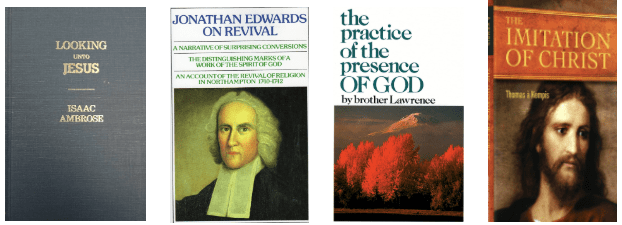
E. S. Williams, Systematic Theology, vol. 3 (Gospel Publishing House, 1953), chs. 6-9.
P. C. Nelson, Bible Doctrines (Gospel Publishing House, 1948), ch. 8.
Harold Horton, The Gifts of the Spirit (Gospel Publishing House, 1934).
Dr. John R. Rice, Great Soul Winners Were Filled With the Holy Spirit (Sword, 1949).
John Sherrill, They Speak With Other Tongues (Chosen Books, 2018).
Archibald Alexander, Thoughts on Religious Experience (Banner of Truth, 1996), ch. 7.
Daniel Jennings, The Supernatural Occurrences of John Wesley (SEAN, 2005), ch. 9.
Ira Milligan, Understanding the Dreams You Dream (Treasure House, 1997).
Richard J. Foster, Streams of Living Water (HarperCollins, 1998).
Dr. Thomas C. Oden, Classic Christianity: A Systematic Theology (HarperCollins, 2009).
A. W. Tozer, The Pursuit of God (Christian Publications, 1993).
Thomas Dubay, Fire Within (Ignatius Press, 1989).
Posted in Uncategorized
Leave a comment
 WesleyGospel Ministries