Whoever believes and is baptized will be saved, but whoever does not believe will be condemned. And these signs will accompany those who believe: IN MY NAME THEY WILL CAST OUT DEMONS; they will speak in new tongues; they will pick up serpents with their hands; and if they drink any deadly poison, it will not hurt them; they will lay their hands on the sick, and they will recover. –Jesus Christ in Mark 16:16-18 (ESV)–
Bombs rain down like heaven’s tears The Earth shall die and disappear And today, we wish the skies were grey For now they’re just black and empty
Ripped and turn from inside out Things too dark to think about No miracles No bleeding hands God has parted
Bombs rain down like heaven’s tears The Earth shall die and disappear And today, we wish the skies were grey For now they’re just black and empty
And when the end, she comes Rains down on everyone Fire from the sky And when the end, she rides Breathing out Life and death are one And when the end, she comes Rains down on everyone Fire from the sky And when the end, she rides Breathing out Life and death are one
As a flame burns to touch the sky So it shall be with man’s cry And this night all will pass away
And when the end, she comes Rains down on everyone Fire from the sky And when the end, she rides Breathing out Life and death are one And when the end, she comes Rains down on everyone Fire from the sky And when the end, she rides Breathing out Life and death are one
–Zao, “The Rising End (The First Prophecy)”–
—
(Long live!)
Receive my fate Receive my fate Receive my fate
Long live the ghost Long live the ghost
Make your mistakes No more While other men try No more
Long live the ghost Long live the king
As we step right behind the beast Hand in hand, love Love is easier made than kept We hide behind the dream
As we step right behind the beast Hand in hand Hand in hand Love is easier made than kept We hide behind the dream
Receive the burden Receive the burden and it shows Receive the burden Receive the burden and it shows
Long live the ghost Long live the ghost Long live the ghost Long live the ghost Long live the ghost Long live the ghost
Define Define Define Define Define Define
–The Chariot, “Mrs. Montgomery Alabama III.”–
—
Now, brethren, concerning the COMING OF OUR LORD JESUS CHRIST and OUR GATHERING together to Him, we ask you, not to be soon shaken in mind or troubled, either by spirit or by word or by letter, as if from us, as though the day of Christ had come. Let no one deceive you by any means; for that day will not come unless THE FALLING AWAY COMES FROM FIRST, and THE MAN OF SIN is revealed, THE SON OF PERDITION, who opposes and exalts himself above all that is called God or that is worshiped, so that he sits as God in the temple of God, showing himself that he is God. –2 THESSALONIANS 2:1-4 (NKJV)–
Dear children, THIS IS THE LAST HOUR; and as you have heard that THE ANTICHRIST IS COMING, even now many antichrists have come. This is how we know it is the last hour. –1 JOHN 2:18 (NIV)–
5 THE BEAST was given a mouth to utter proud words and blasphemies and to exercise its authority for forty-two months. 6 It OPENED ITS MOUTH TO BLASPHEME GOD, and to slander his name and his dwelling place and those who live in heaven. 7 IT WAS GIVEN POWER TO WAGE WAR AGAINST GOD’S HOLY PEOPLE AND TO CONQUER THEM. And it was given authority over every tribe, people, language and nation. 8 ALL INHABITANTS OF THE EARTH WILL WORSHIP THE BEAST—all whose names have not been written in the Lamb’s book of life, the Lamb who was slain from the creation of the world. –REVELATION 13:5-8 (NIV)–
—
George Eldon Ladd, The Blessed Hope (Eerdmans, 1956).
Robert Gundry, The Church and the Tribulation (Zondervan, 1973).
David Bercot, ed. A Dictionary of Early Christian Beliefs (Hendrickson, 1998).
C. S. LEWIS’ UNIVERSALISM, SYNCRETISM, AND PAGANISM
There are people who do not accept the full Christian doctrine about Christ but who are so strongly attracted by Him that they are His in a much deeper sense than they themselves understand. There are people in other religions who are being led by God’s secret influence to concentrate on those parts of their religion which are in agreement with Christianity, and who thus belong to Christ without knowing it. For example, a Buddhist of good will may be led to concentrate more and more on the Buddhist teaching about mercy and to leave in the background (though he might still say he believed) the Buddhist teaching on certain other points. –C. S. Lewis, Mere Christianity, p. 178–
God said in the Bible that “we were ‘gods’ and He is going to make good His words. If we let Him–for we can prevent Him, if we choose–He will make the feeblest and filthiest of us into a god or goddess, a dazzling, radiant, immortal creature, pulsating all through with such energy and joy and wisdom and love as we cannot now imagine.” –C. S. Lewis, Words to Live By, p. 218–
I have therefore no difficulty in accepting, say, the view of those scholars who tell us that the account of Creation in Genesis is derived from earlier Semitic stories which were Pagan and mythical. –C. S. Lewis, Reflections on the Psalms, p. 110–
I believe, Christ…fulfills both Paganism and Judaism. –C. S. Lewis, Reflections on the Psalms, p. 129–
I have the deepest respect even for Pagan myths, still more for myths in the Holy Scripture. –C. S. Lewis, The Problem of Pain, p. 66–
No one ever attempted to show in what sense Christianity fulfilled Paganism or Paganism prefigured Christianity…In the midst of a thousand such religions stood our own, the thousand and first, labeled True. But on what grounds could I believe in this exception? It obviously was in some general sense the same kind of thing as all the rest. Why was it so differently treated? Need I, at any rate, continue to treat it differently? I was very anxious not to. –C. S. Lewis, Surprised by Joy, p. 62–
The question was no longer to find the one simply true religion among a thousand religions simply false. It was rather, ‘Where has religion reached its true maturity? Where, if anywhere, have the hints of all Paganism been fulfilled?’…the intellect and the conscience, as well as the orgy and the ritual, must be our guide. There could be no question of going back to primitive, untheologized and unmoralized, Paganism. The God whom I had at last acknowledged was one, and was righteous. Paganism had been only the childhood of religion, or only a prophetic dream. Where was the thing full grown?…There were really only two answers possible: either in Hinduism or in Christianity. –C. S. Lewis, Surprised by Joy, p. 235–
Religions of the Earth-Mother have hitherto been spiritually inferior to those of the Sky-father, but, perhaps, it is now time to readmit some of their elements. I shouldn’t believe it very strongly, but some sort of case could be made out. –C. S. Lewis, quoted by Mark Freshwater, C. S. Lewis and the Truth of Myth, p. 14–
C. S. LEWIS’ HIGHER CRITICISM OF THE BIBLE
The Book of Job appears to me unhistorical…unconnected with all history or even legend…the author quite obviously writes as a story-teller not as a chronicler. –C. S. Lewis, Reflections on the Psalms, p. 110–
C. S. LEWIS’ DARWINISM
Man is “an animal; but an animal called to be, or raised to be, or (if you like) doomed to be, something more than an animal. On the ordinary biological view (what difficulties I have about evolution are not religious) one of the primates is changed so that he becomes man; but he remains still a primate and an animal.” –C. S. Lewis, Reflections on the Psalms, p. 115–
For long centuries God perfected the animal form which was to become the vehicle of humanity and the image of Himself. –C. S. Lewis, The Problem of Pain, p. 72–
C. S. LEWIS’ PURGATORY
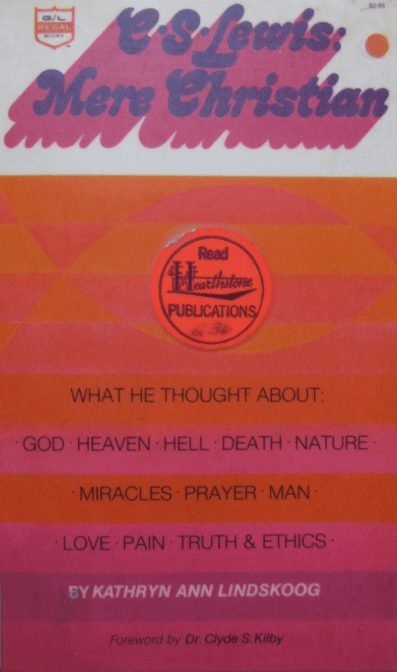
I hope that when the tooth of life is drawn and I am coming round, a voice will say, ‘Rinse your mouth out with this’ This will be purgatory.’ –C. S. Lewis, quoted by Kathryn Lindskoog, C. S. Lewis: Mere Christian, p. 105–
C. S. LEWIS’ DEPRAVITY AND PERVERSION
I cannot give pederasty anything like a first place among the evils of the Coll. There is much hypocrisy on this theme. People commonly talk as if every other evil were more tolerable than this. But why? Because those of us who do not share the vice feel for it a certain nausea, as we do, say, for necrophily? I think that of very little relevance to moral judgment. –C. S. Lewis, Surprised by Joy, p. 109–
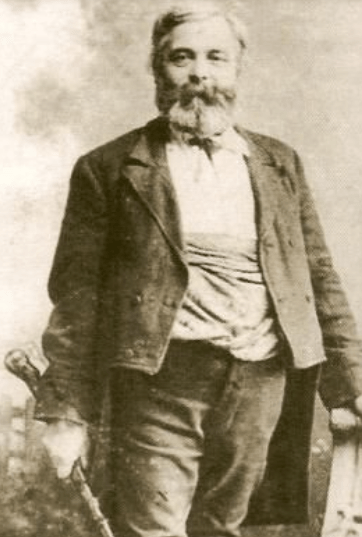
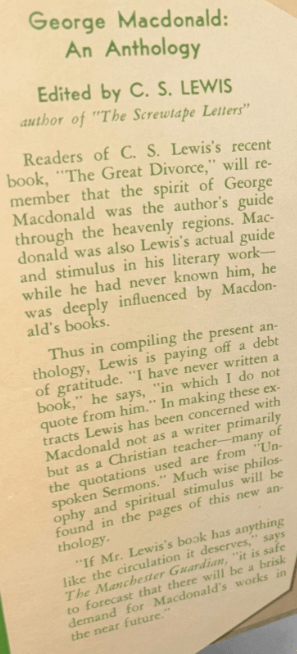
North American Anglican, “The Salvation Theology of C. S. Lewis.” “It is not possible to ignore the urgency and necessity of George MacDonald and his universalist ideas in the development of C. S. Lewis’ theology. While it did not force Lewis into a total belief in universalism, it is certainly the case that it broadened Lewis’ theology of salvation, to the point that it differs considerably from orthodox, traditional beliefs within both Protestantism and the Roman Catholic Church. It is likely, as can be seen in The Great Divorce, that Lewis leaves open the possibility of universal salvation, limited only by our own innate ability to deny God, even in death. This results in a reality that renders the possibility of universalism unlikely, even within Lewis’ expansive theology of salvation. We must again acknowledge his fairly unorthodox belief that other religions contain truth that points back to God. This is a very large leap of faith on Lewis’ part because it flies in the face of many accepted and traditional beliefs within the universal church. Again, however, in choosing to argue for this possibility, Lewis is ultimately arguing for the supreme sovereignty of God to act in any way God deems fit. Lewis does not outright reject the idea of universalism. Instead, Lewis makes provides explicit and detailed examples that together show salvation, while not being universal, is much broader, merciful and understanding than the church has often taught.”
Paul Kerry, ed. The Ring and the Cross (Fairleigh Dickinson, 2011). About LOTR.
The following Christian books currently exist in George Washington’s personal library at his Mount Vernon estate. He was an Anglican just like John Wesley was. In recent years, the last conservative evangelical Anglican theologian was J. I. Packer; and before him, it was J. C. Ryle. Being that George Washington was a contemporary of Wesley within the same Anglican denomination, it is probable that Washington had Methodist leanings and was Arminian in his theological views. I wouldn’t endorse every book in this list, because some are heretical. But so far as I can tell, I’m okay with the KJV, The Book of Common Prayer, Hammond, Law, Beattie, Spangenberg, Langdon, Wesley of course, and Brown. –J.B.
1. The King James Bible.
2. The Book of Common Prayer.
3. Sermons on Various Subjects by Rev. Laurence Sterne.
4. Sermons to Young Men by Hugh Blair.
5. The Works of William Tillotson.
6. Discourses on Various Subjects by Rev. Samuel Clarke.
7. The Whole Duty of Man by Henry Hammond.
8. A Serious Call to a Devout and Holy Life by William Law – This man personally knew John Wesley; and this book played a major role in Wesley’s view of Biblical holiness.
9. Contemplations Moral and Divine by Matthew Hale.
10. Evidences of the Christian Religion Briefly and Plainly Stated by James Beattie.
11. An Exposition of Christian Doctrine by August Gottlieb Spangenberg.
12. Observations on the Revelation of Jesus Christ to St. John by Samuel Langdon.
13. “The Almost Christian” and “A Sermon on Original Sin” by John Wesley.
14. The Necessity, Nature, Means, and Marks of True Faith in Jesus Christ by William Dodd.
15. A Collection of Devotional Tracts by William Law.
16. Peace and Joy: Being a Brief Attempt to Consider the Evidences of the Truth of the Gospel by Shippie Townsend.
17. Remarks on Several Very Important Prophecies by Granville Sharp.
18. The History of the Old and New Testament, Interspersed with Moral and Instructive Reflections, Chiefly Taken from the Holy Fathers by Joseph Reeve.
19. The Self-Interpreting Bible by John Brown.
20. Dissertations on the Mosaical Creation, Deluge, Building of Babel, and Confusion of Tongues by Simon Berington.




 WesleyGospel Ministries