

Jonathan Edwards. He’s the preacher who preached his sermon series on Justification which brought about the Great Awakening in 1734 and “Sinners in the Hands of an Angry God” in 1741, which sent people into visions of Hell during the sermon. He had outpourings of the presence of God in his church! A Puritan preacher with people experiencing the Holy Spirit in his church! A Congregationalist preacher. Every Wesleyan, Pentecostal, and charismatic person in America has him to thank for getting Spirit-filled evangelicalism off to a great start, even if he was a Calvinist.
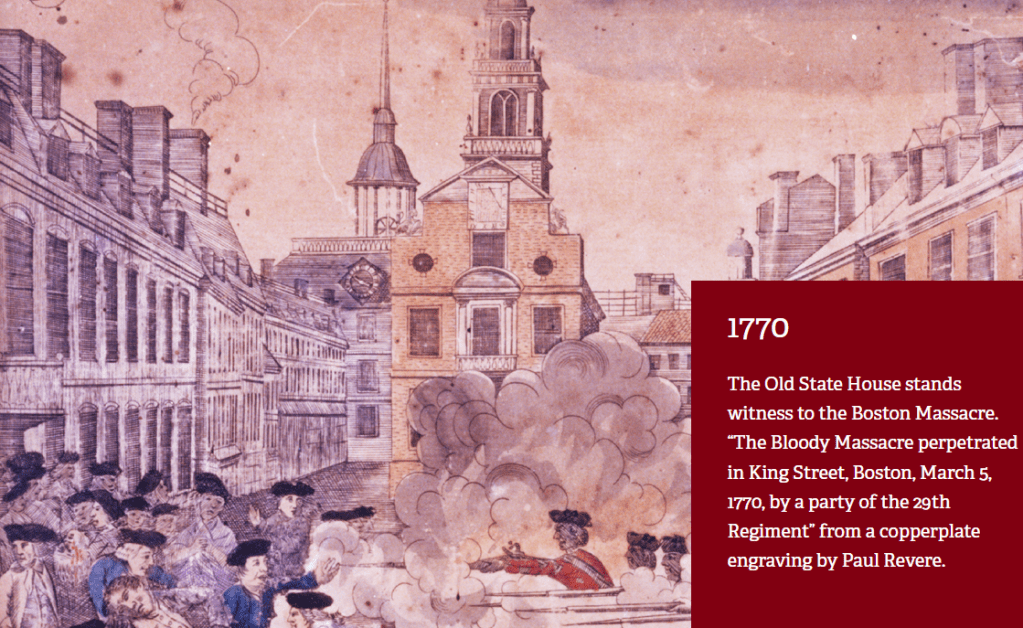
Have you ever wondered what the GOVERNMENT was like back then? Well, that Bible-based spiritual awakening was pre-American, keep that in mind. It happened about 40 years before the American Revolution in 1776 with George Washington. The seat of colonial government in Edwards’ day would have been the Old State House in Boston, Massachusetts, which was about 105 miles away from Northampton. Each of the counties had their local magistrates who were held accountable to Boston. The government was thoroughly Puritan. The full development of the “Bible Commonwealth” which was first established in the 1640s. But by the 1690s, Boston started to become a hotbed of pirates, outlaws, worldly businessmen, taverns, whoremongers, Antinomians, deists, atheists, and liberals of all kinds. The main spiritual problem was the Age of Enlightenment, in which the exaltation of the sciences at the expense of supernatural religion, took over the minds of the population. While preachers like Edwards and John Wesley sought to balance out reason and supernatural Christianity, the majority of the Bostonians leaned the direction of Thomas Paine’s Common Sense (1776), which was publicly read in taverns to incite angry drunkards into political frenzies. This was precipitated by more riotous political mob behavior, which resulted in the Boston Massacre (1770) and the Boston Tea Party (1773). Bible believers had officially lost their influence over society and were popularly replaced by politically and economically excited Antinomians (easy-believism people), deists, and atheists, all of whom were mainly business-minded and tax-minded. So the whole move towards the American Revolution was motivated by secularism and business. The language of “tyranny” was pejoratively used against British rulers, to further move away from the Puritan model of government in Boston, and towards a more deistic Freemason government ideology which eventually made its way to Washington, D.C. –J.B.


 WesleyGospel Ministries