
The fear of the Lord is the beginning of knowledge, but fools despise wisdom and instruction. —Proverbs 1:7
He said to them, “Watch out! Be on your guard against all kinds of greed; life does not consist in an abundance of possessions.” And he told them this parable: “The ground of a certain rich man yielded an abundant harvest. He thought to himself, ‘What shall I do? I have no place to store my crops.’ “Then he said, ‘This is what I’ll do. I will tear down my barns and build bigger ones, and there I will store my surplus grain. And I’ll say to myself, “You have plenty of grain laid up for many years. Take life easy; eat, drink and be merry.”’ “But God said to him, ‘You fool! This very night your life will be demanded from you. Then who will get what you have prepared for yourself?’ “This is how it will be with whoever stores up things for themselves but is not rich toward God.” —Luke 12:15-21
Do nothing from selfish ambition or conceit, but in humility count others more significant than yourselves. Let each of you look not only to his own interests, but also to the interests of others. —Philippians 2:3-4
Who is wise and understanding among you? Let them show it by their good life, by deeds done in the humility that comes from wisdom. But if you harbor bitter envy and selfish ambition in your hearts, do not boast about it or deny the truth. Such “wisdom” does not come down from heaven but is earthly, unspiritual, demonic. For where you have envy and selfish ambition, there you find disorder and every evil practice. But the wisdom that comes from heaven is first of all pure; then peace-loving, considerate, submissive, full of mercy and good fruit, impartial and sincere. Peacemakers who sow in peace reap a harvest of righteousness. —James 3:13-18
What causes fights and quarrels among you? Don’t they come from your desires that battle within you? You desire but do not have, so you kill. You covet but you cannot get what you want, so you quarrel and fight. You do not have because you do not ask God. When you ask, you do not receive, because you ask with wrong motives, that you may spend what you get on your pleasures. You adulterous people, don’t you know that friendship with the world means enmity against God? Therefore, anyone who chooses to be a friend of the world becomes an enemy of God. Or do you think Scripture says without reason that he jealously longs for the spirit he has caused to dwell in us? But he gives us more grace. That is why Scripture says: “God opposes the proud but shows favor to the humble.” Submit yourselves, then, to God. Resist the devil, and he will flee from you. Come near to God and he will come near to you. Wash your hands, you sinners, and purify your hearts, you double-minded. Grieve, mourn and wail. Change your laughter to mourning and your joy to gloom. Humble yourselves before the Lord, and he will lift you up. —James 4:1-10
John Haughey, the Catholic theologian, pointed out that giving to the poor and needy of the Church, from the heart, and not to make a show of one’s generosity to attract the attention and respect of others, is the Biblical cure for competitive greed and self-centeredness. But he implied that this kind of heartfelt, compassionate desire to love your brothers and sisters, and to help them, without a smudge of religious vanity, is a rare thing and can only come from the Holy Spirit (Matt. 6:2; 2 Cor. 8:8; 9:8). Then he points out that for the majority of others, the capitalistic values of self-interest and competition get in the way of this happening:
The enemy of this mode of obedience is a culture that teaches all of us to look out for ourselves and “our own,” to take care of ourselves, to value ourselves in isolation from one another, and to define our individuality in terms of our economic and financial conditions instead of others, their needs, and our faith. Our economic culture foments competition and self-interest. Competition and self-interest are not in themselves inimical (harmful) to human needs or to faith. They are hallowed ways of generating and regulating an economy. They can and usually do, however, go beyond their economic functions and affect the area of personal values and interpersonal relations. When this occurs, a faith that proclaims a solidarity with neighbor or a member relationship to others in the Body of Christ is up against a consciousness already predisposed to the opposite. This opposite is a competitiveness toward one another and looking out for one’s own interests despite of or with a disregard for others. —The Holy Use of Money, p. 149
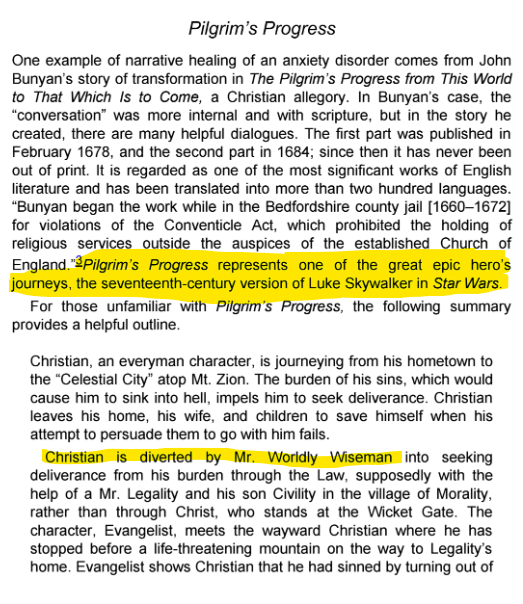
Lewis Mehl-Madrona, Healing the Mind Through the Power of Story, p.
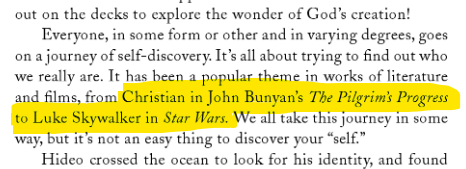
Hideo Hatakeda, From the Well to the Sea, p. 11.


 WesleyGospel Ministries