
Suppose a man comes into your meeting wearing a gold ring and fine clothes, and a poor man in filthy old clothes also comes in. If you show special attention to the man wearing fine clothes and say, “Here’s a good seat for you,” but say to the poor man, “You stand there” or “Sit on the floor by my feet,” have you not discriminated among yourselves and become judges with evil thoughts? Listen, my dear brothers and sisters: has not God chosen those who are poor in the eyes of the world to be rich in faith and to inherit the kingdom he promised those who love him? But you have dishonored the poor. Is it not the rich who are exploiting you? Are they not the ones who are dragging you into court? Are they not the ones who are blaspheming the noble name of him to whom you belong?
–James 2:2-7
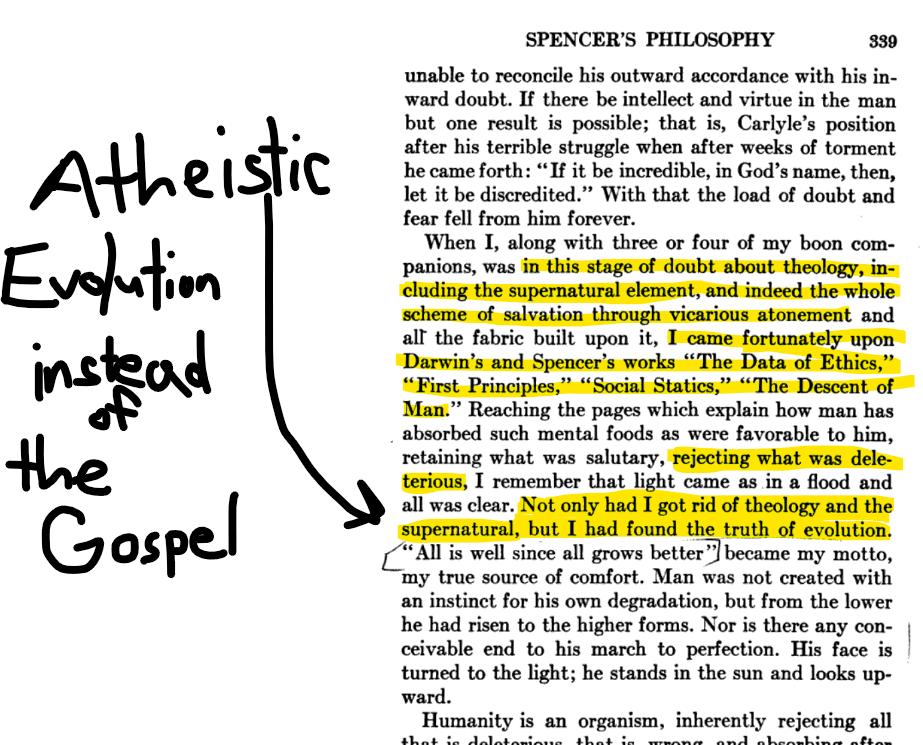
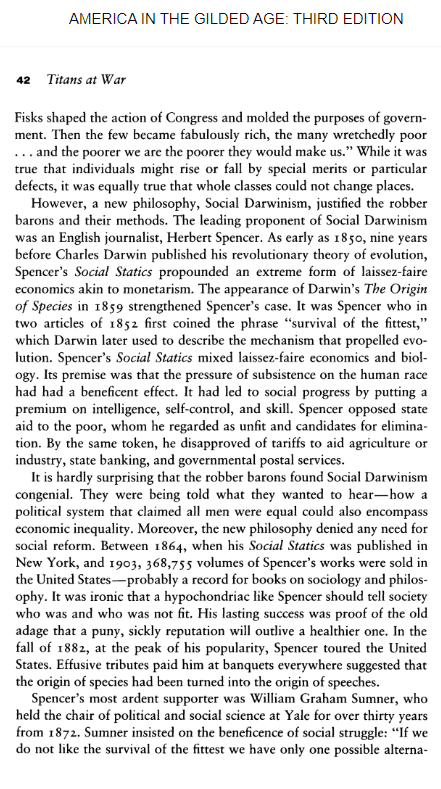
Andrew Carnegie was a liberal Presbyterian, so in this sense, he came from that long tradition of the Presbyterian work ethic, passed down from Richard Steele’s The Religious Tradesman (1684), and Daniel Defoe’s The Complete English Tradesman (1726). In another sense, at some stage of his career he became a complete apostate into either atheism or agnosticism because of evolution. He explains from page 339 in his Autobiography (1920) his descent into unbelief; and his acceptance of Spencer’s form of Social Darwinism:


 WesleyGospel Ministries