Derek Prince as a Prophetic Mentor
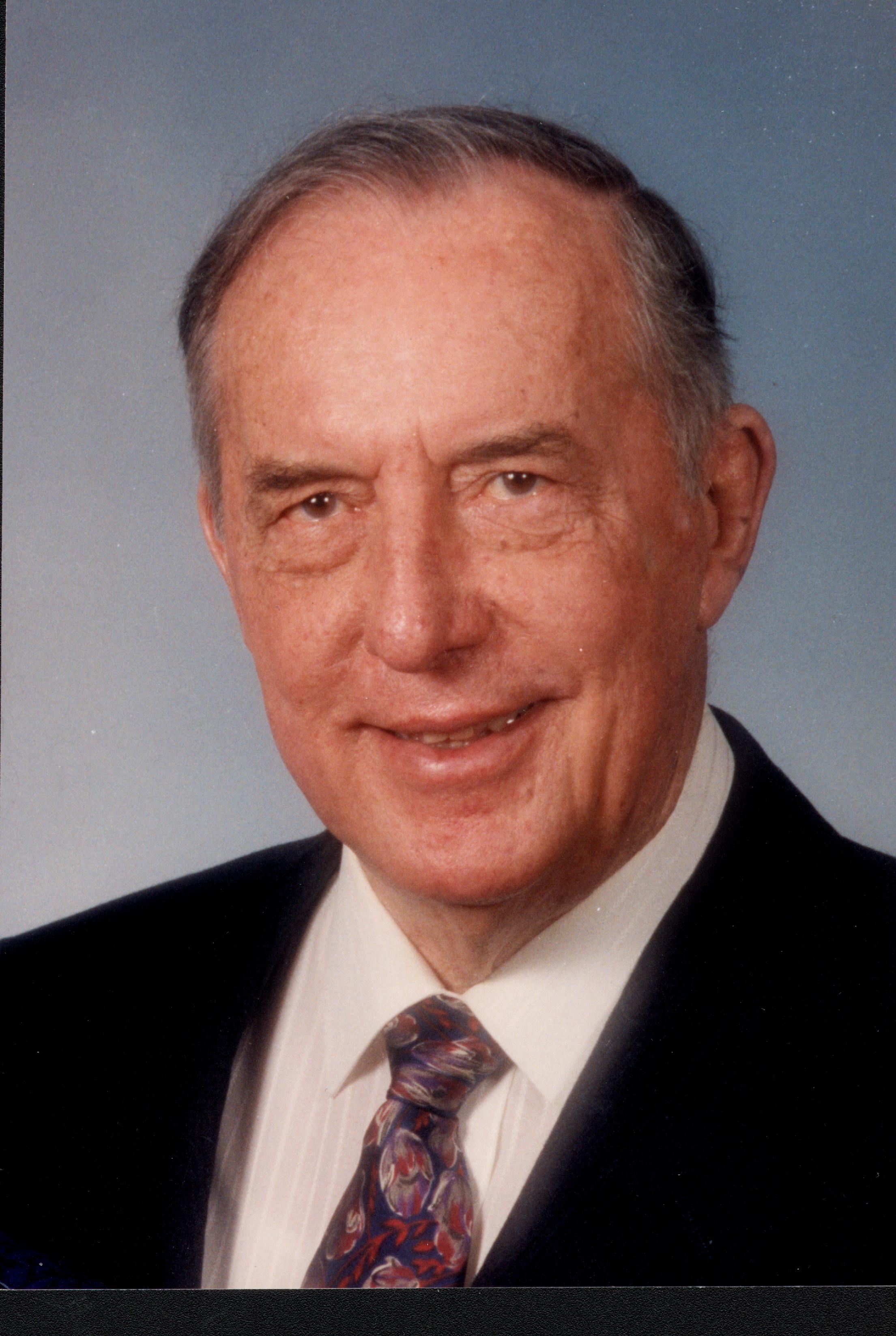
I have recently been in prayer meetings with a prophetic minister, with a phenomenal word of knowledge, healing, and deliverance gifting. He prophesied to me that I was called to similar ministry. I asked him for some pointers on starting a prophetic ministry, and after he said it was necessary to get a $1,400 501(c)(3) non-profit organization status; and settling on a ministry name–he also said, “If you stay in the Word (Bible), the words of knowledge will continue to flow…also, any books by Derek Prince; and studying 1 Corinthians.”
I have also noticed that James Goll, a renowned teacher on prophetic ministry, has cited Derek Prince as an influence. Here are some materials by Prince on spiritual gifts taken from Goll’s books (The Coming Prophetic Revolution; The Seer; The Beginner’s Guide to Hearing God; Prayer Storm):
1971 – The Nine Gifts of the Holy Spirit (tape series)
1971 – How to Judge Prophecy
1976 – How to Fast Successfully
1986 – Fasting
2002 – Shaping History Through Prayer and Fasting
Posted in Uncategorized
Leave a comment
Donald Gee (1891 – 1966) – Tony Cauchi
Originally from here.
 Donald Gee is described by one biographer as pastor, author, educator, conference speaker, editor and ecumenist. A true Pentecostal statesman! Born in London in 1891, he was converted in 1905 when Seth Joshua, the Welsh revivalist held evangelistic meetings at Finsbury Park Congregational Church. He joined a Baptist church with his mother in 1912 and he was baptized in the Holy Spirit in March 1913.
When the war broke out in 1914 he registered as a ‘conscientious objector’ to military service and was sent to work on a farm in Buckinghamshire which he found to be ‘a divinely arranged college that provided deep preparation of spirit, soul and body for the years of strenuous ministry that, all-undreamt-of, lay ahead.’ He considered these times ‘some of the most richly formative of a lifetime.’
A year later he moved to another farm where he led a small Pentecostal fellowship and then, after the war ended in 1918, he returned to London. In 1920 he accepted a call to the pastorate of a small chapel in Leith, near Edinburgh, Scotland. The church grew and Bonnington Toll Chapel was built and became his place of ministry for 12 years to come. Many great Pentecostal pioneers like the Jeffreys brothers, W.F.P. Burton Burton, Howard Carter and Smith Wigglesworth ministered here. In 1921 he attended the International Pentecostal convention in Amsterdam and became acquainted with the wider Pentecostal Movement.
In 1922 he began writing articles for Pentecostal periodicals and in 1924, as an accomplished musician himself, he produced the first British Pentecostal hymnbook, Redemption Tidings. He considered joining the Elim denomination but in 1924 Gee was one of the pioneers of the Assemblies of God in Great Britain and Ireland. From 1925 to 1963 he sat on the executive presbytery as an esteemed and valued contributor.
In 1928 he responded to an invitation to go to Australia and New Zealand as a Bible teacher, a ministry in which he excelled. En route he wrote his famous first book, Concerning Spiritual Gifts. Thereafter he lectured across the five continents of the world as an itinerant teaching minister, always gathering new information for his magnum opus, a history of the worldwide Pentecostal Movement, published in 1949, later called Wind and Flame.
During the war he was restricted to travelling in Britain encouraging small Pentecostal fellowships, but thereafter resumed his international travels and at the Pentecostal World Convention in Zurich, in 1947, was chosen to become the editor of the magazine Pentecost producing 76 issues until it concluded in 1966. Here he published some of his finest and most provocative essays for the still adolescent Pentecostal family.
He was highly ecumenical and received harsh criticism for cooperating with the Billy Graham Evangelistic Campaign at Haringey, London in 1954 and for fraternising with denominational leaders who subscribed to the World Council of Churches. In 1961 he was invited as an observer at the New Delhi Assembly of the World Council of Churches, but pressure from Pentecostal leaders in the USA forced him to decline.
In 1951, when he was 60 he accepted an invitation to become the principal of the newly reorganized AoG Bible College at Kenley where he spent the next 13 years. He died two years later of heart failure, aged 75.
He wrote almost 30 books and innumerable magazine articles published in Pentecostal periodicals around the world, 500 in the AoG’s Redemption Tidings alone. His Biblical teaching, his bridge-building and conciliatory manner and his magnanimous attitude to the burgeoning Charismatic movement during his evening years made him a true Christian statesman.
Bibliography: Colin Whittaker, Seven Pentecostal Pioneers, 1983; Donald Gee, Wind and Flame, 1949; D.D. Bundy art. International Dictionary of Pentecostal and Charismatic Movements, 2002.
Posted in Uncategorized
Leave a comment
Stanley Frodsham (1882 – 1969) – Tony Cauchi
Originally from here.
 Writer, editor and teacher who ministered in the Pentecostal movement for over 60 years. For 30 years he was editor of the Pentecostal Evangel. He is mostly remembered for the 15 books he wrote, the best known being a history of the Pentecostal movement, With Signs Following, (1926, enlarged in 1928, revised 1946) a collection of Smith Wigglesworth’s sermons Ever Increasing Faith (1924) and his biography of Smith Wigglesworth, Apostle of Faith (1948).
He was born in Bournemouth, England in 1882 into a godly home where he was encouraged to read the Bible and pray. He attended a private school to learn proper grammar, history and literature in preparation to achieve a career in writing.
On reading the life of Hudson Taylor, founder of the China Inland Mission, he was challenged by this man’s walk with God by his life of faith. A fresh passion was born in his heart to know God like God like Hudson Taylor had. Soon afterwards he was powerfully converted and radically transformed at the Young Men’s Christian Association (YMCA) in London.
He spent a year in Johannesburg, South Africa as secretary of the newly formed YMCA there and in 1906/7 he visited Canada where his appetite was whetted as he began to hear about the Pentecostal revival. Returning to England in 1908 his thirst was quenched when he received the baptism in the Holy Spirit at All Saint’s Church, Sunderland – just one year after Smith Wigglesworth had received the Spirit in the same place – in Pastor and Mrs. Boddy’s home.
In 1909 he began his publishing ministry when he introduced a Pentecostal paper called Victory, a monthly paper that reported on the Pentecostal revival that was sweeping the world. He joined the first Pentecostal church in Bournemouth called the Apostolic Faith. During a visit to Canada in 1910 he met and married an English girl, Alice Rowlands. Smith Wigglesworth performed the marriage ceremony in Britain and then the newly-married couple emigrated to USA.
In 1916 he began his ministry with the AG, soon becoming General Secretary and, in 1921 was elected as editor of all AG publications which included the Pentecostal Evangel.
Back in 1909 he had joined the first Pentecostal church in Bournemouth which had a primary emphasis on prophecy and the restoration of the ministries of Apostles and Prophets. In the late 1940s such emphases were again brought to his attention when he became heavily involved in the Latter Rain Movement.
The main teachings of this movement were:
1. The Latter Rain, meaning an end-time church filled with the power of the Holy Spirit, overcoming and victorious, attaining to the “full stature” of Christ, as taught by Apostle Paul.
2. The Sacrifice of Praise, which was a major emphasis on worship. Teaching on the Tabernacle of David and its restoration was a major theme. Dancing, lifting of hands and spontaneous praise were marks of this movement.
3. Christian Unity. A major theme of the Latter Rain was unity among believers, in the church service, in the geographic region, and at large. They taught that God saw the church organized not into denominational camps, but along geographical lines as in the book of Acts. They expected that in the coming last days, the various Christian denominations would dissolve, and the true church would coalesce into city wide churches under the leadership of the newly-restored apostles and prophets.
4. Laying on of Hands. Unlike Pentecostals who traditionally held that the baptism of the Holy Spirit usually comes after prolonged “tarrying” or waiting for the Spirit, the Latter Rain movement taught that the baptism of the Holy Spirit and the gifts of the Holy Spirit can be imparted on one believer by another through the laying on of hands.
5. The Fivefold Ministry. The Latter Rain taught that there would be a restoration of the five ministerial roles mentioned in Ephesians 4:11 (apostle, prophet, evangelist, pastor, teacher).
6. Manifest(ed) Sons of God. Some leaders of the Latter Rain movement taught that as the end of the age approached, that the “overcomers” would arise within the Church. These Manifest Sons of God, ones who have come into the full stature of Jesus Christ would receive the Spirit without measure. They would be as Jesus was when He was on earth, they would receive a number of divine gifts, including the ability to change their physical location, to speak any language through the Holy Spirit, and would be able to perform divine healings and other miracles. They would complete the work of God restoring man’s rightful position as was originally mandated in Genesis, and at last by coming into the full stature of Christ usher in the millennial reign of Christ. Though this was not a widespread view. [edit., Some charismatics, like Benny Hinn, have taken this teaching to mean that some prophets are “little gods,” which is a New Age heresy. I totally disagree with any such ideas.–edit]
Some considered the Pentecostal denominations a mere monument to Pentecost’s former glory, so this new movement appeared a breath of fresh air. Singing in the Spirit, the manifestation of spiritual gifts like tongues interpretation and prophecy, people receiving the gift of the Holy Spirit with the sign of tongues by the laying on of hands, miraculous healing etc., brought the life of God into their meetings. Such things had only been read about in Pentecostal history books and records of the early days. Now they had returned and Frodsham, regardless of being in his 60’s, embraced this new move with all his heart and soul.
As the new movement gained more ground there developed considerable controversy with the Assemblies of God and they began a ‘vigorous defence’ against ‘The New Order of the Latter Rain,’ as they called it. In November and December 1949 they published a series aimed at exposing its erroneous beliefs and practices, without direct reference to them by name.
Frodsham’s involvement with the Latter Rain folk caused him to be ‘pretty badly smeared before all the presbyters’ and precipitated his retirement at 67 years of age. A resolution was adopted reinforcing their official disapproval which was then published as a statement in The Pentecostal Evangel. Frodsham continued to accept invitations to Latter Rain assemblies to preach and with great sorrow tendered his resignation from the General Council ministerial list. His reputation suffered loss but he maintained a clear conscience and remained gracious and kind in his attitude to the Assemblies of God. His abiding position was ‘Our differences are temporal, our unity is eternal.’
He continued to minister in Latter Rain circles, teaching for a time at Elim Bible Institute, until his death in 1969.
Bibliography: W. E. Warner art. ‘International Dictionary of Pentecostal and Charismatic Movements‘ 2002, Richard M. Riss ‘Latter Rain’ 1987.
Posted in Uncategorized
Leave a comment
Assemblies of God Books Before 1955
I am reading Gary Wilkerson’s David Wilkerson, chapter 3, which implies that in the 1950s, the Assemblies of God started to lose its spiritual fervor, because it joined the National Association of Evangelicals (NAE). A Michal spirit of “respectability” (2 Samuel 6:16) and anti-“wild Pentecostal zeal” entered into the denomination. It was in 1957 that this dry spiritual climate ousted Wilkerson into independent ministry, led by the Holy Spirit and a good conscience. But Wilkerson was conditioned by AG theology up until that point. Here are some books by Gospel Publishing House (GPH) from that era. It seems that if there ever were spiritual “glory days” of the AG, it was during the 1920s and 30s. In the 40s they started taking a census and boasting of their numbers.
—–
1928 – Donald Gee’s Concerning Spiritual Gifts
1932 – Donald Gee’s Pentecost
1934 – P. C. Nelson’s Bible Doctrines
1937 – Myer Pearlman’s Knowing the Doctrines of the Bible
1946 – Stanley Frodsham’s With Signs Following
…
- 1949 – Frodsham left the AG for similar reasons as Wilkerson
1953 – Ernest S. Williams’ Systematic Theology (3 vols)
- 1906 – Visited Azusa Street Revival
- 1929-1949 – The AG General Superintendent
- At the end of the interview in above link, Williams says he would have revised his Systematic Theology when he speaks against Calvinism. He says, “When you read Paul’s epistles, you see a lot of Calvinism.” So, apparently, by the year 1979, he became a OSAS Calvinist Pentecostal. He also said he thought Wigglesworth was eccentric and he didn’t want anything to do with his ministry; he said Seymour wasn’t much of a preacher, either. He said they didn’t let black pastors in the AG, for fear that the southern AG churches would split away. Ehh…I don’t know about this Williams guy…I take him for a dry piece of wood.
- I’d stick with Gee, Nelson, and Frodsham for orthodox, godly AG theology.
Posted in Uncategorized
Leave a comment
Revival Worship Series: “Touching The Father’s Heart” – Vineyard Music Group
This is a chronological list.
Each of these are (somewhat) annual live worship albums by the Vineyard churches.
In 1987, when Leonard Ravenhill was 80, he led a series of revival meetings in the Anaheim Vineyard called “Holiness To The Lord.” The early albums of the Vineyard probably still have a remainder of the holiness anointing left as an influence. John Wimber had then published Power Evangelism (1986), Power Healing (1987), and Power Encounters (1988) with HarperCollins. Then came Wayne Grudem’s The Gift of Prophecy (1988). Ravenhill died in 1994. David Ravenhill, his son, has been involved with the Vineyard over the years.
 1. Unto The King – 1989 (title theme: lordship salvation)
2. Holy And Anointed One – 1989 (title theme: lordship salvation)
3. We Exalt Your Name – 1989 (title theme: lordship salvation)
4. Holiness Unto The Lord – 1989 (title theme: lordship salvation)
5. King Of Saints – 1989 (title theme: lordship salvation)
6. Fire Of God – 1990 (title theme: holiness / zeal) (Mike Bickle joins Vineyard)
7. Hear Our Cry – 1990 (title theme: intercession)
8. We Behold You – 1990 (title theme: contemplation)
9. Take Our Lives – 1991 (title theme: lordship salvation)
10. Save Us Oh God – 1991 (title theme: lordship salvation)
11. I Bow Down – 1991 (title theme: lordship salvation)
12. Throne Of Grace – 1991 (title theme: lordship salvation)
13. Devoted To You – 1992 (title theme: lordship salvation)
14. Send Your Spirit – 1992 (title theme: Spirit-baptism)
15. Seek Righteousness – 1993 (Jack Deere’s Surprised by the Power of the Spirit)
16. Great Is Your Mercy – 1993 (John Wimber’s Power Points) (atonement)
17. Glory And Honor – 1994 (title theme: lordship salvation)
18. Light The Fire Again – 1994 (title theme: zeal) (Grudem’s Systematic Theology)
19. Everlasting Grace – 1994 (title theme: atonement)
20. The River is Here – 1994 (title theme: Spirit-baptism) (Toronto Blessing / animals)
21. Spirit of the Sovereign Lord – 1994 (Leonard Ravenhill died)
22. Hallelujah Glory – 1995 (title theme: praise) (Brownsville Revival / no animals*)
23. Before You Now – 1995 (title theme: worship) (Arnott’s The Father’s Blessing)
24. Blessed Be The Name – 1995 (title theme: worship) (Toronto Airport ousted)
25. For Your Mercy – 1996 (Jack Deere’s Surprised by the Voice of God) (atonement)
26. Faithful Father – 1996 (title theme: adoption) (Bickle’s Growing in the Prophetic)
27. Holy Is The Lord – 1996 (title theme: lordship salvation)
28. Jesus Lead On – 1996 (title theme: Spirit-led) (Mike Bickle leaves Vineyard)
29. I Will Lift My Hands – 1997 (title theme: worship)
30. Receive Our Praise – 1997 (title theme: praise)
31. You Are God – 1997 (title theme: worship)
32. I Love Loving You – 1997 (title theme: worship) (John Wimber died)
33. You Are In Control – 1997 (title theme: providence) (Rick Joyner / MorningStar)
* I believe the physical manifestations of shaking, spasms, laughing, crying, falling under the power of the Spirit, drunkenness in the Spirit, etc, all have Biblical basis, and historical basis in the lives of Jonathan Edwards and John Wesley (see Guy Chevreau’s Catch the Fire, 1994); and I believe that the Toronto Blessing started out in the Holy Spirit, with the conservative evangelical influence of Wimber, Grudem, and Deere, and was later sabotaged by unclean spirits of power animals, used by shamans. So far as I know, the Brownsville revivalists were careful to keep out the shamanistic animal manifestations, but they allowed the other traditional evangelical revival manifestations to appear, which is fine with me (see Vinson Synan’s The Holiness-Pentecostal Tradition, pp. 275-278).
—
34. You Shelter Me – 1998 (title theme: providence)
35. I Love Your Ways (title theme: holiness)
36. I Just Want to Thank You (title theme: praise)
37. Your Love Reaches Me (title theme: praise)
38. It’s All About Jesus (title theme: worship)
39. Name Above All (title theme: worship)
40. Healing In Your Wings (title theme: presence of God)
41. Offering of Love (title theme: worship)
42. Jesus I Believe You (title theme: faith)
43. Unspoken Truth – 2001 (title theme: orthodoxy)
Posted in Uncategorized
Leave a comment