Joel Osteen: A Materialistic Preacher

In this video interview with Oprah Winfrey, Osteen makes no apologies for living in luxury:

In this video interview with Larry King, Osteen says he doesn’t know if good non-Christians will go to Heaven, blatantly contradicting John 14:6:

“Wealth comes from the Lord, says Paul. Not from positive confessions. But don’t get too attached to it. What you have, use for the furtherance of the Gospel and for the betterment of those around you. Expect that hardship will come your way.”
                                 –Hank Hanegraaff, The Osteenification of American Christianity, p. 53

“Many live as enemies of the cross of Christ. Their destiny is destruction, their god is their stomach, and their glory is in their shame. Their mind is set on earthly things.
                                                                                              –Apostle Paul in Philippians 3:18-19

Do not store up for yourselves treasures on earth, where moths and vermin destroy, and where thieves break in and steal. But store up for yourselves treasures in Heaven, where moths and vermin do not destroy, and where thieves do not break in and steal.”
                                                                                                             –Jesus in Matthew 6:19-20

—–

The problem with the Word of Faith, positive confession, prosperity gospel is not that it seeks economic empowerment of the poor. The Book of Proverbs does just that, by repeatedly commanding a very strong work ethic, saving money little by little, and investing it to make it grow.

The problem with the prosperity gospel is that it contradicts the teachings of Jesus in Matthew, Mark, Luke, and John; and also the teachings of the apostles in the New Testament letters:–that once saints have accumulated wealth–THEY ARE NOT TO SPEND IT ON THEMSELVES IN A MATERIALISTIC AND EARTHLY MANNER, GETTING A LARGE MANSION, LUXURY CAR, PERSONAL AIRPLANE, YACHT, ETC (“treasures on earth”). Rather, Christians are supposed to GIVE EXTRAVAGANTLY TO THE POOR and do GOOD WORKS of CHARITY with the surplus that they would otherwise spend on LARGE SCREEN TVs, TOYS, and LUXURY ITEMS if they were not Christians. Jesus said, “If you want to be perfect, GO, SELL YOUR POSSESSIONS AND GIVE TO THE POOR, and you will have TREASURE IN HEAVEN. Then come, follow Me” (Matthew 19:21).

Joel OsteenThe prosperity gospel–or we may call it THE LUXURY GOSPEL–contradicts Matthew 19:21 and all other Scriptures like it. It teaches that Christians are confessing “negative curses” over their lives if they are not living in luxury, and are not seeking to acquire affluent, ostentatious possessions for their own pleasure. When you see the name Joel Osteen–think about how Joel is Osteentatious. He will GO TO HELL if he doesn’t repent, turn away from, and change his mind about his theological materialism, theological covetousness, medieval pope-like avarice, etc (Luke 16:19-25). However much he is slick to conceal it; God sees how covetous and materialistic he is.

Exodus 20:17: “You shall not covet your neighbor’s house. You shall not covet your neighbor’s wife, or his male or female servant, his ox or donkey, or anything that belongs to your neighbor.

Joel Osteen’s $10.5 million mansion; originally from here:

Joel Osteen MansionEphesians 5:5: “For this you know with certainty, that no immoral or impure person or covetous man, who is an idolater, has an inheritance in the kingdom of Christ and God.

The prosperity gospel teaches covetousness; and it does not teach extravagant giving to the poor.

Open hands beggingIt is a DAMNABLE HERESY!

We should AVOID THOSE WHO ARE COVETOUS:

1 Corinthians 5:11: “But actually, I wrote to you not to associate with any so-called brother if he is an immoral person, or covetous, or an idolater, or a reviler, or a drunkard, or a swindler–not even to eat with such a one.

Further Reading on Personal Finance, Economic Restraint,
Frugality, Materialism, and the Prosperity Gospel

Craig Blomberg’s Neither Poverty nor Riches.

Hank Hanegraaff’s The Osteenification of American Christianity. The Prologue and chapter 1 expose Osteen’s positive confession beliefs; and chapter 3 shows how Osteen twists Scripture out of its original context to fit into his metaphysical theology of prosperity. The Epilogue concludes that Osteen is a modern day Tetzel: “As soon as a coin in the coffer rings–the soul from Purgatory springs.”

D. R. McConnell’s A Different Gospel. Peabody, MA: Hendrickson Publishers, 1995. Chapter 10: “The Doctrine of Prosperity: Success and the Upwardly Mobile Christian.” This is a to-the-point Biblical critique of the Prosperity Gospel, taught by many Pentecostal and Word of Faith preachers, like Kenneth Hagin, Kenneth Copeland, Frederick K. C. Price, and others on the Trinity Broadcasting Network (TBN). It provides a needed balance to not only materialism in general, but also exposes the cultic, metaphysical nature of positive confession.

Gary North’s An Economic Commentary on the Bible. 31 vols. This is extremely profound! Gary North’s life work! See especially Wisdom and Dominion: An Economic Commentary on Proverbs, formerly titled God’s Success Manual.

John Taylor’s Enough is Enough.

Posted in Uncategorized | Leave a comment

Crown Him – Michael Card

Crown Him, crown Him, the angry people cried
Crown Him, crown Him, let Him be crucified
Crown Him, crown Him, let Him not remain alive
Crown Him, crown Him, He must be crucified

So a circle of pain and love
Came down upon His head
It was not for anything He’d done
Or for anything He’d said
For all His life He’d sought to show
They were only living a lie
But they didn’t care to hear, oh no
They just wanted Him to die

Soon a circle of glory
Will be placed upon His brow
And He’ll come to reign forever
Though it may not seem so now
Then our time of tears and trouble
Will seem only like a dream
As we stand before the glory
Of our Savior and our King

Crown Him, crown Him
Holy angels sing: all glory honor, power, and grace
We’ll crown Him King of Kings
Crown Him, crown Him, those redeemed and damned
Will bow with me and humbly, sing worthy is the Lamb

Posted in Uncategorized | Leave a comment

Perfectionism or Lawlessness: Take Your Pick? No! Be a Christian!

Seeing that we live in a day and age when the Reformed, traditional Protestant, classical “lordship salvation” Gospel is not being preached by very many pastors—it follows that only soteriological errors are going to be prevailing in the minds of church goers. I believe that a number of salvation errors are prevalent today: 

1. Universalism – The belief that either there is no Hell, or Hell is not a literal eternal fire, or that Hell is a temporary place like Purgatory—and everyone eventually goes to Heaven.

Antinomian Jesus2. Antinomianism – The belief that Jesus has ushered in an age of lovable, friendly lawlessness through faith in His blood. God’s grace and forgiveness are so liberally distributed in Christ that there is no need for any moral law other than the rule to love your neighbor: and usually “love” takes on a shallow sentimental meaning; or a tolerance of carnality, and sees holiness and morals as divisive, unnecessary “legalistic” subjects.

Perfectionist Grass Cutter3. Perfectionism – The belief that God expects all Christians to obey all of His commandments perfectly, without ever tripping up, slipping up, making mistakes, giving into temptation, etc. And that perfect, flawless righteousness is required continually for salvation from Hell. It is a misinterpretation of the word “holiness”: as in the Scripture “without holiness no one will see the Lord” (Hebrews 12:14). Note: the Bible does not say, “Without perfectionism no one will see the Lord.” On the contrary, the Apostle Paul describes holiness in the present-tense as an imperfect, spiritual warfare, empowered by the Holy Spirit for obedience to the moral commands of God (Romans 7-8). Paul describes his own holiness in the present-tense again as “going on to perfection…but not as though I have already attained this, or were already perfect” (Hebrews 6:1; Philippians 3:12, KJV). Perfectionism is a misunderstanding of the following words: holiness, “perfect” (synonymous for “righteous” in the Bible), righteousness, godliness, moral, etc. The misunderstanding implies flawless sinlessness; and implies no such concepts as: the Christian’s ongoing need for God’s grace in the cross, forgiveness by faith, or even ongoing repentance for freshly committed sins. 

Christians must get a handle on Romans 3-8 to comprehend their own salvation, and how they should view their life under God’s rule. God is a righteous Judge over all of mankind, but for those who trust in Jesus, He is a loving Father. If Christians refuse to understand this, it will have a negative effect on their relationships with family, friends, and everyone. A correct understanding of the Gospel of Grace and Holiness will bring balance and fulfillment to the Christian’s life. “The grace of God has appeared that offers salvation to all people. It teaches us to say ‘No’ to ungodliness and worldly passions, and to live self-controlled, upright and godly lives in this present age” (Titus 2:11-12). But an incorrect understanding can only result in confusion, anxiety, distress, strife, unneeded conflict, and foolish separations of concepts such as this: The Christian has only two options before him:

(1) He can be a perfectionist or “legalist” and never have any fun; and think that everyone is always wrong and he is always right; and he does not rely on continual, ongoing repentance from sins, or ask God for forgiveness daily or weekly.

or

(2) He can be a cheap grace antinomian who tolerates ridiculous amounts of lawlessness, immorality, and sinful behavior all in the name of grace, love, forgiveness, and relationships; to allow for so much latitude in “friendship evangelism” as to corrupt any remaining morals in his or his children’s lives. 

Martin Luther and the traditional Protestant reformers would say neither of these ways is living out the Biblical Gospel.  

Unfortunately, John Wesley, the Methodists, and the Holiness Movement brought perfectionism to some degree into the body of Christ:–and Christians are still confused about this. Yet even Wesley lived as the Apostle Paul: in a progressive, growing, imperfect state of holiness. 

Live neither as a perfectionist, nor an antinomian!  

Live as a Christian! Pursue a holy life; refuse carnality in all its forms; and always remember that glorification occurs AFTER death, and not before (1 Corinthians 15:51-53).

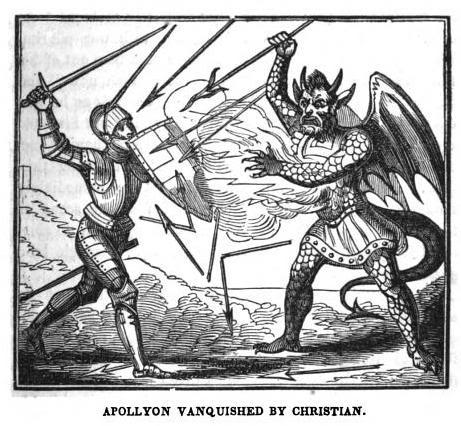
Apollyon VanquishedIn the meantime, we Christian pilgrims are on a progress towards New Jerusalem. The walk we walk is a life of holiness under the cross of Christ, sprinkled clean from an evil conscience by the blood of Christ (Hebrews 10:22), under the grace and law of Christ, walking in all of His commandments blameless (Luke 1:6), pursuing what is right with absolute purity of intention, and personally CONFESSING and REPENTING when we make things go wrong. “He is faithful and just to forgive us our sins” (1 John 1:9).

Posted in Uncategorized | Leave a comment

The Destruction of the Wicked – Charles Finney

Originally from here.

The Oberlin Evangelist

May 7, 1856

“He that, being often reproved, hardeneth his neck, shall suddenly be destroyed, and that without remedy.” –Prov. 29:1

In speaking from these words, I shall,

1. Notice some of the ways in which God reproves the wicked;

2. Show what is meant by hardening the neck;

3. Point out some of the ways in which men do harden the neck;

4. What is meant by being suddenly destroyed;

5. What, by being destroyed without remedy;

6. Why this destruction is remediless.

I. The ways in which God reproves the wicked are various. All his providences are disciplinary. Every one of them has a voice of admonition, speaking to the sinner in tones of love, and appealing to his fears, or to his conscience, or to his heart.

His revealed word is another means of reproof. There God speaks in burning words to the sinner. What language could be more plain and persuasive! And every word teems with reproof against sinners and admonitions to cease from sinning.

God’s Spirit reproves the sinner, making use for this end of both God’s word and providence. Often these reproofs are felt by the sinner to be deeply solemn and searching.

Besides all these agents, God makes use of the human conscience. He has constituted the human soul with a faculty which takes cognizance of its moral acts and states. Through this, he rebukes the sinner. He also employs our friends and our enemies, availing himself of the social law of our nature to reach us through fellow-beings, and do us good.

II. What is meant by “hardening the neck?”

The figure is that of a bullock who presses against the yoke until his neck becomes callous–a figure both plain and common to denote the stubborn resistance of the sinner’s will against God.

III. The ways in which sinners harden their neck are many and various.

They do it by refusing to attend to God’s reproof. Nothing is more common for sinners than to divert their attention voluntarily from the reproof which God administers. For example, they go to meeting, not because they wish to hear of God and duty, but because they cannot well avoid going. Once there, if truth annoys their conscience, and they cannot divert their attention otherwise, they will leave the house, or open a book and read. Why do they refuse to attend to Gods’ messages? What is this but strengthening one’s self in rebellion against God.

Some of you have done this very thing to-day. Many of you know full well that you have set yourself against God’s claims, and do not mean to give them even so much as your serious regard.

Sometimes, when friends seek an opportunity to converse with you, you are careful to give them no opportunity. As those who are invited to the gospel feast are represented by Christ as begging to be excused, so sinners in our times, will even try to escape hearing even the invitation to the feast.

Again, sinners harden their necks by refusing to interpret God’s providences rightly. They resist the admission that God has a controversy with them. In every way they try to get rid of the idea that God has any meaning in his providences, and especially, any meaning for them. They ascribe all these events to be fixed laws, or to fate, or to change–any form of atheism, rather than admit a present and ever-acting God!

When the finger of God’s providence becomes so plain that they cannot deny it, then they refuse to justify God. Instead of yielding the point at once, saying–“I have sinned, and I have nothing to say in my own behalf, they murmur, and rebel, and think it very hard in God to single them out for such a stroke. They wonder why it is that God deals thus and thus with them–a common way of intimating that they have done nothing so very wrong as to call for such rebuke from God.

An almost universal method of hardening one’s neck against God is to refuse to make self-application of the truth to one’s own life and heart. Sinners can very readily apply truths to others, both bad men and good, but they feel strongly averse to making this sort of application to their own heart and conscience. Why? Because they don’t love the truth, and do not mean to yield their hearts to its claims.

When the rebukes of truth apply unmistakably to their own case, they refuse to justify God, but insist on justifying themselves. Just at this point, they reveal their real state of mind. You remember how Nathan came to David, and how he managed his application of truth so well that he drew out from David a most decisive verdict against a special case of wrong-doing before he let him see how entirely the case was his own. David’s indignation was aroused and he declared that the man who had done so should die. Yet when Nathan solemnly replied to him–“Thou are the man”–what did David do? There he revealed his real character. He did not rebel–did not resist the application, but humbled himself at once, and confessed his great sin. Often, however, it happens that, when persons cannot mistake the application of rebuke to themselves, they refuse to justify God, and insist on justifying themselves.

Sometimes, when persons have done that which publicly disgraces religion and are publicly reproved for it, instead of humbling themselves, they complain and think themselves hardly treated. Indeed, they often talk as if God’s ministers had no right and no authority from their Master to reprove men for their sins. So they defend their position in sin, and, of course, harden their necks.

Often men plead some excuse to palliate their wrong, and thus harden their necks. They insist that others are to blame, and seem determined to assume that this ought to excuse them. Suppose you were laboring to enforce the truth upon one of your children, but he should dodge every point and try to cover up, and cast the blame on others; would you not feel greatly grieved that you could not reach his conscience to do him good?

Yet further, sinners harden their necks by objecting to the manner in which the reproof is administered. Instead of looking at the matter of the reproof, and asking themselves if it be not true, and if it does not involve very great guilt, they engross their minds with the manner, and complain of that as being perhaps very strange. But God is not wont to consult the taste of wicked men as to the manner in which he shall rebuke their sin. Probably he is not so fastidious as they are. It often happens that men do object to his manner when he handles them roughly, and get only the result of being thereby more fearfully hardened.

Sometimes they object against the persons who reprove them, saying–“Physician, heal thyself.” Or you may hear talk loudly of impudence and impertinence. David, rebuked by Nathan, did not do so, although he had all the power a man could ask, The reason of his different course was, that he had a conscience and humbled himself before a holy God.

But let reproof come from whom it may, and in whatever manner it may, those who reject it are surely hardening their own necks. There is nothing, perhaps, which more clearly reveals a man’s real character than his course and spirit under reproof. You may, perhaps, recollect the case of a minister who was so much abused in his own house, that his wife lost all patience, and said to him–“Why not show the man the door?” but who mildly answered his wife’s suggestion, saying, “Let us hear all he has to say against me; we may learn some good. If the Lord suffers him to curse, who knows but he has some wise ends to answer.” It is most true that God sometimes lets our enemies try us and provoke us sadly. Happy is that man who has humility enough to receive such rebukes and make the best of them. The justice of the reproof, not the manner of it, is the thing we should look at. This is the matter that most concerns us in our relations to God. If the reproof be administered manifestly in a bad spirit, then you need pre-eminently to be on your guard. Then you are in the greater danger of repelling it, and becoming thereby the more hardened. Human nature is exceedingly prone to feel deeply, and to object strongly to the manner, or the person who reproves; but God will not hold us guiltless if we repel reproof for such reasons.

Persons often harden their own hearts by complaining of the language used in the rebukes they receive. They think us too severe, or perhaps, extravagant, while really no language can adequately describe their own great wickedness.

All sorts of excuses made for wickedness, harden the heart and stiffen the neck against God. Sometimes, when reproved, men will resort to recrimination, abuse and retort. Instead of receiving rebuke in humility, they hurl it back with resentment. Woe to him who does this. Nothing that he can do will more fearfully harden the heart.

Some seek relief under the sting of reproof, by indulging hard feelings against those who reprove them. These feelings tend strongly to confirm the will in its rebellious attitude against God, for as long as one indulges these feelings, he is, or course, hardening his neck against reproof.

Some, to excuse themselves, will plead their inability, or that they have other duties to perform, yet are compelled in honesty to say, “I might have done it if I had been in the spirit of religion, and had realized the value of souls.[“]

Some persons excuse themselves from attending meetings, but would not, if they knew and felt the value of souls. It is entertained only as an apology for neglect. Or by allowing some prejudice to prevail, men will repel the truth and harden their neck. Or they will utterly deny the justice of the charge made against them. This spirit of self-justification is sometimes so strong that they will not confess. Press them as you may, they are still so full of the spirit of self-justification, they will not lisp a word of confession–will not come down in true humility.

These are some of the ways in which sinners harden their necks.

IV. I am next to show what is meant by being “suddenly destroyed.”

This class of words–destroy, kill, etc., does not mean annihilation. We know nothing about annihilation. Who can know anything about it? We have had no observation and of course no experience of it. We certainly do not know that it is possible, save to the omnipotent power of Jehovah. This, however, we do know–namely, that the words kill, destroy, etc., never mean annihilation; but only the death of the body, leaving the soul as full of life as ever. Therefore, in using these or similar words, God does not threaten annihilation.

Nor again, can it denote a merely temporary punishment. No man would use such language in such a sense. Nor can it denote any light degree of punishment. It must mean the loss of the soul–the utter ruin of all the sinner’s well-being.

It shall be sudden–that is, it will come unexpectedly. This is the usual sense of the word, sudden. In such an hour as they think not, the fearful blow will fall.

V. What is meant by its being “without remedy?”

It must mean that the threatened destruction cannot be prevented. You are sick and send for a physician; but he decides that your case is beyond a remedy. The meaning is, that he cannot avert impending death. The threatened calamity will come, despite of every means of resistance. So the sinner, of hardened neck, must be destroyed, and nothing can prevent it. He may resist instruction, but cannot resist destruction. He may withstand the rebuke that seeks to reclaim, but the rebuke that comes to avenge God’s insulted majesty, no power can withstand. When God’s own right hand is lifted to destroy, there is no mightier arm than his that can deliver. Alas, the sinner may look imploringly in every direction, but no help can come!

As it cannot be prevented that it shall not come, so neither can there be any redemption from it when it has once fallen. No relief, interposing, can prevent it from being final and complete.

VI. But why is this destruction so sudden and remediless?

For the reason that it is just and righteous altogether.

Also, because it is of no use for God to spare such sinners any longer. Having reached the point where reproof only serves to harden their necks the more, it is plain that for them to live longer, would only serve to enhance their guilt, and therefore heighten their doom.

Why, then, should not God destroy them suddenly? And yet further, it is benevolent towards all other beings to make of them a public example. The public good would be in jeopardy if God’s forbearance were prolonged indefinitely. And should not God take care of the interests of the holy and pure not less than of the hopelessly vile?

REMARKS.

This text is applicable to nations. When they are often reproved, and yet still harden their neck, they may expect destruction speedily and without remedy. Of this the Jews were examples in more than one generation.

So of the visible church.

And so, also, of sinners. After great provocations of his long-suffering patience, they are left of God. In revivals, especially, we often see how God cuts them down. I could stand here and give you the names of many whom God has cut down as in a moment. They had abused his Spirit until they had become fatally hardened, and God saw there was no more hope of their turning to himself. What could he do, then, better than to cut them down where they were, ere they had swollen yet more the measure of their guilt, and the fearfulness of their retribution?

We can often predict the doom of sinners when we see them hardening themselves against God. How awful to look on and see them hardening themselves against God, and yet know assuredly that ere long they must be suddenly destroyed, unless they at once repent! Some of us have had our faces turn pale as we have seen our children hardening their necks. O, what sorrow can be like this sorrow!

It is, of all things else, most alarming, to see persons becoming so blind to their own guilt and danger, that they can rush on, reckless of God and of his righteous retribution. Hear them crying, Peace and safety! All seems well to them; they enjoy perfect health, perhaps, and think their mountain stands strong; but ere they are aware, sudden destruction cometh on them, and they shall not escape forever!

Sinner, do you wish to know when God will arise in his wrath and cut you down in your sins? It will be just when you are crying “peace and safety,” and are hardening your neck against all sense of either guilt or danger. Then, in a moment, it will burst on you like a clap of thunder out of a clear sky! Just this our Savior affirmed when he said, “In such an hour as ye think not, the Son of man cometh.”

Think of the case of sinners here. In every breeze they may hear the gentle whispers of divine love; in each day’s prolonged life, another appeal to their souls to render unto God the honor and gratitude which are his due; at every table, a fresh demonstration of his loving-kindness; through every Sabbath and every week, the voice of God re-echoes in their ear–but alas! they are weary of hearing so much from God! They are tired of these constant appeals to do what they hate and to honor Him for whom they care not. So they harden their necks and make their course of sin as smooth and as undisturbed as possible!

Ah, we shall see how it will be with them! We shall see whether they withstand the Most High when once he shall arise in his wrath to take vengeance on his foes! Who hath ever hardened himself against God and prospered? Just when they thought themselves on the eve of triumph over their great enemy, then sudden destruction fell on them, and there was no escape!

The infidelity of many in regard to God in providence, is to them a stumbling block. They will have it that there is no God in these events that occur. They are most averse to any recognition of his agency. “God speaketh once, yea, twice; but man regardeth it not.” Nothing is so unwelcome to the sinner as to meet with manifestations of a present God. He does not love the truth taught by Christ, that “even the very hairs on your head are all numbered.” O, if they could only be forever beyond the reach of this great and awful God! But they cannot!

Their pride and self-will are their ruin. Long time has God been laboring to subdue your self-will; but you resist and will not yield. You are determined this proud will of yours shall not be subdued. Has not God been making appeals to your heart and conscience to induce you to yield to his sway? Has he not in many ways sought to move you by affliction, until, perhaps, he is saying of you–“Why should you be smitten any more? Ye will revolt more and more.” Reproof comes to you from the four winds of heaven; every living thing has a voice for God to use in solemn warning and affectionate entreaty; and shall it all be in vain? Will you yet make your heart hard as an adamant stone? If so, we shall see whether God will be true to his word. We shall see whether sudden destruction will or will not come, and that “without remedy!”

How fearful must such a destruction be, and especially so to those who have been so long and so well instructed as most of you have been! Some of you are from families where you have been continually reproved of sin from early infancy. O, how fearfully hardened must your necks have become! Will it not be most awful for you to fall into the hands of a just God!

Posted in Uncategorized | Leave a comment

Repentance Before Prayer for Forgiveness – Charles Finney

Originally from here.

The Oberlin Evangelist.

November 19, 1851

“Repent, therefore, of this thy wickedness, and pray God, if perhaps the thought of thine heart may be forgiven thee. For I perceive that thou are in the gall of bitterness, and in the bonds of iniquity.” Acts, 8:22, 23

Charles Finney (d. 1875)These words were addressed to Simon Magus. A revival of religion was in progress in Samaria, under the labors of Peter and Philip; many were converted to God, and among them Simon Magus also professed conversion. He had been a great man in that place and had deceived many by his magic arts. Seeing the greater wonders wrought by these Christian apostles, he was struck with surprise, and his ambitious spirit caught at the idea of augmenting his own power over men by obtaining this new secret. Hence he offers the apostles money to buy this new power. Peter saw his heart at once and nobly replies–“Thy money perish with thee; thou hast neither part nor lot in this matter, for thy heart is not right in the sight of God.” He then gives him directions as in our text: “Repent, therefore, of this thy wickedness, and pray God, if perhaps the thought of thine heart may be forgiven thee.”

Following the order of thought as in the text, I will

I. NOTICE THE PRINCIPLE HERE DEVELOPED, IN THE LIGHT OF WHICH PETER SAW THIS MAN YET IN HIS SINS;

II. SHOW WHAT REPENTANCE IS;

III. WHAT IS IMPLIED IN REPENTANCE;

IV. SHOW WHY SINNERS ARE EXHORTED FIRST TO REPENT, AND THEN TO PRAY FOR PARDON;

V. DWELL ON THE IMPORTANCE OF FOLLOWING THIS EXAMPLE IN ALL OUR DEALINGS WITH MEN.

I. Peter did not profess to learn Simon Magus’ character by inspiration. He had no such omniscience. Inspiration he doubtless had, but inspiration taught general truth, not individual character. Peter saw his heart to be selfish, and not at all in harmony with the gospel spirit. Simon still had his old spirit, and wanted power to give the Holy Ghost to whom he pleased for the same reason that he had before sought and valued his magic powers. Hence he offered money, as if the apostles were as sordid as himself. Peter saw that he was selfish and therefore blind, far indeed from understanding the subject of Christianity.

II. Hence Peter exhorted him to repent. What is repentance?

Repentance should always be distinguished from conviction for sin. The latter is an involuntary state of mind, and of course has no virtue in it. There may be as much of it as there is in hell itself, and yet no virtue. There is awful conviction in hell; but no genuine repentance.

Neither does repentance consist merely in sorrow. Indeed this is properly and strictly no part of it, for sorrow does not belong to the thinking department of the mind,–much less does it appertain to the will, and to the department of voluntary action.

Nor again is repentance the same thing as remorse. Remorse, though it amounts to the keenest and most galling self-condemnation, does not necessarily imply repentance. There may be in it no change of mind whatever.

Repentance is simply and precisely a change of mind. The original term denotes, a thinking again–a turning of the mind–as when one finds himself going wrong and turns about to pursue the opposite course. The term, when applied to evangelical repentance, means, not merely a turning of the mind, but a change of the entire purposes of action, change in the entire attitude of the will. Repentance, therefore, is not remorse, is not sorrow, not anything of this kind; but is the mind turning away from selfish attitudes to benevolent–from being selfish to being really benevolent.

III. What is implied in repentance?

1. Conviction of sin as a wrong committed against God. Without this there can be no rational repentance.

2. That the sinner becomes truly honest with God. He must honestly admit the truths affirmed by his reason and pressed on his soul by his conscience. Especially must he recognize God’s rights–that he himself is God’s property and belongs truly to God.

3. That he becomes just and equitable towards men–truly an honest man. Selfishness is the greatest dishonesty in the world. No man is radically honest who is selfish, unless a man can be honest in practically denying every body’s rights but his own. No; selfishness is the perfection of dishonesty. It is absurd for a wicked man to pretend to be honest. He has not a particle of genuine honesty, more than Satan has! What is honesty? Respecting all other men’s rights and especially God’s rights according to their true value. But the sinner sets himself up for an honest man while he utterly denies God’s rights. How false their pretensions! They respect their neighbor’s rights only for their own interests–only because in some way they expect to reap good to themselves from the respect they hypocritically show to their neighbor’s interests. The fact is, men are totally deceived if they think themselves honest towards men while they are not really honest towards God. The heart of honesty is not in them. If they do not love their neighbor as themselves, they are not honest. No man has a right to say practically that his rights and interests are greater than his neighbor’s. The practical assumption of this is both false and dishonest.

4. No man is penitent who is not an honest man in the sense that he renders to God what is God’s and to man what is man’s. He must begin with restoring to God his stolen self. God has created him–has kept him alive–and has redeemed him;–this threefold claim God has on him; and yet he sets himself up in opposition against God and has no sympathy with God whatever. No man therefore is honest till he repents towards God. The first step is to give himself back to God, and with himself whatever remains of his time, his talents, his property and his influence. It is always implied in true repentance that you make full restoration of every thing you have not squandered and so squandered as to feel it beyond your power to restore it.

5. Repentance implies confession of sin to God and to all those whom you have injured. Let no man think himself truly penitent until he has made confession in all things where it is due. Some sins are known only to God, and some are committed only against God. These should be confessed to God. In some excepted cases, God holds men to the duty of confessing secret sins. This however is the exception and not the rule.

I cannot enter now into those discriminations which should be made on this subject. But obviously where restitution cannot be made without confession, as for example, where character is injured, there you persist in the wrong unless you confess. You have deceived many in respect to your neighbor, to his hurt, and this wrong which you have done him, you must undo, or you cannot suppose yourself to be really penitent.

6. But besides confession, restitution is always implied in repentance. Each man should make it to the extent of his power. This is always implied, because the penitent man is also benevolent. He loves his neighbor as himself, and therefore like Zaccheus he hastens to restore, and thinks it no hardship even to restore four-fold.

7. Repentance implies the entire abandonment of all courses of life and of business which are inconsistent with Christian character. Think you that a man, really benevolent in spirit, could pursue a business adapted to ruin instead of save men? No indeed! Shall a man who loves the well-being of others as he does his own, devote himself to traffic in human flesh? No sooner than he would sell his own flesh and blood–his own person into bondage, or the bodies and souls of his own wife and children!

8. Repentance also implies not only an abandonment of all selfish branches of business, but of all selfish modes of transacting business, even of business in itself right. Selfish men often pursue a good business in a bad way–on most selfish principles and policy. This also repentance precludes, because repentance is a change of the heart and life from selfishness to real benevolence. It implies an abandonment of all selfishness.

9. Repentance implies a universal reformation of life,–a reformation extending to all forms of sin. Penitent men turn from all sin as sin–because they regard it as sin, and therefore can have no sympathy with it. All known sin therefore they at once abandon. And since to them nothing can be sin except what is known to be such, the forsaking of all known sin is really the forsaking of all sin. No man is truly penitent who allows himself to continue in some chosen sin, and who picks and chooses his indulgences. This is not repentance at all.

When I speak of abandoning sin, I do not imply that the penitent man never for even a moment relapses into it; but I imply that he sets himself against it in real honesty and earnestness.

10. Finally, true repentance implies confidence in God and in Jesus Christ. If a man truly repents of sin he will of course believe on Jesus Christ.

IV. What is implied in the consecutive order of duties, as enjoined by Peter–repentance before prayer for pardon?

1. He assumed that Simon Magus was totally depraved–totally alienated from God, and hence unwilling to give up his sins. Hence he could not exhort him to pray for pardon while yet in his sins. Peter knew full well that Simon would spring at the idea of being forgiven before he repented; but he meant to caution him in the strongest way against such a delusion. He knew that his sin consisted in cleaving to his selfishness, and therefore told him first to give up his sins and then to ask forgiveness. Peter assumed that his unwillingness to give up his selfishness was his great sin, first of all to be repented of and put away.

2. He assumed that God could not forgive him until he should put away his sin. Peter knew Simon’s great difficulty–knew that he held on to his course as an ambitious and selfish man; and therefore assured him that mercy could come to him only after full repentance.

3. Peter did not regard Simon as having any right to ask or wish for pardon until he had repented. You will observe that Peter saw Simon impenitent and selfish. Hence he assumed that he had no right to ask or expect forgiveness while in this state of mind. He did not tell him to pray for repentance, because he knew he was unwilling to repent, and therefore such a prayer would only be mocking God.

Yet many direct the sinner to pray for repentance! Ah, do you want the sinner to mock God? Peter did not direct Simon to pray for repentance, for he knew that this would be only mocking God until he should himself be willing to repent; and he could not invite him to insult Jehovah.

4. It is also assumed that he was abundantly able to repent. Men sometimes teach sinners to pray that God would make them able to repent, and many even imply that the sinner is trying as hard as he can to repent, and therefore needs only cry unto God to help him repent, the only difficulty is his case being that God does not give him strength enough!

“Trying to repent” always implies two things–a willingness to repent, and a want of power to do it. Trying is making an effort to accomplish that on which the mind is set, and, if unsuccessful, implies that the failure results from lack of power.

Now Peter understood this whole subject. Peter knew that this man had free will enough and ability enough to repent if he would. Therefore he directs him first to repent, and then ask pardon. Asking forgiveness before repenting would only blaspheme God, and Peter could not advise him to do that.

5. Peter implies that he had conviction enough, and therefore need not wait for more. Hence, he did not tell him to wait for it, but at once to repent. This of course assumed that he had conviction enough. Many set sinners to praying for conviction just as if they needed more and desired to have it, neither of which are usually true.

6. Peter assumed that the sinner is without excuse for either his sin or his remaining impenitent. He insisted on repentance as the present duty of that man, which of course implies that in God’s judgment it is the duty of every sinner to repent. Now it must be of the very first importance for us to know how God judges in this matter. It is a remarkable fact that both Peter and all other inspired teachers concur in representing God as requiring sinners at once to repent.

V. It is of the utmost importance to follow this inspired example. For,

1. This direction to repent before asking forgiveness, and this only, is consistent with the facts in the case.

For what are the facts? Simply these. The sinner is a free-acting, voluntary agent. In this capacity he sets himself selfishly against the demands of God’s law of love. Now what shall God require him to do? Change his course to be sure–in other words repent. Nothing can be plainer than that a voluntary agent who is voluntarily doing wrong should turn about and voluntarily do right. This, and this only, is consistent with the facts and with the right of the case.

But suppose you undertake to give direction to a sinner who is still selfish, that is, devoted to self-pleasing. First of all you set him to praying. Praying for what? That God would give him the desire of his heart? Of course if he prays without first changing the purpose of his heart, he will pray for what he desires–that is, he will pray that God would grant him the selfish desires of his heart. His prayer would be–O Lord, let me have heaven without holiness: Lord, pardon my sins, and yet let me live on in sinning, for I have no heart to repent!

Now can such mocking of God be of any use? Would you suppose it probable that the Bible would give such directions to awakened sinners?

If men are really willing to repent and forsake all sin, God asks no more of them, for the willing is essentially the doing; but there can be no greater mistake in this world than to assume that sinners are willing to repent and want to repent, before they actually do it.

2. The usual order in which enquirers are set at work is the reverse of that enjoined in the Bible, as if the sinner was ready and God not ready, and therefore the sinner needs to use means to make God ready and to urge Him forward to do his duty.

3. To set the sinner to praying for repentance is to assume that he is willing to repent but cannot, and therefore needs God’s power to help him.

The truth is, no man can will to renounce sin without doing so; for to will it is to do it.

4. To direct sinners otherwise than God does in the Bible is to deceive them. Thousands have been deceived thus to the ruin of their souls forever. If you set them to pray for pardon before they repent, you leave them under the delusion that they are doing something they ought to do–are doing their duty;–whereas they are not doing their duty until they repent! What a horrible doctrine is this! Teach an impenitent sinner, still holding on to his sins, to pray for pardon! This would ruin a world of sinners. It would leave them all deceived and deluded in their sins and under God’s wrath forever!

5. To tell the sinner to pray for the Holy Ghost is only the same thing in a slightly different form. Nothing can be more deceptive than to tell the sinner to pray for the Holy Ghost while you know he is only resisting the Holy Ghost, and while you allow him to go on, still resisting. “Ye do always resist the Holy Ghost,[“] says the word of God through one of its most faithful and truthful preachers. What does the Holy Ghost do? He takes truth and reveals it to the sinner in impressive aspects. This is his office-work as respects the sinner. As soon as the sinner yields to the truth as presented and enforced by the Holy Ghost, he is converted. Until he repents he only resists the Spirit. What avails it then to direct him to pray for the Spirit, so long as he is resisting the Spirit? What can his prayer be while pursuing this course, except mocking God? The thing he should do is not to pray for the Holy Ghost, but to yield to his influence as already exerted on his mind. The first thing and the only right thing for the awakened sinner to do in reference to the Spirit, is to yield his heart to the demands of God’s revealed truth. Let him do this and he would be converted in a moment. He should be told that he does not feel his need of the Spirit, and therefore cannot pray intelligently for its greater influence on his mind. He should also be told that the only honest thing he can do in the first place is to cease to resist the Spirit.

Peter did not say to Simon–Pray for the Holy Ghost to strive with you, or to repent for you, or to make you repent, or even to help you repent; but simply, Repent yourself–repent first of all, and then ask forgiveness.

6. To direct a sinner yet in his sins, to pray instead of repenting, is to leave him under the impression that after he has prayed he has done his duty. You tell him to pray; he prays, and then says–now I have done my duty and why am I not converted? But if you tell him as Peter did, first to repent and then to pray–if he follows your direction he is converted, and then his prayer can be acceptable to God.

The opposite course–that is, the reverse order, which puts prayer before repentance, virtually casts the blame of continued impenitence upon God. If you direct the sinner to pray first instead of repent first, you virtually imply that the difficulty in the sinner’s way is one that God must remove–that the reason why he has not repented lies in God not in himself. If the sinner follows your direction, he prays before he repents, and then having prayed, he says, Why am I not converted and saved? I have prayed;–God does not convert me;–the blame be on God and not on me! –How horrible must the influence of this course be on the sinner’s mind!

7. No inspired writer warrants any other course than this of the text. Search the scriptures from beginning to end, you find no directions to sinners different from this. You might well wonder in amazement if you should, for to bid the sinner go and pray first before repenting overlooks the very nature of repentance and of a sinning state of mind.

8. Every doctrine of Scripture is consistent with the course of directions given in the text and with no other course. Every doctrine of scripture shuts the sinner up to the doing of present duty. The whole Bible urges him to do present duty and if he is in unrepented sin, it tells him that his first duty is to repent. Men have struck out for themselves a strange way that they should direct sinners to do something else than repent;–but the Bible holds steadfastly to the only consistent course–urging evermore on every sinner that first of all he should repent. John came crying in the wilderness of Judea–Repent ye;–and Jesus Christ followed him preaching the same thing and nothing different from this;–“Repent, says he, for the gospel kingdom is at hand.” So every prophet, and every apostle, each in his place, cried aloud–Repent, REPENT, as if there was nothing else they dared to say till this first duty is done.

This is the only rational course–the only course which is based upon scripture, upon reason, and upon the true science of mind. Every sinner knows that he is a sinner. You no more need the Holy Ghost to make you see yourself a sinner than to make you see that you exist. This shows why the Bible always faces the sinner down with the assumption–You are a sinner, and the fact needs no proof. Every sinner knows it.

9. Sinners are often very willing to pray, but not to repent. Only let him off from the heart-work of repenting, and he will gladly do many other things. A young man once said to me–“I would travel to any part of the world if I might thereby be saved.” Yes, said I, but one thing you will not do;–give up your self-righteousness, and be saved on Christ alone, without doing anything meritorious yourself.

So with every sinner. Tell him to pray for conviction. O yes, he will pray for conviction, but he will resist conviction, until he repents. Tell him to pray for the Holy Ghost. O yes, he will pray for the Holy Ghost, but still he will perhaps resist the Holy Ghost continually. He is ready to do the outside work, but not the heart-work;–he will readily cleanse the outside of the cup and platter, but the turning of his own heart from his sins and selfishness, that is the hard thing–the thing which of all others he is reluctant to do.

Sinners are wont to assume in self-vindication that it is impossible for them to control their own hearts. They admit they can control their muscles; if Jesus were on earth, they could come to him and bow their knees before him;–but they cannot come with their hearts and bow their hearts to him. But what is the heart that you cannot control it? You are controlling your own hearts all the time, and the very thing God complains of is that you control it too stubbornly, so that his truth and his Spirit cannot move you–that you control it wrong and with so much obstinacy as to baffle all his efforts to save you. Therefore He cries–“Turn ye, turn ye, for why will ye die?”

REMARKS.

1. But you ask–Should not a sinner pray? The answer depends upon what the question means and implies. If it means–Shall a sinner mock God? I answer, No. If you mean–Shall he truly pray, in sincerity and honesty? Yes. Shall he lie to the Holy Ghost? No. Shall he turn to God? Yes.

But the sum of all that need be said on this point is that the sinner should be told to repent and pray–not pray and repent. Let him observe the scriptural order–an order founded in reason and in the nature of the case.

2. This order of duties is eminently reasonable.

Suppose a sinner had stolen money. He knows that God is greatly displeased with him for this, and he is also afraid of being detected and disgraced. Now he says–What shall I do? Shall I repent and then pray God to forgive me, or shall I pray first? Greatly disliking to confess, repent and restore, he says–I will do the other thing; I will pray. I will go alone and pray about it, and then perhaps I will repent. See him. He takes out his stolen money. He passes it from one hand to the other; I am greatly distressed, he says, what shall I do? Shall I put it in my pocket and go and pray? No, sinner, no. Carry it back–repent first, and then go and pray. Don’t go and pray for the Holy Ghost first: there is no need of that; the Holy Ghost is already convicting you of your great sin. Don’t insult Him by refusing to yield to his persuasions, and by pretending to pray for his guidance and help!

Let this represent all sin. Stealing money is only one form of sin; let it represent all forms of sin. You, sinner, are fully committed to living for yourself. You have robbed God by wresting yourself away from his service. God says–Restore. Give yourself back to me and to my service. But you reply–What shall I do? Shall I not go and pray? God says–Restore first; give back the stolen goods first; then you may pray. What should you pray for–until you have restored what you have stolen? You surely will not insult God by praying for pardon before you have restored what you have stolen. You need not pray for the Holy Ghost unless you restore, for to pray and not restore is only resisting and mocking the Spirit of God.

But the sinner says–You talk as if I could repent. Yes, and so does God. God in his word always speaks as if you could repent, and as if you ought to know that you can. What if Simon Magus had said–But you don’t expect me to repent, do you? You will observe he did not say any such thing. His own conscience neither suggested nor allowed such a defense, nor did the preaching of the Apostles encourage it.

But you say, Does the Bible always assume that I can repent? Yes, every where–in all its commands–by every prophet, every Apostle–by the lips of every fore-runner of Christ–by the lips of Christ Himself. Every inspired command–every inspired direction, holds the same language and makes the same implication. You can repent and you ought to do it immediately!

3. When the sinner says, I can’t repent, he virtually charges God with being a tyrant. For what can be tyranny if charging God with requiring you to do impossibilities is not?

4. But does not the Bible teach that God gives men repentance? Yes, and in the same sense as He gives you daily bread–which, however, you must yourself provide and yourself eat. God does not give you your daily bread, so long as you persist in starving yourself. So God gives you repentance by persuading you to repent–by drawing you–impressing truth on your heart and conscience. Indeed there is no other possible way in which He can give you repentance. It is only by bringing truth before your mind–impressing it by a thousand ways upon your heart and conscience. For, repentance is a rational, voluntary act–an act done by the sinner, because he sees that truth and reason demand it.

5. Every sinner should see and feel that immediate repentance is what God requires. He should see that he is shut up to this precisely and to nothing else.

Nor is there anything strange or absurd in this. Suppose a man had committed murder, and you should tell him to repent of this great sin. Is there anything mysterious in this? Or if you see a man engaged in any particular form of wickedness, and you exhort him to desist and repent: is there in this course anything strange or unreasonable? How then can there be anything unreasonable in requiring a sinner to repent of all his sins? or of that which embraces the sum of all wickedness?

6. Some of you are so much afraid you shall repent, that you get a book, even under the most solemn preaching, and try to keep from thinking of your own sins; and even then you will pretend that you cannot repent, and would fain imply that you would repent if you could! Is not this beautifully consistent!

7. Many professors of religion are greatly backslidden from God, yet they pray in form, but don’t repent. Many talk about praying as if they made up in prayer what they lack of pleasing God in sinning. I asked a young lady–Do you pray? Yes sir. When? On retiring to rest at night. What for? That God would take me to heaven if I should die before morning. Do you expect God would do so? No. You expect then to so on in sin. Now be so honest as to tell God just the truth. Say to him–Lord, forgive my sins–give me strength by sleep and food that I may sin a little more; I have sinned all the day past–I don’t intend to repent; I only want to be taken to heaven if I die, for I cannot bear to sink down to hell: Lord help me to sin on against thee as long as I live, and then take me up to heaven!!

You are shocked; but what shocks you? Your course, or my language?

There, see the sinner. He gets on his knees to tell God that he wants repentance, but he lies in saying so, every moment until he does in fact repent. And you, backslidden professor, lie to God in every word of your pretended prayer. Do you say–I will not repent–I don’t intend to repent? If you say anything else than this you lie to God, for nothing else is true until you do in fact repent. The truth is, so long as you continue in your selfish, impenitent state, you don’t mean to repent. Therefore, let him pray as he will, his true meaning is, I have no intention of repenting of my sins. This is always true, until he does repent.

But this praying of sinners in their sins when they do not mean to repent! Hear him, “O Lord, I beseech thee to search my heart.” No, you don’t mean any such thing; you are covering up your own heart all the time. “O God, come near to me.” But you are pushing away from God every moment, and as you strive to get away, you only look back over your shoulder and cry to God to reveal his face and draw near to your soul! Hark, hear what the Bible says. “He that turneth away his ear from hearing the law, even his prayer shall be an abomination.” And what is your course but this?

8. Let me tell you, God is infinitely ready to meet and bless you. He comes with pardons in his hands–pardons all sealed with blood. You need only renounce your sins and come to Him; then all will be well. The very first moment you come before God with a penitent heart, He will meet you with smiles of loving-kindness. His parable of the prodigal son, both illustrates and proves this. See, the wandering son comes to himself. Instead of staying away and trying to live on husks, he turns his face towards home, and comes with a confession on his lips, and tears of penitence on his cheeks. He is coming–and now see the aged father. He spies him in the distance; he recognizes his long-lost son. [S]see how he leaps from his door, and rushes to embrace this returning son. O how ready! O how much more than merely READY!! O how ready is God in your case to meet you with the fullest pardon–and wipe all your tears away, and soothe down that aching sensibility!

Now, dear hearer, don’t go away and say I told you not to pray. If I should tell you not to go into your closet, get upon your knees and swear, and blaspheme God, could you say with any truth that I told you not to pray? So I do not teach you not to pray; but I do teach you to be honest. I warn you when you pray not to mock God. I entreat you when you pray to give up your heart to God and repent of all your sin. When I repented first, I did it on my knees and in the act of prayer. I knelt down an impenitent sinner, and rose up a penitent. In the very act of speaking to God, my heart broke; I yielded myself to God. This is the way. And do you ask–Can I believe God? Yes. Can I pray in faith? Yes. Can I give my heart to God in penitence? Yes. Why not you as well as Paul–as well as Peter–as well as any one of the myriads who have done this very thing, and in so doing have found mercy?

Posted in Uncategorized | Leave a comment

Preaching So As To Convert Nobody – Charles Finney

Originally from here.

THE INDEPENDENT.

NEW YORK, SEPTEMBER 7, 1871

Charles FinneyThe design of this article is to propound several rules by a steady conformity to any one of which a man may preach so as not to convert anybody. It is generally conceded at the present day that the Holy Spirit converts souls to Christ by means of truth adapted to that end. It follows that a selfish preacher will not skillfully adapt means to convert souls to Christ, for this is not his end. [Note: Finney is obviously being sarcastic and is scoffing at lukewarm, carnally-minded pastors. This article definitely reveals Finney’s sense of humor; and echoes the time when Elijah scoffed at the prophets of Baal (1 Kings 18:27). He is using reverse psychology; of course he believes in preaching conversion; so, do the opposite of all these rules, and true conversion preaching will occur.–edit]

Rule 1st. Let your supreme motive be to secure your own popularity; then, of course, your preaching will be adapted to that end, and not to convert souls to Christ.

2d. Aim at pleasing, rather than at converting your hearers.

3d. Aim at securing for yourself the reputation of a beautiful writer.

4th. Let your sermons be written with a high degree of literary finish.

5th. Let them be short, occupying in the reading not to exceed from twenty to thirty minutes.

6th. Let your style be flowery, ornate, and quite above the comprehension of the common people.

7th. Be sparing of thought, lest your sermon contain truth enough to convert a soul.

8th. Lest your sermon should make a saving impression, announce no distinct propositions or heads, that will be remembered, to disturb the consciences of your hearers.

9th. Make no distinct points, and take no disturbing issues with the consciences of your hearers, lest they remember these issues, and become alarmed about their souls.

10th. Avoid a logical division and subdivision of your subject, lest you should too thoroughly instruct your people.

11th. Give your sermon the form and substance of a flowing, beautifully written, but never-to-be-remembered essay; so that your hearers will say “it was a beautiful sermon,” but can give no further account of it.

12th. Avoid preaching doctrines that are offensive to the carnal mind, lest they should say of you, as they did of Christ, “This is a hard saying. Who can hear it?” and that you are injuring your influence.

13th. Denounce sin in the abstract, but make no allusion to the sins of your present audience.

14th. Keep the spirituality of God’s holy law, by which is the knowledge of sin, out of sight, lest the sinner should see his lost condition and flee from the wrath to come.

15th. Preach the Gospel as a remedy, but conceal or ignore the fatal disease of the sinner.

16th. Preach salvation by grace; but ignore the condemned and lost condition of the sinner, lest he should understand what you mean by grace, and feel his need of it.

17th. Preach Christ as an infinitely amiable and good-natured being; but ignore those scathing rebukes of sinners and hypocrites which so often made His hearers tremble.

18th. Avoid especially preaching to those who are present. Preach about sinners, and not to them. Say they, and not you, lest any one should make a personal and saving application of your subject.

19th. Aim to make your hearers pleased with themselves and pleased with you, and be careful not to wound [hurt] the feelings of any one.

20th. Preach no searching sermons, lest you convict and convert the worldly members of your church.

21st. Avoid awakening uncomfortable memories by reminding your hearers of their past sins.

22d. Do not make the impression that God commands your hearers now and here to obey the truth.

23d. Do not make the impression that you expect your hearers to commit themselves upon the spot and give their hearts to God.

24th. Leave the impression that they are expected to go away in their sins, and to consider the matter at their convenience.

25th. Dwell much upon their inability to obey, and leave the impression that they must wait for God to change their natures.

26th. Make no appeals to the fears of sinners; but leave the impression that they have no reason to fear.

27th. SAY SO LITTLE OF HELL that your people will infer that you do not believe in its existence.

28th. Make the impression that, if God is as good as you are, He will send no one to Hell. [UNIVERSALISM; NO-HELL THEOLOGY]

29th. Preach THE LOVE OF GOD, but ignore the HOLINESS of His love, that will by no means clear the impenitent sinner.

30th. Often present God in His parental love and relations; but ignore His governmental and legal relations to His subjects, lest the sinner should find himself condemned already and the wrath of God abiding on him.

31st. Preach God as all mercy, lest a fuller representation of His character should alarm the consciences of your hearers.

32d. Try to convert sinners to Christ without producing any uncomfortable convictions of sin. [SOUND FAMILIAR? CAMPUS CRUSADE? ROMANS ROAD? FOUR SPIRITUAL LAWS? ASK JESUS IN YOUR HEART?]

33d. Flatter the rich, so as to repel the poor, and you will convert none of either class.

34th. Make no disagreeable allusions to the doctrines of self-denial, cross-bearing, and crucifixion to the world, lest you should convict and convert some of your church members.

35th. Admit, either expressly or impliedly, that all men have some moral goodness in them; lest sinners should understand that they need a radical change of heart, from sin to holiness.

36th. Avoid pressing the doctrine of total moral depravity; lest you should offend, or even convict and convert, the moralist.

37th. Do not rebuke the worldly tendencies of the church, lest you should hurt their feelings, and finally convert some of them.

38th. Should any express anxiety about their souls, do not probe them by any uncomfortable allusion to their sin and ill-desert; but encourage them to join the church at once, and exhort them to assume their perfect safety within the fold.

39th. Preach the love of Christ not as enlightened benevolence, that is holy, just, and sin-hating; but as a sentiment, an involuntary and undiscriminating fondness.

40th. Be sure not to represent religion as a state of loving self-sacrifice for God and souls; but rather as a free and easy state of self-indulgence. By thus doing you will prevent sound conversions to Christ, and convert your hearers to yourself.

41st. So select your themes and so present them as to attract and flatter the wealthy, aristocratic, self-indulgent extravagant, pleasure-seeking classes, and you will not convert any of them to the cross-bearing religion of Christ.

42d. Be time-serving [preach what is trendy and fashionable], or you will endanger your salary; and, besides, if you speak out and are faithful, you may convert somebody.

43d. Do not preach with a divine unction, lest your preaching make a saving impression.

44th. To avoid this, do not maintain a close walk with God, but rely upon your learning and study.

45th. Lest you should pray too much, engage in light reading and worldly amusements.

46th. That your people may not think you in earnest to save their souls, and, as a consequence, heed your preaching, encourage church-fairs, lotteries, and other gambling and worldly expedients to raise money for church purposes. [SOUND FAMILIAR? SEEKER-SENSITIVE MINISTRY GIMMICKS! ITS NOTHING NEW]

47th. If you do not approve of such things, make no public mention of your disapprobation, lest your church should give them up, and turn their attention to saving souls and be saved themselves.

48th. Do not rebuke extravagance in dress, lest you should uncomfortably impress your vain and worldly church members.

49th. Lest you should be troubled with revival scenes and labors, encourage parties, picnics, excursions, and worldly amusements, so as to divert attention from the serious work of saving souls.

50th. Ridicule solemn earnestness in PULLING SINNERS OUT OF THE FIRE, and recommend, by precept and example, a jovial, fun-loving religion, and sinners will have little respect for your serious preaching. [I PERSONALLY KNEW A DENOMINATIONAL PASTOR WHO FILLED THIS QUALIFICATION EXACTLY]

51st. Cultivate a fastidious taste in your people, by avoiding all disagreeable allusions to the last judgment and final retribution.

52d. Treat such uncomfortable doctrines [JUDGMENT DAY AND HELL] as obsolete and out of place in these days of Christian refinement.

53d. Do not commit yourself to much-needed reforms, lest you should compromise your popularity and injure your influence. Or you may make some branch of outward reform a hobby, and dwell so much upon it as to divert attention from the great work of converting souls to Christ.

54th. So exhibit religion as to encourage the selfish pursuit of it. Make the impression upon sinners that their own safety and happiness is the supreme motive for being religious.

55th. Do not lay much stress upon the efficacy and necessity of PRAYER, lest THE HOLY SPIRIT should be POURED OUT upon you and the congregation, and sinners should be converted.

56th. Make little or no impression upon your hearers, so that you can repeat your old sermons often without its being noticed.

57th. If your text suggest any alarming thought, pass lightly over it, and by no means dwell upon and enforce it.

58th. Avoid all illustrations, repetitions, and emphatic sentences, that may compel your people to remember what you say.

59th. Avoid all HEAT AND EARNESTNESS [FIERY, PASSIONATE PREACHING] in your delivery, lest you make the impression that you really believe what you say.

60th. Address the imagination, and not the conscience, of your hearers.

61st. Make it your great aim to be personally popular with all classes of your hearers. [THE POPULARITY GAME IS A WOEFUL DOWNFALL OF PASTORS–TOTALLY UNBIBLICAL]

62d. Be tame and timid in presenting the claims of God, as would become you in presenting your own claims.

63d. Be careful not to testify from your own personal experience of the power of the Gospel, lest you should produce the conviction upon your hearers that you have something which they need.

64th. See that you say nothing that will appear to any of your hearers to mean him or her, unless it be something flattering.

65th. Encourage church sociables, and attend them yourself, because they tend so strongly to levity as to compromise Christian dignity and sobriety, and thus paralyze the power of your preaching.

66th. Encourage the cultivation of the social in so many ways as to divert the attention of yourself and your church members from the infinite guilt and danger of the unconverted among you. [THE IDEA: EVERYONE IN OUR CHURCH IS ALREADY SAVED]

67th. In those sociables talk a little about religion, but avoid any serious appeal to the heart and conscience of those who attend, lest you should discourage their attendance, always remembering that they do not go to socials to be earnestly dealt with in regard to their relations to God. In this way you will effectually so employ yourself and church members as that your preaching will not convert anybody.

The experience of ministers who have steadily adhered to any of the above rules will attest the soul-destroying efficacy of such a course, and churches whose ministers have steadily conformed to any of these rules can testify that such preaching does not convert souls to Christ.

Posted in Uncategorized | Leave a comment

Let All the World In Every Corner Sing – Saint Paul’s Cathedral Choir

by George Herbert (d. 1632)

Let all the world in every corner sing, my God and King!
The heavens are not too high, His praise may thither fly,
The earth is not too low, His praises there may grow.
Let all the world in every corner sing, my God and King!

Let all the world in every corner sing, my God and King!
The church with psalms must shout, no door can keep them out;
But, above all, the heart must bear the longest part.
Let all the world in every corner sing, my God and King!

Posted in Uncategorized | Leave a comment

Catchy Hymns from the Methodist Hymnal (1966)

The Methodist Hymnal 1966#24 – Hymn number in the Methodist Hymnal of 1966.
Song quality ranked from 1-10; beside the hymn number.

Songs that are less well-known, but which still sound good: they have links to YouTube for you to listen.

—–

1. Come, Thou Almighty King (#3; 6)
2. See the Morning Sun Ascending (#7; 7)
3. Holy God, We Praise Thy Name (#8; 6)
4. Let All the World in Every Corner Sing (#10; 10)
5. O Thou in All Thy Might So Far (#12; 7)
6. Open Now Thy Gates of Beauty (#13; 6)
7. A Mighty Fortress Is Our God (#20; 8) – by Martin Luther
8. O God, Our Help in Ages Past (#28; 7)
9. Praise to the Living God (#30; 6)
10. The Lord Jehovah Reigns (#31; 7)
11. For the Beauty of the Earth (#35; 6)
12. I Sing the Almighty Power of God (#37; 6)
13. Many and Great, O God (#40; 8)
14. This Is My Father’s World (#45; 6)
15. Praise to the Lord, the Almighty (#55; 6)
16. All Creatures of Our God and King (#60; 6) – by Francis of Assisi
17. The King of Love My Shepherd Is (#67; 6)

Posted in Uncategorized | Leave a comment

I’m Not Ashamed – Newsboys

(c) 1992

NEWSBOYS PREACH AGAINST SEEKER-SENSITIVE EVANGELISM!

—–

I’m not ashamed to let you know.
I want this light in me to show.
I’m not ashamed.
To speak the name of Jesus Christ.

What are we sneaking around for?
Who are we trying to please?
Shrugging off sin,
Apologizing like we’re spreading
Some kind of disease.
I’m saying, “No way. No way.”

This one says it’s a lost cause.
Save your testimonies for churchtime.
The other ones state you’d better wait.
UNTIL YOU DO A LITTLE MARKET RESEARCH!
I’m saying, “No way. No way.”

Posted in Uncategorized | Leave a comment

The Biblical Christian Family

This generation has many spiritual problems, all of which stem from pastors rejecting the doctrines of lordship salvation; and preaching cheap grace antinomianism, and leaving churchgoers with the impression that the only thing God requires is forgiveness and love. Nothing could be further from the truth; love does not rejoice in evil (1 Corinthians 13:6). Also, because talk shows seem to preach pop psychology, parents buy into these concepts of love and family, rather than deriving their familial ideals from the New Testament or the Bible as a whole. Political correctness; diplomacy; and carnal tolerance seem to “hold families together” these days. But it is superficial.

Puritan Family

THE PURITAN FAMILY

We need a very clear Biblical picture of what a family is; and also what the Biblical father, mother, son, and daughter are supposed to look like. Let’s start there; and then move on to practical applications of family life today.

Father –  A father is supposed to provide the family finances, teach economic responsibility (Proverbs), teach righteousness, train, discipline, punish, etc. (Hebrews 12). The father is the leader of the family; and is supposed to be an example of Christ-like righteousness for the wife and children to follow. The father must be a man of the Spirit, guided by the Heavenly Father like the father of the faith, Abraham (Hebrews 11). He should have a strong work ethic, being the primary breadwinner, but one that trusts in God as his Provider (Deuteronomy 8). He must not be a perfectionist, lest he exasperate his children (Ephesians 6:4); nor must he be morally lax, and lead his children to Hell (Matthew 23:15). He must be living a holy commandment-keeping life, one that grows in righteousness, but shows grace in light of the cross. Ephesians 6:4: “Ye fathers, provoke not your children to wrath: but bring them up in the nurture and admonition of the Lord.” Proverbs 22:6: “Train up a child in the way he should go: and when he is old, he will not depart from it.” William Gouge said, The second branch of good nurture is a training up of children unto a good calling (job; career). This charge [train up a child in the way that he should go (Prov 22:6)] directly tendeth to this purpose. This duty hath from the beginning of the world been performed by parents, and their performance thereof commended by the Holy Ghost. Adam brought up his sons to several callings: one was a keeper of sheep, another a tiller of ground (Gen 4:2). The like is noted of Jacob’s sons (Gen 37:12), Laban’s (Gen 29:9), and Reuel’s daughters (Exod. 2:16), and many others” (Domestical Duties).

Mother – The mother is under the headship or leadership of the father. As Eve was to Adam, she is supposed to be a “helpmate” (Genesis 2:18), not an equal…and certainly NEVER a superior to her husband. When important family decisions need to be made, the father has the final say; the wife is supposed to submit to such decisions, without griping and debating (Ephesians 5:22). For it is “better to live in a desert than with a quarrelsome and ill-tempered wife” (Proverbs 21:19). It is the mother’s responsibility to teach, educate, train, and care for the babies and children; to clean house and cook dinner (Titus 2:4). She should also do a work-at-home job to supplement her husband’s income (Proverbs 31). She is to be a female saint, and let Christ-like holiness influence her children and husband. Titus 2:3-5: “Likewise, teach the older women to be reverent in the way they live, not to be slanderers or addicted to much wine, but to teach what is good. Then they can train the younger women to love their husbands and children, to be self-controlled and pure, to be busy at home, to be kind, and to be subject to their husbands, so that no one will malign the Word of God.”

Son – A son is supposed to obey his father (Ephesians 6:1), so long as he is growing up and living in his house. As he grows, and even when he becomes an adult, he must do his best to say things and do things that would “Honor his father and mother” (Ephesians 6:2), so that God will add years to his life. In cases of abusive parents, the Bible seems to remain silent; we are not to love ungodly parents more than obedience to Christ (Matthew 10:37). Honoring such would be a challenge, and would require an honor that is very limited. Gouge said, “That undue, and unchristian-like respect of parents above Christ, is it that maketh so many young Catholics, young swaggerers, swearers, liars, deceitful persons, and lewd livers” (Domestical Duties). But “do not despise your mother when she is old” (Proverbs 23:22): even if your relationship is strained, try to honor and help her as much as you have the capacity to do so. But with parents that are kind and godly, honoring comes easy, even for the wicked and foolish son. For the righteous and wise son, he is to be a support and boon for his parents, and would always defend his parents (Psalm 127:5). All the attributes of a godly father should be assimilated by him. Ephesians 6:1-3: “Children, obey your parents in the Lord, for this is right. “Honor your father and mother” – which is the first commandment with a promise –  “that it may go well with you and that you may enjoy long life on the earth.”” The Fifth Commandment of the Law on Sinai. But for those who have absolutely wicked parents: “Do not follow the statutes of your parents or keep their laws or defile yourselves with their idols” (Ezekiel 20:18).

Daughter – A daughter is supposed to obey her parents (Ephesians 6:1), and do most of the same things a son is supposed to; she is to imitate what is good and holy in her parents, especially her mother. “I wish that the older women would teach the younger women” (Titus 2:4). All the attributes of a godly mother should be assimilated by her. 

Donna Green Family Love

“Family Love” – Donna Green

In a day and age when “family” is defined in social or biological or cultural terms, we need to be careful. The Bible does not confine the concept of “family” to blood relations. It includes adopted orphans as well (Esther 2:7; James 1:27). The Biblical family involves more godly role-playing than just basic genetic descent or relation.

At Christmastime, the subject of family is highlighted. We should be careful to remember that the greatest example of a Father is God (Matthew 6:9). Capture for a moment the old-time spirit of a godly family gathering together in ethical love, mutual respect, and sincere generosity at Christmas. A time for joy and merriment and thanksgiving to God for the blessings of the year and our relationships with one another. Outside of Christ this impossible; I mean, really. Not just people who “go to church,” but families where the parents and grandparents are real Christians, and so fill up their house with the Holy Spirit of love, as in the times of old. When Christmas was no time of fighting and strife, but of warm, glowing hearts: happy, joyful, and godly. A mystical time and place when children are nourished by the visits of beloved, godly, loving, supportive grandparents. That’s the Christmas I want to remember; and pass on to my children and grandchildren. People say, “Merry Christmas,” as if they are not expecting their Christmas to be very merry at all; perhaps they will be visiting relatives they don’t like; and so they have to cheer them up, by saying, “Merry Christmas.” But you shouldn’t have to say that. Christmas should always be merry; and if your Christmas is not going to be merry, then why? Could it be that you are spending it with the wrong people? Proverbs 17:1: “Better a dry crust with peace and quiet than a house full of feasting, with strife.”

Further Reading on the Biblical Christian Family

Richard Baxter’s Christian Economics (Family Duties) – Puritan family theology.
Larry Christenson’s The Christian Family
William Gouge’s Domestical Duties
– Excellent Puritan theology of the family.

Posted in Uncategorized | Leave a comment