The Sheep and the Goats – Keith Green

And when the Son of Man comes, and all the holy angels with Him,
Then shall He sit on His glorious throne,
And He will divide the nations before Him,
As a shepherd separates the sheep from the goats.

And He shall put the sheep on His right and the goats on His left,
And He shall say to the sheep come ye, blessed of My father,
Inherit the kingdom I have prepared for you from the foundation of the world,
For I was hungry, and you gave Me something to eat,
I was thirsty, and you gave Me something to drink,
I was naked, and you clothed Me,
I was a stranger, and you invited Me in,
I was sick, and I was in prison, and you came to Me.
Thank you! enter into your rest.

And they shall answer Him, yes, they shall answer Him,
And they’ll say, Lord, when?
When were you hungry Lord, and we gave you something to eat?
Lord, when were you thirsty? I can’t remember.
And we gave you drink?

Huh, when were you naked Lord, and we clothed you?
And Lord, when were you a stranger and we invited you in?
I mean, we invited lots of people in Lord. I could never forget that face.

And Lord, when were you sick and we visited you?
Or in prison, and we came to you? Lord, tell us?
In as much as you did it to the least of My brethren, you’ve done it unto Me.

Oh yes, as much as you’ve done it to the very least of My brethren, you’ve done it,
You’ve done it unto me. Enter into your rest.

Then He shall turn to those on his left, the goats.
Depart from Me, you cursed ones, into everlasting fire,
Prepared for the devil and his angels.

For I was hungry, and you gave Me nothing to eat,
I was thirsty, and you gave Me nothing to drink,
I was naked, out in the cold, in exposure, and you sent Me away,
I was a stranger, and I knocked at your door,
But you didn’t open, you told Me to go away,
I was sick, racked in pain upon my bed,
And I begged, and prayed, and pleaded that you’d come, but you didn’t,
I was in prison, and I rotted there,
I’d prayed that you’d come.

I heard your programs on the radio, I read your magazines, but you never came.
Depart from Me!

Lord, there must be some mistake, when?
Lord, I mean, when were you hungry Lord and we didn’t give you something to eat?
And Lord, when were you thirsty, and we didn’t give you drink?
I mean, that’s not fair, well, would you like something now?
Would one of the angels like to go out and get the Lord a hamburger and a Coke?
Oh, you’re not hungry, yeah, I lost my appetite too.

Uh Lord uh, Lord, when were you naked,
I mean Lord, that’s not fair either Lord,
We didn’t know what size you wear.
Oh Lord, when were you a stranger Lord,
You weren’t one of those creepy people who used to come to the door, were you?
Oh Lord, that wasn’t our ministry Lord. We just didn’t feel led, you know?
Lord, when were you sick? what did you have, anyway?
Well, at least it wasn’t fatal, oh, it was?
I’m sorry Lord, I would have sent you a card.
Lord, just one last thing we want to know,
When were you in prison Lord? what were you in for anyway?
I had a friend in Levenworth…
Enough!

In as much as you’ve not done it unto the least of My brethren,
You’ve not done it unto Me.
In as much as you’ve not done it unto the least of My brethren,
You’ve not done it unto Me. Depart from Me.
And these shall go away into everlasting fire.
But the righteous into eternal life!

And my friends, the only difference between the sheep and the goats,
According to this Scripture (Matthew 25:31-46),
Is what they did, and didn’t do!

Posted in Uncategorized | Leave a comment

Continuationist Arguments Superior to Cessationist Ones

The below can be overwhelming. I suggest two books as a starting point for a Biblical, traditional, rational, and intensely experiential study of spiritual gifts: Wayne Grudem’s The Gift of Prophecy in the New Testament and Today and John Wimber’s Power Healing.

The following sources could be resorted to in order to build a solid continuationist worldview, increase your faith for healing, and pray for healing effectively.

Starting with John Wimber and the Association of Vineyard Churches, as a modern ministry platform and church environment, and working our way back in charismatic church history, we can find (provided, with a Reformation view of soteriology):

1. Catholic saints – particularly those called “mystics,” “visionaries,” “miracle-workers.”
2. Eastern Orthodox saints – the same.
3. St. Benedict of Nursia
4. St. Columba
5. Hildegard of Bingen
6. St. Francis of Assisi
7. St. Teresa of Avila
8. John Knox
9. George Fox
10. John Wesley
11. Charles Finney
12. William J. Seymour
13. Smith Wigglesworth
14. John Wimber

The above 14 categories – biographies, journals, books, etc, and pro-charismatic arguments could definitely be solidly maintained on a study of these persons and subjects. The same could be said of the theology of John Fletcher, the commentaries of Adam Clarke and John Wesley, and other early Quaker writings, such as The Journal of George Fox (8 vols.) and Fox’s Book of Miracles.

Books.

Life and Miracles of St Benedict.
Life of St. Columba.
Life of the Holy Hildegard.
Bonaventure’s Life of St. Francis.
Teresa of Avila’s Autobiography, etc.
John Howie’s The Scots’ Worthies (by The Banner of Truth Trust, interestingly enough)
The Works of George Fox (8 vols) – I dreamed about Fox as a true prophet
EFCI’s Barclay Press

Robert Barclay’s An Apology for the True Christian Divinity
Hugh Barbour’s Early Quaker Writings

The Works of John Wesley
Daniel Jennings’ The Supernatural Occurrences of John Wesley – I dreamed it
—–. The Supernatural Occurrences of Charles G. Finney. – I dreamed it
Smith Wigglesworth: The Complete Collection of His Life Teachings.
Stanley Frodsham’s Smith Wigglesworth: Apostle of Faith
Francis MacNutt’s Healing. – I dreamed it
—–. The Power to Heal.
—–. The Prayer That Heals.
—–. Deliverance from Evil Spirits.
—–. Overcome by the Spirit.
—–. The Healing Reawakening. (history of healing prayer)
Carol Wimber’s John Wimber: The Way It Was – I dreamed about Wimber
Bill Jackson’s The Quest for the Radical Middle
John Wimber’s Power Evangelism
—–. Power Healing
—–. Power Encounters
—–. Power Points
—–. “Signs & Wonders” DVD set
Richard J. Foster’s Celebration of Discipline
—–. Prayer.
Adam Clarke’s Clarke’s Christian Theology
Wayne Grudem’s Systematic Theology
—–. The Gift of Prophecy in the New Testament and Today
Sam Storms’ The Beginners’ Guide to Spiritual Gifts
—–. “A Third Wave View” in Are Miraculous Gifts for Today?
Don Williams’ Signs, Wonders, and the Kingdom of God
Rich Nathan and Ken Wilson’s Empowered Evangelicals
Donald Gee’s Concerning Spiritual Gifts
Harold Horton’s The Gifts of the Spirit
Howard Carter’s Spiritual Gifts and Their Operation
Jack Deere’s Surprised by the Power of the Spirit
—–. Surprised by the Voice of God
—–. The Beginner’s Guide to the Gift of Prophecy
Mike Bickle’s Growing in the Prophetic – I dreamed about Bickle
Gary Greig and Kevin Springer’s The Kingdom and the Power
Jeff Doles’ Miracles and Manifestations of the Holy Spirit in the History of the Church
John Piper’s Keep in Step with the Spirit
Randy Clark‘s The Essential Guide to the Power of the Holy Spirit
—–. Words of Knowledge
—–. The Essential Guide to Healing
—–. Power to Heal
—–. The Biblical Guidebook to Deliverance
—–. There Is More!
—–. Healing Unplugged
—–. Finding Victory When Healing Doesn’t Happen
—–. Biblical Basis for Healing
—–. Power, Holiness, and Evangelism
—–. Learning to Minister Under the Anointing
—–. Ministry Team Training Manual
– I dreamed about it in 2010

Posted in Uncategorized | Leave a comment

Open Air Preaching: NC Museum of History

Veho Muvi mini camera. Six Day Creation, Justification, and Sanctification. 11/14/15

Posted in Uncategorized | Leave a comment

Peter Jennings Interviews John Wimber – ABC News

Posted in Uncategorized | Leave a comment

Jesus: The Good Shepherd

I am the Good Shepherd.  –John 10:11

Good Shepherd MosaicJesus is the starting point, the continuing experience, and the finishing point for all pastoral ministry. If a pastor loses a Biblical vision of Jesus the Good Shepherd, then the pastor will certainly be corrupt, in any varying degrees. Presbyterian church government, with its system of church councils, which I believe is the most Biblical type of church government (see Westminster Confession, ch 31, with proof-texts), may have a restraining influence on even the most corrupt pastors–but that can only be an external influence. Pastors need the internal influence of the Spirit of Jesus in their hearts. The closer the pastor is in union with Jesus by faith, then the holier the pastor is, and he is becoming the image of Jesus to the church. So, it becomes absolutely necessary for the pastor to have a solid Biblical Christology in his head; but if not, then he will have nothing Christlike to base his ideas of pastoral imaging, modeling, and ministry.

Even if the pastor has a solid Biblical Christology, and even if the pastor’s hip has been broken by the angel of the Lord (Genesis 32:25), and even if he is trying with all of his might to be like Jesus:–he is still going to err, sin, offend, and come up short. No pastor is perfect, but a Christ-imitating pastor is better than thousands of others who don’t take this approach. No pastor will ever be the Good Shepherd, but any pastor who wants to imitate Him, and ask “What Would Jesus Do?” in this pastoral ministry issue, is better than ten thousand pastors who are not as Christ-minded in their ministerial duties. At the very least, the pastor who strives to imitate Jesus Christ with all of his might, will likely keep himself from the scandals, and major sins, that sometimes become the downfall of pastors–embezzlements, adulteries, power trips, spiritual abuse, etc. Any pastor who is well studied in Matthew, Mark, Luke, and John–and who is well versed in how Jesus behaved in these four Gospels–is leaps and bounds ahead of all the other pastors in his city, provided that he is imitating Him (1 Cor. 11:1). Thomas a Kempis’ The Imitation of Christ comes to mind.

But if the pastor is not imitating Jesus, then he will be spiritually abusive, one way or another. How many thousands of souls would be preserved from the countless emotional heartaches that abusive pastors have caused their congregants, had they just imitated Jesus in their ministry activities? Ronald Enroth’s Churches That Abuse details what pastoral abuse looks like; the paths of thought that are taken in the name of pastoral ministry, when pastors turn their eyes away from the Biblical Jesus, and start following their own theology of ministry (especially the kind of authoritarianism found in John Bevere’s Under Cover, Section 3). JESUS IS THE GOOD SHEPHERD! He is the one, in the four Gospels, that pastors should be basing their pastoral theology and ministry on! JESUS! He said “Feed My sheep” (John 21:17). Not harm them!

Posted in Uncategorized | Leave a comment

The Spiritual Abuse of Covering Theology – Leighton Tebay

Originally from here.

Who is your covering? While many Christians have never heard that phrase, a growing segment of the church knows exactly what it means.  It means, “Which authority are you submitted to?” Among evangelicals there is a growing movement that teaches all people in the church need to be properly “covered” by God’s “delegated authority” in the church.  The self-styled New Apostolic Reformation is a major component of this movement but doesn’t encompass all of it. Around the world “apostolic networks” are springing up, heralding the return of God’s true authority to the church. While covering theology is more popular in non-denominational charismatic churches it is slowly gaining ground in more traditional evangelical circles. image

More and more people are becoming concerned with the rise of this theology because it has led to spiritual abuse, controlling church leadership and spiritual shipwreck. The goal of this website is to examine covering theology from an evangelical perspective without resorting to personal attacks or underhanded tactics. If you believe I have misconstrued the facts, I invite you to contact me through this website.

The best recently published work espousing apostolic covering and authority is John Bevere’s book Under Cover and his companion video series. Theologically it is a retread of the doctrines of the old shepherding movement of the 70s and 80s. Much of the shepherding movement was rooted in a combination of Watchman Nee’s Spiritual Authority and the doctrines of the Latter Rain Movement.

Covering Theology Emphasizes the Following:

  • Sin is disobedience to God’s authority.
  • Salvation is only available to those who confess and do the will of God.
  • Grace is the power of God to obey him.
  • All authority is instituted by God.
  • God establishes his rule in the church through people he has delegated to be his authority.
  • The five-fold ministry (apostles, prophets, evangelists, pastors and teachers) represents God’s authority on earth.
  • Obedience to the Lord requires obedience to God’s delegated authorities (employers, church leaders, civil authorities).
  • Rebellion against God’s delegated authority is rebellion against God.
  • Rebellion to authority opens one up to the demonic realm resulting in deception.
  • People should live by the principle of obedience rather than reason.
  • People should always obey  authority unless they are clearly instructed to violate Scripture.
  • The line of authority extends in the home where the father holds the highest authority.
  • Spiritual authority and blessing flows to those who suffer under authority.
  • God does not judge people on the fruit of their life but on how faithfully they followed authority.
  • Those outside the local church and the covering of its leaders are at serious risk of spiritual attack.

For more see Covering Theology 101.

imageUndoubtedly there are some people reading this page that are currently involved in a church that believes in coverings. For those of you who are seriously questioning these teachings let me reassure you: covering theology has very little basis in Scripture. For those that believe wholeheartedly in coverings let me challenge you to take another look at the Scriptures, our common authority, to see if this teaching is true. The proponents of covering theology often paint their critics as backslidden prodigals who want to be in total control of their own lives and live in rebellion to God’s authority. This may be true of some, but a great many people believe wholeheartedly in submission and accountability, but feel that strong authoritarian structures subvert and destroy life giving fellowship.

Covering theology is based on a patchwork of Biblical texts that are incorrectly interpreted, misapplied, and misconstrued. Despite this, it continues to grow in the fertile soil of the charismatic movement, given its anti-intellectual and anti-scholarly bias.

Scriptures Commonly Used in Covering Theology

Click each one to see how it is used and a Biblical response.

  • 1Chron 16:22 – “Touch not the Lord’s anointed”
  • Rom 13:1-7 – “Be subject to governing authorities”
  • Heb 13:17 – “Obey your leaders and submit to them”
  • Eph 4:8-16 – “God gave some to be apostles, prophets, evangelists, pastors and teachers”
  • Mat 8:5-12 – “For I too am a man under authority”
  • 2Tim 2:11-12 – “If we endure we will reign with him”
  • 1Sam 15:22-23 – “Rebellion is as the sin of witchcraft”
  • Num 23:23 – “nor is their any divination against Israel”
  • 1Pe 2:13-14 – “Submit yourself to every authority”
  • 1Sam 24 – “I will not put my hand against my Lord, for he is the Lord’s anointed”

Important Questions About Covering and Authority

The proponents of covering theology often paint a picture of the church polarized into two camps: those people properly submitted in God’s hierarchical order and the rebels that reject God’s governing authority. Ironically it is the covering proponents that risk rebellion, because they claim authority for themselves that belongs only with God. In their attempts to patch together the disparate passages that make up their case for coverings, they have to neglect centuries of orthodox Biblical interpretation and the very foundations of the Reformation and evangelicalism. [Edit:–Such as the concept of Martin Luther not blindly submitting to the corrupt Catholic priests in the 1500s–edit.]

There is a  better understanding, a more Biblical understanding of how Christ’s body works. It doesn’t fit neatly in a corporate flow chart. This is the path of servant leadership and mutual submission. The path of “mutual submission” is more complicated, but it takes into consideration several passages of Scripture that don’t fit the authoritarian’s picture.

Other Important Scriptures About Submission and Authority

  • Matthew 20:20-28 – “Those in high positions use their authority over them.  It must not be this way among you”
  • Matthew 23:8 – “For you have one teacher and you are all brothers”
  • 1Cor 16:16 – “Submit to people like this, and to everyone who cooperates”
  • Eph 5:21 – “submitting to one another out of reverence for Christ”
  • 1Pe 5:3 – “do not Lord it over, but be examples”
  • 1Cor 14:29 – “Two or three prophets should speak, let the others evaluate”
  • 1Cor 12:17 – “To each person the manifestation of the Spirit is given for the benefit of all”
  • Rom 2:6 – “He will reward each one according to his works”
  • 1Jn 4:18 – “There is no fear in love, but perfect love drives out fear”
  • 1Jn 2:27 – “the anointing that you received from him resides in you, and you have no need for anyone to teach you”
  • 1Pe 2:5 – “your yourselves…built up as a spiritual house to be a royal priesthood”
  • Heb 8:11 – “no need at all for each one to teach his countryman…since they will all know me, from the least to the greatest.”
  • Gal 5:1 – “For freedom Christ has set us free”
  • 1Ti 2:5 – “one intermediary between God and humanity, Christ Jesus”
  • 1Sam 8:5:22 – “for they have rejected me as their king”
  • Col 2:9-33 – “you also are complete through your union with Christ”

There are several other passages that make it clear that God is the authority whom we follow and sometimes following God’s authority requires we openly challenge our leaders.

  • Gal 2:6 – “From those who were influential (whatever they were makes no difference to me, God shows no favoritism)”
  • Gal 2:14 – “I said to Cephas in front of them all”
  • Acts 4:19 – “Whether it is right before God to obey you rather than God, you decide”

—–

Other Helpful Resources

Frank Viola’s Who Is Your Covering?

David Johnson’s The Subtle Power of Spiritual Abuse

L. Roy Taylor’s “Presbyterianism” in Who Runs the Church? (PCA view)

Video: “Spiritually Abusive Churches – Personal Testimony” by comeflyintothesky

Video: “Signs of Spiritual Abuse” by myfreshhope

Video: “Warnings Against Pastoral Abuse” 

Save

Posted in Uncategorized | Leave a comment

Rend the Heavens and Come Down! – Wesley Duewel

Posted in Uncategorized | Leave a comment

Heaviness Through Manifold Temptations – John Wesley

Now for a season, if need be, ye are in heaviness through manifold temptations. –1 Peter 1:6

1. In the preceding discourse I have particularly spoken of that darkness of mind into which those are often observed to fall who once walked in the light of God’s countenance. Nearly related to this is the heaviness of soul which is still more common, even among believers. Indeed, almost all the children of God experience this, in an higher or lower degree. And so great is the resemblance between one and the other, that they are frequently confounded together; and we are apt to say, indifferently, “Such an one is in darkness,” or “Such an one is in heaviness;” — as if they were equivalent terms, one of which implied no more than the other. But they are far, very far from it. Darkness is one thing; heaviness is another. There is a difference, yea, a wide an essential difference, between the former and the latter. And such a difference it is as all the children of God are deeply concerned to understand: Otherwise nothing will be more easy than for them to slide out of heaviness into darkness. In order to prevent this, I will endeavor to show,

I. What manner of persons those were to whom the Apostle says, “Ye are in heaviness.”

II. What kind of heaviness they were in:

III. What were the causes: and,

IV. What were the ends of it. I shall conclude with some inferences.

I. 1. I am, in the first place, to show what manner of persons those were to whom the Apostle says, “Ye are in heaviness.” And, first, it is beyond all dispute, that they were believers at the time the Apostle thus addressed them: For so he expressly says, (1 Pet. 1:5,) “Ye who are kept through the power of God by faith unto salvation.” Again, (1 Pet. 1:7,) he mentions “the trial of their faith, much more precious than that of gold which perisheth.” And yet again, (1 Pet. 1:9,) he speaks of their “receiving the end of their faith, the salvation of their souls.” At the same time, therefore, that they were “in heaviness,” they were possessed of living faith. Their heaviness did not destroy their faith: They still “endured, as seeing him that is invisible.”

2. Neither did their heaviness destroy their peace; the “peace that passeth all understanding;” which is inseparable from true, living faith. This we may easily gather from the second verse, wherein the Apostle prays, not that grace and peace may be given them, but only that it may “be multiplied unto them;” that the blessing which they already enjoyed might be more abundantly bestowed upon them.

3. The persons to whom the Apostle here speaks were also full of a living hope. For thus he speaks, (1 Pet. 1:3,) “Blessed be the God and Father of our Lord Jesus Christ, who according to his abundant mercy hath begotten us again,” — me and you, all of us who are “sanctified by the Spirit,” and enjoy the “sprinkling of the blood of Jesus Christ” — “unto a living hope, unto an inheritance,” — that is, unto a living hope of an inheritance, “incorruptible, undefiled, and that fadeth not away.” So that, notwithstanding their heaviness, they still retained an hope full of immortality.

4. And they still “rejoiced in hope of the glory of God.” They were filled with joy in the Holy Ghost. So, (1 Pet. 1:8), the Apostle, having just mentioned the final “revelation of Jesus Christ” (namely, when he cometh to judge the world,) immediately adds, “In whom, though now ye see him not,” not with your bodily eyes, “yet believing, ye rejoice with joy unspeakable and full of glory.” Their heaviness, therefore, was not only consistent with living hope, but also with joy unspeakable: At the same time they were thus heavy, they nevertheless rejoiced with joy full of glory.

5. In the midst of their heaviness they likewise still enjoyed the love of God, which had been shed abroad in their hearts; — “whom,” says the Apostle, “having not seen, ye love.” Though ye have not yet seen him face to face; yet, knowing him by faith, ye have obeyed his word, “My son, give me thy heart. “He is your God, and your love, the desire of your eyes, and your “exceeding great reward.” Ye have sought and found happiness in Him; ye “delight in the Lord,” and he hath given you your “hearts’ desire.”

6. Once more: Though they were heavy, yet were they holy; they retained the same power over sin. They were still “kept” from this, “by the power of God;” they were “obedient children, not fashioned according to their former desires;” but “as He that had called them is holy,” so were they “holy in all manner of conversation.” Knowing they were “redeemed by the precious blood of Christ, as a Lamb without spot and without blemish,” they had, through the faith and hope which they had in God, “purified their souls by the Spirit.” So that, upon the whole, their heaviness well consisted with faith, with hope, with love of God and man, with the peace of God, with joy in the Holy Ghost, with inward and outward holiness. It did no way impair, much less destroy, any part of the work of God in their hearts. It did not at all interfere with that “sanctification of the Spirit” which is the root of all true obedience; neither with the happiness which must needs result from grace and peace reigning in the heart.

II. 1. Hence we may easily learn what kind of heaviness they were in; — the Second thing which I shall endeavor to show. The word in the original, is luphqentes, — made sorry, grieved; from luph, — grief or sorrow. This is the constant, literal meaning of the word: And, this being observed, there is no ambiguity in the expression, nor any difficulty in understanding it. The persons spoken of here were grieved: The heaviness they were in was neither more nor less than sorrow or grief; — a passion which every child of man is well acquainted with.

2. It is probable our translators rendered it heaviness (though a less common word,) to denote two things: First, the degree, and next, the continuance, of it. It does indeed, seem that it is not a slight or inconsiderable degree of grief which is here spoken of; but such as makes a strong impression upon, and sinks deep into, the soul. Neither does this appear to be a transient sorrow, such as passes away in an hour; but rather, such as, having taken fast hold of the heart, is not presently shaken off, but continues for some time, as a settled temper, rather than a passion, — even in them that have living faith in Christ, and the genuine love of God in their hearts.

3. Even in these, this heaviness may sometimes be so deep as to overshadow the whole soul; to give a colour, as it were, to all the affections; such as will appear in the whole behavior. It may likewise have an influence over the body; particularly in those that are either of a naturally weak constitution, or weakened by some accidental disorder, especially of the nervous kind. In many cases, we find “the corruptible body presses down the soul.” In this, the soul rather presses down the body, and weakens it more and more. Nay, I will not say that deep and lasting sorrow of heart may not sometimes weaken a strong constitution, and lay the foundation of such bodily disorders as are not easily removed: And yet, all this may consist with a measure of that faith which still worketh by love.

4. This may well be termed a “fiery trial:” And though it is not the same with that the Apostle speaks of in the fourth chapter [1 Pet. 4], yet many of the expressions there used concerning outward sufferings may be accommodated to this inward affliction. They cannot, indeed, with any propriety, be applied to them that are in darkness: These do not, cannot rejoice; neither is it true, that “the Spirit of glory and of God resteth upon” them. But he frequently doth on those that are in heaviness; so that, though sorrowful, yet are they always rejoicing.

III. 1. But to proceed to the Third point: What are the causes of such sorrow or heaviness in a true believer The Apostle tells us clearly: “Ye are in heaviness,” says he, “through manifold temptations,” poikilois, manifold, not only many in number, but of many kinds. They may be varied and diversified a thousand ways, by the change or addition of numberless circumstances. And this very diversity and variety makes it more difficult to guard against them. Among these we may rank all bodily disorders; particularly acute diseases, and violent pain of every kind, whether affecting the whole body or the smallest part of it. It is true, some who have enjoyed uninterrupted health, and have felt none of these, may make light of them, and wonder that sickness, or pain of body, should bring heaviness upon the mind. And perhaps one in a thousand is of so peculiar a constitution as not to feel pain like other men. So hath it pleased God to show his almighty power by producing some of these prodigies of nature, who have seemed not to regard pain at all, though of the severest kind; if that contempt of pain was not owing partly to the force of education, partly to a preternatural cause, — to the power either of good or evil spirits, who raised those men above the state of mere nature. But, abstracting from these particular cases, it is, in general, a just observation, that

Pain is perfect misery, and extreme Quite overturns all patience

And even where this is prevented by the grace of God, where men do “possess their souls in patience,” it may, nevertheless, occasion much inward heaviness; the soul sympathizing with the body.

2. All diseases of long continuance, though less painful, are apt to produce the same effect. When God appoints over us consumption, or the chilling and burning ague, if it be not speedily removed it will not only “consume the eyes,” but “cause sorrow of heart.” This is eminently the case with regard to all those which are termed nervous disorders. And faith does not overturn the course of nature: Natural causes still produce natural effects. Faith no more hinders the sinking of the spirits (as it is called) in an hysteric illness than the rising of the pulse in a fever.

3. Again: When “calamity cometh as a whirlwind, and poverty as an armed man;” is this a little temptation Is it strange if it occasion sorrow and heaviness Although this also may appear but a small thing to those who stand at a distance, or who look, and “pass by on the other side;” yet it is otherwise to them who feel it. “Having food and raiment,” (indeed the latter word, skepasmata, implies lodging as well as apparel,) we may, if the love of God is in our hearts, “be therewith content.” But what shall they do who have none of these who, as it were, “embrace the rock for a shelter” who have only the earth to lie upon, and only the sky to cover them who have not a dry, or warm, much less a clean, abode for themselves and their little ones: no, nor clothing to keep themselves, or those they love next themselves, from pinching cold, either by day or night I laugh at the stupid Heathen, crying out,

Nil habet, inflex paupertas durius in se, Quam quod ridiculos homines facit! 

Has poverty nothing worse in it than this, that it makes men liable to be laughed at It is a sign this idle poet talked by rote of the things which he knew not. Is not want of food something worse than this God pronounced it as a curse upon man, that he should earn it “by the sweat of his brow.” But how many are there in this Christian country, that toil, and labour, and sweat, and have it not at last, but struggle with weariness and hunger together Is it not worse for one, after an hard day’s labour, to come back to a poor, cold, dirty, uncomfortable lodging, and to find there not even the food which is needful to repair his wasted strength You that live at ease in the earth, that want nothing but eyes to see, ears to hear, and hearts to understand how well God has dealt with you, — is it not worse to seek bread day by day, and find none perhaps to find the comfort also of five or six children, crying for what he has not to give! Were it not that he is restrained by an unseen hand, would he not soon “curse God and die” O want of bread! want of bread! Who can tell what this means unless he hath felt it himself I am astonished it occasions no more than heaviness even in them that believe!

4. Perhaps, next to this, we may place the death of those who were near and dear unto us; of a tender parent, and one not much declined into the vale of years; of a beloved child, just rising into life, and clasping about our heart; of a friend that was as our own soul, — next the grace of God, the last, best gift of Heaven. And a thousand circumstances may enhance the distress. Perhaps the child, the friend, died in our embrace! — perhaps, was snatched away when we looked not for it! flourishing, cut down like a flower! In all these cases, we not only may, but ought to, be affected: It is the design of God that we should. He would not have us stocks and stones. He would have our affections regulated, not extinguished. Therefore, — “Nature unreproved may drop a tear.” There may be sorrow without sin.

5. A still deeper sorrow we may feel for those who are dead while they live; on account of the unkindness, ingratitude, apostasy, of those who were united to us in the closest ties. Who can express what a lover of souls may feel for a friend, a brother, dead to God for an husband, a wife, a parent, a child rushing into sin, as an horse into the battle; and, in spite of all arguments and persuasions, hasting to work out his own damnation And this anguish of spirit may be heightened to an inconceivable degree, by the consideration, that he who is now posting to destruction once ran well in the way of life. Whatever he was in time past, serves now to no other purpose, than to make our reflections on what he is more piercing and afflictive.

6. In all these circumstances, we may be assured, our great adversary will not be wanting to improve his opportunity. He, who is always “walking about, seeking whom he may devour,” will then, especially, use all his power, all his skill, if haply he may gain any advantage over the soul that is already cast down. He will not be sparing of his fiery darts, such as are most likely to find an entrance, and to fix most deeply in the heart, by their suitableness to the temptation that assaults it. He will labour to inject unbelieving, or blasphemous, or repining thoughts. He will suggest that God does not regard, does not govern, the earth; or, at least, that he does not govern it aright, not by the rules of justice and mercy. He will endeavor to stir up the heart against God, to renew our natural enmity against him. And if we attempt to fight him with his own weapons, if we begin to reason with him, more and more heaviness will undoubtedly ensue, if not utter darkness.

7. It has been frequently supposed, that there is another cause; if not of darkness, at least, of heaviness; namely, God’s withdrawing himself from the soul, because it is his sovereign will. Certainly he will do this, if we grieve his Holy Spirit, either by outward or inward sin; either by doing evil, or neglecting to do good; by giving way either to pride or anger, to spiritual sloth, to foolish desire, or inordinate affection. But that he ever withdraws himself because he will, merely because it is his good pleasure, I absolutely deny. There is no text in all the Bible which gives any colour for such a supposition. Nay, it is a supposition contrary, not only to many particular texts, but to the whole tenor of Scripture. It is repugnant to the very nature of God: It is utterly beneath his majesty and wisdom, (as an eminent writer strongly expresses it,) “to play at bo-peep with his creatures.” It is inconsistent both with his justice and mercy, and with the sound experience of all his children.

8. One more cause of heaviness is mentioned by many of those who are termed Mystic authors. And the notion has crept in, I know not how, even among plain people who have no acquaintance with them. I cannot better explain this, than in the words of a late writer, who relates this as her own experience: — “I continued so happy in my Beloved, that, although I should have been forced to live a vagabond in a desert, I should have found no difficulty in it. This state had not lasted long, when, in effect, I found myself led into a desert. I found myself in a forlorn condition, altogether poor, wretched, and miserable. The proper source of this grief is, the knowledge of ourselves; by which we find that there is an extreme unlikeness between God and us. We see ourselves most opposite to him; and that our inmost soul is entirely corrupted, depraved, and full of all kind of evil and malignity, of the world and the flesh, and all sorts of abominations.” — From hence it has been inferred, that the knowledge of ourselves, without which we should perish everlastingly, must, even after we have attained justifying faith, occasion the deepest heaviness.

9. But upon this I would observe, (1.) In the preceding paragraph, this writer says, “Hearing I had not a true faith in Christ, I offered myself up to God, and immediately felt his love.” It may be so; and yet it does not appear that this was justification. It is more probable, it was no more than what are usually termed, the “drawings of the Father.” And if so, the heaviness and darkness which followed was no other than conviction of sin; which in the nature of things, must precede that faith whereby we are justified. (2.) Suppose she was justified almost the same moment she was convinced of wanting faith, there was then no time for that gradually-increasing self-knowledge which uses to precede justification: In this case, therefore, it came after, and was probably the more severe, the less it was expected. (3.) It is allowed, there will be a far deeper, a far clearer and fuller knowledge of our inbred sin, of our total corruption by nature, after justification, than ever there was before it. But this need not occasion darkness of soul: I will not say, that it must bring us into heaviness. Were it so, the Apostle would not have used that expression, if need be for there would be an absolute, indispensable need of it, for all that would know themselves; that is, in effect, for all that would know the perfect love of God, and be thereby “made meet to be partakers of the inheritance of the saints in light.” But this is by no means the case. On the contrary, God may increase the knowledge of ourselves to any degree, and increase in the same proportion, the knowledge of himself and the experience of his love. And in this case there would be no “desert, no misery, no forlorn condition;” but love, and peace, and joy, gradually springing up into everlasting life.

IV. 1. For what ends, then, (which was the Fourth thing to be considered,) does God permit heaviness to befall so many of his children The Apostle gives us a plain and direct answer to this important question: “That the trial of their faith, which is much more precious than gold that perisheth, though it be tried by fire, may be found unto praise, and honour, and glory, at the revelation of Jesus Christ.”(1 Pet. 1:7.) There may be an allusion to this, in that well-known passage of the fourth chapter; (Although it primarily relates to quite another thing, as has been already observed:) “Think it not strange concerning the fiery trial which is to try you: But rejoice that ye are partakers of the sufferings of Christ; that, when his glory shall be revealed, ye may likewise rejoice with exceeding great joy.” (1 Pet. 4:12,&c.)

2. Hence we learn, that the first and great end of God’s permitting the temptations which bring heaviness on his children, Is the trial of their faith, which is tried by these, even as gold by the fire. Now we know, gold tried in the fire is purified thereby; is separated from its dross. And so is faith in the fire of temptation; the more it is tried, the more it is purified; — yea, and not only purified, but also strengthened, confirmed, increased abundantly, by so many more proofs of the wisdom and power, the love and faithfulness, of God. This, then, — to increase our faith, — is one gracious end of God’s permitting those manifold temptations.

3. They serve to try, to purify, to confirm, and increase that living hope also, where unto “the God and Father of our Lord Jesus Christ hath begotten us again of his abundant mercy.” Indeed our hope cannot but increase in the same proportion with our faith. On this foundation it stands: Believing in his name, living by faith in the Son of God, we hope for, we have a confident expectation of, the glory which shall be revealed; And, consequently, whatever strengthens our faith, increases our hope also. At the same time it increases our joy in the Lord, which cannot but attend an hope full of immortality. In this view the Apostle exhorts believers in the other chapter: “Rejoice that ye are partakers of the sufferings of Christ.” On this very account, “happy are you; for the Spirit of glory and of God resteth upon you:” And hereby ye are enabled, even in the midst of sufferings, to “rejoice with joy unspeakable and full of glory.”

4. They rejoice the more, because the trials which increase their faith and hope increase their love also; both their gratitude to God for all his mercies, and their good-will to all mankind. Accordingly, the more deeply sensible they are of the loving-kindness of God their Saviour, the more is their heart inflamed with love to him who “first loved us.” The clearer and stronger evidence they have of the glory that shall be revealed, the more do they love Him who hath purchased it for them, and “given them the earnest” thereof “in their hearts.” And this, the increase of their love, is another end of the temptations permitted to come upon them.

5. Yet another is, their advance in holiness: holiness of heart, and holiness of conversation; the latter naturally resulting from the former; for a good tree will bring forth good fruit. And all inward holiness is the immediate fruit of the faith that worketh by love. By this the blessed Spirit purifies the heart from pride, self-will, passion; from love of the world, from foolish and hurtful desires, from vile and vain affections. Beside that, sanctified afflictions have, through the grace of God, an immediate and direct tendency to holiness. Through the operation of his Spirit, they humble, more and more, and abase the soul before God. They calm and meeken our turbulent spirit, tame the fierceness of our nature, soften our obstinacy and self-will, crucify us to the world, and bring us to expect all our strength from, and to seek all our happiness in, God.

6. And all these terminate in that great end, that our faith, hope, love, and holiness “may be found,” if it doth not yet appear, “unto praise” from God himself, “and honour” from men and angels, “and glory,” assigned by the great Judge to all that have endured unto the end. And this will be assigned in that awful day to every man, “according to his works;” according to the work which God had wrought in his heart, and the outward works which he has wrought for God; and likewise according to what he had suffered; So that all these trials are unspeakable gain. So many ways do these “light afflictions, which are but for a moment, work out for us a far more exceeding and eternal weight of glory!”

7. Add to this the advantage which others may receive by seeing our behavior under affliction. We find by experience, example frequently makes a deeper impression upon us than precept. And what examples have a stronger influence, not only on those who are partakers of like precious faith, but even on them who have not known God, than that of a soul calm and serene in the midst of storms; sorrowful, yet always rejoicing; meekly accepting whatever is the will of God, however grievous it may be to nature; saying, in sickness and pain, “The cup which my Father hath given me, shall I not drink it” — in loss or want, “The Lord gave; the Lord hath taken away; blessed be the name of the Lord!”

V. 1. I am to conclude with some inferences. And, First, how wide is the difference between darkness of soul, and heaviness; which, nevertheless, are so generally confounded with each other, even by experienced Christians! Darkness, or the wilderness-state, implies a total loss of joy in the Holy Ghost: Heaviness does not; in the midst of this we may “rejoice with joy unspeakable.” They that are in darkness have lost the peace of God; They that are in heaviness have not; So far from it, that at the very time “peace,” as well as “grace,” may “be multiplied” unto them. In the former, the love of God is waxed cold, if it be not utterly extinguished; in the latter, it retains its full force, or, rather, increases daily. In these, faith itself, if not totally lost, is, however, grievously decayed: Their evidence and conviction of things not seen, particularly of the pardoning love of God, is not so clear or strong as in time past: and their trust in him is proportionably weakened: Those, though they see him not, yet have a clear, unshaken confidence in God, and an abiding evidence of that love whereby all their sins are blotted out. So that as long as we can distinguish faith from unbelief, hope from despair, peace from war, the love of God from the love of the world, we may infallibly distinguish heaviness from darkness!

2. We may learn from hence, Secondly, that there may be need of heaviness, but there can be no need of darkness. There may be need of our being in “heaviness for a season,” in order to the ends above recited; at least, in this sense, as it is a natural result of those “manifold temptations” which are needful to try and increase our faith, to confirm and enlarge our hope, to purify our heart from all unholy tempers, and to perfect us in love. And, by consequence, they are needful in order to brighten our crown, and add to our eternal weight of glory. But we cannot say, that darkness is needful in order to any of these ends. It is no way conducive to them: The loss of faith, hope, love, is surely neither conducive to holiness, nor to the increase of that reward in heaven which will be in proportion to our holiness on earth.

3. From the Apostle’s manner of speaking we may gather, Thirdly, that even heaviness is not always needful. “Now, for a season, if need be;” So it is not needful for all persons; nor for any person at all times. God is able, he has both power and wisdom, to work, when he pleases, the same work of grace in any soul, by other means. And in some instances he does so; he causes those whom it pleaseth him to go on from strength to strength, even till they “perfect holiness in his fear,” with scarce any heaviness at all; as having an absolute power over the heart of man, and moving all the springs of it at his pleasure. But these cases are rare: God generally sees good to try “acceptable men in the furnace of affliction.” So that manifold temptations and heaviness, more or less, are usually the portion of his dearest children.

4. We ought, therefore, Lastly, to watch and pray, and use our utmost endeavours to avoid falling into darkness. But we need not be solicitous how to avoid so much as how to improve by heaviness. Our great care should be, so to behave ourselves under it, so to wait upon the Lord therein, that it may fully answer all the design of his love, in permitting it to come upon us; that it may be a means of increasing our faith, of confirming our hope, of perfecting us in all holiness. Whenever it comes, let us have an eye to these gracious ends for which it is permitted, and use all diligence that we may not make void the counsel of God against ourselves. Let us earnestly work together with him, by the grace which he is continually giving us, in “purifying ourselves from all pollution, both of flesh and spirit,” and daily growing in the grace of our Lord Jesus Christ, till we are received into his everlasting kingdom!

Posted in Uncategorized | Leave a comment

Responding to God’s Presence in Charismatic Prayer

That they should seek the Lord, if haply they might feel after Him, and find Him, though He be not far from every one of us.                                                                           –Acts 17:27

PRAISE YOU GOD! HALLELUJAH! JESUUUUS! If you are charismatic, its likely you’ve heard “that guy” shouting his head off during the Sunday worship service or a prayer meeting. I’m “that guy”; and I’d like to explain why I do this sometimes. I’ve found that when God’s presence is stirring in a charismatic meeting, there are waves of feeling God’s presence that begin to act on your soul during the prayer, praise, and worship. Psalm 22:3: “Thou art holy, O Thou that inhabitest the praises of Israel.” The Holy Spirit is in the air; He’s actually always in the air, its just that, through carnality and prayerlessness, we often become desensitized to it, and we can’t sense it. Paul said, “If haply we might feel after Him,” then we can touch God’s Spirit.

What is it like when you do, “feel after Him, and FIND Him”? Well, I don’t mean to be New Age in my terminology: but you’re touching ENERGY; please, don’t get me wrong; its not a New Age thing. Its what the Bible calls “the POWER of the Lord” (Luke 5:17)–power, energy, electricity, the stuff dunamis is made of:–a substance of God’s presence that imparts LIFE and POWER and ENERGY, for lack of better words. Now, when the charismatic worshiper feels this energy, its because the eyes of his soul are “fixed on Jesus,” and the Holy Spirit is “perfecting his faith” (Hebrews 12:2). All carnal-mindedness flees; the natural man is deadened, and the soul is awakened to feel the eternal presence of the manifested Jesus in your midst: in, on, and around your body (Matthew 18:20). When this POWER, or ENERGY of the Spirit of God comes on you, weird stuff can happen–not because the Holy Spirit is weird, per se, but because its a human response to the presence of pure unadulterated Spirit. Shouting, shaking, Spirit-led kneeling, prostrating, speaking in tongues, dancing, raising, rolling (holy roller), waving the arms, and other energetic things can occur, when the Spirit-filled heart, and the Spirit-led imagination is thus guided by the presence of God in prayer.

God’s not dead, He’s alive
I feel Him in my head
I feel Him in my feet

I feel Him all over me

I have been blessed in several of these ways before in charismatic meetings, and I wouldn’t exchange this “peace of God, which surpasses understanding” for anything (Philippians 4:7). But one thing I have noticed is that the “spirit of Michal” seems to be present with others at the meeting, just as when David was fanatically praising the Lord with dancing (2 Samuel 6:12-23). Its embarrassing to others who aren’t feeling the Spirit or feel like acting or worshiping in these “disgraceful” ways; but there is a level of humbling or humiliation that comes with it. And “those that humble themselves will be exalted” in the Spirit (Luke 14:11). Michal says its just attention-getting, vain, worthless behavior; Michal says its false fire or “strange fire” (referring to Leviticus 10:1); false emotionalism, exhibitionism, showing off, theatricality, and other such things. But this is only looking on the outside; “man looks on the outward appearance, but the Lord looks on the heart” (1 Samuel 16:7); all of this is very subjective; charismatic worship expressions are the verbal and physical expressions of internally felt Holy Spirit baptisms and fillings; so, if others are going hog wild in the meeting, don’t stifle or quench the Spirit! (1 Thess. 5:19). Jesus baptizes His people with the HOLY SPIRIT and FIRE! (Matthew 3:11). You don’t know what they’re experiencing! Judge not! (Matt. 7:1). Just because you’re not feeling God’s presence, it doesn’t mean they aren’t! I’ve found that some people can feel God’s presence in a meeting, while others don’t:–and it usually boils down to the level of practical daily holiness and the private prayer life that Spirit-feelers have. Its a sensitivity issue.

Posted in Uncategorized | Leave a comment

The Witness of the Spirit in the Protestant Tradition – M. James Sawyer

Originally from here.

This essay traces the historical articulation of the Protestant doctrine of the Witness of the Spirit as an immediate pre-reflective personal experience in the heart of the believer from its initial articulation by John Calvin to the present day. Included in this survey are the doctrine’s reconceptualization by the Puritans, the return to Calvin’s emphasis in the teaching of Wesley and Edwards followed by a survey of the nineteenth century debate over the doctrine between the Princetonians on the one hand and Charles Briggs and Abraham Kuyper on the other. It concludes that contemporary evangelicalism has succumbed to the same type of rationalism as characterized the Princetonians and in the process has stripped the doctrine of its existential viability.

In the medieval period the assurance of the presence of God was cut off from the ordinary believer and held captive by the Roman Catholic magisterium and in the sacerdotal system. The Bible was proclaimed to be the Word of God on the authority of the Church, and it was the Church that mediated God’s presence to the believer through the sacraments. God the Father was utterly transcendent, and Jesus Christ was the righteous Judge of the earth. Communication from and communion with God was in a practical sense mediated through the church hierarchy.

God, the Reformers thundered in response, was not bound by men. The authority of His Word was not vouchsafed by human authority. He himself took the initiative in assuring the believer of the shape and veracity of His Word. In so asserting, the Reformers challenged directly the pretentious assertions of late medieval Catholicism and contended that the Word of God has authority over the Church, rather than the Church having authority to declare what is the word of God. Likewise, the Reformers declared that God the Holy Spirit witnessed directly to the heart of the believer giving assurance that that believer is in fact saved, regenerate, and a child of God. Thus was born the doctrine known today as the Witness of the Spirit, or the Internal Testimony of the Holy Spirit.

The doctrine of the Spirit’s witness as it has developed historically has a two-pronged application: first, witness to the divine origin and veracity of the Scriptures, and second, witness to the reality of the individual believer’s experience of salvation. These emphases are sometimes at wide variance, yet both aspects are treated under the rubric of the witness of the Spirit. The purpose of this study is historical, not exegetical. It is to survey the doctrine of the witness of the Spirit from the time of the Reformers down to the present day, noting various emphases, understandings, and applications of the doctrine by various selected individual theologians, and to conclude with some contemporary observations.

Calvin, the Reformers, and the Witness of the Spirit

The Reformers did not invent the doctrine of the witness of the Spirit as is sometimes charged. It is found in some form in the patristic period, most notably in Augustine.1 With reference to the Spirit’s witness to Scripture, justification for the doctrine was found in such passages as 1 Cor 2; John 16:13–15; 1 Thess 1:5; and 1 John 2:20, 27. With reference to the Spirit’s testimony concerning the believer’s salvific relationship with God, Paul’s testimony in Romans 8:16 stated the doctrine explicitly, albeit in nascent form: “The Spirit Himself bears witness to our spirit that we are God’s children.” They also found the doctrine obliquely referenced and inferred from numerous other passages.2

John Calvin, the first theologian to develop the teaching of the witness of the Spirit, speaks at length of that witness under two separate headings, the immediate testimony of the Spirit to the heart of the individual that the canon of Scripture is the Word of God, and the activity of the Spirit touching the hearts of men and women to give assurance of their new status before Him as His children.

The Witness of the Spirit to the Word

Calvin and the other Reformers3 did not found their doctrine of canon-determination upon human authorship, nor upon the authority of the Church but upon the witness of the Spirit.

The Reformers had rejected out of hand the Roman Catholic contention that the Church determined the canon by its own authority. Calvin and the Reformed confessions were agreed that the determining principle of canon was in the intrinsic nature of Holy Writ itself. Calvin stated:

But a most pernicious error widely prevails that Scripture has only so much weight as is conceded to it by the consent of the Church. As if the eternal and inviolable truth of God depended on the decision of men…

For, as God alone is a fit witness of Himself in His Word, so also the Word will not find acceptance in men’s hearts before it is sealed by the inward testimony of the Spirit. The same Spirit, therefore, who has spoken by the mouths of the prophets, must penetrate into our hearts, to persuade us that they faithfully proclaimed what had been divinely commanded.4

Calvin explicitly rejected any attempt to build a faith in the Scriptures upon evidence as an approach which amounted to “doing things backwards.”5 [Edit:–we might call this “evidentialism,” a common idea expressed in Josh McDowell’s Evidence That Demands a Verdict or Lee Strobel’s A Case for Christ–edit]. Instead, he rested all assurance upon the inward testimony of the Holy Spirit working on the heart of the believer. Thus, Scripture was “self-authenticated; hence, it is not right to subject it to proof or reasoning. And the certainty it deserves with us, it attains by the testimony of the Spirit.”6 He eschewed the necessity of any rational proofs since the majestic character of the Scriptures themselves displayed in the heart of the believer a certainty more convincing than any human argument. Calvin’s lead was followed by the Reformed confessions in this matter.

The Second Helvetic Confession stated:

We believe and confess the Canonical Scriptures of the holy prophets and apostles of both Testaments to be the true Word of God and to have sufficient authority of themselves, not of men…7

The Gallican Confession similarly testified:

IV. We know these books to be canonical, and the sure rule of our faith, not so much by the common accord and consent of the Church, as by the testimony and inward illumination of the Holy Spirit, which enables us to distinguish them from other ecclesiastical books.

V. We believe that the Word contained in these books has proceeded from God and receives its authority from Him alone, and not from men.8

So too, the Westminster Confession stated with reference to canonical authority:

IV. The authority of the holy Scripture, for which it ought to be believed and obeyed, dependeth not upon the testimony of any man or church, but wholly upon God (who is truth itself), the Author thereof; and therefore is to be received, because it is the Word of God.

V. We may be moved and induced by the testimony of the Church to a high and reverent esteem of the holy Scripture; and the heavenliness of the matter, the efficacy of the doctrine, the majesty of the style, the consent of all the parts, the Scope of the whole (which is to give all glory to God), the full discovery it makes of the only way of man’s salvation, the many other incomparable excellences, and the entire perfection thereof, are arguments whereby it doth abundantly evidence itself to be the Word of God; yet, notwithstanding, our full persuasion and assurance of the infallible truth, and the divine authority thereof, is from the inward work of the Holy Spirit, bearing witness by and with the Word in our hearts.9

This is not to say that all testimony was subjective, rather that there was a twofold Divine witness. God witnessed to Himself objectively in the pages of scripture and the Holy Spirit witnessed subjectively to the heart of the believer. This doctrine rooted itself deeply in the Protestant tradition generally.10

Thus, Calvin and the other Reformers built the doctrine of the witness of the Spirit to the Word in opposition to Catholic claims of authority over the Scripture. In the context of the debate with Catholicism, the Spirit was declared to be sovereign in assuring of God’s provenance of the written Word. But this was only one prong of the dynamic of the Spirit’s witness. The other had direct reference to the believer’s immediate relationship to God as Father.

The Witness of the Spirit in Salvation

The doctrine of salvation is developed at great length by Calvin in book three of the Institutes. It is here that one sees the pastoral heart of the Geneva reformer and the lengths to which he went to ground the believer’s salvation in the experience of the presence of God in his/her life. Calvin insists that assurance is of the essence of faith and a sine qua non of salvation. He assails those who would rob the believer of the immediate assurance of the presence of God and replace it with an assurance mediated by any so-called evidences of grace which could be found in the life.

Not content to undermine the firmness of faith in one way alone, they assail it from another quarter. Thus they say that even though according to our present state of righteousness we can judge our possession of the grace of God the knowledge of final perseverance remains in suspense. A fine confidence of salvation is left to us, if by moral conjecture we judge that at the present moment we are in grace, but we know not what will become of us tomorrow! The apostle speaks far otherwise: “I am surely convinced that neither angels, nor powers…will separate us from the love by which the Lord embraces us in Christ [Rom 8:38–39]. They try to escape with the trifling solution, prating that the apostle had his assurance from a special revelation. But they are held too tightly to escape. For there he is discussing those benefits which come to all believers in common faith, not from those things he exclusively experiences.11

This position which Calvin assails is what Berkhof has labeled “pietistic nomism” which is in opposition to the Reformers and the apostles.12 Berkhof has noted that the Reformers in opposition to Rome sometimes stressed assurance as the most important element of faith. Both Calvin and the Heidelberg catechism saw assurance as belonging to the essence of faith. While

Pietistic Nomism asserted that assurance does not belong to the very being, but only the well-being of faith; and that it can be secured, except by special revelation, only by continuous and conscious introspection. All kinds of “marks of the spiritual life” derived not from Scripture but from the lives of approved Christians became the standard of self-examination. The outcome proved, however, that this method was not calculated to produce assurance, but rather to lead to everlasting doubt, confusion and uncertainty.13

Calvin similarly observed that faith implies certainty.14 He observed of those who deny this truth:

Also there are very many who so conceive of God’s mercy that they receive almost no consolation from it. They are constrained with miserable anxiety at the same time as they are in doubt with whether He will be merciful to them because they confine that very kindness of which they seem utterly persuaded within too narrow limits. For among themselves they ponder that it is indeed great and abundant, shed upon many, available and ready for all; but uncertain whether it will ever come to them, or rather they will come to it…Therefore it does not so much strengthen the spirit in secure tranquility as trouble it with uneasy doubting. But there is a far different feeling of full assurance that in the Scriptures is always attributed to faith. It is this which puts beyond doubt God’s goodness clearly manifested for us [Col. 2:2; 1 Thess 1:5; cf. Heb 6:11 and 10:22]. But this cannot happen without our truly feeling its sweetness and experiencing it ourselves. For this reason, the apostle derives confidence from faith and from confidence, in turn, boldness. For he states: “Through Christ we have boldness and access with confidence which is through faith in Him…By these words he obviously shows that there is no right faith except when we dare with tranquil hearts to stand in God’s sight. This boldness arises only out of a sure confidence in the divine benevolence and salvation. This is so true that the word faith is often used for confidence.15

Calvin speaks to the same issue of confidence before God based upon the individual believer’s “essential righteousness” noting that such an approach cannot but “…deprive them [believers] of a lively experience of Christ’s grace.”16 The net effect is, “To enfeeble our assurance of salvation, to waft us above the clouds in order to prevent our calling upon God with quiet hearts after we, assured of expiation, have laid hold upon grace.”17

McGrath has observed that, “For the Reformers it was necessary to know that one was a Christian, that the Christian life had indeed begun, that one had been forgiven and accepted by God—and on the basis of that conviction, the living of the Christian life, with all its opportunities, responsibilities and challenges, could proceed.”18

In many places Calvin explicitly references the witness of the Spirit in the life of the believer, heaping scorn upon those who would deny the experiential aspect of His ministry or suspend assurance of salvation upon something other than the Spirit’s immediate witness:

But they contend that it is a matter of rash presumption for us to claim an undoubted knowledge of God’s will. Now I would concede that point to them only if we took upon ourselves to subject God’s incomprehensible plan to our slender understanding. But when we simply say with Paul: “We have received not the spirit of this world, but the Spirit that is from God…” by whose teaching “we know the gifts bestowed on us by God” [1 Cor 2:12], how can they yelp against us without abusively assaulting the Holy Spirit? But if it is a dreadful sacrilege to accuse the revelation given by the Spirit either of falsehood or uncertainty or ambiguity, how do we transgress in declaring its certainty?

But they cry aloud that it is also great temerity on our part that we thus dare to glory in the Spirit of Christ. Who would credit such stupidity to those who wish to be regarded as the schoolmasters of the world, that they so shamefully trip over the first rudiments of Christianity? Surely, it would not have been credible to me, if their extant writings did not attest it. Paul declares that those very ones “who are led by the Spirit of God are sons of God…” [Rom 8:14].19

Paul teaches that God is called “Father” by us at the bidding of the Spirit, who alone can “witness to our spirit that we are children of God” [Rom 8:16]. Even though these men do not keep us from calling upon God, they withdraw the Spirit, by whose leading he ought to have been duly called upon. Paul denies that those who are not moved by the Spirit of Christ are servants of Christ [cf. Rom 8:9]. These men devise a Christianity that does not require the Spirit of Christ. He holds out no hope of blessed resurrection unless we feel the Spirit dwelling in us [Rom 8:11]. These men invent a hope devoid of such a feeling.

Yet perchance they will answer that they do not deny we ought to be endowed with the Spirit; but that it is a matter of modesty and humility not to be sure of it.20

Elsewhere Calvin testifies further of the experience of the Spirit:

“Now we know,” says John, “that He abides in us from the Spirit whom He has given us.” [1 John 3:24; 4:13.] And what else do we do but call Christ’s promises into question when we wish to be accounted God’s servants apart from His Spirit, whom He has declared He would pour out upon all His own people? [Isa 44:3; cf. Joel 2:28.] What else is it, then, than to do injury to the Holy Spirit if we separate faith, which is His peculiar work, from Him? Since these are the first beginnings of piety, it is a token of the most miserable blindness to charge with arrogance Christians who dare to glory in the presence of the Holy Spirit, without which glorying Christianity itself does not stand! But, actually, they declare by their own example how truly Christ spoke: “My Spirit was unknown to the world; He is recognized only by those among whom He abides” [John 14:17].21

For they imagine that people who are touched by no fear of God, no sense of piety, nevertheless believe whatever it is necessary to know for salvation. As if the Holy Spirit, by illumining our hearts unto faith, were not the witness to us of our adoption! And yet they presumptuously dignify that persuasion, devoid of the fear of God, with the name “faith” even though all Scripture cries out against it. We need no longer contend with their definition; our task is simply to explain the nature of faith as it is set forth in the Word of God. From this it will be very clear how ignorantly and foolishly they shout rather than speak about it.

I have already touched upon part; I shall later insert the rest in its proper place. I now say that nothing more absurd than their fiction can be imagined. They would have faith to be an assent by which any despiser of God may receive what is offered from Scripture. But first they ought to have seen whether every man attains faith by his own effort, or whether through it the Holy Spirit is witness of his adoption. Therefore they babble childishly in asking whether faith is the same faith when it has been formed by a superadded quality; or whether it be a new and different thing. From such chatter it certainly looks as if they never thought about the unique gift of the Spirit. For the beginning of believing already contains within itself the reconciliation whereby man approaches God. But if they weighed Paul’s saying, “With the heart a man believes unto righteousness” [Rom 10:10], they would cease to invent that cold quality of faith. If we possessed only this one reason, it would have been sufficient to end the dispute: that very assent itself — as I have already partially suggested, and will reiterate more fully — is more of the heart than of the brain, and more of the disposition than of the understanding. For this reason, it is called “obedience of faith” [Rom 1:5]…22

For Calvin it is not too much to say that the witness of the Spirit is tied up with faith itself. He sees faith as engendered by the Spirit, who continues to speak to the heart of the believer once he has come to faith. Clearly, faith is not mere assensus or notitia but a vital fiducia and is inexorably linked to the work of the Spirit. [Edit:–Also I see Calvin as arguing against cessationism or rationalism; similar sorts of concepts that I have found among conservative Presbyterians and Southern Baptists today.–edit]

The Puritans’ Development of the Witness of the Spirit

When one turns his attention from the Geneva Reformer and the early Reformation conceptions of the ministry of the Spirit, especially with reference to salvation and the assurance that the believer is to have in his confidence before God, to the later Puritans, one finds a decided shift in emphasis. The Puritans continued the emphasis of Calvin and other Reformers on the necessity of the witness of the Spirit, and applied it especially to the doctrine of salvation; however there is now an emphasis of a Spirit-given assurance as being a fruit of faith rather than endemic to the very nature of faith itself.

The concept of the witness of the Spirit was not denied. Rather, the immediate internal testimony was seen as being given later in the Christian life rather than at its outset. Some of the Puritan writers go so far as to call the experience of the immediate direct supra-rational witness of the Spirit as a “new conversion.” Packer summarizing the Puritan position says, “Assurance is the conscious fruit of supernatural enlightenment and cannot exist till it pleases God to give it.”23

Rather than the immediate direct experience of the presence of the Spirit and grace of God as Calvin taught, the Puritans saw assurance as coming only gradually (except in unusual cases). The convert was required to think and hope with reason that he was a believer, but he had no direct evidence of this fact without until such time as he received supernatural assurance through a post-conversion experience dawned in his consciousness.24

Goodwin, one of the great Puritan writers on the subject, describes the two means open to the believer as to assurance:

The one way [what the Puritans called the practical syllogism] is discoursive; a man gathereth that God loves him from the effects [i.e., marks of regeneration], as we gather that there is fire because there is smoke. But the other way is intuitive…it is such a knowledge as whereby we know that the whole is greater than the part…There is light that cometh and overpowereth a man’s soul and assureth him that God is his and he is God’s and that God loveth him from everlasting.25

Similarly, Sibbes says the “the Spirit doth not always witness…by force of argument from sanctification, but sometimes immediately by way of presence; as the sight of a friend comforts without help of discourse.”26 The point here is not that the Puritans denied the concept of the witness of the Spirit, rather that they redefined it in contradistinction to the position taken by Calvin. And that redefinition in some ways directly contradicted the perspective of the Geneva Reformer, for it made assurance based on “essential righteousness.” Rather than feeling the direct evidence of the love of God being shed abroad in our hearts, the Puritans contended that this direct evidence is not normally given immediately. Rather they see the norm of the witness as being indirect, and coming from inference of the practical syllogism (or based on observing moral behavior, edit).

Contrast this mentality with Calvin who notes that “a man cannot seriously apply himself to repentance without knowing himself to belong to God.”27 Likewise, he contends that “no one is truly persuaded that he himself belongs to God unless he has first recognized God’s grace.”28 In context this is clearly an immediate experience rather than a rational reflection on truth.

The English-speaking Calvinistic tradition emphasized works as the basis for assurance and down-played building the Christian life upon the direct experience of an individual’s acceptance before God. The immature believer was, in their minds, normally cut off from any direct assurance. Assurance was to be discovered through the reflex action or the practical syllogism. Bell has observed that in the Scottish Presbyterian tradition it was clearly taught that the Christian is justified by a direct act of faith which apprehends the imputed righteousness of Christ. However, knowledge that he has done so is to be seen only indirectly in light of self-examination. This “reflex act of faith” was said to be more spiritual than the simple direct apprehension of Christ as Savior.29 This perspective stands in stark contrast with the mentality of Calvin and the early Reformers. As Packer has observed: “The heart of the Biblical Gospel was to them [the Reformers] God’s free gift of righteousness and justification…This justification was to them not a theological speculation but a religious reality [an experience], apprehended through prayer by revelation from God via the Bible.” [Edit:–It makes me think of Thomas Boys’ The Suppressed Evidence, Jeff Doles’ Miracles and Manifestations, J. I. Packer’s Keep in Step with the Spirit, Wayne Grudem’s The Gift of Prophecy, John Wimber’s Power Healing, and Rich Nathan’s Empowered Evangelicals as the kind of experiential theology that Calvin and the early Reformers would approve of. In short, the early Reformers would find themselves a lot more friendly with what are called Reformed charismatics, Wesleyan Pentecostals, conservative evangelical non-denominational charismatic churches, and Wimber’s Vineyard.–edit]30

Calvin insisted upon the “witness of the Spirit” as a vital aspect in the assurance of salvation. This “witness” involves a personal communion with God. Isaac Dorner, reflecting Calvin, argued that spiritual truth made a demand on the soul if certainty were to be attained. Thus, certainty and assurance of spiritual truth were qualitatively different in nature than certainty of all other knowledge. Faith became the principium cognescendi. This faith was a product of the personal experience of the presence of God and the medium of His presence. “Faith has a knowledge of being known by God, and of its existence because of God, and in such a way that it knows God as the one self-verifying and self-subsisting fact…”31 Thus faith offers a divinely-assured certainty since it involves a genuine reciprocal divine communion attested in the human soul. This is not mysticism in the classic sense of the term. Rather God, as a person, reaches out to directly touch the soul of the individual and give certain knowledge of himself.

In contrast to this perspective Packer notes that, for the Puritans, “man cannot come to know any spiritual object except by the use of his mind.”32 The full assurance spoken of in Scripture is achieved by a rational reflection and meditation on the exposition of scripture.

The Witness of the Spirit in the First Great Awakening

JOHN WESLEY

In the context of the First Great Awakening in America and the Evangelical Revival in England, John Wesley picked up on vital Reformed themes seen particularly in Calvin, developed them, and then formally integrated them into his theological method. Particularly, Wesley advocated and further developed Calvin’s doctrine of the witness of the Spirit in the heart of the believer. He insisted with Calvin, and against the Puritan perspective, that the witness of the Spirit is a personal experience prior to rational reflection.

In his understanding, the witness of the Spirit functioned in two areas. First, as assurance of salvation, the Spirit speaks directly to the human heart, giving a guarantee that the individual is in fact adopted into the family of God. The second area of the Spirit’s witness is in the ongoing relationship that the believer has with God, especially at the moment of entire sanctification. This is not just an initial momentary emotional feeling, but a genuine ongoing personal relationship. He says that faith is a divine supernatural evidence or conviction of things not seen, not discoverable by our bodily senses. In this experience the Spirit takes truth that is known rationally and makes it personal. For example, to the question, “But how do you know that you are sanctified, saved from your inbred corruption?” Wesley answers,

We know it by the witness and fruits of the Spirit. First, by the witness, for, when we were justified, the Spirit witnessed to our spirit that our sins had been forgiven; even so, when we were sanctified He witnessed that we had been washed… the latter witness of the Spirit is just as clear and firm as the former.33

While the witness of the Spirit was an internal experience, Wesley denied that it was mystic because it retained the subject-object relationship. There was no melding of the human personality with the divine; rather the individual was touched by God the Spirit in such a way as to give assurance of his/her personal relationship with God. He unambiguously defined the witness thus:

By the testimony of the Spirit, I mean, an inward impression on the soul, whereby the Spirit of God immediately and directly witnesses to my spirit, that I am a child of God; that Jesus Christ hath loved me, and given himself for me; that all my sins are blotted out, and I, even I, am reconciled to God.34

Wesley explicitly denied the route taken among some of the Puritans with reference to the practical syllogism, insisting instead that the witness of the Spirit could not possibly arise out of rational reflection; rather it must by its very nature be prior to such reflection.

4. “Because ye are sons, God hath sent forth the Spirit of His Son into your hearts, crying, “Abba, Father.” Is not this something immediate and direct, not the result of reflection or argumentation? Does not this Spirit cry, “Abba, Father,” in our hearts the moment it is given, antecedently to any reflection upon our sincerity; yea, to any reasoning whatsoever? And is not this the plain natural sense of the words, which strikes any one as soon as he hears them? All these texts then, in their most obvious meaning, describe a direct testimony of the Spirit.

5. That the testimony of the Spirit of God must, in the very nature of things, be antecedent to the testimony of our own spirit, may appear from this single consideration: We must be holy in heart and life before we can be conscious that we are so. But we must love God before we can be holy at all, this being the root of all holiness. Now we cannot love God, till we know He loves us: “We love Him, because He first loved us.” And we cannot know His love to us, till His Spirit witnesses it to our spirit. Till then we cannot believe it; we cannot say, “The life which I now live, I live by faith in the Son of God, who loved me, and gave Himself for me.” Then, only then we feel our interest in His blood, and cry, with joy unspeakable, Thou art my Lord, my God! Since, therefore, the testimony of His Spirit must preach the love of God, and all holiness, of consequence it must precede our consciousness thereof.

6. And here properly comes in, to confirm this Scriptural doctrine, the experience of the children of God; the experience not of two or three, not of a few, but of a great multitude which no man can number. It has been confirmed, both in this, and in all ages, by “a cloud” of living and dying “witnesses.” It is confirmed by your experience and mine. The Spirit itself bore witness to my spirit that I was a child of God, gave me an evidence hereof, and I immediately cried, “Abba, Father!” And this I did, (and so did you,) before I reflected on, or was conscious of, any fruit of the Spirit. It was from this testimony received that love, joy, peace, and the whole fruit of the Spirit flowed. First, I heard, Thy sins are forgiven! Accepted thou art! — I listened, and Heaven sprung up in my heart.35

However this denial of the practical syllogism did not signal a denial of indirect evidence in helping the believer to establish confidence in his relationship with God. Rather, he explicitly taught that the indirect witness of the Spirit, which would correspond to the practical syllogism, or the reflex action, must of necessity follow the direct testimony of the Spirit. In following this path, Wesley again followed Calvin who permitted looking at one’s life for evidence of salvation only after one was fully assured of his relationship with God by means of the direct testimony of the Spirit.36 Wesley says,

And it is not questioned, whether there is a testimony of the Spirit; but whether there is any direct testimony; whether there is any other than that which arises from a consciousness of the fruit of the Spirit. We believe there is; because this is the plain natural meaning of the text, illustrated both by the preceding words, and by the parallel passage in the Epistle to the Galatians; because, in the nature of the thing, the testimony must precede the fruit which springs from it; and because this plain meaning of the Word of God is confirmed by the experience of innumerable children of God; yea, and by the experience of all who are convinced of sin, who can never rest till they have a direct witness; and even of the children of the world, who, not having the witness in themselves, one and all declare, none can know his sins forgiven.37

So stridently did Wesley promote this doctrine that he even claimed that justification by faith would have to be denied were the direct testimony of the Spirit to be denied.

8. Every one, therefore, who denies the existence of such a testimony, does in effect deny justification by faith. It follows, that either he never experienced this, either he never was justified, or that he has forgotten, as St. Peter speaks, tou kaqarismou twn palai autou amartiwn the purification from his former sins, the experience he then had himself; the manner wherein God wrought in his own soul, when his former sins were blotted out.

And the experience even of the children of the world here confirms that of the children of God. Many of these have a desire to please God: Some of them take much pains to please him. But do they not, one and all, count it the highest absurdity for any to talk of knowing his sins are forgiven? Which of them even pretends to any such thing? And yet many of them are conscious of their own sincerity. Many of them undoubtedly have, in a degree, the testimony of their own spirit, a consciousness of their own uprightness. But this brings them no consciousness that they are forgiven, no knowledge that they are the children of God. Yea, the more sincere they are, the more uneasy they generally are, for want of knowing it, plainly showing that this cannot be known, in a satisfactory manner, by the bare testimony of our own spirit, without God’s directly testifying that we are His children.38

When emphasizing the immediate experience of the Spirit, or a Spirit-given certainty, the question that arises is, “How do experience and Scripture interrelate?” Wesley always viewed religious experience with skepticism. He was particularly wary of visions, dreams, and the like, and insisted that Scripture must have priority in judging the validity of such personal experiences. Experience cannot stand in opposition to the Bible. On the other hand, he recognized that experience can and does confirm Scripture. But even here he draws the distinction between the emotional feeling and a settled conviction. Emotions can wax and wane but heart-settled conviction will not waver. He in practice did not use experience as an independent authority to confirm the truth of Scripture, but as a test as to the viability of various proposed interpretations of Scriptural passages. He also recognized that the Spirit deals in different ways with different people.39

JONATHAN EDWARDS

With Wesley, Edwards was a great preacher of the First Great Awakening. And like Wesley, he had a keen interest and fervent awareness of the necessity and reality of the witness of the Spirit in the life of the believer as an immediate experiential presence. He at various times makes mention of the work of the Spirit. A couple of examples will suffice to show his essential agreement with Wesley as to the nature of the witness, and his continuity with the Reformers in linking the witness of the Spirit to confirming the truth of the Word of God. Edwards notes,

And it seems to be necessary to suppose that there is an immediate influence of the Spirit of God, oftentimes, in bringing texts of Scripture to the mind. Not that I suppose it is done in a way of immediate revelation, without any use of the memory; but yet there seems plainly to be an immediate and extraordinary influence, in leading their thoughts to such and such passages of Scripture, and exciting them in the memory. Indeed in some, God seems to bring texts of Scripture to their minds no otherwise than by leading them into such frames and meditations as harmonize with those Scriptures; but in many persons there seems to be something more than this…40

In speaking of one of his parishioner’s experiences of the Spirit, Edwards testifies again to the immediate nature of the witness of the Spirit in confirming the truth and divinity of Scripture.

She had sometimes the powerful breathings of the Spirit of God on her soul, while reading the Scripture; and would express her sense of the certain truth and divinity thereof. She sometimes would appear with a pleasant smile on her countenance; and once, when her sister took notice of it, and asked why she smiled, she replied, “I am brim-full of a sweet feeling within.41

Thus, with both Edwards and Wesley there is an insistence on the immediate nature of the witness of the Spirit. Neither one follows the Puritan lead of insisting on the practical syllogism in gaining assurance of salvation. For both, the evidence of the Spirit is an immediate supra-rational experience in the soul, not unrelated to the word, and not to be conceived as mysticism (or pantheistic deification–edit].

The Witness of the Spirit in the Late Nineteenth Century

THE PRINCETONIANS (PRESBYTERIAN RATIONALISTS)
AND CHARLES BRIGGS
(EPISCOPALIAN ‘MYSTIC’)

When attention is turned to the late nineteenth century, one again finds reference and appeal to the doctrine of the witness of the Spirit, but with a different twist than one sees in Wesley or the Puritans, or even in Calvin. In part this is due, I believe, to the very different context of the late nineteenth century from the sixteenth through the eighteenth centuries. The context was one of the rise of Biblical criticism (which threatened received orthodox formulations and defenses), and also the wedding of conservative American orthodox theological formulations to Scottish Common Sense philosophy. This gave rise to an anti-mystic approach that viewed with suspicion all claims to certainty in matters of faith not grounded in rational processes. The focus of the witness of the Spirit was with reference to the Word as it was during the Reformation. But we find in the literature a sharp division over the way that God and His Word are to be recognized as seen in the approaches espoused by Princetonians, and their infamous opponent Charles Augustus Briggs.

Perhaps the best way to illustrate the concept of the witness of the Spirit in the thought of the Princetonians is to survey their method of canon-determination. The Princetonian explanation of the canon-determination process was made in the context of the Roman Catholic claim that the Church had determined the canon. In this the Princetonians mirrored the concerns of the Reformers. However the approach taken stood in sharp contrast to the Reformers. In contrast to Rome, Charles Hodge contended that the principle for canon-determination in the Old Testament was that those books, and only those, which Christ and his apostles recognized as the written word of God, were entitled to be regarded as canonical.42

This recognition was accomplished in two ways. First, those books that the New Testament cited as Scripture were to be afforded canonical status. Secondly, Hodge contended that when the New Testament referred to the Sacred Book of the Jews as a volume, it recognized all the writings contained therein as inspired and authoritative. The only thing to be determined was the extent of the books that the Jews regarded as inspired. On this point Hodge was adamant: “…there can be no reasonable doubt. The Jewish canon of the Old Testament contained all the books and no others, which Protestants now recognize as constituting the Old Testament Scriptures.”43 This criterion relegated the Old Testament Apocrypha to uninspired status. It is curious, however, from a methodological perspective that Hodge, having already played his trump card, so to speak, then referred to the intrinsic content of the apocryphal books as further evidence of their spurious nature.

Turning to the New Testament, the principle of canon-determination was equally as simple. The criterion was solely apostolicity, which was defined as either apostolic authorship or apostolic sanction. The logic behind this single test was simple. “The Apostles were the duly authenticated messengers of Christ, of whom He said, ‘He that heareth you, heareth me.’”44 Thus, at least in the New Testament, the question of canon was established solely upon the question of human authorship. A. A. Hodge followed his father’s lead, asserting:

We determine what books have a place in this canon or divine rule by an examination of the evidences which show that each of them, severally, was written by the inspired prophet or apostle whose name it bears, or, as in the case of the gospels of Mark and Luke, written under the superintendence and published by the authority of an apostle. This evidence in the case of the sacred Scriptures is of the same kind of historical and critical proof as is relied upon by all literary men to establish the genuineness and authenticity of any other ancient writings…This is (a) Internal,—such as language, style and the character of the matter they contain; (b) External,—such as the testimony of contemporaneous writers, the universal consent of contemporary readers, and corroborating history drawn from independent credible sources.45

B. B. Warfield, too, concurred with this line of reasoning.

We rest our acceptance of the New Testament Scriptures as authoritative thus, not on the fact that they are the product of the revelation-age of the church, for so are many other books which we do not thus accept; but on the fact that God’s authoritative agents in founding the church gave them as authoritative to the church which they founded…It is clear that prophetic and apostolic origin is the very essence of the authority of the Scriptures.46

Thus, at least in principle, the wedding of canon to human authorship was complete. This wedding placed the Princetonians in the curious position of reliance upon the discipline of higher criticism, a discipline which they disavowed, in order to establish the canon. With reference to the concept of the witness of the Spirit, Warfield turned the Reformers’ perspective on its head. Rather than appeal to the witness of the Spirit in any direct and authoritative fashion he asserted “…that the inspired Scriptures as such may be determined for faith, there is need, besides the witness of the Holy Ghost, of an external criterion.”47 Elsewhere, Warfield explicitly denied that the witness of the Spirit was in any sense direct and supra-rational, insisting that the Spirit works in giving assurance only through rational evidence. Any concept of direct supra-rational assurance was dismissed as “mystic.” In so doing he reduced the concept of the witness of the spirit to a sanctified rationalism. [Warfield’s Counterfeit Miracles launched contemporary cessationism into the Presbyterian, Reformed, and Baptist streams of theology–clearly linked with rationalism. Strangely enough, this “arch-conservative” Presbyterian was also a theistic evolutionist and did not take Genesis 1 and 2 plainly. Jon Ruthven’s On the Cessation of the Charismata, I believe, has thoroughly refuted Warfield’s anti-charismatic arguments.–edit]48

Charles Briggs criticized this wedding of canon to human authorship as a theological novelty.49 He argued that the Reformers had not founded their doctrine of canon determination upon human authorship, but upon the witness of the Spirit.

The Reformers had rejected out of hand the Roman Catholic contention that the Church determined the canon by its own authority. Calvin and the Reformed confessions were agreed that the determining principle of canon was in the intrinsic nature of Holy Writ itself as witnessed by the Holy Spirit.50 God witnessed to Himself objectively in the pages of Scripture and the Holy Spirit witnessed subjectively to the heart of the believer. As Briggs stated:

…other testimony is valuable and important, yet, the decisive test of canonicity and interpretation of the Scriptures is God Himself speaking in and through them to His people. This alone gives us the fides divina. This is the so-called formal principle of the Reformation, no less important than the so-called material principle of justification by faith.51

Clearly the Reformers themselves as well as the Reformed confessions envisioned the Word of God as being sealed to the heart by the testimony of the Spirit alone, rather than by the deducing of proof of apostolic authorship. Briggs’ attack on the Princetonians at this point was justified and accurate.

The Princetonians, however, remained unimpressed by Briggs’ arguments. C. W. Hodge’s reaction to Briggs’ article, “Critical Theories of Sacred Scripture in Relation to Their Inspiration: The Right, Duty, and Limits of Biblical Criticism,” in the Presbyterian Review, is illustrative of the Princetonian perspective on the necessity of rational certainty in the establishment of the authority of the Bible as divine authority: “…that the canon is determined subjectively by the Christian feeling of the Church, & and not by history, & that it is illogical to prove first Canonicity, & then Inspiration, …then you have given away the whole historical side of the argument of the Apostolic origin of the Books & of Christianity itself.52 Certainty of validity of the canon as the Word of God, for the Princeton theologians, was established by rational and historical proofs without recourse to the doctrine of the witness of the Spirit in any vital way.

Briggs’ approach to certainty with reference to the Biblical text specifically and in matters of faith generally marked a radical departure from that of Princeton. He objected that reasoning powers gave the soul only “probability, not certainty,”53 and therefore, were not adequate to establish divine authority. Reason could only give a human authority.54 His approach reflected that of the Westminster Confession. Certainty was not to be achieved by rational demonstration, but by the inner witness of the Spirit.55

Briggs allied himself with the Westminster Confession and Calvin, charging that the Princetonians were those who had departed from the Confession by basing their doctrine of assurance on rational proofs rather than on the divine testimony in the heart of the believer.56 He moved certainty from the realm of the objective and verifiable to the realm of the subjective, assurance by the Spirit.

Assurance of truth for Briggs rested upon the testimony of the Spirit. The Spirit did not, however, work in a vacuum. He bore witness to the infallible divine truth found in Scripture.57

The witness of the Spirit to the Word became for Briggs the watchword of canonical determination. The real question of canon was the question of divine authorship. The historic Protestant position as espoused by Briggs saw human authorship as insignificant in canon-determination. As Luther had said, “What if Moses didn’t write the Pentateuch?” The real issue became, “Was it written by God and witnessed by the Spirit?”

This would seem to open the door for every man to determine his own Bible. Not so, replied Briggs:

Criticism takes from every denomination of Christians and from tradition and from the theologians their spurious claims to determine the Canon of Holy Scripture for all men; but it does not give that authority to any individual man. It puts the authority to determine His Holy Word in God Himself. It teaches us to look for the divine evidence in the Holy Scriptures themselves. It tells us to open our minds and hearts and submit ourselves to the message of the Divine Spirit and accept the Bible God has made for us. But it does tell every man to make up his own mind as to the authority of the writings which are said to belong to Holy Scripture. It endorses the right of private judgment in this matter as in all others. It makes the divine authority of the Canon, and of every writing in the Canon, a question between every man and his God.58

He proposed a threefold program for canon-determination, built upon the “rock of the Reformation principle of the Sacred Scriptures.”59 The first principle of canon-determination was the testimony of the Church. By examining tradition and the early written documents, he contended that probable evidence could be presented to men that the Scriptures “recognized as of divine authority and canonical by such general consent are indeed what they claim to be.”60

With reference to the Protestant canon this evidence was unanimous. This evidence was not, however, determinative. It was only “probable.” It was the evidence of general consent, although given under the leading of the Spirit. It was from this general consent that conciliar pronouncements were made. It did not, however, settle the issue, since divine authority could not be derived from ecclesiastical pronouncement or consensus.

The second and next higher level of evidence was that of the character of the Scriptures themselves. Their character was pure and holy, having a beauty, harmony, and majesty; they evidenced a simplicity and fidelity to truth; they gave exalted conceptions of man, God, and history. The Scriptures also breathed piety and devotion to God; they revealed redemption and satisfied the spiritual longing within the soul of man. All these features served to convince that the Scriptures were indeed the very Word of God.

The third and highest principle of canon determination was that of the witness of the Spirit. Here he moved to the center of the “Protestant Principle.” He stated, “The Spirit of God bears witness by and with the particular writing or part of a writing, in the heart of the believer, removing every doubt and assuring the soul of its possession of the truth of God.”61

Briggs saw the witness of the Spirit as threefold. As noted above, the Spirit bore witness to the particular writing. Secondly, the Spirit bore witness “by and with the several writings in such a manner as to assure the believer”62 that they were each a part of the one divine revelation. This argument was cumulative. As one recognized one book as divine, it became easier to recognize the same marks in another of the same character. A systematic study of the Scriptures yielded a conviction of the fact that the canon was an organic whole. The Holy Spirit illumined the mind and heart to perceive this organic whole and thus gave certainty to the essential place of each writing in the Word of God.63

Third, the Spirit bore witness “to the Church as an organized body of believers, through their free consent in their various communities and countries to the unity and variety of the…Scriptures as the complete and perfect canon.”64 This line of evidence was a reworking of the historical argument but strengthening it with the “vital argument of the divine evidence.”65 Whereas before, the Church testimony was external and formal, whenever the believer came to recognize the Holy Spirit as the guiding force in the Church both in forming the canon and its recognition, “then we may know that the testimony of the Church is the testimony of the divine Spirit speaking through the Church.”66

Summarizing Briggs’ method of canon-determination: first, the logical order began with the human testimony as probable evidence to the divinity of Scripture. This testimony brought the individual to esteem the Scriptures highly. When he turned to the pages of Scripture itself, they exerted an influence upon his soul. Finally, the divine testimony convinced him of the extent of the truth of God, at which point he shared in the consensus of the Church.67

ABRAHAM KUYPER (DUTCH REFORMED MYSTIC)

When one moves from the American scene to that of the Netherlands during this same period, one finds, perhaps surprisingly, in the theology of Abraham Kuyper an articulation of the concept of the witness of the Spirit to the word very similar to that of Briggs. Kuyper insists that the “mysticism of the Spirit is indispensable to the theologian.”68 But this mysticism is not without an objective ground. That is found in the Word of God.

Now however, the influence of this reality operates upon theology in a threefold way: First, materially, by the provision of matter which it brings to theology; secondly, by the influence of the Church, so far as that Church propels its confession as a living witness; and thirdly, in the theologian personally, inasmuch as his own spiritual experience must enable him to perceive and understand what treasures are here at stake. Coordinated under one head, one might say that the Holy Spirit guarantees this organic articulation through the agencies of the Holy Scripture, the Church, and the personal enlightenment of the theologian.69

Failure to maintain these three factors in tension leads either to a rationalism that attacks the very heart of theology, or to a sentimentalism that dissolves into either mysticism or pietism.

With the Reformers and Briggs, Kuyper understood the witness of the Spirit as being personal, directed to the personal ego.70 However, in contrast to others heretofore examined, Kuyper emphasizes the corporate nature of the witness of the Spirit in the Church in a way that it has not heretofore been seen. It is this corporate witness which serves to hold in check a rampant individualism by which every individual might determine his or her own canon.71

Kuyper’s discussion cites the same three factors as does Briggs in the same order as the method by which canonical certainty is to be achieved, but while Briggs limits his discussion particularly to the shape of the canon, Kuyper ultimately extends the concept to the theological enterprise generally.72

Concluding Observations

The witness of the Spirit is explicitly taught by Paul in Romans 8:14–16, “For all who are led by the Spirit of God are the sons of God. For you did not receive the spirit of slavery leading again to fear, but you received the Spirit of adoption, by whom we cry, “Abba, Father.” The Spirit himself bears witness to our spirit that we are God’s children.” The apostle John likewise states, “By this we know that we reside in God and He in us: in that He has given us of His Spirit” (1 John 4:13). The Protestant tradition has consistently affirmed in principle the doctrine of the witness of the Spirit, yet the explanation and implications of the doctrine have been widely misunderstood. As this brief survey has shown, the concept of the Spirit’s direct work on the heart of the individual has always been recognized, although the Puritans would withhold that evidence until later in one’s spiritual life as one achieved maturity.

As I observe conservative evangelicalism today I find a curious situation. With reference to the Spirit’s witness to the Word, in our doctrine of canon the concept is conspicuous by its absence. A number of years ago I wrote an article entitled, “Evangelicals and the Canon of the New Testament.”73 In that article I argued for a recognition of the place that the Spirit plays in our certainty as to the shape of the canon. [Edit:–Mark 16:20: “They went forth, and preached every where, the Lord working with them, and confirming the Word with signs following.”–edit]. One reviewer rejected out of hand the whole line of argument as being subjective. Another individual commented, “How does this differ from the Mormon’s burning in the bosom?” What neither reviewer seemed to grasp was that my argument was simply a plea for a return to the historic Protestant position with reference to our doctrine of canon. [Edit:–Subjective supernatural experiences need to be evaluated by Scripture and reason and conscience; and the Methodist warming of the heart is obviously superior to that of the Mormon’s for one simple reason: Wesley’s experience was divine and the Mormons’ is demonic, because the Mormon’s bosom burning testifies to the Book of Mormon as being from their god, which contradicts Scripture, reason, and sound morals. Wesley’s experience testifies to the Biblical Gospel.–edit]

As we turn our attention to the doctrine of the witness of the Spirit in salvation we are again faced with a curious situation. One debate that has continued for years within the Evangelical Theological Society is that of Lordship Salvation. Those associated with the free grace position consistently deny that the witness of the Spirit is an experience in the heart of the believer.74 However, many of those who assert the Lordship position also deny in a very practical sense the vitality of the Spirit’s immediate witness and deny that certainty of salvation is possible in this life. Instead they propose a contemporary version of the practical syllogism as the only means of knowledge that one is in fact saved.75

These incidents are, I believe, illustrative of the rationalism that has infected our circle of evangelicalism. We have seen abuses of the subjective and experiential. These abuses have elicited a reaction, not just against the abuses themselves but also against the foundations out of which the abuses arose. This reaction has had the effect of squeezing the Holy Spirit out of His rightful place in the life of believer and in the Church.

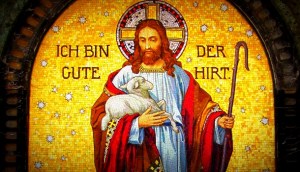
1 . F. H. Klooster, “Internal Testimony of the Holy Spirit,” 564-65 in Evangelical Dictionary of Theology, ed. W. Elwell (Grand Rapids: Baker, 1984).

2 . These passages include Rom 8:15; 1 John 5:10-12; as well as Gal 4:6.

3 . As witnessed in the Reformed confessions.

4 . John Calvin, Institutes of The Christian Religion, trans. Ford Lewis Battles, 2 vols. (Philadelphia: Westminster, 1977). While modern versions of the Institutes are published in two physical volumes, the classic citation is to reference first the book (there are four) the chapter, and finally the paragraph) 1.7.1; 1.7.4.

5 . Ibid., 1.7.1.

6 . Ibid., 1.7.4.

7 . Philip Schaff, Creeds of Christendom, 3 vols. (reprint ed; Grand Rapids: Baker, 1977) 3.831.

8 . Ibid., 3.362.

9 . Ibid., 3.602-3.

10 . References to the doctrine are found in the Formula of Concord, Reformed Confessions, the works of Arminius and several Baptist confessions (Klooster, “Internal Testimony of the Holy Spirit”, Evangelical Dictionary of Theology, 564).

11 . Calvin, Institutes 3.2.40 (italics added).

12 . Lewis Berkhof, Systematic Theology (reprint ed; Grand Rapids: Eerdmans, 1979) 508.

13 . Ibid.

14 . Institutes 3.2.15 (italics original).

15 . Ibid. (italics added). Significantly, this is exactly the trap into which those who claimed the name of Calvin fell. With their emphasis on limited atonement they could never be sure that Christ had died for them, hence they were forced to look inside at one’s works and the essential holiness of one’s heart rather than rely upon the promises of Scripture and the experience of the Spirit. But even here there was no peace because the doctrine of temporary faith that developed stole the hope of assurance by injecting the question of one’s election into the equation: “Perhaps the ‘fruit’ I see in my life is not that of regeneration but the pre-regenerate work of the Spirit, from which I may fall away.” In San Diego in November, 1989, at the Evangelical Theological Society annual meeting, Dr. John MacArthur was asked when a believer could be assured of his salvation; his reply was that such assurance could be had only after death.

16 . Institutes, 3.11.11 (speaking of Osiander).

17 . Ibid., 3.11.11

18 . Alister McGrath, “Justification, the New Ecumenical Debate,” Themelios 13.2 (1988) 145. He continues: “Being justified on the basis of the external righteousness of Christ meant all that needed to be done for an individual’s justification had been done by God—and so a believer could rest assured that he had been accepted and forgiven. The Reformers could not see how Trent ensured that the individual was accepted, despite being a sinner. For if the believer possessed perfect righteousness which ensured his justification, he could no longer be a sinner—and yet experience (as well as the penitential system of the Catholic Church!) suggested that believers continually sinned. For the Reformers, the Tridentine doctrine of justification was profoundly inadequate, in that it could not account for the fact that the believer was really accepted before God while still remaining a sinner. The Reformers were convinced that Trent taught a profoundly inadequate doctrine of justification as a result. The famous phrase, due to Luther, sums up this precious insight with brilliance and verbal economy: simul iustus et peccator, ‘righteous and a sinner at the same time.’ Luther was one of the few theologians ever to have grasped and articulated the simple fact that God loves us and accepts us just as we are—not as we might be, or will be, but as he finds us.”

19 . Calvin, Institutes, 3.2.39.

20 . Ibid.

21 . Ibid., 3.2.39.

22 . Ibid., 3.2.39.

23 . Packer, Quest for Godliness: the Puritan Vision of the Christian Life (Wheaton, IL: Crossway Books, 1990) 182.

24 . Ibid.

25 . Thomas Goodwin, Works, ed. J. Miller (James Nicholl: London, 1861) 1.257, quoted by Packer, Quest for Godliness, 185 (italics original). This witness is “self-evidencing and self-authenticating and analogous in character to the Spirit’s witness to the truth of the gospel” (185).

26 . Richard Sibbs, Works (Aberdeen : Printed by J. Chalmers for R. Ogle, Holborn; and T. Hamilton, London, 1809) 5.440, quoted by Packer, Quest for Godliness, 184.

27 . Institutes, 3.3.1.

28 . Ibid., 3.3.2.

29 . M. Charles Bell, Calvin and Scottish Theology (Edinburgh: Handsel, 1985) 82.

30 . J. I. Packer, “Sola Fide: The Reformed Doctrine of Justification,” in Soli Deo Gloria (Philadelphia: Presbyterian and Reformed, 1976) 11-12.

31 . Isaac August Dorner, A System of Christian Doctrine (Edinburgh: T & T Clark, 1897) 2.175.

32 . J. I. Packer, Quest for Godliness, 180.

33 . John Wesley, “A Plain Account of Christian Perfection,” The Works of John Wesley in the Ages Digital Library version 7 (Rio, WI: Ages Software, 1998) 11.492.

34 . Ibid., 179.

35 . Ibid., 190-191.

36 . Bell summarizing Calvin notes: “If we look to ourselves, we encounter doubt, which leads to despair, and finally our faith is battered down and blotted out. Arguing that our assurance rests in our union with Christ, Calvin stresses that contemplation of Christ brings assurance of salvation, but self-contemplation is ‘sure damnation.’ For this reason, then, our safest course is to distrust self and look at Christ” (Bell, Calvin and the Scottish Theology, 28).

37 . Wesley, Works, in the Ages Digital Library, version 7 (Rio, WI: Ages Software, 1998) 5.196.

38 . Ibid., 193.

39 . Wesley’s position on the witness of the Spirit sounds amazingly Reformed in its perspective and quite at odds with his equally strident Arminian position taken elsewhere in his writings that one can truly apostatize and lose one’s justification and hence one’s salvation. [Edit:–I would add, and Adam Clarke’s Christian Theology makes this clear, p. 152, that the Wesleyan view of the witness of the Spirit and assurance is conditioned on present repentance, faith, and obedience of the believer; the Spirit responds to living; God “gives the Holy Spirit to those who obey Him” (Acts 5:32); and if you “draw near to God” in prayer and obedience to Scripture, then His presence “will draw near to you” (James 4:8):–edit].

40 . Jonathan Edwards, “A Faithful Narrative of the Suprising Work of God,” The Works of Jonathan Edwards, 2.1084-85 in the Ages Digital Library, version 7 (Rio, WI: Ages Software, 1998).

41 . Ibid., 1100-1101.

42 . Charles Hodge, Systematic Theology, 3 vols. (reprint ed.; Grand Rapids: Eerdmans, 1975) 1.152.

43 . Ibid., 1.153. Significantly, Hodge did not address the critical reconstructions of canonical development that were already in vogue even during his own lifetime.

44 . Ibid. W. G. T. Shedd, although not a Princetonian by education, succinctly summarized the logic of this position when he stated, “If, as one asserts, ‘The great mass of the Old Testament was written by authors whose names are lost in oblivion’ it was written by uninspired men…This would be the inspiration of indefinite persons, like Tom, Dick and Harry, whom nobody knows, and not of definite historical persons, like Moses and David, Matthew and John, chosen by God by name and known to men.” Cited by C. A. Briggs, General Introduction to the Study of Holy Scripture (reprint ed.; Grand Rapids: Baker, 1970) 159.

45 . A. A. Hodge, Commentary on the Confession of Faith (Philadelphia: Presbyterian Board of Publication, 1926 [First published in 1869]) 51-52.

46 . B. B. Warfield, “Review of A. W. Deickhoff, Das Gepredigte Wort und die Heilige Schrift and Das Wort Gottes,” The Presbyterian Review 10 (1889) 506 (italics added).

47 . Ibid.

48 . See The Westminster Assembly and Its Work (New York: Oxford University Press, 1931) 212.

49 . Briggs, Whither?, 82.

50 . See “Calvin, the Reformers, and The Witness of the Spirit” above.

51 . Briggs, General Introduction to the Study of Holy Scripture, 142-43.

52 . C. W. Hodge to A. A. Hodge, July 6, 1881 (Princeton University: Hodge Papers). (Italics added.)

53 . Elsewhere (Church Unity, 223-24) he contended that the Reason was to be distinguished from the powers of reasoning “as the more fundamental function of the soul upon which all reasoning depends.” To the intellectual faculties, he attributed no ability to attain certainty. The only Reason that can have any measure of religious authority is that of the moral or religious reason, the conscience.

54 . Briggs, Church Unity, 226.

55 . See above for the testimony of the Westminster Confession.

56 . Briggs, Whither?, 73-81. Calvin and the Westminster divines did not totally eschew rational proofs. They did however deny their efficacy to convince a non-believer of the truth of scripture.

57 . Briggs himself affirmed the infallibility of the Biblical text, but, echoing the language of the Westminster Confession, limited that infallibility to faith and morals.

58 . Church Unity, 161.

59 . Ibid., 163.

60 . Ibid. (italics added).

61 . Ibid. (italics added). In so saying, Briggs placed himself with the Reformers. But he added an important new qualification heretofore unknown, specifically the phrase, “or part of a writing.” This would seem to compromise severely his principle of the plenary inspiration of the Scriptures, and set each man up as the judge of not only what books were inspired, but also what parts of each individual book. This, however, does not appear to be his intention at this point. Rather, this qualifying phrase was intended to cover situations such as the apocryphal additions to Daniel and Esther. These “parts of books” had not demonstrated by their character that they were inspired, and had thus been rejected by Protestants. Were the principle applied only to whole books, the books would themselves have to be rejected. (This discussion is ignoring, for the sake of argument, textual considerations that prove the spurious nature of the additions in question. In addition, this discussion assumes a positivistic approach to an individual writing taken in isolation from the rest of Scripture.)

62 . Ibid.

63 . Ibid.

64 . Ibid., 166.

65 . Ibid.

66 . Ibid., 167.

67 . Ibid.

68 . Abraham Kuyper, Principles of Sacred Theology (Grand Rapids: Baker, 1980) 624; reprint of Encyclopedia of Sacred Theology: Its Principles (New York: Charles Scribner’s Sons, 1898).

69 . Ibid.

70 . Ibid., 556-57.

71 . Kuyper sees sin as being at the root of radical individualism: “Sin, and hence unbelief, scatters individualizes and pulverizes; but grace, hence faith, restores life in organic connection, viz. the life of each member of the body.” The apprehension of the witness of the Spirit is together with all the saints (Eph. 3:18) (Principles of Sacred Theology, 553-6, esp. 556).

72 . See Kuyper, Principles of Sacred Theology, 556.

73 . M. James Sawyer, “Evangelicals and the Canon of the New Testament,” Grace Theological Journal 11.1 (1990) 29-52.

74 . See the for example Bob Wilkin’s study, “Assurance by Inner Witness? Romans 8:16,” http://www.faithalone.org/news/y1993/93march3.html.

75 . See M. James Sawyer, “Some Thoughts on Lordship Salvation” delivered at the ETS national meetings in Kansas City, November 1991. This paper is posted on the Biblical Studies Foundation website, /docs/theology/pneuma/ets.htm.

Posted in Uncategorized | Leave a comment