Reasons Why People Resist the Gospel

1. IMPENITENCE; or rebellion against the moral law of God. At the core, the main reason why people are not saved by hearing the Gospel is because they don’t want to obey God’s rules that are written down in the Bible. They want to live their lives free from all rules, as much as possible. They hate rules. They don’t want to think about rules, they don’t want to read or study about rules, and they certainly don’t want to comply, agree with, or obey any rules. The satanic dictum, “Do what thou wilt,” is their unspoken creed. A person that is in this condition cannot experience salvation, because they refuse to obey the ten commandments, or anything in the Bible. Their rebellion is just like the sin of witchcraft: it is totally meant for selfish purposes (1 Samuel 15:23). The devil has their hearts and minds in his hands.

2. UNBELIEF; or refusal to trust God and live by faith in Jesus. Faith is important to God. It is impossible to please God without faith (Hebrews 11:6). Some people seem to think that faith is not a requirement of Christianity or religion; they assume that Christians just automatically accept religious teachings. But acceptance of Christian teachings or things that the Bible says, is not the same thing as faith. Its a good step in the right direction, but its not faith. Habakkuk 2:4: “The righteous shall live by his faith.” Simply accepting a few hard-to-believe Bible teachings is NOT faith. Then what is faith? Read the entire chapter of Hebrews 11: this is what God means by the word faith. It is TRUSTING IN GOD to providentially care for your survival, to guide you according to His plan; it is trusting what the Bible says about unseen things (11:3); it is obeying and acting on divine revelations (11:4, 7); it is trusting in God’s difficult promises that we have received by direct revelation (11:11-12); it is always looking forward to Heaven (11:13-16); it involves obeying difficult, risky commands from God that have been received by direct revelations (11:17-19, 24-28, 29, 30, 31); it involves futuristic prophesying about dreams and visions (11:20, 22); it requires worship (11:21); and it leads to real Christians being mistreated, scoffed, made fun of, persecuted, imprisoned, executed, impoverished, and socially isolated (11:36-38). Are you living by Biblical faith? This is the only way to be saved and have real faith in the cross. If not, something’s wrong; perhaps you’ve compromised somewhere. Worldly people (that is, non-Christians who think like everyone else in the world does), refuse to embrace the idea of living by faith because it is too costly. They would have to give up so much fun. Yes, but they would also get to experience eternal life in Heaven, rather than in Hell! Worldly-minded people are content with unbelief, and so also, with confusion.

3. CONFUSION; or Biblical illiteracy, combined with impenitence and unbelief, resulting in hardened skepticism, and foolish conclusions. Jesus prayed in John 17:17, “Sanctify them through thy truth: thy word is truth.” But when people argue and debate with the statements of the Bible, they get confused because they are no longer able to see what is true and what is a lie, what is right and what is wrong, what is clean and what is dirty, what is straight and what is crooked. The Word of God was given to men in order to clear up our confusion, a deterioration that lives within us all, due to our inherited sinful nature from Adam. But when impenitent unbelievers refuse to study the Bible for what it really means, and refuse to listen to evangelical apologists, Bible scholars, and theologians, when they refuse to read books like Norman Geisler’s When Critics Ask, they settle themselves into selfish falsehoods, and deceive themselves into thinking that the Bible is filled with contradictions after all, and that it is a book of lies, and is not worth trusting in, or giving up sin for, or any other such thing. So, they remain confused; not only about what the Bible really says, and really means, but about many of the wise sayings it contains (for example in Proverbs) about life in general. James 1:6: “The one who doubts is like a wave of the sea, blown and tossed by the wind.”
Posted in Uncategorized | Leave a comment

The Sorts of Things That Bob Jones Said

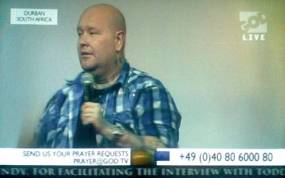
Bob Jones was considered the leading Samuel-like prophet of the modern charismatic movement that started with Mike Bickle in the 1980s (IHOP). Before he died in 2014, he served as a spiritual mentor to Rick Joyner (MorningStar Ministries), Todd Bentley (Fresh Fire), etc. Here’s a video of Bob rambling about several of his laughable and nonsensical revelations. I don’t doubt he got information from a spirit, but I don’t think it was the Biblical Holy Spirit. It’s sad that people can be so deluded, willingly. This is what it looks like when people get away from evangelical Bible teaching…

10:16 – Bob said, “This is the year YOU MUST CAST OFF ALL RESTRAINTS.” Careful about the antinomian language, Bob. Proverbs 29:18, NIV: “Where there is no revelation, people cast off restraint”; KJV: “Where there is no vision, the people perish: but he that keepeth the law, happy is he.” Bob says later that “restraints” are the religious spirits of judgment, criticism, debate, opinion, and legalism. Hmm, so we’re not allowed to think, Bob? Just go with your flow? Doesn’t agree with 1 Corinthians 14:29: “Let the prophets speak two or three, and LET THE OTHER JUDGE.” And a lot of this sun sign stuff sounds like astrology, I’m just sayin’. And what’s with the black glove? I can judge that too, Bob. God doesn’t tell me I can’t ask questions.

18:25 – Bob said, “I believe that we’re in a time of the gifts that are gonna break the curses of early death, and you’re gonna be young at 100 if you die. But I also believe these genetics will come to A YOUNGER RACE THAT WILL NEVER KNOW DEATH.” He is saying he believes some charismatics will be immortal in this life (the manifest sons of God delusion).

22:22 – Bob said, “You really need to watch your conversation. You should keep your conversation right. If your conversation is in a restaurant, or any place, EVEN IN A BAR, it’s alright to get loud if your conversation’s right.” Sure Bob, sure, whatever you say.

47:46 – Bob said, “THE COLOR ORANGE MEANS LOVE.” What? Not even Ira Milligan’s Understanding the Dreams You Dream says that, page 87: energy, danger, and power – not love. How’s love the Biblical meaning of orange? Pretty subjective, Bob. Lol.

55:55 – Bob said, “IT’S A TIME OF FREE GRACE.” As in the free grace theology of Charles Ryrie, Zane Hodges, and modern antinomians who reject lordship salvation preached by John MacArthur and the Puritans. Eck! In 57:22 he said, “Being an old Baptist, I believed in rapture.” So he admits to having a Baptist view of salvation. Well, there’s nothing left but antinomianism when you use the word “Baptist” and “free grace” in the same paragraph. It’s a false theology of salvation, folks. Bob Jones was a false prophet influenced by lying spirits! (1 Kings 22:22). Mike Bickle’s different though. He has a lordship salvation influence, a Ravenhill influence. And I’m not saying that 100% of Jones’ dreams and visions were false. I’m just saying that I don’t look at Bob Jones as the best example of prophetic ministry.

Posted in Uncategorized | Leave a comment

What Happens to a Country When It Allows False Prophets to Dominate the Church

If the church existed in a constant state of evangelical revival, the world would be a better place; and it would be a different place. There would be many pastors preaching against the doldrums of religious formality and false religions. They would boldly preach against sin, warn sinners about God’s judgment on sin in Hell, and church members would not be on the borders of skepticism and unbelief, but would rather be hungry and eager to do evangelistic exploits and teach the younger members how to be holy and experience the miraculous gifts of the Holy Spirit. But sadly this is not the state of the churches in our time.

False prophets are dominating the Christian sphere right now; and they have been for about 70 years. Ever since Smith Wigglesworth died in 1947, there has been no popular attention given to anyone with that type of spiritual caliber. When a country gives place to false prophets, this is what happens:

1. Christianity becomes redefined and misunderstood as a fake exterior shell of meaningless sentimental dribble.

2. People have a distorted view of Jesus: He comes to be seen as a biker gang member, or a hippie, a stoner, or some kind of freak, a playboy that accepts sinners the way they are, in the condition they are in, and offers no help for them to be freed from their sinful addictions and ways. This different Jesus (2 Corinthians 11:4), comes to be seen as a druggie (“God created cannabis, God made pot”); people like Bob Marley are looked upon as prophets of God because they smoked pot and had some religious views about Jesus. 

3. The Bible is forgotten, neglected, argued with, and disrespected. It is no longer seen to be the inspired words of Almighty God. It is looked upon as a religious text that has a lot of rules and stories of miracles, many of which people have no way of relating to, because they are so cut off from the life and power of the Holy Spirit.

4. Materialism, greed, and covetousness increase. Without the power of the Bible and the Holy Spirit bringing correction and holiness into people’s lives, it is only natural for the spiritual to be slammed down and for the natural to be exalted to its most extreme forms. People will turn to million dollar mansions, half million dollar cars, and other luxuries to medicate a miserable feeling inside that only the presence of God can. The misery, however, continues infinitely, and also leads to discord, all kinds of evil, massive debts, and tax evasion (1 Timothy 6:10). False prophets preaching a “prosperity gospel” will rise (it changes forms over the years): and people will happily support this kind of preaching (2 Peter 2:15).

5. Religious pluralism, universalism, and inclusivism increase. Again, this is because the Bible is disregarded. This happened for hundreds of years in Israel when the Bible was forgotten (see 1 and 2 Kings). Even though the first of the ten commandments is, “Thou shalt have no other gods before Me” (Exodus 20:3), politically correct people always have a way of crafting a religious philosophy that evades God’s commandments in the Bible, and demons of idolatry and confusion take control over their minds, and they go on believing the most demonic, godless things that grieve God. 

6. People are criticized as “close-minded” if they hold to the Gospel of Jesus Christ, which confidently proclaims that salvation from an eternity in Hell-fire is only possible through turning away from what the Bible calls sin, and placing one’s faith in the atoning sacrifice of Jesus on the cross (John 14:6), His blood being shed for the forgiveness of sins, His punishment for our sins, the sinless Son of God in our place, taking the eternal wrath of God that we deserve to experience in Hell and shouldering it by Himself on the cross. It is this message that the world utterly rejects. They call it foolish (1 Corinthians 1:18). They call it close-minded. They call it bigoted and all kinds of other names. A message of forgiveness! Bigoted! Hateful? Close-minded? A message of forgiveness from God’s anger at sins that you would readily admit when questioned? O man! Who do you think you are, to rant and to rave, against such a loving and holy God! If this is you, admit that you have been a fool, a great fool! Turn to God. Love Him back. Push away His anger. Cling to the cross of Jesus. He wants you to. Open His Word–the Bible–and find eternal, prophetic wisdom for your whole life!

Posted in Uncategorized | Leave a comment

“Kundalini Warning” Documentary – Andrew Strom

Posted in Uncategorized | Leave a comment

What the Reformers Believed About Genesis – Creation Magazine LIVE!

Posted in Uncategorized | Leave a comment

What Did the Church Fathers Believe About Genesis? – Creation Magazine LIVE!

Posted in Uncategorized | Leave a comment

David Wilkerson Hinted That Todd Bentley Was Led by the Devil

David WilkersonTaken from “A Fresh Outpouring of the Holy Spirit” – September 15, 2008 – Right after Todd Bentley’s Lakeland Revival ended.

There are three words many Christians do not speak of anymore: signs, wonders, and miracles.

For an entire generation of believers, these three words conjure up memories of many abuses in the church. At a time when so many were looking for genuine works of God, “with signs following,” charlatans were staging fake “holy works.” So-called healing evangelists made a circus of it all — covetous men and women who offered “healings” for a price.

Now whenever many of us hear these three words, there rises up in us uneasy feelings: a fear of fanaticism, embarrassment over the mockeries, painful memories of dear brothers and sisters whose faith ended on the ash heap because of all the fakery. Tragically, many in Christ’s church do not expect God to perform miracles anymore.

Todd Bentley (2013)

Yet, please hear what I am about to say. The devil knows the Scriptures, and he knows that a genuine, Holy Spirit-inspired revival of healing is prophesied. This is why he is even now promoting his own perverted “healing” meetings. In his meetings, Christ is not the center but rather the exalting of angels or an individual.

Posted in Uncategorized | Leave a comment

Review of the Movie “Risen” (2016)

RisenI’m not a big TV and movie watcher. But I recently rented the movie Risen (2016) and I have to say this is one of the most God-glorifying, reverent movies I’ve ever seen. It’s sort of like a re-make of The Robe (1953), but the plot is different and its much better in my opinion. I really felt like I had an encounter with Jesus in the Spirit as I watched it. I felt like I was experiencing it. The action theme was apparently influenced by The Bible: The Epic Miniseries (2013), but the acting and the theatrics were just much well done here; in this way, the movie might appeal more to men than women. Well done, very well done, to everyone who was part of making this film. The movie is of the “historical fiction” genre that follows the Roman tribune who was responsible for overseeing the soldiers who crucified Jesus and guarded His tomb. After the resurrection, the tribune, named Clavius, gets more and more information, more leads, and gets into a detective like pursuit of the corpse of Jesus, when at long last he stumbles in on the apostles as they are crowded around Jesus in the upper room; and he recognizes Jesus’ face as the same man that he had crucified a few days ago. Then he abandons the Roman army and becomes a disciple. This is the perfect movie to watch around Easter: right after watching Jesus of Nazareth (1977).

Posted in Uncategorized | Leave a comment

Review of Wayne Grudem’s “The Gift of Prophecy”

Wayne Grudem - The Gift of ProphecyThis was a hard read, but I felt like it solidified my views on the prophetic. This book is in a way the first and foremost authority on the subject of charismatic prophecy in Third Wave evangelicalism. Liberalism, universalism, and the New Age movement have no point of reference to the theological framework that Grudem is teaching from. Rather, he is a Baptist charismatic pastor with some background in the Vineyard church during John Wimber’s days (this book was originally published in 1988 and revised in 2000). The first endorsement on the back of the book is by Wimber, who says, “This conservative evangelical scholarly work gives a solid theological basis for further development of a practical theology of spiritual gifts.” This is a Vineyard book. An endorsement is also given by Stanley Horton, the foremost theologian in the Assemblies of God: “thorough, Biblical, and practical.” Grudem is addressing Reformed Christians (both cessationists and charismatics), Baptist charismatics, Vineyard people, Assemblies of God people, and non-denominational evangelical charismatics. He especially seems to be targeting pastors, because the substance of the book is about how charismatic prophecy is of a substantially lesser authority than the authority of Scripture. In fact, this seems to be the main theme of this 400 page tome. Personal prophecies are to be judged and evaluated by pastors and their churches by the standard of Biblical doctrine:

1 Thessalonians 5:19-21: Do not quench the Spirit. Do not despise prophecies. Test all things; hold fast what is good. Churches are encouraged to be charismatic, to have prophets that have revelations, who then prophesy those revelations during church services, which are then supposed to be judged by those listening (or tested according to the Bible), and to hold fast to whatever was found to be good in such prophecies, and to reject what is bad or useless. Cessationists, who reject charismatic prophecy altogether, are found guilty of quenching the Holy Spirit’s activity in the church services. 1 Corinthians 14:29: Let two or three prophets speak, and let the others judge. A maximum of three prophecies per church service is allowed, so that the rest of the time can be given to worship and Bible teaching (1 Cor. 14:26). The interpretation of tongues is a form of prophecy; and so this would also fall under the three-prophecies-per-church-service limit.

I disagree with Grudem about 1 Corinthians 14:30: “If anything is revealed to another who sits by, let the first keep silent.” Grudem interprets this to mean that personal charismatic prophecies were held to be so unimportant and so unauthoritative as to mean that if one prophet is sharing a revelation during a service, that the next prophet should stand up and actually interrupt the first prophet, and the first prophet should be okay with that, and not continue to prophesy the rest of his revelation (p. 59). I don’t see this at all being in agreement with doing things decently and in order or not in a spirit of confusion, for God is not the author of confusion (1 Cor. 14:40, 33). Adam Clarke actually agreed with Grudem’s view, and says “interrupt another” is the meaning of “the spirits of the prophets are subject to the prophets” in 14:32; but Wesley, in commenting on that verse, speaks against the idea of ecstatic prophecy (Grudem agrees with Wesley in ch. 5), saying that a frenzied, and uncontrollable ecstasy is the way of the pagan prophets, and not the way of the Christian prophets, who have total control over their rational faculties as they are sharing revelations with others (prophesying). But I agree with Matthew Henry against the view of Grudem and Clarke regarding 14:30. Henry says:

Indeed, it is by many understood that the former speaker should immediately hold his peace. But this seems unnatural, and not so well to agree with the context. For why must one that was speaking by inspiration be immediately silent upon another man’s being inspired, and suppress what was dictated to him by the same Spirit? Indeed, he who had the new revelation might claim liberty of speech in his turn, upon producing his vouchers; but why must liberty of speech be taken from him who was speaking before, and his mouth stopped, when he was delivering the dictates of the same Spirit, and could produce the same vouchers? Would the Spirit of God move one to speak, and, before he had delivered what he had to say, move another to interrupt him, and put him to silence? This seems to me an unnatural thought. Nor is it more agreeable to the context, and the reason annexed (1 Corinthians 14:31): That all might prophesy, one by one, or one after another, which could not be where any one was interrupted and silenced before he had done prophesying; but might easily be if he who was afterwards inspired forbore to deliver his new revelation till the former prophet had finished what he had to say. And, to confirm this sense, the apostle quickly adds, The spirits of the prophets are subject to the prophets (1 Corinthians 14:33); that is, the spiritual gifts they have leave them still possessed of their reason, and capable of using their own judgment in the exercise of them.

The practical conclusion to draw is that during a charismatic church service, everyone is sitting down. Then Prophet #1 stands up to share a prophecy; and as he is prophesying, it so happens that Prophet #2 gets a revelation while Prophet #1 is speaking. The course of action to be followed, would be for Prophet #2 to stand up so that Prophet #1 could see him, and get the cue that he had also received a revelation that needed to be shared. And out of humility and respect, Prophet #1 wraps up what he is trying to say (he gets to the point, and refuses to disclose the many details of his dream or vision); and then he sits down, and opens up the floor for Prophet #2 to start speaking. The same procedure should be followed if Prophet #3 gets a revelation and stands up. I’m pretty sure the early Quakers and the early Pentecostals followed this practice.

Female prophets (or prophetesses) are to remain subject to male leadership in the church. They are not to assume a Bible teaching position over men (because it carries the authority of God’s law) (1 Tim. 2:12); and they are to prophesy in a gentle, respectful manner that respects the men in the church (1 Cor. 11:5). Feminism and the Jezebel spirit should have no place in a Biblical evangelical charismatic church.

“Thus says the Lord” is advised against in modern charismatic prophecy, because that phrase carries with it the idea of the absolute, unquestioned authority of an Old Testament prophet. Such an authority Christian prophets simply do not have, but rather their prophecies are to be sifted, tested, judged, and evaluated; and if necessary, rejected. It is better to preface modern prophecies with something that conveys less certainty, more humility, and less authority; something that clearly communicates that what is going to be shared could possibly come from the Holy Spirit, but that the prophet fully understands it should be tested and judged by Scripture. Saying something like, “I feel like the Holy Spirit is saying…” is much safer language.

Grudem’s most mystical part of the book is chapter 5 (“The Source of Prophecies”), which was originally titled, “The Psychological State of the Prophet,” in ch. 2 of his more technical version called The Gift of Prophecy in 1 Corinthians. But I was actually not impressed too much. He spends most of his time teaching that prophecy is not ecstatic, which I think might be a stretch, seeing that Peter’s trance occurs in Acts 10:10. But I will admit that sharing a revelation (or the act of prophesying) is always possible while in a rational state of mind. Receiving a revelation, however, is a different story: and I think the Bible allows for some degree of ecstasy or trance during visions. Grudem mentions a few mild mystical experiences by name, and says these can be revelations: “words, thoughts, or mental pictures” (p. 110). Overall I was left unimpressed at his lack of teaching about these experiences, since there is such a lack of such experiences in the body of Christ. In all the 400 pages of this book, there is also no section on dream interpretation, which I saw as a real weakness. This made me think that Jack Deere’s Surprised by the Voice of God might be stronger in this area. In the whole book, nothing is mentioned about contemplative prayer either, which the Catholic saints used to see as the main way to hear the Holy Spirit and receive direct revelation (for direction on this, see Augustin Poulain’s The Graces of Interior Prayer). In the later 2000 edition, Grudem does briefly mention “intuition, ‘hunches,’ dreams, feelings of being led by the Holy Spirit” (p. 305).

It seems that Grudem’s favorite concept of direct revelation is that of random thoughts popping into people’s heads during a prayer meeting (pp. 142-143). He lends no great emphasis to dreams, visions, and their interpretation; which I see as a very great weakness: “If there is a prophet among you, I, the Lord, make Myself known to him in a vision; I speak to him in a dream” (Num. 12:6). The Bible’s emphasis is on dreams and visions as the source of prophecies, not random thoughts in a rational frame of mind. I won’t discount random thoughts during concentrated prayer, but I just want to lay the emphasis on dreams and visions as the source of revelations and prophecies. Acts 2:17: “It shall come to pass in the last days, says God, that I will pour out of My Spirit on all flesh; your sons and your daughters shall prophesy, your young men shall see visions, your old men shall dream dreams.” 1 Samuel 9:9: “Formerly in Israel, when a man went to inquire of God, he spoke thus: ‘Come, let us go to the seer’; for he who is now called a prophet was formerly called a seer.” Jim Goll (The Seer, p. 22) teaches that prophets more so hear God’s voice but seers more so have dreams and visions; but 1 Samuel 9:9 equates prophets and seers. A seer of dreams and visions is “now called a prophet” or spokesman for God. I think Grudem would have done better to emphasize the life of a Christian dreamer, how to experience more visions, and how to interpret dreams and visions with Biblical symbolism (as in Ira Milligan’s Understanding the Dreams You Dream).

1 Corinthians 14:3: “He who prophesies speaks edification and exhortation and comfort to men. In his book The Christian Prophet (1798), Adam Clarke defined edification to mean “building up the soul in the knowledge, love, and image of God”; exhortation: “calling the soul near to God” (James 4:8); comfort: to be Christian counseling, bringing assurance of salvation. George Fox, the Quaker leader saw Hebrews 3:15 (“Today, if you will hear His voice, do not harden your hearts”) as an exhortation, or an urgent warning against sinning, backsliding, or apostasy (Journal, p. 185, year 1673). I believe that both Clarke and Fox are correct: a prophetic exhortation can be either just a calling of people to come closer to God; but it can also be a warning against apostasy, because by it people are warned against apostasy from God, and are automatically urged to come back to God. Any modern-day charismatic prophet that rejects such exhortations, or warning prophecies, is probably a false prophet who only flatters people and speaks smooth things (Isa. 30:10). But David Wilkerson’s The Vision, for example, contains all the elements of a truly Biblical charismatic prophecy: edifications, exhortations (both warnings and callings to God), and comforts.

Chapter 12 has some pretty strong arguments against cessationism; and maintains the charismatic continuationist view that the miraculous gifts will continue until the return of Christ.

On page 224, Grudem lists some books on prophecy that influenced this book, the most prominent was apparently Bruce Yocum’s Prophecy (1976) by a Catholic charismatic; I also feel drawn towards George Mallone’s Those Controversial Gifts (1983; Vineyard; I think this might be more of a dreams and visions theology). Further thinking on this made me want to overlook anything associated with Kenneth Hagin or any Word of Faith prosperity gospel preachers involved with prophecy, as that would probably be the spirit of Balaam (2 Peter 2:15; Jude 1:11). This would mean excluding John and Paula Sandford (The Elijah Task); and even John Paul Jackson (Understanding Dreams and Visions) and James Goll (The Seer), both of which speak favorably of Hagin. Although Sandford and Jackson were seers, I don’t think they purified their theology enough for me to feel one in spirit with them. I feel much more comfortable taking my dreams and visions theology from Ira Milligan.

Appendix A: “The Office of Apostle” argues that the apostolic ministry ceased with the death of the last of the twelve apostles. I would disagree with Grudem on this point. Grudem’s view is that the primary function of an apostle was to write Scripture (see also p. 314). But I don’t see the word “apostle” ever used this way in the New Testament. The word simply means “one sent.” There is no question that the original twelve apostles were special, because they had physically been with Jesus for His entire ministry (Acts 1:21-22); and as such, they had earned a special sense of authority to write Scripture that was recognized by the early church; but Grudem fails to notice that Luke, Mark, and Jude were also writers of Scripture and they were not part of the original apostolic band (neither was Paul). I do not believe that the original purpose and intent of the word “apostle” as we have it in Ephesians 4:11 could be transliterated into “Scripture writer.” The word “apostle” literally means “one sent” in the Greek. So, I agree with Jack Deere’s view, as he expresses it in Surprised by the Power of the Spirit in pages 241ff, that the calling of an apostle has not ceased, and in fact has continued throughout the history of the church, and may actually account for the lives of the saints, and various evidences of miraculous gifts in church history (as with St. Patrick who was called “the Apostle of Ireland,” St. Columba “the Apostle to the Picts,” or St. Benedict, St. Francis of Assisi, John Knox, George Fox, John Wesley, Charles Finney, William J. Seymour at the “Apostolic Faith Gospel Mission” where the Azusa Street Revival occurred and gave birth to the worldwide Pentecostal movement). What we have in these examples, I think, are what we have in Ephesians 4:11 in the word “apostles”: they were miraculously gifted missionaries and church founders, reformers, and revivalists, who began great revivals and spiritual movements. The whole history of evangelical revivalism, I believe, is seasoned with apostles (in of course, a much lesser sense of authority than the original twelve). It recent times, it might be appropriate to say that John Wimber and David Wilkerson were apostles.

Appendix C: “The Sufficiency of Scripture” states that no charismatic prophecy, whether written or verbal, should ever be considered on the same level of authority as the Bible (Deut. 4:2; Rev. 22:18-19). Unlike the Apocrypha, or The Book of Mormon, which has a subtitle that says it is Another Testament of Jesus Christ…an evangelical charismatic prophecy will always present visions as subject to the careful judgment and evaluation of the church, as the Bereans who searched the Scriptures to see whether these things were so (Acts 17:11). Bill Wiese’s 23 Minutes in Hell, Rebecca Springer’s Within Heaven’s Gates, and David Wilkerson’s The Vision all fall into this category. Niether Wiese, nor Springer, nor Wilkerson would have ever dared to suggest that these books of theirs be added to the Bible! And they would have only asked people to believe what they were capable of believing, so long as they felt it agreed with the Bible, and that the Holy Spirit bore witness in their hearts to some thing they mentioned in their books.

APPENDICES ADDED FOR 2000 EDITION

Some of my favorite parts of the book are in this section.

Appendix 1: “Prophecy and Prophets” is a great overview of the book in a short, concise manner; its a great chapter-long overview of Biblical prophecy and the history of Biblical prophecy.

Appendix 2 argues that the “word of wisdom” and “word of knowledge” are not miraculous gifts, but are more natural talents of the Holy Spirit for Bible teaching and theology (this view was also held by Aquinas, Augustine, and Bunyan). But I disagree; and so did some of the church fathers. In the history of the church, there was never any full agreement about the proper use of these words. Cyril, Ambrose, and Tertullian all seemed to think they were supernatural; so do Assemblies of God and Vineyard theologians generally. Its hard for me to see the “manifestations of the Spirit” mentioned in 1 Corinthians 12:7-10 as anything other than a physical, visible, demonstrable miraculous gift. The word “manifestation” literally means revelation. “The revelations of the Spirit” is another way to say it. Grudem contends, however, that “prophecy” is the only proper word to use in this list for an utterance of supernatural knowledge. For all practical purposes, though, I think it is hair-splitting to do away with the phrase “word of knowledge” when someone wants to prophesy or speak of a prophecy. It’s just part of the established Pentecostal and charismatic lingo; and so, I say we should continue to use it.

Appendix 3 has some pretty straightforward statements against cessationism which are good to have around.

Appendix 5 is a good summary of the whole book’s message and theme.

Appendix 6 argues that the “foundation of apostles and prophets” in Ephesians 2:20 should be “the foundation of the apostles who are also prophets” (the twelve apostles); thus there is no need for normal prophets to cease in their continuing function in the church.

Appendix 7 is an amazing, extremely valuable section: “Some Evidence for the Existence of the Gift of Prophecy at Various Points in the History of the Church” shows that some of the Puritan theologians actually held to a cautiously charismatic point of view like the CMA or the Vineyard (such as in Samuel Rutherford’s A Survey of the Spiritual Antichrist or Richard Baxter’s A Christian Directory or George Gillespie’s Treatise of Miscellany Questions or William Bridge’s “Scripture Light the Most Sure Light”), but he also mentions some reformers by name who were acknowledged by these godly theologians as Protestant saints who had sometimes experienced the gift of prophecy: George Wishart, John Knox, John Davidson, John Welsh (all mentioned in John Howie’s The Scots Worthies), and also John Huss, John Wycliffe, Martin Luther, and Charles Spurgeon. (“Lawless enthusiasts” or carnal, antinomian, charismatic pretenders are also marked out, such as Anne Hutchinson.) To the list of true prophets, I would also add George Fox, John Wesley, Charles Finney, William J. Seymour, Smith Wigglesworth, John Wimber (with reservation), and David Wilkerson. This list for the most part, I would say, along with Rutherford, that they were “holy and mortified preachers,” and also prophets.

Save

Save

Save

Save

Save

Save

Save

Save

Save

Save

Save

Save

Save

Save

Save

Save

Save

Save

Save

Save

Save

Save

Save

Save

Save

Save

Save

Save

Save

Save

Save

Save

Save

Save

Save

Save

Save

Save

Save

Save

Save

Save

Save

Save

Save

Save

Save

Save

Save

Posted in Uncategorized | Leave a comment

Why I Abominate the Prosperity Gospel – John Piper

Posted in Uncategorized | Leave a comment