I’m not done with my study of Christian economics. I have not dug into John Calvin, William Perkins, Richard Baxter, or really even John Wesley that much on these things. But what I do know now–with a degree of certainty–is from St. Antonino to Martin Luther to the Puritans, to John Wesley and Adam Smith and P. T. Bauer, is that there is a general consensus among them that the only really reliable way to make money is through hard work at jobs. Economic growth comes from diligent, productive hard work at jobs; and from the wages their labor generates.
All of the Christian economic theologians looked with skepticism and even strong caution against investing in the stock market. Mostly the feeling was that the stock market is a deceptive racket, a waste of time and money, and not a very reliable way to make extra money on the side. Working at a job was seen as the godly and reliable way to make money; but the stock market was just seen as a con game, a way to get ripped off, go into debt and bankruptcy if you buy stocks on margin, or just go plain broke from a gambling addiction.
Seeing that working hard at jobs was viewed as the only reliable way for money-making and economic growth–it follows that any economic growth philosophy should be focused on upgrading jobs and increasing wages. The only condition, is that both St. Antonino and the Protestant economic theologians, warned that the money we make should not be “evilly acquired” from our jobs, nor should it be generated by adopting Machiavellian character traits like deception, cruelty, self-interest, and competition. The Golden Rule should totally govern our work ethic: “Do to others what you would have them do to you” (Matt. 7:12).
Working at home–always assumed for the wife in Proverbs 31–was the preference of the New England Puritans, the Amish, the Mennonites, and the “back to the land” hippies (Gary North, Puritan Economic Experiments, p. 20; Art Gish’s Beyond the Rat Race; Scott and Helen Nearing’s The Good Life). For the Puritans, owning a family farm was viewed as efficient and profitable. Telecommuting now makes this possible for more job categories than only farmers.
It seems the way to economic growth for a Biblical Christian is to telecommute for jobs that pay the most–and which also allow for minimum interaction with Machiavellian colleagues, gratuitous cussers, and flirtatious co-workers. Investing is always to be viewed as a secondary thing–and even so, with great caution and even skepticism of the stock market. Mortgaging for private property is good, Biblical, Puritan, and considered advisable by financial planners. Rent payments are money-eaters and are a conflict of interest with money-making income from jobs. It is also advisable from financial planners, and the history of American economics, to get into a 10-year FHA-insured mortgage with a HUD home. The reasons for this are simple: 1. 10 years means that private property is acquired faster than 30 years; and making payments on homes no longer becomes a money-eater. 2. If you fail to make an FHA mortgage payment because you fall on hard times, then the U.S. government will make the payment for you.
In short, the history of Christian economics has shown me the following:
1. Economic growth is generated by hard work at jobs; and if you wish to grow rich, then you need to focus on upgrading your jobs and increasing your wages. Asking for a $2 an hour or 12% raise on the anniversary of your hire date is a way to go about this: asking for subsequent raises once a year is considered acceptable, ranging from 10% to 20%. You can use Glassdoor to estimate the fair market value, of the salary range for your specific job title, in your industry, and with your years of experience. Working a side job is another way to make more money. If you think you’re missing something, you could always receive guidance from a licensed NCDA career counselor. FlexJobs.com, for example, might be a good place to start looking for jobs with more responsibilities and higher wages, and which are 100% remote and require no travel at all. E-blasting your cover letter and resume to companies from a LinkedIn verified email list, bought from Fiverr, can be valuable as well–all you need is an inexpensive Chrome extension called GMass; and you can send 500 emails from one Gmail account with the click of a button.
2. The stock market, by and large, is a waste of time and money; and you are more likely to lose money in it, than make extra money from it. Even if you are a careful investor, because of the economy–with its fluctuations in supply and demand–is far too unpredictable for the stock market to supply any kind of reliable money-making force for you.
3. Telecommuting is more conducive to peace of spirit, efficiency, profitability, and living the Christian life, than working in an office or elsewhere in public.
4. FHA-insured mortgages for a 10-year HUD home plan are highly desirable, because the U.S. government will help you out if you miss a mortgage payment; and the quicker you own private property, the quicker you can save what you earn without having to give it away to a landlord. These types of mortgages helped World War II veterans when they came back home; and greatly factored into what is today called the “American Dream” and the “Golden Age of Capitalism.” Micah 4:4: “Everyone will sit under their own vine and under their own fig tree, and no one will make them afraid, for the Lord Almighty has spoken.”
Jobs: The Only Real Way to Economic Growth
Posted in Uncategorized
Leave a comment
Review of Kathleen MacArthur’s “The Economic Ethics of John Wesley”
Diligence, thrift, and philanthropy appear to be a triad of Christian economic virtues. All three of them were taught as an economic formula in John Wesley’s sermon The Use of Money (1760), under the headings of “gain all you can,” “save all you can,” and “give all you can” (3.1.1, 3.2.1, 3.3.1; MacArthur, pp. 97-98). Diligence or industry is the practice of energetic, productive hard work on the job: it is this practice that produces money or gain. Thrift or frugality is the practice of penny-pinching; being careful about managing money; and especially not spending money wastefully on luxury items or other unnecessary expenditures. Wesley once quoted Josiah Tucker in his Serious Address (1778): “the hands of the diligent and frugal are the only hands which make a nation rich.” And finally, philanthropy, understood Biblically, is giving to the poor in Jesus’ name to alleviate their financial misfortune and distress. It is Christian poverty alleviation. Funds for poverty alleviation are meant to be taken from “overplus” or surplus (3.3.3)—that is, any money that is left over after your family’s financial needs and security have been comfortably provided for.
Gain, Save, and Give All You Can
1. The virtue of diligent hard work, is a preservative against the sin of laziness or sloth, which is spoken against many times in Proverbs (6:6-11; 10:4-5, 26; 12:11, 24, 27; 13:4; 14:23; 15:19; 18:9; 19:15; 20:4, 13; 21:17, 25; 22:29; 24:30-34; 26:13-16).
2. The virtue of thrift, or being frugal, penny-pinching, saving money, and plain living, are all a preservative against the sin of greed or avarice, which puts no restraint on the pursuit of wealth; and which leads to materialism or the idolatry of material possessions, as having more importance than anything, even spirituality (Proverbs 13:11; John 6:12; 1 Timothy 6:6-10; Ecclesiastes 5:10; 11:1-2; Matthew 6:24; Mark 8:36; Revelation 3:17). Christians should avoiding spending money on luxury items, expensive meals, designer clothing, costly jewelry, and spoiling children so they don’t know the value of a dollar.
3. The virtue of philanthropy or poverty alleviation, is again a preservative against covetousness, greed, and materialism—but it is also a preservative against the sins of snobbery, financial pride, and hatred of the poor. Its disciplined practice reminds the giver that his money belongs to God; and that his employment and his paychecks are gifts from God’s providence; and that God requires of Christians that we love our neighbors as ourselves, and treat others the way we want to be treated (Mark 12:21; Luke 6:31). However, our philanthropy should be based on financial math, not on sudden, irrational impulses based on guilt. Impressions from the Holy Spirit can certainly guide us in our distribution of wealth to the poor, but only after we have used a bit of math to rationally calculate a benevolence fund from the surplus of our earnings—I think 10% of the paycheck is a step in the right direction in this matter, basing it off the tithe (Lev. 27:30; Mal. 3:10; Matt. 23:23; Luke 18:12). But not all salaries are equal in amount: it should be calculated on a case-by-case basis. If you are below the Federal Poverty Level, it would probably not be reasonable for you to practice philanthropy to your fellow poor, until you yourself have lifted yourself out of poverty. The Federal Poverty Level (FPL), according to the 2021 poverty guidelines set down by the U.S. Department of Health & Human Services, say that a family of four which has an annual income of $26,500 is still living in poverty. A single man who makes only $12,880 a year is still in poverty. Reasonably, you should at least be making double these amounts, before you seriously start to plan on setting aside a benevolence fund for philanthropy to the poor. There’s no sense in giving to the poor if you yourself are still among them. Meet your own needs first! Be reasonable and not emotional about it.
Once we have reached a comfortable economic state, we should thank God for giving it to us (Deut. 8:10), we should have compassion on those in financial distress, we should seek to give them job leads as they often need job search assistance, and we should familiarize ourselves with them to prevent us from being snobs towards all the poor, we should love the poor rather than hate them—knowing that their faith in God’s providence is likely being strengthened despite their financial distress (Jas. 2:5). And we should join with God’s hand in that providence to help meet their needs; and so, become the hands of Jesus to them who are so beside themselves with unemployment, or confused by their poverty, that they just don’t know what to do. Don’t only give them money: also give them a sheet with resources on medical assistance, job training, rent and utility bill assistance, food pantries, etc. Names of non-profit organizations, addresses, hours, and phone numbers. Don’t just give them money—also give them information that will give them hope of getting out of this financial hole that they’re in. Save them some time and tell them to first try going to the nearest St. Vincent de Paul location: they are perfect at food pantries; and providing these kinds of contact sheets and guidance. In this practice of poverty alleviation, we align ourselves with God’s heart and his sympathy for the poor; and set ourselves against the Machiavellian philosophy of deceptive cruelty; and against the Smithian philosophy of competitive self-interest, all of which pervade our secular business world. Biblical Christians should be engaged in productive hard work; simple living and frugal spending; and should give to the poor from a benevolence fund that is calculated from their surplus.
In addition to the economically ethical triad of diligence, thrift, and philanthropy—we should also be ready to preach against all kinds of financial sins, such as bribery, thievery, gambling, buying stocks on margin resulting in debt and bankruptcy, bartending, acting, and the materialistic pursuit of riches (Prov. 30:8). And also against businesses which are based on ill-gotten gain, such as places like Hooters restaurants, brothels, strip clubs, and casinos, and—as it was a massive issue in Wesley’s time—the institution of slavery, most of which was based on kidnapped Africans which were sold to pirates and then to slaveowners afterwards. Modern efforts against human trafficking, I’m sure, Wesley would be in wholehearted support of. Bankers, doctors, and landlords are often horribly bad at extortion; and this is another thing which is very dishonorable in the world of economic theology (Prov. 1:19; 28:16). Enlightenment rationalism, hyper-grace antinomian Calvinism, and deism—as well as religious indifference—is what leads businessmen into such dark places; and only Biblical Christianity can bring them out of it.
MacArthur makes one observation towards the end of the book by saying, “the cardinal defect of Wesley’s approach to economic ethics” (p. 151), is that it fails to reconcile the fact that the business world is corrupt and Machiavellian. And that living by Biblical principles in the sphere of business—taking private morality into the public sphere—is just asking for trouble. It leads me to believe that either telecommuting, or starting a Christian business which embraces Biblical principles, are the only possible ways to be consistent with these ethics; and not have Machiavellian employers and co-workers keep you from living in accordance with those principles.
For a further study into Wesley’s economic theology, see his Thoughts on the Present Scarcity of Provisions (1773) and A Serious Address to the People of England, with Regard to the State of the Nation (1778), both of which were written for economic recessions. Other economic sermons were: “The Use of Money” (1760): from where we get “gain all you can, save all you can, give all you can,” “The Danger of Riches” (1780), “On Riches” (1788), and “On the Danger of Increasing Riches” (1790). His sermons are rich with Biblical references, so you can see which Scriptures were the most important to him in his reasonings. Also, it is evident that William Law’s A Serious Call to a Devout and Holy Life (1728) had an effect on his economic ethics: all of these chapters in that book touch on economics: 5, 6, 7, 8, and 10.
Posted in Uncategorized
Leave a comment
Pharisee
VERSE 1
Em bend 4th string 1st fret
You’re so dead inside
Em bend 4th string 1st fret
You don’t want to change
Em bend 4th string 1st fret
Even if its Biblical
Em pluck 4th string
Your sin remains the same
CHORUS
Em Em Em 4p
What does God want to do? Ah…
Em Em 4p
I wanna know
Em Em Em 4p
Do you even care? Ah…
Em Em Em Em 4p
I don’t think you do
Well…
VERSE 2
Em bend 4th string 1st fret
I saw the devil in the desert
Em bend 4th string 1st fret
Now I know you’re his
Em bend 4th string 1st fret
Religious businessmen
Em pluck 4th string
No miraculous
CHORUS
BREAK
Em 6p Em
Unbelievers
Em 4p 3p
Nothing mystical
Em 6p Em
Religious deceivers
Em/4p/3p
Typical
Em Em 6p Em
Pride, power, money
Em 4p 3p
So detestable
Em Em 6p Em
Against the prophets
Em 4p 3p
So insensible
Break Instrumentation x2
CHORUS
End on VERSE Instrumentation
Posted in Uncategorized
Leave a comment
Friendship Evangelism and the Fifth Commandment
You adulterous people, don’t you know that friendship with the world means enmity against God? Therefore, anyone who chooses to be a friend of the world becomes an enemy of God. –James 4:4
“Friendship evangelism” or as it is sometimes called, “lifestyle evangelism,” or “relational evangelism,” or “relationship evangelism,” is definitely a heresy. That means it is a popular teaching in the Church, but it schismatically divides people away from clear Biblical doctrine. I’m not saying that everyone who uses these expressions is definitely a heretic or is practicing heresy in their relationships with others. The first occurrence of this teaching that I know of, was in Arthur McPhee’s Friendship Evangelism: The Caring Way to Share Your Faith (Zondervan, 1978) and then later in Joseph Aldrich’s Lifestyle Evangelism: Learning to Open Your Life to Those Around You (Multnomah, 1981). I haven’t examined these books, so I can’t tell you for sure what the extent or level of their heresy is. But what I can say is this: some version of friendship evangelism exists today in evangelical churches; and it is a consistent enough idea for me to say that its not a matter of just one person’s opinion. It’s a widespread idea and even a teaching on some occasions. It seems that the mere titles of these books, and the use of their phrases “friendship evangelism” and “lifestyle evangelism,” which are still used by Christians today, seem to suggest that these teachings were either embodied by or originated with McPhee and Aldrich. The years 1978 and 1981, when these books came out, seem to hint that they are the source of the teaching, when we hear what George Hunter III has to say:
Once, churches were not conversant with this principle, and they believed that contacting strangers (say, at street corners or door-to-door) was “the way to do evangelism.” But the first generation of Church Growth teaching, in the 1970s and 1980s, liberated many churches from this myth and established the “relational evangelism” paradigm within serious churches (The Apostolic Congregation, Abingdon Press, 2009, p. 62).
So its clear that church leaders devised the friendship evangelism approach to appeal to a wider audience, and get more people in their seats, without offending them on tough moral and theological subjects. It was motivated by money and power and ecclesiastical ambition, to implement “church growth” ideas, rebel against traditional evangelism like preaching lordship salvation in the public square, and going door-to-door; and create a new, dare I say, antinomian approach to evangelism. A heretical form of evangelism that did not call men to repent from sin, or believe in the blood of Jesus, but which—at least in the way it is practiced by most people today, to “preach the gospel at all times: and use words if necessary,” a phrase that is falsely attributed to St. Francis of Assisi.
Use words if necessary? Using words is the only way to preach the Gospel, at least if you’re going by the Bible. Mark 16:15, 16, 20: “Go into all the world and preach the Gospel to all creation…Whoever believes and is baptized will be saved, but whoever does not believe will be condemned…Then the disciples went out and preached everywhere, and the Lord worked with them and confirmed his word by the signs that accompanied it.” Unless there is a gospel-word spoken, we cannot expect that God will do any miracles or coincidences to confirm that which has not been spoken by some ashamed-of-the-gospel approach called friendship evangelism. It sounds caring. It sounds loving. Friendship. What a nice word. Yes, it is a nice word, when it’s applied to real Christian friends. But Jesus said, “You are my friends if you do what I command” (John 15:14). Jesus commands us in Mark 16 to go open air preaching and pray for people to be healed. Never does he ever command us to be buddies with people, zip our lips about the gospel, and through our kindness, maybe invite them to church, and put it all on the preacher’s sermon to save them. Half the time pastors don’t preach evangelistic sermons. Many preachers do sermons on tithing, many others on love, or others on being conscientious voters. Few if any preachers preach the Gospel message of salvation from an eternal Hell by repentance, faith in the cross, and obedience to the Bible. I could have a lot more friends than I have, but I choose not to. I understand that consistent humor, a secular personality, and loads of tolerance can get you to build a friends network pretty quick. I had to build friend groups several times when my parents moved us to different states. But then I became a Christian; and then I read the whole Bible; and now God is my best friend. I also fear offending him whom I love. If anyone that fears God ever wants to come along for the ride, they are welcome to; but if not–as is most often the case, then they can just stay away. That’s okay with me.
Not only is friendship evangelism unbiblical, not only is it unreasonable, but another thing: its unethical: “You adulterous people, don’t you know that friendship with the world means enmity against God? Therefore, anyone who chooses to be a friend of the world becomes an enemy of God” (James 4:4). This is essentially what all of this boils down to: cussing, listening to cussing, tolerating nudity and profanity in movies, in jokes, in sexual innuendos, in materialism, in self-interest and economic competition, etc. Basically, living a secular lifestyle, which has its one Christian moment on Sunday morning at a lukewarm church. Using gratuitous profanity and even f-words is a new thing that Millennial Christians are now embracing. Its full-blown antinomianism, and only a few theological Calvinists are really saying anything about it, like Mark Jones. It’s a heretical teaching because it goes against James 4:4 and other Scriptures, it goes against godly church tradition on the nature Biblical evangelism, and it goes against the likes of John Wesley who faced it in his day, and spoke at length against it in his sermon “On Friendship with the World.”
It is a teaching that enables abusers. I have found its adherents to twist around the fifth commandment: “honor thy father and thy mother” (Exod. 20:12), to mean that children of all ages (little ones, teens, and adults) should respect, honor, visit, comply, yield, and not-gospel-preach-but-silently-endure the insulting, maligning, persecuting words and actions of non-Christian parents! I don’t think that is what God had in mind when he gave mankind the fifth commandment! Revelation 21:8 lists the categories of people thrown into the lake of fire and brimstone: gospel cowards (they are mentioned first), unbelievers, the hateful, murderers, pimps, witches, idol worshipers (Paul included greed as idolatry), and habitual liars. With the exception of murderers and pimps, most friendship evangelism advocates today would expect that all Christians should “honor thy father and thy mother,” even if they are impenitent sinners. Richard Baxter, in his Christian Directory said, “A wicked child of godly parents is one of the most miserable wretches in the world,” but he makes no reference to the godly child of wicked parents; and I think part of the reason for this, is that there could be very little theology that has been done on that subject. William Gouge’s Of Domesticall Duties, Part V: “Duties of Children,” is arguably to most comprehensive work of Puritan theology on the subject. The closest thing that Gouge comes to when considering the abuses of parents towards their children, is to call these the “infirmities” or weaknesses of parents. Children are charged to overlook their parents’ “weaknesses” and be willing to defend their reputation publicly. Essentially, Gouge argues that to honor father and mother is to try and maintain their good public reputation and image, and to look at them with rose-colored glasses. But reality is, the line needs to be drawn somewhere. Terah–Abraham’s father–was a pagan; and according to Jewish tradition, he was an idol maker that endangered his sons’ lives in the fiery furnace at the hand of Nimrod, with Haran ending up dead (Josh. 24:2; Genesis Rabbah 38:13); and God commanded Abraham to leave his “father’s house” (Gen. 12:1); Laban was an idolater, deceiver and oppressor, and God led his son-in-law Jacob away from him (Gen. 31): see the movie Jacob (1994); and Saul was a demon-possessed narcissist that tried killing his son-in-law David on many occasions. Led by God all the way, David lived in caves and avoided Saul (1 Sam. 18-24): see the movie David (1997). The Bible writers didn’t shirk away to tell these things about the lives of Abraham, Jacob, and David; and so, I don’t see anything wrong with talking frankly about abusive parents, if necessity puts it upon us. To paint a dishonestly rosy picture of a bad parent, would probably require breaking the ninth commandment: “thou shalt not bear false witness against thy neighbor” (Exod. 20:16).
When issuing the fifth commandment, I think its common sense to say that God was expecting fathers and mothers to be godly and follow the other nine commandments; and that children should not rebel against these God-fearing parents and their godly principles, or else God will not bless them with long lives. Like the prodigal son who had a godly father, but who had rebelled against him out of pure self-interest (Luke 15:11-32). That was an example of breaking the fifth commandment. But the way that friendship evangelism people today, perhaps since the late 1970s, teach the fifth commandment: is that even abusive, godless, toxic, secular, anti-Christian parents should be honored, and put up with, respected, etc., and that your whole life you are to honor them by being around for visits and Thanksgiving and Christmas and birthdays, allowing them to “enjoy” their grandkids—and to non-judgmentally just allow them to teach, mentally and emotionally influence, and affect your children spiritually—and even confuse them—all while you are trying your best to “train them up in the way they should go” and “raise them in the nurture and admonition of the Lord” (Prov. 22:6; Eph. 6:4), thus creating massive confusion, division, and discord within your children’s hearts and minds. How is that conducive to mental health, and peace, and love? If this is your case, then take it from Jesus: “Do not suppose that I have come to bring peace to the earth. I did not come to bring peace, but a sword. For I have come to turn ‘a man against his father, a daughter against her mother, a daughter-in-law against her mother-in-law—a man’s enemies will be the members of his own household’” (Matt. 10:34-36). Self-interested and competitive grandparents would easily try to make their grandkids side with them against their own Christian parents! Massive confusion and discord, and again, schismatic heresy can only result from this—not only in matters of spirituality and doctrine, but also in the creation of dysfunctional family relationships. Amos 3:3: “Can two walk together, except they be agreed?” “Get thee out of thy country, and from thy kindred!” (Gen. 12:1).
It never ends if you refuse to acknowledge that friendship evangelism is truly a heresy from the Word of God! I agree with Matt Slick of the Christian Apologetics & Research Ministry, who once said, “Friendship evangelism is neither friendship nor evangelism.”
—
Update: 3/16/21
Further Thoughts on
“Honor Thy Father and Thy Mother” In Relation to Abusive Parents
1. Mark Driscoll – How Can You Honor Bad Parents? – If parents are impenitent and still abusive, honoring them most definitely does not entail putting yourself or your children in harm’s way (visiting them).
2. John Piper – How Do I Deal With Christian Parents Who Don’t Acknowledge That They Abused Me? – Hopefully try for a Christian counselor to bring reconciliation; but if they refuse that, or remain impenitent and abusive, then at least don’t harbor hate in your heart. Romans 12:19: “Do not take revenge, my dear friends, but leave room for God’s wrath, for it is written: ‘It is mine to avenge; I will repay,’ says the Lord.”
3. Catholic Answers – “Honor Thy Father and Thy Mother” and the Alcoholic Parent – If they are abusive, then “honor thy father and thy mother” doesn’t mean “enabling or agreeing with every darn fool thing they decide to do, especially if those things are destructive to themselves or to us”…but “if they need something to hold their lives together, that you’re helping them to provide that…you’re trying to do a good job to see to their physical well being…the second thing…we don’t owe obedience to our parents, we owe them honor…we should conduct ourselves in such a way that makes people say, “Chris done been raised right.”
4. John Wesley – On Friendship with the World 1.25 – “But must I not be intimate with my relations; and that whether they fear God or not has not his providence recommended these to me?”…Parents…You cannot part with them while they are young; it being your duty to “train them up,” with all care, “in the way wherein they should go.” How frequently you should converse with them when they are grown up is to be determined by Christian prudence. This also will determine how long it is expedient for children, if it be at their own choice, to remain with their parents. In general, if they do not fear God, you should leave them as soon as is convenient. But wherever you are, take care (if it be in your power) that they do not want the necessaries or conveniences of life. As for all other relations, even brothers or sisters, if they are of the world you are under no obligation, to be intimate with them: You may be civil and friendly at a distance.
5. James Miller, “Review of Dr. Forward’s Toxic Parents,” in Nurture and Admonition – “Abusive parents lack sensitivity and usually do not apologize for hurtful behavior…If we want to be good parents who do not provoke our children or adult children to wrath (Eph. 6:4), then I think it would be great to keep some important things about parenting in mind…the types of behaviors and character traits that you might find in an abusive parent: 1. bad temper and relentless criticism, 2. career idolatry, 3. extreme physical punishment for small failings, 4. producing intimidation and constant fear in children, 5. joking about a child being ugly, stupid, or unwanted, 6. manipulating a child with threats, guilt, or money, and 7. showing the child that no matter what they do, they can never please you…I would encourage the saints reading here to note that Martin Luther and Francis of Assisi had fathers like this; as did many Christian saints throughout church history…too many to name. Know that you are not alone: God is willing to adopt you as a Father! (Rom. 8:15)…At the bottom of it, controlling parents feel inadequate about themselves and try to “feel needed” by their children…they try to make their children feel insecure without them. No matter what they choose or think, it is made out to look like they are going to fail without their guidance…The children are meant to feel like morons who cannot think for themselves and need their parents’ wisdom all the time…Controlling parents will use an endless array of guilt-trips on their adult children…if they can’t be happy, then nobody deserves to be happy…Verbally abusive parents insult their children openly and indirectly. They might make brash out-in-the-open statements about the child being ugly, stupid, worthless, or unsuccessful in something. More often they might make indirect statements out of the corner of their mouths, in order that others in the family don’t recognize it as abuse—such as teasing, sarcasm, insulting nicknames, putdowns, or cracking cruel and belittling jokes at the child’s expense (which goes against Ephesians 5:4). This sounds a lot like Proverbs 26:18-19: “Like a maniac shooting flaming arrows of death, is the one who deceives his neighbor and says, ‘I was only joking!’”…If a father treated his son this way all the time growing up, wouldn’t it sound like a joke to him, if God expected him to “honor his father,” without hesitation? (Exodus 20:12). How can he do this? He can bear it patiently, get out of the house as quickly as possible, and pray for him; but he doesn’t have to pretend that his father has behaved honorably; nobody is saying that God wants you to honor men who have shown you nothing but disrespect and stirred up hate in your heart. God would expect you to remove yourself from them—“Blessed is the man that walks not in the counsel of the ungodly, nor stands in the way of sinners, nor sits in the seat of the scornful” (Psalm 1:1)—but God would want you to say, “I forgive my dad, because he didn’t know what he was doing,” and try to move on with your life without his negative influence (Luke 23:34). Of course, the same thing applies to mothers and daughters.”
Update: 4/4/21
6. God is reasonable. The same God that said, “honor thy father and thy mother” (Exod. 20:12), also commanded Jacob to flee from his cruel pagan father-in-law Laban (Gen. 31:3). Abraham, however, probably came close to doing so, yet was commanded by God to leave his father Terah’s pagan family after he died (Gen. 12:1; Acts 7:4). Some orthodox rabbis like Shmuel Goldin believe that Terah began to question his pagan religion after Nimrod killed Haran, and intended to learn about God Most High in Canaan (Gen. 11:31; cp. 14:18-20), and that maybe he ran out of strength in his old age, and was not able to complete the journey to Canaan.
Update: 6/15/21
7. Evangelism has its limits. Friendship evangelism is usually applied to family members. It presumes no gospel or Bible talk is allowed–its all just about “living by example.” That’s totally un-Biblical–I could list a string of Bible verses showing this. Verbally communicating your faith in the gospel is part of being a Christian (Mark 16:15). If your family rejects it, then they are really rejecting you. They might want a worldly part of you without the Christian part–but you shouldn’t accept that. What did Paul do? Acts 18:6: “But when the Jews opposed Paul and became abusive, he shook out his clothes in protest and said to them, ‘Your blood be on your own heads! I am clear of my responsibility. From now on I will go to the Gentiles.'” He gave up on them.
Update: 1/8/22
8. Thomas Watson’s The Ten Commandments, 2.5.2: speaking of natural parents, he says, “They ought to speak well of them, if they deserve well” (2.1.2); “And as children must hearken to the counsel of their parents in spiritual matters, so in affairs which relate to this life as in the choice of a vocation, and in case of entering into marriage” (2.2.1)–parents are presented firstly as catechizers, then as career counselors, and then as marital counselors…in that order–but if they fail at catechism, then how can they be trusted when it comes to making a choice of a career or a marriage?; “‘Obey in the Lord,’ that is, so far as the commands of parents agree with God’s commands. Eph 6:1. If they command against God, they lose their right of being obeyed, and in this case we must unchild ourselves” (2.2.2)–to “unchild” yourself would essentially mean, if you are a young adult and a Biblical Christian trying to live for God, and your parents are giving you guidance against God’s Word, then you should not follow their guidance, and at that point consider yourself no longer their child but only God’s child–if your parents are pagan (and hypocritical nominal Christians would be included), then no blessing of a loving inheritance can come from honoring or serving them in any sense, Ps. 1:1)–such a situation is the same as when Jacob had to flee from Laban (Gen. 31); most Biblical directions about parents and children are given with the assumption that the parents are God fearing and covenant-keeping Jews and Christians; we live in an increasingly secular and anti-Biblical age, and I believe different sets of assumptions need to apply to these parent-child relationships; we can no longer assume, as Watson did, that 90% of the parents out there, as was assumed by him in 17th century English society, are actually God fearing Biblical Christians whom are intent on raising up their children in the nurture and admonition of the Lord (Eph. 6:4); in fact, many American and British parents are now non-Christian at heart and have no fear of God–evolutionary, capitalistic, competitive, snobbish, secular, cruel, deceptive, materialistic–I say that the old set of Puritan assumptions about automatically honoring parents regardless of what they do, has to be reconsidered by conscientious Christians; Watson quotes the Old Testament to illustrate the severity of children rebelling against godly parents: “a rebellious son should be stoned” (1 Sam. 4:2). Why? Because he was essentially rebelling against the Ten Commandments and the laws of God that the son’s parents were framing their lives around. Executing such a son would help to maintain law and order in the Jewish community. But what about ungodly parents? The situation has drastically reversed. I don’t know what the religious statistics were in 17th century England, but I would venture to say that there were a whole lot more God fearing Puritans raising children back then, than there are today. Common sense and a good conscience will be our guides, to draw the conclusion that if a real Christian “unchilds” himself from an ungodly parent–that is, he no longer honors him with obedience, respectful visits, and the like, but has distanced himself from him as Jacob did from backslidden Isaac, and later on from Laban, then he is not in any kind of trouble with God. Instead, he is acting responsibly to watch over his own soul first; and secondly, for the souls of his wife and kids. However, Watson does point to some examples of toxic parents in the Bible: especially examples of fathers provoking their sons to wrath: when Saul insulted Jonathan, when he threw a javelin at him and commanded him to assist murdering David, when Jacob showed favoritism to Joseph, etc (1 Sam. 20:30-34; Gen. 37:3, 4). Such behavior not only angers children but discourages them from any sense of loyalty to their parents (Col. 3:21). Most parents are not as extreme as Saul and might compare themselves and think that they are not so bad. But the principle is simple if it is broadly applied: a good parent, worthy of honor and respect, would never insult, threaten, deliver evil commands, encourage sinning, or show unfair favoritism to any children: because all of his children came from him, and his natural affections would need to be truly twisted if he can’t love his own children that came from his body. Tragically so for the earthly-minded father who emotionally deserts his children by flying into the business world as a refuge; and loathes coming home every night! Tragically, tragically, I think this might be the reality for many fathers, who do not frame their lives around Biblical principles; and yet shyly consider themselves to be Christians. It is a “private” matter to them. Sure, sure. Religious indifference. Then why should your kids owe to you any spiritual loyalty? You haven’t spiritually nurtured them. You won’t have any of the laws of God holding you together in commonly shared family values. Your family government is chaotic and non-existent! You have a Deist family at best, not a Christian family. Watson: “Some parents discourage the good they see in their children, and so nip virtue in the bud, and help to damn their children’s souls. They have their children’s curses” (3.3.3.2.8). On the heading of rebelliousness being caused by toxic parents: “The child being provoked by the cruel and unnatural behavior of the parent, grows desperate, and often studies to irritate and vex his parents; which, though it is evil in the child—yet the parent is accessory to it, as being the occasion of it” (3.3.3.2.6).
Posted in Uncategorized
Leave a comment
Lacy, John – Dictionary of National Biography – James McMullen Rigg
LACY, JOHN (fl. 1737), pseudo-prophet, was born at Saffron Walden, Essex, in 1664. He received some classical education, and as a younger son was sent to London to earn his own living in 1680. In 1706 he was a married man with a family, in good repute for his parts and piety, and one of the wealthiest members of Dr. Calamy’s congregation at Westminster. The loss of a lawsuit in that year preyed upon his mind, and at the same time he fell under the influence of the so-called ‘French prophets,’ then lately arrived in England. In 1707 he published a translation of the Théâtre Sacré des Cévennes, by Francis Maximilian Misson [q. v.], as A Cry from the Desert, or Testimonials of the Miraculous Things lately come to pass in the Cevennes verified upon Oath and by other proofs, London, 8vo. A second edition, with an able preface in favour of the miraculous character of the phenomena, appeared the same year. This he followed up with Prophetical Warnings of Elias Marion, heretofore one of the Commanders of the Protestants that had taken Arms in the Cevennes: a Discourse uttered by him in London under the Operation of the Spirit, and faithfully taken in Writing whilst they were spoken, London, 1707, 8vo, and a collection of his own prophetical utterances, in three parts, entitled The Prophetical Warnings of John Lacy, Esq., pronounced under the Operation of the Spirit and faithfully taken in writing whilst they were spoken, London, 1707, 8vo. These curious outpourings are all in the first person, as if spoken by the Spirit, and consist mainly of vague vaticinations of coming woes. Some of them are in bad French, others in worse Latin. In the preface Lacy states that while in his ecstasies his mind, tongue, and fingers were directed by an invisible ‘foreign agent,’ by whom also his body was agitated and contorted, and sometimes carried round or across the room, and that the seizures began suddenly on 12 June 1707. Calamy and others who witnessed the ecstasies testify to his physical agitation, or ‘quaking,’ and describe his utterance as preceded by much hiccuping, gasping, sighing, and groaning, and, though perfectly articulate, broken and unnatural. Lacy also claimed the power of working miracles, and in particular to have restored her sight to a prophetess called Betty Gray, cured her of paralysis, and removed a tumour in her throat by the ‘operation of the Spirit.’ Blindness, paralysis, and tumour were alike imaginary.
He also predicted the resurrection from the dead upon 25 May 1708 of Thomas Emes [q. v.], buried in Bunhill Fields on Christmas day 1707 (see Harl. Misc. vii. 194–6). Such crowds collected to witness the fulfilment of the prophecy that the trainbands were called out. The ministers and elders of the French church in the Savoy had early tried in vain to check the excitement by censuring the prophets as impostors. The latter were then indicted (4 July 1707) before Lord-chief-justice Holt for publishing false and scandalous pamphlets and holding tumultuous assemblies, were convicted, fined, and put in the pillory. A prosecution was also instituted by the attorney-general against Lacy and his chief coadjutor, Sir Richard Bulkeley (1644–1710) [q. v.], but was eventually abandoned. There were soon more than four hundred persons prophesying in different parts of the country. The clergy denounced them, and Calamy censured Lacy at Westminster in some sermons published as A Caveat against New Prophets, London, 1708, 8vo. Lacy replied by going into one of his ecstasies in his own house in Calamy’s presence, and rebuking him in the name of the Spirit. His formal answer appeared as A Relation of the Dealings of God to his unworthy servant, John Lacy, since the time of his believing and professing himself Inspired, London, 1708, 8vo. Lacy was also attacked by Dr. Josiah Woodward [q. v.] in Remarks on the Modern Prophets, London, 1708, 8vo, and replied in a “Letter to the Rev. Dr. Josiah Woodward concerning his Remarks on the Modern Prophets,” London, 1708, 8vo, to which Woodward published an ‘Answer.’ Failing to convert his wife, Lacy deserted her in 1711, and went to live in Lancashire with Betty Gray. This he called leaving Hagar for Sara. About 1713 Whiston had been to his house and tried vainly to reason him out of his delusion. The Jacobite rising in 1715 elicited from him an appropriate Vision of J. L., Esq., a Prophet, London, 1715, 8vo. His last publication was The Scene of Delusions, by the Rev. Mr. Owen of Warrington, at his own earnest request considered and confuted by one of the Modern Prophets; and as it proves partly by himself, London, 1723, 8vo. He was committed to Bridewell in 1737 for opening an ‘oratory’ at Villiers Street, York Buildings, London. The date of his death is uncertain.
[Besides the writings mentioned in the text the principal authorities are Calamy’s Historical Account of my own Life, ed. Rutt, ii. 72 et seq.; Whiston’s Memoirs, 1749, p. 138; Luttrell’s Relation of State Affairs, vi. 244, 307; Kingston’s Enthusiastick Impostors no Divinely inspired Prophets; An Account of the Tryal, &c., of Elias Marion, London, 1707, 1st pt.; Predictions concerning the Raising the Dead Body of Mr. Thomas Emes, &c., London, 1708(?), 4to; The Honest Quaker, or the Forgeries … of the pretended French Prophets … expos’d in a letter … giving an Account of a Sham Miracle performed by John L—y, Esq., on the body of Elizabeth Gray on the 17th of August last, London, 1707, 8vo; Humphrey’s Account of the French Prophets, &c., and Farther Account in two letters to Sir Richard Bulkeley, London, 1708, 8vo; A Letter from John Lacy to Thomas Duton, being Reasons why the former left his wife, and took E. Gray, a Prophetess, to his bed (dated 6 March 1711); A Brand plucked from the Burning, exemplified in the Unparallel’d Case of Samuel Keimer, &c., London, 1718, 8vo; Lettres d’un Particulier à Monsieur Misson L’honnête Homme, London, 1707–8, 8vo; Boyer’s Polit. State, lv. 37, 210, cf. art. See, Anne.]
Posted in Uncategorized
Leave a comment
True Christianity Through the Ages
I would consider true Christianity to be a combination of orthodoxy (right doctrine, sound theology) and orthopraxy (right practice, holy behavior). Ideas and emphases have changed over the ages, but some of the basics have remained constant, when it comes to true Christianity. That basic thread of attributes or characteristics or criteria, shared by all true Christian leaders and their followers, I would say, are the following: faith in the atoning death of Jesus, faith in the Bible as divinely inspired and authoritative over a Christian’s life, faith in the virgin birth of Christ, faith in the resurrection of Christ, and faith in the reality of the miracles of Christ. These five beliefs, called the “five fundamentals” in 1910, have existed since the first century and have carried all throughout the two thousand year history of the church, among true Christians. All kinds of other ideas and practices have changed, but these have always remained constant. There have been different understandings and teachings about the nature of holiness and godly living over the years, but certain things are non-negotiable: the Ten Commandments as a standard of holiness, the Sermon on the Mount as another standard, and in general the avoidance of sexual immorality and greed.
Also, about every one hundred years or so, a revival of holiness happens, and is led by a revivalist preacher that popularizes holy ideas and inspires people to walk and talk more devoutly. The first century had Jesus and the apostles; and the centuries after that, the Apostolic Fathers and the Desert Fathers. In the 5th century, St. Benedict founded the Benedictine Order, which pretty much defined all of Catholic monasticism with The Rule of St. Benedict. Although declension eventually happened after he died; and Celtic monasticism appears to have taken the place of revival with St. Columba and St. Patrick. There was a revival in the Benedictine Order in the 10th century called the Cluniac reform. The next few centuries saw the Waldensians, St. Francis of Assisi, John Wycliffe, Jan Hus, and finally Martin Luther who started the Protestant Reformation. With Luther, the Church was revived in all areas, but especially with orthodoxy, as Catholic monasticism had strayed, in many ways, away from the Bible.
In 17th century England, the Puritans saw their finest representative in Richard Baxter, an evangelical Arminian who published a total of 23 volumes. In 1662, Baxter and over 2,500 Puritan preachers were fired from their pastorates in the Church of England, for preaching lordship salvation and not conforming to The Book of Common Prayer.
In 18th century England, John Wesley, another evangelical Arminian; and much in the spirit of Baxter, continued to preach holiness all over the country as an evangelist. Throughout most of his life and ministry, he remained technically an Anglican minister, but towards the end of his life, he started the Methodist Episcopal Church in order to evangelize the American colonies.
In the last two centuries, three preachers of notable importance come to mind. Charles Finney, an Arminian holiness preacher that spawned the Second Great Awakening. William J. Seymour, the leader of the Azusa Street Revival and in effect the founder of holiness-Pentecostalism. And finally Paul Washer, who in the early 2000s, with his “Shocking Youth Message” sermon, revived an interest in what is now called the “New Calvinism,” and an interest in the Puritan theologians.
Posted in Uncategorized
Leave a comment
The Mark of the Beast: What Is It?
It also forced all people, great and small, rich and poor, free and slave, to receive a mark on their right hands or on their foreheads, so that they could not buy or sell unless they had the mark, which is the name of the beast or the number of its name. This calls for wisdom. Let the person who has insight calculate the number of the beast, for it is the number of a man. That number is 666. –Revelation 13:16-18
The mystical dream or vision from which this prophetic statement originated, has haunted, perplexed, and aroused the curiosity of Christians since the beginning of Christianity. Nobody really knows for certain what it means. There are hundreds of speculations that have risen up over the past two thousand years. I did a paper called Portraits of Antichrists when I was in college; it was the last serious Bible research I did before graduating. I came across two academic studies on the Antichrist that still stick out in my mind: Wilhelm Bossuet’s The Antichrist Legend (1896) and Bernard McGinn’s Antichrist (1994). I lend great weight to these books, not because I agree with everything the authors said, as most of their personal views took on a skeptical tone…but because of their massive amount of historical quotations from ancient church fathers and theologians throughout the history of the church on the subject. Bossuet is especially good at pointing out Antichrist prophecies from the Old Testament pseudepigrapha—the visionary books written after the Old Testament canon and just before the New Testament. He shows that these books had an influence on the Antichrist views that Jesus and the apostles had, even before the book of Revelation was written. This view was expressed in 2 Thessalonians 2:1-12 by the apostle Paul; and was elaborated on by the early church fathers, as in Irenaeus’ Against Heresies: Book 5 and Hippolytus’ Treatise on Christ and Antichrist.
So, back to the text quoted above: Revelation 13:16-18.
1. Revelation 13:16: “It also forced all people, great and small, rich and poor, free and slave, to receive a mark.” The mark, whatever it is, will be forced on people by the government of the Antichrist. It is a mark in the right hand or the forehead; and the mark will be forced on people by the government. All who resist the mark of the beast, will be executed by beheading (Rev. 20:4).
2. Revelation 13:16-17: “A mark on their right hands or on their foreheads, so that they could not buy or sell unless they had the mark.” The prophecy is referring to a physical mark that will be put either on people’s right hands or their foreheads; as if to say, the right hand is the preferred location because it is mentioned first; but if a person either does not want it in their hand, then they may choose the option of the forehead; or if someone did not have a right hand, due to amputation, then the forehead was a secondary option rather than the left hand. Why the left hand is not considered is sort of strange: but it seems to indicate some kind of spiritual meaning. In the Bible, the right hand symbolizes strength (Exod. 15:6). Usually people are right-handed and their right arm is their strongest one; and it is usually with the right hand that people write letters and sign their names. For the mark to be in the person’s right hand, first and foremost, appears to symbolize that the mark is the expression of the person’s free will to legally transact business with this mark in their right hand, just as they would use that same hand to sign a check or a contract. The left hand is out of the question, not because of practicality, it seems, but because of its mystical symbolism. The left hand is usually not associated with strength, heart, or business transactions. The next best thing is the forehead, because the head is associated with authority, reason, and decision making. Another thing the forehead could represent is the “third eye” or the psychic vision ability that occultists attribute to the imagination. Many places in Scripture indicate that the Antichrist and his false prophet, whomever they may be, will somehow be involved in the occult and will possess dramatic psychic abilities. Smack dab in the middle of the forehead is where you also see the red “bindu” dot on women in India. There’s something about that place just between the eyebrows or just above it, which indicates occult vision or spiritual eyesight. For the Antichrist to lay claim on that part of a person, is almost the same as laying claim to their heart. Jesus said, “Where your treasure is, there your heart will be also” (Matt. 6:21). Antichrist followers will treasure their lives and their money as more important than the Gospel. Many people already do this today, both within and without the Church.
3. Revelation 13:17-18: “The name of the beast or the number of its name. This calls for wisdom. Let the person who has insight calculate the number of the beast, for it is the number of a man. That number is 666.” Nobody really knows for certain what the name of the Antichrist is. If they follow the principles of Biblical numerology, or Hebrew gematria, it might help a little at identifying this person. But there are many criteria that have been laid down in Scripture for identifying the Antichrist. The most obvious one is in 2 Thessalonians 2, which says he will be a global cult leader who will sit in a temple and proclaim himself God and demand that the whole world worship him. Various church fathers thought that different Roman emperors were the Antichrist, with Nero even being identified to the point of his name equaling 666. All throughout history, the Antichrist speculations have changed. As you may know, most of the Protestant reformers and Puritans viewed whoever was the current Catholic pope as the Antichrist. Luther’s pope was Leo X, so he got called the Antichrist by a lot of Lutherans. Luther was excommunicated by a papal “bull” document; and he responded to it with a tract entitled Against the Execrable Bull of the Antichrist. After Leo X died, the Puritans just started to view the Vatican as the Antichrist in spirit; and whoever became the pope at the time was in effect the Antichrist. Catholics returned the insult and called Luther and countless reformers the Antichrist. In World War II, Hitler was speculated to be the Antichrist by a lot of Christians. I think it would be right to say, that evil rulers and many others like them, are only forerunners of the real Antichrist in Revelation 13. They are only what is mentioned in 1 John 2:18: “This is the last hour; and as you have heard that the Antichrist is coming, even now many antichrists have come.” This verse, if anything is a warning to Christians to be on their guard against the one true Antichrist with a capital “A” in Revelation 13, that will appear someday. But it also says that, even in apostle John’s time, by then, “many antichrists have come,” to which he who wrote the book of Revelation, may be referring to Roman emperors, or to false prophets, and Gnostic heretics.
Today people again are speculating new things about the Antichrist and the mark of the beast. For a while, people thought the mark might be a bar code tattoo. I have been aware of a unique speculation since the early 2000s: that the mark of the beast will probably be an RFID chip, about the size of a grain of rice, which can be injected into the right hand or forehead with a syringe. This chip could be scanned and used for debit card type transactions just like in Revelation 13:16-17. While Christians should be on their guard against technology like this, as it advises us to be on guard in 1 John 2:18, we shouldn’t be irrational in our speculations. But be rational; and be Biblical; we can’t throw out all the other Biblical criteria and isolate only certain parts of the Antichrist picture. Some people in the past year have speculated that the COVID-19 vaccine by Pfizer is either the mark of the beast, or a pre-cursor, and as such, people shouldn’t get this shot, even though people are dying from the disease by the millions. Again, we should do as Wesley did with his theology and decision making: resort to Scripture, reason, church tradition, and spiritual experience, and then really ask ourselves if our opinions and views are sound and valid, before we go about preaching them with absolute certainty: proclaiming dubious things with the certainty of a Biblical prophet, things which are merely end-time speculations, and greatly lack the Biblical criteria of genuine Antichrist activity.
Posted in Uncategorized
Leave a comment
Review of Peter Galie and Christopher Bopst’s “Machiavelli & Modern Business”
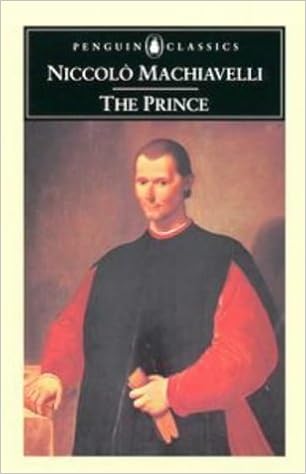
Niccolo Machiavelli’s The Prince (1532) is largely responsible for every departure from Puritan standards of business ethics; and should be looked upon with Biblical criticism. Most of the corrupt and deceptive practices that exist in governments and businesses today, can be linked with the “Machiavellian” principles laid down in this evil book. It was placed on the List of Prohibited Books by the Catholic Church. But I would allow for only one Machiavellian principle: and that is it may be permissible to righteously lie or at least withhold information from an enemy that would do a good man harm, as the prophet Elisha did to the Syrian army (2 Kings 6:19). In that case, God miraculously assisted him in his deception. Jesus echoed this view when he said, “I send you out as sheep in the midst of wolves. Therefore be wise as serpents and harmless as doves” (Matt. 10:16). But the Bible holds no place for manipulative slandering, or tale-bearing, or spreading false rumors with the intent of ruining a person’s reputation (Exod. 20:16).
Galie and Bopst, while trying to be fair to Machiavelli, admit that in his Discourses, he makes clear statements against what he called “corruption,” or bribing people to stay in line with the organization the leader is managing. Machiavelli would be against what we today would call white collar crime: falsifying financial information, insider trading, money laundering, investment fraud, embezzlement, stock market manipulation, etc. Things like this led to the Enron scandal. Machiavelli was apparently against things like that, but its likely the only reason he was against those things, is because white collar crime can tear down an organization. When it comes to the area of “soft skills,” Machiavelli encourages the darker side of human nature to find its expression, to play a strategic game of king of the hill at office politics, and come out on the top as the manager.
The Machiavellian businessman is all about playing the game of office politics, being keenly aware of forces like self-interest and internal competition within a company. The ambitious and self-serving mentality of looking out for number one. Adam Smith’s Wealth of Nations underscored self-interest and competition as national economic forces; its what he called the “invisible hand” that guides the economy. But long before Smith was born, Machiavelli had emphasized self-interest and competition as personal things to be dealt with, while in a leadership role. When his principles are applied to the business world, financial success would be the only goal, not building team morale or employee loyalty to the company. Christian ethics are actually viewed as obstacles to financial success, because worldly means need to be used to achieve worldly ends or goals. In this case, using gratuitous profanity, maintaining ungodly friendships, flirting with people at work regardless of their relationship status, etc. He doesn’t state these things literally, but they are a logical outgrowth of his thinking.
More closer to the chest is Machiavelli’s idea that the ends justify the means, whether they are ethically right or wrong. One business writer, Stanley Bing, titled his book What Would Machiavelli Do? The Ends Justify the Meanness (2000). The “meanness” being things like workplace bullying and manipulative behavior, which can put you at an advantage but at another person’s expense. Of course, this destroys team morale and makes employees have an “independent contractor attitude” (p. 246). “It is better to be feared than loved,” he says. This makes a business feel more like a street gang, or a dysfunctional family, than a professional environment.
Habitual lying is one of the more Machiavellian traits: or, lying that professionally benefits you and keeps you in control of your career goals. Its what people call “lying to get ahead.” CEOs, for example, can motivate employees by lying to them about pay raises. Certain employees can be singled out and told things to scare them away, like, “We’re probably going to have to start laying a lot of people off.” This so that certain undesirable employees will just quit on their own, so the manager doesn’t look like a bad guy for firing them. Often these can be very good productive employees that hold a lot of influence with people, but which may unintentionally pose a competitive career threat to the manager. The manager might actually feel threatened that this employee might be used to replace him, so he targets him and makes him feel uncomfortable, until he finally just leaves on his own. However, Machiavelli would probably more lean in the direction of telling half-truths and withholding information than he would of blatantly lying and creating fictional stories all the time. The one is more cunning, the other is easier to detect and publicly condemn. The key is to be underhanded and always look like a good guy to everybody else. In other words, be a total hypocrite.
Galie and Bopst say that the central message of Machiavelli’s book The Prince is that business leaders “should adopt a cynical and amoral view of the world, look out for themselves first, and let the ends justify the means” (p. 244); and the proper view of a Machiavellian person is one who believes in the “use of deception, cruelty, and ruthlessness to achieve one’s goals” (p. 245).
Posted in Uncategorized
Leave a comment
Review of Arthur Gish’s “Beyond the Rat Race”
Philanthropic Capitalism vs. Christian Communism
Philanthropic capitalism, I am convinced, is the economic perspective of Jesus, the Old Testament prophets, and the whole Bible. I am not the first person to coin the phrase “philanthropic capitalism,” but I will admit it is a very unusual expression. It is the view that capitalism can and should be used for philanthropy or giving to the poor; and if it is not so used, then it is a massive sin against God. It has been illustrated by Charles Dickens’ A Christmas Carol and various film versions of it, when Scrooge is born again and goes on a giving streak; and also, at the end of It’s a Wonderful Life, when Sam Wainwright, and all of George Bailey’s clients, bail him out for losing $8,000.

Art Gish says some really on point things in Beyond the Rat Race. I’m glad I took the time to read it, because he really thinks outside the box, from the way most Christians and just people in general think about business and money. I would say his strongest part in this book is chapter 4, titled, “So What’s Wrong With Being Rich?” where he really lays into some financial sins like strife, stinginess, oppression, compromise, selfishness, dishonesty, vanity, idolatry of possessions, insecurity of losing them, arrogance, authoritarianism, resentment, jealousy, and snobbery. I got turned on to this book several years ago while reading Wealth and Poverty: Four Christian Views of Economics edited by Robert Clouse. Art Gish stood out as the guy advocating a Christian communist point of view—pointing to people like the Anabaptists, the Bruderhof, and the Amish as holding to the true Christian economy. He takes this from Acts 4:32-35:
All the believers were one in heart and mind. No one claimed that any of their possessions was their own, but they shared everything they had. With great power the apostles continued to testify to the resurrection of the Lord Jesus. And God’s grace was so powerfully at work in them all that there were no needy persons among them. For from time to time those who owned land or houses sold them, brought the money from the sales and put it at the apostles’ feet, and it was distributed to anyone who had need.
Basically Gish says that Christians should live like this today: on group farms and within Christian communes. He says that Reba Place Fellowship in Evanston, Illinois had a “deep impact” on his life. Wikipedia says that they share “a common purse, where paychecks are pooled, and members are given monthly allowances.” So basically every family has the same amount of money—like in the Soviet Union—where everyone lives in poverty as a working-class proletariat, and only their basic needs are met, and there is no such thing as “keeping up with the Joneses,” no economic competition, only friendship. My natural reaction is to cry out “cult!” And probably that’s what it is, because in the end of his book around pages 143-144, when speaking about the authority structures of communes, supposedly 100% democratic, he feels he needs to mention that the old tyranny that exists out in the competitive world of capitalism, can come right into a commune if we’re not careful. He has to say this, that communes “are never immune from attacks” like this; and that “our approach does not include coercion.” TLC’s reality TV series Breaking Amish is clear for the reasons why people leave Amish communities. Usually it has to do with their unreasonable authoritarianism, lack of modern amenities, and their lack of personal freedoms.
So what about Acts 4:32-35? Do we just ignore it? Pretend that it isn’t there? No. It’s there, but let’s allow reason and church history to speak for a moment. We’ve already allowed the Radical Reformation speak their side: from the Anabaptists till the Amish, they interpret it as a perpetual economic model to follow. So what about the Catholics and all the other Protestants? Gary North, who is the Christian capitalist opponent of Gish in the Wealth and Poverty book, is probably the best person to consult for balance. He said, “The communism of the book of Acts has been the focus of heated debate for centuries…they were told to flee when the armies approached the city. Therefore, there was little reason to hold on to property, especially fixed property. In any case, communism was never suggested as a general practice for all Christian communities, as the orthodox wings of both Catholic and Protestant churches have assured us. Again, charity was required, not a system of communist production and distribution.”[1]
North points us back to what I’d like to call philanthropic capitalism: that our giving back to the poor is limited by what we can handle as individual Christian business people. It does not have to be, nor should it be, going to the extent of communal living. Mainly because communal living in Acts 4 was only an emergency measure that Christians were resorting to because they were living under persecution, like these people you read about in The Voice of the Martyrs magazine. We should not look judgmentally at persecuted Christians living in third world countries—they are just trying to survive; and if they have to temporarily resort to communal living just to survive, then we should bless them in that decision. But this was never the constant economic mentality of either the Old Testament (especially the book of Proverbs), Jesus in the Gospels, or the letters of Paul.
The Biblical economic mentality has most always been what Wesley said: “Gain all you can…Save all you can…Give all you can.”[2] And when you give, Jesus was emphatic that the poor are the ones that we should give to. I can think of no better place to begin philanthropic giving than the Society of St. Vincent de Paul. This Catholic organization, in my opinion, is the most efficient and best poverty alleviation organization in the world. My family has benefited from their food pantries more than once. They have a website you can donate to.[3] I believe they also sometimes help with rent and energy bill assistance. So does the United Methodist Church. Its division called UMCOR has a webpage where you can donate to their international efforts to relieve hunger and poverty emergencies.[4] If you want a chunk of your tax return—say at least 10% of it—to be given to the poor, and make sure that the poor will truly benefit from that donation, then I highly recommend giving to either of these organizations for that purpose. I truly believe that would please God.
But the rich, the middle class, and the poor—the class distinctions are supposed to remain: because God works through all of them. That’s philanthropic capitalism. There is no Christian communism in the whole Bible except in Acts 2:44-45 and 4:32-35, when it’s describing the early church living in fear of life-threatening persecution, when Christian men could not so easily engage in business, without being reported to the authorities, and their lives put at risk. Being that this was the situation for the 16th century Anabaptists, I can’t really blame them for resorting to communal living either. See the Christian movie The Radicals, which tells their story. Adam Clarke, the Methodist commentator, said, “The unbelieving Jews, who were mockers, Acts 2:13, would treat these new converts with the most marked disapprobation. That an absolute community of goods never obtained in the Church at Jerusalem, unless for a very short time, is evident from the apostolical precept, 1 Corinthians 16:1, collections were ordered to be made for the poor; but, if there had been a community of goods in the Church, there could have been no ground for such recommendations as these, as there could have been no such distinction as rich and poor, if every one, on entering the Church, gave up all his goods to a common stock.”[5]
Philanthropic Capitalism vs. Materialistic Capitalism
Jesus said, “Sell your possessions and give to the poor” (Luke 12:33). He’s saying get rid of the things you don’t need, turn them into cash, and give the cash to the Society of St. Vincent de Paul and UMCOR. He’s not saying get rid of everything and join an Amish commune—where everyone gets an allowance, lives in poverty, and without modern technology. Jesus’ expectation of His saying “give to the poor” implies that you are not poor: it implies that you are maybe in the lower middle class, the middle class, or among the rich. Although He did say, “It is hard for a rich man to enter the kingdom of Heaven” (Matt. 19:23). Mainly because, like the rich young ruler, it is human nature to become attached to your money and possessions—to become clingy to them, and not give the money away to the poor. Human nature drives the rich toward materialistic capitalism—the evil competitor of philanthropic capitalism. It is what Jesus was referring to when he spoke of the god Mammon, when He said, “No one can serve two masters. Either he will hate the one and love the other, or he will be devoted to the one and despise the other. You cannot serve both God and money” (Matt. 6:24). The Greek word for “money” in this verse is actually Mammon, the Syrian demon-god of riches.[6] It was what Paul was referring to when he said, “Put to death, therefore, whatever belongs to your earthly nature: sexual immorality, impurity, lust, evil desires and greed, which is idolatry” (Col. 3:5).
Greed is essentially removing the others-focused philanthropy from philanthropic capitalism; and instead replacing it with self-centered materialism: the meaning of which, according to Oxford Languages, is to “consider material possessions and physical comfort as more important than spiritual values.” This opposition to materialism is not only a New Testament value, but goes all the way back to the Tenth Commandment: “You shall not covet your neighbor’s house. You shall not covet your neighbor’s wife, or his manservant or maidservant, his ox or donkey, or anything that belongs to your neighbor” (Exod. 20:17). Capitalism is assumed in this commandment too, because the wealthy Jew is portrayed as having servants in his household, like in Ben-Hur. The distinction between the rich and the poor even exists in the Ten Commandments, but restraint is attached to it. People are commanded not to covet, which definitely goes against human nature; and they are commanded to restrain themselves from materialism, jealousy of others’ riches, etc. Because they are meant to all be brothers in the same religious community.
Mammon, the demon of riches, would seek to destroy all such camaraderie by tempting Christian businessmen into materialistic capitalism, financial competition, greed, and financial jealousy. Sadly, it seems that the majority of men in the United States, England, and other Western countries are actually serving Mammon instead of Jesus. This usually happens in the first 5 years of their involvement in the business world. Some of them had such high Christian ideals in school, prior to their involvement in business, but now they see how things really are; and their perspectives change, and they become more like Scrooge and less like Cratchit. Philanthropic ideas start to fade away as they consider all the other financial responsibilities that they have, like rent, mortgage payments, cars, insurance, retirement planning, college funds, electric bills, debts, savings, investments, groceries, vacations, etc. Matthew 13:22: “The one who received the seed that fell among the thorns is the man who hears the word, but the worries of this life and the deceitfulness of wealth choke it, making it unfruitful.”
Giving to the poor in Jesus’ name becomes less and less of a priority on the Christian’s financial pie chart; and as this happens, he becomes less and less of a Christian, and ends up retaining merely a “form of godliness, but denying its power” (2 Tim. 3:5). He may continue to take his family to church, but being the deeply ingrained man of business that he now is, his heart has now been successfully hardened against all of Christianity’s spiritual realities, powers, and revelations. He is cut off from the Holy Spirit. Nothing paranormal, mystical, or supernatural ever happens to him because God knows he’d never take such things seriously. He does not live by faith in God and His providence, but in his business abilities alone. He is a man of BUSINESS now and that is all that is real to him. He is merely going to church, going through the motions, and truly idolizing his business activity at this point. His true god is his business, his job, his company, his employer, his resume, his bank account. That is the true god that he fears. He is a Mammon worshiper although he doesn’t know it. He would agree in principle with what Gordon Gekko said in Wall Street (1987):
Greed, for lack of a better word, is good; greed is right; greed works; greed clarifies, cuts through, and captures the essence of the evolutionary spirit; greed in all of its forms–greed for life, for money, for love, knowledge, has marked the upward surge of mankind; and greed–you mark my words–will not only save Telgar Paper, but that other malfunctioning corporation called the USA.
The rich man called Dives lived in luxury every day; and refused to give to the godly beggar Lazarus, who laid outside of his gate. They both died and the rich man ended up burning in Hell, because he was worshipping Mammon—materialistic capitalism—and had abandoned all notions of philanthropy to the poor (Luke 16:19-31). “Lazy bum, get a job,” was probably his default thought every time he saw that beggar. But on closer inspection he might have noticed that Lazarus was covered with sores; and probably disabled, and was unable to work most jobs requiring physical labor; and even if he could work some other kind of job, he was probably in need of some compassionate businessman to guide him to that job prospect. Laziness is not the only cause of poverty. Ignorance—or lack of business guidance—is sometimes just as strong an influence. Capitalists, with all their knowledge of business, could easily help and guide the poor in these matters, but they are often too scared to have their pockets picked, so they ignore poor people; and refuse to help them monetarily, or with job leads, or in any way at all. Racism against minority groups might also be a barrier to this. This provokes the wrath of God, mind you, to the point of Hell-fire! Mammon, the god of materialistic capitalism, will end you up in Hell if you live by his principles. He is but a trickster, a Leprechaun, promising you great things, but ends up deceiving you into the worst place imaginable. And isn’t that just like most businessmen and the way they conduct themselves? Through “lying to get ahead,” in so many matters: to their employers, their employees, and their customers? They are obviously children of Mammon. Yet another example of “the deceitfulness of wealth” (Matt. 13:22). “The love of money is a root of all kinds of evil. Some people, eager for money, have wandered from the faith and pierced themselves with many griefs” (1 Tim. 6:10).
So what should we do? Should we become Christian communists, like the Amish and Old Order Mennonites, like Art Gish is talking about in Beyond the Rat Race? No. I think that is an extreme overreaction to materialistic capitalism. It’s only to swing the pendulum in the extreme opposite direction. Thinking that way is a start, but it’s not the final Biblical answer. I wouldn’t necessarily blame a man who at least experimented with the Amish or other Christian communes, simply because he saw the Spirit of Mammon for what it was, and was trying to run away from it; or cast it out of his heart. But the economic point of view held by God, in both the Old and New Testaments, is clearly philanthropic capitalism. We are not meant to completely run away from the business world, but still need it to make our money. But when we go to calculate our personal financial pie charts, we need to prayerfully consider every year, and I would say, in every approaching tax return season, what percentage we should give to a Christian charity that is known for dispensing money and food to the poor.
Other Biblical Economic Principles That I Got From This Study
1. Telecommuting. It removes most of the office politics, egocentric competition, and sexual seduction that office work does; and it also helps you save on gas money. Worldliness and profanity can also be more avoided.
2. Simplicity. If you seek to live with the bare necessities, then you will be liberated from the dissatisfaction of materialism. But the St. Francis of Assisi level of poverty does not work well for heads of households and providers of families. Think more like Wesley and less like St. Francis in this regard.
3. Morale. Comedy, music, and friends are necessary to having a fulfilling life–so don’t spoil that with materialism.
4. Tax Returns. If you’re going to make a big purchase like a car, house, or lot: then you can chip away at those things by using your tax returns. Go to H&R Block and pay your taxes (Matt. 22:21); and when you get your tax return, divide it Biblically. Put some in an interest-bearing bank account (Matt. 25:27), a Vanguard Target Retirement Fund, a used car, land, saving for building a home, college, philanthropy (Deut. 15; Prov. 10; 29), etc.
5. Providence. It would be good to have plaques of the Ten Commandments and Deuteronomy 8:11-17 by your home office desk, so you can remember to honor God with your increase. God rewards prosperity to the godly for holy living and for thanking Him for His providence. Money that is ill-gotten will be cursed (see also Deut. 28). If it can be avoided, do not work on Sunday, but honor the Sabbath day, because it is a way of remembering and acknowledging God for business successes during the week; and not attributing everything to the work of your own hands (Exod. 20:8-11). Just don’t mix business activity with church, like the moneychangers did (Matt. 21:12).
6. Diligence and Frugality Generate Money. “The hands of the diligent and frugal are the only hands which make a nation rich,” said Josiah Tucker. Quoted by Wesley. Proverbs 10:4 (KJV): “The hand of the diligent maketh rich.” Diligent means hard working and productive.
7. Job’s Later Life. Job 42:12: “The Lord blessed the latter part of Job’s life more than the former part.”
8. Thrift Stores. It is a mark of frugality to shop at Goodwill, the Salvation Army, thrift stores, and Facebook Marketplace.
9. Butlers and Maids. Although the Tenth Commandment allows for butlers and maids, I would caution against any racial bigotry, condescension, oppression, or snobbery in this area.
10. Private Property. Micah 4:4: “Everyone will sit under their own vine and under their own fig tree, and no one will make them afraid,” that is, no banker or landlord can make a tenant afraid of homelessness through an eviction notice or foreclosure, if a man owns his own land and private property. Guns should primarily be used to protect the lives of our family members, not our property. But background checks should be done to check not only on employees but also on employers, to make sure that your address does not fall into the hands of criminals.
11. Lower End of the Middle Class. $65,000 a year, as of 2020, is a good financial goal, and earning limit, and puts you comfortably in the lower end of the middle class: it is enough to save, invest, and do philanthropy without things getting luxurious: “Give me neither poverty nor riches” (Proverbs 30:8). Suppose your income increases to $150k a year. I can see no reason for a luxury home at that point. God would then require more philanthropy from you. Luke 12:48: “Unto whomsoever much is given, of him shall be much required.” Psalm 62:10: “Though your riches increase, do not set your heart on them.” Proverbs 13:7: “One person pretends to be rich, yet has nothing; another pretends to be poor, yet has great wealth.”
12. Christian Business Networking. Network with Christian business owners: pull emails from Christian business directories with scraping software like EmailClik.com, from LinkedIn: make Excel databases: and when necessary, email blast 2500 of them with an SMTP service. It’s always good to have passive job connections to provide yourself with back-up plans for financial security. It is not good to worry, because it distracts us from faith, love, peace, and enjoying our lives.
—
[1] Gary North, An Introduction to Christian Economics (Nutley, NJ: The Craig Press, 1973), ch. 18: “An Outline of Biblical Economic Thought,” pp. 222-223.
[2] John Wesley, “The Use of Money,” 1.1, 2.1, 3.1.
[3] https://interland3.donorperfect.net/weblink/weblink.aspx?name=E135450&id=21
[4] https://advance.umcmission.org/p-661-world-hunger-and-poverty.aspx
[5] Adam Clarke, The Adam Clarke Commentary, “Acts 2:44.”
[6] There is some scholarly debate about whether Mammon was an actual demonic entity or god worshipped by the Syrians. As of today, there seems to be no archaeological evidence of the worship of such a deity in Syria. Early church fathers and Bible commentators, such as Gregory of Nyssa, Peter Lombard, the Piers Plowman, and Nicholas de Lyra all believed that Mammon was a demon or a god worshipped by the Syrians. It may be possible that these early medieval scholars had access to documents suggesting that, but which are no longer available. The same could be said about many ideas that come from the ancient world. In any case the word “mammon” is used by Jesus in Aramaic and here it simply means “riches,” which is to say that you cannot serve God and at the same time wholeheartedly devote yourself to riches. There comes a point when philanthropy to the poor needs to come in; and even things out for you spiritually.
Posted in Uncategorized
Leave a comment
Psalm 67
Verse 1
E D A D-A O Em 1p 4p
May God be merciful unto us and bless us
E D A D-A O Em 1p 4p
And cause His face to shine upon us———selah
E D A D——A O Em 1p 4p
That His way may be known upon all of the earth
E D A D-A O Em1p4p
His saving health among all of the nations
Chorus
4p Em 1p 4p 4p 4p
Let the people praise you, O God!
4p Em 1p 4p 4p 4p
All the people praise you, O God!
Verse 2
E D A D-A O Em 1p 4p
O let the nations be glad and sing for joy
E D A D-A O Em 1p 4p
For thou shalt judge the people righteously
E D A D-A O Em 1p 4p
And govern the nations upon earth———selah
E D A D-A O Em 1p 4p
Then shall the earth yield all of her increase
Chorus
Posted in Uncategorized
Leave a comment