
-
-

-
LATEST POSTS
RECENT VIEWS
- Pornography: The Biggest Problem Threatening Our Children Today - Lila Rose with Kristen Jenson
- Divorce Prone Pastors: Let’s Not Repeat Charles Stanley’s Marriage
- What God Thinks About Pride Month
- Salvation from Hell for Catholics and Protestants
- Conditional Security: What the Bible Says About It
- Man In Life-Threatening Situation Has Church Pray for His Recovery - The 700 Club
- John Wesley’s Evangelistic Forerunners: The Puritans
- A Young Lady Gets Genuinely Born Again of the Holy Spirit After Leaving the Jehovah’s Witness Cult - Taleah Hall
- Dr. Azzacov’s Screams of the Damned - Coast to Coast AM
- The Eternity of Hell-Torments - George Whitefield
MONTHLY ARCHIVES
- June 2026 (38)
- May 2026 (100)
- April 2026 (108)
- March 2026 (119)
- February 2026 (113)
- January 2026 (201)
- December 2025 (229)
- November 2025 (258)
- October 2025 (160)
- September 2025 (114)
- August 2025 (96)
- July 2025 (93)
- June 2025 (71)
- May 2025 (82)
- April 2025 (137)
- March 2025 (140)
- February 2025 (117)
- January 2025 (130)
- December 2024 (87)
- November 2024 (130)
- October 2024 (125)
- September 2024 (76)
- August 2024 (79)
- July 2024 (101)
- June 2024 (92)
- May 2024 (58)
- April 2024 (54)
- March 2024 (34)
- February 2024 (95)
- January 2024 (61)
- December 2023 (6)
- November 2023 (35)
- October 2023 (24)
- September 2023 (18)
- August 2023 (13)
- July 2023 (11)
- June 2023 (15)
- May 2023 (22)
- April 2023 (14)
- March 2023 (6)
- February 2023 (6)
- January 2023 (11)
- December 2022 (14)
- November 2022 (15)
- October 2022 (10)
- September 2022 (1)
- August 2022 (3)
- July 2022 (2)
- June 2022 (1)
- May 2022 (3)
- April 2022 (7)
- March 2022 (6)
- February 2022 (2)
- January 2022 (4)
- December 2021 (7)
- November 2021 (5)
- September 2021 (1)
- August 2021 (1)
- July 2021 (3)
- June 2021 (1)
- May 2021 (2)
- March 2021 (3)
- February 2021 (2)
- December 2020 (1)
- October 2020 (1)
- November 2019 (1)
- October 2019 (2)
- September 2019 (1)
- August 2019 (1)
- July 2019 (7)
- June 2019 (4)
- May 2019 (4)
- April 2019 (18)
- March 2019 (7)
- February 2019 (4)
- January 2019 (6)
- December 2018 (3)
- November 2018 (2)
- October 2018 (4)
- September 2018 (5)
- August 2018 (3)
- July 2018 (2)
- June 2018 (1)
- May 2018 (3)
- April 2018 (8)
- January 2018 (2)
- December 2017 (5)
- November 2017 (1)
- October 2017 (8)
- September 2017 (4)
- August 2017 (6)
- July 2017 (6)
- June 2017 (6)
- May 2017 (10)
- April 2017 (20)
- March 2017 (15)
- February 2017 (10)
- January 2017 (10)
- December 2016 (8)
- November 2016 (10)
- October 2016 (22)
- September 2016 (15)
- August 2016 (5)
- July 2016 (8)
- June 2016 (3)
- May 2016 (7)
- April 2016 (4)
- March 2016 (10)
- February 2016 (3)
- January 2016 (9)
- December 2015 (8)
- November 2015 (9)
- October 2015 (7)
- September 2015 (4)
- August 2015 (13)
- July 2015 (9)
- June 2015 (2)
- May 2015 (6)
- April 2015 (38)
- March 2015 (28)
- February 2015 (28)
- January 2015 (28)
- December 2014 (19)
- November 2014 (15)
- October 2014 (5)
- September 2014 (9)
- August 2014 (17)
- July 2014 (30)
- June 2014 (16)
- May 2014 (17)
- April 2014 (17)
- March 2014 (6)
- February 2014 (8)
- January 2014 (8)
- December 2013 (2)
- November 2013 (2)
- October 2013 (3)
- September 2013 (2)
- August 2013 (2)
- July 2013 (1)
- June 2013 (2)
- May 2013 (7)
- April 2013 (8)
- March 2013 (6)
- February 2013 (3)
- January 2013 (6)
- December 2012 (2)
- November 2012 (2)
- October 2012 (4)
- September 2012 (6)
- August 2012 (4)
- July 2012 (7)
- June 2012 (1)
- May 2012 (3)
- April 2012 (5)
- March 2012 (2)
- February 2012 (3)
- January 2012 (1)
- December 2011 (5)
- November 2011 (4)
- October 2011 (10)
- September 2011 (2)
- August 2011 (3)
- July 2011 (2)
- June 2011 (4)
- May 2011 (4)
- April 2011 (4)
- March 2011 (6)
- February 2011 (4)
- January 2011 (1)
- December 2010 (6)
- November 2010 (5)
- October 2010 (9)
- September 2010 (3)
-
HELL VIDEO & HELL SERMON: The Eternity of Hell’s Torments – Jonathan Edwards
Originally from here.
—
“These shall go away into everlasting punishment.” — Matthew 25:46
Subject: The misery of the wicked in hell will be absolutely eternal.
In this chapter we have the most particular description of the day of judgment, of any in the whole Bible. Christ here declares that when he shall hereafter sit on the throne of his glory, the righteous and the wicked shall be set before him, and separated one from the other, as a shepherd divides his sheep from the goats. Then we have an account how both will be judged according to their works: how the good works of the one and the evil works of the other will be rehearsed, and how the sentence shall be pronounced accordingly. We are told what the sentence will be on each, and then we have an account of the execution of the sentence on both. In the words of the text is the account of the execution of the sentence on the wicked or the ungodly, concerning which, it is to my purpose to observe two things.
I. The duration of the punishment on which they are here said to enter: it is called everlasting punishment.
II. The time of their entrance on this everlasting punishment, viz. after the day of judgment, when all these things that are of a temporary continuance shall have come to an end and even those of them that are most lasting — the frame of the world itself, the earth which is said to abide forever, the ancient mountains and everlasting hills, [and] the sun, moon, and stars. When the heavens shall have waxed old like a garment and as a vesture shall be changed, then shall be the time when the wicked shall enter on their punishment.
Doctrine. — The misery of the wicked in hell will be absolutely eternal.
There are two opinions which I mean to oppose in this doctrine. One is that the eternal death with which wicked men are threatened in Scripture, signifies no more than eternal annihilation: that God will punish their wickedness by eternally abolishing their being.
The other opinion which I mean to oppose is that though the punishment of the wicked shall consist in sensible misery, yet it shall not be absolutely eternal, but only of a very long continuance.
Therefore, to establish the doctrine in opposition to these different opinions, I shall undertake to show,
I. That it is not contrary to the divine perfections to inflict on wicked men a punishment that is absolutely eternal.
II. That the eternal death which God threatens is not annihilation, but an abiding sensible punishment or misery.
III. That this misery will not only continue for a very long time, but will be absolutely without end.
IV. That various good ends will be obtained by the eternal punishment of the wicked.
I. I am to show that it is not contrary to the divine perfections to inflict on wicked men a punishment that is absolutely eternal.
This is the sum of the objections usually made against this doctrine: that it is inconsistent with the justice, and especially with the mercy, of God. And some say [that] if it be strictly just, yet how can we suppose that a merciful God can bear eternally to torment his creatures.
First, I shall briefly show that it is not inconsistent with the justice of God to inflict an eternal punishment. To evince this, I shall use only one argument, viz. that sin is heinous enough to deserve such a punishment, and such a punishment is no more than proportionable to the evil or demerit of sin. If the evil of sin be infinite, as the punishment is, then it is manifest that the punishment is no more than proportionable to the sin punished, and is no more than sin deserves. And if the obligation to love, honor, and obey God be infinite, then sin which is the violation of this obligation, is a violation of infinite obligation, and so is an infinite evil. Again, if God be infinitely worthy of love, honor, and obedience, then our obligation to love, and honor, and obey him is infinitely great. — So that God being infinitely glorious, or infinitely worthy of our love, honor, and obedience, our obligation to love, honor, and obey him (and so to avoid all sin) is infinitely great. Again, our obligation to love, honor, and obey God being infinitely great, sin is the violation of infinite obligation, and so is an infinite evil. Once more, sin being an infinite evil, deserves an infinite punishment. An infinite punishment is no more than it deserves. Therefore such punishment is just, which was the thing to be proved. There is no evading the force of this reasoning, but by denying that God, the sovereign of the universe, is infinitely glorious, which I presume none of my hearers will venture to do.
Second, I am to show that it is not inconsistent with the mercy of God, to inflict an eternal punishment on wicked men. It is an unreasonable and unscriptural notion of the mercy of God, that he is merciful in such a sense that he cannot bear that penal justice should be executed. This is to conceive of the mercy of God as a passion to which his nature is so subject that God is liable to be moved, and affected, and overcome by seeing a creature in misery, so that he cannot bear to see justice executed: which is a most unworthy and absurd notion of the mercy of God, and would, if true, argue great weakness. — It would be a great defect, and not a perfection, in the sovereign and supreme Judge of the world, to be merciful in such a sense that he could not bear to have penal justice executed. It is a very unscriptural notion of the mercy of God. The Scriptures everywhere represent the mercy of God as free and sovereign, and not that the exercises of it are necessary, so that God cannot bear justice should take place. The Scriptures abundantly speak of it as the glory of the divine attribute of mercy, that it is free and sovereign in its exercises, and not that God cannot but deliver sinners from misery. This is a mean and most unworthy idea of the divine mercy.
It is most absurd also as it is contrary to plain fact. For if there be any meaning in the objection, this is supposed in it, that all misery of the creature, whether just or unjust, is in itself contrary to the nature of God. For if his mercy be of such a nature that a very great degree of misery, though just, is contrary to his nature, then it is only to add to the mercy. And then a less degree of misery is contrary to his nature (again to add further to it), and a still less degree of misery is contrary to his nature. And so the mercy of God being infinite, all misery must be contrary to his nature, which we see to be contrary to fact. For we see that God in his providence, does indeed inflict very great calamities on mankind even in this life.
However strong such kind of objections against the eternal misery of the wicked, may seem to the carnal, senseless hearts of men, as though it were against God’s justice and mercy, yet their seeming strength arises from a want of sense of the infinite evil, odiousness, and provocation there is in sin. Hence it seems to us not suitable that any poor creature should be the subject of such misery, because we have no sense of anything abominable and provoking in any creature answerable to it. If we had, then this infinite calamity would not seem unsuitable. For one thing would but appear answerable and proportionable to another, and so the mind would rest in it as fit and suitable, and no more than what is proper to be ordered by the just, holy, and good Governor of the world.
That this is so, we may be convinced by this consideration, viz. that when we hear or read of some horrid instances of cruelty, it may be to some poor innocent child or some holy martyr — and their cruel persecutors, having no regard to their shrieks and cries, only sported themselves with their misery, and would not vouchsafe even to put an end to their lives — we have a sense of the evil of them, and they make a deep impression on our minds. Hence it seems just, every way fit and suitable, that God should inflict a very terrible punishment on persons who have perpetrated such wickedness. It seems no way disagreeable to any perfection of the Judge of the world. We can think of it without being at all shocked. The reason is that we have a sense of the evil of their conduct, and a sense of the proportion there is between the evil or demerit and the punishment.
Just so, if we saw a proportion between the evil of sin and eternal punishment, i.e. if we saw something in wicked men that should appear as hateful to us, as eternal misery appears dreadful (something that should as much stir up indignation and detestation, as eternal misery does terror), all objections against this doctrine would vanish at once. Though now it seem incredible, [and] though when we hear of such a degree and duration of torments as are held forth in this doctrine and think what eternity is, it is ready to seem impossible that such torments should be inflicted on poor feeble creatures by a Creator of infinite mercy. Yet this arises principally from these two causes: 1. It is so contrary to the depraved inclinations of mankind, that they hate to believe it and cannot bear it should be true. 2. They see not the suitableness of eternal punishment to the evil of sin. They see not that it is no more than proportionable to the demerit of sin.
Having thus shown that the eternal punishment of the wicked is not inconsistent with the divine perfections, I shall now proceed to show that it is so far from being inconsistent with the divine perfections, that those perfections evidently require it; i.e. they require that sin should have so great a punishment, either in the person who has committed it, or in a surety. And therefore with respect to those who believe not in a surety, and have no interest in him, the divine perfections require that this punishment should be inflicted on them.
This appears as it is not only not unsuitable that sin should be thus punished, but it is positively suitable, decent, and proper. — If this be made to appear, that it is positively suitable that sin should be thus punished, then it will follow that the perfections of God require it. For certainly the perfections of God require what is proper to be done. The perfection and excellency of God require that to take place which is perfect, excellent, and proper in its own nature. But that sin should be punished eternally is such a thing, which appears by the following considerations.
1. It is suitable that God should infinitely hate sin, and be an infinite enemy to it. Sin, as I have before shown, is an infinite evil, and therefore is infinitely odious and detestable. It is proper that God should hate every evil, and hate it according to its odious and detestable nature. And sin being infinitely evil and odious, it is proper that God should hate it infinitely.
2. If infinite hatred of sin be suitable to the divine character, then the expressions of such hatred are also suitable to this character. Because that which is suitable to be, is suitable to be expressed. That which is lovely in itself, is lovely when it appears. If it be suitable that God should be an infinite enemy to sin, or that he should hate it infinitely, then it is suitable that he should act as such an enemy. If it be suitable that he should hate and have enmity against sin, then it is suitable for him to express that hatred and enmity in that to which hatred and enmity by its own nature tends. But certainly hatred in its own nature tends to opposition, and to set itself against that which is hated, and to procure its evil and not its good, and that in proportion to the hatred. Great hatred naturally tends to the great evil, and infinite hatred to the infinite evil, of its object.
Whence it follows that if it be suitable that there should be infinite hatred of sin in God, as I have shown it is, it is suitable that he should execute an infinite punishment on it. And so the perfections of God require that he should punish sin with an infinite, or which is the same thing with an eternal, punishment.
Thus we see not only the great objection against this doctrine answered, but the truth of the doctrine established by reason. I now proceed further to establish it by considering the remaining particulars under the doctrine.
II. That eternal death or punishment which God threatens to the wicked, is not annihilation, but an abiding sensible punishment or misery. — The truth of this proposition will appear by the following particulars.
First, the Scripture everywhere represents the punishment of the wicked, as implying very extreme pains and sufferings. But a state of annihilation is no state of suffering at all. Persons annihilated have no sense or feeling of pain or pleasure, and much less do they feel that punishment which carries in it an extreme pain or suffering. They no more suffer to eternity than they did suffer from eternity.
Second, it is agreeable both to Scripture and reason to suppose that the wicked shall be punished in such a manner that they shall be sensible of the punishment they are under: that they should be sensible that now God has executed and fulfilled what he threatened, what they disregarded and would not believe. They should know themselves that justice takes place upon them, that God vindicates that majesty which they despised, [and] that God is not so despicable a being as they thought him to be. They should be sensible for what they are punished, while they are under the threatened punishment. It is reasonable that they should be sensible of their own guilt, and should remember their former opportunities and obligations, and should see their own folly and God’s justice. — If the punishment threatened be eternal annihilation, they will never know that it is inflicted. They will never know that God is just in their punishment, or that they have their deserts. And how is this agreeable to the Scriptures, in which God threatens, that he will repay the wicked to his face, Deu. 7:10. And to that in Job 21:19, 20, “God rewardeth him, and he shall know it; his eyes shall see his destruction, and he shall drink of the wrath of the Almighty.” And to that in Eze. 22:21, 22, “Yea, I will gather you, and blow upon you in the fire of my wrath, and ye shall be melted in the midst thereof. As silver is melted in the midst of the furnace, so shall ye be melted in the midst thereof; and ye shall know that I the Lord have poured out my fury upon you.” — And how is it agreeable to that expression so often annexed to the threatenings of God’s wrath against wicked men, And ye shall know that I am the Lord?
Third, the Scripture teaches that the wicked will suffer different degrees of torment, according to the different aggravations of their sins. Mat. 5:22, “Whosoever is angry with his brother without a cause, shall be in danger of the judgment: and whosoever shall say to his brother, Raca, shall be in danger of the council: but whosoever shall say, Thou fool, shall be in danger of hell-fire.” Here Christ teaches us that the torments of wicked men will be different in different persons, according to the different degrees of their guilt. — It shall be more tolerable for Sodom and Gomorrah, for Tyre and Sidon, than for the cities where most of Christ’s mighty works were wrought. — Again, our Lord assures us that he that knows his Lord’s will, and prepares not himself, nor does according to his will, shall be beaten with many stripes. But he that knows not, and commits things worthy of stripes, shall be beaten with few stripes. — These several passages of Scripture infallibly prove that there will be different degrees of punishment in hell, which is utterly inconsistent with the supposition that the punishment consists in annihilation, in which there can be no degrees.
Fourth, the Scriptures are very express and abundant in this matter: that the eternal punishment of the wicked will consist in sensible misery and torment, and not in annihilation. — What is said of Judas is worthy to be observed here, “It had been good for that man if he had not been born;” Mat. 26:24. — This seems plainly to teach us, that the punishment of the wicked is such that their existence, upon the whole, is worse than non-existence. But if their punishment consists merely in annihilation, this is not true. — The wicked, in their punishment, are said to weep, and wail, and gnash their teeth; which implies not only real existence, but life, knowledge, and activity, and that they are in a very sensible and exquisite manner affected with their punishment, Isa. 33:14. Sinners in the state of their punishment are represented to dwell with everlasting burnings. But if they are only turned into nothing, where is the foundation for this representation? It is absurd to say that sinners will dwell with annihilation, for there is no dwelling in the case. It is also absurd to call annihilation a burning, which implies a state of existence, sensibility, and extreme pain: whereas in annihilation there is neither.
It is said that they shall be cast into a lake of fire and brimstone. How can this expression with any propriety be understood to mean a state of annihilation? Yea, they are expressly said to have no rest day nor night, but to be tormented with fire and brimstone forever and ever, Rev. 20:10. But annihilation is a state of rest, a state in which not the least torment can possibly be suffered. The rich man in hell lifted up his eyes being in torment, and saw Abraham afar off, and Lazarus in his bosom, and entered into a particular conversation with Abraham: all which proves that he was not annihilated.
The spirits of ungodly men before the resurrection are not in a state of annihilation, but in a state of misery. They are spirits in prison, as the apostle says of them that were drowned in the flood, 1 Pet. 3:19. — And this appears very plainly from the instance of the rich man before mentioned, if we consider him as representing the wicked in their separate state between death and the resurrection. But if the wicked even then are in a state of torment, much more will they be, when they shall come to suffer that which is the proper punishment of their sins.
Annihilation is not so great a calamity but that some men have undoubtedly chosen it, rather than a state of suffering even in this life. This was the case of Job, a good man. But if a good man in this world may suffer that which is worse than annihilation, doubtless the proper punishment of the wicked, in which God means to manifest his peculiar abhorrence of their wickedness, will be a calamity vastly greater still, and therefore cannot be annihilation. That must be a very mean contemptible testimony of God’s wrath towards those who have rebelled against his crown and dignity — broken his laws, and despised both his vengeance and his grace — which is not so great a calamity as some of his true children have suffered in life.
The eternal punishment of the wicked is said to be the second death, as Rev. 20:14, and 21:8. It is doubtless called the second death in reference to the death of the body, and as the death of the body is ordinarily attended with great pain and distress, so the like, or something vastly greater, is implied in calling the eternal punishment of the wicked the second death. And there would be no propriety in calling it so, if it consisted merely in annihilation. And this second death wicked men will suffer, for it cannot be called the second death with respect to any other than men. It cannot be called so with respect to devils, as they die no temporal death, which is the first death. In Rev. 2:11, it is said, “He that overcometh, shall not be hurt of the second death;” implying that all who do not overcome their lusts, but live in sin, shall suffer the second death.
Again, wicked men will suffer the same kind of death with the devils; as in verse 41 of the context, “Depart, ye cursed, into everlasting fire, prepared for the devil and his angels.” Now the punishment of the devil is not annihilation, but torment. He therefore trembles for fear of it. not for fear of being annihilated — he would be glad of that. Where he is afraid of is torment, as appears by Luke 8:28, where he cries out and beseeches Christ that he would not torment him before the time. And it is said, Rev. 20:10, “The devil that deceived them was cast into the lake of fire and brimstone, where the beast and the false prophet are, and shall be tormented day and night, for ever and ever.”
It is strange how men will go directly against so plain and full revelations of Scripture, as to suppose notwithstanding all these things, that the eternal punishment threatened against the wicked signifies no more than annihilation.
III. As the future punishment of the wicked consists in sensible misery, so it shall not only continue for a very long time, but shall be absolutely without end.
Of those who have held that the torments of hell are not absolutely eternal, there have been two sorts. Some suppose that in the threatenings of everlasting punishment, the terms used do not necessarily import a proper eternity, but only a very long duration. Others suppose that if they do import a proper eternity, yet we cannot necessarily conclude thence, that God will fulfill his threatenings. — Therefore I shall,
First, show that the threatenings of eternal punishment do very plainly and fully import a proper, absolute eternity, and not merely a long duration. — This appears,
1. Because when the Scripture speaks of the wicked being sentenced to their punishment at the time when all temporal things are come to an end, it then speaks of it as everlasting, as in the text, and elsewhere. It is true that the term forever is not always in Scripture used to signify eternity. Sometimes it means “as long as a man lives.” In this sense it is said that the Hebrew servant, who chose to abide with his master, should have his ear bored and should serve his master forever. Sometimes it means “during the continuance of the state and church of the Jews.” In this sense, several laws, which were peculiar to that church and were to continue in force no longer than that church should last, are called statutes forever. See Exo. 27:21, 28:43, etc. Sometimes it means as long as the world stands. So in Ecc. 1:4, “One generation passeth away, and another generation cometh, but the earth abideth for ever.”
And this last is the longest temporal duration that such a term is ever used to signify. For the duration of the world is the longest of things temporal, as its beginning was the earliest. Therefore when the Scripture speaks of things as being before the foundation of the world, it means that they existed before the beginning of time. So those things which continue after the end of the world, are eternal things. When heaven and earth are shaken and removed, those things that remain will be what cannot be shaken, but will remain forever, Heb. 12:26-27.
But the punishment of the wicked will not only remain after the end of the world, but is called everlasting, as in the text, “These shall go away into everlasting punishment.” So in 2 Thes. 1:9-10, “Who shall be punished with everlasting destruction from the presence of the Lord, and from the glory of his power; when he shall come to be glorified in his saints,” etc. — Now, what can be meant by a thing being everlasting, after all temporal things are come to an end, but that it is absolutely without end!
2. Such expressions are used to set forth the duration of the punishment of the wicked, as are never used in the scriptures of the New Testament to signify anything but a proper eternity. It is said, not only that the punishment shall be forever, but for ever and ever. Rev. 14:11, “The smoke of their torment ascendeth up for ever and ever.” Rev. 20:10, “Shall be tormented day and night, for ever and ever.” Doubtless the New Testament has some expression to signify a proper eternity, of which it has so often occasion to speak. But it has no higher expression than this: if this do not signify an absolute eternity, there is none that does.
3. The Scripture uses the same way of speaking to set forth the eternity of punishment and the eternity of happiness, yea, the eternity of God himself. Mat. 25:46, “These shall go away into everlasting punishment: but the righteous into life eternal.” The words everlasting and eternal, in the original, are the very same. Rev. 22:5, “And they (the saints) shall reign for ever and ever.” And the Scripture has no higher expression to signify the eternity of God himself, than that of his being for ever and ever, as Rev. 4:9, “To him who sat on the throne, who liveth for ever and ever;” and in the 10th verse, and in Rev. 5:14; 10:6, and 15:7.
Again, the Scripture expresses God’s eternity by this: that it shall be forever, after the world is come to an end, Psa. 102:26-27, “They shall perish, but thou shalt endure: yea, all of them shall wax old like a garment; as a vesture shalt thou change them, and they shall be changed. But thou art the same, and thy years shall have no end.”
4. The Scripture says that wicked men shall not be delivered till they have paid the uttermost farthing of their debt, Mat. 5:26. The last mite, Luke 12:59, i.e. the utmost that is deserved, and all mercy is excluded by this expression. But we have shown that they deserve an infinite, an endless punishment.
5. The Scripture says absolutely that their punishment shall not have an end, Mark 9:44, “Where their worm dieth not, and the fire is not quenched.” Now it will not do to say that the meaning is [that] their worm shall live a great while, or that it shall be a great while before their fire is quenched. If ever the time comes that their worm shall die, if ever there shall be a quenching of the fire at all, then it is not true that their worm dieth not and that the fire is not quenched. For if there be a dying of the worm and a quenching of the fire, let it be at what time it will, nearer or further off, it is equally contrary to such a negation — it dieth not, it is not quenched.
Second, there are others who allow that the expression of the threatenings do denote a proper eternity. But then, they say, it does not certainly follow that the punishment will really be eternal, because God may threaten, and yet not fulfill his threatenings. Though they allow that the threatenings are positive and peremptory, without any reserve, yet they say [that] God is not obliged to fulfill absolute positive threatenings, as he is absolute promises. Because in promises a right is conveyed that the creature to whom the promises are made will claim. But there is no danger of the creature’s claiming any right by a threatening. Therefore I am now to show that what God has positively declared in this matter, does indeed make it certain that it shall be as he has declared. To this end, I shall mention two things:
1. It is evidently contrary to the divine truth, positively to declare anything to be real, whether past, present, or to come, which God at the same time knows is not so. Absolutely threatening that anything shall be, is the same as absolutely declaring that it is to be. For any to suppose that God absolutely declares that anything will be, which be at the same time knows will not be, is blasphemy, if there be any such thing as blasphemy.
Indeed, it is very true that there is no obligation on God, arising from the claim of the creature, as there is in promises. They seem to reckon the wrong way, who suppose the necessity of the execution of the threatening to arise from a proper obligation on God to the creature to execute consequent on his threatening. For indeed the certainty of the execution arises the other way, viz. on the obligation there was on the omniscient God, in threatening, to conform his threatening to what he knew would be future in execution. Though, strictly speaking, God is not properly obliged to the creature to execute because he has threatened, yet he was obliged not absolutely to threaten, if at the same time he knew that he should not or would not fulfill, because this would not have been consistent with his truth. So that from the truth of God there is an inviolable connection between positive threatenings and execution. They who suppose that God positively declared that he would do contrary to what he knew would come to pass, do therein suppose, that he absolutely threatened contrary to what he knew to be truth. And how anyone can speak contrary to what he knows to be truth, in declaring, promising, or threatening, or any other way, consistently with inviolable truth, is inconceivable.
Threatenings are significations of something, and if they are made consistently with truth, they are true significations, or significations of truth, that which shall be. If absolute threatenings are significations of anything, they are significations of the futurity of the things threatened. But if the futurity of the things threatened be not true and real, then how can the threatening be a true signification? And if God, in them, speaks contrary to what he knows, and contrary to what he intends, how he can speak true is inconceivable.
Absolute threatenings are a kind of predictions. And though God is not properly obliged by any claim of ours to fulfill predictions, unless they are of the nature of promises, yet it certainly would be contrary to truth, to predict that such a thing would come to pass, which he knew at the same time would not come to pass. Threatenings are declarations of something future, and they must be declarations of future truth, if they are true declarations. Its being future alters not the case any more than if it were present. It is equally contrary to truth, to declare contrary to what at the same time is known to be truth, whether it be of things past, present, or to come: for all are alike to God.
Beside, we have often declarations in Scripture of the future eternal punishment of the wicked, in the proper form of predictions, and not in the form of threatenings. So in the text, “These shall go away into everlasting punishment.” So in those frequent assertions of eternal punishment in the Revelation, some of which I have already quoted. The Revelation is a prophecy, and is so called in the book itself. So are those declarations of eternal punishment. — The like declarations we have also in many other places of Scripture.
2. The doctrine of those who teach that it is not certain that God will fulfill those absolute threatenings, is blasphemous another way, and that is, as God, according to their supposition, was obliged to make use of a fallacy to govern the world. They own that it is needful that men should apprehend themselves liable to an eternal punishment, that they might thereby be restrained from sin, and that God has threatened such a punishment, for the very end that they might believe themselves exposed to it. But what an unworthy opinion does this convey of God and his government, of his infinite majesty, and wisdom, and all-sufficiency! — Beside, they suppose that though God has made use of such a fallacy, yet it is not such an one but that they have detected him in it. Though God intended men should believe it to be certain that sinners are liable to an eternal punishment, yet they suppose that they have been so cunning as to find out that it is not certain. And so that God had not laid his design so deep, but that such cunning men as they can discern the cheat and defeat the design, because they have found out that there is no necessary connection between the threatening of eternal punishment, and the execution of that threatening.
Considering these things, is it not greatly to be wondered at, that Archbishop Tillotson, who has made so great a figure among the new-fashioned divines, should advance such an opinion as this?
Before I conclude this head, it may be proper for me to answer an objection or two that may arise in the minds of some.
Objection 1. It may be here said [that] we have instances wherein God has not fulfilled his threatenings: as his threatening to Adam, and in him to mankind, that they should surely die, if they should eat the forbidden fruit. I answer, it is not true that God did not fulfill that threatening. He fulfilled it and will fulfill it in every jot and tittle. When God said, “Thou shalt surely die,” if we respect spiritual death, it was fulfilled in Adam’s person in the day that he ate. For immediately his image, his holy spirit and original righteousness, which was the highest and best life of our first parents, were lost, and they were immediately in a doleful state of spiritual death.
If we respect temporal death, that was also fulfilled. He brought death upon himself and all his posterity, and he virtually suffered that death on that very day on which he ate. His body was brought into a corruptible, mortal, and dying condition, and so it continued till it was dissolved. If we look at all that death which was comprehended in the threatening, it was, properly speaking, fulfilled in Christ. When God said to Adam, “If thou eatest, thou shalt die,” he spoke not only to him, and of him personally, but the words respected mankind, Adam and his race, and doubtless were so understood by him. His offspring were to be looked upon as sinning in him, and so should die with him. The words do as justly allow of an imputation of death as of sin. They are as well consistent with dying in a surety, as with sinning in one. Therefore, the threatening is fulfilled in the death of Christ, the surety.
Objection 2. Another objection may arise from God’s threatening to Nineveh. He threatened, that in forty days Nineveh should be destroyed, which yet he did not fulfill. — I answer, that threatening could justly be looked upon no otherwise than as conditional. It was of the nature of a warning, and not of an absolute denunciation. Why was Jonah sent to the Ninevites, but to give them warning, that they might have opportunity to repent, reform, and avert the approaching destruction? God had no other design or end in sending the prophet to them, but that they might be warned and tried by him, as God warned the Israelites, Judah and Jerusalem, before their destruction. Therefore the prophets, together with their prophecies of approaching destruction, joined earnest exhortations to repent and reform, that it might be averted.
No more could justly be understood to be certainly threatened, than that Nineveh should be destroyed in forty days, continuing as it was. For it was for their wickedness that that destruction was threatened, and so the Ninevites took it. Therefore, when the cause was removed, the effect ceased. It was contrary to God’s known manner, to threaten punishment and destruction for sin in this world absolutely, so that it should come upon the persons threatened unavoidably, let them repent and reform and do what they would; Jer. 18:7, 8, “At what instant I shall speak concerning a nation, and concerning a kingdom, to pluck up, and to pull down, and to destroy it; if that nation against whom I have pronounced turn from their evil, I will repent of the evil that I thought to do unto them.” So that all threatenings of this nature had a condition implied in them, according to the known and declared manner of God’s dealing. And the Ninevites did not take it as an absolute sentence of denunciation: if they had, they would have despaired of any benefit by fasting and reformation.
But the threatenings of eternal wrath are positive and absolute. There is nothing in the Word of God from which we can gather any condition. The only opportunity of escaping is in this world. This is the only state of trial, wherein we have any offers of mercy, or place for repentance.
IV. I shall mention several good and important ends, which will be obtained by the eternal punishment of the wicked.
First, hereby God vindicates his injured majesty. Wherein sinners cast contempt upon it, and trample it in the dust, God vindicates and honors it and makes it appear, as it is indeed infinite, by showing that it is infinitely dreadful to condemn or offend it.
Second, God glorifies his justice. — The glory of God is the greatest good. It is that which is the chief end of the creation. It is of greater importance than anything else. But this one way wherein God will glorify himself, as in the eternal destruction of ungodly men, he will glorify his justice. Therein he will appear as a just governor of the world. The vindictive justice of God will appear strict, exact, awful, and terrible, and therefore glorious.
Third, God hereby indirectly glorifies his grace on the vessels of mercy. — The saints in heaven will behold the torments of the damned: “the smoke of their torment ascendeth up for ever and ever.” Isa. 66:24, “And they shall go forth and look upon the carcasses of the men that have trangressed against me: for their worm shall not die, neither shall their fire be quenched, and they shall be an abhorring unto all flesh.” And in Rev. 14:10 it is said, that they shall be tormented in the presence of the holy angels, and in the presence of the Lamb. So they will be tormented in the presence also of the glorified saints.
Hereby the saints will be made the more sensible how great their salvation is. When they shall see how great the misery is from which God has saved them, and how great a difference he has made between their state and the state of others, who were by nature (and perhaps for a time by practice) no more sinful and ill-deserving than any, it will give them a greater sense of the wonderfulness of God’s grace to them. Every time they look upon the damned, it will excite in them a lively and admiring sense of the grace of God, in making them so to differ. This the apostle informs us is one end of the damnation of ungodly men; Rom. 9:22-23, “What if God willing to show his wrath, and to make his power known, endured with much long-suffering the vessels of wrath fitted to destruction: and that he might make known the riches of his glory on the vessels of mercy, which he had afore prepared unto glory?” The view of the misery of the damned will double the ardor of the love and gratitude of the saints in heaven.
Fourth, the sight of hell torments will exalt the happiness of the saints forever. It will not only make them more sensible of the greatness and freeness of the grace of God in their happiness, but it will really make their happiness the greater, as it will make them more sensible of their own happiness. It will give them a more lively relish of it: it will make them prize it more. When they see others, who were of the same nature and born under the same circumstances, plunged in such misery, and they so distinguished, O it will make them sensible how happy they are. A sense of the opposite misery, in all cases, greatly increases the relish of any joy or pleasure.
The sight of the wonderful power, the great and dreadful majesty, and awful justice and holiness of God, manifested in the eternal punishment of ungodly men, will make them prize his favor and love vastly the more. And they will be so much the more happy in the enjoyment of it.
APPLICATION
I. From what has been said, we may learn the folly and madness of the greater part of mankind, in that for the sake of present momentary gratification, they run the venture of enduring all these eternal torments. They prefer a small pleasure, or a little wealth, or a little earthly honor and greatness, which can last but for a moment, to an escape from this punishment. If it be true that the torments of hell are eternal, what will it profit a man if he gain the whole world and lose his own soul, or what shall a man give in exchange for his soul? What is there in this world, which is not a trifle and lighter than vanity, in comparison with these eternal things?
How mad are men, who so often hear of these things and pretend to believe them; who can live but a little while (a few years); who do not even expect to live here longer than others of their species ordinarily do; and who yet are careless about what becomes of themselves in another world, where there is no change and no end! How mad are they, when they hear that if they go on in sin, they shall be eternally miserable — that they are not moved by it, but hear it with as much carelessness and coldness as if they were no way concerned in the matter — when they know not but that it may be their case, that they may be suffering these torments before a week is at an end!
How can men be so careless of such a matter as their own eternal and desperate destruction and torment! What a strange stupor and senselessness possesses the hearts of men! How common a thing is it to see men, who are told from Sabbath to Sabbath of eternal misery, and who are as mortal as other men, so careless about it that they seem not to be at all restrained by it from whatever their souls lust after! It is not half so much their care to escape eternal misery, as it is to get money and land, and to be considerable in the world, and to gratify their sense. Their thoughts are much more exercised about these things, and much more of their care and concern is about them. Eternal misery, though they lie every day exposed to it, is a thing neglected, it is but now and then thought of, and then with a great deal of stupidity, and not with concern enough to stir them up to do anything considerable in order to escape it. They are not sensible that it is worth their while to take any considerable pains in order to it. And if they do take pains for a little while, they soon leave off, and something else takes up their thoughts and concern.
Thus you see it among young and old. Multitudes of youth lead a careless life, taking little care about their salvation. So you may see it among persons of middle age, and with many advanced in years, and when they certainly draw near to the grave. — Yet these same persons will seem to acknowledge that the greater part of men go to hell and suffer eternal misery, and this through carelessness about it. However, they will do the same. How strange is it that men can enjoy themselves and be at rest, when they are thus hanging over eternal burnings: at the same time, having no lease of their lives and not knowing how soon the thread by which they hang will break. Nor indeed do they pretend to know. And if it breaks, they are gone: they are lost forever, and there is no remedy! Yet they trouble not themselves much about it, nor will they hearken to those who cry to them, and entreat them to take care for themselves, and labor to get out of that dangerous condition. They are not willing to take so much pains. They choose not to be diverted from amusing themselves with toys and vanities. Thus, well might the wise man say, Ecc. 9:3, “The heart of the sons of men is full of evil. Madness is in their heart while they live; and after that they go to the dead.” — How much wiser are those few, who make it their main business to lay a foundation for eternity, to secure their salvation!
II. I shall improve this subject in a use of exhortation to sinners, to take care to escape these eternal torments. If they be eternal, one would think that would be enough to awaken your concern, and excite your diligence. If the punishment be eternal, it is infinite, as we said before. And therefore no other evil, no death, no temporary torment that ever you heard of, or that you can imagine, is anything in comparison with it, but is as much less and less considerable, not only as a grain of sand is less than the whole universe, but as it is less than the boundless space which encompasses the universe. — Therefore here,
First, be entreated to consider attentively how great and awful a thing eternity is. Although you cannot comprehend it the more by considering, yet you may be made more sensible that it is not a thing to be disregarded. — Do but consider what it is to suffer extreme torment forever and ever: to suffer it day and night from one year to another, from one age to another, and from one thousand ages to another (and so adding age to age, and thousands to thousands), in pain, in wailing and lamenting, groaning and shrieking, and gnashing your teeth — with your souls full of dreadful grief and amazement, [and] with your bodies and every member full of racking torture; without any possibility of getting ease; without any possibility of moving God to pity by your cries; without any possibility of hiding yourselves from him; without any possibility of diverting your thoughts from your pain; without any possibility of obtaining any manner of mitigation, or help, or change for the better.
Second, do but consider how dreadful despair will be in such torment. How dismal will it be, when you are under these racking torments, to know assuredly that you never, never shall be delivered from them. To have no hope: when you shall wish that you might be turned into nothing, but shall have no hope of it; when you shall wish that you might be turned into a toad or a serpent, but shall have no hope of it; when you would rejoice if you might but have any relief; after you shall have endured these torments millions of ages, but shall have no hope of it. After you shall have worn out the age of the sun, moon, and stars, in your dolorous groans and lamentations, without rest day and night, or one minute’s ease, yet you shall have no hope of ever being delivered. After you shall have worn a thousand more such ages, you shall have no hope, but shall know that you are not one whit nearer to the end of your torments. But that still there are the same groans, the same shrieks, the same doleful cries, incessantly to be made by you, and that the smoke of your torment shall still ascend up forever and ever. Your souls, which shall have been agitated with the wrath of God all this while, will still exist to bear more wrath. Your bodies, which shall have been burning all this while in these glowing flames, shall not have been consumed, but will remain to roast through eternity, which will not have been at all shortened by what shall have been past.
You may by considering make yourselves more sensible than you ordinarily are. But it is a little you can conceive of what it is to have no hope in such torments. How sinking would it be to you, to endure such pain as you have felt in this world, without any hopes, and to know that you never should be delivered from it, nor have one minute’s rest! You can now scarcely conceive how doleful that would be. How much more to endure the vast weight of the wrath of God without hope! The more the damned in hell think of the eternity of their torments, the more amazing will it appear to them. And alas, they will not be able to keep it out of their minds! Their tortures will not divert them from it, but will fix their attention to it. O how dreadful will eternity appear to them after they shall have been thinking on it for ages together, and shall have so long an experience of their torments! The damned in hell will have two infinites perpetually to amaze them, and swallow them up: one is an infinite God, whose wrath they will bear, and in whom they will behold their perfect and irreconcilable enemy. The other is the infinite duration of their torment.
If it were possible for the damned in hell to have a comprehensive knowledge of eternity, their sorrow and grief would be infinite in degree. The comprehensive view of so much sorrow, which they must endure, would cause infinite grief for the present. Though they will not have a comprehensive knowledge of it, yet they will doubtless have a vastly more lively and strong apprehension of it than we can have in this world. Their torments will give them an impression of it. — A man in his present state, without any enlargement of his capacity, would have a vastly more lively impression of eternity than he has, if he were only under some pretty sharp pain in some member of his body, and were at the same time assured that he must endure that pain forever. His pain would give him a greater sense of eternity than other men have. How much more will those excruciating torments, which the damned will suffer, have this effect!
Besides, their capacity will probably be enlarged, their understandings will be quicker and stronger in a future state, and God can give them as great a sense and as strong an impression of eternity, as he pleases, to increase their grief and torment. — O be entreated, ye that are in a Christless state and are going on in a way to hell, that are daily exposed to damnation, to consider these things. If you do not, it will surely be but a little while before you will experience them, and then you will know how dreadful it is to despair in hell. And it may be before this year, or this month, or this week, is at an end: before another Sabbath, or ever you shall have opportunity to hear another sermon.Third, that you may effectually escape these dreadful and awful torments. Be entreated to flee and embrace him who came into the world for the very end of saving sinners from these torments, who has paid the whole debt due to the divine law, and exhausted eternal in temporal sufferings. What great encouragement is it to those of you who are sensible that you are exposed to eternal punishment, that there is a Savior provided, who is able and who freely offers to save you from that punishment, and that in a way which is perfectly consistent with the glory of God: yea, which is more to the glory of God than it would be if you should suffer the eternal punishment of hell. For if you should suffer that punishment you would never pay the whole of the debt. Those who are sent to hell never will have paid the whole of the debt which they owe to God, nor indeed a part which bears any proportion to the whole. They never will have paid a part which bears so great a proportion to the whole, as one mite to ten thousand talents. Justice therefore never can be actually satisfied in your damnation. But it is actually satisfied in Christ. Therefore he is accepted of the Father, and therefore all who believe are accepted and justified in him. Therefore believe in him, come to him, commit your souls to him to be saved by him. In him you shall be safe from the eternal torments of hell. Nor is that all: but through him you shall inherit inconceivable blessedness and glory, which will be of equal duration with the torments of hell. For, as at the last day the wicked shall go away into everlasting punishment, so shall the righteous, or those who trust in Christ, go into life eternal.
Posted in Uncategorized
Leave a comment
The Salvation of Man (Pentecostal Gospel Sermon)
Surely he hath borne our griefs, and carried our sorrows: yet we did esteem him stricken, smitten of God, and afflicted. But he was wounded for our transgressions, he was bruised for our iniquities: the chastisement of our peace was upon him; and with his stripes we are healed. All we like sheep have gone astray; we have turned every one to his own way; and the Lord hath laid on him the iniquity of us all. –Isaiah 53:4-6 (KJV)
We are his workmanship, created in Christ Jesus unto good works, which God hath before ordained that we should walk in them. –Ephesians 2:10 (KJV)
—
P. C. Nelson, Bible Doctrines, ch. 5. Gospel Publishing House, 1934, 2009.
Christopher Morgan and Robert Peterson, eds., Hell Under Fire. Zondervan, 2004.
Gary Gilley, This Little Church Went to Market. Evangelical Press, 2005.
John MacArthur, Ashamed of the Gospel. 3rd ed. Crossway, 2010.
Posted in Uncategorized
Leave a comment
A Review of “The Black Hole” (1979) and Hell In the Movies

Posted in Uncategorized
Leave a comment
SODOM VIDEO & SERMON: The Folly of Looking Back In Fleeing Out of Sodom – Jonathan Edwards
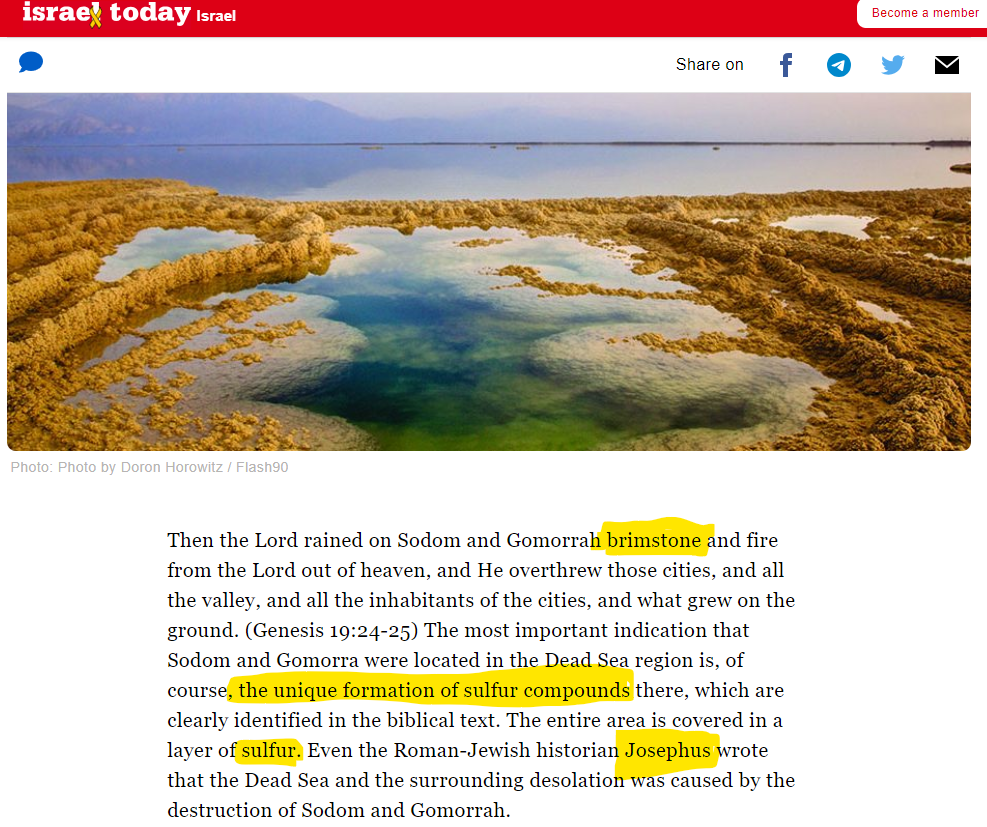
Originally from here.
—
“Remember Lot’s wife.” Luke 17:32
CHRIST here foretells his coming in his kingdom, in answer to the question which the Pharisees asked him, viz. When the kingdom of God should come. And in what he says of his coming, he, evidently has respect to two things; his coming at the destruction of Jerusalem, and his coming at the end of the world. He compares his coming at those times to the coming of God in two remarkable judgments that were past. First, [he compares] to that in the time of the flood; “and as it was in the days of Noah, so shall it be also in the days of the Son of Man.” Next, he compares it to the destruction of Sodom and Gomorrah; “likewise also, as it was in the days of Lot, even thus shall it be in the day when the Son of man is revealed.”
Then he immediately proceeds to direct his people how they should behave themselves at the appearance of the signal of that day’s approach, referring especially to the destruction of Jerusalem. “In that day, he which shall be upon the housetop, and his stuff in the house, let him not come down to take it away: and he that is in the field, let him likewise not return back.” In which words Christ shows that they should make the utmost haste to flee and get out of the city to the mountains, as he commands. Mat. 24:15, etc. “When ye therefore shall see the abomination of desolation spoken of by Daniel the prophet stand in the holy place, then let them which be in Judea flee to the mountains; let him which is in the housetop not come down to take anything out of the house, neither let him which is in the field turn back to take his clothes.”
Jerusalem was like Sodom, in that it was devoted to destruction by special divine wrath; and indeed to a more terrible destruction than that of Sodom. Therefore the like direction is given concerning fleeing out of it with the utmost haste, without looking behind, as the angel gave to Lot, when he bid him flee out of Sodom. Gen. 19:17, “Escape for thy life; look not behind thee, neither stay thou in all the plain.” And in the text, Christ enforces his counsel by the instance of Lot’s wife. He bids them remember her, and take warning by her, who looked back as she was fleeing out of Sodom, and became a pillar of salt.
If it be inquired why Christ gave this direction to his people to flee out of Jerusalem, in such exceeding haste, at the first notice of the signal of her approaching destruction; I answer, it seems to be, because fleeing out of Jerusalem was a type of fleeing out of a state of sin. Escaping out of that unbelieving city typified an escape out of a state of unbelief. Therefore they were directed to flee without staying to take anything out of their houses, to signify with what haste and concern we should flee out of a natural condition, that no respect to any worldly enjoyment should prevent us one moment, and that we should flee to Jesus Christ, the refuge of souls, our strong rock, and the mount of our defense, so as, in fleeing to him, to leave and forsake heartily all earthly things.
This seems to be the chief reason also why Lot was directed to make such haste, and not to look behind. Because his fleeing out of Sodom was designed on purpose to be a type of our fleeing from that state of sin and misery in which we naturally are.
DOCTRINE
We ought not to look back when we are fleeing out of Sodom. The following reasons may be sufficient to support this doctrine:
I. That Sodom is a city full of filthiness and abominations. It is full of those impurities that ought to be had in the utmost abhorrence and detestation by all. The inhabitants of it are a polluted company. They are all under the power and dominion of hateful lusts. All their faculties and affections are polluted with those wile dispositions that are unworthy of the human nature, that greatly debase it, that are exceedingly hateful to God, and that dreadfully incense his anger. Every kind of spiritual abomination abounds in it. There is nothing so hateful and abominable but that there it is to be found, and there it abounds.
Sodom is a city full of devils and all unclean spirits. There they have their rendezvous, and there they have their dominion. There they sport, and wallow in filthiness, as it is said of mystical Babylon, Rev. 18:2. Babylon is become the habitation of devils, and the hold of every foul spirit, and the cage of every unclean and hateful bird. — Who would be of such a society? Who would not flee from such a city with the utmost haste, and never look back upon it, and never have the least inclination of returning?
Some in Sodom may seem to carry a fair face, and make a fair outward show. But if we could look into their hearts, they are everyone altogether filthy and abominable. We ought to flee from such a city, with the utmost abhorrence of the place and society, with no desires to dwell longer there, and never to discover the least inclination to return to it. But [we] should be desirous to get to the greatest possible distance from it, that we might in no wise be partakers in her abominations.
II. We ought not to look back when fleeing out of Sodom, because Sodom is a city appointed to destruction. The cry of the city hath reached up to heaven. The earth cannot bear such a burden as her inhabitants are. She will therefore disburden herself of them, and spew them out. God will not suffer such a city to stand; he will consume it. God is holy, and his nature is infinitely opposite to all such uncleanness. He will therefore be a consuming fire to it. The holiness of God will not suffer it to stand, and the majesty and justice of God require that the inhabitants of that city who thus offend and provoke him be destroyed. And God will surely destroy them. It is the immutable and irreversible decree of God. — He hath said it, and he will do it. The decree is gone forth, and so sure as there is a God, and he is almighty, and able to fulfill his decrees and threatenings, so surely will he destroy Sodom. Gen. 19:12, 13, “Whatsoever thou hast in this city, bring them out of this place; for we will destroy this place, because the cry of them is waxen great before the face of the Lord, and the Lord has sent us to destroy it.” And in verse 14, “Up, get ye out of this place, or the Lord will destroy this city.”
This city is an accursed city; it is destined to ruin. — Therefore, as we would not be partakers of her curse, and would not be destroyed, we should flee out of it, and not look behind us. Rev. 18:4, “Come out of her, my people, that ye be not partakers of her sins, and that ye receive not her plagues.”
III. We ought not to look back when fleeing out of Sodom, because the destruction to which it is appointed is exceedingly dreadful; it is appointed to utter destruction, to be wholly and entirely consumed. It is appointed to suffer the wrath of the great God, which is to be poured down from God upon it, like a dreadful storm of fire and brimstone. This city is to be filled full of the wrath of God. Everyone that remains in it shall have the fire of God’s wrath come down on his head and into his soul. He shall be full of fire and full of the wrath of the Almighty. He shall be encompassed with fire without and full of fire within. His head, his heart, his bowels, and all his limbs shall be full of fire, and not a drop of water to cool him.
Nor shall he have any place to flee to for relief. Go where he will, there is the fire of God’s wrath. His destruction and torment will be inevitable. — He shall be destroyed without any pity. He shall cry aloud, but there shall be none to help, there shall be none to regard his lamentations, or to afford relief. The decree is gone forth, and the days come when Sodom shall burn as an oven, and all the inhabitants thereof shall be as stubble. As it was in the literal Sodom, the whole city was full of fire. In their houses there was no safety, for they were all on fire. And if they fled out into the streets, they also were full of fire. Fire continually came down out of heaven everywhere. — That was a dismal time. What a cry was there then in that city, in every part of it! But there was none to help. They had no where to go where they could hide their heads from fire. They had none to pity or relieve them. If they fled to their friends, they could not help them.
Now, with what haste should we flee from a city appointed to such a destruction! And how should we flee without looking behind us! How should it be our whole intent to get at the greatest distance from a city in such circumstances! How far should we be from thinking at all of returning to a city which has such wrath hanging over it!
IV. The destruction to which Sodom is appointed is an universal destruction. None that stay in it shall escape. None will have the good fortune to be in any by-corner, where the fire will not search them out. All sorts, old and young, great and small, shall be destroyed. There shall be no exception of any age, or any sex, or any condition, but all shall perish together. Gen. 19:24, 25, “Then the Lord rained upon Sodom and upon Gomorrah brimstone and fire from the Lord out of heaven, and he overthrew those cities and all the plain, and all the inhabitants of the cities, and that which grew upon the ground.” We therefore must not delay or look behind us; for there is no place of safety in Sodom, nor in all the plain on which Sodom is built. The mountain of safety is before us, and not behind us.
V. The destruction to which Sodom is appointed is an everlasting destruction. This is said of the literal Sodom, that it suffered the vengeance of eternal fire. Jude 7, “Even as Sodom and Gomorrah, and the cities about them, in like manner, giving themselves over to fornication, and going after strange flesh, are set forth for an example, suffering the vengeance of eternal fire.” The destruction that Sodom and Gomorrah suffered was an eternal destruction. Those cities were destroyed, and have never been built since, and are not capable of being rebuilt; for the land on which they stood at the time of their destruction sunk, and has ever since been covered with the lake of Sodom or the Dead sea, or as it is called in Scripture, the Salt sea. This seems to have been thus ordered on purpose to be a type of the eternal destruction of ungodly men. So that fire by which they were destroyed is called eternal fire, because it was so typically, it was a type of the eternal destruction of ungodly men; which may be in part what is intended, when it is said in that text in Jude, that they were set forth for an example, or for a type or representation of the eternal fire in which all the ungodly are to be consumed.
Sodom has in all ages since been covered with a lake which was first brought on it by fire and brimstone, to be a type of the lake of fire and brimstone in which ungodly men shall have their part forever and ever, as we read Rev. 20:15, and elsewhere. — We ought not therefore to look back when fleeing out of Sodom, seeing that the destruction to which it is appointed is an eternal destruction; for this renders the destruction infinitely dreadful.
VI. Sodom is a city appointed to swift and sudden destruction. The destruction is not only certain and inevitable, and infinitely dreadful, but it will come speedily. “Their judgment lingereth not, and their damnation slumbereth not;” 2 Pet. 2:3. And so Deu. 32:35, “The day of their calamity is at hand, and the things that shall come upon them make haste.” — The storm of wrath, the black clouds of divine vengeance, even now every moment hang over them, just ready to break forth and come down in a dreadful manner upon them. God hath already whet his sword and bent his bow, and made ready his arrow on the string, Psa. 7:12. Therefore we should make haste, and not look behind us. For if we linger and stop to look back, and flee not for our lives, there is great danger that we shall be involved in the common ruin.
The destruction of Sodom is not only swift, but will come suddenly and unexpectedly. — It seems to have been a fair morning in Sodom before it was destroyed, Gen. 19:23. It seems that there were no clouds to be seen, no appearance of any storm at all, much less of a storm of fire and brimstone. The inhabitants of Sodom expected no such thing. Even when Lot told his sons-in-law of it, they would not believe it, Gen. 19:14. — They were making merry. Their hearts were at ease, they though nothing of such a calamity at hand. But it came at once, as travail upon a woman with child, and there was no escaping. As verse 28, 29 [says], “They did eat, they drank; they bought, they sold; they planted, they builded; but the same day that Lot went out of Sodom, it rained fire and brimstone from heaven, and destroyed them all.”
So it is with wicked men. Psa. 73:19, “How are they brought into desolation in a moment! They are utterly consumed with terrors.” — If therefore we linger and look back, we may be suddenly overtaken and seized with destruction.
VII. There is nothing in Sodom that is worth looking back upon. All the enjoyments of Sodom will soon perish in the common destruction; all will be burnt up. And surely it is not worth the while to look back on things that are perishing and consuming in the flames, as it is with all the enjoyments of sin. They are all appointed to the fire. Therefore it is foolish for any who are fleeing out of Sodom to hanker any more after them. For when they are burnt up, what good can they do? And is it worth the while for us to return back for the sake of a moment’s enjoyment of them, before they are burnt, and so expose ourselves to be burnt up with them?
Lot’s wife looked back, because she remembered the pleasant things that she left in Sodom. She hankered after them. She could not but look back with a wishful eye upon the city, where she had lived in such ease and pleasure. Sodom was a place of great outward plenty. They ate the fat, and drank the sweet. The soil about Sodom was exceedingly fruitful. It is said to be as the garden of God, Gen. 13:10. And fullness of bread was one of the sins of the place, Eze. 16:49.
Here Lot and his wife lived plentifully; and it was a place where the inhabitants wallowed in carnal pleasures and delights. But however much it abounded in these things, what were they worth now, when the city was burning? Lot’s wife was very foolish in lingering in her escape, for the sake of things which were all on fire. — So the enjoyments, the profits, and pleasures of sin, have the wrath and curse of God on them. Brimstone is scattered on them. Hell-fire is ready to kindle on them. It is not therefore worth while for any person to look back after such things.
VIII. We are warned by messengers sent to us from God to make haste in our flight from Sodom, and not to look behind us. God sends to us his ministers, the angels of the churches, on this grand errand, as he sent the angels to warn Lot and his wife to flee for their lives, Gen. 19:15, 16. — If we delay or look back, now that we have had such fair warning, we shall be exceedingly inexcusable and monstrously foolish.
APPLICATION
The use that I would make of this doctrine, is to warn those who are in a natural condition to flee out of it, and by no means to look back. While you are out of Christ you are in Sodom. The whole history of the destruction of Sodom, with all its circumstances, seems to be inserted in the Scriptures for our warning, and is set forth for an example, as the apostle Jude says; It in a lively manner typifies the case of natural men, the destruction of those that continue in a natural state, and the manner of their escape who flee to Christ. The psalmist, when speaking of the appointed punishment of ungodly men, seems evidently to refer to the destruction of Sodom. Psa. 11:6, “Upon the wicked God shall rain snares, fire, and brimstone, and a horrible tempest: This shall be the portion of their cup.”
Consider therefore, you that are seeking an interest in Christ, you are to flee out of Sodom. Sodom is the place of your nativity, and the place where you have spent your lives. You are citizens of that city which is full of filthiness and abomination before God, that polluted and accursed city. You belong to that impure society. You not only live among them, but you are of them, you have committed those abominations, and have so provoked God as you have heard. It is you that I have all this while been speaking of under this doctrine. You are the inhabitants of Sodom. Perhaps you may look on your circumstances as not very dreadful; but you dwell in Sodom. — Though you may be reformed, and appear with a clean outside, and a smooth face to the world; yet as long as you are in a natural condition, you are impure inhabitants of Sodom.
The world of mankind is divided into two companies, or, as I may say, into two cities. There is the city of Zion, the church of God, the holy and the beloved city. And there is Sodom, that polluted and accursed city, which is appointed to destruction. You belong to the latter of these. How much soever you may look upon yourselves as better than some others, you are of the same city; the same company with fornicators, and drunkards, and adulterers, and common swearers, and highwaymen, and pirates, and Sodomites. How much soever you may think yourselves distinguished, as long as you are out of Christ, you belong to the very same society. You are of the company, you join with them, and are no better than they, any otherwise than as you have greater restraints. You are considered in the sight of God as fit to be ranked with them. You and they are altogether the objects of loathing and abhorrence, and have the wrath of God abiding on you. You will go with them and be destroyed with them, if you do not escape from your present state. Yea, you are of the same society and the same company with the devils, for Sodom is not only the city of wicked men, but it is the hold of every foul spirit.
You belong to that city which is appointed to an awful, inevitable, universal, swift, and sudden destruction; a city that hath a storm of fire and wrath hanging over it. Many of you are convinced of the awful state you are in while in Sodom, and are making some attempts to escape from the wrath which hangs over it. Let such be warned by what has been said, to escape for their lives, and not to look back. Look not back, unless you choose to have a share in the burning tempest that is coming down on that city. — Look not back in remembrance of the enjoyments which you have had in Sodom, as hankering after the pleasant things which you have had there, after the ease, the security, and the pleasure which you have there enjoyed.
Remember Lot’s wife, for she looked back, as being loth utterly and forever to leave the ease, the pleasure, and plenty which she enjoyed in Sodom, and as having a mind to return to them again; remember what became of her. — Remember the children of Israel in the wilderness, who were desirous of going back again into Egypt. Num. 11:5, “We remember the flesh which we did eat in Egypt freely, the cucumbers, and the melons, and the leeks and onions, and the garlick.” Remember what was the issue. You must be willing forever to leave all the ease, and pleasure, and profit of sin, to forsake all the salvation, as Lot forsook all, and left all he had, to escape out of Sodom.
And further to enforce this warning, let me entreat all you who are in this state to consider the several things which I shall now mention.
I. The destruction of which you are in danger is infinitely more dreadful than that destruction of the literal Sodom from which Lot fled. The destruction of Sodom and Gomorrah in a storm of fire and brimstone was but a shadow of the destruction of ungodly men in hell, and is no more to it than a shadow or a picture is to a reality, or than painted fire is to real fire. The misery of hell is set forth by various shadows and images in Scripture, as blackness of darkness, a never-dying worm, a furnace of fire, a lake of fire and brimstone, the torments of the valley of the son of Hinnom, a storm of fire and brimstone. The reason why so many similitudes are used is because none of them are sufficient. Anyone does but partly and very imperfectly represent the truth, and therefore God makes use of many.
You have therefore much more need to make haste in your escape, and not look behind you, than Lot and his wife had when they fled out of Sodom. For you are every day and every moment in danger of a thousand times more dreadful storm coming on your heads, than that which came on Sodom, when the Lord rained brimstone and fire from the Lord out of heaven upon them. So that it will be vastly more sottish in you to look back than it was in Lot’s wife.
II. The destruction of which you are in danger is not only greater than the temporal destruction of Sodom, but greater than the eternal destruction of the inhabitants of Sodom. For however well you may think you have behaved yourselves, you who have continued impenitent under the glorious gospel, have sinned more, and provoked God far more, and have greater guilt upon you, than the inhabitants of Sodom; although you may seem to yourselves, and perhaps to others, to be very harmless creatures. Mat. 10:15, “Verily I say unto you, it shall be more tolerable for Sodom and Gomorrah in the day of judgment, than for that city.”
III. Multitudes, while they have been looking back, have been suddenly overtaken and seized by the storm of wrath. The wrath of God hath not delayed, while they have delayed; it has not waited at all for them to turn about and flee; but has presently seized them, and they have been past hope. When Lot’s wife looked back, she was immediately destroyed. God had exercised patience toward her before. When she lingered at the setting out, the angels pressed her, and her husband and children, to make haste. Not only so, but when they yet delayed, they brought her forth, and set her without the city, the Lord being merciful to her. But now when, notwithstanding this mercy, and the warnings which had been given her, she looked back, God exercised no more patience towards her, but proceeded immediately to put her to death.
Now God has in like manner been merciful to you. You in time past have been lingering; you have been warned by the angel of your danger, and pressed to make haste and flee; yet you have delayed. And now at length God hath as it were laid hold on you, by the convictions of his spirit, to draw you out of Sodom; and therefore remember Lot’s wife. If now, after all, you should look back, when God hath been so merciful to you, you will have reason to fear, that God will suddenly destroy you. Multitudes, when they have been looking back, and putting off to another time, have never had another opportunity; they have been suddenly destroyed, and that without remedy.
IV. If you look back, and live long after it, there will be great danger that you will never get any further. The only way to seek salvation is to press forward with all your might, and still to look and press forward, never to stand still or slacken your pace. When Lot’s wife stopped in her flight and stood still in order that she might look, her punishment was, that there she was to stand forever; she never got any further; she never got beyond that place. But there she stood as a pillar of salt, a durable pillar and monument of wrath, for her folly and wickedness.
So it was very often with backsliders, though they may live a considerable time after. When they look back, after they have been taking pains for their salvation, they lose all, they put themselves under vast disadvantages. By quenching the Spirit of God, and losing their convictions, they dreadfully harden their own hearts, and stupefy their souls. They make way for discouragements, dreadfully strengthen and establish the interest of sin in their hearts, many ways give Satan great advantages to ruin them, and provoke God oftentimes utterly to leave them to hardness of heart. When they come to look back, their souls presently become dead and hard like the body of Lot’s wife. And though they live long after, they never get any further. It is worse for them than if they were immediately damned. When persons in fleeing out of Sodom look back, their last case is far worse than the first; Mat. 12:43, 44, 45. And experience confirms, that none ordinarily are so hard to be brought to penance as backsliders.
V. It may well stir you up to flee for your lives, and not to look behind you, when you consider how many have lately fled to the mountains, while you yet remain in Sodom. To what multitudes hath God given the wisdom to flee to Christ, the mountain of safety! They have fled to the little city Zoar, which God will spare and never destroy. How many have you seen of all sorts resorting out of Sodom thither, as believing the Word of God by the angels, that God would surely destroy that place. They are in a safe condition. They are got out of the reach of the storm. The fire and brimstone can do them no hurt there.
But you yet remain in that cursed city among that accursed company. You are yet in Sodom, which God is about so terribly to destroy, where you are in danger every minute of having snares, fire, and brimstone, come down on your head. — Though so many have obtained, yet you have not obtained deliverance. Good has come but you have seen none of it. Others are happy, but no man knows what will become of you. You have no part nor lot in the glorious salvation of souls, which has lately been among us. — The consideration of this should stir you up effectually to escape, and in your escape to press forward — still to press forward — and to resolve to press forward forever, let what will be in the way, to hearken to no temptation, and never to look back, or in any wise slacken or abate your endeavors as long as you live, but if possible to increase in them more and more.
VI. Backsliding after such a time as this, will have a vastly greater tendency to seal a man’s damnation than at another time. The greater means men have, the louder calls and the greater advantages they are under, the more dangerous is backsliding, the more it has a tendency to enhance guilt, to provoke God, and to harden the heart.
We, in this land of light, have long enjoyed greater advantages than most of the world. But the advantages which persons are under now for their salvation, are perhaps tenfold what they have been at such times as we have ordinarily lived in. And backsliding will be proportionably the greater sin, and the more dangerous to the soul. You have seen God’s glory and his wonders amongst us, in a most marvelous manner. — If therefore you look back after this, there will be great danger that God will swear in his wrath, that you shall never enter into his rest; as God sware concerning them that were for going back into Egypt, after they had seen the wonders which God wrought for Israel. Num. 14:22, 23, “Because all those men that have seen my glory and my miracles that I did in Egypt, and in the wilderness, and have tempted me now these ten times, and have not hearkened to my voice; surely they shall not see the land which I sware unto their fathers, neither shall any of them that provoked me see it.” — The wonders that we have seen among us of late, have been of a more glorious nature than those that the children of Israel saw in Egypt and in the wilderness.
VII. We know not but that great part of the wicked world are, at this day, in Sodom’s circumstances, when Lot fled out of it; having some outward, temporal destruction hanging over it. It looks as if some great thing were coming; the state of things in the world seems to be ripe for some great revolution. The world has got to such a terrible degree of wickedness, that it is probable the cry of it has reached up to heaven. And it is hardly probable that God will suffer things to go on, as they now do, much longer. It is likely that God will ere long appear in awful majesty to vindicate his own cause. And then none will be safe that are out of Christ. Now therefore everyone should flee for his life, and escape to the mountain, lest he be consumed. We cannot certainly tell what God is about to do, but this we may know, that those who are out of Christ are in a most unsafe state.
VIII. To enforce this warning against looking back, let me beseech you to consider the exceeding proneness to it there is in the heart. The heart of man is a backsliding heart. There is in the heart a great love and hankering desire after the ease, pleasure, and enjoyments of Sodom, as there was in Lot’s wife, by which persons are continually liable to temptations to look back. The heart is so much towards Sodom, that it is a difficult thing to keep the eye from turning that way, and the feet from tending thither. When men under convictions are put upon fleeing, it is a mere force. It is because God lays hold on their hands, as he did on Lot’s and his wife’s, and drags them so far. But the tendency of the heart is to go back to Sodom.
Persons are very prone to backsliding also through discouragement. The heart is unsteady, soon tired, and apt to listen to discouraging temptations. A little difficulty and delay soon overcome its feeble resolutions. And discouragement tends to backsliding. It weakens persons’ hands, lies as a dead weight on their hearts, and makes them drag heavily; and if it continue long, it very often issues insecurity and senselessness. Convictions are often shaken off that way. They begin first to go off with discouragement.
Backsliding is a disease that is exceeding secret in its way of working. It is a flattering distemper. It works like a consumption, wherein persons often flatter themselves that they are not worse, but something better, and in a hopeful way to recover, till a few days before they die. So backsliding commonly comes on gradually, and steals on men insensibly, and they still flatter themselves that they are not backslidden. — They plead that they are seeking yet, and they hope they have not lost their convictions. And by the time they find it out, and cannot pretend so any longer, they are commonly so far gone, that they care not much if they have lost their convictions. And when it is come to that, it is commonly a gone case as to those convictions. Thus they blind themselves, and keep themselves insensible of their own disease, and so are not terrified with it, nor awakened to use means for relief, till it is past cure.
Thus it is that backsliding commonly comes upon persons that have for some time been under any considerable convictions, and afterwards lose them. Let the consideration of this your danger excite you to the greatest care and diligence to keep your hearts, and to watchfulness and constant prayer against backsliding. And let it put you upon endeavors to strengthen your resolutions of guarding against everything that tends to the contrary, that you may indeed hold out to the end, for then shall you know, if you follow on to know the Lord.
Posted in Uncategorized
Leave a comment
A Wesleyan-Arminian Response to Charles Spurgeon’s “A Defense of Calvinism”
Peter began to speak: “I now realize how true it is that God does not show favoritism but accepts from every nation the one who fears him and does what is right.” –Acts 10:34-25 (NIV)
My little children, these things write I unto you, that ye sin not. And if any man sin, we have an advocate with the Father, Jesus Christ the righteous: And he is the propitiation for our sins: and not for ours only, but also for the sins of the whole world. And hereby we do know that we know him, if we keep his commandments. He that saith, I know him, and keepeth not his commandments, is a liar, and the truth is not in him. –1 John 2:1-4 (KJV)
If we say that we have no sin, we deceive ourselves, and the truth is not in us. –1 John 1:8 (KJV)
—
Wesley Gospel, “An Arminian Response to Charles Spurgeon’s ‘A Defense of Calvinism.’”
Charles Spurgeon, “A Defense of Calvinism.”
Randolph Foster, Objections to Calvinism As It Is. Get the paperback at Schmul here.

—

Error #1: Equating the Word “Arminian” with the Doctrine of Pelagianism. Spurgeon said: “Well can I remember the manner in which I learned the doctrines of grace in a single instant. Born, as all of us are by nature, an Arminian, I still believed the old things I had heard continually from the pulpit, and did not see the grace of God. When I was coming to Christ, I thought I was doing it all myself, and though I sought the Lord earnestly, I had no idea the Lord was seeking me.”
To this day, as can be demonstrated repetitively in the documentary Amazing Grace: The History and Theology of Calvinism (2004), this seems to be the main problem in the Calvinist-Arminian debate. I’m not saying Arminians don’t have wrong views of Calvinism sometimes, because we all have a sinful nature (Rom. 7:14-25). But as a Wesleyan Arminian, and as a Christian who hungers for the truth of Scripture, I truly believe that Spurgeon has unfairly tagged the word “Arminian” with the heretical concept of Pelagianism. In this above quote, he is loosely dealing with the concept of saving grace. In this area of soteriology, there are three views of what Scripture teaches on the subject:
Monergism – The Calvinist view that man is so completely, totally depraved and corrupted with a sinful nature, that the grace of God (the saving power of the Holy Spirit) must come upon certain individuals chosen for salvation (the elect). When these elected, chosen men are pressed by the Holy Spirit to repent and believe in the Gospel, it is all God’s work. Not even their “repenting” nor their “believing” can be credited to these men; nor can it partially be credited to them as if God was helping them half-way, and they did the rest. God does it all; He possesses these corrupted men by His Spirit, and makes them saints, to persevere in faith and righteousness for the rest of their lives.
Synergism – The Arminian view that all mankind is totally depraved and corrupted with a sinful nature, but all mankind has the influence of the Holy Spirit upon them, and all mankind is being drawn to the Gospel by the Holy Spirit through the conscience (prevenient grace). It admits that there are only a small group of people that receive salvation by faith (the elect), but this people of God enters into their salvation on the condition that they choose to repent and believe in the Gospel. Not so with the consistent Calvinist, who denies this experience of choice in his conversion to Christ. But I would cite Joshua’s challenge: “Choose for yourselves this day whom you will serve” (Josh. 24:15); and Elijah: “How long will you waver between two opinions? If the Lord is God, follow Him; but if Baal is god, follow him” (1 Kings 18:21); and Peter: “Repent and be baptized, every one of you, in the Name of Jesus Christ for the forgiveness of your sins. And you will receive the gift of the Holy Spirit” (Acts 2:38). To “repent” means to turn away from your sins—it is the same thing as choosing to resist evil, believe in the Gospel, and live a holy life. The Calvinist would reply that this produces vanity in the Arminian; that any Christian who believes he played a role in his salvation must eventually be puffed up with pride and self-exaltation; that only a monergist-Calvinist can rightly give all glory to God (soli Deo gloria), because as a man, he did no repenting nor believing. To this notion, as a synergist-Arminian, I reply: but such a view ignores the Arminian view of prevenient grace—the Holy Spirit’s presence is very real and present: it is “a very present help” in time of need (Ps. 46:1). So, the Arminian has no problem giving all the glory to God for His help, His salvation, His rescue; while at the same time, he acknowledges that in Heaven, the righteous will receive the rewards of their faith, holiness, and good works—according to God’s will; as Paul said in the last days of his life: “Now there is in store for me the crown of righteousness, which the Lord, the righteous Judge, will award to me on that day—and not only to me, but also to all who have longed for His appearing” (2 Tim. 4:8). The Arminian has no problem singing: “Amazing grace! How sweet the sound that saved a wretch like me!” But he also understands that Jesus will give rewards to the saints after death.
Pelagianism – The Concise Encyclopedia defines it this way: a “Christian heresy of the 5th century that emphasized free will and the goodness of human nature. Pelagius (d. 418), a British monk who settled in Africa in 410, was eager to raise moral standards among Christians. Rejecting the arguments of those who attributed their sins to human weakness, he argued that God made humans free to choose between good and evil and that sin is an entirely voluntary act. His disciple Celestius denied the church’s doctrine of original sin and the necessity of infant baptism. Pelagius and Celestius were excommunicated in 418, but their views continued to find defenders until the Council of Ephesus condemned Pelagianism in 431.” Basically, Pelagianism is the rejection of any need for the Holy Spirit’s help, divine assistance, or saving graces; it affirms that all mankind has it well within his own natural ability to obey God’s commandments and live a holy life pleasing to God; and further, it rejects the doctrine of original sin, that man is naturally sinful, and that even Christians saved by the Spirit, still have a sinful nature in their flesh. Pelagianism denies the sinful nature of man completely. Charles Finney, the great revivalist, unfortunately fell into the error of rejecting original sin; but it would be wrong to call him a “Pelagian” properly speaking; in the actual working out of the Christian life, he affirmed the need for the influence of the Holy Spirit. Pelagianism, on the other hand, is a form of humanism—the idea that man is naturally good.
As a Wesleyan Arminian, who holds to the Synergist view of God’s grace, to me it is completely wrong that Spurgeon would use the word “Arminian” under the notion of Pelagianism. Spurgeon said, “Born, as all of us are by nature, an Arminian, I still believed the old things I had heard continually from the pulpit, and did not see the grace of God. When I was coming to Christ, I thought I was doing it all myself, and though I sought the Lord earnestly, I had no idea the Lord was seeking me.” Here he equates the word “Arminian” with the notion of a Pelagian conversion experience. “When I was coming to Christ, I thought I was doing it all myself”—Spurgeon said. True, many new Christians have this notion when they choose to live for God; I know I did. But I also experienced the Holy Spirit a lot in Charismatic worship, and could feel the presence of God very strongly after I just got saved. I didn’t know any theology or doctrine, but I was definitely experiencing the Holy Spirit working in my heart. But the flitting thought or idea that my act of turning away from sin and living for God, was my action alone, and that God was not helping me do it—is a mistake, an accidental Pelagian thought—but is in no sense, Pelagianism in the doctrinal sense. Further, John Wesley’s The Doctrine of Original Sin (1756) is more than enough evidence, to prove that this champion of Arminian theology, certainly upheld the Scriptural revelation on the sinful nature of mankind. And, although there may be anonymous Pelagians in any denomination, it would be very wrong to call Methodists, Wesleyans, Nazarenes, Holiness, and any other Christians faithful to the Wesleyan theological tradition—it would be an error to call them “Pelagians.” No, actually, they are Synergists.
Error #2: Works of Supererogation Attributed to Arminianism. Spurgeon said: “What is the heresy of Rome, but the addition of something to the perfect merits of Jesus Christ—the bringing in of the works of the flesh, to assist in our justification? And what is the heresy of Arminianism but the addition of something to the work of the Redeemer? Every heresy, if brought to the touchstone, will discover itself here. I have my own private opinion that there is no such thing as preaching Christ and Him crucified, unless we preach what nowadays is called Calvinism. It is a nickname to call it Calvinism; Calvinism is the gospel, and nothing else.”
The Thirty-Nine Articles of Religion of the Church of England say: “Voluntary Works besides, over and above, God’s Commandments, which they call Works of Supererogation, cannot be taught without arrogancy and impiety: for by them men do declare, that they do not only render unto God as much as they are bound to do, but that they do more for His sake, than of bounden duty is required: whereas Christ saith plainly When ye have done all that are commanded to you, say, We are unprofitable servants” (XIV, “Of Works of Supererogation”). All his life, Wesley considered himself and his Methodist preachers to be Anglicans, as far as their denominational affiliation was concerned; their theology was an Arminian-Anglican theology—the via media between Catholic salvation and Reformed salvation. In this light, it is very similar to Martin Luther’s views of salvation, but less so John Calvin’s. Yet, on the subject of justification by faith, Wesley said, “I think on justification just as I have done any time these seven and twenty years—and just as Mr. Calvin does. In this respect I do not differ from him a hair’s breadth” (“Letter to John Newton,” May 14, 1765). Wesley, and all other Arminians (myself included), would heartily agree with the Church of England on this point: “We are accounted righteous before God, only for the merit of our Lord and Saviour Jesus Christ by Faith, and not for our own works or deservings. Wherefore, that we are justified by Faith only, is a most wholesome Doctrine, and very full of comfort” (XI, “Of the Justification of Man”). But the question of justification is one thing, and the order of salvation quite another—what happens to a Christian after he initially experiences justification by faith alone? Well, he has THE CHRISTIAN LIFE to live! So, after he is turned from darkness to Light (Acts 26:18), he is required by God to live his life in holiness and righteousness (Luke 1:75), to “walk in the light, as He is in the light” (1 John 1:7). I agree that preaching Christ and Him crucified (1 Cor. 1:23) is necessary for initial conversion from evil to good, from paganism to Christian faith, from satan to God. But after this beginner’s faith has been experienced, we Christians are “created in Christ Jesus to do good works, which God prepared in advance for us to do!” (Eph. 2:10). As long as these good works are rooted in God’s commandments, then they are not works of the flesh. What reasonable Christian would call preaching the Gospel, healing the sick, or giving to the poor in Christ’s Name—works of the flesh? No one, I hope.
Error #3: Those Who Believe in Conditional Security Preach a False Gospel. Spurgeon said: “Nor can I comprehend a gospel which lets saints fall away after they are called, and suffers the children of God to be burned in the fires of damnation after having once believed in Jesus. Such a gospel I abhor.”
Thomas Aquinas, Martin Luther, John Bunyan, John Wesley, and all preachers who stand in the historic Lutheran and Methodist traditions have all believed in the conditional security of the believer. To abhor this doctrine, is to abhor something which these reformers and revivalists clearly affirmed. However, I would say, that the word “gospel” does not need to be used so extensively as to include the doctrine of conditional security. Why can’t the word “Gospel” be used to only include the doctrines of repentance, faith, justification, and regeneration? Must it necessarily cause a division between Calvinists and Arminians? Must Christians necessarily use the word “gospel” in application to other soteriological fine points like monergism-synergism or perseverance-apostasy? I don’t think this is necessary. However, if you are curious about what Scripture says, then you should look no further than the warnings against apostasy in Hebrews 6:4-6, 10:26-29, and 1 Timothy 1:18-19. [John Jefferson Davis, “The Perseverance of the Saints: A History of the Doctrine,” Journal of the Evangelical Theological Society 34:2 (June 1991), 213-228.]
Error #4: Rejection of Unlimited Atonement. Spurgeon said: “To think that my Saviour died for men who were or are in Hell, seems a supposition too horrible for me to entertain. To imagine for a moment that He was the Substitute for all the sons of men, and that God, having first punished the Substitute, afterwards punished the sinners themselves, seems to conflict with all my ideas of Divine justice.”
However, as an Arminian, it does not conflict with my ideas of Divine justice. Paul says plainly of Christ, that “He died for all, that those who live should no longer live for themselves but for Him who died for them and was raised again” (2 Cor. 5:15). He does not put a qualifier on it: “He died for all the elect,” or “He died for all the chosen ones,” but simply, “He died for all.” In the plain sense it is written, must be the plain sense it is meant: Christ died for all men: Jews and Gentiles, Christians and pagans, saved and unsaved. My ideas of Divine justice are more compatible with this Bible verse than the Calvinistic view. Why? Because of Hell. In Hell is inflicted all the wrath of God against His enemies. While it is true that God so loved the world that He gave His only Son (John 3:16), He only loves everyone in sense of His Creator-creature relationship. God as Creator looks down upon His creation and loves what He has made; He loves man who was made in His own image; but on the other hand, they have fallen, they have sinned, and they continue sinning: “The Lord was grieved that He had made man on the earth, and His heart was filled with pain” (Gen. 6:6); so God has a Gospel plan to save as many of the men on the face of the Earth as He can. This plan is repentance and faith in the Gospel of Jesus Christ. Christ died for all men (2 Cor. 5:15), but unless men choose to repent and turn from their sinful ways, and respond positively to the message of justification by faith alone in the cross of Christ, then they shall “all likewise perish” (Luke 13:3) as those did in the flood of Noah, and God was only able to save or spare Noah and his small family from His wrath. The next flood is an everlasting flood of Hell fire, and an everlasting perishing for those who rebel against the Law of God—dying, dying, dying, but never completely dead. God will exact revenge on them as enemies: all who reject the Gospel of Jesus; all who reject God’s love—will receive in turn the fierce anger of God Almighty.
The damned in Hell are to blame themselves for their own damnation, for not repenting, for not continuing to believe the Gospel, or living in “holiness, without which no man shall see the Lord” (Heb. 12:14). Jesus “is the atoning sacrifice for our sins, and not only for ours but also for the sins of the whole world” (1 John 2:2). Unlimited atonement is a very scary doctrine, while at the same time a very hopeful one. Jesus put it this way: “Whoever believes in Him is not condemned, but whoever does not believe stands condemned already because he has not believed in the name of God’s one and only Son. This is the verdict: Light has come into the world, but men loved darkness instead of light because their deeds were evil” (John 3:18-19). Jesus died for all men, as Scripture makes clear, but that is not the issue when comes to understanding the mystery of Hell—the real issue is this: “Light has come into the world, but men loved darkness instead of light because their deeds were evil.” The blood of Jesus is available to all, and remains available to all—to believers, unbelievers, to backsliders, and apostates—ALL means ALL! But unless they stop loving darkness, unless they stop their evil deeds, they are rejecting the light of the cross; and they will be punished everlastingly in Hell for such a rejection of the cross. Scripture declares that justification has been by faith alone, is by faith alone, and always will be by faith alone—unlike Spurgeon, who on this point, it seems, would have us to believe that God’s love has more to do with the salvation of the elect (divine favoritism)—than the repentance and faith of those who would hope for Heaven (justification by faith).
Posted in Uncategorized
Leave a comment
Tour of Paul Washer’s Library

I think I’d be right to say that the true HEART of HeartCry Missionary Society–the absolute core of Paul Washer’s spirituality–is derived from the 63 volume Pilgrim Publications series of Charles Spurgeon’s sermons: mostly under the name of the Metropolitan Tabernacle Pulpit series. These are rare and hard to find books…

PAUL WASHER’S RECOMMENDED READING LIST
The Scriptures
Studying the Scriptures
Study Bibles
Study Aids
Dictionaries
Language Helps
Thematic Studies
Harmonies
Computer Software
Commentaries
Beyond the following list of commentaries, we highly recommend Commenting and Commentaries by Charles Spurgeon and A Guide to the Puritans by Robert P. Martin.
Contemporary
Classics
Systematic Theology
Contemporary
Classics
Attributes of God
Sovereignty & Sovereign Grace
Covenants
Person of Christ
Person and Work of the Holy Spirit
Man and Sin
The Gospel
Conversion
Evangelism
Christian Living
Sanctification
Prayer and Fasting
Worship
Finances
Devotionals
Church
General
Leadership
Discipline
Modern-Day Reformation
History
Marriage and Family
Courtship and Marriage
Men and Husbands
Women and Wives
Parenting
Missions
General
Baptist Missions
Pastoral Ministry
General
Preaching
Counseling
Introduction to the Puritans
Puritan Works
Beyond the following list, we highly recommend A Guide to the Puritans by Robert P. Martin.
Revival
Contemporary Issues
Biographies
Reformers
Puritans
Awakening
Preachers
Missionaries
Martyrs
Exceptional Lives
Walking with the Giants by Warren Wiersbe
Memoir and Remains of Robert Murray M’Cheyne by Andrew Bonar
The Autobiography of George Müller or A Million and a Half Answers to Prayer (Unabridged) by Mack Tomlinson
The Autobiography of George Müller (Abridged) edited by Diana L. Matisko
Heroes by Iain Murray
Posted in Uncategorized
Leave a comment
 WesleyGospel Ministries