
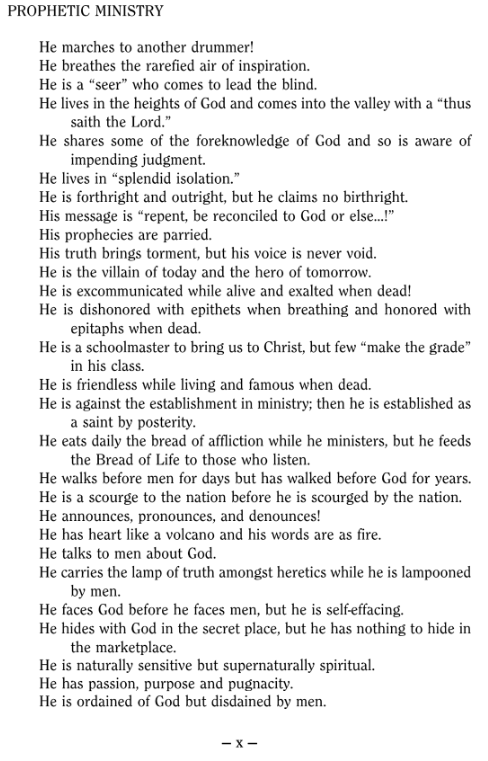
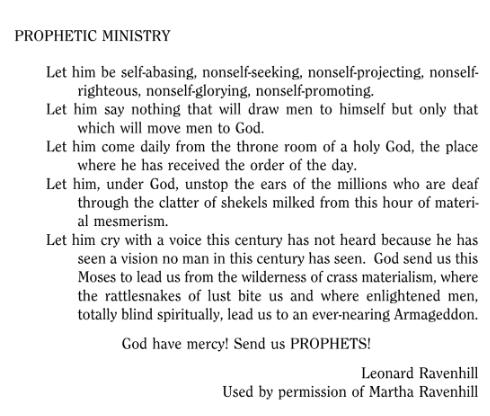
Character Traits of a True Modern-Day Prophet


Arthur Devine, A Manual of Mystical Theology. (Catholic).
The Catholic Encyclopedia, “Prophecy, Prophet, and Prophetess.”
Abraham Heschel, The Prophets. 2 vols (Harper Perennial, 1975). (Jewish).
Francis Gigot, Special Introduction to the Study of the Old Testament. Part II: “Didactic Books and Prophetical Writings.” Benziger Brothers, 1906. (Catholic).
A. B. Davidson, Old Testament Prophecy. (Scottish Presbyterian).
John and Paula Sandford, The Elijah Task. (1977; charismatic).
Adam Clarke, The Christian Prophet and His Work. (Methodist).
Posted in Uncategorized
Leave a comment
Biblical Economics 138: Review of Grant Sabatier’s “Financial Freedom”
DISCLAIMER
I am not a registered investment advisor with the SEC. Nothing in this video, should be taken as legally binding investment advice, in the same way that SEC licensed stockbrokers can advise their clients. I am not “selling” any stocks or OTC penny stocks as a broker in this video. The purpose of this video, is only to offer guidance to those who are interested in educating themselves, about self-directed investing and Biblically Responsible Investing (BRI).
—
It seems that if you were to blend Biblical principles with Grant’s model, then financial growth could be achieved in the following manner:
1. WORK. Work remotely with a full-time W-2 job: with PTO, sick days, paid holidays, and vacation days (Prov. 10:4).
2. WORK. Ditto for your wife (Prov. 31:10-31; Eccl. 4:9-12).
3. WORK. Work remotely with a 1099 contractor side hustle (Acts 10:7).
4. SAVE. Save 100% of the side hustle money into an FDIC savings account: pay off all medical debts, use Fingerhut to build your FICO score, get into a USDA Rural Development Loan for a home, etc (Prov. 13:11; Mic. 4:4).
5. INVEST. Once your FDIC savings account reaches $100k, then consider dropping $25k into BIBL, BLES, GLRY, and ISMD (the Inspire ETFs) and put them all into a self-directed Roth IRA with Schwab. Focus more on saving large amounts of money into the FDIC savings account; and less on the whole ETF and retirement account concept. Building out an FDIC savings account through side hustle money is a much more stable way to build wealth than playing around with stocks, bonds, ETF funds, retirement accounts, and other up-and-down investments. However, there is a Biblical liberty to invest for those who want to risk it (Eccl. 11:1-2; Luke 19:13, 15). –J.B.
Posted in Uncategorized
Leave a comment
Wicked Men Useful In Their Destruction Only – Jonathan Edwards
Could Dante do more? In fact, one contemplates Dante’s hell with pleasurable sensations, knowing it is Dante’s, a safely remote place of the imagination. Jonathan Edwards not only made it real enough to be found in the atlas, but made those consigned to it personally responsible for being there. –Ola Winslow
Posted in Uncategorized
Leave a comment
On Friendship with the World – John Wesley
Originally from here. Published in 1786.
Ye adulterers and adulteresses, know ye not that the friendship of this world is enmity with God? Whosoever therefore desireth to be a friend of the world is an enemy of God.
–James 4:4
1. There is a passage in St. Paul’s Epistle to the Romans, which has been often supposed to be of the same import with this: “Be not conformed to this world:” (Rom. 12:2). But it has little or no relation to it; it speaks of quite another thing. Indeed the supposed resemblance arises merely from the use of the word world in both places. This naturally leads us to think that St. Paul means by conformity to the world, the same which St. James means by friendship with the world: whereas they are entirely different things, as the words are quite different in the original: for St. Paul’s word is aivn St. James’s is kosmos. However, the words of St. Paul contain an important direction to the children of God. As if he had said, “Be not conformed to either the wisdom, or the spirit, or the fashions of the age; of either the unconverted Jews, or the heathens, among whom ye live. You are called to show, by the whole tenor of your life and conversation, that you are ‘renewed in the spirit of your mind’, after the image of Him that created you;’ and that your rule is not the example or will of man, but ‘the good, and acceptable, and perfect will of God.’”
2. But it is not strange, that St. James’s caution against friendship with the world should be so little understood, even among Christians. For I have not been able to learn that any author, ancient or modern, has wrote upon the subject: No, not (so far as I have ever observed) for sixteen or seventeen hundred years. Even that excellent writer, Mr. Law, who has treated so well many other subjects, has not, in all his practical treatises, wrote one chapter upon it; no, nor said one word, that I remember, or given one caution, against it. I never heard one sermon preached upon it either before the university or elsewhere. I never was in any company where the conversation turned explicitly upon it even for one hour. 3. Yet are there very few subjects of so deep importance; few that so nearly concern the very essence of religion, the life of God in the soul; the continuance and increase, or the decay, yea, extinction of it. From the want of instruction in this respect the most melancholy consequences have followed. These indeed have not affected those who were still dead in trespasses and sins; but they have fallen heavy upon many of those who were truly alive to God. They have affected many of those called Methodists in particular; perhaps more than any other people. For want of understanding this advice of the apostle, (I hope rather than from any contempt of it) many among them are sick, spiritually sick, and many sleep, who were once thoroughly awakened. And it is well if they awake any more till their souls are required of them. It has appeared difficult to me to account for what I have frequently observed: many who were once greatly alive to God, whose conversation was in Heaven, who had their affections on things above, not on things of the earth; though they walked in all the ordinances of God, though they still abounded in good works, and abstained from all known sin, yea, and from the appearance of evil; yet they gradually and insensibly decayed; (like Jonah’s gourd, when the worm ate the root of it) insomuch that they are less alive to God now, than they were ten, twenty, or thirty years ago. But it is easily accounted for, if we observe, that as they increased in goods, they increased in friendship with the world; which, indeed, must always be the case, unless the mighty power of God interpose. But in the same proportion as they increased in this, the life of God in their soul decreased.
4. Is it strange that it should decrease, if those words are really found in the oracles of God: “Ye adulterers and adulteresses, know ye not that the friendship of the world is enmity with God?” What is the meaning of these words? Let us seriously consider. And may God open the eyes of our understanding; that, in spite of all the mist wherewith the wisdom of the world would cover us, we may discern what is the good and acceptable will of God!
5. Let us, first, consider, what it is which the apostle here means by the world. He does not here refer to this outward frame of things, termed in Scripture, heaven and earth; but to the inhabitants of the earth, the children of men, or at least, the greater part of them. But what part? This is fully determined both by our Lord himself, and by his beloved disciple. First, by our Lord himself. His words are, “If the world hate you, ye know that it hated me before it hated you. If ye were of the world, the world would love its own: But because ye are not of the world, but I have chosen you out of the world, therefore the world hateth you. If they have persecuted me, they will also persecute you. And all these things will they do unto you, because they know not Him that sent me” (John 15:18-21). You see here “the world” is placed on one side, and those who “are not of the world” on the other. They whom God has “chosen out of the world,” namely, by “sanctification of the Spirit, and belief of the truth,” are set in direct opposition to those whom He hath not so chosen. Yet again: those “who know not Him that sent me,” saith our Lord, who know not God, they are “the world.”
6. Equally express are the words of the beloved disciple: “Marvel not, my brethren, if the world hate you: we know that we have passed from death unto life, because we love the brethren” (1 John 3:13-14). As if he had said, “You must not expect any should love you, but those that have ‘passed from death unto life.’” (Edit–that is, people who are genuinely saved and true Christians, pursuing a holy life, and trying to avoid sin.) It follows, those that are not passed from death unto life, that are not alive to God, are “the world.” The same we may learn from those words in the fifth chapter, verse 19, “We know that we are of God, and the whole world lieth in the wicked one” (1 John 5:19). Here “the world” plainly means, those that are not of God, and who, consequently “lie in the wicked one.”
7. Those, on the contrary, are of God, who love God, or at least “fear Him, and keep his commandments.” This is the lowest character of those that “are of God;” who are not properly sons, but servants; who depart from evil, and study to do good, and walk in all His ordinances, because they have the fear of God in their heart, and a sincere desire to please Him. Fix in your heart this plain meaning of the term, “the world;” those who do not thus fear God. Let no man deceive you with vain words: it means neither more nor less than this.
8. But understanding the term in this sense, what kind of friendship may we have with the world? We may, we ought, to love them as ourselves; (for they also are included in the word neighbor) to bear them real good-will; to desire their happiness, as sincerely as we desire the happiness of our own souls; yea, we are in a sense to honor them, (seeing we are directed by the apostle to “honor all men”) as the creatures of God; nay, as immortal spirits, who are capable of knowing, of loving, and of enjoying Him to all eternity. We are to honor them as redeemed by His blood who “tasted death for every man.” We are to bear them tender compassion when we see them forsaking their own mercies, wandering from the path of life, and hastening to everlasting destruction. We are never willingly to grieve their spirits, or give them any pain; but, on the contrary, to give them all the pleasure we innocently can; seeing we are to “please all men for their good.” We are never to aggravate their faults; but willingly to allow all the good that is in them.
9. We may, and ought, to speak to them on all occasions in the most kind and obliging manner we can. We ought to speak no evil of them when they are absent, unless it be absolutely necessary; unless it be the only means we know of preventing their doing hurt: otherwise we are to speak of them with all the respect we can, without transgressing the bounds of truth. We are to behave to them, when present, with all courtesy, showing them all the regard we can without countenancing them in sin. We ought to do them all the good that is in our power, all they are willing to receive from us; following herein the example of the universal Friend, our Father which is in Heaven, who, till they will condescend to receive greater blessings, gives them such as they are willing to accept; “causing His sun to rise on the evil and the good, and sending” His “rain on the just and on the unjust.”
10. “But what kind of friendship is it which we may not have with the world? May we not converse with ungodly men at all? Ought we wholly to avoid their company?” By no means. The contrary of this has been allowed already. If we were not to converse with them at all, “we must needs go out of the world.” Then we could not show them those offices of kindness which have been already mentioned. We may, doubtless, converse with them, First, on business; in the various purposes of this life, according to that station therein, wherein the providence of God has placed us; Secondly, when courtesy requires it; only we must take great care not to carry it too far: Thirdly, when we have a reasonable hope of doing them good. But here too we have an especial need of caution, and of much prayer; otherwise, we may easily burn ourselves, in striving to pluck other brands out of the burning.
11. We may easily hurt our own souls, by sliding into a close attachment to any of them that know not God. This is the friendship which is “enmity with God:” We cannot be too jealous over ourselves, lest we fall into this deadly snare; lest we contract, or ever we are aware, a love of complacence or delight in them. Then only do we tread upon sure ground, when we can say with the Psalmist, “All my delight is in the saints that are upon earth, and in such as excel in virtue.” We should have no needless conversations with them. It is our duty and our wisdom to be no oftener and no longer with them than is strictly necessary. And during the whole time we have need to remember and follow the example of him that said, “I kept my mouth as it were with a bridle while the ungodly was in my sight” (Ps. 39:1). We should enter into no sort of connection with them, farther than is absolutely necessary. When Jehoshaphat forgot this, and formed a connection with Ahab, what was the consequence? He first lost his substance: “The ships” they sent out “were broken at Ezion-geber.” And when he was not content with this warning, as well as that of the prophet Micaiah, but would go up with him to Ramoth-Gilead, he was on the point of losing his life.
12. Above all, we should tremble at the very thought of entering into a marriage covenant, the closest of all others, with any person who does not love, or at least, fear God. This is the most horrid folly, the most deplorable madness, that a child of God can possibly plunge into; as it implies every sort of connection with the ungodly which a Christian is bound in conscience to avoid. No wonder, then, it is so flatly forbidden of God; that the prohibition is so absolute and peremptory: “Be not unequally yoked with an unbeliever” (2 Cor. 6:14). Nothing can be more express. Especially, if we understand by the word unbeliever, one that is so far from being a believer in the Gospel sense–from being able to say, “The life which I now live, I live by faith in the Son of God, who loved me, and gave Himself for me”–that he has not even the faith of a servant: he does not “fear God and work righteousness.”
13. But for what reasons is the friendship of the world so absolutely prohibited? Why are we so strictly required to abstain from it? For two general reasons: First, because it is a sin in itself: Secondly, because it is attended with most dreadful consequences. First, it is a sin in itself; and indeed, a sin of no common dye. According to the oracles of God, friendship with the world is no less than spiritual adultery. All who are guilty of it are addressed by the Holy Ghost in those terms: “Ye adulterers and adulteresses.” It is plainly violating of our marriage contract with God, by loving the creature more than the Creator; in flat contradiction to that kind command, “My son, give me thine heart.”
14. It is a sin of the most heinous nature, as not only implying ignorance of God, and forgetfulness of Him, or inattention to Him, but positive “enmity against God.” It is openly, palpably such. “Know ye not,” says the apostle, can ye possibly be ignorant of this, so plain, so undeniable a truth, “that the friendship of the world is enmity against God?” Nay, and how terrible is the inference which he draws from hence! “Therefore, whosoever will be a friend of the world,” (the words, properly rendered, are, Whosoever desireth to be a friend of the world) of men who know not God, whether he attain it or not, is, ipso facto, constituted an enemy of God. This very desire, whether successful or not, gives him a right to that appellation. (Edit–that is, by allowing yourself to won over to their ways, their profanities, greed, sexual immorality, impure jokes, liquors, cigars, and sinful compromises. This is not referring to the reserved form of “friendship evangelism” that Wesley was referring to in section 10.)
15. And as it is a sin, a very heinous sin, in itself, so it is attended with the most dreadful consequences. It frequently entangles men again in the commission of those sins from which “they were clean escaped.” It generally makes them “partakers of other men’s sins,” even those which they do not commit themselves. It gradually abates their abhorrence and dread of sin in general, and thereby prepares them for falling an easy prey to any strong temptation. It lays them open to all those sins of omission whereof their worldly acquaintance are guilty. It insensibly lessens their exactness in private prayer, in family duty, in fasting, in attending public service, and partaking of the Lord’s Supper. (Edit–that is, close friendship with non-Christians or worldly churchgoers is ANTI-HOLINESS, ANTI-THEOLOGY, ANTI-SPIRITUALITY, and ANTI-GOD.) The indifference of those that are near them, with respect to all these, will gradually influence them: even if they say not one word (which is hardly to be supposed) to recommend their own practice, yet their example speaks, and is many times of more force than any other language. By this example, they are unavoidably betrayed, and almost continually, into unprofitable, yea, and uncharitable, conversation; till they no longer “set a watch before their mouth, and keep the door of their lips;” till they can join in backbiting, tale-bearing, and evil-speaking without any check of conscience; having so frequently grieved the Holy Spirit of God, that He no longer reproves them for it: insomuch that their discourse is not now, as formerly, “seasoned with salt, and meet to minister grace to the hearers.”
16. But these are not all the deadly consequences that result from familiar intercourse with unholy men. It not only hinders them from ordering their conversation aright, but directly tends to corrupt the heart. It tends to create or increase in us all that pride and self-sufficiency, all that fretfulness to resent, yea, every irregular passion and wrong disposition, which are indulged by their companions. It gently leads them into habitual self-indulgence, and unwillingness to deny themselves; into unreadiness to bear or take up any cross; into a softness and delicacy; into evil shame, and the fear of man, that brings numberless snares. It draws them back into the love of the world; into foolish and hurtful desires; into the desire of the flesh, the desire of the eyes, and the pride of life, till they are swallowed up in them. So that, in the end, the last state of these men is far worse than the first.
17. If the children of God will connect themselves with the men of the world, though the latter should not endeavor to make them like themselves, (which is a supposition by no means to be made) yea, though they should neither design nor desire it; yet they will actually do it, whether they design it, and whether they endeavor it, or no. I know not how to account for it, but it is a real fact, that their very spirit is infectious. While you are near them, you are apt to catch their spirit, whether they will or no. Many physicians have observed, that not only the plague, and putrid or malignant fevers, but almost every disease men are liable to, are more or less infectious. And undoubtedly so are all spiritual diseases, only with great variety. The infection is not so swiftly communicated by some as it is by others. In either case, the person already diseased does not desire or design to infect another. The man who has the plague does not desire or intend to communicate his distemper to you. But you are not therefore safe: So keep at a distance, or you will surely be infected. Does not experience show that the case is the same with the diseases of the mind? Suppose the proud, the vain, the passionate (the hateful, the hot-tempered), the wanton (the lustful), do not desire or design to infect you with their own distempers; yet it is best to keep at a distance from them. You are not safe if you come too near them. You will perceive (it is well if it be not too late) that their very breath is infectious. It has been lately discovered that there is an atmosphere surrounding every human body, which naturally affects everyone that comes within the limits of it. Is there not something analogous to this, with regard to a human spirit? If you continue long within their atmosphere, so to speak, you can hardly escape the being infected. The contagion spreads from soul to soul, as well as from body to body, even though the persons diseased do not intend or desire it. But can this reasonably be supposed? Is it not a notorious truth, that men of the world (exceeding few excepted) eagerly desire to make their companions like themselves? Yea and use every means, with their utmost skill and industry, to accomplish their desire. Therefore, fly for your life! Do not play with the fire, but escape before the flames kindle upon you.
18. But how many are the pleas for friendship with the world! And how strong are the temptations to it! Such of these as are the most dangerous, and, at the same time, most common, we will consider. (Edit–OFFICE POLITICS is, I suppose the most common temptation in this area for working adults. Wesley touches on this briefly in section 23. Many business managers want to build trust and rapport with their employees, and vice versa. Most often, it seems that Christian employees throw their Christian habits to the side in order to mingle with worldly men. And before they know it, they’ve lost their connection with God, because they put their fear of men in place of their fear and love for God. Christians must have a strong faith in the providence of God, or supernatural provision, for their finances. Otherwise, they will too often get scared of losing their jobs, and play into the devil’s social clubs waiting for them at their companies. They call this networking. But in these situations, the only net Christians are working themselves into, are ones of flattery and destruction: “whoever flatters his neighbor is spreading a net for his feet” (Prov. 29:5); “proud men have hidden a snare for me; they have spread out the cords of their net and have set traps for me along my path” (Ps. 140:5). Also, as a general rule, if you don’t cuss around people who like to cuss, then they won’t want to be your friends. They will contradict you; and pick fights with you, even over the fact that you are “quiet” or “don’t cuss” like they do. And they will either avoid you or pick on you. You make them feel like they can’t speak freely around you; you make them feel uncomfortable–to be sure, they will try to trip you up by some other means and get you away from them. A lot of this WORLDLY RAPPORT-BUILDING is based on THE FEAR OF LOSING A JOB. People mistrust people they don’t know, so they engage in office politics to build trust and rapport. They often do this by non-Christian styles of joking often involving cussing. They feel the end justifies the means: after all, they have bills to pay. Even if they are not comfortable with this, they will play along. Later on, they may or may not realize they have lost their walk with God. It begs the question: should non-cussing Christians, committed to not becoming friends with the world, even be in the workplace? Should they only seek out a form of employment in which they could work for themselves, independently, such as selling insurance or real estate? It seems this would be a wiser decision, at least in the United States currently, with all the godlessness everywhere so rampant and antagonistically anti-Christian).
To begin with one that is the most dangerous of all others, and, at the same time, by no means uncommon. “I grant,” says one, “the person I am about to marry is not a religious person. She does not make any pretensions to it. She has little thought about it. But she is a beautiful creature. She is extremely agreeable, and, I think, will make me a lovely companion.”
This is a snare indeed! Perhaps one of the greatest that human nature is liable to. This is such a temptation as no power of man is able to overcome. Nothing less than the mighty power of God can make a way for you to escape from it. And this can work a complete deliverance: His grace is sufficient for you. But not unless you are a worker together with Him: Not unless you deny yourself, and take up your cross. And what you do, you must do at once! Nothing can be done by degrees. Whatever you do in this important case must be done at one stroke. If it is to be done at all, you must at once cut off the right hand, and cast it from you! Here is no time for conferring with flesh and blood! At once, conquer or perish!
19. Let us turn the tables. Suppose a woman that loves God is addressed by an agreeable man; genteel, lively, entertaining; suitable to her in all other respects, though not religious: What should she do in such a case? What she should do, if she believes the Bible, is sufficiently clear. But what can she do? Is not this
A test for human frailty too severe?
Who is able to stand in such a trial? Who can resist such a temptation? None but one that holds fast the shield of faith, and earnestly cries to the Strong for strength. None but one that gives herself to watching and prayer, and continues therein with all perseverance. If she does this, she will be a happy witness, in the midst of an unbelieving world, that as “all things are possible with God,” so all “things are possible to her that believeth.”
20. But either a man or woman may ask, “What, if the person who seeks my acquaintance be a person of a strong natural understanding, cultivated by various learning? May not I gain much useful knowledge by a familiar intercourse with him? May I not learn many things from him, and much improve my own understanding?” Undoubtedly you may improve your own understanding, and you may gain much knowledge. But still, if he has not at least the fear of God, your loss will be far greater than your gain. For you can hardly avoid decreasing in holiness as much as you increase in knowledge. And if you lose one degree of inward or outward holiness, all the knowledge you gain will be no equivalent. (Edit–most professional learning is contained in books anyway–if that’s what you desire, then read some of them or get audio books.)
21. “But his fine and strong understanding, improved by education, is not his chief recommendation. He has more valuable qualifications than these: He is remarkably good humored: He is of a compassionate, humane spirit; and has much generosity in his temper.” On these very accounts, if he does not fear God, he is infinitely more dangerous. If you converse intimately with a person of this character, you will surely drink into his spirit. It is hardly possible for you to avoid stopping just where he stops. I have found nothing so difficult in all my life as to converse with men of this kind (good sort of men, as they are commonly called) without being hurt by them. O beware of them! Converse with them just as much as business requires, and no more: Otherwise (though you do not feel any present harm, yet) by slow and imperceptible degrees, they will attach you again to earthly things, and damp the life of God in your soul.
22. It may be, the persons who are desirous of your acquaintance, though they are not experienced in religion, yet understand it well, so that you frequently reap advantage from their conversation. If this be really the case, (as I have known a few instances of the kind) it seems you may converse with them; only very sparingly and very cautiously; Otherwise you will lose more of your spiritual life than all the knowledge you gain is worth.
23. “But the persons in question are useful to me, in carrying on my temporal business. Nay, on many occasions, they are necessary to me; so that I could not well carry it on without them.” Instances of this kind frequently occur. And this is doubtless a sufficient reason for having some intercourse, perhaps frequently, with men that do not fear God. But even this is by no means a reason for your contracting an intimate acquaintance with them. And you here need to take the utmost care, “lest even by that converse with them which is necessary, while your fortune in the world increases, the grace of God should decrease in your soul.”
24. There may be one more plausible reason given for some intimacy with an unholy man. You may say, “I have been helpful to him. I have assisted him when he was in trouble. And he remembers it with gratitude. He esteems and loves me, though he does not love God. Ought I not then to love him? Ought I not to return love for love? Do not even heathens and publicans so?” I answer, you should certainly return love for love; but it does not follow that you should have any intimacy with him. That would be at the peril of your soul. Let your love give itself vent in constant and fervent prayer. Wrestle with God for him. But let not your love for him carry you so far as to weaken, if not destroy, your own soul.
25. “But must I not be intimate with my relations; and that whether they fear God or not? Has not His providence recommended these to me?” Undoubtedly it has: but there are relations nearer or more distant. The nearest relations are husbands and wives. As these have taken each other for better for worse, they must make the best of each other; seeing, as God has joined the together, none can put them asunder; unless in case of adultery, or when the life of one or the other is in imminent danger. Parents are almost as nearly connected with their children. You cannot part with them while they are young; it being your duty to “train them up,” with all care, “in the way wherein they should go.” How frequently you should converse with them when they are grown up is to be determined by Christian prudence. This also will determine how long it is expedient for children, if it be at their own choice, to remain with their parents. In general, if they do not fear God, you should leave them as soon as is convenient. But wherever you are, take care (if it be in your power) that they do not want the necessaries or conveniences of life. As for all other relations, even brothers or sisters, if they are of the world you are under no obligation, to be intimate with them: you may be civil and friendly at a distance.
26. But allowing that “the friendship of the world is enmity against God,” and consequently, that it is the most excellent way, indeed the only way to Heaven, to avoid all intimacy with worldly men; yet who has resolution to walk therein? Who even of those that love or fear God? for these only are concerned in the present question. A few I have known who, even in this respect, were lights in a benighted land; who did not and would not either contract or continue any acquaintance with persons of the most refined and improved understanding, and the most engaging tempers, merely because they were of the world, because they were not alive to God: Yea, though they were capable of improving them in knowledge, or of assisting them in business: Nay, though they admired and esteemed them for that very religion which they did not themselves experience: A case one would hardly think possible, but of which there are many instances at this day. Familiar intercourse even with these they steadily and resolutely refrain from, for conscience sake.
27. Go thou and do likewise, whosoever thou art that art a child of God by faith! Whatever it cost, flee spiritual adultery. Have no friendship with the world. However tempted thereto by profit or pleasure, contract no intimacy with worldly-minded men. And if thou hast contracted any such already, break it off without delay. Yea, if thy ungodly friend be dear to thee as a right eye, or useful as a right hand, yet confer not with flesh and blood, but pluck out the right eye, cut off the right hand, and cast them from thee! It is not an indifferent thing. Thy life is at stake; eternal life or eternal death. And is it not better to go into life having one eye or one hand, than having both to be cast into Hell-fire? When thou knewest no better, the times of ignorance God winked at. But now thine eyes are opened, now the light is come, walk in the light! Touch not pitch, lest thou be defiled. At all events, “keep thyself pure!” (1 Tim. 5:22).
28. But whatever others do, whether they will hear, or whether they will forbear, hear this, all ye that are called Methodists! However importuned or tempted thereto, have no friendship with the world. Look round, and see the melancholy effects it has produced among your brethren! How many of the mighty are fallen! How many have fallen by this very thing! They would take no warning: They would converse, and that intimately, with earthly-minded men, till they “measured back their steps to earth again!” O “come out from among them!” from all unholy men, however harmless they may appear; “and be ye separate:” At least so far as to have no intimacy with them. As your “fellowship is with the Father, and with his Son Jesus Christ;” so let it be with those, and those only, who at least seek the Lord Jesus Christ in sincerity. So “shall ye be,” in a peculiar sense, “my sons and my daughters, saith the Lord Almighty.”
Posted in Uncategorized
Leave a comment
The Sins of Adultery, Fornication, Homosexuality, and Abortion – Dr. John R. Rice
For ever, eternal, standing by my Father’s side
As I watch this world return to Sodom and Gomorrah
–Embodyment, “Breed”–

Posted in Uncategorized
Leave a comment