Father Forgive Them For They Know Not What They Do: Re: Dr. JG
Father, forgive them; for they know not what they do.
–Jesus in Luke 23:34 (KJV)–
Posted in Uncategorized
Leave a comment
Prophetic Word? Casting Out a Vampire Spirit!
Be sober, be vigilant; because your adversary the devil,
as a roaring lion, walketh about, seeking whom he may devour.
–1 Peter 5:8 (KJV)–

This is what the bat in my dream looked like.
Posted in Uncategorized
Leave a comment
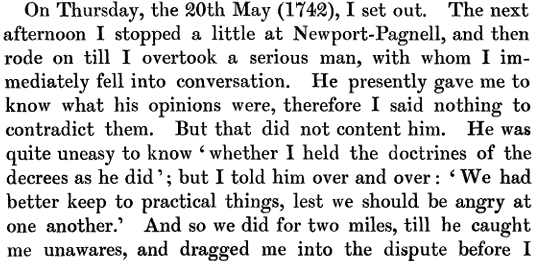
John Wesley Encounters A Calvinist Who Hates Him, But Doesn’t Know Who He Is

Posted in Uncategorized
Leave a comment
The Authoritarian Use of NDAs and Matthew 18 In Our Churches – Lance Ford
Posted in Uncategorized
Leave a comment
Charismatics, Revelations, and Prophetic Ministry Books
This is the most recent bibliography on these subjects I’ve developed. I might need to make it annotated. I’m more familiar with Dr. Deere’s and Dr. Grudem’s teachings on the gift of prophecy. Both Deere and Grudem show an awareness of John Knox and the Covenanters and cite them as legitimizers of the gifts of dream interpretation, word of knowledge, and foretelling in Reformed churches. Many charismatic teachers on the gift of prophecy wrongly have antinomian hyper-grace ideas based on “prophesying in love,” an interpretation of 1 Corinthians 14:1 that rejects John the Baptist-oriented repentance revelations as an “Old Testament mindset.” Repentance-focused, Hell-focused, or wrath of God focused dreams and visions are always rejected by such antinomian charismatics, and are always shoved aside, being put into the mean-spirited and hateful category. Of course, these are also the charismatic churches that usually end up with sexual scandals more often, because of their lack of ethical restraint. Mark and avoid such teachers whenever you can! Anti-repentance teaching in any form goes against the teachings of Jesus and the apostles. Look no further than the Book of Revelation to see for yourself that the dreams and visions of Acts 2:17 certainly can be in the hellfire, wrath of God, and repentance category! Any charismatic prophet, trainer, or pastor who teaches otherwise, is simply mistaken, or deliberately teaching against Scripture in order to excuse sexual sin (Jude 1:8). Let’s also remember that Agabus accurately predicted a famine (Acts 11:28) and Paul’s arrest in Jerusalem (Acts 21:10-11). Not all dreams and visions from the Holy Spirit are marked by a happy, joyful, super-gentle, overtly positive character, nor likely will there be anything that’s going to be mawkishly effeminate, childishly emotional, nor any love theme of a sentimental or even romantic nature.
In fact, many prophetic dreams are urgent warnings, and speak of God’s holy wrath against sin, and are not only found in the Old Testament. Too much antinomian dispensationalism mixed into charismatic prophecy results in a hyper-grace prophetic culture that is sexually immoral and cultlike. Charismatics need to learn from their mistakes! Let’s not have another IHOP scandal! Let’s do this thing right. What does prophesying in love mean then? Paul defines it like this: “Love is patient, love is kind. It does not envy, it does not boast, it is not proud. It does not dishonor others, it is not self-seeking, it is not easily angered, it keeps no record of wrongs. Love does not delight in evil but rejoices with the truth. It always protects, always trusts, always hopes, always perseveres. Love never fails. But where there are prophecies, they will cease; where there are tongues, they will be stilled; where there is knowledge, it will pass away. For we know in part and we prophesy in part” (1 Corinthians 13:4-9). As you can see, the Spirit of Love which is also the Spirit of Prophecy is here described with about fifteen ethical facets. There’s nothing hyper-grace or anti-law in Paul’s understanding of love. Especially when he says that “love does not delight in evil but rejoices with the truth” (1 Corinthians 13:6). So, we can conclude that Paul’s concept of love is not in opposition or contradiction to John the Baptist, Jesus, Paul when he rebuked Elymas (Acts 13:8-12), or any of the rebukes and warnings of the Old Testament prophets. Any charismatic teacher who teaches an anti-Hell, anti-wrath of God, anti-repenting, non-judgmental love perspective, which comes down to a dispensationalist cheap grace view of prophecy, is truly confused; and is probably not a good person to learn about the spiritual gifts from. Such teachers are more likely to come out as perverts or alcoholics down the road, as was the case with Paul Cain, Bob Jones, Todd Bentley, and Mike Bickle. –J.B.
Dr. Jack Deere, Surprised by the Power of the Spirit (Zondervan, 1993).
—. Why I Am Still Surprised by the Power of the Spirit (Zondervan, 2020).
—. Surprised by the Voice of God (Zondervan, 1996).
—. Why I Am Still Surprised by the Voice of God (Zondervan, 2022).
—. The Beginner’s Guide to the Gift of Prophecy (Regal, 2001).
Dr. Wayne Grudem, The Gift of Prophecy In the New Testament (Crossway, 2000).
Dr. Archibald Alexander, Thoughts on Religious Experience (Banner of Truth, 1998).
Jeff Doles, Miracles and Manifestations (Walking Barefoot Ministries, 2007).
Augustin Poulain, The Graces of Interior Prayer (Kegan Paul, 1910).
Ira Milligan, Understanding the Dreams You Dream (Treasure House, 1997).
Charles Finney, “The Self-Hardening Sinner’s Doom,” 1.3. Refers to belief in Hell dreams – adhered to by both Jonathan Edwards and Finney.
Daniel Jennings, The Supernatural Occurrences of John Wesley.
—. The Supernatural Occurrences of Charles G. Finney.
Posted in Uncategorized
Leave a comment
My Personal Salvation Testimony 3: College
Strengthened individuals
Encouraged for unity
We’ve been pushed to the limit
Through an established motivation
Gathered in love to Christ our head
Come on let’s join in synergy
Conspiracy constructed with hope in sight
A rebellious enthusiasm – united by Christ
To vulcanize the Spirit-filled thrash forever
Revitalization is what we want to see
Of the moving solidarity
By given strength community will be found
Let’s exploit our nerve of optimism
By flesh we’ll go separate ways
By Spirit we’ll unite
It’s time to make a change of mind
To conquer egocentricity
Together we will conjure up
A zealous wish to sacrifice the singularity
For the growth of this body
For the kingdom’s progress
–Extol, “Thrash Synergy”–
18 For the wrath of God is revealed from heaven against all ungodliness and unrighteousness of men, who suppress the truth in unrighteousness, 19 because what may be known of God is manifest in them, for God has shown it to them. 20 For since the creation of the world His invisible attributes are clearly seen, being understood by the things that are made, even His eternal power and Godhead, so that they are without excuse.
–Romans 1:18-20 (NIV)–
The Spirit Himself bears witness with our spirit that we are children of God.
–Romans 8:16 (NIV)–
—
God will be with us, and he will make us understand what we have believed. For we are well aware that we are at the stage described by the prophet, who says, “Unless you believe, you will not understand” (Isa. 7:9).
–Augustine, On Free Choice of the Will 1.2–
Do not, then, reprove for error those who have made a choice; for you know nothing about it. “No, but I blame them for having made, not this choice, but a choice; for again both he who chooses heads and he who chooses tails are equally at fault, they are both in the wrong. The true course is not to wager at all.” Yes; but you must wager. It is not optional. You are embarked. Which will you choose then? Let us see. Since you must choose, let us see which interests you least. You have two things to lose, the true and the good; and two things to stake, your reason and your will, your knowledge and your happiness; and your nature has two things to shun, error and misery. Your reason is no more shocked in choosing one rather than the other, since you must of necessity choose. This is one point settled. But your happiness? Let us weigh the gain and the loss in wagering that God is. Let us estimate these two chances. If you gain, you gain all; if you lose, you lose nothing. Wager, then, without hesitation that He is. “That is very fine. Yes, I must wager; but I may perhaps wager too much.” Let us see. Since there is an equal risk of gain and of loss, if you had only to gain two lives, instead of one, you might still wager. But if there were three lives to gain, you would have to play (since you are under the necessity of playing), and you would be imprudent, when you are forced to play, not to chance your life to gain three at a game where there is an equal risk of loss and gain. But there is an eternity of life and happiness. And this being so, if there were an infinity of chances, of which one only would be for you, you would still be right in wagering one to win two, and you would act stupidly, being obliged to play, by refusing to stake one life against three at a game in which out of an infinity of chances there is one for you, if there were an infinity of an infinitely happy life to gain. But there is here an infinity of an infinitely happy life to gain, a chance of gain against a finite number of chances of loss, and what you stake is finite. It is all divided; wherever the infinite is and there is not an infinity of chances of loss against that of gain, there is no time to hesitate, you must give all. And thus, when one is forced to play, he must renounce reason to preserve his life, rather than risk it for infinite gain, as likely to happen as the loss of nothingness.
–Blaise Pascal, Pensees, 3.233–
—
The Cloud of Unknowing.
Jordan Aumann, Spiritual Theology.
Norman Geisler, When Critics Ask.
Josh McDowell, More Than a Carpenter.
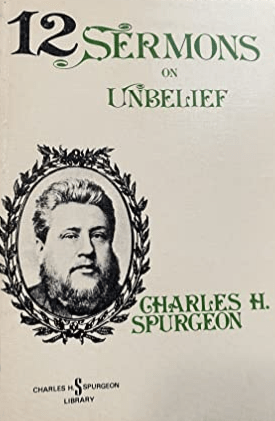
Thomas C. Oden, John Wesley’s Scriptural Christianity, p. 228.
Posted in Uncategorized
Leave a comment
Arminian Objections to Eternal Security – Randolph Foster and John Wesley
Originally from here.
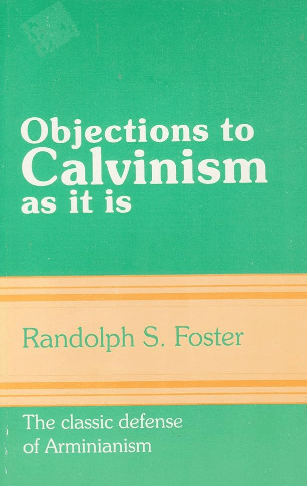
Taken from ch. 6 on “Perseverance,” in Randolph Foster’s Objections to Calvinism As It Is.
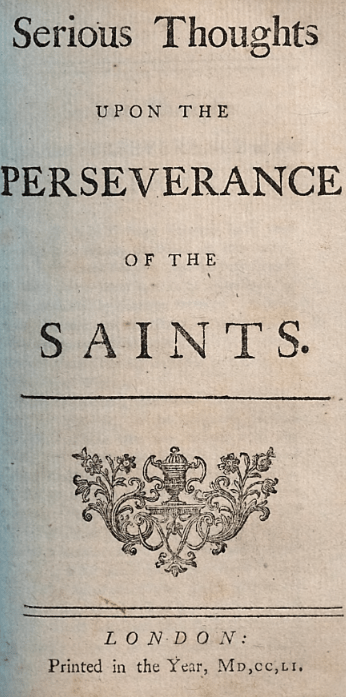
John Wesley’s Serious Thoughts Upon the Perseverance of the Saints (1751):
his tract against eternal security.
Posted in Uncategorized
Leave a comment