vs

Leonard Ravenhill
David Brainerd
Hudson Taylor
George Muller
Martyn Lloyd-Jones (much)
Charles Spurgeon
Jonathan Edwards
E. M. Bounds
Joel Beeke
1:34:18 – This section preaches against contemplative prayer. I think this is an unnecessary cessationist bias. See Tom Schwanda’s Soul Recreation for a study on Isaac Ambrose, who was a Puritan who taught about contemplative prayer. It is endorsed by J. I. Packer. However his reference to Yungen in this video might be valid in that “centering prayer,” which is universalist in theology, is often mixed into the teachings on contemplative prayer by Richard Foster in particular. Contemplative prayer is worthless if is it not centered in the Bible and the Reformation. –J.B.
1:46:00 – This section is revealing. It shows that Rick Warren borrowed much of his ideas from Peter Drucker, who was largely responsible for creating the modern ideology known as Corporate America. –J.B.
2:20:54 – IF YOU ARE A GLOBAL BUSINESS LEADER, YOU NEED TO UNDERSTAND THAT THE FUTURE OF THE WORLD IS NOT SECULARISM, IT IS RELIGIOUS PLURALISM. YOU MAY NOT LIKE THAT, BUT YOU’RE GONNA HAVE TO DEAL WITH IT…TO MY ISLAMIC BROTHER HERE FROM ITALY, I WOULD SAY, “I’M NOT REALLY INTERESTED IN INTERFAITH DIALOGUE, I’M INTERESTED IN INTERFAITH PROJECTS.” –RICK WARREN


7 Wherefore (as the Holy Ghost saith, To day if ye will hear his voice, 8 Harden not your hearts, as in the provocation, in the day of temptation in the wilderness: 9 When your fathers tempted me, proved me, and saw my works forty years. 10 Wherefore I was grieved with that generation, and said, They do alway err in their heart; and they have not known my ways. 11 So I sware in my wrath, They shall not enter into my rest.) 12 Take heed, brethren, lest there be in any of you an evil heart of unbelief, in departing from the living God. 13 But exhort one another daily, while it is called To day; lest any of you be hardened through the deceitfulness of sin. 14 For we are made partakers of Christ, if we hold the beginning of our confidence stedfast unto the end; 15 While it is said, To day if ye will hear his voice, harden not your hearts, as in the provocation. 16 For some, when they had heard, did provoke: howbeit not all that came out of Egypt by Moses. 17 But with whom was he grieved forty years? was it not with them that had sinned, whose carcases fell in the wilderness? 18 And to whom sware he that they should not enter into his rest, but to them that believed not? 19 So we see that they could not enter in because of unbelief.
–Hebrews 3:7-19 (KJV)–
—
Dr. Jack Deere, Surprised by the Voice of God (Zondervan, 1996), chs. 16-19. Argues that cessationists don’t have charismatic experiences because of their unbelief and their stubborn pride of feeling they are right in their views (Acts 7:51); the same probably applies to most atheists, agnostics, and skeptics (Romans 1:18; 1 Corinthians 2:14).
Dr. Sam Storms, Understanding Spiritual Gifts (Zondervan, 2020).
Dr. Wayne Grudem, The Gift of Prophecy (Crossway, 2000), Appendix 7.
Dr. Guy Chevreau, Catch the Fire: The Toronto Blessing, An Experience of Renewal and Revival (HarperCollins, 1995). Think what you want about that movement, but this book still explores Jonathan Edwards’ charismatic views very thoroughly.
Charles Finney, “The Self-Hardening Sinner’s Doom,” 1.3. Refers to belief in Hell dreams – adhered to by both Jonathan Edwards and Finney.
Daniel Jennings, The Supernatural Occurrences of John Wesley.
Jeff Doles, Miracles and Manifestations of the Holy Spirit In the History of the Church, ch. 7. John Knox and the Scottish Reformation preachers were all into dream interpretation and the gift of foretelling prophecy.
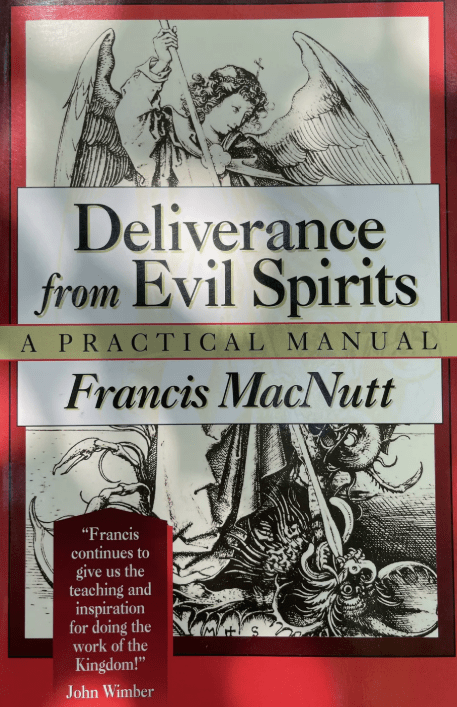
John Wimber, Power Evangelism (Harper & Row, 1986).
—. Power Healing (HarperCollins, 1987).
Robert DeGrandis, The Gift of Prophecy (1984). This is an 80 page booklet written by a Catholic charismatic priest. He relies on the Bible and personal experience. While he allows that dreams can be messages from God, he puts a stronger emphasis on mental voices, and “prophesying in faith” or when people in the context of a charismatic prayer meeting feel the urge to say two or three words, and go to say them, only to find that there are two or three more words to say, and so forth. I would call that a “prophetic impression,” and while I think this is a legitimate form of prophecy, it is not likely going to be anything dramatic. I agree with Dr. Deere when he said that impressions are “flimsy” experiences (The Beginner’s Guide to the Gift of Prophecy, p. 46). After years of experience and reflection as a charismatic Christian, I have come to almost completely disregard impressions, and will only take certain dreams seriously; and if I have a good one, in the context of a good strong season in my devotional life, then I will proceed down the road of Bible-based dream interpretation and sharing, or what I would call a dream-based prophecy.
God resisteth the proud, but giveth grace unto the humble.
–James 4:6 (KJV)–
—
So high indeed are our spirits, that when it becomes the duty of any one to reprove us—we are commonly impatient both of the matter and the manner. We love the man who will say as we say, and be of our opinion, and promote our reputation, though in other respects, he is less worthy of our esteem. But we think that one is ungrateful to us—if he differs from us, and deals plainly with us as to our errors, and tells us of our faults. Especially in the management of our public arguings, where the eye of the world is upon us, we can scarcely endure any reproof or plain dealing. I know that railing language is to be abhorred, and that we should be as tender of each other’s reputation, as our fidelity to the truth will permit. But our pride makes too many of us think all men condemn us—who do not admire us, yes, and admire all we say, and submit their judgments to our most obvious mistakes! We are so tender—that a man can scarcely touch us but we are hurt. We are so high-minded, that a man who is not versed in complimenting and skilled in flattery, can scarcely tell how to speak to us, without us being offended at some word, which our proud hearts will fasten on and take as injurious to our honor.
I confess I have often wondered that this most heinous sin should be made so light of, and thought so consistent with a holy frame of heart and life, when far less sins are by ourselves, proclaimed to be so damnable in our people! And I have wondered more, to see the difference between godly preachers and ungodly sinners, in this respect. When we speak to drunkards, worldlings, or ignorant unconverted persons, we disgrace them to the utmost, and lay it on as plainly as we can speak, and tell them of their sin, and shame, and misery. And we expect that they should not only bear all patiently, but take all thankfully. And most that I deal with do take it patiently; and many gross sinners will commend the closest preachers most, and will say that they care not for hearing a man that will not tell them plainly of their sins. But if we speak to ministers against their errors or their sins, if we do not honor them and reverence them, and speak as smoothly as we are able to speak, yes, if we mix not commendations with our reproofs, and if the applause is not predominant, so as to drown all the force of the reproof, they take it as almost an insufferable injury!
–Rev. Richard Baxter (d. 1691)–
—
What God in His sovereignty may yet do on a world-scale I do not claim to know: but what He will do for the plain man or woman who seeks His face I believe I do know and can tell others. Let any man turn to God in earnest, let him begin to exercise himself unto godliness, let him seek to develop his powers of spiritual receptivity by trust and obedience and humility, and the results will exceed anything he may have hoped in his leaner and weaker days.
Any man who by repentance and a sincere return to God will break himself out of the mold in which he has been held, and will go to the Bible itself for his spiritual standards, will be delighted with what he finds there.
Let us say it again: The Universal Presence is a fact. God is here. The whole universe is alive with His life. And He is no strange or foreign God, but the familiar Father of our Lord Jesus Christ whose love has for these thousands of years enfolded the sinful race of men. And always He is trying to get our attention, to reveal Himself to us, to communicate with us. We have within us the ability to know Him if we will but respond to His overtures. (And this we call pursuing God!) We will know Him in increasing degree as our receptivity becomes more perfect by faith and love and practice.
O God and Father, I repent of my sinful preoccupation with visible things. The world has been too much with me. Thou hast been here and I knew it not. I have been blind to Thy Presence. Open my eyes that I may behold Thee in and around me. For Christ’s sake, Amen.
–A. W. Tozer–