In this article, I would like to explore the reasons why Wesleyanism is distinct from Calvinism as a system of belief and spirituality. In my personal opinion, there are really two main doctrinal issues that are linked with this differentiation. The traditions are centuries-old and it’s very improbable that they will ever merge together or reconcile. The first issue is the doctrine of eternal security on the Calvinist side; and the second issue is the doctrine of cessationism. Wesleyans generally believe the opposite on those two points. Wesleyans believe in conditionalsecurity and continuationism or that the miraculous gifts of the Holy Spirit are given today in one way or another. Although there are variations among them.
Because I am a Wesleyan, I believe that the Bible teaches CONDITIONAL SECURITY: whether it’s the Parable of the Sower, or 1 Timothy 1:19, which talks about the shipwreck of the genuine faith of a true convert, or Hebrews 6:4-6 and 10:26-30, in any case, true faith, true converting saving, justifying, and sanctifying faith, faith in the blood of Jesus Christ as a substitutionary atonement, faith that produces a sense of the Holy Spirit in a believer’s heart. Real genuine faith can still be shipwrecked if it is neglected through unbelief or worldly distractions: and this is believed to come from a plain reading of the Word of God, without extraordinary interpretations put into it. It is the natural result of just plainly reading the Bible. “How shall we escape, if we neglect so great salvation?” (Hebrews 2:3).
As a Wesleyan, I believe that the Bible teaches the CONTINUATION of the miraculous gifts of the Holy Spirit. Romans 8:16 says that the Spirit bears witness with our spirit that we are children of God. This is so essential, whether we feeltheHolySpirit on us, in us, around us, or near us, to comfort us. Whether we hear the voice of the Holy Spirit in our minds, say, “I love you,” or we feel the burning fire of the Holy Spirit warming our bellies, as we meditate on the Word of God like the disciples on the road to Emmaus, whether we have dreams and visions of the Holy Spirit, with Christian content in them as in Acts 2:17 or the book of Revelation. We feel so led to share our spiritual experiences. Not just in our journal privately, but publicly in a church service like in 1 Corinthians 14. We feel so led to pray for the divinehealing of another person with the laying on of our hands, or maybe feel the desire to speak in tongues as the Holy Spirit fills us. Whatever the case may be, we do believe that these gifts are for today and that they are the result of drawing near to God through the Bible, prayer, and worship. We go to him in prayer and then his manifest presence responds and draws near to us (James 4:8).
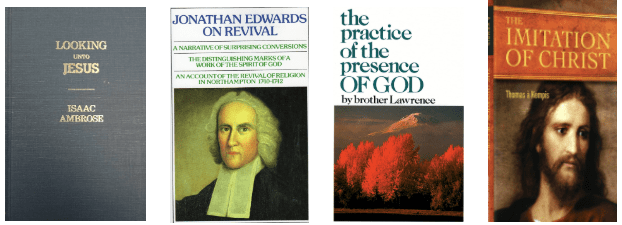
There are many Calvinists, who believe in repentance and faith in the substitutionary atonement of Christ, who believe that obedience to the Bible is a necessary evidence of genuine saving faith, that feel the presence of God and hear the voice of the Holy Spirit, that have genuine converting faith and a genuine walk with Jesus, Calvinists like John Bunyan, Jonathan Edwards, George Whitefield, and Charles Spurgeon. They understand God, experientially by faith. They preach and believe in eternal punishment, and salvation from it, through the substitutionary sacrifice of Jesus prophesied in Isaiah 53. These are sincere and true believers, true members of the body of Christ. If they have the witness of the Holy Spirit, if they bear the fruit of the Spirit, if they have good works in their lives, if they keep and love God’s commandments with all their hearts, minds, and strength, these are true members of the body of Christ. No matter what their opinions about predestination and the HolySpirit are. But I still approach that contentious crowd with fear and loathing. I do not believe that I’d ever be invited to be a part of their club. No matter how popular I may ever be. There is a very protective attitude that many of them have. They don’t want to confuse their families, wives, or kids about thoughts like conditional security and continuationism. That’s where the wall of separation between the Calvinists and Wesleyans can be found.
What is the Wesleyan tradition? What does it look like today? Where are we to truly find them? Not in name only but in practice. I don’t know! But, I do believe that it would be right to say that the starting point should probably be the InterChurch Holiness Convention, which is comprised of groups like the Bible Methodist Church and the Southern Methodist Church, with Bible colleges like Allegheny Wesleyan College and Southern Methodist College. These are churches that are conservative and believe in separation from the world. However, some people might understandably find some of their customs to be a little bit rigid. They probably are inclined to reject rock music, movies, and things like that. A true Wesleyan preaches repentance, and eternal punishment, and LGBT inclusion does not fit into that. No true Bible Wesleyan would ever approve of something like that! Wesleyans are preachers of the moral law. However, if we are talking about a generic watered down Wesleyanism, there’s plenty of examples of this. These are the big Wesleyan denominations that do not preach the doctrines of Wesley and if anything, only hold to them at the seminary level. But in the pulpit there’s no preaching of the doctrines of Wesley, there’s no preaching of Bible holiness, there’s no awareness of Schmul Publishing and Francis Asbury Press. I can rest assure you that the preacher in that church is Wesleyan in name only. I’m afraid to say that I think the Christian and Missionary Alliance, Church of the Nazarene, Assemblies of God, and Church of God all fall into this category. They have all been so whitewashed with Rick Warren’s PurposeDrivenChurch ideology, that I just do not trust them in general.
—
Ernest S. Williams, Systematic Theology (Gospel Publishing House, 1953).
Charles Carter, ed. A Contemporary Wesleyan Theology (Zondervan, 1984).
Dr. Vic Reasoner, Fundamental Wesleyan Systematic Theology (FWP, 2021).
Dr. French Arrington, Christian Doctrine (Pathway Press, 1992).
David Anderson, Conditional Security (Schmul, 1985).
P. C. Nelson, Bible Doctrines (Gospel Publishing House, 1948), ch. 8.
Harold Horton, The Gifts of the Spirit (Gospel Publishing House, 1934).
Dr. Harald Lindström, Wesley and Sanctification (Zondervan, 1998).
Dr. Thomas C. Oden, John Wesley’s Scriptural Christianity (Zondervan, 1994).
Dr. Kenneth J. Collins, Wesley on Salvation (Zondervan, 1989).
John Wesley, Calvinism Calmly Considered (Schmul, 2001).
—. Wesleyana (Allegheny Publications, 1979).
Adam Clarke, Christian Theology (Schmul, 1990).
Dr. Jack Deere, Why I Am Still Surprised by the Power of the Spirit (Zondervan, 2020).
—. Why I Am Still Surprised by the Voice of God (Zondervan, 2022).
Daniel Corner, The Believer’s Conditional Security (Evangelical Outreach, 2000).
Robert Graves, ed. Strangers to Fire (Empowered Life, 2016).
Móntate Móntate pa’ que veas como es Móntate Móntate pa’ que veas como es
Planificando tanto el evento Que no hay momento ese es mi argumento Todo te suena muy bien, en teoría big deal Deja la filosofía
Te pregunto yo que es lo que estas esperando Si es la oportunidad que tu has estado sonando Pues abre los ojos y móntate ya Que el tren se te va y no va a parar
Más, písalo… Písalo, más Más, písalo… Písalo, más
Si mucho se planea no hay espontaneidad Y entonces la clave; te puede quedar agua Si mucho se planea no hay espontaneidad Y entonces la clave; te puede quedar agua
Sube al tren para el ride de tu vida Vamos a cien y es callejón sin salida Trata de disfrutar el momento Lo que viene después es solo un cuento
—
Get on Get on so you can see what it’s like Get on Get on so you can see what it’s like
Planning the event so much That there’s no time That’s my argument It all sounds great to you In theory it’s a big deal Leave the philosophy
I ask you, What are you waiting for? If it’s the opportunity you’ve been dreaming of Well, open your eyes And get on now! The train is leaving you And it’s not gonna to stop
Step on it more Step on it more Step on it more Step on it more
If you plan too much There’s no spontaneity And the thing is You may be left with nothing
Get on the train For the ride of your life We’re going at a hundred miles per hour And it’s a dead end Try to enjoy the moment ‘Cause what comes next is just a “fairy tale”
–Puya, “Montate”–
—
Preached at Bristol, in the year 1740
He that spared not his own Son, but delivered him up for us all, how shall he not with him also freely give us all things. Romans 8:32
TO THE READER
Nothing but the strongest conviction, not only that what is here advanced is “the truth as it is in Jesus,” but also that I am indispensably obliged to declare this truth to all the world, could have induced me openly to oppose the sentiments of those whom I esteem for their work’s sake: At whose feet may I be found in the day of the Lord Jesus!
Should any believe it his duty to reply hereto, I have only one request to make, — Let whatsoever you do, be done inherently, in love, and in the spirit of meekness. Let your very disputing show that you have “put on, as the elect of God, bowel of mercies, gentleness, longsuffering; “that even according to this time it may be said, “See how these Christians love one another!”
ADVERTISEMENT
Whereas a pamphlet entitled, “Free Grace Indeed,” has been published against this Sermon; this is to inform the publisher, that I cannot answer his tract till he appears to be more in earnest. For I dare not speak of “the deep things of God” in the spirit of a prize-fighter or a stage-player.
1. How freely does God love the world! While we were yet sinners, “Christ died for the ungodly.” While we were “dead in our sin,” God “spared not his own Son, but delivered him up for us all.” And how freely with him does he “give us all things!” Verily, FREE GRACE is all in all!
2. The grace or love of God, whence cometh our salvation, is FREE IN ALL, and FREE FOR ALL.
3. First. It is free in all to whom it is given. It does not depend on any power or merit in man; no, not in any degree, neither in whole, nor in part. It does not in anywise depend either on the good works or righteousness of the receiver; not on anything he has done, or anything he is. It does not depend on his endeavors. It does not depend on his good tempers, or good desires, or good purposes and intentions; for all these flow from the free grace of God; they are the streams only, not the fountain. They are the fruits of free grace, and not the root. They are not the cause, but the effects of it. Whatsoever good is in man, or is done by man, God is the author and doer of it. Thus is his grace free in all; that is, no way depending on any power or merit in man, but on God alone, who freely gave us his own Son, and “with him freely giveth us all things.
4. But it is free for ALL, as well as IN ALL. To this some have answered, “No: It is free only for those whom God hath ordained to life; and they are but a little flock. The greater part of God hath ordained to death; and it is not free for them. Them God hateth; and, therefore, before they were born, decreed they should die eternally. And this he absolutely decreed; because so was his good pleasure; because it was his sovereign will. Accordingly, they are born for this, — to be destroyed body and soul in hell. And they grow up under the irrevocable curse of God, without any possibility of redemption; for what grace God gives. he gives only for this, to increase, not prevent, their damnation.”
5. This that decree of predestination. But methinks I hear one say, “This is not the predestination which I hold: I hold only the election of grace. What I believe is not more than this, — that God,, before the foundation of the world, did elect a certain number of men to be justified, sanctified, and glorified. Now, all these will be saved, and none else; for the rest of mankind God leaves to themselves: So they follow the imaginations of their own hearts, which are only evil continually, and, waxing worse and worse, are at length justly punished with everlasting destruction.”
6. Is this all the predestination which you hold Consider; perhaps this is not all. Do not you believe God ordained them to this very thing” If so, you believe the whole degree; you hold predestination in the full sense which has been above described. But it may be you think you do not. Do not you then believe, God hardens the hearts of them that perish: Do not you believe, he (literally) hardened Pharaoh’s heart; and that for this end he raised him up, or created him Why, this amounts to just the same thing. If you believe Pharaoh, or any one man upon earth, was created for this end, — to be damned, — you hold all that has been said of predestination. And there is no need you should add, that God seconds his degree, which is supposed unchangeable and irresistible, by hardening the hearts of those vessels of wrath whom that decree had before fitted for destruction.
7. well, but it may be you do not believe even this; you do not hold any decree of reprobation; you do not think God decrees any man to be damned, not hardens, irresistibly fits him, for damnation; you only say, “God eternally decreed, that all being dead in sin, he would say to some of the dry bones, Live, and to others he would not; that, consequently, these should be made alive, and those abide in death, — these should glorify God by their salvation, and those by their destruction.”
8. Is not this what you mean by the election of grace If it be, I would ask one or two question: Are any who are not thus elected saved or were any, from the foundation of the world Is it possible any man should be saved unless he be thus elected If you say, “No,” you are but where you was; you are not got one hair’s breadth farther; you still believe, that, in consequence of an unchangeable, irresistible decree of God, the greater part of mankind abide in death, without any possibility of redemption; inasmuch as none can save them but God, and he will not save them. You believe he hath absolutely decreed not to save them; and what is this but decreeing to damn them It is, in effect, neither more not less; it comes to the same thing; for if you are dead, and altogether unable to make yourself alive, then, if God has absolutely decreed he will make only others alive, and not you, he hath absolutely decreed your everlasting death; you are absolutely consigned to damnation. So then, though you use softer words than some, you mean the self-same thing; and God’s decree concerning the election of grace, according to your account of it, amounts to neither more not less than what others call God’s decree of reprobation.
9. Call it therefore by whatever name you please, election, preterition, predestination, or reprobation, it comes in the end to the same thing. The sense of all is plainly this, — by virtue of an eternal, unchangeable, irresistible decree of God, on part of mankind are infallibly saved, and the rest infallibly damned; it being impossible that any of the former should be damned. or that any of the latter should be saved.
10. But if this be so, then is all preaching vain. It is needless to them that are elected; for they, whether with preaching or without, will infallibly be saved. Therefore, the end of preaching — to save should — is void with regard to them; and it is useless to them that are not elected, for they cannot possibly be saved: They, whether with preaching or without, will infallibly be damned. The end of preaching is therefore void with regard to them likewise; so that in either case our preaching is vain, as you hearing is also vain.
11. This then, is a plain proof that the doctrine of predestination is not a doctrine of God, because it makes void the ordinance of God; and God is not divided against himself. A Second is, that it directly tends to destroy that holiness which is the end of all the ordinances of God. I do not say, none who hold it are holy; (for God is of tender mercy to those who are unavoidably entangled in errors of any kind;) but that the doctrine itself, — that every man is either elected or not elected from eternity, and that the one must inevitably be saved, and the other inevitably damned, — has a manifest tendency to destroy holiness in general; for it wholly takes away those first motives to follow after it, so frequently proposed in Scripture, the hope of future reward and fear of punishment, the hope of heaven and fear of hell. That these shall go away into everlasting punishment, and those into life eternal, is not motive to him to struggle for life who believes his lot is cast already; it is not reasonable for him so to do, if he thinks he is unalterably adjudged either to life or death. You will say, “But he knows not whether it is life or death.” What then — this helps not the matter; for if a sick man knows that he must unavoidably die, or unavoidably recover, though he knows not which, it is unreasonable for him to take any physic at all. He might justly say, (and so I have heard some speak, both in bodily sickness and in spiritual,) “If I am ordained to life, I shall live; if to death, I shall die; so I need not trouble myself about it.” So directly does this doctrine tend to shut the very gate of holiness in general, — to hinder unholy men from ever approaching thereto, or striving to enter in thereat.
12. As directly does this doctrine tend to destroy several particular branches of holiness. Such are meekness and love, — love, I mean, of our enemies, — of the evil and unthankful. I say not, that none who hold it have meekness and love; (for as is the power of God, so is his mercy;) but that it naturally tends to inspire, or increase, a sharpness or eagerness of temper, which is quite contrary to the meekness of Christ; as then especially appears, when they are opposed on this head. And it as naturally inspires contempt or coldness towards those whom we suppose outcast form God. “O but,” you say. “I suppose no particular man a reprobate.” You mean you would not if you could help it: But you cannot help sometimes applying your general doctrine to particular persons: The enemy of souls will apply it for you. You know how often he has done so. But you rejected the thought with abhorrence. True; as soon as you could; but how did it sour and sharpen your spirit in the mean time! you well know it was not the spirit of love which you then felt towards that poor sinner, whom you supposed or suspected, whether you would or no, to have been hated of God from eternity.
13. Thirdly. This doctrine tends to destroy the comfort of religion, the happiness of Christianity. This is evident as to all those who believe themselves to be reprobated, or who only suspect or fear it. All the great and precious promises are lost to them; they afford them no RAY of COMFORT: For they are not the elect of God; therefore they have neither lot nor portion in them. This is an effectual bar to their finding any comfort or happiness, even in that religion whose ways are designed to be “ways of pleasantness, and all her paths peace.”
14. And as to you who believe yourselves the elect of God, what is your happiness I hope, not a notion, a speculative belief, a bare opinion of any kind; but a feeling possession of God in your heart, wrought in you by the Holy Ghost, or, the witness of God’s Spirit with your spirit that you are a child of God. This, otherwise termed “the full assurance of faith,: is the true ground of a Christian’s happiness. And it does indeed imply a full assurance that all your past sins are forgiven, and that you are now a child of God. But it does not necessarily imply a full assurance of our future perseverance. I do not say this is never joined to it, but that it is not necessarily implied therein; for many have the one who have not the other.
15. Now, this witness of the Spirit experience shows to be much obstructed by this doctrine; and not only in those who, Believing themselves reprobated, by this belief thrust it far from them, but even in them that have tasted of that good gift, who yet have soon lost it again, and fallen back into doubts, and fears, and darkness, — horrible darkness, that might be felt! And I appeal to any of you who hold this doctrine, to say, between God and your own hearts, whether you have not often a return of doubts and fears concerning your election or perseverance! If you ask, “Who has not” I answer, Very few of those that hold this doctrine; but many, very many, of those that hold it not, in all parts of the earth; — many of these have enjoyed the uninterrupted witness of his Spirit, the continual light of his countenance, from the moment wherein they first believed, for many months or years, to this day.
16. That assurance of faith which these enjoy excludes all doubt and fear, It excludes all kinds of doubt and fear concerning their future perseverance; though it is not properly, as was said before, an assurance of what is future, but only of what now is. And this needs not for its support a speculative belief, that whoever is once ordained to life must live; for it is wrought from hour to hour, by the mighty power of God, “by the Holy Ghost which is given unto them.” And therefore that doctrine is not of God, because it tends to obstruct, if not destroy, this great work of the Holy Ghost, whence flows the chief comfort of religion, the happiness of Christianity.
17. Again: How uncomfortable a thought is this, that thousands and millions of men, without any preceding offense or fault of theirs, were unchangeably doomed to everlasting burnings! How peculiarly uncomfortable must it be to those who have put on Christ! to those who, being filled with bowels of mercy, tenderness, and compassion, could even “wish themselves accursed for their brethren’s sake!”
18. Fourthly. This uncomfortable doctrine directly tends to destroy our zeal for good works. And this it does, First, as it naturally tends (according to what was observed before) to destroy our love to the greater part of mankind, namely, the evil and unthankful. For whatever lessens our love, must go far lessen our desire to do them good. This it does, Secondly, as it cuts off one of the strongest motives to all acts of bodily mercy, such as feeding the hungry, clothing the naked, and the like, — viz., the hope of saving their souls from death. For what avails it to relieve their temporal wants, who are just dropping into eternal fire “Well; but run and snatch them as brands out of the fire.: Nay, this you suppose impossible. They were appointed thereunto, you say, from eternity, before they had done either good or evil. you believe it is the will of God they should die. And “who hath resisted his will” But you say you do not know whether these are elected or not. What then If you know they are the one or the other, — that they are either elected or not elected, — all your labour is void and vain. In either case, your advice, reproof, or exhortation is as needless and useless as our preaching. It is needless to them that are elected; for they will infallibly be saved without it. It is useless to them that are not elected; for with or without it they will infallibly be damned; therefore you cannot consistently with your principles take any pains about their salvation. Consequently, those principles directly tend to destroy you zeal for good works; for all good works; but particularly for the greatest of all, the saving of souls from death.
19. But, Fifthly, this doctrine not only tends to destroy Christian holiness, happiness, and good works, but hath also a direct and manifest tendency to overthrow the whole Christian Revelation. The point which the wisest of the modern unbelievers most industriously labour to prove, is, that the Christian Revelation is not necessary. They well know, could they once show this, the conclusion would be too plain to be denied, “If it be not necessary, it is not true,” Now, this fundamental point you give up. For supposing that eternal, unchangeable decree, one part of mankind must be saved, though the Christian Revelation were not in being, and the other part of mankind must be damned, notwithstanding that Revelation. And what would an infidel desire more You allow him all he asks. In making the gospel thus unnecessary to all sorts of men, you give up the whole Christian cause. “O tell it not in Gath! lest the daughters of the uncircumcised rejoice; “lest the sons of unbelief triumph!
20. And as this doctrine manifestly and directly tends to overthrow the whole Christian Revelation, so it does the same thing, by plain consequence, in making that Revelation contradict itself. For it is grounded on such an interpretation of some texts (more or fewer it matters not) as flatly contradicts all the other texts, and indeed the whole scope and tenor of Scripture. For instance: The assertors of this doctrine interpret that text of Scripture, “Jacob have I loved, but Esau have I hated,” as implying that God in a literal sense hated Esau, and all the reprobated, from eternity. Now, what can possibly be a more flat contradiction than this, not only to the whole scope and tenor of Scripture, but also to all those particular texts which expressly declare, “God is love” Again: They infer from that text, “I will have mercy on whom I will have mercy,” (Romans 4:15) that God is love only to some men, viz.,the elect, and that he hath mercy for those only; flatly contrary to which is the whole tenor of Scripture, as is that express declaration in particular, “The Lord is loving unto every man; and his mercy is over all his works.” (Psalm 114:9.) Again: They infer from that and the like texts, “It is not of him that willeth, nor of him that runneth, but of God that showeth mercy,: that he showeth mercy only to those to whom he had respect from all eternity. Nay, but who replieth against God now You now contradict the whole oracles of God, which declare throughout, “God is no respecter of persons:’ (Acts 10:34) “There is no respect of persons with him.” (Rom. 2:11.) Again: from that text, “The children being not yet born, neither having done any good or evil, that the purpose of God according to election might stand, not of works, but of him that calleth; it was said unto her,” unto Rebecca, “The elder shall serve the younger;”you infer, that our being predestinated, or elect, no way depends on the foreknowledge of God. Flatly contrary to this are all the scriptures; and those in particular, “Elect according to the foreknowledge of God; ” (1 Peter 1:2;) “Whom he did foreknow, he also did predestinate.” (Rom. 8:29.)
21. And “the same Lord over all is rich” in mercy “to all that call upon him:” (Romans 10:12:) But you say, “No; he is such only to those for whom Christ died. And those are not all, but only a few, whom God hath chosen out of the world; for he died not for all, but only for those who were ‘chosen in him before the foundation of the world.'” (Eph. 1:4.) Flatly contrary to your interpretation of these scriptures, also, is the whole tenor of the New Testament; as are in particular those texts: — “Destroy not him with thy meat, for whom Christ died,” (Rom. 14:15,) — a clear proof that Christ died, not only for those that are saved, but also for them that perish: He is “the Saviour of the world;” (John 4:42;) He is “the Lamb of God that taketh away the sins of the world;” (John 1:29;) “He is the propitiation, not for our sins only, but also for the sins of the whole world;” (1 John 2:2;) “He,” the living God, “is the Savior of all men;” (1 Timothy 4:10;) “He gave himself a ransom for all;” (1 Tim. 2:6;) “He tasted death for every man.” (Heb. 2:9.)
22. If you ask, “Why then are not all men saved” the whole law and the testimony answer, First, Not because of any decree of God; not because it is his pleasure they should die; for, As I live, saith the Lord God,” I have no pleasure in the death of him that dieth.” (Ezek. 18:3, 32.) Whatever be the cause of their perishing, it cannot be his will, if the oracles of God are true; for they declare, “He is not willing that any should perish, but that all should come to repentance;” (2 Pet. 3:9;) “He willeth that all men should be saved.” And they, Secondly, declare what is the cause why all men are not saved, namely, that they will not be saved: So our Lord expressly, “Ye will not come unto me that ye may have life.” (John 5:40.) “The power of the Lord is present to heal” them, but they will not be healed. “They reject the counsel,” the merciful counsel, “of God against themselves,” as did their stiff-necked forefathers. And therefore are they without excuse; because God would save them, but they will not be saved: This is the condemnation, “How often would I have gathered you together, and ye would not!” (Matt. 23:37.)
23. Thus manifestly does this doctrine tend to overthrow the whole Christian Revelation, by making it contradict itself; by giving such an interpretation of some texts, as flatly contradicts all the other texts, and indeed the whole scope and tenor of Scripture; — an abundant proof that it is not of God. But neither is this all: For, Seventhly, it is a doctrine full of blasphemy; of such blasphemy as I should dread to mention, but that the honour of our gracious God, and the cause of his truth, will not suffer me to be silent. In the cause of God, then, and from a sincere concern for the glory of his great name, I will mention a few of the horrible blasphemies contained in this horrible doctrine. But first, I must warn every one of you that hears, as ye will answer it at the great day, not to charge me (as some have done) with blaspheming, because I mention the blasphemy of others. And the more you are grieve with them that do thus blaspheme, see that ye “confirm your love towards them: the more, and that your heart’s desire, and continual prayer to God, be, “Father, forgive them; for they know not what they do!”
24. This premised, let it be observed, that this doctrine represents our blessed Lord, “Jesus Christ the righteous,” “the only begotten Son of the Father, full of grace and truth,” as an hypocrite, a deceiver of the people, a man void of common sincerity. For it cannot be denied, that he everywhere speaks as if he was willing that all men should be saved. Therefore, to say he was not willing that all men should be saved, is to represent him as a mere hypocrite and dissembler. It cannot be denied that the gracious words which came out of his mouth are full of invitations to all sinners. To say, then, he did not intend to save all sinners, is to represent him as a gross deceiver of the people. You cannot deny that he says, “Come unto me, all ye that are weary and heavy laden.” If, then, you say he calls those that cannot come; those whom he knows to be unable to come; those whom he can make able to come, but will not; how is it possible to describe greater insincerity You represent him as mocking his helpless creatures, by offering what he never intends to give. You describe him as saying on thing, and meaning another; as pretending the love which his had not. Him, in “whose mouth was no guile,” you make full of deceit, void of common sincerity; — then especially, when, drawing nigh the city, He wept over it, and said, “O Jerusalem, Jerusalem, thou killest the prophets, and stonest them that are sent unto thee; how often would I have gathered thy children together, — and ye would not;” hqelhsa — kai ouk hqelhsate. Now, if you say, they would, but he would not, you represent him (which who could hear) as weeping crocodiles’ tears; weeping over the prey which himself had doomed to destruction!
25. Such blasphemy this, as one would think might make the ears of a Christian to tingle! But there is yet more behind; for just as it honours the Son, so doth this doctrine honour the Father. It destroys all his attributes at once: It overturns both his justice, mercy, and truth; yea, it represents the most holy God as worse than the devil, as both more false, more cruel, and more unjust. More false; because the devil, liar as he is, hath never said, “He willeth all men to be saved:” More unjust; because the devil cannot, if he would, be guilty of such injustice as you ascribe to God, when you say that God condemned millions of souls to everlasting fire, prepared for the devil and his angels, for continuing in sin, which, for want of that grace he will not give them, they cannot avoid: And more cruel; because that unhappy spirit “seeketh rest and findeth none;” so that his own restless misery is a kind of temptation to him to tempt others. But God resteth in his high and holy place; so that to suppose him, of his own mere motion, of his pure will and pleasure, happy as he is, to doom his creatures, whether they will or no, to endless misery, is to impute such cruelty to him as we cannot impute even to the great enemy of God and man. It is to represent the high God (he that hath ears to hear let him hear!) as more cruel, false, and unjust than the devil!
26. This is the blasphemy clearly contained in the horrible decree+ of predestination! And here I fix my foot. On this I join issue with every assertor of it. You represent God as worse than the devil; more false, more cruel, more unjust. But you say you will prove it by scripture. Hold! What will you prove by Scripture that God is worse than the devil I cannot be. Whatever that Scripture proves, it never an prove this; whatever its true meaning be. This cannot be its true meaning. Do you ask, “What is its true meaning then” If I say, ” I know not,” you have gained nothing; for there are many scriptures the true sense whereof neither you nor I shall know till death is swallowed up in victory. But this I know, better it were to say it had no sense, than to say it had such a sense as this. It cannot mean, whatever it mean besides, that the God of truth is a liar. Let it mean what it will it cannot mean that the Judge of all the world is unjust. No scripture can mean that God is not love, or that his mercy is not over all his works; that is, whatever it prove beside, no scripture can prove predestination.
27. This is the blasphemy for which (however I love the persons who assert it) I abhor the doctrine of predestination, a doctrine, upon the supposition of which, if one could possibly suppose it for a moment, (call it election, reprobation, or what you please, for all comes to the same thing,) one might say to our adversary, the devil, “Thou fool, why dost thou roar about any longer Thy lying in wait for souls is as needless and useless as our preaching. Hearest thou not, that God hath taken thy work out of thy hands; and that he doeth it much more effectually Thou, with all thy principalities and powers, canst only so assault that we may resist thee; but He can irresistibly destroy both body and soul in hell! Thou canst only entice; but his unchangeable decrees, to leave thousands of souls in death, compels them to continue in sin, till they drop into everlasting burnings. Thou temptest; He forceth us to be damned; for we cannot resist his will. Thou fool, why goest thou about any longer, seeking whom thou mayest devour Hearest thou not that God is the devouring lion, the destroyer of souls, the murderer of men” Moloch caused only children to pass though the fire: and that fire was soon quenched; or, the corruptible body being consumed, its torment was at an end; but God, thou are told, by his eternal decree, fixed before they had done good or evil, causes, not only children of a span long, but the parents also, to pass through the fire of hell, the ‘fire which never shall be quenched; and the body which is cast thereinto, being now incorruptible and immortal, will be ever consuming and never consumed, but ‘the smoke of their torment,’ because it is God’s good pleasure, ‘ascendeth up for ever and ever.'”
28. O how would the enemy of God and man rejoice to hear these things were so! How would he cry aloud and spare not! How would he lift up his voice and say, “To your tents, O Israel! Flee from the face of this God, or ye shall utterly perish! But whither will ye flee Into heaven He is there, Down to hell He is there also. Ye cannot flee from an omnipresent, almighty tyrant. And whether ye flee or stay, I call heaven, his throne, and earth, his footstool, to witness against you, ye shall perish, ye shall die eternally. Sing, O hell, and rejoice, ye that are under the earth! For God, even the mighty God, hath spoken, and devoted to death thousands of souls, form the rising of the sun unto the going down thereof! Here, O death, is they sting! They shall not, cannot escape; for the mouth of the Lord hath spoken it. Here, O grave is thy victory Nations yet unborn, or ever they have done good or evil are doomed never to see the light of life, but thou shalt gnaw upon them for ever and ever! Let all those morning stars sing together, who fell with Lucifer, son of the morning! Let all the sons of hell shout for joy! For the decree is past, and who shall disannul it?”
29. Yea, the decree is past; and so it was before the foundation of the world. But what decree Even this: “I will set before the sons of men ‘life and death, blessing cursing.’ And the soul that chooseth life shall live, as the soul that chooseth death shall die.” This decree whereby “whom God did foreknow, he did predestinate,” was indeed from everlasting; this, whereby all who suffer Christ to make them alive are “elect according to the foreknowledge of God,” now standeth fast, even as the moon, and as the faithful witnesses in heaven; and when heaven and earth shall pass away, yet this shall not pass away; for it is as unchangeable and eternal as is the being of God that gave it. This decree yields the strongest encouragement to abound in all good works and in all holiness; and it is a well-spring of joy, of happiness also, to our great and endless comfort. This is worthy of God; it is every way consistent with all the perfections of his nature. It gives us the noblest view both of his justice, mercy, and truth. To this agrees the whole scope of the Christian Revelation, as well as all the parts thereof. To this Moses and all the Prophets bear witness, and our blessed Lord and all his Apostles Thus Moses, in the name of his Lord: “I call heaven and earth to record against you this day, that I have set before you life and death, blessing and cursing; therefore choose life, that thou and thy seed may live.” Thus Ezekiel: choose life, that thou and thy seed may live;”Thus Ezekiel: (To cite one Prophet for all:) “The soul that sinneth, it shall die: The son shall not bear” eternally, “the iniquity of the father. The righteousness of the righteous shall be upon him, and the wickedness of the wicked shall be upon him.” (18:20.) Thus our blessed Lord: “If any man thirst, let him come unto me and drink.” (John 7:37.) Thus his great Apostle, St. Paul: (Acts 17:30:) “God commandeth all men everywhere to repent; — “all men everywhere;” every man in every place, without any exception either of place or person. Thus St. James: “If any of you lack wisdom, let him ask of God, who giveth to all men liberally, and upbraideth not, and it shall be given him.” (James 1:5.) Thus St. Peter: (2 Pet. 3:9:) “The Lord is not willing that any should perish, but that all should come to repentance.” And thus St. John: ” If any man sin, we have an Advocate with the Father; and he is the propitiation for our sins; and not for ours only, but for the sins of the whole world.” (1 John 2:1, 2.)
30. O hear ye this, ye that forget God! Ye cannot charge your death upon him! “`Have I any pleasure at all that the wicked should die’ saith the Lord God.” (Ezek. 18:23ff.) “Repent, and turn from all your transgressions; so iniquity shall not be your ruin. Cast away from you all your transgressions where by ye have transgressed, — for why will ye die, O house of Israel For I have no pleasure in the death of him that dieth, saith the Lord God. Wherefore turn yourselves, and live ye.” “As I live, saith the Lord God, I have no pleasure in the death of the wicked. — Turn ye, turn ye from your evil ways; for why will ye die, O house of Israel” (Ezekiel 33:11.)
Rescue the perishing, care for the dying, Snatch them in pity from sin and the grave; Weep o’er the erring one, lift up the fallen, Tell them of Jesus the mighty to save.
Rescue the perishing, care for the dying; Jesus is merciful, Jesus will save.
Though they are slighting Him, still He is waiting, Waiting the penitent child to receive; Plead with them earnestly, plead with them gently; He will forgive if they only believe.
Down in the human heart, crushed by the tempter, Feelings lie buried that grace can restore; Touched by a loving heart, wakened by kindness, Cords that are broken will vibrate once more.
Rescue the perishing, duty demands it— Strength for your labor the Lord will provide; Back to the narrow way patiently win them, Tell the poor wand’rer a Savior has died.
–Fanny Crosby, “Rescue the Perishing”–
—
The fearful, and unbelieving, and the abominable, and murderers, and whoremongers, and sorcerers, and idolaters, and all liars, shall have their part in THE LAKE WHICH BURNETH WITH FIRE AND BRIMSTONE: which is the second death. –Revelation 21:8 (KJV)–
My sheep HEAR MY VOICE, and I know them, and THEY FOLLOW ME: And I give unto them eternal life; and they shall never perish, neither shall any man pluck them out of my hand. –John 10:27-28 (KJV)–
I know thy works, that thou art neither cold nor hot: I would thou wert cold or hot. So then BECAUSE THOU ART LUKEWARM, and neither cold nor hot, I WILL SPUE THEE OUT OF MY MOUTH. –Revelation 3:15-16 (KJV)–
A fire is kindled in mine anger, and shall BURN UNTO THE LOWEST HELL, and shall consume the earth with her increase, and SET ON FIRE THE FOUNDATIONS OF THE MOUNTAINS. –Deuteronomy 32:22 (KJV)
EXAMINE YOURSELVES, WHETHER YE BE IN THE FAITH; prove your own selves. Know ye not your own selves, how that Jesus Christ is in you, except ye be reprobates? –2 Corinthians 13:5 (KJV)–
Who his own self bare our sins in his own body on the tree, that we, being dead to sins, should LIVE UNTO RIGHTEOUSNESS: by whose stripes ye were healed. –1 Peter 2:24 (KJV)–
—
The true friends of God and man are always aiming at forming public sentiment, and correcting public sentiment on all points where it is wrong. They are set, with all their hearts, to search out all the evils in the world, and to reform the world, and drive out iniquity from the earth. The other class are always following public sentiment as it is, and feeling after the course of the tide, to go that way, shrinking back from every thing that goes in the face of public sentiment. And they are ready to brand as imprudent, or rash, any man or any thing, that goes to stem the tide of public sentiment and turn it the other way. –Charles Finney
The RIGHTEOUS are BOLD as a LION. –Proverbs 28:1 (KJV)–
But, lo, HE SPEAKETH BOLDLY. –John 7:26 (KJV)–
When they saw THE BOLDNESS OF PETER AND JOHN, and perceived that they were unlearned and ignorant men, they marvelled; and they took knowledge of them, that they had been with Jesus. –Acts 4:13 (KJV)–
Now, Lord, behold their threatenings: and grant unto thy servants, that with all BOLDNESS they may SPEAK THY WORD…And when they had prayed, the place was shaken where they were assembled together; and they were all filled with the Holy Ghost, and THEY SPAKE THE WORD OF GOD WITH BOLDNESS. –Acts 4:29, 31 (KJV)–
He had PREACHED BOLDLY at Damascus in the name of Jesus. –Acts 9:27 (KJV)–
HE SPAKE BOLDLY IN THE NAME OF THE LORD JESUS, and DISPUTED AGAINST THE GRECIANS. –Acts 9:29 (KJV)–
PAUL AND BARNABAS WAXED BOLD, and said, It was necessary that the Word of God should first have been spoken to you: but seeing ye put it from you, and judge yourselves unworthy of everlasting life, lo, we turn to the Gentiles. –Acts 13:46 (KJV)–
Long time therefore abode they SPEAKING BOLDLY IN THE LORD, which gave testimony unto the word of his grace, and granted signs and wonders to be done by their hands. –Acts 14:3 (KJV)–
He began to SPEAK BOLDLY in the synagogue. –Acts 18:26 (KJV)–
He went into the synagogue, and SPAKE BOLDLY for the space of three months, DISPUTNG AND PERSUADING the things concerning the kingdom of God. –Acts 19:8 (KJV)–
That utterance may be given unto me, that I may OPEN MY MOUTH BOLDLY, to make known the mystery of THE GOSPEL. For which I am an ambassador in bonds: that therein I may SPEAK BOLDLY, AS I OUGHT TO SPEAK. –Ephesians 6:19-20 (KJV)–
Many of the brethren in the Lord, waxing confident by my bonds, are MUCH MORE BOLD TO SPEAK THE WORD WITHOUT FEAR. –Philippians 1:14 (KJV)–
At Philippi, WE WERE BOLD IN OUR GOD TO SPEAK UNTO YOU THE GOSPEL OF GOD WITH MUCH CONTENTION. –1 Thessalonians 2:2 (KJV)–
Apparently this book teaches against contemplative prayer. I wouldn’t agree with what’s been called “centering prayer,” which is a universalist form of it, but traditional Teresian contemplative prayer is Biblical and prophetic, and I would still support that type. –J.B.–
This trippy medieval picture is a depiction of Revelation 16:13. Its called Liber Floridus page scan B (1460).
Francesco Guarino’s St. Anthony Abbot and the Centaur (1642).
A centuries old oil painting at Luther House in Wittenberg.
The greatest trick the devil ever pulled was convincing the world he doesn’t exist. The greatest trick the devil ever pulled was convincing the world he doesn’t exist. The greatest trick the devil ever pulled was convincing the world he doesn’t exist. The greatest trick the devil ever pulled was convincing the world he doesn’t exist.
Origin of consciousness Fat acid rhetoric Promulgate me mentally Twisted to make no deity
Something more Something more
Interpret reality Sell to me no absolutes Moral relativity This world is false
Something more Something more
I have a soul Of not flesh and bone It has a spirit That cries out to know God
Your speculation seems so vague It does not reveal What’s real
Don’t pacify spiritual Teach me to be me in Christ Origin of consciousness Spiritual
I am not what meets the eye I am not what meets the eye I am not what meets the eye I am not what meets the eye
–Living Sacrifice, “Something More”–
—
Satan himself may put on the appearance of an angel of light. –2 Corinthians 11:14 (Mace’s NT)–
His appearance was like lightning, and his clothes were white as snow. –Matthew 28:3 (NIV)–
He makes his angels winds and his ministers a flame of fire. –Hebrews 1:7 (ESV)–
To another discerning of spirits. –1 Corinthians 12:10 (KJV)–
I saw Satan fall like lightning from heaven. –Jesus in Luke 10:18 (NIV)–
I saw three impure spirits that looked like frogs; they came out of the mouth of the dragon, out of the mouth of the beast and out of the mouth of the false prophet. –Revelation 16:13 (NIV)–
These signs will accompany those who believe: In My name they will drive out demons; they will speak in new tongues. –Mark 16:17 (NIV)–
6 One day the angels came to present themselves before the Lord, and Satan also came with them. 7 The Lord said to Satan, “Where have you come from?” Satan answered the Lord, “From roaming throughout the earth, going back and forth on it.” 8 Then the Lord said to Satan, “Have you considered my servant Job? There is no one on earth like him; he is blameless and upright, a man who fears God and shuns evil.” 9 “Does Job fear God for nothing?” Satan replied. 10 “Have you not put a hedge around him and his household and everything he has? You have blessed the work of his hands, so that his flocks and herds are spread throughout the land. 11 But now stretch out your hand and strike everything he has, and he will surely curse you to your face.” 12 The Lord said to Satan, “Very well, then, everything he has is in your power, but on the man himself do not lay a finger.” Then Satan went out from the presence of the Lord. –Job 1:6-12 (NIV)–
17 Then Micaiah answered, “I saw all Israel scattered on the hills like sheep without a shepherd, and the Lord said, ‘These people have no master. Let each one go home in peace.’” 18 The king of Israel said to Jehoshaphat, “Didn’t I tell you that he never prophesies anything good about me, but only bad?” 19 Micaiah continued, “Therefore hear the word of the Lord: I saw the Lord sitting on his throne with all the multitudes of heaven standing around him on his right and on his left. 20 And the Lord said, ‘Who will entice Ahab into attacking Ramoth Gilead and going to his death there?’ “One suggested this, and another that. 21 Finally, a spirit came forward, stood before the Lord and said, ‘I will entice him.’ 22 “‘By what means?’ the Lord asked. “‘I will go out and be a deceiving spirit in the mouths of all his prophets,’ he said. “‘You will succeed in enticing him,’ said the Lord. ‘Go and do it.’ 23 “So now the Lord has put a deceiving spirit in the mouths of all these prophets of yours. The Lord has decreed disaster for you.” –1 Kings 22:17-23 (NIV)–
1 Then Jesus was led by the Spirit into the wilderness to be tempted by the devil. 2 After fasting forty days and forty nights, he was hungry. 3 The tempter came to him and said, “If you are the Son of God, tell these stones to become bread.” 4 Jesus answered, “It is written: ‘Man shall not live on bread alone, but on every word that comes from the mouth of God.’” 5 Then the devil took him to the holy city and had him stand on the highest point of the temple. 6 “If you are the Son of God,” he said, “throw yourself down. For it is written: “‘He will command his angels concerning you, and they will lift you up in their hands, so that you will not strike your foot against a stone.’” 7 Jesus answered him, “It is also written: ‘Do not put the Lord your God to the test.’” 8 Again, the devil took him to a very high mountain and showed him all the kingdoms of the world and their splendor. 9 “All this I will give you,” he said, “if you will bow down and worship me.” 10 Jesus said to him, “Away from me, Satan! For it is written: ‘Worship the Lord your God, and serve him only.’” 11 Then the devil left him, and angels came and attended him. –Matthew 4:1-11 (NIV)–
—
Athanasius, The Life of Antony (Paulist Press, 1979).
Gabriele Amorth, An Exorcist Tells His Story (Ignatius Press, 1999).
—. An Exorcist: More Stories (Ignatius Press, 2002).
Francis MacNutt, Deliverance from Evil Spirits (Chosen Books, 2009).
Herbert Thurston, Ghosts and Poltergeists (Burns Oates, 1953), “The Exorcism of Haunted Houses.”
John Wimber, Power Healing (HarperCollins, 1987), ch. 6: “Healing the Demonized.”
Who am I to question? Every day to understand This precious beginning Now fading, passing This is the feeling of a sadness Where will solace find me? Where will peace begin? Where will peace begin? I have the call to be true Find a way for You The peace be inside Follow safely home In my God, in His smile Nothing is impossible Every day brings an awesome hope Grace will lead the way And joy will follow My heart leaps at the sound of Your voice Calling my name And You are so perfect In every way A testimony of creation Beautiful is Your Name I can’t wait to see Him when I wake Fresh and new Simple and true Formed by mercy Formed by grace Earth and sky In Your eyes Blessed Pure You’re more than I deserve You’re my blessing You’re my wisdom You’re my freedom You’re my mission I live for His glory
–Living Sacrifice, “Reach for the Sky”–
4 In your struggle against sin, you have not yet resisted to the point of shedding your blood. 5 And have you completely forgotten this word of encouragement that addresses you as a father addresses his son? It says,
“My son, do not make light of the Lord’s discipline, and do not lose heart when he rebukes you, 6 because the Lord disciplines the one he loves, and he chastens everyone he accepts as his son.”
7 Endure hardship as discipline; God is treating you as his children. For what children are not disciplined by their father?8 If you are not disciplined—and everyone undergoes discipline—then you are not legitimate, not true sons and daughters at all. 9 Moreover, we have all had human fathers who disciplined us and we respected them for it. How much more should we submit to the Father of spirits and live! 10 They disciplined us for a little while as they thought best; but God disciplines us for our good, in order that we may share in his holiness.11 No discipline seems pleasant at the time, but painful. Later on, however, it produces a harvest of righteousness and peace for those who have been trained by it.
12 Therefore, strengthen your feeble arms and weak knees. 13 “Make level paths for your feet,” so that the lame may not be disabled, but rather healed.