
We also speak of these things, not in words taught or supplied by human wisdom, but in those taught by the Spirit, combining and interpreting spiritual thoughts with spiritual words [for those being guided by the Holy Spirit]. But the natural [unbelieving] man does not accept the things [the teachings and revelations] of the Spirit of God, for they are foolishness [absurd and illogical] to him; and he is incapable of understanding them, because they are spiritually discerned and appreciated, [and he is unqualified to judge spiritual matters].
–1 Corinthians 2:13-14 (AMP)–
When they say to you, “Consult the mediums and the wizards who chirp and mutter,” should not a people consult their God? Should they consult the dead on behalf of the living? To the teaching and to the testimony! Surely for this word which they speak there is no dawn.
–Isaiah 8:19-20 (RSV Catholic Edition)–
He bare the sin of many, and made intercession for the transgressors.
–Isaiah 53:12 (KJV)–
In holiness and righteousness before him, all the days of our life.
–Luke 1:75 (KJV)–
So many things I think about
When I look far away
Things I know, things I wonder
Things I’d like to say
The more we think we know about
The greater the unknown
We suspend our disbelief
And we are not alone
Mystic rhythms
Capture my thoughts
Carry them away
Mysteries of night
Escape the light of day
Mystic rhythms
Under northern lights
Or the African sun
Primitive things stir
The hearts of everyone
We sometimes catch a window
A glimpse of what’s beyond
Was it just imagination
Stringing us along?
More things than are dreamed about
Unseen and unexplained
We suspend our disbelief
And we are entertained
Mystic rhythms
Capture my thoughts
Carry them away
Nature seems to spin
A supernatural way
Mystic rhythms
Under city lights
Or a canopy of stars
We feel the powers and wonder what they are
Mystic rhythms
Capture my thoughts
Carry them away
Mysteries of night
Escape the light of day
Mystic rhythms
Under northern lights
Or a canopy of stars
We feel the push and pull of restless rhythms from afar
–Rush, “Mystic Rhythms”–
In the 1950s, a TV show came out called One Step Beyond, which proposed to present episodes that were based on case studies of people that experienced real psychic phenomena. The host of this show sort of created this setup that was later on copied by people like Rod Serling, who created The Twilight Zone, which was more exaggerated and fiction based, and more aimed at dramatization. But One Step Beyond was supposed to be based on true stories of real people that had spiritual and supernatural experiences, which was similar to how Unsolved Mysteries sometimes was in the ’80s and ’90s. These true paranormal stories would occasionally have a Christian or Catholic element in them. But a lot of other times they would deal with hauntings or demonic experiences that happened to people who played around with the occult. As a result of their occult involvement, people would often have tormenting demonic experiences. A lot of people shy away from thinking about this sort of stuff for at least three reasons. 1. They’re afraid of the devil and would rather not think about it. Because if they thought about it too much, they figure, then they too might have demonic experiences. 2. The scientific community’s ideas are often piped in through our public schools and state universities, to indoctrinate people into an anti-supernatural worldview, and to trust the word of scientists in every single thing that they ever say about the past, present, and future. This ideology is called Scientism, which is literally the idolatry of science. This doesn’t only mean having an evolutionary worldview or a STEM or engineering career. It also indoctrinates people to think with a confirmation bias against the existence of angels, demons, the Holy Spirit, the soul, Heaven, and Hell. Everything that we would consider to be the spirit world in the Bible. 3. Also, there’s a rationalistic, deistic form of cessationist Calvinism that you find in Presbyterian and Baptistic Christianity, where there’s almost a bias towards agreeing with empirical science and philosophical thinking, even at the expense of Biblical truth about the spirit world. Thankfully, Lee Strobel’s Seeing the Supernatural has recently poked a whole lot of holes in that bias that exists among American evangelicals.
The Catholic Church has always given a place for people to think about the supernatural with theology, the Bible, their saints, and their priests. TAN Books, if you can look past the Mary worship, Purgatory, penance, and prayers to the dead, which is not as common in Catholic books as you might be inclined to think…are filled with miracle stories aimed at increasing people’s faith in divine intervention today. Jacobus de Voragine’s The Golden Legend (1260), Alban Butler’s Lives of the Saints (1759), and Joan Carroll Cruz’s Mysteries Marvels Miracles (1997) are about as supernatural as it gets. And yet I agree with the Articles of Religion when they say, “The Romish doctrine concerning purgatory, pardon, worshiping, and adoration, as well of images as of relics, and also invocation of saints, is a fond thing, vainly invented, and grounded upon no warrant of Scripture, but repugnant to the Word of God.” Outside of Catholicism, thinking about the supernatural has become more complicated. Protestants have had a whole lot of problems with it, but it basically has to do with how the Protestant Reformation was born at the same time as the Renaissance, and so a lot of the anti-supernatural rationalism and skepticism, got kind of mixed into Protestant theology, especially in John Calvin’s Institutes of the Christian Religion, which actually said, “Those miraculous powers and manifest operations, which were distributed by the laying on of hands, have ceased. They were only for a time” (4.19.6).
Anti-supernatural attitudes are deeply embedded in Puritanism, Calvinism, and Reformed theology, which I find to be really strange. Because eventually the Great Awakening came around with Jonathan Edwards who was a Calvinist, but his brand of Calvinism was actually descended from the Scottish Covenanters, which came down from John Knox, which was still very charismatic and very, very open to the supernatural world of the Bible, as is shown in John Howie’s Biographia Scoticana (1775). So the Great Awakening was kind of like a New England revival of the Scottish Covenanter type of spirituality, where the presence of God was expected to be poured out in the church. Believe it or not, Jonathan Edwards and John Wesley were born in the exact same year, 1703, and their Calvinist-Arminian influence coalesced at the same time period, the 1730s and 1740s. A merely random coincidence, I think not. Wesley created the Methodist Episcopal Church, which branched off the Church of England, and was not explicitly Calvinist, so there was still some theological room for this Catholic element of openness to the supernatural, as can be seen in Daniel Jennings’ Supernatural Occurrences collections from John Wesley’s and Charles Finney’s journals. There were plenty of charismatic Anglican preachers, and Wesley was definitely a supporter of continuing to have faith that miraculous gifts happened in Christians’ lives today. That is, if they were living for God, keeping their minds on Scripture, and the Holy Spirit. Assembly of God and Church of God (Cleveland) keep this tradition going, with miracle stories about Smith Wigglesworth being the touchstone.
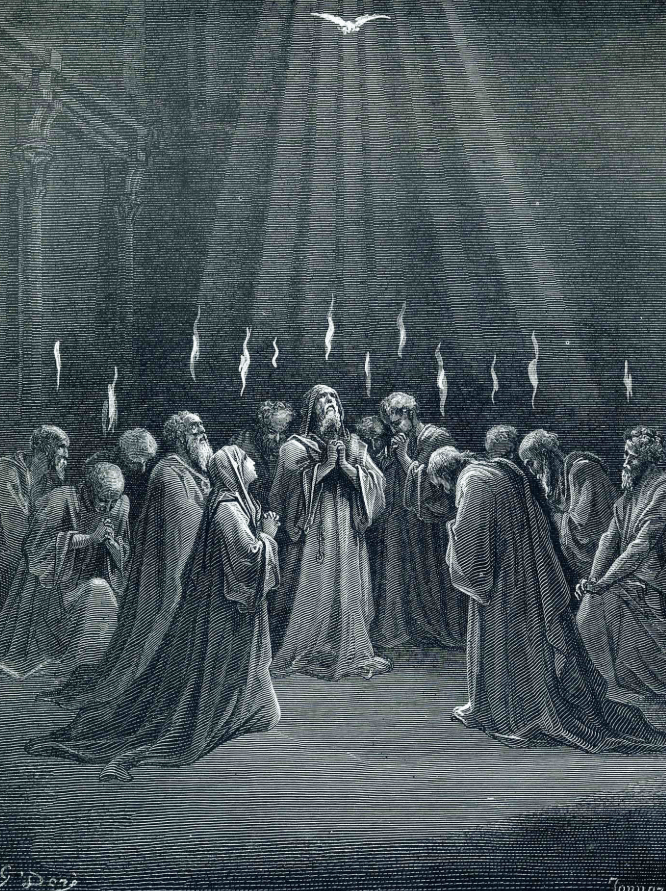
On a popular level we’re talking about people that are coming out of public school systems, and state university systems, that are strongly anti-supernatural, atheistic, agnostic, evolutionary, and so the only exposure on the popular level most Americans are getting to any supernatural concepts are usually coming through thrill-seeking horror shows and movies or horror novels by Stephen King. Both King and George Lucas I’d say we’re backslidden United Methodists, so the supernaturalism that sort of exists in Methodism, kind of rubbed off on them, and also through American pop culture like comics, movies, and books in the sci-fi and horror genre. King was also a public school teacher at one point. Then these guys backslid and got into horror and fantasy screenwriting. And you ended up with these secularized, generic supernatural narratives like the Star Wars trilogy and It. When we’re talking about supernaturalism and popular culture, we’re going to be looking at horror and science fiction. Movies like Poltergeist and The Exorcist, hopefully only viewed through Clearplay, that’s where it finally breaks through and reaches into popular American culture. But truth be told, only the Bible can show us the truth about these matters. Popular culture horror concepts can point at some of the truth about demons at least, and sometimes these movies even point to the truth about Christ’s victory over the devil. But ultimately it’s the Bible that should have the ultimate say about spiritual things like souls, and angels, and demons, and the Holy Spirit, and Heaven, and Hell. It’s the Bible that shows us how the unseen realm of the spirit really is in actual fact.
But the text above in 1 Corinthians 2:13-14 shows us that there are certain people, who when presented with supernatural concepts, will deliberately harden their hearts and minds against them, and tend to lean on the naturalistic scientific community to determine such truths for them. This is a very dangerous thing in the spiritual sense, especially when it flagrantly conflicts with the plain teaching of the Word of God. A lot of these spirit world realities, which are often communicated in parapsychology, paranormal literature, horror, sci-fi, and fantasy are true in some way, and are real realities. That demonic spirits do exist, that holy angels exist, that the Holy Spirit exists, that Heaven and Hell exist, and that the human soul exists. If we take the Bible in our hands and allow it to unfold and reveal the realm of the spirit to us, then we’ll have a proper view of all these things. And our faith will not end up being overly academic in nature; just reduced to a whole bunch of propositional theological ideas that can be taught in a classroom by a teacher. Rather our worldview, our view of the world, our faith-based world, becomes one in which there are spirits that exist in the world, and that they do act upon, and influence the world around us. And that prayer in Jesus’ name has a whole lot to do with all of this.


 WesleyGospel Ministries