
CHARISMATIC CONSIDERATIONS
ABOUT DEUTERONOMY 18:20-22
20 “A prophet who presumes to speak in my name anything I have not commanded, or a prophet who speaks in the name of other gods, is to be put to death.” 21 You may say to yourselves, “How can we know when a message has not been spoken by the Lord?” 22 If what a prophet proclaims in the name of the Lord does not take place or come true, that is a message the Lord has not spoken. That prophet has spoken presumptuously, so do not be alarmed.
–Deuteronomy 18:20-22 (NIV)–
The passage evidently assumes such an occasion for consulting the prophet as was usual among the pagan, e. g., an impending battle or other such crisis (compare 1 Kings 22:11), in which his veracity would soon be put to the test. Failure of a prediction is set forth as a sure note of its being “presumptuous.” But from Deuteronomy 13:2ff we see that the fulfillment of a prediction would not decisively accredit him who uttered it: for the prophet or dreamer of dreams who endeavoured on the strength of miracles to seduce to idolatry was to be rejected and punished. Nothing therefore contrary to the revealed truth of God was to be accepted under any circumstances.
—BARNES’ NOTES ON THE BIBLE, DEUTERONOMY 18:21–
Several observations here:
1. Under the Old Covenant, New Agers that spoke in the name of pagan gods were definitely supposed to be stoned to death (18:20).
2. A Jewish God-fearing prophet who failed at prediction was not necessarily supposed to be stoned to death. All he did was make a mistake at dream interpretation or something–the result there was simply not to take the guy very seriously (18:22). The death penalty was only clearly applied to pagan prophets who misguided people to worship pagan gods, or who was exposed as a manifest liar. But godly prophets that failed at prediction were just not taken seriously as prophetically gifted because their words fell to the ground: the Jews were told “do not be alarmed” in such cases, but not directed to kill the poor guy. Progressive sanctification, growth in the life of prayer, fasting, and spiritual disciplines implies IMPERFECTION, as the Westminster Confession 13.2 says. It seems wrong to teach this passage means that spiritual, godly men approximating towards hearing from the Holy Spirit, should definitely be KILLED for the smallest failings and mistakes at hearing and conveying what could possibly be God’s spoken words.
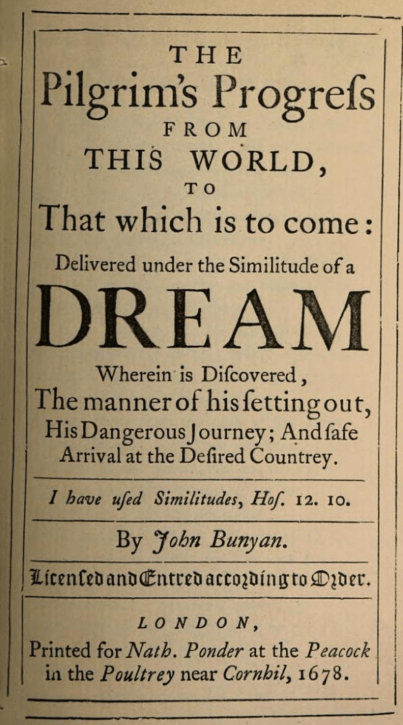
3. Rosebrough and Kozar are both Lutherans, and might be curious to know, that Thomas Boys’ Suppressed Evidence showed that Martin Luther predicted future events by dreams. The same could be said of the Scottish Reformation for over a hundred years from the time of John Knox and forward. Peters is a Baptist and might be curious to know that John Bunyan was a seer, who not only based Pilgrim’s Progress on the idea of a prophetic dream, but might have based it on an actual dream he had while in Bedford Prison. There is also a book by him called Visions of Heaven and Hell (Whitaker House, 1998). It is very similar to Bill Wiese’s 23 Minutes In Hell (Charisma House, 2006).
4. Marking and avoiding false teachers takes time; and Peters, Rosebrough, and Kozar have made a careful study of this for many years. So it’s only natural to see that they’re going to be ahead of the class in this area. I’ve always been a slower learner; and I’m glad that I’ve been able to benefit from the homework they’ve done. But I don’t think it would be right to assume that the Remnant Radio guys are being dishonest or disingenuous about charismatic leaders they’ve interviewed; or ones that I’ve posted on my blog. Although charismatics might receive prophetic gifts sometimes, this never means omniscience concerning everyone we learn about, or get a chance to meet in person.
5. A false teacher who repents of a false teaching–grace needs to be shown to such people because nobody’s perfect. Clergy sexual abuse or embezzlement on the other hand, is not only criminal, but should mean permanent disqualification according to 1 Timothy 3. Thankfully there are organizations like G.R.A.C.E. and the ECFA to safeguard these two pitfalls. –J.B.
—
Dr. Wayne Grudem, The Gift of Prophecy (Crossway, 2000), ch. 1.
Dr. Jack Deere, Why I Am Still Surprised by the Voice of God (Zondervan, 2022), p. 323.
Thomas Boys’ The Suppressed Evidence (Hamilton, Adams, and Co, 1832), pp. 182-191.
Jeff Doles, Miracles and Manifestations (Walking Barefoot Ministries, 2007), ch. 7.
Thomas C. Oden, John Wesley’s Scriptural Christianity (Zondervan, 1994).
E. S. Williams, Systematic Theology (Gospel Publishing House, 1953).


 WesleyGospel Ministries