
* But rather fear him which is able to destroy both soul and body in hell. –Matthew 10:28 (KJV) – Love was off by 10 verses; maybe because he was using a different version than the KJV.
* 31:16 – Ungodly men, turning the grace of our God into lasciviousness. –Jude 4 (KJV) – Love said it was Jude 3. Understandable when preaching or writing on such an extremely emotional subject as Hell. Exact references to book, chapter, and verse are less important while in the heat of a good preach. Often times, you’ll find in Wesley’s standard sermons, and in Clarke’s Christian Theology, a complete lack of book, chapter, and verse, because its more important to fervently preach out salvation-related Bible verses that were already committed to memory. Such is the nature of a mad and frenzied prophet denouncing sin high and low; and threatening the judgments of God from his heart! The intellectual faculty will at times become suppressed by the emotional faculty; and logical processes of a calculating and numerical nature will be subordinated to a wave of raging emotion, brought about in the awakened soul of the hellfire preacher, who is sincerely and urgently pleading with souls, and with deep feeling that they might be saved from Hell NOW!
Love refers to Arthur Hildersham (d. 1632), “a most terrible preacher” of Hell, as a source of inspiration to imitate; and a good example of a preacher that genuinely converted people, because he preached the doctrine of Hell all the way (see Lesley Rowe, The Life and Times of Arthur Hildersham, 2019). Here’s his sermons on Hell, taken mainly from Psalm 51.
—
Christopher Love’s Hell’s Terror (1658) – click for text.
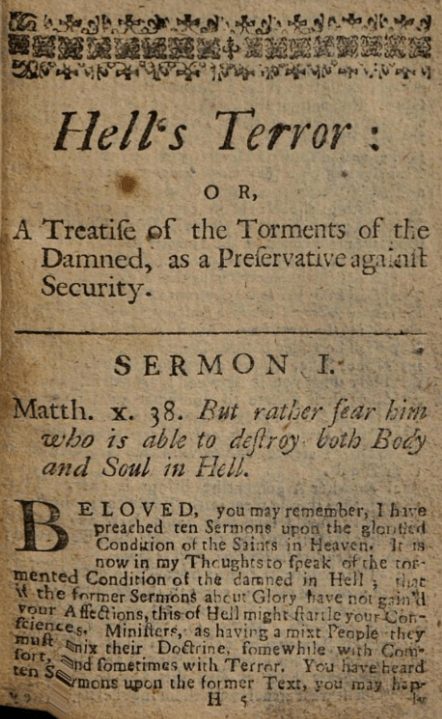
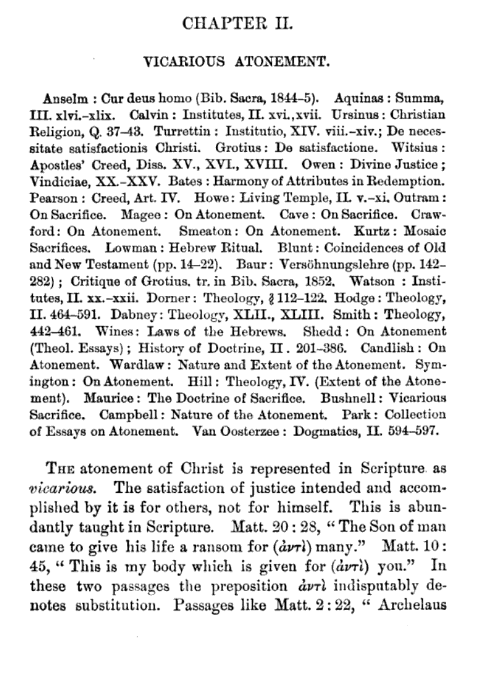
At one point, the satisfaction view or the penal substitution view of the atonement is mentioned as the only was to escape from the wrath and damnation of God. Love said, “Because Christ would not satisfy and suffer God’s wrath for wicked men, therefore they must bear it themselves” (p. 186). Here is a survey of Dr. Shedd’s writers in the Reformed tradition on the atonement, from Dogmatic Theology, volume 2, section 3, ch. 2:


 WesleyGospel Ministries