
First came David Hume’s An Enquiry Concerning Human Understanding (1748), with his chapter called “Of Miracles,” from that philosophical king of skeptics and deists. Then this naturalistic skepticism traveled into the Church under the cloak of cessationism, in the form of Conyers Middleton’s A Free Inquiry Into the Miraculous Powers (1749), and created a firestorm in the Protestant theological community. Religious scholars came to call it the Middletonian Controversy. John Wesley was probably the most famous preacher to reply to it from an Anglican charismatic point of view; but there were others who sided with Wesley. An over 400 page continuationist reply was found in Zachary Brooke’s An Examination of Dr. Middleton’s Free Inquiry (1749). Then there was William Dodwell’s A Free Answer to Dr. Middleton’s Free Inquiry (1749); and finally a 70 page pamphlet: John Jackson’s Remarks on Dr. Middleton’s Free Enquiry (1749). In the wake of all these, probably the most complete and maturely formulated book was Thomas Church’s A Vindication of the Miraculous Powers (1750), which looks like it could have been written by Jack Deere had he lived in the 18th century. Middleton completed a reply to this last one called A Vindication of the Free Inquiry. And how did God repay Dr. Middleton’s impenitence? And for spreading so much unbelief into the Church? Without a doubt by taking his life, one year after his first book was published, in 1750 at the age of 66. His second one had to be published in 1751 after MIDDLETON DIED.
B. B. Warfield completely admits that Conyers Middleton was the main influence on his cessationist views in Counterfeit Miracles (pp. 28-31). WARFIELD DIED 3 years after the book’s publication at the age of 69. Was it dead religion that animated these teachings? The death-defying John MacArthur called Warfield an “astute theologian” in his book Charismatic Chaos (p. 245). Therefore, it is reasonable to conclude, that behind all the creative cessationist “exegesis” that Dr. MacArthur has developed over his life and ministry in the form of The Charismatics (1978), Charismatic Chaos (1993), and Strange Fire (2013), what we’re looking at is really just the same naturalistic skepticism and unbelief about the supernatural that originally came from Hume; and then was sanctified for the Church by Middleton and Warfield. What I’m saying, is that John MacArthur’s cessationism is derived from David Hume and Conyers Middleton! Both of whom were outspoken deists and skeptics! Warfield was in the same category as them, but he only hid it better than they did. Doctors of theology yes, but at the same time deists and skeptics in the spiritual sense: unbelievers to use a harsher and more honest word. Being that Hume’s skepticism came from Scotland, it only seems ironically right to point back a few hundred years before him in that same country, to the time of John Knox and the Covenanters, that time recalled in John Howie’s The Scots Worthies (click here and try a keyword search of such words as dream, vision, prophecy, heal, devil, etc), which told the stories of many visions and miracles that happened among those Calvinist charismatics, as they were persecuted by representatives of the Catholic Church. More about this in Jack Deere’s Why I Am Still Surprised by the Voice of God, ch. 3, which is called “The Miracles of the Scottish Covenanters.”
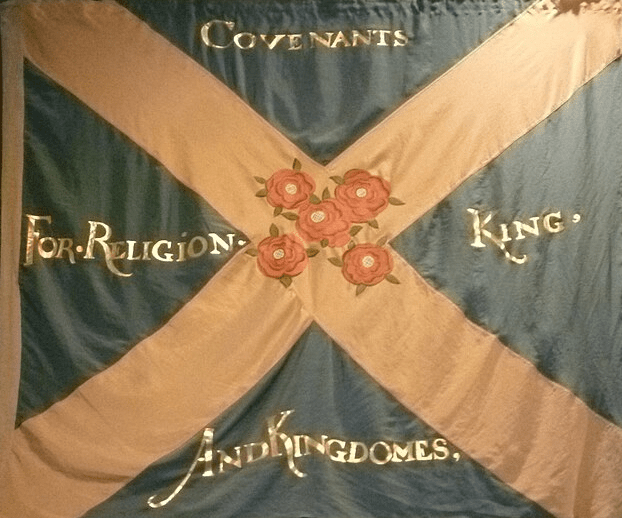
Brave man that he was, a charismatic man from Scotland of all places, said that the Holy Spirit told him to publicly rebuke Dr. MacArthur for his cessationist teaching not long after he published Strange Fire (2013). Scotland: the place of Calvinist charismatics…


 WesleyGospel Ministries